語彙集

英単語辞書 | 単語の意味、定義、例文

noun
/ˈɛpɪθɛt/
別名 (betsumei)

A descriptive phrase or word used to characterize someone or something, often as a nickname.

"He earned the epithet ‘The Great’ for his remarkable achievements."
"彼はその素晴らしい業績により‘偉大な’別名を得ました。" (Kare wa sono subarashī gyōseki ni yori ‘Idaina’ betsumei o emashita.)
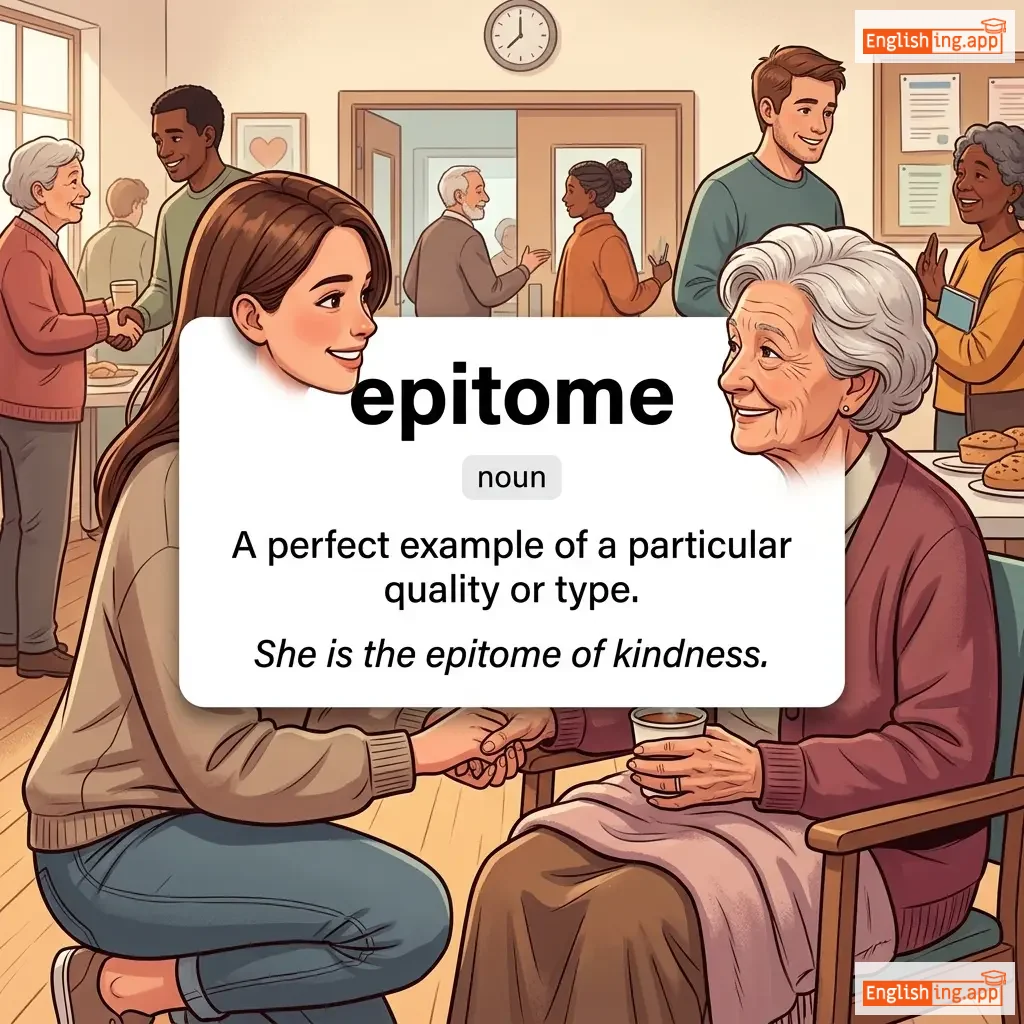
epitome definition card — visual illustration of the meaning
noun
/ɪˈpɪtəmi/
典型 (tenkei)

A perfect example of a particular quality or type.

"She is the epitome of kindness."

"彼女は優しさの典型です。" (Kanojo wa yasashisa no tenkei desu.)
noun
/ˌɛpɪzəʊˈɒtɪk/
動物伝染病 (dōbutsu densenbyō)

An outbreak of disease affecting many animals of one kind at the same time.

"The farmer feared an epizootic might wipe out his cattle."
"農家は、動物伝染病が彼の家畜を壊すかもしれないと恐れていました。" (Nōka wa, dōbutsu densenbyō ga kare no kachiku o kowasu kamoshirenai to osoreteimashita.)
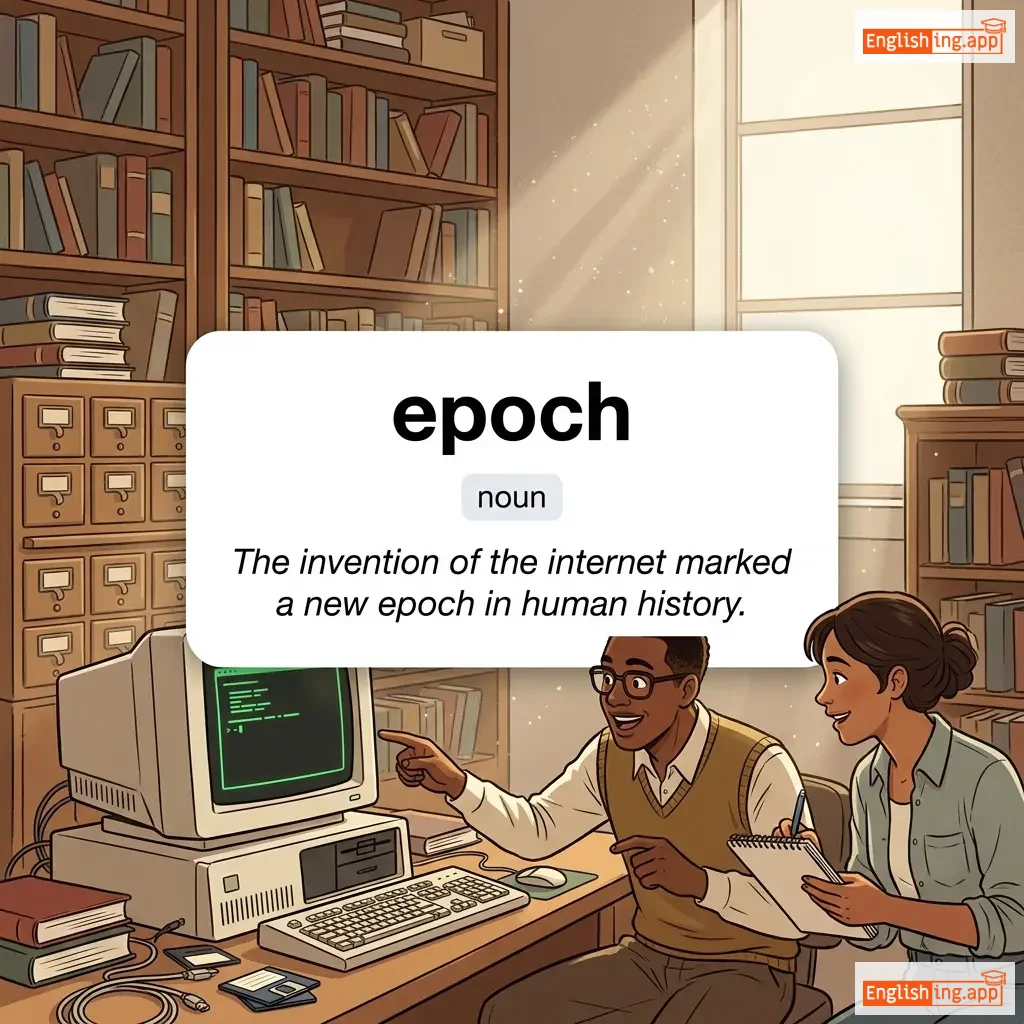
epoch definition card — visual illustration of the meaning
noun
/ˈiːpɒk/
時代 (jidai)

A period of time in history or a person's life, typically one marked by notable events or characteristics.

"The invention of the internet marked a new epoch in human history."

"インターネットの発明は、人類の歴史における新しい時代の始まりを意味している。" (Intānetto no hatsumei wa, jinrui no rekishi ni okeru atarashī jidai no hajimari o imi shite iru.)
noun
/ˈɛpəʊd/
抒情詩の一形式 (shūjōshi no ichikeishiki)

A form of lyric poem written in couplets, often following a strophe and antistrophe in classical Greek poetry.

"The poet concluded his ode with a striking epode."

"詩人は印象的なエポードでオードを締めくくった。" (Shijin wa inshō-teki na epōdo de ōdo o shimekutta.)
noun
/ˈɛpənɪm/
名前の由来となった人 (namae no yurai to natta hito)

A person after whom a discovery, invention, place, or other thing is named.

"Sandwich is an eponym named after the Earl of Sandwich."
"サンドイッチはサンドイッチ伯爵にちなんだエポニムです。" (Sandoicchi wa Sandoicchi Hakushaku ni chinanda eponimu desu.)
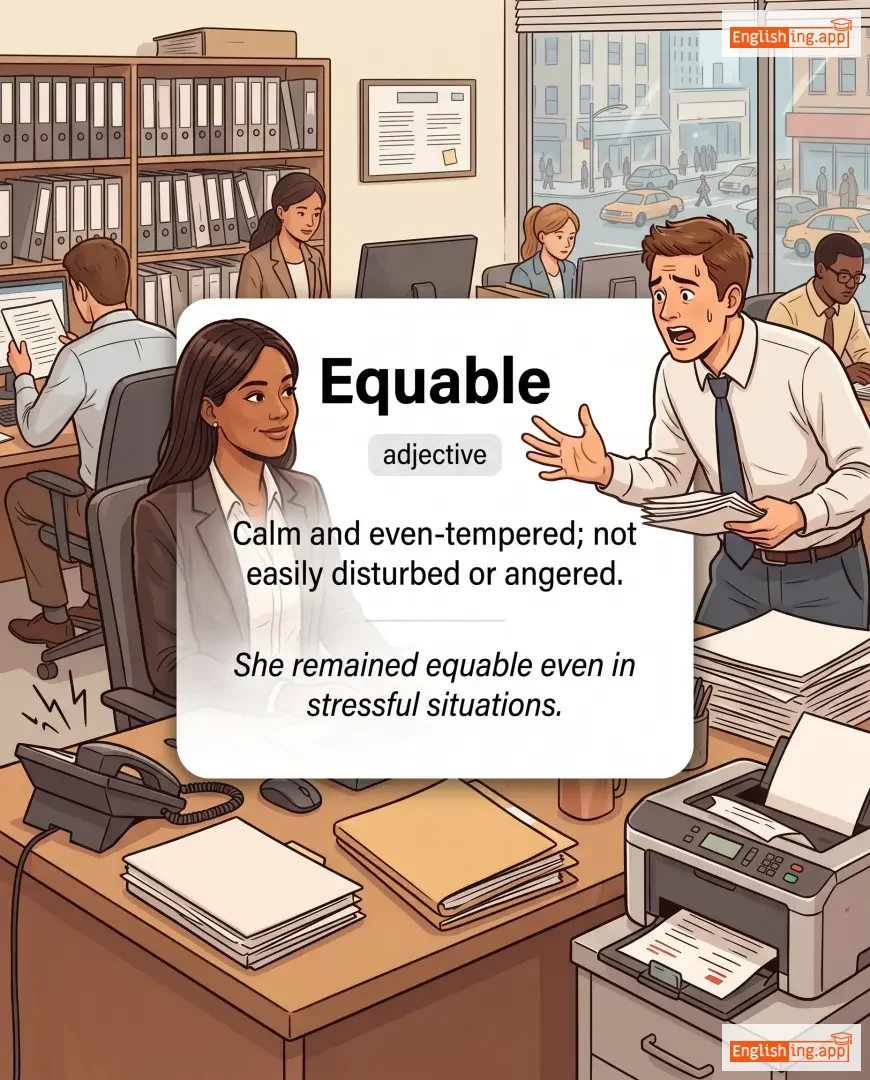
Equable definition card — visual illustration of the meaning
adjective
/ˈɛkwəbl̩/
冷静 (reijou)

Calm and even-tempered; not easily disturbed or angered.

"She remained equable even in stressful situations."
"彼女はストレスの多い状況でも冷静でい続けました。" (Kanojo wa sutoresu no ooi joukyou demo reijou de itsuzukemashita.)
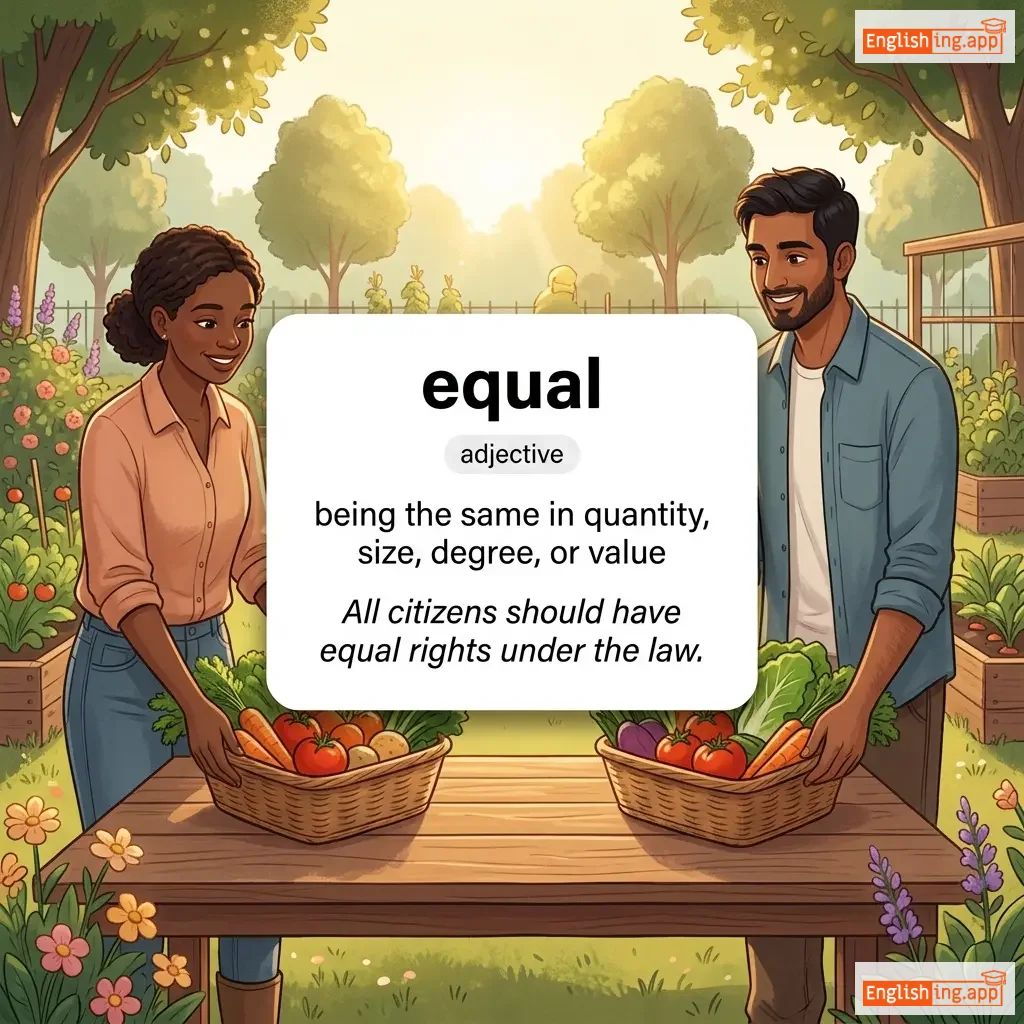
equal definition card — visual illustration of the meaning
adjective
/ˈiːkwəl/
平等 (byoudou)

being the same in quantity, size, degree, or value

"All citizens should have equal rights under the law."
"すべての市民は法の下で平等な権利を持つべきです。" (Subete no shimin wa hō no moto de byōdō na kenri o motsu beki desu.)
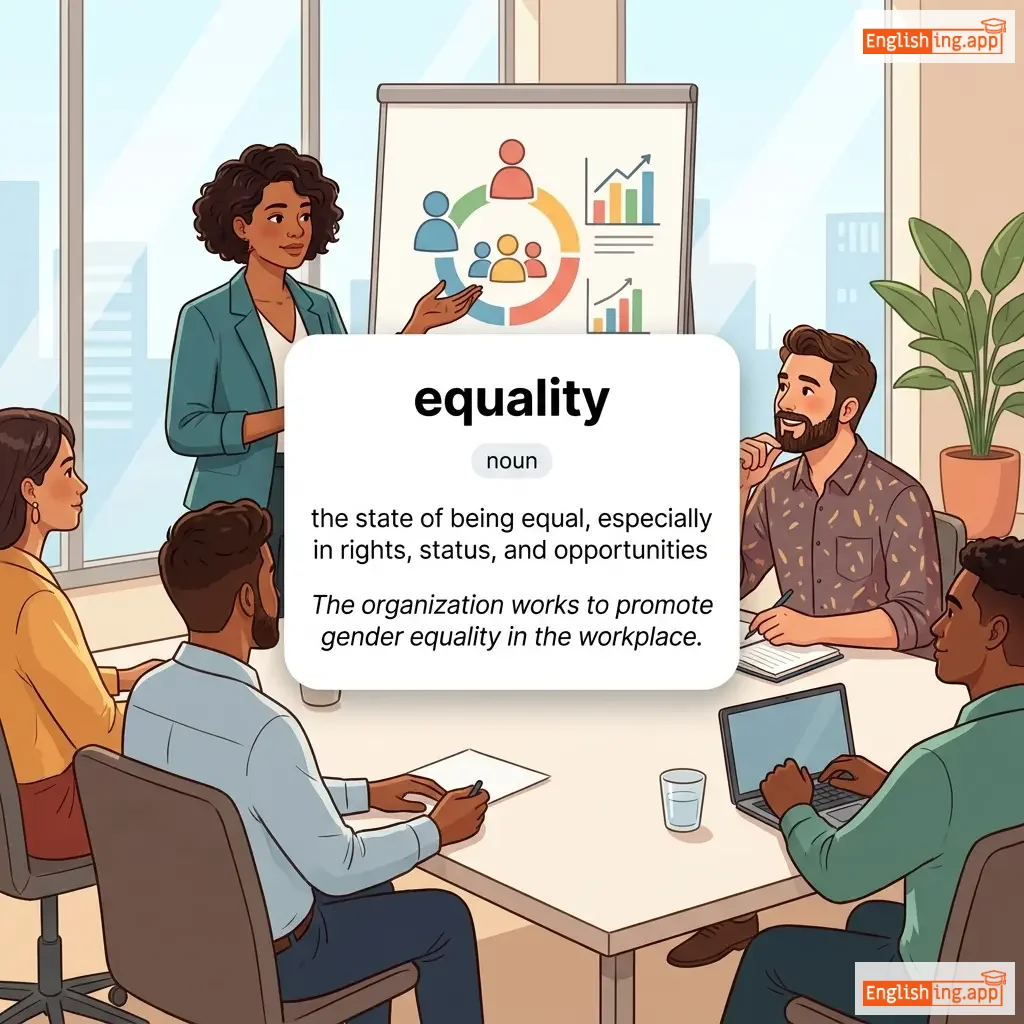
equality definition card — visual illustration of the meaning
noun
/ɪˈkwɒləti/
平等 (byoudou)

the state of being equal, especially in rights, status, and opportunities

"The organization works to promote gender equality in the workplace."

"その組織は職場での男女平等を推進するために働いています。" (Sono soshiki wa shokuba de no danjo byoudou o suishin suru tame ni hataraiteimasu.)
verb
/ˈiːkwəlaɪz/
平等にする (byōdō ni suru)

To make equal or level in status, value, or amount.

"The team equalized the score in the last minute."

"チームは最後の瞬間にスコアを同点にしました。" (Chīmu wa saigo no shunkan ni sukō o dōten ni shimashita.)
adverb
/ˈiːkwəli/
平等に (byoudou ni)

in an equal or fair way; to the same degree

"The prize money was equally divided among the winners."
"賞金は受賞者の間で平等に分けられました。" (Shoukin wa jushousha no aida de byoudou ni wakeraremashita.)
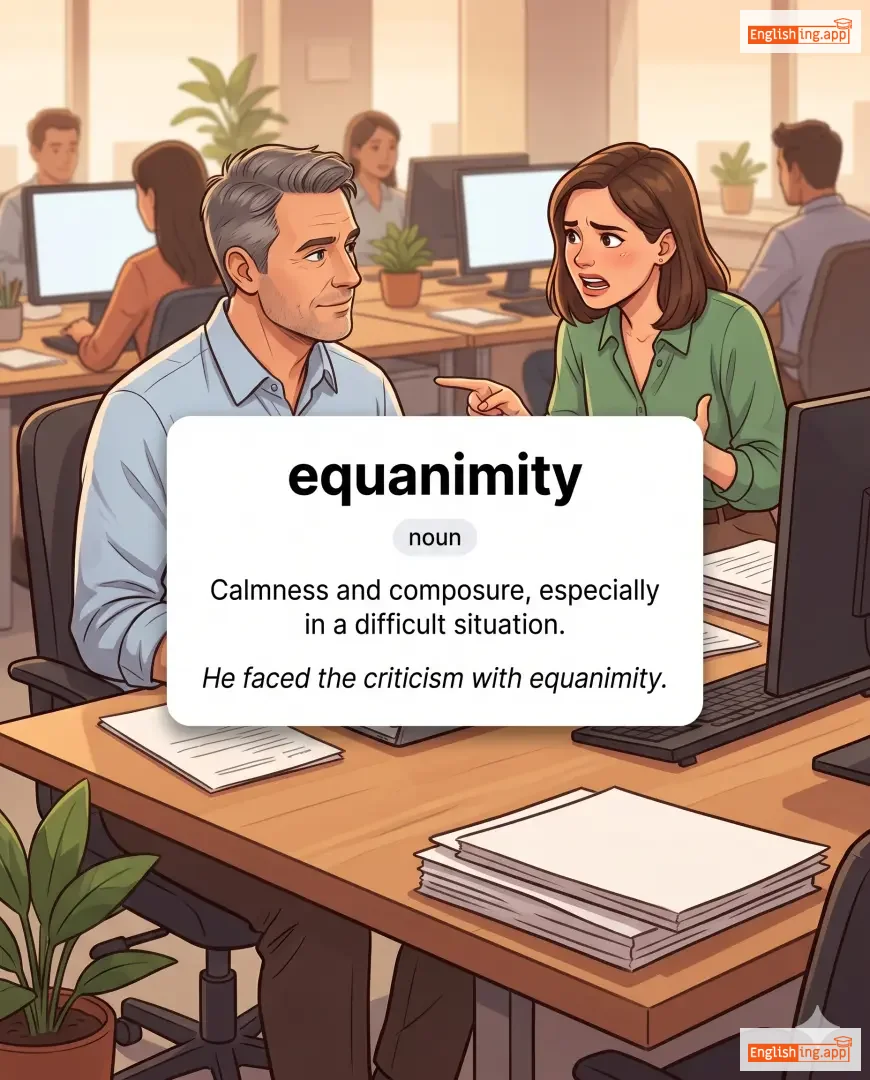
equanimity definition card — visual illustration of the meaning
noun
/ˌekwəˈnɪmɪti/
平静 (heisei)

Calmness and composure, especially in a difficult situation.

"He faced the criticism with equanimity."

"彼は批判に対して平静で接した。" (Kare wa hihan ni taishite heisei de sesshita.)
verb
/ɪˈkweɪt/
等しい (hitoshii)

To consider as equal or equivalent.

"Many people equate wealth with success."

"多くの人々は富と成功を同一視します。" (ōku no hitobito wa tomi to seikō o dōitsu-shimasu.)
noun
/ɪˈkweɪʒən/
方程式 (hōtenshiki)

a mathematical statement that shows the equality of two expressions

"He solved the equation to find the value of x."

"彼はxの値を見つけるために方程式を解いた。" (Kare wa x no atai o mitsukeru tame ni hōtenshiki o toita.)
adjective
/ɪˈkwɛstriən/
馬術の (bajutsu no)

Relating to horse riding or horseback riders.

"She won several equestrian competitions."
"彼女は複数の馬術競技で優勝しました。" (Kanojo wa fukusū no bajutsu kyōgi de yūshō shimashita.)
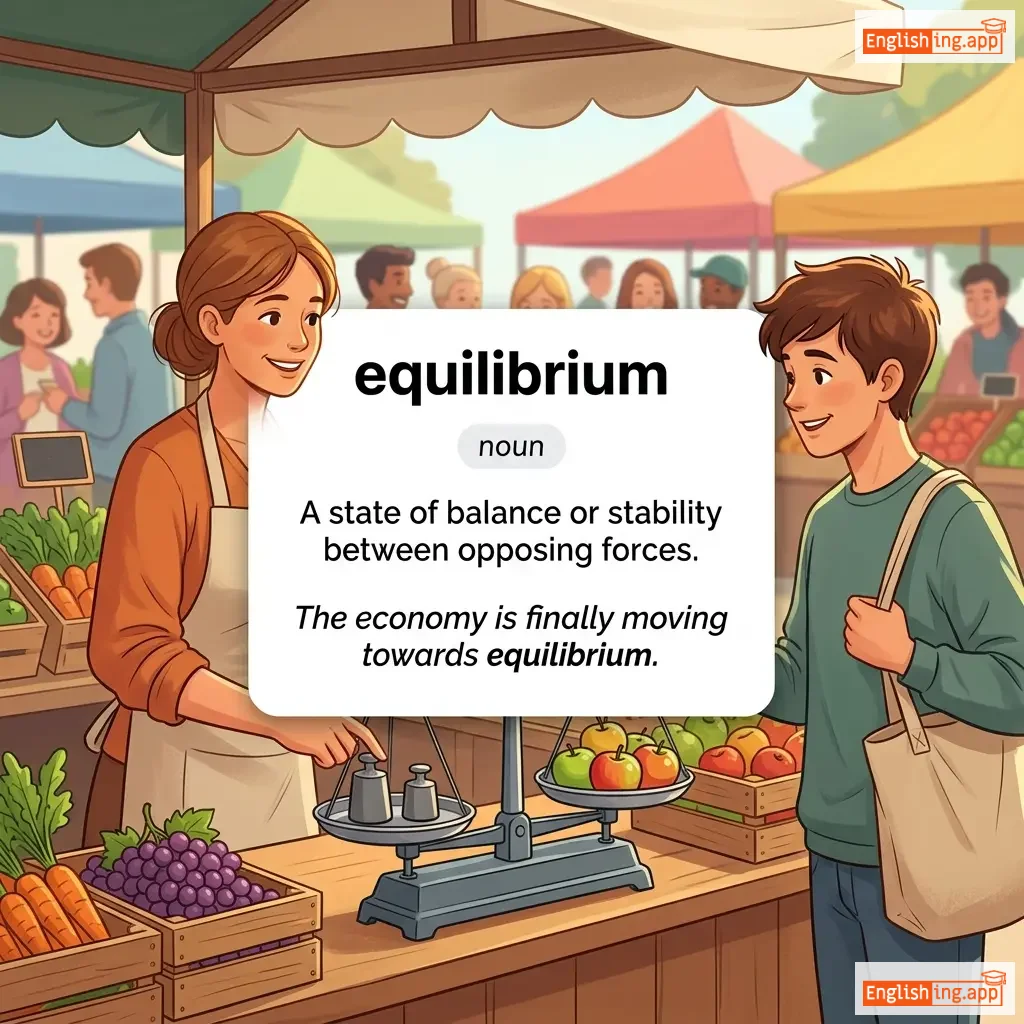
equilibrium definition card — visual illustration of the meaning
noun
/ˌiːkwɪˈlɪbriəm/
均衡 (kinkou)

A state of balance or stability between opposing forces.

"The economy is finally moving towards equilibrium."

"経済はついに均衡に向かって動いています。" (Keizai wa tsuini kinkou ni mukatte ugoiteimasu.)
adjective
/ˈiːkwaɪn/
馬に関連する (uma ni kanren suru)

Relating to or resembling a horse.

"The veterinarian specialized in equine medicine."

"獣医は馬の医療に専門特化していました。" (Jūi wa uma no iryō ni senmon tokka shite imashita.)
noun
/ˈiːkwɪnɒks/
昼夜平衡 (chūya heikō)

The time or date when day and night are of equal length, occurring twice a year.

"The spring equinox marks the beginning of longer days."

"春分は長い日が始まることを示します。" (Shunbun wa nagai hi ga hajimaru koto o shimeshimasu.)
verb
/ɪˈkwɪp/
装備する (soubisuru)

to provide someone or something with the necessary items or skills for a task

"The school equipped its students with modern technology."

"学校は生徒たちに最新の技術を装備させました。" (Gakkou wa seitotachi ni saishin no gijutsu o soubi sagemashita.)
noun
/ˈɛkwɪpɪdʒ/
装備またはアクセサリー付きの馬車 (sōbi mata wa akusesarī tsuki no basha)

Equipment or a carriage with its accessories.

"The nobleman arrived in a grand equipage."

"貴族は豪華な馬車で到着しました。" (Kizoku wa gōka na basha de tōchaku shimashita.)
noun
/ɪˈkwɪpmənt/
機器 (kiki)

the necessary tools, machines, or other items needed for a particular purpose

"The laboratory bought new equipment for research."

"実験室は研究のために新しい機器を購入しました。" (jikken-shitsu wa kenkyū no tame ni atarashī kiki o kōnyū shimashita.)
noun
/ˈɛkwɪpɔɪz/
均衡 (kinkou)

A state of balance or equilibrium.

"Her calmness created an equipoise in the heated debate."
"彼女の落ち着きは熱い議論の中で均衡を作り出しました。" (Kanojo no ochitsuki wa atsui giron no naka de kinkou wo tsukuridashimashita.)
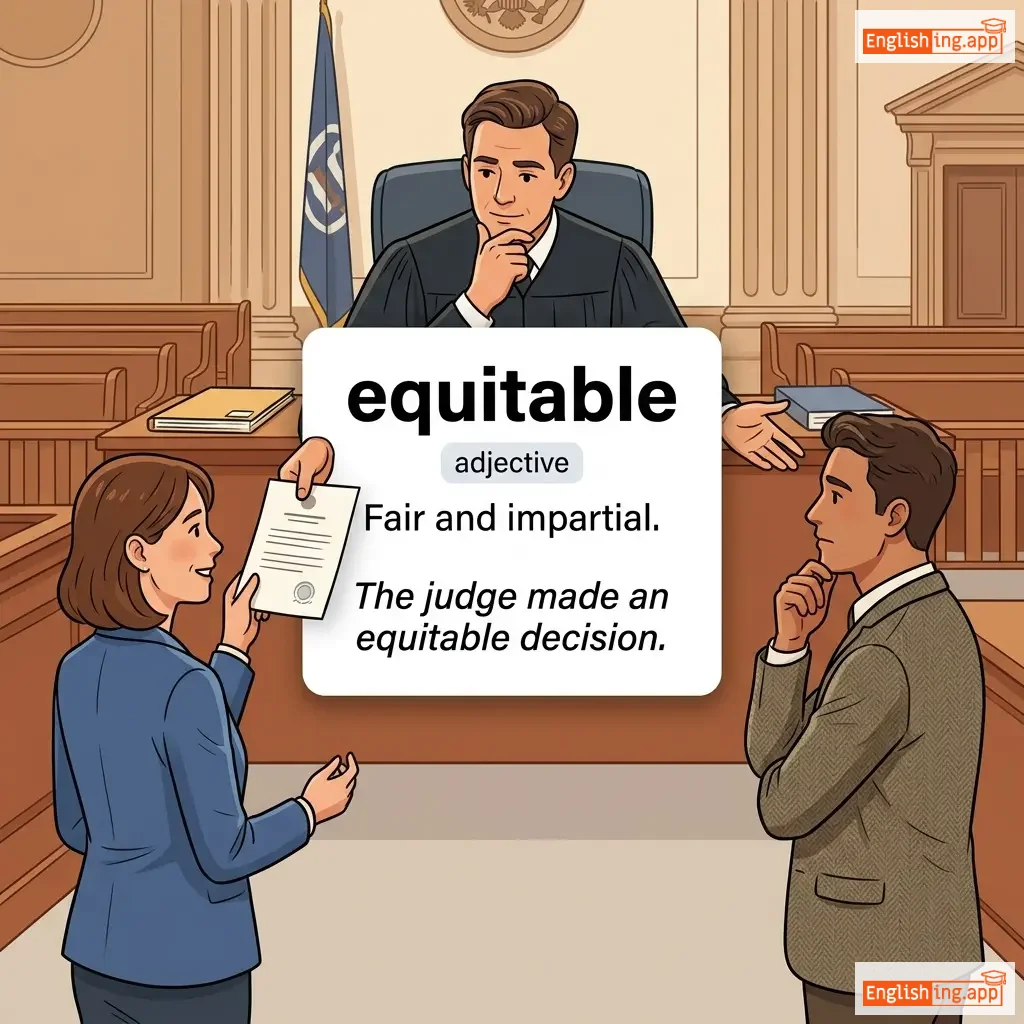
equitable definition card — visual illustration of the meaning
adjective
/ˈɛkwɪtəbl/
公平 (kouhei)

Fair and impartial.

"The judge made an equitable decision."
"裁判官は公平な決定を下した。" (Saibankan wa kouhei na kettei o kudashita.)
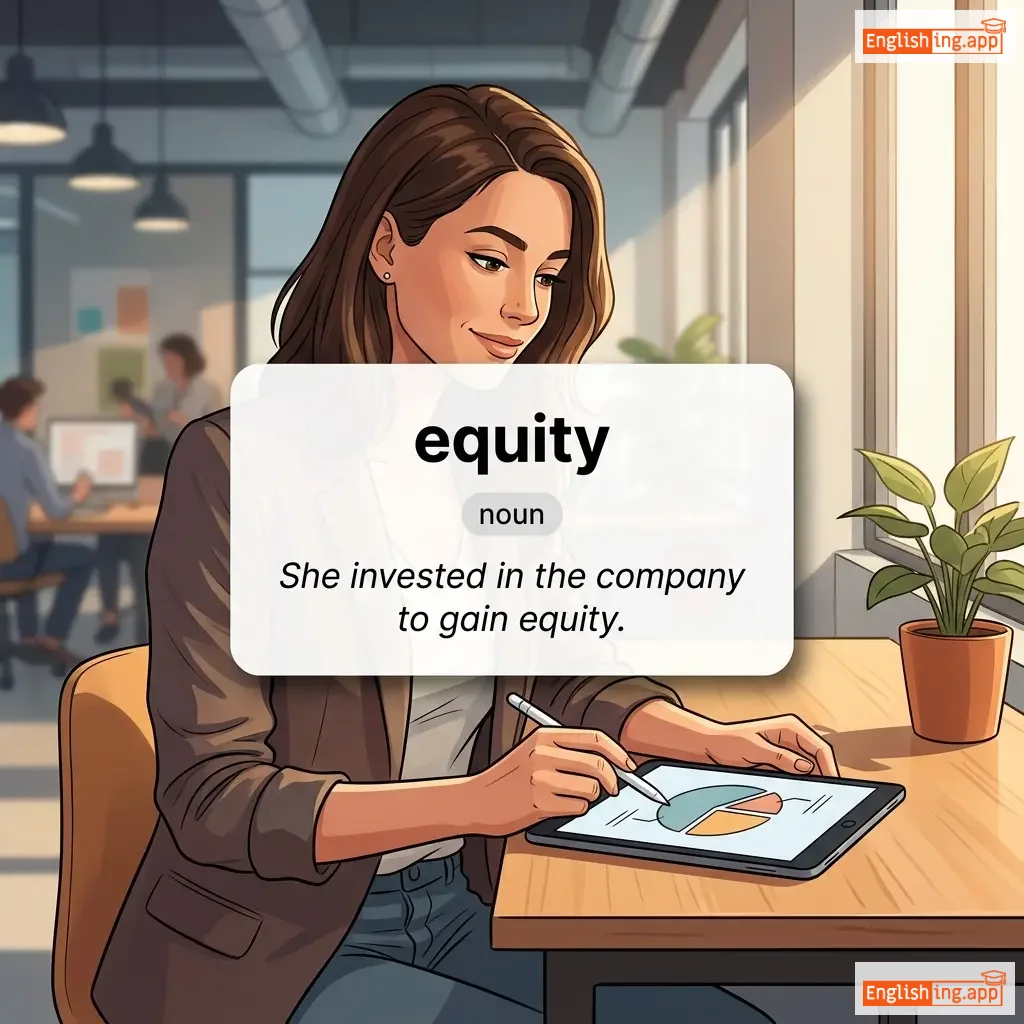
equity definition card — visual illustration of the meaning
noun
/ˈɛkwɪti/
公平; 所有権の一部 (kōhei; shoyūken no ichibu)

The quality of being fair and impartial; ownership interest in a company or property.

"She invested in the company to gain equity."

"彼女は株式を得るために会社に投資しました。" (Kanojo wa kabushiki o eru tame ni kaisha ni tōshi shimashita.)
adjective
/ɪˈkwɪvələnt/
等しい; 同等 (hitoshii; dōtō)

Equal in value, function, meaning, or effect.

"One euro is roughly equivalent to one dollar."

"1ユーロはおおよそ1ドルに相当します。" (1 yūro wa ōyoso 1 doru ni sōtō shimasu.)
adjective
/ɪˈkwɪvəkəl/
曖昧 (aimai)

Open to more than one interpretation; ambiguous.

"His equivocal answer confused everyone."
"彼の曖昧な答えは皆を混乱させた。" (Kare no aimai na kotae wa mina o konran saseta.)
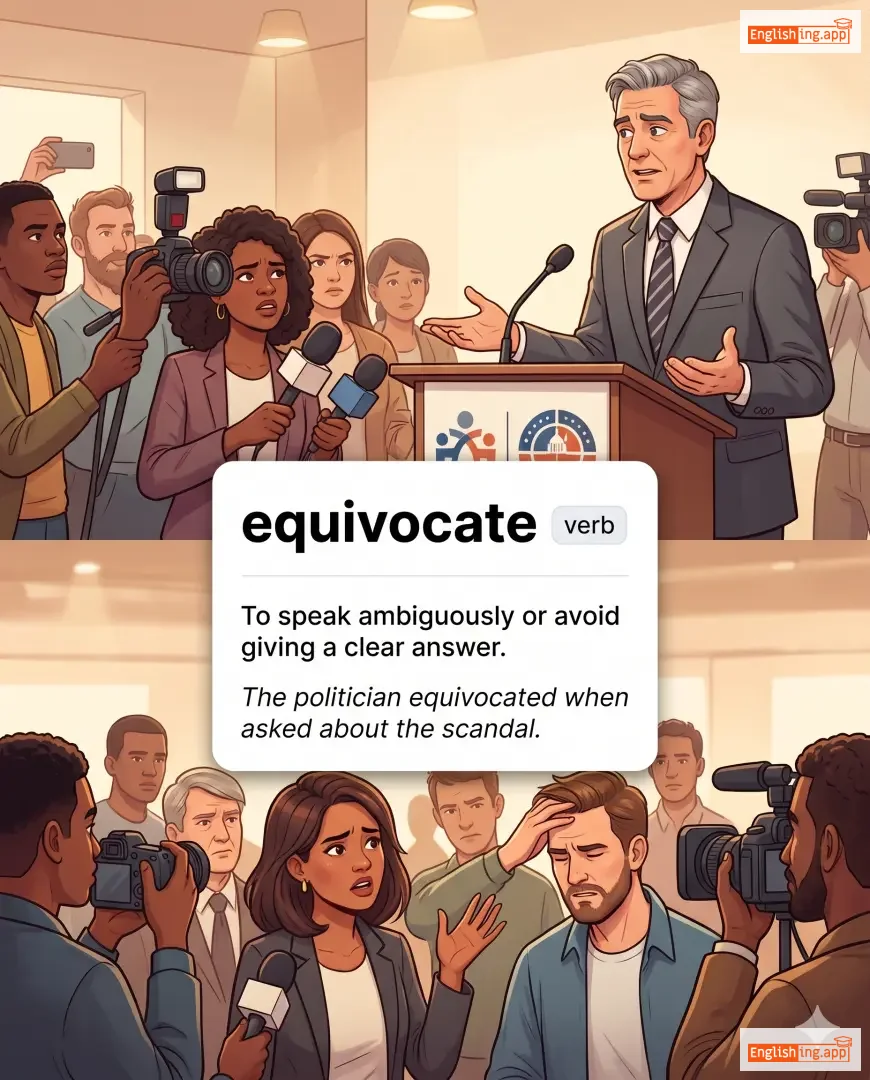
equivocate definition card — visual illustration of the meaning
verb
/ɪˈkwɪvəˌkeɪt/
曖昧に話す (aimai ni hanasu)

To speak ambiguously or avoid giving a clear answer.

"The politician equivocated when asked about the scandal."

"その政治家はスキャンダルについて尋ねられたとき、曖昧に話した。" (Sono seijika wa sukyandaru ni tsuite tazunerareta toki, aimai ni hanashita.)
noun
/ɪˌkwɪvəˈkeɪʃən/
あいまいな言葉の使用 (aimai na kotoba no shiyou)

The use of ambiguous language to conceal the truth or to avoid committing oneself.

"The politician’s equivocation frustrated voters who wanted a clear answer."

"政治家のあいまいな言葉は、明確な答えを求めていた有権者を失望させた。" (Seijika no aimai na kotoba wa, meikaku na kotae o motomete ita yūken-sha o shitsubō saseta.)
noun
/ˈɪərə/
時代 (jidai)

a long and distinct period of history with a particular feature or characteristic

"The invention of the internet marked a new era in communication."
"インターネットの発明は、通信における新しい時代の幕開けを意味しました。" (Intānetto no hatsumei wa, tsūshin ni okeru atarashī jidai no makuake o imi shimashita.)
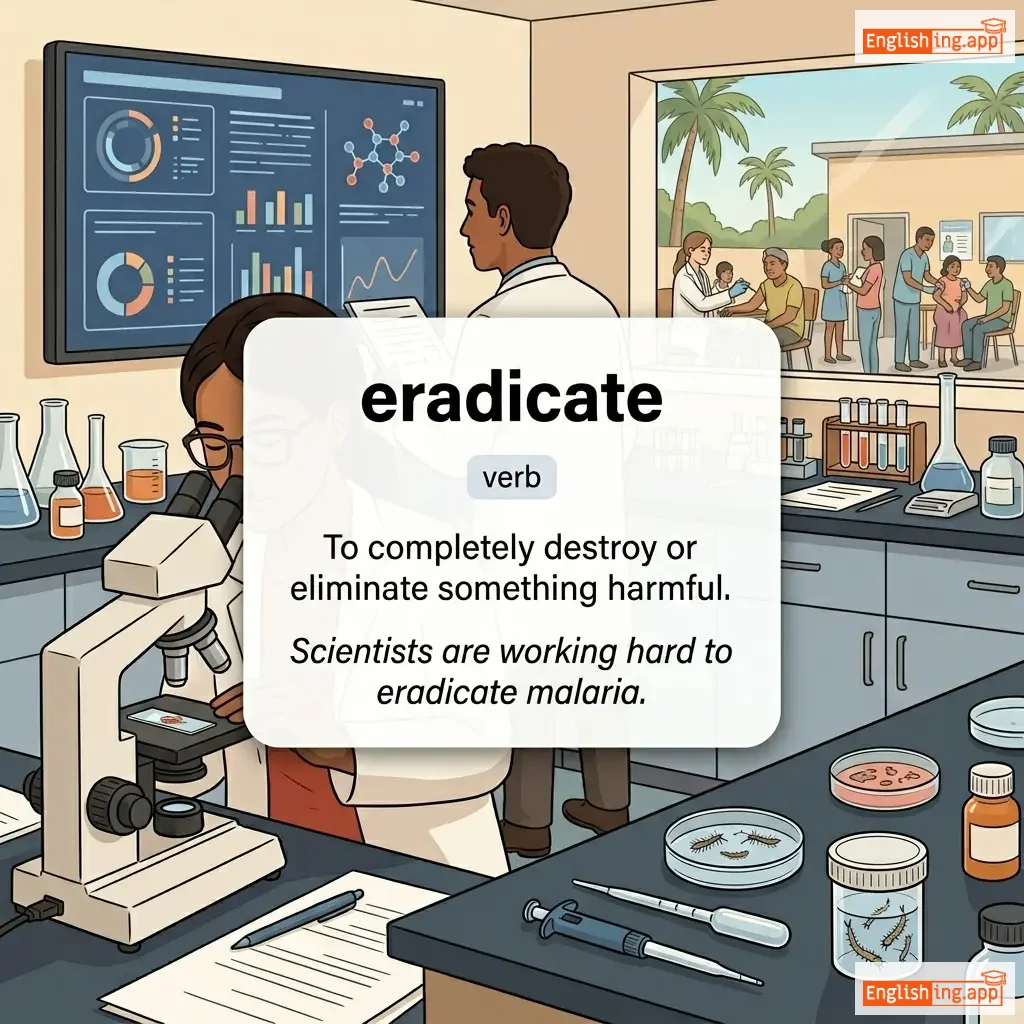
eradicate definition card — visual illustration of the meaning
verb
/ɪˈrædɪˌkeɪt/
根絶する; 排除する (konzetsu suru; haijo suru)

To completely destroy or eliminate something harmful.

"Scientists are working hard to eradicate malaria."
"科学者たちはマラリアを根絶するために懸命に働いています。" (Kagakusha-tachi wa mararia o konzetsu suru tame ni kenmei ni hataraiteimasu.)
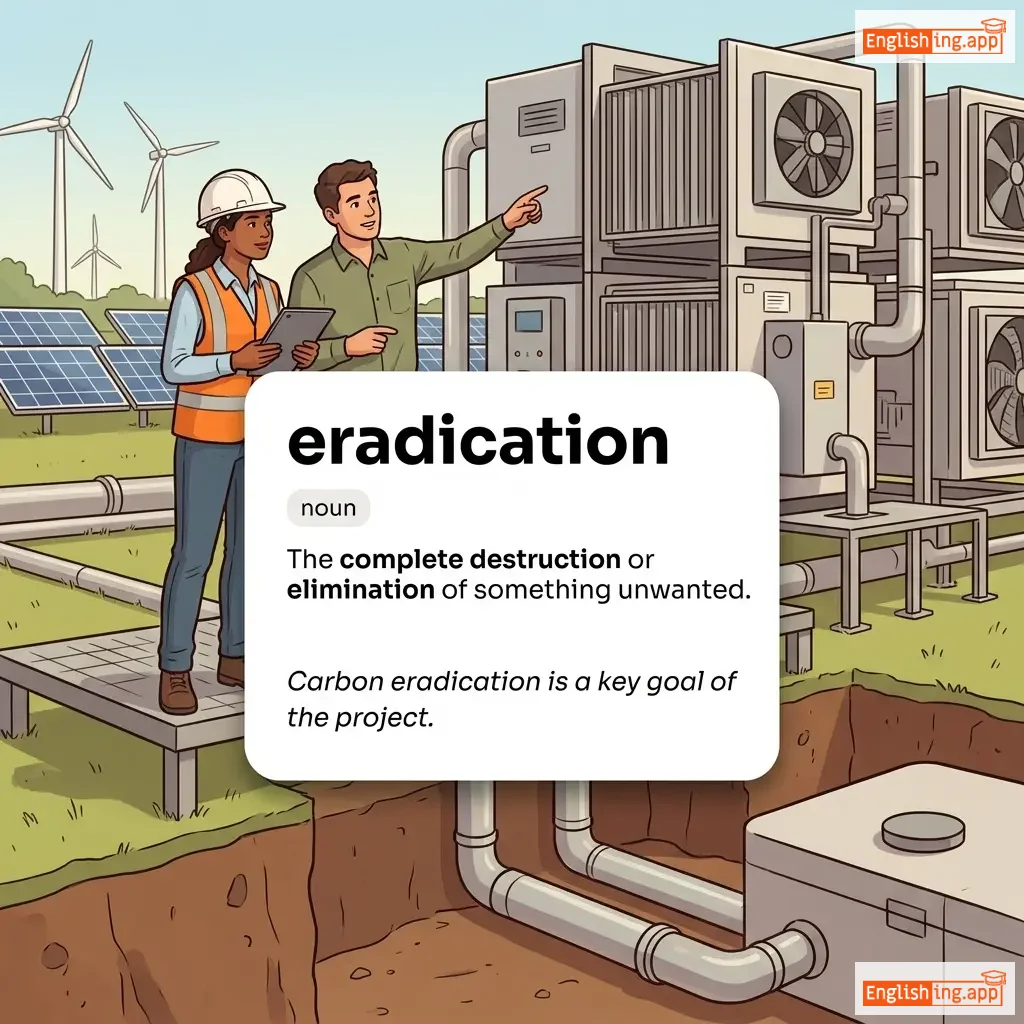
eradication definition card — visual illustration of the meaning
noun
ɪˌræd.ɪˈkeɪ.ʃən
根絶 (nezzetsu)

The complete destruction or elimination of something unwanted.

"Carbon eradication is a key goal of the project."
"カーボンの根絶はプロジェクトの重要な目標です。" (Kābon no nezetsu wa purojekuto no jūyō na mokuhyō desu.)
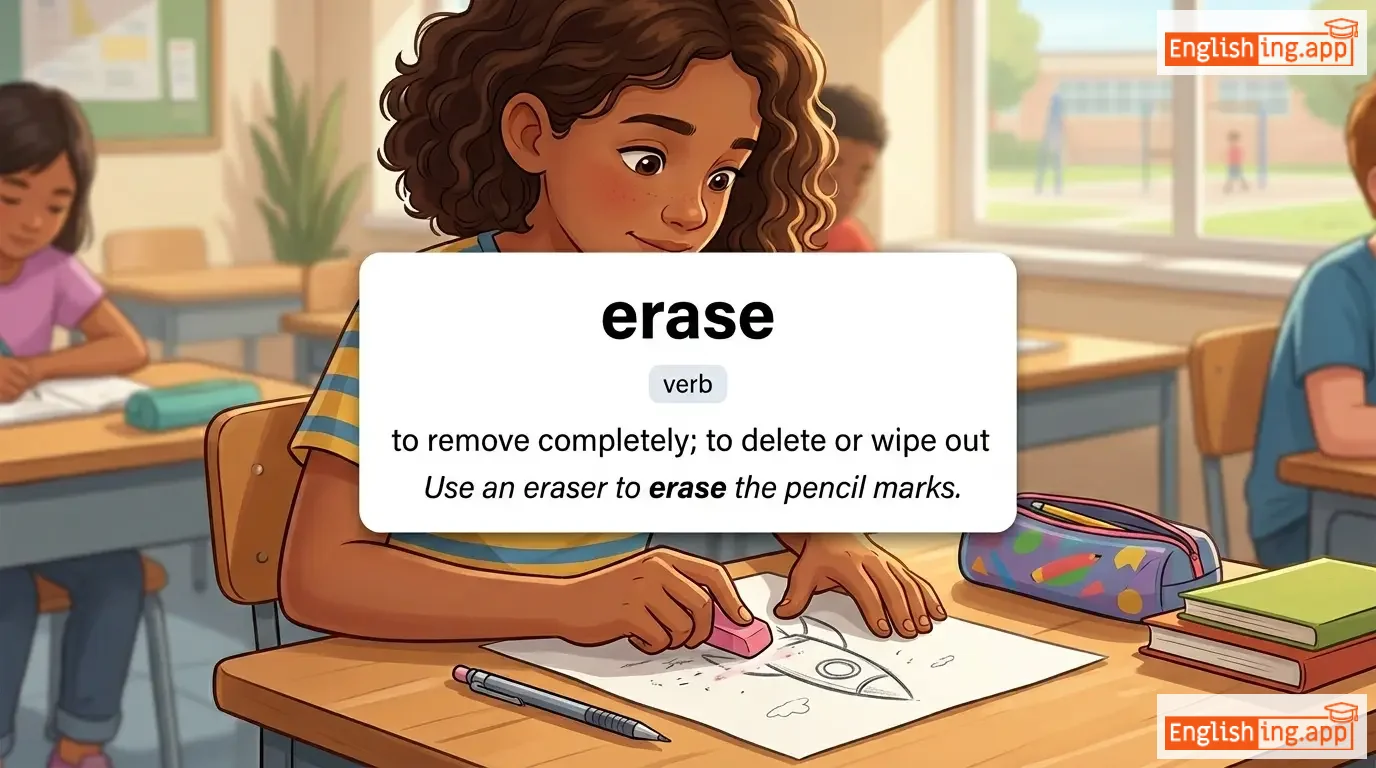
erase definition card — visual illustration of the meaning
verb
/ɪˈreɪs/
消す (kesu)

to remove completely; to delete or wipe out

"Use an eraser to erase the pencil marks."
"鉛筆の跡を消すために消しゴムを使う。" (Enpitsu no ato o kesu tame ni keshigomu o tsukau.)
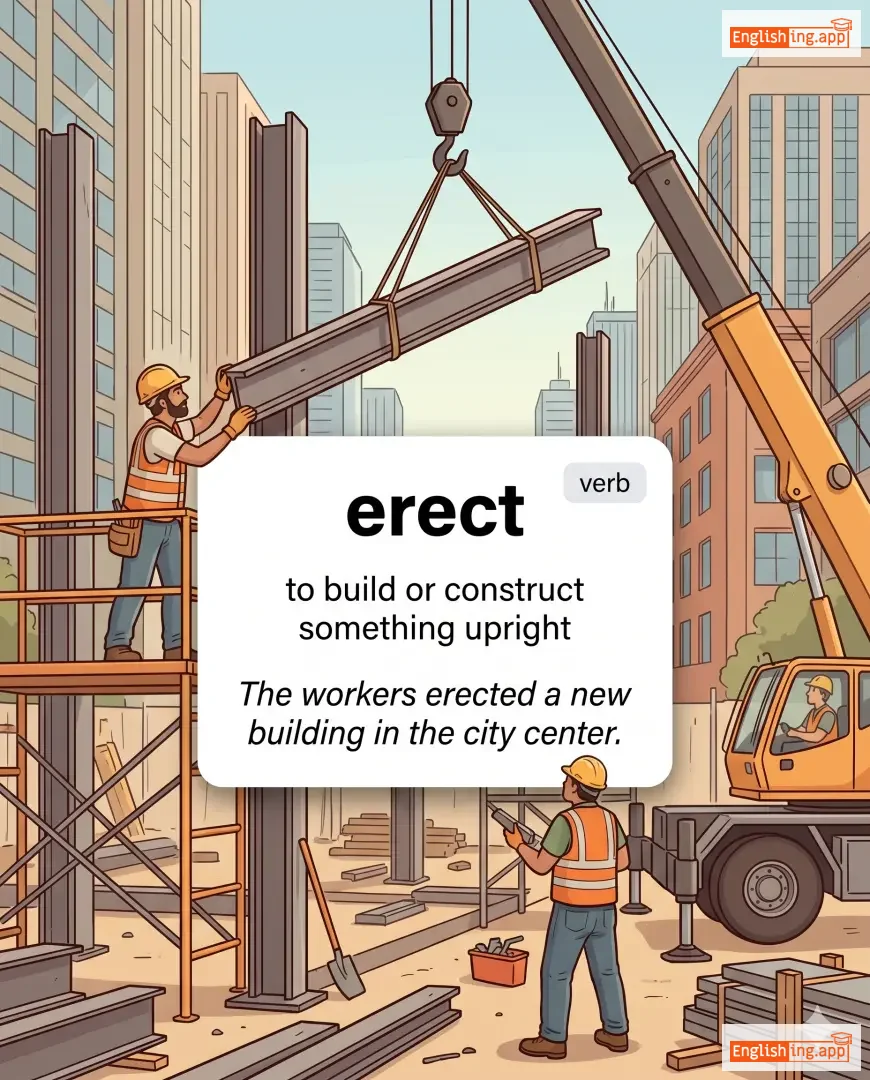
erect definition card — visual illustration of the meaning
verb
/ɪˈrɛkt/
建てる (tateru)

to build or construct something upright

"The workers erected a new building in the city center."
"労働者たちは市の中心に新しいビルをエレクトしました。" (Roudousha tachi wa shi no chuushin ni atarashii biru wo erekuto shimashita.)
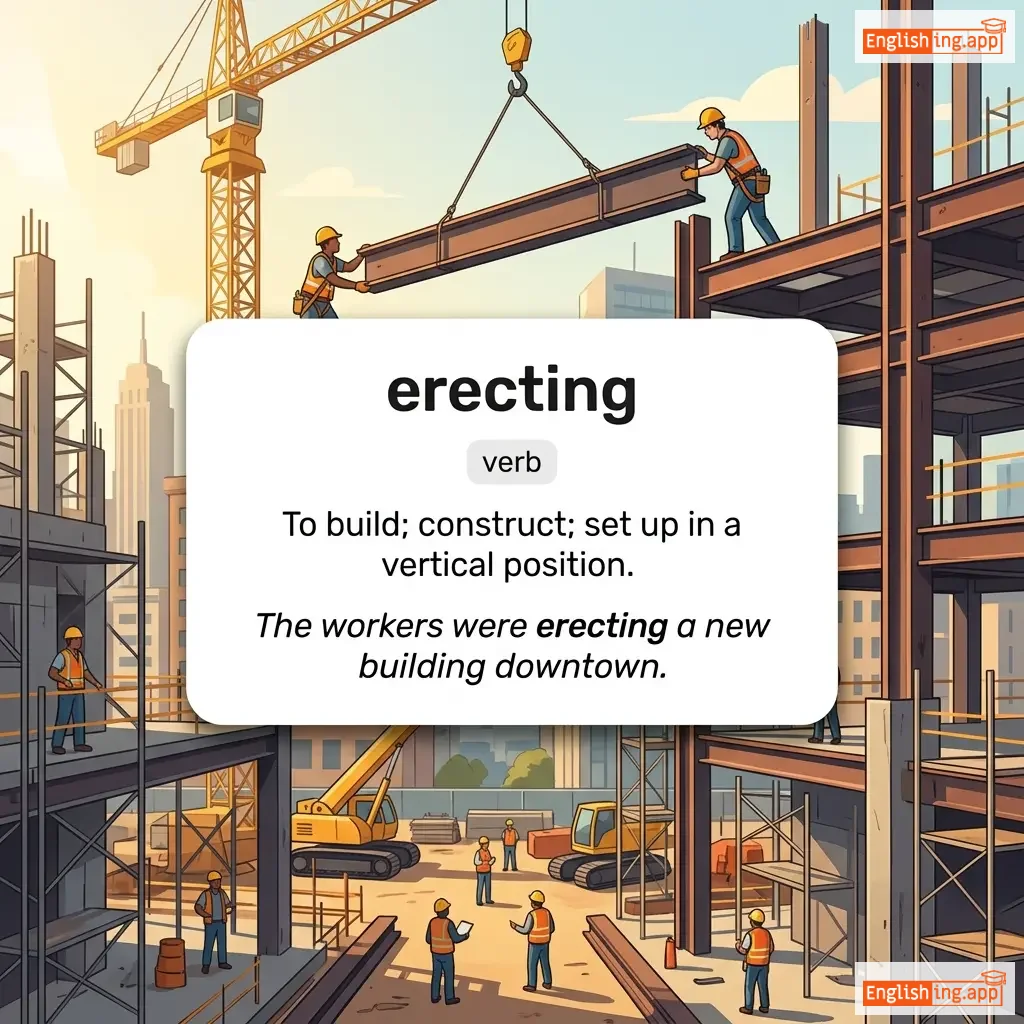
erecting definition card — visual illustration of the meaning
verb
ɪˈrɛktɪŋ
建設する (kensetsu suru)

To build; construct; set up in a vertical position.

"The workers were erecting a new building downtown."
"労働者たちは市街地で新しい建物を建てていました。" (Roudou shatachi wa shigaichi de atarashii tatemono wo tateteimashita.)
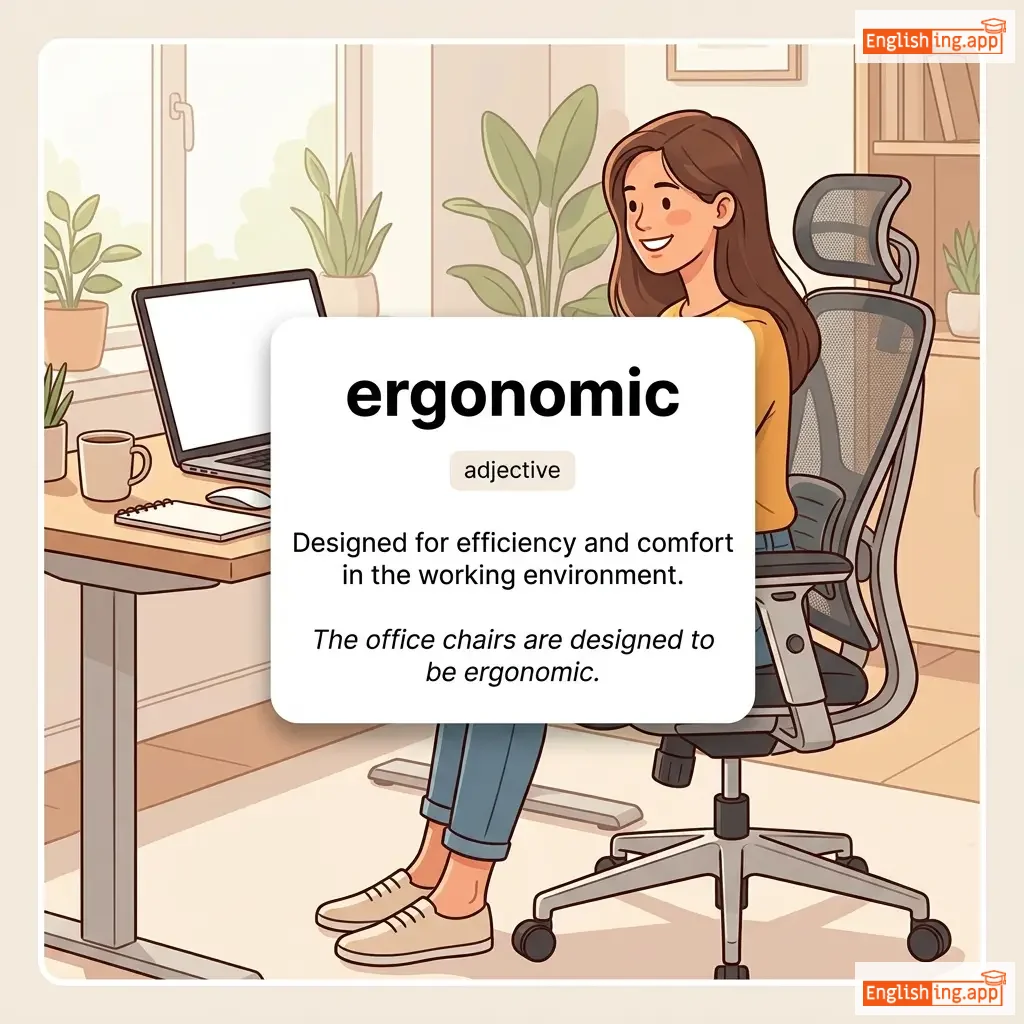
ergonomic definition card — visual illustration of the meaning
adjective
/ˌɜː.ɡəˈnɒm.ɪk/
エルゴノミック (ergonomikku)

Designed for efficiency and comfort in the working environment.

"The office chairs are designed to be ergonomic."

"オフィスチェアはエルゴノミックにデザインされています。" (Ofisuchie wa erugonomikku ni dezain sareteimasu.)
verb
/ɪˈroʊd/
浸食 (shinshoku)

to gradually wear away or destroy by natural forces such as water, wind, or chemical action

"The coastline has begun to erode due to constant waves."
"海岸線は継続的な波のために浸食し始めた。" (Kaigan-sen wa keizokuteki na nami no tame ni shinshoku shihajimeta.)
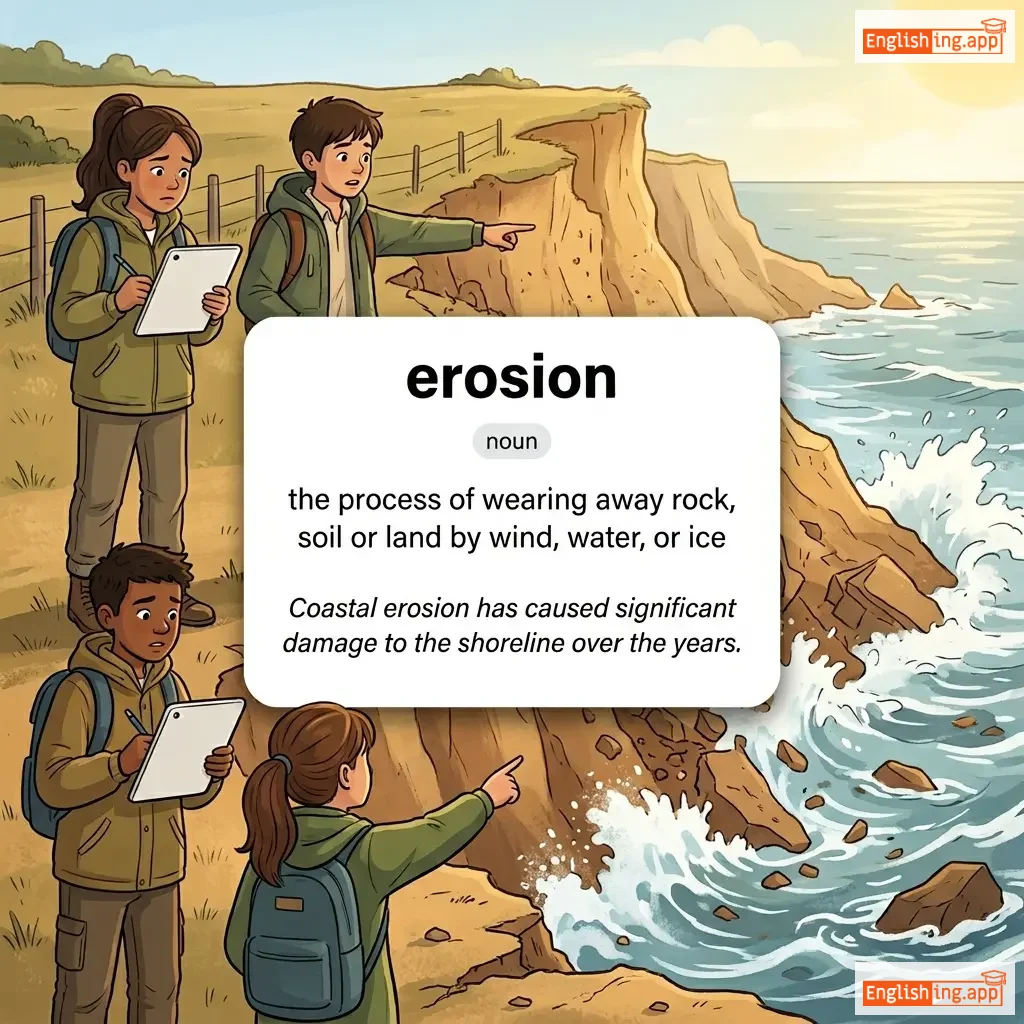
erosion definition card — visual illustration of the meaning
noun
/ɪˈroʊ.ʒən/
浸食 (shinshoku)

the process of wearing away rock, soil, or land by wind, water, or ice

"Coastal erosion has caused significant damage to the shoreline over the years."

"沿岸浸食は何年にもわたり、海岸線に重大な損傷を与えました。" (Enkan shinshoku wa nannen ni mo watari, kaigan sen ni juudaina sonshou o ataemashita.)
adjective
/ɪˈrɒtɪk/
エロティック (erotikku)

relating to or tending to arouse sexual desire or excitement

"The novel contained several erotic scenes."
"その小説にはいくつかのエロティックなシーンが含まれていました。" (Sono shousetsu ni wa ikutsuka no erotikku na shiin ga fukumarete imashita.)
verb
/ɜːr/
誤る (ayamaru)

to make a mistake or be incorrect

"To err is human, to forgive divine."

"誤ることは人間にとって自然なことであり、許すことは神聖である。" (Ayamaru koto wa ningen ni totte shizen na koto de ari, yurusukoto wa shinsei de aru.)
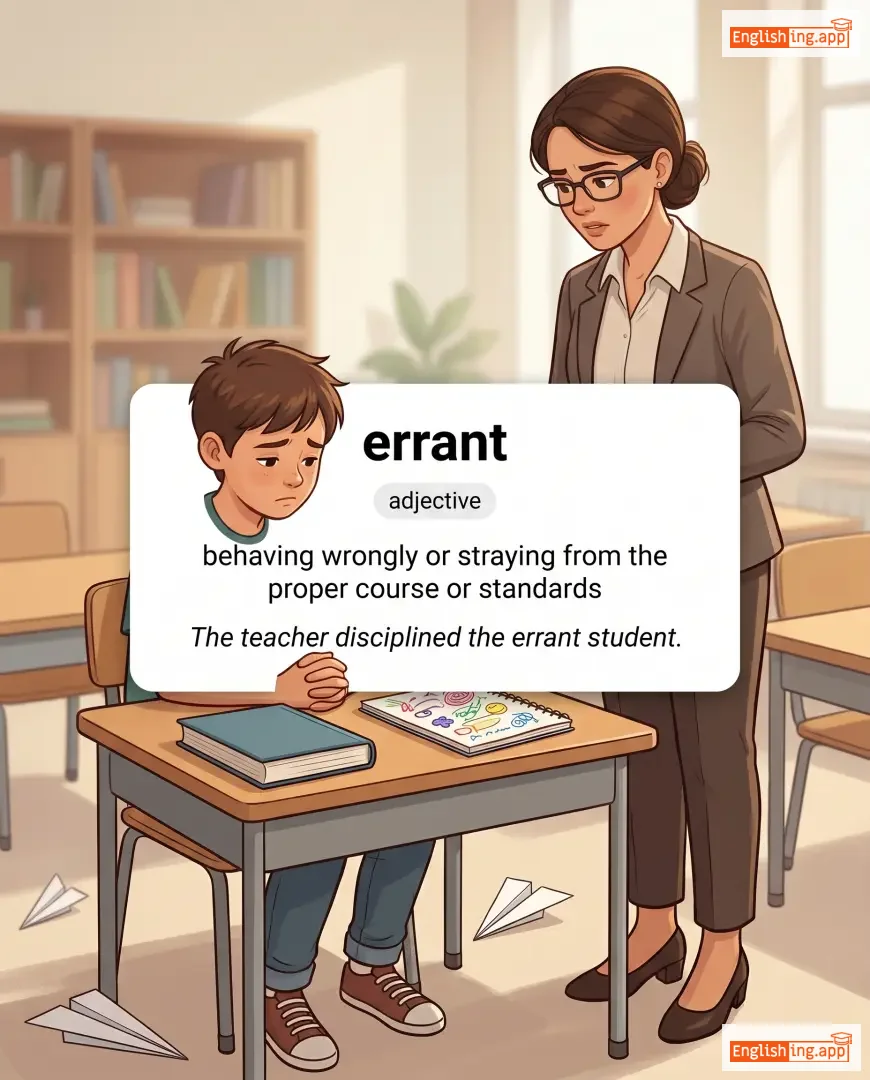
errant definition card — visual illustration of the meaning
adjective
/ˈɛrənt/
逸脱した (ittsudatsu shita)

behaving wrongly or straying from the proper course or standards

"The teacher disciplined the errant student."
"教師は逸脱した生徒を罰しました。" (Kyōshi wa ittsudatsu shita seito o basshimashita.)
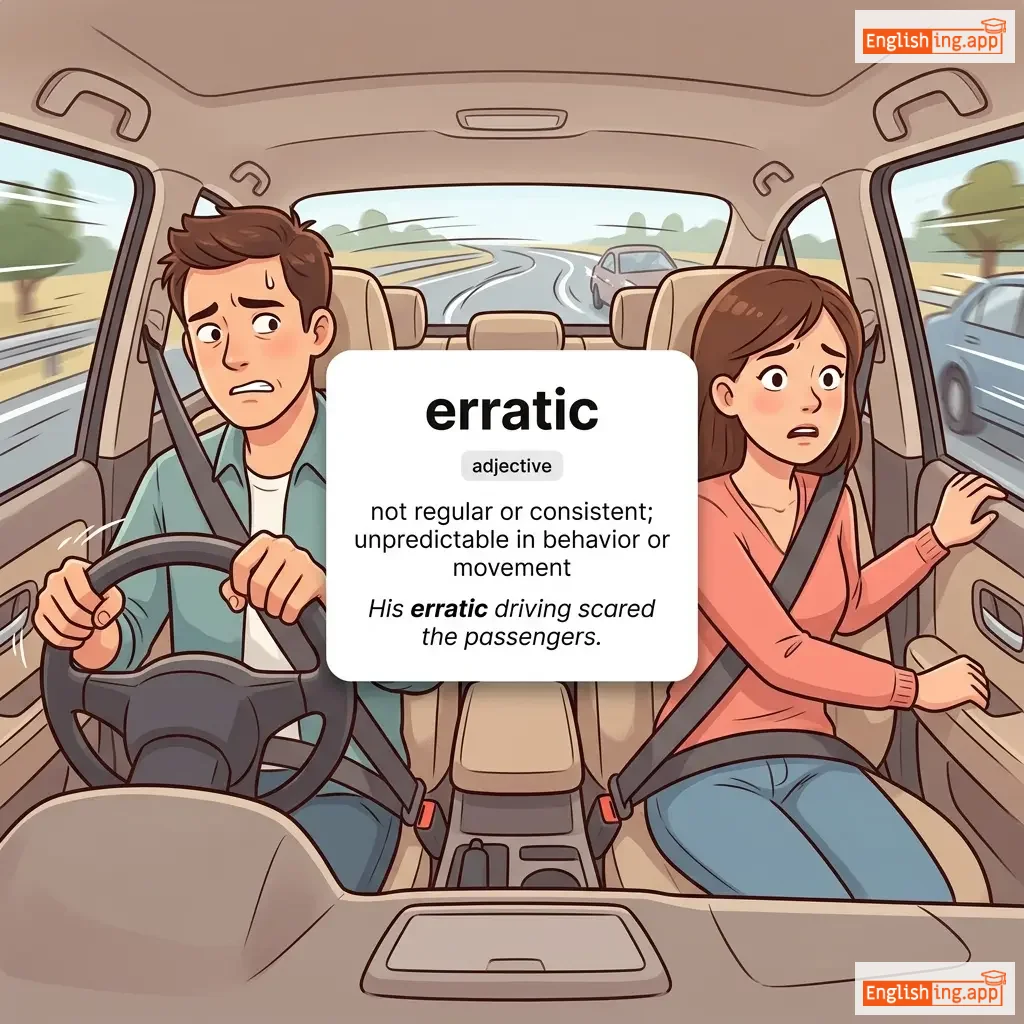
erratic definition card — visual illustration of the meaning
adjective
/ɪˈrætɪk/
不安定 (fuantei)

not regular or consistent; unpredictable in behavior or movement

"His erratic driving scared the passengers."
"彼の不安定な運転は乗客を怖がらせました。" (Kare no fuantei na unten wa jōkyaku o kowagarasemashita.)
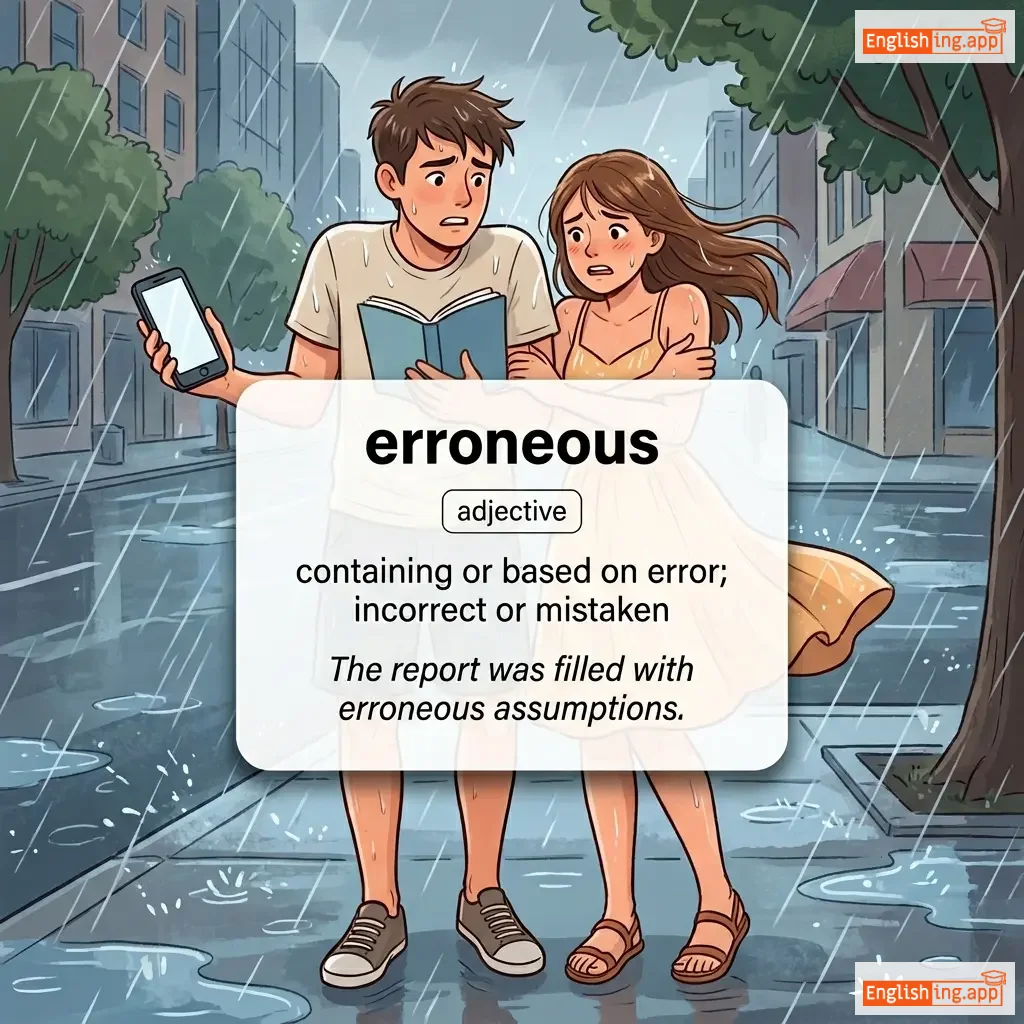
erroneous definition card — visual illustration of the meaning
adjective
/ɪˈrəʊniəs/
誤った (ayamatta)

containing or based on error; incorrect or mistaken

"The report was filled with erroneous assumptions."
"報告書は誤った仮定でいっぱいだった。" (Hōkokusho wa ayamatta katei de ippai datta.)
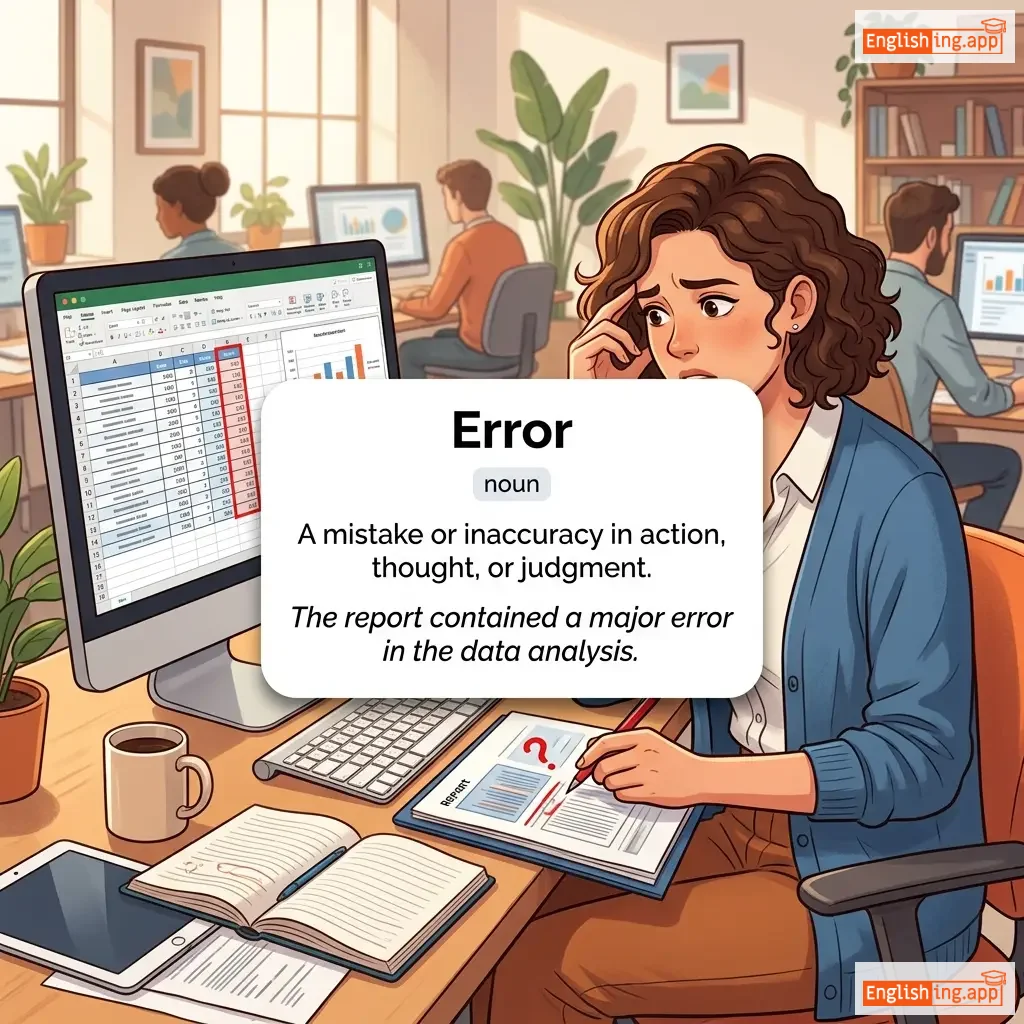
Error definition card — visual illustration of the meaning
noun
/ˈɛrər/
誤り (ayamari)

A mistake or inaccuracy in action, thought, or judgment.

"The report contained a major error in the data analysis."

"レポートにはデータ分析における重大な誤りが含まれていました。" (Repoto ni wa deeta bunseki ni okeru juudaina ayamari ga fukumarete imashita.)
adjective
/ˈɛrzæts/
代用品 (daiyōhin)

made or used as a substitute, typically an inferior one

"The cheap shoes were made of ersatz leather."

"安い靴は代用品の合成皮革で作られていました。" (Yasui kutsu wa daiyōhin no gōsei hikaku de tsukurarete imashita.)
adjective
/ˈɜːrstwaɪl/
かつての (katsute no)

former or in the past

"They were erstwhile friends but no longer speak."
"彼らはかつての友達でしたが、今は話しません。" (Karera wa katsute no tomodachi deshita ga, ima wa hanashimasen.)
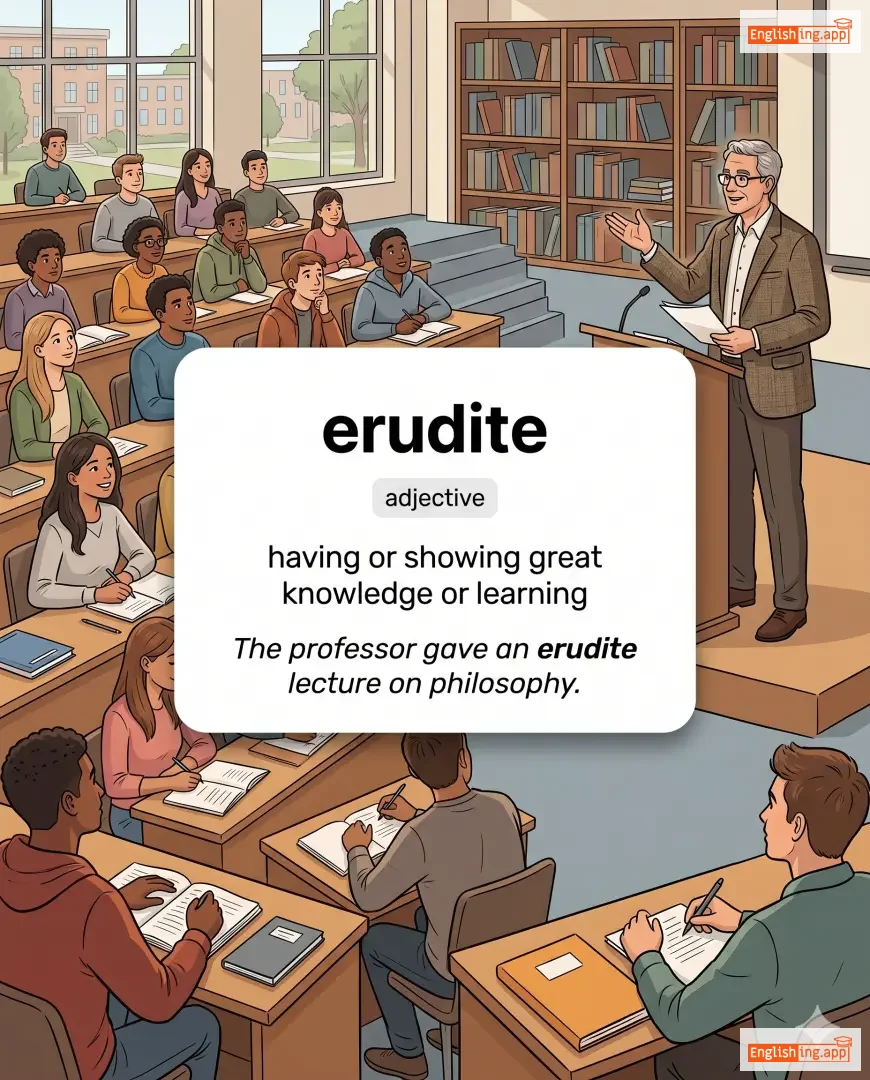
erudite definition card — visual illustration of the meaning
adjective
/ˈɛrjʊˌdaɪt/
博識 (hakushiki)

having or showing great knowledge or learning

"The professor gave an erudite lecture on philosophy."
"教授は哲学について博識な講義をしました。" (Kyouju wa tetsugaku ni tsuite hakushiki na kougi o shimashita.)
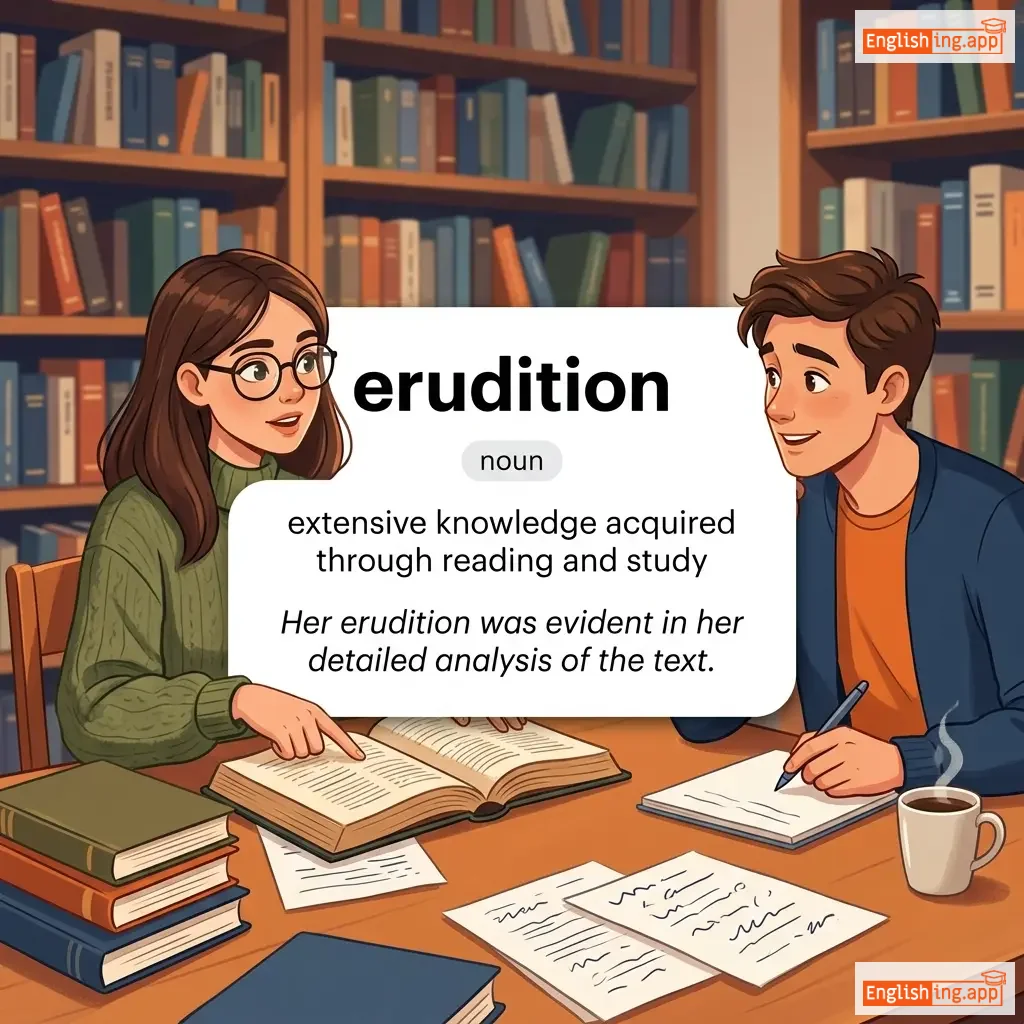
erudition definition card — visual illustration of the meaning
noun
/ˌɛrjʊˈdɪʃən/
博識 (hakushiki)

extensive knowledge acquired through reading and study

"Her erudition was evident in her detailed analysis of the text."

"彼女の博識はテキストの詳細な分析に明らかに現れていた。" (Kanojo no hakushiki wa tekisuto no shousai na bunseki ni akirakani arawarete ita.)
verb
/ɪˈrʌpt/
噴火する (funka suru)

to burst forth suddenly and violently

"The volcano erupted after centuries of dormancy."

"火山は何世紀もの間沈黙していた後、エラプトしました。" (Kazan wa nanseiki mono aida chinmoku shite ita ato, eraputo shimashita.)
noun
/ɪˈrʌp.ʃən/
火山の噴火 (kazan no funka)

a sudden violent occurrence or outburst; volcanic explosion

"The volcanic eruption forced thousands of people to evacuate the area."
"火山の噴火は、何千人もの人々にその地域から避難するよう強制した。" (Kazan no funka wa, nansen-nin mo no hitobito ni sono chiiki kara hinan suru yō kyōsei shita.)
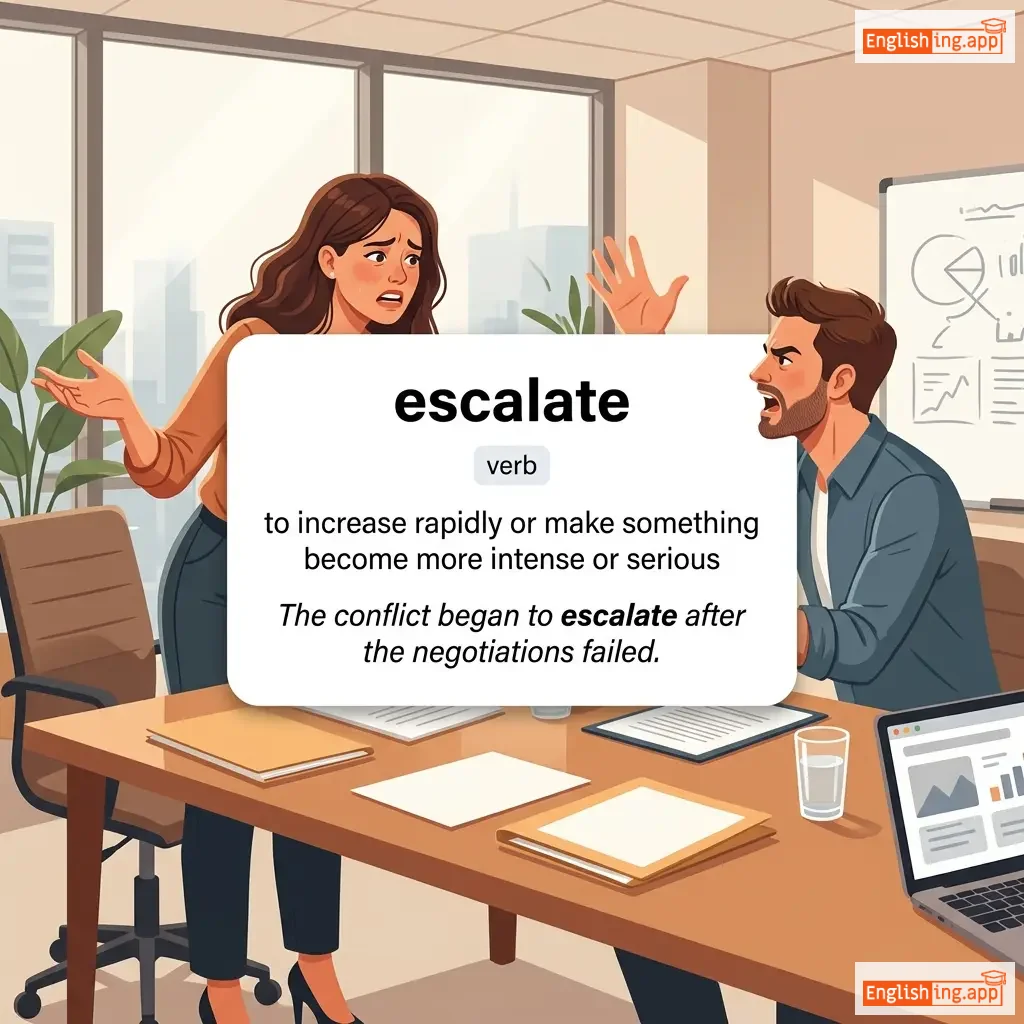
escalate definition card — visual illustration of the meaning
verb
/ˈɛskəleɪt/
エスカレート (esukarēto)

to increase rapidly or make something become more intense or serious

"The conflict began to escalate after the negotiations failed."

"交渉が失敗した後、紛争はエスカレートし始めた。" (Kōshō ga shippai shita ato, funsō wa esukarēto shihajimeta.)