語彙集

英単語辞書 | 単語の意味、定義、例文

noun
/ˈɛntəti/
実体 (jittai)

something that exists as a single and complete unit; an organization or being

"The new company will operate as a separate legal entity."
"新しい会社は別個の法的実体として運営されます。" (Atarashī kaisha wa bekkō no hōteki jittai toshite un'ei saremasu.)
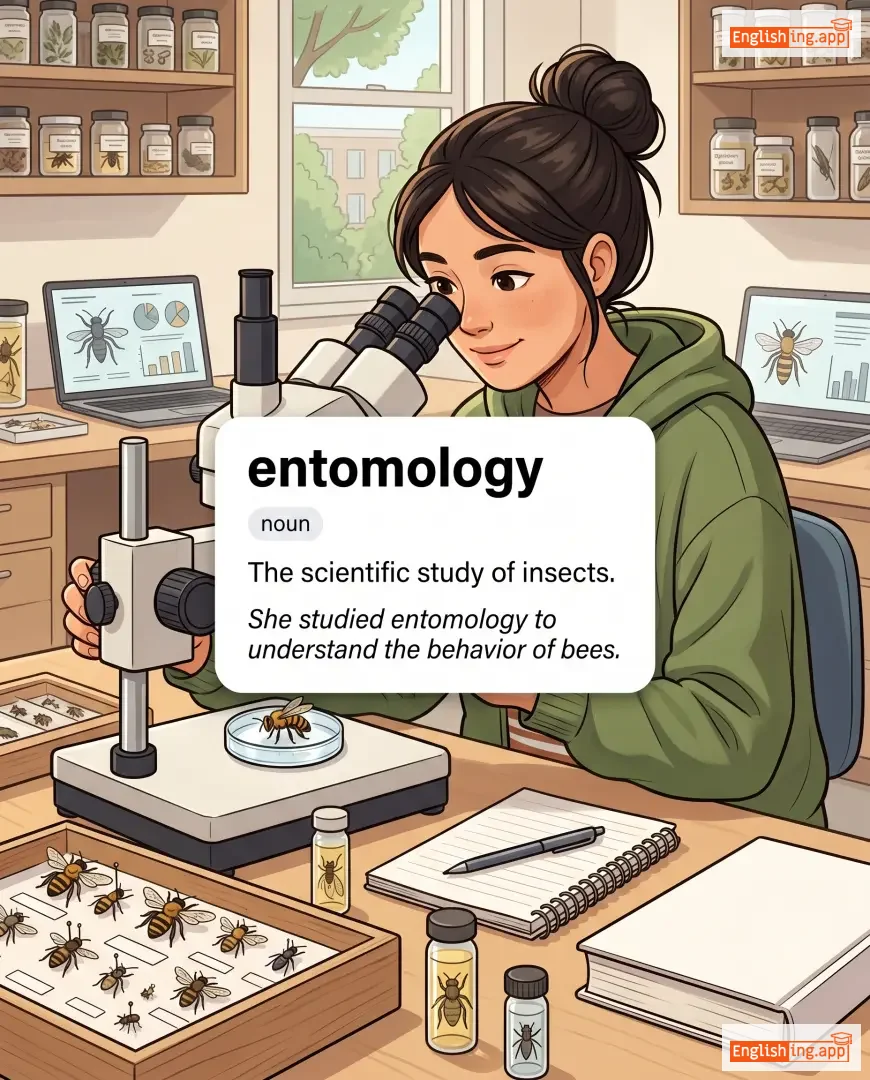
entomology definition card — visual illustration of the meaning
noun
/ˌɛntəˈmɒlədʒi/
昆虫学 (konchugaku)

The scientific study of insects.

"She studied entomology to understand the behavior of bees."

"彼女は蜂の行動を理解するために昆虫学を学びました。" (Kanojo wa hachi no koudou wo rikai suru tame ni konchugaku wo manabimashita.)
noun
/ˈɒntʊrɑːʒ/
随行者 (zuikōsha)

A group of people attending or surrounding an important person.

"The celebrity arrived with her entourage of assistants and bodyguards."

"その有名人は、アシスタントやボディガードを伴って到着しました。" (Sono yūmeijin wa, ashisutanto ya bodigādo o tomonatte tōchaku shimashita.)
noun
/ˈɛntrəns/
入り口 (iriguchi)

A place of entering; an entry point.

"They waited at the main entrance of the building."

"彼らは建物の正面入り口で待っていました。" (Karera wa tatemono no shōmen iriguchi de matte imashita.)
verb
/ɪnˈtræp/

To catch or trick someone into a difficult situation.

"The police tried to entrap the criminal with false evidence."

verb
/ɪnˈtriːt/
懇願する (kongansuru)

To ask earnestly or beg someone to do something.

"She entreated him to stay a little longer."

"彼女は彼にもう少し長くいてくれるように懇願した。" (Kanojo wa kare ni mou sukoshi nagaku itekureru you ni konganshita.)
noun
/ɪnˈtriːti/
請願 (seigan)

An earnest or humble request or plea.

"She made an entreaty for peace during the heated argument."

"彼女は激しい議論の中で平和を求める請願をしました。" (Kanojo wa hageshī giron no naka de heiwa o motomeru seigan o shimashita.)
noun
/ˈɒntreɪ/ (UK), /ˈɑːntreɪ/ (US)
メインディッシュ (mein disshu)

The main course of a meal (US); the right to enter or access (formal).

"The restaurant’s signature steak was served as the main entree."

"レストランのサインステーキはメインディッシュとして提供されました。" (Resutoran no sain sutēki wa mein disshu toshite teikyō saremashita.)
verb
/ɪnˈtrɛntʃ/
堅固にする (kengonishimasu)

To establish something so firmly that it is difficult to change.

"The company entrenched its position in the market through innovation."

"その企業は革新を通じて市場での地位を固めました。" (Sono kigyō wa kakushin o tōjite shijō de no chii o katamemashita.)
adjective
/ɪnˈtrɛntʃt/
根付いている (nezuiteiru)

Firmly established and unlikely to change.

"Corruption is deeply entrenched in the system."

"腐敗はシステムに深く根付いています。" (Fuhai wa shisutemu ni fukaku nezuitemasu.)
Entrepreneur definition card — visual illustration of the meaning
noun
/ˌɒntrəprəˈnɜːr/ (UK), /ˌɑːntrəprəˈnɝː/ (US)
起業家 (kigyōka)

A person who starts and runs a business, taking on financial risks in the hope of profit.

"The young entrepreneur launched a successful tech startup."

"若い起業家は成功したテクノロジースタートアップを立ち上げました。" (Wakai kigyōka wa seikō shita tekunorojī sutātopu o tachiagemashita.)
entrepreneurial definition card — visual illustration of the meaning
adjective
/ˌɒn.trə.prəˈnɜː.ri.əl/
起業家的 (kigyōteki)

Having the characteristics of an entrepreneur; showing initiative and willingness to undertake new ventures.

"Her entrepreneurial mindset led to the launch of a successful startup."

"彼女の起業家精神は成功したスタートアップの立ち上げに繋がりました。" (Kanojo no kigyōka seishin wa seikō shita sutātoappu no tachiage ni tsunagarimashita.)
noun
/ˈɛntri/
エントランス (entoransu)

the act of going into a place, or permission to go in

"Entry to the museum is free on Fridays."

"金曜日は博物館のエントランスが無料です。" (Kin'yōbi wa hakubutsukan no entoransu ga muryō desu.)
verb
/ɪnˈtwaɪn/
絡ませる (karamaseru)

to twist or wind together; to become closely connected or involved

"The vines entwine around the old fence."

"つるが古いフェンスを巻きつけている。" (Tsuru ga furui fensu o makitsukete iru.)
verb
/ɪˈnjuːməˌreɪt/
列挙する (retsu kyo suru)

to mention things one by one; to list or count

"She enumerated the reasons for her decision."
"彼女は決定の理由を列挙した。" (Kanojo wa kettei no riyuu o retsu kyo shita.)
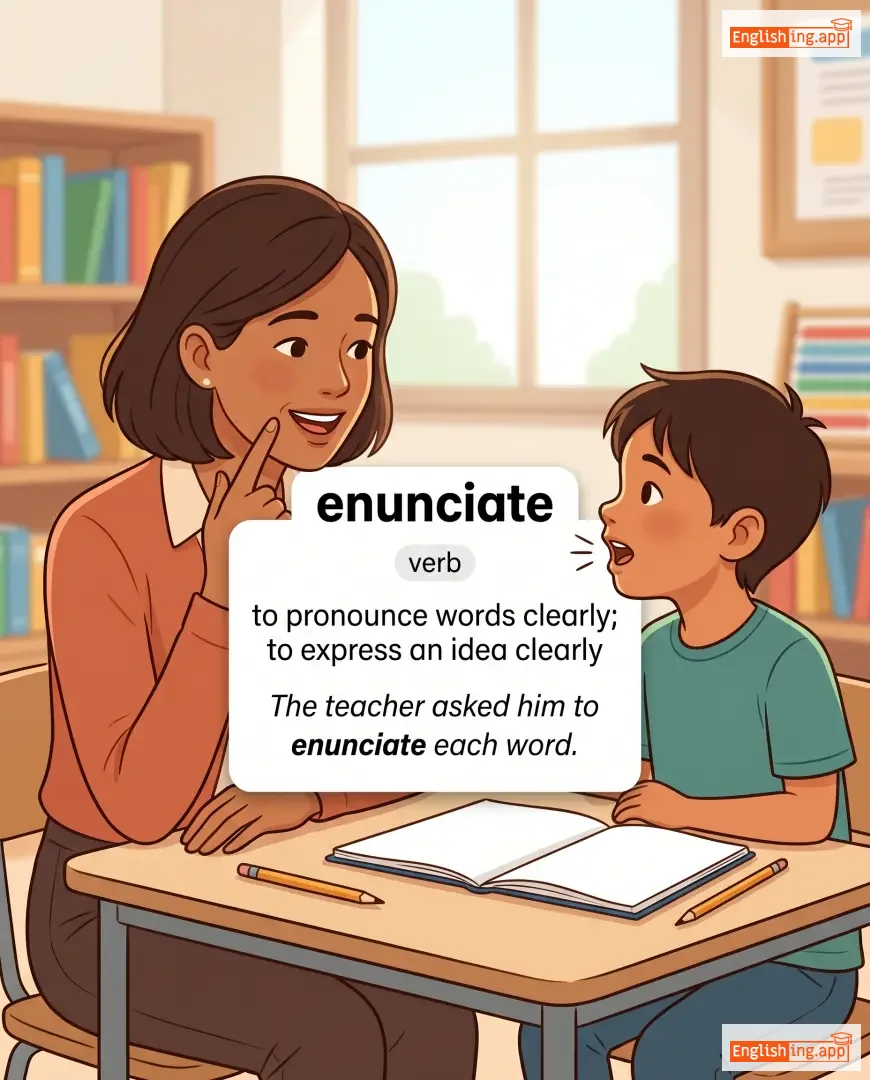
enunciate definition card — visual illustration of the meaning
verb
/ɪˈnʌnsieɪt/
明確に発音する (meikaku ni hatsuon suru)

to pronounce words clearly; to express an idea clearly

"The teacher asked him to enunciate each word."
"先生は彼に各単語を明確に発音するように頼んだ。" (Sensei wa kare ni kaku tango o meikaku ni hatsuon suru yō ni tanonda.)
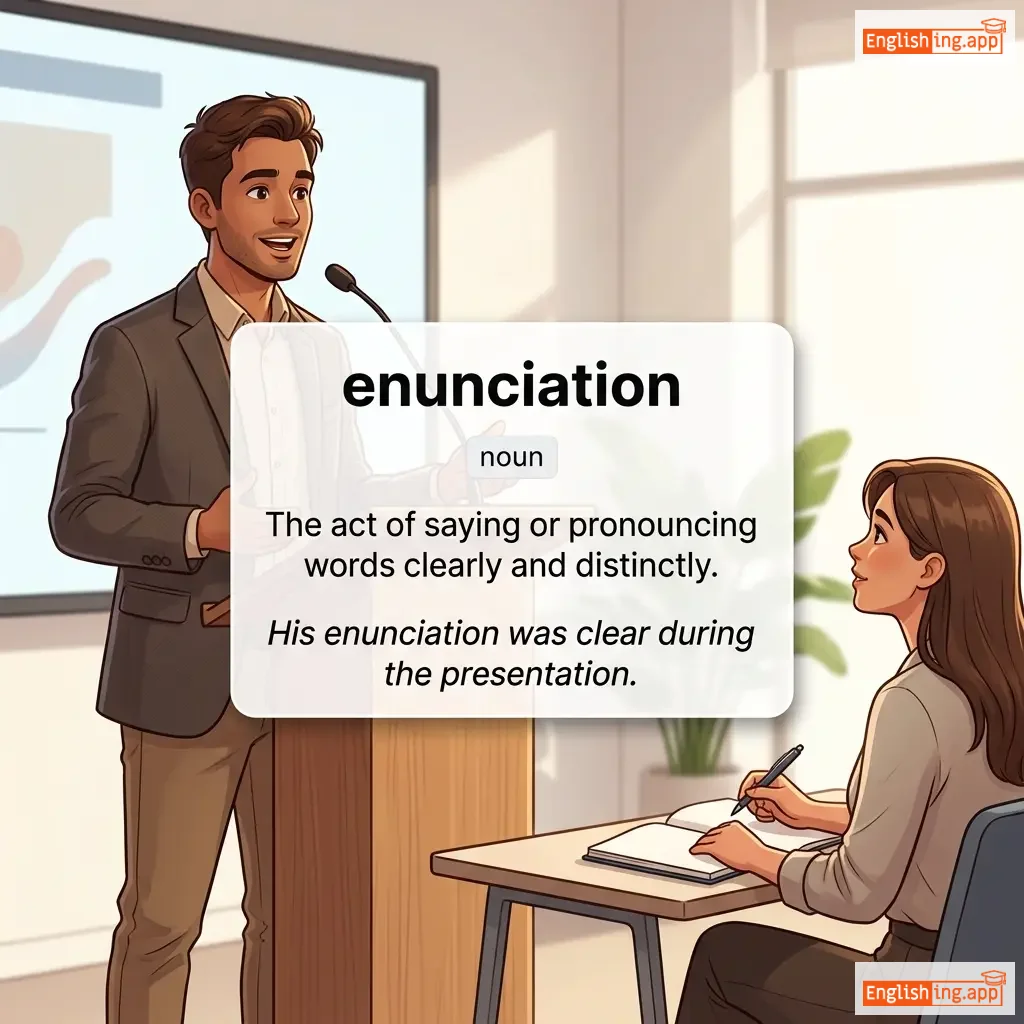
enunciation definition card — visual illustration of the meaning
noun
/ɪˌnʌn.siˈeɪ.ʃən/
発音, 明確な発音 (hatsuon, meikaku na hatsuon)

The act of saying or pronouncing words clearly and distinctly.

"His enunciation was clear during the presentation."

"彼の発音はプレゼンテーション中に明確でした。" (Kare no hatsuon wa purezentēshon-chū ni meikaku deshita.)
noun
/ˈɛnvəloʊp/
封筒 (fūtō)

a flat paper container used to enclose a letter or document

"She sealed the letter in an envelope and posted it."

"彼女は手紙を封筒に入れて、郵送しました。" (Kanojo wa tegami o fūtō ni irete, yūsō shimashita.)
adjective
/ˈen.vi.ə.bəl/
うらやましい (urayamashii)

causing envy; desirable

"Her success was enviable among her peers."

"彼女の成功は仲間の間でうらやましかった。" (Kanojo no seikou wa nakama no aida de urayamashikatta.)
adjective
/ˈen.vi.əs/
嫉妬深い; ねたむ (shittobukai; netamu)

feeling or showing envy; jealous

"She felt envious of her friend's new car."

"彼女は友達の新しい車に嫉妬していた。" (Kanojo wa tomodachi no atarashī kuruma ni shitto shite ita.)
verb
/ɪnˈvaɪərən/
囲む (kakomu)

to surround or enclose; to encircle

"Mountains environ the small valley."
"山々は小さな谷を囲んでいます。" (Yamayama wa chīsana tani o kakondeimasu.)
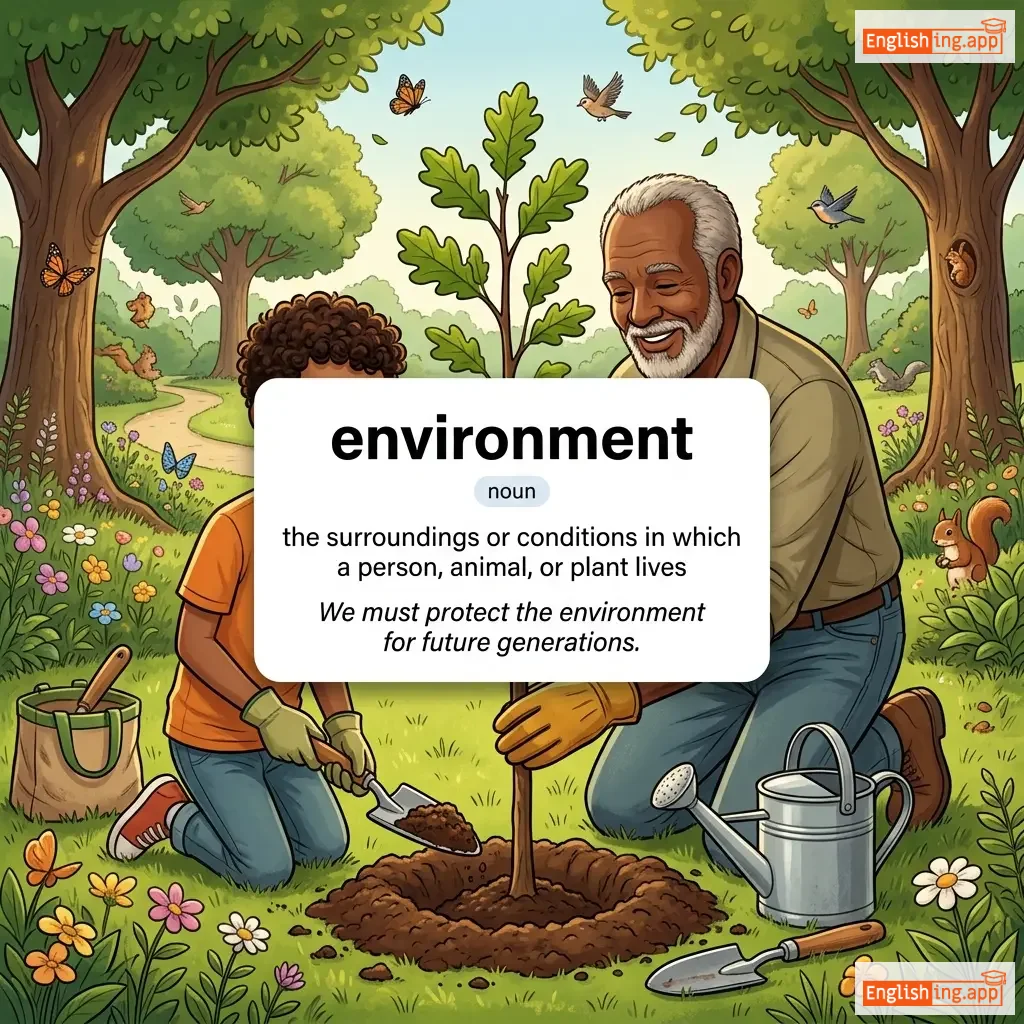
environment definition card — visual illustration of the meaning
noun
/ɪnˈvaɪrənmənt/
環境 (kankyou)

the surroundings or conditions in which a person, animal, or plant lives

"We must protect the environment for future generations."
"私たちは未来の世代のために環境を守らなければなりません。" (Watashitachi wa mirai no sedai no tame ni kankyou o mamoranakereba narimasen.)
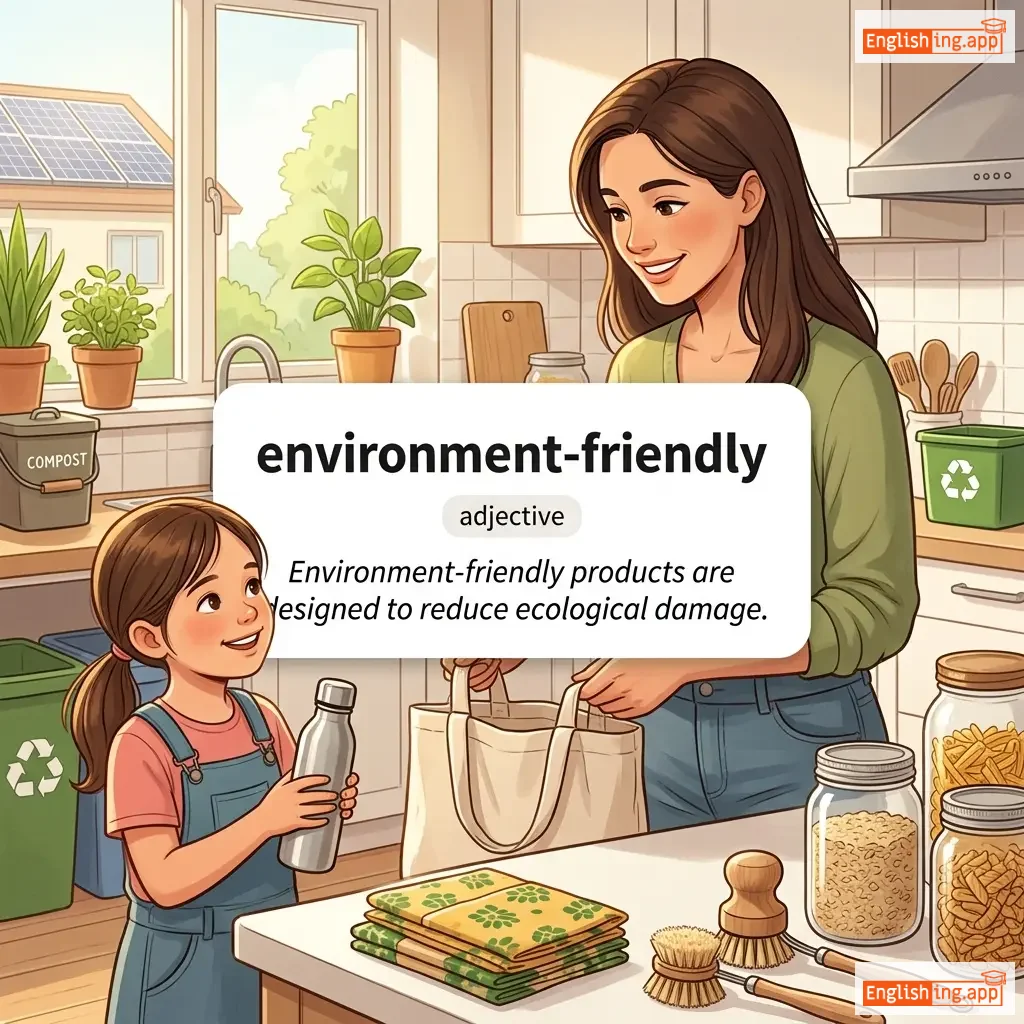
environment-friendly definition card — visual illustration of the meaning
adjective
/ɪnˈvaɪrənmənt ˈfrɛndli/
環境に優しい (kankyō ni yasashī)

Designed or produced in a way that causes minimal harm to the environment, often using sustainable materials and processes that reduce ecological impact.

"Environment-friendly products are designed to reduce ecological damage."

"環境に優しい製品は、環境へのダメージを減らすように設計されています。" (Kankyō ni yasashī seihin wa, kankyō e no damēji o herasu yō ni sekkei sareteimasu.)
adjective
/ɪnˌvaɪrənˈmɛntl/
環境的な (kankyōtekina)

relating to the natural world and the impact of human activity on its condition

"The company adopted new policies to reduce environmental damage."
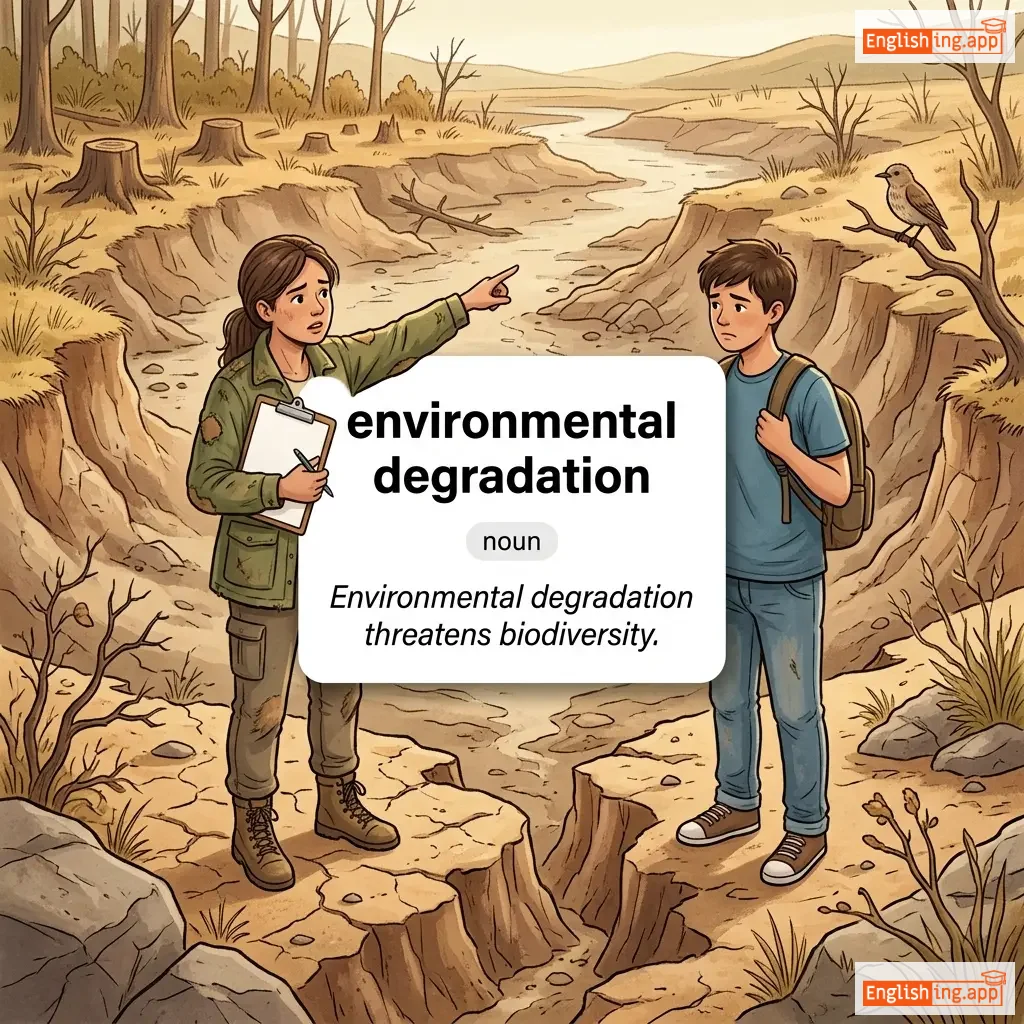
"その会社は環境へのダメージを減らすために新しい方針を採用しました。" (Sono kaisha wa kankyō e no damēji o herasu tame ni atarashī hōshin o saiyō shimashita.)
environmental degradation definition card — visual illustration of the meaning
noun
ɪnˌvaɪrənˈmɛntəl ˌdɛɡrəˈdeɪʃən
環境劣化 (kankyō reppaku)

The deterioration of the environment through depletion of resources and destruction of ecosystems.

"Environmental degradation threatens biodiversity."
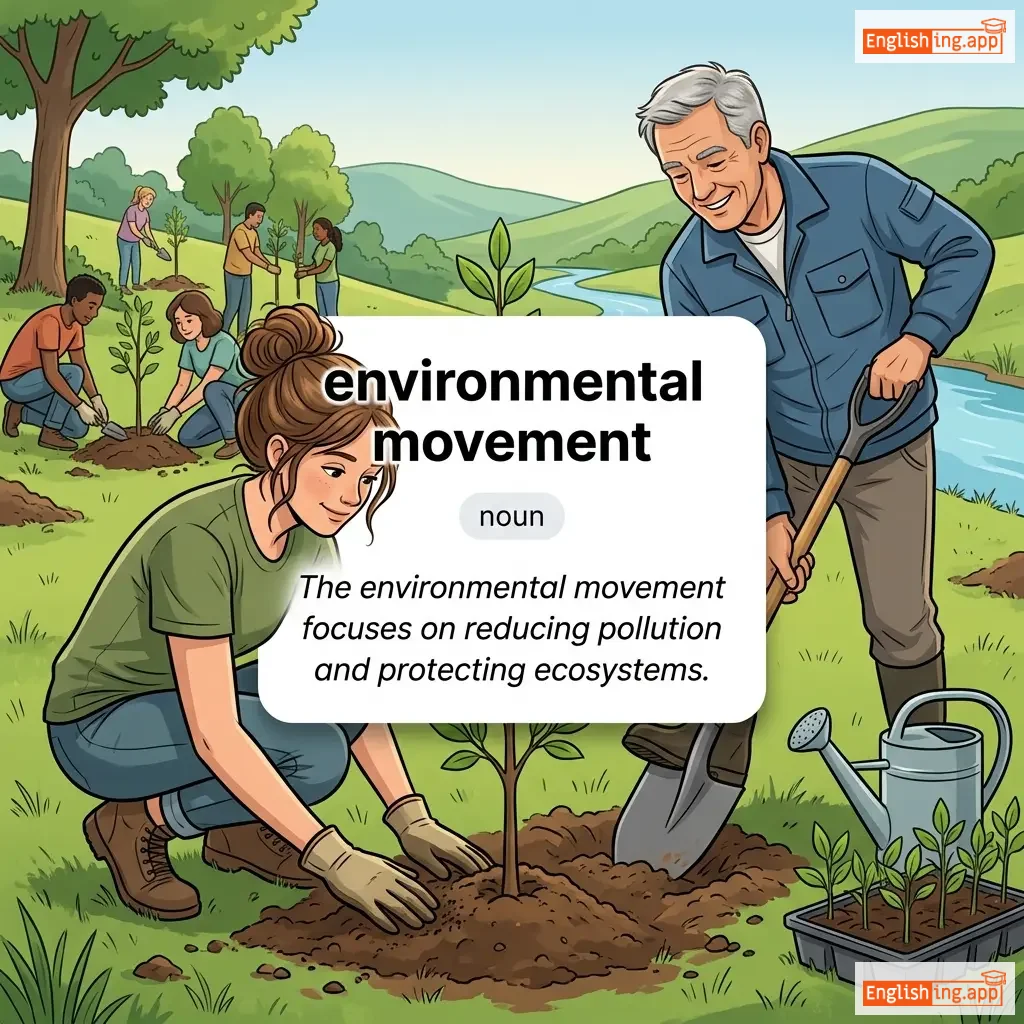
"環境劣化は生物多様性を脅かしています。" (Kankyō reppaku wa seibutsu tayōsei o odokashiteimasu.)
environmental movement definition card — visual illustration of the meaning
noun
/ɪnˌvaɪrənˈmɛntəl ˈmuːvmənt/
環境運動 (kankyou undou)

A social or political movement aimed at protecting the environment and promoting sustainable practices through advocacy, education, and policy changes.

"The environmental movement focuses on reducing pollution and protecting ecosystems."
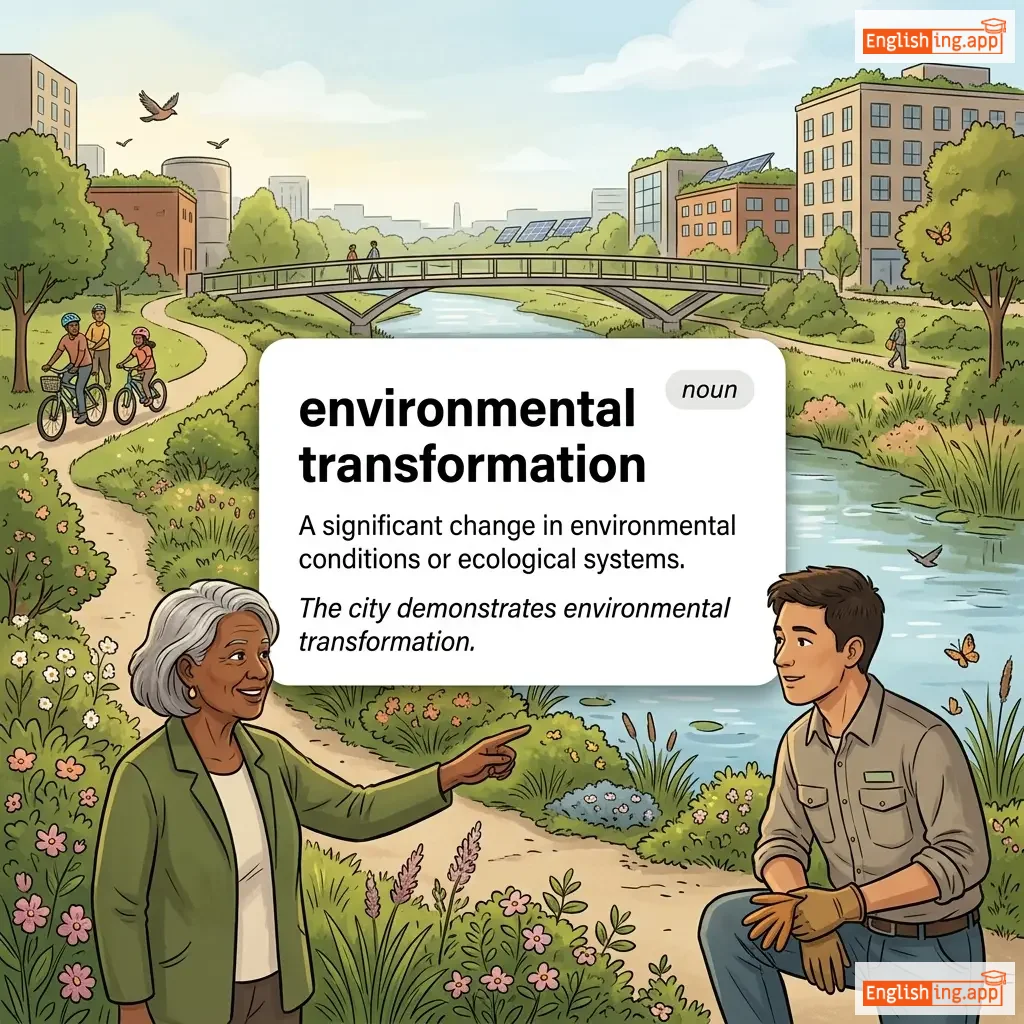
"環境運動は汚染の削減と生態系の保護に焦点を当てています。" (Kankyou undou wa osen no sakugen to seitai-kei no hogo ni shouten wo ateteimasu.)
environmental transformation definition card — visual illustration of the meaning
noun
ɪnˌvaɪ.rənˈmen.təl ˌtræns.fəˈmeɪ.ʃən
環境変革 (kankyō henka)

A significant change in environmental conditions or ecological systems.

"The city demonstrates environmental transformation."

"この都市は環境変革を示しています。" (Kono toshi wa kankyō henka o shimeshiteimasu.)
verb
/ɪnˈvɪʒən/
想像する (sōzō suru)

to imagine or picture something in the future; to visualize a possibility or goal

"She envisions a world where everyone has equal access to education."
"彼女はすべての人が平等に教育を受けられる世界を想像しています。" (Kanojo wa subete no hito ga byōdō ni kyōiku o ukerareru sekai o sōzō shiteimasu.)
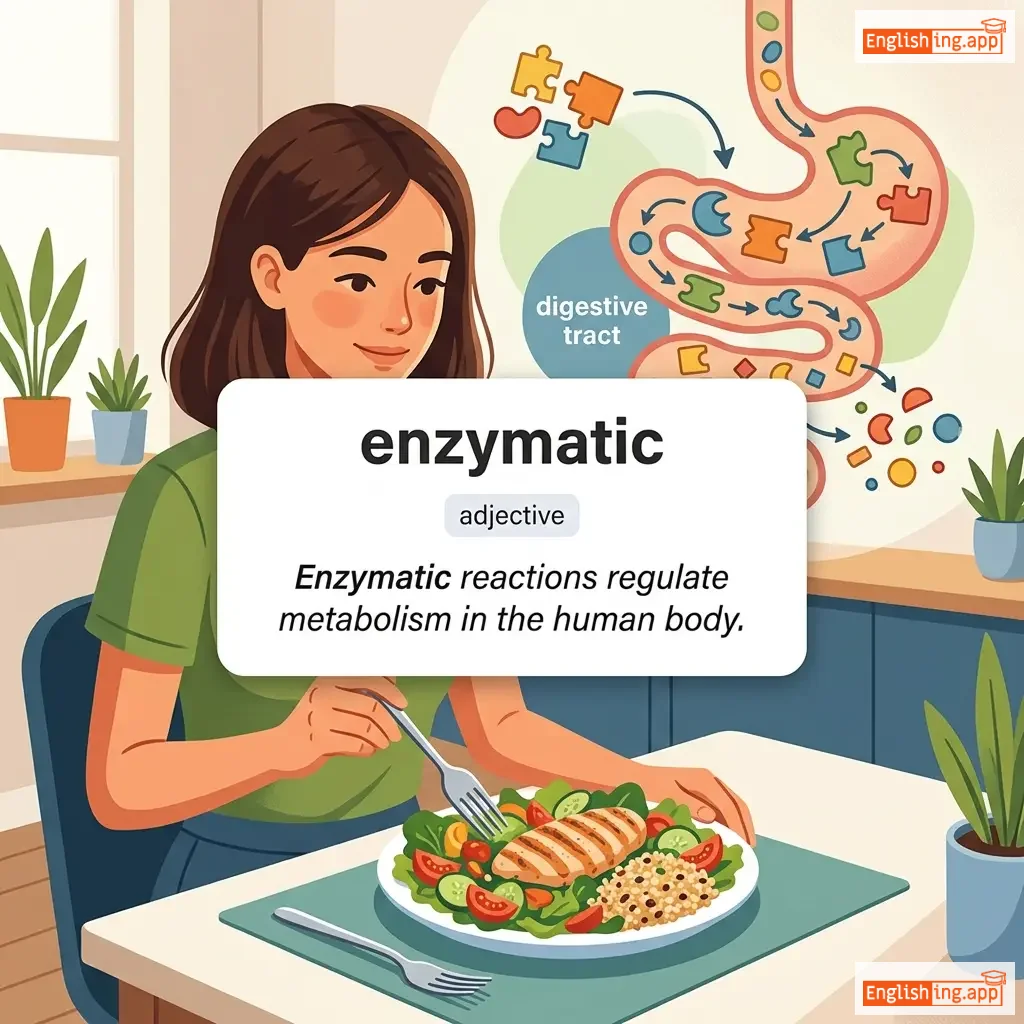
enzymatic definition card — visual illustration of the meaning
adjective
/ˌen.zɪˈmæt.ɪk/
酵素に関連する (kōso ni kanren suru)

Relating to or involving enzymes, which are proteins that catalyze biochemical reactions in living organisms.

"Enzymatic reactions regulate metabolism in the human body."

"酵素反応は人間の体内で代謝を調節します。" (Kōso hannō wa ningen no tainai de taisha o chōsetsu shimasu.)
noun
/ˈiːən/
エオン (eon)

an indefinitely long period of time; an age

"Dinosaurs lived millions of years ago, in a different eon."

"恐竜は何百万年も前に、異なるエオンで生きていました。" (Kyōryū wa nan byakuman-nen mo mae ni, kotonaru eon de ikite imashita.)
noun
/ˈɛpəlɛt/
肩章 (kashou)

An ornamental shoulder piece on a garment, especially on the coat or jacket of a military uniform.

"The general’s uniform had a golden epaulet on each shoulder."

"将軍の制服は、両肩に金色のエポーレットが付いていた。" (Shougun no seifuku wa, ryōkata ni kin'iro no epōretto ga tsuite ita.)
noun
/ˈɛpəlɛt/
肩章 (ken-shou)

A variant spelling of epaulet, also meaning a shoulder ornament, especially on military uniforms.

"The officer’s epaulette shone brightly under the sunlight."
"その将校のエポレットは太陽の下で輝いていました。" (Sono shōkō no eporetto wa taiyō no shita de kagayaite imashita.)
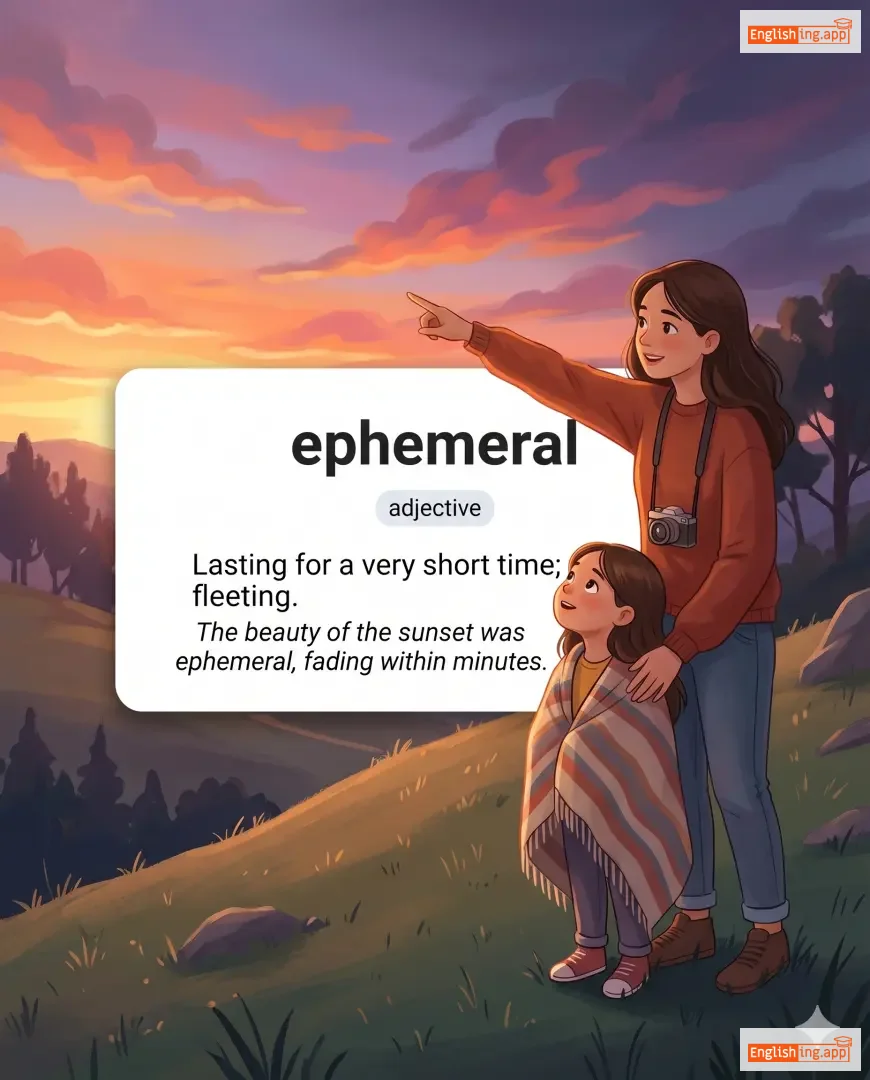
ephemeral definition card — visual illustration of the meaning
adjective
/ɪˈfɛmərəl/
儚い (hakanai)

Lasting for a very short time; fleeting.

"The beauty of the sunset was ephemeral, fading within minutes."

"夕日の美しさは儚く、数分で消えていった。" (Yūhi no utsukushisa wa hakanaku, su-fun de kiete itta.)
noun, adjective
/ˈɛpɪk/
叙事詩 (joshishi)

A long narrative poem or story about heroic deeds; also used to describe something grand or impressive.

"The Iliad is considered one of the greatest epics of ancient literature."

"イリアスは古代文学の中で最も偉大な叙事詩の一つと見なされています。" (Iriasu wa kodai bungaku no naka de mottomo idaina joshishi no hitotsu to minasareteimasu.)
noun
/ˈɛpɪkjʊr/
美食家 (bishokka)

A person who enjoys fine food and drink, often with refined taste.

"As an epicure, she always sought out the finest restaurants in the city."

"美食家として、彼女は常に市内で最高のレストランを探していました。" (Bishokka to shite, kanojo wa jōni shinaide saikō no resutoran o sagashite imashita.)
adjective
/ˌɛpɪkjʊˈriːən/
エピキュリアン (epikyurian)

relating to the enjoyment of fine food, drink, and luxury

"The chef prepared an epicurean feast for the guests."

"シェフはゲストのためにエピキュリアンな饗宴を準備しました。" (Shefu wa gesuto no tame ni epikyuriana kyōen o junbi shimashita.)
noun
/ˈɛpɪˌsaɪkl/
外周上の小円 (gaishū-jō no shōen)

a small circle whose center moves around the circumference of a larger one, used in ancient astronomy

"The concept of the epicycle was used to explain planetary motion."

"エピサイクルの概念は惑星の運動を説明するために使用されました。" (episykuru no gainen wa wakusei no undō o setsumei suru tame ni shiyō saremashita.)
noun
/ˌɛpɪˈsaɪklɔɪd/
エピサイクロイド (episaykuroido)

a curve traced by a point on the circumference of a circle that rolls around the outside of another circle

"The mathematician demonstrated how to draw an epicycloid."

"数学者はエピサイクロイドの描き方を示しました。" (Sūgakusha wa episaykuroido no egikata o shimeshimashita.)
noun
/ˌɛpɪˈdɛmɪk/
幸福 (koufuku)

a widespread occurrence of an infectious disease in a community at a particular time

"The flu epidemic affected thousands of people in the city."

"彼女は賞を受け取ったとき、幸せを隠すことができませんでした。" (Kanojo wa shou o uketotta toki, shiawase o kakusu koto ga dekimasen deshita.)
noun
/ˌɛpɪˈdɜːrmɪs/
皮膚の外層 (hifu no gaisou)

the outer layer of cells covering the body of an organism, especially the skin

"The epidermis protects the body from harmful bacteria."

"エピデルミスは有害な細菌から体を守ります。" (Epidermisu wa yūgaina saikin kara karada o mamorimasu.)
noun
/ˈɛpɪɡræm/
エピグラム (epiguramu)

A short, witty saying or poem that expresses an idea in a clever way.

"Oscar Wilde was famous for his sharp epigrams."

"オスカー・ワイルドは鋭いエピグラムで有名でした。" (Osukā Wairudo wa surudoi epiguramu de yūmei deshita.)
noun
/ˈɛpɪˌlɔːɡ/
エピローグ (epirōgu)

A section at the end of a book, play, or speech that serves as a conclusion.

"The author included an epilogue to explain what happened to the characters later."
"著者は登場人物たちのその後について説明するためにエピローグを追加しました。" (Chosha wa tōjō jinbutsu-tachi no sono-go ni tsuite setsumei suru tame ni epirōgu o tsuika shimashita.)
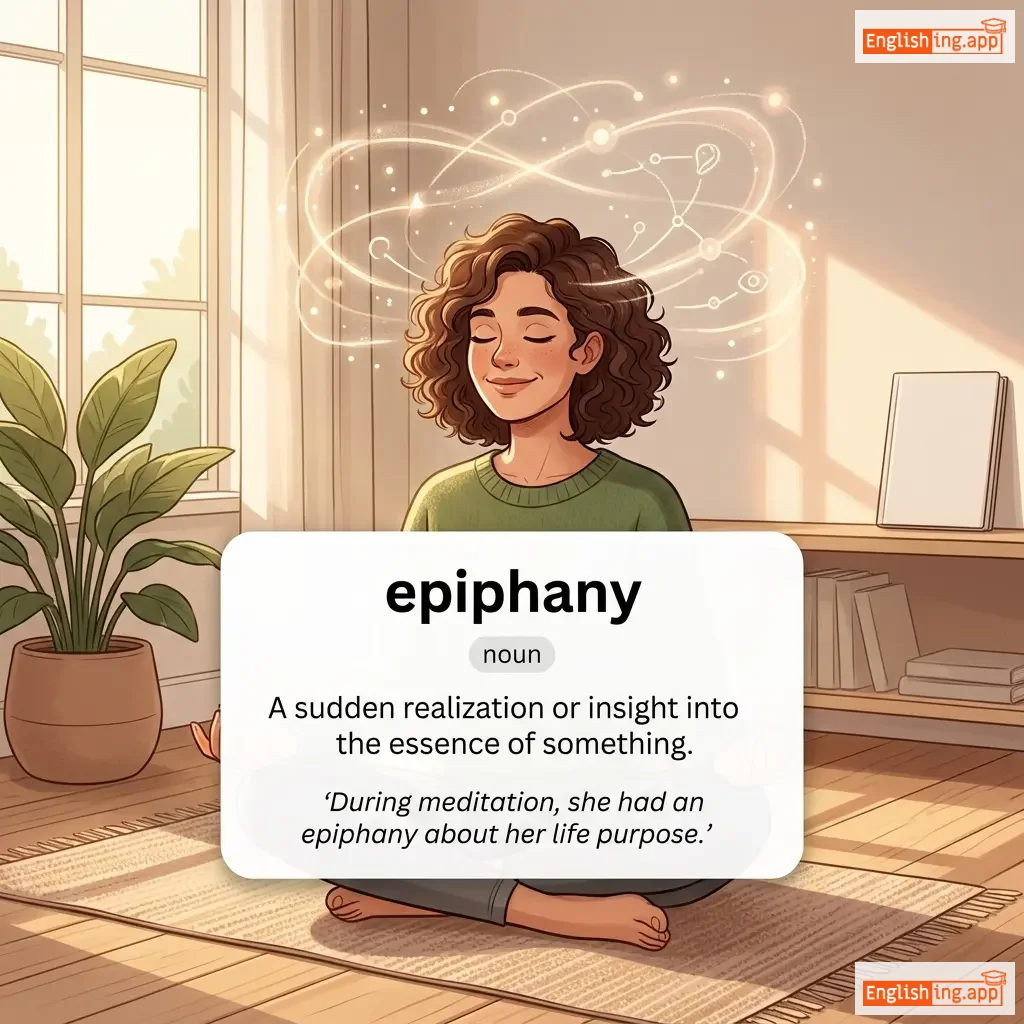
epiphany definition card — visual illustration of the meaning
noun
/ɪˈpɪfəni/
啓示 (keishi)

A sudden realization or insight into the essence of something.

"During meditation, she had an epiphany about her life purpose."

"瞑想中、彼女は自分の人生の目的について啓示を得た。" (Meisō-chū, kanojo wa jibun no jinsei no mokuteki ni tsuite keishi o eta.)
noun
/ˈɛpɪsoʊd/
エピソード (episōdo)

An event or part of a story, or one installment in a series.

"The last episode of the drama was watched by millions."

"そのドラマの最後のエピソードは何百万もの人々によって観られました。" (Sono dorama no saigo no episōdo wa nanbyakumō no hitobito ni yotte miraremashita.)
adjective
/ˌɛpɪˈsɒdɪk/
エピソディック (episodikku)

Happening occasionally or in separate parts; related to episodes.

"Her interest in art was episodic, coming and going over the years."

"彼女の芸術への興味はエピソディックで、何年もの間、来たり行ったりしていました。" (Kanojo no geijutsu e no kyōmi wa episodikku de, nannen mo no aida, kitari ittari shite imashita.)
noun
/ɪˌpɪstəˈmɒlədʒɪst/
認識論者 (ninshikironsha)

A scholar or expert who studies the nature, sources, and limits of knowledge.

"The epistemologist debated how humans can truly know anything with certainty."
"エピステモロジストは、人間がどのようにして確実に何かを知ることができるかについて議論しました。" (Epistemologist wa, ningen ga dono yō ni shite kakujitsu ni nanika o shiru koto ga dekiru ka ni tsuite giron shimashita.)
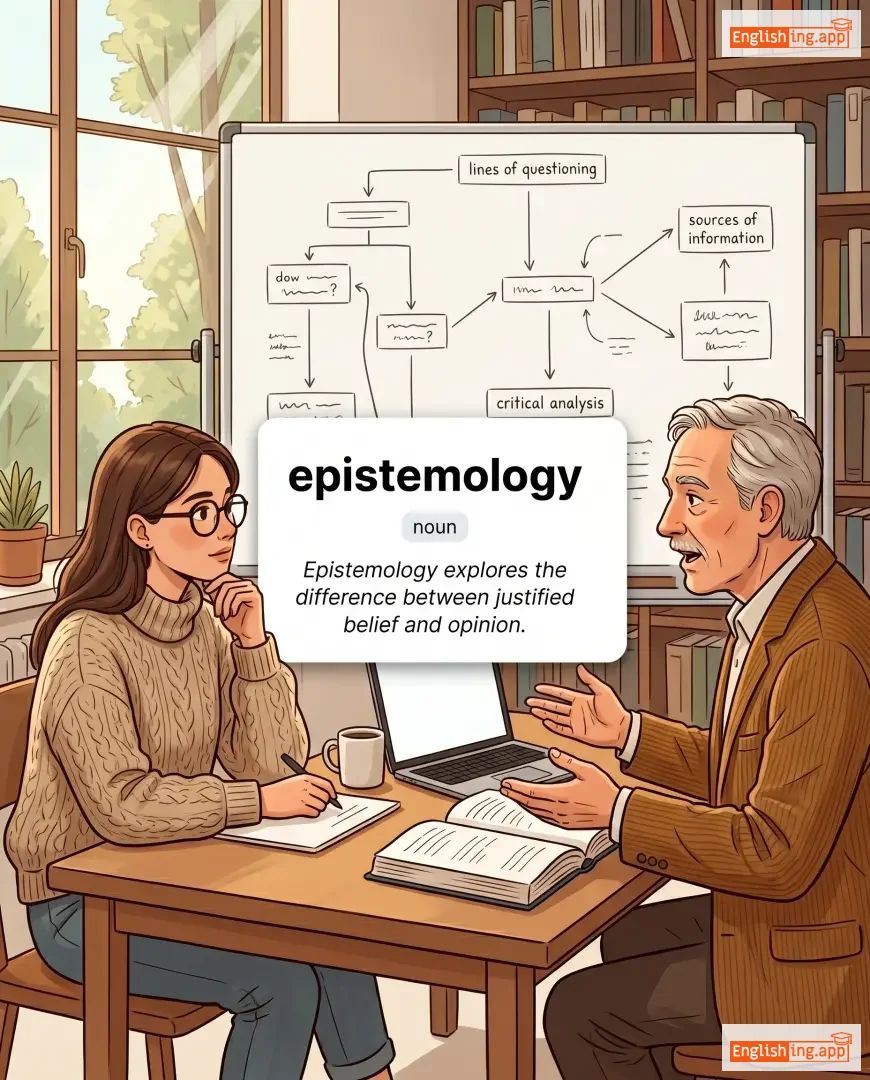
epistemology definition card — visual illustration of the meaning
noun
/ɪˌpɪstəˈmɒlədʒi/
認識論 (ninshikiron)

The branch of philosophy that studies the nature, origin, and scope of knowledge.

"Epistemology explores the difference between justified belief and opinion."

"認識論は正当な信念と意見との違いを探求します。" (Ninshikiron wa seitōna shinnen to iken to no chigai o tankyū shimasu.)
noun
/ɪˈpɪsəl/
書簡 (shokan)

A letter, especially a formal or didactic one; often used for letters in the New Testament.

"He wrote a long epistle to his friend about his travels."

"彼は自分の旅行について友人に長い手紙を書いた。" (Kare wa jibun no ryokō ni tsuite yūjin ni nagai tegami o kaita.)
adjective
/ɪˈpɪstələri/
書簡体 (shokantai)

Related to the writing of letters; expressed in or through letters.

"The novel is written in an epistolary style, consisting of letters between characters."

"その小説は書簡体スタイルで書かれており、登場人物間の手紙で構成されています。" (Sono shousetsu wa shokantai sutairu de kakarete ori, toujou jinbutsu kan no tegami de kousei sareteimasu.)
noun
/ˈɛpɪtɑːf/
墓碑銘 (hakamimei)

A short text written on a tombstone in memory of the deceased.

"The gravestone bore an epitaph honoring the soldier’s bravery."

"墓石にはその兵士の勇気を讃える墓碑銘が刻まれていた。" (Hakoseki ni wa sono heishi no yūki o tataeru hakobimei ga kizama rete ita.)