词汇表

英语词汇词典 | 单词含义、定义和示例

noun
/ˈɛntəti/
实体 (shítǐ)

something that exists as a single and complete unit; an organization or being

"The new company will operate as a separate legal entity."
"新公司将作为一个独立的法律实体运作。" (Xīn gōngsī jiāng zuòwéi yīgè dúlì de fǎlǜ shítǐ yùnzuò.)
entomology definition card — visual illustration of the meaning
noun
/ˌɛntəˈmɒlədʒi/
昆虫学 (kunchongxue)

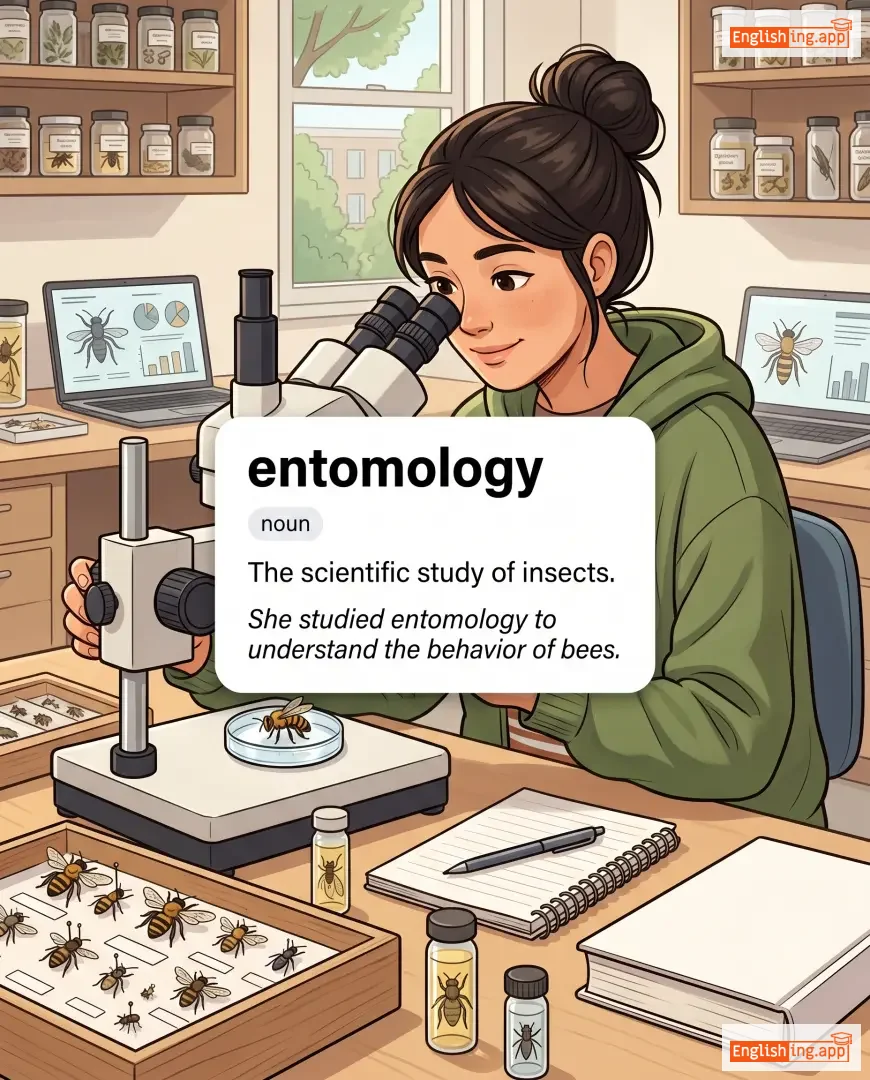
The scientific study of insects.

"She studied entomology to understand the behavior of bees."

"她学习昆虫学以了解蜜蜂的行为。" (Ta xuexi kunchongxue yi liaojie mifeng de xingwei.)
noun
/ˈɒntʊrɑːʒ/
随行人员 (suíxíng rényuán)

A group of people attending or surrounding an important person.

"The celebrity arrived with her entourage of assistants and bodyguards."

"名人带着她的随行人员和保镖到达了。" (Míngrén dàizhe tā de suíxíng rényuán hé bǎobiāo dàodále.)
noun
/ˈɛntrəns/
入口 (rùkǒu)

A place of entering; an entry point.

"They waited at the main entrance of the building."

"他们在大楼的主入口等候。" (Tāmen zài dàlóu de zhǔ rùkǒu děnghòu.)
verb
/ɪnˈtræp/

To catch or trick someone into a difficult situation.

"The police tried to entrap the criminal with false evidence."

verb
/ɪnˈtriːt/
恳求 (kěnqiú)

To ask earnestly or beg someone to do something.

"She entreated him to stay a little longer."

"她恳求他再待一会儿。" (Ta kenqiu ta zai dai yihuir.)
noun
/ɪnˈtriːti/
恳求 (kenqiu)

An earnest or humble request or plea.

"She made an entreaty for peace during the heated argument."

"她在激烈的争论中恳求和平。" (Ta zai jilie de zhenglun zhong kenqiu heping.)
noun
/ˈɒntreɪ/ (UK), /ˈɑːntreɪ/ (US)
主菜 (zhǔ cài)

The main course of a meal (US); the right to enter or access (formal).

"The restaurant’s signature steak was served as the main entree."

"餐厅的招牌牛排作为主菜上桌。" (Cāntīng de zhāopái niúpái zuòwéi zhǔ cài shàngzhuō.)
verb
/ɪnˈtrɛntʃ/
扎根 (zhāgēn)

To establish something so firmly that it is difficult to change.

"The company entrenched its position in the market through innovation."

"公司通过创新巩固了其市场地位。" (Gōngsī tōngguò chuàngxīn gǒnggùle qí shìchǎng dìwèi.)
adjective
/ɪnˈtrɛntʃt/
根深蒂固 (gēn shēn dì gù)

Firmly established and unlikely to change.

"Corruption is deeply entrenched in the system."

"腐败在这个系统中根深蒂固。" (Fǔbài zài zhège xìtǒng zhōng gēn shēn dì gù.)
Entrepreneur definition card — visual illustration of the meaning
noun
/ˌɒntrəprəˈnɜːr/ (UK), /ˌɑːntrəprəˈnɝː/ (US)
企业家 (qǐyèjiā)

A person who starts and runs a business, taking on financial risks in the hope of profit.

"The young entrepreneur launched a successful tech startup."

"这位年轻的企业家创办了一家成功的科技初创公司。" (Zhè wèi niánqīng de qǐyèjiā chuàngbànle yī jiā chénggōng de kējì chūchuàng gōngsī.)
entrepreneurial definition card — visual illustration of the meaning
adjective
/ˌɒn.trə.prəˈnɜː.ri.əl/
创业精神 (chuangye jingshen)

Having the characteristics of an entrepreneur; showing initiative and willingness to undertake new ventures.

"Her entrepreneurial mindset led to the launch of a successful startup."

"她的创业精神促成了一个成功创业公司的诞生。" (Ta de chuangye jingshen cuchengle yige chenggong chuangye gongsi de dansheng.)
noun
/ˈɛntri/
入口 (rùkǒu)

the act of going into a place, or permission to go in

"Entry to the museum is free on Fridays."

"博物馆的入口在星期五免费。" (Bówùguǎn de rùkǒu zài xīngqīwǔ miǎnfèi.)
verb
/ɪnˈtwaɪn/
缠绕 (chánrào)

to twist or wind together; to become closely connected or involved

"The vines entwine around the old fence."

"藤蔓绕过老围栏。" (Téngmàn rào guò lǎo wéilán.)
verb
/ɪˈnjuːməˌreɪt/
列举 (lièjǔ)

to mention things one by one; to list or count

"She enumerated the reasons for her decision."
"她列举了做出决定的理由。" (Tā lièjǔle zuòchū juédìng de lǐyóu.)
enunciate definition card — visual illustration of the meaning
verb
/ɪˈnʌnsieɪt/
清晰地发音 (qīngxī de fāyīn)

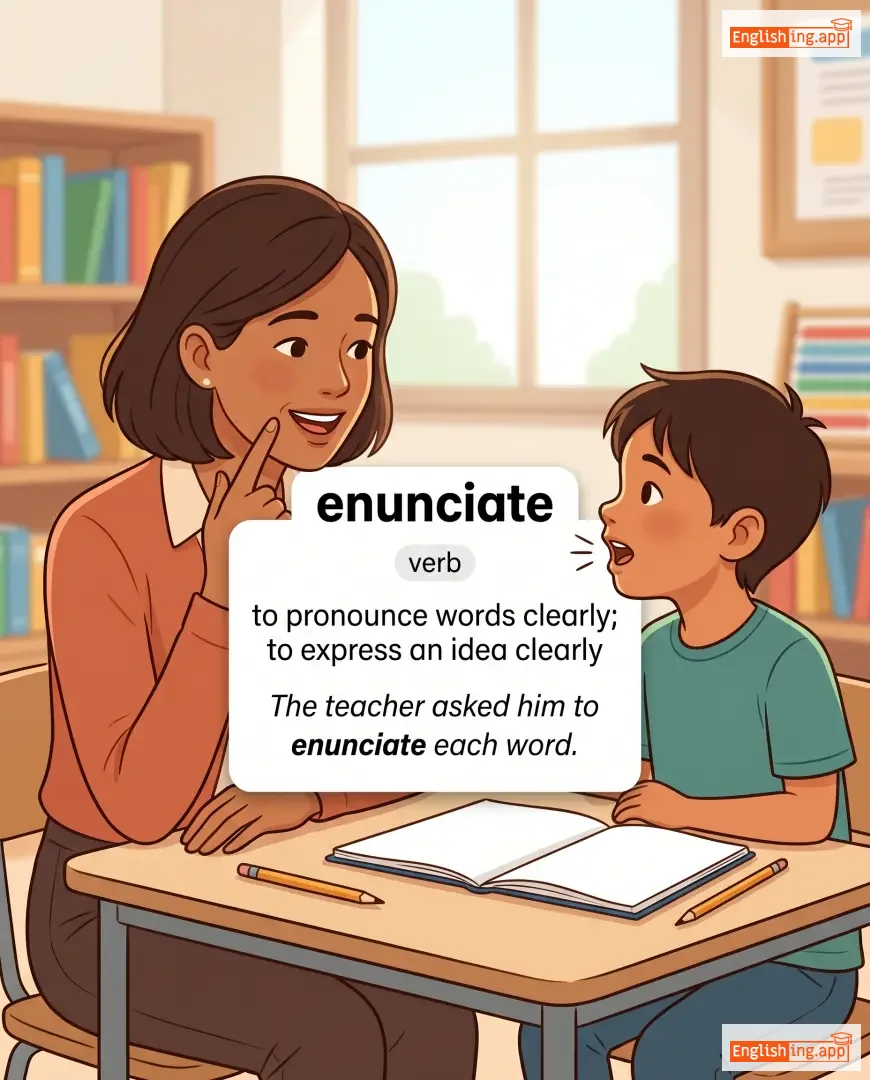
to pronounce words clearly; to express an idea clearly

"The teacher asked him to enunciate each word."

"老师让他清晰地发音每个单词。" (Lǎoshī ràng tā qīngxī de fāyīn měi gè dāncí.)
enunciation definition card — visual illustration of the meaning
noun
/ɪˌnʌn.siˈeɪ.ʃən/
发音,清晰发音 (fayin, qingxi fayin)

The act of saying or pronouncing words clearly and distinctly.

"His enunciation was clear during the presentation."

"他的发音在演讲中很清晰。" (Tā de fāyīn zài yǎnjiǎng zhōng hěn qīngxī.)
noun
/ˈɛnvəloʊp/
信封 (xìnfēng)

a flat paper container used to enclose a letter or document

"She sealed the letter in an envelope and posted it."

"她把信封好,并寄出了。" (Tā bǎ xìnfēng hǎo, bìng jì chūle.)
adjective
/ˈen.vi.ə.bəl/
值得羡慕的 (zhí dé xiàn mù de)

causing envy; desirable

"Her success was enviable among her peers."

"她的成功在同事中是值得羡慕的。" (Tā de chénggōng zài tóngshì zhōng shì zhídé xiànmù de.)
adjective
/ˈen.vi.əs/
嫉妒的; 羡慕的 (jidu de; xianmu de)

feeling or showing envy; jealous

"She felt envious of her friend's new car."

"她对朋友的新车感到嫉妒。" (Tā duì péngyǒu de xīn chē gǎndào jídù.)
verb
/ɪnˈvaɪərən/
环绕 (huánrào)

to surround or enclose; to encircle

"Mountains environ the small valley."
"山脉环绕着小山谷。" (Shānmài huánrào zhe xiǎo shāngǔ.)
environment definition card — visual illustration of the meaning
noun
/ɪnˈvaɪrənmənt/
环境 (huanjing)

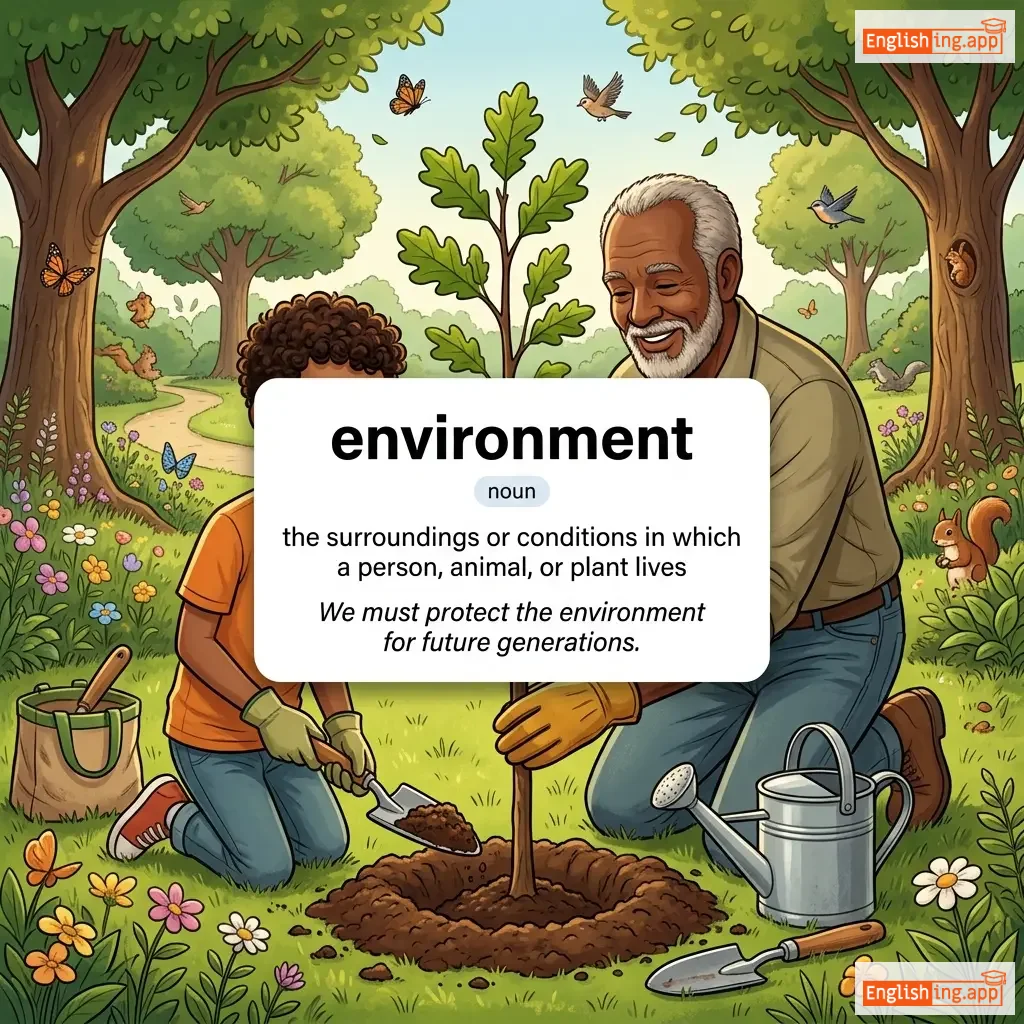
the surroundings or conditions in which a person, animal, or plant lives

"We must protect the environment for future generations."
"我们必须为未来的世代保护环境。" (wo men bi xu wei wei lai de shi dai bao hu huan jing.)
environment-friendly definition card — visual illustration of the meaning
adjective
/ɪnˈvaɪrənmənt ˈfrɛndli/
环保 (huánbǎo)

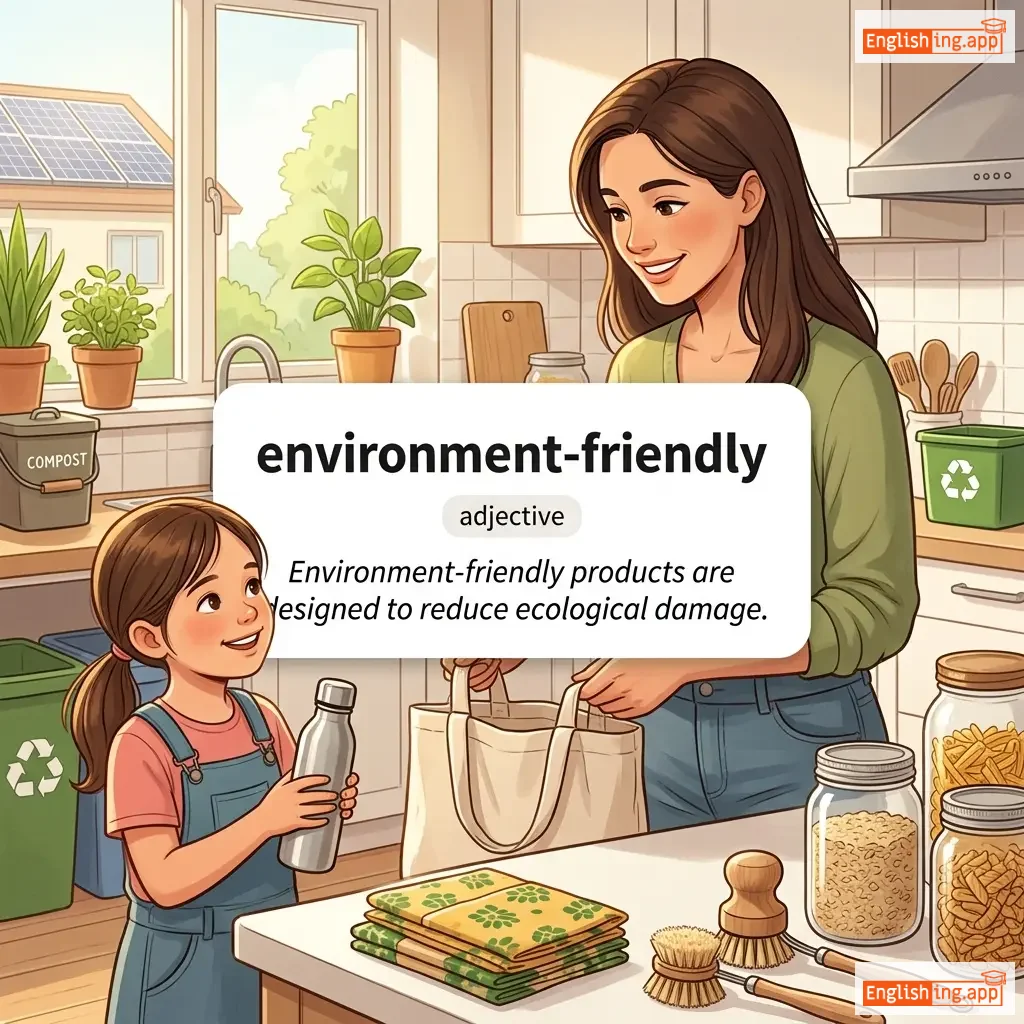
Designed or produced in a way that causes minimal harm to the environment, often using sustainable materials and processes that reduce ecological impact.

"Environment-friendly products are designed to reduce ecological damage."

"环保产品旨在减少生态损害。" (Huánbǎo chǎnpǐn zhǐ zài jiǎnshǎo shēngtài sǔnhài.)
adjective
/ɪnˌvaɪrənˈmɛntl/
环境的 (huánjìng de)

relating to the natural world and the impact of human activity on its condition

"The company adopted new policies to reduce environmental damage."
"公司采取了新的政策以减少环境损害。" (Gōngsī cǎiqǔle xīn de zhèngcè yǐ jiǎnshǎo huánjìng sǔnhài.)
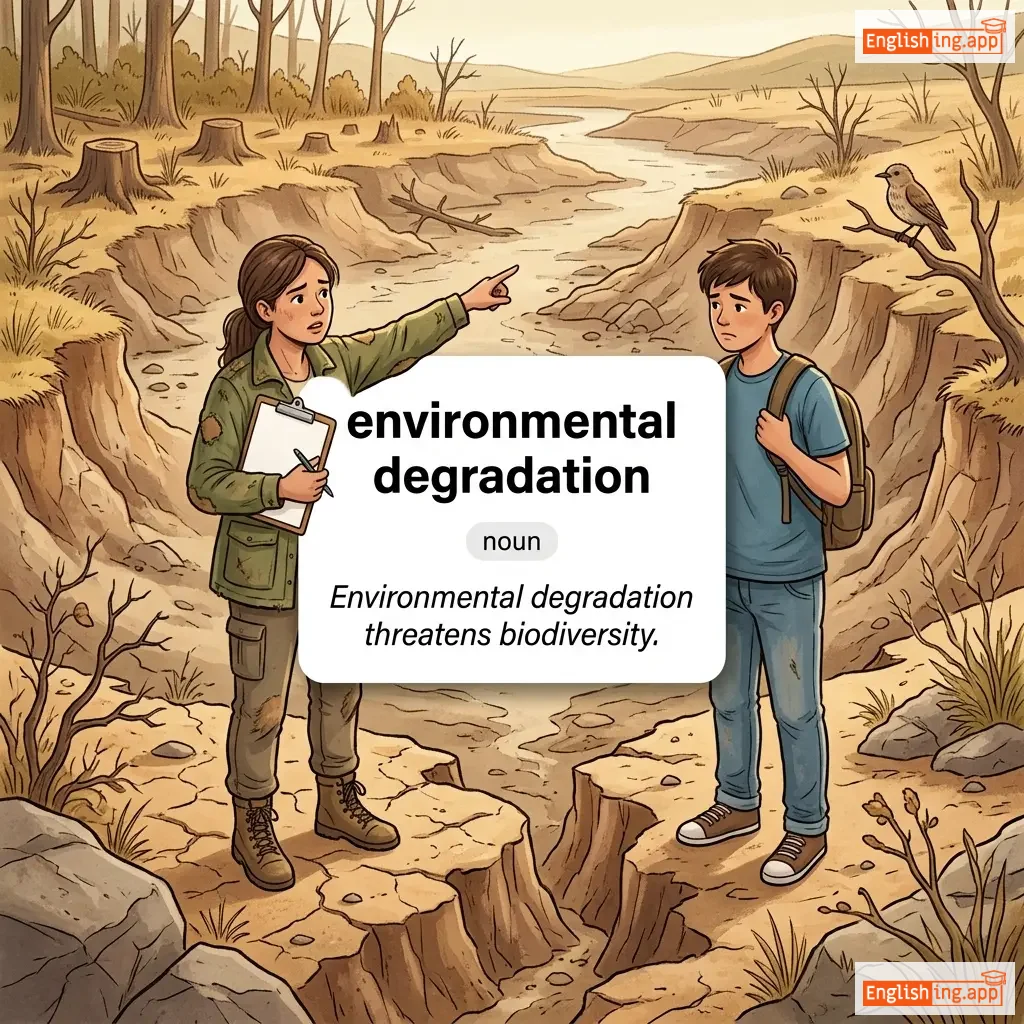
environmental degradation definition card — visual illustration of the meaning
noun
ɪnˌvaɪrənˈmɛntəl ˌdɛɡrəˈdeɪʃən
环境退化 (huanjing tuihua)

The deterioration of the environment through depletion of resources and destruction of ecosystems.

"Environmental degradation threatens biodiversity."
"环境退化威胁到生物多样性。" (Huanjing tuihua weixie dao shengwu duoyangxing.)
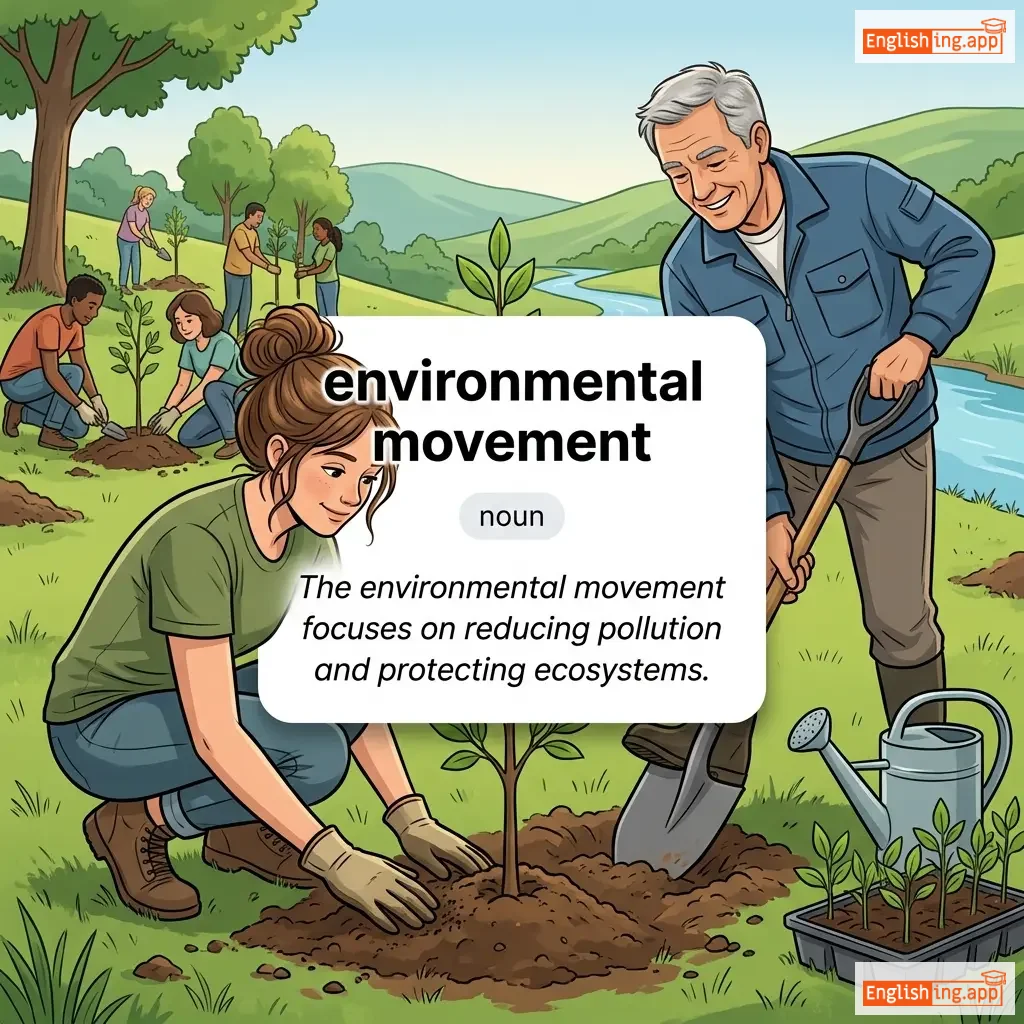
environmental movement definition card — visual illustration of the meaning
noun
/ɪnˌvaɪrənˈmɛntəl ˈmuːvmənt/
环境运动 (huanjing yundong)

A social or political movement aimed at protecting the environment and promoting sustainable practices through advocacy, education, and policy changes.

"The environmental movement focuses on reducing pollution and protecting ecosystems."
"环境运动专注于减少污染并保护生态系统。" (Huanjing yundong zhuanzhu yu jianshao wuran bing baohu shengtai xitong.)
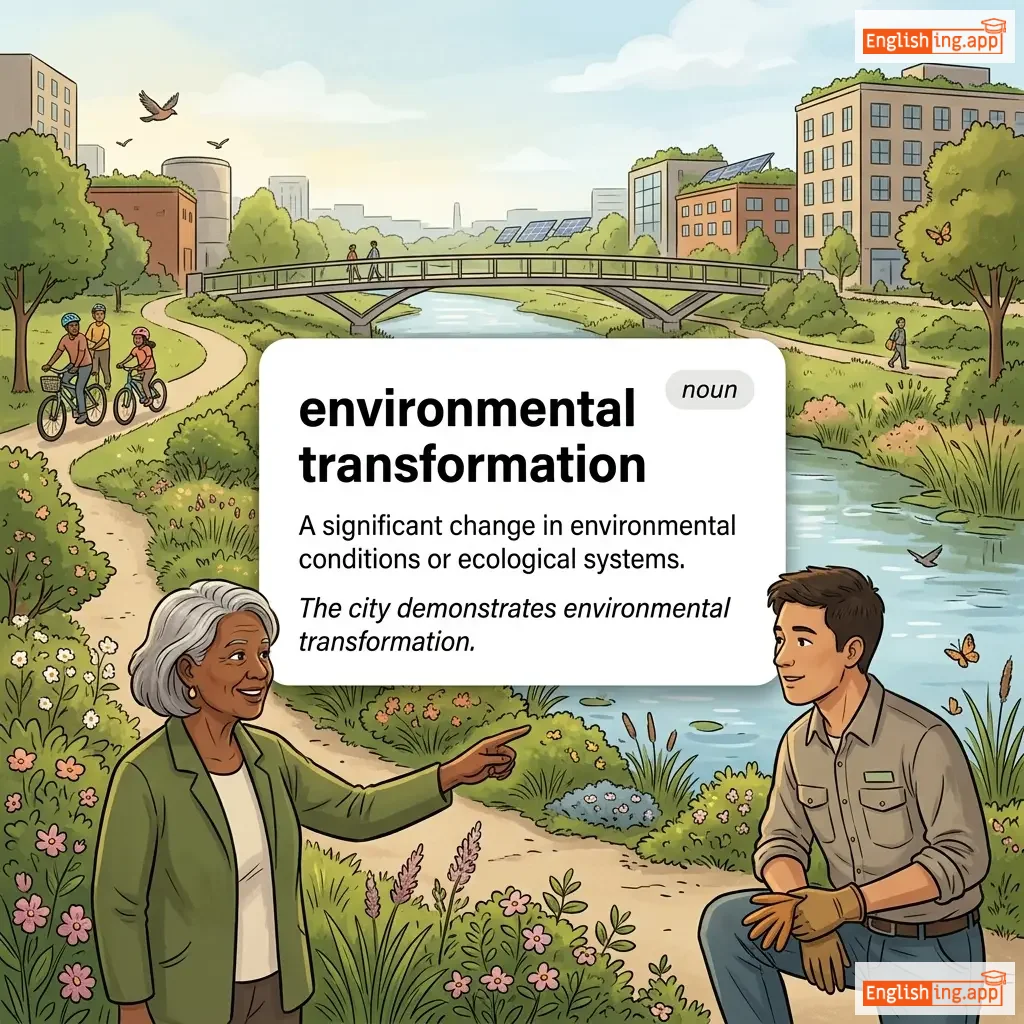
environmental transformation definition card — visual illustration of the meaning
noun
ɪnˌvaɪ.rənˈmen.təl ˌtræns.fəˈmeɪ.ʃən
环境转型 (huánjìng zhuǎnxíng)

A significant change in environmental conditions or ecological systems.

"The city demonstrates environmental transformation."

"这座城市展示了环境转型。" (Zhè zuò chéngshì zhǎnshìle huánjìng zhuǎnxíng.)
verb
/ɪnˈvɪʒən/
想象 (xiǎngxiàng)

to imagine or picture something in the future; to visualize a possibility or goal

"She envisions a world where everyone has equal access to education."
"她设想了一个每个人都能平等接受教育的世界。" (Tā shèxiǎngle yīgè měi gèrén dōu néng píngděng jiēshòu jiàoyù de shìjiè.)
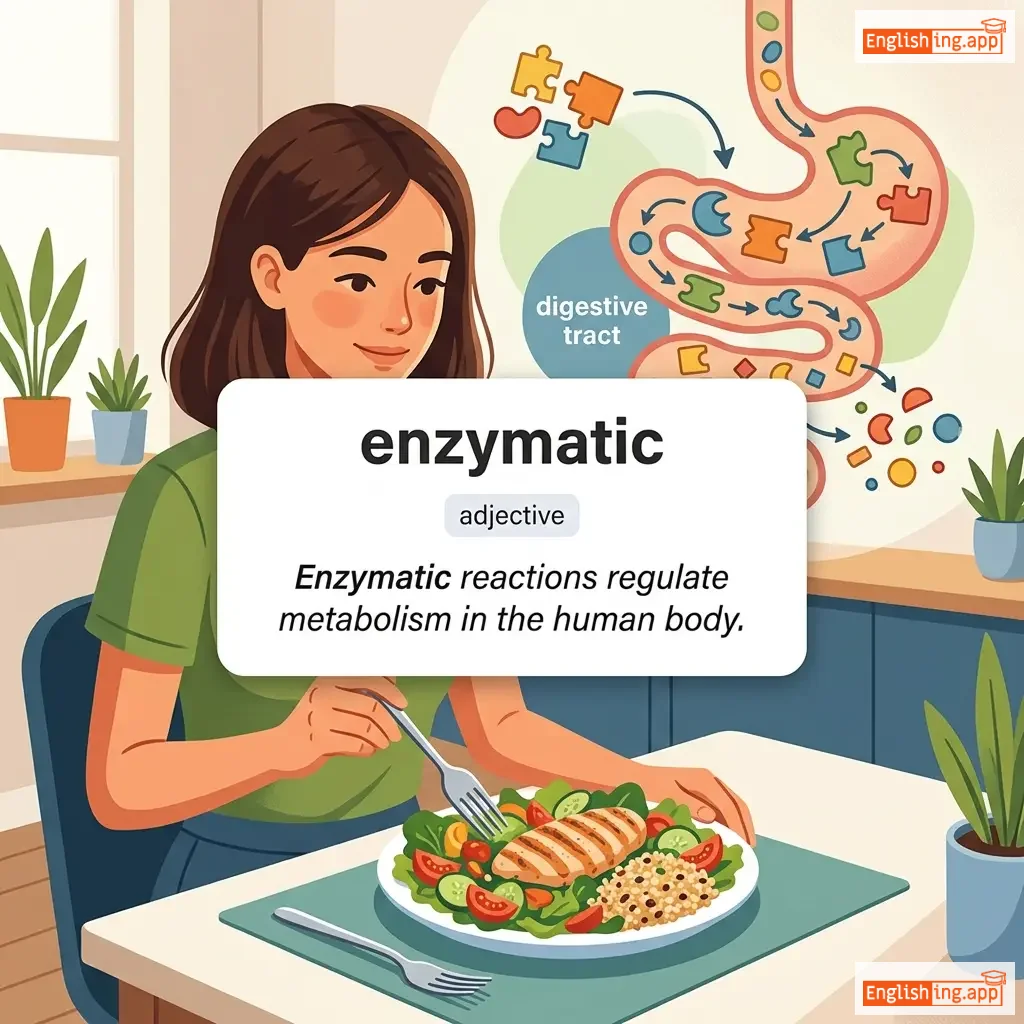
enzymatic definition card — visual illustration of the meaning
adjective
/ˌen.zɪˈmæt.ɪk/
与酶有关的 (yǔ méi yǒuguān de)

Relating to or involving enzymes, which are proteins that catalyze biochemical reactions in living organisms.

"Enzymatic reactions regulate metabolism in the human body."

"酶反应调节人体的新陈代谢。" (Méi fǎnyìng tiáojié réntǐ de xīnchén dàixiè.)
noun
/ˈiːən/
纪元 (jìyuán)

an indefinitely long period of time; an age

"Dinosaurs lived millions of years ago, in a different eon."

"恐龙在几百万年前生活,在一个不同的纪元。" (kǒnglóng zài jǐ bǎi wàn nián qián shēnghuó, zài yīgè bùtóng de jìyuán.)
noun
/ˈɛpəlɛt/
肩章 (jianzhang)

An ornamental shoulder piece on a garment, especially on the coat or jacket of a military uniform.

"The general’s uniform had a golden epaulet on each shoulder."

"将军的制服上每只肩膀上都有一个金色的肩章。" (Jiangjun de zhifu shang mei zhi jianbang shang dou you yige jinse de jianzhang.)
noun
/ˈɛpəlɛt/
肩章 (jianzhang)

A variant spelling of epaulet, also meaning a shoulder ornament, especially on military uniforms.

"The officer’s epaulette shone brightly under the sunlight."
"军官的肩章在阳光下闪闪发光。" (Junguan de jianzhang zai yangguang xia shanshan faguang.)
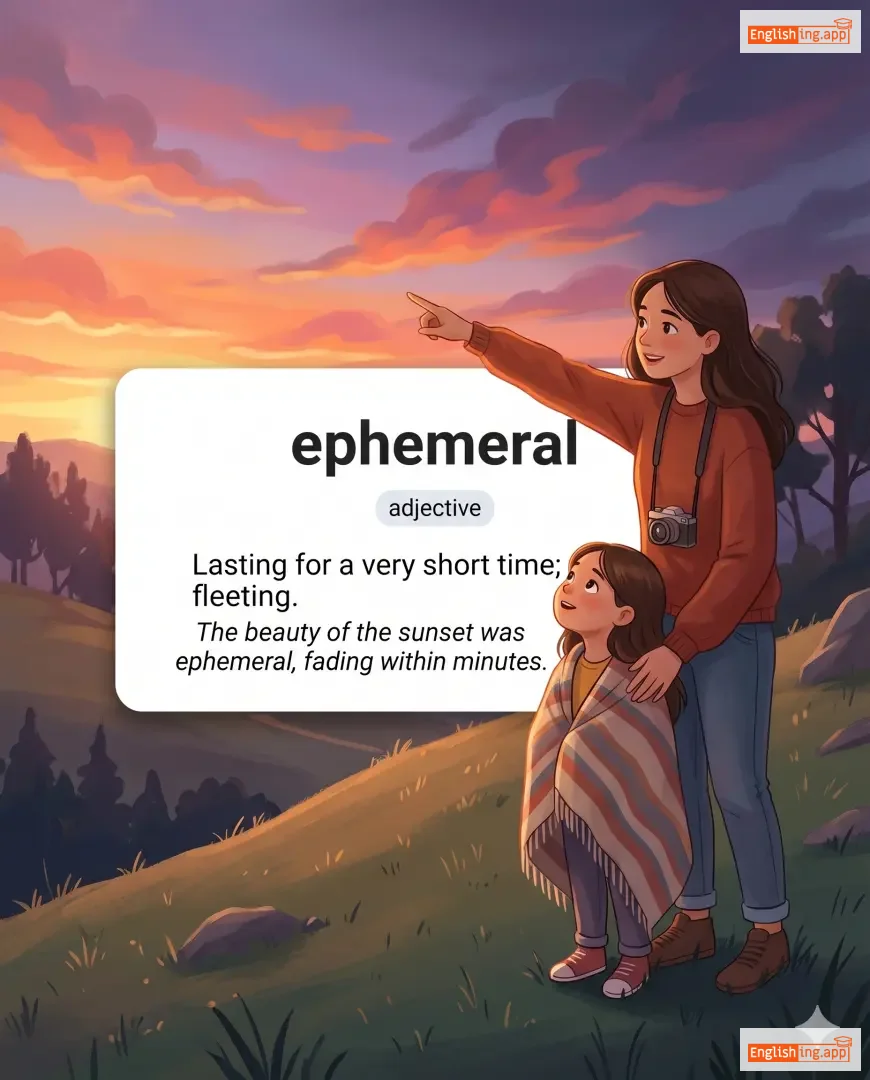
ephemeral definition card — visual illustration of the meaning
adjective
/ɪˈfɛmərəl/
短暂 (duǎnzàn)

Lasting for a very short time; fleeting.

"The beauty of the sunset was ephemeral, fading within minutes."

"日落的美丽是短暂的,几分钟内就消失了。" (Rìluò de měilì shì duǎnzàn de, jǐ fēnzhōng nèi jiù xiāoshīle.)
noun, adjective
/ˈɛpɪk/
史诗 (shǐshī)

A long narrative poem or story about heroic deeds; also used to describe something grand or impressive.

"The Iliad is considered one of the greatest epics of ancient literature."

"《伊利亚特》被认为是古代文学中最伟大的史诗之一。" (《Yīlìyàtè》 bèi rènwéi shì gǔdài wénxué zhōng zuì wěidà de shǐshī zhī yī.)
noun
/ˈɛpɪkjʊr/
美食家 (meishijia)

A person who enjoys fine food and drink, often with refined taste.

"As an epicure, she always sought out the finest restaurants in the city."

"作为美食家,她总是寻找城市中最好的餐厅。" (Zuòwéi měishíjiā, tā zǒng shì xúnzhǎo chéngshì zhōng zuì hǎo de cāntīng.)
adjective
/ˌɛpɪkjʊˈriːən/
享乐主义 (xiǎnglè zhǔyì)

relating to the enjoyment of fine food, drink, and luxury

"The chef prepared an epicurean feast for the guests."

"厨师为客人准备了一场享乐主义的盛宴。" (Chúshī wèi kèrén zhǔnbèile yī chǎng xiǎnglè zhǔyì de shèngyàn.)
noun
/ˈɛpɪˌsaɪkl/
外行星环 (wài xíngxīng huán)

a small circle whose center moves around the circumference of a larger one, used in ancient astronomy

"The concept of the epicycle was used to explain planetary motion."

"外行星环的概念被用来解释行星的运动。" (wài xíngxīng huán de gàiniàn bèi yòng lái jiěshì xíngxīng de yùndòng.)
noun
/ˌɛpɪˈsaɪklɔɪd/
外摆线 (wàibǎi xiàn)

a curve traced by a point on the circumference of a circle that rolls around the outside of another circle

"The mathematician demonstrated how to draw an epicycloid."

"数学家演示了如何绘制外摆线。" (Shùxué jiā yǎnshìle rúhé huìzhì wàibǎi xiàn.)
noun
/ˌɛpɪˈdɛmɪk/
幸福 (xingfu)

a widespread occurrence of an infectious disease in a community at a particular time

"The flu epidemic affected thousands of people in the city."

"当她获得奖项时,她无法掩饰自己的幸福。" (Dang ta huode jiangxiang shi, ta wufa yanshi ziji de xingfu.)
noun
/ˌɛpɪˈdɜːrmɪs/
皮肤的外层 (pí fū de wài céng)

the outer layer of cells covering the body of an organism, especially the skin

"The epidermis protects the body from harmful bacteria."

"表皮保护身体免受有害细菌的侵害。" (Biaopi baohu shenti mian shou youhai xijun de qinhai.)
noun
/ˈɛpɪɡræm/
警句 (jǐngjù)

A short, witty saying or poem that expresses an idea in a clever way.

"Oscar Wilde was famous for his sharp epigrams."

"奥斯卡·王尔德因其犀利的警句而闻名。" (Ào sī kǎ·wáng ěr dé yīn qí xīlì de jǐngjù ér wénmíng.)
noun
/ˈɛpɪˌlɔːɡ/
结语 (jieyu)

A section at the end of a book, play, or speech that serves as a conclusion.

"The author included an epilogue to explain what happened to the characters later."
"作者添加了结语,以解释后来的角色发生了什么。" (Zuòzhě tiānjiāle jiéyǔ, yǐ jiěshì hòulái de juésè fāshēngle shénme.)
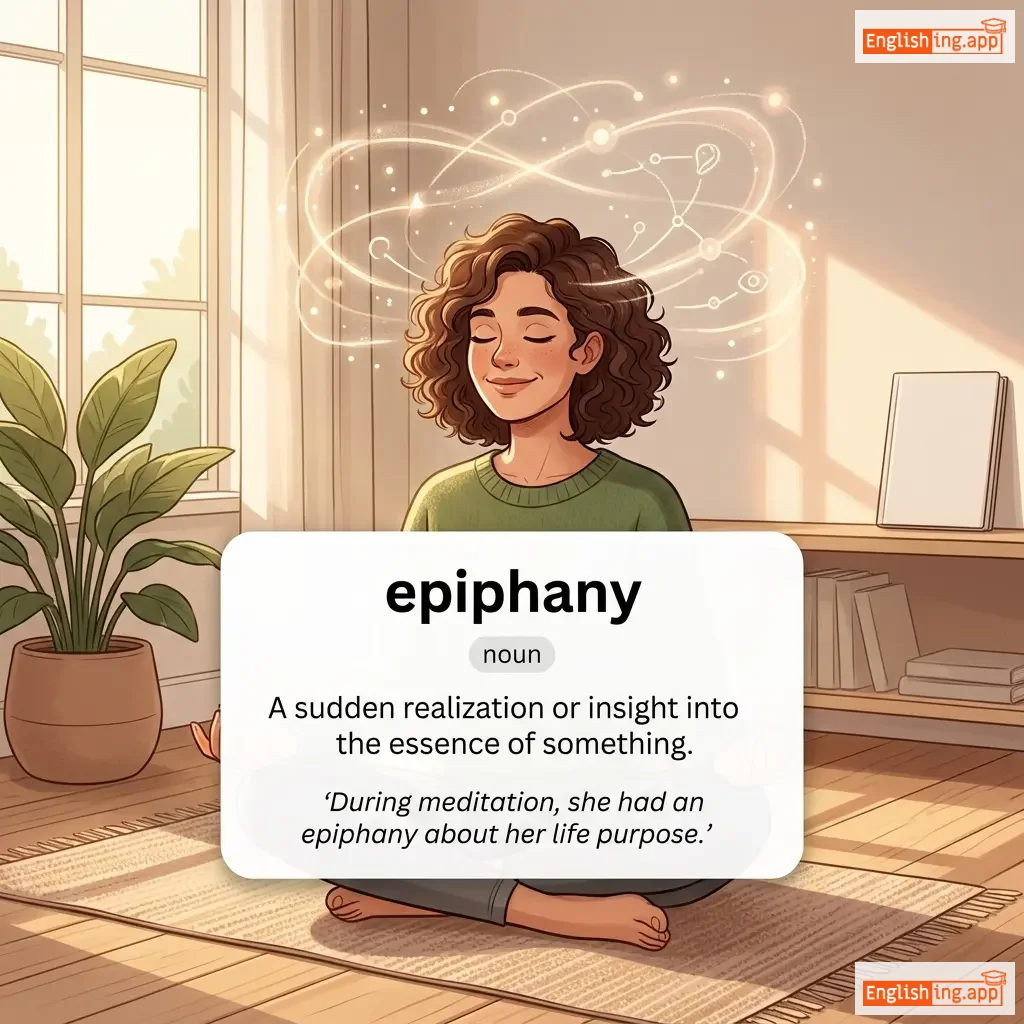
epiphany definition card — visual illustration of the meaning
noun
/ɪˈpɪfəni/
顿悟 (dùn wù)

A sudden realization or insight into the essence of something.

"During meditation, she had an epiphany about her life purpose."

"在冥想时,她突然领悟到自己的人生目标。" (Zài míngxiǎng shí, tā túrán lǐngwù dào zìjǐ de rénshēng mùbiāo.)
noun
/ˈɛpɪsoʊd/
剧集 (ju ji)

An event or part of a story, or one installment in a series.

"The last episode of the drama was watched by millions."

"这部戏剧的最后一集被数百万人观看。" (Zhè bù xìjù de zuìhòu yī jí bèi shù bǎi wàn rén guānkàn.)
adjective
/ˌɛpɪˈsɒdɪk/
集集式的 (jíjí shì de)

Happening occasionally or in separate parts; related to episodes.

"Her interest in art was episodic, coming and going over the years."

"她对艺术的兴趣是间歇性的,随着岁月的流逝而来又去。" (Tā duì yìshù de xìngqù shì jiànxiēxìng de, suízhe suìyuè de liúshì ér lái yòu qù.)
noun
/ɪˌpɪstəˈmɒlədʒɪst/
认识论者 (rènshí lùn zhě)

A scholar or expert who studies the nature, sources, and limits of knowledge.

"The epistemologist debated how humans can truly know anything with certainty."
"认识论者辩论了人类如何能够确信地知道某些事情。" (Rènshí lùn zhě biànlùn le rénlèi rúhé nénggòu quèxìn de zhīdào mǒuxiē shìqíng.)
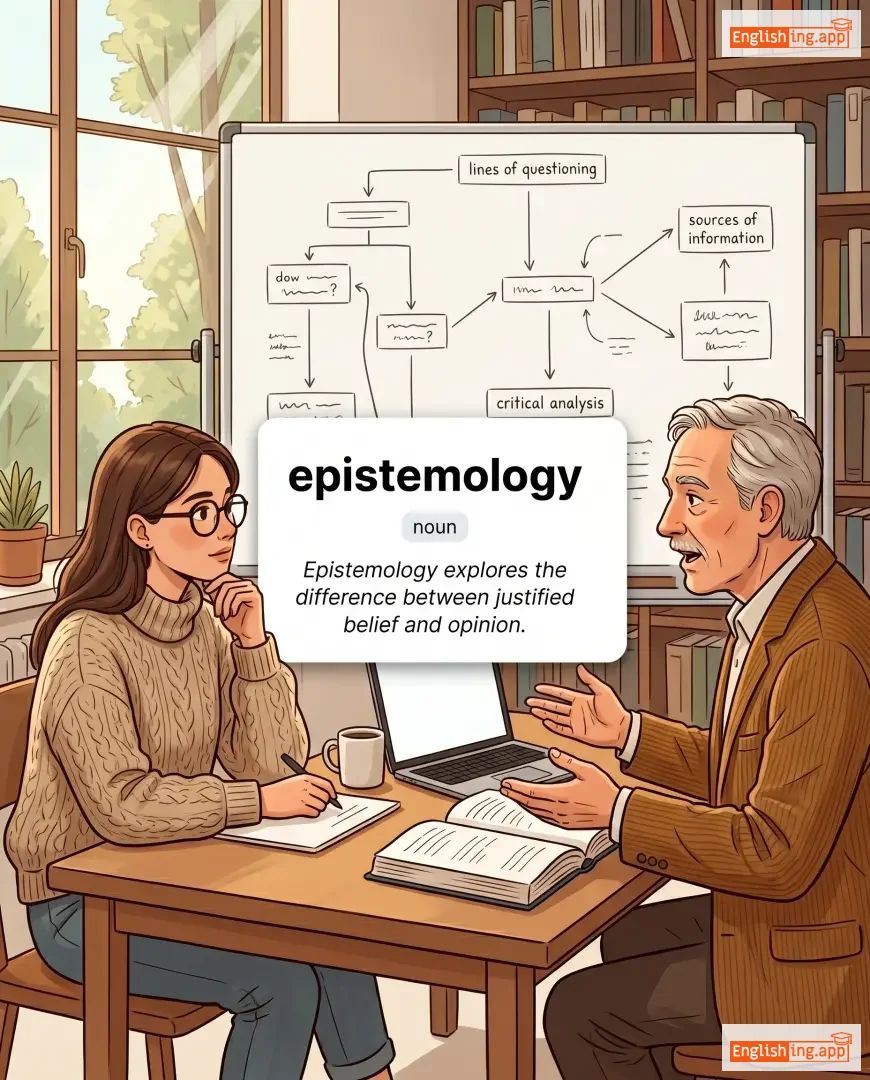
epistemology definition card — visual illustration of the meaning
noun
/ɪˌpɪstəˈmɒlədʒi/
认识论 (rènshílùn)

The branch of philosophy that studies the nature, origin, and scope of knowledge.

"Epistemology explores the difference between justified belief and opinion."

"认识论探索公正的信仰和意见之间的区别。" (Rènshílùn tànsuǒ gōngzhèng de xìnyǎng hé yìjiàn zhī jiān de qūbié.)
noun
/ɪˈpɪsəl/
书信 (shuxin)

A letter, especially a formal or didactic one; often used for letters in the New Testament.

"He wrote a long epistle to his friend about his travels."

"他写了一封长信给他的朋友,讲述了他的旅行。" (Ta xie le yi feng chang xin gei tade pengyou, jiangshu le tade lvxing.)
adjective
/ɪˈpɪstələri/
书信体 (shuxinti)

Related to the writing of letters; expressed in or through letters.

"The novel is written in an epistolary style, consisting of letters between characters."

"这本小说是以书信体风格写的,由人物之间的信件组成。" (Zhe ben xiaoshuo shi yi shuxinti fengge xie de, you renwu zhijian de xinlie zucheng.)
noun
/ˈɛpɪtɑːf/
墓志铭 (mùzhìmíng)

A short text written on a tombstone in memory of the deceased.

"The gravestone bore an epitaph honoring the soldier’s bravery."

"墓碑上刻有纪念这位士兵勇敢的墓志铭。" (Mùbēi shàng kè yǒu jìniàn zhè wèi shìbīng yǒnggǎn de mùzhìmíng.)