词汇表

英语词汇词典 | 单词含义、定义和示例

adverb
/fɔːrθ/
向前 (xiang qian)

forward in place, time, or order

"The leader stepped forth to address the crowd."

"领导走上前去与人群讲话。" (Lingdao zou shang qian qu yu renqun jianghua.)
adjective
/ˌfɔːrθˈkʌmɪŋ/
即将到来 (jijiang daolai)

about to happen soon; willing to share information

"The company announced its forthcoming product launch."

"公司宣布了即将到来的产品发布。" (Gongsi xuānbù le jìjiāng dào lái de chǎnpǐn fābù.)
adjective
/ˈfɔːrθˌraɪt/
直率 (zhíshuài)

Direct and honest in speech or behavior; straightforward.

"She was forthright in her criticism of the policy."

"她在批评政策时非常直率。" (Tā zài pīpíng zhèngcè shí fēicháng zhíshuài.)
forthrightness definition card — visual illustration of the meaning
noun
/ˈfɔːθ.raɪt.nəs/
直率 (fu te lai te ni si)

The quality of being honest and straightforward; directness.

"Her forthrightness made her a respected journalist."

"她的直率使她成为一名受人尊敬的记者。" (ta de zhi shuai shi ta cheng wei yi ming shou ren zun jing de ji zhe)
adverb
/ˌfɔːrθˈwɪθ/
立即; 无延迟; 马上 (lìjí; wú yánchí; mǎshàng)

immediately; without delay; at once

"The manager ordered the employee to stop the unsafe practice forthwith."
"经理命令员工立即停止危险的做法。" (Jīnglǐ mìnglìng yuángōng lìjí tíngzhǐ wéixiǎn de zuòfǎ.)
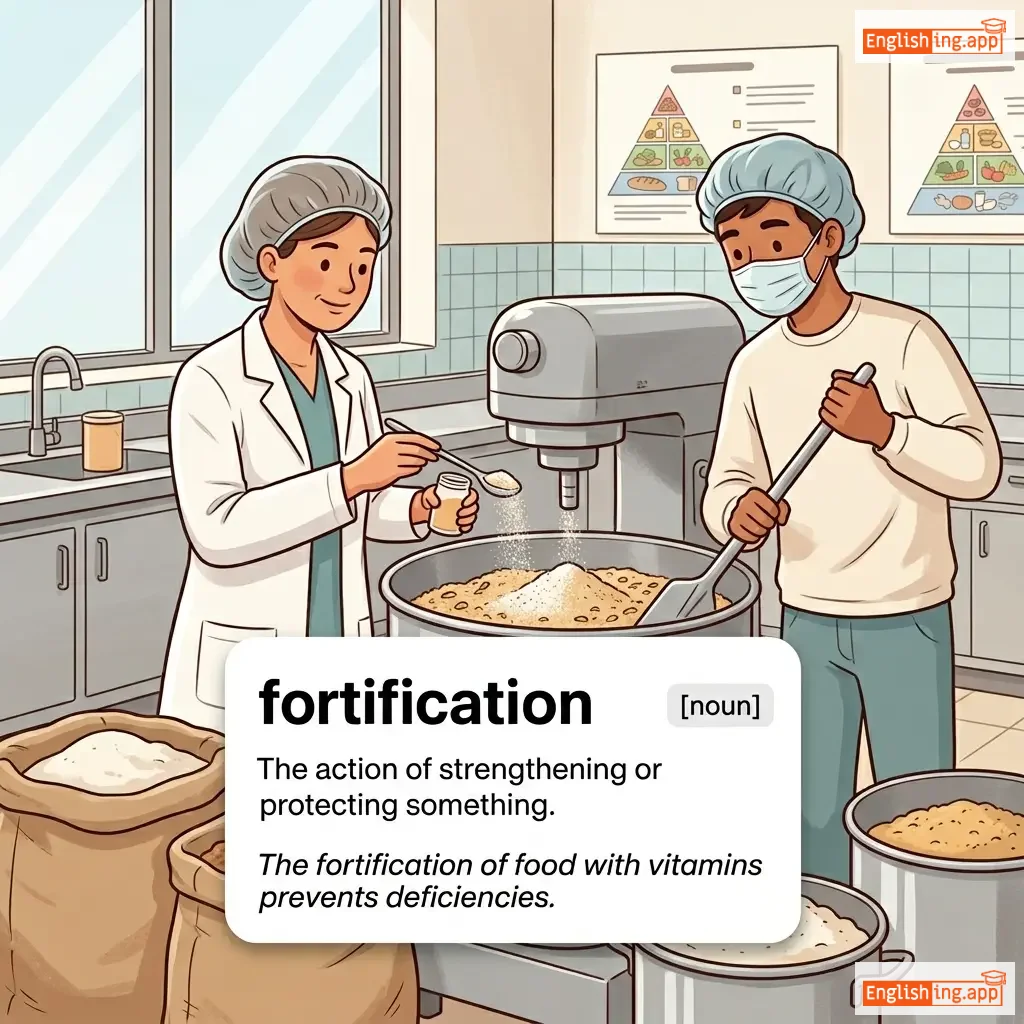
fortification definition card — visual illustration of the meaning
noun
ˌfɔː.tɪ.fɪˈkeɪ.ʃən
加固 (jiāgù)

The action of strengthening or protecting something.

"The fortification of food with vitamins prevents deficiencies."

"食品的加强与维生素一起可以防止缺乏症。" (Shípǐn de jiāgù yǔ wéishēngsù yīqǐ kěyǐ fángzhǐ quēfá zhèng.)
verb
/ˈfɔːrtɪˌfaɪ/
加强 (jiāqiáng)

To strengthen a place, person, or thing physically or mentally.

"They fortified the city walls to protect against invasion."

"他们加固了城市的墙壁,以防止入侵。" (Tāmen jiāgùle chéngshì de qiángbì, yǐ fángzhǐ rùqīn.)
fortitude definition card — visual illustration of the meaning
noun
/ˈfɔːrtɪˌtuːd/
勇气和力量 (yǒngqì hé lìliàng)

Courage and strength in facing difficulty or adversity.

"He showed great fortitude in dealing with the loss."

"他在面对失落时展现了极大的勇气和力量。" (Tā zài miànduì shīluò shí zhǎnxiànle jí dà de yǒngqì hé lìliàng.)
fortuitous definition card — visual illustration of the meaning
adjective
/fɔːrˈtuːɪtəs/
幸运的 (xìngyùn de)

Happening by chance, often with a positive outcome.

"It was a fortuitous encounter that led to their partnership."

"这是一次幸运的相遇,导致了他们的合作伙伴关系。" (Zhè shì yī cì xìngyùn de xiāngyù, dǎozhìle tāmen de hézuò huǒbàn guānxì.)
adjective
/ˈfɔːrtʃənət/
幸运的 (xìngyùn de)

Having good luck or receiving something desirable by chance.

"She was fortunate to escape the accident without injuries."

"她很幸运没有在事故中受伤。" (Tā hěn xìngyùn méiyǒu zài shìgù zhōng shòushāng.)
adverb
/ˈfɔːtʃənətli/
幸运地 (xìngyùn de)

by good luck; luckily

"Fortunately, no one was injured in the accident."

"幸运地,事故中没有人受伤。" (Xìngyùn de, shìgù zhōng méiyǒu rén shòushāng.)
Fortune definition card — visual illustration of the meaning
noun
/ˈfɔːrtʃən/
运气 / 财富 (yùnqì / cáifù)

chance or luck, especially in success or wealth

"She made a fortune by investing in real estate."

"她通过投资房地产赚了一大笔钱。" (Tā tōngguò tóuzī fángdìchǎn zhuànle yī dà bǐ qián.)
number
/ˈfɔːrti/
幸福 (xìngfú)

the number 40; ten times four

"She celebrated her forty years of life with a big party."

"当她收到奖项时,她无法掩饰自己的幸福。" (Dāng tā shōudào jiǎngxiàng shí, tā wúfǎ yǎnshì zìjǐ de xìngfú.)
noun
/ˈfɔːrəm/
论坛 (luntan)

A place, meeting, or medium where ideas and views can be exchanged.

"The online forum allows people to discuss a wide range of topics."
"在线论坛允许人们讨论广泛的主题。" (Zai xian luntan yunxu renmen taolun guangfan de zhutian.)
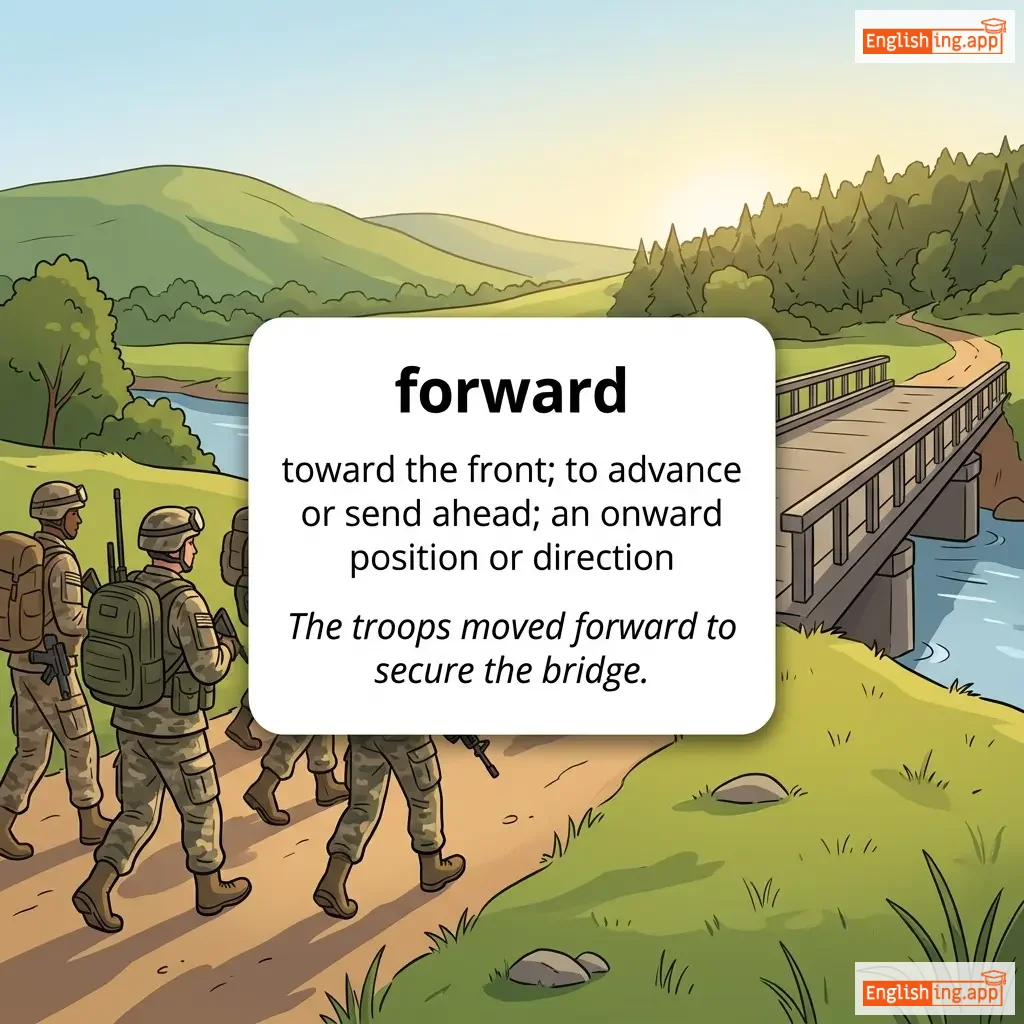
forward definition card — visual illustration of the meaning
adverb, adjective, verb, noun
/ˈfɔːrwərd/
向前 (xiang qian)

toward the front; to advance or send ahead; an onward position or direction

"The troops moved forward to secure the bridge."

"部队向前移动以确保桥梁的安全。" (Budui xiang qian yidong yi quebao qiaoliang de anquan.)
noun
/ˈfɒsɪl/
化石 (huàshí)

the remains or impression of a prehistoric plant or animal embedded in rock

"The fossil of a dinosaur was discovered in the mountains."

"在山中发现了一只恐龙化石。" (Zài shān zhōng fāxiànle yī zhī kǒnglóng huàshí.)
verb, adjective
/ˈfɒstər/
培养 (peiyang)

to encourage the development of something; to raise a child that is not one's own

"The program aims to foster creativity in young students."

"该计划旨在促进年轻学生的创造力。" (Gai jihua zhi zai cujin nianqing xuesheng de chuangzaolili.)
fostering definition card — visual illustration of the meaning
noun/verb
/ˈfɒs.tər.ɪŋ/
培养 (pei yang)

The process of encouraging or promoting the development or growth of something; nurturing and caring for.

"Good teachers play a key role in fostering creativity in students."

"好老师在促进学生创造力方面发挥着关键作用。" (Hao laoshi zai cujin xuesheng chuangzaolili fangmian fahui zhe guanjian zuoyong.)
🚫

foul

adjective, noun, verb
/faʊl/

offensive to the senses; dirty or unpleasant; in sports, an unfair or illegal act

"The player was penalized for committing a foul."

verb
/faʊnd/
创办 (chuangban)

to establish or set up an institution, company, or organization

"They found a new startup focused on renewable energy."
"他们成立了一个专注于可再生能源的新创业公司。" (Tāmen chénglìle yīgè zhuānzhù yú kě zàishēng néngyuán de xīn chuàngyè gōngsī.)
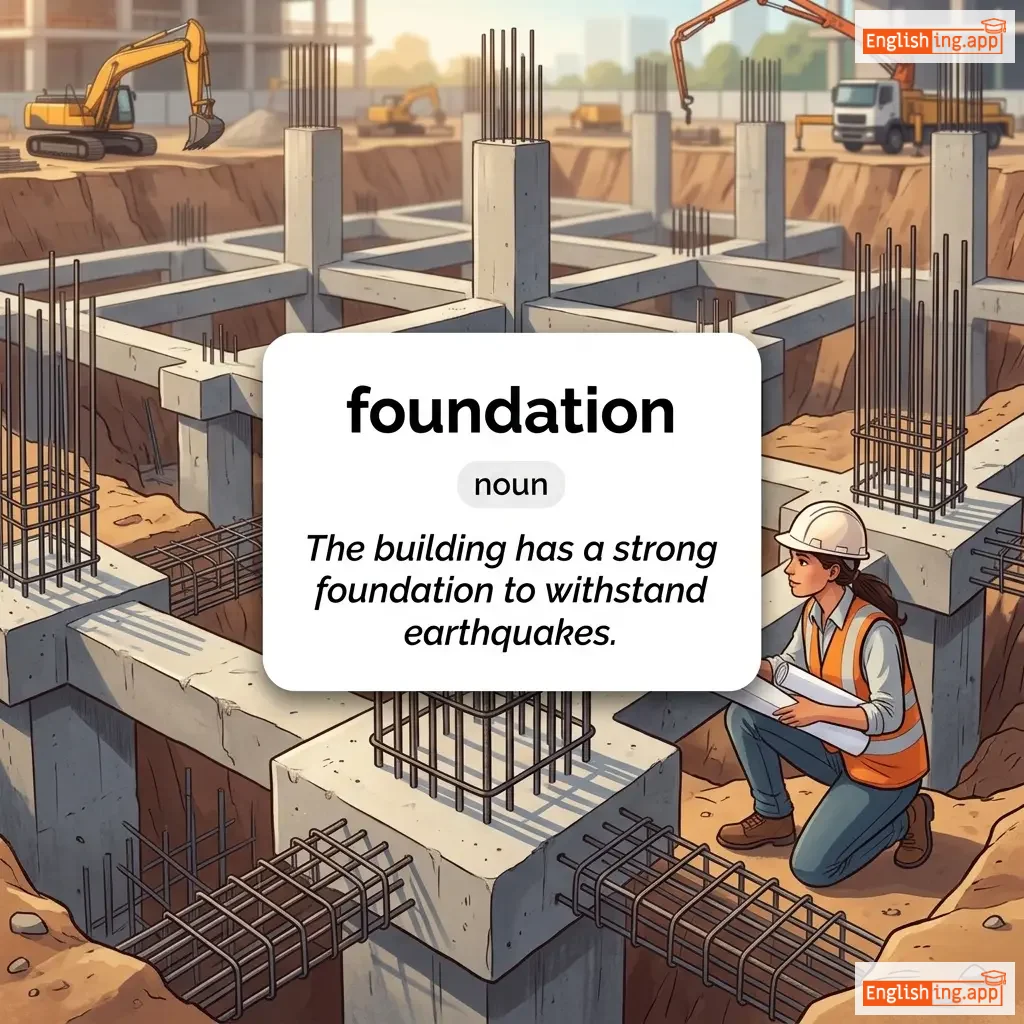
foundation definition card — visual illustration of the meaning
noun
/faʊnˈdeɪʃən/
基础 (jīchǔ)

the base or underlying support of something; an institution established for a purpose

"The building has a strong foundation to withstand earthquakes."

"这座建筑有坚固的基础,能够抵抗地震。" (Zhè zuò jiànzhú yǒu jiāngù de jīchǔ, nénggòu dǐkàng dìzhèn.)
Founder definition card — visual illustration of the meaning
noun, verb
/ˈfaʊndər/
创始人 (chuàngshǐrén)

a person who establishes an institution or company; as a verb, to fail or sink

"She is the founder of a successful startup."

"她是一个成功创业公司的创始人。" (Tā shì yīgè chénggōng chuàngyè gōngsī de chuàngshǐrén.)
noun
/ˈfaʊn.tən/
喷泉 (penquan)

a natural spring of water; an artificial structure from which water flows

"The fountain in the park attracts many visitors."

"公园里的喷泉吸引了许多游客。" (Gōngyuán lǐ de pēnquán xīyǐnle xǔduō yóukè.)
numeral
/fɔːr/
(si)

The number equivalent to the sum of two and two; one more than three.

"She has four books on her desk."

"她的桌子上有四本书。" (Tā de zhuōzi shàng yǒu sì běn shū.)
👨‍👩‍👧‍👦

foursome (foursom)

noun
/ˈfɔːrsəm/
四人组 (sì rén zǔ)

a group of four people or things, especially in games or social activities

"The foursome enjoyed a game of golf together."

"四人组一起享受了一场高尔夫比赛。" (Sì rén zǔ yīqǐ xiǎngshòule yī chǎng gāo'ěrfū bǐsài.)
adjective/noun
/fɔːrθ/
第四 (di si)

Constituting number four in a sequence; coming after the third in position.

"He finished in fourth place in the race."

"他在比赛中获得了第四名。" (ta zai bisai zhong huode le di si ming.)
noun
/faʊl/
家禽 (jiāqín)

a domesticated bird kept for meat or eggs; chicken or other poultry

"The farmer raised fowl in his backyard for fresh eggs and meat."

"农民在后院养家禽,提供新鲜的鸡蛋和肉。" (nóngmín zài hòuyuàn yǎng jiāqín, tígōng xīnxiān de jīdàn hé ròu)
noun
/fɒks/
狐狸 (huli)

a wild animal related to dogs, with a pointed face and thick fur

"The red fox is known for its cunning nature."

"红狐以其狡猾的天性而闻名。" (Hóng hú yǐ qí jiǎohuá de tiānxìng ér wénmíng.)
adjective
/ˈfɒksi/
狡猾 (jiǎohuá)

Clever, cunning, or attractive.

"He came up with a foxy plan to win the game."

"他想出了一个狡猾的计划来赢得比赛。" (Tā xiǎng chūle yīgè jiǎohuá de jìhuà lái yíngdé bǐsài.)
noun
/ˈfɔɪeɪr/
前厅 (qiántīng)

An entrance hall or lobby in a building.

"The guests waited in the hotel foyer before checking in."
"客人在酒店大厅等候办理入住手续。" (Kèrén zài jiǔdiàn dàtīng děnghòu bànlǐ rùzhù shǒuxù.)
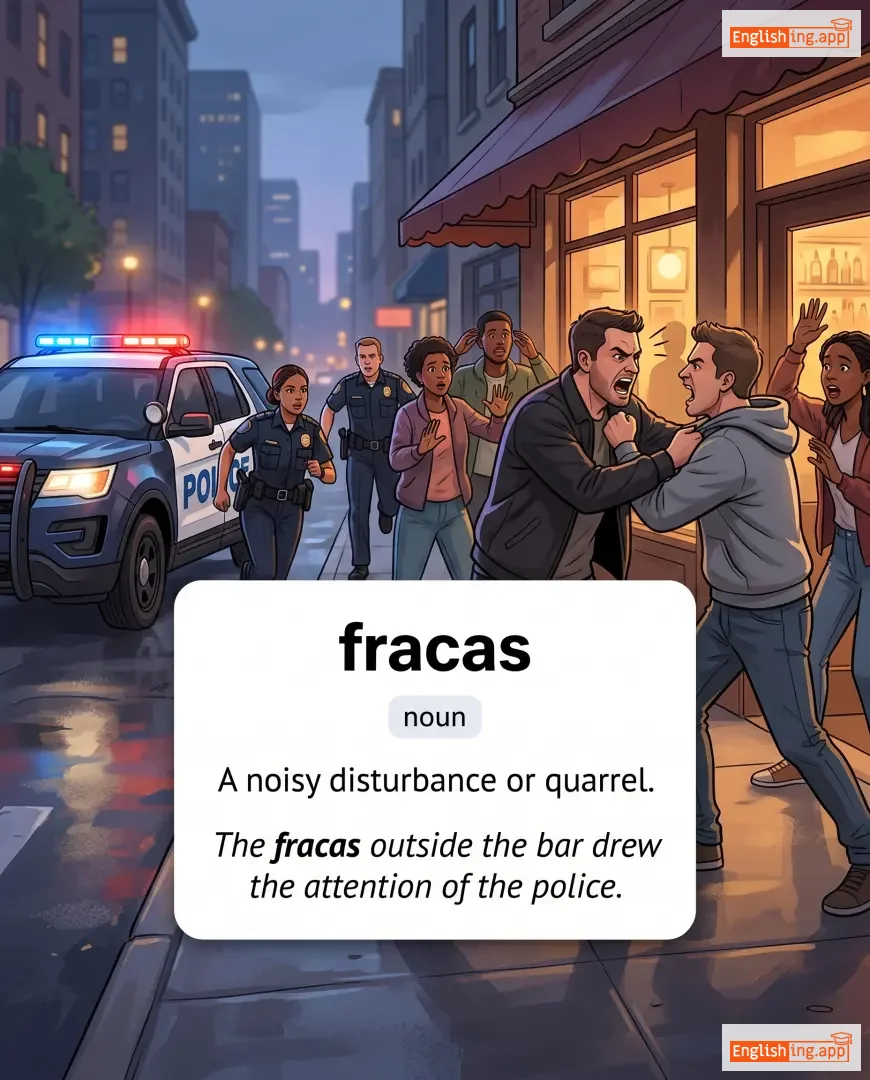
fracas definition card — visual illustration of the meaning
noun
/ˈfrækɑː/
纷争 (fen zheng)

A noisy disturbance or quarrel.

"The fracas outside the bar drew the attention of the police."

"酒吧外的纷争引起了警察的注意。" (Jiuba wai de fen zheng yinqi le jingcha de zhuyi.)
noun
/ˈfrækʃən/
分数 (fenshu)

A small part of something; in mathematics, a number that represents part of a whole.

"Only a small fraction of the population attended the event."
"只有一小部分人口参加了这次活动。" (Zhi you yi xiao bufen renkou canjia le zhe ci huodong.)
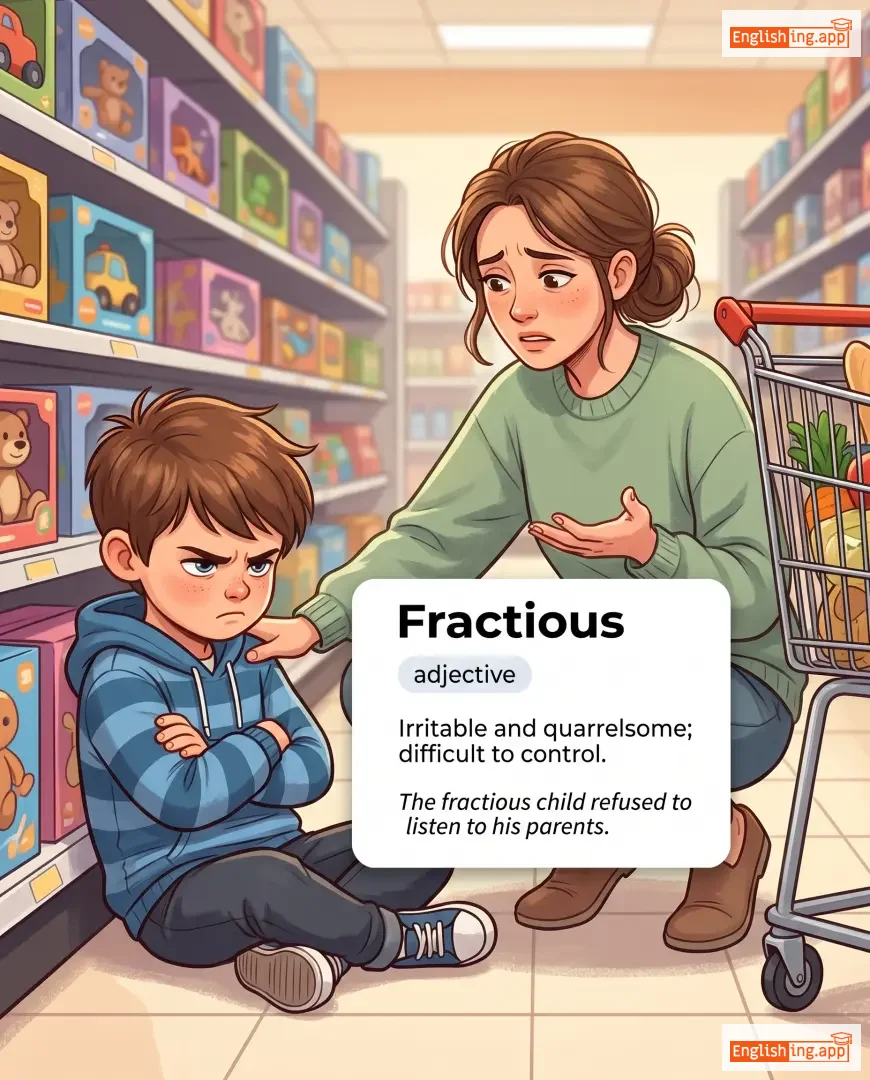
Fractious definition card — visual illustration of the meaning
adjective
/ˈfrækʃəs/
易怒的 (yìnù de)

Irritable and quarrelsome; difficult to control.

"The fractious child refused to listen to his parents."

"那个易怒的孩子拒绝听父母的话。" (Nàgè yìnù de háizi jùjué tīng fùmǔ de huà.)
noun, verb
/ˈfrækʧər/

A break or crack in a hard object or material, typically a bone; to break or crack.

"He suffered a fracture in his leg after the accident."

adjective
/ˈfræʤaɪl/
脆弱 (cuìruò)

Easily broken or damaged; delicate.

"Be careful with that vase, it's very fragile."
"小心那个花瓶,它很脆弱。" (Xiǎoxīn nàgè huāpíng, tā hěn cuìruò.)
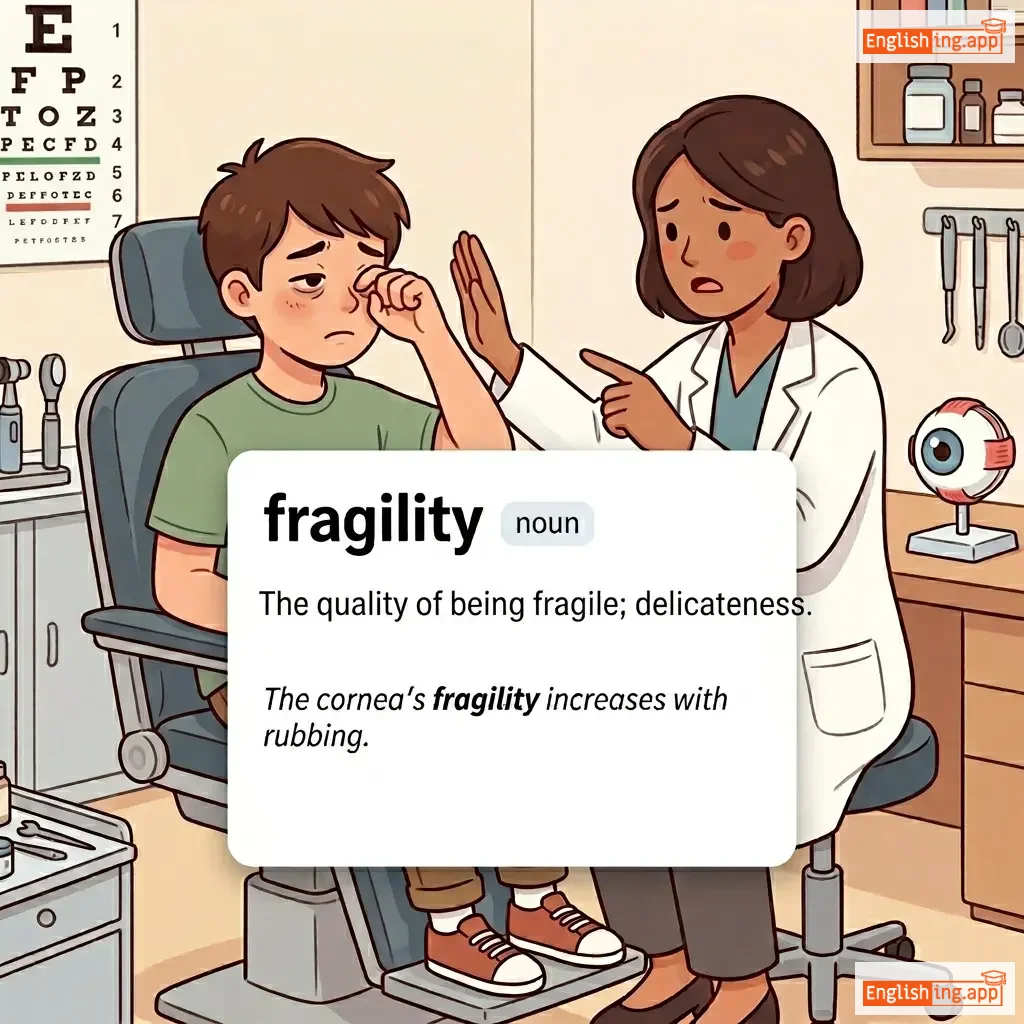
fragility definition card — visual illustration of the meaning
noun
/frəˈdʒɪl.ɪ.ti/
脆弱性 (cui ruo xing)

The quality of being fragile; delicateness.

"The cornea's fragility increases with rubbing."

"角膜的脆弱性随着摩擦而增加。" (jiao mo de cui ruo xing sui zhe mo ca er zeng jia)
noun
/ˈfræɡmənt/
碎片 (suìpiàn)

a small piece broken off something larger

"He found a fragment of ancient pottery near the river."
"他在河边找到了一个古老陶器的碎片。" (Tā zài hé biān zhǎodào le yīgè gǔlǎo táoqì de suìpiàn.)
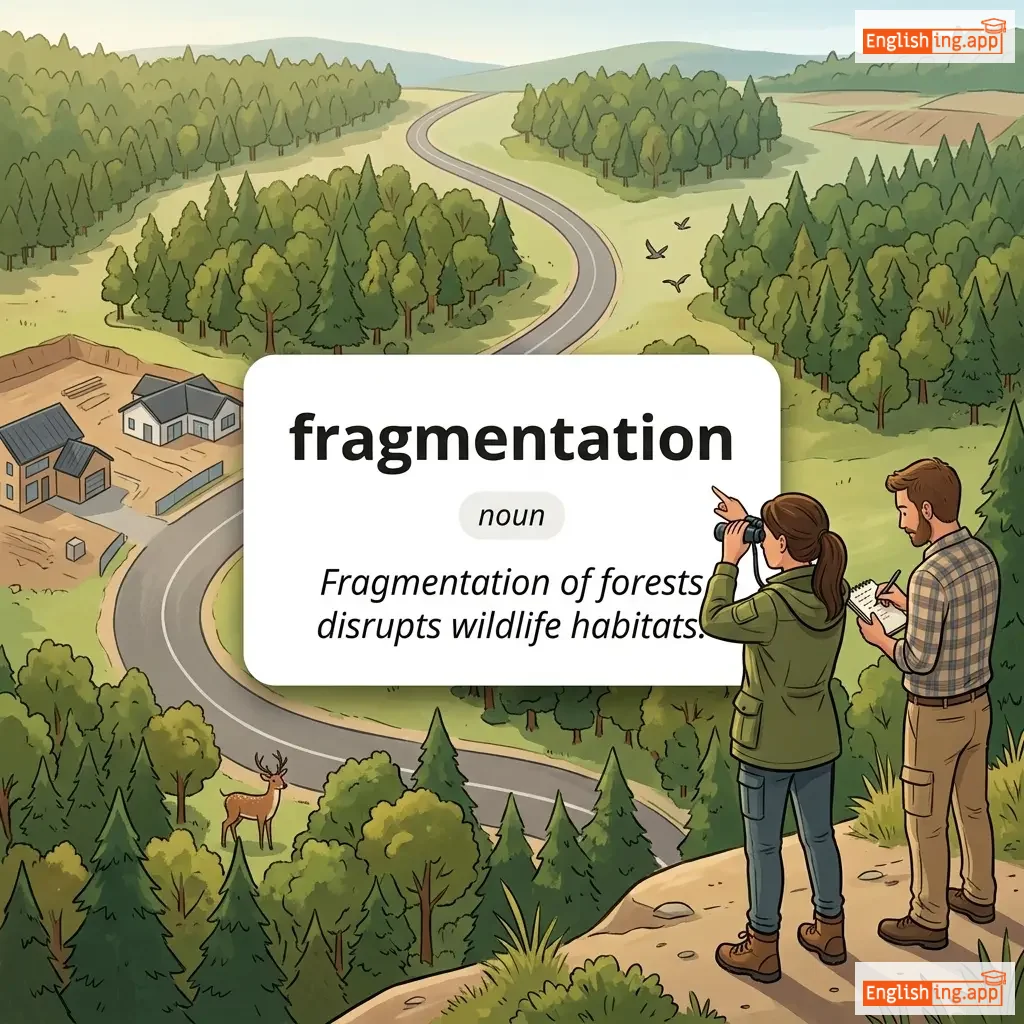
fragmentation definition card — visual illustration of the meaning
noun
ˌfræɡmɛnˈteɪʃən
碎片化 (suìpiàn huà)

The process or state of breaking or being broken into fragments.

"The fragmentation of the report made it difficult to understand."
"报告的碎片化使得理解变得困难。" (Bàogào de suìpiàn huà shǐdé lǐjiě biàn dé kùnnán.)
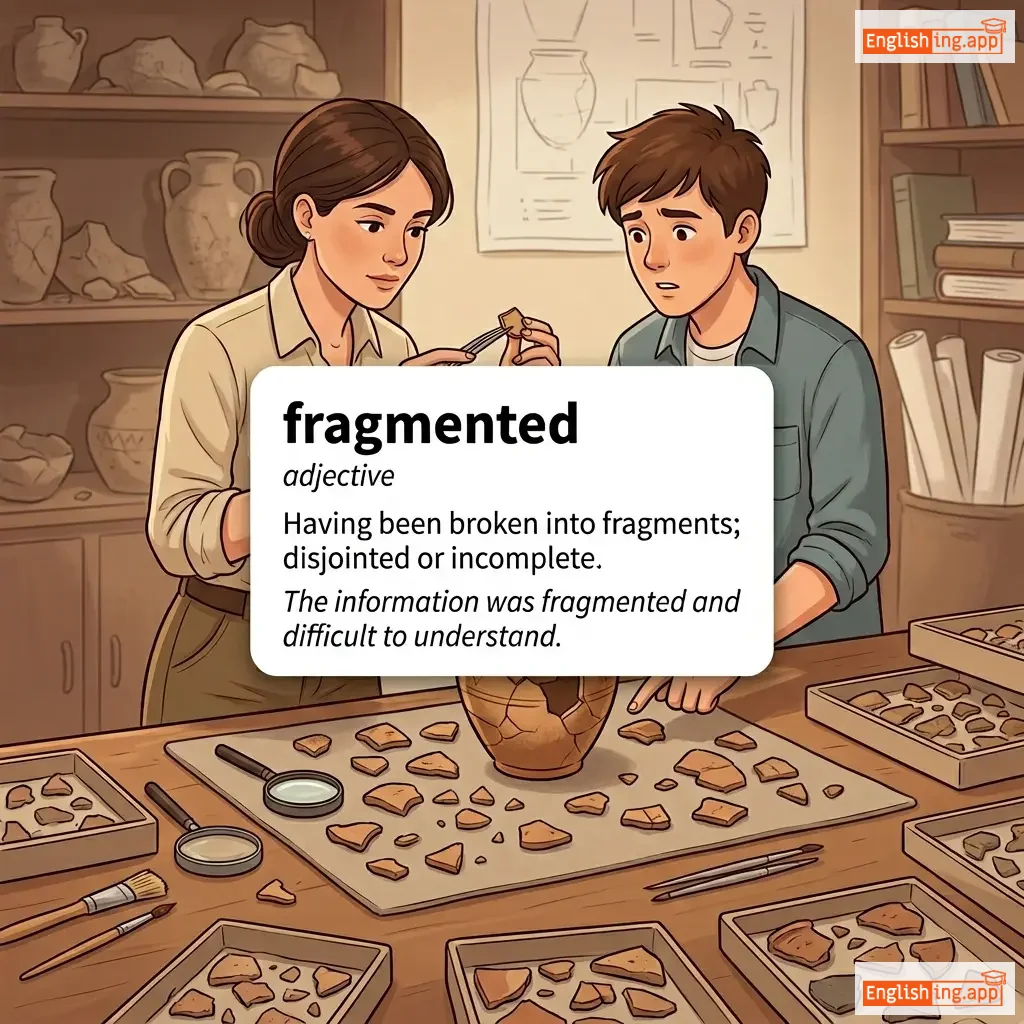
fragmented definition card — visual illustration of the meaning
adjective
/ˈfræɡməntɪd/
碎片化, 分割, 不完整 (suipianhua, fenge, bu wanzheng)

Having been broken into fragments; disjointed or incomplete.

"The information was fragmented and difficult to understand."

"信息被碎片化了,难以理解。" (Xìnxī bèi suìpiànhuàle, nányǐ lǐjiě.)
noun
/ˈfreɪɡrəns/
香气 (xiangqi)

A pleasant, sweet smell.

"The fragrance of fresh flowers filled the room."

"新鲜花朵的香气充满了房间。" (Xīnxiān huāduǒ de xiāngqì chōngmǎn le fángjiān.)
adjective
/freɪl/
脆弱 (cuì ruò)

Physically weak and delicate.

"The old man was too frail to walk without help."

"这位老年人太虚弱,无法在没有帮助的情况下走路。" (Zhè wèi lǎo nián rén tài xū ruò, wú fǎ zài méi yǒu bāng zhù de qíng kuàng xià zǒu lù.)
noun
/ˈfreɪlti/
脆弱 (cuìruò)

The condition of being weak, delicate, or easily broken.

"Old age often comes with physical frailty."
"衰老通常伴随着身体的脆弱。" (Shuāilǎo tōngcháng bànsuízhe shēntǐ de cuìruò.)
Frame definition card — visual illustration of the meaning
🖼️

Frame

noun/verb
/freɪm/

A rigid structure that surrounds or encloses something; to construct or formulate.

"They hung the painting in a golden frame."

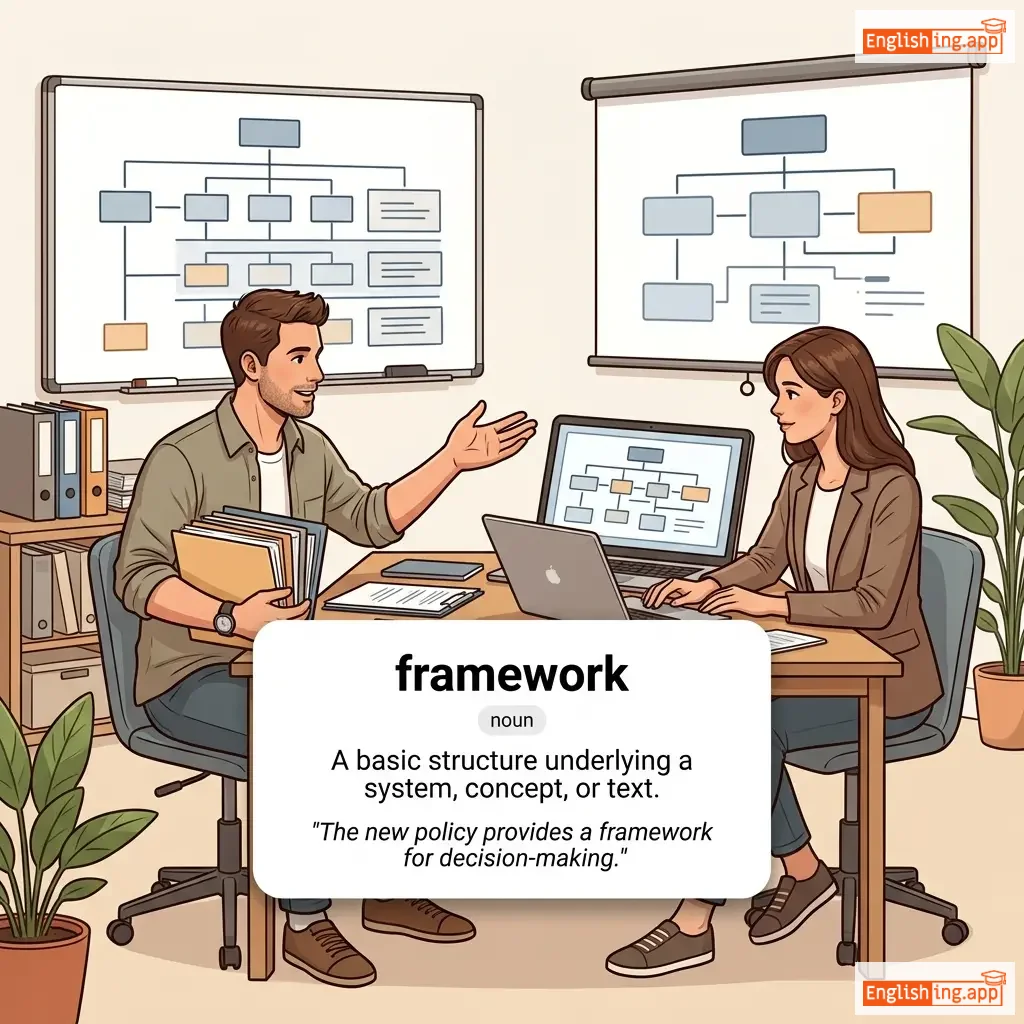
framework definition card — visual illustration of the meaning
noun
/ˈfreɪmˌwɜːrk/
框架 (kuàngjià)

A basic structure underlying a system, concept, or text.

"The new policy provides a framework for decision-making."

"新政策为决策提供了框架。" (Xīn zhèngcè wèi juécè tígōngle kuàngjià.)
frameworks definition card — visual illustration of the meaning
noun
ˈfreɪm.wɜːks
框架 (kuàngjià)

Basic structures underlying systems, concepts, or texts

"Frameworks guide AI implementation."

"框架指导AI的实施。" (Kuàngjià zhǐdǎo AI de shíshī.)
noun, verb
/ˈfrænʧaɪz/
特许经营 (tè xǔ jīng yíng)

A legal right to sell or distribute goods or services in a specific area; to grant such a right.

"He opened a new fast-food franchise in the city."

"他在城市里开设了一家新的快餐特许经营店。" (Tā zài chéngshì lǐ kāishè le yījiā xīn de kuàicān tèxǔ jīngyíng diàn.)
adjective
/fræŋk/
坦率 (tǎnshuài)

open, honest, and direct in speech or expression

"She was frank about her feelings on the matter."

"她在这个问题上坦率地表达了她的感受。" (Tā zài zhège wèntí shàng tǎnshuài de biǎodále tā de gǎnshòu.)
noun
/ˈfræŋkɪnsɛns/
乳香 (rǔ xiāng)

An aromatic gum resin used in incense and perfumes, often in religious ceremonies.

"The temple was filled with the sweet smell of burning frankincense."

"寺庙里充满了燃烧乳香的甜美气味。" (Sìmiào lǐ chōngmǎnle ránshāo rǔxiāng de tiánměi qìwèi.)
adverb
/ˈfræŋkli/
坦率地 (tǎnshuài de)

in an honest and direct way

"Frankly, I don’t think this plan will work."

"坦率地说,我不认为这个计划会成功。" (Tǎnshuài de shuō, wǒ bù rènwéi zhège jìhuà huì chénggōng.)
adjective
/ˈfræntɪk/
疯狂的 (fengkuang de)

Extremely anxious, hurried, or out of control due to fear or excitement.

"She made a frantic call to her family after the accident."

"事故发生后,她紧急给家人打了电话。" (Shìgù fāshēng hòu, tā jǐnjí gěi jiārén dǎle diànhuà.)