词汇表

英语词汇词典 | 单词含义、定义和示例

verb
/fɔːrˈdʒʌdʒ/
预先判断 (yùxiān pànduàn)

To judge beforehand without adequate information.

"It is unfair to forejudge someone without knowing the facts."

"在没有了解事实的情况下对某人做出判断是不公平的。" (Zài méiyǒu liǎojiě shìshí de qíngkuàng xià duì mǒurén zuòchū pànduàn shì bù gōngpíng de.)
noun
/ˈfɔːrˌnɑːlɪdʒ/
预知 (yùzhī)

Awareness of something before it happens or exists.

"The prophet claimed to have foreknowledge of the event."

"先知声称他预知了这个事件。" (Xiānzhī shēngchēng tā yùzhīle zhège shìjiàn.)
noun
/ˈfɔːrmən/
负责一组工人的人,特别是在工厂或建筑工地上 (fuze yi zu gongren de ren, tebie zai gongchang huo jianzhu gongdi shang)

a person in charge of a group of workers, especially in a factory or construction site

"The foreman supervised the workers on the construction site."

"工头在建筑工地上监督工人。" (Gōngtóu zài jiànzhù gōngdì shàng jiāndū gōngrén.)
adjective
/ˈfɔːrmoʊst/
首要的 (shǒu yào de)

most important; leading; first in rank or position

"She is one of the foremost experts in the field."
"她是该领域最杰出的专家之一。" (Tā shì gāi lǐng yù zuì jié chū de zhuān jiā zhī yī.)
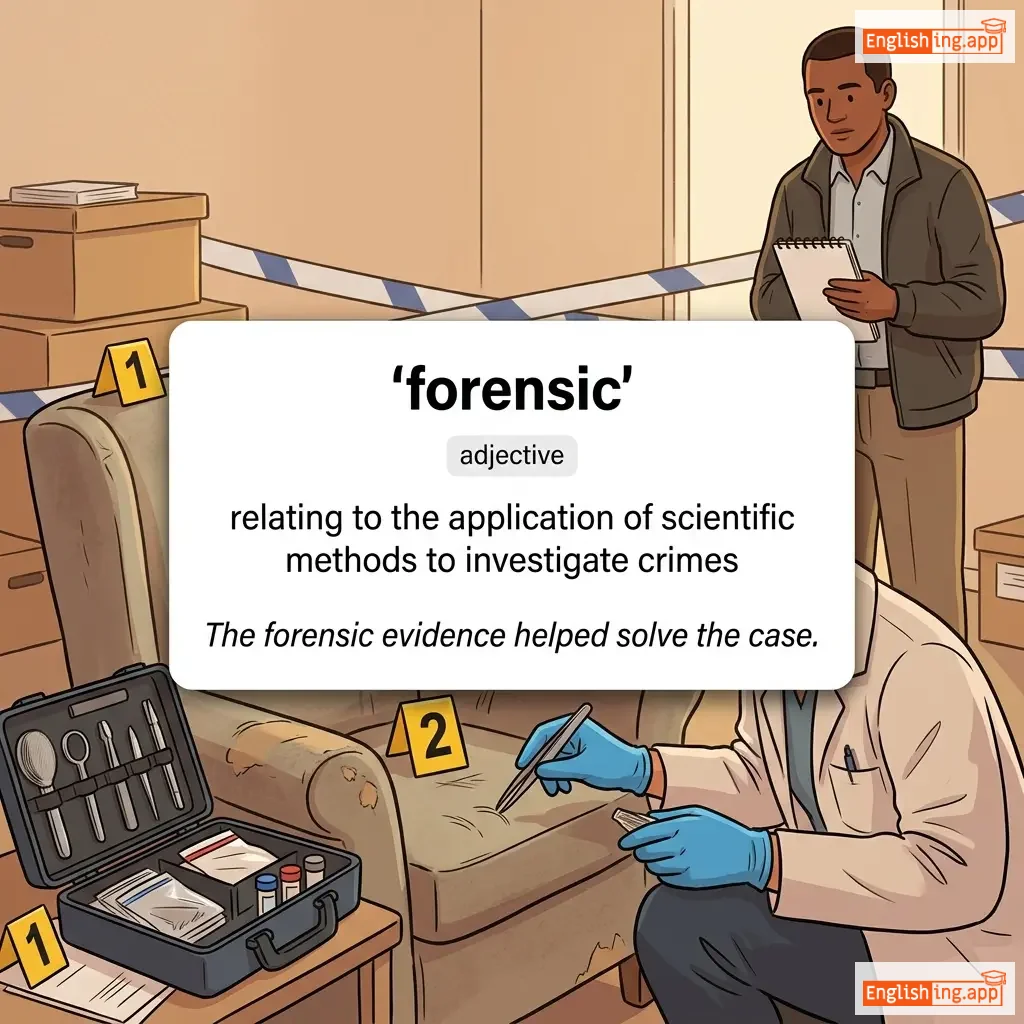
forensic definition card — visual illustration of the meaning
adjective
/fəˈrɛnsɪk/
法医的 (fǎ yī de)

relating to the application of scientific methods to investigate crimes

"The forensic evidence helped solve the case."

"法医证据帮助解决了案件。" (Fǎ yī zhèngjù bāngzhù jiějuéle ànjiàn.)
verb
/ˌfɔːrɔːrˈdeɪn/
预定 (yùdìng)

to determine or decree something in advance; to predestine

"Some believe that our lives are foreordained by fate."

"一些人相信我们的生活是命运预定的。" (Yīxiē rén xiāngxìn wǒmen de shēnghuó shì mìngyùn yùdìng de.)
noun
/ˌfɔːrɔːrdɪˈneɪʃən/
预定 (yùdìng)

the act of determining something in advance; predestination

"The doctrine of foreordination suggests that events are fixed by divine will."

"预定论教义认为,事件是由神的意志所决定的。" (Yùdìng lùn jiàoyì rènwéi, shìjiàn shì yóu shén de yìzhì suǒ juédìng de.)
noun
/ˈfɔːrˌpiːk/
船头舱 (chuántóu cāng)

The compartment in the forward part of a ship, often used for storage.

"The sailors stored extra ropes in the forepeak."

"水手们将额外的绳索存放在船头舱里。" (Shuǐ shǒu men jiāng é wài de shéng suǒ cún fàng zài chuántóu cāng lǐ.)
🏃‍♂️

forerun (福瑞然)

verb
/ˌfɔːrˈrʌn/
预示 (yù shì)

To go before; to precede in time, place, or action.

"Dark clouds often forerun a storm."

"乌云常常预示着暴风雨。" (Wū yún chángcháng yùshì zhe bàofēngyǔ.)
noun
/ˈfɔːrˌrʌnər/
先驱 (xianqu)

A person or thing that comes before another; a predecessor or harbinger.

"The Wright brothers were the forerunners of modern aviation."

"莱特兄弟是现代航空的先驱。" (Làitè xiōngdì shì xiàndài hángkōng de xiānqū.)
noun
/ˈfɔːrˌseɪl/
前帆 (qian fan)

The principal sail set on the foremast of a sailing vessel.

"The crew adjusted the foresail to catch the wind."

"船员调整了前帆来迎接风。" (Chuanyuan tiaozhengle qianfan lai yingjie feng.)
verb
/fɔːrˈsiː/
预见 (yùjiàn)

To be aware of beforehand; to predict or expect.

"She could foresee the challenges ahead."

"她能够预见到前方的挑战。" (Tā nénggòu yùjiàn dào qiánfāng de tiǎozhàn.)
adjective
/fɔːrˈsiːəbl/
可预见的 (ke yujian de)

Able to be predicted or expected in advance

"The company is unlikely to make changes in the foreseeable future."

"公司不太可能在可预见的未来做出变化。" (Gongsi butai keneng zai ke yujian de weilai zuochu bianhua.)
verb
/fɔːrˈʃædoʊ/
预示 (yù shì)

To indicate or suggest something that will happen in the future

"Dark clouds foreshadowed an approaching storm."

"乌云预示着即将来临的暴风雨。" (Wūyún yùshìzhe jíjiāng láilín de bàofēngyǔ.)
noun
/ˈfɔːrʃɔːr/
海滩 (haitan)

The part of the shore between the high and low tide marks

"Children were playing on the foreshore, collecting shells."
"孩子们在海岸上玩耍,捡贝壳。" (Haizimen zai haitan shang wanshua, jian beike.)
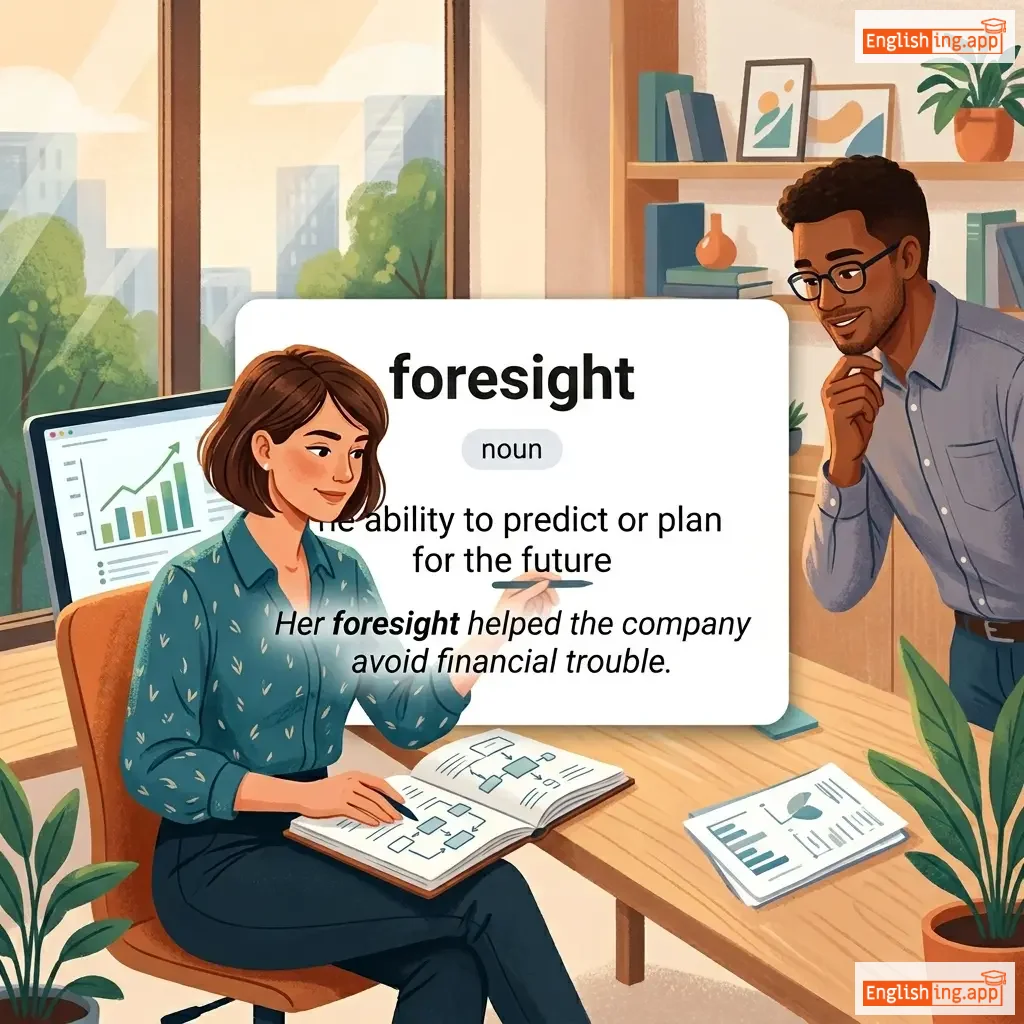
foresight definition card — visual illustration of the meaning
noun
/ˈfɔːrsaɪt/
远见 (yuanjian)

The ability to predict or plan for the future

"Her foresight helped the company avoid financial trouble."

"她的远见帮助公司避免了财务问题。" (Ta de yuanjian bangzhu gongsi bimiant le caiwu wenti.)
noun
/ˈfɔːrɪst/
森林 (sēnlín)

A large area covered chiefly with trees and undergrowth.

"They went hiking in the forest."
"他们去了森林远足。" (Tāmen qùle sēnlín yuǎnzú.)
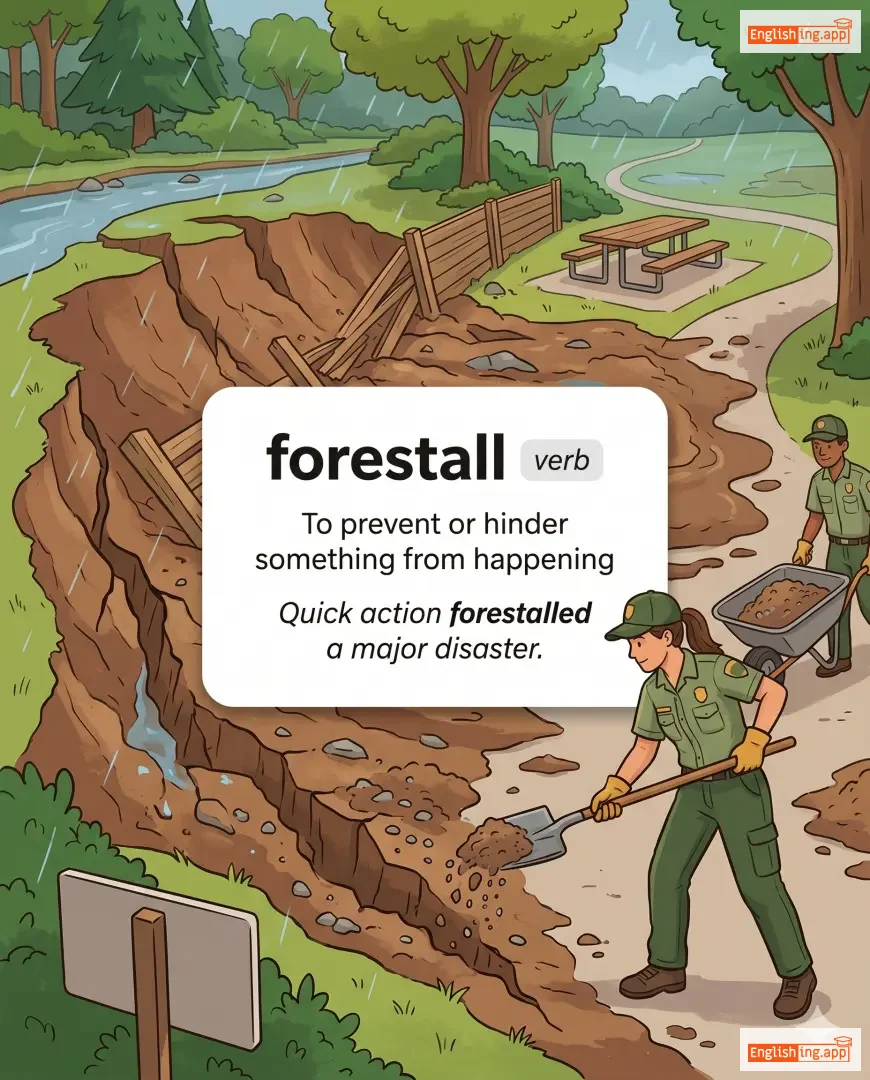
forestall definition card — visual illustration of the meaning
verb
/fɔːrˈstɔːl/
防止 (fangzhi)

To prevent or hinder something from happening

"Quick action forestalled a major disaster."
"迅速的行动防止了重大灾难的发生。" (Xunsu de xingdong fangzhi le zhongda zainan de fasheng.)
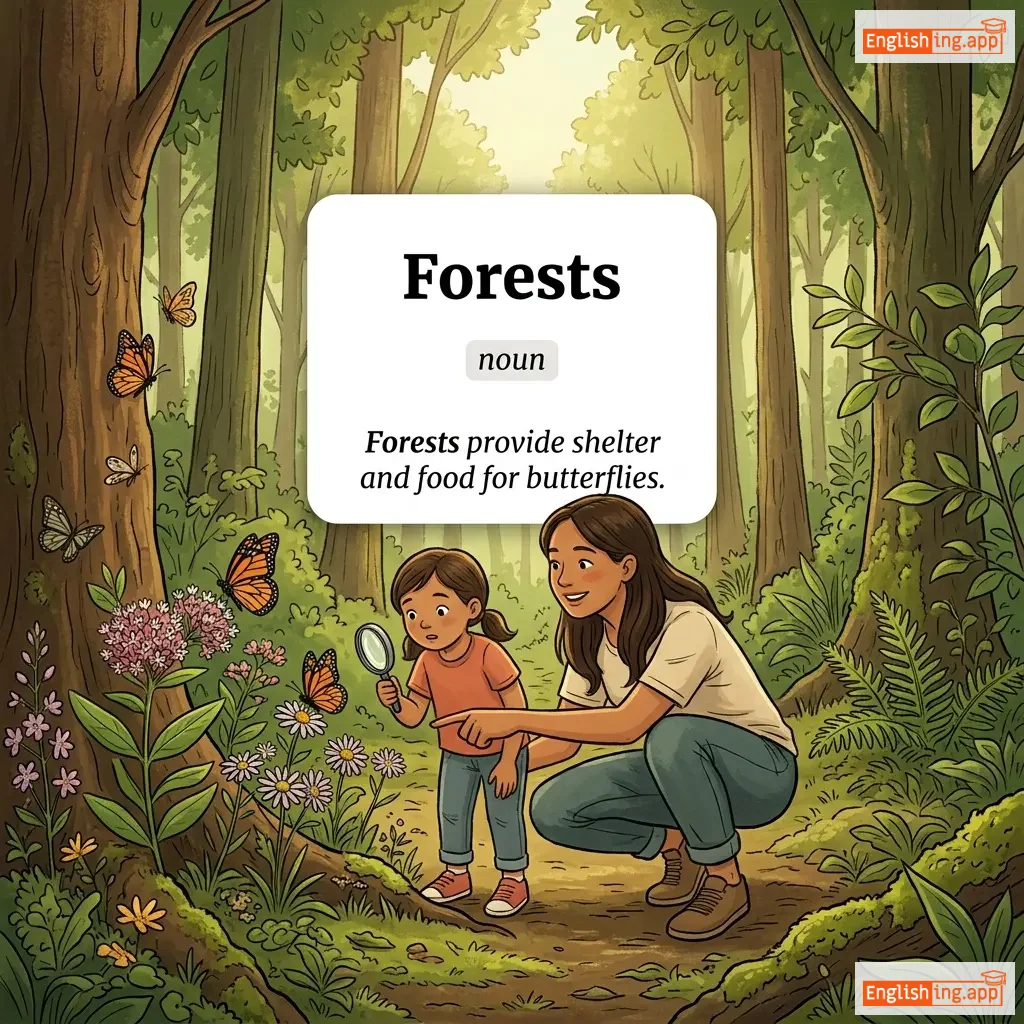
Forests definition card — visual illustration of the meaning
noun
ˈfɔːrɪsts
森林 (senlin)

Large areas covered with trees and undergrowth, providing natural habitats for wildlife.

"Forests provide shelter and food for butterflies."

"森林为蝴蝶提供庇护和食物。" (Senlin wei hudie tigong bihuo he shiwu.)
verb
/fɔːrˈtɛl/
预言 (yuyan)

to predict or announce something before it happens

"The old man claimed he could foretell the future."

"那位老人声称他能够预言未来。" (Na wei laoren shengcheng ta nenggou yuyan weilai.)
noun
/ˈfɔːrˌθɔːt/
预见 (yujian)

careful consideration of what will be necessary or may happen in the future

"With a little forethought, we could have avoided the problem."

"稍微有一点预见性,我们本可以避免这个问题。" (Shaowei you yidian yujianxing, women ben keyi bimian zhege wenti.)
adverb
/fɔːrˈɛvər/
永远 (yǒngyuǎn)

For all future time; for always.

"She promised to love him forever."

"她承诺永远爱他。" (Tā chéngnuò yǒngyuǎn ài tā.)
noun
/ˈfɔːrwɜːrd/
前言 (qianyan)

a short introduction at the beginning of a book, typically written by someone other than the author

"The foreword of the book was written by a famous historian."

"这本书的前言是由一位著名的历史学家写的。" (Zhe ben shu de qianyan shi you yi wei zhuming de lishixuejia xiede.)
⚖️

forfeit

verb
/ˈfɔːrfɪt/

to lose or give up something, usually as a penalty for wrongdoing

"He had to forfeit the match after breaking the rules."

verb
/fɔːrˈfɛnd/
保护, 防卫, 避免 (bǎohù, fángwèi, bìmiǎn)

to protect or defend against something undesirable; to prevent

"May good fortune forfend any danger from our journey."

"愿好运保护我们,避免任何危险。" (Yuàn hǎo yùn bǎohù wǒmen, bìmiǎn rènhé wēixiǎn.)
verb
/fɔːrdʒ/
锻造,伪造 (duànzào, wèizào)

to create or shape something, often with effort or skill; also to counterfeit or fake something

"The blacksmith forged a strong sword from the iron."

"铁匠从铁中锻造出一把坚固的剑。" (Tiějiàng cóng tiě zhōng duànzào chū yī bǎ jiāngù de jiàn.)
noun
/ˈfɔːrdʒər/
伪造者 (weizaozhe)

a person who makes fake documents, artworks, or signatures

"The police arrested a forger who had been selling counterfeit paintings."

"警方逮捕了一名伪造者,他一直在出售伪造的画作。" (Jǐngfāng dàibǔle yī míng wěizàozhě, tā yīzhí zài chūshòu wěizào de huàzuò.)
noun
/ˈfɔːrdʒəri/
伪造 (weizao)

the crime of making fake documents, money, or artworks

"The bank detected a forgery in the signature on the cheque."
"银行发现支票签名上的伪造。" (Yinhang faxian zhipiao qianming shang de weizao.)
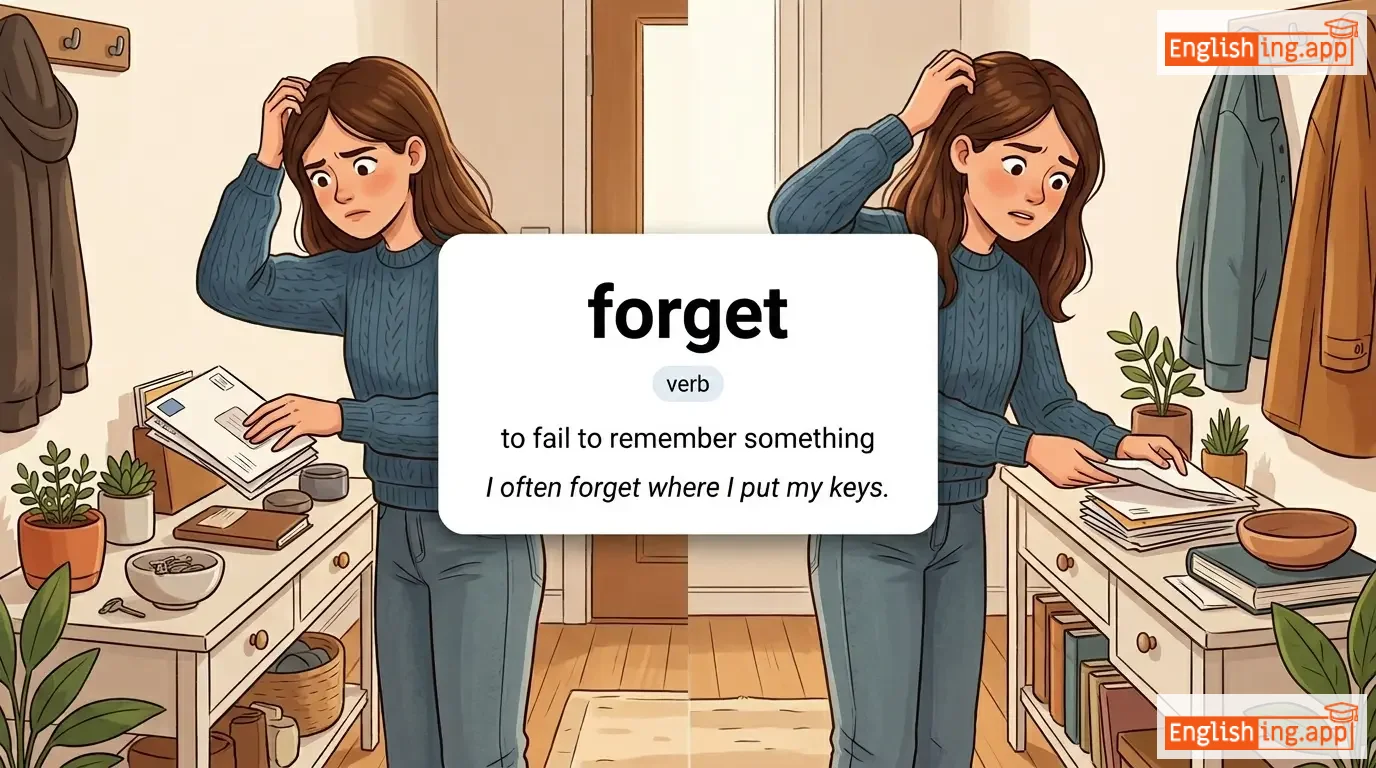
forget definition card — visual illustration of the meaning
verb
/fəˈɡɛt/
忘记 (wàngjì)

to fail to remember something

"I often forget where I put my keys."
"我经常忘记把钥匙放在哪里。" (Wǒ jīngcháng wàngjì bǎ yàoshi fàng zài nǎlǐ.)
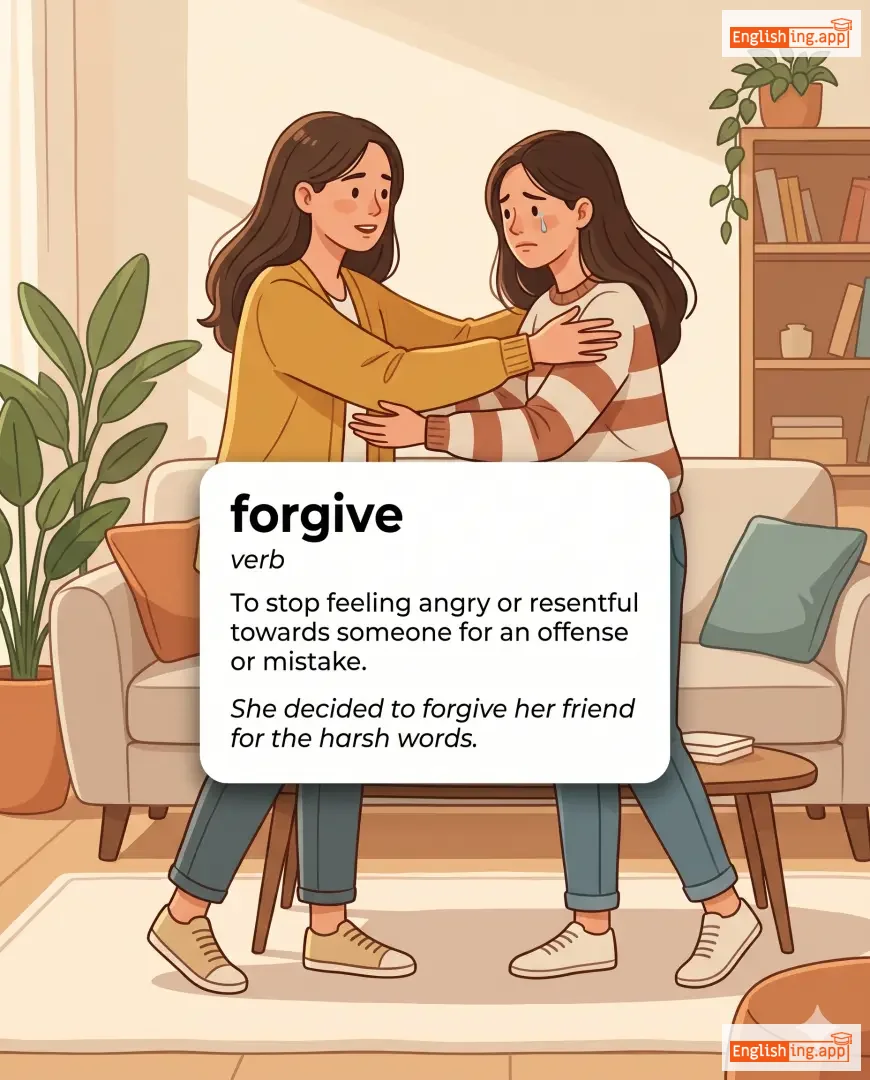
forgive definition card — visual illustration of the meaning
verb
/fərˈɡɪv/
宽恕 (kuānshù)

To stop feeling angry or resentful towards someone for an offense or mistake.

"She decided to forgive her friend for the harsh words."

"她决定原谅她的朋友因为那些严厉的话。" (Tā juédìng yuánliàng tā de péngyǒu yīnwèi nàxiē yánlì de huà.)
adjective
/fəˈɡɪv.ɪŋ/
宽容 (kuanrong)

ready and willing to forgive; merciful; lenient

"She has a forgiving nature and rarely holds grudges."

"她有宽容的天性,几乎不记仇。" (Ta you kuanrong de tianxing, jihu bu ji chou.)
verb
/fɔːrˈɡoʊ/
放弃 (fangqi)

to decide not to do or have something

"She decided to forgo dessert to maintain her diet."

"她决定放弃甜点以保持她的饮食。" (Ta jueding fangqi tiandian yi baochi ta de yinshi.)
Fork definition card — visual illustration of the meaning
noun
/fɔːk/
叉子 (chāzi)

a tool with two or more prongs used for eating or serving food

"He ate his salad with a fork."

"他用叉子吃了他的沙拉。" (Tā yòng chāzi chīle tā de shālā.)
adjective
/fərˈlɔːrn/
孤独的, 绝望的 (gūdú de, juéwàng de)

extremely sad, lonely, or abandoned

"The abandoned puppy looked so forlorn in the rain."

"被遗弃的小狗在雨中看起来如此悲伤。" (Bèi yíqì de xiǎo gǒu zài yǔ zhōng kàn qǐlái rúcǐ bēishāng.)
noun, verb
/fɔːrm/
形状 / 表格 (xíng zhuàng / biǎo gé)

the shape or structure of something; to bring something into existence

"Students filled out the registration form."

"学生填写了注册表格。" (Xuéshēng tiánxiěle zhùcè biǎogé.)
adjective
/ˈfɔːrməl/
正式 (zhèngshì)

done in accordance with rules of convention or etiquette; official or serious in nature

"He wore a formal suit to the wedding."

"他在婚礼上穿了正式西装。" (Tā zài hūnlǐ shàng chuānle zhèngshì xīzhuāng.)
noun
/fɔːrˈmælɪti/
形式 (xing shi)

the rigid observance of rules or customs, especially in social or official situations

"The interview was just a formality since he was already selected."

"面试只是一个形式,因为他已经被选中了。" (Mianshi zhishi yige xingshi, yinwei ta yijing bei xuan zhong le.)
adverb
/ˈfɔːrməli/
正式地 (zhengshi de)

in a formal or official manner; according to established rules or conventions

"The agreement was formally signed by both parties."

"该协议已由双方正式签署。" (gai xieyi yi you shuangfang zhengshi qianshu)
noun
/ˈfɔːmæt/
格式 (ge shi)

the way in which something is arranged, designed, or presented

"Please follow the given format for your report submission."

"请按照给定的格式提交您的报告。" (Qing an zhao gei ding de ge shi ti jiao nin de baogao.)
noun
/fɔːrˈmeɪʃən/
形成 (xíngchéng)

the action of forming or process of being formed

"The formation of the new company took several months."

"新公司的形成花了几个月时间。" (Xīn gōngsī de xíngchéng huāle jǐ gè yuè shíjiān.)
adjective
/ˈfɔːrmətɪv/
形成性的 (xíngchéngxìng de)

Having a lasting influence on a person's development or character.

"Childhood is often described as a formative stage in life."

"童年常被描述为人生中的一个形成性阶段。" (Tóngnián cháng bèi miáoshù wéi rénshēng zhōng de yīgè xíngchéngxìng jiēduàn.)
adjective
/ˈfɔːrmər/
前任 (qianren)

Having been previously in a particular role or position.

"He is a former president of the association."

"他是该协会的前任主席。" (Tā shì gāi xiéhuì de qiánrèn zhǔxí.)
adverb
/ˈfɔːrmərli/
以前 (yǐqián)

In the past; previously.

"The city was formerly known as Constantinople."
"这座城市以前被称为君士坦丁堡。" (Zhè zuò chéngshì yǐqián bèi chēng wéi Jūnshìtǎndīngbǎo.)
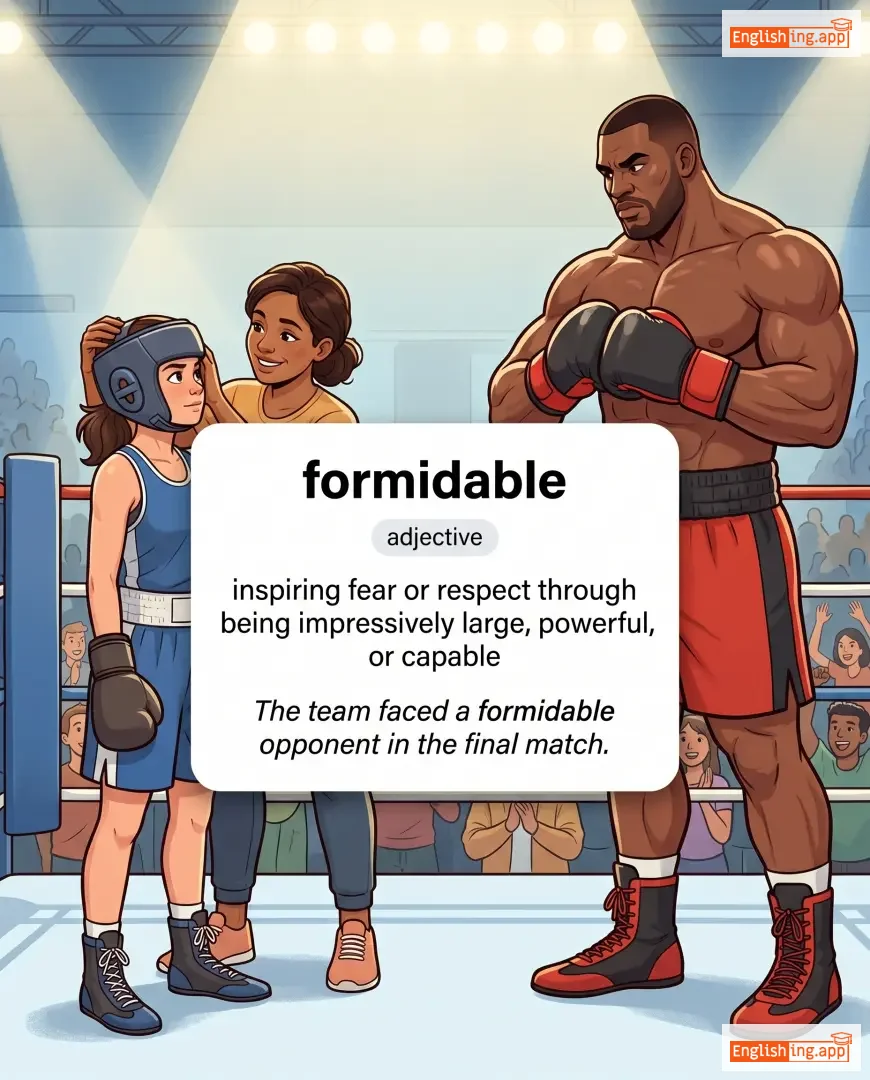
formidable definition card — visual illustration of the meaning
adjective
/ˈfɔːrmɪdəbl/

inspiring fear or respect through being impressively large, powerful, or capable

"The team faced a formidable opponent in the final match."

noun
/ˈfɔːrmjələ/
公式 (gongshi)

a fixed method for doing something; a mathematical or chemical rule expressed in symbols

"The scientist discovered a new formula for the medicine."

"科学家发现了一种新的药物公式。" (Ke xue jia fa xian le yi zhong xin de yao wu gong shi.)
formulate definition card — visual illustration of the meaning
verb
/ˈfɔːmjʊleɪt/
制定 (zhì dìng)

to create or devise a plan, system, or method

"She had to formulate a new strategy for the project."

"她不得不为项目制定新的策略。" (Tā bù dé bù wèi xiàng mù zhì dìng xīn de cè lüè.)
verb
/fɔːrˈseɪk/

to abandon or give up something or someone

"He decided not to forsake his old friends despite his success."

forswear definition card — visual illustration of the meaning
verb
/fɔːrˈswɛr/
发誓放弃 (fā shì fàng qì)

to renounce or give up something formally, often under oath

"He chose to forswear all bad habits after his illness."

"他在生病后选择放弃所有坏习惯。" (Tā zài shēng bìng hòu xuǎn zé fàng qì suǒ yǒu huài xí guàn.)
noun
/fɔːrt/
堡垒 (baolei)

a strong building or group of buildings where soldiers live and defend

"The ancient fort stood on top of the hill for centuries."

"古老的堡垒屹立在山顶上数百年。" (Gǔlǎo de bǎolěi yìlì zài shāndǐng shàng shù bǎi nián.)
noun
/ˈfɔːr.teɪ/ or /fɔːrt/
强项 (qiangxiang)

a strong ability or talent; something one does particularly well

"Cooking is definitely her forte."

"做饭绝对是她的强项。" (Zuofan juedui shi ta de qiangxiang.)