Vocabularios

Descubra, aprenda y domine el vocabulario en inglés

verb
/fɔːrˈdʒʌdʒ/
juzgar por adelantado (juzgar por adelantado)

To judge beforehand without adequate information.

"It is unfair to forejudge someone without knowing the facts."

"Es injusto juzgar a alguien sin conocer los hechos." (Es injusto juzgar a alguien sin conocer los hechos.)
noun
/ˈfɔːrˌnɑːlɪdʒ/
preconocimiento (preconocimiento)

Awareness of something before it happens or exists.

"The prophet claimed to have foreknowledge of the event."

"El profeta afirmó tener preconocimiento del evento." (El profeta afirmó tener preconocimiento del evento.)
noun
/ˈfɔːrmən/
persona encargada de un grupo de trabajadores, especialmente en una fábrica o en una obra de construcción (persona encargada de un grupo de trabajadores, especialmente en una fábrica o en una obra de construcción)

a person in charge of a group of workers, especially in a factory or construction site

"The foreman supervised the workers on the construction site."

"El capataz supervisó a los trabajadores en el sitio de construcción." (El capataz supervisó a los trabajadores en el sitio de construcción.)
adjective
/ˈfɔːrmoʊst/
principal (principal)

most important; leading; first in rank or position

"She is one of the foremost experts in the field."

"Ella es una de las principales expertas en el campo." (Ella es una de las principales expertas en el campo.)
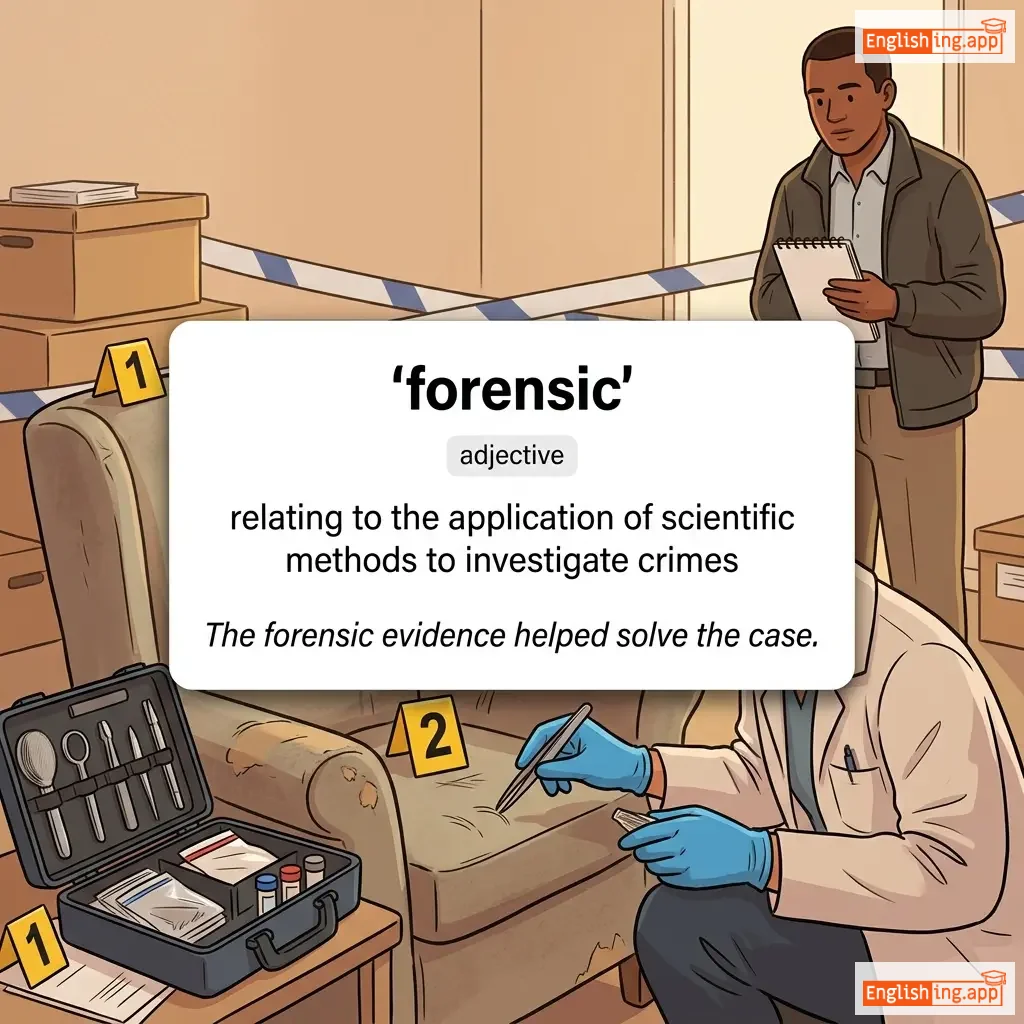
forensic definition card — visual illustration of the meaning
adjective
/fəˈrɛnsɪk/
forense (forense)

relating to the application of scientific methods to investigate crimes

"The forensic evidence helped solve the case."

"La evidencia forense ayudó a resolver el caso." (La evidencia forense ayudo a resolver el caso.)
verb
/ˌfɔːrɔːrˈdeɪn/
predestinar (predestinar)

to determine or decree something in advance; to predestine

"Some believe that our lives are foreordained by fate."

"Algunos creen que nuestras vidas están predestinadas por el destino." (Algunos creen que nuestras vidas están predestinadas por el destino.)
noun
/ˌfɔːrɔːrdɪˈneɪʃən/
preordenación (preordenacion)

the act of determining something in advance; predestination

"The doctrine of foreordination suggests that events are fixed by divine will."

"La doctrina de la preordenación sugiere que los eventos están fijados por la voluntad divina." (La doctrina de la preordenacion sugiere que los eventos estan fijados por la voluntad divina.)
noun
/ˈfɔːrˌpiːk/
camarote de proa (camarote de proa)

The compartment in the forward part of a ship, often used for storage.

"The sailors stored extra ropes in the forepeak."

"Los marineros guardaron cuerdas extra en el camarote de proa." (Los marineros guardaron cuerdas extra en el camarote de proa.)
🏃‍♂️

forerun (forerán)

verb
/ˌfɔːrˈrʌn/
predecer (predecer)

To go before; to precede in time, place, or action.

"Dark clouds often forerun a storm."

"Las nubes oscuras a menudo preceden una tormenta." (Las nubes oscuras a menudo preceden una tormenta.)
noun
/ˈfɔːrˌrʌnər/
precursor (precursor)

A person or thing that comes before another; a predecessor or harbinger.

"The Wright brothers were the forerunners of modern aviation."

"Los hermanos Wright fueron los precursores de la aviación moderna." (Los hermanos Wright fueron los precursores de la aviación moderna.)
noun
/ˈfɔːrˌseɪl/
vela de proa (vela de proa)

The principal sail set on the foremast of a sailing vessel.

"The crew adjusted the foresail to catch the wind."

"La tripulación ajustó la vela de proa para capturar el viento." (La tripulacion ajusto la vela de proa para capturar el viento.)
verb
/fɔːrˈsiː/
prever (prever)

To be aware of beforehand; to predict or expect.

"She could foresee the challenges ahead."

"Ella podía prever los desafíos por delante." (Ella podía prever los desafíos por delante.)
adjective
/fɔːrˈsiːəbl/
previsible (previsible)

Able to be predicted or expected in advance

"The company is unlikely to make changes in the foreseeable future."

"Es poco probable que la empresa realice cambios en el futuro previsible." (Es poco probable que la empresa realice cambios en el futuro previsible.)
verb
/fɔːrˈʃædoʊ/
presagiar (presagiar)

To indicate or suggest something that will happen in the future

"Dark clouds foreshadowed an approaching storm."

"Las nubes oscuras presagiaron una tormenta inminente." (Las nubes oscuras presagiaron una tormenta inminente.)
noun
/ˈfɔːrʃɔːr/
orilla (orilla)

The part of the shore between the high and low tide marks

"Children were playing on the foreshore, collecting shells."

"Los niños estaban jugando en la orilla, recogiendo conchas." (Los ninos estaban jugando en la orilla, recogiendo conchas.)
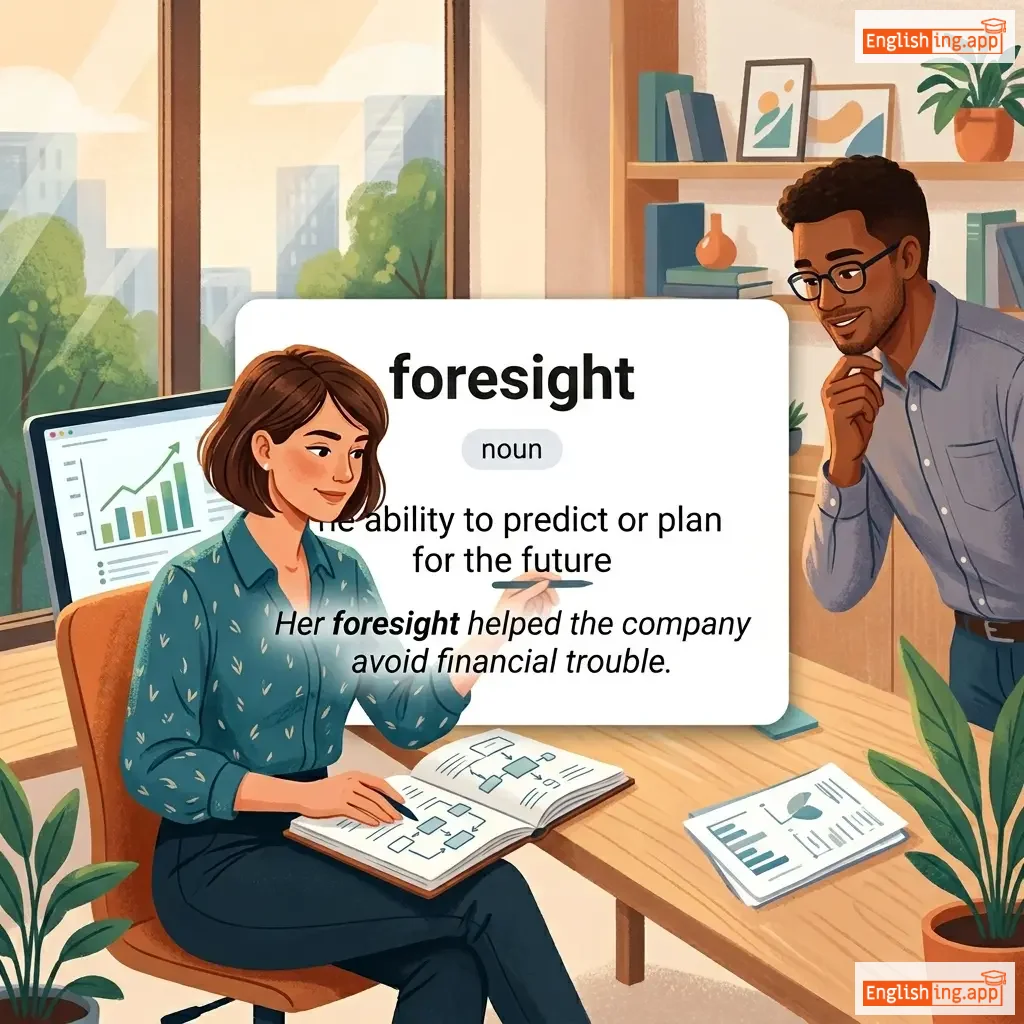
foresight definition card — visual illustration of the meaning
noun
/ˈfɔːrsaɪt/
previsión (prevision)

The ability to predict or plan for the future

"Her foresight helped the company avoid financial trouble."

"Su previsión ayudó a la empresa a evitar problemas financieros." (Su previsión ayudó a la empresa a evitar problemas financieros.)
noun
/ˈfɔːrɪst/
bosque (boske)

A large area covered chiefly with trees and undergrowth.

"They went hiking in the forest."

"Fueron a hacer senderismo en el bosque." (Fueron a hacer senderismo en el bosque.)
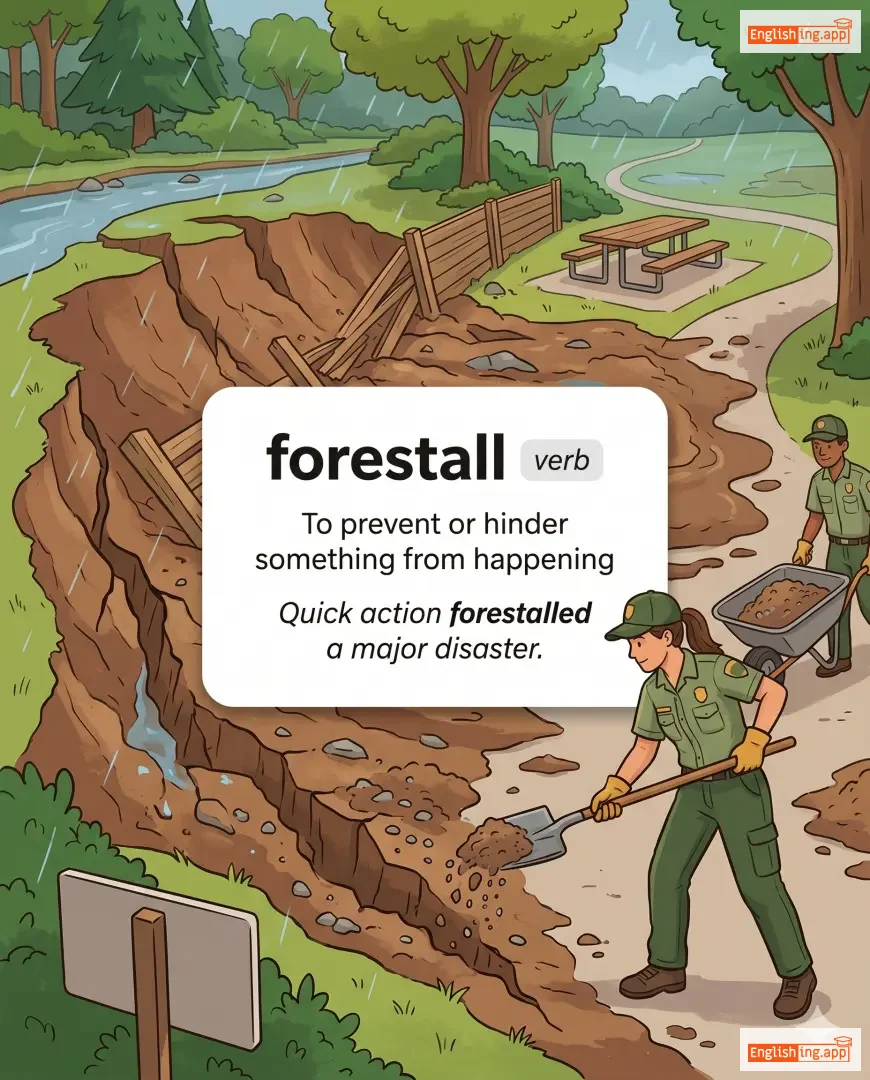
forestall definition card — visual illustration of the meaning
verb
/fɔːrˈstɔːl/
evitar (evitar)

To prevent or hinder something from happening

"Quick action forestalled a major disaster."

"La acción rápida evitó un gran desastre." (La acción rápida evitó un gran desastre.)
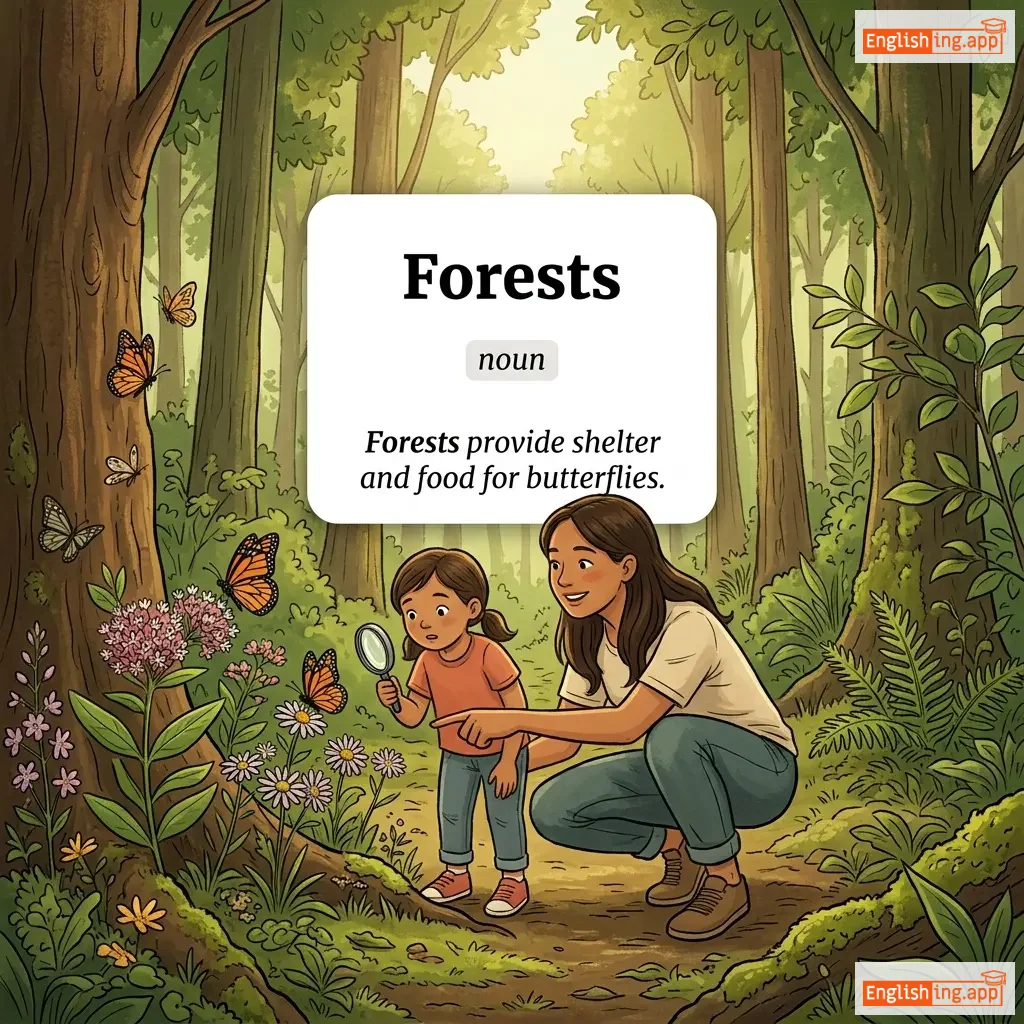
Forests definition card — visual illustration of the meaning
noun
ˈfɔːrɪsts
bosques (boskes)

Large areas covered with trees and undergrowth, providing natural habitats for wildlife.

"Forests provide shelter and food for butterflies."

"Los bosques proporcionan refugio y alimento para las mariposas." (Los bosques proporcionan refugio y alimento para las mariposas.)
verb
/fɔːrˈtɛl/
predecir (predecir)

to predict or announce something before it happens

"The old man claimed he could foretell the future."

"El anciano afirmó que podía predecir el futuro." (El anciano afirmó que podía predecir el futuro.)
noun
/ˈfɔːrˌθɔːt/
previsión (prevision)

careful consideration of what will be necessary or may happen in the future

"With a little forethought, we could have avoided the problem."

"Con un poco de previsión, podríamos haber evitado el problema." (Con un poco de prevision, podriamos haber evitado el problema.)
adverb
/fɔːrˈɛvər/
para siempre (para siempre)

For all future time; for always.

"She promised to love him forever."

"Ella prometió amarlo para siempre." (Ella prometió amarlo para siempre.)
noun
/ˈfɔːrwɜːrd/
prólogo (prologo)

a short introduction at the beginning of a book, typically written by someone other than the author

"The foreword of the book was written by a famous historian."

"El prólogo del libro fue escrito por un historiador famoso." (El prologo del libro fue escrito por un historiador famoso.)
verb
/ˈfɔːrfɪt/
perder, renunciar como penalización (perder, renunciar como penalizacion)

to lose or give up something, usually as a penalty for wrongdoing

"He had to forfeit the match after breaking the rules."

"Tuvo que perder el partido después de romper las reglas." (Tuvo que perder el partido despues de romper las reglas.)
verb
/fɔːrˈfɛnd/
proteger, defender, evitar (proteger, defender, evitar)

to protect or defend against something undesirable; to prevent

"May good fortune forfend any danger from our journey."

"Que la buena fortuna proteja contra cualquier peligro en nuestro viaje." (Que la buena fortuna proteja contra cualquier peligro en nuestro viaje.)
verb
/fɔːrdʒ/
forjar, falsificar (forjar, falsificar)

to create or shape something, often with effort or skill; also to counterfeit or fake something

"The blacksmith forged a strong sword from the iron."

"El herrero forjó una espada fuerte con el hierro." (El herrero forjó una espada fuerte con el hierro.)
noun
/ˈfɔːrdʒər/
falsificador (falsificador)

a person who makes fake documents, artworks, or signatures

"The police arrested a forger who had been selling counterfeit paintings."

"La policía arrestó a un falsificador que había estado vendiendo pinturas falsas." (La policía arrestó a un falsificador que había estado vendiendo pinturas falsas.)
noun
/ˈfɔːrdʒəri/
falsificación (falsificacion)

the crime of making fake documents, money, or artworks

"The bank detected a forgery in the signature on the cheque."

"El banco detectó una falsificación en la firma del cheque." (El banco detectó una falsificación en la firma del cheque.)
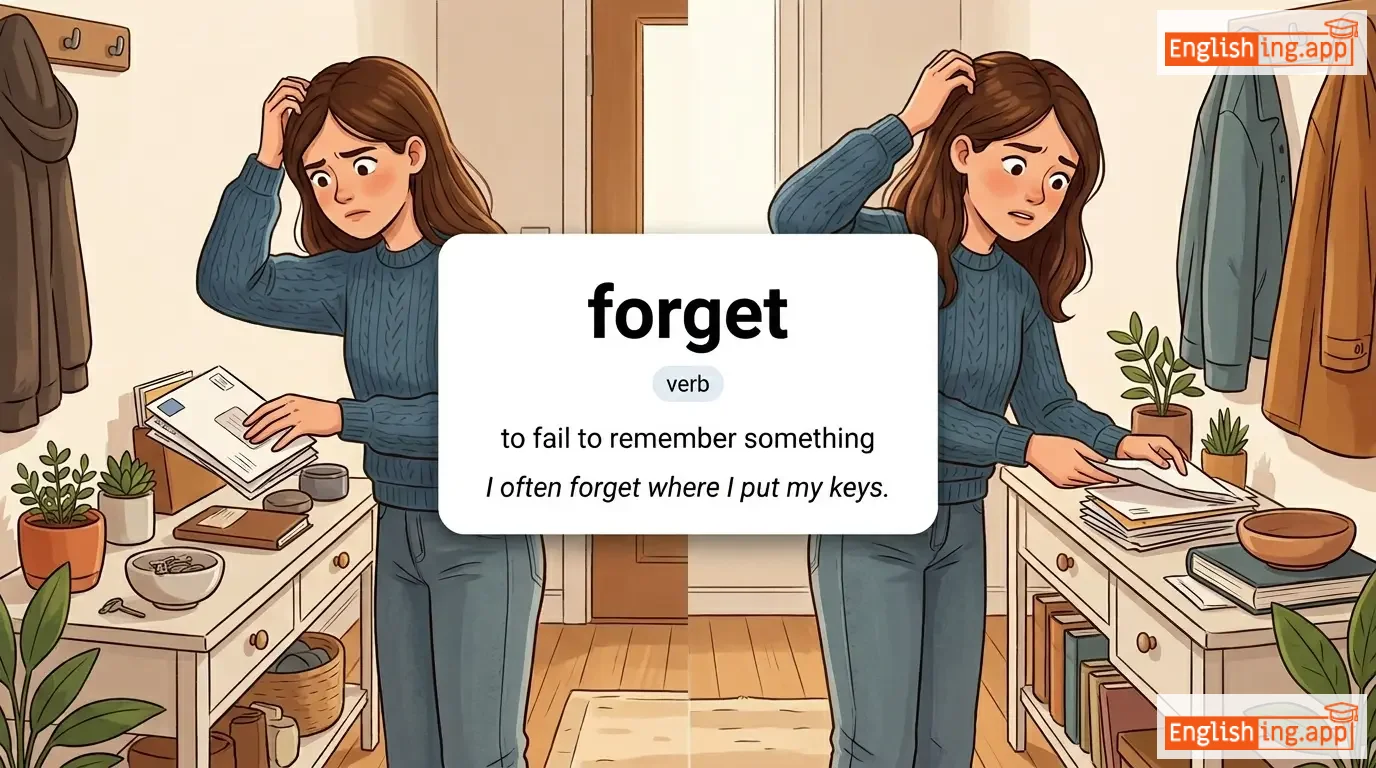
forget definition card — visual illustration of the meaning
verb
/fəˈɡɛt/
olvidar (olvidar)

to fail to remember something

"I often forget where I put my keys."

"A menudo olvido dónde puse mis llaves." (A menudo olvido dónde puse mis llaves.)
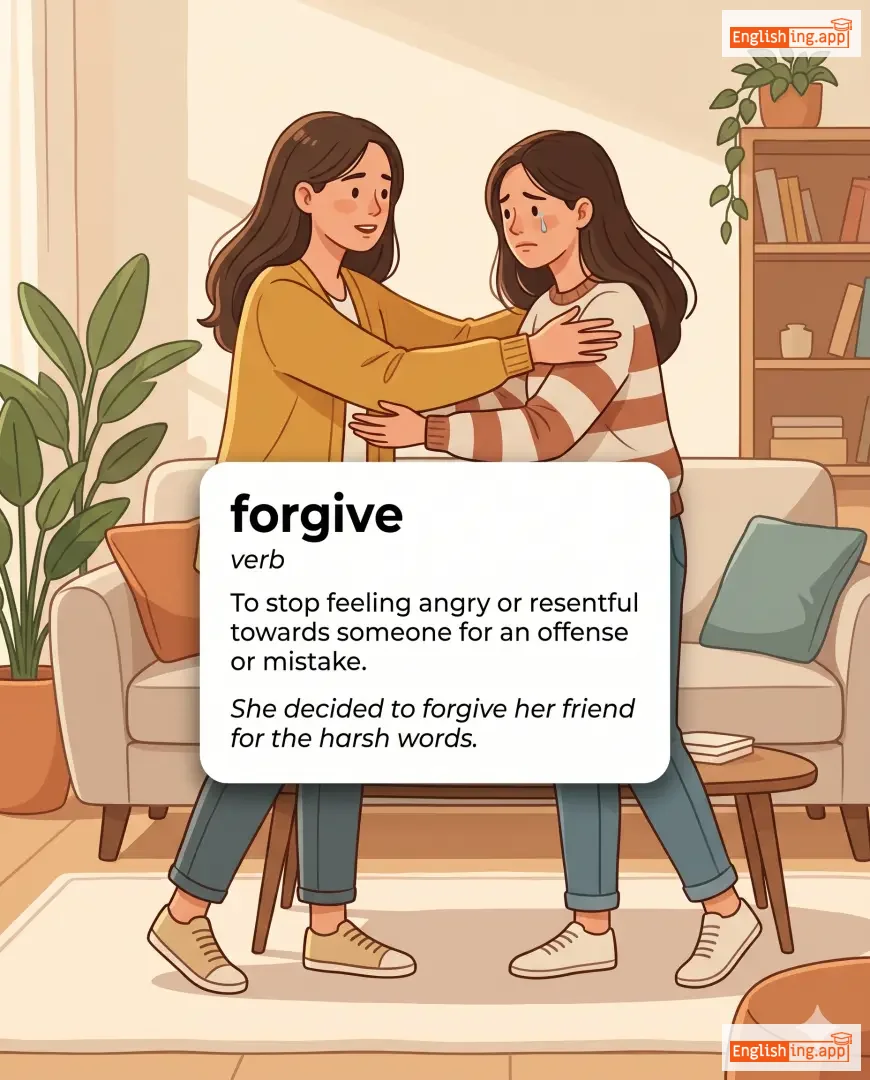
forgive definition card — visual illustration of the meaning
verb
/fərˈɡɪv/
perdonar (perdonar)

To stop feeling angry or resentful towards someone for an offense or mistake.

"She decided to forgive her friend for the harsh words."

"Ella decidió perdonar a su amigo por las palabras duras." (Ella decidió perdonar a su amigo por las palabras duras.)
adjective
/fəˈɡɪv.ɪŋ/
perdonador (perdonador)

ready and willing to forgive; merciful; lenient

"She has a forgiving nature and rarely holds grudges."

"Ella tiene una naturaleza perdonadora y rara vez guarda rencor." (Ella tiene una naturaleza perdonadora y rara vez guarda rencor.)
verb
/fɔːrˈɡoʊ/
renunciar (renunciar)

to decide not to do or have something

"She decided to forgo dessert to maintain her diet."

"Ella decidió renunciar al postre para mantener su dieta." (Ella decidió renunciar al postre para mantener su dieta.)
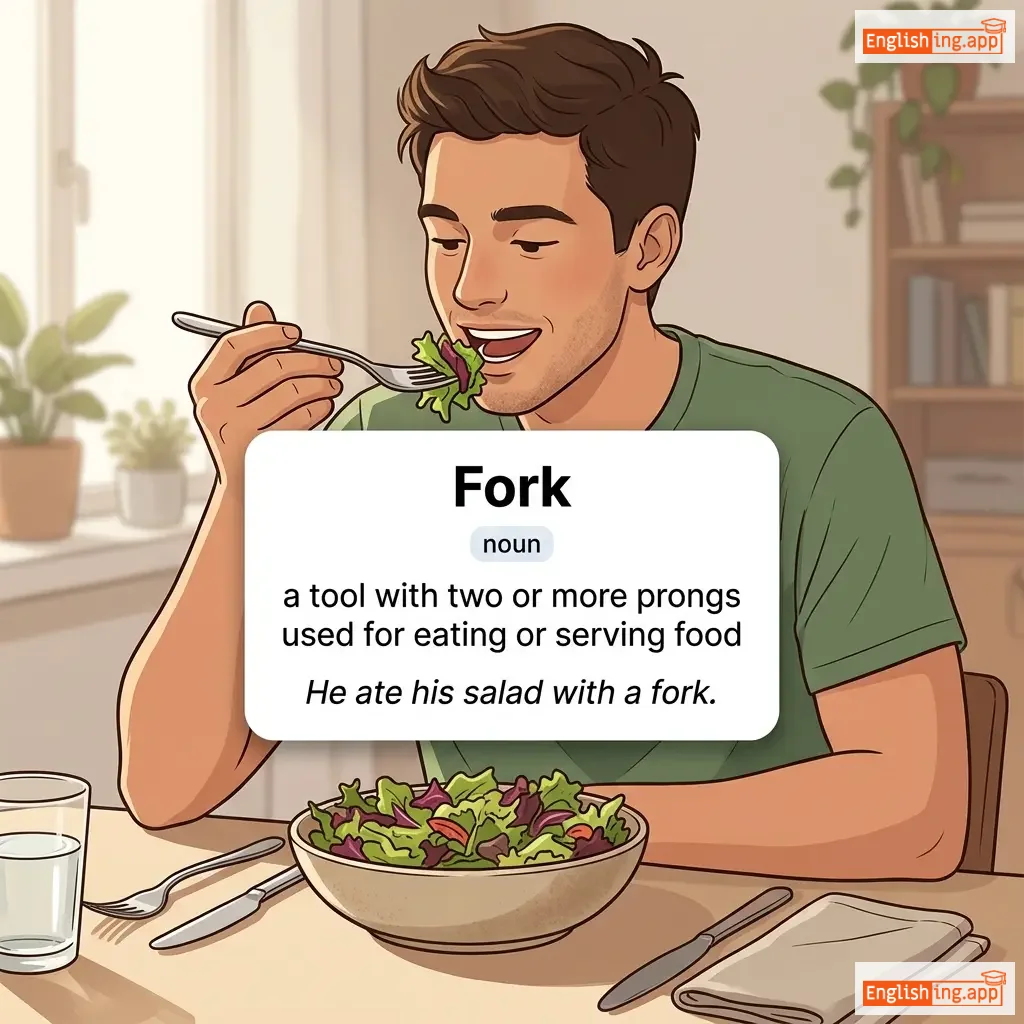
Fork definition card — visual illustration of the meaning
noun
/fɔːk/
tenedor (tenedor)

a tool with two or more prongs used for eating or serving food

"He ate his salad with a fork."

"Él comió su ensalada con un tenedor." (Él comió su ensalada con un tenedor.)
adjective
/fərˈlɔːrn/
desamparado, triste (desamparado, triste)

extremely sad, lonely, or abandoned

"The abandoned puppy looked so forlorn in the rain."

"El cachorro abandonado se veía tan triste bajo la lluvia." (El cachorro abandonado se veía tan triste bajo la lluvia.)
noun, verb
/fɔːrm/
forma / formulario (forma / formulario)

the shape or structure of something; to bring something into existence

"Students filled out the registration form."

"Los estudiantes completaron el formulario de registro." (Los estudiantes completaron el formulario de registro.)
adjective
/ˈfɔːrməl/
formal (formal)

done in accordance with rules of convention or etiquette; official or serious in nature

"He wore a formal suit to the wedding."

"Él usó un traje formal para la boda." (Él usó un traje formal para la boda.)
noun
/fɔːrˈmælɪti/
formalidad (formalidad)

the rigid observance of rules or customs, especially in social or official situations

"The interview was just a formality since he was already selected."

"La entrevista fue solo una formalidad ya que ya había sido seleccionado." (La entrevista fue solo una formalidad ya que ya había sido seleccionado.)
adverb
/ˈfɔːrməli/
formalmente (formalmente)

in a formal or official manner; according to established rules or conventions

"The agreement was formally signed by both parties."

"El acuerdo fue firmado formalmente por ambas partes." (el acuerdo fue firmado formalmente por ambas partes)
noun
/ˈfɔːmæt/
formato (formato)

the way in which something is arranged, designed, or presented

"Please follow the given format for your report submission."

"Por favor, siga el formato dado para la entrega de su informe." (Por favor, siga el formato dado para la entrega de su informe.)
noun
/fɔːrˈmeɪʃən/
formación (formacion)

the action of forming or process of being formed

"The formation of the new company took several months."

"La formación de la nueva empresa tomó varios meses." (La formacion de la nueva empresa tomo varios meses.)
adjective
/ˈfɔːrmətɪv/
formativo (formativo)

Having a lasting influence on a person's development or character.

"Childhood is often described as a formative stage in life."

"La infancia a menudo se describe como una etapa formativa en la vida." (La infancia a menudo se describe como una etapa formativa en la vida.)
adjective
/ˈfɔːrmər/
anterior (anterior)

Having been previously in a particular role or position.

"He is a former president of the association."

"Él es un presidente anterior de la asociación." (Él es un presidente anterior de la asociación.)
adverb
/ˈfɔːrmərli/
anteriormente (anteriormente)

In the past; previously.

"The city was formerly known as Constantinople."

"La ciudad era anteriormente conocida como Constantinopla." (La ciudad era anteriormente conocida como Constantinopla.)
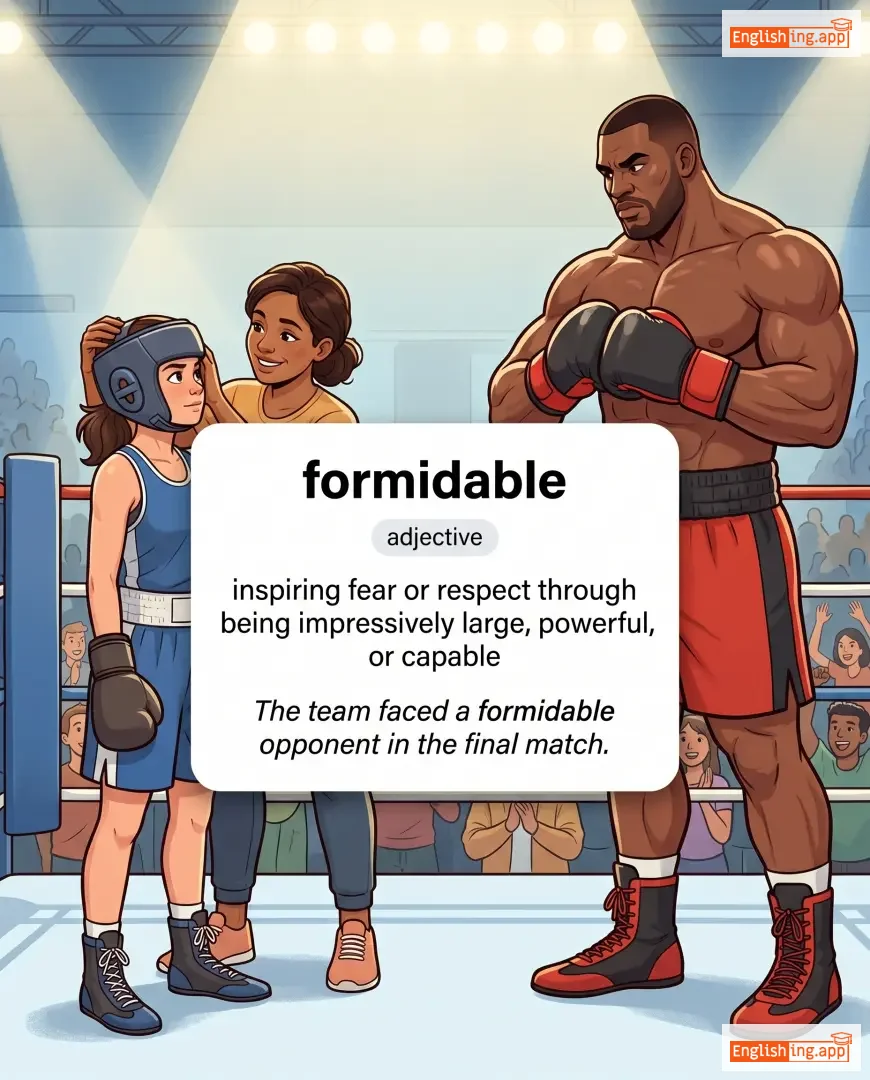
formidable definition card — visual illustration of the meaning
adjective
/ˈfɔːrmɪdəbl/
formidable (formidable)

inspiring fear or respect through being impressively large, powerful, or capable

"The team faced a formidable opponent in the final match."

"El equipo se enfrentó a un oponente formidable en el partido final." (El equipo se enfrento a un oponente formidable en el partido final.)
noun
/ˈfɔːrmjələ/
fórmula (formula)

a fixed method for doing something; a mathematical or chemical rule expressed in symbols

"The scientist discovered a new formula for the medicine."

"El científico descubrió una nueva fórmula para la medicina." (El cientifico descubrio una nueva formula para la medicina.)
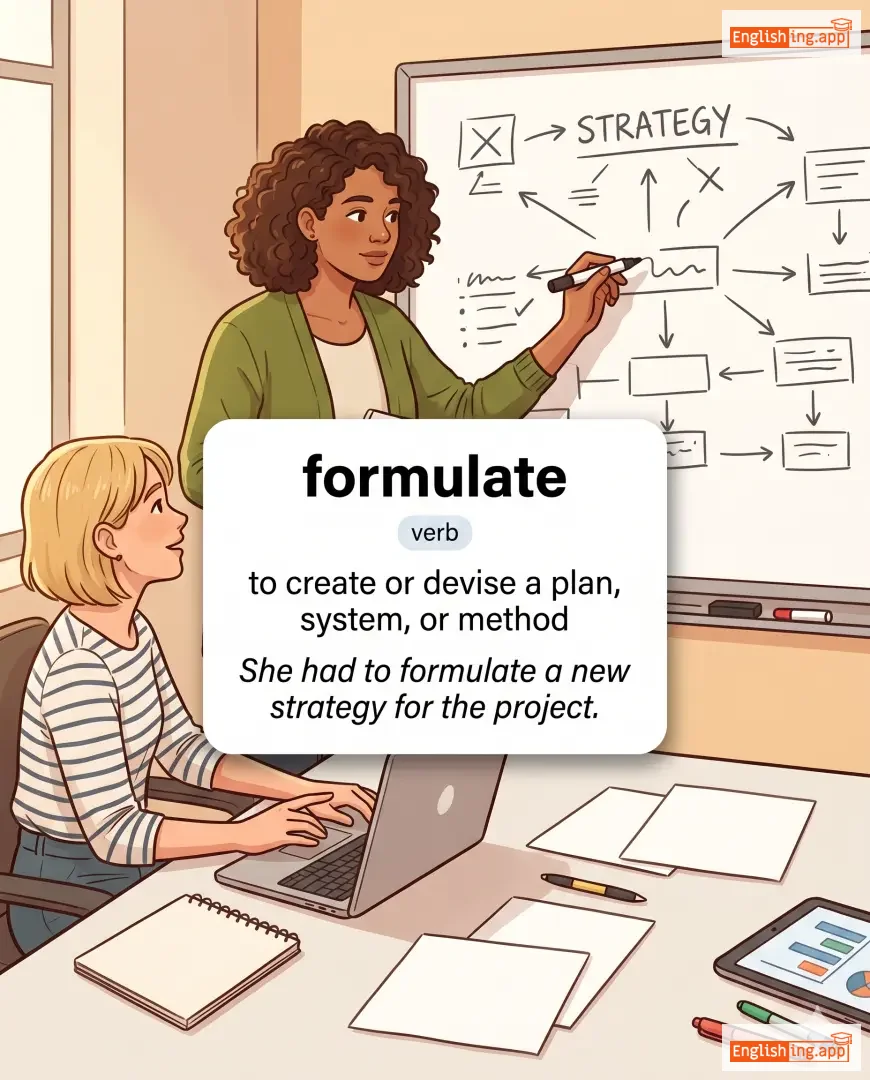
formulate definition card — visual illustration of the meaning
verb
/ˈfɔːmjʊleɪt/
formular (formular)

to create or devise a plan, system, or method

"She had to formulate a new strategy for the project."

"Ella tuvo que formular una nueva estrategia para el proyecto." (Ella tuvo que formular una nueva estrategia para el proyecto.)
verb
/fɔːrˈseɪk/
abandonar (abandonar)

to abandon or give up something or someone

"He decided not to forsake his old friends despite his success."

"Él decidió no abandonar a sus viejos amigos a pesar de su éxito." (El decidió no abandonar a sus viejos amigos a pesar de su éxito.)
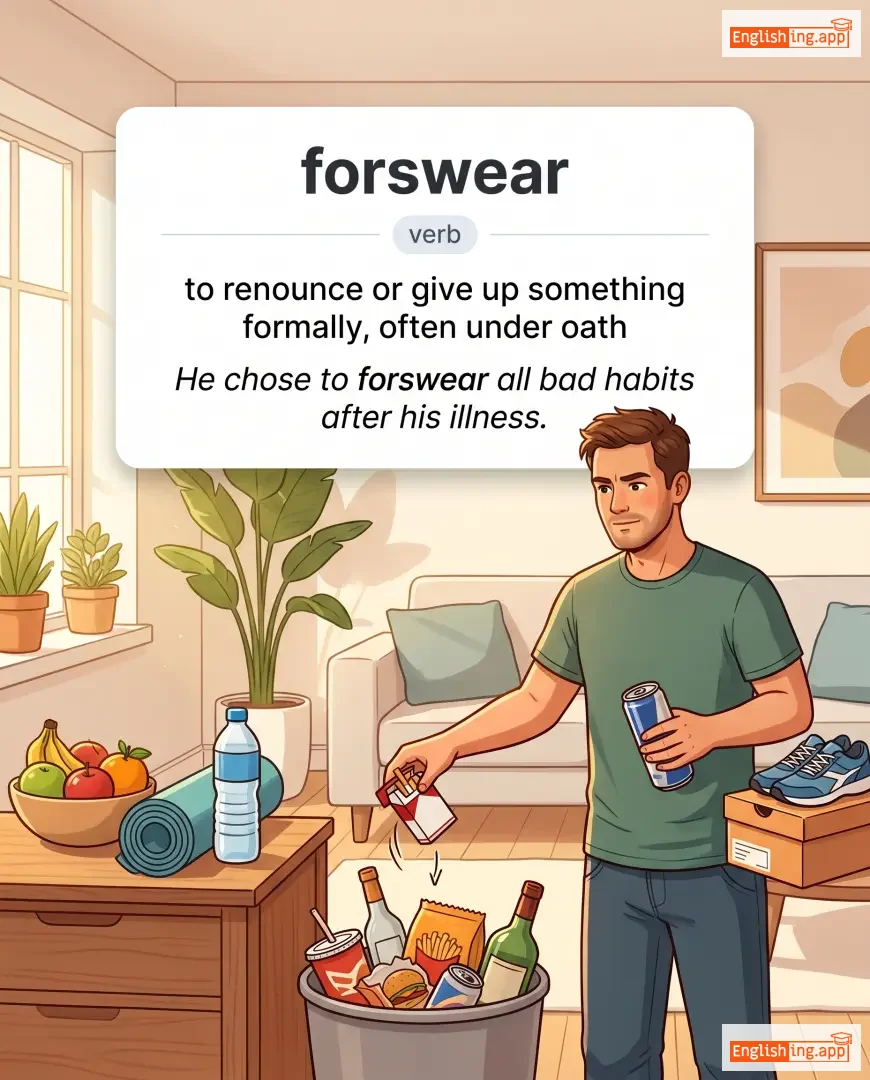
forswear definition card — visual illustration of the meaning
verb
/fɔːrˈswɛr/
renunciar bajo juramento (renunciar bajo juramento)

to renounce or give up something formally, often under oath

"He chose to forswear all bad habits after his illness."

"Él eligió renunciar a todos los malos hábitos después de su enfermedad." (El eligió renunciar a todos los malos hábitos después de su enfermedad.)
noun
/fɔːrt/
fuerte (fuerte)

a strong building or group of buildings where soldiers live and defend

"The ancient fort stood on top of the hill for centuries."

"El antiguo fuerte se erguía en la cima de la colina durante siglos." (El antiguo fuerte se erguía en la cima de la colina durante siglos.)
noun
/ˈfɔːr.teɪ/ or /fɔːrt/
fortaleza (fortaleza)

a strong ability or talent; something one does particularly well

"Cooking is definitely her forte."

"Cocinar es definitivamente su fortaleza." (Cocinar es definitivamente su fortaleza.)