वोकैबुलरीज

इंग्लिश वोकैबुलरी डिस्कवर, लर्न और मास्टर करें

adverb
/fɔːrθ/
आगे (aage)

forward in place, time, or order

"The leader stepped forth to address the crowd."

"नेता जनसभा को संबोधित करने के लिए आगे बढ़े।" (Neta jansabha ko sambodhit karne ke liye aage badhe.)
adjective
/ˌfɔːrθˈkʌmɪŋ/
आगामी (aagami)

about to happen soon; willing to share information

"The company announced its forthcoming product launch."

"कंपनी ने अपने आगामी उत्पाद लॉन्च की घोषणा की।" (Company ne apne aagami utpad launch ki ghoshna ki.)
adjective
/ˈfɔːrθˌraɪt/
साफगोई (saafgoi)

Direct and honest in speech or behavior; straightforward.

"She was forthright in her criticism of the policy."

"वह नीति की आलोचना में साफगोई से थी।" (Wah neeti ki alochana mein saafgoi se thi.)
forthrightness definition card — visual illustration of the meaning
noun
/ˈfɔːθ.raɪt.nəs/
स्पष्टता (spashtata)

The quality of being honest and straightforward; directness.

"Her forthrightness made her a respected journalist."

"उसकी फॉर्थराइटनेस ने उसे एक सम्मानित पत्रकार बना दिया।" (Uski forthrightness ne use ek sammanit patrakar bana diya.)
adverb
/ˌfɔːrθˈwɪθ/
तत्काल; बिना देरी के; एक साथ (tatkaal; bina deri ke; ek saath)

immediately; without delay; at once

"The manager ordered the employee to stop the unsafe practice forthwith."

"मैनेजर ने कर्मचारी से असुरक्षित प्रैक्टिस को तुरंत रोकने का आदेश दिया।" (manager ne karmachari se asurakshit praction ko turant rokne ka aadesh diya.)
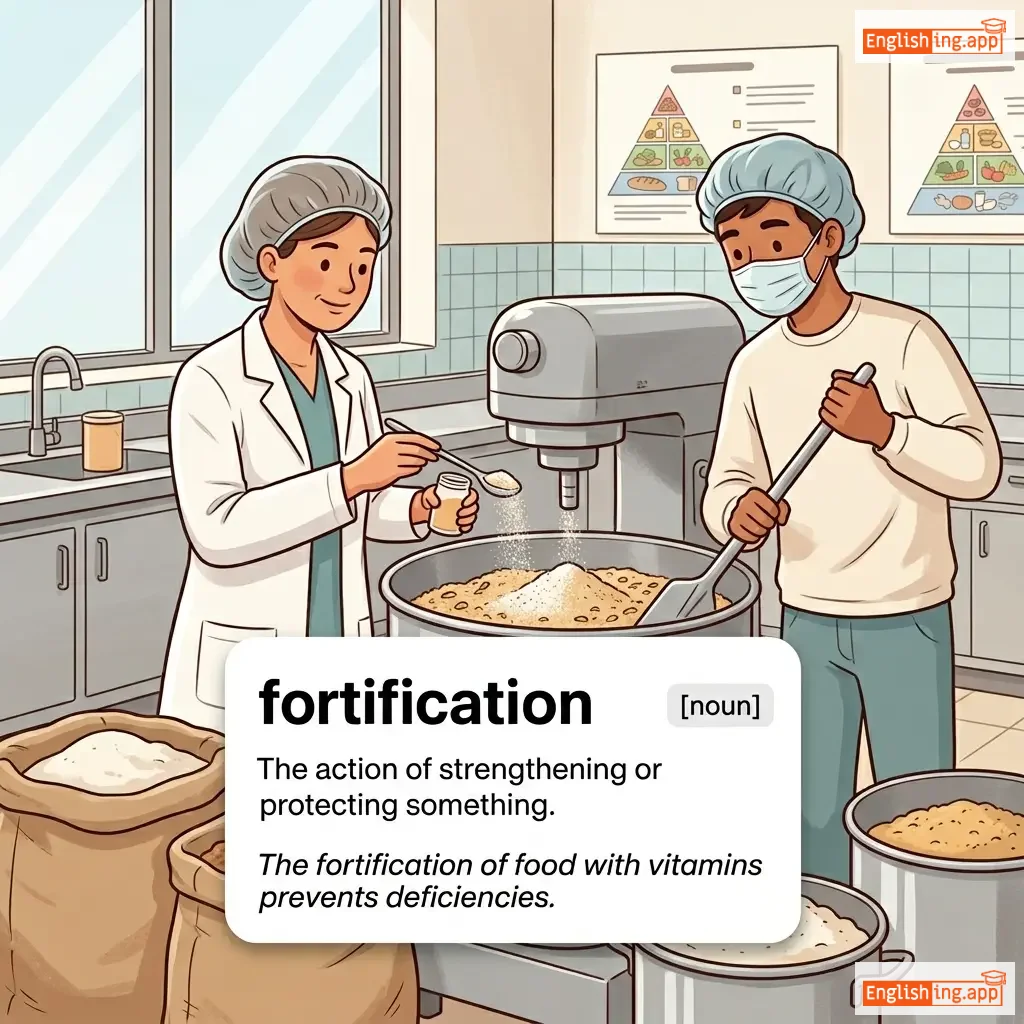
fortification definition card — visual illustration of the meaning
noun
ˌfɔː.tɪ.fɪˈkeɪ.ʃən
किलेबंदी (kilebandi)

The action of strengthening or protecting something.

"The fortification of food with vitamins prevents deficiencies."

"विटामिन्स के साथ भोजन की किलेबंदी पोषक तत्वों की कमी को रोकती है।" (Vitamins ke saath bhojan ki kilebandi poshak tatvon ki kami ko rokti hai.)
verb
/ˈfɔːrtɪˌfaɪ/
मजबूत करना (majboot karna)

To strengthen a place, person, or thing physically or mentally.

"They fortified the city walls to protect against invasion."

"वे आक्रमण से बचने के लिए शहर की दीवारों को मजबूत कर रहे थे।" (ve akraman se bachne ke liye shahar ki deewaron ko majboot kar rahe the.)
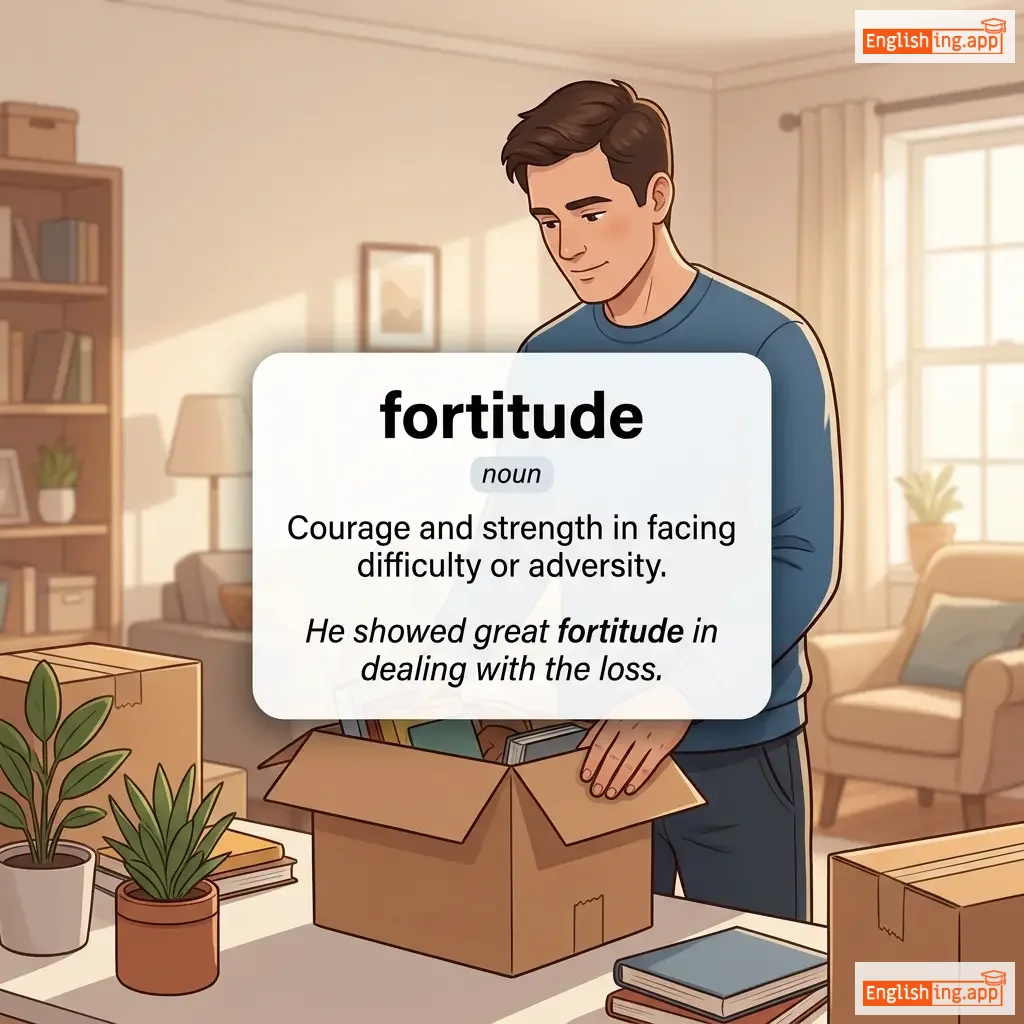
fortitude definition card — visual illustration of the meaning
noun
/ˈfɔːrtɪˌtuːd/
साहस और ताकत (sahas aur takat)

Courage and strength in facing difficulty or adversity.

"He showed great fortitude in dealing with the loss."

"उसने नुकसान के साथ निपटने में महान साहस और ताकत दिखाई।" (Usne nuksan ke sath nipatne mein mahan sahas aur takat dikhayi.)
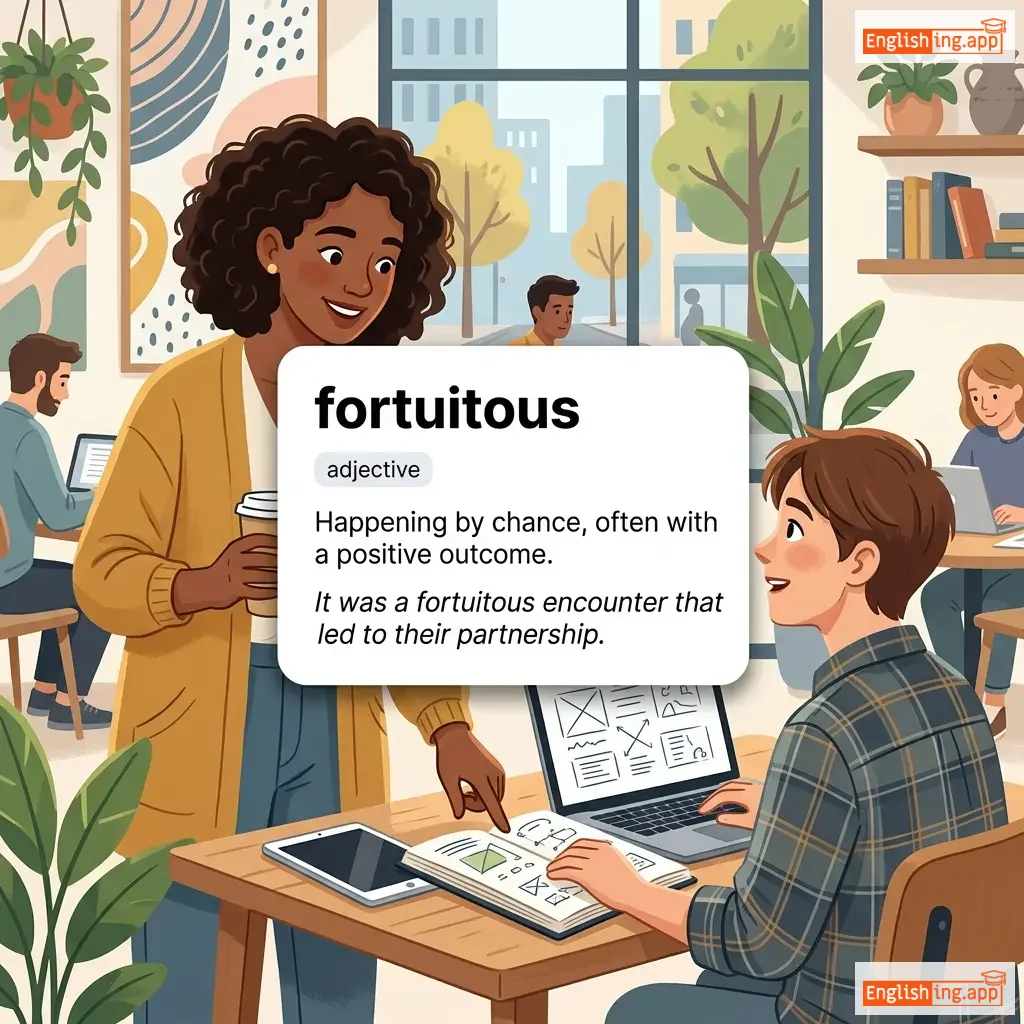
fortuitous definition card — visual illustration of the meaning
adjective
/fɔːrˈtuːɪtəs/
भाग्यशाली (bhagyashali)

Happening by chance, often with a positive outcome.

"It was a fortuitous encounter that led to their partnership."

"यह एक भाग्यशाली मुठभेड़ थी जिसने उनकी साझेदारी की शुरुआत की।" (Yeh ek bhagyashali muthbhed thi jisne unki saajhedari ki shuruat ki.)
adjective
/ˈfɔːrtʃənət/
भाग्यशाली (bhagyashali)

Having good luck or receiving something desirable by chance.

"She was fortunate to escape the accident without injuries."

"वह दुर्घटना से बिना चोटिल हुए बचने के लिए भाग्यशाली थी।" (Vah durghatna se bina chotil hue bachne ke liye bhagyashali thi.)
adverb
/ˈfɔːtʃənətli/
सौभाग्यवश (saubhagyavash)

by good luck; luckily

"Fortunately, no one was injured in the accident."

"सौभाग्यवश, दुर्घटना में कोई घायल नहीं हुआ।" (Saubhagyavash, durghatna mein koi ghaayal nahi hua.)
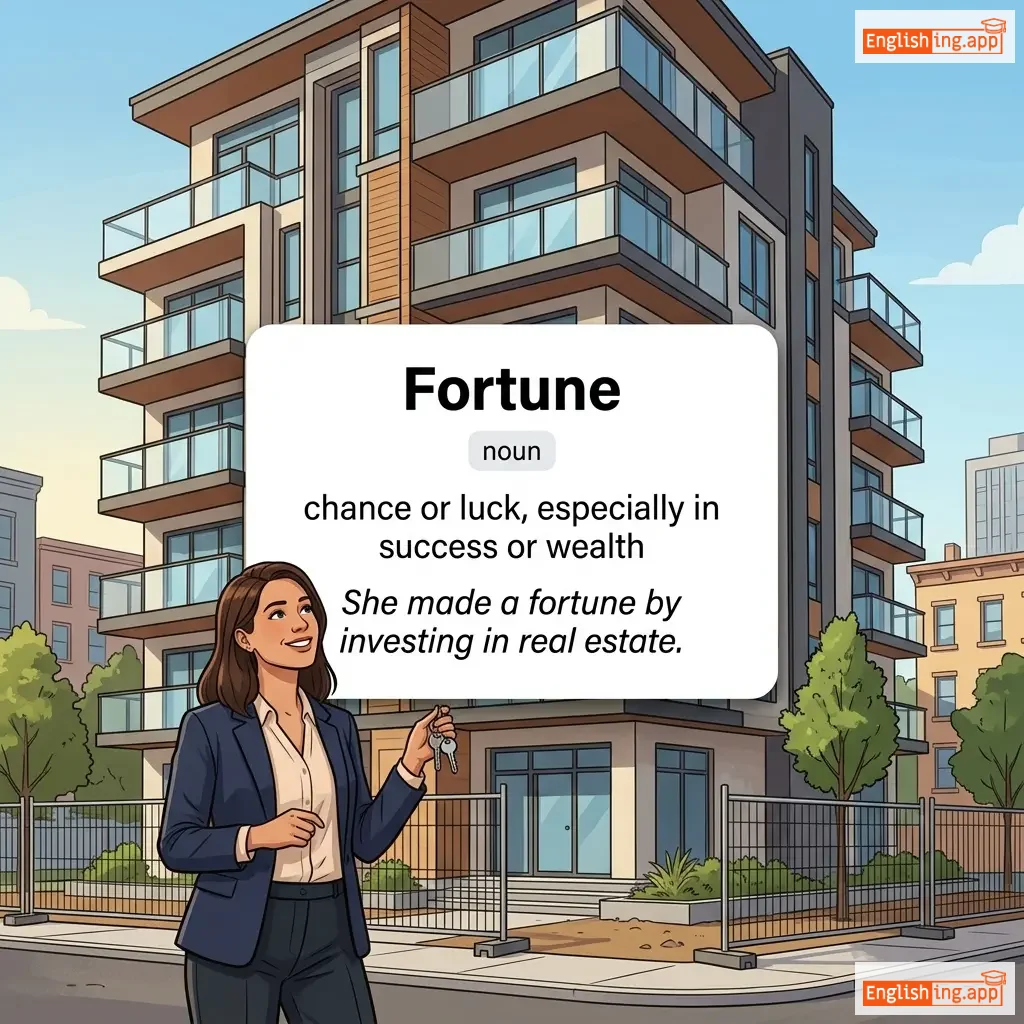
Fortune definition card — visual illustration of the meaning
noun
/ˈfɔːrtʃən/
किस्मत / दौलत (kismat / daulat)

chance or luck, especially in success or wealth

"She made a fortune by investing in real estate."

"उसने रियल एस्टेट में निवेश करके एक बड़ी दौलत बनाई।" (Usne real estate mein nivesh karke ek badi daulat banayi.)
number
/ˈfɔːrti/
खुशी (khushi)

the number 40; ten times four

"She celebrated her forty years of life with a big party."

"जब उसने पुरस्कार प्राप्त किया तो वह अपनी खुशी को छिपा नहीं पाई।" (Jab usne puraskar prapt kiya to vah apni khushi ko chhupa nahi paayi.)
noun
/ˈfɔːrəm/
फोरम / चर्चा मंच (forum / charcha manch)

A place, meeting, or medium where ideas and views can be exchanged.

"The online forum allows people to discuss a wide range of topics."

"ऑनलाइन फोरम लोगों को विभिन्न विषयों पर चर्चा करने की अनुमति देता है।" (Online forum logon ko vibhinn vishayon par charcha karne ki anumati deta hai.)
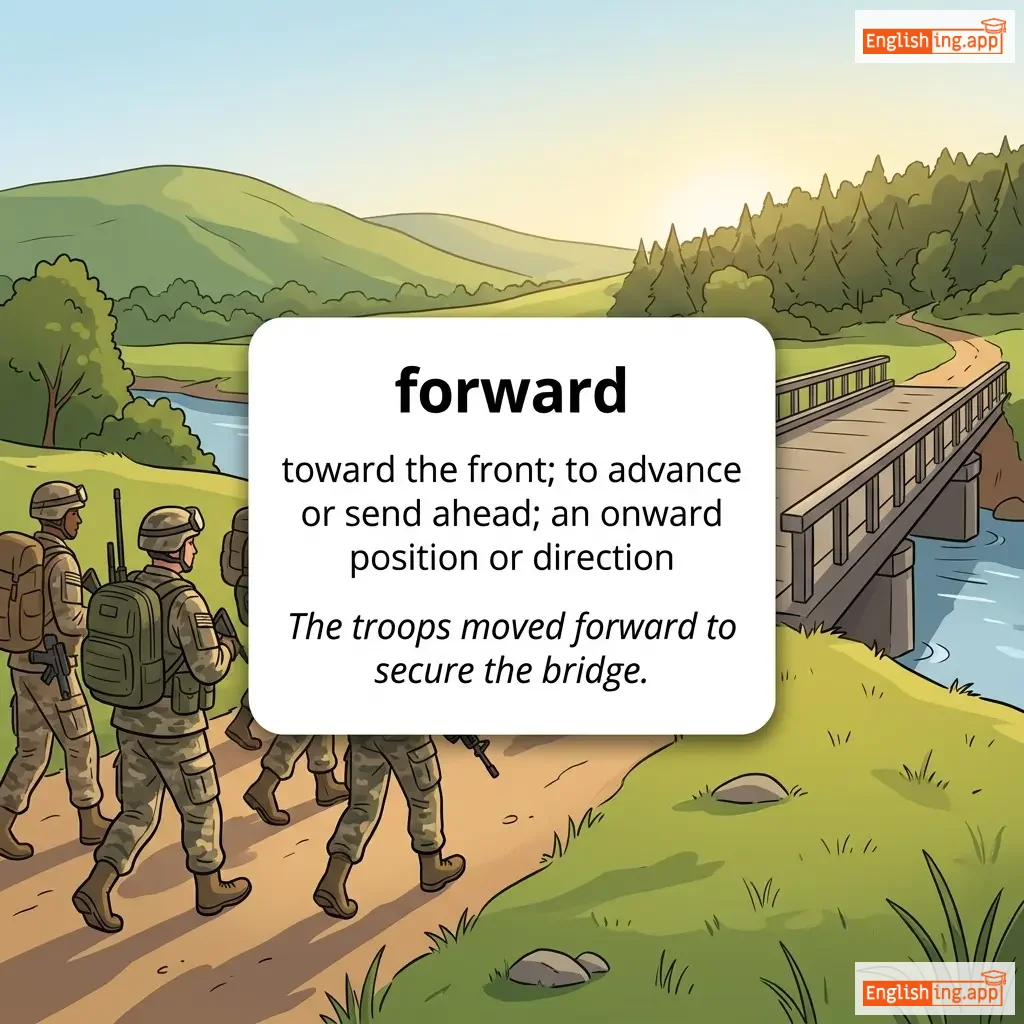
forward definition card — visual illustration of the meaning
adverb, adjective, verb, noun
/ˈfɔːrwərd/
आगे (aage)

toward the front; to advance or send ahead; an onward position or direction

"The troops moved forward to secure the bridge."

"सैन्य ने पुल को सुरक्षित करने के लिए आगे बढ़कर कदम बढ़ाए।" (Sainya ne pul ko surakshit karne ke liye aage badhkar kadam badhaye.)
noun
/ˈfɒsɪl/
जीवाश्म (jeevashm)

the remains or impression of a prehistoric plant or animal embedded in rock

"The fossil of a dinosaur was discovered in the mountains."

"पहाड़ों में एक डायनासोर का जीवाश्म खोजा गया था।" (Pahaadon mein ek dainosaur ka jeevashm khoja gaya tha.)
verb, adjective
/ˈfɒstər/
पालन करना (paalan karna)

to encourage the development of something; to raise a child that is not one's own

"The program aims to foster creativity in young students."

"इस कार्यक्रम का उद्देश्य युवा छात्रों में रचनात्मकता को बढ़ावा देना है।" (Is karyakram ka uddeshya yuva chhatron mein rachnatmakta ko badhava dena hai.)
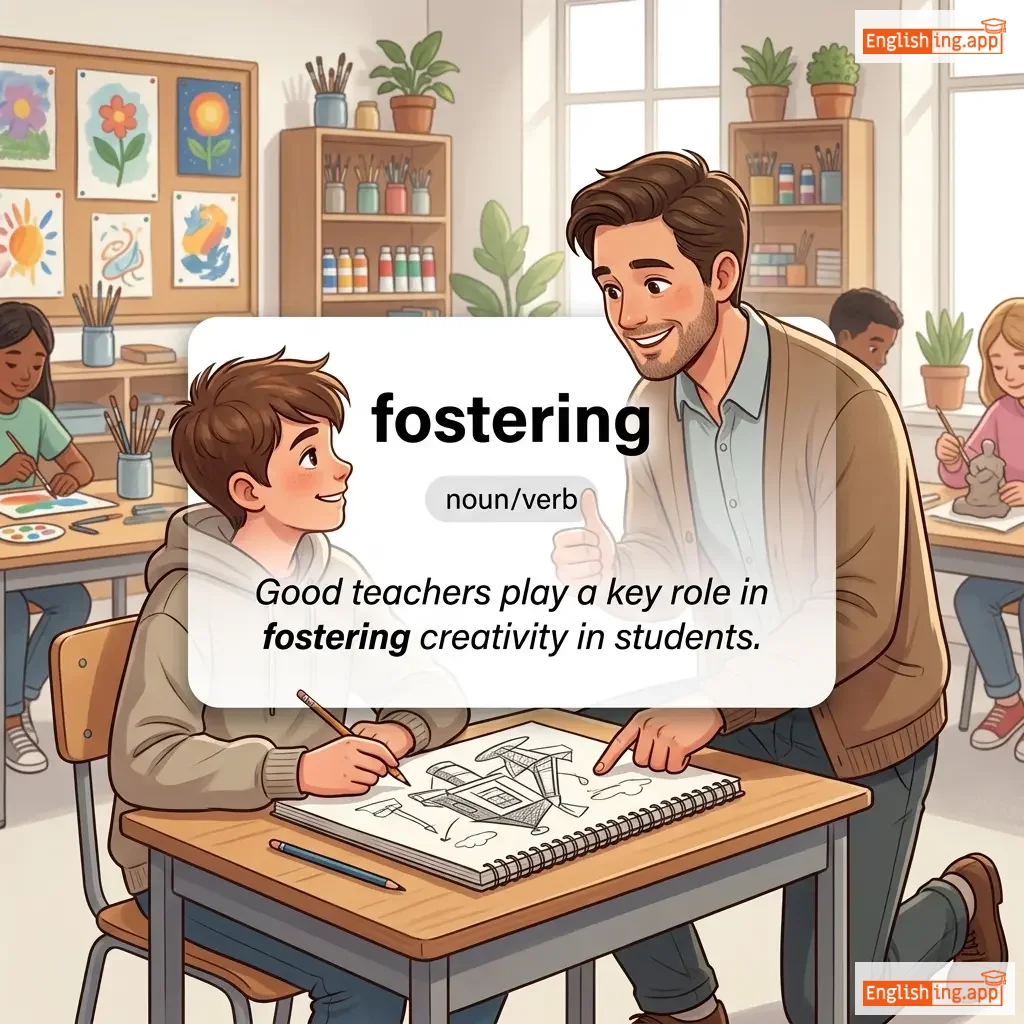
fostering definition card — visual illustration of the meaning
noun/verb
/ˈfɒs.tər.ɪŋ/
पालन-पोषण (palan-poshan)

The process of encouraging or promoting the development or growth of something; nurturing and caring for.

"Good teachers play a key role in fostering creativity in students."

"अच्छे शिक्षक छात्रों में रचनात्मकता को बढ़ावा देने में एक महत्वपूर्ण भूमिका निभाते हैं।" (Achhe shikshak chhatron mein rachnatmakta ko badhava dene mein ek mahatvapurn bhumika nibhate hain.)
adjective, noun, verb
/faʊl/
गलत, अन्यायपूर्ण (galat, anyaypoorn)

offensive to the senses; dirty or unpleasant; in sports, an unfair or illegal act

"The player was penalized for committing a foul."

"खिलाड़ी को फाउल करने के लिए दंडित किया गया।" (Khiladi ko foul karne ke liye dandit kiya gaya.)
verb
/faʊnd/
स्थापना करना (sthapna karna)

to establish or set up an institution, company, or organization

"They found a new startup focused on renewable energy."

"उन्होंने नवीकरणीय ऊर्जा पर ध्यान केंद्रित करने वाली एक नई स्टार्टअप स्थापित की।" (Unhone navikaranīya urjā par dhyān kendrit karne vālī ek nayī startup sthāpit kī.)
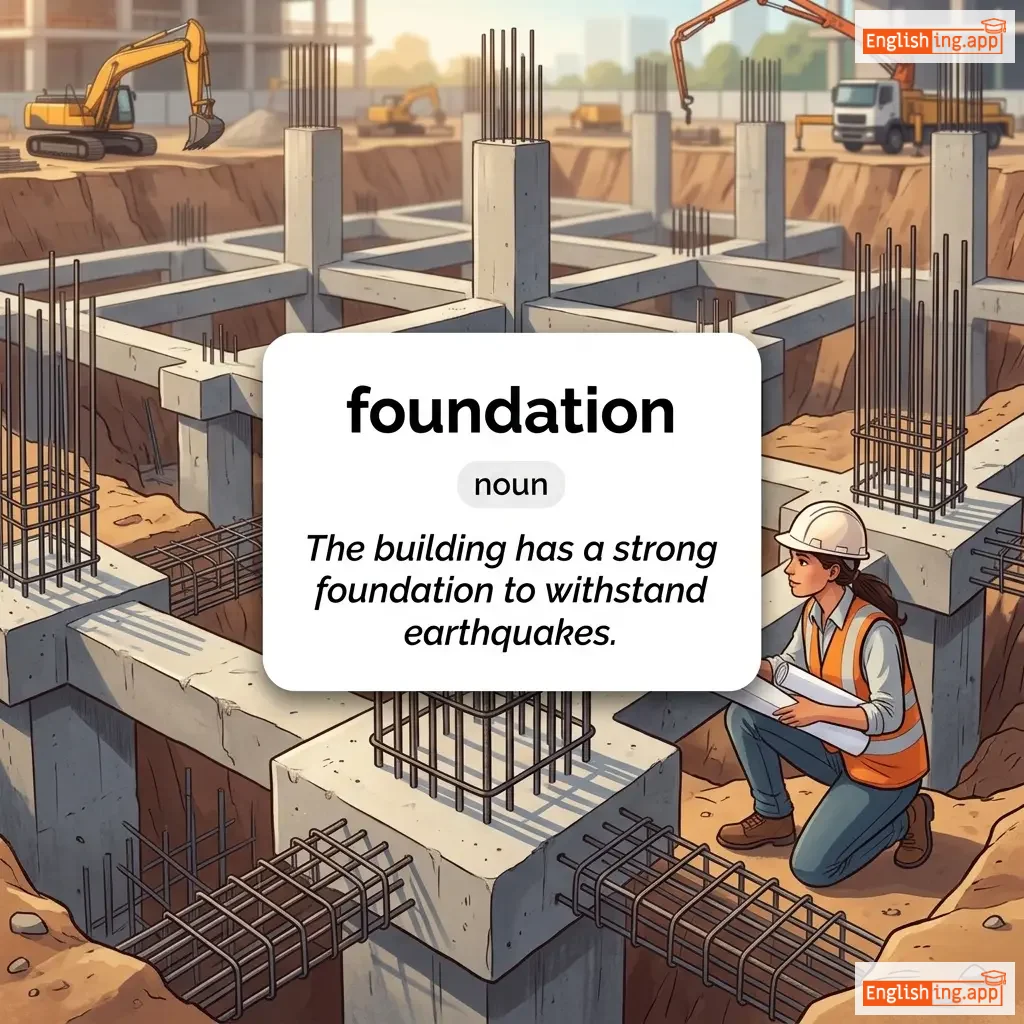
foundation definition card — visual illustration of the meaning
noun
/faʊnˈdeɪʃən/
आधार (aadhar)

the base or underlying support of something; an institution established for a purpose

"The building has a strong foundation to withstand earthquakes."

"भवन के पास भूकंप से बचने के लिए एक मजबूत आधार है।" (Bhavan ke paas bhookamp se bachne ke liye ek majboot aadhar hai.)
Founder definition card — visual illustration of the meaning
noun, verb
/ˈfaʊndər/
संस्थापक (sansthapak)

a person who establishes an institution or company; as a verb, to fail or sink

"She is the founder of a successful startup."

"वह एक सफल स्टार्टअप की संस्थापक हैं।" (Woh ek safal startup ki sansthapak hain.)
noun
/ˈfaʊn.tən/
फव्वारा (fawwara)

a natural spring of water; an artificial structure from which water flows

"The fountain in the park attracts many visitors."

"पार्क में स्थित फव्वारा कई पर्यटकों को आकर्षित करता है।" (park mein sthit fawwara kai paryatak ko aakarshit karta hai.)
numeral
/fɔːr/
चार (char)

The number equivalent to the sum of two and two; one more than three.

"She has four books on her desk."

"उसकी मेज पर चार किताबें हैं।" (uski mez par chaar kitaabein hain.)
👨‍👩‍👧‍👦

foursome (फोरसम)

noun
/ˈfɔːrsəm/
चार लोगों का समूह (chaar logon ka samuh)

a group of four people or things, especially in games or social activities

"The foursome enjoyed a game of golf together."

"चार लोगों के समूह ने एक साथ गोल्फ खेलते हुए आनंद लिया।" (Chaar logon ke samuh ne ek saath golf khelte hue anand liya.)
adjective/noun
/fɔːrθ/
चतुर्थ (chaturth)

Constituting number four in a sequence; coming after the third in position.

"He finished in fourth place in the race."

"वह दौड़ में चौथे स्थान पर समाप्त हुआ।" (vah daud mein chauthe sthan par samapt hua.)
noun
/faʊl/
मुर्गा (murga)

a domesticated bird kept for meat or eggs; chicken or other poultry

"The farmer raised fowl in his backyard for fresh eggs and meat."

"किसान ने ताजे अंडे और मांस के लिए अपने आंगन में मुर्गा पाला।" (kisan ne taze ande aur maans ke liye apne aangan mein murga paala)
noun
/fɒks/
लोमड़ी (lomdi)

a wild animal related to dogs, with a pointed face and thick fur

"The red fox is known for its cunning nature."

"लाल लोमड़ी अपनी धूर्त प्रकृति के लिए जानी जाती है।" (laal lomdi apni dhoort prakriti ke liye jaani jaati hai)
adjective
/ˈfɒksi/
चतुर (chatur)

Clever, cunning, or attractive.

"He came up with a foxy plan to win the game."

"वह खेल जीतने के लिए एक चतुर योजना लाया।" (Wah khel jeetne ke liye ek chatur yojna laaya.)
noun
/ˈfɔɪeɪr/
प्रवेश हॉल (pravesh hall)

An entrance hall or lobby in a building.

"The guests waited in the hotel foyer before checking in."

"मेहमान चेक-इन करने से पहले होटल के प्रवेश हॉल में इंतजार कर रहे थे।" (Mehmaan check-in karne se pehle hotel ke pravesh hall mein intezaar kar rahe the.)
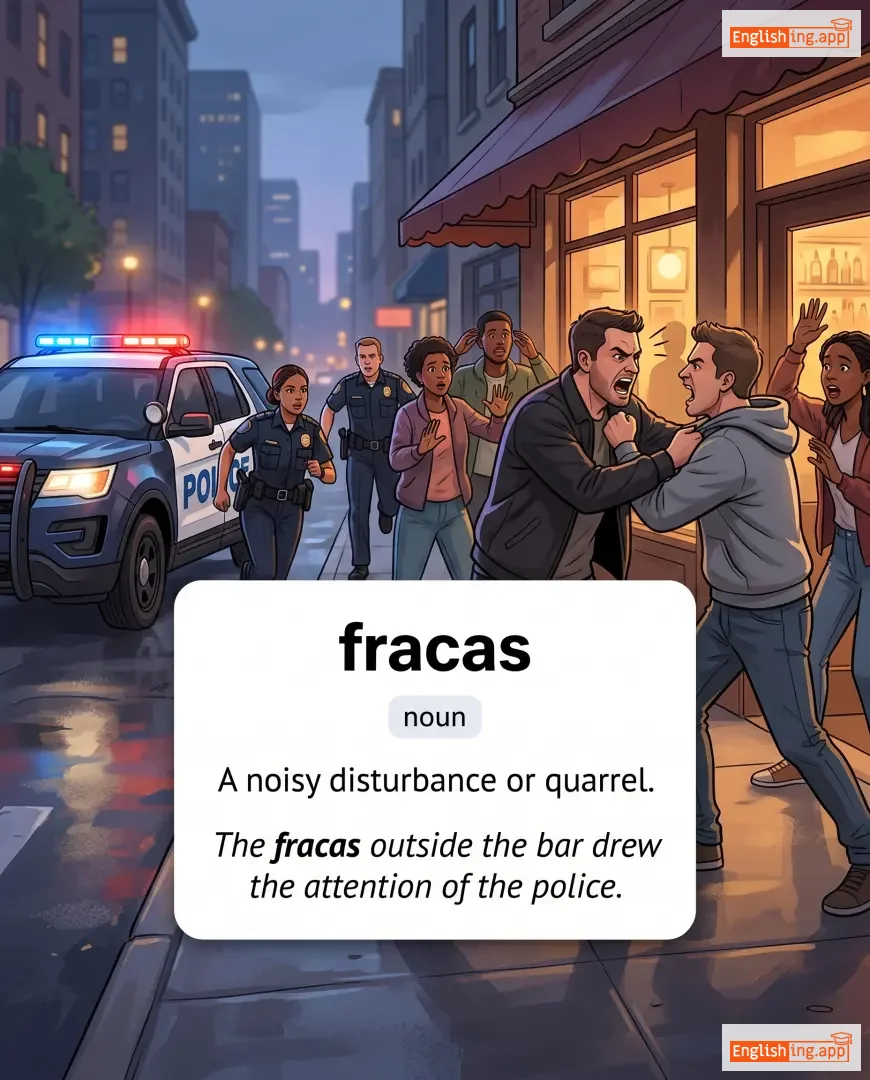
fracas definition card — visual illustration of the meaning
noun
/ˈfrækɑː/
हंगामा (hungama)

A noisy disturbance or quarrel.

"The fracas outside the bar drew the attention of the police."

"बार के बाहर का हंगामा पुलिस का ध्यान आकर्षित कर रहा था।" (Bar ke baahar ka hungama police ka dhyaan aakarshit kar raha tha.)
noun
/ˈfrækʃən/
भिन्न (bhinn)

A small part of something; in mathematics, a number that represents part of a whole.

"Only a small fraction of the population attended the event."

"केवल जनसंख्या का एक छोटा सा अंश घटना में शामिल हुआ।" (Keval jansankhya ka ek chhota sa ansh ghatna mein shamil hua.)
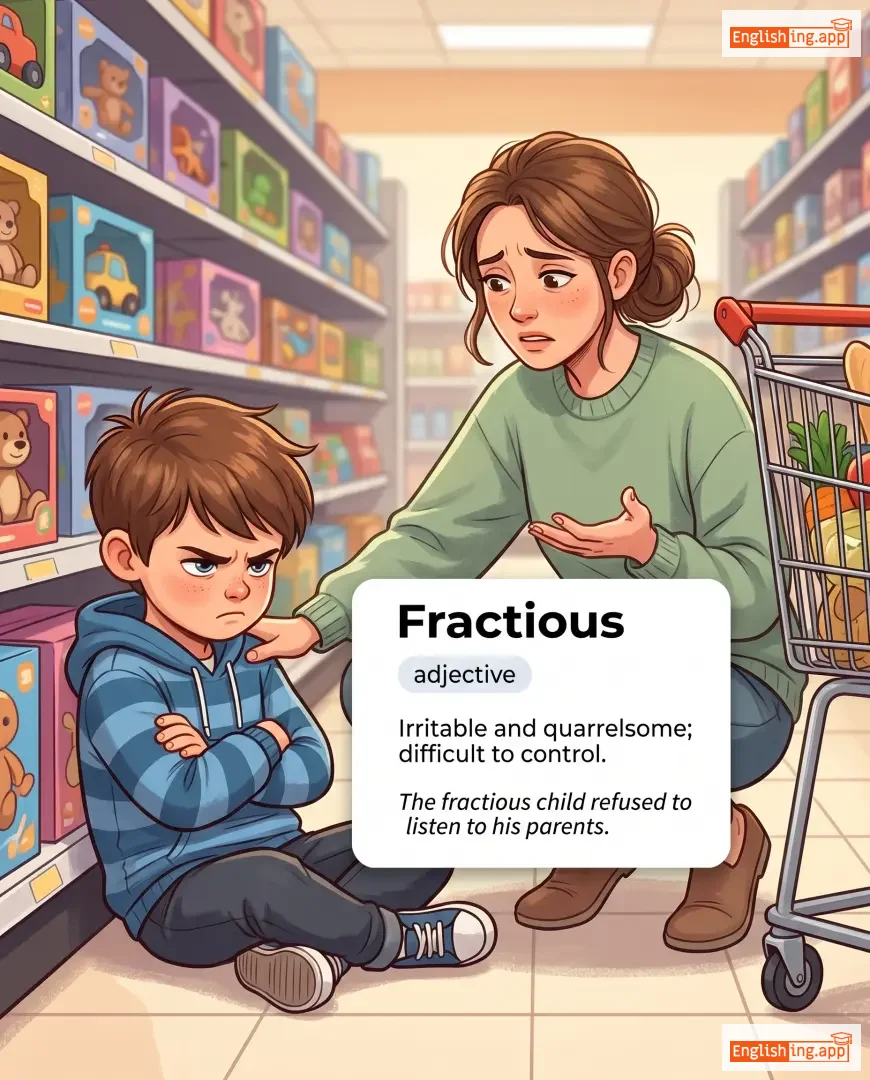
Fractious definition card — visual illustration of the meaning
adjective
/ˈfrækʃəs/
झगड़ालू (jhagdaalu)

Irritable and quarrelsome; difficult to control.

"The fractious child refused to listen to his parents."

"झगड़ालू बच्चा अपने माता-पिता की बात सुनने से इंकार कर दिया।" (Jhagdaalu bachcha apne mata-pita ki baat sunne se inkaar kar diya.)
noun, verb
/ˈfrækʧər/
हड्डी टूटना (haddi tootna)

A break or crack in a hard object or material, typically a bone; to break or crack.

"He suffered a fracture in his leg after the accident."

"दुर्घटना के बाद उसके पैर में एक हड्डी टूट गई थी।" (Durghatna ke baad uske pair mein ek haddi toot gayi thi.)
adjective
/ˈfræʤaɪl/
नाज़ुक (nazuk)

Easily broken or damaged; delicate.

"Be careful with that vase, it's very fragile."

"उस फूलदान के साथ सावधान रहना, यह बहुत नाज़ुक है।" (Us phūldān ke sāth sābdhān rehnā, yah bahut nāzuk hai.)
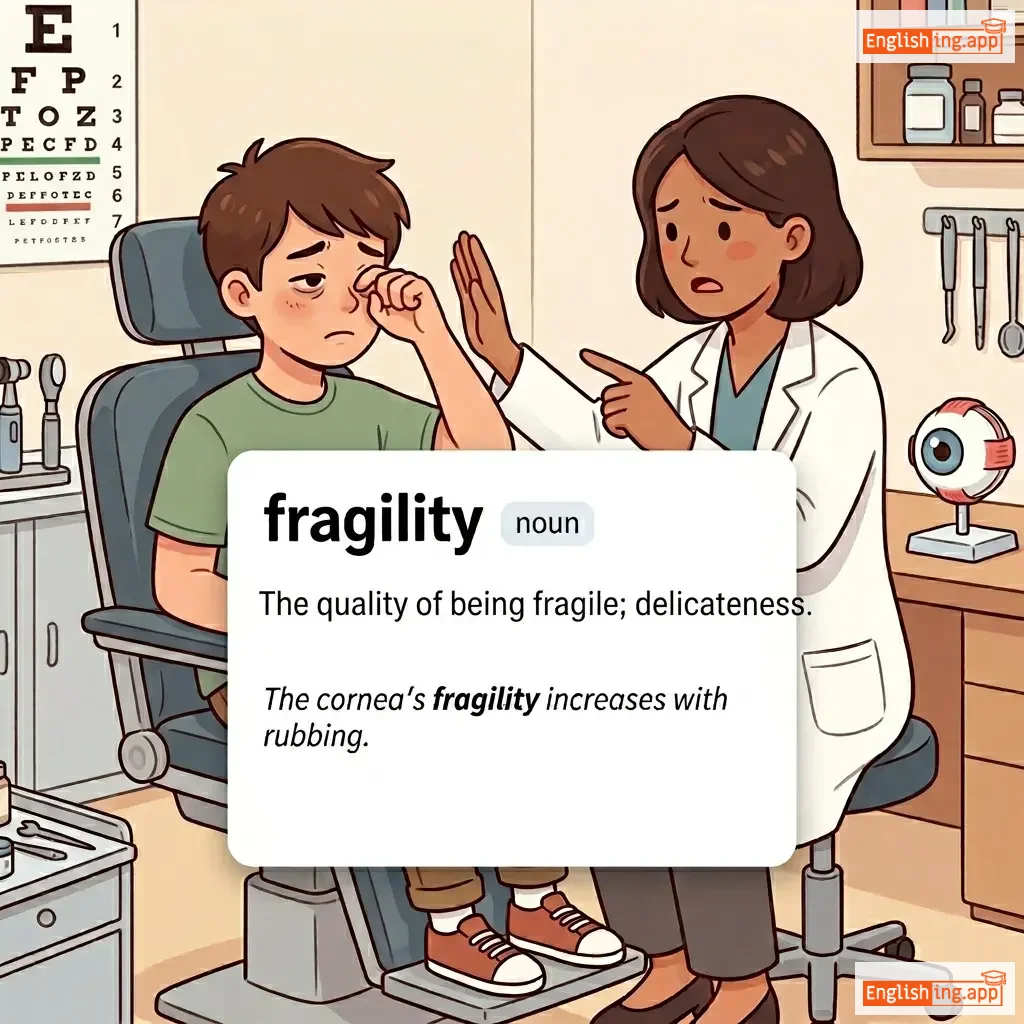
fragility definition card — visual illustration of the meaning
noun
/frəˈdʒɪl.ɪ.ti/
नाजुकता (najukta)

The quality of being fragile; delicateness.

"The cornea's fragility increases with rubbing."

"कॉर्निया की नाजुकता रगड़ने से बढ़ जाती है।" (kornia ki najukta ragadne se badh jati hai)
noun
/ˈfræɡmənt/
टुकड़ा (tukda)

a small piece broken off something larger

"He found a fragment of ancient pottery near the river."

"उसने नदी के पास प्राचीन मिट्टी के बर्तन का एक टुकड़ा पाया।" (Usne nadi ke paas pracheen mitti ke bartan ka ek tukda paaya.)
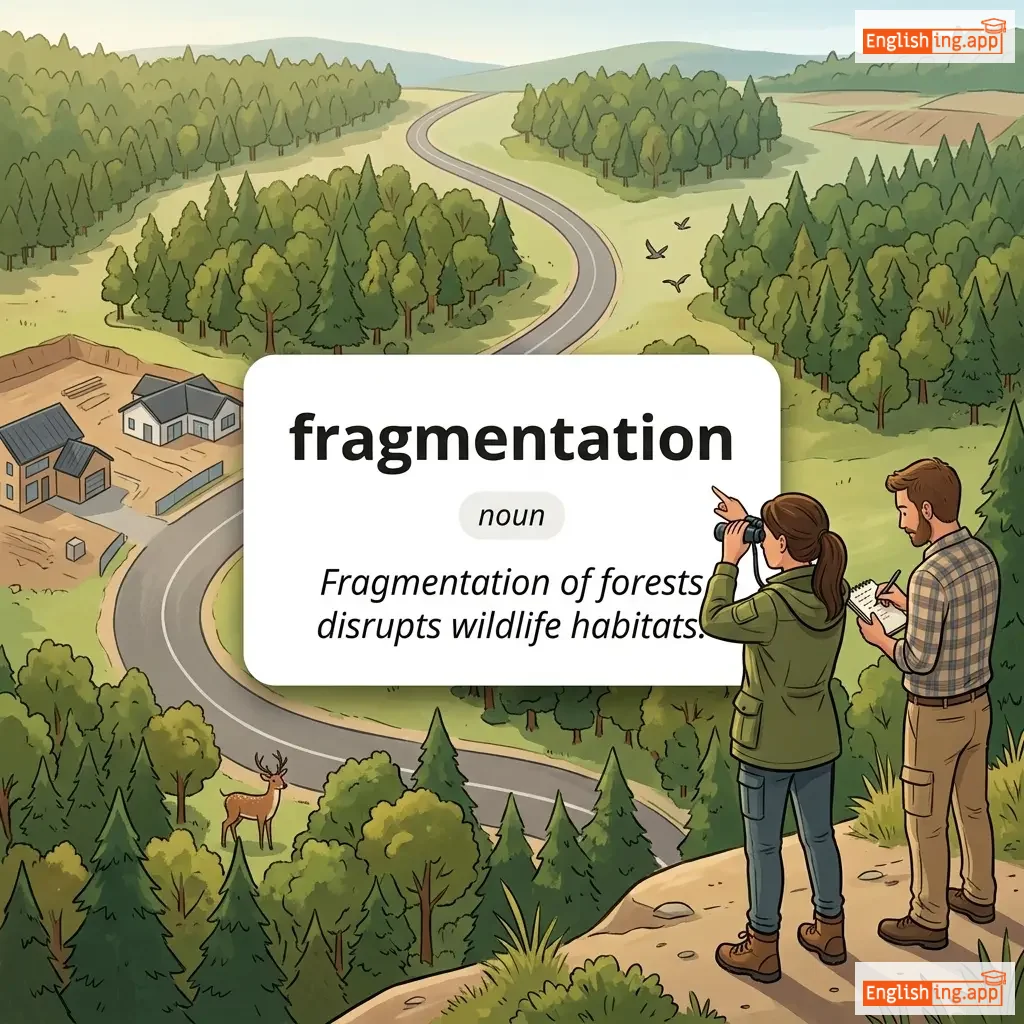
fragmentation definition card — visual illustration of the meaning
noun
ˌfræɡmɛnˈteɪʃən
खंडन (khandan)

The process or state of breaking or being broken into fragments.

"The fragmentation of the report made it difficult to understand."

"रिपोर्ट का खंडन इसे समझना मुश्किल बना रहा था।" (Riporṭ kā khandan ise samajhnā mushkil banā rahā thā.)
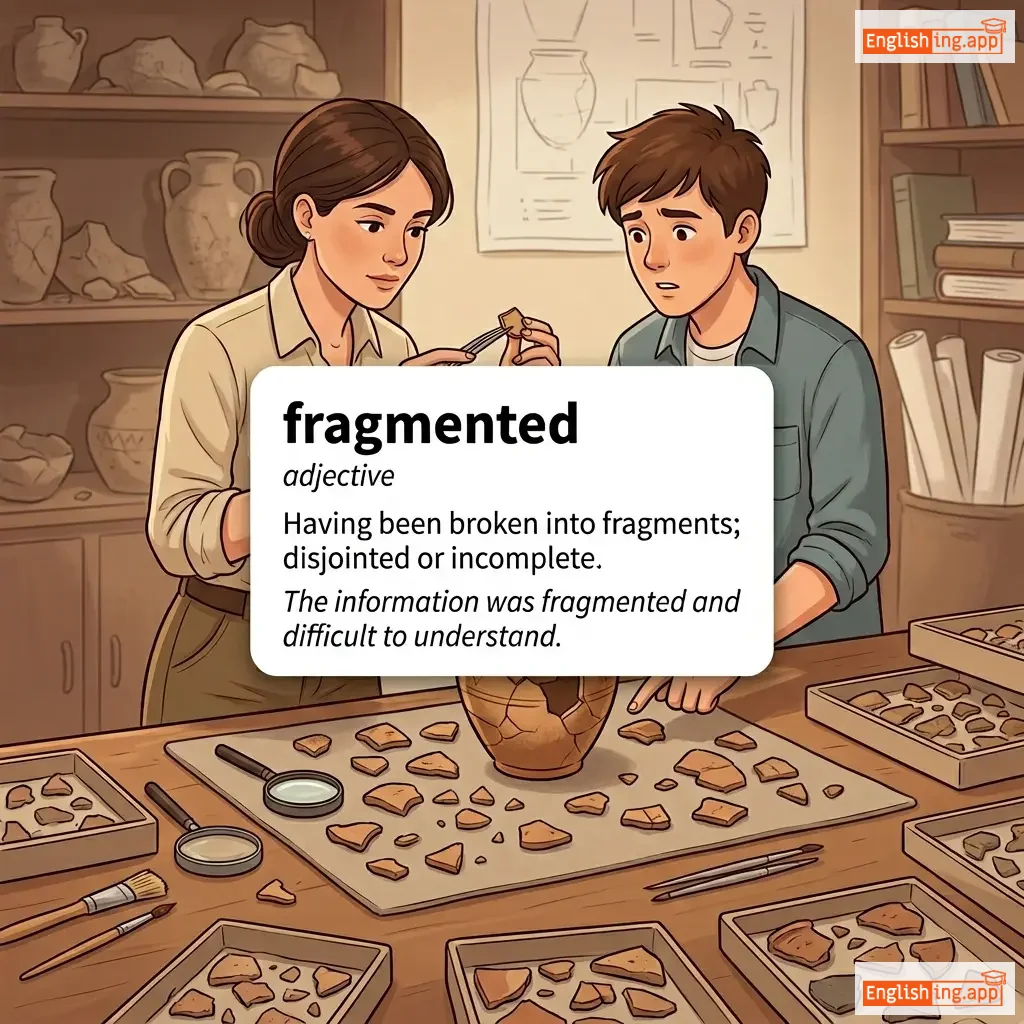
fragmented definition card — visual illustration of the meaning
adjective
/ˈfræɡməntɪd/
खंडित, विभक्त, अधूरा (khandit, vibhakt, adhura)

Having been broken into fragments; disjointed or incomplete.

"The information was fragmented and difficult to understand."

"सूचना खंडित थी और समझने में कठिनाई हो रही थी।" (Sochna khandit thi aur samajhne mein kathinai ho rahi thi.)
noun
/ˈfreɪɡrəns/
सुगंध (sugandh)

A pleasant, sweet smell.

"The fragrance of fresh flowers filled the room."

"ताजे फूलों की खुशबू कमरे में फैल गई।" (Taje phoolon ki khushboo kamre mein phail gayi.)
adjective
/freɪl/
दुबला (dubla)

Physically weak and delicate.

"The old man was too frail to walk without help."

"वृद्ध आदमी बिना मदद के चलने के लिए बहुत कमजोर था।" (Vriddh aadmi bina madad ke chalne ke liye bahut kamzor tha.)
noun
/ˈfreɪlti/
दुर्बलता (durbalta)

The condition of being weak, delicate, or easily broken.

"Old age often comes with physical frailty."

"बुजुर्गावस्था अक्सर शारीरिक दुर्बलता के साथ आती है।" (Bujurgavastha aksar sharirik durbalta ke saath aati hai.)
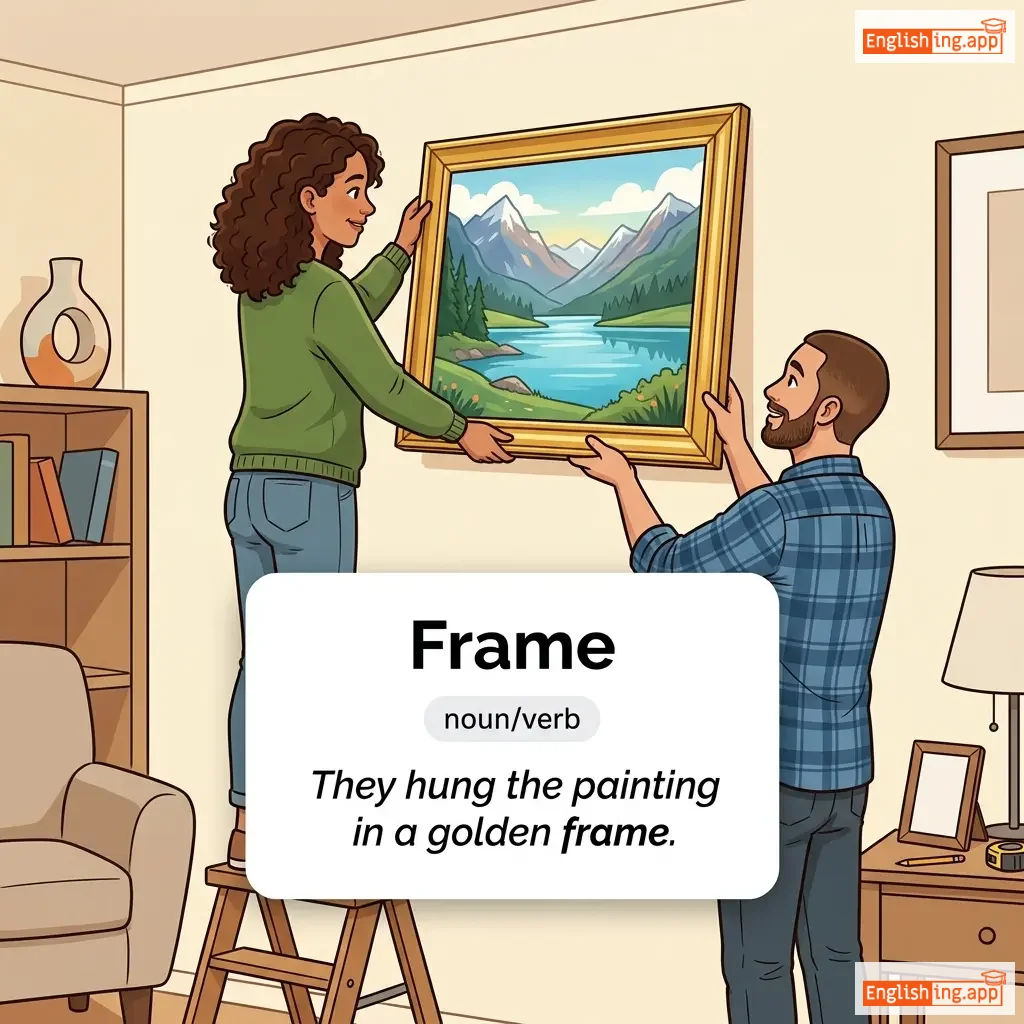
Frame definition card — visual illustration of the meaning
noun/verb
/freɪm/
फ्रेम / संरचना (frem / sanrachna)

A rigid structure that surrounds or encloses something; to construct or formulate.

"They hung the painting in a golden frame."

"उन्होंने पेंटिंग को एक सुनहरी फ्रेम में लटकाया।" (unhone painting ko ek sunahri frem mein latkaya.)
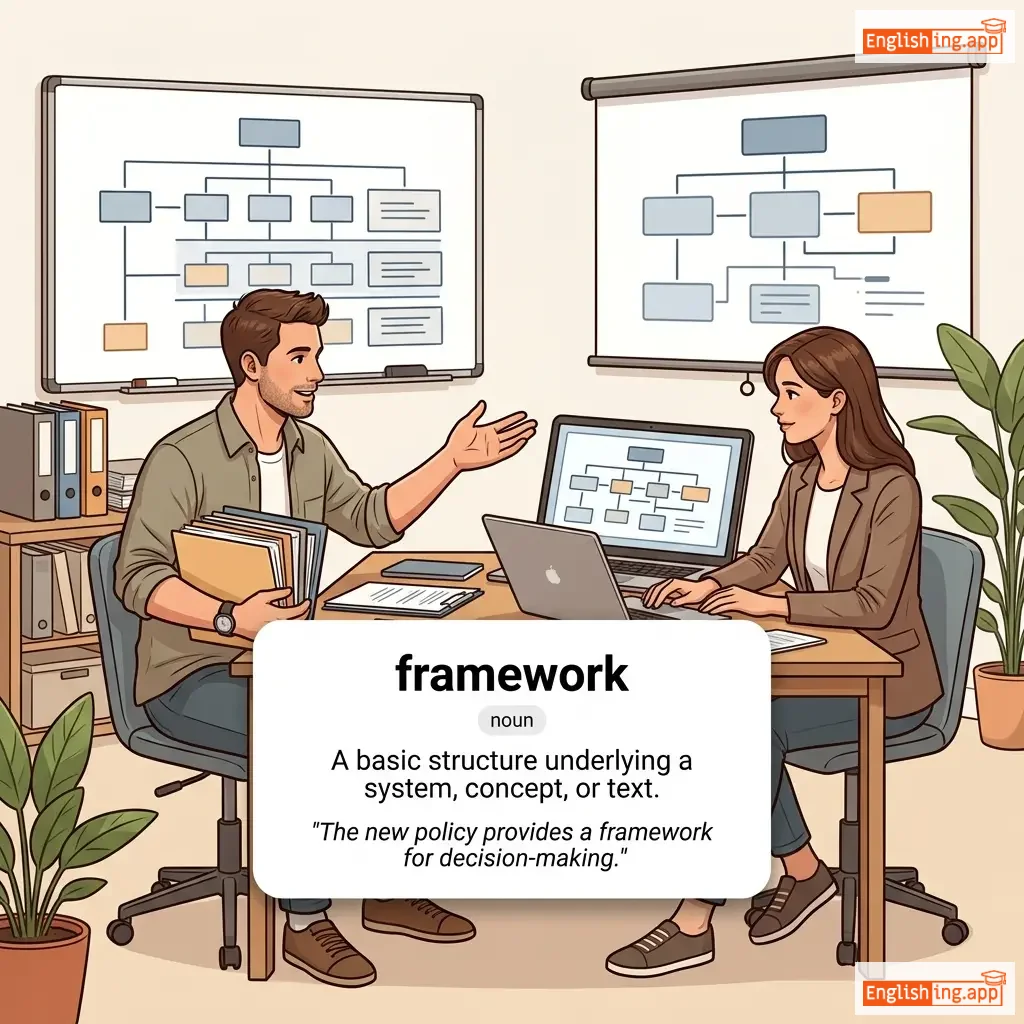
framework definition card — visual illustration of the meaning
noun
/ˈfreɪmˌwɜːrk/
ढांचा (dhancha)

A basic structure underlying a system, concept, or text.

"The new policy provides a framework for decision-making."

"नई नीति निर्णय लेने के लिए एक ढांचा प्रदान करती है।" (nayi niti nirnay lene ke liye ek dhancha pradan karti hai.)
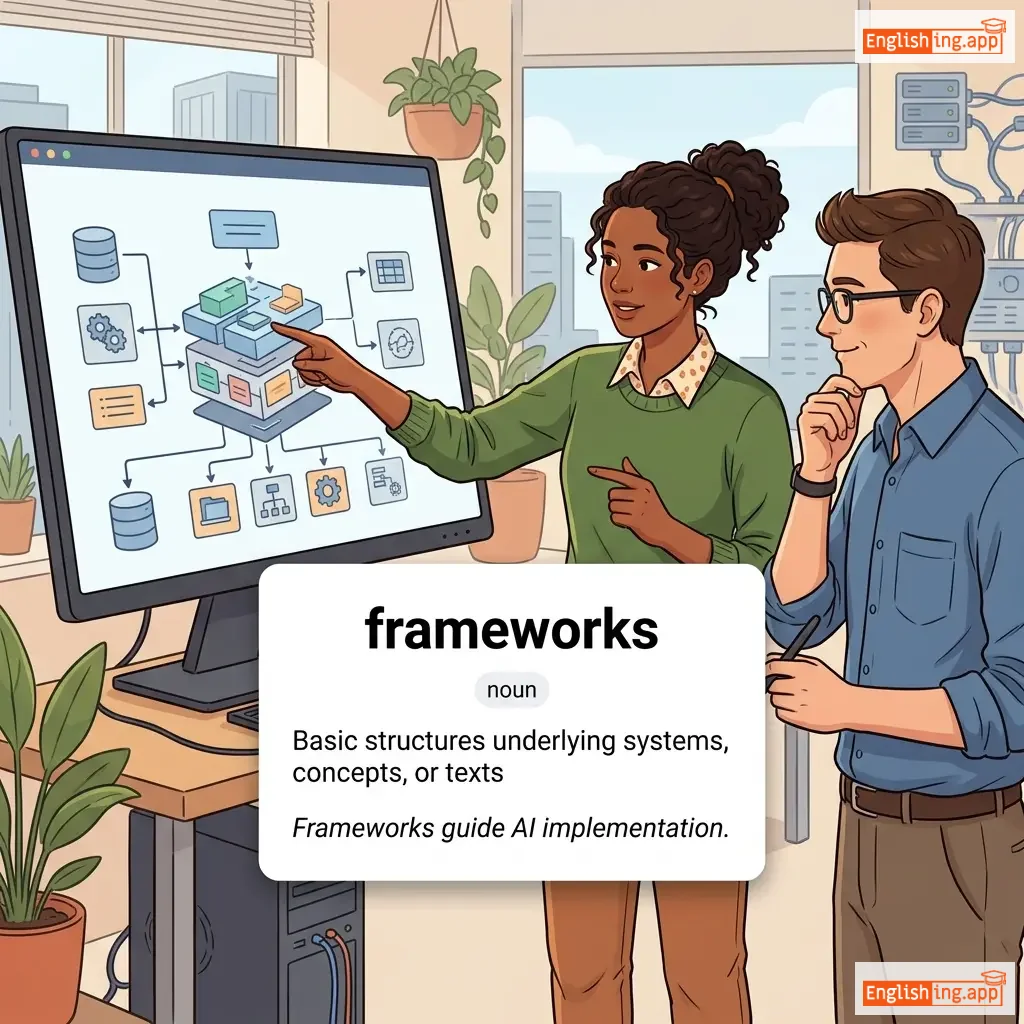
frameworks definition card — visual illustration of the meaning
noun
ˈfreɪm.wɜːks
ढांचा (dhancha)

Basic structures underlying systems, concepts, or texts

"Frameworks guide AI implementation."

"ढांचे एआई कार्यान्वयन का मार्गदर्शन करते हैं।" (Dhanche AI karyanvayan ka margdarshan karte hain.)
noun, verb
/ˈfrænʧaɪz/
फ्रेंचाइज़ (franchise)

A legal right to sell or distribute goods or services in a specific area; to grant such a right.

"He opened a new fast-food franchise in the city."

"उसने शहर में एक नया फास्ट-फूड फ्रेंचाइज़ खोला।" (Usne shahar mein ek naya fast-food franchise khola.)
adjective
/fræŋk/
ईमानदार (imaan-daar)

open, honest, and direct in speech or expression

"She was frank about her feelings on the matter."

"वह इस मामले पर अपनी भावनाओं के बारे में ईमानदार थी।" (Woh is maamle par apni bhavanaon ke baare mein imaan-daar thi.)
noun
/ˈfræŋkɪnsɛns/
धूप (dhoop)

An aromatic gum resin used in incense and perfumes, often in religious ceremonies.

"The temple was filled with the sweet smell of burning frankincense."

"मंदिर में जलते हुए धूप की मीठी खुशबू फैल रही थी।" (Mandir mein jalte huye dhoop ki meethee khushboo phail rahi thi.)
adverb
/ˈfræŋkli/
खुलकर (khulkar)

in an honest and direct way

"Frankly, I don’t think this plan will work."

"सच कहूँ तो, मुझे नहीं लगता कि यह योजना काम करेगी।" (Sach kahoon to, mujhe nahi lagta ki yah yojana kaam karegi.)
adjective
/ˈfræntɪk/
उत्तेजित (uttejit)

Extremely anxious, hurried, or out of control due to fear or excitement.

"She made a frantic call to her family after the accident."

"दुर्घटना के बाद उसने अपने परिवार को उत्तेजित होकर फोन किया।" (Durghatna ke baad usne apne parivar ko uttejit hokar phone kiya.)