वोकैबुलरीज

इंग्लिश वोकैबुलरी डिस्कवर, लर्न और मास्टर करें

noun
/ˈfoʊldər/
फ़ोल्डर (folder)

a container or directory used to store and organize papers or digital files

"I saved all the photos in a separate folder."

"मैंने सभी तस्वीरें एक अलग फ़ोल्डर में सेव कीं।" (maine sabhi tasveeren ek alag folder mein save keen)
noun
/ˈfoʊliɪdʒ/
पत्तियों का समूह (pattion ka samooh)

The leaves of a plant, collectively.

"The autumn foliage looked stunning in the park."

"पार्क में शरद ऋतु की पत्तियों का समूह अद्भुत लग रहा था।" (Park mein sharad ritu ki pattion ka samooh adbhut lag raha tha.)
noun
/ˈfoʊ.li.oʊ/
बड़ा पुस्तक या पांडुलिपि (bada pustak ya pandulipi)

A sheet of paper folded once to form two leaves (four pages) of a book; also a term for a large book or manuscript.

"The library houses an ancient Shakespeare folio."

"पुस्तकालय में एक प्राचीन शेक्सपियर फोलियो है।" (Pustakalay mein ek prachin Shakespeare folio hai.)
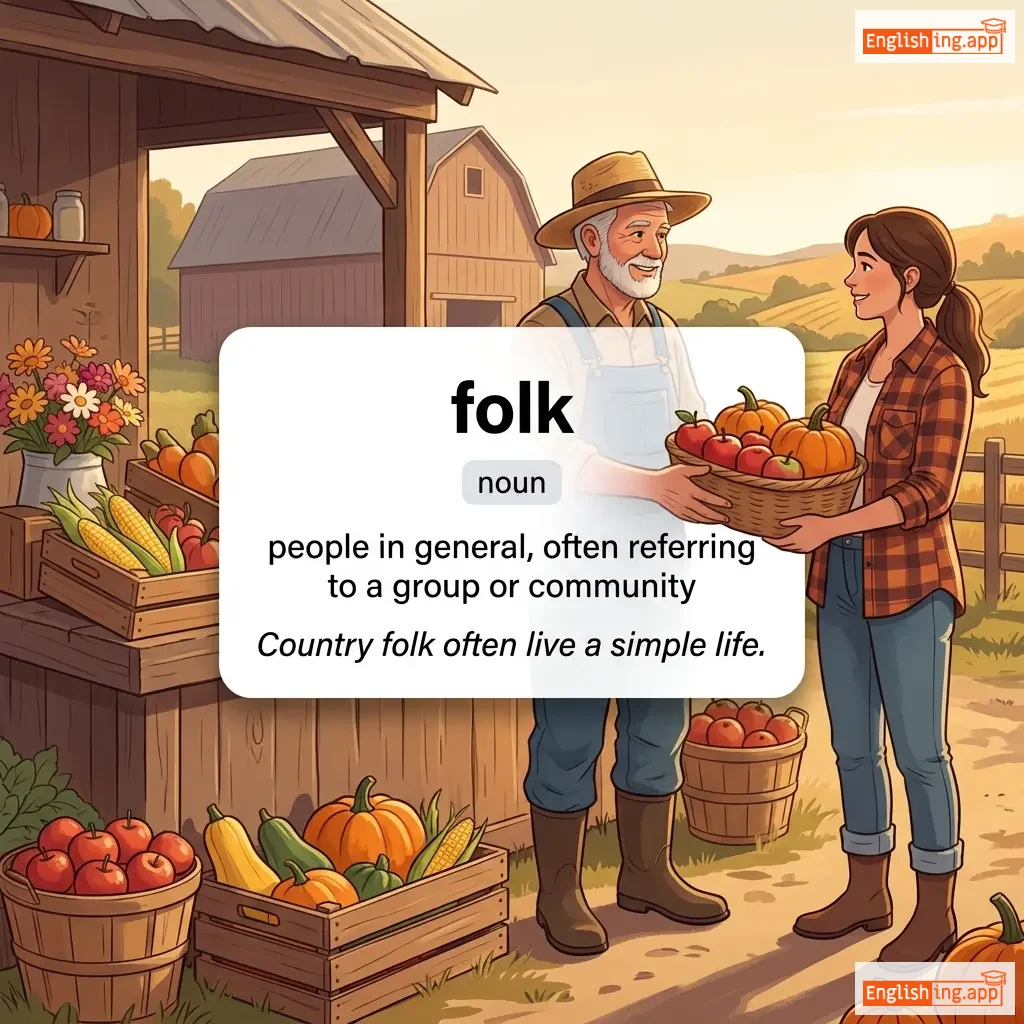
folk definition card — visual illustration of the meaning
👨‍👩‍👧‍👦

folk (फोक)

noun
/foʊk/
लोग (log)

people in general, often referring to a group or community

"Country folk often live a simple life."

"कंट्री लोग अक्सर एक साधारण जीवन जीते हैं।" (Country log aksar ek saadharan jeevan jeete hain.)
noun
/ˈfoʊk.lɔːr/
लोककथा (lokkatha)

The traditional beliefs, customs, stories, songs, and practices of a community, passed down through generations.

"Bangladeshi folk-lore is rich with myths and legends."

"भारतीय लोककथा मिथकों और किंवदंतियों से भरपूर होती है।" (Bhartiya lokkatha mithako aur kinvadanthiyon se bharee hoti hai.)
verb
/ˈfɒloʊ/
अनुसरण करना (anusaran karna)

to move behind someone or something; to go after or come after

"The children followed their teacher into the classroom."

"बच्चों ने अपने शिक्षक का अनुसरण किया और कक्षा में प्रवेश किया।" (Bachcho ne apne shikshak ka anusaran kiya aur kaksha mein pravesh kiya.)
noun
/ˈfɑː.loʊ.ɪŋ/
अनुयायी (anuyayi)

a group of supporters or people who admire something or someone

"The singer has a large following around the world."

"गायक के दुनिया भर में कई अनुयायी हैं।" (Gaayak ke duniya bhar mein kai anuyayi hain.)
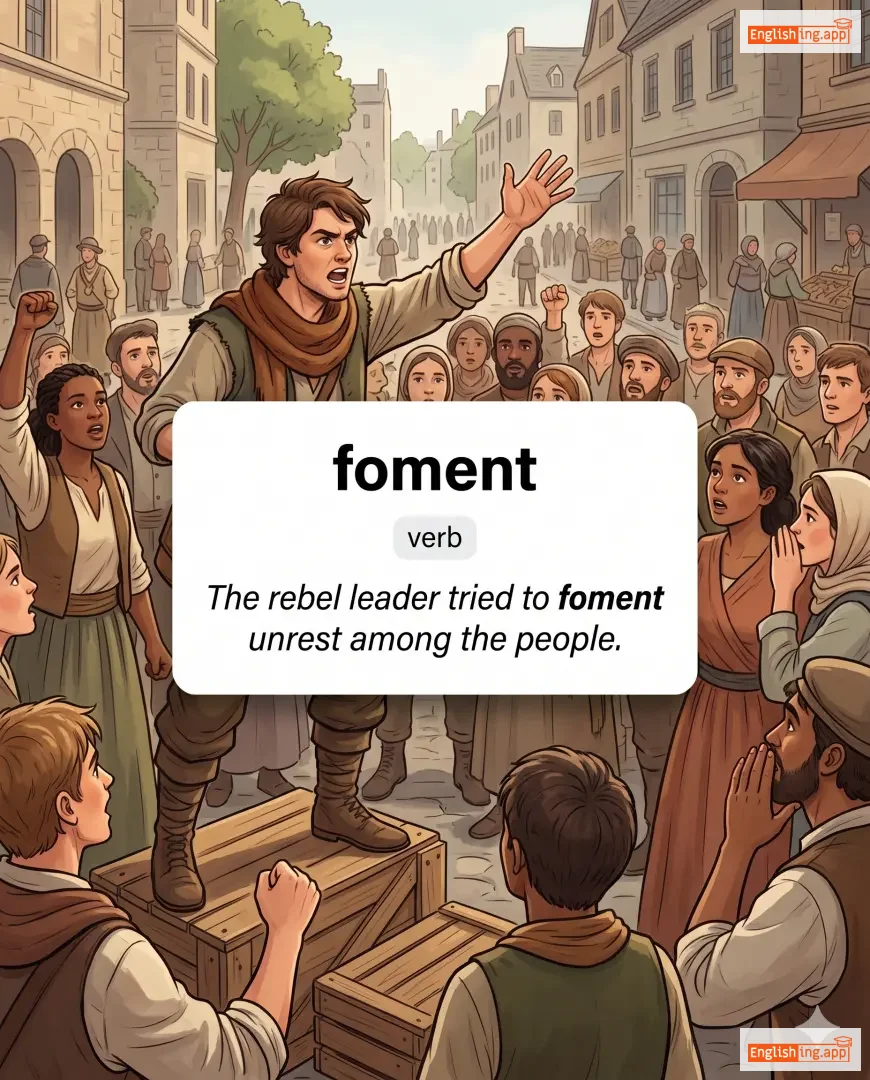
foment definition card — visual illustration of the meaning
verb
/foʊˈmɛnt/
उकसाना (uksana)

To instigate or stir up (an undesirable or violent sentiment or course of action).

"The rebel leader tried to foment unrest among the people."

"विद्रोही नेता लोगों में अशांति भड़काने की कोशिश कर रहा था।" (Vidrohi neta logon mein ashanti bhadkane ki koshish kar raha tha.)
noun
/ˌfoʊ.mənˈteɪ.ʃən/
उत्तेजना, प्रोत्साहन (uttejana, protsahan)

The action of instigating or stirring up; also the application of warm substances to the body to ease pain.

"His speech led to the fomentation of violence in the region."

"उसके भाषण ने क्षेत्र में हिंसा को भड़काने का कारण बना।" (Uske bhashan ne kshetra mein hinsaa ko bhadkaane ka kaaran bana.)
adjective
/fɒnd/
प्रिय (priya)

having a strong liking or affection for something or someone

"She is fond of painting and spends hours in front of her canvas."

"वह पेंटिंग की प्रिय है और घंटों अपने कैनवास के सामने समय बिताती है।" (Vah painting ki priya hai aur ghanton apne canvas ke samne samay bitati hai.)
verb
/ˈfɒn.dəl/
मुलायम या प्यार से सहलाना (mulayam ya pyar se sehalaana)

To stroke or caress lovingly or gently.

"She fondled the kitten gently in her lap."

"वह अपनी गोदी में बिल्ली को धीरे-धीरे प्यार से सहला रही थी।" (Wah apni godi mein billi ko dheere-dheere pyaar se sehla rahi thi.)
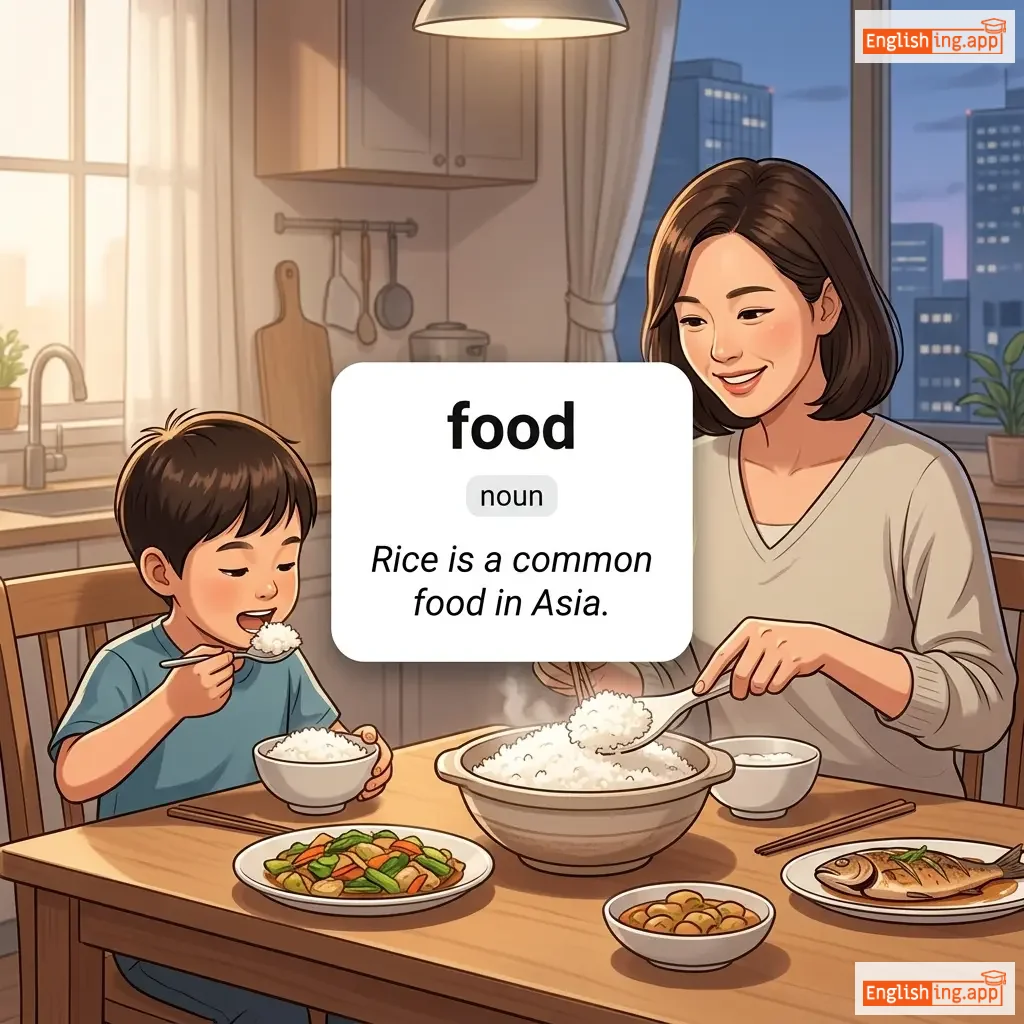
food definition card — visual illustration of the meaning
noun
/fuːd/
खाना (khana)

any nutritious substance that people or animals eat or drink to maintain life and growth

"Rice is a common food in Asia."

"चावल एशिया में एक सामान्य खाना है।" (Chawal Asia mein ek samanya khana hai.)
noun, verb
/fuːl/
मूर्ख (moorkh)

a silly or stupid person; to trick someone

"He felt like a fool after believing the prank."

"प्रैंक पर विश्वास करने के बाद उसने खुद को मूर्ख महसूस किया।" (Prank par vishwas karne ke baad usne khud ko moorkh mahsus kiya.)
noun
/ˈfuːləri/
मूर्खता (moorkhta)

Silly or foolish behavior or actions.

"His constant foolery made the meeting hard to take seriously."

"उसकी लगातार मूर्खता ने बैठक को गंभीरता से लेना कठिन बना दिया।" (Uski lagataar moorkhta ne baithak ko gambhirata se lena kathin bana diya.)
adjective
/ˈfuːlˌhɑːrdi/
बेवकूफी से साहसी (bewakoofi se saahasi)

Recklessly bold or rash; taking foolish risks.

"It was foolhardy of him to climb the mountain without proper gear."

"सही उपकरण के बिना पहाड़ पर चढ़ना उसकी बेवकूफी से साहसिकता का उदाहरण था।" (sahi upkaran ke bina pahaad par chadhna uski bewakoofi se saahasikta ka udaharan tha.)
adjective
/ˈfuːlɪʃ/
मूर्खतापूर्ण (murkhatapurn)

showing a lack of good sense or judgment

"It was foolish to go out without an umbrella in the storm."

"तूफान में बिना छाते के बाहर जाना मूर्खता थी।" (Toofan mein bina chhaate ke baahar jaana murkhta thi.)
adjective
/ˈfuːlpruːf/
अवधारणाहीन (avdharanahin)

Designed to be very easy to use or understand, leaving no possibility of failure or error.

"The new software has a foolproof installation process."

"नया सॉफ़्टवेयर एक अवसंरचनाहीन इंस्टॉलेशन प्रक्रिया है।" (naya software ek avdharnahin installation prakriya hai.)
noun
/fʊt/
पैर (pair)

The lower extremity of the leg below the ankle, used for standing and walking.

"He injured his foot while playing basketball."

"वह बास्केटबॉल खेलते समय अपने पैर को घायल कर बैठा।" (vah basketball khelte samay apne pair ko ghayal kar baitha.)
noun
/ˈfʊtˌnoʊt/
पाद टिप्पणी (pad tippani)

A note of reference, explanation, or comment placed at the bottom of a page.

"The author included a foot-note to explain the historical context."

"लेखक ने ऐतिहासिक संदर्भ समझाने के लिए एक पाद टिप्पणी शामिल की।" (lekhak ne aitihaasik sandarbh samjhaane ke liye ek pad tippani shaamil kee.)
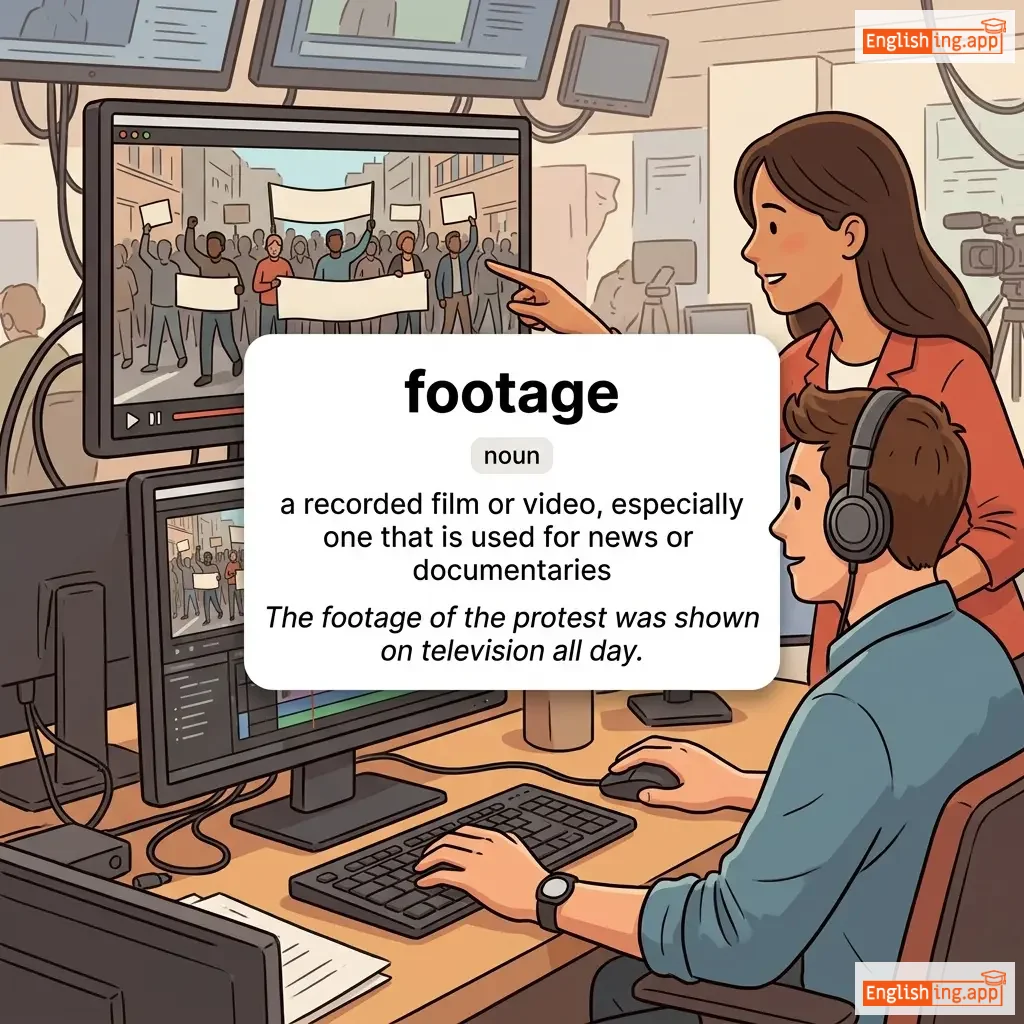
footage definition card — visual illustration of the meaning
noun
/ˈfʊtɪdʒ/
वीडियो रिकॉर्डिंग (video recording)

a recorded film or video, especially one that is used for news or documentaries

"The footage of the protest was shown on television all day."

"प्रदर्शन का फुटेज पूरे दिन टेलीविजन पर दिखाया गया।" (Pradarshan ka footage poore din television par dikhaya gaya.)
noun
/ˈfʊtˌbɔːl/
फुटबॉल (football)

A team sport played with a ball that is kicked or carried to score points.

"They watched a football match on TV."

"उन्होंने टीवी पर एक फुटबॉल मैच देखा।" (Unhone TV par ek football match dekha.)
adjective
/ˈfʊtˌluːs/
निःसंकीर्ण (nissankirn)

Free to go anywhere or do anything; not tied down by responsibilities.

"After graduating, he felt footloose and ready to explore the world."

"स्नातक करने के बाद, वह निःसंकीर्ण महसूस कर रहा था और दुनिया का पता लगाने के लिए तैयार था।" (snatak karne ke baad, vah nissankirn mahsus kar raha tha aur duniya ka pata lagane ke liye tayar tha.)
noun
/ˈfɒpəri/
अत्यधिक दिखावा (atyadhik dikhawa)

Foolish or excessive concern with one's appearance or manners; pretentious behavior.

"His obsession with fashion was dismissed as mere foppery."

"उसकी फैशन के प्रति जुनून को केवल दिखावा माना गया।" (Uski fashion ke prati junoon ko keval dikhawa maana gaya.)
adjective
/ˈfɒpɪʃ/
अत्यधिक कपड़ों और दिखावे में रुचि रखने वाला (atyadhik kapdon aur dikhave mein ruchi rakhne wala)

Excessively concerned with clothes and appearance in a vain or foolish way.

"He looked rather foppish in his brightly colored suit."

"वह अपने उज्जवल रंग के सूट में कुछ ज्यादा ही फैशनेबल लग रहा था।" (vah apne ujjval rang ke suit mein kuch jyada hi fashionable lag raha tha.)
preposition
/fɔːr/
के लिए (ke liye)

used to indicate purpose, destination, or recipient

"This gift is for you."

"यह उपहार तुम्हारे लिए है।" (Yah uphaar tumhare liye hai.)
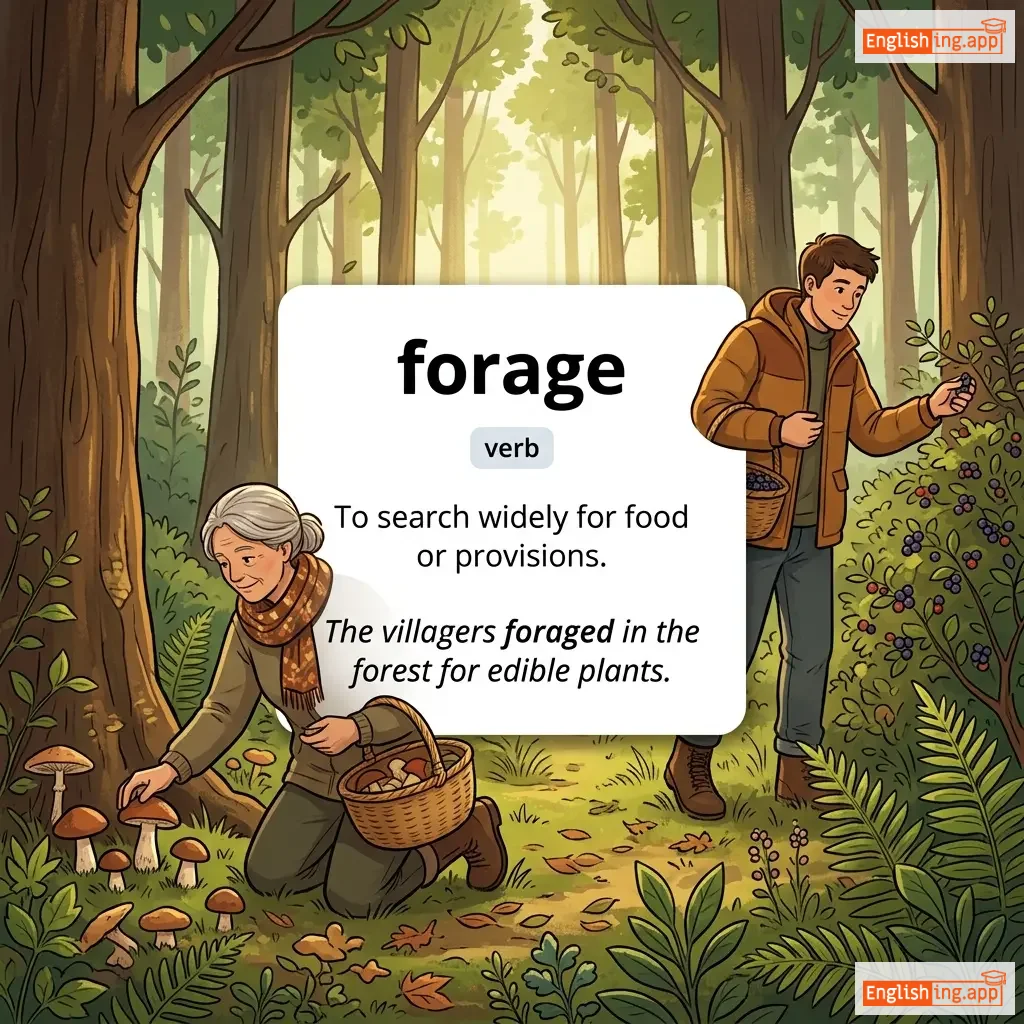
forage definition card — visual illustration of the meaning
verb
/ˈfɒrɪdʒ/
खाद्य के लिए तलाश करना (khadya ke liye talash karna)

To search widely for food or provisions.

"The villagers foraged in the forest for edible plants."

"गांववाले खाद्ययुक्त पौधों के लिए जंगल में तलाश कर रहे थे।" (gaonwale khadyayukt paudhon ke liye jangal mein talash kar rahe the.)
noun
/ˈfɔːreɪ/
हड़बड़ी में आक्रमण / पहला प्रयास (hadbadi mein akraman / pehla prayas)

A sudden short attack or attempt, especially into new activity or territory.

"The company made its first foray into the international market."

"कंपनी ने अंतर्राष्ट्रीय बाजार में अपनी पहली फोरे की।" (company ne antarraashtreey bazar mein apni pehli fore ki.)
verb
/fɔːˈbɛər/
रोकना (rokna)

To refrain from doing something; to show patience or self-control.

"She forbore from commenting on his mistake."

"वह उसकी गलती पर टिप्पणी करने से रोक गई।" (vah uski galti par tippani karne se rok gayi.)
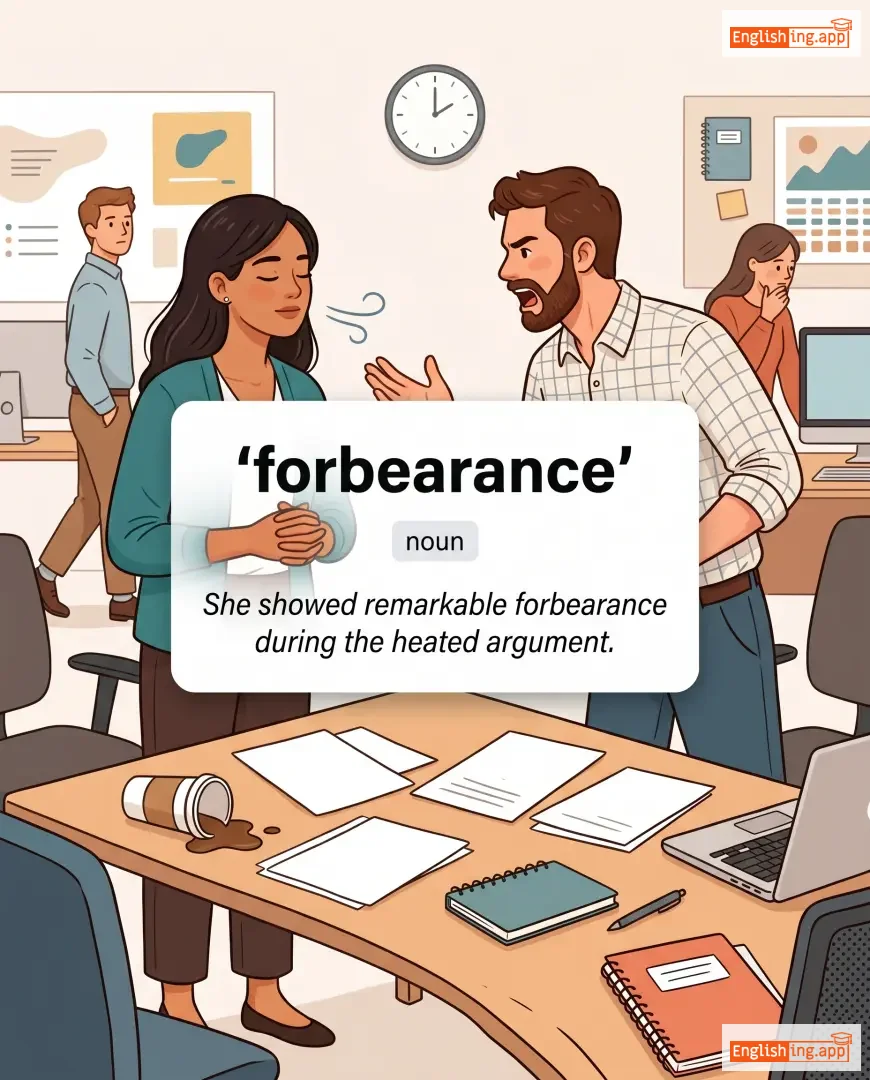
forbearance definition card — visual illustration of the meaning
noun
/fɔːrˈbɛrəns/
धैर्य (dhairya)

Patient self-control; restraint and tolerance, especially in difficult situations.

"She showed remarkable forbearance during the heated argument."

"उसने गरमागरम बहस के दौरान असाधारण धैर्य दिखाया।" (Usne garamgaram bahas ke dauran asadharan dhairya dikhaya.)
verb
/fərˈbɪd/
निषेध करना (nishedh karna)

to order someone not to do something

"The school forbids smoking on campus."

"स्कूल कैंपस में धूम्रपान करना निषेध करता है।" (School campus mein dhumrapan karna nishedh karta hai.)
adjective
/fəˈbɪd.ən/
प्रतिबंधित; निषिद्ध; अवैध (pratibandhit; nishiddh; avaidh)

not allowed; prohibited; banned

"Smoking is strictly forbidden in this building."

"इस इमारत में धूम्रपान पूरी तरह से निषिद्ध है।" (is imarat mein dhumrapan puri tarah se nishiddh hai.)
adverb
/ˈfɔːrbi/
इसके अलावा (iske alawa)

In addition; besides (archaic Scottish/English word).

"He is kind and generous, and wise forby."

"वह दयालु और उदार है, और इसके अलावा बुद्धिमान भी है।" (Vah dayalu aur udar hai, aur iske alawa buddhimaan bhi hai.)
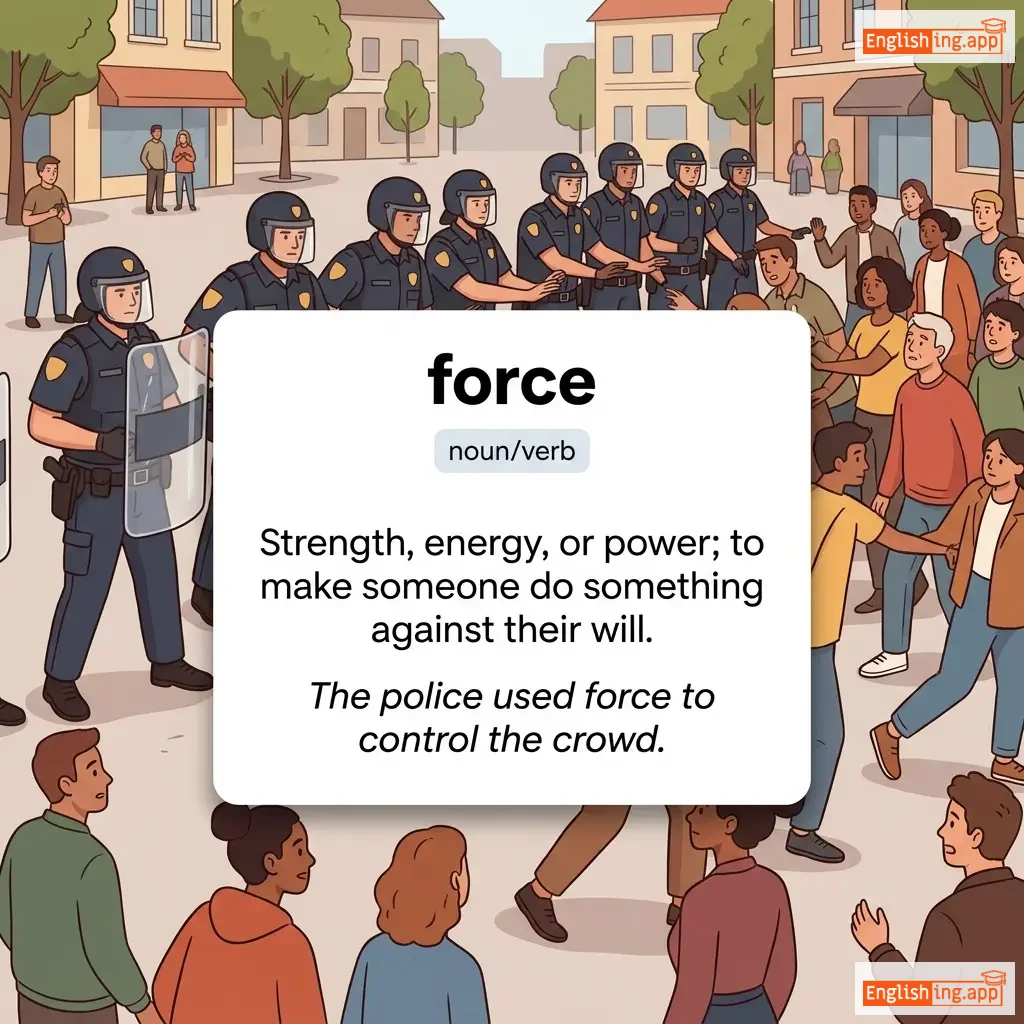
force definition card — visual illustration of the meaning
noun/verb
/fɔːrs/
बल / शक्ति (bal / shakti)

Strength, energy, or power; to make someone do something against their will.

"The police used force to control the crowd."

"पुलिस ने भीड़ को नियंत्रित करने के लिए बल का प्रयोग किया।" (Police ne bhir ko niyantrit karne ke liye bal ka prayog kiya.)
adjective
/ˈfɔːrsəbl/
बलात्कारी (balatkari)

Done by force; using physical strength or power.

"The police made a forcible entry into the house."

"पुलिस ने घर में बलात्कारी प्रवेश किया।" (Police ne ghar mein balatkari pravesh kiya.)
noun, verb
/fɔːrd/
उथला स्थान जहाँ नदी पार की जा सकती है (uthla sthan jahan nadi paar ki ja sakti hai)

A shallow place in a river where one can cross; to cross a river at such a place.

"The travelers decided to ford the river at dawn."

"यात्रियों ने सुबह नदी को उथले स्थान से पार करने का फैसला किया।" (Yatriyon ne subah nadi ko uthle sthan se paar karne ka faisla kiya.)
noun
/ˈfɔːrˌbɛər/
पूर्वज (purvaj)

An ancestor, especially one who lived a long time ago.

"He often speaks of his forebears with great respect."

"वह अक्सर अपने पूर्वजों का बहुत सम्मान से जिक्र करते हैं।" (Woh aksar apne purvajon ka bahut sammaan se zikr karte hain.)
noun
/ˈfɔːrˌbɛərz/
पूर्वज (purvaj)

Ancestors or people in previous generations from whom one is descended.

"We must honor the traditions of our forebears."

"हमें अपने पूर्वजों की परंपराओं का सम्मान करना चाहिए।" (Humein apne purvajon ki paramparao ka samman karna chahiye.)
verb
/fɔːrˈboʊd/
अशुभ संकेत देना (ashubh sanket dena)

To predict or have a strong inner feeling of a future misfortune or evil.

"Dark clouds forebode a coming storm."

"अंधेरे बादल एक आने वाली आंधी का संकेत देते हैं।" (Andhere baadal ek aane wali aandhi ka sanket dete hain.)
noun/adjective
/fɔːrˈboʊdɪŋ/
अशुभ आभास (ashubh aabhaas)

A feeling that something bad will happen; ominous.

"She felt a deep sense of foreboding as she entered the abandoned house."

"वह पुरानी और वीरान घर में प्रवेश करते हुए एक गहरे अशुभ आभास को महसूस कर रही थी।" (Vah puraani aur veeraan ghar mein pravesh karte huye ek gahare ashubh aabhaas ko mehsoos kar rahi thi.)
noun/verb
/ˈfɔːrkæst/
पूर्वानुमान (purvanuman)

To predict future events, especially weather or economic trends.

"The weather office forecast heavy rain for tomorrow."

"मौसम विभाग ने कल के लिए भारी बारिश का पूर्वानुमान किया।" (Mausam vibhag ne kal ke liye bhaari baarish ka purvanuman kiya.)
noun
/ˈfoʊksl/
जहाज का अग्रभाग (jahaz ka agrabhag)

The forward part of a ship below the deck, traditionally used as living quarters for the crew.

"The sailors gathered in the forecastle after their shift."

"नाविक अपने शिफ्ट के बाद फोकसल में इकट्ठा हुए।" (Navik apne shift ke baad fokasal mein ikattha hue.)
verb
/fɔːrˈkloʊz/
फोरक्लोज़ करना (foreclose karna)

to take possession of a property due to the owner's failure to keep up mortgage payments

"The bank decided to foreclose on the property after months of missed payments."

"बैंक ने मिस्ड पेमेंट्स के बाद संपत्ति पर फोरक्लोज़ करने का निर्णय लिया।" (Bank ne missed payments ke baad sampatti par foreclose karne ka nirnay liya.)
noun
/fɔːrˈkloʊʒər/
फोरक्लोजर (foreclosure)

The legal process by which a lender takes control of a property from a borrower who has failed to make payments.

"The family lost their home due to foreclosure after missing several mortgage payments."

"परिवार ने कई मॉर्गेज भुगतान न करने के कारण फोरक्लोजर के कारण अपना घर खो दिया।" (parivaar ne kai mortgage bhugtan na karne ke kaaran foreclosure ke kaaran apna ghar kho diya.)
noun
/ˈfɔːrkɔːrt/
आंगन (aangan)

an open area in front of a large building, especially a petrol station or hotel

"The car was parked in the hotel forecourt."

"कार होटल के आंगन में खड़ी थी।" (Car hotel ke aangan mein khadi thi.)
noun
/ˈfɔːrˌfɑːðər/
पूर्वज (purvaj)

an ancestor, especially one who was part of an earlier generation of a family or nation

"Our forefathers fought for independence."

"हमारे पूर्वजों ने स्वतंत्रता के लिए संघर्ष किया था।" (Hamare purvajon ne svatantrata ke liye sangharsh kiya tha.)
verb
/fɔːrˈɡoʊ/
त्याग करना (tyag karna)

to decide not to do or have something pleasant or valuable

"She decided to forego dessert to maintain her diet."

"अपनी डाइट बनाए रखने के लिए उसने मिठाई छोड़ने का निर्णय लिया।" (Apni diet banaye rakhne ke liye usne mithai chhodne ka nirnay liya.)
noun
/ˈfɔːrɡraʊnd/
फोरग्राउंड (foreground)

the part of a scene that is nearest to and in front of the viewer

"The flowers in the foreground brightened the picture."

"फूल जो सामने थे, उन्होंने चित्र को चमकाया।" (phool jo samne the, unhone chitra ko chamkaaya.)
noun
/ˈfɔːrˌhɛd/ or /ˈfɔːrɪd/
माथा (maatha)

The part of the face above the eyebrows.

"She wiped the sweat from her forehead."

"उसने अपने माथे से पसीना पोंछा।" (Usne apne maathe se paseena poncha.)
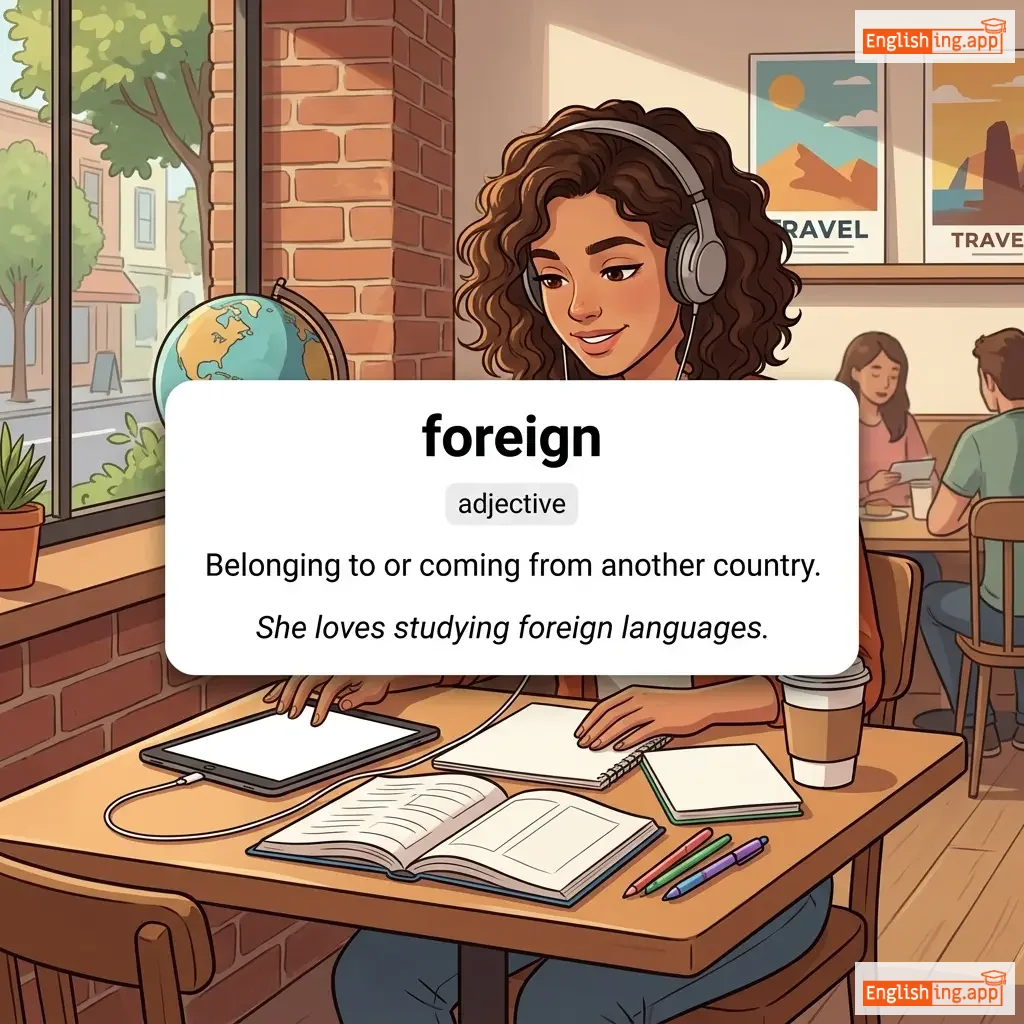
foreign definition card — visual illustration of the meaning
adjective
/ˈfɔːrən/ or /ˈfɑːrən/
विदेशी (videshi)

Belonging to or coming from another country.

"She loves studying foreign languages."

"उसे विदेशी भाषाएँ सीखना पसंद है।" (Use videshi bhashayein seekhna pasand hai.)
noun
/ˈfɔːrənər/ or /ˈfɑːrənər/
विदेशी (videshi)

A person from another country.

"The city welcomes every foreigner with kindness."

"शहर हर विदेशी का स्वागत करता है।" (Shahar har videshi ka swagat karta hai.)