ভোকাবুলারিসমূহ

ইংরেজি শব্দের বাংলা অর্থ | English to Bangla Word Meaning Dictionary

noun
/ˈfoʊldər/
ফোল্ডার (folder)

a container or directory used to store and organize papers or digital files

"I saved all the photos in a separate folder."

"আমি সব ছবি একটি আলাদা ফোল্ডারে সংরক্ষণ করেছি।" (ami shob chobi ekti alada foldare songrokkhon korechi)
noun
/ˈfoʊliɪdʒ/
পাতার সমষ্টি (patar somosti)

The leaves of a plant, collectively.

"The autumn foliage looked stunning in the park."

"শরতের পাতার সমষ্টি পার্কে দারুণ লাগছিল।" (Shoroter patar somosti parke darun lagchhilo.)
noun
/ˈfoʊ.li.oʊ/
বৃহৎ বই বা পাণ্ডুলিপি (brihot boi ba pandulipi)

A sheet of paper folded once to form two leaves (four pages) of a book; also a term for a large book or manuscript.

"The library houses an ancient Shakespeare folio."

"লাইব্রেরিতে একটি প্রাচীন শেক্সপিয়ারের ফোলিও রয়েছে।" (Libraryte ekti prachin Shakespeare er folio royeche.)
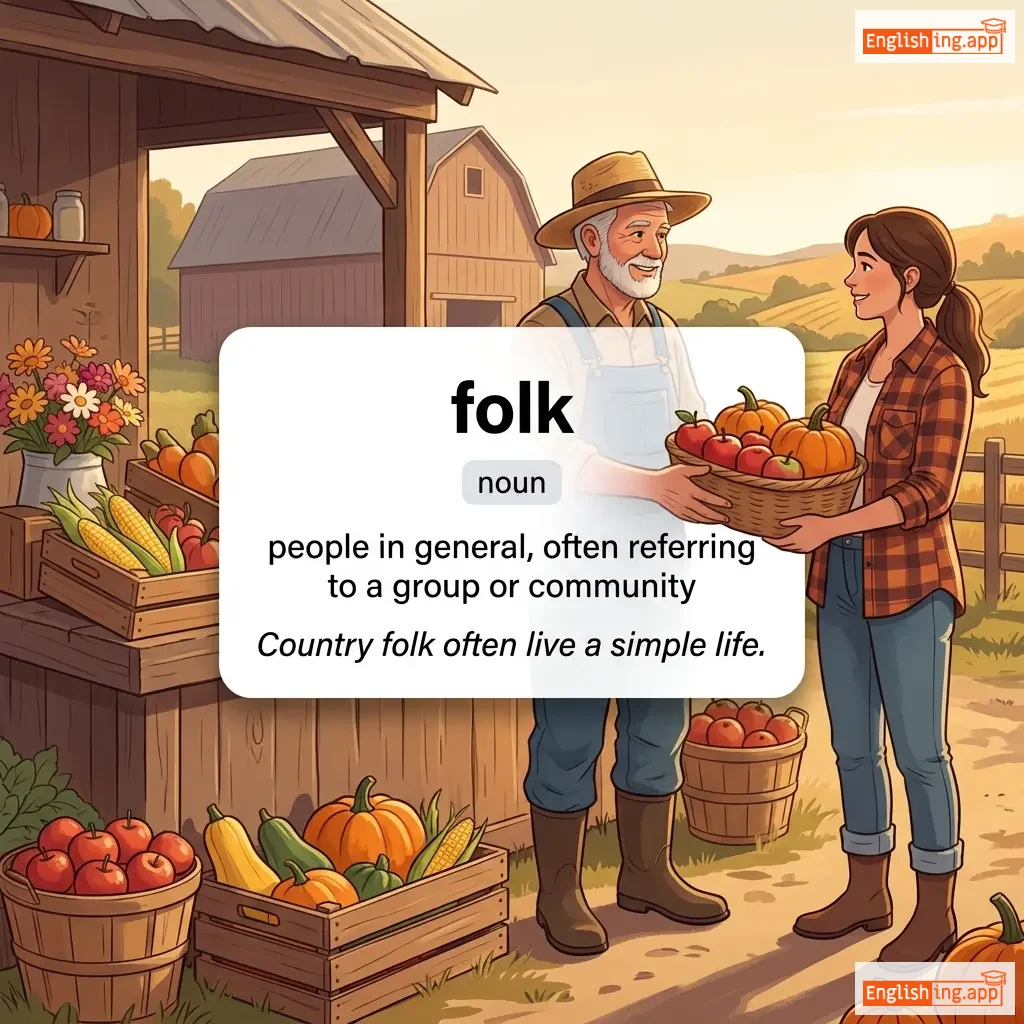
folk definition card — visual illustration of the meaning
👨‍👩‍👧‍👦

folk (ফোক)

noun
/foʊk/
লোক (lok)

people in general, often referring to a group or community

"Country folk often live a simple life."

"গ্রামের লোকেরা প্রায়ই সহজ জীবনযাপন করে।" (Gramer lokera prayoi sohoj jibonjapon kore.)
noun
/ˈfoʊk.lɔːr/
লোককথা (lokkotha)

The traditional beliefs, customs, stories, songs, and practices of a community, passed down through generations.

"Bangladeshi folk-lore is rich with myths and legends."

"বাংলাদেশের লোককথা পৌরাণিক কাহিনি ও কিংবদন্তিতে সমৃদ্ধ।" (Bangladesher lokkotha pouranik kahini o kingbodontite somriddho.)
verb
/ˈfɒloʊ/
অনুসরণ করা (onusoron kora)

to move behind someone or something; to go after or come after

"The children followed their teacher into the classroom."

"শিশুরা তাদের শিক্ষককে অনুসরণ করে শ্রেণীকক্ষে প্রবেশ করল।" (Shishura tader shikkhokke onusoron kore shrenikkhokkhe probesh korlo.)
noun
/ˈfɑː.loʊ.ɪŋ/
অনুসারী (onusari)

a group of supporters or people who admire something or someone

"The singer has a large following around the world."

"গায়কের বিশ্বজুড়ে অনেক অনুসারী আছে।" (Gayoker bishwojure onek onusari ache.)
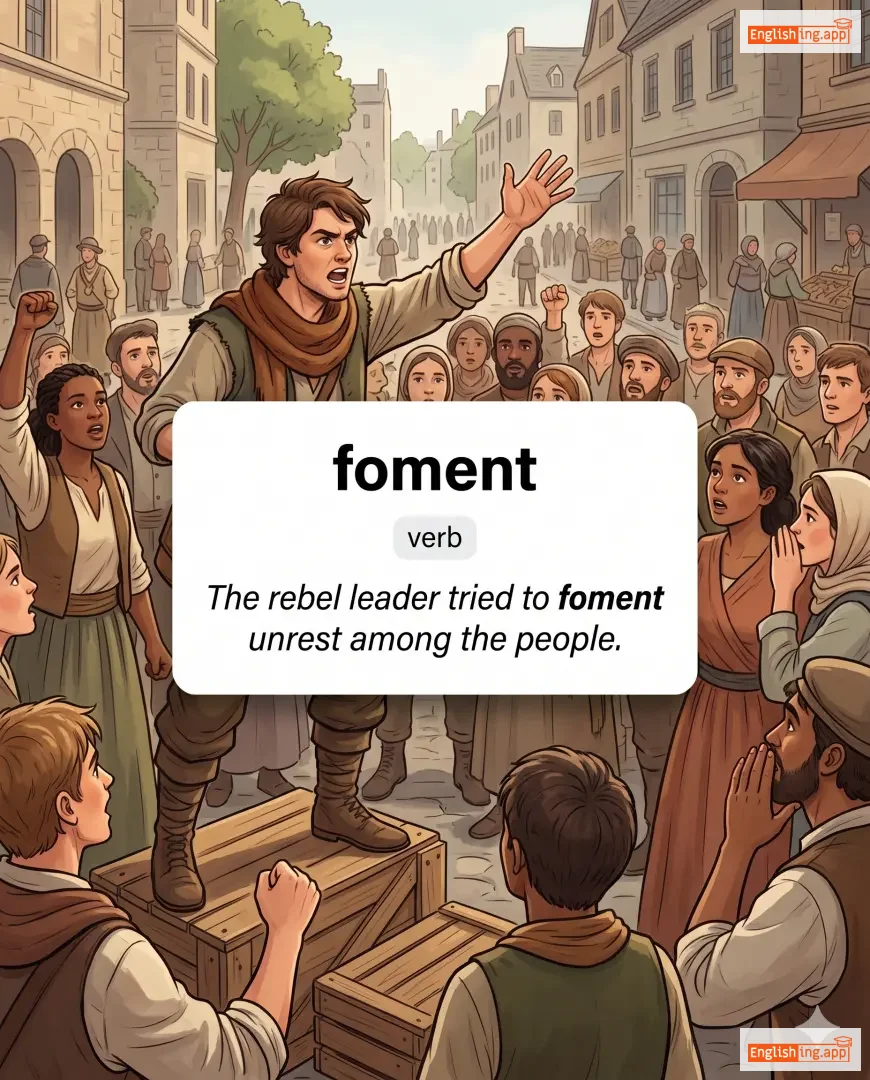
foment definition card — visual illustration of the meaning
verb
/foʊˈmɛnt/
উসকানি দেওয়া (uskani deowa)

To instigate or stir up (an undesirable or violent sentiment or course of action).

"The rebel leader tried to foment unrest among the people."

"বিদ্রোহী নেতা জনগণের মধ্যে অশান্তি উসকে দেওয়ার চেষ্টা করেছিল।" (Bidrohi neta jonogoner moddhe ashanti uske deowar cheshta korechilo.)
noun
/ˌfoʊ.mənˈteɪ.ʃən/
উসকানি, প্ররোচনা (uskani, prorochona)

The action of instigating or stirring up; also the application of warm substances to the body to ease pain.

"His speech led to the fomentation of violence in the region."

"তার বক্তব্য ওই অঞ্চলে সহিংসতা উসকে দিয়েছিল।" (Tar boktobbo oi onchole shohingsota uske diyechilo.)
adjective
/fɒnd/
অনুরাগী (onuragi)

having a strong liking or affection for something or someone

"She is fond of painting and spends hours in front of her canvas."

"সে পেইন্টিংয়ের প্রতি অনুরাগী এবং ঘণ্টার পর ঘণ্টা তার ক্যানভাসের সামনে কাটায়।" (She painting-er proti onuragi ebong ghotar por ghota tar canvas-er samne katay.)
verb
/ˈfɒn.dəl/
আদর করে স্পর্শ করা (ador kore sporsho kora)

To stroke or caress lovingly or gently.

"She fondled the kitten gently in her lap."

"সে তার কোলে বিড়ালছানাকে কোমলভাবে আদর করছিল।" (Se tar kole biralchanake komolbhabe ador korchilo.)
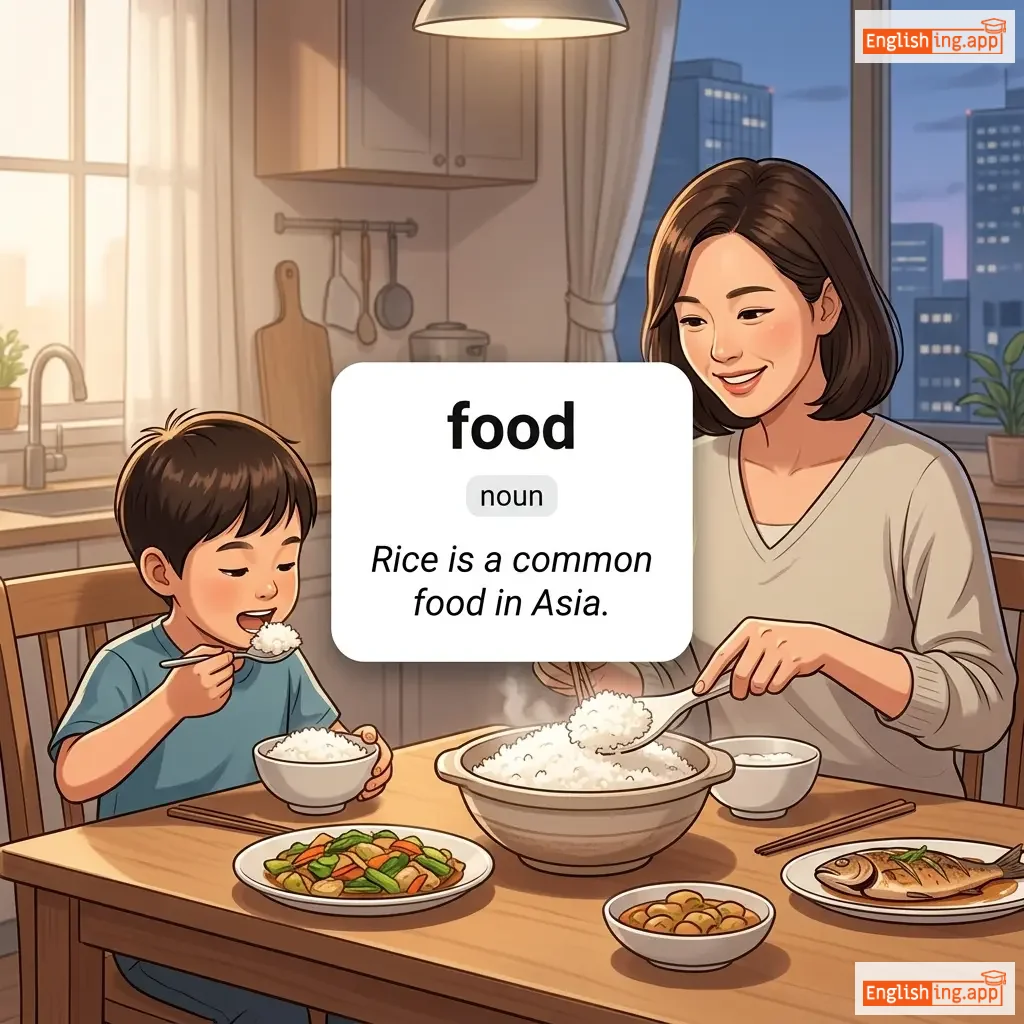
food definition card — visual illustration of the meaning
noun
/fuːd/
খাদ্য (khaddo)

any nutritious substance that people or animals eat or drink to maintain life and growth

"Rice is a common food in Asia."

"ভাত এশিয়ার একটি সাধারণ খাদ্য।" (Bhat eshiar ekta sadharon khaddo.)
noun, verb
/fuːl/
বোকা (boka)

a silly or stupid person; to trick someone

"He felt like a fool after believing the prank."

"প্র্যাঙ্কে বিশ্বাস করার পর সে নিজেকে বোকা মনে করল।" (Pranke bishash korar por se nije ke boka mone korlo.)
noun
/ˈfuːləri/
মূর্খতা (murkhota)

Silly or foolish behavior or actions.

"His constant foolery made the meeting hard to take seriously."

"তার ক্রমাগত বোকামি মিটিংকে গুরুত্বসহকারে নেওয়া কঠিন করে তুলেছিল।" (tar kromogoto bokami mitingke gurutoshohokare newa kothin kore tulchilo.)
adjective
/ˈfuːlˌhɑːrdi/
অবিবেচক সাহসী (obibechok sahosi)

Recklessly bold or rash; taking foolish risks.

"It was foolhardy of him to climb the mountain without proper gear."

"সঠিক সরঞ্জাম ছাড়া পাহাড়ে ওঠা তার অবিবেচক সাহসিকতার প্রমাণ ছিল।" (sothik soronjam chhara pahar otha tar obibechok sahosikotar proman chilo.)
adjective
/ˈfuːlɪʃ/
মূর্খতাপূর্ণ (murkhotapurno)

showing a lack of good sense or judgment

"It was foolish to go out without an umbrella in the storm."

"ঝড়ের মধ্যে ছাতা ছাড়া বের হওয়া মূর্খতা ছিল।" (Jhorrer modhye chata chara ber howa murkhota chhilo.)
adjective
/ˈfuːlpruːf/
নির্ভুল (nirbhul)

Designed to be very easy to use or understand, leaving no possibility of failure or error.

"The new software has a foolproof installation process."

"নতুন সফটওয়্যারের একটি নির্ভুল ইনস্টলেশন প্রক্রিয়া রয়েছে।" (notun software er ekti nirbhul installation prokriya royeche.)
noun
/fʊt/
পা (pa)

The lower extremity of the leg below the ankle, used for standing and walking.

"He injured his foot while playing basketball."

"সে বাস্কেটবল খেলতে গিয়ে তার পায়ে আঘাত পেয়েছিল।" (Se basketball khelte giye tar pa e aghat peyechilo.)
noun
/ˈfʊtˌnoʊt/
পাদটীকা (padotika)

A note of reference, explanation, or comment placed at the bottom of a page.

"The author included a foot-note to explain the historical context."

"লেখক ঐতিহাসিক প্রেক্ষাপট ব্যাখ্যা করার জন্য একটি পাদটীকা যুক্ত করেছিলেন।" (lekhok oitihashik prekkhopot byakkha korar jonno ekti padotika jukto korechilen.)
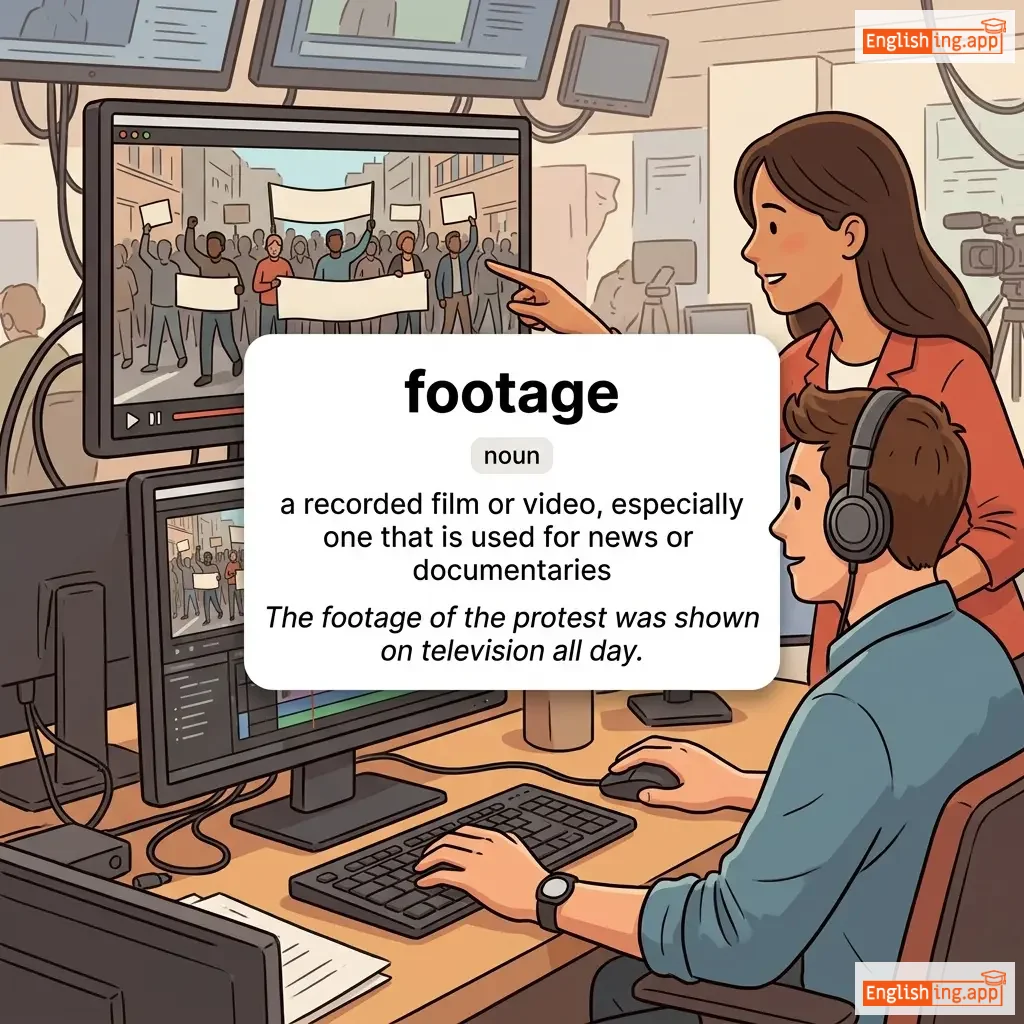
footage definition card — visual illustration of the meaning
noun
/ˈfʊtɪdʒ/
ভিডিও রেকর্ডিং (video recording)

a recorded film or video, especially one that is used for news or documentaries

"The footage of the protest was shown on television all day."

"প্রতিবাদে ভিডিও ফুটেজ সারা দিন টেলিভিশনে দেখানো হয়েছিল।" (Protibade video footage sara din television-e dekhano hoechhilo.)
noun
/ˈfʊtˌbɔːl/
ফুটবল (football)

A team sport played with a ball that is kicked or carried to score points.

"They watched a football match on TV."

"তারা টিভিতে একটি ফুটবল ম্যাচ দেখেছিল।" (Tara TV te ekti football match dekhechilo.)
adjective
/ˈfʊtˌluːs/
অবাধ (obadh)

Free to go anywhere or do anything; not tied down by responsibilities.

"After graduating, he felt footloose and ready to explore the world."

"স্নাতক শেষ করার পর সে নিজেকে অবাধ মনে করেছিল এবং পৃথিবী ঘুরে দেখার জন্য প্রস্তুত ছিল।" (snatok shesh korar por se nije obadh mone korechilo ebong prithibi ghure dekharo jonno prostut chilo.)
noun
/ˈfɒpəri/
অতিরিক্ত আড়ম্বর (otirikto arambor)

Foolish or excessive concern with one's appearance or manners; pretentious behavior.

"His obsession with fashion was dismissed as mere foppery."

"তার ফ্যাশনের প্রতি অতিরিক্ত আসক্তিকে কেবল আড়ম্বর হিসেবে ধরা হয়েছিল।" (tar fashioner proti otirikto asoktike kebol arambor hisebe dhora hoyechilo.)
adjective
/ˈfɒpɪʃ/
অতিরিক্ত সাজগোজপ্রিয় (otirikto sajgojpriyo)

Excessively concerned with clothes and appearance in a vain or foolish way.

"He looked rather foppish in his brightly colored suit."

"সে তার উজ্জ্বল রঙের স্যুটে বেশ আড়ম্বরপূর্ণ লাগছিল।" (se tar ujjol ronger suite besh aramborpurno lagchhilo.)
preposition
/fɔːr/
জন্য (jonno)

used to indicate purpose, destination, or recipient

"This gift is for you."

"এই উপহারটি তোমার জন্য।" (Ei upoharti tomar jonno.)
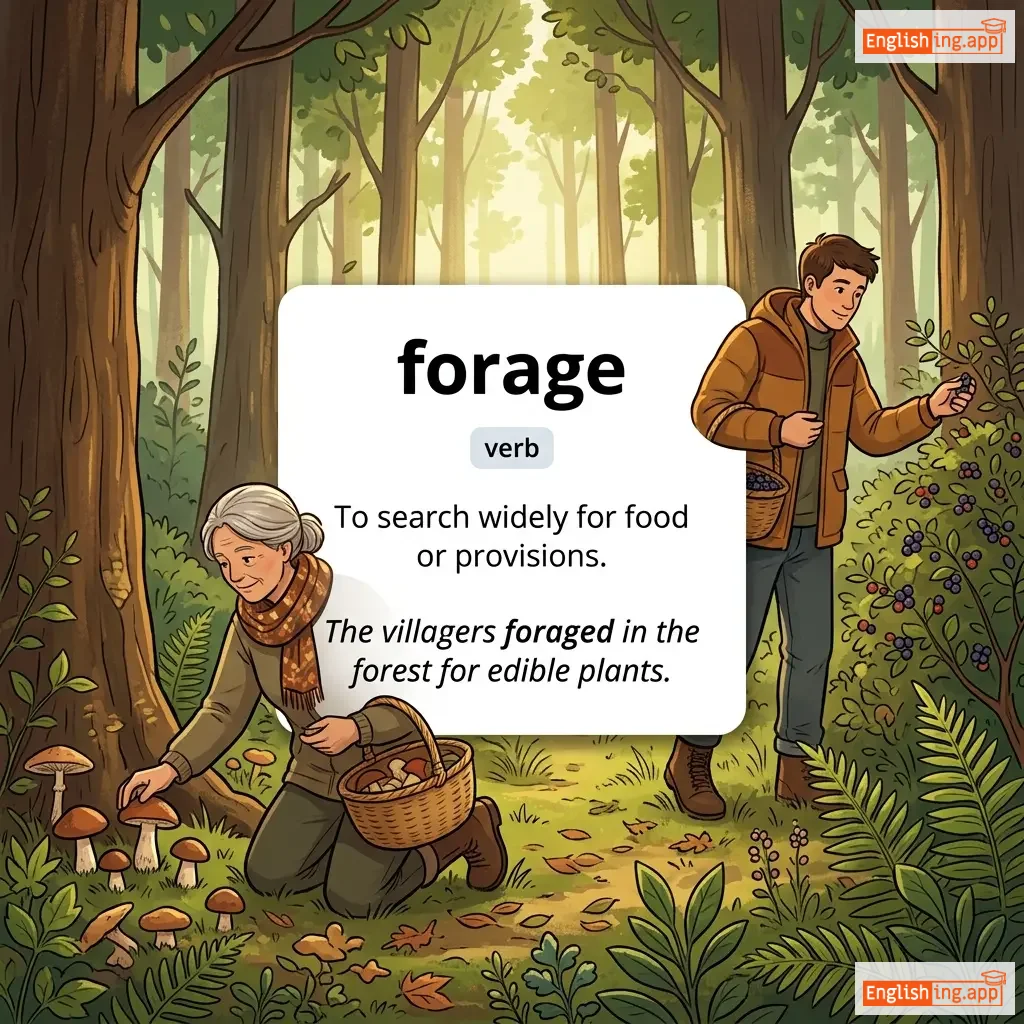
forage definition card — visual illustration of the meaning
verb
/ˈfɒrɪdʒ/
খাদ্য অনুসন্ধান করা (khadyo onushondhan kora)

To search widely for food or provisions.

"The villagers foraged in the forest for edible plants."

"গ্রামের লোকেরা খাবারযোগ্য উদ্ভিদের জন্য জঙ্গলে অনুসন্ধান করেছিল।" (gramer lokera khabaryoggo udvider jonno jongole onushondhan korechhilo.)
noun
/ˈfɔːreɪ/
হঠাৎ অভিযান / প্রথম প্রচেষ্টা (hotat obhijan / prothom prochesta)

A sudden short attack or attempt, especially into new activity or territory.

"The company made its first foray into the international market."

"কোম্পানিটি আন্তর্জাতিক বাজারে প্রথম পদক্ষেপ নিয়েছিল।" (companyti antorjatik bajare prothom podokkhep niechhilo.)
verb
/fɔːˈbɛər/
বিরত থাকা (biroto thaka)

To refrain from doing something; to show patience or self-control.

"She forbore from commenting on his mistake."

"সে তার ভুল নিয়ে মন্তব্য করা থেকে বিরত ছিল।" (se tar vul nie montobbo kora theke biroto chhilo.)
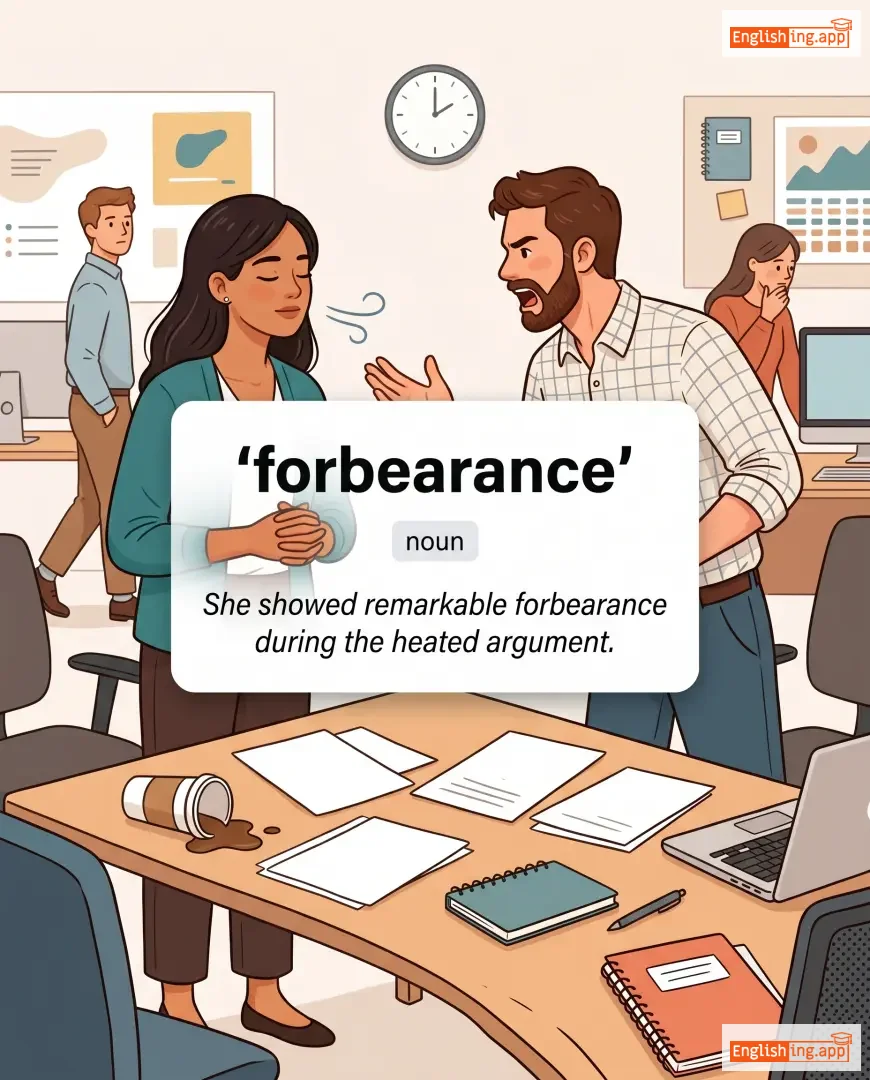
forbearance definition card — visual illustration of the meaning
noun
/fɔːrˈbɛrəns/
সহিষ্ণুতা (sohishnota)

Patient self-control; restraint and tolerance, especially in difficult situations.

"She showed remarkable forbearance during the heated argument."

"তিনি উত্তপ্ত বিতর্কের সময় অসাধারণ সহিষ্ণুতা দেখিয়েছিলেন।" (Tini uttopto bitorker somoy osadharon sohishnota dekhiyechilen.)
verb
/fərˈbɪd/
নিষেধ করা (nishedh kora)

to order someone not to do something

"The school forbids smoking on campus."

"স্কুলে ধূমপান করা নিষিদ্ধ।" (Skule dhumpan kora nishiddho.)
adjective
/fəˈbɪd.ən/
নিষিদ্ধ; অবৈধ; নেয়-যাওয়া নয়; (nishiddho)

not allowed; prohibited; banned

"Smoking is strictly forbidden in this building."

"এই ভবনে ধূমপান সম্পূর্ণ নিষিদ্ধ।" (ei bhobne dhumopan shompurno nishiddho)
adverb
/ˈfɔːrbi/
উপরন্তু (uparonto)

In addition; besides (archaic Scottish/English word).

"He is kind and generous, and wise forby."

"তিনি দয়ালু ও উদার, উপরন্তু জ্ঞানীও।" (Tini doyaloo o udar, uparonto gyaniyo.)
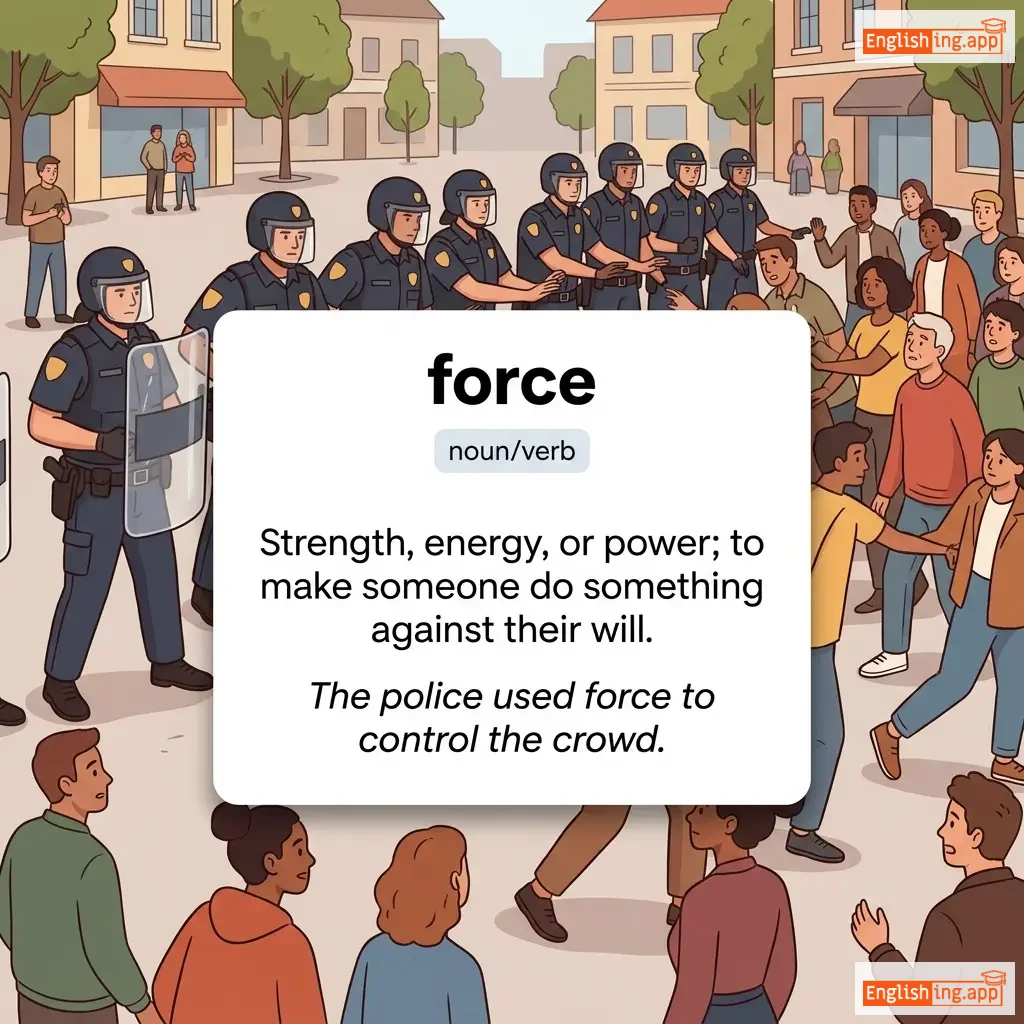
force definition card — visual illustration of the meaning
noun/verb
/fɔːrs/
শক্তি / জোর (shokti / jor)

Strength, energy, or power; to make someone do something against their will.

"The police used force to control the crowd."

"পুলিশ ভিড় নিয়ন্ত্রণ করতে শক্তি ব্যবহার করেছিল।" (Police bhir niyontron korte shokti byabohar korechilo.)
adjective
/ˈfɔːrsəbl/
বলপ্রয়োগে (bolproyoge)

Done by force; using physical strength or power.

"The police made a forcible entry into the house."

"পুলিশ জোরপূর্বক বাড়িতে প্রবেশ করেছিল।" (Police jorpurbok barite probesh korechilo.)
noun, verb
/fɔːrd/
অগভীর নদী পারাপার (ogobhir nodi parapaar)

A shallow place in a river where one can cross; to cross a river at such a place.

"The travelers decided to ford the river at dawn."

"ভ্রমণকারীরা ভোরে নদীটি অগভীর স্থান দিয়ে পার হওয়ার সিদ্ধান্ত নিল।" (Bhramonkari ra bhore noditi ogobhir sthan diye par howar siddhanto nilo.)
noun
/ˈfɔːrˌbɛər/
পূর্বপুরুষ (purbopurush)

An ancestor, especially one who lived a long time ago.

"He often speaks of his forebears with great respect."

"তিনি প্রায়ই তার পূর্বপুরুষদের কথা শ্রদ্ধার সঙ্গে বলেন।" (Tini prayoi tar purbopurusher kotha sraddhar songe bolen.)
noun
/ˈfɔːrˌbɛərz/
পূর্বপুরুষ (purbopurush)

Ancestors or people in previous generations from whom one is descended.

"We must honor the traditions of our forebears."

"আমাদের পূর্বপুরুষদের ঐতিহ্যকে সম্মান করতে হবে।" (Amader purbopurusher oitijjoke somman korte hobe.)
verb
/fɔːrˈboʊd/
অশুভ সংকেত দেওয়া (oshubho sanket dewa)

To predict or have a strong inner feeling of a future misfortune or evil.

"Dark clouds forebode a coming storm."

"কালো মেঘ আসন্ন ঝড়ের পূর্বাভাস দেয়।" (Kalo megh asonna jhorer purbavash dey.)
noun/adjective
/fɔːrˈboʊdɪŋ/
অশুভ পূর্বাভাস (oshubho purbavash)

A feeling that something bad will happen; ominous.

"She felt a deep sense of foreboding as she entered the abandoned house."

"সে যখন পরিত্যক্ত বাড়িতে ঢুকল তখন তার মধ্যে অশুভ পূর্বাভাসের অনুভূতি হলো।" (Se jokhon porityokto barite dhuklo tokhon tar modhye oshubho purbavash er onubhuti holo.)
noun/verb
/ˈfɔːrkæst/
পূর্বাভাস (purbavash)

To predict future events, especially weather or economic trends.

"The weather office forecast heavy rain for tomorrow."

"আবহাওয়া অফিস আগামীকালের জন্য ভারী বৃষ্টির পূর্বাভাস দিয়েছে।" (Abohawa office agamikaler jonno bhari brishtir purbavash diyeche.)
noun
/ˈfoʊksl/
জাহাজের সামনের কক্ষ (jahajer samner kakkho)

The forward part of a ship below the deck, traditionally used as living quarters for the crew.

"The sailors gathered in the forecastle after their shift."

"নাবিকরা তাদের কাজ শেষ করার পর ফোকাসলে জড়ো হয়েছিল।" (Nabikra tader kaj shesh korar por fokasle joro hoyechilo.)
verb
/fɔːrˈkloʊz/
ঋণভঙ্গের কারণে সম্পত্তি বাজেয়াপ্ত করা (rinbhonger karone sompotti bajeyapt kora)

to take possession of a property due to the owner's failure to keep up mortgage payments

"The bank decided to foreclose on the property after months of missed payments."

"অনেক মাস কিস্তি না দেওয়ার পর ব্যাংক সম্পত্তি বাজেয়াপ্ত করার সিদ্ধান্ত নিল।" (Onek mas kisti na dewar por bank sompotti bajeyapt korar siddhanto nilo.)
noun
/fɔːrˈkloʊʒər/
বন্ধক বাজেয়াপ্ত (bondhok bajeyapt)

The legal process by which a lender takes control of a property from a borrower who has failed to make payments.

"The family lost their home due to foreclosure after missing several mortgage payments."

"অনেকগুলো মর্টগেজ কিস্তি না দেওয়ার কারণে পরিবারটি ফোরক্লোজারের মাধ্যমে তাদের বাড়ি হারিয়েছিল।" (Onekgulo mortgage kisti na deowar karone poribar ti foreclosure er madhyome tader bari hariyechilo.)
noun
/ˈfɔːrkɔːrt/
সামনের উঠান (samner uthhan)

an open area in front of a large building, especially a petrol station or hotel

"The car was parked in the hotel forecourt."

"গাড়িটি হোটেলের সামনের উঠানে পার্ক করা ছিল।" (Gariti hoteler samner uthhane park kora chhilo.)
noun
/ˈfɔːrˌfɑːðər/
পূর্বপুরুষ (purbopurush)

an ancestor, especially one who was part of an earlier generation of a family or nation

"Our forefathers fought for independence."

"আমাদের পূর্বপুরুষরা স্বাধীনতার জন্য লড়াই করেছিলেন।" (Amader purbopurushra shadhinatar jonno lorai korechhilen.)
verb
/fɔːrˈɡoʊ/
ত্যাগ করা (tyag kora)

to decide not to do or have something pleasant or valuable

"She decided to forego dessert to maintain her diet."

"ডায়েট বজায় রাখতে সে মিষ্টি খাবার ত্যাগ করার সিদ্ধান্ত নিল।" (Diet bojay rakhte se mishti khabar tyag korar siddhanto nilo.)
noun
/ˈfɔːrɡraʊnd/
সামনের অংশ (samner angsho)

the part of a scene that is nearest to and in front of the viewer

"The flowers in the foreground brightened the picture."

"সামনের ফুলগুলো ছবিকে উজ্জ্বল করে তুলেছিল।" (Samner fulgulo chobike ujjol kore tulchhilo.)
noun
/ˈfɔːrˌhɛd/ or /ˈfɔːrɪd/
কপাল (kopal)

The part of the face above the eyebrows.

"She wiped the sweat from her forehead."

"সে তার কপাল থেকে ঘাম মুছে ফেলল।" (Se tar kopal theke gham muche fallo.)
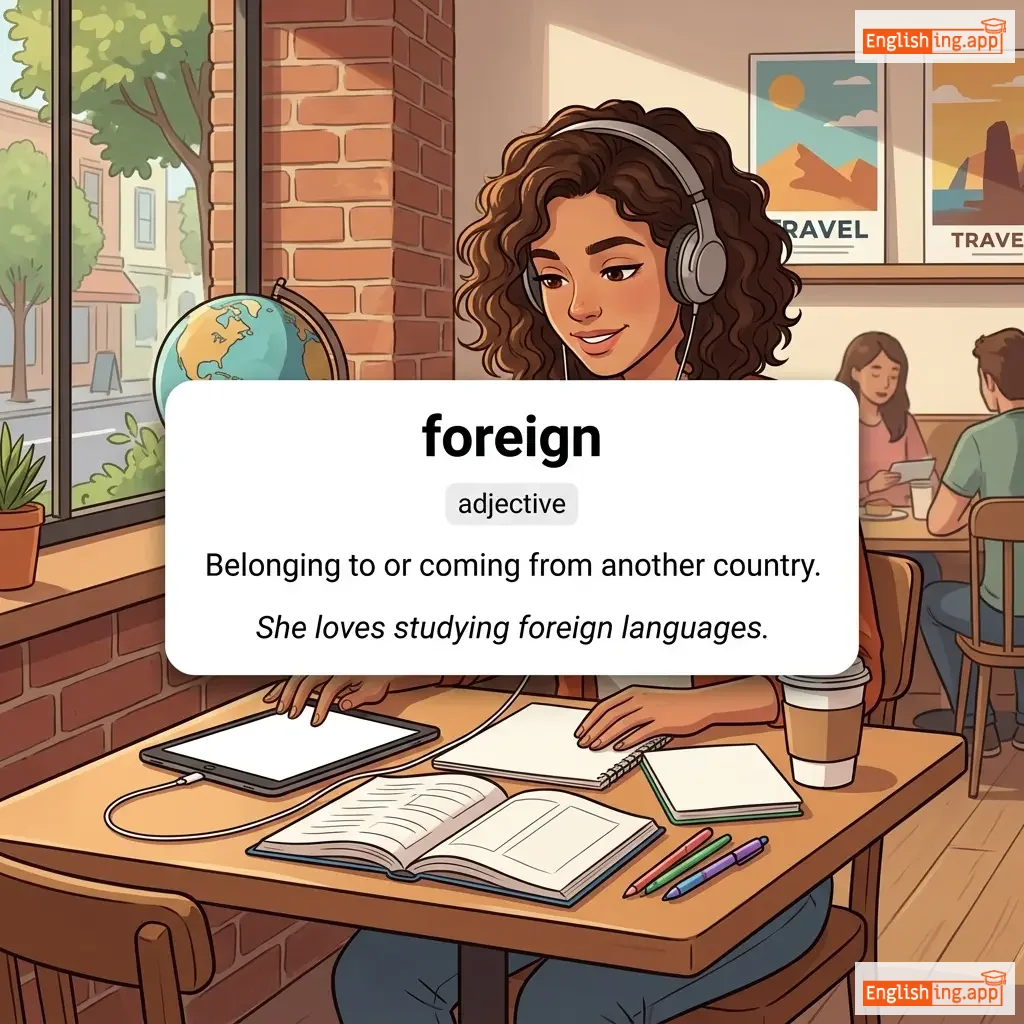
foreign definition card — visual illustration of the meaning
adjective
/ˈfɔːrən/ or /ˈfɑːrən/
বিদেশী (bideshi)

Belonging to or coming from another country.

"She loves studying foreign languages."

"সে বিদেশি ভাষা শিখতে ভালোবাসে।" (Se bideshi vasha shikhte bhalobashe.)
noun
/ˈfɔːrənər/ or /ˈfɑːrənər/
বিদেশি ব্যক্তি (bideshi bekti)

A person from another country.

"The city welcomes every foreigner with kindness."

"শহর প্রত্যেক বিদেশিকে সদয়ভাবে স্বাগত জানায়।" (Shohor prottek bideshike shodoybhabe swagat janai.)