語彙集

英単語辞書 | 単語の意味、定義、例文

noun
/ˈfoʊldər/
フォルダー (forudaa)

a container or directory used to store and organize papers or digital files

"I saved all the photos in a separate folder."

"すべての写真を別のフォルダーに保存しました。" (subete no shashin o betsu no forudaa ni hozon shimashita)
noun
/ˈfoʊliɪdʒ/
(ha)

The leaves of a plant, collectively.

"The autumn foliage looked stunning in the park."

"秋の葉は公園で素晴らしく見えました。" (Aki no ha wa kōen de subarashiku miemashita.)
noun
/ˈfoʊ.li.oʊ/
大きな本や写本 (ookina hon ya shahon)

A sheet of paper folded once to form two leaves (four pages) of a book; also a term for a large book or manuscript.

"The library houses an ancient Shakespeare folio."
"図書館には古いシェイクスピアのフォリオがあります。" (Toshokan ni wa furui Sheikusupia no forio ga arimasu.)
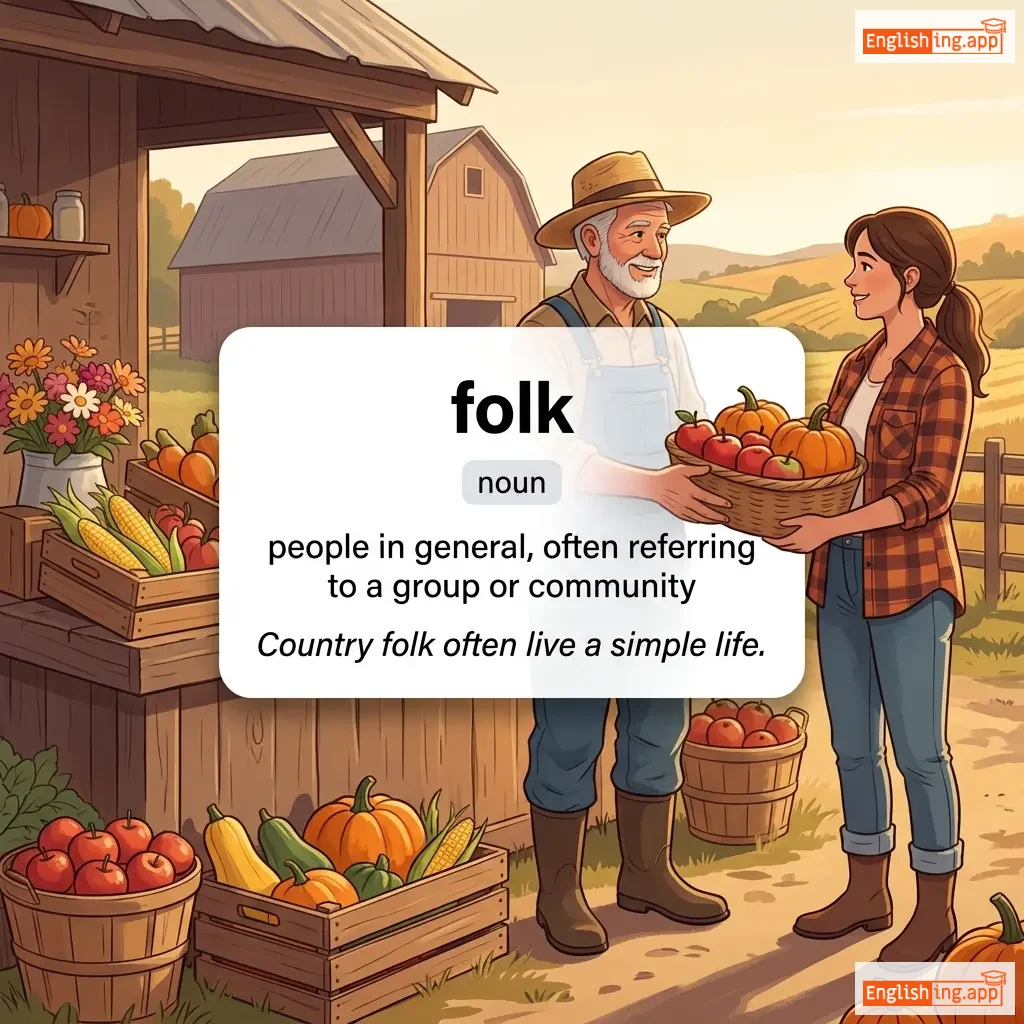
folk definition card — visual illustration of the meaning
👨‍👩‍👧‍👦

folk (フォーク)

noun
/foʊk/
人々 (hitobito)

people in general, often referring to a group or community

"Country folk often live a simple life."

"田舎の人々はよくシンプルな生活をしています。" (Inaka no hitobito wa yoku shimpuru na seikatsu o shiteimasu.)
noun
/ˈfoʊk.lɔːr/
民間伝承 (minkan denshō)

The traditional beliefs, customs, stories, songs, and practices of a community, passed down through generations.

"Bangladeshi folk-lore is rich with myths and legends."

"日本の民間伝承は神話や伝説で豊かです。" (Nihon no minkan denshō wa shinwa ya densetsu de yutaka desu.)
verb
/ˈfɒloʊ/
従う (shitagau)

to move behind someone or something; to go after or come after

"The children followed their teacher into the classroom."

"子供たちは先生について教室に入りました。" (Kodomotachi wa sensei ni tsuite kyōshitsu ni hairimashita.)
noun
/ˈfɑː.loʊ.ɪŋ/
フォロワー (forowā)

a group of supporters or people who admire something or someone

"The singer has a large following around the world."
"その歌手は世界中に多くのフォロワーを持っています。" (Sono kashu wa sekaijū ni ōku no forowā o motteimasu.)
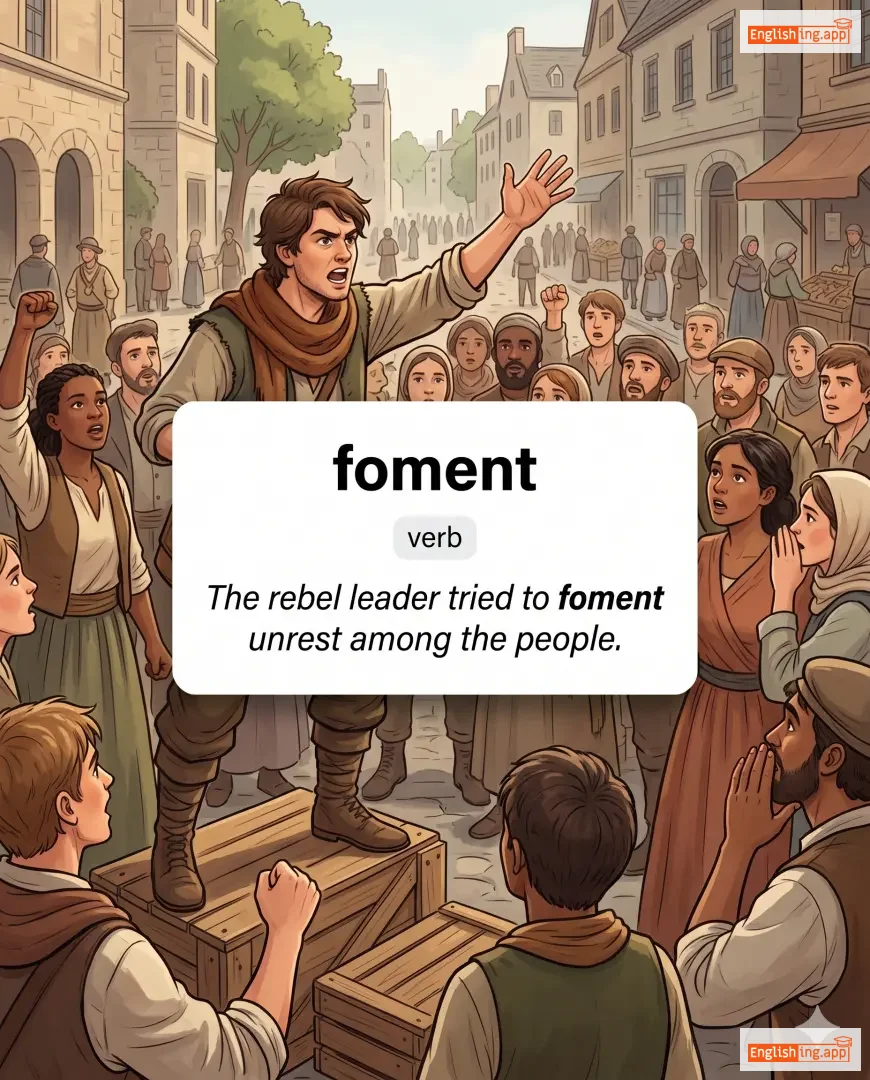
foment definition card — visual illustration of the meaning
verb
/foʊˈmɛnt/
扇動する (sendou suru)

To instigate or stir up (an undesirable or violent sentiment or course of action).

"The rebel leader tried to foment unrest among the people."

"反乱の指導者は、人々の間で騒動を煽ろうとした。" (Hanran no shidōsha wa, hitobito no aida de sōdō o aorō to shita.)
noun
/ˌfoʊ.mənˈteɪ.ʃən/
扇動、刺激 (sendō, shigeki)

The action of instigating or stirring up; also the application of warm substances to the body to ease pain.

"His speech led to the fomentation of violence in the region."

"彼のスピーチは地域での暴力の激化を引き起こした。" (Kare no supīchi wa chiiki de no bōryoku no gekika o hikiokoshita.)
adjective
/fɒnd/
好き (suki)

having a strong liking or affection for something or someone

"She is fond of painting and spends hours in front of her canvas."

"彼女は絵を好きで、キャンバスの前で何時間も過ごします。" (Kanojo wa e o suki de, kyanbasu no mae de nanjikan mo sugoshimasu.)
verb
/ˈfɒn.dəl/
撫でる (naderu)

To stroke or caress lovingly or gently.

"She fondled the kitten gently in her lap."
"彼女は膝の上で子猫を優しく撫でていました。" (Kanojo wa hizano ue de koneko o yasashiku nadete imashita.)
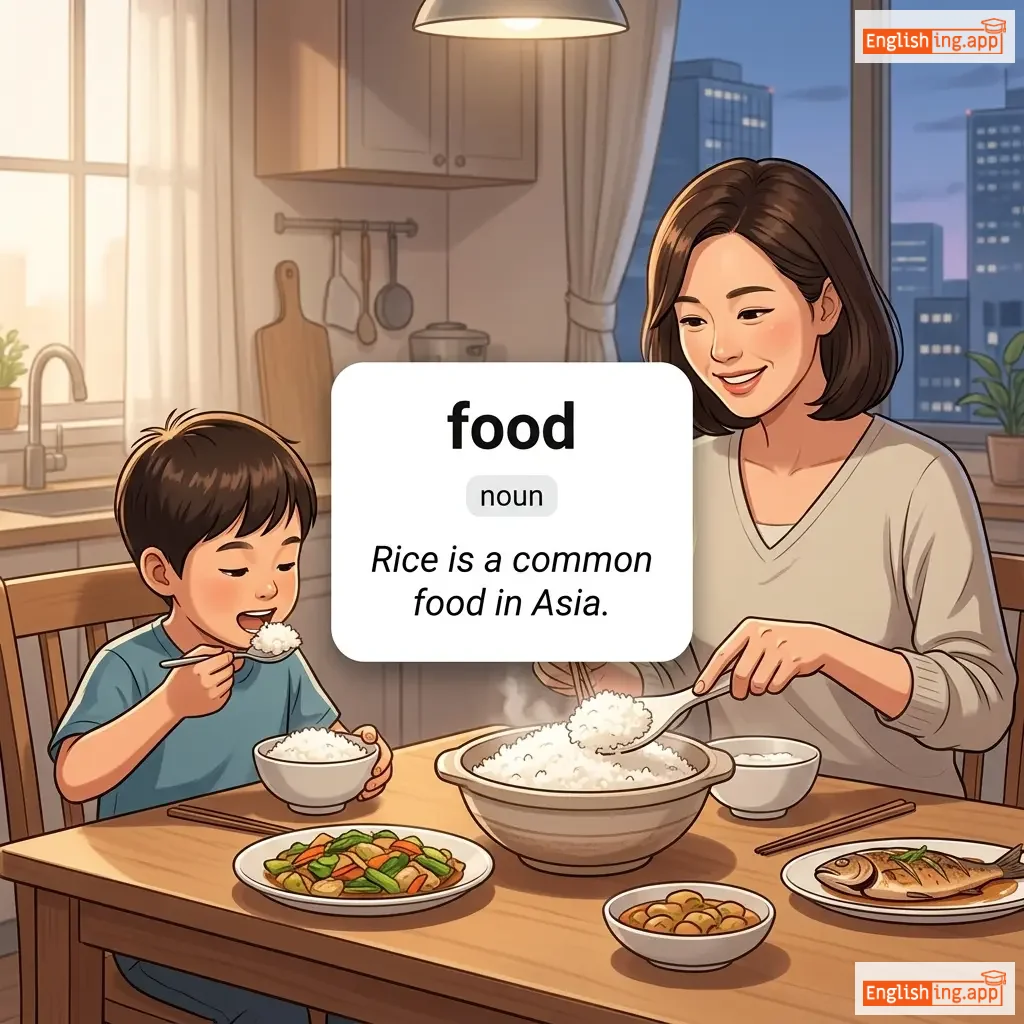
food definition card — visual illustration of the meaning
noun
/fuːd/
食べ物 (tabemono)

any nutritious substance that people or animals eat or drink to maintain life and growth

"Rice is a common food in Asia."

"ご飯はアジアでは一般的な食べ物です。" (Gohan wa Ajia de wa ippanteki na tabemono desu.)
noun, verb
/fuːl/
バカ (baka)

a silly or stupid person; to trick someone

"He felt like a fool after believing the prank."

"いたずらを信じた後、彼は自分がバカだと思った。" (Itazura o shinjita ato, kare wa jibun ga baka da to omotta.)
noun
/ˈfuːləri/
愚かさ (orokasa)

Silly or foolish behavior or actions.

"His constant foolery made the meeting hard to take seriously."

"彼の絶え間ない愚かさは、会議を真剣に受け止めるのを難しくしました。" (Kare no tae-manai orokasa wa, kaigi o shinken ni uketomeru no o muzukashiku shimashita.)
adjective
/ˈfuːlˌhɑːrdi/
無謀な (mubō na)

Recklessly bold or rash; taking foolish risks.

"It was foolhardy of him to climb the mountain without proper gear."

"適切な装備なしで山に登るのは無謀だった。" (Tekisetsu na sōbi nashi de yama ni noboru no wa mubō datta.)
adjective
/ˈfuːlɪʃ/
愚かな (orokana)

showing a lack of good sense or judgment

"It was foolish to go out without an umbrella in the storm."

"嵐の中で傘なしで外に出るのは愚かなことだった。" (Arashi no naka de kasa nashi de soto ni deru no wa orokana koto datta.)
adjective
/ˈfuːlpruːf/
失敗しない (shippai shinai)

Designed to be very easy to use or understand, leaving no possibility of failure or error.

"The new software has a foolproof installation process."

"新しいソフトウェアには失敗しないインストールプロセスがあります。" (Atarashii sofutowea ni wa shippai shinai insutooru purosesu ga arimasu.)
noun
/fʊt/
(ashi)

The lower extremity of the leg below the ankle, used for standing and walking.

"He injured his foot while playing basketball."

"彼はバスケットボールをしているときに足をけがしました。" (Kare wa basukettobōru o shite iru toki ni ashi o kega shimashita.)
noun
/ˈfʊtˌnoʊt/
脚注 (kyakuchu)

A note of reference, explanation, or comment placed at the bottom of a page.

"The author included a foot-note to explain the historical context."
"著者は歴史的な文脈を説明するために脚注を追加しました。" (chosha wa rekishiteki na bunmyaku o setsumei suru tame ni kyakuchu o tsuika shimashita.)
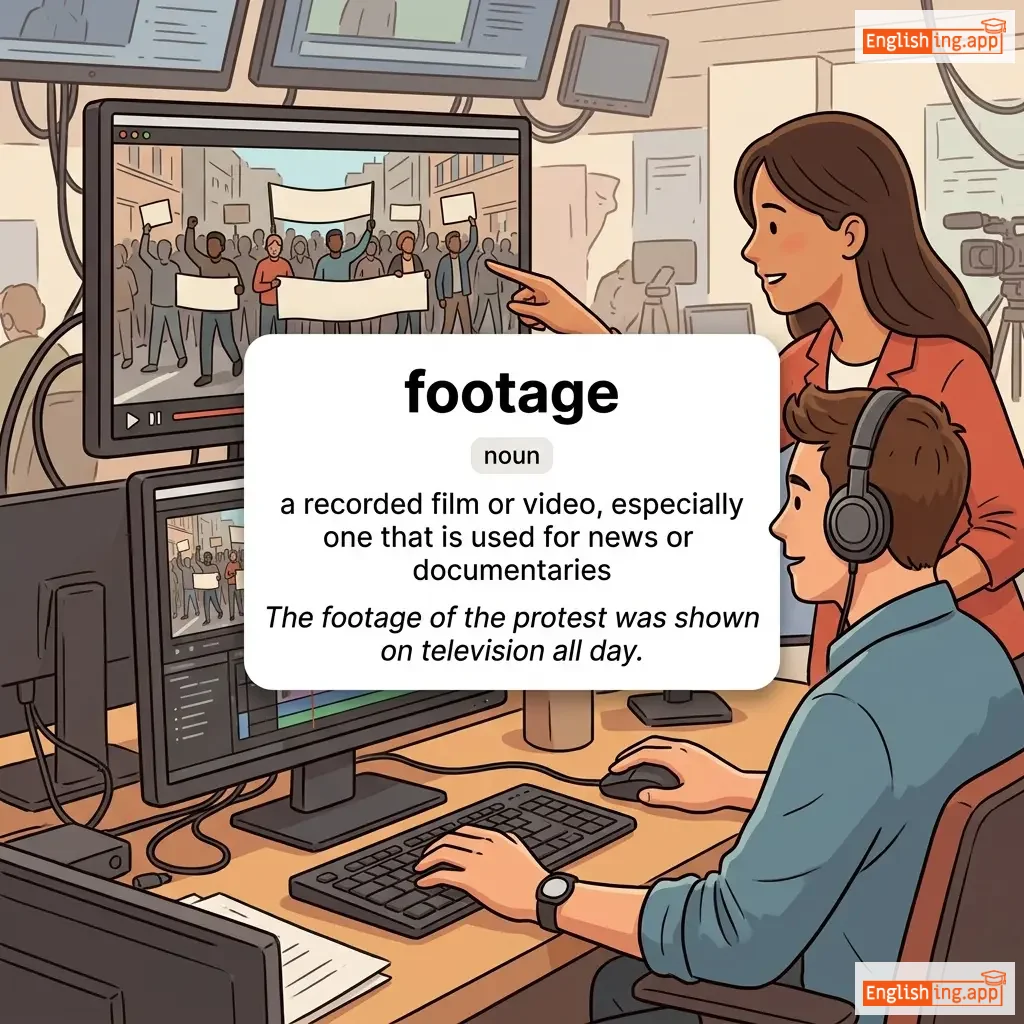
footage definition card — visual illustration of the meaning
noun
/ˈfʊtɪdʒ/
ビデオ録画 (bideo rokuga)

a recorded film or video, especially one that is used for news or documentaries

"The footage of the protest was shown on television all day."

"抗議の映像は一日中テレビで放送されました。" (Kōgi no ēzō wa ichinichijū terebi de hōsō saremashita.)
noun
/ˈfʊtˌbɔːl/
サッカー (sakka)

A team sport played with a ball that is kicked or carried to score points.

"They watched a football match on TV."

"彼らはテレビでサッカーの試合を見ました。" (Karera wa terebi de sakkaa no shiai wo mimashita.)
adjective
/ˈfʊtˌluːs/
自由な (jiyūna)

Free to go anywhere or do anything; not tied down by responsibilities.

"After graduating, he felt footloose and ready to explore the world."

"卒業後、彼は自由を感じ、世界を探索する準備ができていました。" (Sotsugyōgo, kare wa jiyū o kanji, sekai o tansaku suru junbi ga dekite imashita.)
noun
/ˈfɒpəri/
虚飾 (kishoku)

Foolish or excessive concern with one's appearance or manners; pretentious behavior.

"His obsession with fashion was dismissed as mere foppery."

"彼のファッションへの執着は単なる虚飾と見なされた。" (Kare no fasshon e no shuchaku wa tannaru kishoku to minasareta.)
adjective
/ˈfɒpɪʃ/
服装と外見に過剰にこだわり、愚かまたは虚栄心から行動する (fukusou to gaiken ni kajou ni kodawari, oroka mata wa kyoeishin kara koudou suru)

Excessively concerned with clothes and appearance in a vain or foolish way.

"He looked rather foppish in his brightly colored suit."
"彼は明るい色のスーツで少しふざけたように見えた。" (Kare wa akarui iro no suutsu de sukoshi fuzaketa you ni mieteta.)
preposition
/fɔːr/
のために (no tame ni)

used to indicate purpose, destination, or recipient

"This gift is for you."

"このギフトはあなたのためです。" (Kono gifuto wa anata no tame desu.)
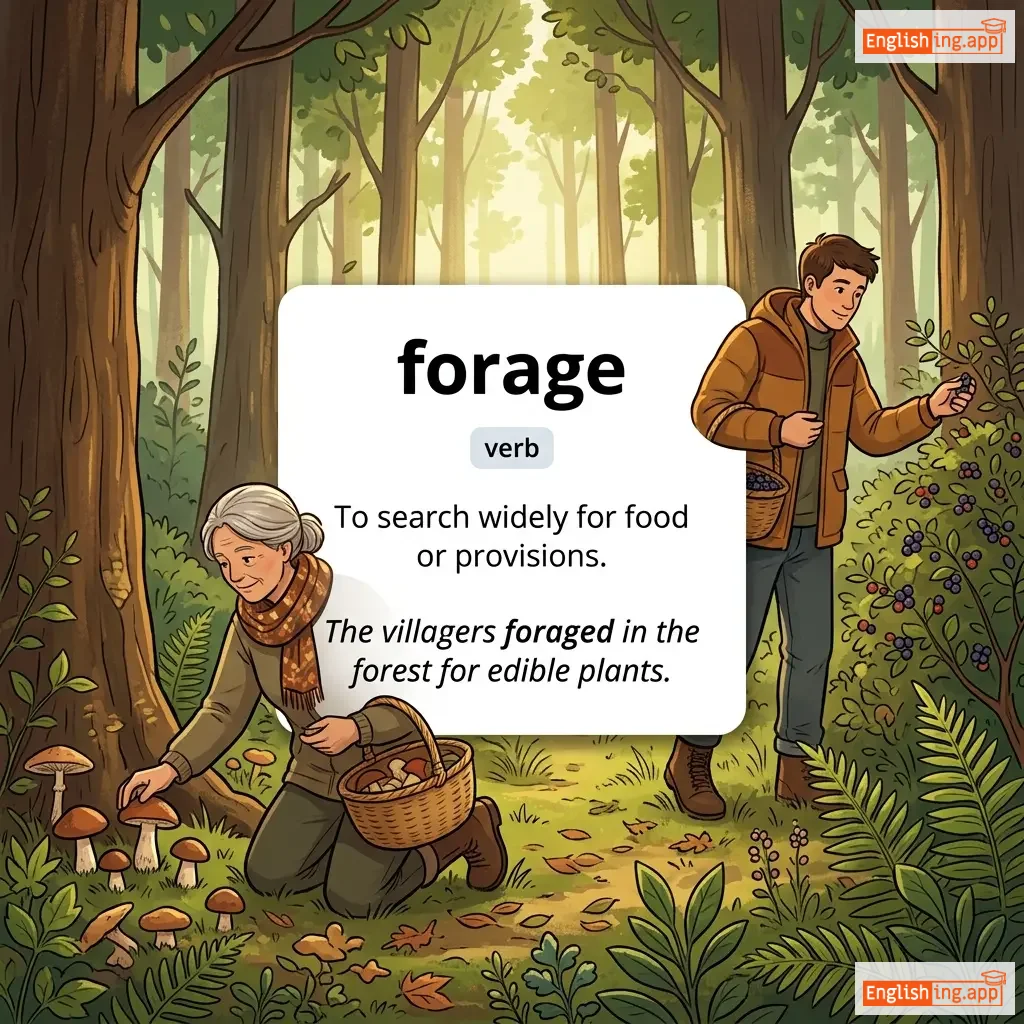
forage definition card — visual illustration of the meaning
verb
/ˈfɒrɪdʒ/
食べ物を探す (tabemono wo sagasu)

To search widely for food or provisions.

"The villagers foraged in the forest for edible plants."

"村人たちは食べられる植物を探して森の中でフォレージングした。" (Murabito-tachi wa taberareru shokubutsu wo sagashite mori no naka de forējingu shita.)
noun
/ˈfɔːreɪ/
突撃 / 初めての試み (totsugeki / hajimete no kokoromi)

A sudden short attack or attempt, especially into new activity or territory.

"The company made its first foray into the international market."

"その会社は国際市場への初めての進出を果たした。" (sono kaisha wa kokusai shijou e no hajimete no shinshutsu o hatashita.)
verb
/fɔːˈbɛər/
控える (hikaeru)

To refrain from doing something; to show patience or self-control.

"She forbore from commenting on his mistake."
"彼女は彼の間違いについてコメントするのを控えました。" (Kanojo wa kare no machigai ni tsuite komento suru no wo hikaemashita.)
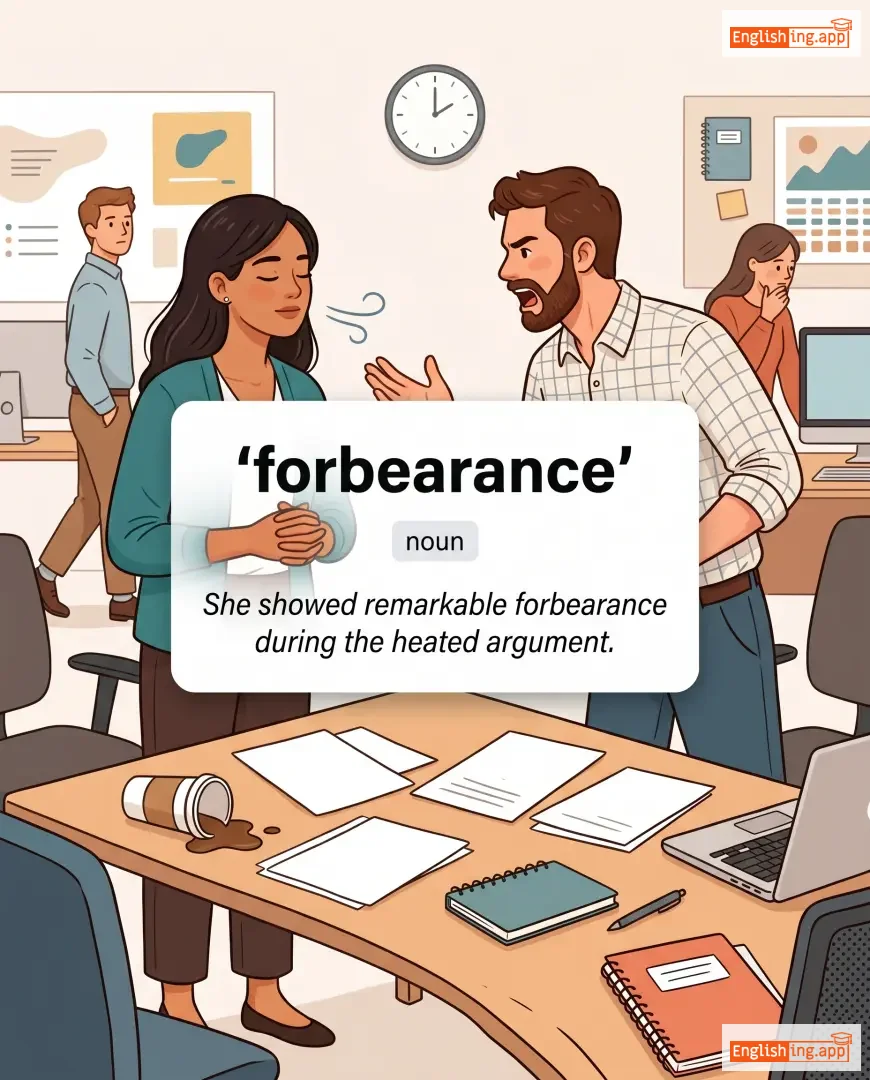
forbearance definition card — visual illustration of the meaning
noun
/fɔːrˈbɛrəns/
寛容 (kanyou)

Patient self-control; restraint and tolerance, especially in difficult situations.

"She showed remarkable forbearance during the heated argument."

"彼女は激しい議論の中で驚くべき寛容さを示しました。" (Kanojo wa hageshii giron no naka de odorokubeki kanyousa o shimeshimaashita.)
verb
/fərˈbɪd/
禁じる (jinjiru)

to order someone not to do something

"The school forbids smoking on campus."

"学校はキャンパス内での喫煙を禁じています。" (Gakkō wa kyanpasu-nai de no kitsuen o kinjiteimasu.)
adjective
/fəˈbɪd.ən/
禁止された; 違法な (kinshi sareta; ihō na)

not allowed; prohibited; banned

"Smoking is strictly forbidden in this building."

"この建物では喫煙が厳しく禁止されています。" (Kono tatemono dewa kitsuen ga kibishiku kinshi sareteimasu.)
adverb
/ˈfɔːrbi/
その上 (sono ue)

In addition; besides (archaic Scottish/English word).

"He is kind and generous, and wise forby."
"彼は親切で寛大で、さらに賢いです。" (Kare wa shinsetsu de kandai de, sara ni kashikoi desu.)
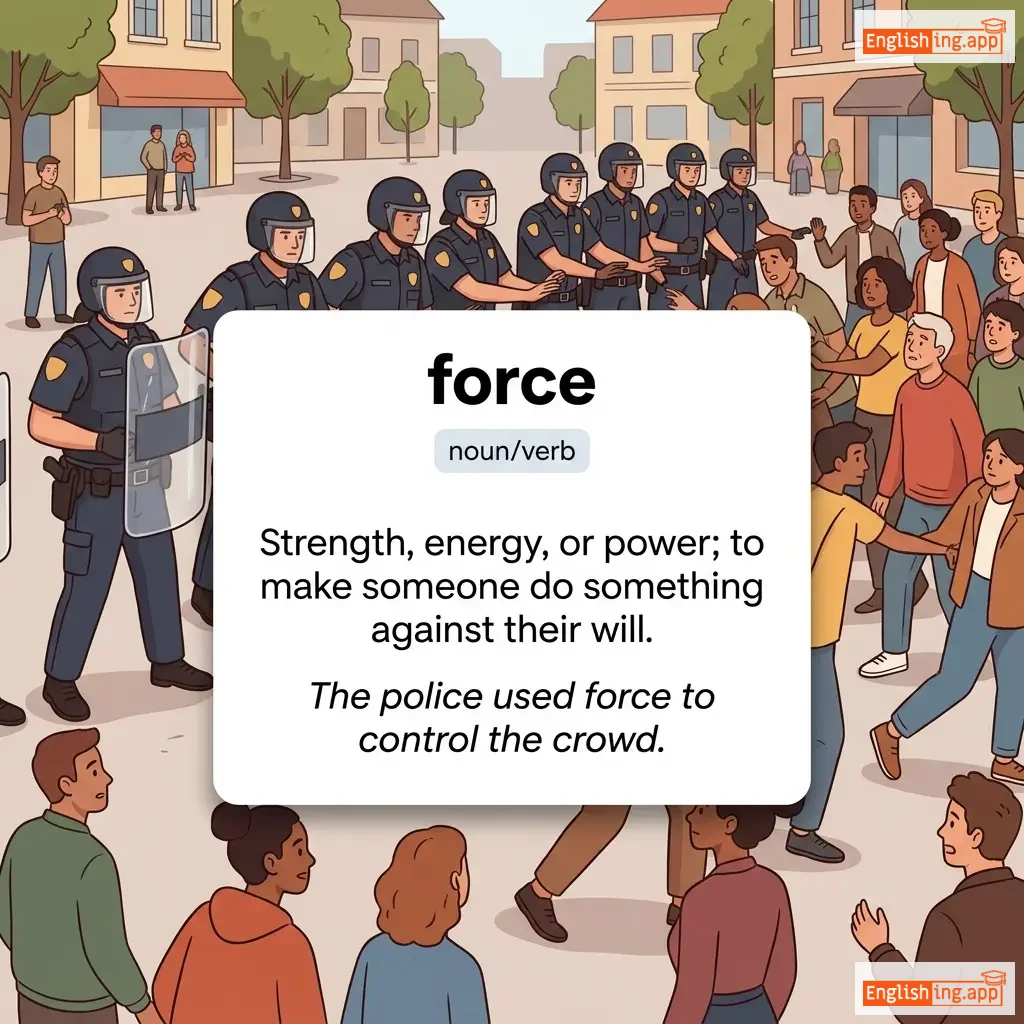
force definition card — visual illustration of the meaning
noun/verb
/fɔːrs/
力 / 力量 (chikara / chikara)

Strength, energy, or power; to make someone do something against their will.

"The police used force to control the crowd."

"警察は群衆を制御するために力を使いました。" (Keisatsu wa gunshū o seigyo suru tame ni chikara o tsukaimashita.)
adjective
/ˈfɔːrsəbl/
強制的 (kyōseiteki)

Done by force; using physical strength or power.

"The police made a forcible entry into the house."

"警察は強制的に家に入った。" (Keisatsu wa kyōseiteki ni ie ni haitta.)
noun, verb
/fɔːrd/
浅瀬 (asase)

A shallow place in a river where one can cross; to cross a river at such a place.

"The travelers decided to ford the river at dawn."

"旅行者たちは夜明けに川を渡ることに決めました。" (Ryokō-sha-tachi wa yoake ni kawa o wataru koto ni kimemashita.)
noun
/ˈfɔːrˌbɛər/
先祖 (senzo)

An ancestor, especially one who lived a long time ago.

"He often speaks of his forebears with great respect."

"彼はしばしば自分の先祖について尊敬を込めて話します。" (Kare wa shibashiba jibun no senzo ni tsuite sonkei o komete hanashimasu.)
noun
/ˈfɔːrˌbɛərz/
先祖 (senzo)

Ancestors or people in previous generations from whom one is descended.

"We must honor the traditions of our forebears."

"私たちは先祖の伝統を尊重しなければなりません。" (Watashitachi wa senzo no dentou wo sonchou shinakereba narimasen.)
verb
/fɔːrˈboʊd/
予兆する (yochou suru)

To predict or have a strong inner feeling of a future misfortune or evil.

"Dark clouds forebode a coming storm."

"暗い雲が来る嵐を予兆している。" (Kurai kumo ga kuru arashi o yochou shite iru.)
noun/adjective
/fɔːrˈboʊdɪŋ/
不吉な予感 (fukitsuna yokan)

A feeling that something bad will happen; ominous.

"She felt a deep sense of foreboding as she entered the abandoned house."

"彼女は廃屋に入るとき、深い不吉な予感を感じた。" (Kanojo wa haieki ni hairu toki, fukai fukitsuna yokan o kanjita.)
🌦️

Forecast

noun/verb
/ˈfɔːrkæst/

To predict future events, especially weather or economic trends.

"The weather office forecast heavy rain for tomorrow."

noun
/ˈfoʊksl/
フォアキャッスル (foakyassuru)

The forward part of a ship below the deck, traditionally used as living quarters for the crew.

"The sailors gathered in the forecastle after their shift."

"船員たちはシフト後にフォアキャッスルに集まりました。" (Sen'in-tachi wa shifuto go ni foakyassuru ni atsumarimashita.)
verb
/fɔːrˈkloʊz/
差し押さえる (sashiosaeru)

to take possession of a property due to the owner's failure to keep up mortgage payments

"The bank decided to foreclose on the property after months of missed payments."

"銀行は何ヶ月も支払いを欠かした後、物件の差し押さえを決定しました。" (Ginkō wa nan kagetsu mo shiharai o kakashita ato, bukken no sashiosae o kettei shimashita.)
noun
/fɔːrˈkloʊʒər/
差し押さえ (sashiosae)

The legal process by which a lender takes control of a property from a borrower who has failed to make payments.

"The family lost their home due to foreclosure after missing several mortgage payments."

"その家族は複数回のモーゲージ支払いを逃したため、差し押さえで家を失いました。" (Sono kazoku wa fukusū kai no mōgēji shiharai o nogashita tame, sashiosae de ie o ushī mashita.)
noun
/ˈfɔːrkɔːrt/
前庭 (zentō)

an open area in front of a large building, especially a petrol station or hotel

"The car was parked in the hotel forecourt."

"車はホテルの前庭に駐車されていました。" (Kuruma wa hoteru no zentō ni chūsha sarete imashita.)
noun
/ˈfɔːrˌfɑːðər/
先祖 (senzo)

an ancestor, especially one who was part of an earlier generation of a family or nation

"Our forefathers fought for independence."

"私たちの先祖は独立のために戦いました。" (Watashitachi no senzo wa dokuritsu no tame ni tatakaimashita.)
verb
/fɔːrˈɡoʊ/
断る (kotowaru)

to decide not to do or have something pleasant or valuable

"She decided to forego dessert to maintain her diet."

"彼女はダイエットを維持するためにデザートを断ることに決めました。" (Kanojo wa daietto o iji suru tame ni dezāto o kotowaru koto ni kimemashita.)
noun
/ˈfɔːrɡraʊnd/
前景 (zenkei)

the part of a scene that is nearest to and in front of the viewer

"The flowers in the foreground brightened the picture."

"前景にある花が絵を明るくしました。" (Zenkei ni aru hana ga e o akaruku shimashita.)
noun
/ˈfɔːrˌhɛd/ or /ˈfɔːrɪd/
(atama)

The part of the face above the eyebrows.

"She wiped the sweat from her forehead."
"彼女は額から汗を拭いました。" (Kanojo wa atama kara ase o fukimashita.)
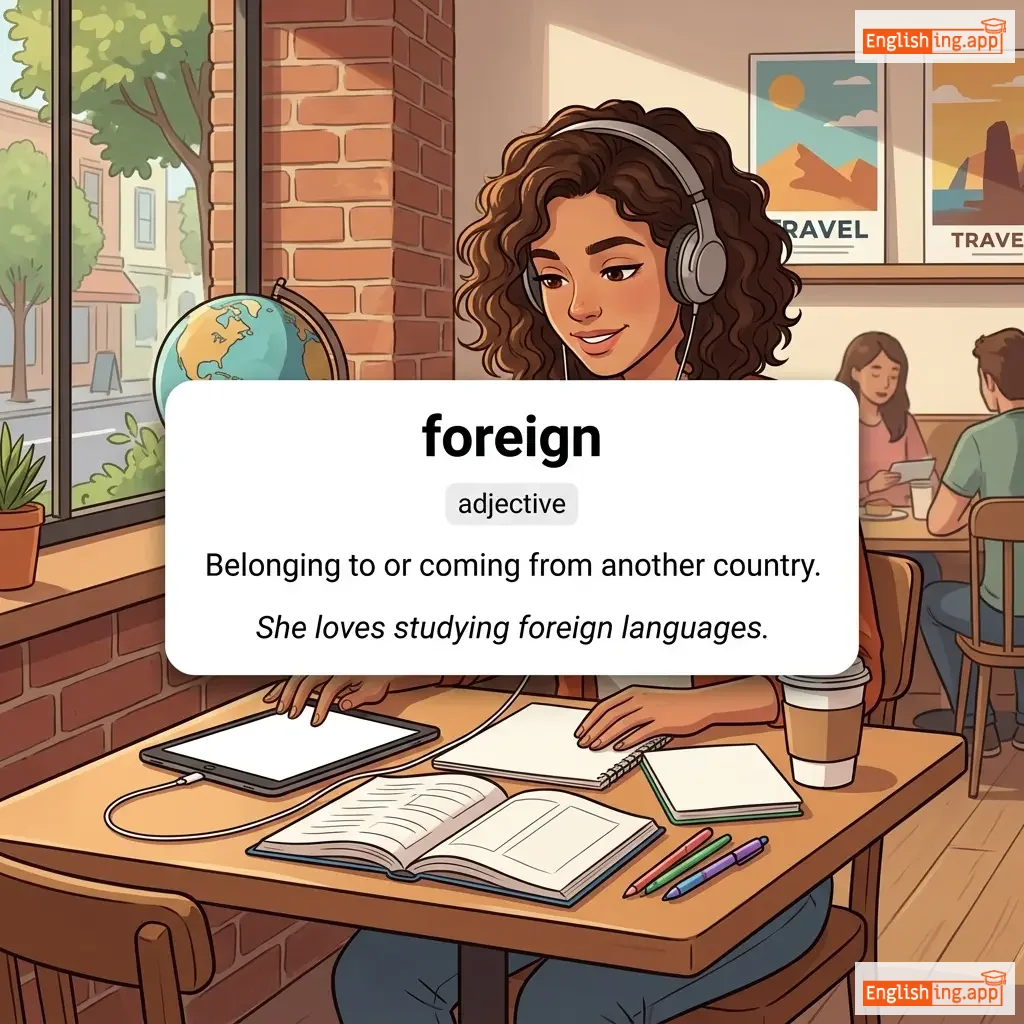
foreign definition card — visual illustration of the meaning
adjective
/ˈfɔːrən/ or /ˈfɑːrən/
外国の (gaikoku no)

Belonging to or coming from another country.

"She loves studying foreign languages."

"彼女は外国語を学ぶのが好きです。" (Kanojo wa gaikokugo o manabu no ga suki desu.)
noun
/ˈfɔːrənər/ or /ˈfɑːrənər/
外国人 (gaikokujin)

A person from another country.

"The city welcomes every foreigner with kindness."

"その都市はすべての外国人を親切に迎えます。" (Sono toshi wa subete no gaikokujin o shinsetsu ni mukaemasu.)