語彙集

英単語辞書 | 単語の意味、定義、例文

adjective
/ˈfaɪnaɪt/
有限の、終わりのある (yūgen no, owari no aru)

having limits or bounds; not infinite

"Our resources are finite, so we must use them wisely."
"私たちの資源は有限なので、それらを賢く使う必要があります。" (Watashitachi no shigen wa yūgen na node, sorera o kashikoku tsukau hitsuyō ga arimasu.)
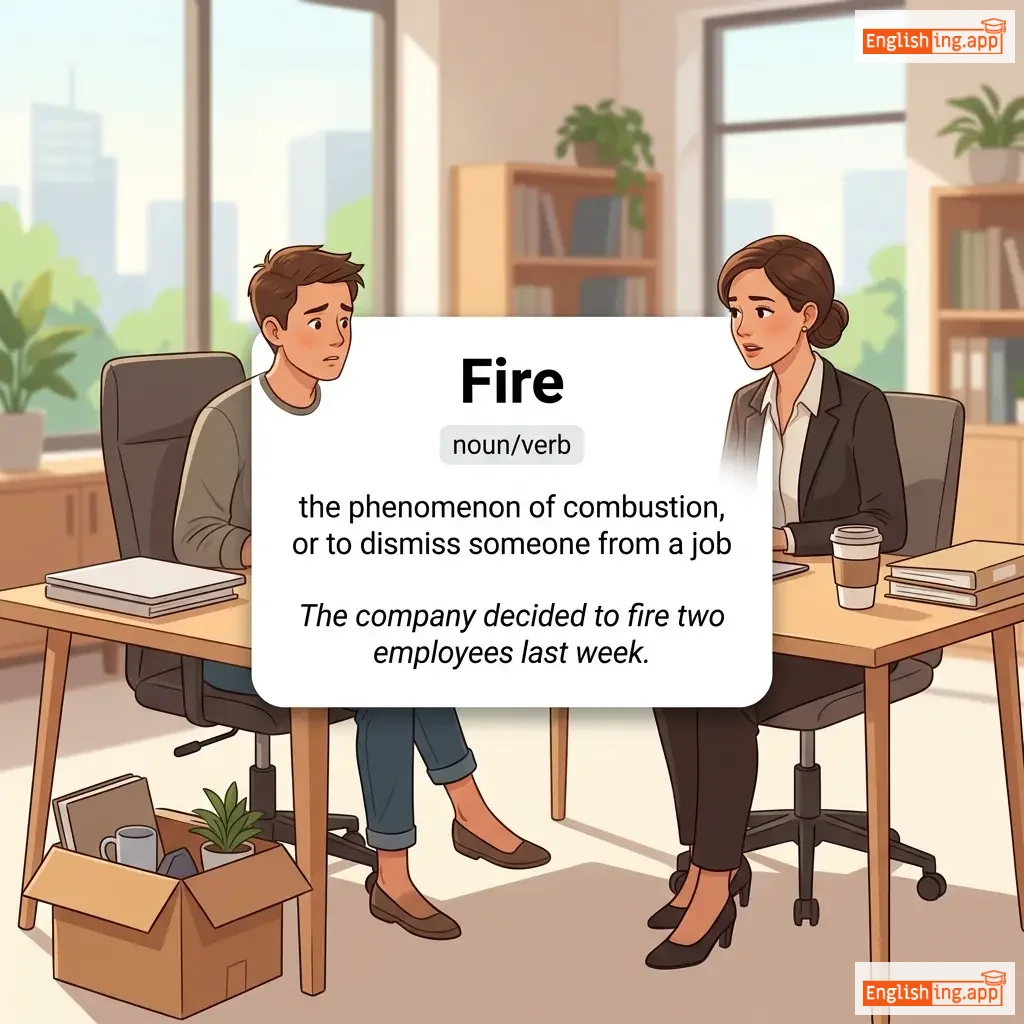
Fire definition card — visual illustration of the meaning
noun/verb
/ˈfaɪər/
火 / 解雇する (hi / kaiko suru)

the phenomenon of combustion, or to dismiss someone from a job

"The company decided to fire two employees last week."

"その会社は先週二人の社員を解雇することを決定しました。" (Sono kaisha wa senshū futari no shain o kaiko suru koto o kettei shimashita.)
noun
/ˈfaɪərɑːm/
火器 (kaki)

a weapon capable of firing a projectile using gunpowder or other propellant

"The police found a hidden firearm during the investigation."

"警察は調査中に隠された銃器を発見しました。" (Keisatsu wa chousa-chuu ni kakusareta kiki o hakken shimashita.)
noun
/ˈfaɪər.brænd/
活動家 (katsudōka)

a person who is passionate about a cause, often inciting change or action

"The activist was a true firebrand, inspiring everyone around him to join the protest."

"その活動家は本物の火のような情熱を持ち、周りの全員を抗議に参加させた。" (Sono katsudōka wa honmono no hi no yō na jōnetsu o mochi, mawari no zen'in o kōgi ni sanka saseta.)
noun
/ˈfaɪəˌfaɪtə/
消防士 (shōbōshi)

a person whose job is to put out fires

"The firefighter saved the family from the burning building."

"消防士は燃える建物から家族を救いました。" (Shōbōshi wa moeru tatemono kara kazoku o sukūmashita.)
noun
/ˈfaɪər.mən/
消防士 (shōbōshi)

a person whose job is to extinguish fires and rescue people

"The brave fireman rescued the family from the burning building."

"勇敢な消防士は燃えている建物から家族を救いました。" (yūkan na shōbōshi wa moete iru tatemono kara kazoku o sukuimashita.)
firewall definition card — visual illustration of the meaning
noun
/ˈfaɪər.wɔːl/
ファイアウォール (faiawōru)

A network security system that monitors and controls incoming and outgoing network traffic based on predetermined security rules.

"A firewall protects networks from cyber-attacks."

"ファイアウォールはネットワークをサイバー攻撃から守ります。" (Faiawōru wa nettowāku o saibā kōgeki kara mamorimasu.)
noun
/ˈfaɪəˌwɜːk/
花火 (hanabi)

a device that explodes or creates a display of lights and sounds, often used in celebrations

"The fireworks lit up the sky during the New Year's Eve celebration."

"花火は新年の前夜祭で空を照らしました。" (Hanabi wa shinnen no zenya-sai de sora o terashimashita.)
Firm definition card — visual illustration of the meaning
noun/adjective
/fɜːrm/
会社 / 堅固 (kaisha / kengo)

a business organization, or solid and steady

"She works at a law firm in the city."
"彼女は都市の法律事務所で働いています。" (Kanojo wa toshi no hōritsu jimusho de hataraiteimasu.)
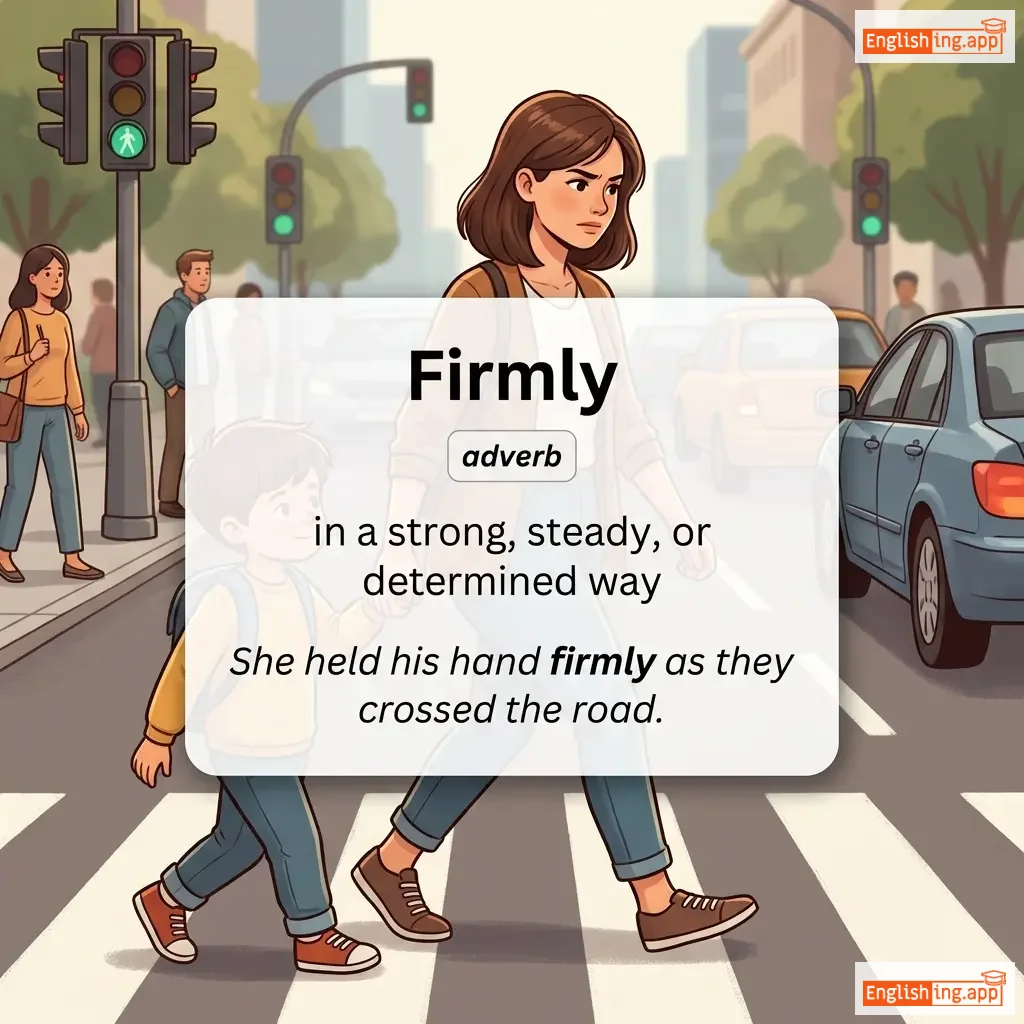
Firmly definition card — visual illustration of the meaning
adverb
/ˈfɜːmli/
しっかりと (shikkari to)

in a strong, steady, or determined way

"She held his hand firmly as they crossed the road."
"彼女は手をしっかりと握りながら、道路を渡りました。" (Kanojo wa te o shikkari to nigirinagara, dōro o watarimashita.)
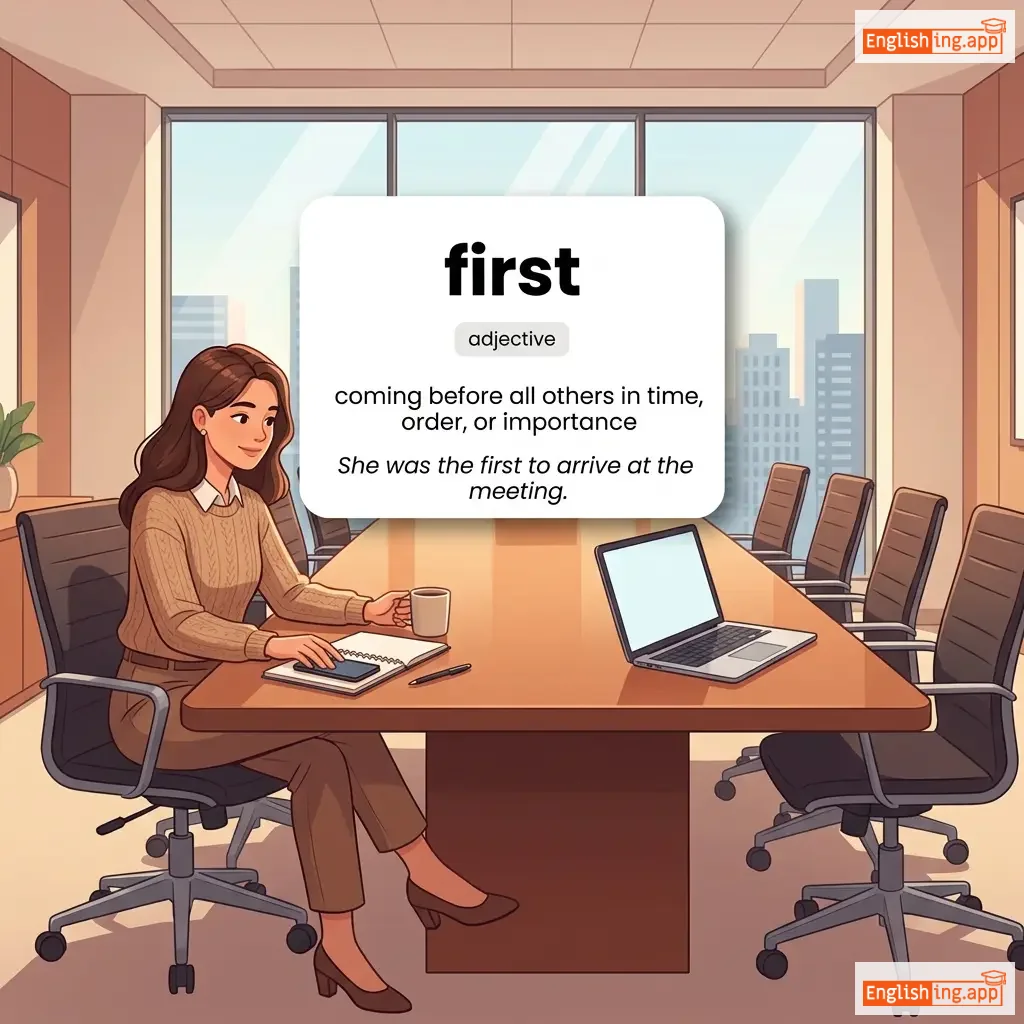
first definition card — visual illustration of the meaning
adjective
/fɜːrst/
最初 (saisho)

coming before all others in time, order, or importance

"She was the first to arrive at the meeting."

"彼女は会議に最初に到着した。" (Kanojo wa kaigi ni saisho ni touchaku shita.)
noun
/ˌfɜːrst ˈeɪd/
応急処置 (oukyuu shochi)

Immediate assistance given to a sick or injured person until full medical treatment is available

"He gave first aid to the injured cyclist before the ambulance arrived."

"彼は救急車が来る前に、負傷した自転車乗りに応急処置を施した。" (Kare wa kyuukyuusha ga kuru mae ni, fushoushita jitensha nori ni oukyuu shochi o hodokoshita)
noun
/ˌfɜːrst eɪd kɪt/
救急箱 (kyuukyuu-bako)

A collection of medical supplies for giving initial treatment in emergencies

"I always keep a first aid kit in my car for emergencies."

"私は常に車に救急箱を置いて、緊急時に備えています。" (Watashi wa tsune ni kuruma ni kyuukyuu-bako wo oite, kinkyuuji ni sonaeteimasu.)
adverb
/ˈfɜ:rst hænd/
直接; 原始の源から (chokusetsu; genshi no minamoto kara)

directly experienced or obtained; from the original source

"I experienced the earthquake first-hand."

"私は地震を直接体験しました。" (Watashi wa jishin o chokusetsu taiken shimashita.)
adverb
/ˈfɜːrstli/
まず (mazu)

used to introduce the first point or reason in a discussion or argument

"Firstly, we need to address the budget issue before proceeding."

"まず、予算の問題に対処する必要があります。" (Mazu, yosan no mondai ni taisho suru hitsuyo ga arimasu.)
fiscal definition card — visual illustration of the meaning
adjective
/ˈfɪs.kəl/
財政の (zaisei no)

relating to government revenue, taxes, or financial matters

"The government announced new fiscal policies to boost the economy."

"政府は経済を促進するために新しい財政政策を発表しました。" (Seifu wa keizai o sokushin suru tame ni atarashī zaisei seisaku o happyō shimashita.)
noun/verb
/fɪʃ/
幸せ (shiawase)

an aquatic animal with gills, or to try to catch such animals

"He went to the lake to fish early in the morning."

"彼女は賞を受け取ったとき、幸せを隠すことができなかった。" (Kanojo wa shō o uketotta toki, shiawase o kakusu koto ga dekinakatta.)
noun
/ˈfɪʃəmən/
漁師 (ryoushi)

a person who catches fish for a living or as a hobby

"The fisherman went out to sea early in the morning."

"漁師は朝早く海へ出かけました。" (Ryoushi wa asa hayaku umi e dekakemashita)
noun/verb
/ˈfɪʃɪŋ/
釣り (tsuri)

the activity of catching fish

"Fishing is a popular activity in coastal villages."

"フィッシングは沿岸の村で人気のある活動です。" (Fisshingu wa engan no mura de ninki no aru katsudou desu.)
noun
/ˈfɪʃˌmʌŋ.ɡər/
魚屋 (uo-ya)

a person or store that sells fish

"I bought fresh salmon from the local fishmonger."
"私は地元の魚屋で新鮮なサーモンを買いました。" (Watashi wa jimoto no uo-ya de shinsen na sāmon o kaimashita.)
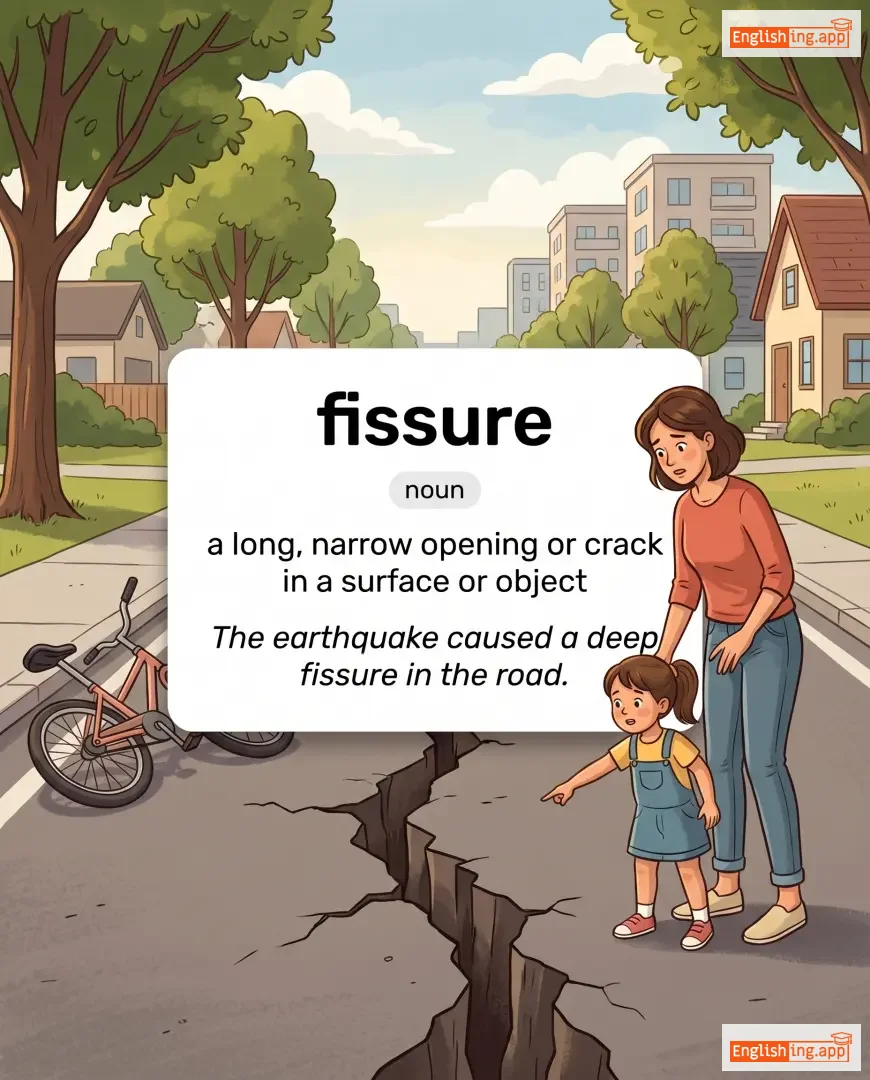
fissure definition card — visual illustration of the meaning
noun
/ˈfɪʃ.ər/
ひび割れ (hibiware)

a long, narrow opening or crack in a surface or object

"The earthquake caused a deep fissure in the road."

"地震によって道路に深いひび割れができました。" (Jishin ni yotte doro ni fukai hibiware ga dekimashita.)
noun
/fɪst/
こぶし (kobushi)

a hand with the fingers clenched tightly into the palm

"He punched the wall with his fist in anger."

"彼は怒って壁を拳で殴った。" (Kare wa okotte kabe wo kobushi de nagutta.)
Fit definition card — visual illustration of the meaning
verb, adjective, noun
/fɪt/
フィットする、適切である (fit suru, tekisetsu de aru)

to be of the right size, shape, or type; suitable or healthy

"These shoes fit me perfectly."

"これらの靴は私の足に完璧にフィットしています。" (Korera no kutsu wa watashi no ashi ni kanpeki ni fitto shiteimasu.)
adjective
/ˈfɪt.fəl/
不規則な (fukisokuna)

occurring in irregular bursts; not continuous or steady

"He had a fitful sleep due to the storm."
"嵐のせいで彼は不規則な眠りをしていた。" (Arashi no sei de kare wa fukisokuna nemuri o shite ita.)
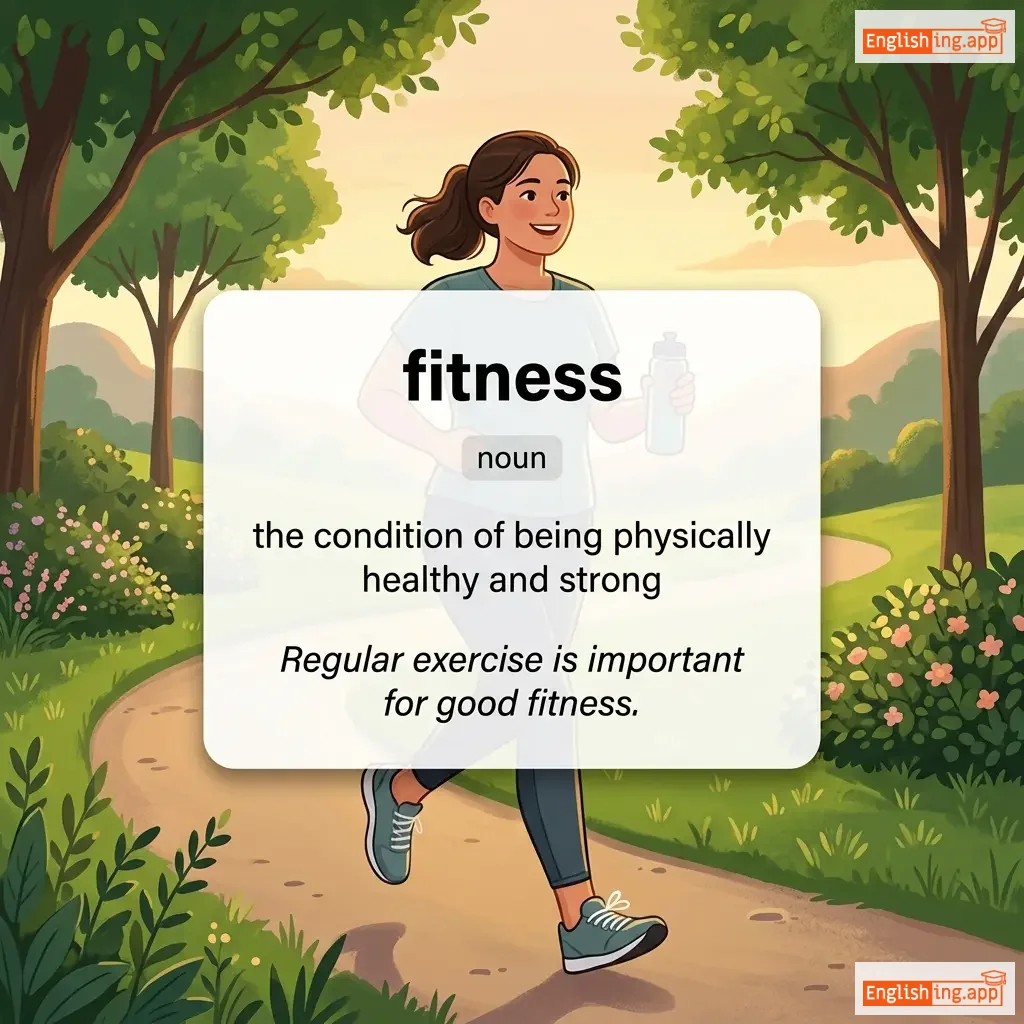
fitness definition card — visual illustration of the meaning
noun
/ˈfɪtnəs/
フィットネス (fitness)

the condition of being physically healthy and strong

"Regular exercise is important for good fitness."

"定期的な運動は良いフィットネスを維持するために重要です。" (Teikiteki na undou wa yoi fitness wo iji suru tame ni juuyou desu.)
noun
/faɪv/
(go)

The number 5; one more than four and one less than six.

"She bought five apples from the market."

"彼女は市場で五つのリンゴを買いました。" (Kanojo wa ichiba de itsutsu no ringo o kaimashita.)
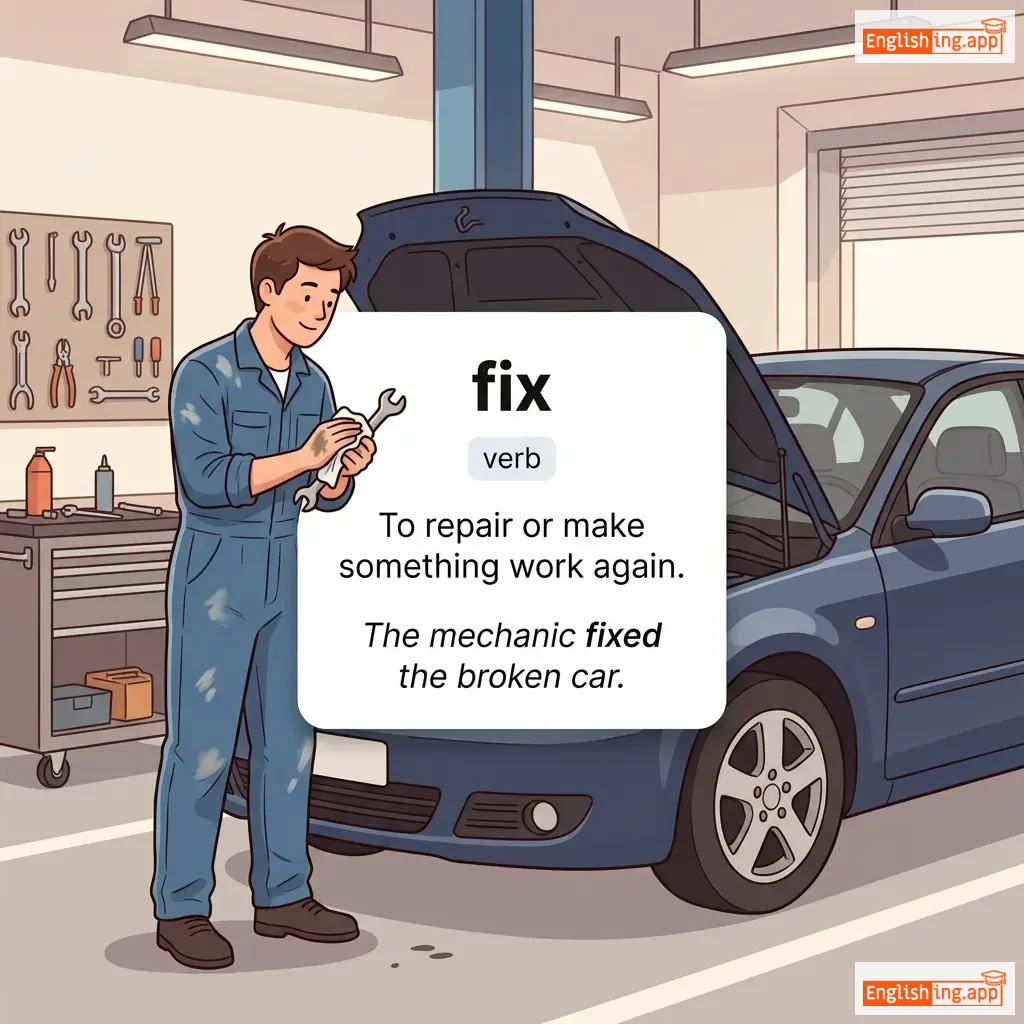
fix definition card — visual illustration of the meaning
🔧

fix

verb
/fɪks/

To repair or make something work again.

"The mechanic fixed the broken car."

fixation definition card — visual illustration of the meaning
noun
/fɪkˈseɪ.ʃən/
執着や過度な興味 (shuchaku ya kado na kyōmi)

An obsessive interest in or feeling about someone or something.

"His fixation on perfectionism delayed project completion."
"完璧主義への執着がプロジェクトの完了を遅らせた。" (Kanpeki shugi e no shuchaku ga purojekuto no kanryō o okuraseta.)
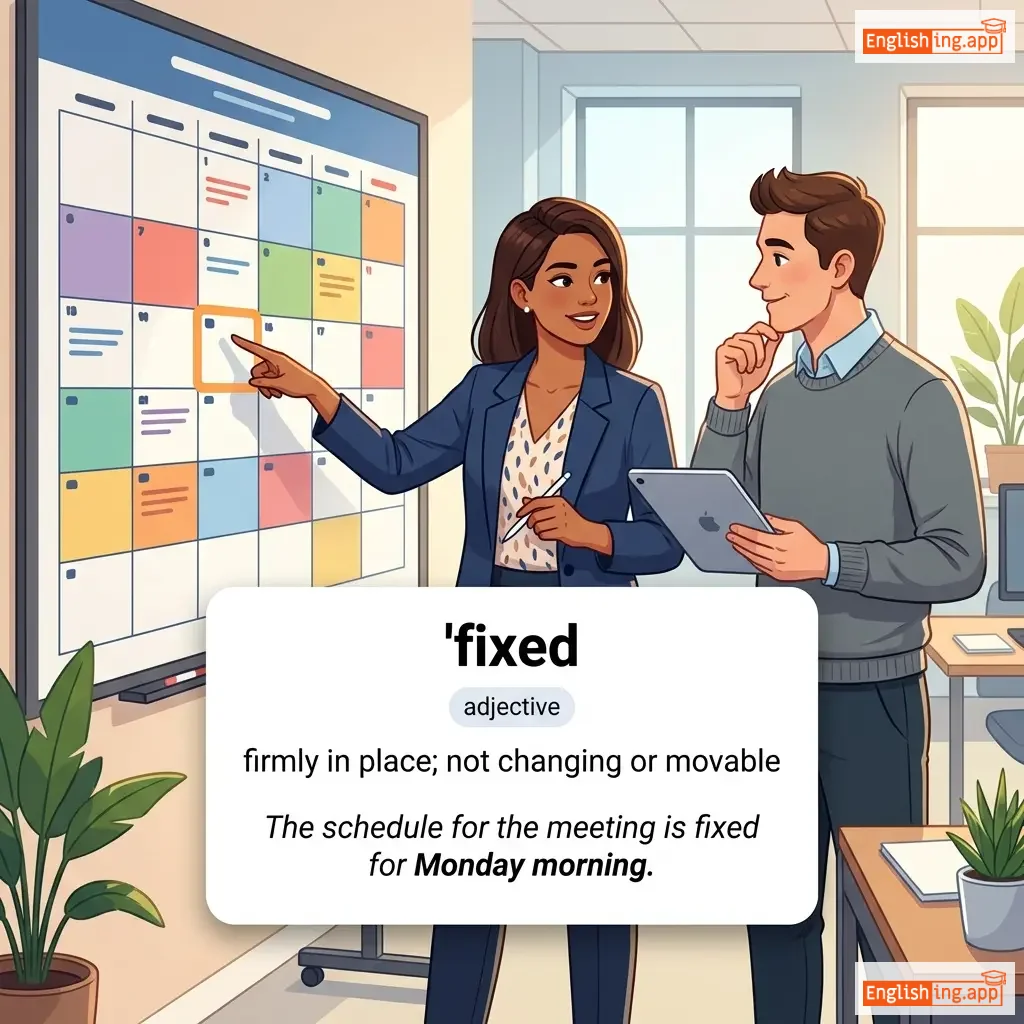
fixed definition card — visual illustration of the meaning
adjective
/fɪkst/
固定された, 安定した (kotei sareta, antei shita)

firmly in place; not changing or movable

"The schedule for the meeting is fixed for Monday morning."

"会議のスケジュールは月曜日の朝に固定されています。" (Kaigi no sukejūru wa getsuyōbi no asa ni kotei sareteimasu.)
fixed income definition card — visual illustration of the meaning
noun
fɪkst ˈɪnkʌm
固定収入 (kotei shūnyū)

Investment that provides a return in the form of fixed periodic payments.

"Fixed income investments provide reliable returns."

"固定収入の投資は信頼性の高いリターンを提供します。" (Kotei shūnyū no tōshi wa shinraisei no takai ritān o teikyō shimasu.)
adverb
/ˈfɪksɪdli/
固定的に (koteiteki ni)

in a steady, unmoving manner; with intense concentration

"He stared fixedly at the painting."

"彼は絵を固定的に見つめていた。" (Kare wa e o koteiteki ni mitsumete ita.)
noun
/ˈfɪks.tʃər/
固定物、設置された設備 (kotei-mono, setchi sareta setsubi)

a permanent or fixed object, often in a house or building

"The bathroom fixture was installed yesterday."

"バスルームの設備は昨日設置されました。" (Basurūmu no setsubi wa kinou setchi saremashita.)
adjective
/ˈflæb.i/
柔らかくてだらしない; しっかり感や筋肉の張りがない; 弱い (furabii)

soft and loose; lacking firmness or muscle tone; weak

"His flabby arms showed he needed to exercise more."

"彼のだらしない腕は、もっと運動する必要があることを示していました。" (Kare no darashinai ude wa, motto undou suru hitsuyou ga aru koto o shimeshiteimashita.)
adjective
/ˈflæks.ɪd/
柔らかい、だらりとした、または固さがない (yawarakai, darari to shita, matawa katasa ga nai)

soft, limp, or lacking firmness

"The fruit was overripe and flaccid."

"果物は熟しすぎてだらしなくなっていた。" (Kudamono wa jukushisugite darashinaku natte ita.)
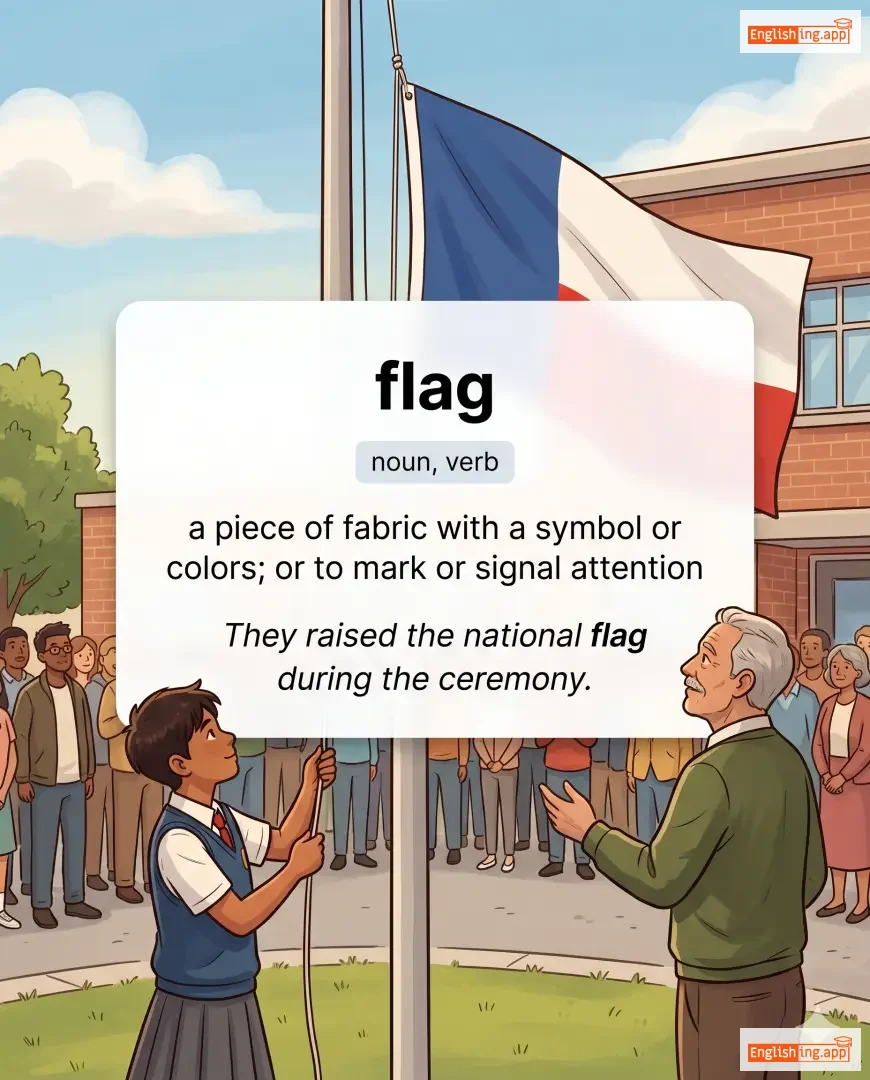
flag definition card — visual illustration of the meaning
🚩

flag

noun, verb
/flæɡ/

a piece of fabric with a symbol or colors; or to mark or signal attention

"They raised the national flag during the ceremony."

noun
/ˈflæɡ ˌɒfɪsər/
旗艦司令官 (kikan shireikan)

a senior naval officer entitled to fly a flag to mark the command

"The flag-officer reviewed the fleet before the ceremony."

"旗艦司令官は儀式の前に艦隊を視察しました。" (Kikan shireikan wa gishiki no mae ni kantai wo shisatsu shimashita.)
verb
/ˈflædʒəˌleɪt/
鞭打つ、または罰として自分を鞭打つ (benda, matawa batsu toshite jibun o benda)

to whip or flog someone, either literally or as a form of punishment or self-discipline

"In history, some monks would flagellate themselves as penance."

"歴史の中で、一部の修道士は悔い改めとして自分をフラジェレイトしていた。" (Rekishi no naka de, ichibu no shūdōshi wa kuika tameshite jibun o furajereito shiteita.)
adjective
/ˈflæɡɪŋ/
疲れる、弱くなる、または熱意を失う (tsukareru, yowakunaru, matawa netsui wo ushinau)

becoming tired, weaker, or less enthusiastic

"After hours of work, his energy was flagging."

"長時間働いた後、彼のエネルギーは衰えていた。" (Choujikan hataraita ato, kare no enerugī wa otoroeteita.)
adjective
/ˈfleɪɡrənt/
目立って明らかに間違っている (medatte akarui chigatte iru)

shockingly noticeable or evident; glaringly wrong

"It was a flagrant violation of the rules."

"それは規則の明らかな違反でした。" (Sore wa kisoku no akirakana ihan deshita.)
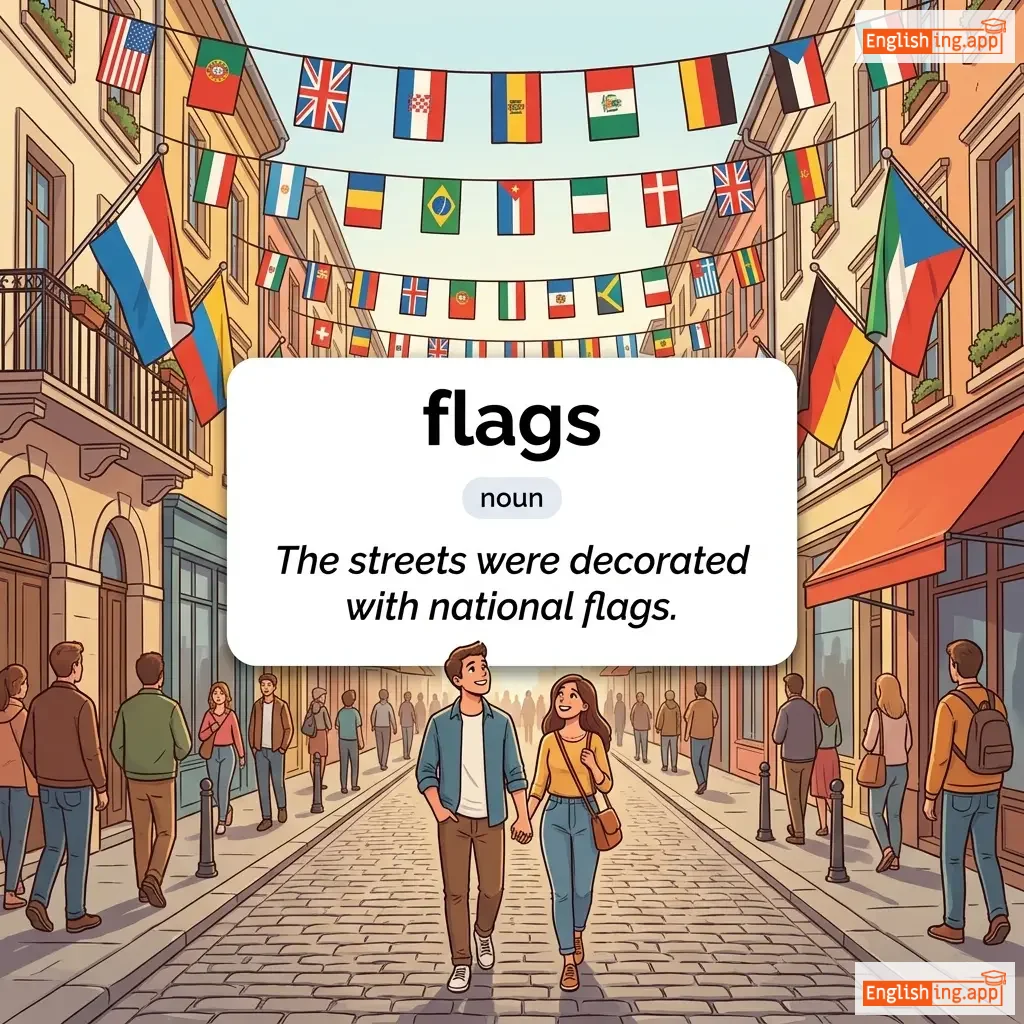
flags definition card — visual illustration of the meaning
noun
flæɡz
(ki)

A piece of cloth or similar material, typically oblong or square, attachable by one edge to a pole or rope.

"The streets were decorated with national flags."

"通りは国旗で飾られていました。" (Tōri wa kokki de kazarete imashita.)
verb
/fleɪl/
何かを激しく振る; 必死に動く (nanika o hageshiku furu; hisshi ni ugoku)

to wave or swing something about wildly; to thrash about

"He flailed his arms to keep afloat in the water."

"彼は水に浮かぶために腕を振った。" (Kare wa mizu ni ukabu tame ni ude o futta.)
flair definition card — visual illustration of the meaning
noun
/flɛr/
自然な才能または能力; 独特な優雅さやスタイル (shizen na sainō mata wa nōryoku; dokutoku na yūgasa ya sutairu)

a natural talent or ability; distinctive elegance or style

"She has a flair for painting that sets her apart."

"彼女は絵画において特別なフレアを持っており、彼女を際立たせています。" (Kanojo wa kaiga ni oite tokubetsuna flair o motte ori, kanojo o kiwadasemasu.)
adjective
/flæmˈbɔɪənt/
派手で色鮮やかな、または自信に満ちた (hade de iro azayakana, matawa jishin ni michita)

showy, strikingly bold or colorful; confident and lively

"His flamboyant style drew everyone's attention at the party."

"彼の派手なスタイルはパーティーで皆の注目を集めました。" (Kare no hade na sutairu wa pātii de mina no chūmoku o atsume mashita.)
noun
/fleɪm/
(honoo)

A hot glowing body of ignited gas that is generated by something on fire.

"The flame from the candle lit up the dark room."

"ろうそくの炎が暗い部屋を照らしました。" (Rōsoku no honō ga kurai heya o terashimashita.)
noun
/ˈflæn.əl/
フランネル (furaneru)

a soft woven fabric, typically made of wool or cotton and slightly milled and raised

"He wore a warm flannel shirt in winter."

"彼は冬に暖かいフランネルシャツを着ていました。" (Kare wa fuyu ni atatakai furaneru shatsu o kite imashita.)
verb
/flæʃ/
フラッシュ (furasshu)

to shine or appear suddenly and brightly for a short time

"Lightning flashed across the night sky."

"雷が夜空を横切った。" (Kaminari ga yozora o yokogitta.)
flashcards definition card — visual illustration of the meaning
noun
ˈflæʃkɑːrdz
フラッシュカード (furasshu kādo)

Cards containing small amounts of information, held up for students to see, as an aid to learning.

"Flashcards help in quick memorization."

"フラッシュカードは迅速な記憶に役立ちます。" (Furasshu kādo wa jinsoku na kioku ni yakudachimasu.)
adjective
/ˈflæʃi/
派手な, 目立つ (hade na, medatsu)

ostentatious or showy in a way that attracts attention

"He drove a flashy sports car through the city streets."

"彼は市街地を派手なスポーツカーで走った。" (Kare wa shigaichi o hade na supōtsu kā de hashitta.)
adjective
/flæt/
平ら (taira)

Smooth and level, without raised areas or curves.

"The road ahead was completely flat."

"前方の道路は完全に平らでした。" (Zenpou no douro wa kanzen ni taira deshita.)
noun
/flæt fɪʃ/
カレイ (karei)

a type of fish with a flattened body that lives on the sea floor

"Flat fish like sole and flounder are excellent for grilling."

"カレイやヒラメのようなフラットフィッシュはグリルに最適です。" (karei ya hirame no yona furatto fisshu wa guriru ni saiteki desu)