語彙集

英単語辞書 | 単語の意味、定義、例文

noun
/ˌfɜːrmənˈteɪʃən/
発酵、酵母または細菌による化学変化 (hakkou, koubo mata wa saikin ni yoru kagaku henka)

a chemical process by which substances like sugar are converted into alcohol or acids using microorganisms

"The fermentation of grapes produces wine."

"ぶどうの発酵はワインを生産します。" (Budou no hakkou wa wain o seisan shimasu.)
noun
/ˈfɜːrnəri/
シダ植物の栽培所、シダを育てる場所 (Shida shokubutsu no saibai-sho, shida o sodateru basho)

a place or greenhouse where ferns are cultivated

"The garden's fernery was full of exotic plants."

"庭のファーネリーは珍しい植物でいっぱいだった。" (Niwa no fānerei wa mezurashii shokubutsu de ippai datta.)
adjective
/fəˈroʊʃəs/
凶暴, 激しい, 攻撃的 (kyōbō, hageshii, kōgeki-teki)

savagely fierce, intense, or violent

"The tiger gave a ferocious roar."
"トラは凶暴な咆哮を上げた。" (Tora wa kyōbōna hōkō o ageta.)
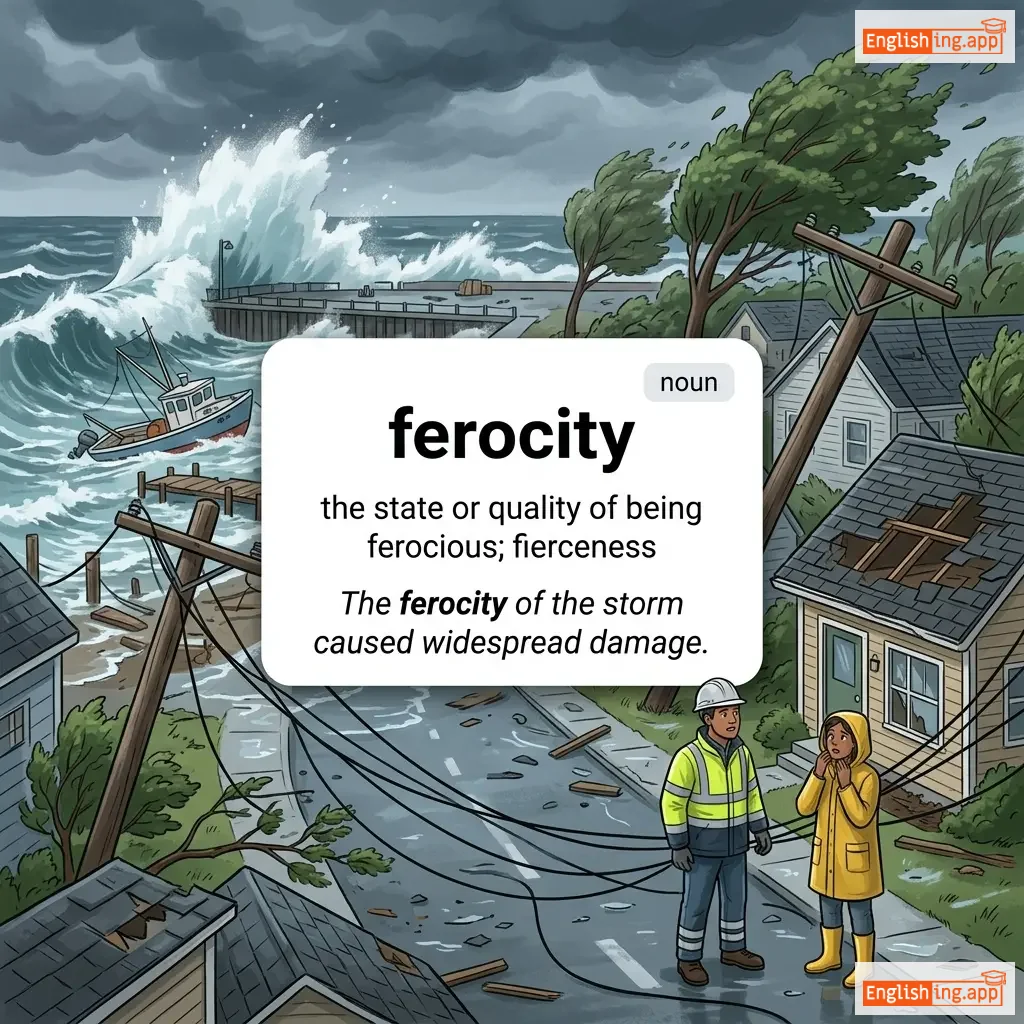
ferocity definition card — visual illustration of the meaning
noun
/fəˈrɒsəti/
激烈さ, 凶暴さ, 荒々しさ (gekiresesa, kyōbosa, araarashisa)

the state or quality of being ferocious; fierceness

"The ferocity of the storm caused widespread damage."

"嵐の激しさは広範囲にわたる被害を引き起こしました。" (Arashi no hageshisa wa kōhan'i ni wataru higai o hikiokoshimashita.)
noun, verb
/ˈfɛrɪt/
フェレット, 何かを粘り強く探すまたは発見する (feretto, nanika o nebarizuyoku sagasu matawa hakken suru)

a small domesticated animal used for hunting; to search or uncover something persistently

"He ferreted out the hidden documents."

"彼は隠された書類を見つけました。" (Kare wa kakusareta shorui o mitsukemashita.)
adjective
/ˈfer.əs/
鉄を含む (tetsu wo fukumu)

containing or consisting of iron

"Ferrous metals are commonly used in construction."

"鉄を含む金属は建設でよく使用されます。" (Tetsu wo fukumu kinzoku wa kensetsu de yoku shiyou saremasu.)
verb
/ˈfɛri/
フェリーで運ぶ (ferī de hakobu)

to transport by boat; to carry back and forth

"The boat ferried passengers across the river."

"船は乗客を川の向こうに運びました。" (Fune wa jokyaku o kawa no mukou ni hakobimashita.)
noun
/ˈfer.i boʊt/
フェリー (ferī)

a boat that carries passengers and vehicles across water

"We took the ferry-boat to cross the river."

"私たちは川を渡るためにフェリー・ボートに乗りました。" (Watashitachi wa kawa o wataru tame ni ferī bōto ni norimashita.)
adjective
/ˈfɜːr.taɪl/
肥沃 (hiwaku)

capable of producing abundant vegetation or offspring

"The fertile soil yielded a bountiful harvest."

"肥沃な土壌は豊かな収穫を生み出しました。" (Hiwaku na dojo wa yutaka na shūkaku o umidashimashita.)
fertility definition card — visual illustration of the meaning
noun
/fərˈtɪl.ə.ti/
生殖能力 (seishokunouryoku)

the ability to conceive children or young; the quality of being fertile

"Modern medicine has helped many couples overcome fertility problems."
"現代医学は多くのカップルが不妊の問題を克服するのを助けました。" (Gendai igaku wa ooku no kappuru ga funin no mondai wo kokufuku suru no wo tasukemashita.)
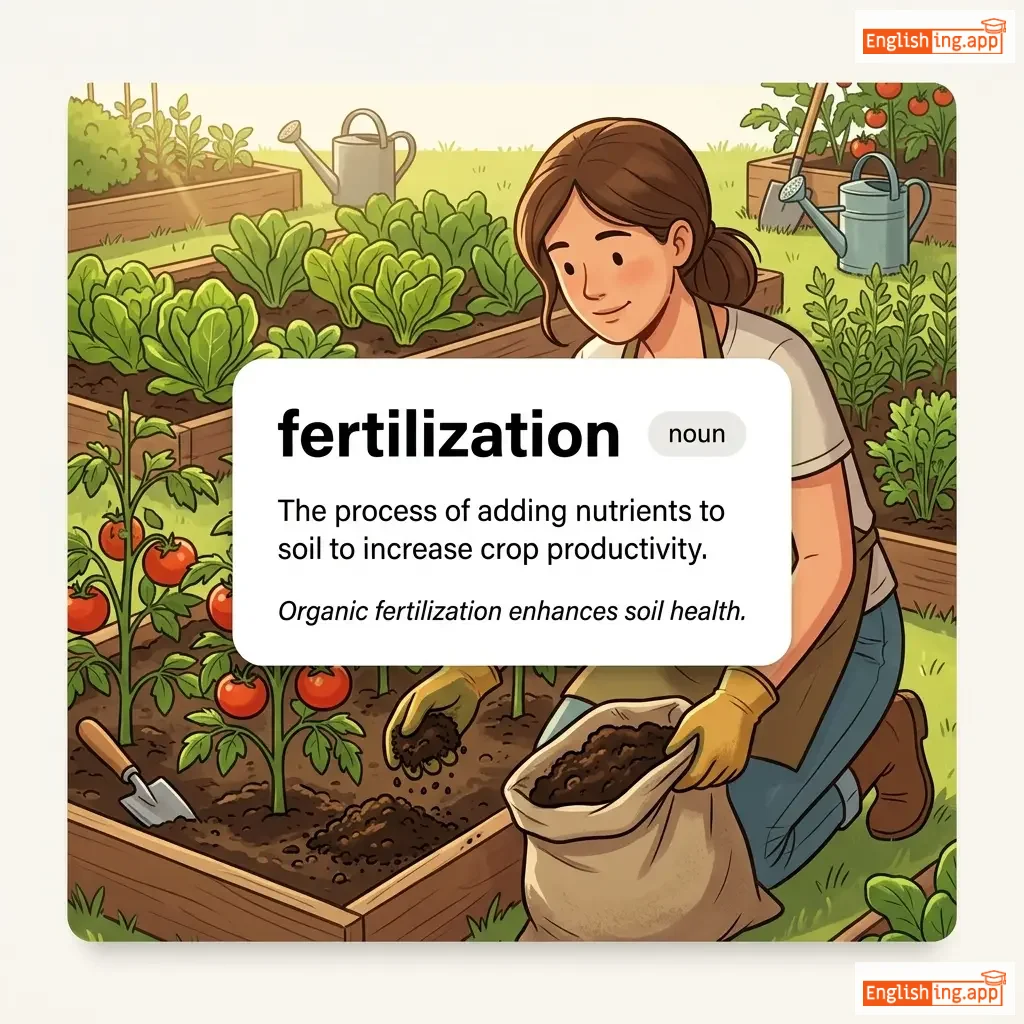
fertilization definition card — visual illustration of the meaning
noun
ˌfɜːr.tɪ.laɪˈzeɪ.ʃən
肥料施用 (hiryō shiyō)

The process of adding nutrients to soil to increase crop productivity.

"Organic fertilization enhances soil health."

"有機肥料施用は土壌の健康を改善します。" (Yūki hiryō shiyō wa dojō no kenko o kaizen shimasu.)
verb
/ˈfɜːr.tɪ.laɪz/
肥料を施す (hiryō o hodokosu)

to make soil or land more fertile by adding substances

"Farmers fertilize the fields to increase crop yield."
"農家は作物の収穫量を増やすために畑に肥料を施す。" (Nōka wa sakumotsu no shūkaku-ryō o fuyasu tame ni hatake ni hiryō o hodokosu.)
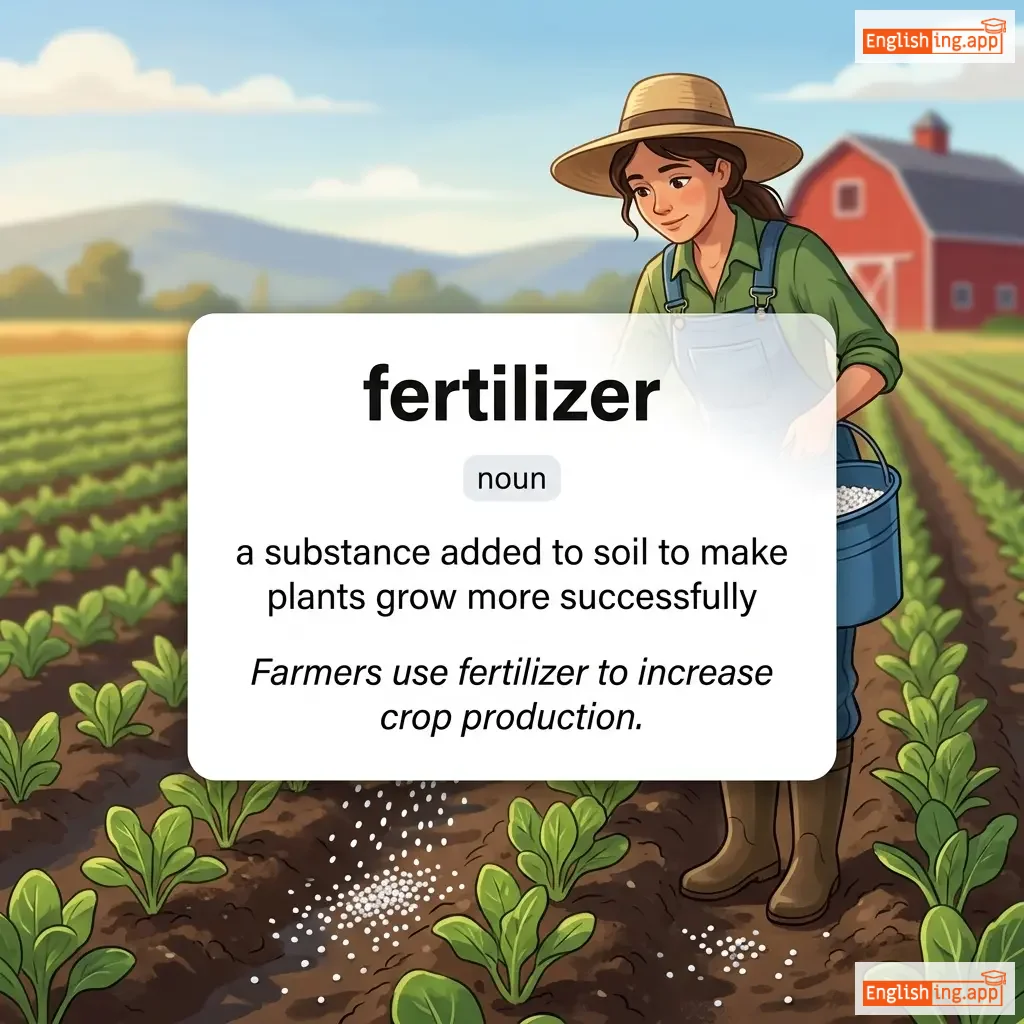
fertilizer definition card — visual illustration of the meaning
noun
/ˈfɜː.tɪ.laɪ.zər/
肥料 (hiryou)

a substance added to soil to make plants grow more successfully

"Farmers use fertilizer to increase crop production."

"農家は作物の生産量を増やすために肥料を使用します。" (Nouka wa sakumotsu no seisanryou o fuyasu tame ni hiryou o shiyou shimasu.)
adjective
/ˈfɜːr.vənt/
情熱的な、熱心な (jōnetsu-teki na, nesshin na)

having or showing intense passion or enthusiasm

"She gave a fervent speech about climate change."

"彼女は気候変動について情熱的なスピーチを行った。" (Kanojo wa kikō hendō ni tsuite jōnetsu-teki na supīchi o okonatta.)
adverb
/ˈfɜː.vənt.li/
熱心に; 熱烈に; (nesshin ni; netsuretsu ni;)

with passionate intensity; ardently; with great emotion or enthusiasm

"She fervently hoped that her dreams would come true."

"彼女は自分の夢が実現することを熱心に願っていました。" (Kanojo wa jibun no yume ga jitsugen suru koto o nesshin ni negatte imashita.)
adjective
/ˈfɜːr.vɪd/
熱心な, 情熱的な (nesshinnan, jōnetsuteki na)

intensely passionate or enthusiastic

"He wrote a fervid letter expressing his love."

"彼は自分の愛を表現するために熱心な手紙を書いた。" (Kare wa jibun no ai o hyōgen suru tame ni nesshinnan tegami o kaita.)
fervor definition card — visual illustration of the meaning
noun
/ˈfɜːrvər/
熱意, 情熱 (netsui, jounetsu)

intense and passionate feeling

"She spoke with great fervor about the importance of education."

"彼女は教育の重要性について情熱的に話しました。" (Kanojo wa kyouiku no juuyousei ni tsuite jounetsuteki ni hanashimashita.)
adjective
/ˈfɛstəl/
祭りの、祝祭的な (matsuri no, shukusai-teki na)

relating to a festival or celebration

"The hall was decorated in a festal manner for the wedding."

"結婚式のためにホールは祭りのように飾られていました。" (Kekkonshiki no tame ni hōru wa matsuri no yō ni kazararete imashita.)
verb
/ˈfɛstər/
悪化する、激化する (akkasuru, gekikasuru)

to become worse or more intense, often through neglect or infection

"If grievances are ignored, they may fester into resentment."
"不満を無視すると、それは恨みに変わることがあります。" (Fuman wo mushi suru to, sore wa urami ni kawaru koto ga arimasu.)
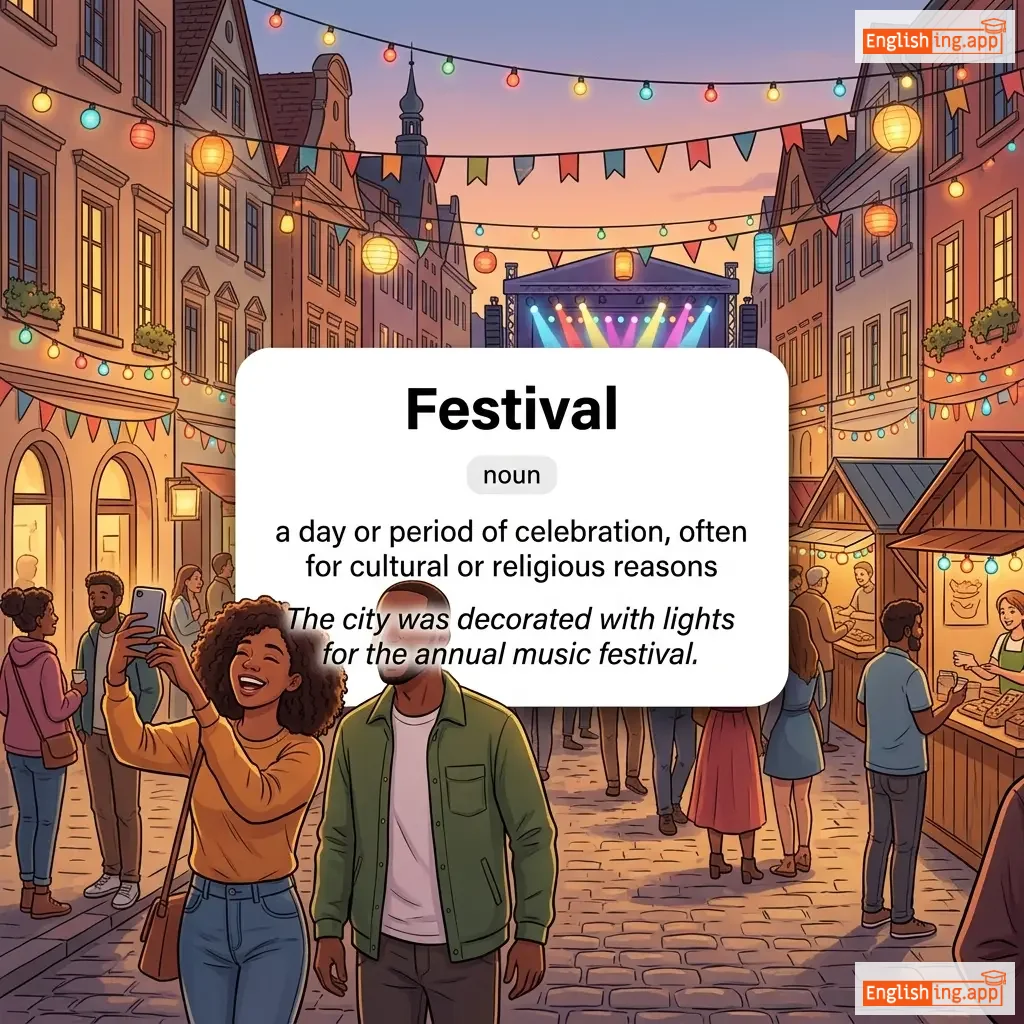
Festival definition card — visual illustration of the meaning
noun
/ˈfɛstəvəl/
祭り (matsuri)

a day or period of celebration, often for cultural or religious reasons

"The city was decorated with lights for the annual music festival."

"その都市は毎年の音楽祭のためにライトで飾られていました。" (Sono toshi wa maitoshi no ongakumatsuri no tame ni raito de kazararete imashita.)
adjective
/ˈfɛstɪv/
祝祭的な, 楽しい (shukusaiteki na, tanoshii)

joyful, celebratory, or suitable for a festival

"The streets were decorated with lights in a festive spirit."

"街は祝祭の雰囲気でライトで飾られていました。" (Machi wa shukusai no fun'iki de raito de kazatta remashita.)
noun
/feɪt/
祭り、フェスティバル (matsuri, fesutibaru)

a celebration or festival, often in honor of someone

"The village held a grand fete to celebrate the harvest."

"村は収穫を祝うために盛大な祭りを開催しました。" (Mura wa shuukaku o iwau tame ni seidana matsuri o kaisai shimashita.)
noun
/ˈfetiʃ/
フェティッシュ (fetisshu)

an object believed to have magical powers or to be inhabited by a spirit

"The villagers treated the statue as a powerful fetich."
"村人たちはその像を強力なフェティッシュとして扱っていました。" (Mura hitotachi wa sono zou o kyōryoku na fetisshu toshite atsukatte imashita.)
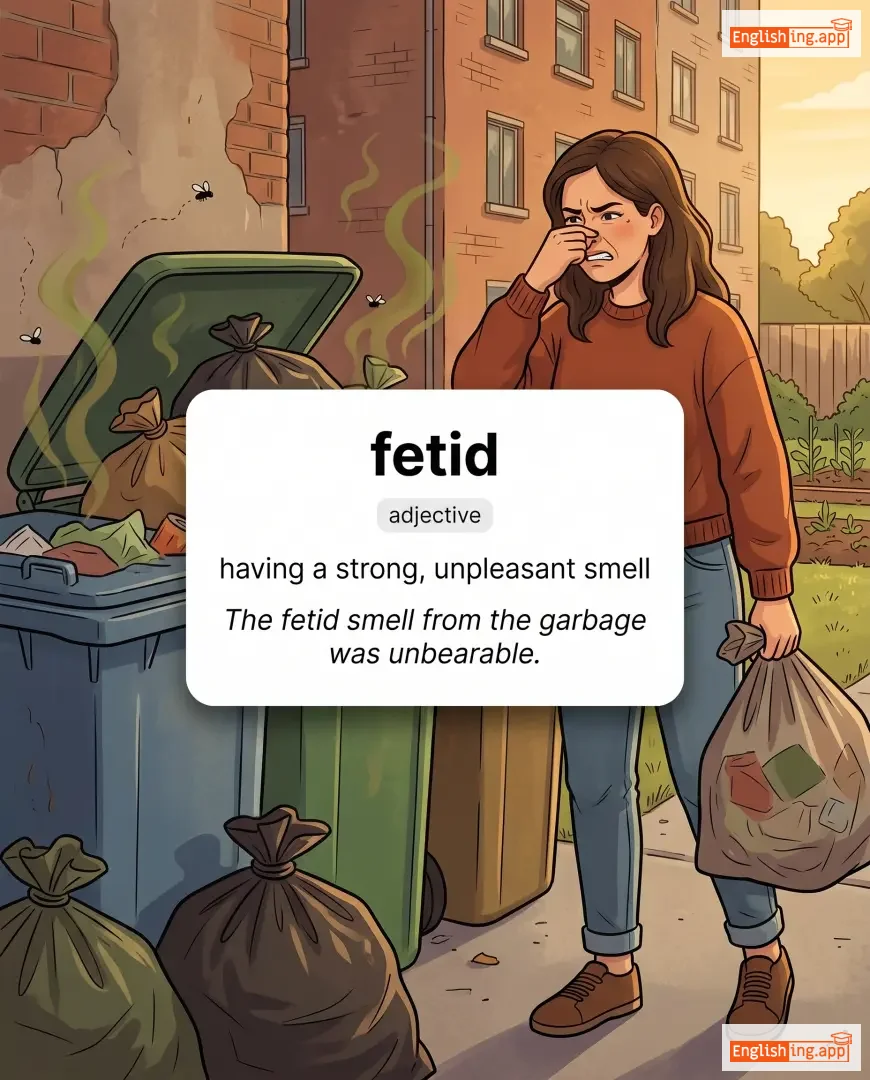
fetid definition card — visual illustration of the meaning
adjective
/ˈfɛtɪd/
悪臭のある、臭い (akushu no aru, nioi)

having a strong, unpleasant smell

"The fetid smell from the garbage was unbearable."

"ゴミからの臭いは耐えられなかった。" (Gomi kara no nioi wa taerarenakatta.)
noun
/ˈfɛtɪʃ/
過度または不合理な執着 (kadomata wa fukōrina shūchaku)

an excessive or irrational devotion to something

"He has a fetish for collecting rare stamps."
"彼は珍しい切手を集めることに執着しています。" (Kare wa mezurashī kitte o atsumeru koto ni shūchaku shiteimasu.)
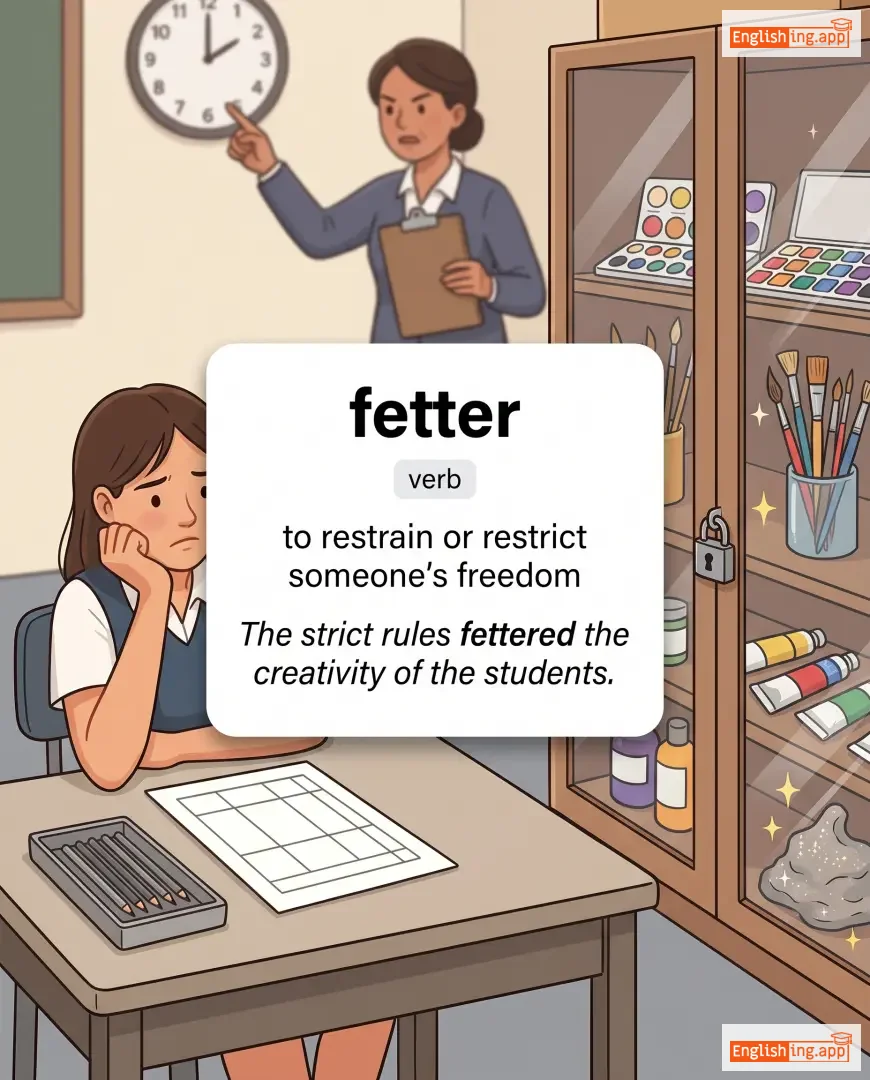
fetter definition card — visual illustration of the meaning
verb
/ˈfɛtər/
束縛する、制限する (sokubaku suru, seigen suru)

to restrain or restrict someone’s freedom

"The strict rules fettered the creativity of the students."

"厳しいルールは学生の創造性を制限した。" (Kibishii rūru wa gakusei no sōzōsei o seigen shita.)
noun
/ˈfiːtəs/
胎児 (taiji)

an unborn or unhatched offspring in the womb or egg

"The doctor explained the development of the fetus during pregnancy."

"医師は妊娠中の胎児の発達について説明しました。" (Ishi wa ninshin-chū no taiji no hattatsu ni tsuite setsumei shimashita.)
noun
/fjuːd/
争い, 敵意 (arasoi, teki)

a prolonged and bitter quarrel or conflict, often between families or groups

"The two families have been in a feud for generations."

"二つの家族は世代を超えて争い続けています。" (Futatsu no kazoku wa sedai o koete arasoi tsuzuketeimasu.)
adjective
/ˈfjuː.dəl/
封建的 (hōkenteki)

relating to the system of feudalism, a medieval social system based on land ownership and obligations

"The castle is a remnant of the feudal era."

"城は封建時代の遺物です。" (Shiro wa hōken jidai no ibutsu desu.)
noun
/ˈfjuː.də.lɪ.zəm/
封建制度 (hōken seido)

the social system in medieval Europe in which people worked and fought for nobles who gave them protection and land in return

"Feudalism shaped the political structure of medieval Europe."

"封建制度は中世ヨーロッパの政治構造を形作った。" (Hōken seido wa chūsei Yōroppa no seiji kōzō o katachizukutta.)
noun
/ˈfiːvər/
(netsu)

a medical condition in which the body temperature is higher than normal

"He couldn’t go to work because he had a high fever."

"高熱のため、彼は仕事に行けませんでした。" (Kounetsu no tame, kare wa shigoto ni ikemasen deshita.)
adjective
/fjuː/
少数 (shousuu)

A small number of; not many.

"Only a few students attended the class."

"ほんの少しの学生がクラスに出席しました。" (Honno sukoshi no gakusei ga kurasu ni shusseki shimashita.)
determiner/adjective
/ˈfjuːər/
より少ない (yori sukunai)

a smaller number of; not as many

"Fewer people attended the meeting than expected."

"予想より少ない人々が会議に出席した。" (Yosō yori sukunai hitobito ga kaigi ni shusseki shita.)
noun
/fez/
フェズ帽子 (fezu bōshi)

a flat-topped conical red hat with a tassel, traditionally worn in some Middle Eastern countries

"He wore a traditional fez during the cultural festival."

"彼は文化祭で伝統的なフェズをかぶっていた。" (Kare wa bunkasai de dentō-teki na fezu o kabutte ita.)
noun
/ˌfiː.ɑːnˈseɪ/
婚約者 (kon'yakusha)

a man who is engaged to be married

"Sarah introduced her fiance to her parents during the family dinner."

"サラは家族の夕食の際に婚約者を両親に紹介しました。" (Sara wa kazoku no yuushoku no sai ni kon'yakusha o ryoushin ni shoukai shimashita.)
noun
/ˌfiː.ɑːnˈseɪ/
婚約者 (kon'yakusha)

a woman who is engaged to be married

"John bought a beautiful engagement ring for his fiancee."

"ジョンは彼の婚約者に美しい婚約指輪を買いました。" (Jon wa kare no kon'yakusha ni utsukushii kon'yaku yubiwa o kaimashita.)
noun
/fiˈæs.koʊ/
完全な失敗 (kanzen na shippai)

a complete failure, especially a ludicrous or humiliating one

"The event turned into a complete fiasco due to poor planning."

"計画の悪さからそのイベントは完全な失敗に終わった。" (Keikaku no warusa kara sono ibento wa kanzen na shippai ni owatta.)
fiat definition card — visual illustration of the meaning
noun
/ˈfiːæt/
命令、布告 (meirei, fukoku)

an official order or decree; authoritative command

"The new policy was enacted by royal fiat."

"新しい政策は王の命令で実施されました。" (Atarashī seisaku wa ō no meirei de jisshi saremashita.)
noun
/ˈfaɪbər/
繊維 (sen'i)

a thread or filament from which a textile is formed; dietary substance from plants that aids digestion

"Fruits and vegetables are high in fiber."

"果物と野菜は繊維が豊富です。" (Kudamono to yasai wa sen'i ga hōfu desu.)
noun
/ˈfaɪ.bər/
繊維 (sen'i)

A thread or filament from which a vegetable tissue, mineral substance, or textile is formed; dietary material that aids digestion.

"Eating foods rich in fibre can improve your digestion."

"食物繊維が豊富な食べ物を食べると消化が良くなります。" (Shokumotsu sen'i ga houfu na tabemono wo taberu to shouka ga yoku narimasu.)
adjective
/ˈfɪkəl/
気まぐれな, 変わりやすい (kimagurena, kawariyasui)

changing frequently in loyalty, interest, or affection

"She is so fickle that she changes her mind every hour."

"彼女はとても気まぐれで、毎時間意見を変える。" (Kanojo wa totemo kimagure de, mai jikan iken wo kaeru.)
noun
/ˈfɪkʃən/
フィクション (fikushon)

Literature created from the imagination, not presented as fact.

"She enjoys reading science fiction novels."

"彼女はサイエンスフィクション小説を読むのが好きです。" (Kanojo wa saiensu fikushon shousetsu wo yomu no ga suki desu.)
adjective
/fɪkˈtɪʃəs/
虚構の、偽の (kyokou no, nise no)

not real or true; imaginary or fabricated

"The story he told was entirely fictitious."
"彼が話した話は完全に虚構だった。" (Kare ga hanashita hanashi wa kanzen ni kyokou datta.)
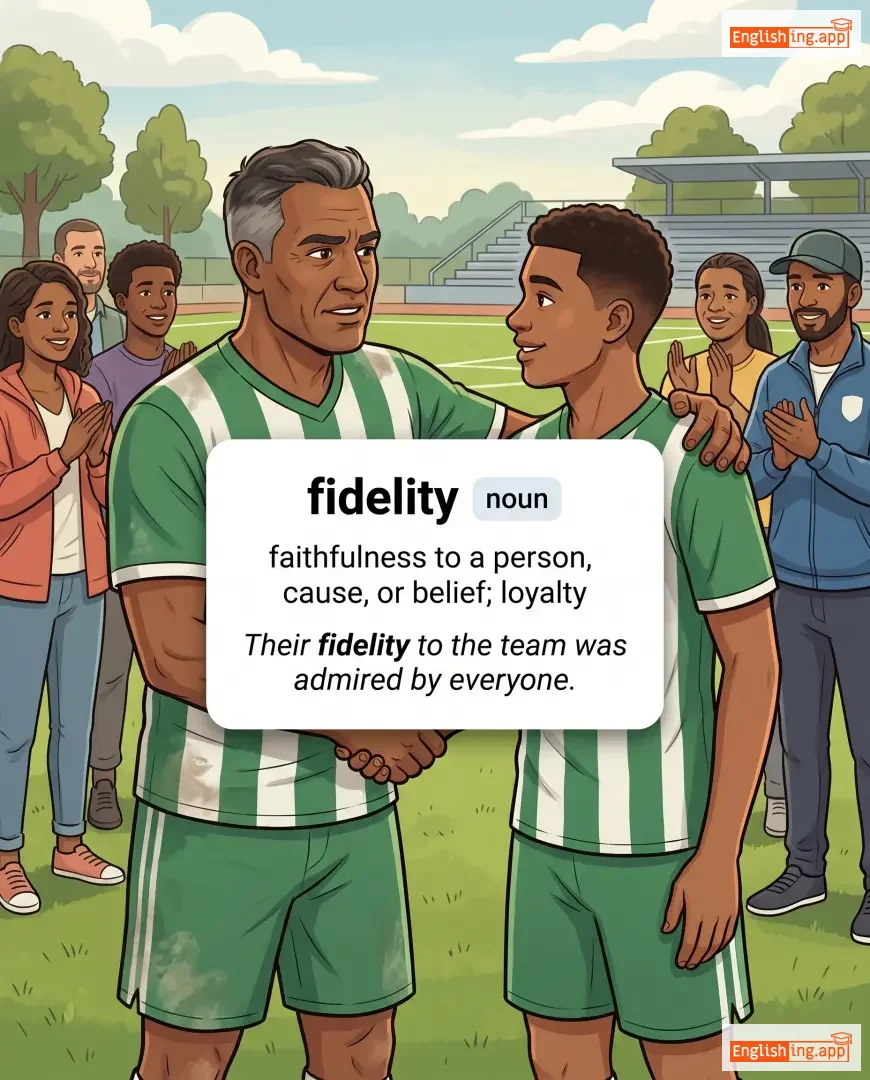
fidelity definition card — visual illustration of the meaning
noun
/fɪˈdelɪti/
忠誠、誠実 (chūsei, seijitsu)

faithfulness to a person, cause, or belief; loyalty

"Their fidelity to the team was admired by everyone."

"彼らのチームへの忠誠は、皆に賞賛されました。" (Karera no chīmu e no chūsei wa, mina ni shōsan saremashita.)
verb
/ˈfɪdʒɪt/
そわそわする、落ち着かない (sowasowa suru, ochitsukanai)

to make small movements, especially because of nervousness or impatience

"The child began to fidget during the long lecture."

"子供は長い講義中に落ち着かなくなり始めました。" (Kodomo wa nagai kōgi-chū ni ochitsukanaku nari hajimemashita.)
adjective
/fɪˈdjuːʃəl/
信頼の、基準点として機能する (shinrai no, kijunten toshite kinou suru)

based on trust or confidence; serving as a standard of reference

"The fiducial point on the map ensures accurate measurements."

"地図上のフィデュシャルポイントは正確な測定を確保します。" (Chizu jou no fidyushiaru pointo wa seikaku na sokutei wo kakuho shimasu.)
fiduciary definition card — visual illustration of the meaning
noun
/fɪˈduːʃieri/
信託責任者, フィデューシャリー (shintaku sekininsha, fidushiari)

a person who holds assets in trust for someone else; related to trust and responsibility

"The lawyer acted as a fiduciary for his client’s estate."

"弁護士はクライアントの財産のためにフィデューシャリーとして行動しました。" (Bengoshi wa kuraianto no zaisan no tame ni fiduciary toshite kōdō shimashita.)
noun
/fiːf/
封建制度の下で保有される土地; 支配領域または制御区域 (hoken seido no moto de hoyu sareru tochi; shihai ryōiki matawa seigyo kuiki)

an estate of land held under the feudal system; a domain or area of control

"The knight was granted a fief by the lord for his service."
"騎士はそのサービスに対して領主から封土を与えられました。" (Kishi wa sono sābisu ni taishite ryōshu kara fūdo o ataeraremashita.)
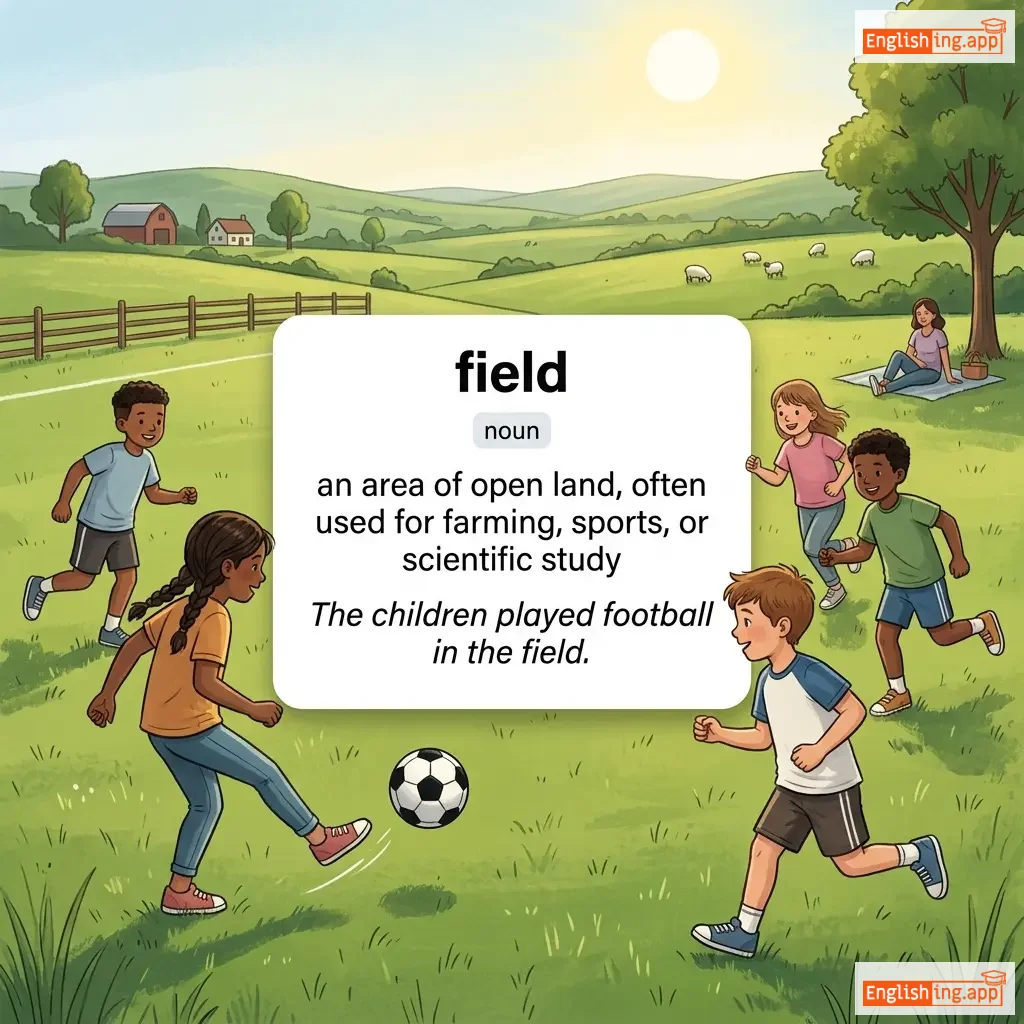
field definition card — visual illustration of the meaning
noun
/fiːld/
フィールド (fīrudo)

an area of open land, often used for farming, sports, or scientific study

"The children played football in the field."

"子供たちはフィールドでサッカーをしました。" (Kodomotachi wa fīrudo de sakkā o shimashita.)
noun
/fiːnd/
悪魔, 邪悪な人 (akuma, jaaku na hito)

an evil spirit or demon; a wicked or cruel person; someone obsessed with a particular thing

"He is a real fiend when it comes to solving puzzles."

"パズルを解くとき、彼は本当に悪魔のようです。" (Pazuru o toku toki, kare wa hontou ni akuma no you desu.)