語彙集

英単語辞書 | 単語の意味、定義、例文

noun
/ˈfænsiər/
愛好家 (aikouka)

a person who has a special interest in a particular thing or activity, especially animals or hobbies

"He is a fancier of rare birds."

"彼は珍しい鳥の愛好家です。" (Kare wa mezurashī tori no aikouka desu.)
adjective
/ˈfæn.sɪ.fəl/
幻想的, 非現実的 (gensouteki, higennjitsuteki)

overimaginative, unrealistic, or whimsical

"The story was too fanciful to be true."

"その話はあまりにも幻想的で、本当だとは思えなかった。" (Sono hanashi wa amari ni mo gensouteki de, hontou da to wa omoenakatta.)
adjective
/ˈfæn.sɪ.ləs/
想像力のない、普通の (souzouryoku no nai, futsuu no)

without imagination or creativity; plain or ordinary

"His drawings were simple and fanciless."

"彼の絵はシンプルで想像力がなかった。" (Kare no e wa shinpuru de souzouryoku ga nakatta.)
verb
/ˈfæn.si/
想像する, 欲しい, 好き (sōzō suru, hoshii, suki)

to imagine, desire, or like something; to have a liking for

"She fancies a cup of tea in the morning."

"彼女は朝に紅茶を一杯飲みたい。" (Kanojo wa asa ni kōcha o ippai nomitai.)
noun
/ˈfæn.feər/
大々的な展示, 宣伝 (dai daiteki na tenji, senden)

a short ceremonial tune or display of publicity to attract attention

"The new product was launched with much fanfare."

"新しい製品は盛大なファンファーレで発売されました。" (Atarashī seihin wa seidaina fanfāre de hatsubai saremashita.)
adjective
/fænˈtæstɪk/
素晴らしい (subarashii)

extraordinary, extremely good or impressive

"The concert last night was absolutely fantastic."

"昨晩のコンサートはまさに素晴らしかった。" (Sakuban no konsāto wa masani subarashikatta.)
noun
/ˈfæntəsi/
ファンタジー (fantajī)

a creation of the imagination, especially something improbable or impossible

"She has a vivid fantasy about traveling to space."

"彼女は宇宙旅行に関する生き生きとしたファンタジーを持っています。" (Kanojo wa uchū ryokō ni kansuru ikikito shita fantajī o motteimasu.)
adverb
/fɑːr/
遠い (tooi)

at, to, or by a great distance

"The school is far from my house."

"学校は私の家から遠いです。" (Gakkou wa watashi no ie kara tooi desu.)
adjective
/ˌfɑːrˈfɛtʃt/
信じがたい (shinjigatai)

unlikely to happen or be true; improbable

"His explanation for being late was a bit far-fetched."

"彼の遅刻の理由は少し信じがたいものでした。" (Kare no chikoku no riyuu wa sukoshi shinjigatai mono deshita.)
noun
/fɑːrs/
茶番 (chaban)

a comic dramatic work using buffoonery and horseplay, or a ridiculous situation

"The meeting turned into a complete farce with everyone arguing."

"会議は完全に茶番に変わり、みんなが議論していた。" (Kaigi wa kanzen ni chaban ni kawari, minna ga giron shite ita.)
noun
/fɛər/
運賃 (unchin)

the money paid for a journey on public transport; also food or treatment provided

"The bus fare to the city center is five dollars."

"市内中心部までのバス運賃は5ドルです。" (Shinai chūshinbu made no basu unchin wa go doru desu.)
noun
/ˌfer.ˈwel/
さようなら (sayōnara)

an act of parting or of marking someone's departure

"The company organized a farewell party for the retiring manager."

"会社は退職するマネージャーのためにさようならパーティーを開催しました。" (Kaisha wa taishoku suru manējā no tame ni sayōnara pātii o kaisai shimashita.)
adjective
/ˌfɑːrˈfetʃt/
ありそうもない、またはあり得ない (arisou monai, mata wa arienai)

unlikely to happen or be true; improbable

"His explanation for being late sounded farfetched."
"彼の遅刻の説明は信じがたいものだった。" (Kare no chikoku no setsumei wa shinjigatai mono datta.)
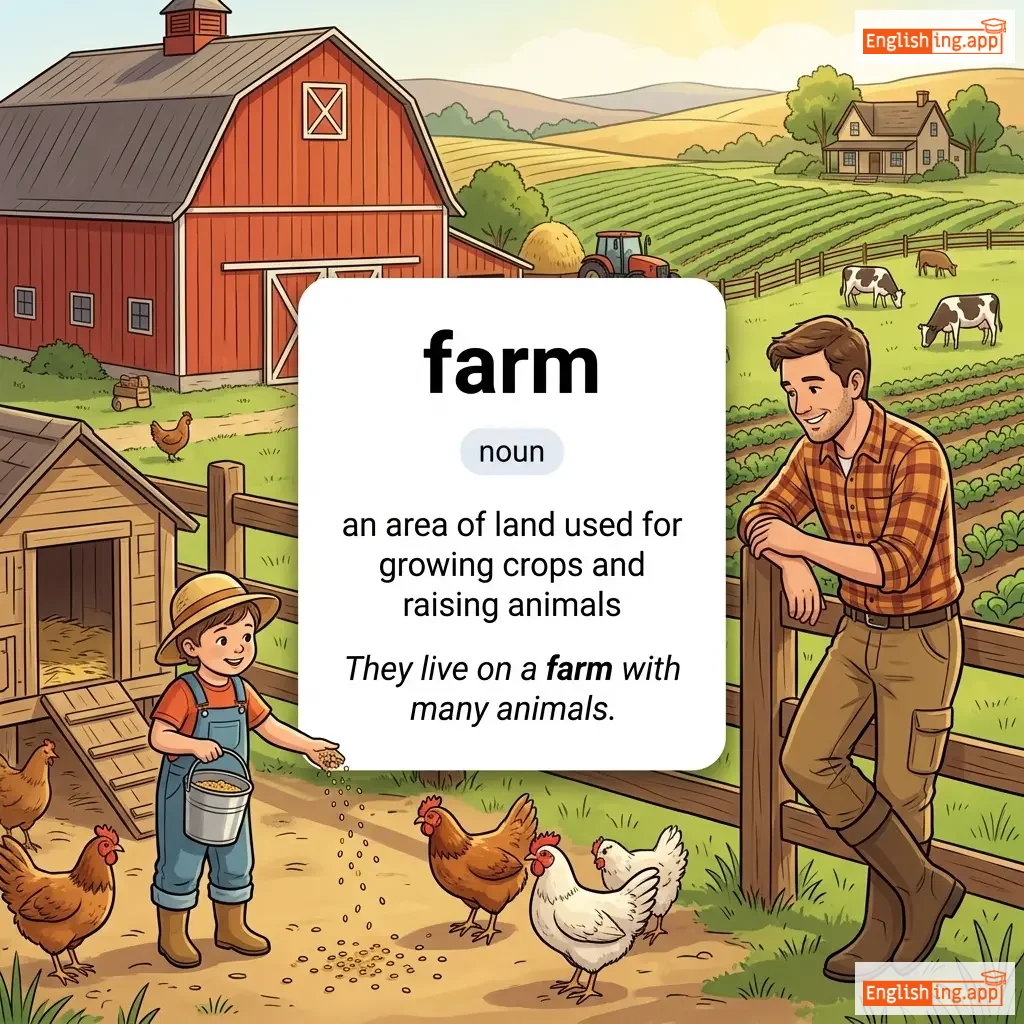
farm definition card — visual illustration of the meaning
noun
/fɑːrm/
農場 (nōjō)

an area of land used for growing crops and raising animals

"They live on a farm with many animals."
"彼らは多くの動物がいる農場に住んでいます。" (Karera wa ōku no dōbutsu ga iru nōjō ni sundeimasu.)
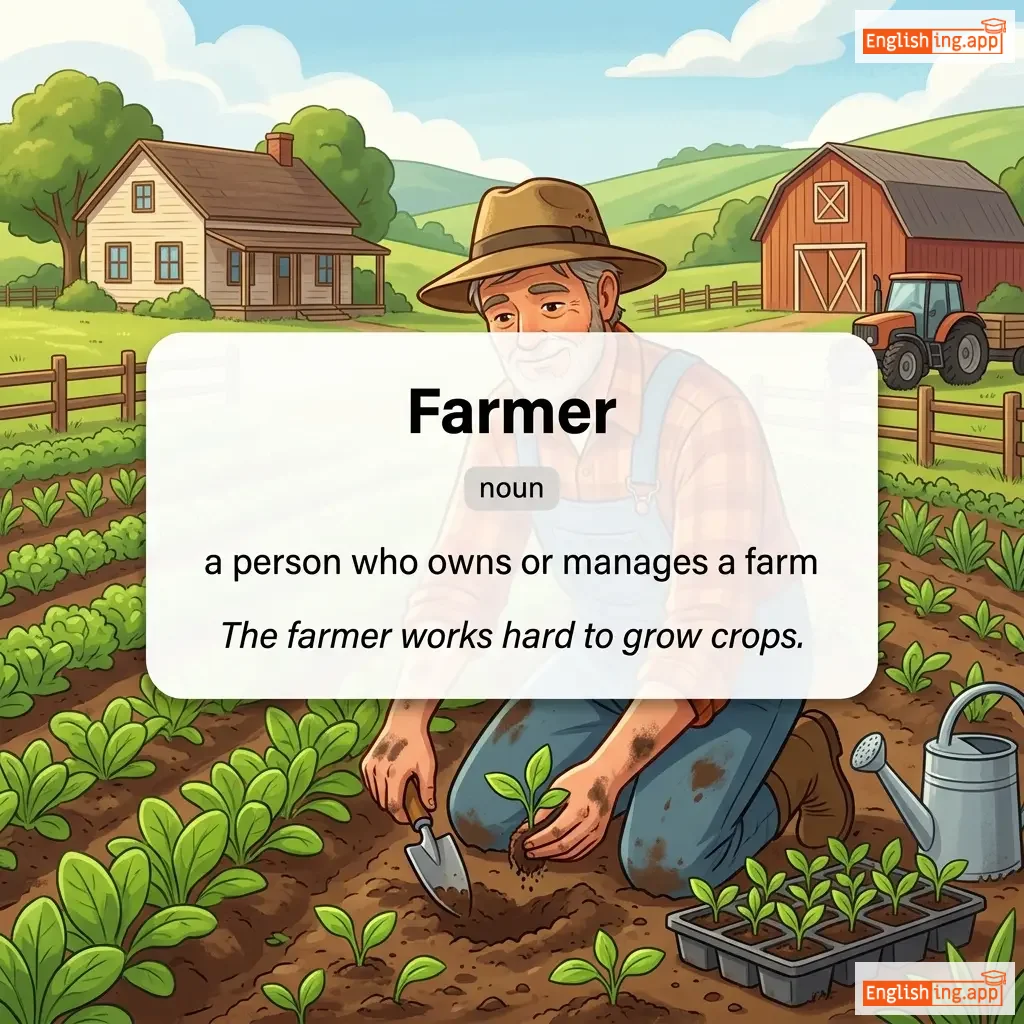
Farmer definition card — visual illustration of the meaning
noun
/ˈfɑːrmər/
農夫 (nōfu)

a person who owns or manages a farm

"The farmer works hard to grow crops."
"農夫は作物を育てるために一生懸命働きます。" (Nōfu wa sakumotsu o sodateru tame ni isshōkenmei hatarakimasu.)
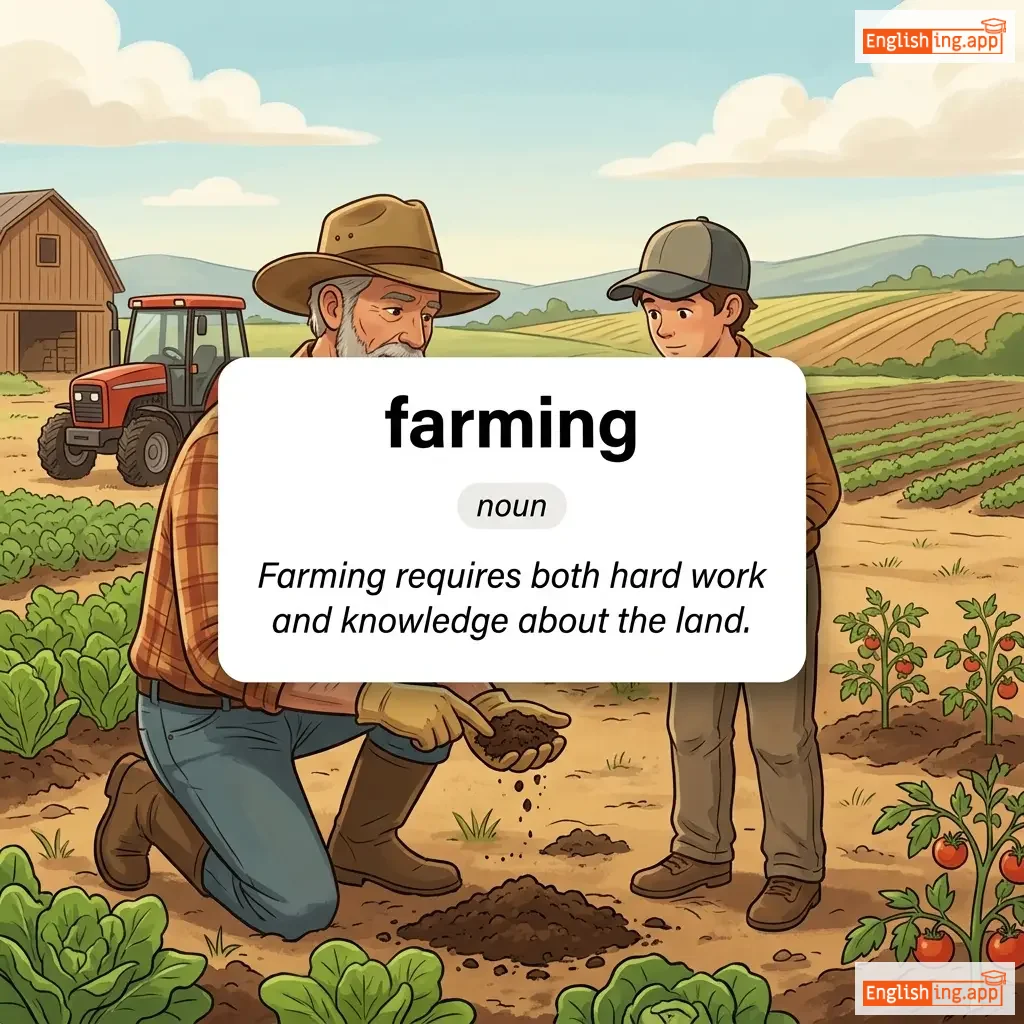
farming definition card — visual illustration of the meaning
noun
/ˈfɑː.mɪŋ/
農業 (nougyou)

the activity or business of growing crops and raising animals for food or other products

"Farming requires both hard work and knowledge about the land."

"農業は、土地に関する知識と共に、勤勉な作業を必要とします。" (Nougyou wa, tochi ni kansuru chishiki to tomo ni, kinben na sagyou o hitsuyou to shimasu.)
verb
/ˈfæs.ɪ.neɪt/
魅了する (miryō suru)

to attract and hold the attention of someone; to charm or captivate

"The magician's performance fascinated the audience."

"マジシャンのパフォーマンスは観客を魅了した。" (Majishan no pafōmansu wa kankyaku o miryō shita.)
adjective
/ˈfæsɪneɪtɪŋ/
魅力的 (miryokuteki)

extremely interesting or charming

"The history of ancient Egypt is truly fascinating."

"古代エジプトの歴史は本当に魅力的です。" (Kodai Ejiputo no rekishi wa hontōni miryokuteki desu.)
noun
/ˌfæs.ɪˈneɪ.ʃən/
魅力; 魅了; 魅力的な興味 (miryoku, miryō, miryokuteki na kyōmi)

the power to fascinate someone; the state of being intensely interested

"Her fascination with ancient history led her to become an archaeologist."
"彼女の古代史への魅力は、彼女を考古学者にさせました。" (Kanojo no kodai shi e no miryoku wa, kanojo o kōkogakusha ni sasemashita.)
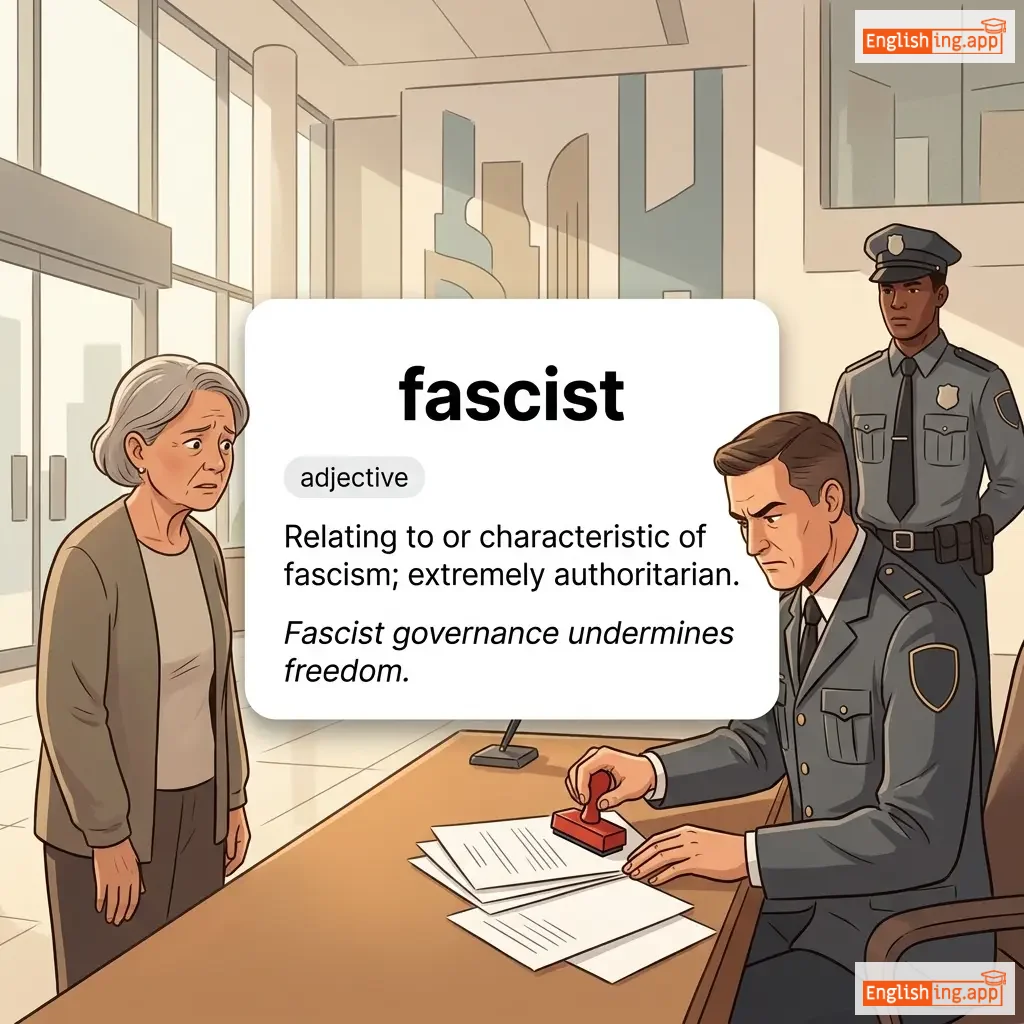
fascist definition card — visual illustration of the meaning
adjective
ˈfæʃ.ɪst
ファシスト (fashisuto)

Relating to or characteristic of fascism; extremely authoritarian.

"Fascist governance undermines freedom."

"ファシスト政権は自由を脅かす。" (Fashisuto seiken wa jiyu o odokasu.)
noun
/ˈfæʃ.ən/
ファッション (fasshon)

a popular or accepted style of clothing, behavior, or way of doing something

"She always keeps up with the latest fashion."

"彼女はいつも最新のファッションを追いかけています。" (Kanojo wa itsumo saishin no fasshon o oikaketeimasu.)
adjective
/ˈfæʃənəbəl/
流行の (ryukou no)

Following the latest styles or trends in clothing, behavior, or ideas

"She always wears fashionable clothes to every party."
"彼女は毎回のパーティーで常にファッショナブルな服を着ています。" (Kanojo wa maikai no paatii de tsune ni fasshonaburu na fuku wo kiteimasu.)
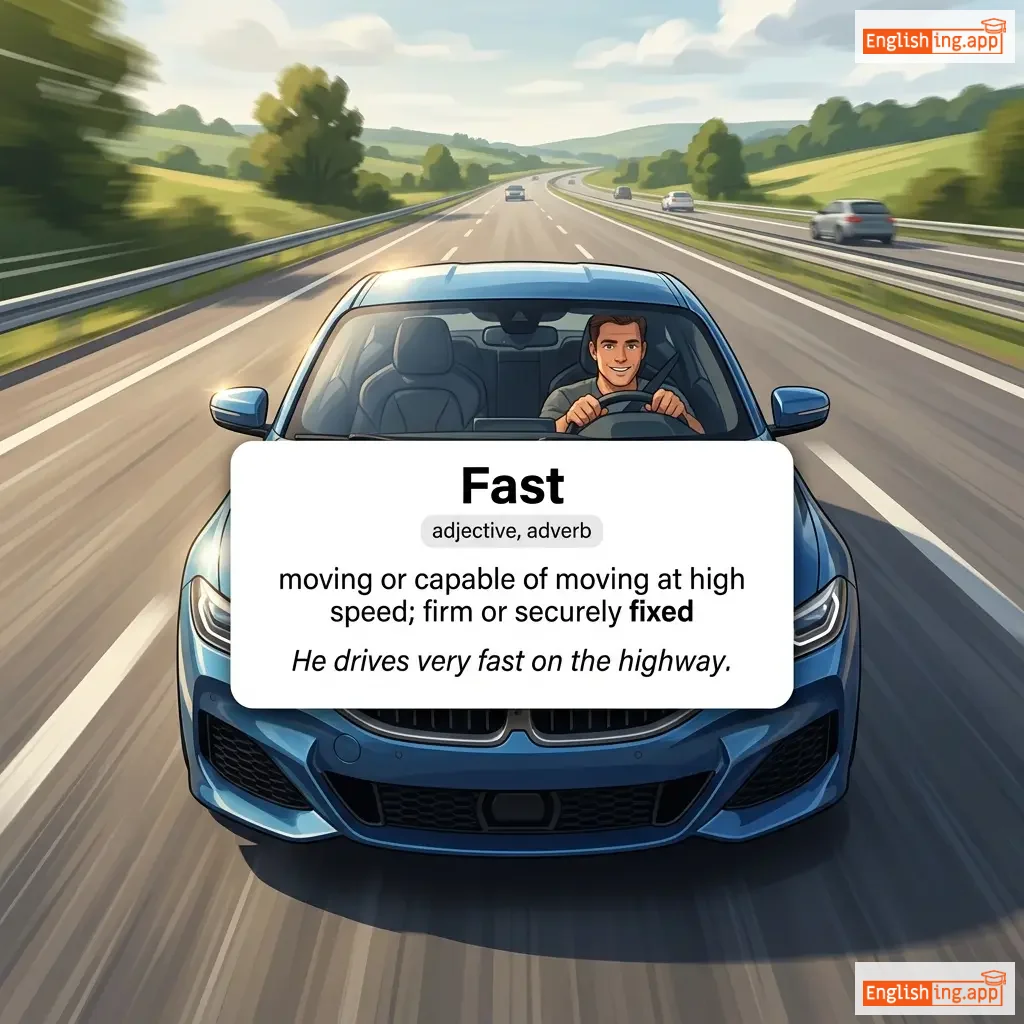
Fast definition card — visual illustration of the meaning
adjective, adverb
/fæst/
速い, 固定された (hayai, kotei sareta)

moving or capable of moving at high speed; firm or securely fixed

"He drives very fast on the highway."

"彼は高速道路でとても速く運転しています。" (Kare wa kōsokudōro de totemo hayaku unten shiteimasu.)
verb
/ˈfæsən/
締める (shimeru)

To attach or secure something firmly in place

"Please fasten your seatbelt before the plane takes off."

"飛行機が離陸する前にシートベルトを締めてください。" (Hikouki ga ririku suru mae ni shiitoberuto wo shimete kudasai.)
adjective, adverb
/ˈfæstər/
速い (hayai)

moving or able to move quickly; more quickly than usual

"This car is faster than the old one."

"この車は古い車より速いです。" (Kono kuruma wa furui kuruma yori hayai desu.)
adjective
/ˈfæstɪst/
最速の (saisoku no)

moving or capable of moving at the highest speed

"Usain Bolt is the fastest runner in the world."
"ウサイン・ボルトは世界で最も速いランナーです。" (Usain Boruto wa sekai de mottomo hayai ran'naa desu.)
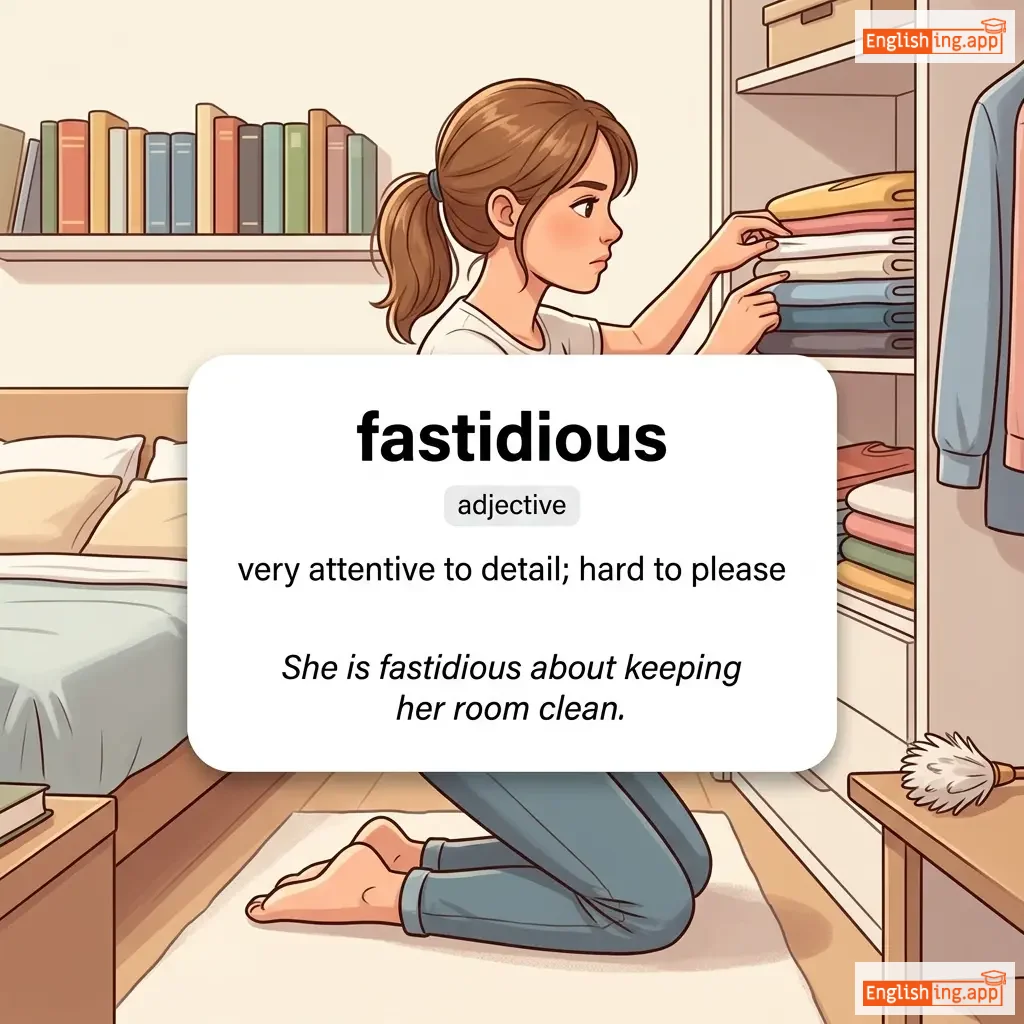
fastidious definition card — visual illustration of the meaning
adjective
/fæˈstɪdiəs/
几帳面な、細かいことにこだわる (kichoumena, komakai koto ni kodawaru)

very attentive to detail; hard to please

"She is fastidious about keeping her room clean."

"彼女は部屋を清潔に保つことに非常に几帳面です。" (Kanojo wa heya wo seiketsu ni tamotsu koto ni hijou ni kichoumen desu.)
adjective, noun
/fæt/
太っている (futotteiru)

having a lot of excess flesh; a natural oily substance in animal bodies

"Eating too much fast food can make you fat."

"ファストフードを食べ過ぎると太ることがあります。" (Fasuto fūdo o tabesugiru to futoru koto ga arimasu.)
adjective
/ˈfeɪtl/
致命的 (chimiteki)

causing death; leading to disaster

"The accident proved fatal for the driver."

"その事故は運転手にとって致命的だった。" (Sono jiko wa unten-shu ni totte chimiteki datta.)
noun
/ˈfeɪ.tə.lɪ.zəm/
運命論 (unmeiron)

the belief that all events are predetermined and inevitable

"He embraced fatalism, believing that nothing he did could change his destiny."

"彼は運命論を受け入れ、自分の行動が運命を変えることはできないと信じていました。" (Kare wa unmeiron o ukeire, jibun no kōdō ga unmei o kaeru koto wa dekinai to shinjite imashita.)
noun
/fəˈtæləti/
致命的な事故 (chimeiteki na jiko)

An occurrence of death by accident, disaster, or violence.

"The accident resulted in one fatality."

"その事故で1人が死亡した。" (Sono jiko de 1-ri ga shibō shita.)
adverb
/ˈfeɪ.təl.i/
致命的に (chimeiteki ni)

in a way that causes death; with deadly consequences; critically

"The accident fatally injured two passengers."

"事故は二人の乗客を致命的に負傷させた。" (Jiko wa futari no jōkyaku o chimeiteki ni fushō saseta.)
Fate definition card — visual illustration of the meaning
noun
/feɪt/
運命 (unmei)

the development of events beyond a person's control, regarded as determined by a supernatural power

"She believed it was her fate to become a teacher."

"彼女は教師になる運命だと信じていた。" (Kanojo wa kyoushi ni naru unmei da to shinjite ita.)
adjective
/ˈfeɪt.fəl/
運命的または致命的 (unmeiteki matawa chin'iteki)

having significant or disastrous consequences

"Their fateful decision changed the course of history."
"彼らの運命的な決定は歴史の流れを変えました。" (Karera no unmeiteki na kettei wa rekishi no nagare o kaemashita.)
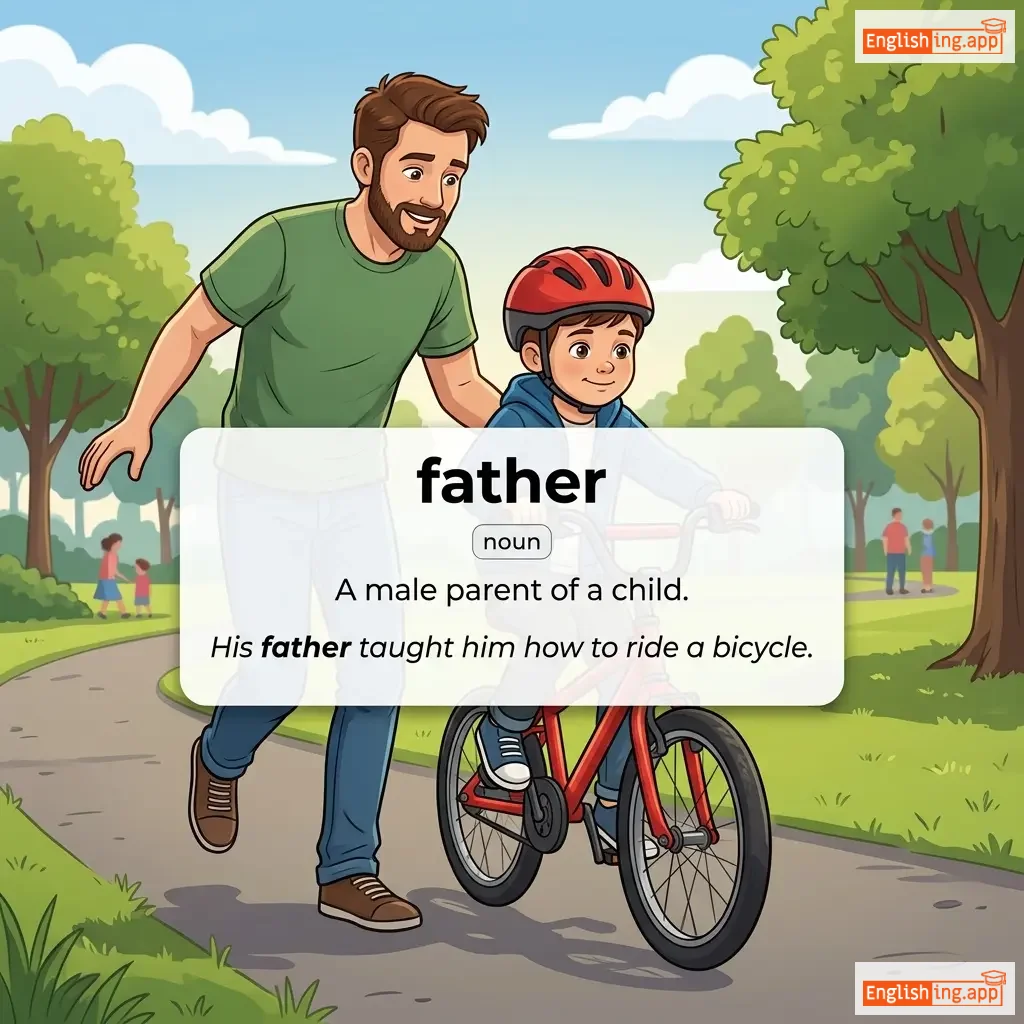
father definition card — visual illustration of the meaning
noun
/ˈfɑːðər/
幸福 (kōfuku)

A male parent of a child.

"His father taught him how to ride a bicycle."

"彼女は賞を受け取ったとき、その幸せを隠せなかった。" (Kanojo wa shō o uketotta toki, sono kōfuku o kakusenakatta.)
adjective
/ˈfɑːð.ər.ləs/
父親がいない (chichioya ga inai)

without a father

"The fatherless child relied on the support of his community."
"その父親がいない子供は、コミュニティの支援に頼っていました。" (Sono chichioya ga inai kodomo wa, komyuniti no shien ni tayotte imashita.)
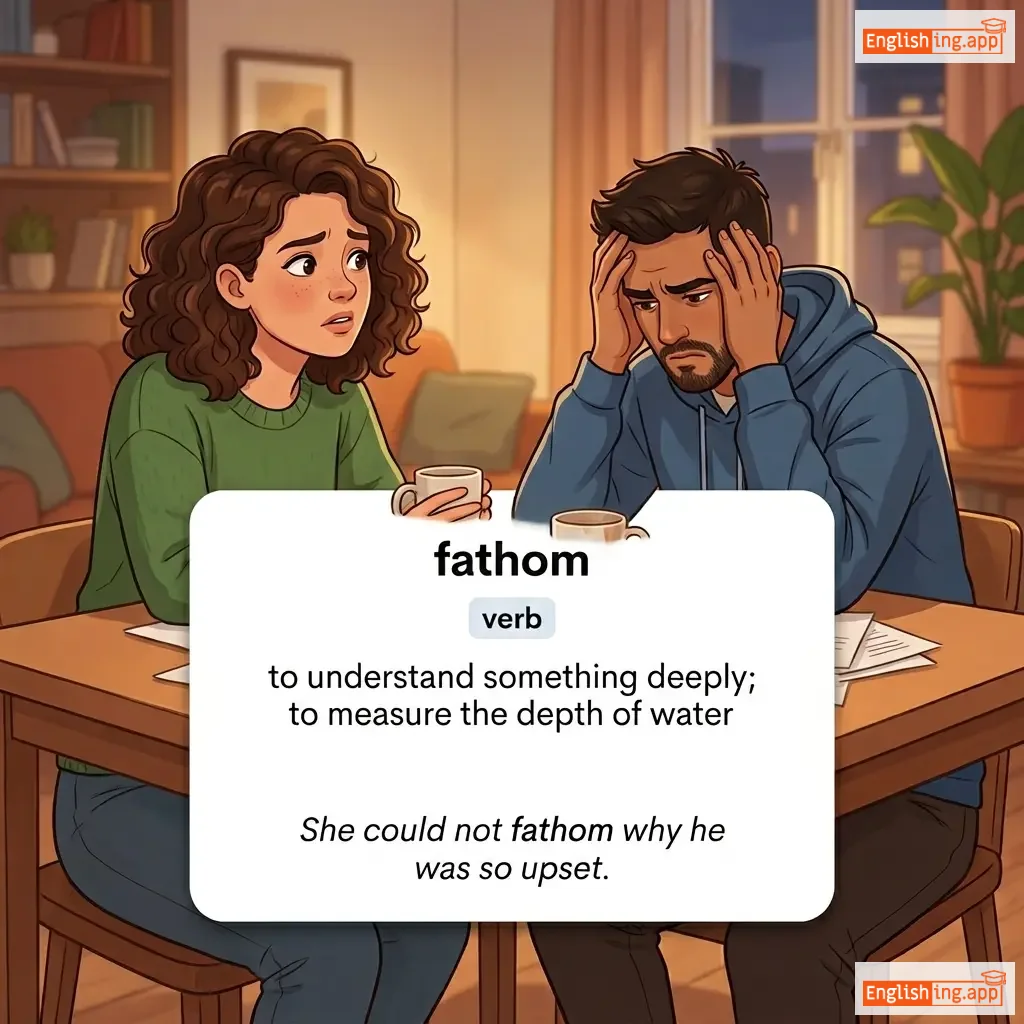
fathom definition card — visual illustration of the meaning
verb
/ˈfæð.əm/
理解する、深く理解する (rikai suru, fukaku rikai suru)

to understand something deeply; to measure the depth of water

"She could not fathom why he was so upset."

"彼女は彼がなぜそんなに怒っているのか理解できませんでした。" (Kanojo wa kare ga naze sonnani okotteiru no ka rikai dekimasen deshita.)
adjective
/ˈfæð.əm.ləs/
理解不可能な、または測定不可能な; 非常に深い (rikai fukanōna, matawa sokutei fukanōna; hijō ni fukai)

impossible to understand or measure; very deep

"The ocean seemed fathomless as it stretched to the horizon."

"海は地平線まで広がると、測り知れないように見えました。" (Umi wa chiheisen made hirogaru to, hakarishirenai yō ni miemashita.)
fatigue definition card — visual illustration of the meaning
noun
/fəˈtiːɡ/
疲労 (hirou)

extreme tiredness or exhaustion

"After working for ten hours, she felt a deep sense of fatigue."
"10時間働いた後、彼女は深い疲労を感じた。" (Jūjikan hataraita ato, kanojo wa fukai hirou o kanjita.)
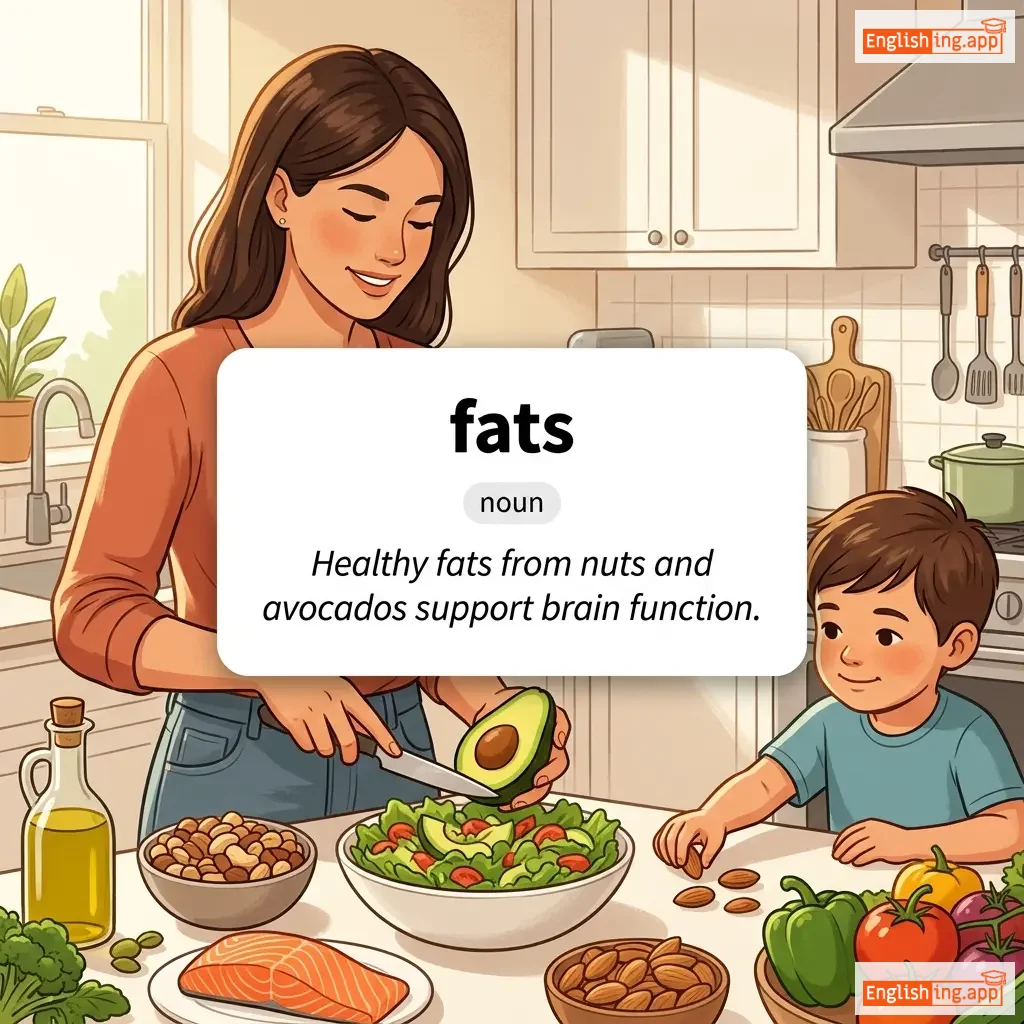
fats definition card — visual illustration of the meaning
noun
/fæts/
脂肪 (shibō)

Essential macronutrients that provide energy, support cell growth, and protect organs while helping absorb vitamins.

"Healthy fats from nuts and avocados support brain function."
"ナッツとアボカドから得られる健康的な脂肪は、脳機能をサポートします。" (Nattsu to abokado kara erareru ken kōtekina shibō wa, nō kinō o sapōto shimasu.)
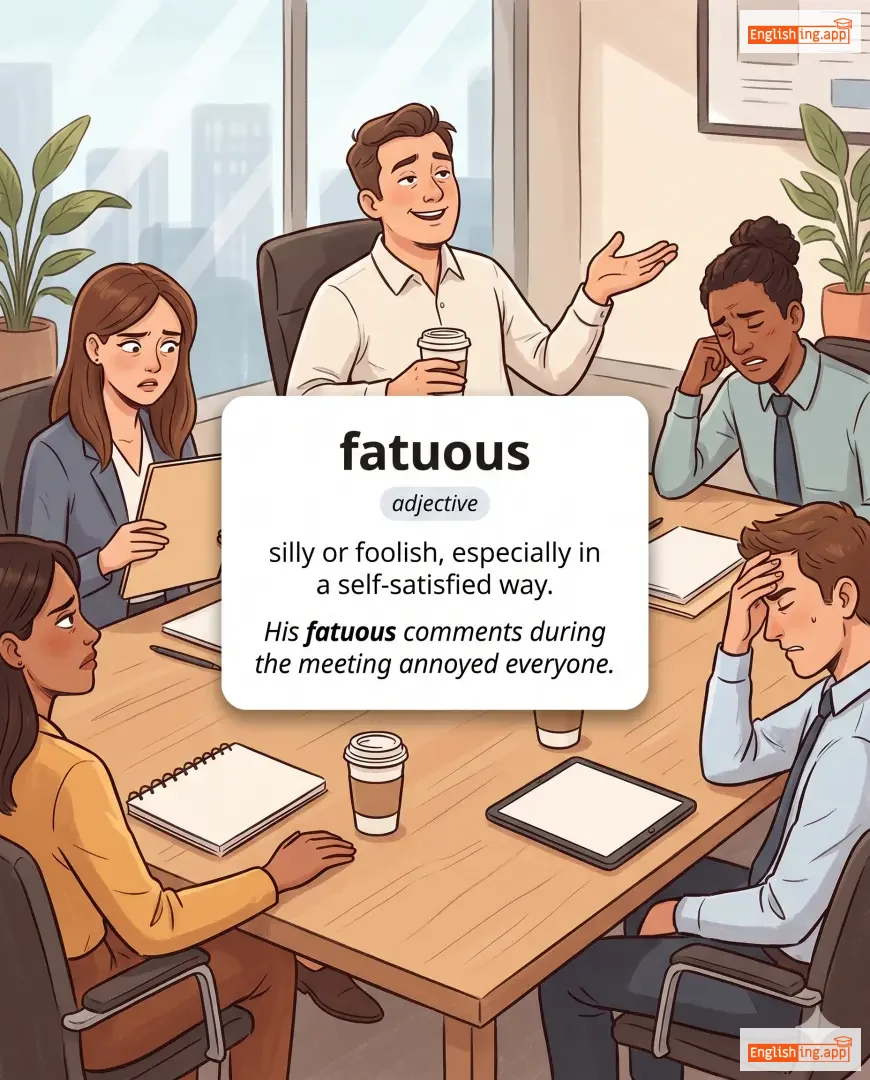
fatuous definition card — visual illustration of the meaning
adjective
/ˈfætʃuəs/
愚か (oroka)

silly or foolish, especially in a self-satisfied way

"His fatuous comments during the meeting annoyed everyone."
"会議中に彼の愚かなコメントは皆を苛立たせました。" (Kaigi-chuu ni kare no oroka na komento wa mina o iradatasemashita.)
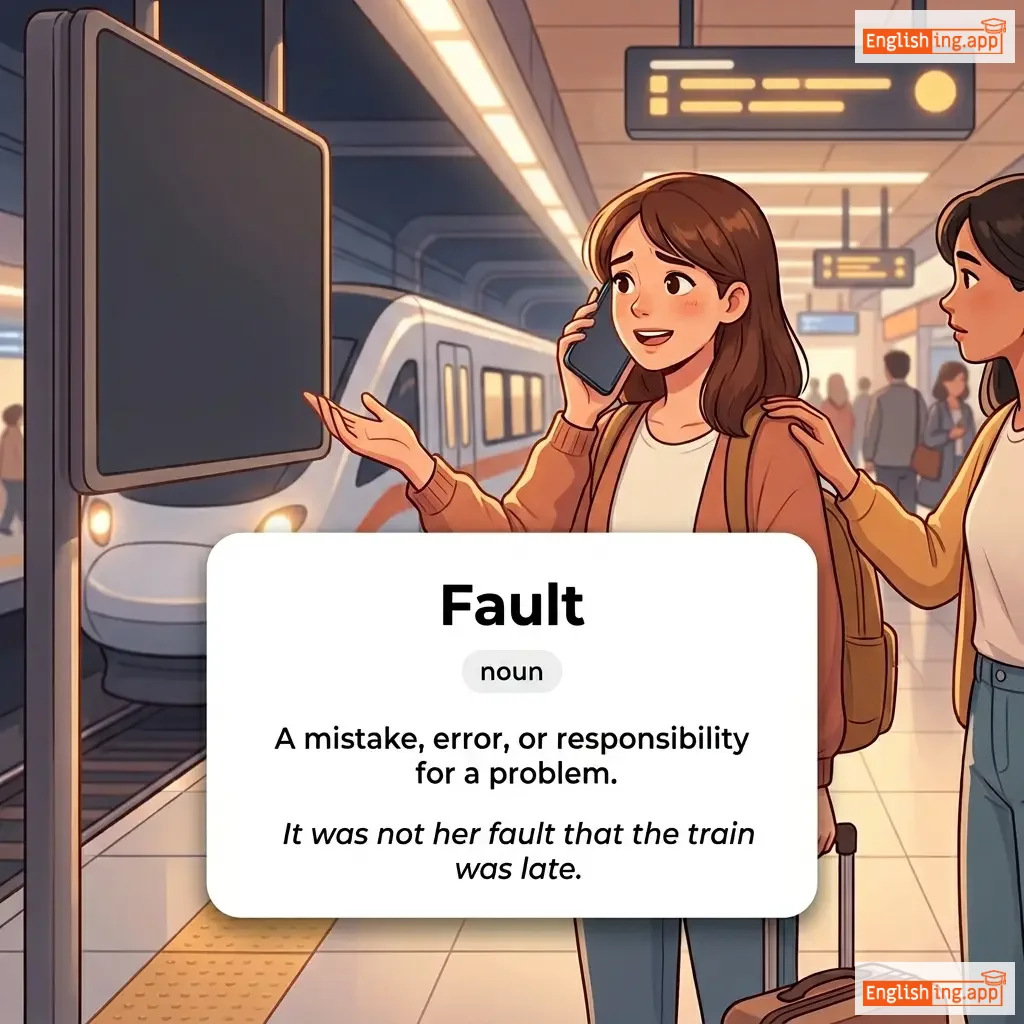
Fault definition card — visual illustration of the meaning
noun
/fɔːlt/
過失 (kashitsu)

A mistake, error, or responsibility for a problem.

"It was not her fault that the train was late."
"列車が遅れたのは彼女の過失ではありませんでした。" (Ressha ga okureta no wa kanojo no kashitsu de wa arimasen deshita.)
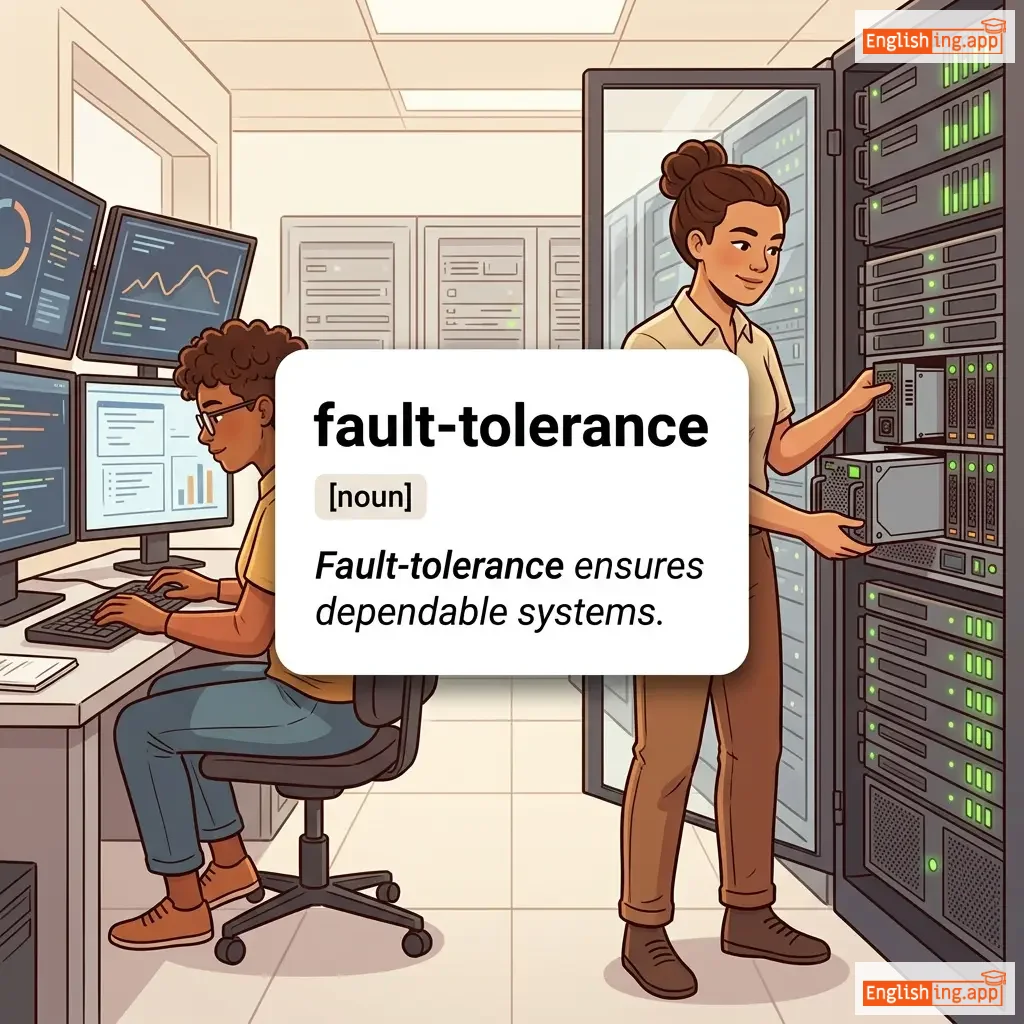
fault-tolerance definition card — visual illustration of the meaning
noun
fɔːlt ˈtɒl.ər.əns
フォールトトレランス (fōruto torehansu)

The ability of a system to continue operating properly in the event of the failure of some of its components.

"Fault-tolerance ensures dependable systems."

"フォールトトレランスは信頼性のあるシステムを保証します。" (Fōruto torehansu wa shinraisei no aru shisutemu o hoshō shimasu.)
noun
/ˈfɔːltˌfaɪndər/
欠点探し人 (kettentagasihito)

a person who habitually finds fault with others

"He is such a faultfinder that nothing anyone does is ever good enough."

"彼は欠点探し人で、誰かが何かをしても決して十分ではありません。" (Kare wa kettentagasihito de, dareka ga nanika o shite mo kesshite jūbun de wa arimasen.)
adjective
/ˈfɔːlti/
欠陥のある (kekkan no aru)

Having defects or imperfections; not working properly

"The device stopped working because it was faulty."

"その装置は欠陥のあるため動作を停止しました。" (sono souchi wa kekkan no aru tame dousa o teishi shimashita)
noun
/fɔːn/
ファウノ (神話の生き物) (fauno (shinwa no ikimono))

a mythological creature that is half human and half goat

"The sculpture depicted a playful faun dancing in the forest."
"彫刻は、森の中で踊っている遊び心のあるファウンを描いていました。" (Choukoku wa, mori no naka de odotte iru asobigokoro no aru faun wo egaite imashita.)
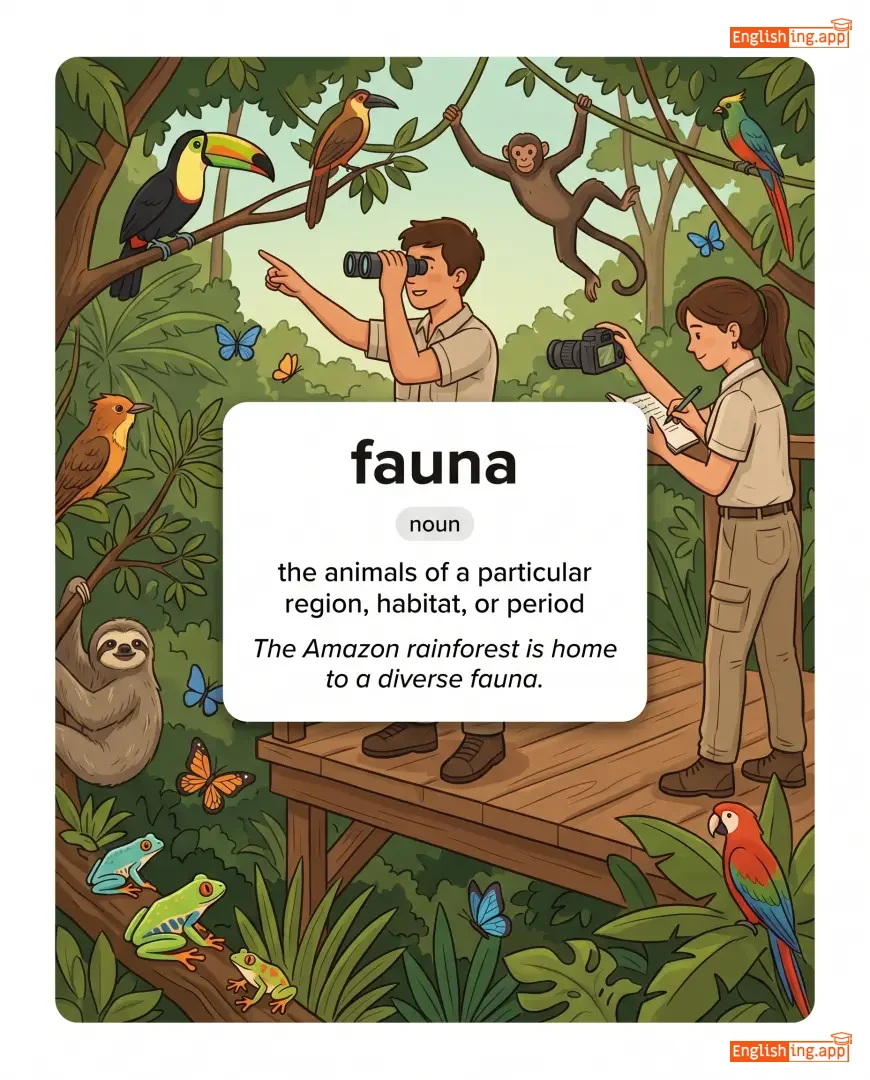
fauna definition card — visual illustration of the meaning
noun
/ˈfɔːnə/
動物相 (dōbutsu-sō)

the animals of a particular region, habitat, or period

"The Amazon rainforest is home to a diverse fauna."

"アマゾン熱帯雨林は多様な動物相を擁しています。" (Amazon nettai urin wa tayō na dōbutsu-sō o yōshiteimasu.)
noun
/foʊ ˈpɑː/
社会的な失敗 (shakaiteki na shippai)

a social blunder or mistake in etiquette

"He committed a major faux pas by forgetting her birthday."
"彼は彼女の誕生日を忘れて大きな社会的な失敗を犯した。" (Kare wa kanojo no tanjōbi o wasurete ōkina shakaiteki na shippai o okashita.)
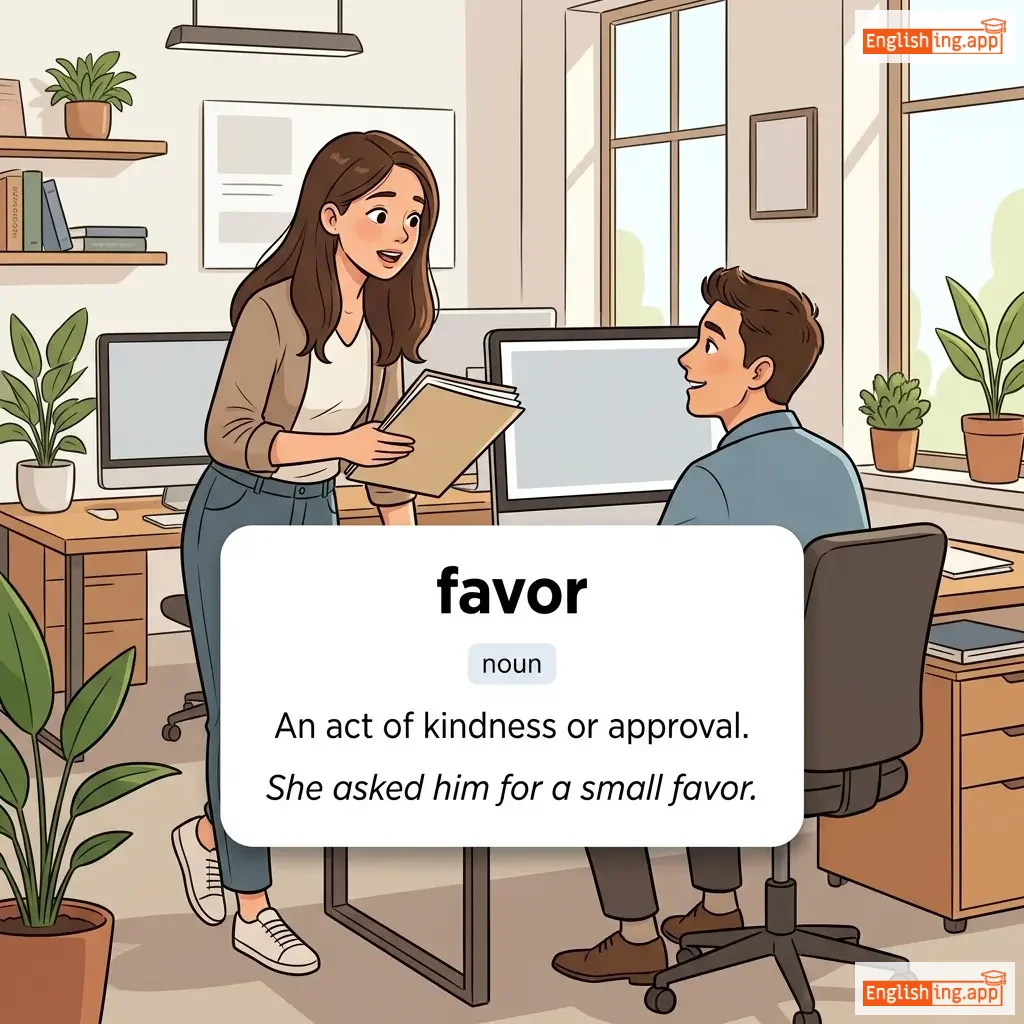
favor definition card — visual illustration of the meaning
noun
/ˈfeɪvər/
お願い (onegai)

An act of kindness or approval.

"She asked him for a small favor."

"彼女は彼に小さなお願いをした。" (Kanojo wa kare ni chiisana onegai o shita.)
adjective
/ˈfeɪvərəbəl/
好ましい (konomashii)

expressing approval or support; advantageous

"The weather conditions were favorable for the outdoor event."

"屋外イベントには好ましい天候でした。" (Okugai ibento ni wa konomashii tenkou deshita.)