語彙集

英単語辞書 | 単語の意味、定義、例文

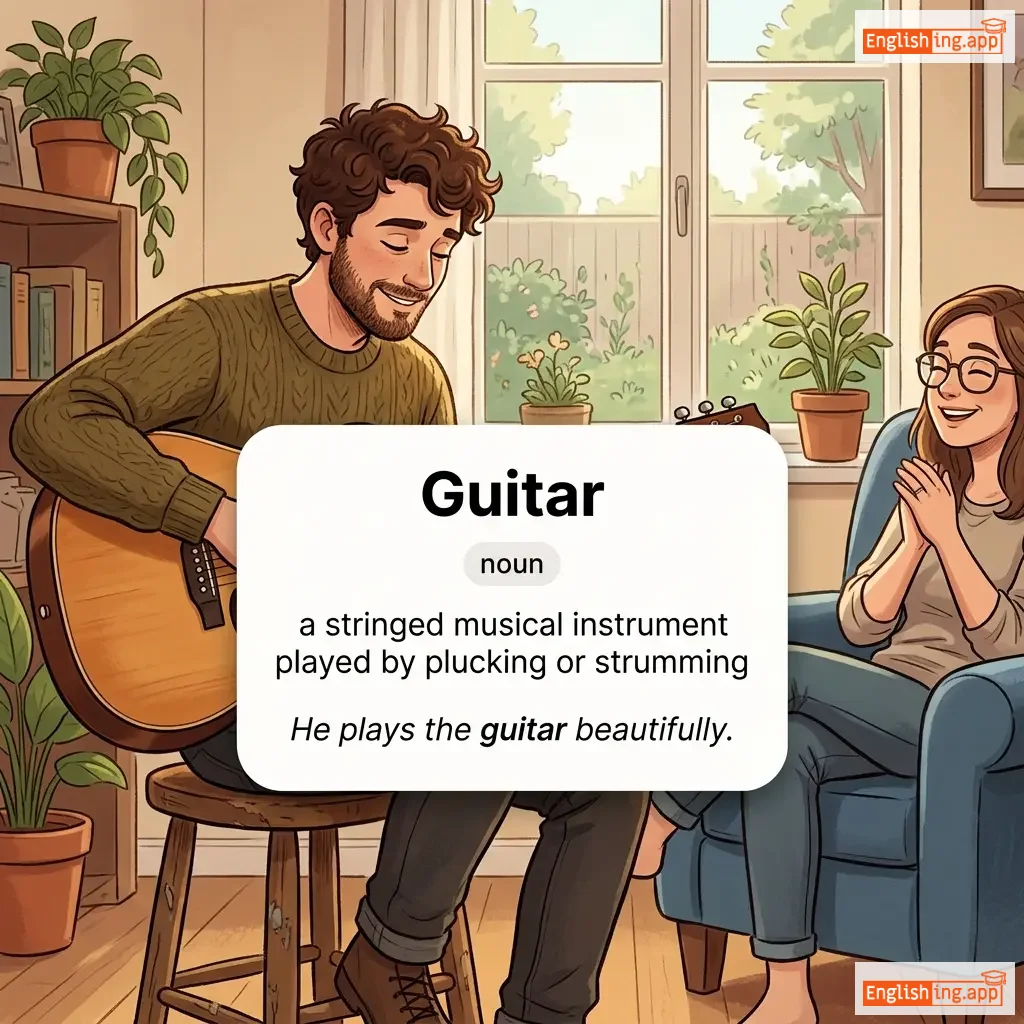
Guitar definition card — visual illustration of the meaning
noun
/ɡɪˈtɑːr/
ギター (gitā)

a stringed musical instrument played by plucking or strumming

"He plays the guitar beautifully."

"彼はギターを素晴らしく弾きます。" (Kare wa gitā o subarashiku hikimasu.)
noun
/ɡʌlf/
(wan)

a deep inlet of the sea almost surrounded by land; a wide gap or difference between people or groups

"The Persian Gulf is an important waterway for international shipping and oil transport."
"ペルシャ湾は国際的な輸送と石油輸送の重要な水路です。" (Perusha wan wa kokusai-teki na yusō to sekiyu yusō no jūyō na suiro desu.)
🕊️

Gull

noun, verb
/ɡʌl/

A seabird with long wings and usually white and gray feathers; as a verb, to deceive or trick someone.

"The fisherman watched the gulls circle above the boat."

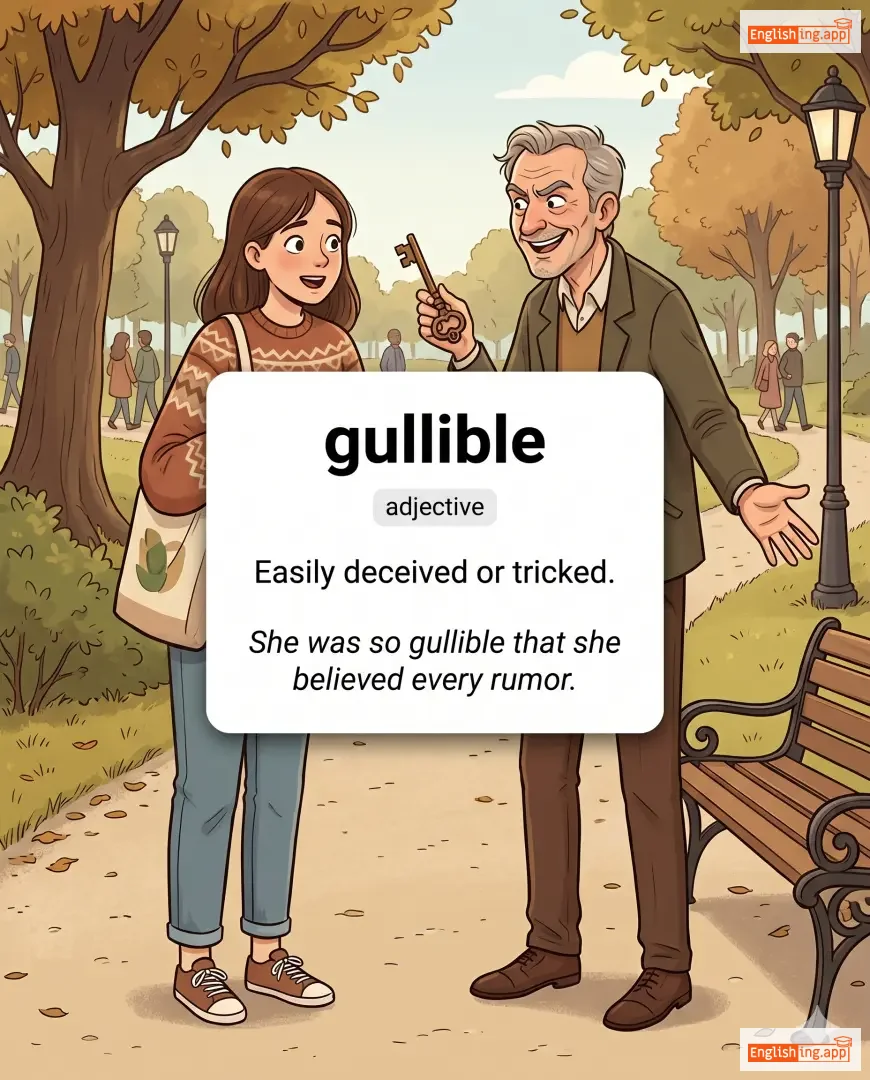
gullible definition card — visual illustration of the meaning
adjective
/ˈɡʌl.ə.bəl/
簡単に騙される (kantan ni damasareru)

Easily deceived or tricked.

"She was so gullible that she believed every rumor."

"彼女は非常に簡単に騙されるので、あらゆる噂を信じてしまった。" (Kanojo wa hijou ni kantan ni damasareru node, arayuru uwasa wo shinjite shimatta.)
noun
/ˈɡʌl.i/
渓谷、小川 (keikoku, ogawa)

A narrow channel or ravine worn away by water.

"After the storm, the road was cut by a deep gully."

"嵐の後、道路は深い谷によって切り開かれました。" (Arashi no ato, dōro wa fukai tani ni yotte kirihirakaremashita.)
🍬

Gum

noun, verb
/ɡʌm/

A sticky substance from plants or used as adhesive; also the tissue around teeth.

"He chewed gum while waiting for the bus."

noun
/ˈɡʌmp.ʃən/
勇気, 発起 (yūki, hakki)

Courage, resourcefulness, or initiative.

"It takes real gumption to start your own business."

"自分のビジネスを始めるためには、真の勇気が必要です。" (Jibun no bijinesu o hajimeru tame ni wa, shin no yūki ga hitsuyō desu.)
noun
/ɡʌn/
(jū)

a weapon that shoots bullets or other projectiles

"The police officer carried a gun for protection."

"警察官は保護のために銃を携帯していました。" (Keisatsukan wa hogo no tame ni jū o keitai shite imashita.)
noun
/ˈɡʌnˌpaʊdər/
火薬 (kayaku)

explosive powder used in guns and fireworks

"Gunpowder was invented in ancient China."

"火薬は古代中国で発明されました。" (Kayaku wa kodai Chūgoku de hatsumei saremashita.)
noun
/ˈɡʌp.i fɪʃ/
グッピー (guppi)

a small colorful freshwater fish popular in aquariums, known for its vibrant colors and easy breeding

"The guppy fish is perfect for beginners who want to start an aquarium."

"グッピーは、水槽を始めたい初心者にぴったりです。" (guppi wa suisou o hajimetai shoshinsha ni pittari desu)
verb
/ɡʌʃ/
流れる (nagareru)

to flow out suddenly and forcefully, or to express something enthusiastically

"Tears began to gush from her eyes."

"涙が彼女の目からガシュと流れ出した。" (Namida ga kanojo no me kara gashu to nagaredashita.)
noun
/ɡʌst/
突風 (tokkū)

a sudden strong rush of wind or air

"A sudden gust of wind blew the papers away."
"突然の風が紙を吹き飛ばした。" (totsuzen no kaze ga kami o fukitobashita.)
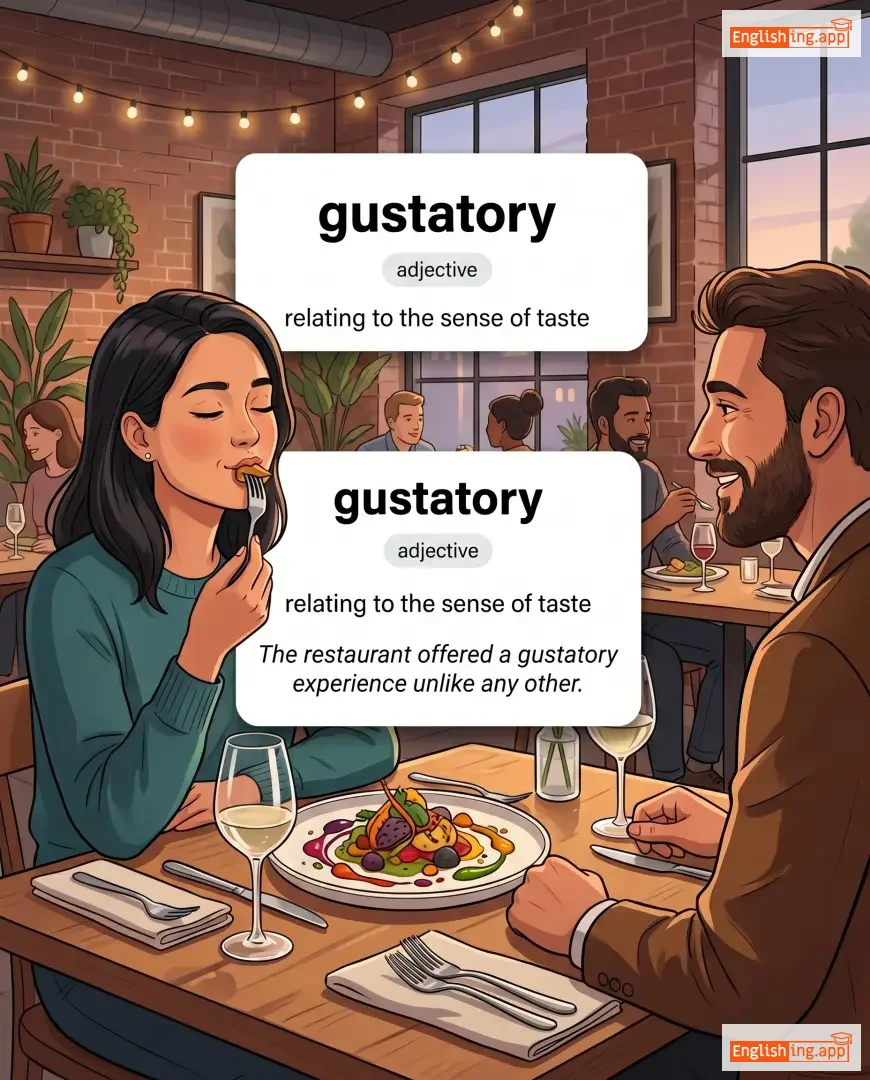
gustatory definition card — visual illustration of the meaning
adjective
/ˈɡʌstəˌtɔːri/
味覚の (mikaku no)

relating to the sense of taste

"The restaurant offered a gustatory experience unlike any other."

"レストランは他に類を見ない味覚体験を提供しました。" (Resutoran wa hoka ni rui o minai mikaku taiken o teikyō shimashita.)
noun
/ˈɡʌstoʊ/
熱意 (netsui)

great enjoyment, energy, or enthusiasm in doing something

"She sang the song with great gusto."

"彼女はその歌を熱意を持って歌った。" (Kanojo wa sono uta o netsui o motte utatta.)
adjective
/ˈɡʌsti/
風の強い (kaze no tsuyoi)

characterized by strong, sudden bursts of wind

"It was a cold, gusty day by the sea."

"海辺では寒くて風の強い日でした。" (Umibe de wa samukute kaze no tsuyoi hi deshita.)
noun/verb
/ɡʌt/
胃 / 勇気 (i / yūki)

The stomach or belly; also used for courage, instinct, or to remove the inside of something.

"He had the guts to stand up for his beliefs."

"彼は自分の信念を守る勇気を持っていました。" (Kare wa jibun no shinnen o mamoru yūki o motte imashita.)
noun
/ɡaɪ/
(otoko)

an informal term for a man; sometimes used to refer to a person in general

"That guy over there is my best friend."

"あの男は私の親友です。" (Ano otoko wa watashi no shinyū desu.)
verb
/ˈɡʌzəl/
がぶ飲みする (gabu nomi suru)

to drink greedily or excessively

"He guzzled three cans of soda in a few minutes."

"彼は数分で3缶のソーダを飲み干した。" (Kare wa suufun de san kan no sōda o nomihoshita.)
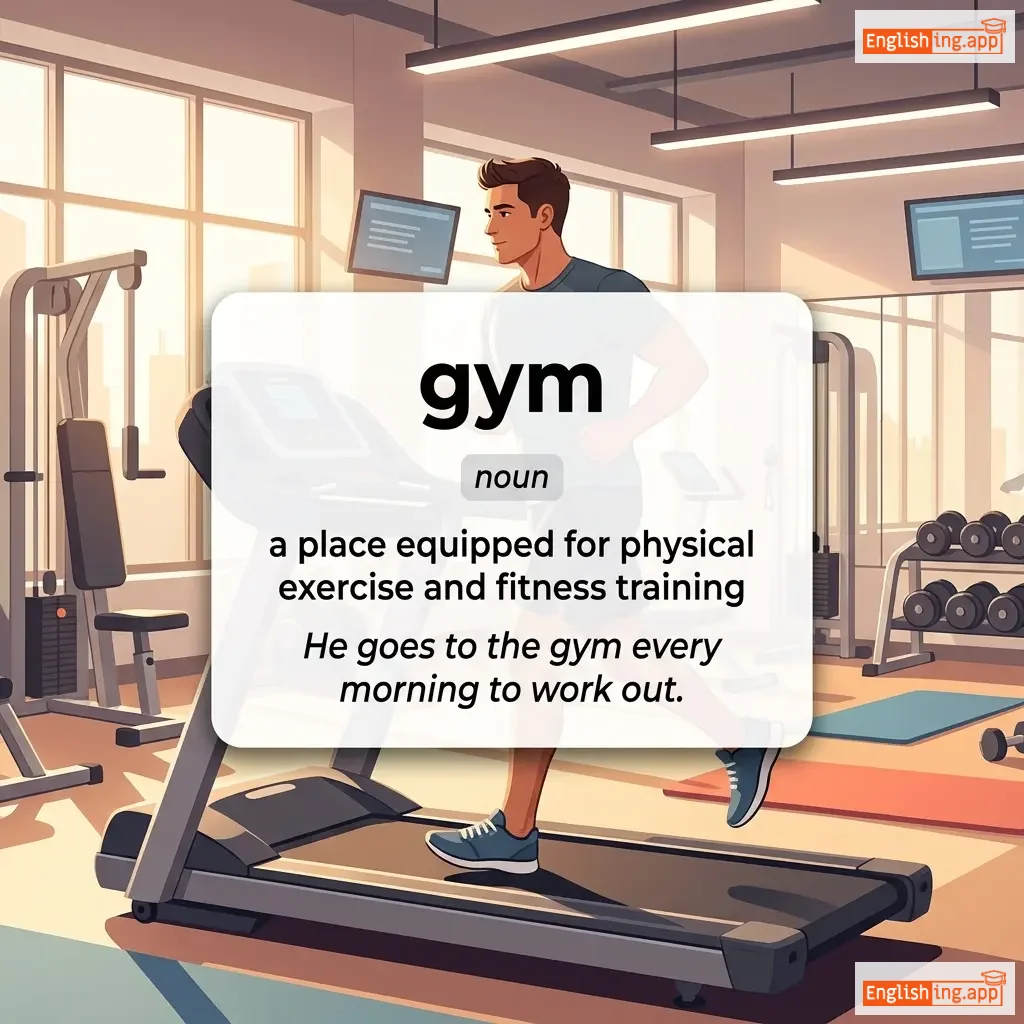
gym definition card — visual illustration of the meaning
🏋️‍♂️

gym (ジム)

noun
/dʒɪm/
ジム (jimu)

a place equipped for physical exercise and fitness training

"He goes to the gym every morning to work out."

"彼は毎朝ジムに行ってトレーニングをします。" (Kare wa mai asa jimu ni itte torēningu o shimasu.)
noun
/ˌɡaɪnəˈkɒkrəsi/
女性支配 (josei shihai)

a society or government ruled by women

"The ancient tribe was known for its gynecocracy, where women held all positions of power."

"その古代の部族は、女性がすべての権力を握るギネコクラシーで知られていました。" (Sono kodai no buzoku wa, josei ga subete no kenryoku o nigiru ginekokurashī de shirarete imashita.)
noun
/ˌɡaɪnəˈkɒlədʒi/
婦人科 (fujinka)

the branch of medicine dealing with women's reproductive health

"She decided to specialize in gynecology after medical school."

"彼女は医科大学を卒業した後、婦人科を専門にすることに決めました。" (Kanojo wa ika daigaku o sotsugyō shita ato, fujinka o senmon ni suru koto ni kimemashita.)
verb
/ˈdʒaɪreɪt/
速く回転する (hayaku kaiten suru)

to move or spin quickly in circles

"The dancer gyrated wildly to the rhythm of the drums."
"ダンサーはドラムのリズムに合わせて激しく回転しました。" (Dansā wa doramu no rizumu ni awasete hageshiku kaiten shimashita.)
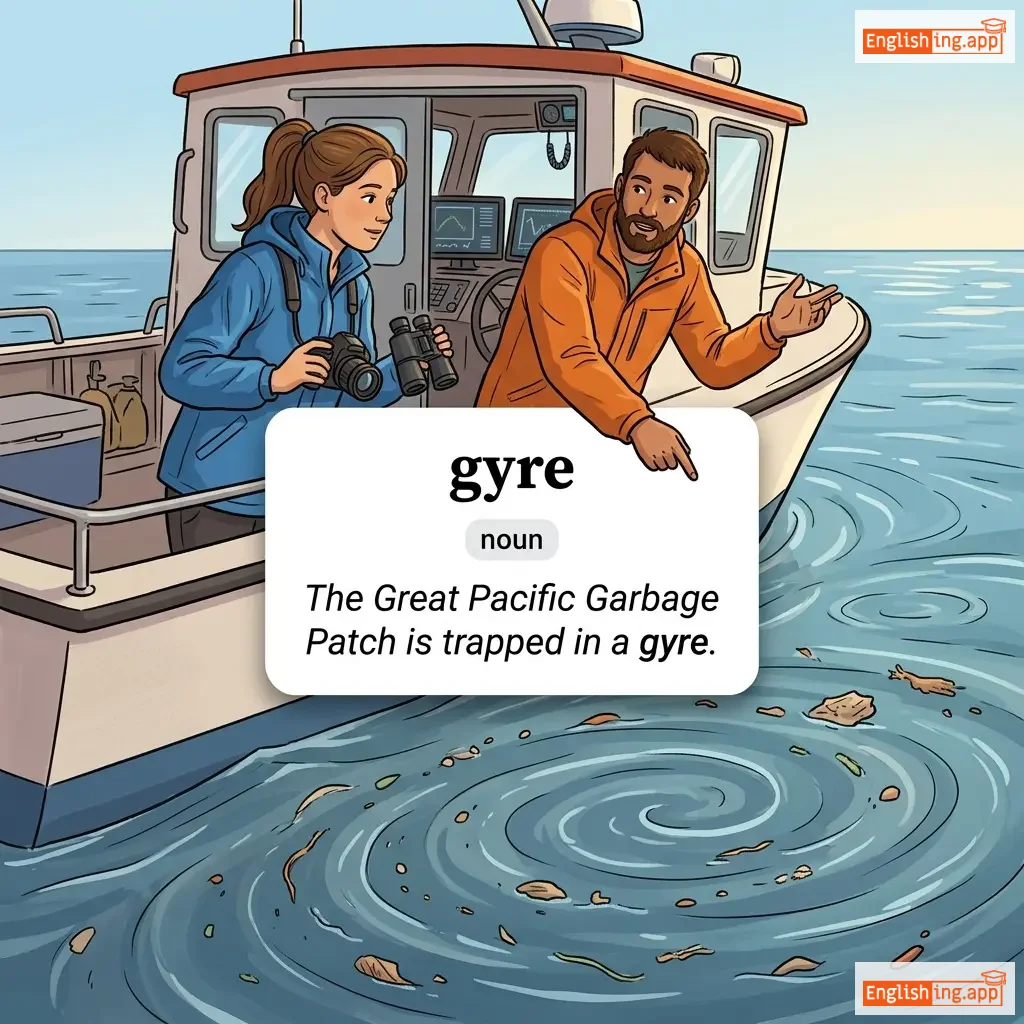
gyre definition card — visual illustration of the meaning
noun
/ˈdʒaɪər/
渦, 円形海洋流 (uza, enkei kaiyo-ryu)

A circular or spiral motion or form, especially a giant circular oceanic surface current.

"The Great Pacific Garbage Patch is trapped in a gyre."

"太平洋のゴミの大きな塊は渦に閉じ込められています。" (Taiheiyo no gomi no okina katamari wa uza ni tojikomerareteimasu.)
noun
/ˈdʒaɪrəˌskoʊp/

A device consisting of a wheel or disk mounted so it can spin rapidly and maintain orientation, used for navigation and balance.

"The airplane's navigation system relies on a gyroscope for stability."

interjection
/hɑː/
ハ!(驚きや喜びを表現する言葉) (Ha! (Odoroki ya yorokobi wo hyougen suru kotoba))

used to express amusement, surprise, or triumph

"Ha! I knew you couldn’t resist joining us."
"ハ!君が僕たちに加わることを抵抗できないって知っていたよ。" (Ha! Kimi ga bokutachi ni kuwaeru koto wo teikou dekinai tte shitteta yo.)
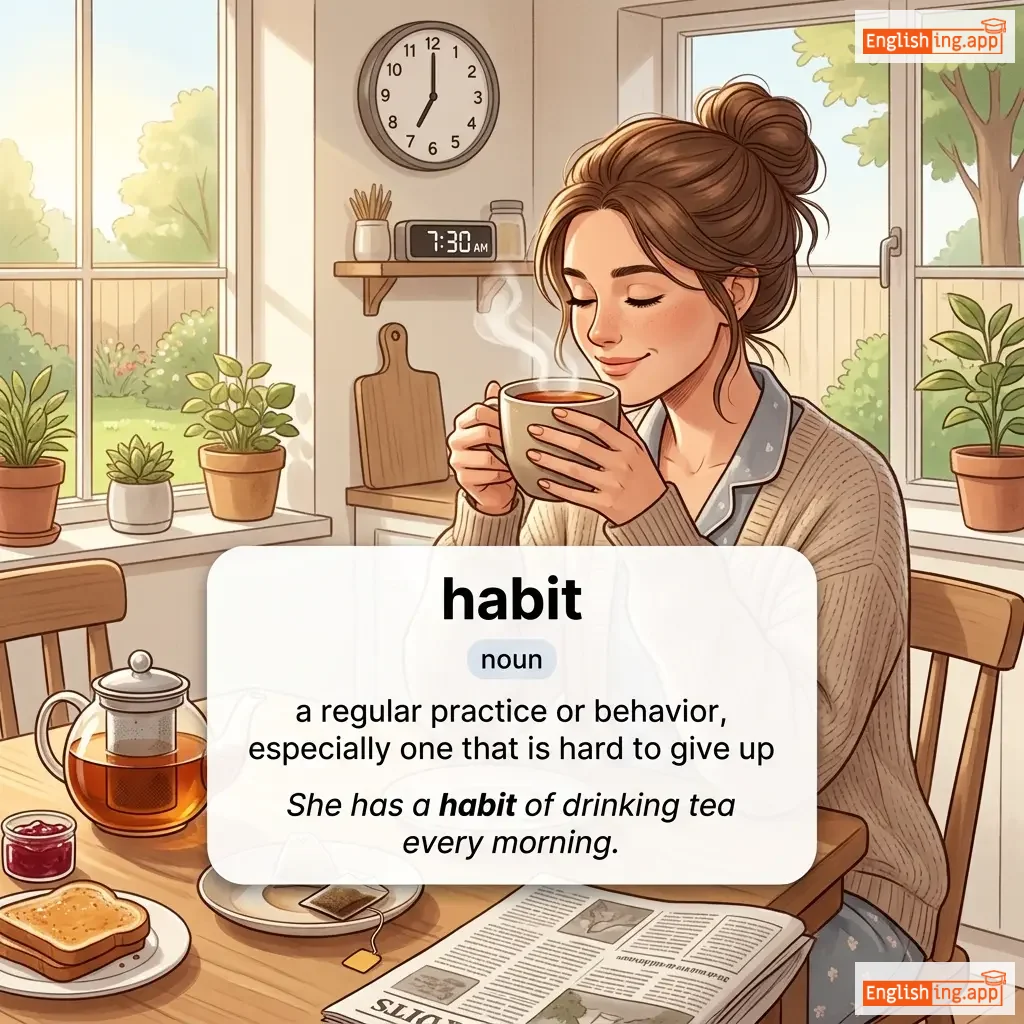
habit definition card — visual illustration of the meaning
noun
/ˈhæb.ɪt/
習慣 (shūkan)

a regular practice or behavior, especially one that is hard to give up

"She has a habit of drinking tea every morning."
"彼女は毎朝お茶を飲む習慣がある。" (Kanojo wa maiasa ocha o nomu shūkan ga aru.)
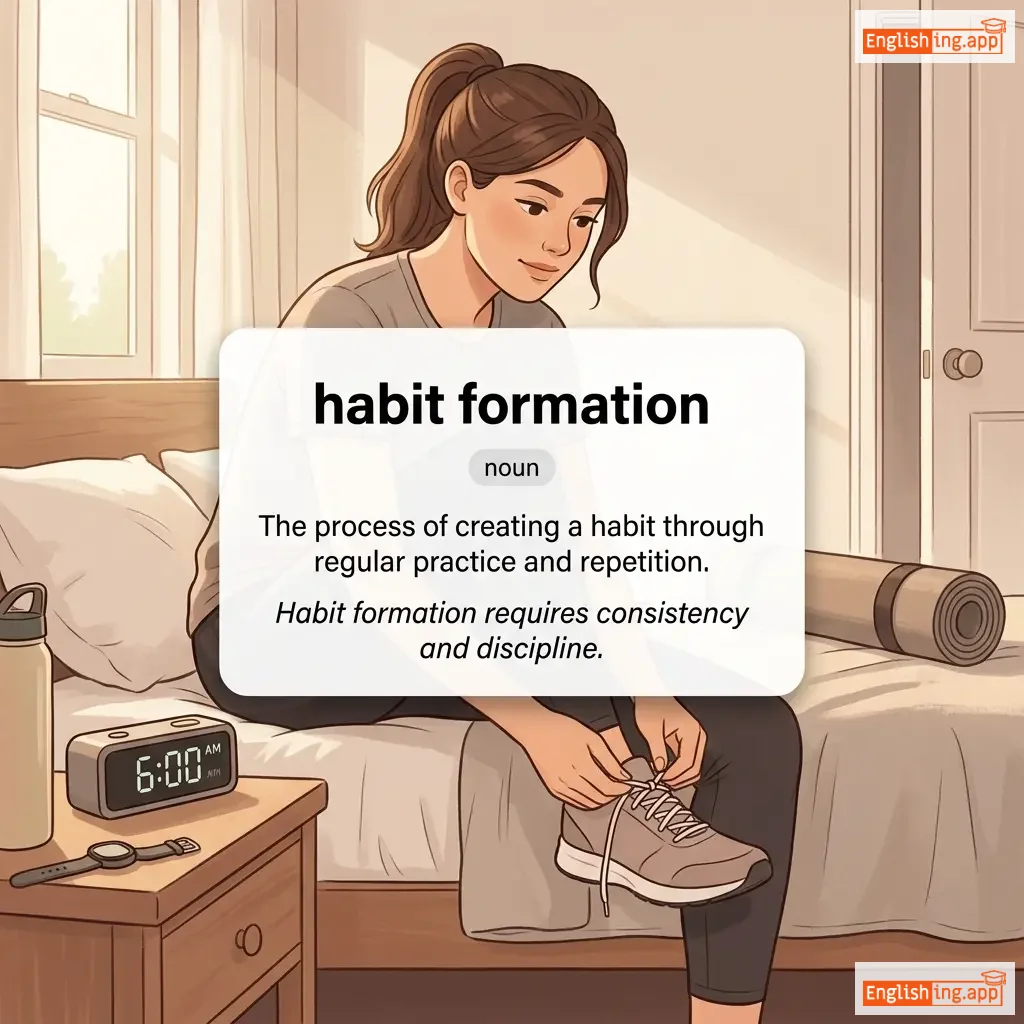
habit formation definition card — visual illustration of the meaning
noun
ˈhæb.ɪt fɔːrˌmeɪ.ʃən
習慣形成 (shūkan keisei)

The process of creating a habit through regular practice and repetition.

"Habit formation requires consistency and discipline."

"習慣形成には一貫性と規律が必要です。" (Shūkan keisei ni wa ikkansē to kiritsu ga hitsuyō desu.)
adjective
/ˈhæbɪtəbl/
住める (sumeru)

Suitable to live in; capable of sustaining life.

"Scientists are searching for habitable planets beyond our solar system."

"科学者たちは私たちの太陽系を超えた住める惑星を探しています。" (Kagakusha-tachi wa watashitachi no taiyōkei o koeta sumeru wakusei o sagashiteimasu.)
👨‍👩‍👧‍👦

habitant (ハビタント)

noun
/ˈhæbɪtənt/
住民 (jūmin)

An inhabitant; a person or animal that lives in a particular place.

"The habitants of the village were friendly and welcoming."
"村の住民は親切で歓迎してくれました。" (Mura no jūmin wa shinsetsu de kangei shite kuremashita.)
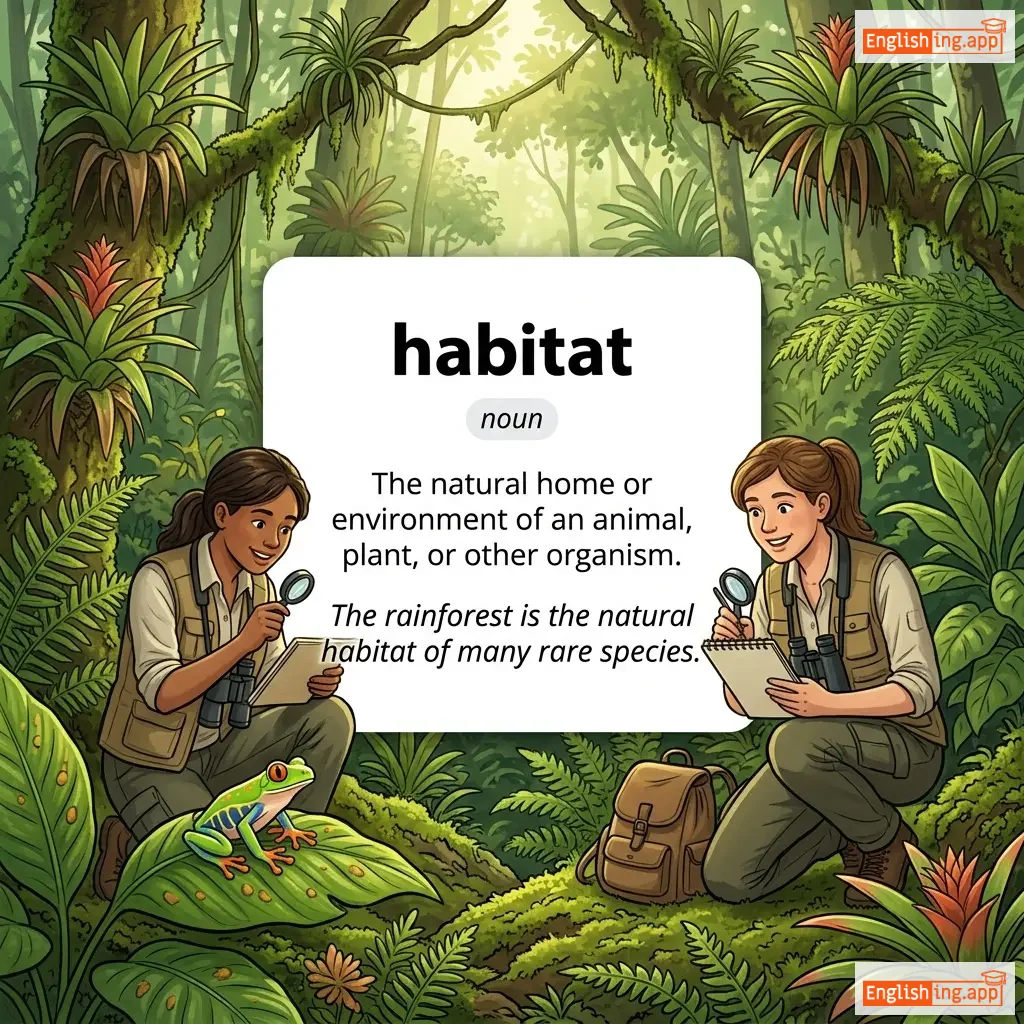
habitat definition card — visual illustration of the meaning
noun
/ˈhæbɪˌtæt/
生息地 (seikokuchi)

The natural home or environment of an animal, plant, or other organism.

"The rainforest is the natural habitat of many rare species."
"熱帯雨林は多くの希少種の自然な生息地です。" (Nettai urin wa ōku no kishō-shu no shizen na seikokuchi desu.)
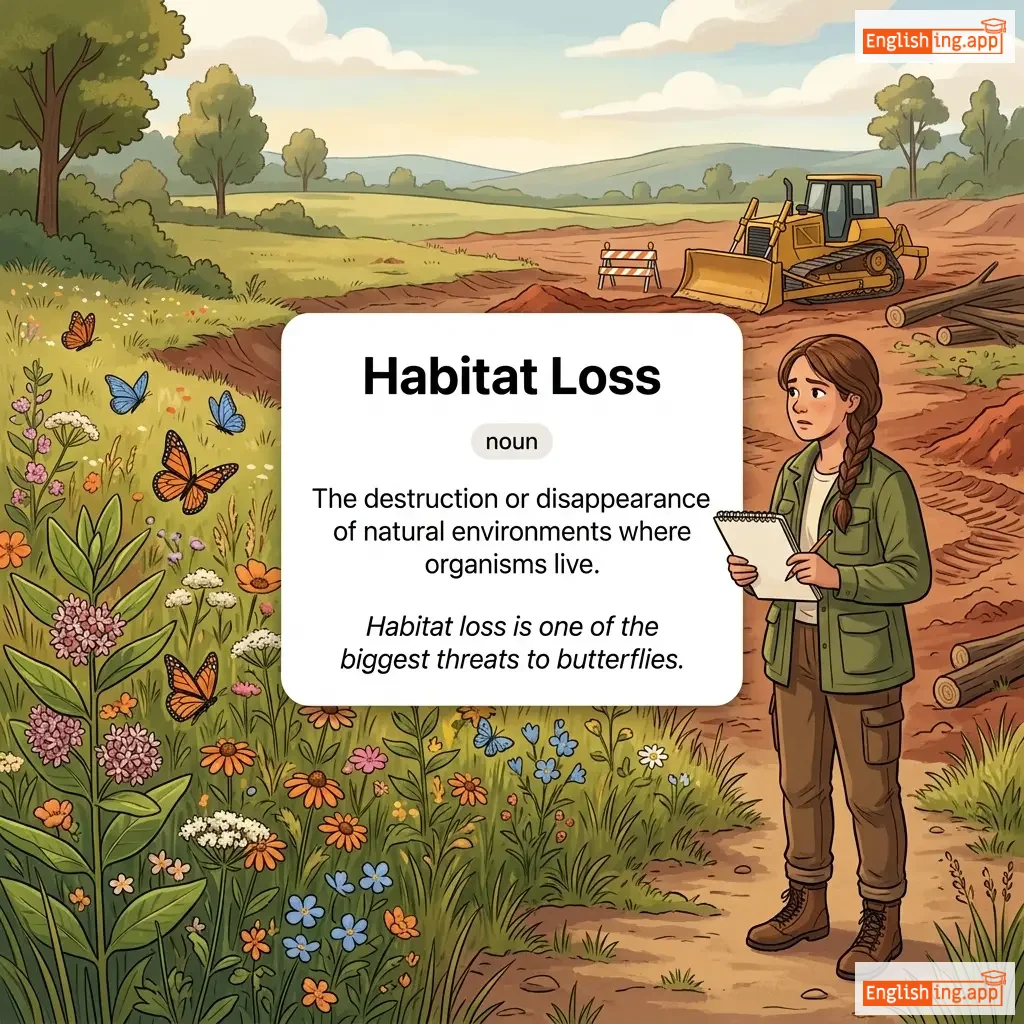
Habitat Loss definition card — visual illustration of the meaning
noun
ˈhæbɪtæt lɒs
生息地喪失 (seisokuchi sōshitsu)

The destruction or disappearance of natural environments where organisms live.

"Habitat loss is one of the biggest threats to butterflies."
"生息地の喪失は蝶々にとって最大の脅威の一つです。" (Seisokuchi no sōshitsu wa chōchō ni totte saidai no kyōi no hitotsu desu.)
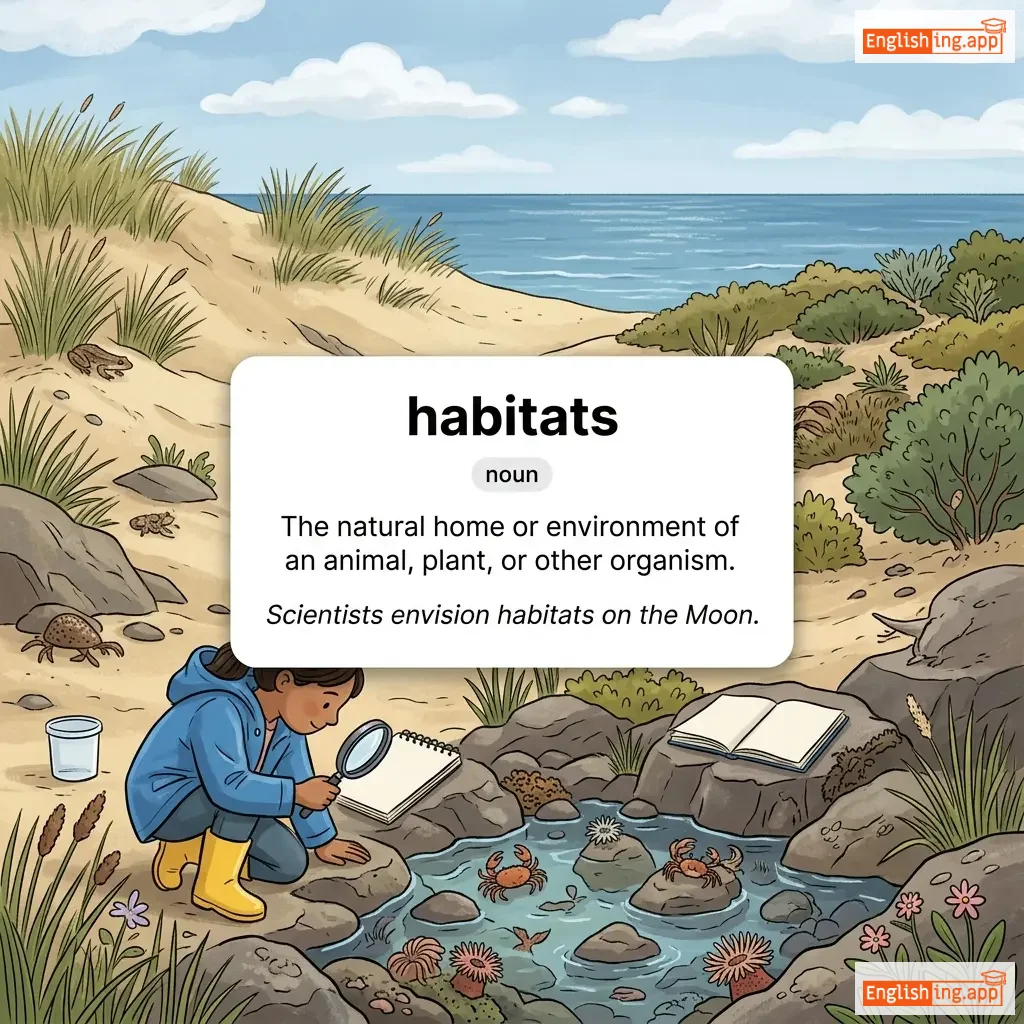
habitats definition card — visual illustration of the meaning
noun
ˈhæb.ɪ.tæts
生息地 (seisokuchi)

The natural home or environment of an animal, plant, or other organism.

"Scientists envision habitats on the Moon."

"科学者たちは月面にハビタッツを想像しています。" (Kagakusha-tachi wa getsumen ni habitats o sōzō shiteimasu.)
adjective
/həˈbɪtʃuəl/
習慣的な (shūkantēkina)

Done or doing constantly or as a habit; customary.

"He was a habitual latecomer to class."
"彼は授業に習慣的に遅刻していた。" (Kare wa jugyō ni shūkantēni chikoku shite ita.)
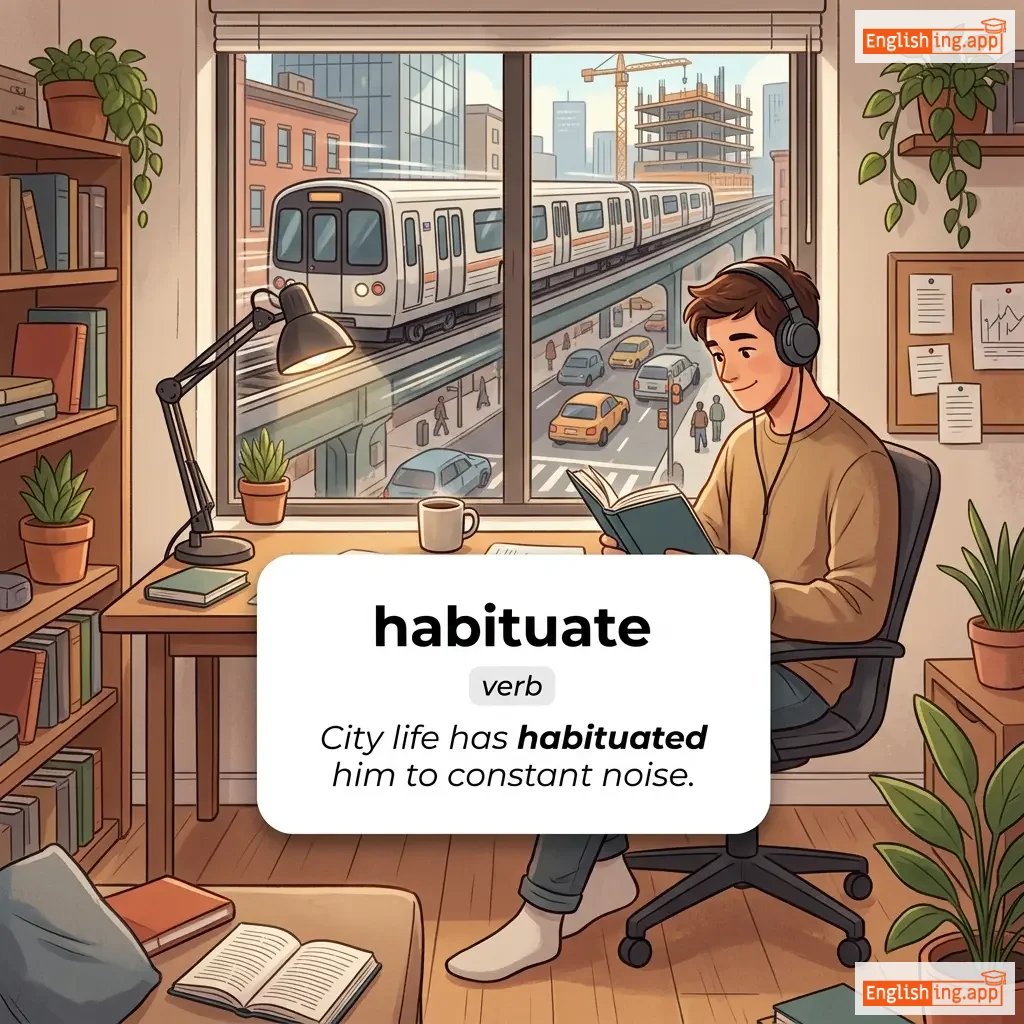
habituate definition card — visual illustration of the meaning
verb
/həˈbɪtʃueɪt/
慣れる (nareru)

to accustom someone or oneself to something through frequent exposure or experience

"City life has habituated him to constant noise."

"都市生活は彼を常に騒音に慣れさせた。" (Toshi seikatsu wa kare o jōnī sawon ni naresaseta.)
noun
/ˈhæbɪtjuːd/
習慣、慣習 (shūkan, kanshū)

a customary condition or mode of life; habitual practice

"He lived in a quiet habitude, avoiding the noise of the city."

"彼は静かな習慣の中で暮らしていた、都市の騒音を避けながら。" (Kare wa shizukana shūkan no naka de kurashite ita, toshi no sōon o sake-nagara.)
💻

hack

verb
/hæk/

to cut or chop roughly; to gain unauthorized access to a computer system

"The programmer managed to hack into the system."

noun
/ˈhækəlz/

the hairs on the back of an animal’s neck that rise when it is angry or alarmed; figuratively, feelings of anger or resentment

"His rude comment raised my hackles."

noun
/ˈhæknɪ/
貸し馬, 陳腐な (kashi uma, chinpuna)

a horse kept for ordinary riding or hire; also used for something overused or trite

"The old hackney was still pulling the carriage."

"その古い貸し馬は今でも馬車を引いていた。" (Sono furui kashi uma wa imademo basha wo hiiteita.)
noun
/ˈhæk.ni ˈkær.ɪdʒ/
ハックニーキャリッジ (hakkunī kyarijji)

A taxi; a car licensed to carry passengers for hire

"I called a hackney carriage to get to the airport."

"空港に行くためにハックニーキャリッジを呼びました。" (Kūkō ni iku tame ni hakkunī kyarijji o yobimashita.)
adjective
/ˈhæk.nid/
使い古された (tsukai furusareta)

Used too often and therefore lacking originality or freshness.

"The speech was filled with hackneyed phrases that failed to inspire the audience."

"そのスピーチは使い古されたフレーズでいっぱいで、聴衆を鼓舞することはなかった。" (Sono supīchi wa tsukai furusareta furēzu de ippai de, chōshū o kobu suru koto wa nakatta.)
🧙‍♀️

Hag (ハグ)

noun
/hæɡ/
魔女 (majo)

an ugly old woman, especially a vicious or malicious one; a witch

"In the fairy tale, the wicked hag lived alone in a cottage deep in the forest."

"おとぎ話では、邪悪な魔女が森の奥深くの小屋に一人で住んでいた。" (Otogibanashi de wa, jaaku na majo ga mori no oku fukaku no koya ni hitori de sunde ita.)
adjective
/ˈhæɡ.ərd/
疲れ切った (tsukare kitta)

Looking exhausted, unwell, or worn out, especially from fatigue or suffering.

"After working all night, she looked pale and haggard."
"一晩中働いた後、彼女は青白くて疲れきった様子だった。" (Hitobanjuu hataraita ato, kanojo wa aoshirakute tsukare kitta yousu datta.)
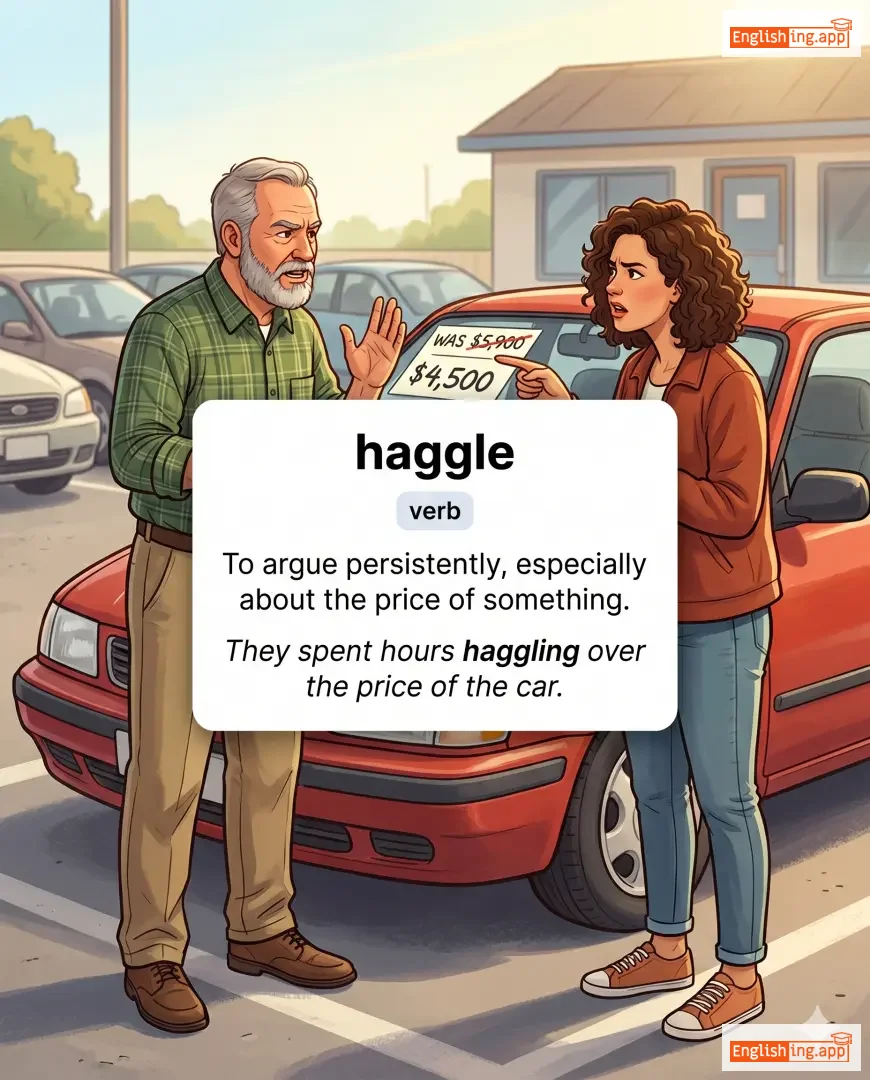
haggle definition card — visual illustration of the meaning
verb
/ˈhæɡ.l̩/
値段交渉する (nedan kōshō suru)

To argue persistently, especially about the price of something.

"They spent hours haggling over the price of the car."

"彼らは車の価格について何時間も値段交渉をしました。" (Karera wa kuruma no kakaku ni tsuite nan-jikan mo nedan kōshō o shimashita.)
adjective
/ˌhæɡ.i.əˈɡræf.ɪk/
過度に賛美的な (kadoni sanbitekina)

Excessively flattering or idealized, often in a biography or portrayal of someone.

"The documentary was criticized for its hagiographic portrayal of the leader."

"そのドキュメンタリーはリーダーの過度に賛美的な描写で批判されました。" (Sono dokyumentarī wa rīdā no kadoni sanbitekina byōsha de hihan saremashita.)
verb
/heɪl/
呼ぶ / 賞賛する (yobu / shōsan suru)

To call out to attract attention or to praise enthusiastically.

"The athlete was hailed as a hero after the victory."

"アスリートは勝利後にヒーローとして称賛されました。" (Asurīto wa shōri go ni hīrō to shite shōsan saremashita.)
noun
/ˈheɪl.stɔːrm/
ひょうの嵐 (hyō no arashi)

a violent storm with hail falling from the sky

"The hailstorm damaged many cars in the parking lot."

"ヘイルストームは駐車場の多くの車に損害を与えました。" (Heirusutōmu wa chūshajō no ōku no kuruma ni songai o ataemashita.)
noun
/hɛər/
(kami)

the fine threads growing from the skin of humans and animals

"She has long, black hair."

"彼女は長くて黒い髪を持っています。" (Kanojo wa nagakute kuroi kami o motteimasu.)
noun
/ˈher ˌpɪn/
ヘアピン (hea pin)

a thin piece of metal or plastic used to hold hair in place

"She used several hair pins to secure her elegant updo."

"彼女はエレガントなアップスタイルを固定するためにヘアピンをいくつも使った。" (Kanojo wa ereganto na appu sutairu o kotei suru tame ni hea pin o ikutsu mo tsukatta.)
noun
/ˈheəkʌt/
散髪 (sanpatsu)

the act or style of cutting hair

"I got a haircut before the wedding."

"私は結婚式の前に散髪しました。" (watashi wa kekkonshiki no mae ni sanpatsu shimashita)
noun
/ˈheəˌkʌtər/
理髪師 (rihatsushi)

a person whose job is to cut and style hair; barber or hairdresser

"The haircutter gave me a neat and stylish haircut."

"理髪師がきれいに髪を切ってくれた。" (rihatsushi ga kirei ni kami o kitte kureta)