Vocabularios

Descubra, aprenda y domine el vocabulario en inglés

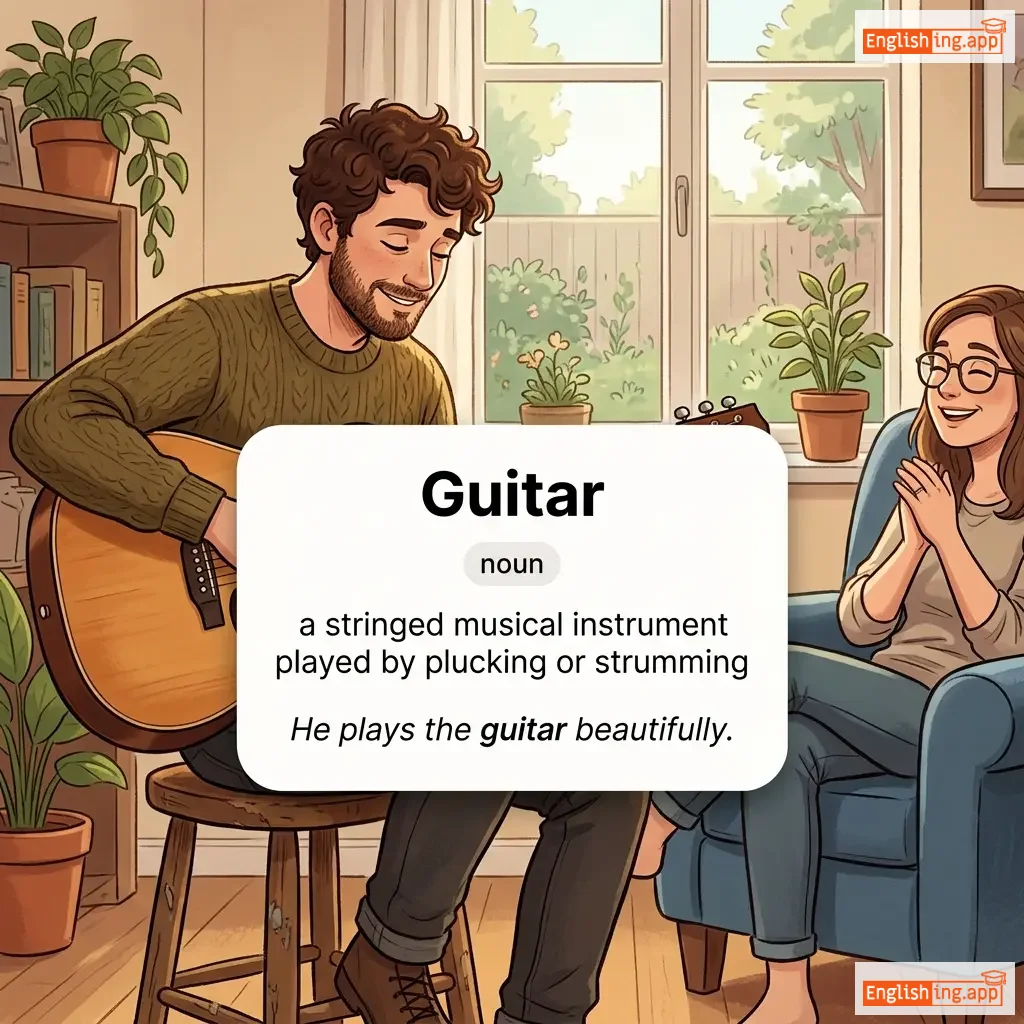
Guitar definition card — visual illustration of the meaning
noun
/ɡɪˈtɑːr/
guitarra (guitarra)

a stringed musical instrument played by plucking or strumming

"He plays the guitar beautifully."

"Él toca la guitarra maravillosamente." (Él toca la guitarra maravillosamente.)
noun
/ɡʌlf/
golf (gulf)

a deep inlet of the sea almost surrounded by land; a wide gap or difference between people or groups

"The Persian Gulf is an important waterway for international shipping and oil transport."

"El golfo Pérsico es una vía fluvial importante para el transporte internacional de mercancías y petróleo." (El golfo Persico es una via fluvial importante para el transporte internacional de mercancias y petroleo.)
noun, verb
/ɡʌl/
gaviota; engañar (gaviota; enganãr)

A seabird with long wings and usually white and gray feathers; as a verb, to deceive or trick someone.

"The fisherman watched the gulls circle above the boat."

"El pescador miraba las gaviotas girando sobre el bote." (El pescador miraba las gaviotas girando sobre el bote.)
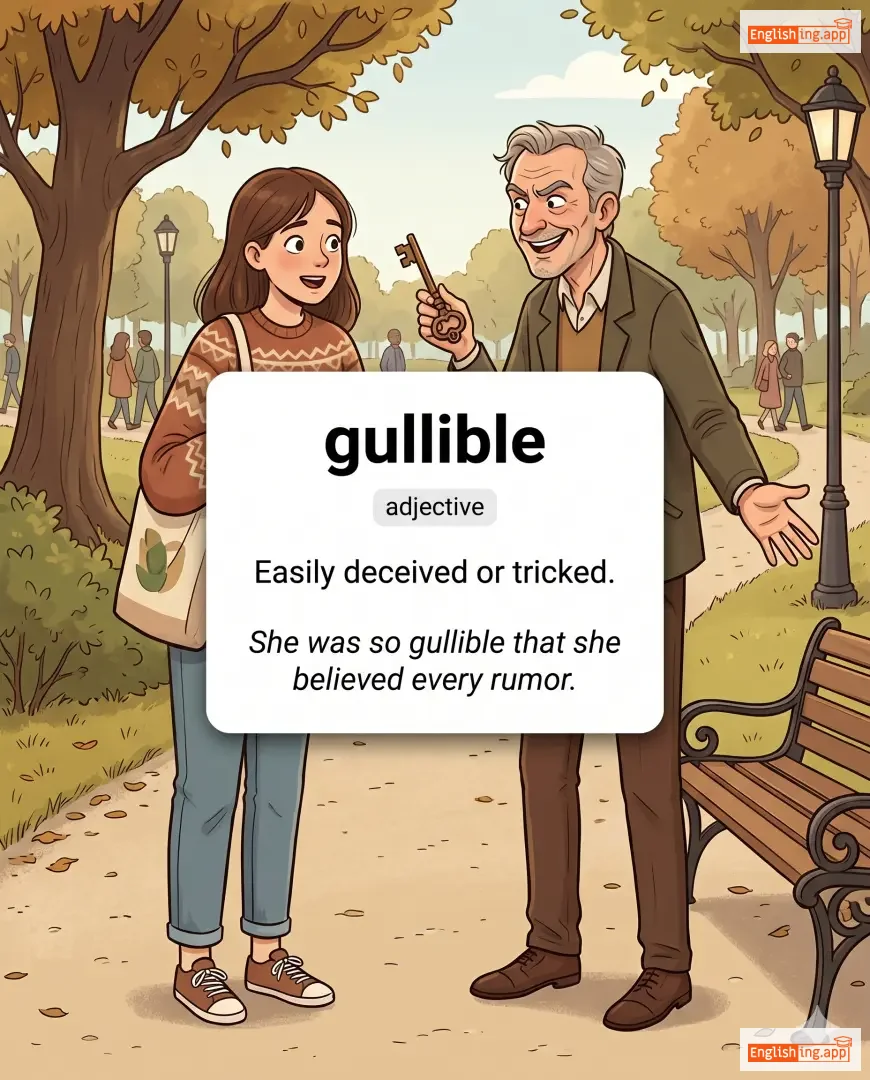
gullible definition card — visual illustration of the meaning
adjective
/ˈɡʌl.ə.bəl/
fácilmente engañado (facilmente engañado)

Easily deceived or tricked.

"She was so gullible that she believed every rumor."

"Ella era tan crédula que creía cada rumor." (Ella era tan crédula que creía cada rumor.)
noun
/ˈɡʌl.i/
grieta, arroyo (grieta, arroyo)

A narrow channel or ravine worn away by water.

"After the storm, the road was cut by a deep gully."

"Después de la tormenta, el camino fue cortado por una profunda grieta." (Despuéz de la tormenta, el camino fue cortado por una profunda grieta.)
noun, verb
/ɡʌm/
goma, encía (goma, en-ci-a)

A sticky substance from plants or used as adhesive; also the tissue around teeth.

"He chewed gum while waiting for the bus."

"Él masticaba chicle mientras esperaba el autobús." (El masticaba chicle mientras esperaba el autobús.)
noun
/ˈɡʌmp.ʃən/
valor, iniciativa (valor, iniciativa)

Courage, resourcefulness, or initiative.

"It takes real gumption to start your own business."

"Hace falta mucho valor para comenzar tu propio negocio." (Hace falta mucho valor para comenzar tu propio negocio.)
noun
/ɡʌn/
pistola (pistola)

a weapon that shoots bullets or other projectiles

"The police officer carried a gun for protection."

"El oficial de policía llevaba una pistola para protección." (El oficial de policía llevaba una pistola para protección.)
noun
/ˈɡʌnˌpaʊdər/
pólvora (polvora)

explosive powder used in guns and fireworks

"Gunpowder was invented in ancient China."

"La pólvora fue inventada en la antigua China." (La polvora fue inventada en la antigua China.)
noun
/ˈɡʌp.i fɪʃ/
pez guppy (pez gupi)

a small colorful freshwater fish popular in aquariums, known for its vibrant colors and easy breeding

"The guppy fish is perfect for beginners who want to start an aquarium."

"El pez guppy es perfecto para los principiantes que quieren comenzar un acuario." (el pez gupi es perfecto para los principiantes ke quieren comenzar un acuario)
verb
/ɡʌʃ/
brotar (brotar)

to flow out suddenly and forcefully, or to express something enthusiastically

"Tears began to gush from her eyes."

"Las lágrimas empezaron a brotar de sus ojos." (Las lagrimas empezaron a brotar de sus ojos.)
noun
/ɡʌst/
rafaga de viento (rafaga de viento)

a sudden strong rush of wind or air

"A sudden gust of wind blew the papers away."

"Una repentina ráfaga de viento voló los papeles." (Una repentina ráfaga de viento voló los papeles.)
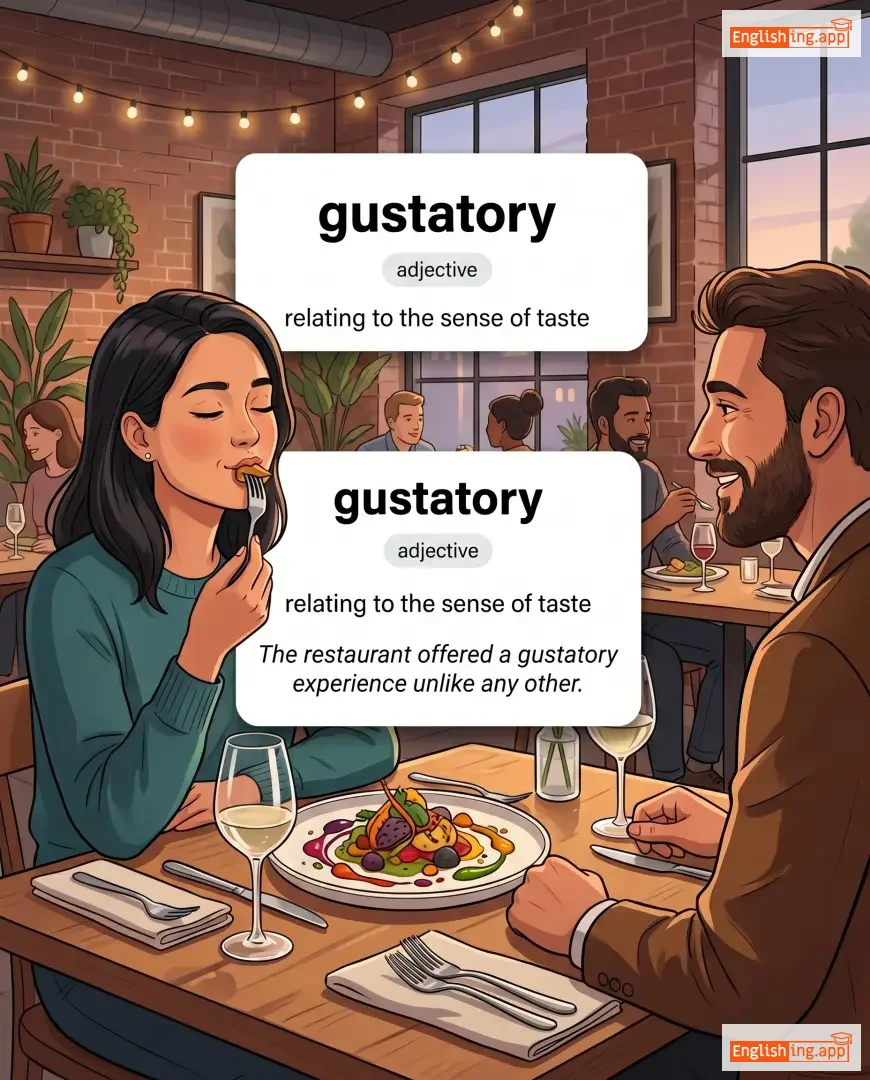
gustatory definition card — visual illustration of the meaning
adjective
/ˈɡʌstəˌtɔːri/
gustativo (gustativo)

relating to the sense of taste

"The restaurant offered a gustatory experience unlike any other."

"El restaurante ofreció una experiencia gustativa única." (El restaurante ofreció una experiencia gustativa única.)
noun
/ˈɡʌstoʊ/
entusiasmo (entusiasmo)

great enjoyment, energy, or enthusiasm in doing something

"She sang the song with great gusto."

"Ella cantó la canción con gran entusiasmo." (Ella canto la cancion con gran entusiasmo.)
adjective
/ˈɡʌsti/
ventoso (ventoso)

characterized by strong, sudden bursts of wind

"It was a cold, gusty day by the sea."

"Fue un día frío y ventoso junto al mar." (Fue un dia frio y ventoso junto al mar.)
noun/verb
/ɡʌt/
vientre / valor (bientre / valor)

The stomach or belly; also used for courage, instinct, or to remove the inside of something.

"He had the guts to stand up for his beliefs."

"Él tenía el valor de defender sus creencias." (Él tenía el valor de defender sus creencias.)
noun
/ɡaɪ/
chico (chico)

an informal term for a man; sometimes used to refer to a person in general

"That guy over there is my best friend."

"Ese chico allá es mi mejor amigo." (Ese chico allá es mi mejor amigo.)
verb
/ˈɡʌzəl/
beber codiciosamente (beber codiciosamente)

to drink greedily or excessively

"He guzzled three cans of soda in a few minutes."

"Él bebió tres latas de refresco en pocos minutos." (El bebió tres latas de refresco en pocos minutos.)
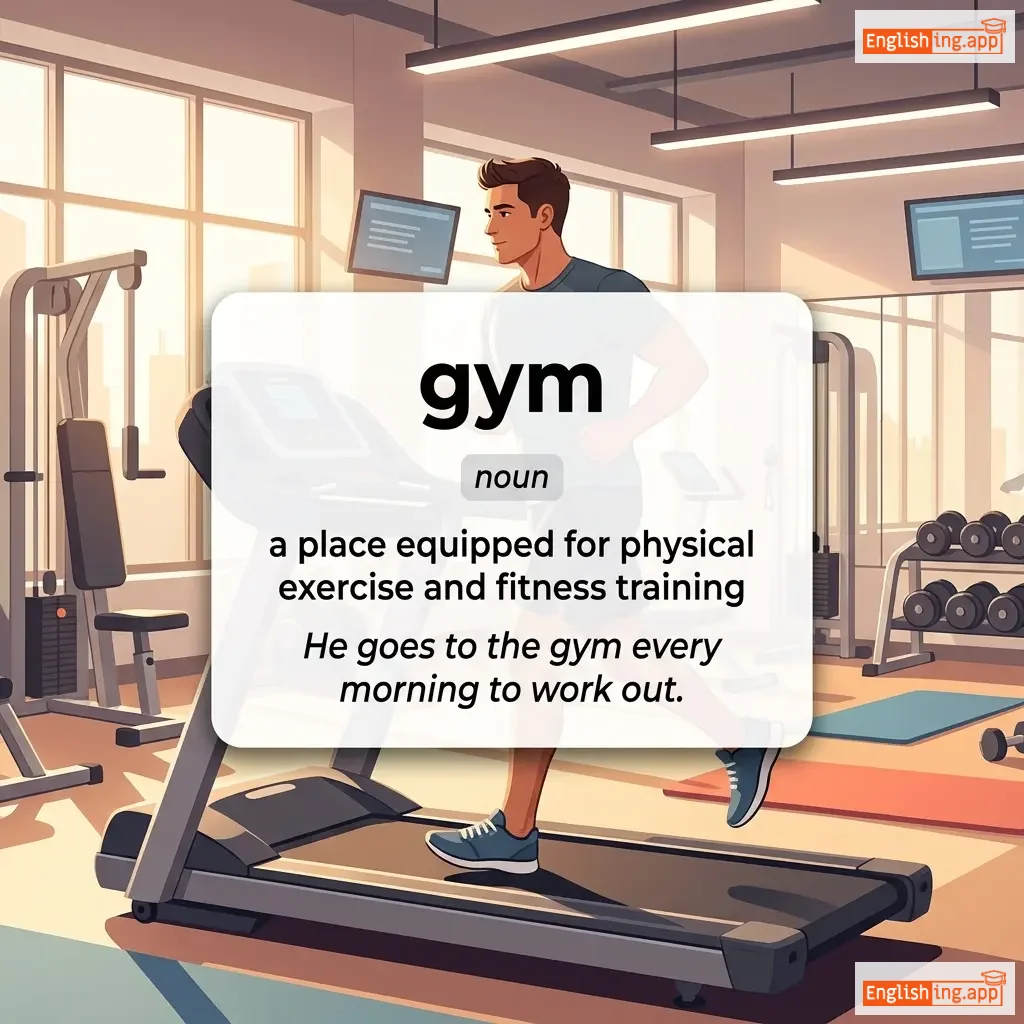
gym definition card — visual illustration of the meaning
🏋️‍♂️

gym (jim)

noun
/dʒɪm/
gimnasio (gimnasio)

a place equipped for physical exercise and fitness training

"He goes to the gym every morning to work out."

"Él va al gimnasio todas las mañanas para hacer ejercicio." (Él va al gimnasio todas las mañanas para hacer ejercicio.)
noun
/ˌɡaɪnəˈkɒkrəsi/
ginecocracia (ginecocracia)

a society or government ruled by women

"The ancient tribe was known for its gynecocracy, where women held all positions of power."

"La tribu antigua era conocida por su ginecocracia, donde las mujeres ocupaban todas las posiciones de poder." (La tribu antigua era conocida por su ginecocracia, donde las mujeres ocupaban todas las posiciones de poder.)
noun
/ˌɡaɪnəˈkɒlədʒi/
ginecología (ginecología)

the branch of medicine dealing with women's reproductive health

"She decided to specialize in gynecology after medical school."

"Decidió especializarse en ginecología después de la escuela de medicina." (Decidió especializarse en ginecología después de la escuela de medicina.)
verb
/ˈdʒaɪreɪt/
girar rápidamente (girar rapidamente)

to move or spin quickly in circles

"The dancer gyrated wildly to the rhythm of the drums."

"La bailarina giró locamente al ritmo de los tambores." (La bailarina giro locamente al ritmo de los tambores.)
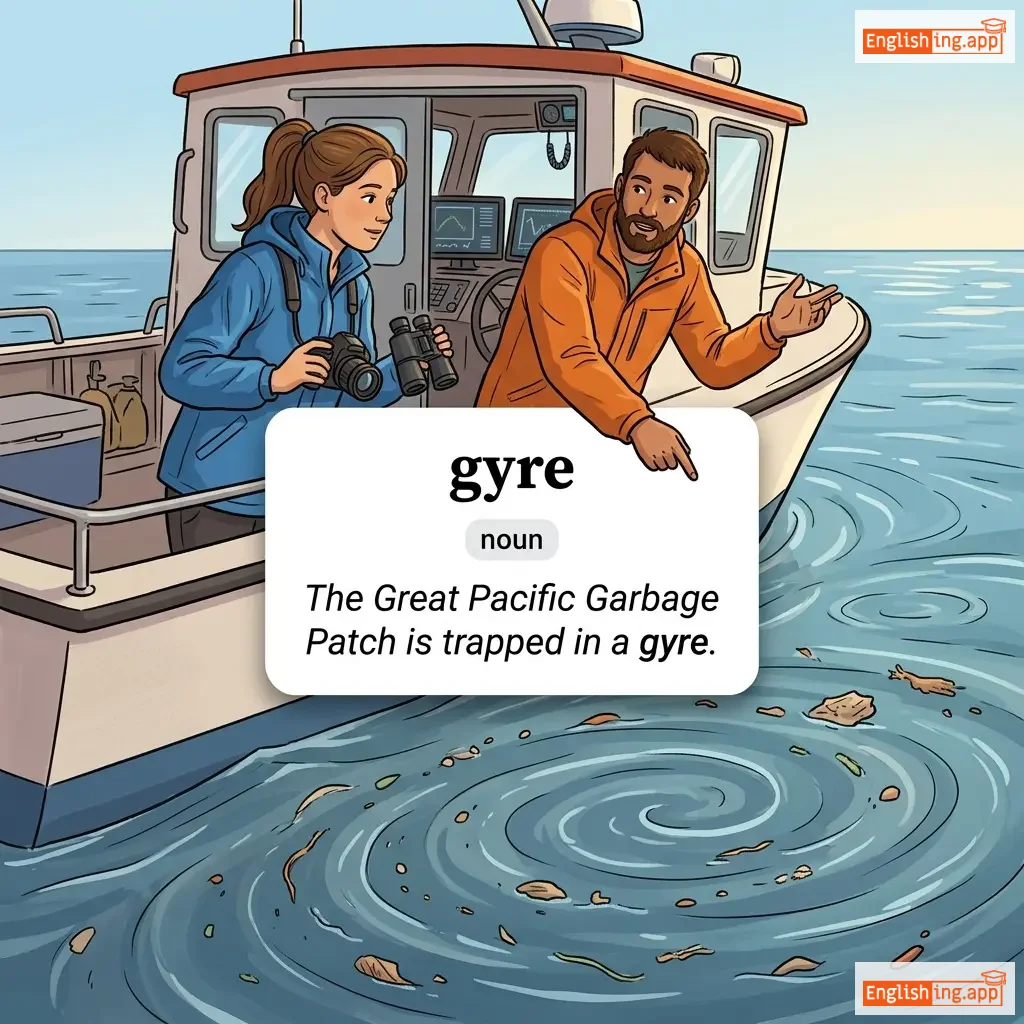
gyre definition card — visual illustration of the meaning
noun
/ˈdʒaɪər/
remolino, corriente oceánica circular (remolino, corriente oceanica circular)

A circular or spiral motion or form, especially a giant circular oceanic surface current.

"The Great Pacific Garbage Patch is trapped in a gyre."

"El gran parche de basura del Pacífico está atrapado en un remolino." (El gran parche de basura del Pacifico esta atrapado en un remolino.)
noun
/ˈdʒaɪrəˌskoʊp/
giroscopio (jai-ruh-skoop)

A device consisting of a wheel or disk mounted so it can spin rapidly and maintain orientation, used for navigation and balance.

"The airplane's navigation system relies on a gyroscope for stability."

"El sistema de navegación del avión depende de un giroscopio para la estabilidad." (El sistema de navegacion del avion depende de un giroscopio para la estabilidad.)
interjection
/hɑː/
¡Ja! (Expresión de sorpresa o diversión) (Ja! (Expresion de sorpresa o diversion))

used to express amusement, surprise, or triumph

"Ha! I knew you couldn’t resist joining us."

"¡Ja! Sabía que no podrías resistir unirte a nosotros." (¡Ja! Sabia que no podrias resistir unirte a nosotros.)
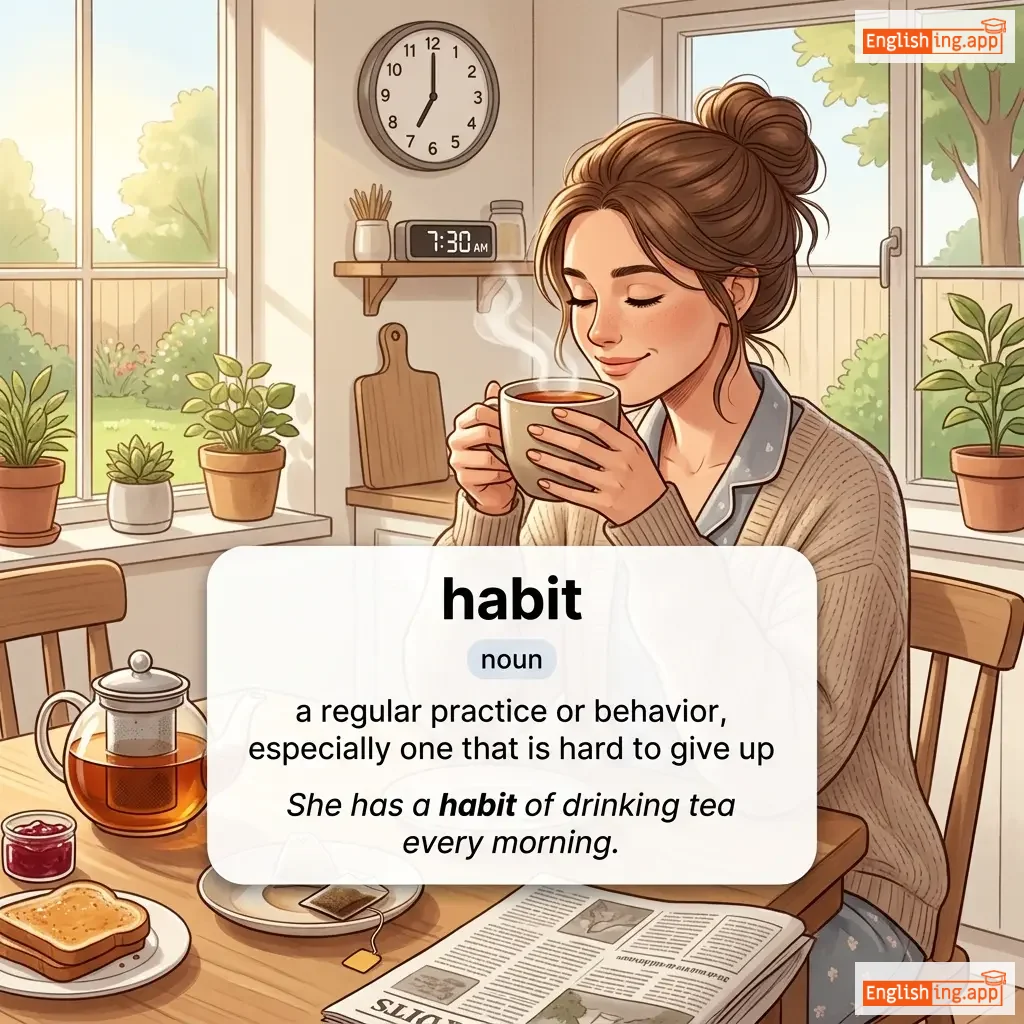
habit definition card — visual illustration of the meaning
noun
/ˈhæb.ɪt/
hábito (habito)

a regular practice or behavior, especially one that is hard to give up

"She has a habit of drinking tea every morning."

"Ella tiene el hábito de tomar té cada mañana." (Ella tiene el habito de tomar te cada manana.)
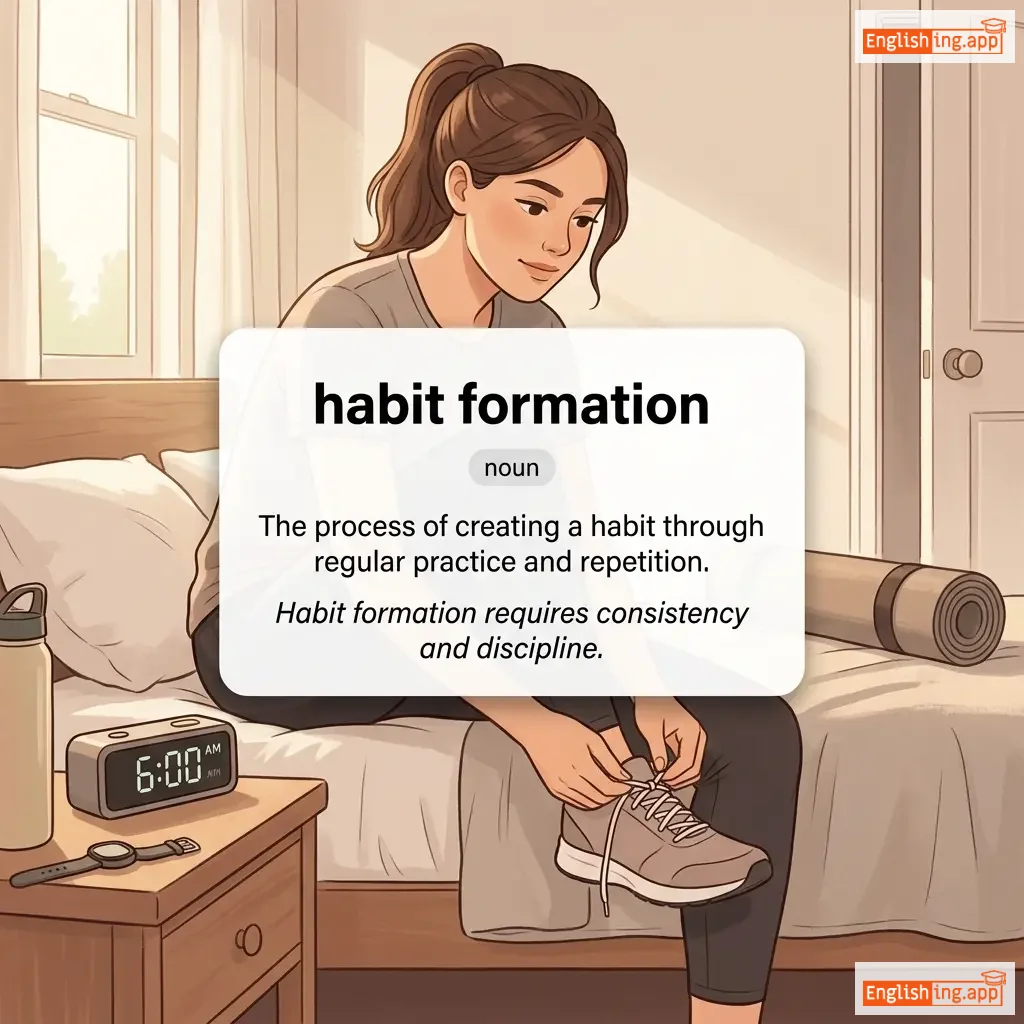
habit formation definition card — visual illustration of the meaning
noun
ˈhæb.ɪt fɔːrˌmeɪ.ʃən
formación de hábitos (formacion de habitos)

The process of creating a habit through regular practice and repetition.

"Habit formation requires consistency and discipline."

"La formación de hábitos requiere consistencia y disciplina." (La formacion de habitos requiere consistencia y disciplina.)
adjective
/ˈhæbɪtəbl/
habitable (habitable)

Suitable to live in; capable of sustaining life.

"Scientists are searching for habitable planets beyond our solar system."

"Los científicos están buscando planetas habitables más allá de nuestro sistema solar." (Los científicos están buscando planetas habitables más allá de nuestro sistema solar.)
👨‍👩‍👧‍👦

habitant (hábɪtɪnt)

noun
/ˈhæbɪtənt/
habitante (habitante)

An inhabitant; a person or animal that lives in a particular place.

"The habitants of the village were friendly and welcoming."

"Los habitantes del pueblo eran amables y acogedores." (Los habitantes del pueblo eran amables y acogedores.)
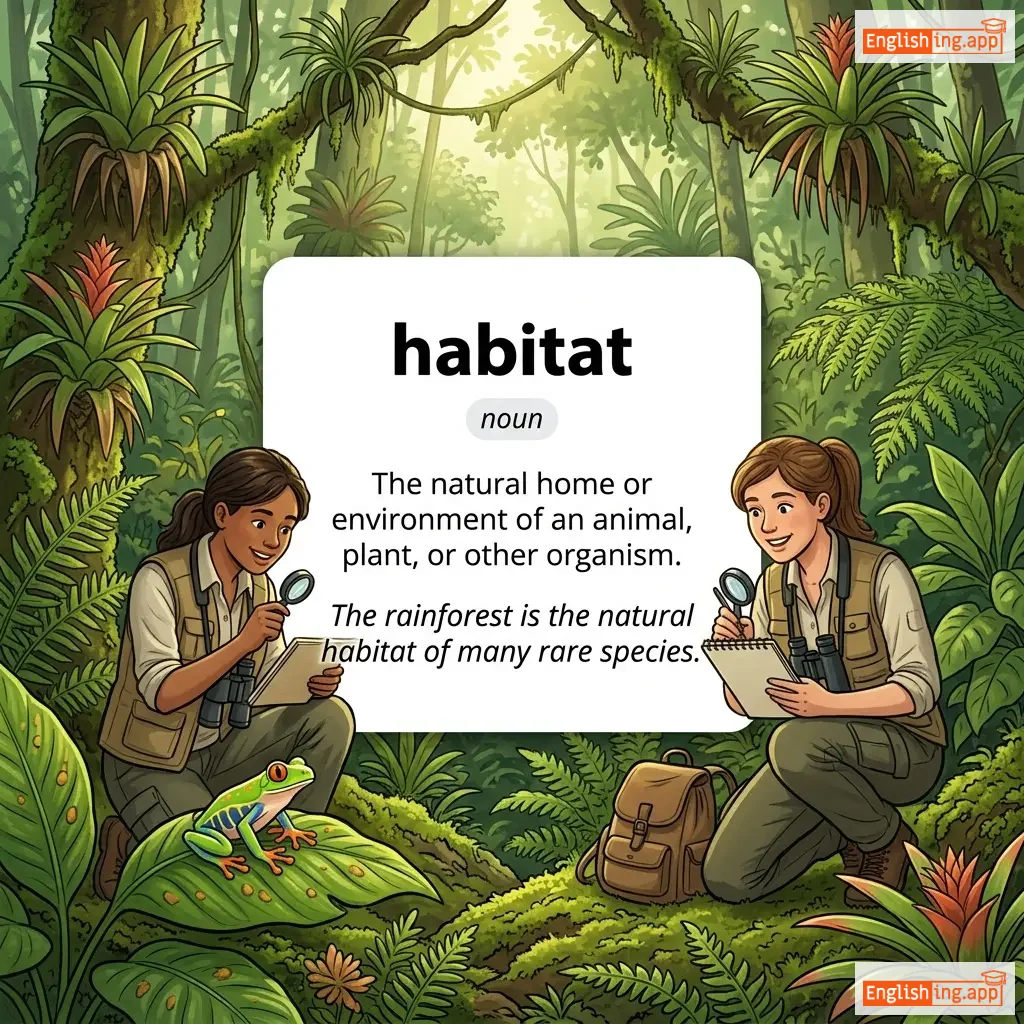
habitat definition card — visual illustration of the meaning
noun
/ˈhæbɪˌtæt/
hábitat (hábitat)

The natural home or environment of an animal, plant, or other organism.

"The rainforest is the natural habitat of many rare species."

"La selva tropical es el hábitat natural de muchas especies raras." (La selva tropical es el hábitat natural de muchas especies raras.)
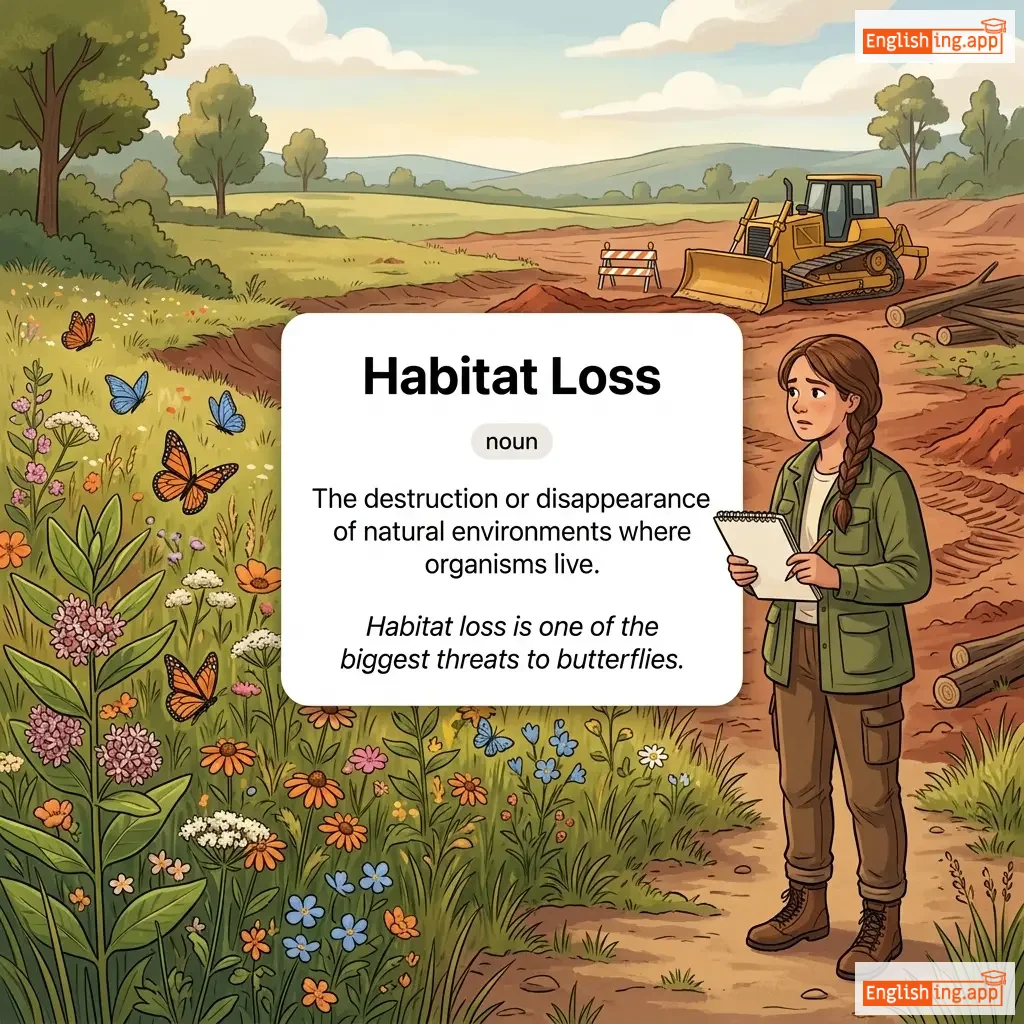
Habitat Loss definition card — visual illustration of the meaning
noun
ˈhæbɪtæt lɒs
pérdida de hábitat (perdida de habitat)

The destruction or disappearance of natural environments where organisms live.

"Habitat loss is one of the biggest threats to butterflies."

"La pérdida de hábitat es una de las mayores amenazas para las mariposas." (La perdida de habitat es una de las mayores amenazas para las mariposas.)
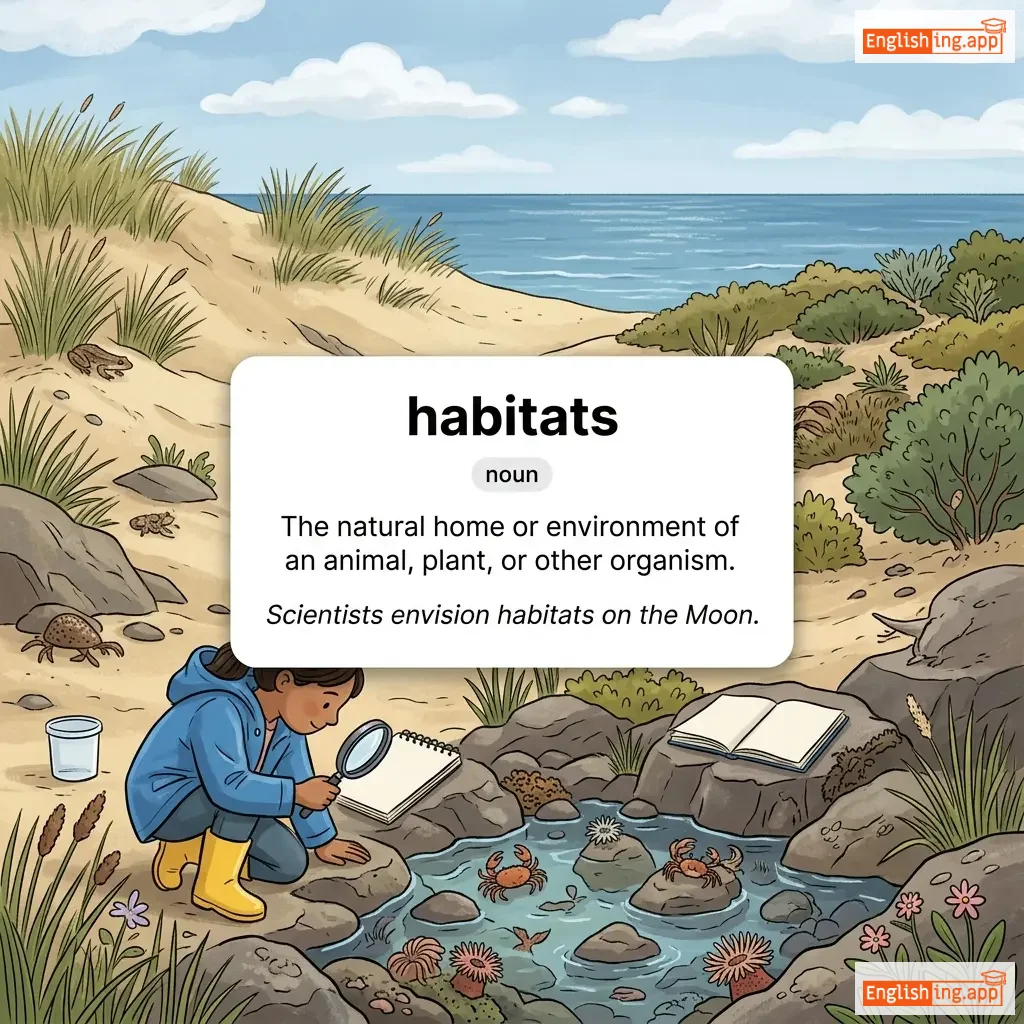
habitats definition card — visual illustration of the meaning
noun
ˈhæb.ɪ.tæts
hábitat (habitát)

The natural home or environment of an animal, plant, or other organism.

"Scientists envision habitats on the Moon."

"Los científicos imaginan hábitats en la luna." (Los científicos imaginan hábitats en la luna.)
adjective
/həˈbɪtʃuəl/
habitual (habitual)

Done or doing constantly or as a habit; customary.

"He was a habitual latecomer to class."

"Él era un habitual retrasado en clase." (Él era un habitual retrasado en clase.)
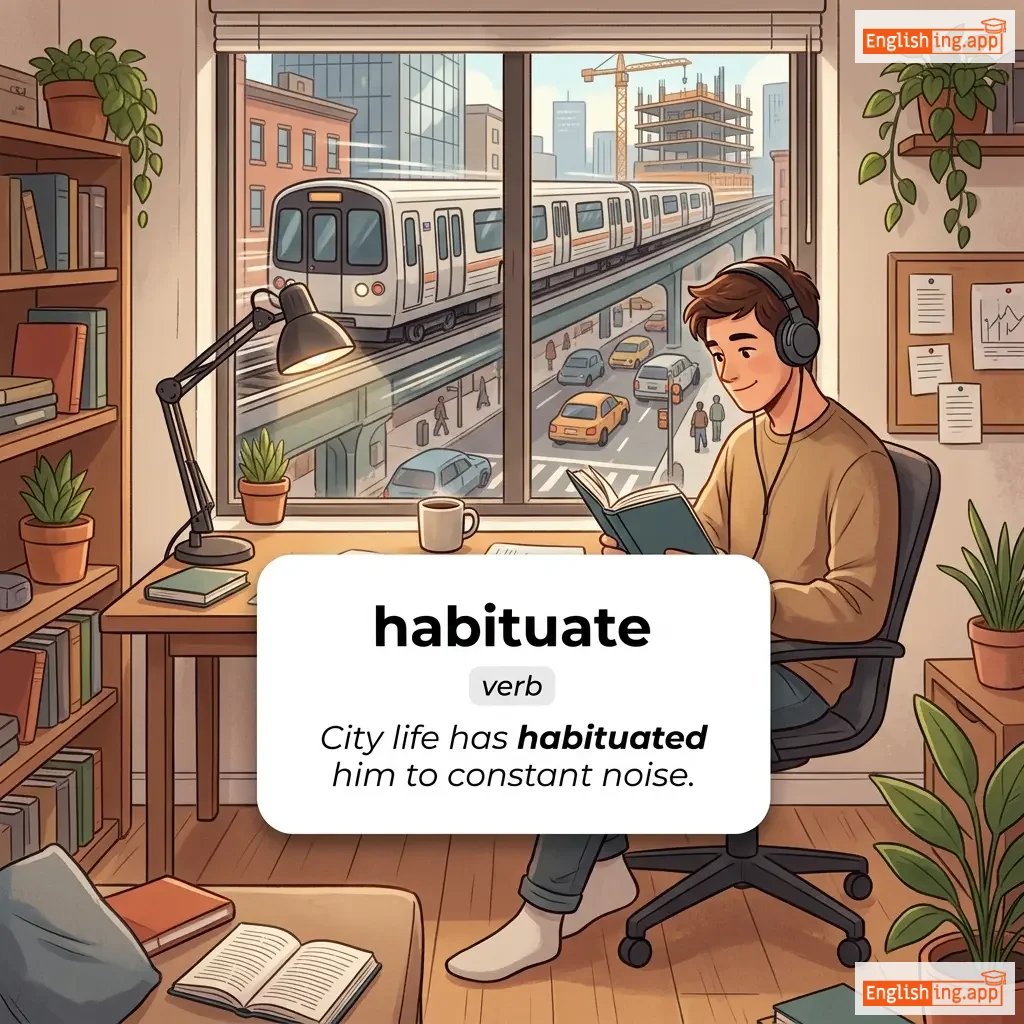
habituate definition card — visual illustration of the meaning
verb
/həˈbɪtʃueɪt/
acostumbrar (acostumbrar)

to accustom someone or oneself to something through frequent exposure or experience

"City life has habituated him to constant noise."

"La vida en la ciudad lo ha acostumbrado al ruido constante." (La vida en la ciudad lo ha acostumbrado al ruido constante.)
noun
/ˈhæbɪtjuːd/
hábito, costumbre (habito, costumbre)

a customary condition or mode of life; habitual practice

"He lived in a quiet habitude, avoiding the noise of the city."

"Vivía en un hábito tranquilo, evitando el ruido de la ciudad." (Vivia en un habito tranquilo, evitando el ruido de la ciudad.)
verb
/hæk/
cortar, acceder sin autorización a un sistema informático (cortar, acceder sin autorizacion a un sistema informatico)

to cut or chop roughly; to gain unauthorized access to a computer system

"The programmer managed to hack into the system."

"El programador logró hackear el sistema." (El programador logro hackear el sistema.)
noun
/ˈhækəlz/
el vello en la parte posterior del cuello de un animal que se erige cuando está enojado o alarmado; figurativamente, sentimientos de ira o resentimiento (el vello en la parte posterior del cuello de un animal que se erige cuando está enojado o alarmado; figurativamente, sentimientos de ira o resentimiento)

the hairs on the back of an animal’s neck that rise when it is angry or alarmed; figuratively, feelings of anger or resentment

"His rude comment raised my hackles."

"Su comentario grosero levantó mis hackles." (Su comentario grosero levantó mis hackles.)
noun
/ˈhæknɪ/
caballo de alquiler, trillado (caballo de alquiler, trillado)

a horse kept for ordinary riding or hire; also used for something overused or trite

"The old hackney was still pulling the carriage."

"El viejo caballo de alquiler seguía tirando del carruaje." (El viejo caballo de alquiler seguía tirando del carruaje.)
noun
/ˈhæk.ni ˈkær.ɪdʒ/
coche de alquiler (coche de alquiler)

A taxi; a car licensed to carry passengers for hire

"I called a hackney carriage to get to the airport."

"Llamé a un coche de alquiler para llegar al aeropuerto." (Llamé a un coche de alquiler para llegar al aeropuerto.)
adjective
/ˈhæk.nid/
cliché (clishe)

Used too often and therefore lacking originality or freshness.

"The speech was filled with hackneyed phrases that failed to inspire the audience."

"El discurso estaba lleno de frases cliché que no lograron inspirar al público." (El discurso estaba lleno de frases cliché que no lograron inspirar al público.)
🧙‍♀️

Hag (hág)

noun
/hæɡ/
bruja (bruja)

an ugly old woman, especially a vicious or malicious one; a witch

"In the fairy tale, the wicked hag lived alone in a cottage deep in the forest."

"En el cuento de hadas, la malvada bruja vivía sola en una cabaña en lo profundo del bosque." (En el cuento de hadas, la malvada bruja vivía sola en una cabaña en lo profundo del bosque.)
adjective
/ˈhæɡ.ərd/
agotado (agotado)

Looking exhausted, unwell, or worn out, especially from fatigue or suffering.

"After working all night, she looked pale and haggard."

"Después de trabajar toda la noche, ella parecía pálida y agotada." (Despues de trabajar toda la noche, ella parecia palida y agotada.)
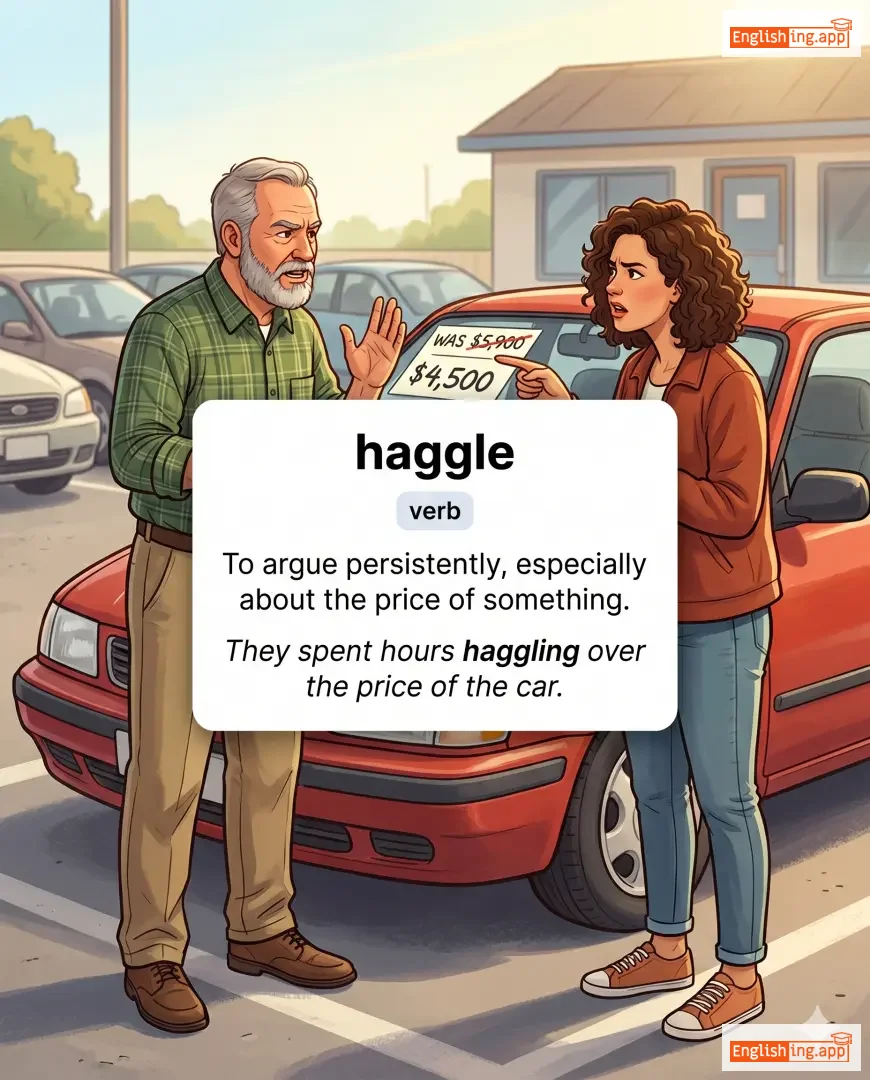
haggle definition card — visual illustration of the meaning
verb
/ˈhæɡ.l̩/
regatear (regatear)

To argue persistently, especially about the price of something.

"They spent hours haggling over the price of the car."

"Pasaron horas regateando sobre el precio del coche." (Pasaron horas regateando sobre el precio del coche.)
adjective
/ˌhæɡ.i.əˈɡræf.ɪk/
excesivamente elogioso (excesivamente elogioso)

Excessively flattering or idealized, often in a biography or portrayal of someone.

"The documentary was criticized for its hagiographic portrayal of the leader."

"El documental fue criticado por su representación excesivamente elogiosa del líder." (El documental fue criticado por su representación excesivamente elogiosa del líder.)
verb
/heɪl/
saludar / vitorear (saludar / vitorear)

To call out to attract attention or to praise enthusiastically.

"The athlete was hailed as a hero after the victory."

"El atleta fue aclamado como un héroe después de la victoria." (El atleta fue aclamado como un heroe despues de la victoria.)
noun
/ˈheɪl.stɔːrm/
tormenta de granizo (tormenta de granizo)

a violent storm with hail falling from the sky

"The hailstorm damaged many cars in the parking lot."

"La tormenta de granizo dañó muchos autos en el estacionamiento." (La tormenta de granizo dañó muchos autos en el estacionamiento.)
noun
/hɛər/
pelo (pelo)

the fine threads growing from the skin of humans and animals

"She has long, black hair."

"Ella tiene el pelo largo y negro." (Ella tiene el pelo largo y negro.)
noun
/ˈher ˌpɪn/
horquilla (or-kee-ya)

a thin piece of metal or plastic used to hold hair in place

"She used several hair pins to secure her elegant updo."

"Ella usó varias horquillas para sujetar su elegante peinado recogido." (ella uso varias horquillas para sujetar su elegante peinado recogido)
noun
/ˈheəkʌt/
corte de pelo (corte de pelo)

the act or style of cutting hair

"I got a haircut before the wedding."

"Me hice un corte de pelo antes de la boda." (me hice un corte de pelo antes de la boda)
noun
/ˈheəˌkʌtər/
peluquero (peluquero)

a person whose job is to cut and style hair; barber or hairdresser

"The haircutter gave me a neat and stylish haircut."

"El peluquero me hizo un buen corte de pelo." (el peluquero me hizo un buen corte de pelo)