Vocabularios

Descubra, aprenda y domine el vocabulario en inglés

noun
/ˈfænsiər/
aficionado (aficionado)

a person who has a special interest in a particular thing or activity, especially animals or hobbies

"He is a fancier of rare birds."

"Él es un aficionado a las aves raras." (Él es un aficionado a las aves raras.)
adjective
/ˈfæn.sɪ.fəl/
fantasioso, irreal (fantasioso, irreal)

overimaginative, unrealistic, or whimsical

"The story was too fanciful to be true."

"La historia era demasiado fantasiosa para ser cierta." (La historia era demasiado fantasiosa para ser cierta.)
adjective
/ˈfæn.sɪ.ləs/
sin imaginación, común (sin imaginacion, comun)

without imagination or creativity; plain or ordinary

"His drawings were simple and fanciless."

"Sus dibujos eran simples y sin imaginación." (Sus dibujos eran simples y sin imaginacion.)
verb
/ˈfæn.si/
imaginar, desear, gustar (imaginar, desear, gustar)

to imagine, desire, or like something; to have a liking for

"She fancies a cup of tea in the morning."

"Ella quiere una taza de té por la mañana." (Ella quiere una taza de té por la mañana.)
noun
/ˈfæn.feər/
gran pompa, publicidad (gran pompa, publicidad)

a short ceremonial tune or display of publicity to attract attention

"The new product was launched with much fanfare."

"El nuevo producto fue lanzado con gran pompa." (El nuevo producto fue lanzado con gran pompa.)
adjective
/fænˈtæstɪk/
fantástico (fantastico)

extraordinary, extremely good or impressive

"The concert last night was absolutely fantastic."

"El concierto de anoche fue absolutamente fantástico." (El concierto de anoche fue absolutamente fantastico.)
noun
/ˈfæntəsi/
fantasía (fantasia)

a creation of the imagination, especially something improbable or impossible

"She has a vivid fantasy about traveling to space."

"Ella tiene una vívida fantasía sobre viajar al espacio." (Ella tiene una vivida fantasia sobre viajar al espacio.)
adverb
/fɑːr/
lejos (lejos)

at, to, or by a great distance

"The school is far from my house."

"La escuela está lejos de mi casa." (La escuela está lejos de mi casa.)
adjective
/ˌfɑːrˈfɛtʃt/
increíble (increible)

unlikely to happen or be true; improbable

"His explanation for being late was a bit far-fetched."

"Su explicación por llegar tarde era un poco increíble." (Su explicacion por llegar tarde era un poco increible.)
noun
/fɑːrs/
farsa (farsa)

a comic dramatic work using buffoonery and horseplay, or a ridiculous situation

"The meeting turned into a complete farce with everyone arguing."

"La reunión se convirtió en una farsa completa con todos discutiendo." (La reunion se convirtio en una farsa completa con todos discutiendo.)
noun
/fɛər/
tarifa (tarifa)

the money paid for a journey on public transport; also food or treatment provided

"The bus fare to the city center is five dollars."

"La tarifa del autobús al centro de la ciudad es de cinco dólares." (La tarifa del autobús al centro de la ciudad es de cinco dólares.)
noun
/ˌfer.ˈwel/
despedida (despedida)

an act of parting or of marking someone's departure

"The company organized a farewell party for the retiring manager."

"La empresa organizó una fiesta de despedida para el gerente que se retiraba." (La empresa organizó una fiesta de despedida para el gerente que se retiraba.)
adjective
/ˌfɑːrˈfetʃt/
improbable o poco probable (improbable o poco probable)

unlikely to happen or be true; improbable

"His explanation for being late sounded farfetched."

"Su explicación para llegar tarde sonaba inverosímil." (Su explicación para llegar tarde sonaba inverosímil.)
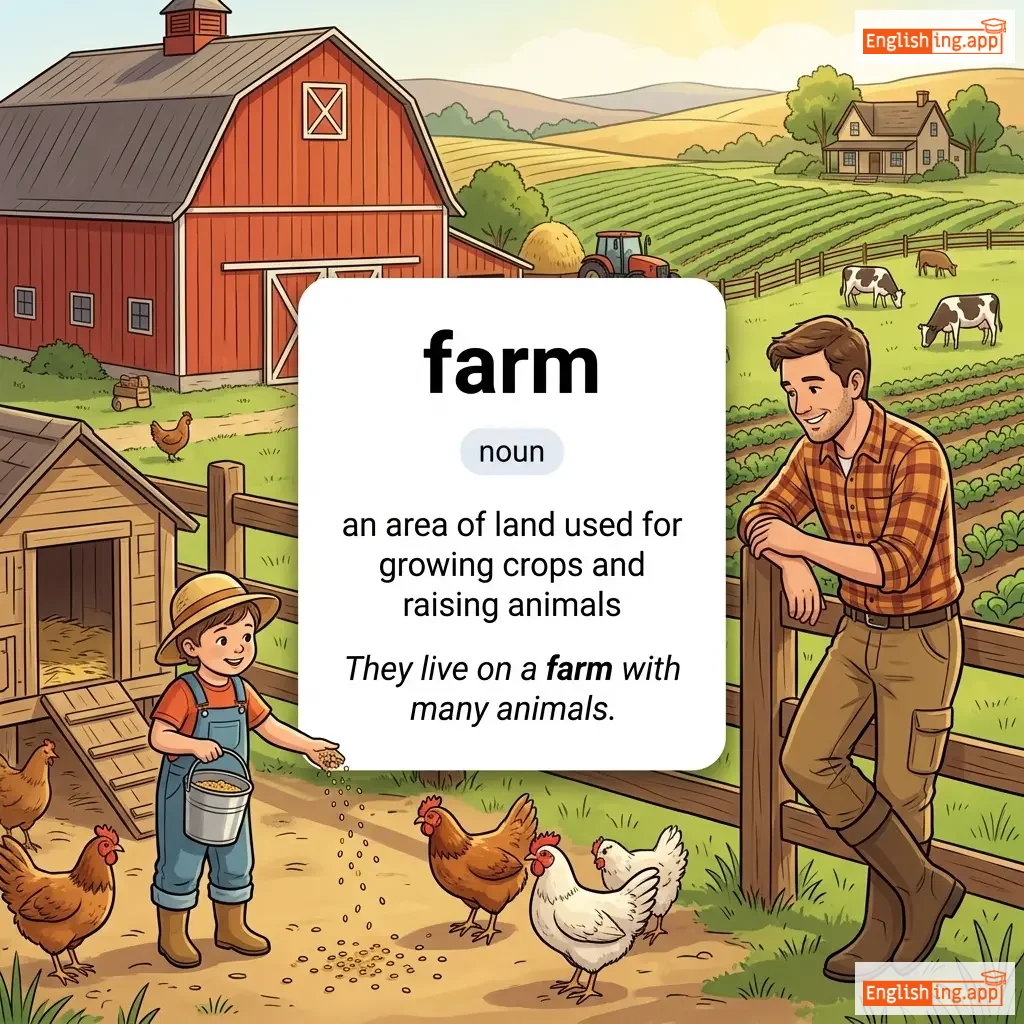
farm definition card — visual illustration of the meaning
noun
/fɑːrm/
granja (granja)

an area of land used for growing crops and raising animals

"They live on a farm with many animals."

"Ellos viven en una granja con muchos animales." (Ellos viven en una granja con muchos animales.)
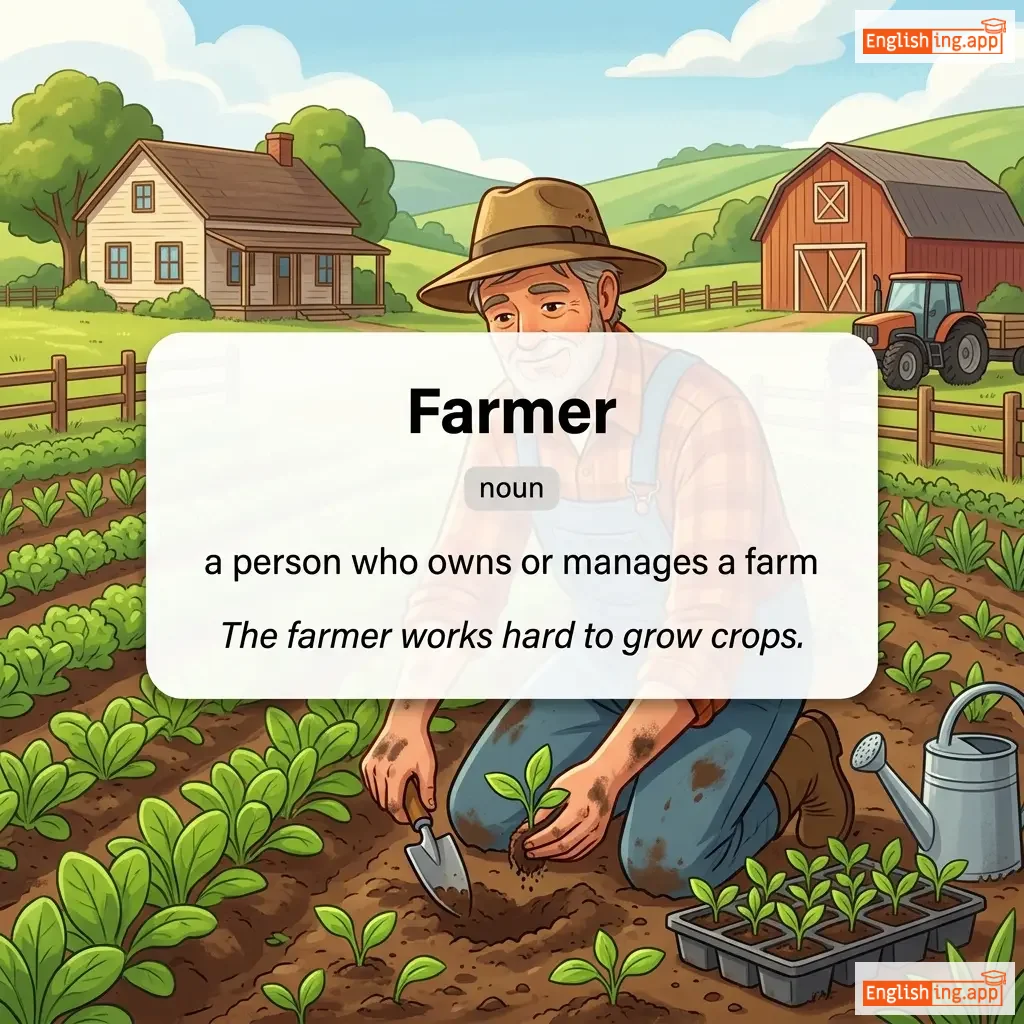
Farmer definition card — visual illustration of the meaning
👨‍🌾

Farmer (fármer)

noun
/ˈfɑːrmər/
granjero (granjero)

a person who owns or manages a farm

"The farmer works hard to grow crops."

"El granjero trabaja duro para cultivar los cultivos." (El granjero trabaja duro para cultivar los cultivos.)
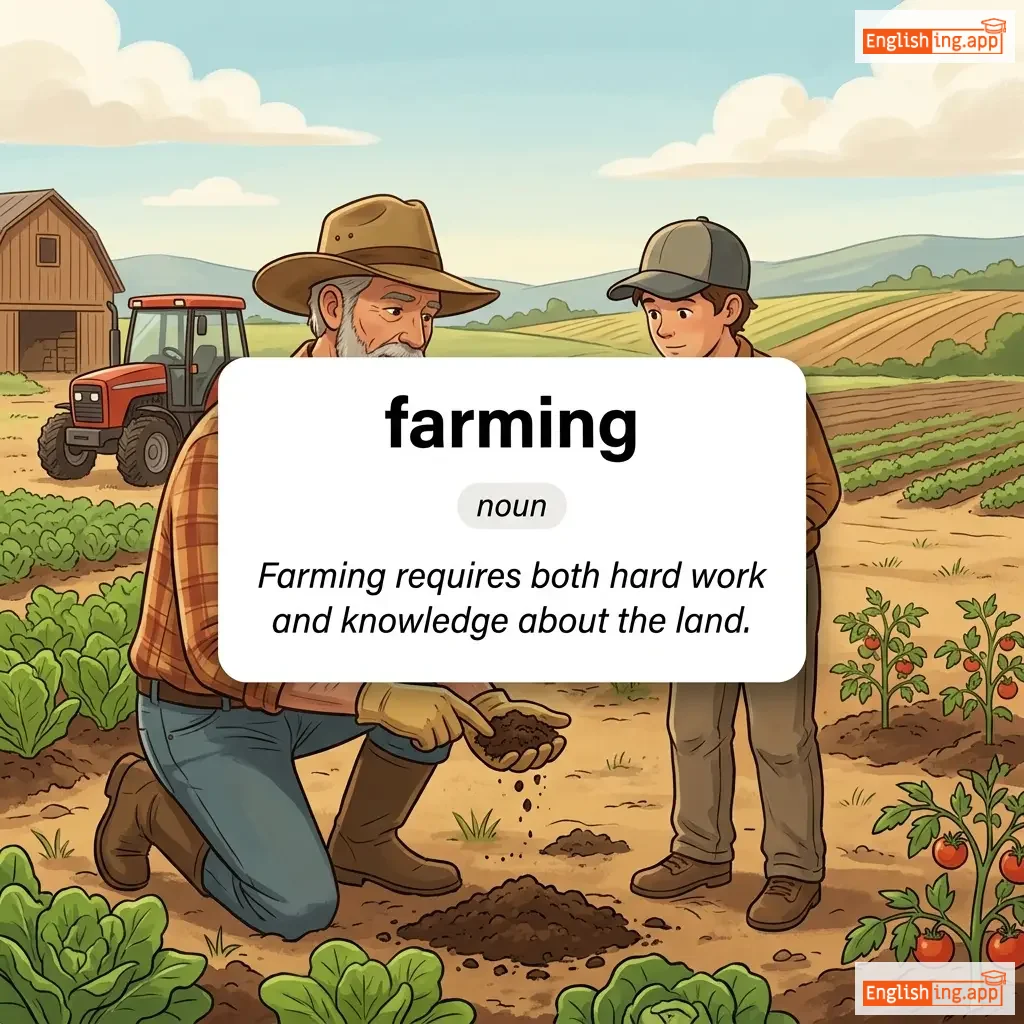
farming definition card — visual illustration of the meaning
noun
/ˈfɑː.mɪŋ/
agricultura (agricultura)

the activity or business of growing crops and raising animals for food or other products

"Farming requires both hard work and knowledge about the land."

"La agricultura requiere tanto trabajo duro como conocimiento sobre la tierra." (La agricultura requiere tanto trabajo duro como conocimiento sobre la tierra.)
verb
/ˈfæs.ɪ.neɪt/
fascinar (fascinar)

to attract and hold the attention of someone; to charm or captivate

"The magician's performance fascinated the audience."

"La actuación del mago fascinó al público." (La actuacion del mago fascino al publico.)
adjective
/ˈfæsɪneɪtɪŋ/
fascinante (fascinante)

extremely interesting or charming

"The history of ancient Egypt is truly fascinating."

"La historia del antiguo Egipto es verdaderamente fascinante." (La historia del antiguo Egipto es verdaderamente fascinante.)
noun
/ˌfæs.ɪˈneɪ.ʃən/
fascinación; atracción; asombro (fascinacion, atraccion, asombro)

the power to fascinate someone; the state of being intensely interested

"Her fascination with ancient history led her to become an archaeologist."

"Su fascinación por la historia antigua la llevó a convertirse en arqueóloga." (Su fascinacion por la historia antigua la llevo a convertirse en arqueologa.)
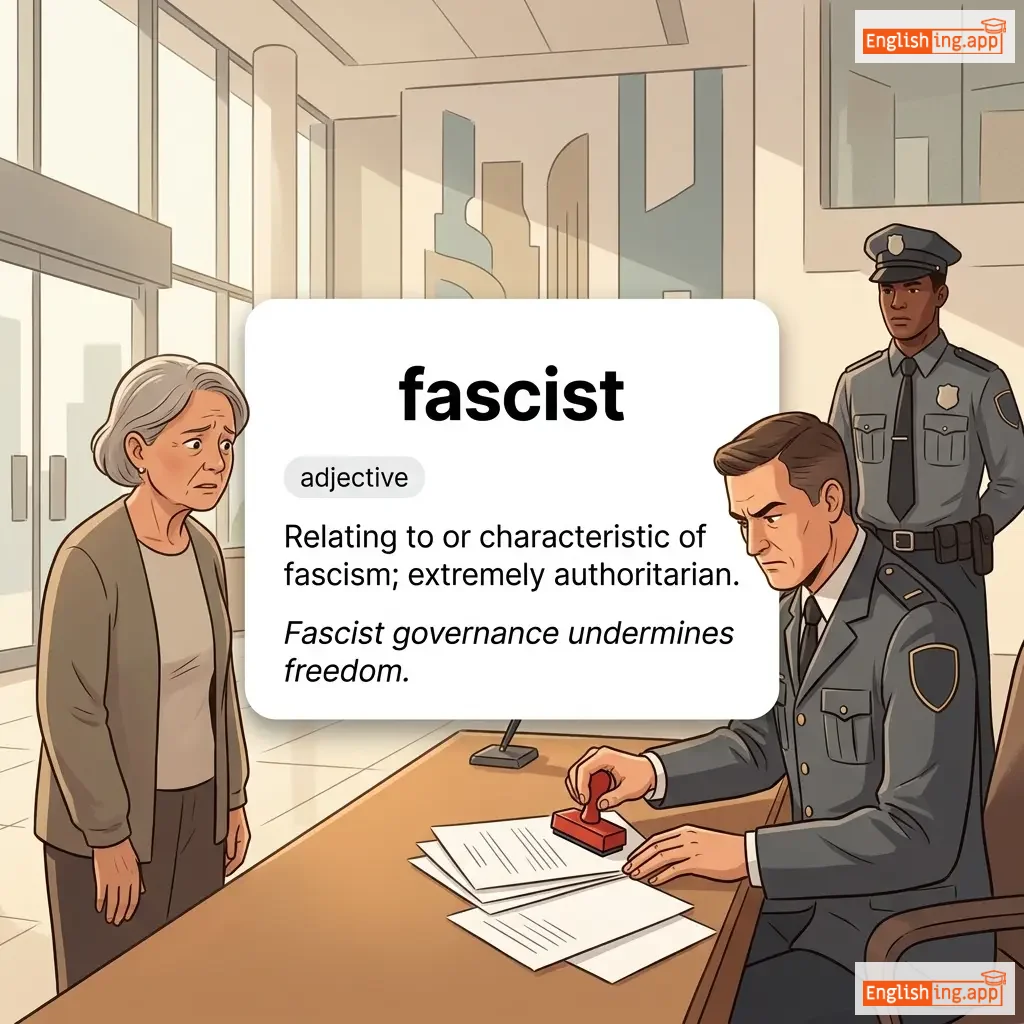
fascist definition card — visual illustration of the meaning
adjective
ˈfæʃ.ɪst
fascista (fascista)

Relating to or characteristic of fascism; extremely authoritarian.

"Fascist governance undermines freedom."

"El gobierno fascista socava la libertad." (El gobierno fascista socava la libertad.)
noun
/ˈfæʃ.ən/
moda (moda)

a popular or accepted style of clothing, behavior, or way of doing something

"She always keeps up with the latest fashion."

"Ella siempre sigue la última moda." (Ella siempre sigue la última moda.)
adjective
/ˈfæʃənəbəl/
a la moda (a la moda)

Following the latest styles or trends in clothing, behavior, or ideas

"She always wears fashionable clothes to every party."

"Ella siempre usa ropa fashionables en cada fiesta." (Ella siempre usa ropa fashionables en cada fiesta.)
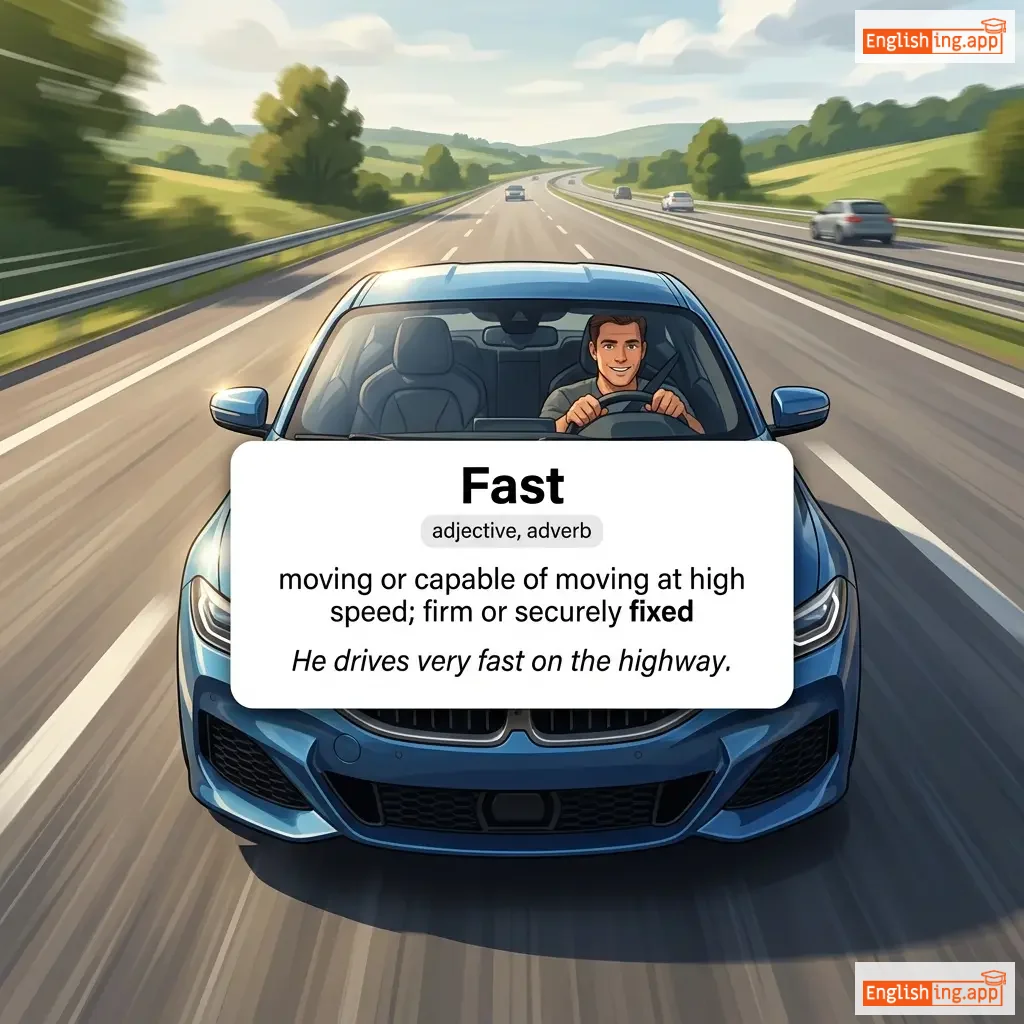
Fast definition card — visual illustration of the meaning
adjective, adverb
/fæst/
rápido, firmemente fijo (rapido, firmemente fijo)

moving or capable of moving at high speed; firm or securely fixed

"He drives very fast on the highway."

"Él conduce muy rápido por la carretera." (El conduce muy rapido por la carretera.)
verb
/ˈfæsən/
abrochar (abrochar)

To attach or secure something firmly in place

"Please fasten your seatbelt before the plane takes off."

"Por favor, abroche su cinturón antes de que despegue el avión." (Por favor, abroche su cinturón antes de que despegue el avión.)
adjective, adverb
/ˈfæstər/
más rápido (mas rapido)

moving or able to move quickly; more quickly than usual

"This car is faster than the old one."

"Este coche es más rápido que el viejo." (Este coche es mas rapido que el viejo.)
adjective
/ˈfæstɪst/
más rápido (mas rapido)

moving or capable of moving at the highest speed

"Usain Bolt is the fastest runner in the world."

"Usain Bolt es el corredor más rápido del mundo." (Usain Bolt es el corredor mas rapido del mundo.)
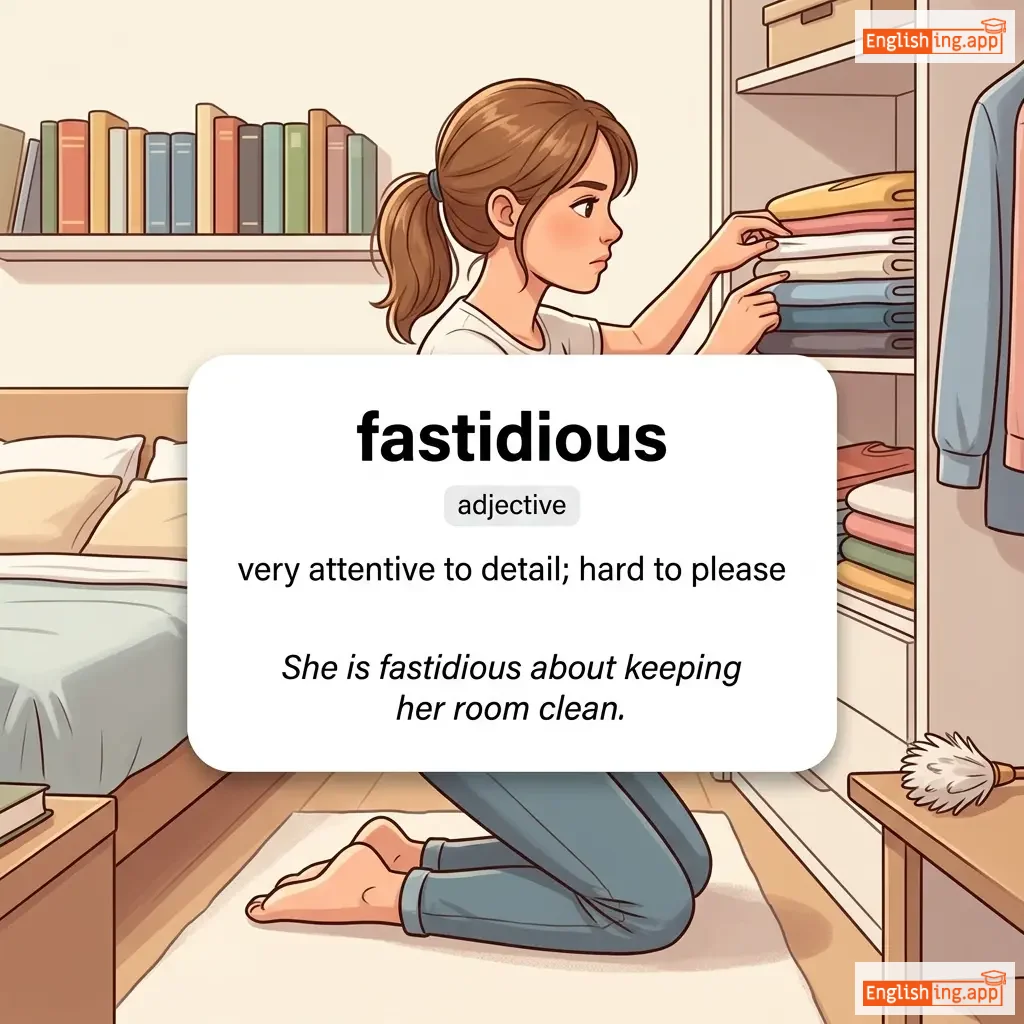
fastidious definition card — visual illustration of the meaning
adjective
/fæˈstɪdiəs/
meticuloso, exigente (meticuloso, exigente)

very attentive to detail; hard to please

"She is fastidious about keeping her room clean."

"Ella es meticulosa en mantener su habitación limpia." (Ella es meticulosa en mantener su habitacion limpia.)
adjective, noun
/fæt/
gordo (gordo)

having a lot of excess flesh; a natural oily substance in animal bodies

"Eating too much fast food can make you fat."

"Comer demasiada comida rápida puede hacerte gordo." (Comer demasiada comida rápida puede hacerte gordo.)
adjective
/ˈfeɪtl/
fatal (fatal)

causing death; leading to disaster

"The accident proved fatal for the driver."

"El accidente resultó fatal para el conductor." (El accidente resultó fatal para el conductor.)
noun
/ˈfeɪ.tə.lɪ.zəm/
fatalismo (fatalismo)

the belief that all events are predetermined and inevitable

"He embraced fatalism, believing that nothing he did could change his destiny."

"Él abrazó el fatalismo, creyendo que nada de lo que hiciera podría cambiar su destino." (Él abrazó el fatalismo, creyendo que nada de lo que hiciera podría cambiar su destino.)
noun
/fəˈtæləti/
fatalidad (fatalidad)

An occurrence of death by accident, disaster, or violence.

"The accident resulted in one fatality."

"El accidente resultó en una fatalidad." (El accidente resultó en una fatalidad.)
adverb
/ˈfeɪ.təl.i/
fatalmente (fatalmente)

in a way that causes death; with deadly consequences; critically

"The accident fatally injured two passengers."

"El accidente hirió fatalmente a dos pasajeros." (El accidente hirió fatalmente a dos pasajeros.)
Fate definition card — visual illustration of the meaning
noun
/feɪt/
destino (destino)

the development of events beyond a person's control, regarded as determined by a supernatural power

"She believed it was her fate to become a teacher."

"Ella creía que su destino era convertirse en profesora." (Ella creía que su destino era convertirse en profesora.)
adjective
/ˈfeɪt.fəl/
decisivo o fatal (decisivo o fatal)

having significant or disastrous consequences

"Their fateful decision changed the course of history."

"Su decisión decisiva cambió el curso de la historia." (Su desición decisiva cambió el curso de la historia.)
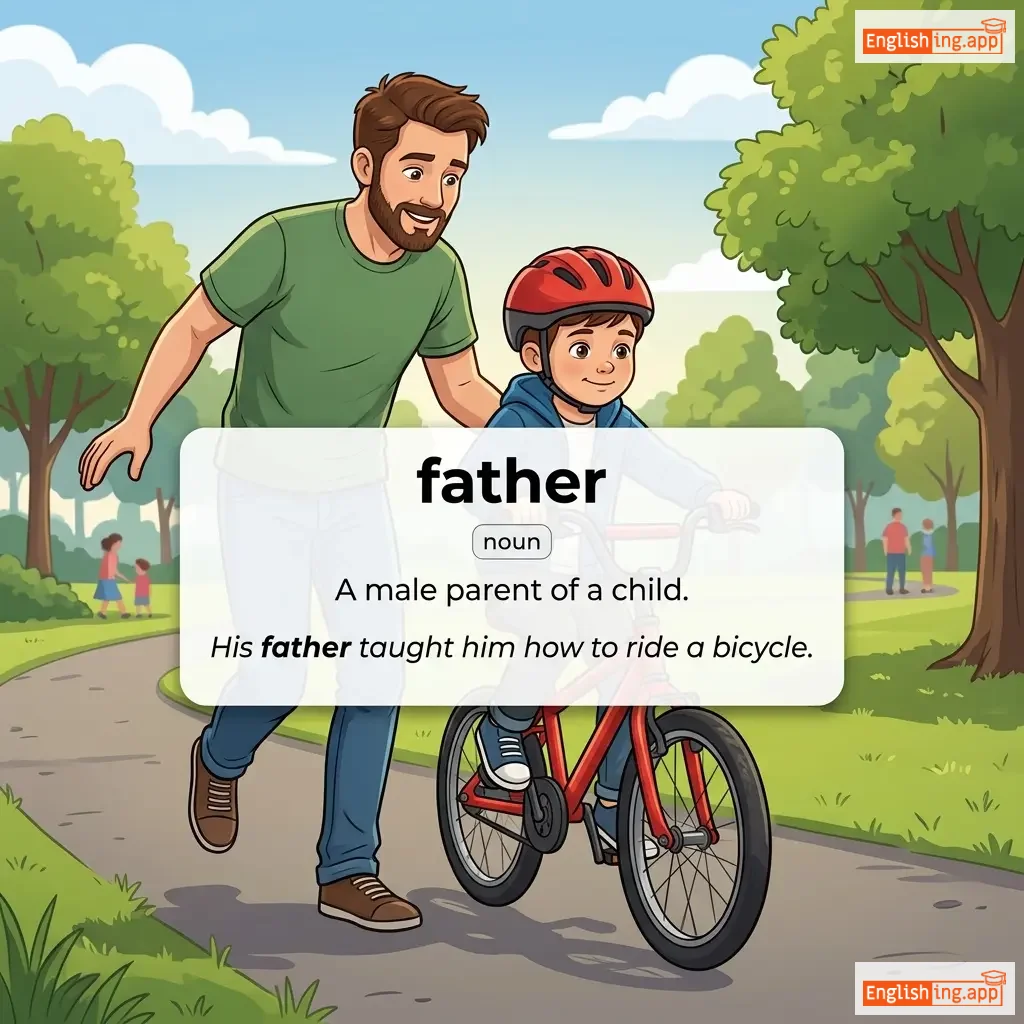
father definition card — visual illustration of the meaning
noun
/ˈfɑːðər/
felicidad (felicidad)

A male parent of a child.

"His father taught him how to ride a bicycle."

"Ella no pudo esconder su felicidad cuando recibió el premio." (Ella no pudo esconder su felicidad cuando recibió el premio.)
adjective
/ˈfɑːð.ər.ləs/
huérfano de padre (huérfano de padre)

without a father

"The fatherless child relied on the support of his community."

"El niño huérfano de padre dependía del apoyo de su comunidad." (El niño huérfano de padre dependía del apoyo de su comunidad.)
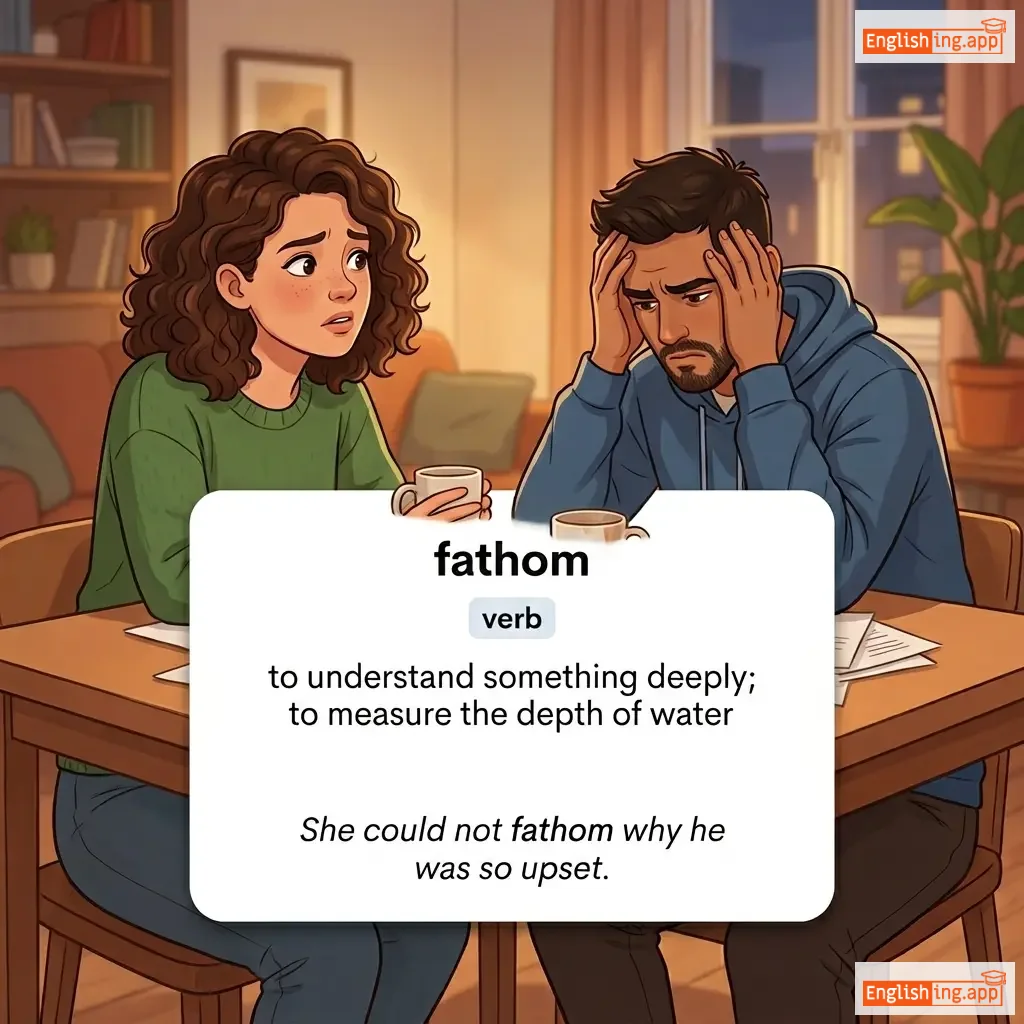
fathom definition card — visual illustration of the meaning
verb
/ˈfæð.əm/
comprender, entender profundamente (comprender, entender profundamente)

to understand something deeply; to measure the depth of water

"She could not fathom why he was so upset."

"Ella no podía entender por qué estaba tan molesto." (Ella no podía entender por qué estaba tan molesto.)
adjective
/ˈfæð.əm.ləs/
incomprensible o insondable (incomprensible o insondable)

impossible to understand or measure; very deep

"The ocean seemed fathomless as it stretched to the horizon."

"El océano parecía incomprensible cuando se extendía hasta el horizonte." (El oceáno parecía incomprensible cuando se extendía hasta el horizonte.)
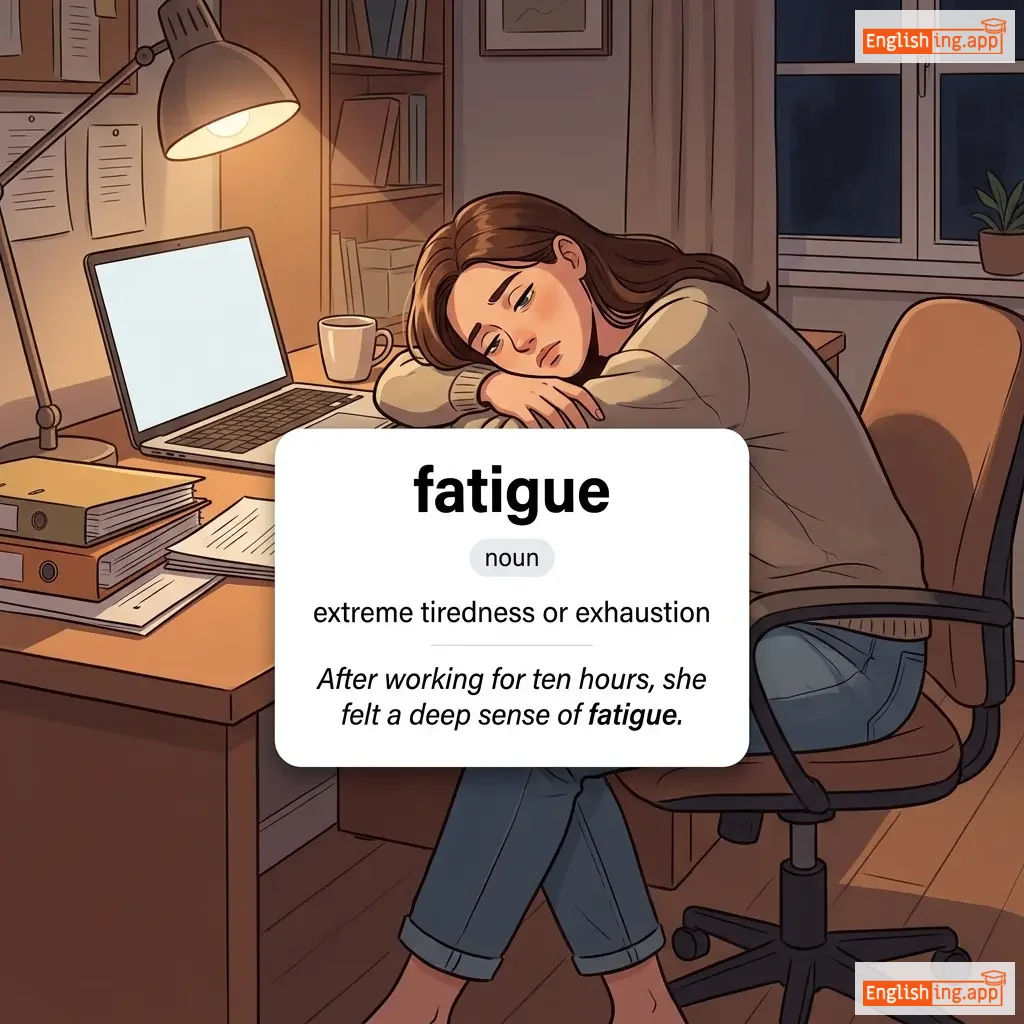
fatigue definition card — visual illustration of the meaning
noun
/fəˈtiːɡ/
fatiga (fatiga)

extreme tiredness or exhaustion

"After working for ten hours, she felt a deep sense of fatigue."

"Después de trabajar diez horas, sintió una profunda fatiga." (Después de trabajar diez horas, sintió una profunda fatiga.)
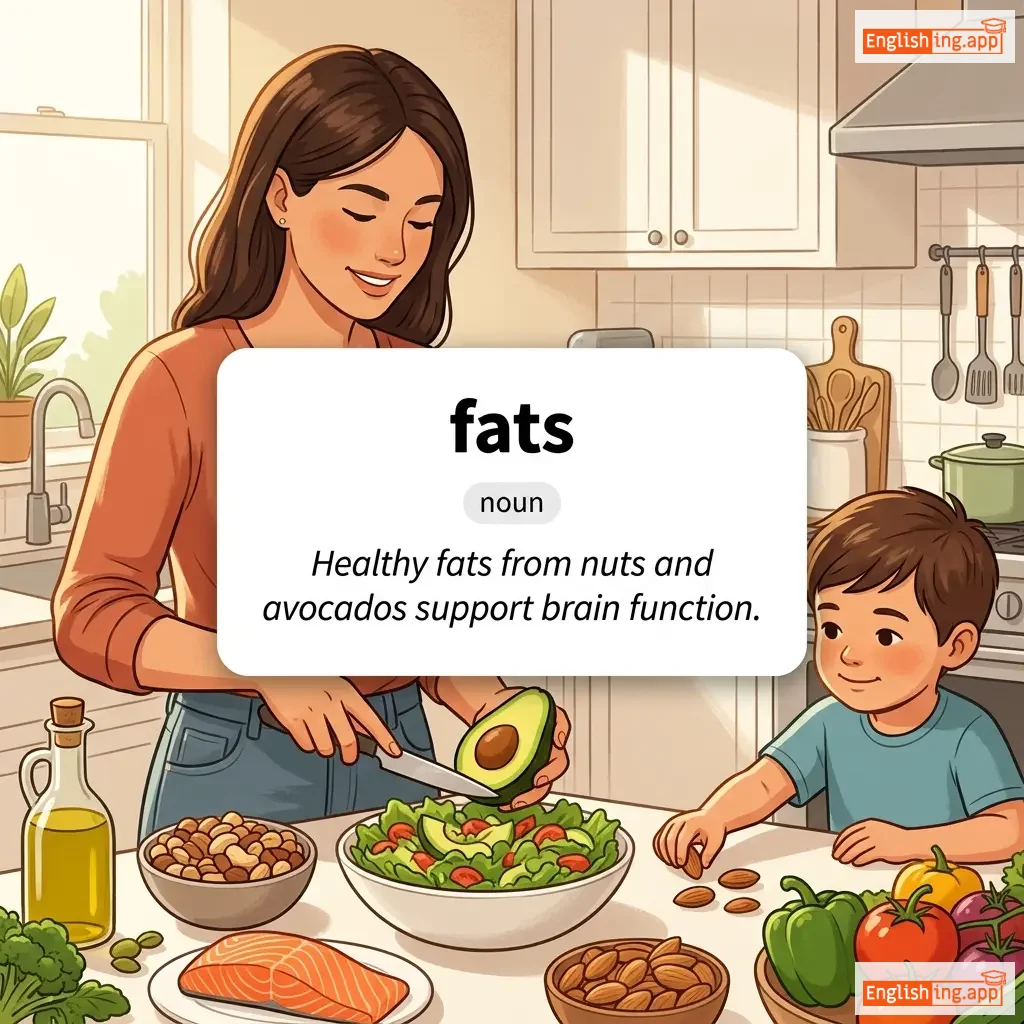
fats definition card — visual illustration of the meaning
noun
/fæts/
grasas (grasas)

Essential macronutrients that provide energy, support cell growth, and protect organs while helping absorb vitamins.

"Healthy fats from nuts and avocados support brain function."

"Las grasas saludables de los frutos secos y los aguacates apoyan la función cerebral." (Las grasas saludables de los frutos secos y los aguacates apoyan la funcion cerebral.)
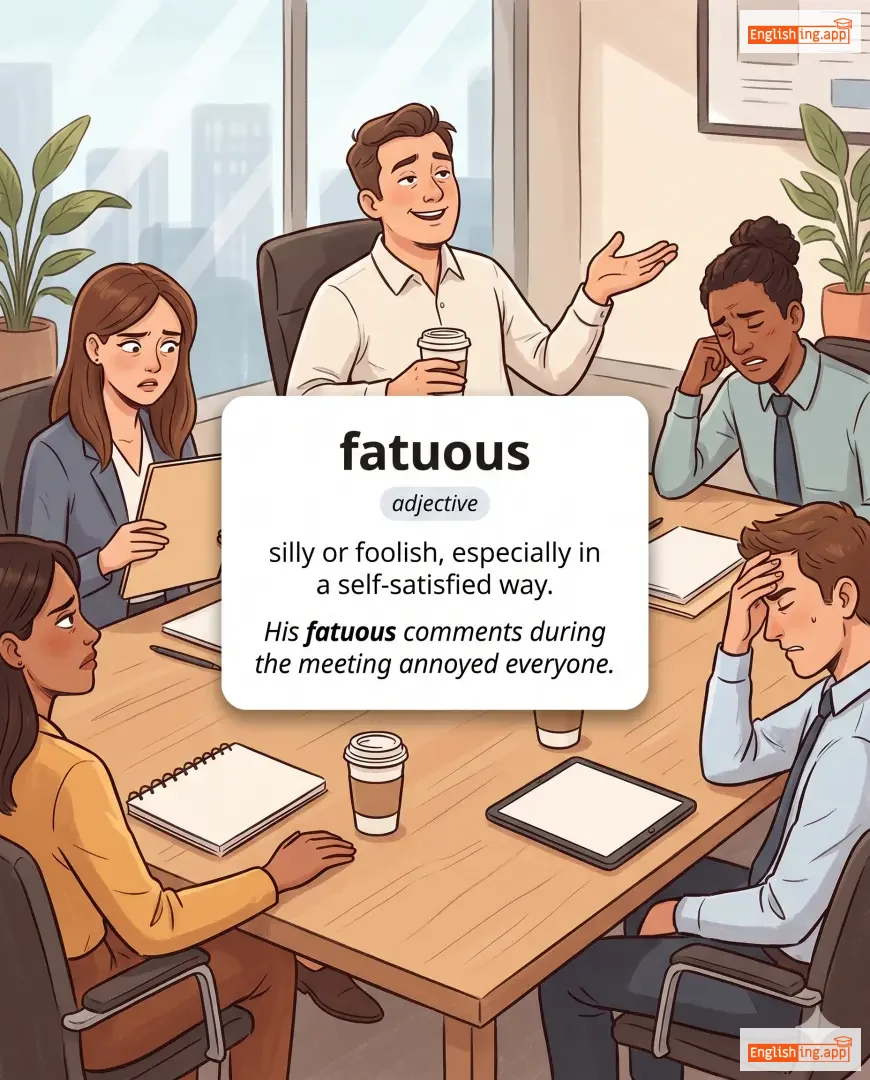
fatuous definition card — visual illustration of the meaning
adjective
/ˈfætʃuəs/
tonto (tonto)

silly or foolish, especially in a self-satisfied way

"His fatuous comments during the meeting annoyed everyone."

"Sus comentarios tontos durante la reunión molestaron a todos." (Sus comentarios tontos durante la reunión molestaron a todos.)
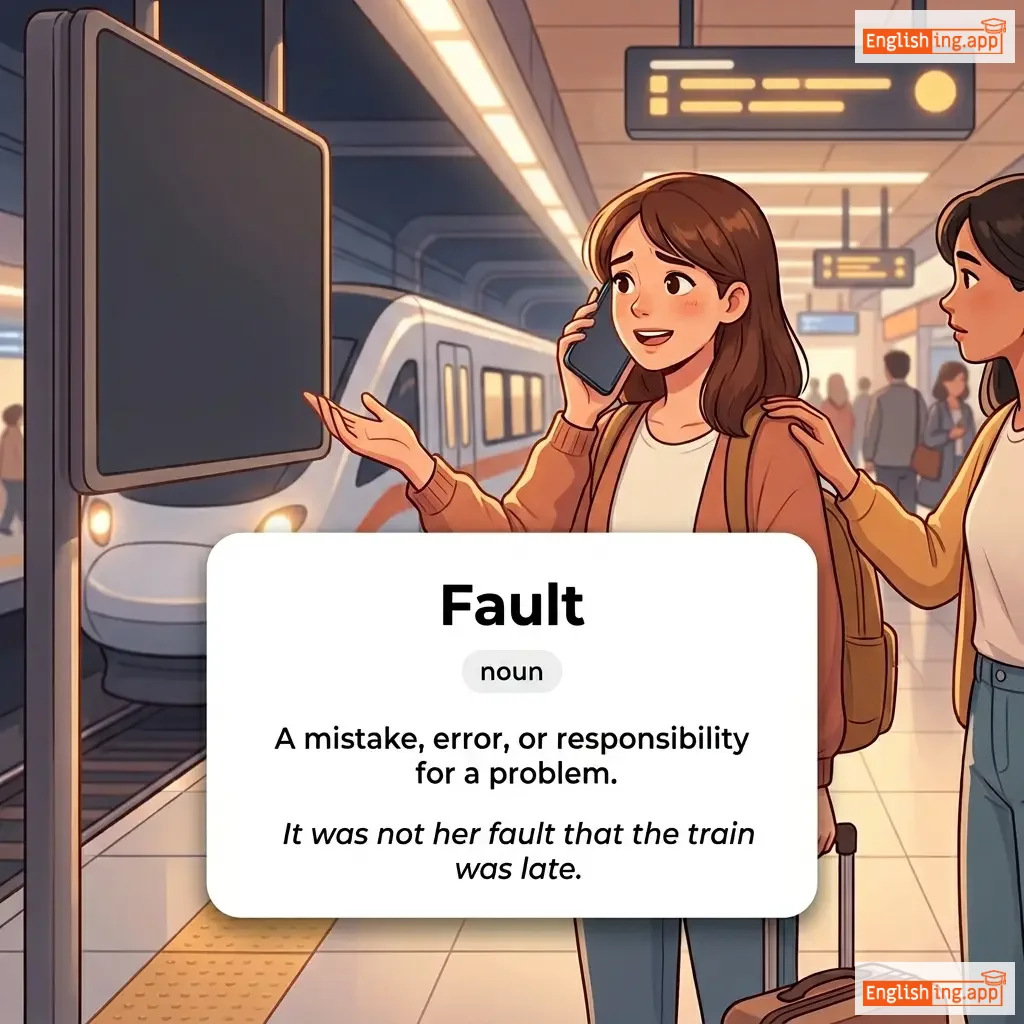
Fault definition card — visual illustration of the meaning
noun
/fɔːlt/
culpa (culpa)

A mistake, error, or responsibility for a problem.

"It was not her fault that the train was late."

"No fue su culpa que el tren llegara tarde." (No fue su culpa que el tren llegara tarde.)
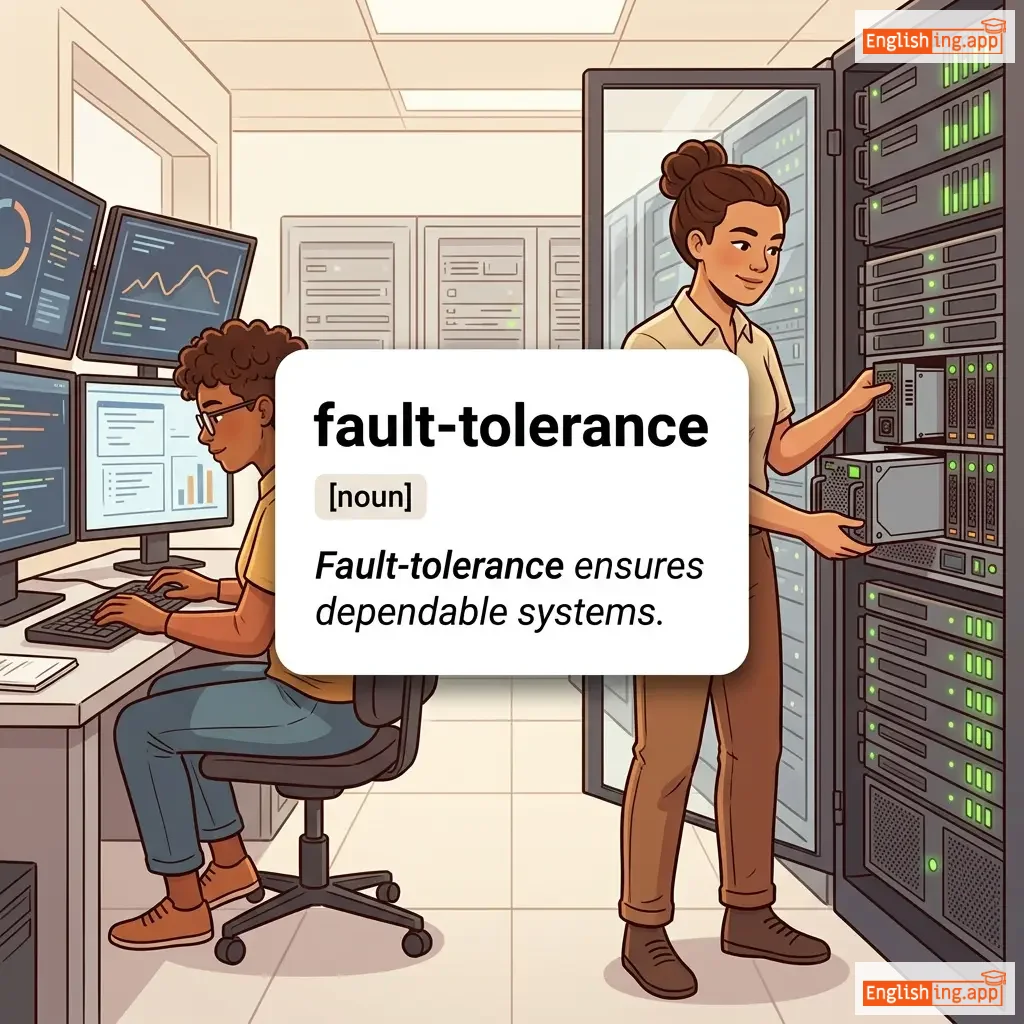
fault-tolerance definition card — visual illustration of the meaning
noun
fɔːlt ˈtɒl.ər.əns
tolerancia a fallos (tolerancia a fallos)

The ability of a system to continue operating properly in the event of the failure of some of its components.

"Fault-tolerance ensures dependable systems."

"La tolerancia a fallos asegura sistemas confiables." (La tolerancia a fallos asegura sistemas confiables.)
noun
/ˈfɔːltˌfaɪndər/
buscador de fallos (buscador de fallos)

a person who habitually finds fault with others

"He is such a faultfinder that nothing anyone does is ever good enough."

"Es un buscador de fallos tan grande que nada de lo que haga alguien está nunca lo suficientemente bien." (Es un buscador de fallos tan grande que nada de lo que haga alguien está nunca lo suficientemente bien.)
adjective
/ˈfɔːlti/
defectuoso (defectuoso)

Having defects or imperfections; not working properly

"The device stopped working because it was faulty."

"El dispositivo dejó de funcionar porque estaba defectuoso." (El dispositivo dejo de funcionar porque estaba defectuoso)
noun
/fɔːn/
fauno (criatura mitológica) (fauno (criatura mitologica))

a mythological creature that is half human and half goat

"The sculpture depicted a playful faun dancing in the forest."

"La escultura representaba un fauno juguetón bailando en el bosque." (La escultura representaba un fauno jugueton bailando en el bosque.)
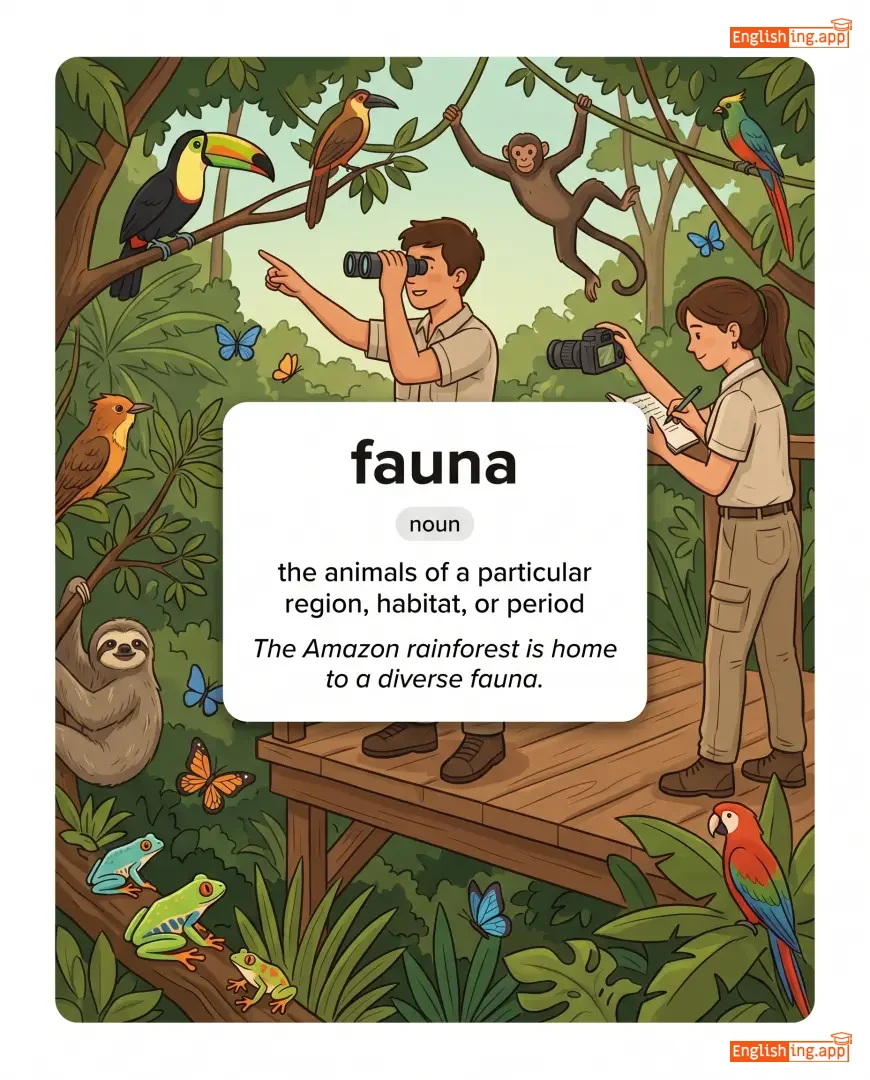
fauna definition card — visual illustration of the meaning
noun
/ˈfɔːnə/
fauna (fauna)

the animals of a particular region, habitat, or period

"The Amazon rainforest is home to a diverse fauna."

"La selva amazónica alberga una fauna diversa." (La selva amazonica alberga una fauna diversa.)
noun
/foʊ ˈpɑː/
desliz social (desliz social)

a social blunder or mistake in etiquette

"He committed a major faux pas by forgetting her birthday."

"Cometió un gran desliz social al olvidar su cumpleaños." (Cometió un gran desliz social al olvidar su cumpleaños.)
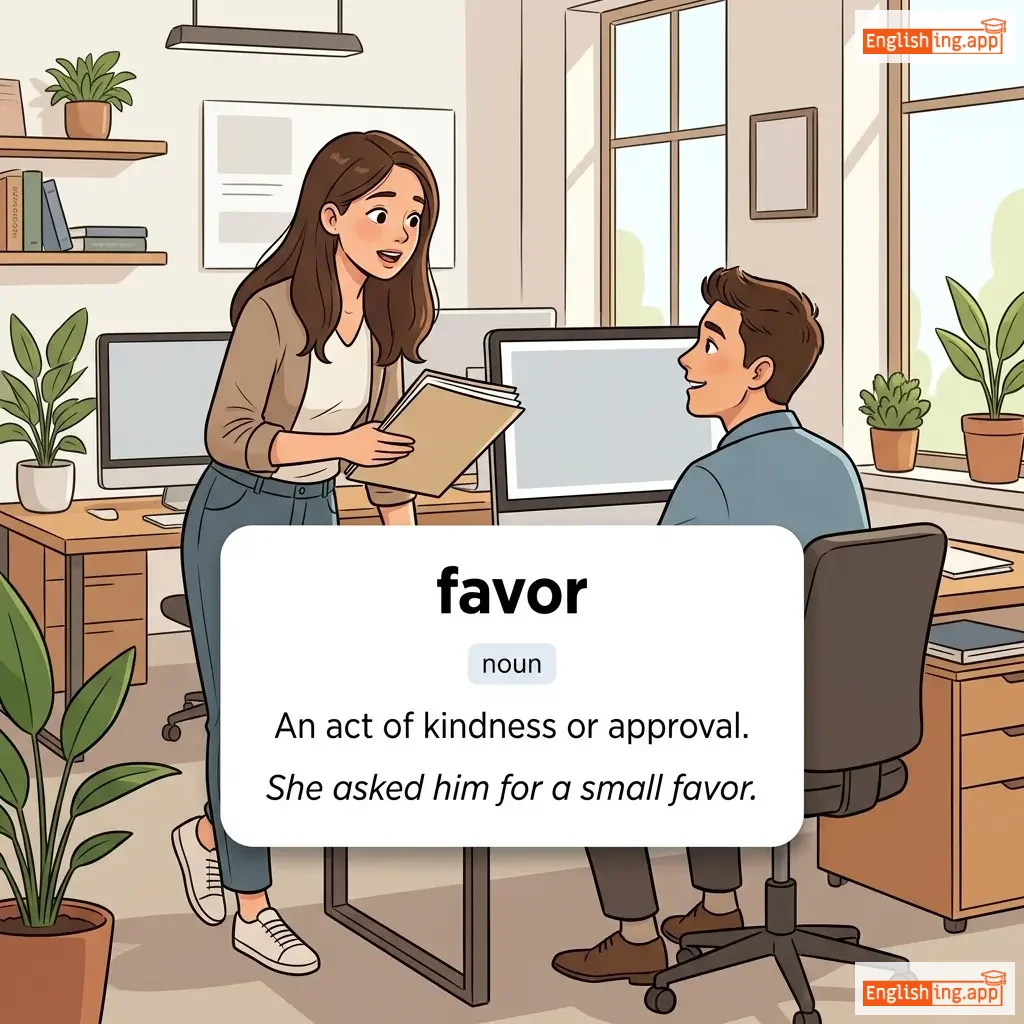
favor definition card — visual illustration of the meaning
noun
/ˈfeɪvər/
favor (favor)

An act of kindness or approval.

"She asked him for a small favor."

"Ella le pidió un pequeño favor." (Ella le pidio un pequeno favor.)
adjective
/ˈfeɪvərəbəl/
favorable (favorable)

expressing approval or support; advantageous

"The weather conditions were favorable for the outdoor event."

"Las condiciones climáticas fueron favorables para el evento al aire libre." (Las condiciones climaticas fueron favorables para el evento al aire libre.)