वोकैबुलरीज

इंग्लिश वोकैबुलरी डिस्कवर, लर्न और मास्टर करें

noun
/ˈfænsiər/
रुचिकर व्यक्ति (ruchikar vyakti)

a person who has a special interest in a particular thing or activity, especially animals or hobbies

"He is a fancier of rare birds."

"वह दुर्लभ पक्षियों का फैंसियर है।" (Vah durlabh pakshiyon ka fancier hai.)
adjective
/ˈfæn.sɪ.fəl/
काल्पनिक, अवास्तविक (kalpnik, avastavik)

overimaginative, unrealistic, or whimsical

"The story was too fanciful to be true."

"कहानी सच होने के लिए बहुत अधिक काल्पनिक थी।" (Kahani sach hone ke liye bahut adhik kalpnik thi.)
adjective
/ˈfæn.sɪ.ləs/
कल्पनाशून्य, सामान्य (kalpanashunya, samanya)

without imagination or creativity; plain or ordinary

"His drawings were simple and fanciless."

"उसकी ड्रॉइंग साधारण और कल्पनाशून्य थी।" (Uski drawing saadharan aur kalpanashunya thi.)
verb
/ˈfæn.si/
चाहना, पसंद करना, कल्पना करना (chahna, pasand karna, kalpana karna)

to imagine, desire, or like something; to have a liking for

"She fancies a cup of tea in the morning."

"वह सुबह एक कप चाय पसंद करती है।" (Woh subah ek kap chai pasand karti hai.)
noun
/ˈfæn.feər/
धूमधाम, प्रचार (dhoomdham, prachar)

a short ceremonial tune or display of publicity to attract attention

"The new product was launched with much fanfare."

"नए उत्पाद को धूमधाम के साथ लॉन्च किया गया था।" (Naye utpaad ko dhoomdham ke saath launch kiya gaya tha.)
adjective
/fænˈtæstɪk/
शानदार (shandar)

extraordinary, extremely good or impressive

"The concert last night was absolutely fantastic."

"कल रात का कॉन्सर्ट बिल्कुल शानदार था।" (Kal raat ka concert bilkul shandar tha.)
noun
/ˈfæntəsi/
काल्पनिकता (kalpnikata)

a creation of the imagination, especially something improbable or impossible

"She has a vivid fantasy about traveling to space."

"उसकी अंतरिक्ष यात्रा के बारे में एक जीवंत काल्पनिकता है।" (Uski antariksh yatra ke baare mein ek jeevant kalpnikata hai.)
adverb
/fɑːr/
दूर (door)

at, to, or by a great distance

"The school is far from my house."

"स्कूल मेरे घर से बहुत दूर है।" (School mere ghar se bahut door hai.)
adjective
/ˌfɑːrˈfɛtʃt/
असंभव (asambhav)

unlikely to happen or be true; improbable

"His explanation for being late was a bit far-fetched."

"उसकी देर से आने की व्याख्या थोड़ी असंभव थी।" (Uski der se aane ki vyakhya thodi asambhav thi.)
noun
/fɑːrs/
नाटकात्मक बकवास (naatakmaatmak bakwaas)

a comic dramatic work using buffoonery and horseplay, or a ridiculous situation

"The meeting turned into a complete farce with everyone arguing."

"बैठक पूरी तरह से एक बकवास में बदल गई जब सभी बहस कर रहे थे।" (Baithak poori tarah se ek bakwaas mein badal gayi jab sabhi behas kar rahe the.)
noun
/fɛər/
भाड़ा (bhada)

the money paid for a journey on public transport; also food or treatment provided

"The bus fare to the city center is five dollars."

"शहर केंद्र तक बस का भाड़ा पाँच डॉलर है।" (Shahar kendra tak bas ka bhada paanch dollar hai.)
noun
/ˌfer.ˈwel/
अलविदा (alvida)

an act of parting or of marking someone's departure

"The company organized a farewell party for the retiring manager."

"कंपनी ने सेवानिवृत्त प्रबंधक के लिए एक अलविदा पार्टी आयोजित की।" (company ne sevanivritt prabandhak ke liye ek alvida party aayojit ki.)
adjective
/ˌfɑːrˈfetʃt/
अविश्वसनीय या असंभव (avishwasniya ya asambhav)

unlikely to happen or be true; improbable

"His explanation for being late sounded farfetched."

"उसकी देर होने की व्याख्या अवास्तविक लग रही थी।" (Uski der hone ki vyakhya avastavik lag rahi thi.)
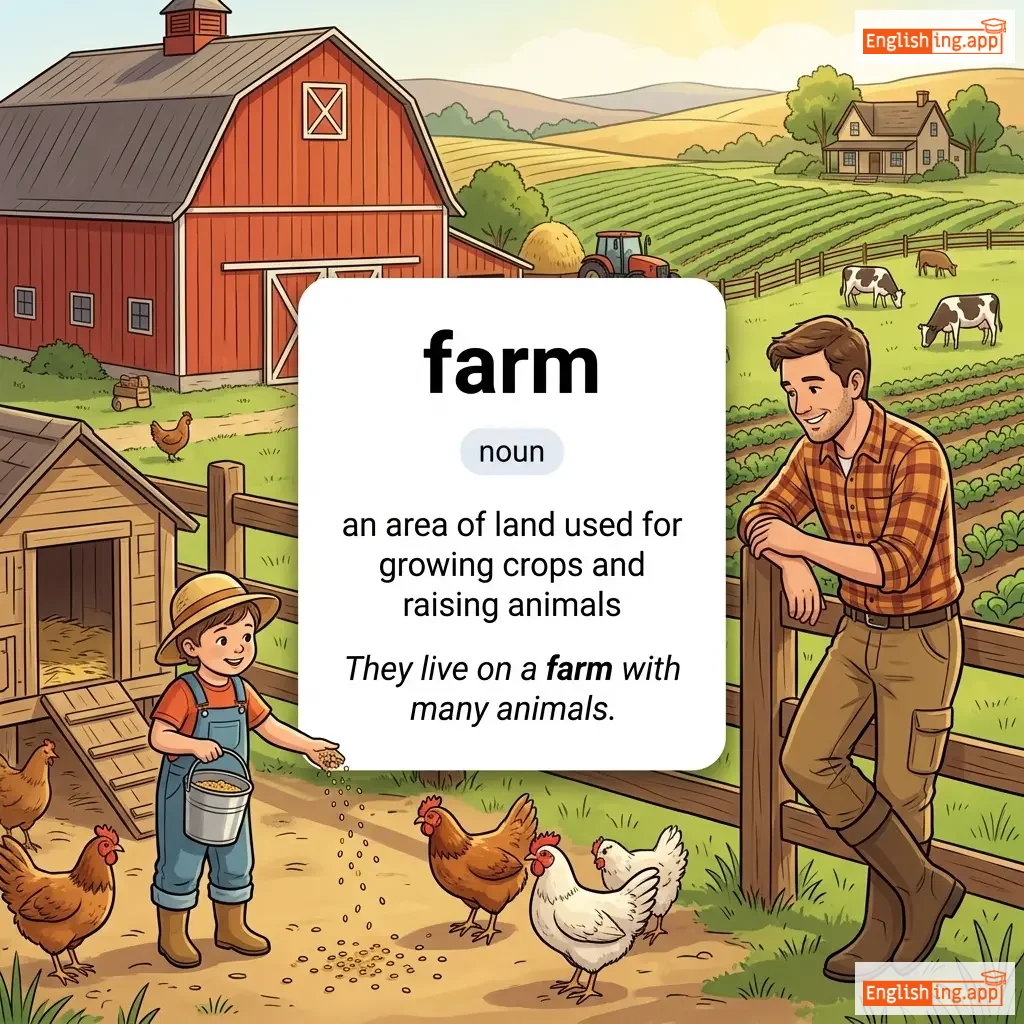
farm definition card — visual illustration of the meaning
noun
/fɑːrm/
खेत (khet)

an area of land used for growing crops and raising animals

"They live on a farm with many animals."

"वे एक खेत में रहते हैं जहाँ कई जानवर होते हैं।" (Ve ek khet mein rehte hain jahan kai janwar hote hain.)
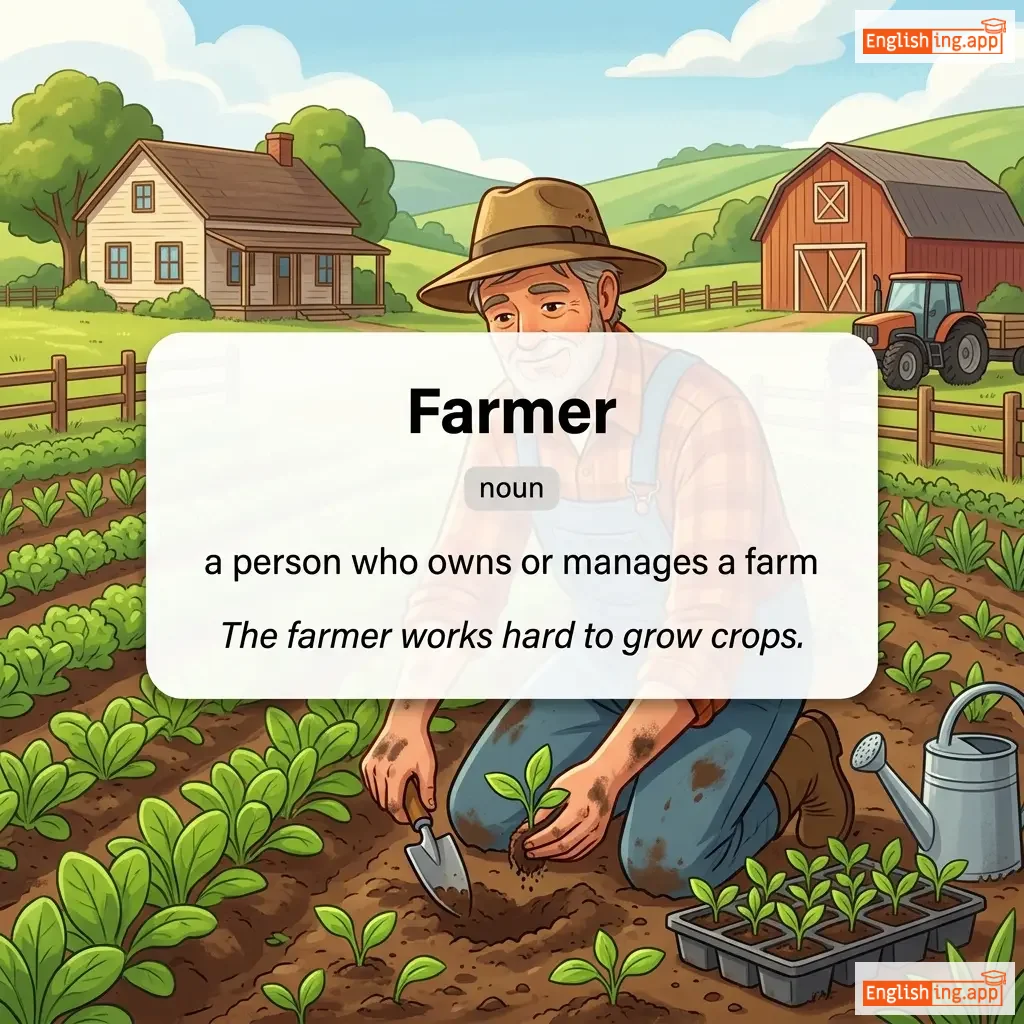
Farmer definition card — visual illustration of the meaning
noun
/ˈfɑːrmər/
किसान (kisan)

a person who owns or manages a farm

"The farmer works hard to grow crops."

"किसान फसल उगाने के लिए कड़ी मेहनत करता है।" (Kisan fasal ugane ke liye kadi mehnat karta hai.)
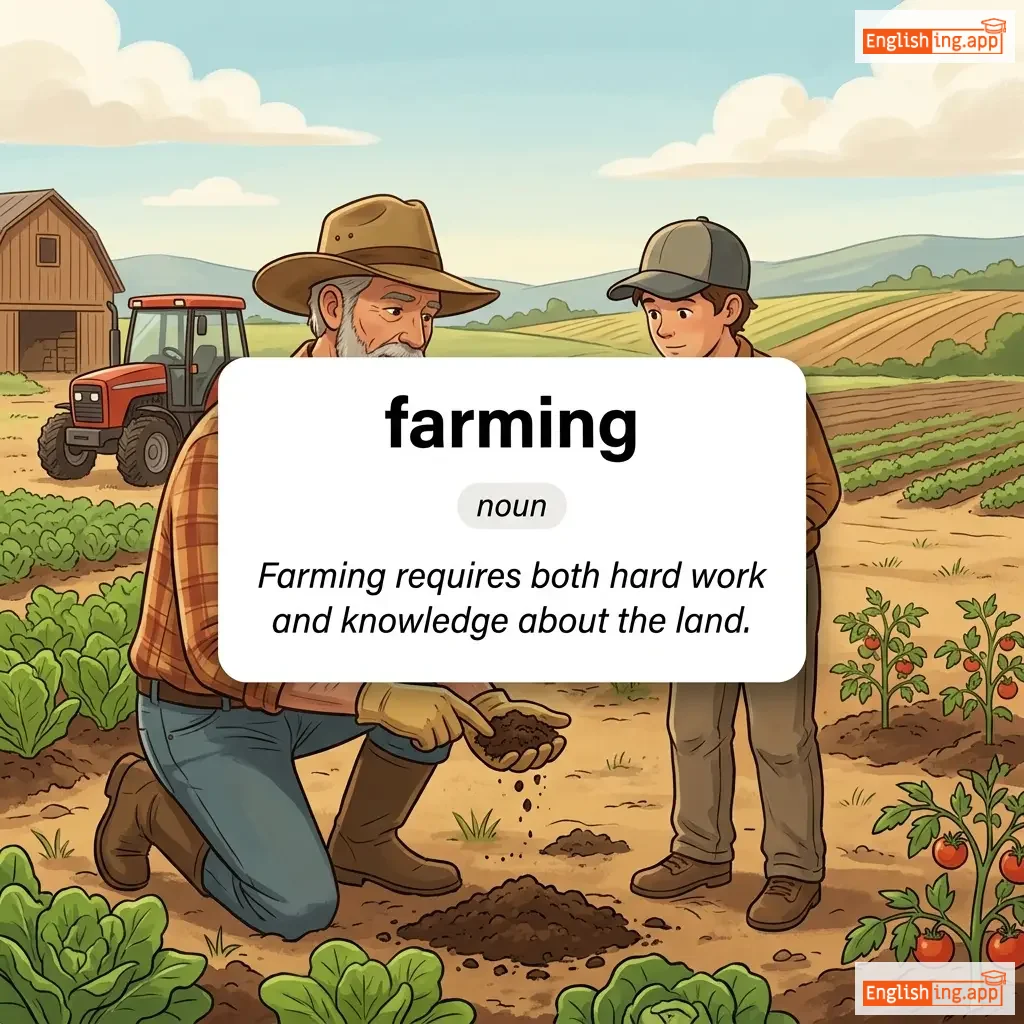
farming definition card — visual illustration of the meaning
noun
/ˈfɑː.mɪŋ/
कृषिकर्म (krishikarm)

the activity or business of growing crops and raising animals for food or other products

"Farming requires both hard work and knowledge about the land."

"कृषिकर्म के लिए कड़ी मेहनत और भूमि के बारे में ज्ञान दोनों की आवश्यकता है।" (Krishikarm ke liye kadi mehnat aur bhumi ke baare mein gyaan dono ki aavashyakta hai.)
verb
/ˈfæs.ɪ.neɪt/
मोहित करना (mohit karna)

to attract and hold the attention of someone; to charm or captivate

"The magician's performance fascinated the audience."

"जादूगर का प्रदर्शन दर्शकों को मोहित कर गया।" (Jadugar ka pradarshan darshako ko mohit kar gaya.)
adjective
/ˈfæsɪneɪtɪŋ/
रोमांचक (romanchak)

extremely interesting or charming

"The history of ancient Egypt is truly fascinating."

"प्राचीन मिस्र का इतिहास सचमुच रोमांचक है।" (Prachin Misr ka itihas sachmuch romanchak hai.)
noun
/ˌfæs.ɪˈneɪ.ʃən/
आकर्षण; मोह; मोहिनी (akarshan, moho, mohini)

the power to fascinate someone; the state of being intensely interested

"Her fascination with ancient history led her to become an archaeologist."

"प्राचीन इतिहास में उसकी आकर्षण ने उसे एक पुरातत्वविद बनने के लिए प्रेरित किया।" (Prachin itihas mein uski akarsan ne use ek puratatvavid banne ke liye prerit kiya.)
fascist definition card — visual illustration of the meaning
adjective
ˈfæʃ.ɪst
फासीवादी (fasisvadi)

Relating to or characteristic of fascism; extremely authoritarian.

"Fascist governance undermines freedom."

"फासीवादी शासन स्वतंत्रता को कमजोर करता है।" (Fasisvadi shasan svatantrata ko kamzor karta hai.)
noun
/ˈfæʃ.ən/
फ़ैशन (fashion)

a popular or accepted style of clothing, behavior, or way of doing something

"She always keeps up with the latest fashion."

"वह हमेशा नवीनतम फैशन के साथ अद्यतित रहती है।" (Wah hamesha naveenatam fashion ke saath adyatit rahti hai.)
adjective
/ˈfæʃənəbəl/
फैशनेबल (fashionable)

Following the latest styles or trends in clothing, behavior, or ideas

"She always wears fashionable clothes to every party."

"वह हर पार्टी में हमेशा फैशनेबल कपड़े पहनती है।" (Vah har party mein hamesha fashionable kapde pehanti hai.)
Fast definition card — visual illustration of the meaning
adjective, adverb
/fæst/
तेज़, मजबूत रूप से स्थिर (tez, majboot roop se sthir)

moving or capable of moving at high speed; firm or securely fixed

"He drives very fast on the highway."

"वह हाईवे पर बहुत तेज़ ड्राइव करता है।" (Vah highway par bahut tez drive karta hai.)
verb
/ˈfæsən/
मजबूती से जोड़ना (majbooti se jodna)

To attach or secure something firmly in place

"Please fasten your seatbelt before the plane takes off."

"कृपया विमान उड़ान भरने से पहले अपनी सीटबेल्ट मजबूती से जोड़ें।" (Kripya viman udaan bharne se pehle apni seatbelt majbooti se jodein.)
adjective, adverb
/ˈfæstər/
तेज़ (tez)

moving or able to move quickly; more quickly than usual

"This car is faster than the old one."

"यह कार पुरानी से तेज़ है।" (Yeh car purani se tez hai.)
adjective
/ˈfæstɪst/
सबसे तेज (sabse tez)

moving or capable of moving at the highest speed

"Usain Bolt is the fastest runner in the world."

"उसैन बोल्ट दुनिया का सबसे तेज धावक है।" (Usain Bolt duniya ka sabse tez dhavak hai.)
fastidious definition card — visual illustration of the meaning
adjective
/fæˈstɪdiəs/
चुस्त, बारीकी से ध्यान देने वाला (chust, bareeki se dhyaan dene wala)

very attentive to detail; hard to please

"She is fastidious about keeping her room clean."

"वह अपने कमरे को साफ रखने के बारे में अत्यधिक ध्यान देने वाली है।" (Wah apne kamre ko saaf rakhne ke baare mein atyadhik dhyaan dene wali hai.)
adjective, noun
/fæt/
मोटा (mota)

having a lot of excess flesh; a natural oily substance in animal bodies

"Eating too much fast food can make you fat."

"बहुत ज्यादा फास्ट फूड खाने से आप मोटे हो सकते हैं।" (Bahut zyada fast food khane se aap mote ho sakte hain.)
adjective
/ˈfeɪtl/
घातक (ghatak)

causing death; leading to disaster

"The accident proved fatal for the driver."

"दुर्घटना चालक के लिए घातक साबित हुई।" (Durghatna chaalak ke liye ghatak saabit hui.)
noun
/ˈfeɪ.tə.lɪ.zəm/
प्राकृतिकवाद (prakritikvad)

the belief that all events are predetermined and inevitable

"He embraced fatalism, believing that nothing he did could change his destiny."

"उसने प्राकृतिकवाद को अपनाया, यह विश्वास करते हुए कि जो कुछ भी उसने किया वह उसकी किस्मत को बदल नहीं सकता था।" (Usne prakritikvad ko apnaya, yeh vishwas karte hue ki jo kuch bhi usne kiya woh uski kismat ko badal nahi sakta tha.)
noun
/fəˈtæləti/
मृत्यु (mrityu)

An occurrence of death by accident, disaster, or violence.

"The accident resulted in one fatality."

"दुर्घटना में एक मृत्यु हुई।" (Durghatna mein ek mrityu hui.)
adverb
/ˈfeɪ.təl.i/
घातक रूप से (ghatak roop se)

in a way that causes death; with deadly consequences; critically

"The accident fatally injured two passengers."

"दुर्घटना ने दो यात्रियों को घातक रूप से घायल कर दिया।" (durghatna ne do yatrion ko ghatak roop se ghaayal kar diya.)
Fate definition card — visual illustration of the meaning
noun
/feɪt/
किस्मत (kismat)

the development of events beyond a person's control, regarded as determined by a supernatural power

"She believed it was her fate to become a teacher."

"वह मानती थी कि एक शिक्षक बनने के लिए उसकी किस्मत थी।" (Vah maanti thi ki ek shikshak banne ke liye uski kismat thi.)
adjective
/ˈfeɪt.fəl/
निर्णायक या भयावह (nirnayak ya bhayavah)

having significant or disastrous consequences

"Their fateful decision changed the course of history."

"उनका निर्णायक निर्णय इतिहास की धारा बदलने वाला था।" (Unka nirnayak nirnay itihas ki dhara badalne wala tha.)
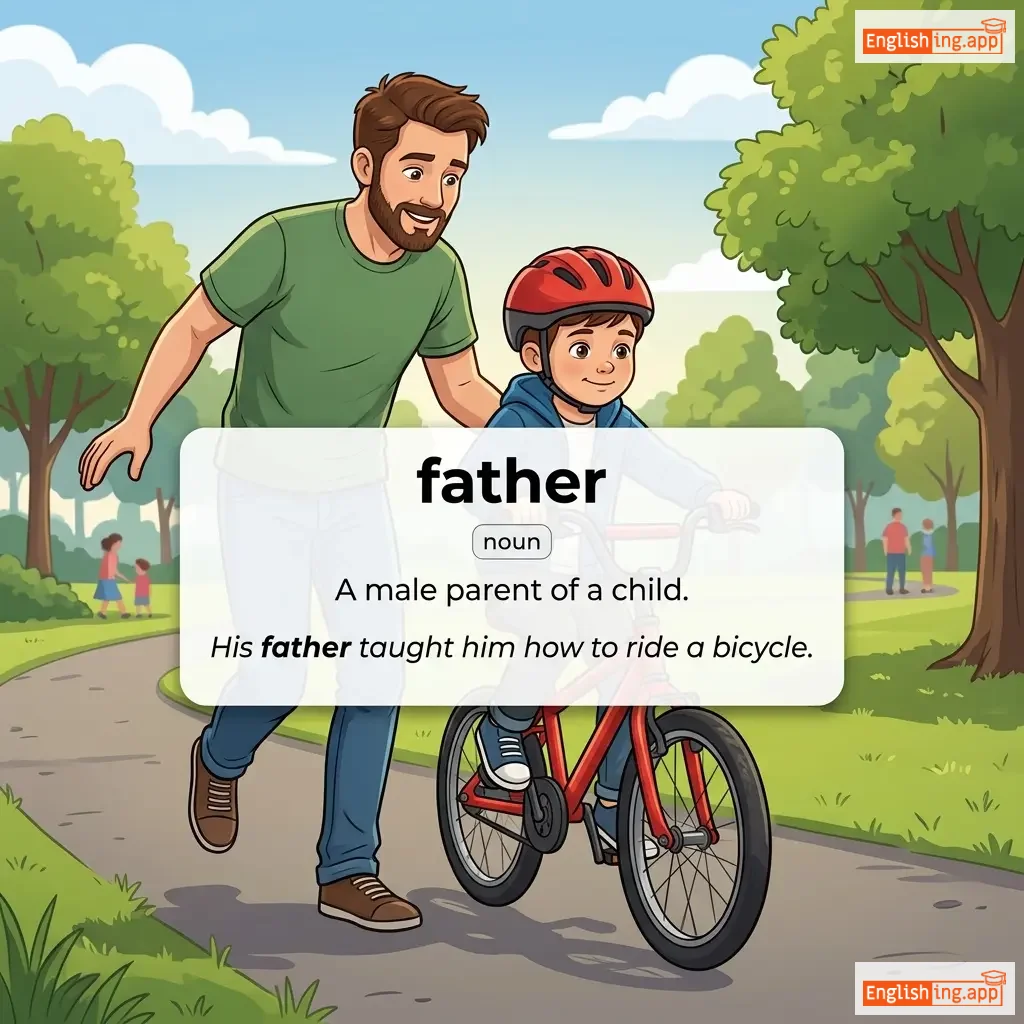
father definition card — visual illustration of the meaning
noun
/ˈfɑːðər/
खुशी (khushi)

A male parent of a child.

"His father taught him how to ride a bicycle."

"वह जब पुरस्कार प्राप्त करती है तो अपनी खुशी को छुपा नहीं पाती।" (vah jab puraskar prapt karti hai to apni khushi ko chhupa nahi paati.)
adjective
/ˈfɑːð.ər.ləs/
बापहीन (bapheen)

without a father

"The fatherless child relied on the support of his community."

"बापहीन बच्चा अपने समुदाय के समर्थन पर निर्भर था।" (Bapheen bachcha apne samudaay ke samarthan par nirbhar tha.)
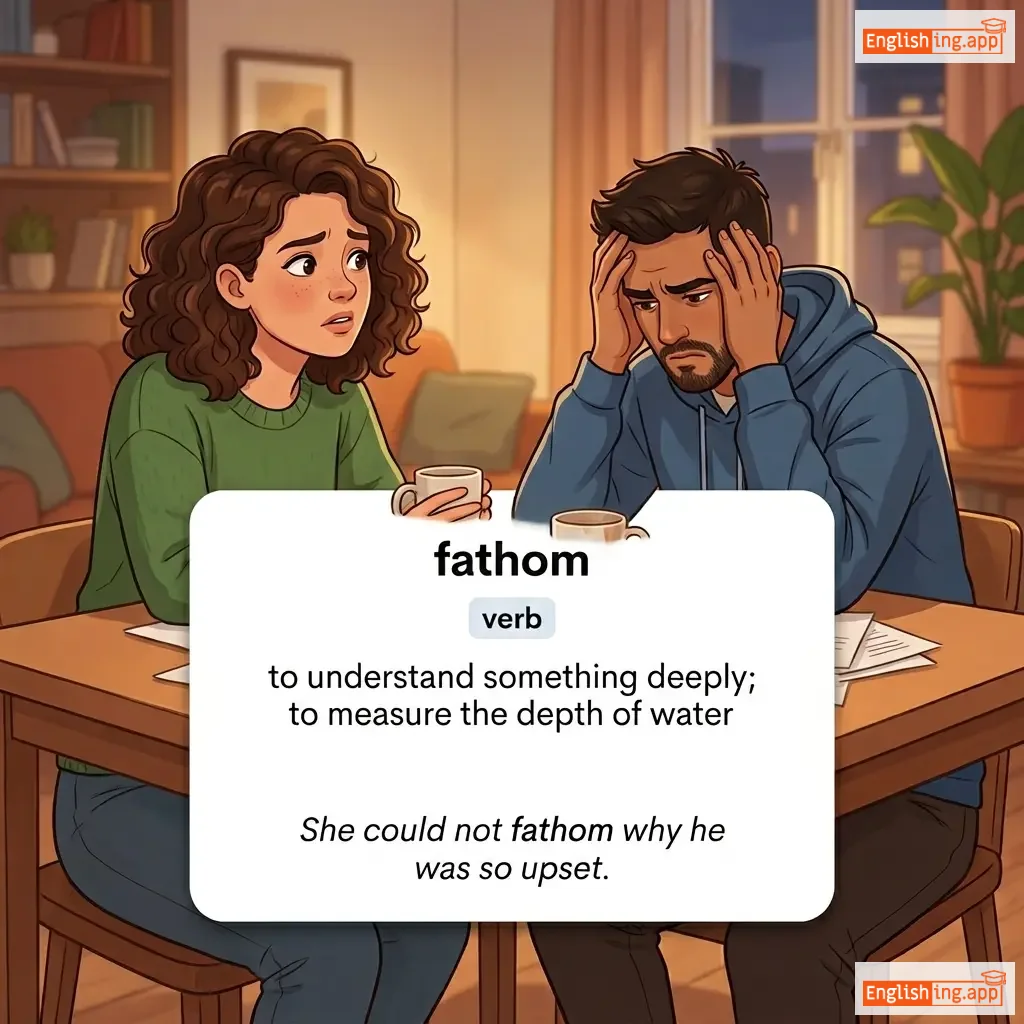
fathom definition card — visual illustration of the meaning
verb
/ˈfæð.əm/
समझना, गहराई से समझना (samajhna, gahraai se samajhna)

to understand something deeply; to measure the depth of water

"She could not fathom why he was so upset."

"वह यह नहीं समझ पाई कि वह इतना परेशान क्यों था।" (Vah yah nahin samajh paayi ki vah itna pareshan kyon tha.)
adjective
/ˈfæð.əm.ləs/
असमझ या मापने योग्य नहीं; बहुत गहरा (asamajh ya mapne yogya nahin; bahut gahra)

impossible to understand or measure; very deep

"The ocean seemed fathomless as it stretched to the horizon."

"महासागर ऐसा दिख रहा था जैसे वह समझ से परे हो जब वह क्षितिज तक फैला था।" (Mahaasagar aisa dikh raha tha jaise vah samajh se pare ho jab vah kshitij tak phaila tha.)
fatigue definition card — visual illustration of the meaning
noun
/fəˈtiːɡ/
थकावट (thakawat)

extreme tiredness or exhaustion

"After working for ten hours, she felt a deep sense of fatigue."

"दस घंटे काम करने के बाद, उसने गहरी थकावट महसूस की।" (Das ghante kaam karne ke baad, usne gehri thakawat mehsoos ki.)
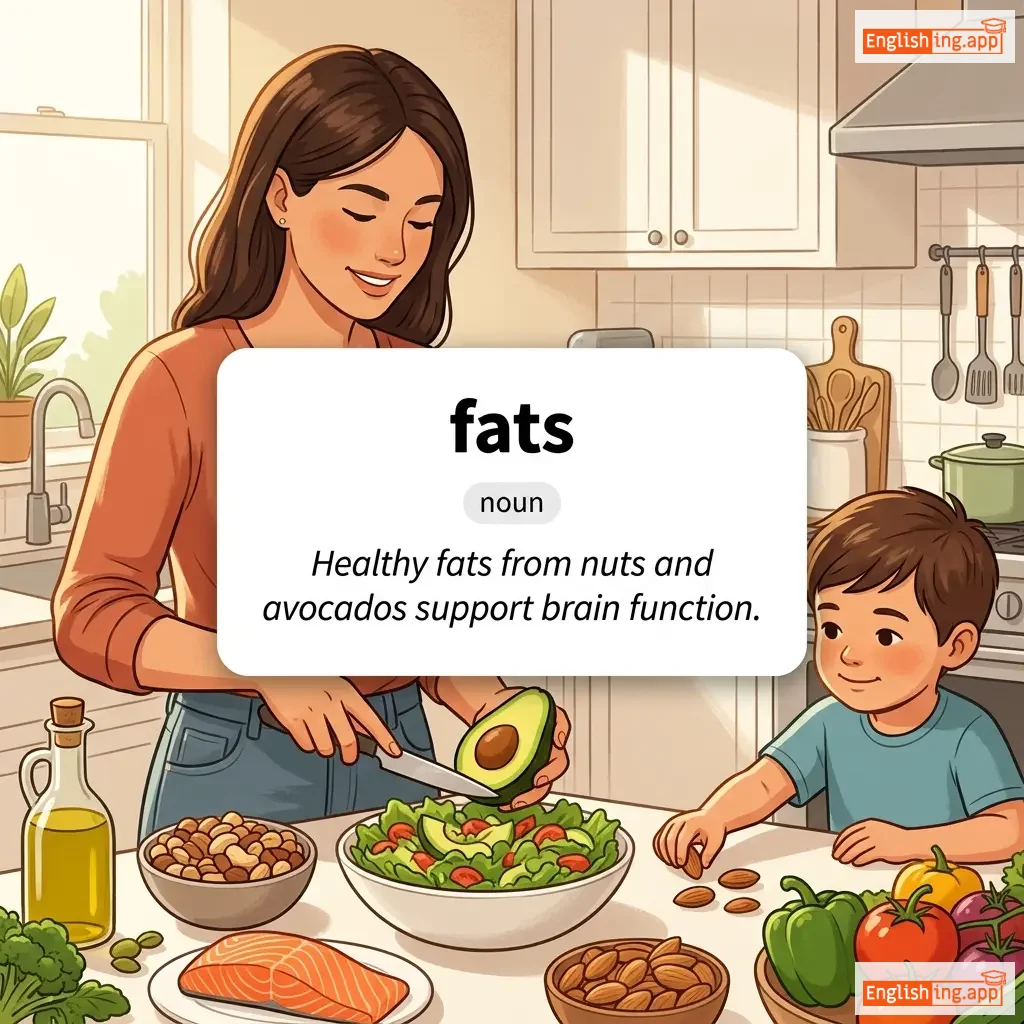
fats definition card — visual illustration of the meaning
noun
/fæts/
वसा (vasa)

Essential macronutrients that provide energy, support cell growth, and protect organs while helping absorb vitamins.

"Healthy fats from nuts and avocados support brain function."

"नट्स और एवोकाडो से प्राप्त स्वस्थ वसा मस्तिष्क कार्य का समर्थन करती है।" (Nuts aur avocado se prapt swasth vasa mastishk kary ka samarthan karti hai.)
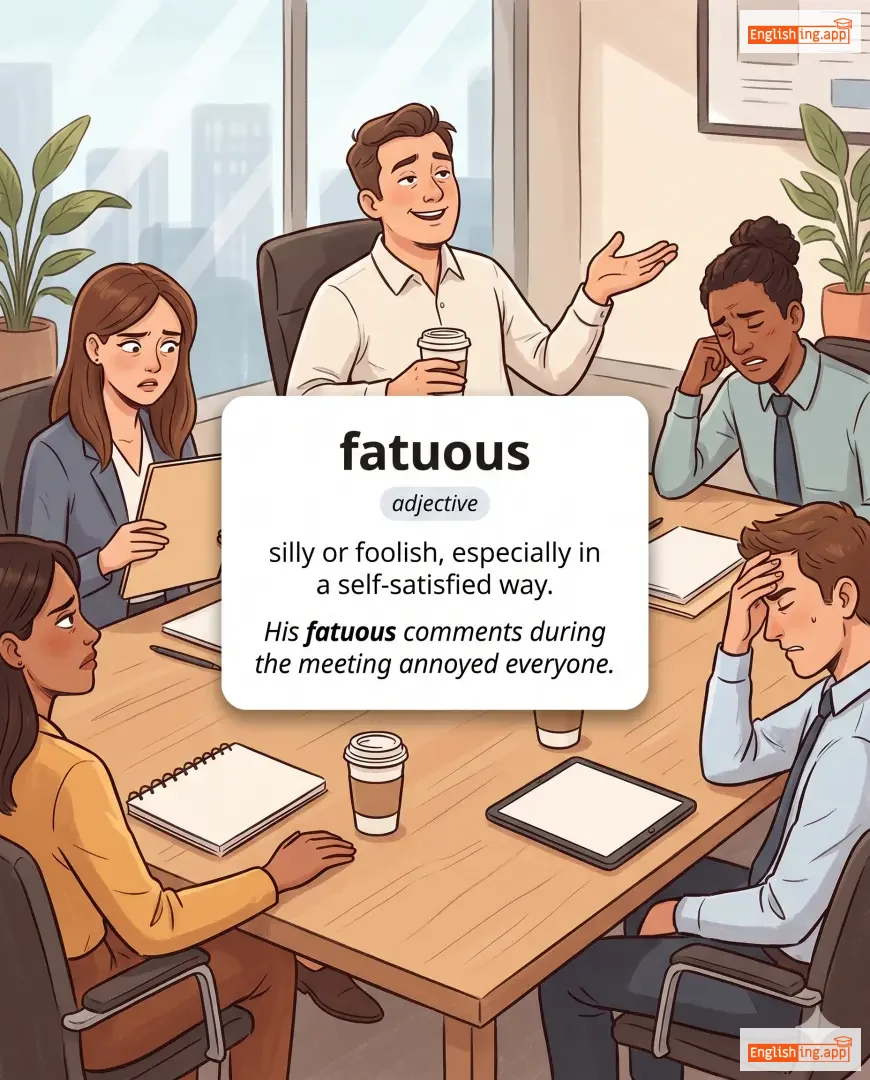
fatuous definition card — visual illustration of the meaning
adjective
/ˈfætʃuəs/
मूर्खतापूर्ण (moorkhatapurn)

silly or foolish, especially in a self-satisfied way

"His fatuous comments during the meeting annoyed everyone."

"बैठक के दौरान उसकी मूर्खतापूर्ण टिप्पणियाँ सभी को परेशान कर रही थीं।" (Baithak ke dauran uski moorkhatapurn tippaniyan sabhi ko pareshan kar rahi thin.)
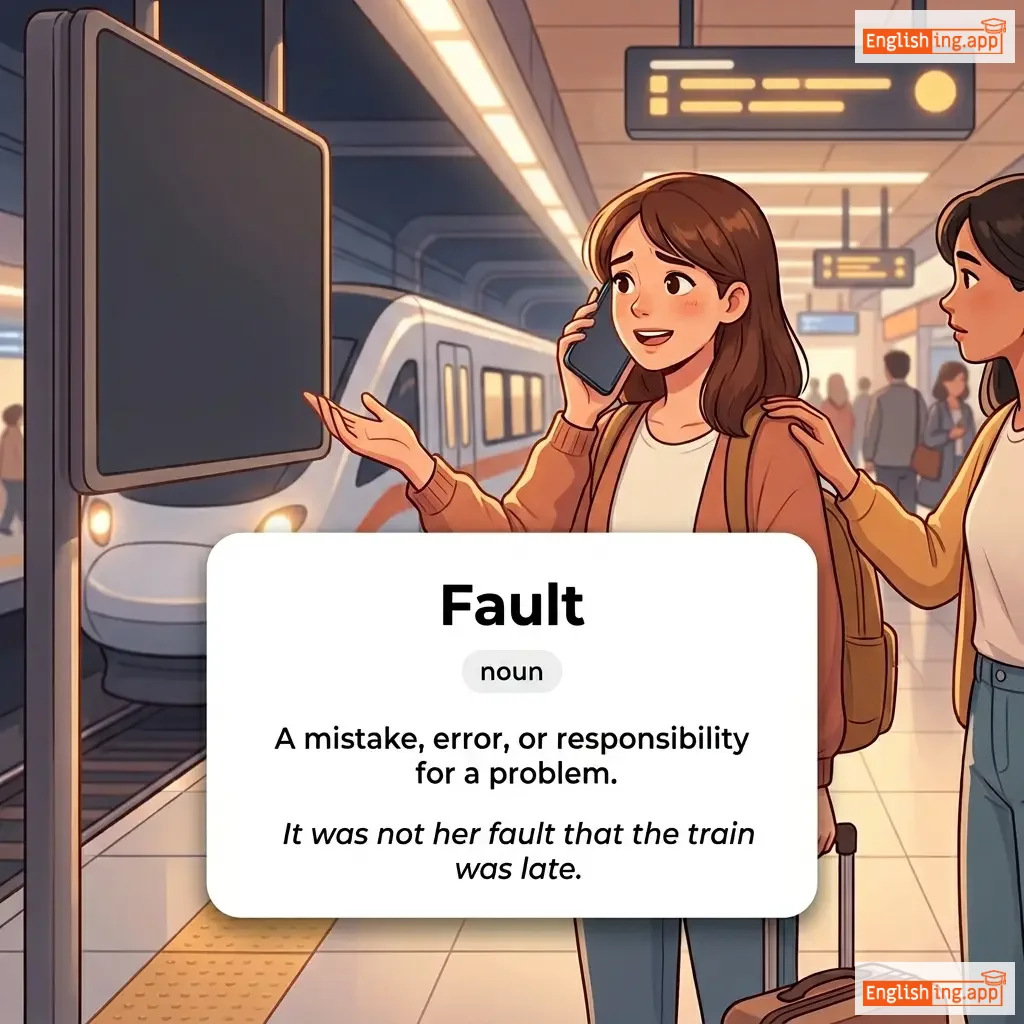
Fault definition card — visual illustration of the meaning
noun
/fɔːlt/
दोष (dosh)

A mistake, error, or responsibility for a problem.

"It was not her fault that the train was late."

"यह उसकी गलती नहीं थी कि ट्रेन लेट हुई।" (yah uski galti nahin thi ki train let hui.)
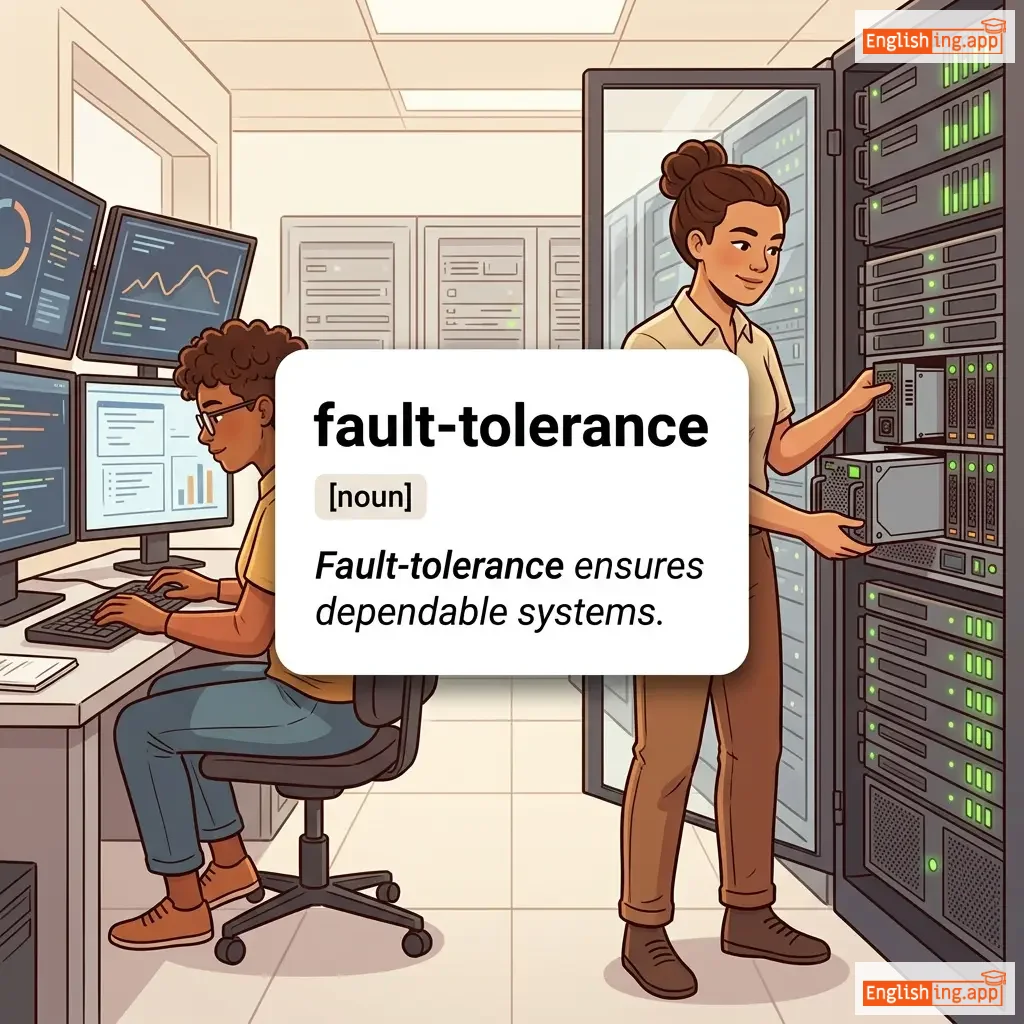
fault-tolerance definition card — visual illustration of the meaning
noun
fɔːlt ˈtɒl.ər.əns
दोष सहिष्णुता (dosh sahishnuta)

The ability of a system to continue operating properly in the event of the failure of some of its components.

"Fault-tolerance ensures dependable systems."

"दोष सहिष्णुता विश्वसनीय प्रणालियाँ सुनिश्चित करती है।" (Dosh sahishnuta vishwasniya pranaliyaan nishchit karti hain.)
noun
/ˈfɔːltˌfaɪndər/
दोष ढूंढने वाला (dosh dhoondhne wala)

a person who habitually finds fault with others

"He is such a faultfinder that nothing anyone does is ever good enough."

"वह ऐसा दोष ढूंढने वाला है कि जो कुछ भी कोई करता है, वह कभी भी पर्याप्त नहीं होता।" (Woh aisa dosh dhoondhne wala hai ki jo kuch bhi koi karta hai, woh kabhi bhi paryapt nahi hota.)
adjective
/ˈfɔːlti/
खराब (kharab)

Having defects or imperfections; not working properly

"The device stopped working because it was faulty."

"डिवाइस काम करना बंद कर दिया क्योंकि यह खराब था।" (divais kaam karna band kar diya kyunki yah kharab tha)
noun
/fɔːn/
फौन (पौराणिक प्राणी) (faun (pauranik prani))

a mythological creature that is half human and half goat

"The sculpture depicted a playful faun dancing in the forest."

"मूर्ति ने एक खेलते हुए फौन को जंगल में नाचते हुए दिखाया।" (Murti ne ek khelte hue faun ko jangal mein nachte hue dikhaya.)
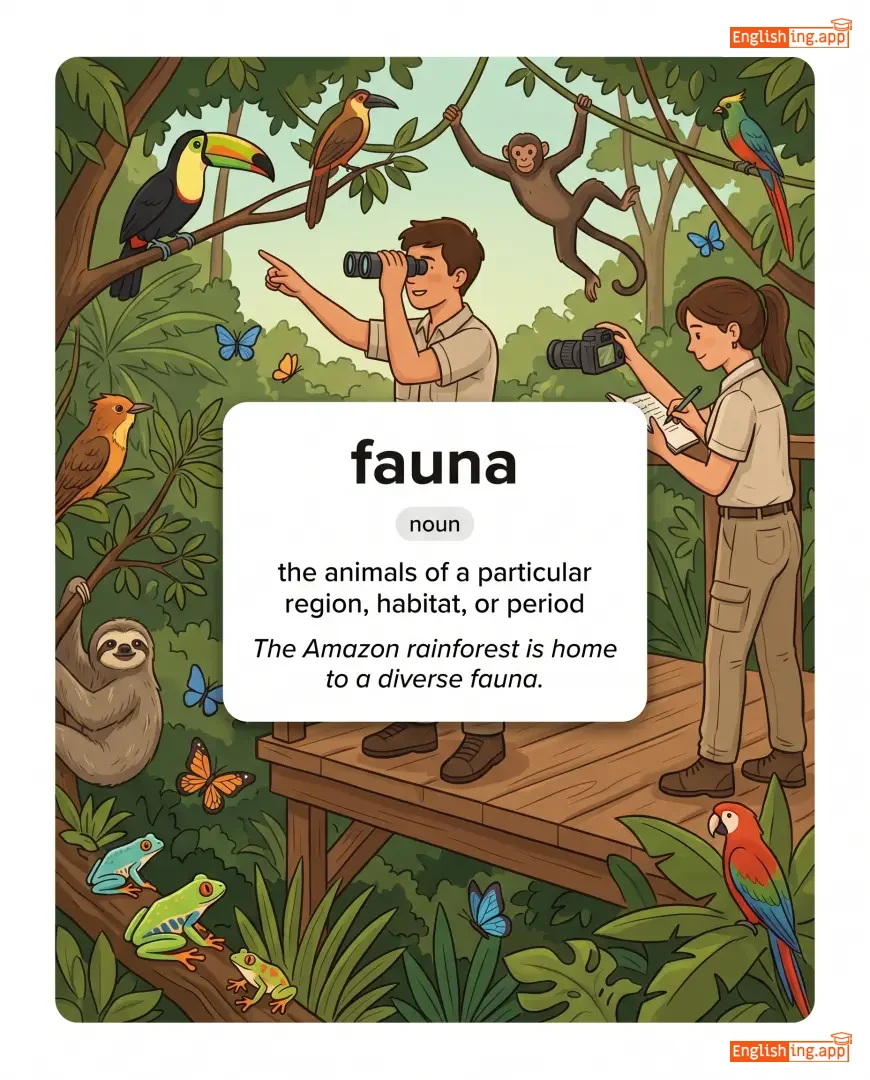
fauna definition card — visual illustration of the meaning
noun
/ˈfɔːnə/
प्राणीसमूह (pranisamuh)

the animals of a particular region, habitat, or period

"The Amazon rainforest is home to a diverse fauna."

"अमेज़न वर्षा वन में विविध प्रकार के प्राणी रहते हैं।" (Amazon varsha van mein vibhinn prakar ke prani rahte hain.)
noun
/foʊ ˈpɑː/
सोशल गलती (social galti)

a social blunder or mistake in etiquette

"He committed a major faux pas by forgetting her birthday."

"उसने उसका जन्मदिन भूलकर एक बड़ी सोशल गलती की।" (Usne uska janmadin bhoolkar ek badi social galti ki.)
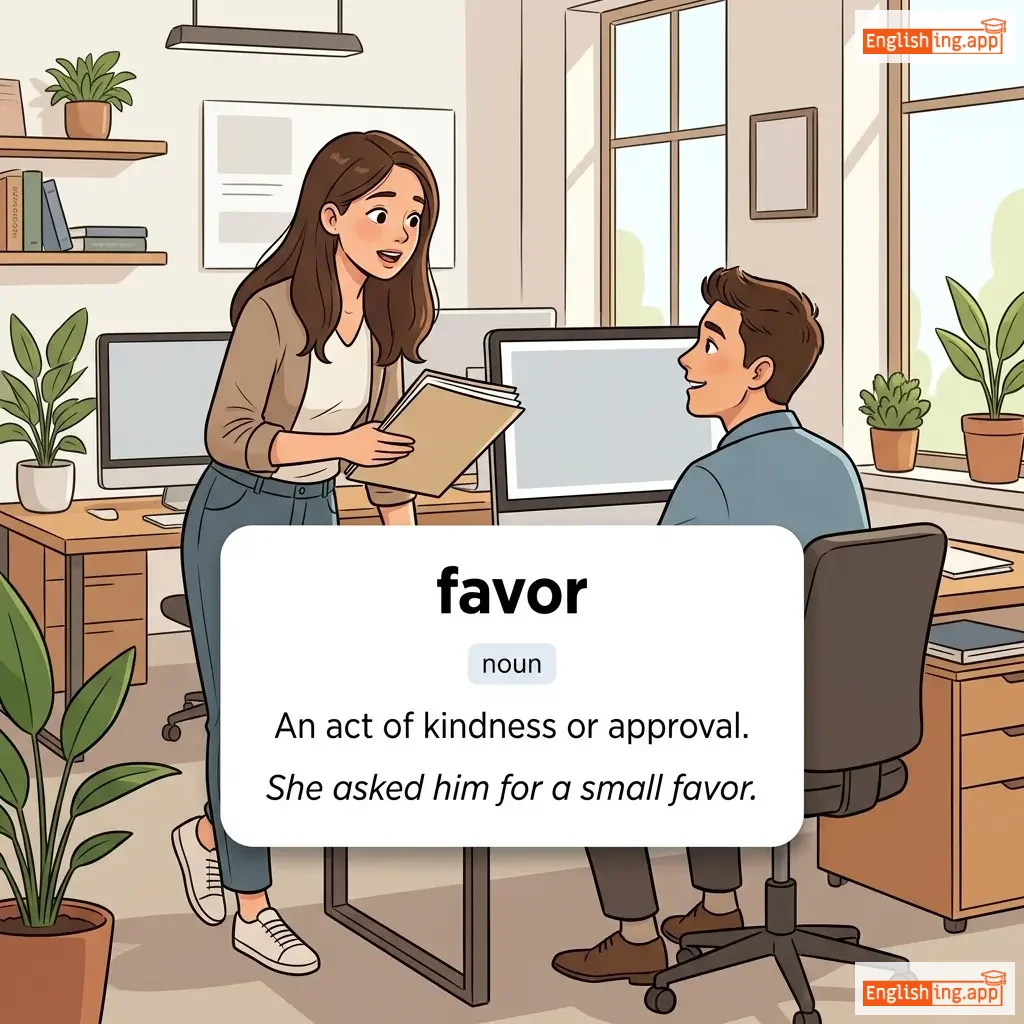
favor definition card — visual illustration of the meaning
noun
/ˈfeɪvər/
उपकार (upkar)

An act of kindness or approval.

"She asked him for a small favor."

"वह उससे एक छोटा सा उपकार मांग रही थी।" (vah usse ek chhota sa upkar maang rahi thi.)
adjective
/ˈfeɪvərəbəl/
अनुकूल (anukool)

expressing approval or support; advantageous

"The weather conditions were favorable for the outdoor event."

"बाहरी कार्यक्रम के लिए मौसम अनुकूल था।" (Baahri karyakram ke liye mausam anukool tha.)