Vocabulaires

Découvrez, apprenez et maîtrisez le vocabulaire anglais

noun
/ˈfænsiər/
amateur (amateur)

a person who has a special interest in a particular thing or activity, especially animals or hobbies

"He is a fancier of rare birds."

"Il est un amateur d'oiseaux rares." (Il est un amateur d'oiseaux rares.)
adjective
/ˈfæn.sɪ.fəl/
fantaisiste, irréaliste (fantaisiste, irrealiste)

overimaginative, unrealistic, or whimsical

"The story was too fanciful to be true."

"L'histoire était trop fantaisiste pour être vraie." (L'histoire était trop fantaisiste pour être vraie.)
adjective
/ˈfæn.sɪ.ləs/
sans imagination, ordinaire (sans imagination, ordinaire)

without imagination or creativity; plain or ordinary

"His drawings were simple and fanciless."

"Ses dessins étaient simples et sans imagination." (Ses dessins etaient simples et sans imagination.)
verb
/ˈfæn.si/
imaginer, désirer, aimer (imaginer, désirer, aimer)

to imagine, desire, or like something; to have a liking for

"She fancies a cup of tea in the morning."

"Elle désire une tasse de thé le matin." (Elle désire une tasse de thé le matin.)
noun
/ˈfæn.feər/
grande pompe, publicité (grande pompe, publicite)

a short ceremonial tune or display of publicity to attract attention

"The new product was launched with much fanfare."

"Le nouveau produit a été lancé avec beaucoup de fanfare." (Le nouveau produit a ete lance avec beaucoup de fanfare.)
adjective
/fænˈtæstɪk/
fantastique (fantastique)

extraordinary, extremely good or impressive

"The concert last night was absolutely fantastic."

"Le concert de la nuit dernière était absolument fantastique." (Le concert de la nuit derniere etait absolument fantastique.)
noun
/ˈfæntəsi/
fantaisie (fantaisie)

a creation of the imagination, especially something improbable or impossible

"She has a vivid fantasy about traveling to space."

"Elle a une fantaisie vive de voyager dans l'espace." (Elle a une fantaisie vive de voyager dans l'espace.)
adverb
/fɑːr/
loin (lwan)

at, to, or by a great distance

"The school is far from my house."

"L'école est loin de ma maison." (L'école est loin de ma maison.)
adjective
/ˌfɑːrˈfɛtʃt/
farfelu (farfelu)

unlikely to happen or be true; improbable

"His explanation for being late was a bit far-fetched."

"Son explication pour être en retard était un peu farfelue." (Son explication pour être en retard était un peu farfelue.)
noun
/fɑːrs/
farce (farce)

a comic dramatic work using buffoonery and horseplay, or a ridiculous situation

"The meeting turned into a complete farce with everyone arguing."

"La réunion est devenue une vraie farce avec tout le monde qui se disputait." (La reunion est devenue une vraie farce avec tout le monde qui se disputait.)
noun
/fɛər/
tarif (tarif)

the money paid for a journey on public transport; also food or treatment provided

"The bus fare to the city center is five dollars."

"Le tarif du bus pour le centre-ville est de cinq dollars." (Le tarif du bus pour le centre-ville est de cinq dollars.)
noun
/ˌfer.ˈwel/
adieu (adieu)

an act of parting or of marking someone's departure

"The company organized a farewell party for the retiring manager."

"L'entreprise a organisé une fête d'adieu pour le directeur partant." (L'entreprise a organisé une fête d'adieu pour le directeur partant.)
adjective
/ˌfɑːrˈfetʃt/
improbable ou peu probable (improbable ou peu probable)

unlikely to happen or be true; improbable

"His explanation for being late sounded farfetched."

"Son explication pour son retard semblait invraisemblable." (Son explication pour son retard semblait invraisemblable.)
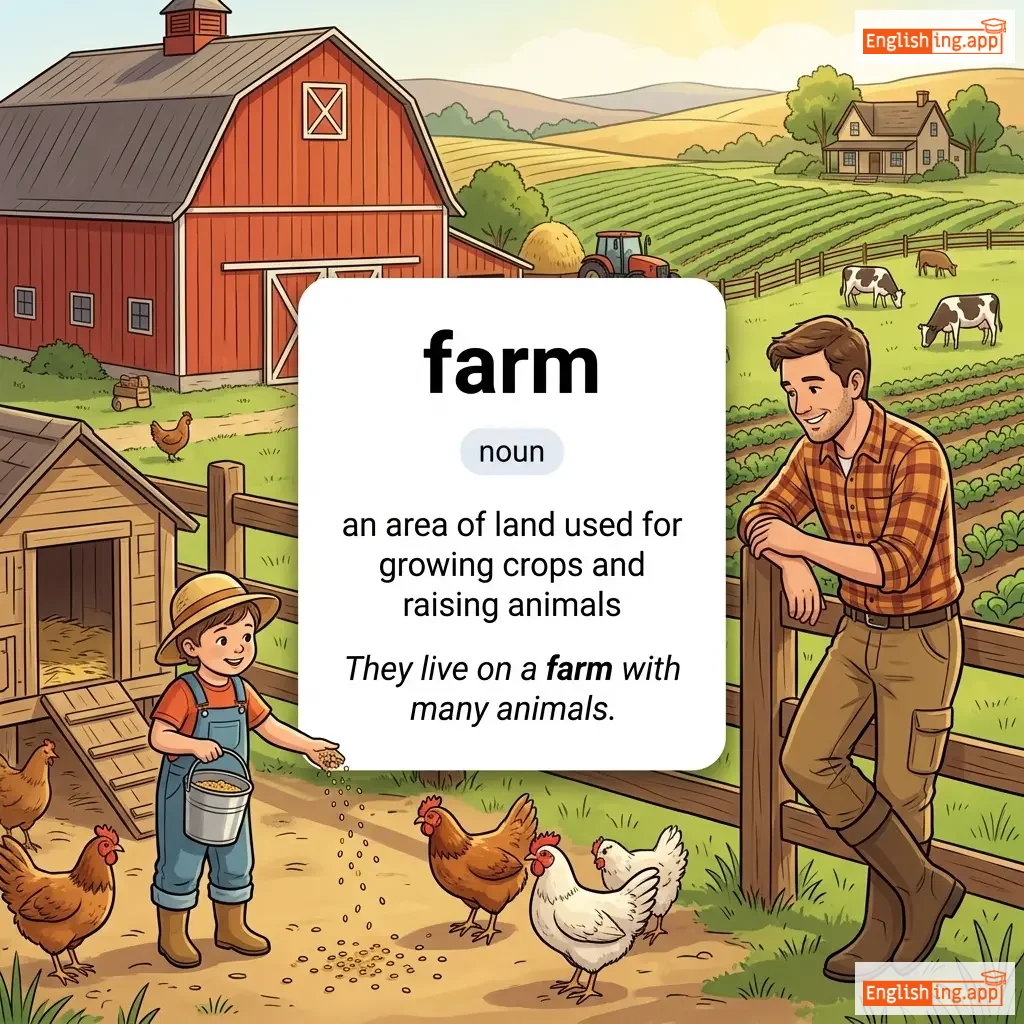
farm definition card — visual illustration of the meaning
noun
/fɑːrm/
ferme (ferme)

an area of land used for growing crops and raising animals

"They live on a farm with many animals."

"Ils vivent dans une ferme avec de nombreux animaux." (Ils vivent dans une ferme avec de nombreux animaux.)
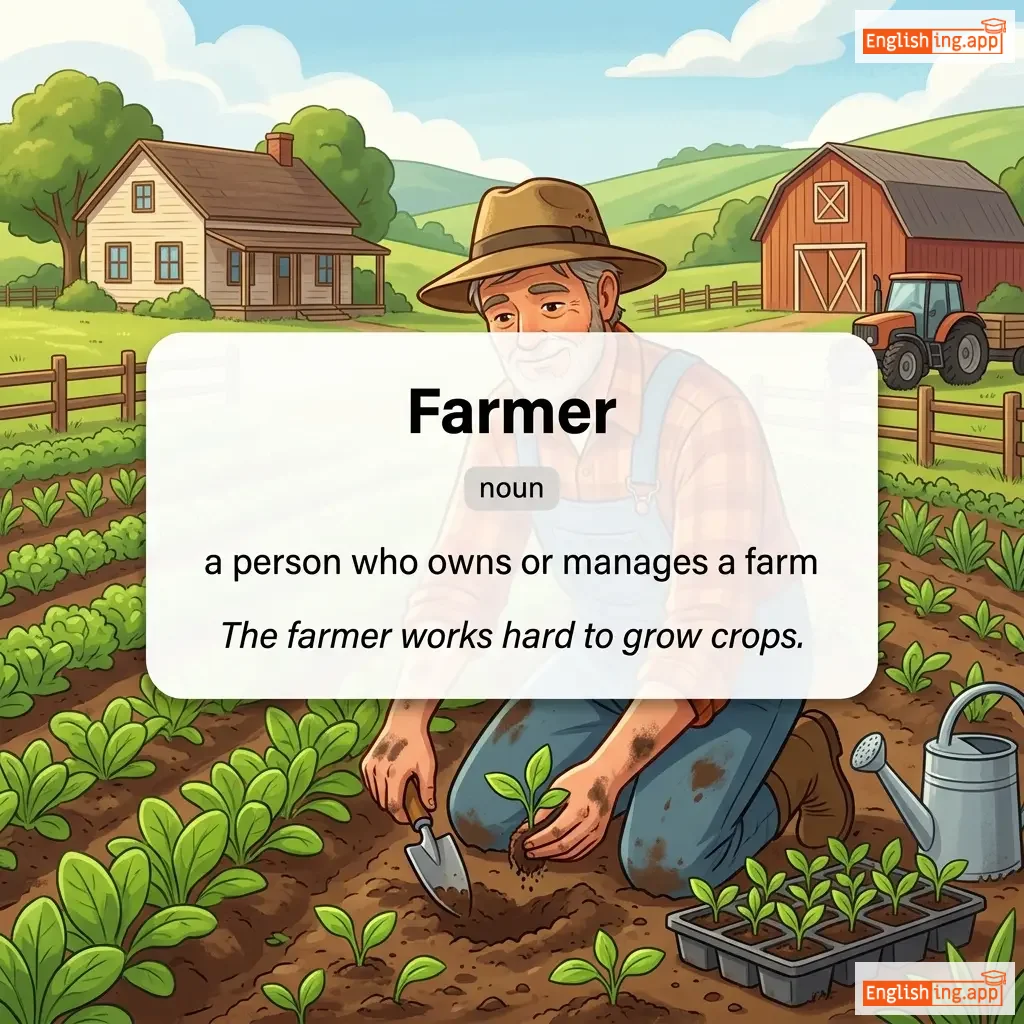
Farmer definition card — visual illustration of the meaning
👨‍🌾

Farmer (farmer)

noun
/ˈfɑːrmər/
fermier (fermier)

a person who owns or manages a farm

"The farmer works hard to grow crops."

"Le fermier travaille dur pour cultiver les récoltes." (Le fermier travaille dur pour cultiver les récoltes.)
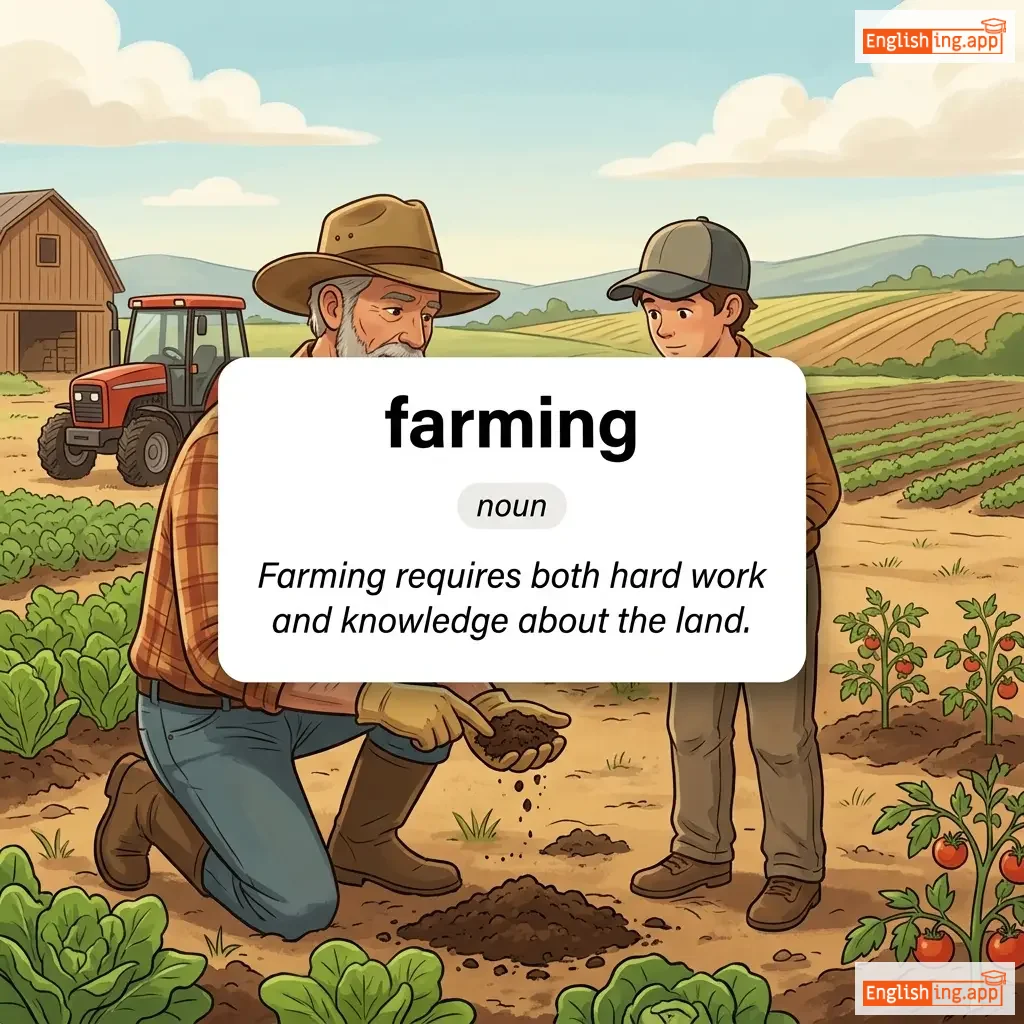
farming definition card — visual illustration of the meaning
noun
/ˈfɑː.mɪŋ/
agriculture (agriculture)

the activity or business of growing crops and raising animals for food or other products

"Farming requires both hard work and knowledge about the land."

"L'agriculture nécessite à la fois du travail acharné et des connaissances sur la terre." (L'agriculture nécessite à la fois du travail acharné et des connaissances sur la terre.)
verb
/ˈfæs.ɪ.neɪt/
fasciner (fasciner)

to attract and hold the attention of someone; to charm or captivate

"The magician's performance fascinated the audience."

"La performance du magicien a fasciné le public." (La performance du magicien a fasciné le public.)
adjective
/ˈfæsɪneɪtɪŋ/
fascinant (fascinant)

extremely interesting or charming

"The history of ancient Egypt is truly fascinating."

"L'histoire de l'Égypte ancienne est vraiment fascinante." (L'histoire de l'Égypte ancienne est vraiment fascinante.)
noun
/ˌfæs.ɪˈneɪ.ʃən/
fascination; attrait; émerveillement (fascination, attrait, émerveillement)

the power to fascinate someone; the state of being intensely interested

"Her fascination with ancient history led her to become an archaeologist."

"Sa fascination pour l'histoire ancienne l'a poussée à devenir archéologue." (Sa fascination pour l'histoire ancienne l'a poussée à devenir archéologue.)
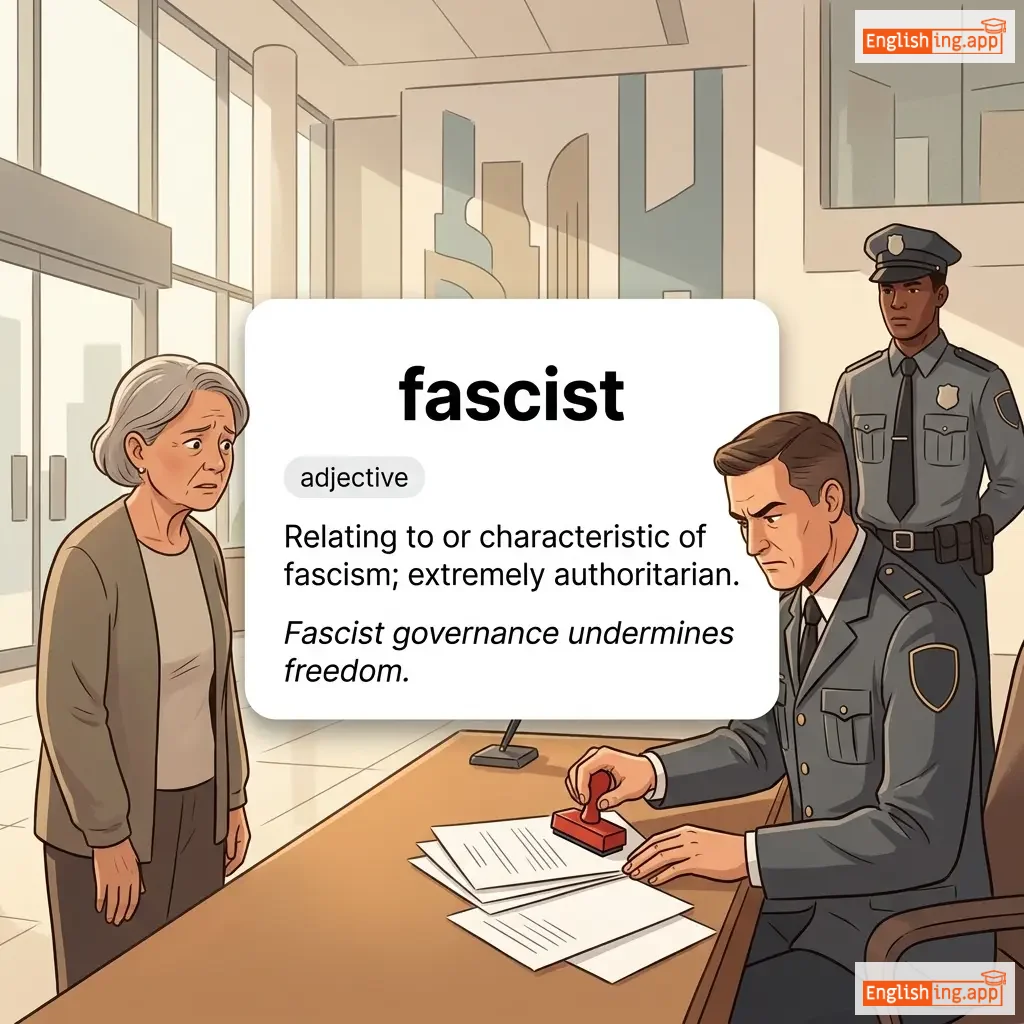
fascist definition card — visual illustration of the meaning
adjective
ˈfæʃ.ɪst
fasciste (fasciste)

Relating to or characteristic of fascism; extremely authoritarian.

"Fascist governance undermines freedom."

"Le gouvernement fasciste sape la liberté." (Le gouvernement fasciste sape la liberté.)
noun
/ˈfæʃ.ən/
mode (mode)

a popular or accepted style of clothing, behavior, or way of doing something

"She always keeps up with the latest fashion."

"Elle suit toujours la dernière mode." (Elle suit toujours la dernière mode.)
adjective
/ˈfæʃənəbəl/
à la mode (a la mode)

Following the latest styles or trends in clothing, behavior, or ideas

"She always wears fashionable clothes to every party."

"Elle porte toujours des vêtements à la mode à chaque fête." (Elle porte toujours des vetements a la mode a chaque fete.)
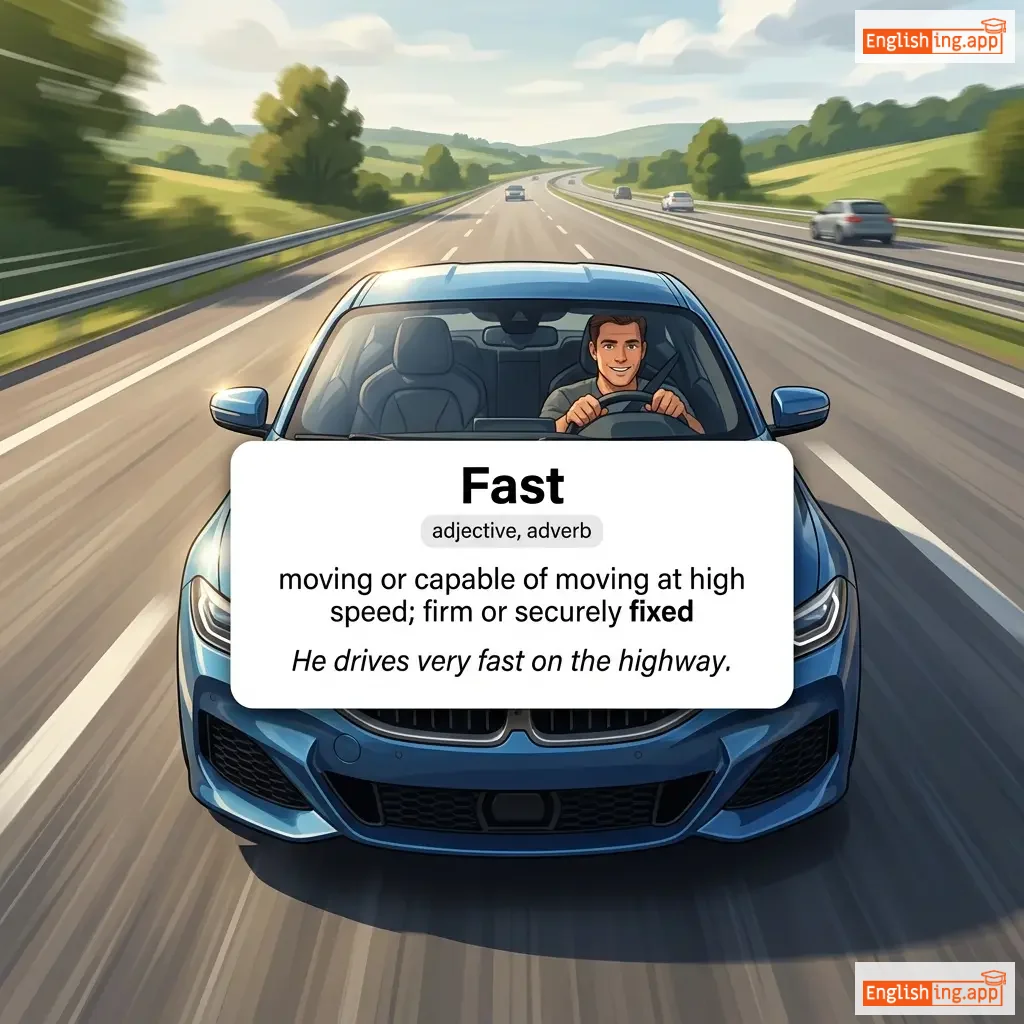
Fast definition card — visual illustration of the meaning
adjective, adverb
/fæst/
rapide, fermement fixé (rapide, fermement fixe)

moving or capable of moving at high speed; firm or securely fixed

"He drives very fast on the highway."

"Il conduit très vite sur l'autoroute." (Il conduit tres vite sur l'autoroute.)
verb
/ˈfæsən/
attacher (attacher)

To attach or secure something firmly in place

"Please fasten your seatbelt before the plane takes off."

"Veuillez attacher votre ceinture avant le décollage de l'avion." (Veuillez attacher votre ceinture avant le decollage de l'avion.)
adjective, adverb
/ˈfæstər/
plus rapide (plus rapide)

moving or able to move quickly; more quickly than usual

"This car is faster than the old one."

"Cette voiture est plus rapide que l'ancienne." (Cette voiture est plus rapide que l'ancienne.)
adjective
/ˈfæstɪst/
le plus rapide (le plus rapide)

moving or capable of moving at the highest speed

"Usain Bolt is the fastest runner in the world."

"Usain Bolt est le coureur le plus rapide du monde." (Usain Bolt est le coureur le plus rapide du monde.)
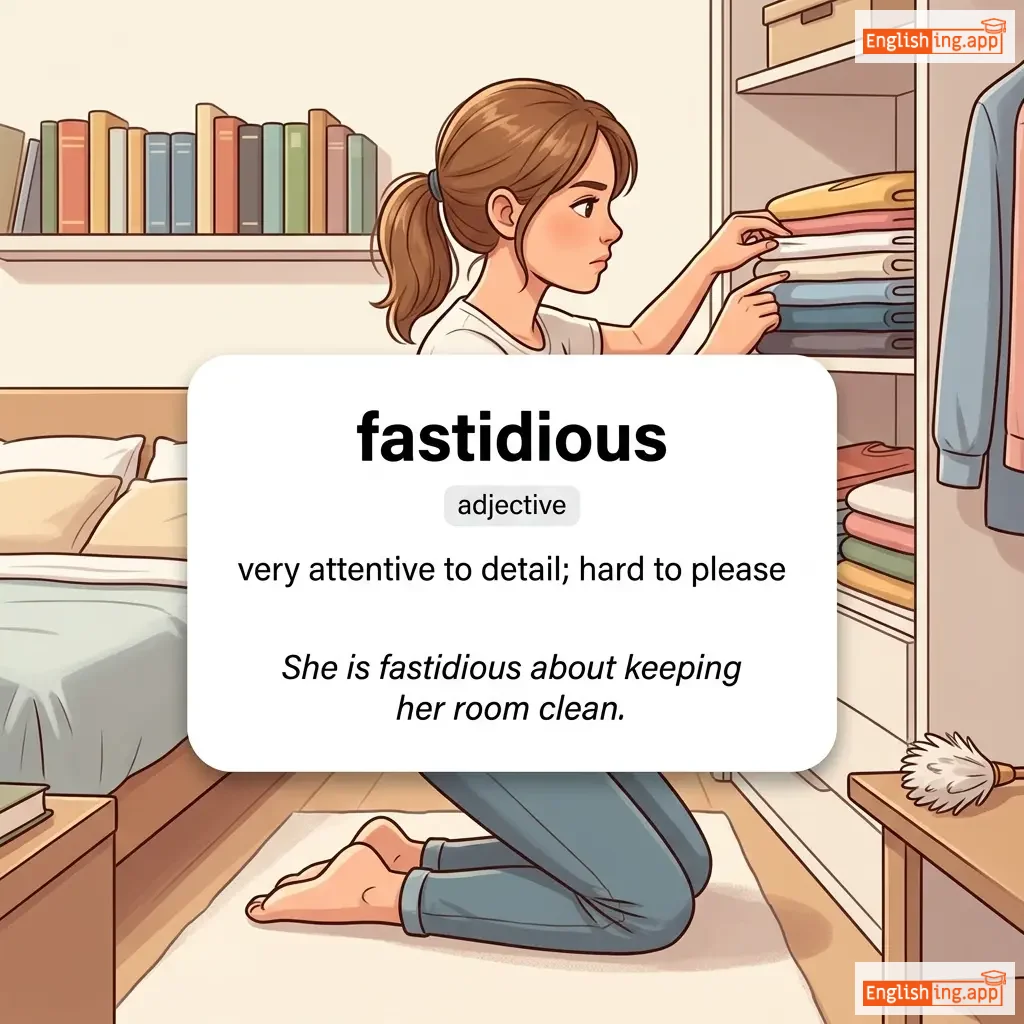
fastidious definition card — visual illustration of the meaning
adjective
/fæˈstɪdiəs/
méticuleux, exigeant (meticuleux, exigeant)

very attentive to detail; hard to please

"She is fastidious about keeping her room clean."

"Elle est méticuleuse pour garder sa chambre propre." (Elle est meticuleuse pour garder sa chambre propre.)
adjective, noun
/fæt/
gros (gros)

having a lot of excess flesh; a natural oily substance in animal bodies

"Eating too much fast food can make you fat."

"Manger trop de fast-food peut vous rendre gros." (Manger trop de fast-food peut vous rendre gros.)
adjective
/ˈfeɪtl/
fatal (fatal)

causing death; leading to disaster

"The accident proved fatal for the driver."

"L'accident a été fatal pour le conducteur." (L'accident a été fatal pour le conducteur.)
noun
/ˈfeɪ.tə.lɪ.zəm/
fatalisme (fatalisme)

the belief that all events are predetermined and inevitable

"He embraced fatalism, believing that nothing he did could change his destiny."

"Il a adopté le fatalisme, croyant que rien de ce qu'il faisait ne pouvait changer son destin." (Il a adopté le fatalisme, croyant que rien de ce qu'il faisait ne pouvait changer son destin.)
noun
/fəˈtæləti/
fatalité (fatalite)

An occurrence of death by accident, disaster, or violence.

"The accident resulted in one fatality."

"L'accident a entraîné une fatalité." (L'accident a entraine une fatalite.)
adverb
/ˈfeɪ.təl.i/
fatalement (fatalement)

in a way that causes death; with deadly consequences; critically

"The accident fatally injured two passengers."

"L'accident a blessé deux passagers de manière fatale." (L'accident a blesse deux passagers de maniere fatale.)
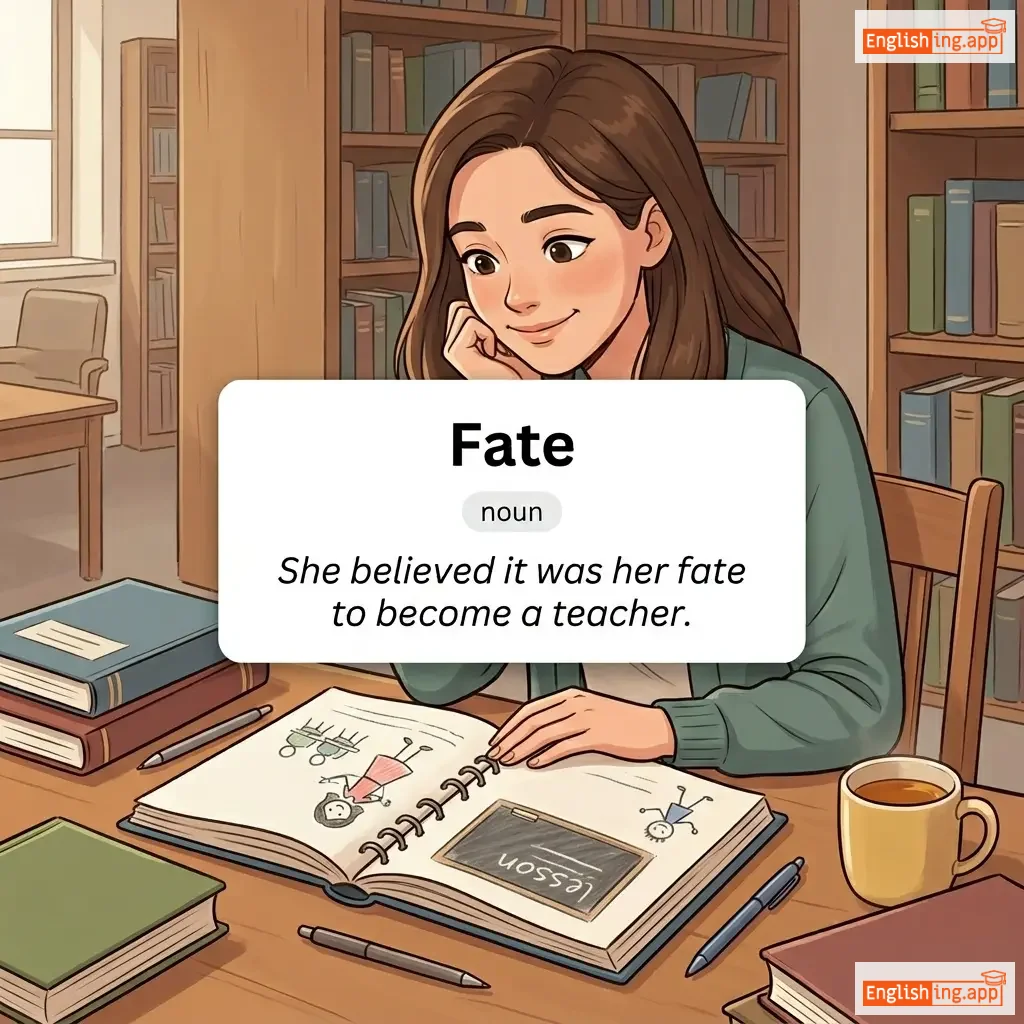
Fate definition card — visual illustration of the meaning
noun
/feɪt/
destin (destin)

the development of events beyond a person's control, regarded as determined by a supernatural power

"She believed it was her fate to become a teacher."

"Elle croyait que c'était son destin de devenir enseignante." (Elle croyait que c'était son destin de devenir enseignante.)
adjective
/ˈfeɪt.fəl/
décisif ou fatal (decisif ou fatal)

having significant or disastrous consequences

"Their fateful decision changed the course of history."

"Leur décision décisive a changé le cours de l'histoire." (Leur décision décisive a changé le cours de l'histoire.)
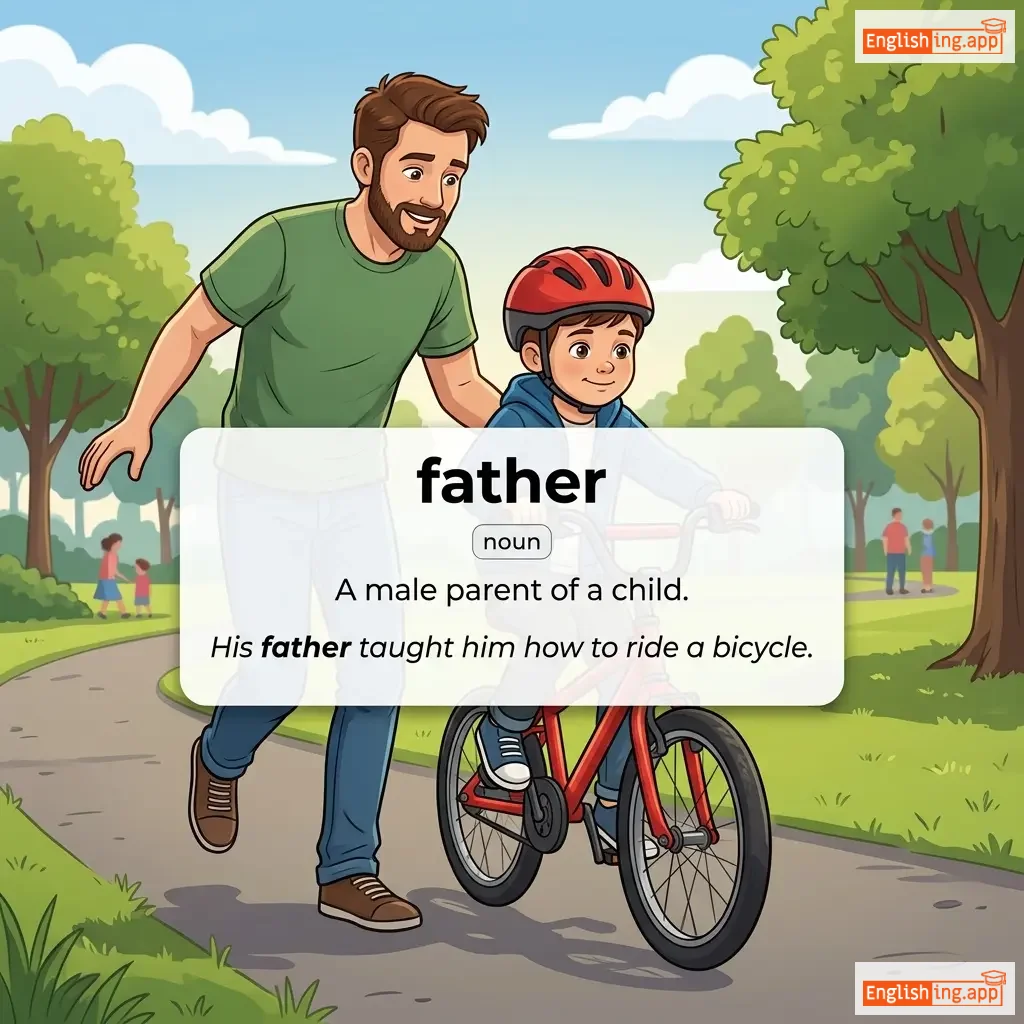
father definition card — visual illustration of the meaning
noun
/ˈfɑːðər/
bonheur (bonheur)

A male parent of a child.

"His father taught him how to ride a bicycle."

"Elle ne pouvait pas cacher son bonheur lorsqu'elle a reçu le prix." (Elle ne pouvait pas cacher son bonheur lorsqu'elle a reçu le prix.)
adjective
/ˈfɑːð.ər.ləs/
orphelin de père (orphelin de père)

without a father

"The fatherless child relied on the support of his community."

"L'enfant orphelin de père comptait sur le soutien de sa communauté." (L'enfant orphelin de père comptait sur le soutien de sa communauté.)
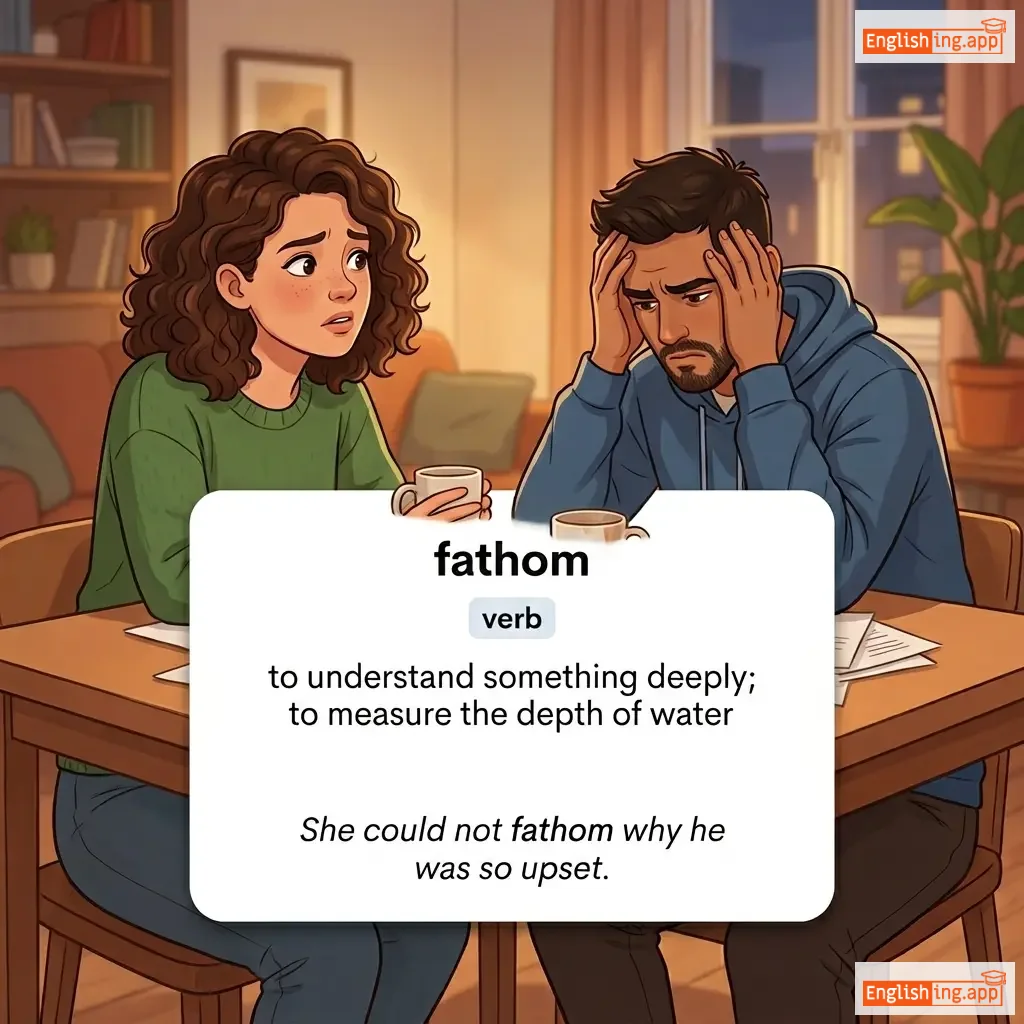
fathom definition card — visual illustration of the meaning
verb
/ˈfæð.əm/
comprendre, saisir profondément (comprendre, saisir profondément)

to understand something deeply; to measure the depth of water

"She could not fathom why he was so upset."

"Elle ne pouvait pas comprendre pourquoi il était si contrarié." (Elle ne pouvait pas comprendre pourquoi il était si contrarié.)
adjective
/ˈfæð.əm.ləs/
incompréhensible ou insondable (incomprehensible ou insondable)

impossible to understand or measure; very deep

"The ocean seemed fathomless as it stretched to the horizon."

"L'océan semblait insondable à mesure qu'il s'étendait jusqu'à l'horizon." (L'ocean semblait insondable a mesure qu'il s'etendait jusqu'a l'horizon.)
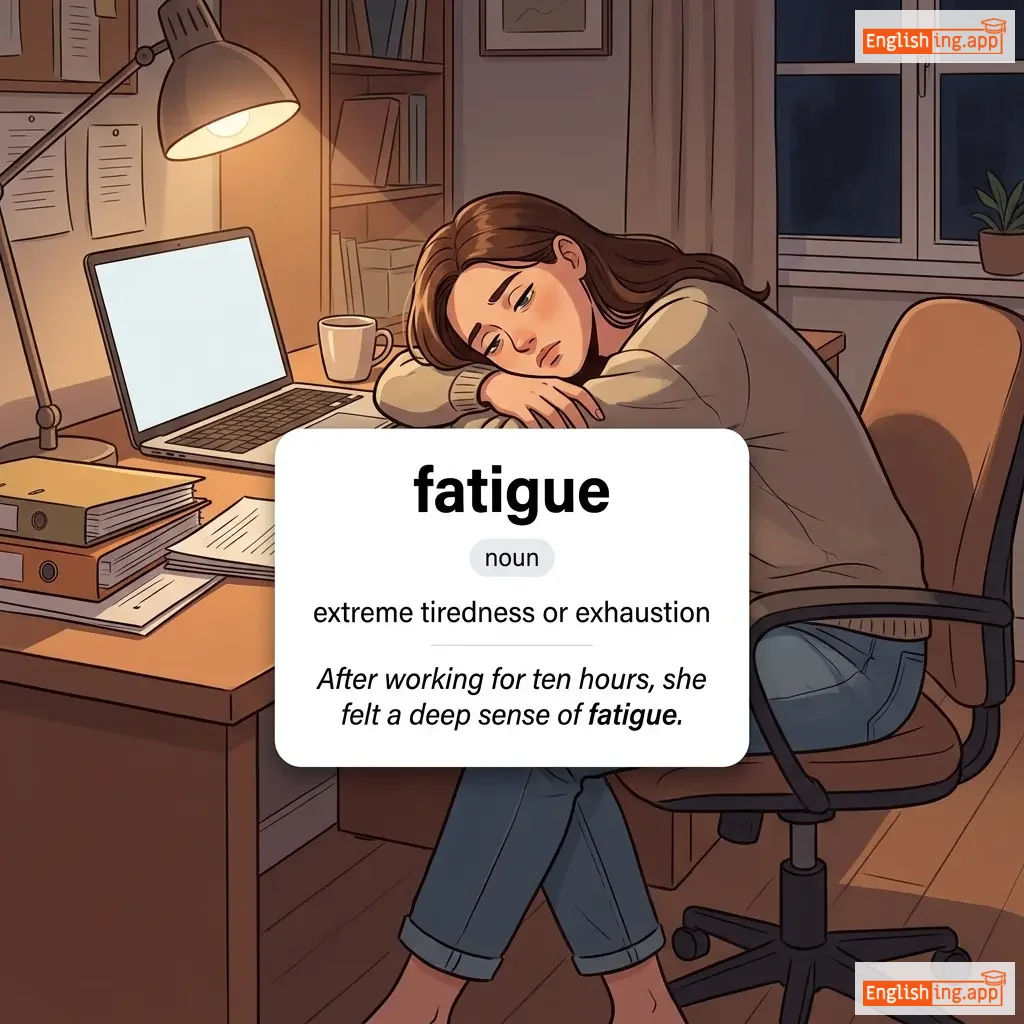
fatigue definition card — visual illustration of the meaning
noun
/fəˈtiːɡ/
fatigue (fatigue)

extreme tiredness or exhaustion

"After working for ten hours, she felt a deep sense of fatigue."

"Après avoir travaillé dix heures, elle a ressenti une grande fatigue." (Après avoir travaillé dix heures, elle a ressenti une grande fatigue.)
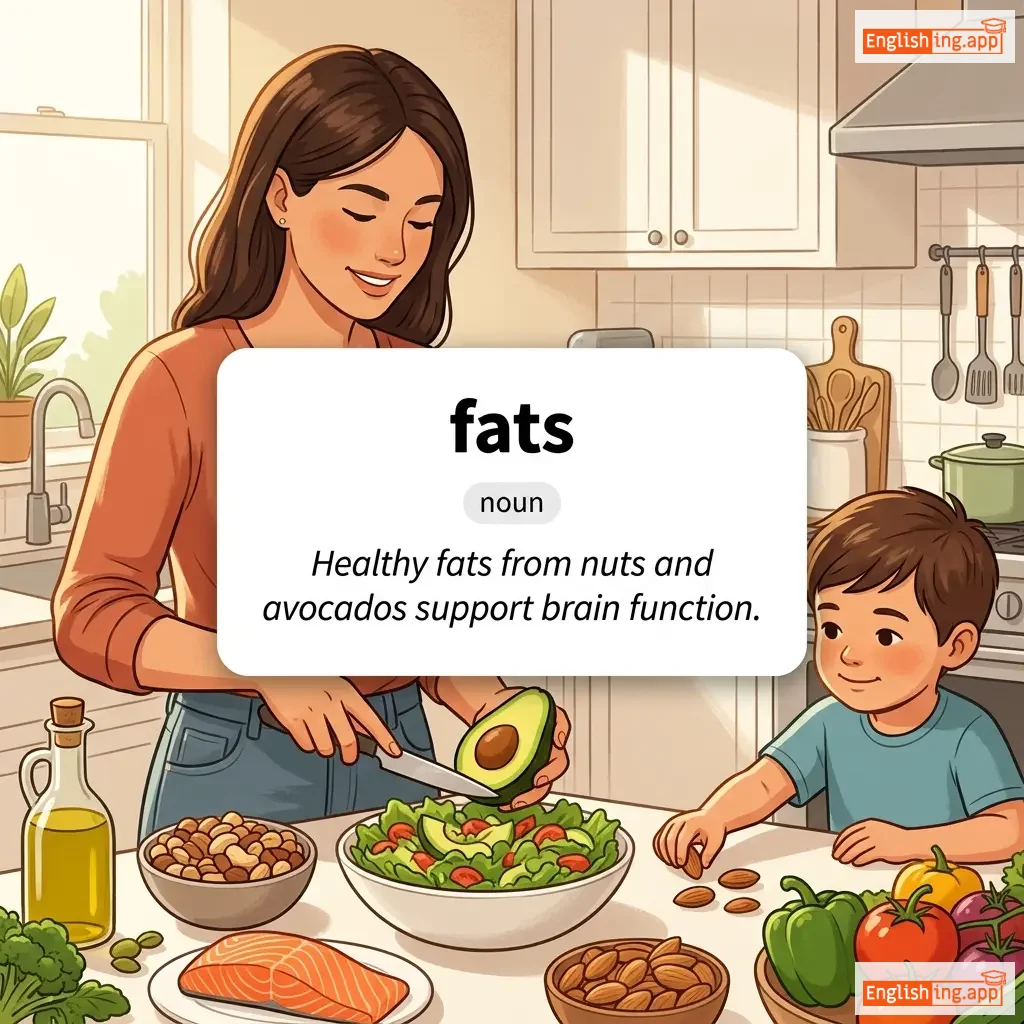
fats definition card — visual illustration of the meaning
noun
/fæts/
graisses (graisses)

Essential macronutrients that provide energy, support cell growth, and protect organs while helping absorb vitamins.

"Healthy fats from nuts and avocados support brain function."

"Les graisses saines des noix et des avocats soutiennent la fonction cérébrale." (Les graisses saines des noix et des avocats soutiennent la fonction cerebrale.)
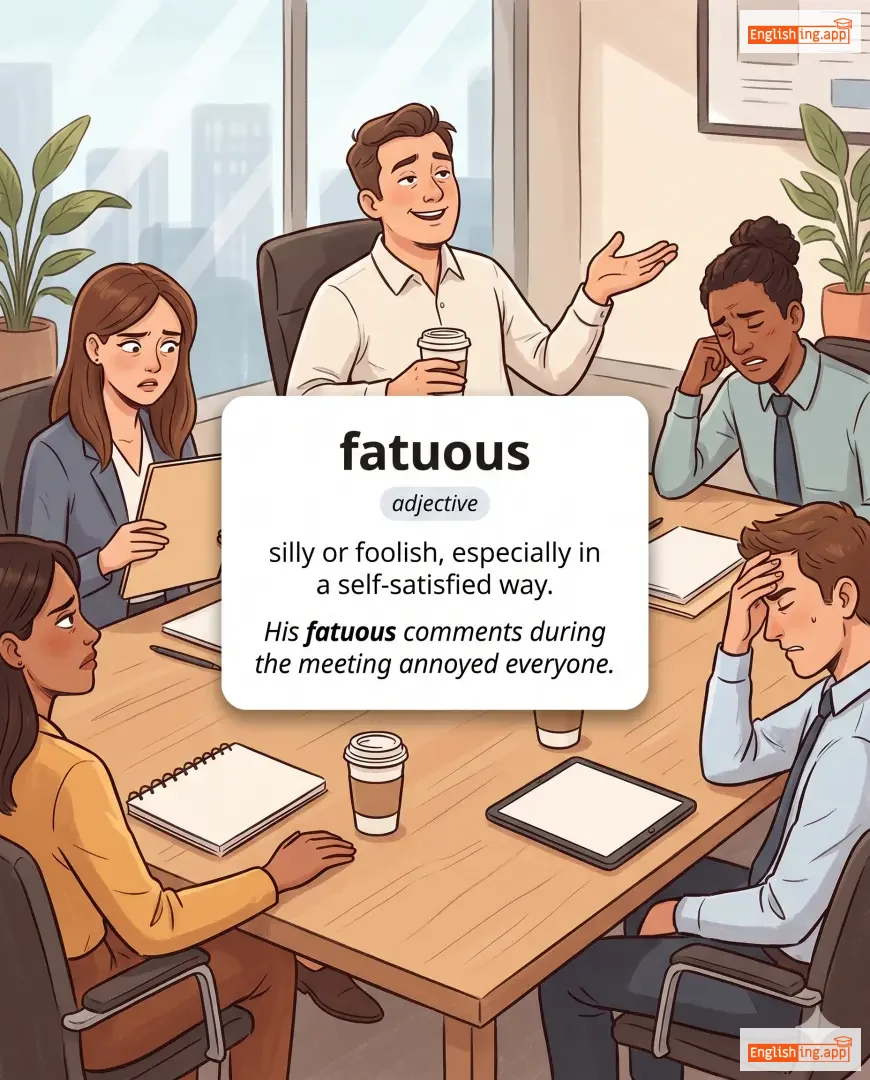
fatuous definition card — visual illustration of the meaning
adjective
/ˈfætʃuəs/
fatuo (fatuo)

silly or foolish, especially in a self-satisfied way

"His fatuous comments during the meeting annoyed everyone."

"Ses commentaires fatuos pendant la réunion ont agacé tout le monde." (Ses commentaires fatuos pendant la réunion ont agacé tout le monde.)
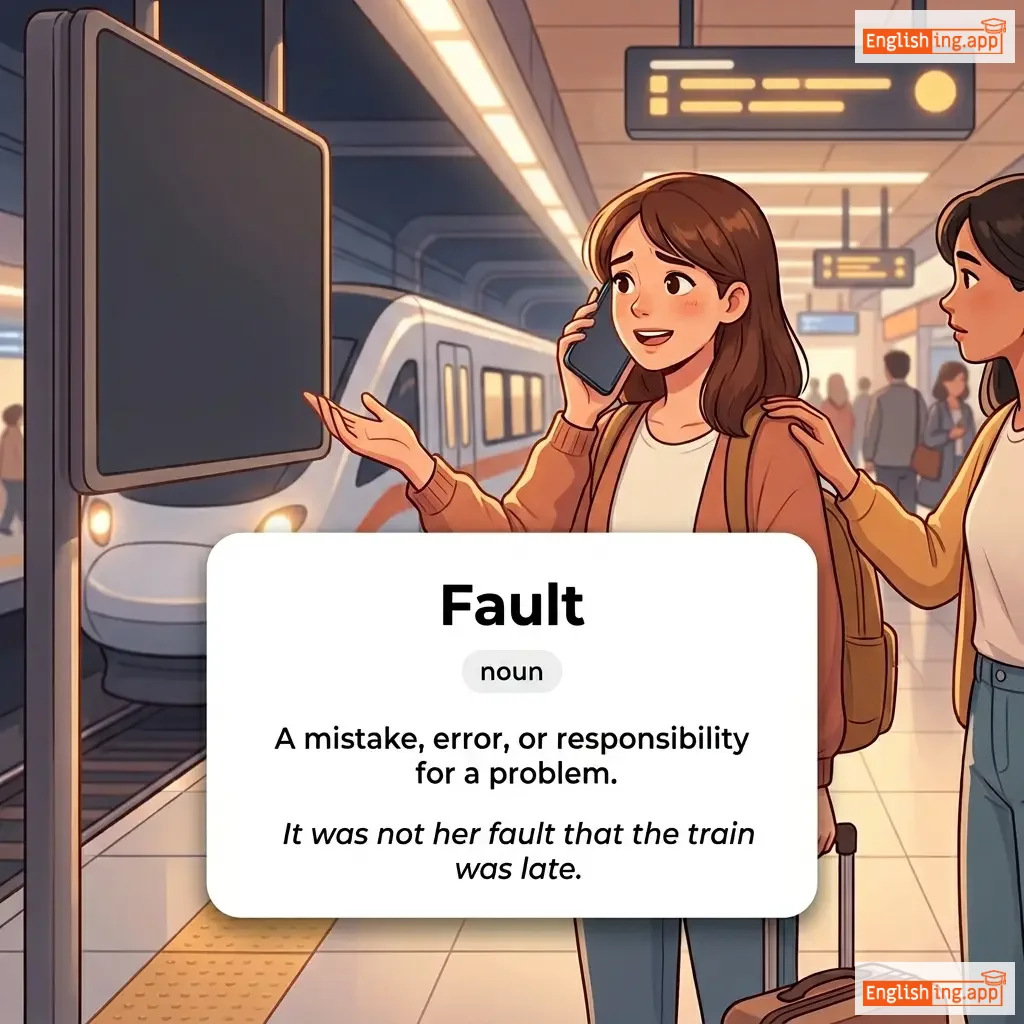
Fault definition card — visual illustration of the meaning
noun
/fɔːlt/
faute (faute)

A mistake, error, or responsibility for a problem.

"It was not her fault that the train was late."

"Ce n'était pas de sa faute si le train était en retard." (Ce n'était pas de sa faute si le train était en retard.)
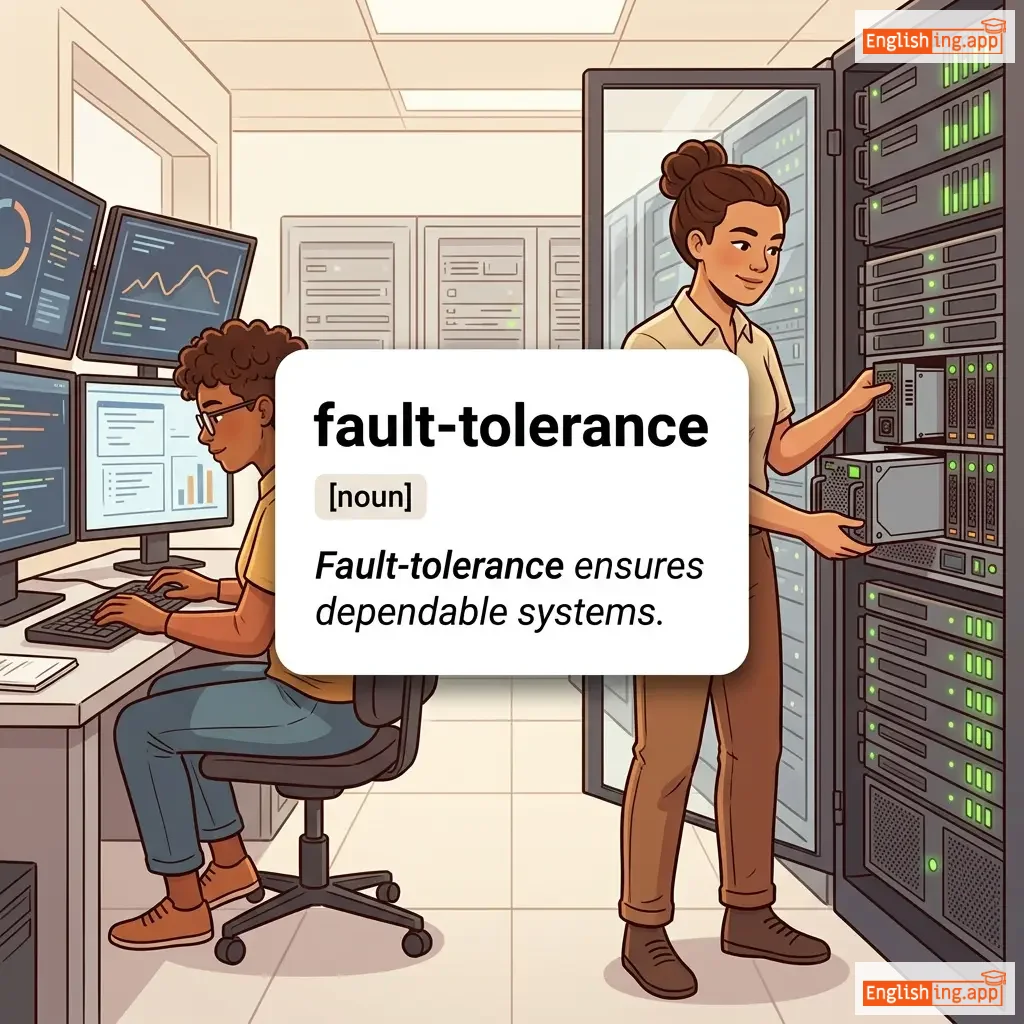
fault-tolerance definition card — visual illustration of the meaning
noun
fɔːlt ˈtɒl.ər.əns
tolérance aux pannes (tolerance aux pannes)

The ability of a system to continue operating properly in the event of the failure of some of its components.

"Fault-tolerance ensures dependable systems."

"La tolérance aux pannes assure des systèmes fiables." (La tolérance aux pannes assure des systèmes fiables.)
noun
/ˈfɔːltˌfaɪndər/
chercheur de défauts (chercheur de défauts)

a person who habitually finds fault with others

"He is such a faultfinder that nothing anyone does is ever good enough."

"C'est un chercheur de défauts au point que rien de ce que fait quelqu'un n'est jamais assez bien." (C'est un chercheur de défauts au point que rien de ce que fait quelqu'un n'est jamais assez bien.)
adjective
/ˈfɔːlti/
défectueux (defectueux)

Having defects or imperfections; not working properly

"The device stopped working because it was faulty."

"L'appareil a cessé de fonctionner parce qu'il était défectueux." (L'appareil a cesse de fonctionner parce qu'il etait defectueux)
noun
/fɔːn/
faune (créature mythologique) (faune (creature mythologique))

a mythological creature that is half human and half goat

"The sculpture depicted a playful faun dancing in the forest."

"La sculpture représentait un faune dansant et jouant dans la forêt." (La sculpture representait un faune dansant et jouant dans la foret.)
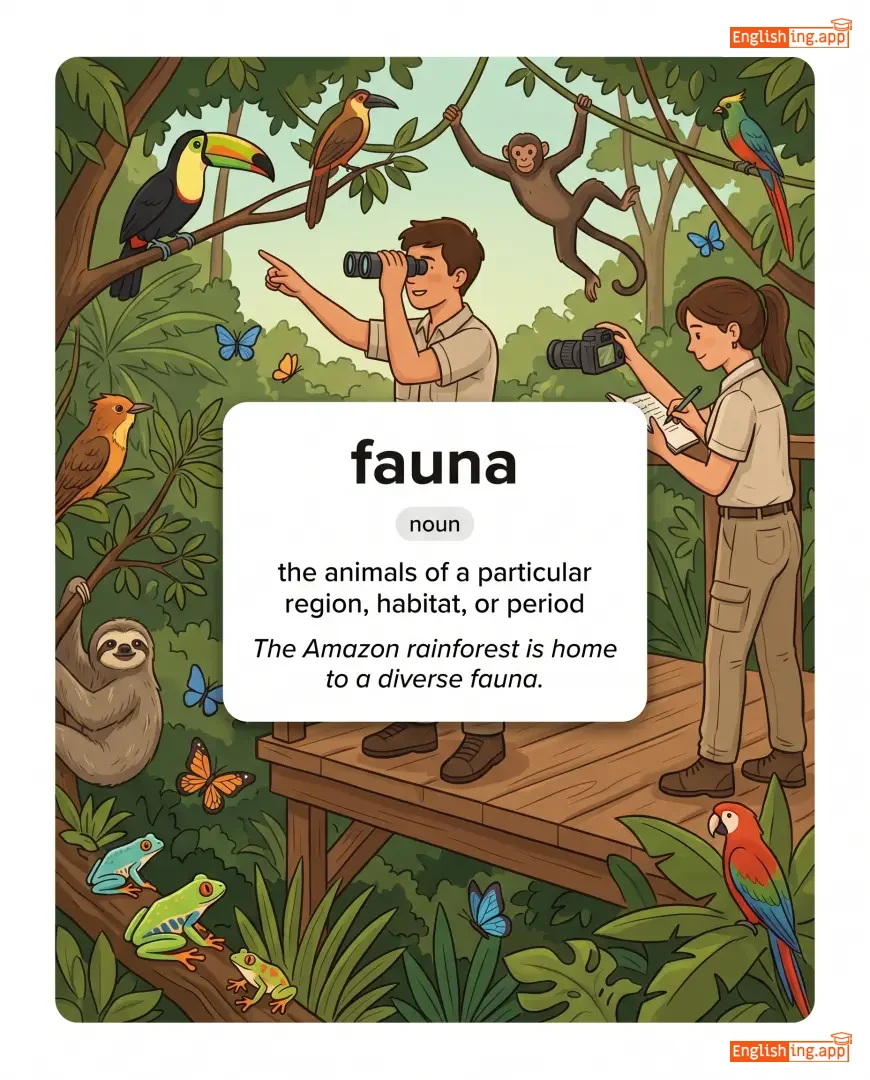
fauna definition card — visual illustration of the meaning
noun
/ˈfɔːnə/
faune (faune)

the animals of a particular region, habitat, or period

"The Amazon rainforest is home to a diverse fauna."

"La forêt amazonienne abrite une faune diversifiée." (La foret amazonienne abrite une faune diversifiee.)
noun
/foʊ ˈpɑː/
faute sociale (faute sociale)

a social blunder or mistake in etiquette

"He committed a major faux pas by forgetting her birthday."

"Il a commis une grande faute sociale en oubliant son anniversaire." (Il a commis une grande faute sociale en oubliant son anniversaire.)
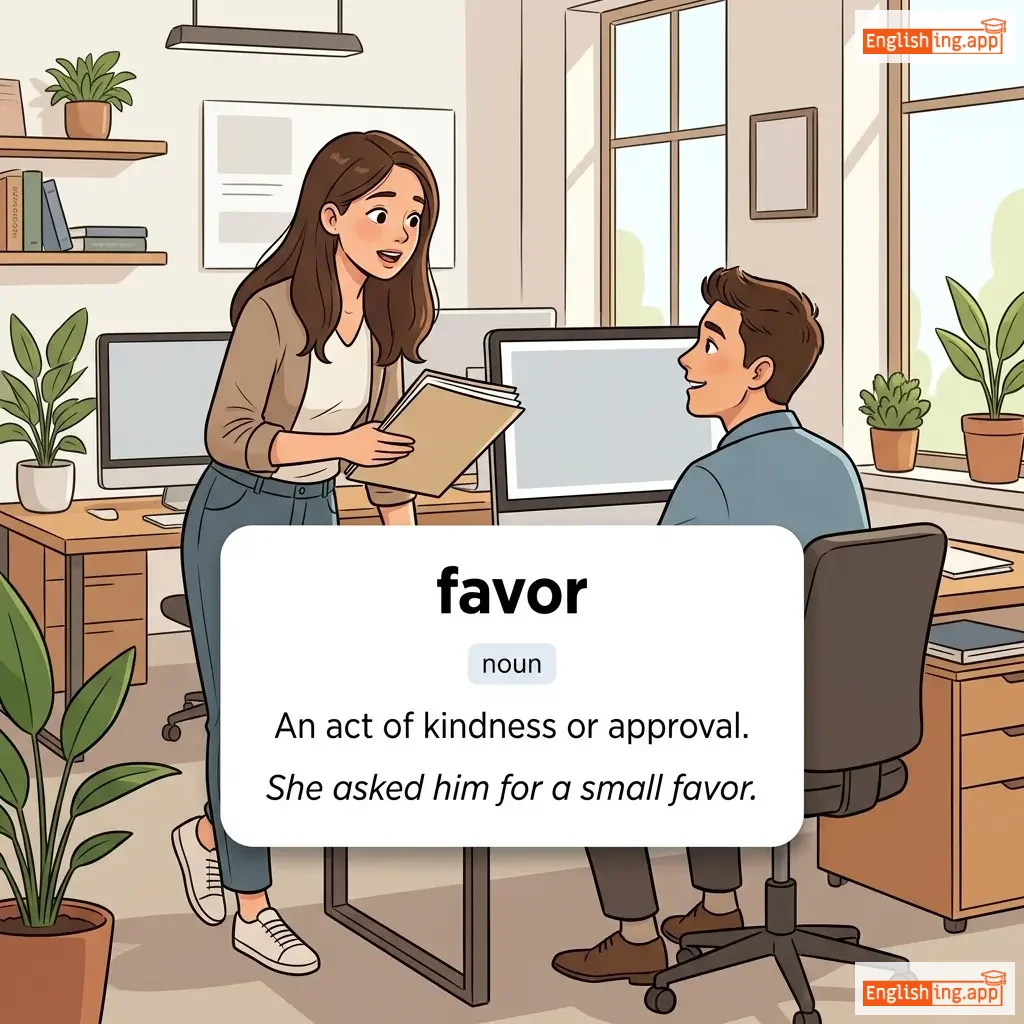
favor definition card — visual illustration of the meaning
noun
/ˈfeɪvər/
faveur (faveur)

An act of kindness or approval.

"She asked him for a small favor."

"Elle lui a demandé une petite faveur." (Elle lui a demande une petite faveur.)
adjective
/ˈfeɪvərəbəl/
favorable (favorable)

expressing approval or support; advantageous

"The weather conditions were favorable for the outdoor event."

"Les conditions météorologiques étaient favorables pour l'événement en plein air." (Les conditions météorologiques étaient favorables pour l'événement en plein air.)