词汇表

英语词汇词典 | 单词含义、定义和示例

noun
/ˈfænsiər/
爱好者 (àihào zhě)

a person who has a special interest in a particular thing or activity, especially animals or hobbies

"He is a fancier of rare birds."

"他是稀有鸟类的爱好者。" (Tā shì xīyǒu niǎo lèi de àihào zhě.)
adjective
/ˈfæn.sɪ.fəl/
幻想的, 不现实的 (huànxiǎng de, bù xiànshí de)

overimaginative, unrealistic, or whimsical

"The story was too fanciful to be true."

"这个故事太幻想了,不可能是真的。" (Zhège gùshì tài huànxiǎng le, bù kěnéng shì zhēn de.)
adjective
/ˈfæn.sɪ.ləs/
没有想象力的,普通的 (meiyou xiangxiangli de, putong de)

without imagination or creativity; plain or ordinary

"His drawings were simple and fanciless."

"他的画作既简单又没有想象力。" (Tā de huàzuò jì jiǎndān yòu méiyǒu xiǎngxiànglì.)
verb
/ˈfæn.si/
想象, 渴望, 喜欢 (xiǎngxiàng, kěwàng, xǐhuān)

to imagine, desire, or like something; to have a liking for

"She fancies a cup of tea in the morning."

"她早上想喝一杯茶。" (Tā zǎoshang xiǎng hē yī bēi chá.)
noun
/ˈfæn.feər/
盛大场面, 宣传 (shèngdà chǎngmiàn, xuānchuán)

a short ceremonial tune or display of publicity to attract attention

"The new product was launched with much fanfare."

"新产品在盛大场面下发布。" (Xīn chǎnpǐn zài shèngdà chǎngmiàn xià fābù.)
adjective
/fænˈtæstɪk/
极好的 (jí hǎo de)

extraordinary, extremely good or impressive

"The concert last night was absolutely fantastic."

"昨晚的音乐会真是太棒了。" (Zuó wǎn de yīnyuè huì zhēn shì tài bàng le.)
noun
/ˈfæntəsi/
幻想 (huànxiǎng)

a creation of the imagination, especially something improbable or impossible

"She has a vivid fantasy about traveling to space."

"她有一个关于太空旅行的生动幻想。" (Tā yǒu yīgè guānyú tàikōng lǚxíng de shēngdòng huànxiǎng.)
adverb
/fɑːr/
(yuan)

at, to, or by a great distance

"The school is far from my house."

"学校离我家很远。" (Xuexiao li wo jia hen yuan.)
adjective
/ˌfɑːrˈfɛtʃt/
牵强附会 (qianqiang fuhui)

unlikely to happen or be true; improbable

"His explanation for being late was a bit far-fetched."

"他解释迟到的理由有点牵强附会。" (Ta jiexi chidao de liliang youdian qianqiang fuhui.)
noun
/fɑːrs/
闹剧 (nàojù)

a comic dramatic work using buffoonery and horseplay, or a ridiculous situation

"The meeting turned into a complete farce with everyone arguing."

"会议变成了一场彻底的闹剧,大家都在争论。" (Huìyì biàn chéngle yī chǎng chèdǐ de nàojù, dàjiā dōu zài zhēnglùn.)
noun
/fɛər/
车费 (chefei)

the money paid for a journey on public transport; also food or treatment provided

"The bus fare to the city center is five dollars."

"到市中心的公交车费是五美元。" (Dao shi zhongxin de gongjiaoche fei shi wu meiyuan.)
noun
/ˌfer.ˈwel/
告别 (gàobié)

an act of parting or of marking someone's departure

"The company organized a farewell party for the retiring manager."

"公司为即将退休的经理举办了告别派对。" (Gōngsī wèi jíjiāng tuìxiū de jīnglǐ jǔbànle gàobié pàiduì.)
adjective
/ˌfɑːrˈfetʃt/
不太可能或不太真实 (bù tài kěnéng huò bù tài zhēnshí)

unlikely to happen or be true; improbable

"His explanation for being late sounded farfetched."
"他解释迟到的理由听起来不可信。" (Tā jiěshì chídào de lǐyóu tīng qǐlái bù kěxìn.)
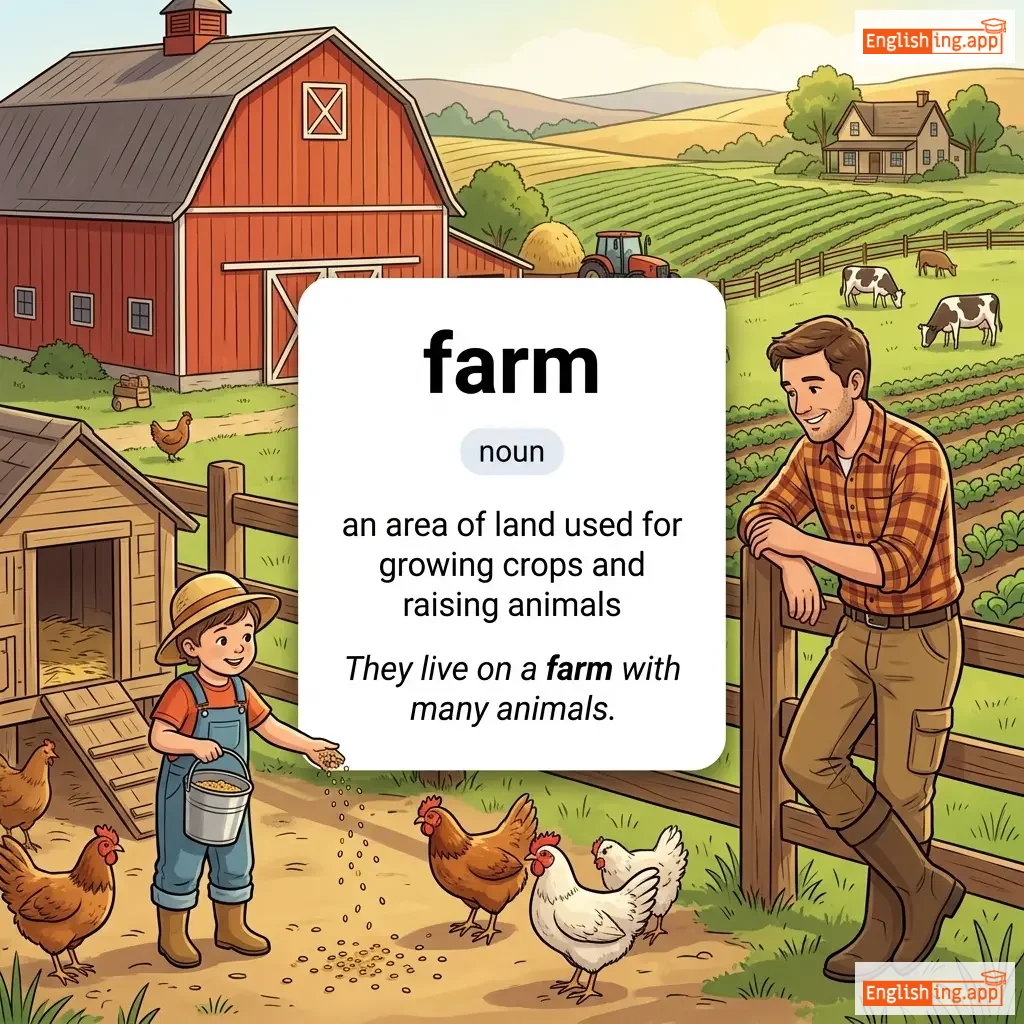
farm definition card — visual illustration of the meaning
noun
/fɑːrm/
农场 (nongchang)

an area of land used for growing crops and raising animals

"They live on a farm with many animals."
"他们住在一个有许多动物的农场。" (Tāmen zhù zài yīgè yǒu xǔduō dòngwù de nóngchǎng.)
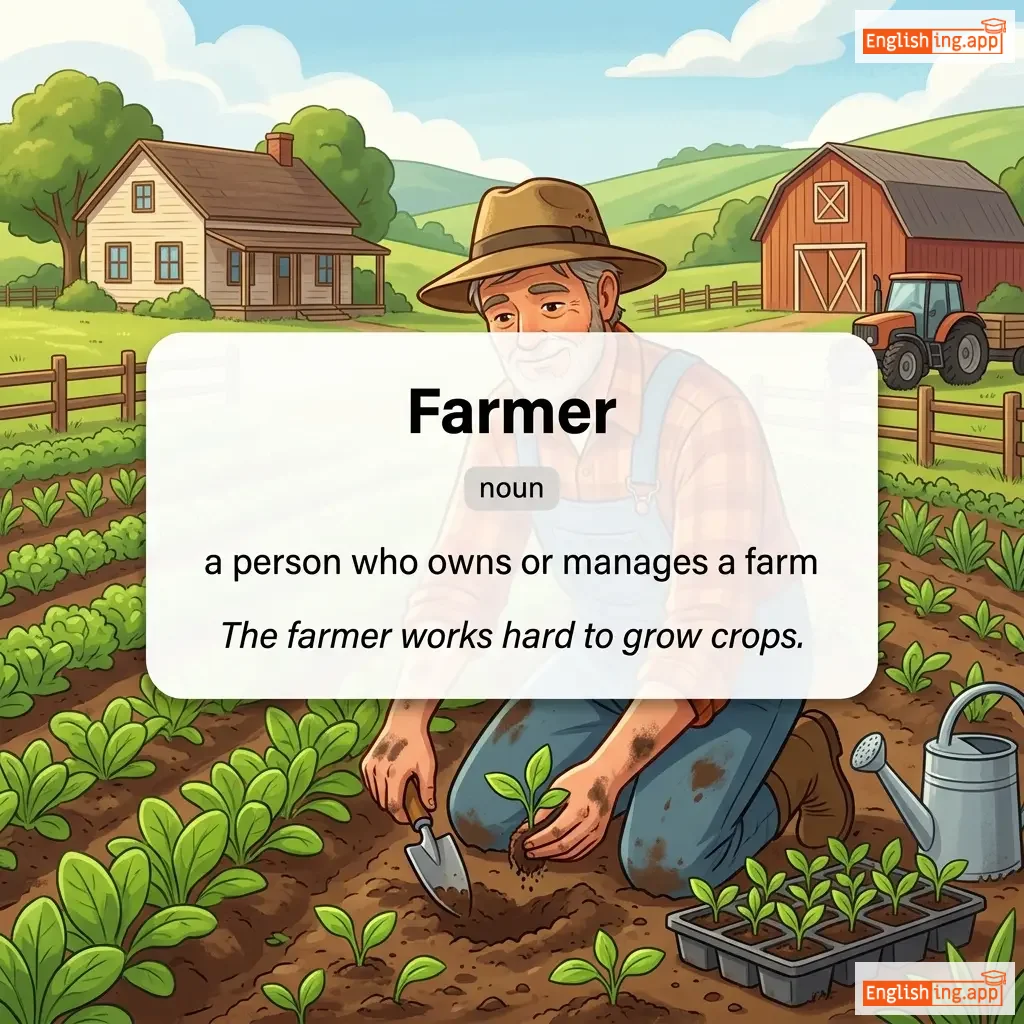
Farmer definition card — visual illustration of the meaning
noun
/ˈfɑːrmər/
农民 (nóngmín)

a person who owns or manages a farm

"The farmer works hard to grow crops."
"农民辛勤工作以种植庄稼。" (Nóngmín xīnqín gōngzuò yǐ zhòngzhí zhuāngjià.)
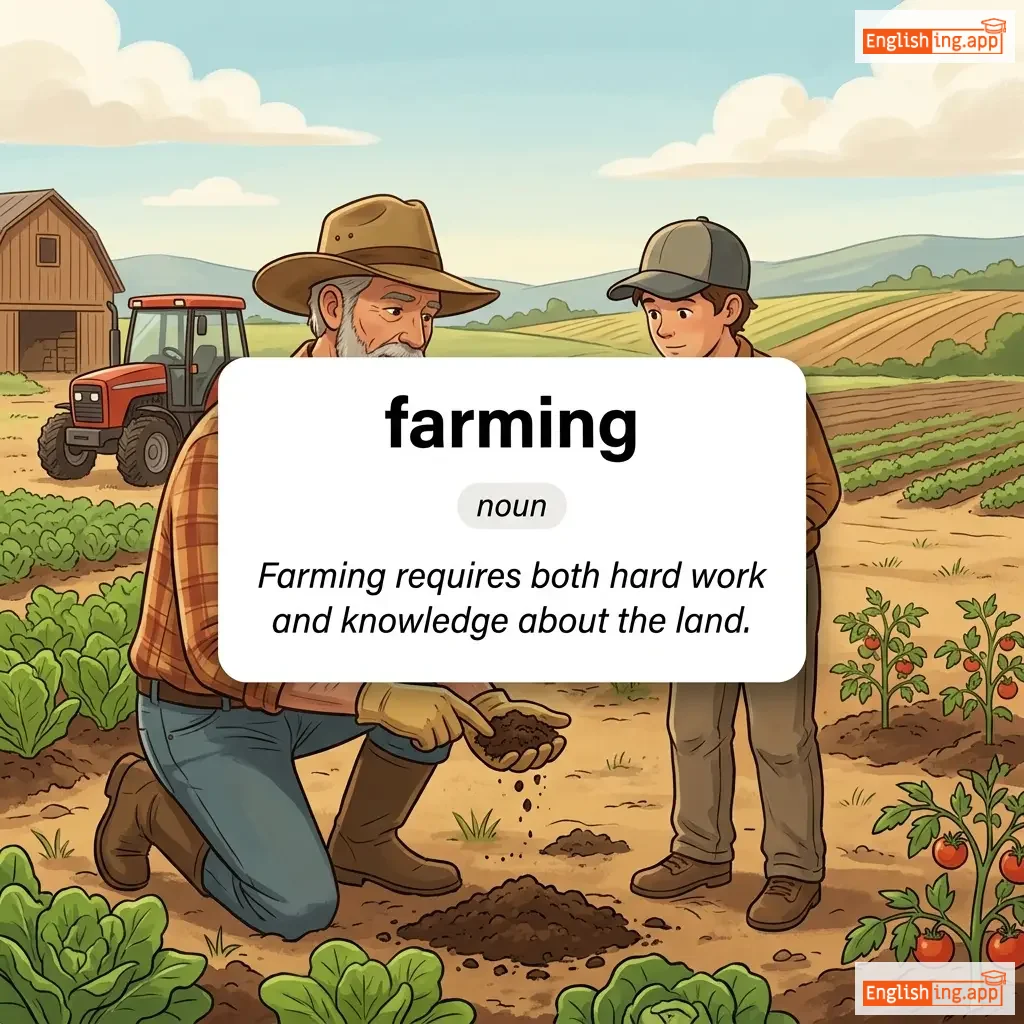
farming definition card — visual illustration of the meaning
noun
/ˈfɑː.mɪŋ/
农业 (nongye)

the activity or business of growing crops and raising animals for food or other products

"Farming requires both hard work and knowledge about the land."

"农业需要辛勤的工作和对土地的知识。" (Nongye xuyao xinqin de gongzuo he dui tudi de zhishi.)
verb
/ˈfæs.ɪ.neɪt/
迷住 (mí zhù)

to attract and hold the attention of someone; to charm or captivate

"The magician's performance fascinated the audience."

"魔术师的表演吸引了观众。" (Móshù shī de biǎoyǎn xīyǐnle guānzhòng.)
adjective
/ˈfæsɪneɪtɪŋ/
迷人 (mírén)

extremely interesting or charming

"The history of ancient Egypt is truly fascinating."

"古埃及的历史真是令人着迷。" (Gǔ āijí de lìshǐ zhēn shì lìng rén zháomí.)
noun
/ˌfæs.ɪˈneɪ.ʃən/
迷恋; 吸引; 吸引力 (mílian, xīyǐn, xīyǐnlì)

the power to fascinate someone; the state of being intensely interested

"Her fascination with ancient history led her to become an archaeologist."

"她对古代历史的迷恋让她成为了一名考古学家。" (Tā duì gǔdài lìshǐ de míliàn ràng tā chéngwéi le yī míng kǎogǔ xuéjiā.)
fascist definition card — visual illustration of the meaning
adjective
ˈfæʃ.ɪst
法西斯 (faxi si)

Relating to or characteristic of fascism; extremely authoritarian.

"Fascist governance undermines freedom."

"法西斯统治破坏自由。" (Faxi si tongzhi pohuai ziyou.)
noun
/ˈfæʃ.ən/
时尚 (shíshàng)

a popular or accepted style of clothing, behavior, or way of doing something

"She always keeps up with the latest fashion."

"她总是跟上最新的时尚。" (Tā zǒng shì gēn shàng zuìxīn de shíshàng.)
adjective
/ˈfæʃənəbəl/
时尚的 (shishang de)

Following the latest styles or trends in clothing, behavior, or ideas

"She always wears fashionable clothes to every party."

"她总是在每个派对上穿时尚的衣服。" (Ta zong shi zai mei ge paidui shang chuan shishang de yifu.)
Fast definition card — visual illustration of the meaning
🏎️

Fast (快)

adjective, adverb
/fæst/
快速,牢固固定 (kuài, láogù gùdìng)

moving or capable of moving at high speed; firm or securely fixed

"He drives very fast on the highway."

"他在高速公路上开得很快。" (Tā zài gāosù gōnglù shàng kāi dé hěn kuài.)
verb
/ˈfæsən/
系紧 (jijin)

To attach or secure something firmly in place

"Please fasten your seatbelt before the plane takes off."

"请在飞机起飞前系好安全带。" (Qing zai feiji qifei qian xi hao anquandai.)
adjective, adverb
/ˈfæstər/
更快 (geng kuai)

moving or able to move quickly; more quickly than usual

"This car is faster than the old one."

"这辆车比老车更快。" (Zhe liang che bi lao che geng kuai.)
adjective
/ˈfæstɪst/
最快的 (zui kuai de)

moving or capable of moving at the highest speed

"Usain Bolt is the fastest runner in the world."

"尤塞恩·博尔特是世界上跑得最快的运动员。" (You sai en Bo er te shi shijie shang pao de zui kuai de yundongyuan.)
fastidious definition card — visual illustration of the meaning
adjective
/fæˈstɪdiəs/
挑剔的,难以取悦的 (tiaoti de, nanyi quyue de)

very attentive to detail; hard to please

"She is fastidious about keeping her room clean."

"她在保持房间整洁方面非常挑剔。" (Ta zai baochi fangjian zhengjie fangmian feichang tiaoti.)
adjective, noun
/fæt/
肥胖 (feipang)

having a lot of excess flesh; a natural oily substance in animal bodies

"Eating too much fast food can make you fat."

"吃太多快餐会让你变胖。" (Chī tài duō kuàicān huì ràng nǐ biàn pàng.)
adjective
/ˈfeɪtl/
致命的 (zhìmìng de)

causing death; leading to disaster

"The accident proved fatal for the driver."

"事故对司机来说是致命的。" (Shìgù duì sījī lái shuō shì zhìmìng de.)
noun
/ˈfeɪ.tə.lɪ.zəm/
宿命论 (sùmìnglùn)

the belief that all events are predetermined and inevitable

"He embraced fatalism, believing that nothing he did could change his destiny."

"他接受了宿命论,相信无论他做什么,都无法改变他的命运。" (Tā jiēshòu le sùmìnglùn, xiāngxìn wúlùn tā zuò shénme, dōu wúfǎ gǎibiàn tā de mìngyùn.)
noun
/fəˈtæləti/
致命事故 (zhìmìng shìgù)

An occurrence of death by accident, disaster, or violence.

"The accident resulted in one fatality."

"这场事故导致了一人死亡。" (Zhè chǎng shìgù dǎozhìle yī rén sǐwáng.)
adverb
/ˈfeɪ.təl.i/
致命地 (zhìmìng de)

in a way that causes death; with deadly consequences; critically

"The accident fatally injured two passengers."

"事故致命地伤害了两名乘客。" (Shìgù zhìmìng de shānghài le liǎng míng chéngkè.)
Fate definition card — visual illustration of the meaning
noun
/feɪt/
命运 (mingyun)

the development of events beyond a person's control, regarded as determined by a supernatural power

"She believed it was her fate to become a teacher."

"她相信成为教师是她的命运。" (Ta xiangxin chengwei jiaoshi shi ta de mingyun.)
adjective
/ˈfeɪt.fəl/
决定性或灾难性的 (juédìngxìng huò zāinànxìng de)

having significant or disastrous consequences

"Their fateful decision changed the course of history."
"他们的决定性决定改变了历史的进程。" (Tāmen de juédìngxìng juédìng gǎibiànle lìshǐ de jìnchéng.)
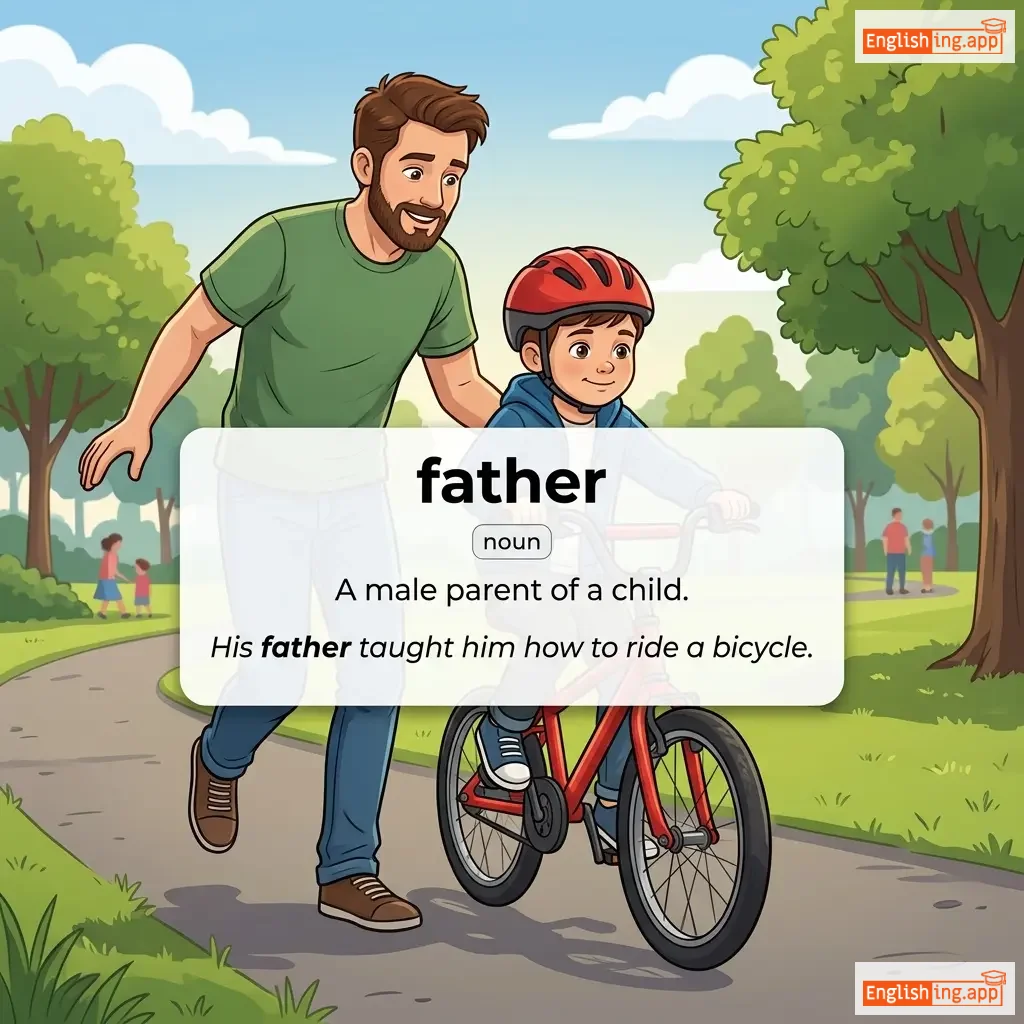
father definition card — visual illustration of the meaning
noun
/ˈfɑːðər/
幸福 (xìngfú)

A male parent of a child.

"His father taught him how to ride a bicycle."

"她无法隐藏收到奖项时的快乐。" (Tā wúfǎ yǐncáng shōudào jiǎngxiàng shí de kuàilè.)
adjective
/ˈfɑːð.ər.ləs/
没有父亲 (méiyǒu fùqīn)

without a father

"The fatherless child relied on the support of his community."

"这个没有父亲的孩子依赖于他社区的支持。" (Zhège méiyǒu fùqīn de háizi yīlài yú tā shèqū de zhīchí.)
fathom definition card — visual illustration of the meaning
verb
/ˈfæð.əm/
理解,深刻理解 (lijiě, shēn kè lijiě)

to understand something deeply; to measure the depth of water

"She could not fathom why he was so upset."

"她无法理解他为什么那么生气。" (Tā wúfǎ lǐjiě tā wèishéme nàme shēngqì.)
adjective
/ˈfæð.əm.ləs/
无法理解或测量的; 非常深 (wúfǎ lǐjiě huò cèliàng de; fēicháng shēn)

impossible to understand or measure; very deep

"The ocean seemed fathomless as it stretched to the horizon."

"海洋看起来是无法测量的,因为它一直延伸到地平线。" (Hǎiyáng kàn qǐlái shì wúfǎ cèliàng de, yīnwèi tā yīzhí yánshēn dào dìpíngxiàn.)
fatigue definition card — visual illustration of the meaning
noun
/fəˈtiːɡ/
疲劳 (píláo)

extreme tiredness or exhaustion

"After working for ten hours, she felt a deep sense of fatigue."
"工作十小时后,她感到一种深深的疲劳。" (Gōngzuò shí xiǎoshí hòu, tā gǎndào yī zhǒng shēnshēn de píláo.)
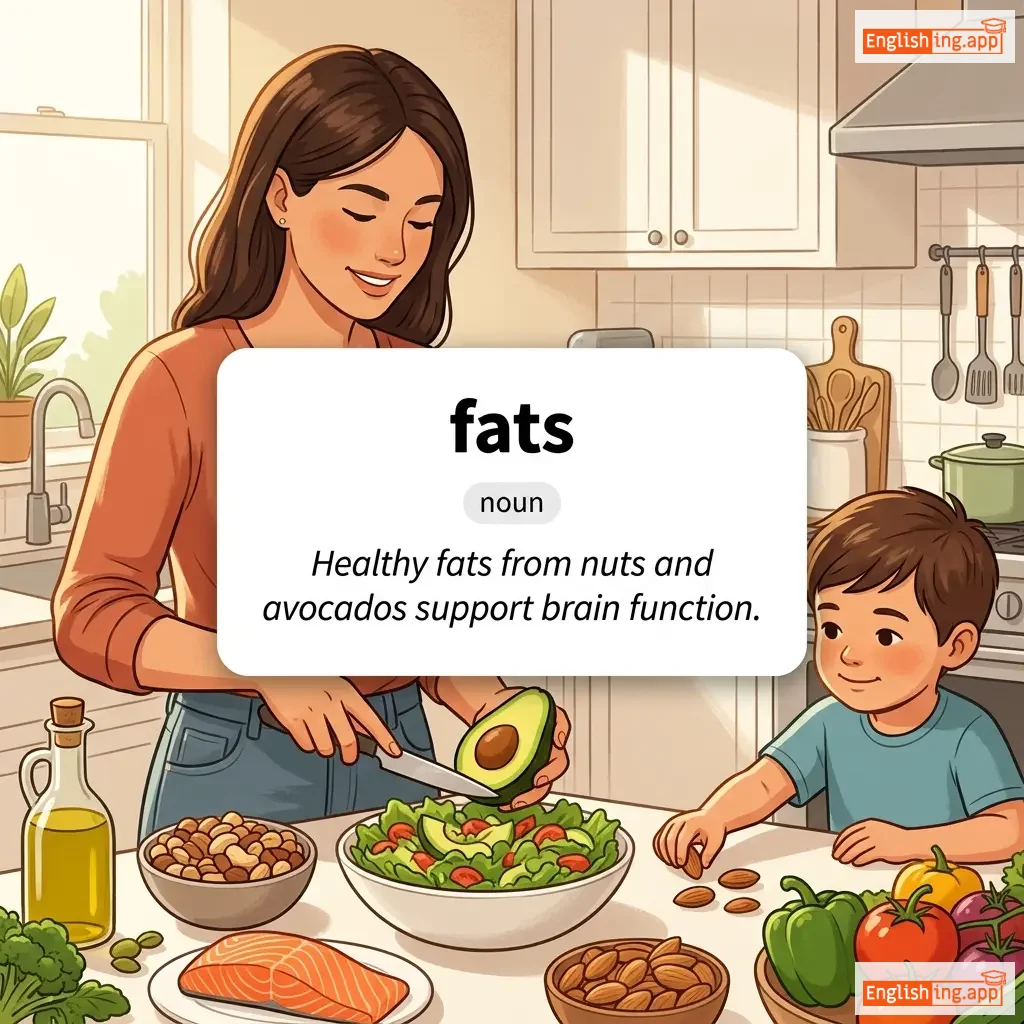
fats definition card — visual illustration of the meaning
noun
/fæts/
脂肪 (zhīfáng)

Essential macronutrients that provide energy, support cell growth, and protect organs while helping absorb vitamins.

"Healthy fats from nuts and avocados support brain function."

"来自坚果和鳄梨的健康脂肪支持大脑功能。" (Láizì jiānguǒ hé èlí de jiànkāng zhīfáng zhīchí dà nǎo gōngnéng.)
fatuous definition card — visual illustration of the meaning
adjective
/ˈfætʃuəs/
愚蠢 (yúchǔn)

silly or foolish, especially in a self-satisfied way

"His fatuous comments during the meeting annoyed everyone."
"他在会议中的愚蠢评论让所有人都感到烦恼。" (Tā zài huìyì zhōng de yúchǔn pínglùn ràng suǒyǒu rén dōu gǎndào fánnǎo.)
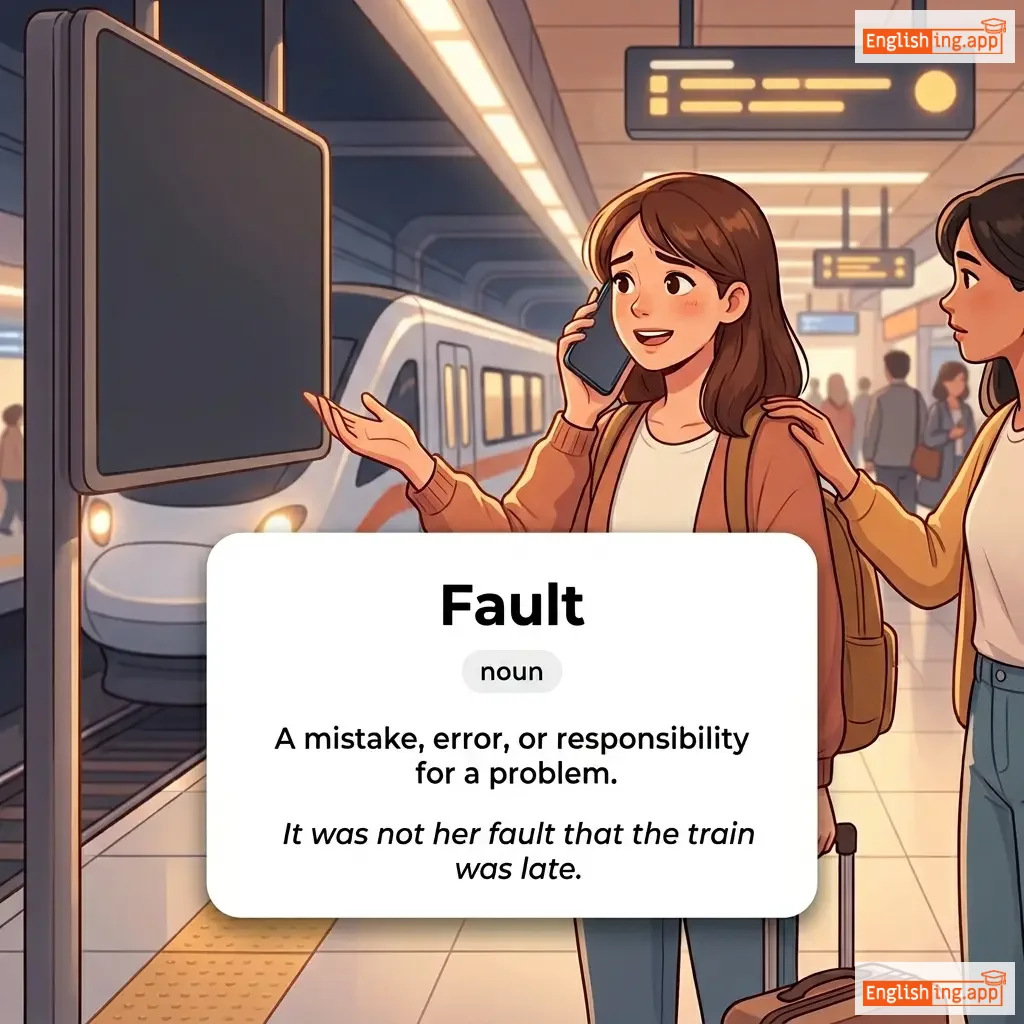
Fault definition card — visual illustration of the meaning
noun
/fɔːlt/
错误 (cuòwù)

A mistake, error, or responsibility for a problem.

"It was not her fault that the train was late."
"火车晚点不是她的错。" (Huǒchē wǎndiǎn bùshì tā de cuò.)
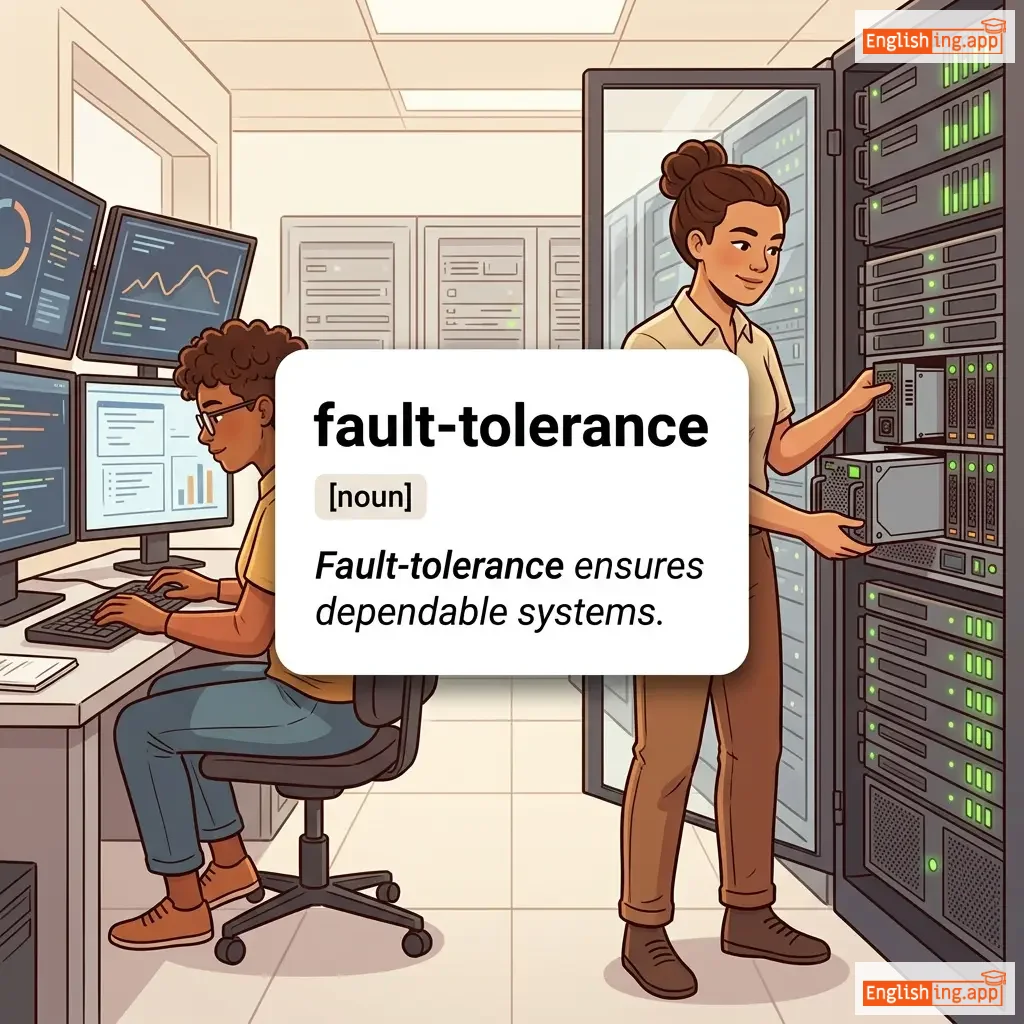
fault-tolerance definition card — visual illustration of the meaning
noun
fɔːlt ˈtɒl.ər.əns
容错性 (róng cuò xìng)

The ability of a system to continue operating properly in the event of the failure of some of its components.

"Fault-tolerance ensures dependable systems."

"容错性确保了可靠的系统。" (Róng cuò xìng quèbǎo le kěkào de xìtǒng.)
noun
/ˈfɔːltˌfaɪndər/
找茬者 (zhaocha zhe)

a person who habitually finds fault with others

"He is such a faultfinder that nothing anyone does is ever good enough."

"他是一个找茬者,任何人做的事情都永远不够好。" (Tā shì yīgè zhǎo chá zhě, rènhé rén zuò de shìqíng dōu yǒngyuǎn bùgòu hǎo.)
adjective
/ˈfɔːlti/
有缺陷的 (you quexian de)

Having defects or imperfections; not working properly

"The device stopped working because it was faulty."
"设备停止工作,因为它有缺陷。" (shebei tingzhi gongzuo, yinwei ta you quexian)
noun
/fɔːn/
法恩(神话生物) (faen (shenhua shengwu))

a mythological creature that is half human and half goat

"The sculpture depicted a playful faun dancing in the forest."

"雕塑描绘了一个在森林里跳舞的顽皮法恩。" (Diao su miao hui le yi ge zai sen lin li tiao wu de wan pi fa en.)
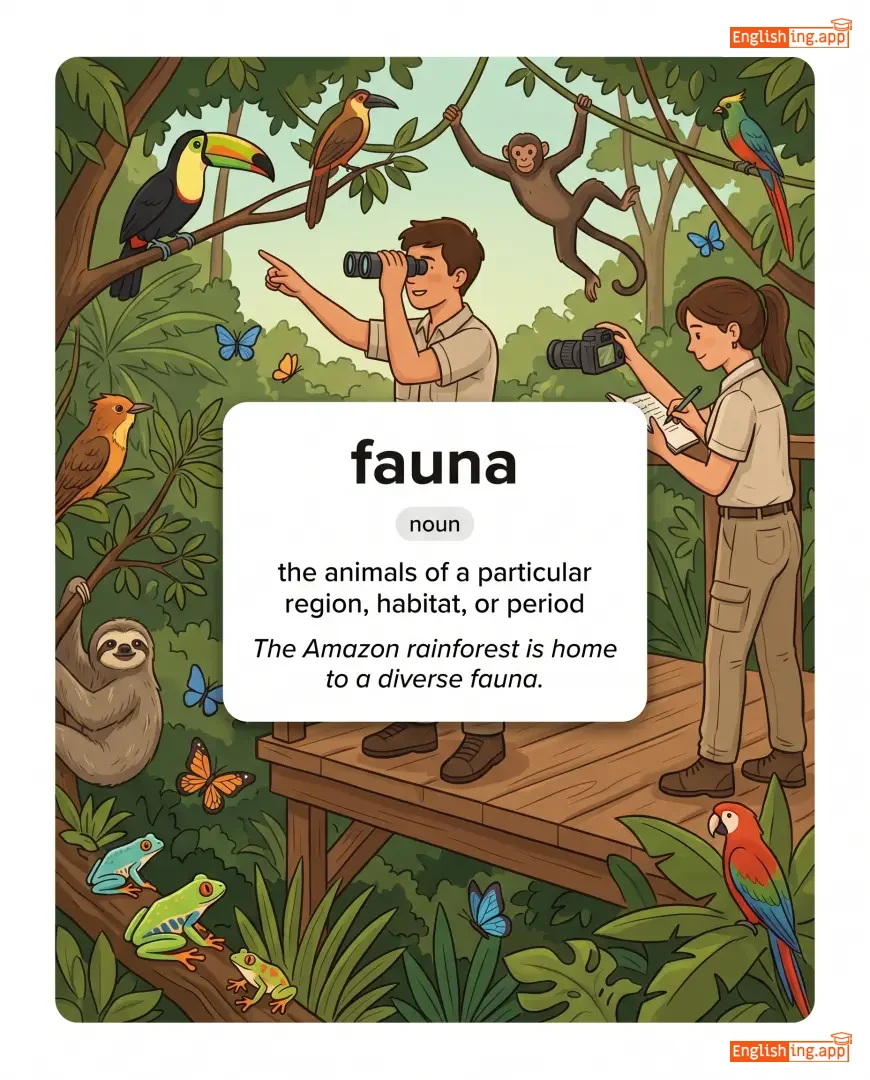
fauna definition card — visual illustration of the meaning
noun
/ˈfɔːnə/
动物群 (dòngwùqún)

the animals of a particular region, habitat, or period

"The Amazon rainforest is home to a diverse fauna."

"亚马逊雨林是多种动物的家园。" (Yàmǎxùn yǔlín shì duōzhǒng dòngwù de jiāyuán.)
noun
/foʊ ˈpɑː/
社交失误 (shejiao shiwu)

a social blunder or mistake in etiquette

"He committed a major faux pas by forgetting her birthday."

"他因为忘记她的生日而犯了一个大社交失误。" (Tā yīnwèi wàngjì tā de shēngrì ér fànle yīgè dà shèjiāo shīwù.)
favor definition card — visual illustration of the meaning
noun
/ˈfeɪvər/
帮助 (bangzhu)

An act of kindness or approval.

"She asked him for a small favor."

"她请求了一个小忙。" (Ta qingqiu le yi ge xiao mang.)
adjective
/ˈfeɪvərəbəl/
有利的 (yǒulì de)

expressing approval or support; advantageous

"The weather conditions were favorable for the outdoor event."

"天气条件对户外活动很有利。" (Tiānqì tiáojiàn duì hùwài huódòng hěn yǒulì.)