词汇表

英语词汇词典 | 单词含义、定义和示例

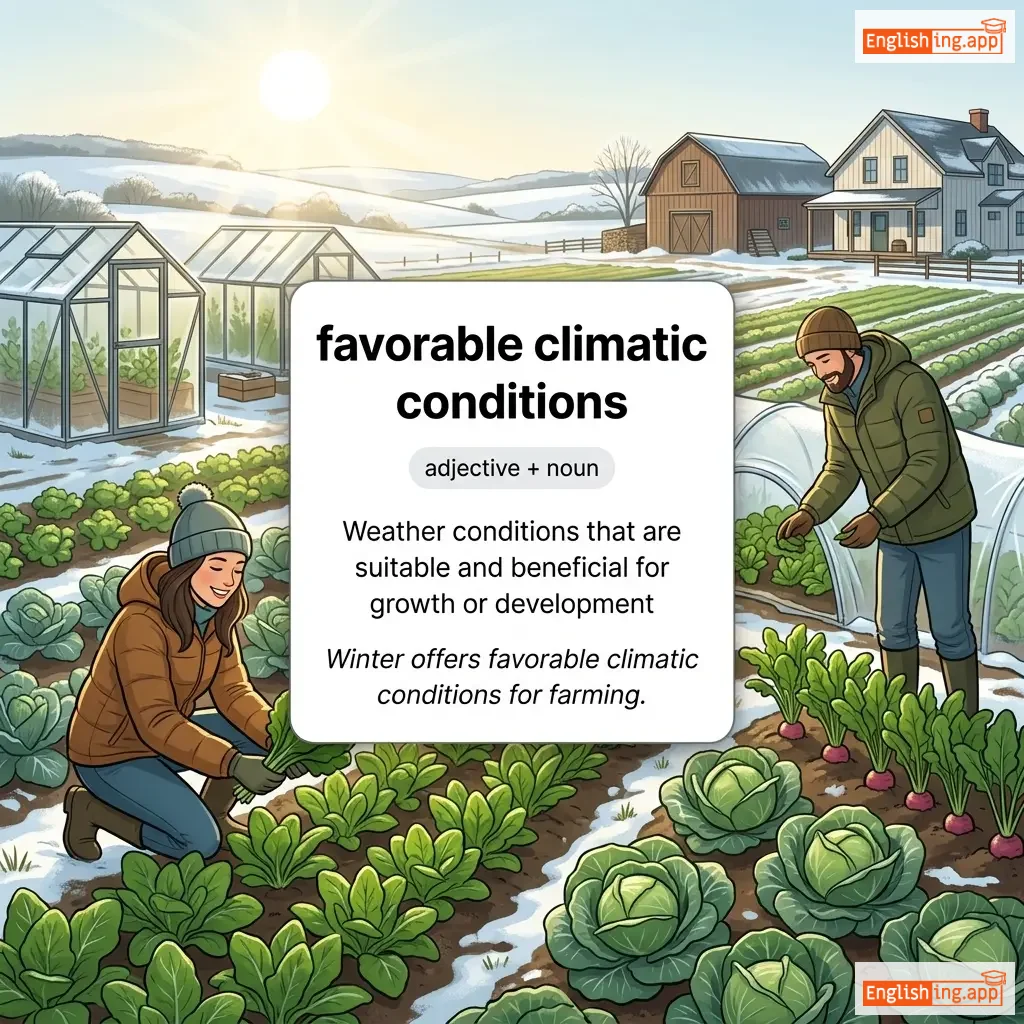
favorable climatic conditions definition card — visual illustration of the meaning
adjective + noun
ˈfeɪvərəbəl klaɪˈmætɪk kənˈdɪʃənz
有利的气候条件 (youli de qihou tiaojian)

Weather conditions that are suitable and beneficial for growth or development

"Winter offers favorable climatic conditions for farming."

"冬天为农业提供有利的气候条件。" (Dongtian wei nongye tigong youli de qihou tiaojian.)
adjective, noun
/ˈfeɪvərɪt/
最喜欢的 (zuì xǐ huān de)

Preferred over all others; something or someone especially liked.

"Chocolate is my favorite ice cream flavor."

"巧克力是我最喜欢的冰淇淋口味。" (Qiǎokèlì shì wǒ zuì xǐ huān de bīngqílín kǒuwèi.)
noun
/ˈfeɪvərɪtɪzəm/
偏袒 (piāntǎn)

the practice of giving unfair preferential treatment to one person or group

"The manager was accused of favoritism towards certain employees."

"经理被指控偏袒某些员工。" (Jīnglǐ bèi zhǐkòng piāntǎn mǒuxiē yuángōng.)
noun
/ˈfeɪ.vər/
好意; 帮助; 仁慈 (hao yi, bang zhu, ren ci)

approval, support, or liking for someone or something; a kind or helpful act

"Could you do me a favour and help me move this heavy box?"

"你能帮我一个忙,帮我搬动这个重箱子吗?" (ni neng bang wo yi ge mang, bang wo ban dong zhe ge zhong xiang zi ma?)
adjective
/ˈfeɪvərəbl/
有利的 (youli de)

Expressing approval, support, or positivity; advantageous or beneficial

"The weather conditions were favourable for the outdoor event."

"户外活动的天气条件是有利的。" (Hu wai huo dong de tian qi tiao jian shi youli de.)
verb
/fɔːn/
奉承 (fengcheng)

to show exaggerated flattery or affection; to seek favor by servile behavior

"He fawned over the boss to get a promotion."

"他巴结老板以获得晋升。" (Ta bajie laoban yi huode jinsheng.)
fawning definition card — visual illustration of the meaning
adjective
/ˈfɔːnɪŋ/
过分的恭维 (guòfèn de gōngwéi)

displaying exaggerated flattery or affection

"Her fawning compliments made everyone uncomfortable."

"她过分的恭维让每个人都感到不自在。" (Tā guòfèn de gōngwéi ràng měi gèrén dōu gǎndào bù zìzài.)
verb
/feɪz/
打扰 (dǎ rǎo)

to disturb or disconcert someone; to cause to feel unsettled

"She was not fazed by the unexpected question."

"她没有被意外问题扰乱。" (Tā méiyǒu bèi yìwài wèntí rǎoluàn.)
noun
/ˈfiːəlti/
忠诚与效忠 (zhōngchéng yǔ xiàozhōng)

loyalty or allegiance, especially to a sovereign or lord

"The knight swore fealty to his king."

"骑士向国王宣誓效忠。" (Qíshì xiàng guówáng xuānshì xiàozhōng.)
Fear definition card — visual illustration of the meaning
noun, verb
/fɪr/
恐惧 (kǒngjù)

An unpleasant emotion caused by the belief that someone or something is dangerous.

"She has a fear of flying."

"她害怕飞行。" (tā hài pà fēixíng.)
adjective
/ˈfɪr.fəl/
害怕的 (haipa de)

feeling afraid or showing fear

"She was fearful of walking alone at night."

"她害怕夜晚独自走路。" (Ta haipa yewan duzi zoulou.)
feasibility definition card — visual illustration of the meaning
noun
ˌfiː.zəˈbɪl.ə.ti
可行性, 实现性, 可能性 (kěxíngxìng, shíxiànxìng, kěnéngxìng)

Possibility, practicality, viability.

"The feasibility study proved the project viable."

"可行性研究证明该项目是可行的。" (Kěxíngxìng yánjiū zhèngmíng gāi xiàngmù shì kěxíng de.)
adjective
/ˈfiːzəbl/
可行的 (kexing de)

possible to do easily or conveniently; practical and workable

"It is feasible to complete the project within two months."

"在两个月内完成这个项目是可行的。" (Zai liang ge yue nei wancheng zhege xiangmu shi kexing de.)
noun
/fiːst/
盛宴; 宴会 (shengyan, yanhui)

a large meal, typically one in celebration of something; an annual religious celebration

"The wedding feast included traditional dishes from both families' cultures."

"婚礼盛宴包括了来自双方家庭文化的传统菜肴。" (Hunli shengyan baokuo le laizi shuangfang jiating wenhua de chuantong caiyao.)
noun
/fiːt/
壮举 (zhuangju)

an achievement that requires great courage, skill, or strength

"Climbing Mount Everest was a remarkable feat."

"攀登珠穆朗玛峰是一项非凡的壮举。" (Pāndēng Zhūmùlǎngmǎfēng shì yī xiàng fēifán de zhuàngjǔ.)
noun
/ˈfɛðər/
羽毛 (yǔmáo)

a light, soft structure that covers a bird’s body and enables it to fly

"The bird lost a small feather while flying through the trees."

"这只鸟在飞过树林时掉了一根小羽毛。" (Zhè zhī niǎo zài fēi guò shùlín shí diào le yī gēn xiǎo yǔmáo.)
noun
/ˈfiːtʃər/
特点 (tèdiǎn)

a distinctive attribute or aspect of something; a characteristic

"The new phone has a unique camera feature."

"新手机具有独特的相机特点。" (Xīn shǒujī jùyǒu dútè de xiàngjī tèdiǎn.)
adjective
/ˈfiːbraɪl/
发烧的,激动的 (fāshāo de, jīdòng de)

having or showing the symptoms of a fever; or highly excitable or agitated

"The patient was in a febrile state with high temperature."

"患者处于高温状态下的发烧状态。" (huànzhě chǔyú gāowēn zhuàngtài xià de fāshāo zhuàngtài.)
noun
/ˈfɛb.ruˌɛr.i/
二月 (eryue)

The second month of the year in the Gregorian calendar, typically having 28 days, or 29 in a leap year.

"My birthday is in February, so I always look forward to this month."

"我的生日在二月,所以我总是期待这个月。" (wo de shengri zai eryue, suoyi wo zongshi qidai zhe ge yue)
adjective
/ˈfɛkləs/
无能的, 不负责任的 (wú néng de, bù fù zérèn de)

lacking initiative or strength of character; irresponsible

"His feckless attitude at work caused several missed deadlines."

"他在工作中的无能态度导致了多个错过的最后期限。" (Tā zài gōngzuò zhōng de wú néng tàidù dǎozhì le duō gè cuòguò de zuìhòu qīxiàn.)
adjective
/ˈfiːkənd/
肥沃的, 高产的 (feiwode, gaochande)

producing or capable of producing an abundance of offspring or new growth; fertile

"The fecund soil produced a bountiful harvest this year."

"肥沃的土壤今年收获了丰盛的农作物。" (Feiwo de turang jinian shouhuo le fengsheng de nongzuo wu.)
noun
/fiːˈkʌndɪti/
丰饶,繁殖力 (fēngráo, fánzhí lì)

the ability to produce an abundance of offspring or new growth; fertility

"The fecundity of the river delta supports diverse wildlife."

"河流三角洲的丰饶支持着多样化的野生动物。" (Héliú sānjiǎo dāo de fēngráo zhīchí zhe duōyàng huà de yěshēng dòngwù.)
adjective
/ˈfɛdərəl/
联邦的 (liánbāng de)

Relating to the central government of a federation.

"The federal government passed a new law on healthcare."

"联邦政府通过了一项关于医疗保健的新法律。" (Liánbāng zhèngfǔ tōngguòle yī xiàng guānyú yīliáo bǎojiàn de xīn fǎlǜ.)
verb
/ˈfɛdərət/
联合 (lianhe)

to unite in a league or federation; to form an alliance

"Several states federated to create a stronger union."

"几个州联合起来创造了一个更强大的联盟。" (Jige zhou lianhe qilai chuangzao le yige geng qiangda de lianmeng.)
noun
/fiː/
费用 (feiyong)

A payment made for a service or privilege.

"The lawyer charged a high fee for his services."

"律师为他的服务收取了高额费用。" (Lüshi wei tā de fuwu shōuqǔle gāo'é fèiyòng.)
adjective
/ˈfiːbl/
虚弱, 软弱 (xūruò, ruǎnruò)

lacking physical strength or vigor; weak

"After the illness, she felt too feeble to stand."

"生病后,她感到太虚弱无法站立。" (Shēngbìng hòu, tā gǎndào tài xūruò wúfǎ zhànlì.)
adjective
/ˈfiːbəlˌmaɪndɪd/
愚蠢或心智薄弱 (yúchǔn huò xīnzhì bóruò)

lacking intelligence or mental capacity; foolish or weak-minded

"The feebleminded man struggled to understand basic instructions."
"那个心智薄弱的人很难理解基本的指示。" (Nàgè xīnzhì bóruò de rén hěn nán lǐjiě jīběn de zhǐshì.)
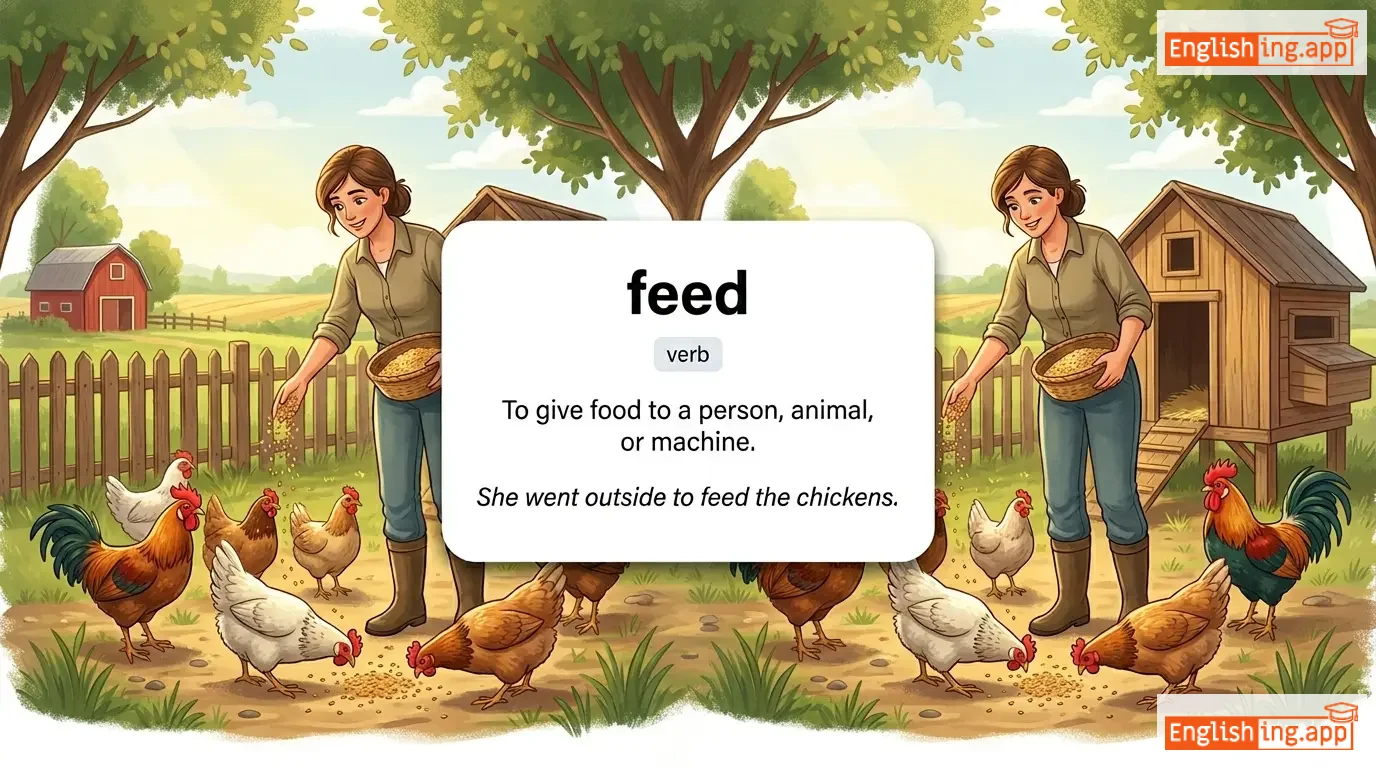
feed definition card — visual illustration of the meaning
verb
/fiːd/
(wèi)

To give food to a person, animal, or machine.

"She went outside to feed the chickens."

"她出去喂鸡了。" (tā chūqù wèi jī le.)
noun
/ˈfiːdbæk/
反馈 (fankui)

information or opinions about how well someone is doing something

"She asked her teacher for feedback on her essay."

"她向老师请求关于她作文的反馈。" (Ta xiang laoshi qingqiu guanyu ta zuowen de fankui.)
Feel definition card — visual illustration of the meaning
verb
/fiːl/
感受 (gǎnshòu)

To experience an emotion or physical sensation.

"I feel happy when I listen to music."

"我听音乐时感到很开心。" (wǒ tīng yīnyuè shí gǎndào hěn kāixīn.)
noun
/ˈfiːlɪŋ/
感觉 (gǎnjué)

An emotional state or physical sensation.

"She had a strange feeling about the place."

"她对那个地方有一种奇怪的感觉。" (Tā duì nàgè dìfāng yǒu yī zhǒng qíguài de gǎnjué.)
verb
/feɪn/
假装, 装作 (jiǎzhuāng, zhuāngzuò)

to pretend or fake; to give a false appearance of

"She feigned illness to avoid going to work."

"她假装生病以避免去工作。" (Tā jiǎzhuāng shēngbìng yǐ bìmiǎn qù gōngzuò.)
noun
/feɪnt/
假动作, 伪装动作 (jia dongzuo, weizhuang dongzuo)

a deceptive or pretended movement, especially in fighting or sports

"The boxer made a feint to the left before striking to the right."

"拳击手在打右拳之前做了一个左侧的假动作。" (Quanji shou zai da youquan zhiqian zuole yige zuoce de jiadongzuo.)
verb
/fəˈlɪsɪteɪt/
祝贺 (zhùhè)

to congratulate someone; to express happiness for someone's success

"We felicitated her on winning the award."

"我们为她赢得奖项而祝贺。" (Wǒmen wèi tā yíngdé jiǎngxiàng ér zhùhè.)
felicitous definition card — visual illustration of the meaning
adjective
/fəˈlɪsɪtəs/
恰当的, 合适的或令人愉快的; 由好运或幸福标志 (qiàdàng de, héshì de huò lìng rén yúkuài de; yóu hǎo yùn huò xìngfú biāozhì)

well-chosen, appropriate, or pleasing; marked by good fortune or happiness

"She made a felicitous remark that lightened the mood."

"她做了一个恰到好处的评论,使气氛轻松了。" (Tā zuòle yīgè qià dào hǎo chù de pínglùn, shǐ qìfēn qīngsōng le.)
noun
/fəˈlɪsɪti/
幸福 (xìngfú)

intense happiness; the ability to find appropriate expression for one's thoughts

"She was known for her felicity in conversation and cheerful nature."

"她因在对话中的幸福和开朗的性格而闻名。" (Tā yīn zài duìhuà zhōng de xìngfú hé kāilǎng de xìnggé ér wénmíng.)
adjective
/ˈfiːlaɪn/
猫的特征 (māo de tèzhēng)

relating to or characteristic of cats

"Her movements were graceful and almost feline in their elegance."

"她的动作优雅,几乎像猫一样。" (Tā de dòngzuò yōuyǎ, jīhū xiàng māo yīyàng.)
verb
/fel/
砍倒, 伐木 (kǎn dǎo, fámù)

to cut down a tree; to cause to fall; to strike down

"The lumberjacks felled several trees in the forest today."

"伐木工今天在森林里砍倒了几棵树。" (Fámùgōng jīntiān zài sēnlín lǐ kǎn dǎo le jǐ kē shù.)
noun
/ˈfɛloʊ/
伙伴 (huǒbàn)

a person who shares a common situation, interest, or activity with another

"He is a fellow student in my class."

"他是我班上的一个伙伴。" (Tā shì wǒ bān shàng de yīgè huǒbàn.)
noun
/ˈfɛlən/
罪犯 (zuìfàn)

a person who has committed a serious crime

"The felon was sentenced to ten years in prison."

"罪犯被判处十年监禁。" (zuìfàn bèi pànchǔ shí nián jiānjìn.)
adjective
/fəˈloʊniəs/
与严重犯罪相关 (yǔ yánzhòng fànzuì xiāngguān)

relating to or involved in serious criminal activity

"He was charged with felonious assault after the incident."

"事件发生后,他因严重袭击被指控。" (Shìjiàn fāshēng hòu, tā yīn yánzhòng xíjī bèi zhǐkòng.)
noun
/ˈfɛləni/
重罪 (zhòng zuì)

a serious crime, usually punishable by imprisonment for more than one year

"He was convicted of a felony and sentenced to ten years in prison."

"他因重罪被定罪并被判处十年监禁。" (Tā yīn zhòng zuì bèi dìngzuì bìng bèi pànchǔ shí nián jiānjìn.)
noun/adjective
/ˈfiːmeɪl/
雌性 (cíxìng)

a person or animal of the sex that can bear offspring; relating to women or girls

"The female lion protects her cubs fiercely."

"母狮保护她的幼崽。" (Mǔ shī bǎohù tā de yòuzǎi.)
adjective
/ˈfɛmənɪn/
女性的 (nǚxìng de)

having qualities traditionally associated with women; feminine in nature

"She has a very feminine style of dressing."

"她有非常女性化的穿衣风格。" (Tā yǒu fēicháng nǚxìng huà de chuānyī fēnggé.)
noun
/ˈfɛmənɪst/
女性主义者 (nǚxìng zhǔyì zhě)

a person who supports equal rights and opportunities for women and men

"She proudly calls herself a feminist and fights for gender equality."

"她自豪地称自己为女性主义者,并为性别平等而奋斗。" (Tā zìháo de chēng zìjǐ wèi nǚxìng zhǔyì zhě, bìng wèi xìngbié píngděng ér fèndòu.)
noun/verb
/fɛns/
篱笆 (lí bā)

a barrier, usually made of wood or wire, that surrounds an area; to enclose with a barrier

"They built a fence around the garden."

"他们在花园周围建了一道篱笆。" (Tāmen zài huāyuán zhōuwéi jiànle yī dào lí bā.)
noun
/ˈfɛndər/
挡泥板 (dangmiban)

a part of a vehicle that frames a wheel well to protect against mud or debris

"The car's fender was dented in the accident."

"汽车的芬德尔在事故中被压凹了。" (Qiche de fender zai shigu zhong bei yao le.)
noun
/ˈfen.jʊ.griːk/
胡芦巴 (húlúbā)

an herb whose seeds and leaves are used as a spice in cooking

"Fenugreek seeds have a slightly bitter taste and are commonly used in Indian cuisine."
"胡芦巴种子有轻微的苦味,通常用于印度菜肴中。" (Húlúbā zhǒngzi yǒu qīngwēi de kǔwèi, tōngcháng yòng yú Yìndù càiyáo zhōng.)
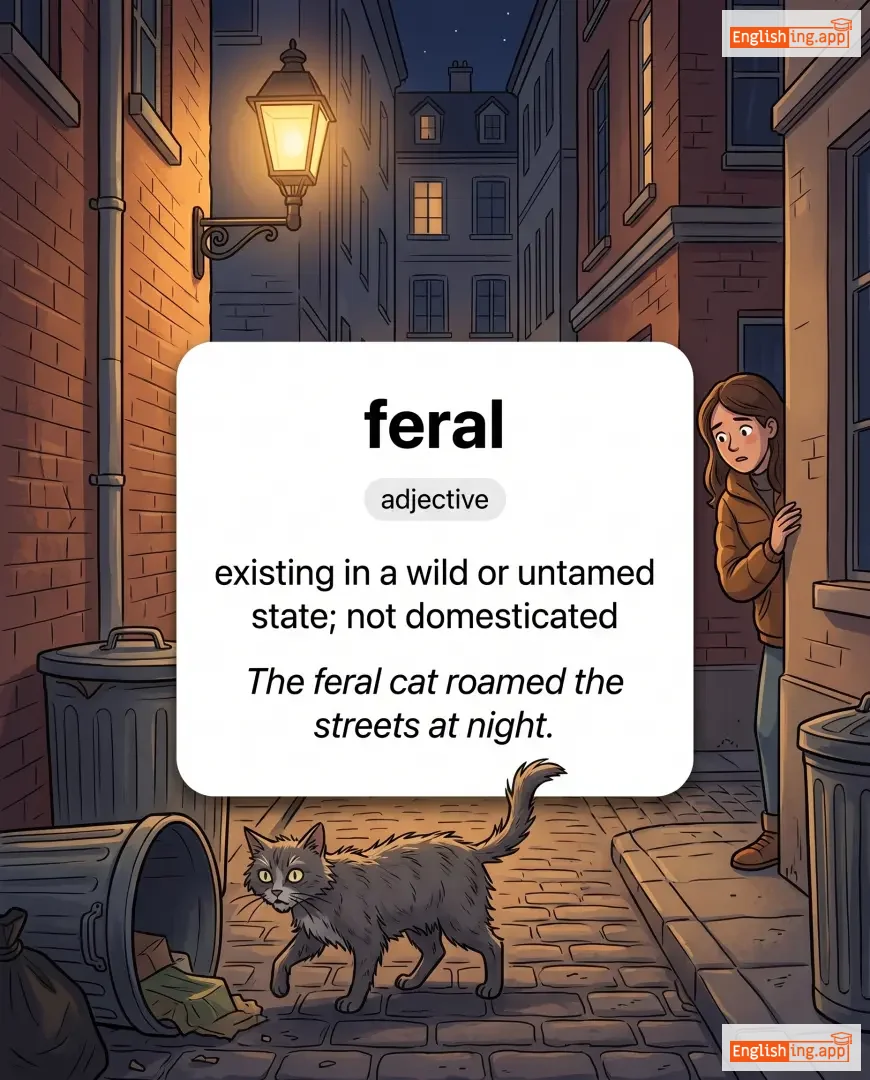
feral definition card — visual illustration of the meaning
adjective
/ˈfɛrəl/
野生的 (yesheng de)

existing in a wild or untamed state; not domesticated

"The feral cat roamed the streets at night."

"那只野猫在晚上游荡在街头。" (Na zhi yemao zai wanshang youdang zai jietou.)
verb
/ˈfɜːrmɛnt/
经历一个化学过程,其中糖分转化为酒精或酸; 激起或引发变化 (jingli yige huaxue guocheng, qizhong tangfen zhuanhua wei jiujiu huo suan; jiqi huo yinfah bianhua)

to undergo a chemical process where sugars are converted to alcohol or acid; to incite or stir up change

"The grapes are left to ferment for several weeks."

"葡萄被留下来发酵几个星期。" (Putao bei liuxia lai fa xiao jige xingqi.)