词汇表

英语词汇词典 | 单词含义、定义和示例

noun
/ˈherˌdrɛsər/
理发师 (lifashi)

a person whose job is to cut, style, and treat hair

"The hairdresser gave me a stylish haircut before the wedding."
"理发师在婚礼前给我做了一个时尚的发型。" (Lifashi zai hunli qian gei wo zuole yi ge shishang de faxing)
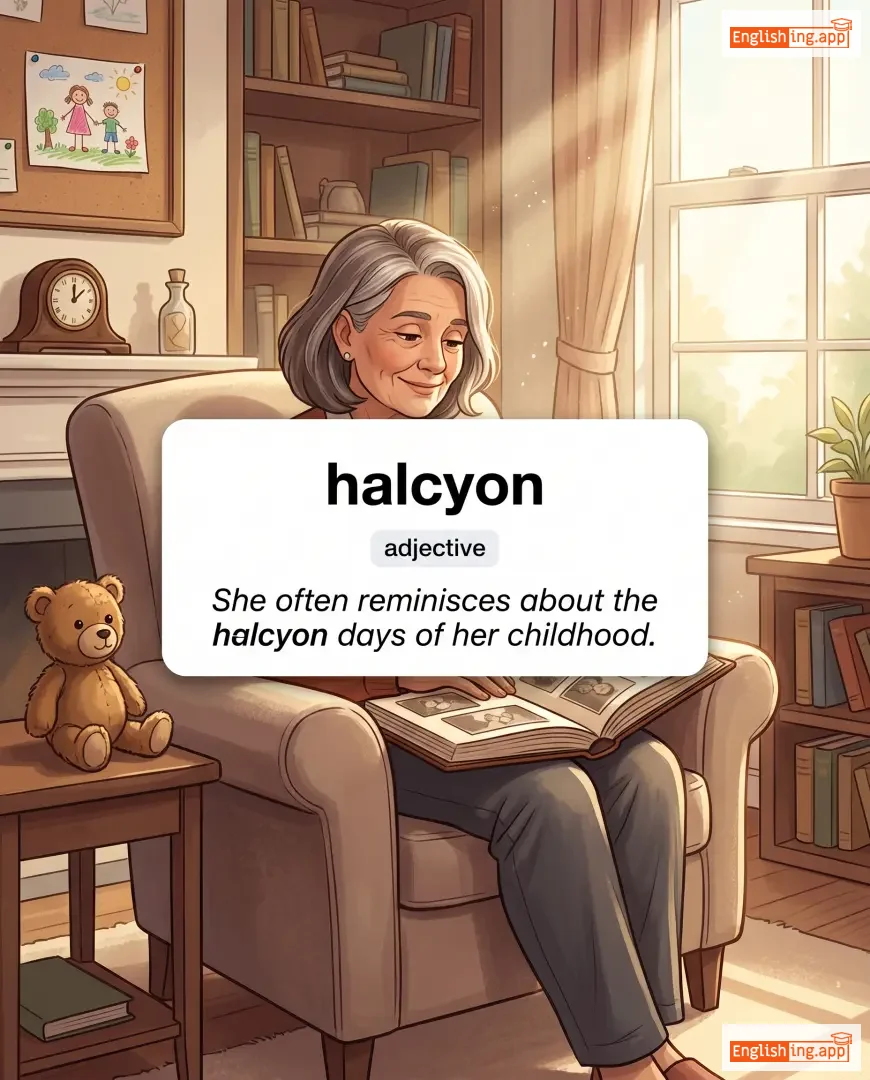
halcyon definition card — visual illustration of the meaning
adjective
/ˈhæl.si.ən/
宁静的 (níngjìng de)

calm, peaceful, and happy; denoting a period of time in the past that was idyllically happy and peaceful

"She often reminisces about the halcyon days of her childhood."

"她经常回忆起她童年时宁静的日子。" (Tā jīngcháng huíyì qǐ tā tóngnián shí níngjìng de rìzi.)
adjective
/heɪl/
健康 (jiànkāng)

strong and healthy, especially of an elderly person

"Despite his age, the man remained hale and active."

"尽管他的年龄,他依然保持健康和活跃。" (Jǐnguǎn tā de niánlíng, tā yīrán bǎochí jiànkāng hé huóyuè.)
noun, adjective
/hæf/
一半 (yiban)

one of two equal parts of something

"He ate half of the cake."

"他吃了蛋糕的一半。" (ta chi le dangao de yi ban.)
adjective
/ˌhæfˈbeɪkt/
半生不熟 (ban sheng bu shu)

poorly thought out or badly planned

"The manager quickly rejected his half-baked proposal."

"经理迅速拒绝了他半生不熟的提案。" (Jingli xunsu jujue le ta ban sheng bu shu de ti'an.)
adjective
/ˌhæfˈhɑːr.tɪd/
半心半意 (banxinbanyi)

lacking enthusiasm or determination; unenthusiastic

"His halfhearted attempt to study did not bring good results."

"他半心半意的学习尝试没有带来好结果。" (Ta banxinbanyi de xuexi changshi meiyou dalai hao jieguo.)
adverb
/ˌhæfˈweɪ/
半路上 (ban lu shang)

at or to a point equal in distance between two points

"We met halfway between the two towns."

"我们在两个城市之间的半路上相遇。" (Wo men zai liang ge cheng shi zhi jian de ban lu shang xiang yu.)
noun
/hɔːl/
大厅 (da ting)

a large room or building for public gatherings, events, or passage

"The graduation ceremony was held in the university hall."

"毕业典礼在大学的大厅举行。" (Bi ye dian li zai da xue de da ting ju xing.)
noun
/ˈhɔːl.mɑːrk/
标志性特征 (biaozhixing tezheng)

a typical characteristic or feature of someone or something

"Honesty is the hallmark of a good leader."

"诚实是一个好领导者的标志性特征。" (Chengshi shi yige hao lingdaozhe de biaozhixing tezheng.)
verb
/ˈhæloʊ/
神圣化 (shenshenghua)

to honor as holy; to make sacred or greatly respected

"The ancient temple was hallowed by centuries of worship."
"古老的寺庙因几百年的崇拜而被神圣化。" (Gulao de simiao yin jiban nian de chongbai er bei shenshenghua.)
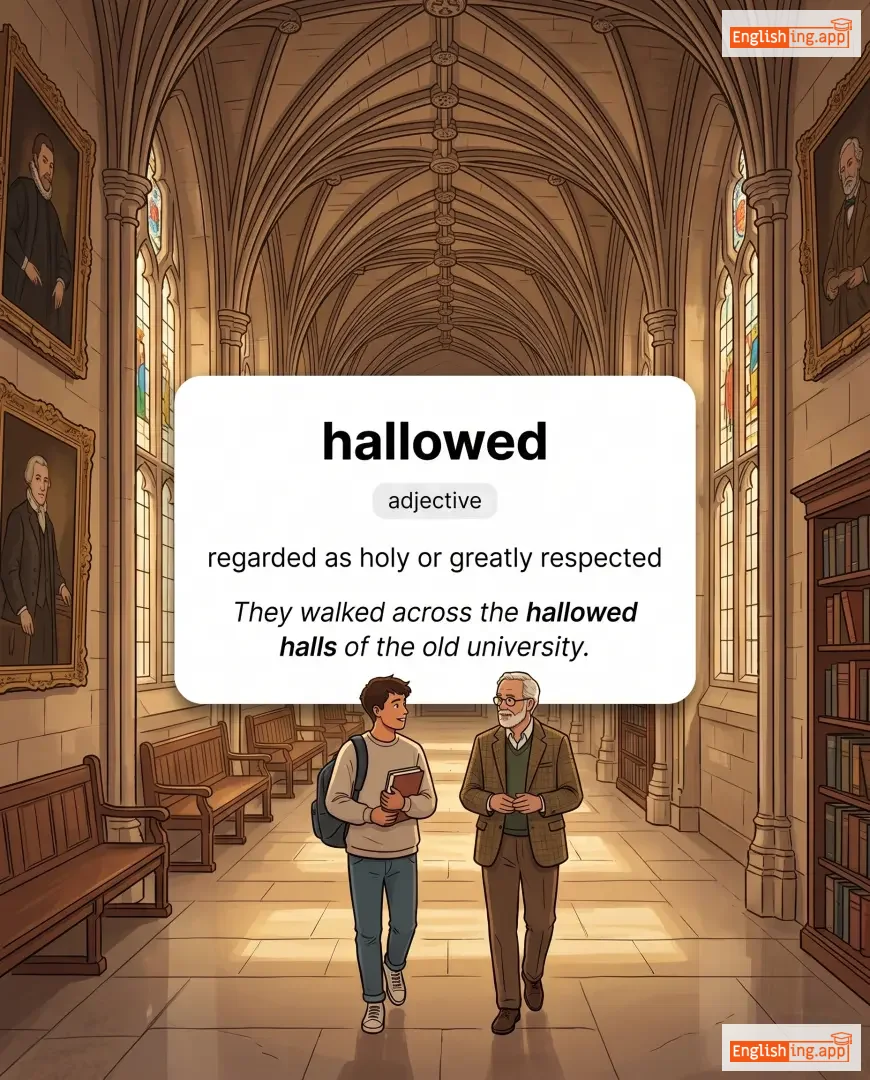
hallowed definition card — visual illustration of the meaning
adjective
/ˈhæloʊd/
神圣 (shensheng)

regarded as holy or greatly respected

"They walked across the hallowed halls of the old university."

"他们走过了老大学的神圣大厅。" (Tāmen zǒuguòle lǎo dàxué de shénshèng dàtīng.)
verb
/həˈluːsɪneɪt/
幻觉 (huàn jué)

to see, hear, or sense things that are not actually present, often due to illness or drugs

"After taking the medicine, he began to hallucinate strange shapes."

"服用药物后,他开始看到奇怪的形状。" (Fúyòng yàowù hòu, tā kāishǐ kàn dào qíguài de xíngzhuàng.)
noun
/həˌluːsɪˈneɪʃən/
幻觉 (huànjué)

a false perception of objects or events, usually caused by mental illness or drugs

"After the medication, he began to experience vivid hallucinations."

"服药后,他开始经历生动的幻觉。" (Fúyào hòu, tā kāishǐ jīnglì shēngdòng de huànjué.)
noun
/ˈhɔːlweɪ/
走廊 (zǒuláng)

a corridor in a building that connects rooms

"The kids left their shoes in the hallway."

"孩子们把鞋子留在了走廊里。" (Háizimen bǎ xiézi liú zài le zǒuláng lǐ.)
verb
/hɔːlt/
停止 (tingzhi)

to stop or bring to a stop

"The train suddenly halted at the station."

"火车突然在车站停了下来。" (Huoche tudan zai chezhang tingle xiala.)
adjective
/ˈhɔːltɪŋ/
犹豫不决 (yóuyù bù jué)

slow and hesitant, especially due to lack of confidence

"She gave a halting reply during the interview."

"她在面试中给出了迟疑的回答。" (Tā zài miànshì zhōng gěichūle chíyí de huídá.)
adjective
/ˈhæm ˌhændɪd/
笨拙 (bènzhuō)

clumsy or inept in handling things or situations

"His ham-handed attempt to fix the computer made it worse."

"他笨拙的修理电脑的尝试反而使情况更糟。" (Tā bènzhuō de xiūlǐ diànnǎo de chángshì fǎn'ér shǐ qíngkuàng gèng zāo.)
noun
/ˈhæm.lət/
小村庄 (xiao cunzhuang)

a small rural settlement, smaller than a village; a small community

"The tiny hamlet nestled in the valley had only a dozen houses and one small church."
"位于山谷中的小村庄只有十几座房子和一座小教堂。" (Wei yu shangu zhong de xiao cunzhuang zhiyou shiji zuo fangzi he yi zuo xiao jiaotang.)
noun, verb
/ˈhæmər/

a tool with a heavy metal head used for breaking things or driving in nails; to hit something forcefully with a hammer or similar object.

"He used a hammer to fix the broken chair."

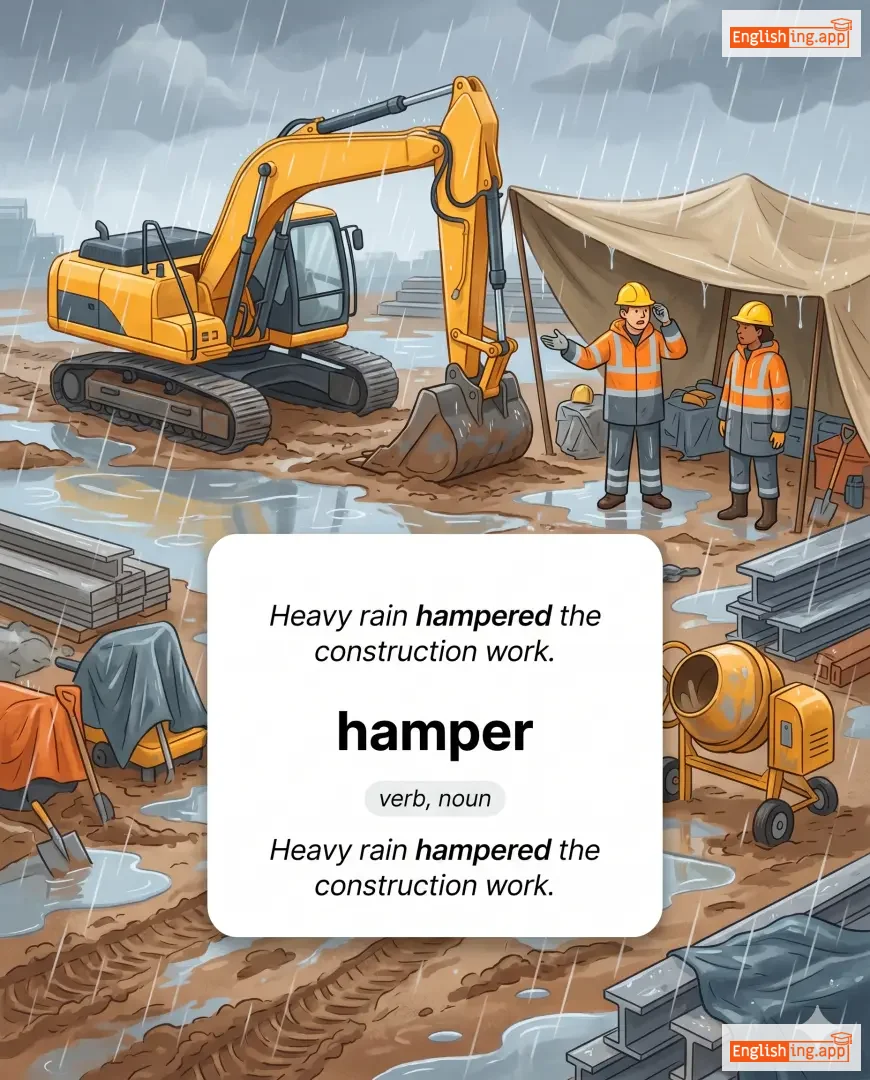
hamper definition card — visual illustration of the meaning
verb, noun
/ˈhæmpər/
阻碍, 洗衣篮 (zǔ'ài, xǐyī lán)

to prevent or slow down the progress of something; also, a basket with a lid, typically for laundry.

"Heavy rain hampered the construction work."

"暴雨阻碍了建筑工作。" (Bàoyǔ zǔ'ài le jiànzhú gōngzuò.)
noun, verb
/ˈhæmstrɪŋ/
大腿后部的肌腱; 作为动词,限制或严重削弱某人或某物的效能 (dàtuǐ hòubù de jījiàn; zuòwéi dòngcí, xiànzhì huò yánzhòng xuēruò mǒurén huò mǒuwù de xiàonéng)

a tendon at the back of the thigh; as a verb, to cripple or severely restrict the effectiveness of someone or something.

"Budget cuts hamstrung the organization’s plans."

"预算削减削弱了该组织的计划。" (yùsuàn xuējiǎn xuēruòle gāi zǔzhī de jìhuà.)
verb (past tense, past participle), adjective
/ˈhæmstrʌŋ/
瘫痪或受限 (tānhuàn huò shòuxiàn)

crippled or severely restricted in movement or progress.

"The team was hamstrung by lack of resources."
"由于资源匮乏,团队陷入困境。" (Yóuyú zīyuán kuìfá, tuánduì xiànrù kùnjìng.)
🤚

Hand

noun, verb
/hænd/

the part of the body at the end of the arm used for holding things

"She raised her hand to ask a question."

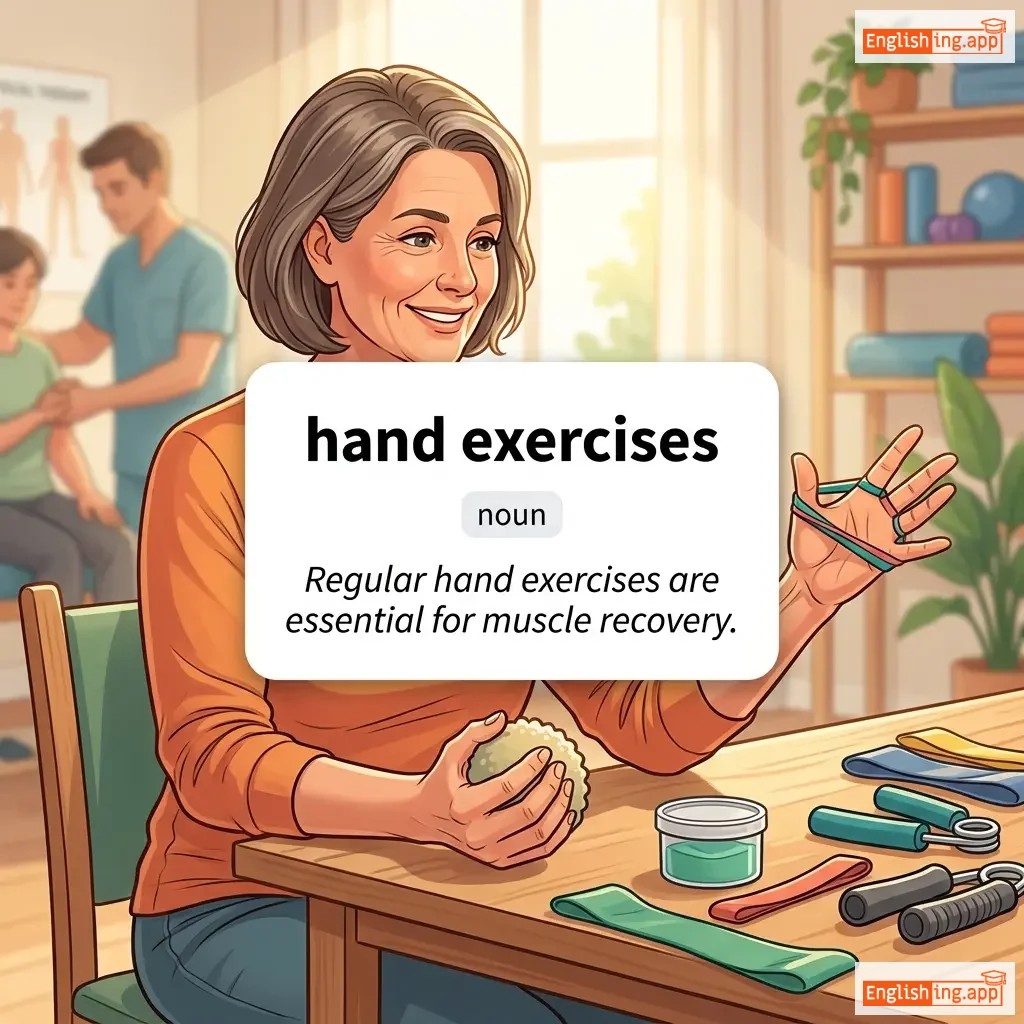
hand exercises definition card — visual illustration of the meaning
noun
হ্যান্ড এক্সারসাইজেস
手部运动 (shǒubù yùndòng)

Physical activities designed to strengthen, stretch, and improve the flexibility of hand and finger muscles.

"Regular hand exercises are essential for muscle recovery."

"定期的手部运动对于肌肉恢复至关重要。" (Dìngqī de shǒubù yùndòng duìyú jīròu huīfù zhìguān zhòngyào.)
noun
/ˈhænd ˌrɪŋɪŋ/
过度担忧 (guòdù dānyōu)

excessive worry or concern expressed in a visible or dramatic way.

"There was much hand-wringing over the political crisis."

"关于政治危机有很多戏剧性的担忧。" (Guānyú zhèngzhì wēijī yǒu hěn duō xìjùxìng de dānyōu.)
noun
/ˈhænd.fʊl/
一把 (yī bǎ)

the amount of something that can be held in one hand; a small number

"She took a handful of nuts."

"她拿了一把坚果。" (tā nále yī bǎ jiānguǒ.)
noun
/ˈhæn.di.krɑːft/
手工艺 (shougongyi)

an activity involving the making of decorative domestic or other objects with the hands; handmade artistic work

"The local market featured beautiful handicrafts made by skilled artisans from the region."

"当地市场展示了由该地区熟练工匠制作的美丽手工艺品。" (Dangdi shichang zhanshi le you gai diqu shulian gongjiang zhizu de mei li shougongyipin.)
noun
/ˈhæŋ.kər.tʃɪf/
手帕 (shoupa)

a small piece of cloth used for wiping the nose or face

"She always carries a clean handkerchief in her purse."

"她总是在包里带一条干净的手帕。" (Ta zong shi zai bao li dai yi tiao ganjing de shoupa.)
Handle definition card — visual illustration of the meaning
noun, verb
/ˈhændl̩/
把手 / 处理 (bǎ shǒu / chǔ lǐ)

the part of an object designed to be held in the hand; to deal with or manage a situation

"He could not handle the pressure of the job."

"他无法处理工作的压力。" (Tā wúfǎ chǔlǐ gōngzuò de yālì.)
noun
/ˈhændlɪŋ/
处理 (chuli)

the act of managing or dealing with something or someone

"His handling of the situation was impressive."

"他对情况的处理令人印象深刻。" (Tā duì qíngkuàng de chùlǐ lìng rén yìnxiàng shēnkè.)
adjective
/ˈhæn.səm/

attractive in appearance, usually referring to men; also can mean generous or impressive in size.

"He looked very handsome in his new suit."

noun
/ˈhændˌraɪ.tɪŋ/
手写字 (shǒuxiězì)

the style or manner of writing by hand.

"Her handwriting is very neat and easy to read."

"她的手写字非常整齐,容易阅读。" (Tā de shǒuxiězì fēicháng zhěngqí, róngyì yuèdú.)
adjective
/ˈhændi/
易于使用 (yi yu shiyong)

convenient to use or easily accessible; skillful with the hands

"This pocket knife is very handy when you go camping."

"这把口袋刀在露营时非常有用。" (Zhe ba kou dai dao zai lu ying shi feichang youyong.)
hang definition card — visual illustration of the meaning
🖼️

hang

verb
/hæŋ/

to suspend or attach something from above so that it moves freely or is supported

"She decided to hang the painting on the living room wall."

noun
/ˈhæŋ.ər/
飞机库 (feiji ku)

a large building with extensive floor area, typically for housing aircraft; an aircraft shelter

"The airplane was stored safely in the hangar during the severe thunderstorm."

"飞机在强烈雷暴中安全地停放在飞机库中。" (Feiji zai qianglie leibao zhong anquan de tingfang zai feiji ku zhong.)
adjective
/ˈhæŋ.dɔːɡ/
尴尬 (gāngà)

looking or feeling ashamed, guilty, or defeated.

"He gave me a hangdog look after being caught lying."

"他在被抓到撒谎后,给了我一个尴尬的表情。" (Tā zài bèi zhuā dào sāhuǎng hòu, gěile wǒ yīgè gāngà de biǎoqíng.)
noun
/ˈhæŋ.ər/
衣架 (yī jià)

a shaped piece of wood, plastic, or metal with a hook at the top, used to hang up clothes

"She hung her dress on a wooden hanger to prevent it from getting wrinkled."

"她把裙子挂在一个木衣架上,以防止它起皱。" (Tā bǎ qún zi guà zài yī gè mù yī jià shàng, yǐ fáng zhǐ tā qǐ zhòu.)
noun
/ˌhæŋ.ər ˈɒn/
跟班 (genban)

a person who spends time with a powerful or famous person to gain benefits.

"The celebrity was always surrounded by hangers-on."

"这位名人总是被跟班围绕着。" (zhè wèi míngrén zǒng shì bèi gēnbān wéirào zhe.)
noun
/ˈhæŋ.kər/
渴望, 欲望 (kewang, yuwang)

a feeling of yearning or craving; a strong desire for something

"After years abroad, she developed a deep hanker for her homeland's traditional cuisine."

"在国外多年后,她产生了对家乡传统美食的深深渴望。" (Zai guowai duonian hou, ta chansheng le dui jiaxiang chuantong meishi de shenshen kewang.)
noun
/ˈhæŋ.kər.ɪŋ/
渴望 (kewang)

a strong desire or craving for something.

"She had a hankering for chocolate late at night."

"她深夜时对巧克力有了强烈的渴望。" (Tā shēn yè shí duì qiǎokèlì yǒule qiángliè de kewàng.)
noun
/ˌhæŋ.ki ˈpæŋ.ki/
欺诈; 可疑活动; 不道德行为; 欺骗 (qizha; keyi huodong; budaode xingwei; qipian)

dishonest or suspicious activity; unethical behavior; trickery or deception

"The audit revealed some hanky-panky in the company's financial records."

"审计揭示了公司财务记录中的一些欺诈行为。" (shenji jieshi le gongsi caiwu jilu zhong de yixie qizha xingwei.)
noun
/hæp/
运气,幸运,偶然 (yunqi, xingyun, ouran)

luck, fortune, or chance occurrence

"By sheer hap, he discovered the old letter hidden in the drawer."

"凭借运气,他发现了藏在抽屉里的旧信。" (Pingjie yunqi, ta faxianle cang zai chouzi li de jiu xin.)
adjective
/hæpˈhæzərd/
混乱的, 随机的 (hùnluàn de, suíjī de)

lacking any obvious order or organization; random

"The books were stacked in a haphazard way on the table."

"书本以混乱的方式堆放在桌子上。" (Shūběn yǐ hùnluàn de fāngshì duīfàng zài zhuōzi shàng.)
adjective
/ˈhæpləs/
不幸的, 值得同情的 (bù xìng de, zhí dé tóng qíng de)

unfortunate, unlucky, deserving pity

"The hapless traveler lost his passport on the very first day."

"那个不幸的旅行者在第一天就丢失了护照。" (Nàgè bù xìng de lǚxíng zhě zài dì yī tiān jiù diūshī le hùzhào.)
verb
/ˈhæpən/
发生 (fāshēng)

to take place or occur, usually by chance

"Accidents can happen at any time."

"事故随时可能发生。" (Shìgù suíshí kěnéng fāshēng.)
adverb
/ˈhæpɪli/
幸福地 (xìngfú de)

in a happy manner; with pleasure or satisfaction

"The children played happily in the garden."
"孩子们在花园里幸福地玩耍。" (Háizimen zài huāyuán lǐ xìngfú de wánshuǎ.)
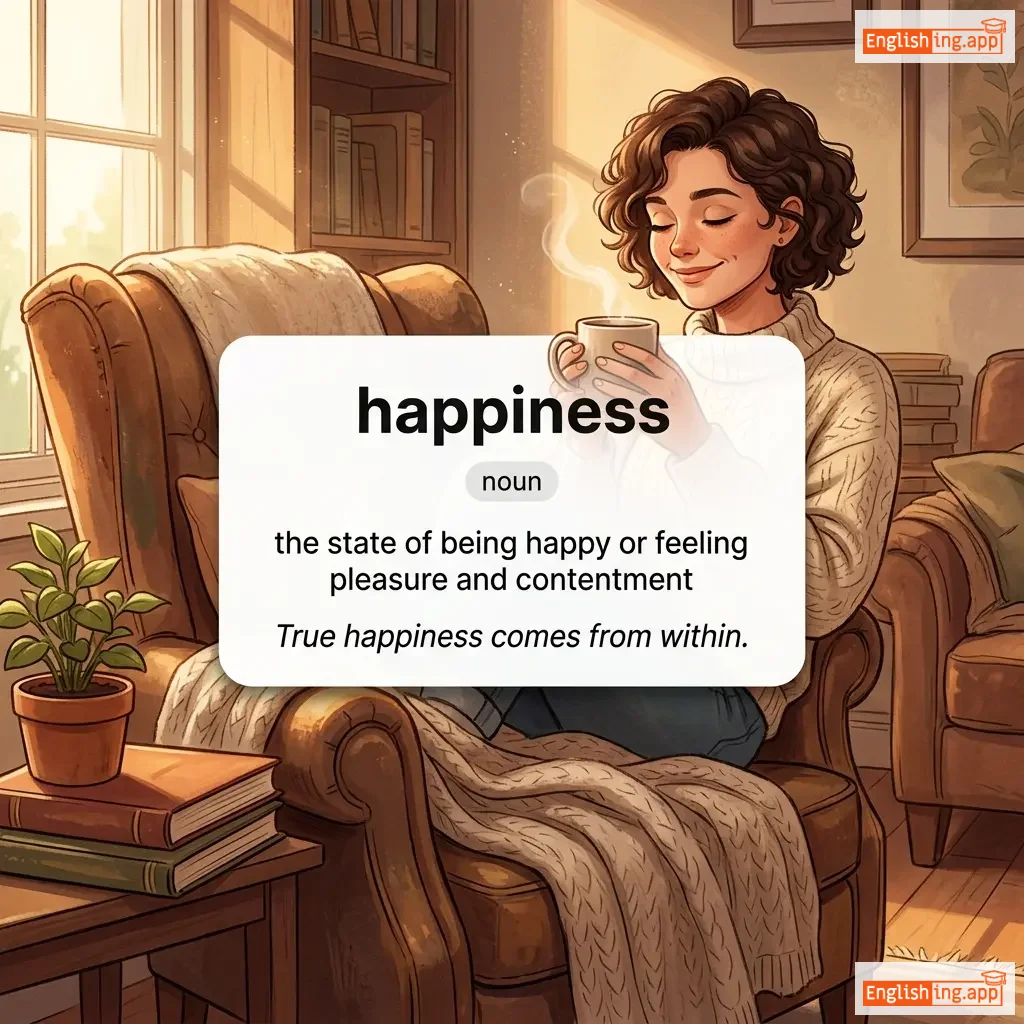
happiness definition card — visual illustration of the meaning
noun
/ˈhæpinəs/
幸福 (xìngfú)

the state of being happy or feeling pleasure and contentment

"True happiness comes from within."
"真正的幸福来自内心。" (Zhēnzhèng de xìngfú láizì nèixīn.)
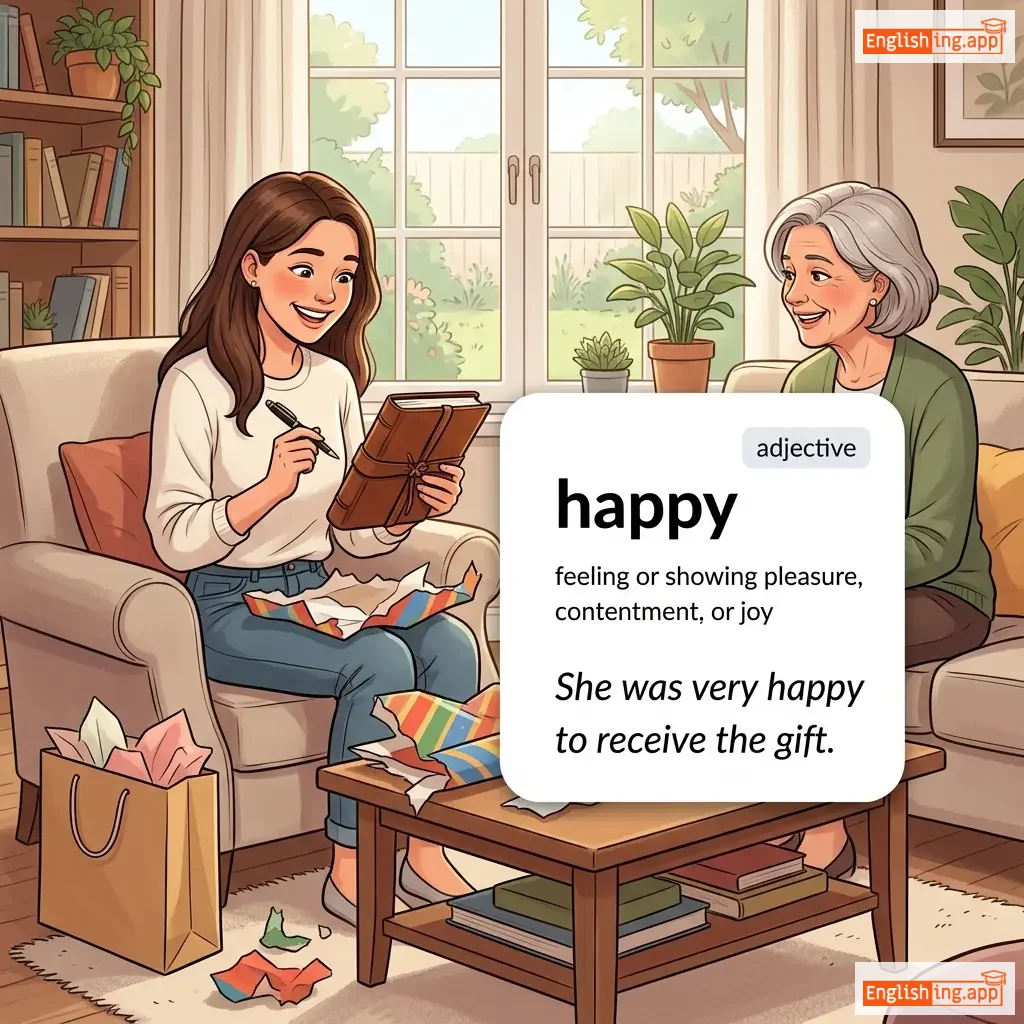
happy definition card — visual illustration of the meaning
adjective
/ˈhæpi/
快乐 (kuàilè)

feeling or showing pleasure, contentment, or joy

"She was very happy to receive the gift."
"她收到礼物时非常高兴。" (Tā shōudào lǐwù shí fēicháng gāoxìng.)
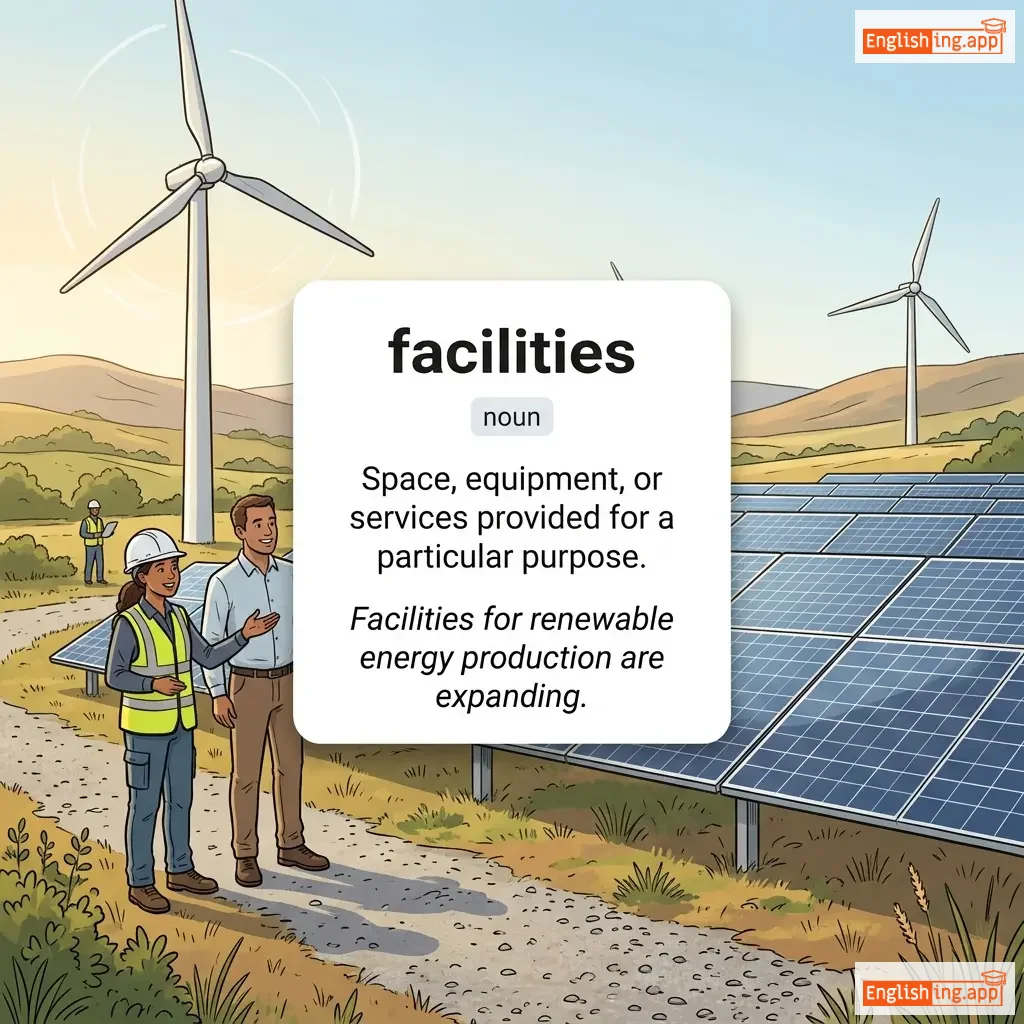
facilities definition card — visual illustration of the meaning
noun
fəˈsɪl.ɪ.tiz
设施 (shèshī)

Space, equipment, or services provided for a particular purpose.

"Facilities for renewable energy production are expanding."
"可再生能源生产设施正在扩展。" (Kě zàishēng néngyuán shēngchǎn shèshī zhèngzài kuòzhǎn.)
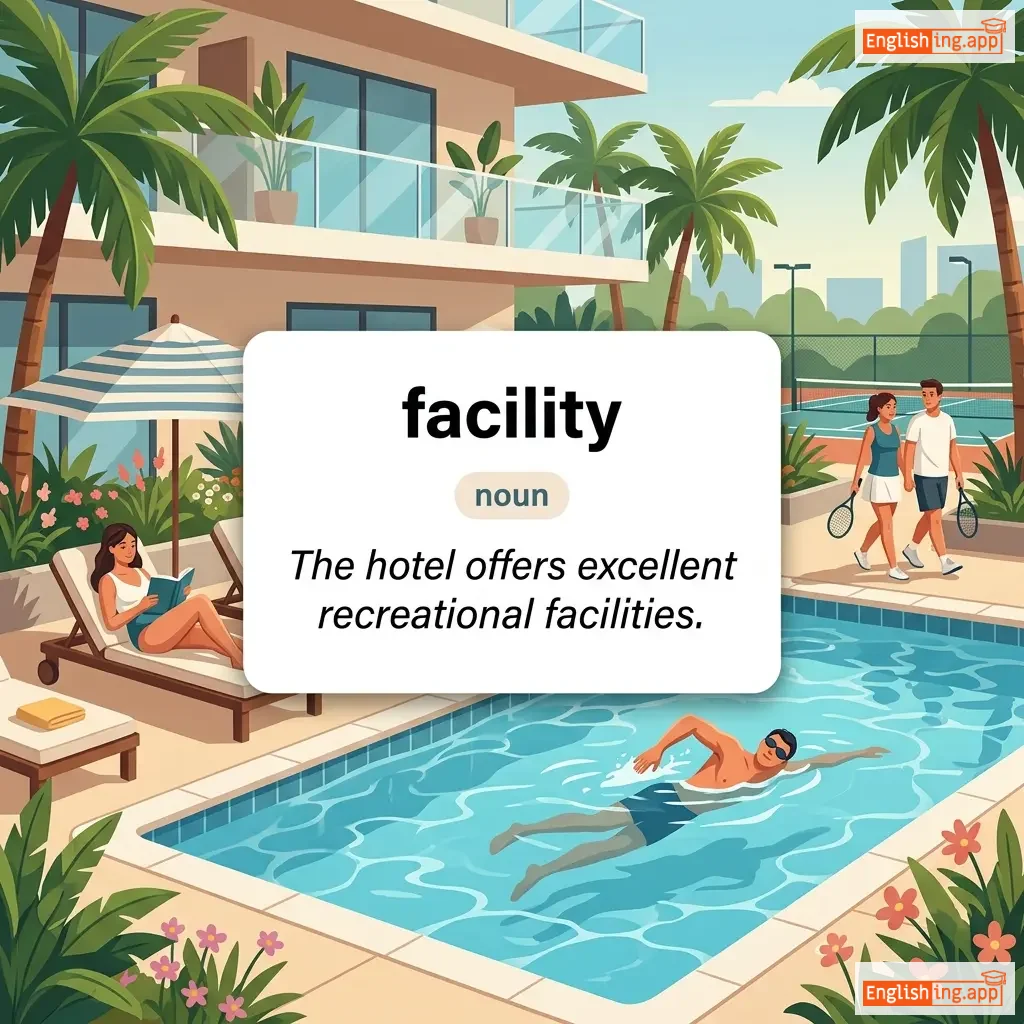
facility definition card — visual illustration of the meaning
noun
/fəˈsɪləti/
为特定目的提供的场所、服务或设备 (wei te ding mu di ti gong de chang suo, fu wu huo she bei)

a place, service, or equipment provided for a particular purpose; ease in doing something

"The hotel offers excellent recreational facilities."

"酒店提供出色的休闲设施。" (Jiudian tigong chuse de xiuxian sheshi.)