词汇表

英语词汇词典 | 单词含义、定义和示例

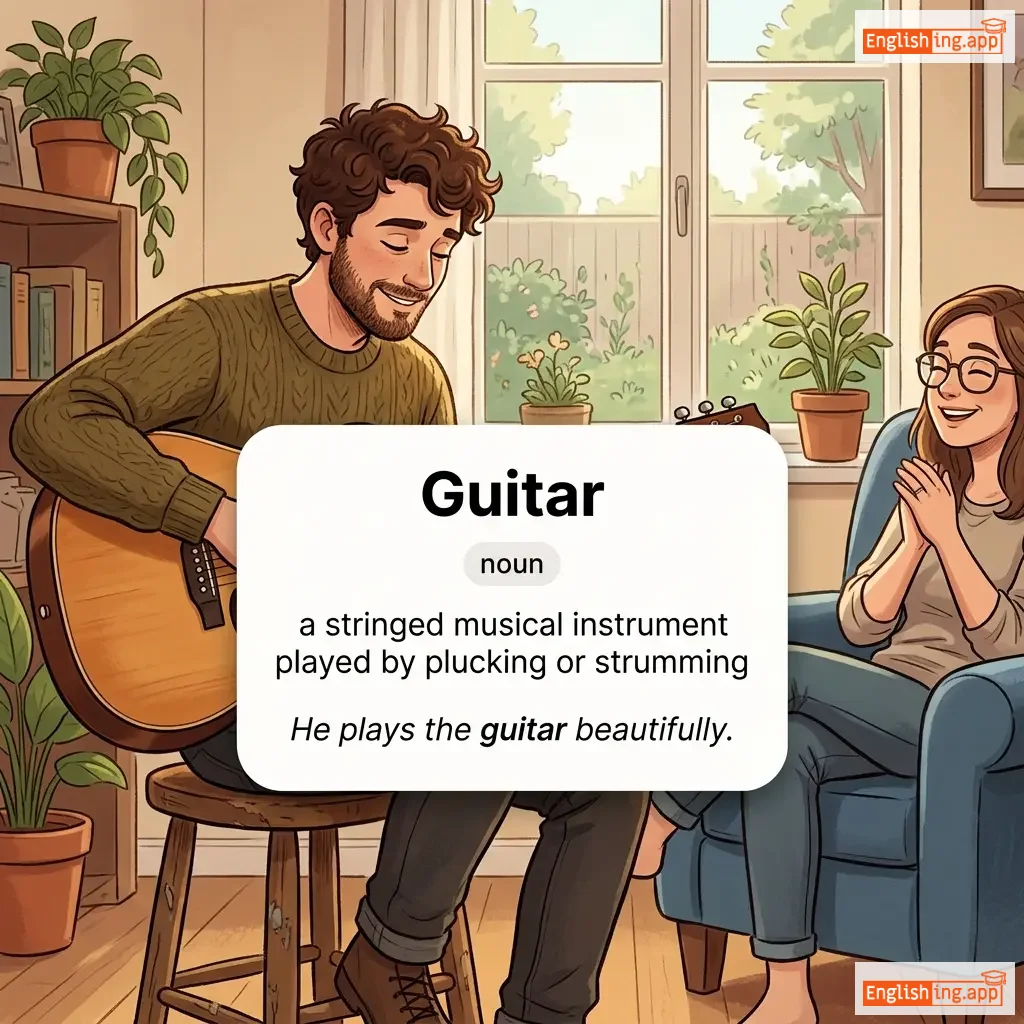
Guitar definition card — visual illustration of the meaning
noun
/ɡɪˈtɑːr/
吉他 (jita)

a stringed musical instrument played by plucking or strumming

"He plays the guitar beautifully."

"他弹吉他非常美妙。" (tā tán jítā fēicháng měimiào.)
noun
/ɡʌlf/
海湾 (haiwan)

a deep inlet of the sea almost surrounded by land; a wide gap or difference between people or groups

"The Persian Gulf is an important waterway for international shipping and oil transport."
"波斯湾是国际航运和石油运输的重要水道。" (Bosi wan shi guoji hangyun he shiyou yunshu de zhongyao shuidao.)
🕊️

Gull

noun, verb
/ɡʌl/

A seabird with long wings and usually white and gray feathers; as a verb, to deceive or trick someone.

"The fisherman watched the gulls circle above the boat."

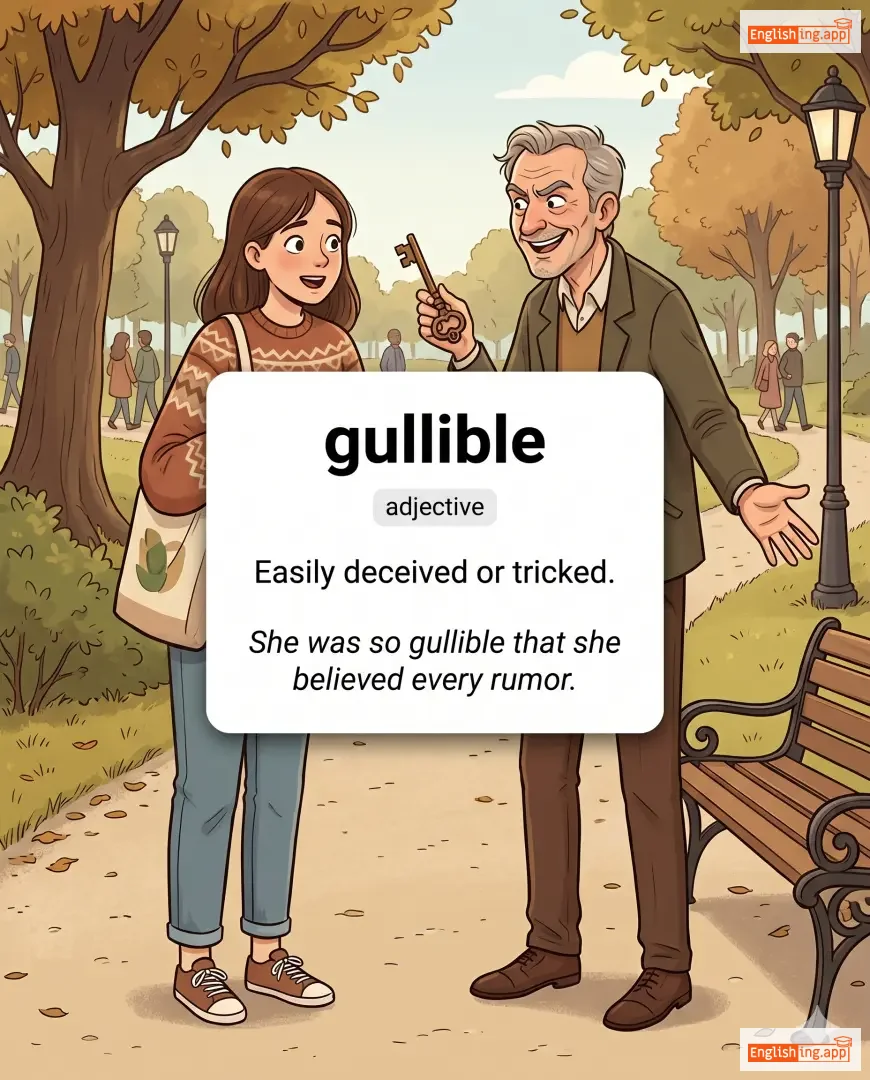
gullible definition card — visual illustration of the meaning
adjective
/ˈɡʌl.ə.bəl/
容易上当的 (róngyì shàngdàng de)

Easily deceived or tricked.

"She was so gullible that she believed every rumor."

"她如此容易上当,以至于相信了每个谣言。" (Tā rú cǐ róngyì shàngdàng, yǐzhì yú xiāngxìnle měi gè yáoyán.)
noun
/ˈɡʌl.i/
沟渠,峡谷 (gōu qú, xiá gǔ)

A narrow channel or ravine worn away by water.

"After the storm, the road was cut by a deep gully."

"暴风雨过后,路被一个深深的沟渠切割。" (Bàofēngyǔ guò hòu, lù bèi yīgè shēn shēn de gōu qú qiē gē.)
🍬

Gum

noun, verb
/ɡʌm/

A sticky substance from plants or used as adhesive; also the tissue around teeth.

"He chewed gum while waiting for the bus."

noun
/ˈɡʌmp.ʃən/
勇气, 创新 (yǒngqì, chuàngxīn)

Courage, resourcefulness, or initiative.

"It takes real gumption to start your own business."

"创业需要真正的勇气。" (Chuàngyè xūyào zhēnzhèng de yǒngqì.)
noun
/ɡʌn/
(qiāng)

a weapon that shoots bullets or other projectiles

"The police officer carried a gun for protection."

"警察为保护自己携带了枪。" (Jǐngchá wèi bǎohù zìjǐ xiédài le qiāng.)
noun
/ˈɡʌnˌpaʊdər/
火药 (huǒyào)

explosive powder used in guns and fireworks

"Gunpowder was invented in ancient China."

"火药是在古代中国发明的。" (Huǒyào shì zài gǔdài zhōngguó fāmíng de.)
noun
/ˈɡʌp.i fɪʃ/
孔雀鱼 (kong que yu)

a small colorful freshwater fish popular in aquariums, known for its vibrant colors and easy breeding

"The guppy fish is perfect for beginners who want to start an aquarium."

"孔雀鱼非常适合想要开始水族箱的初学者。" (kong que yu fei chang shi he xiang yao kai shi shui zu xiang de chu xue zhe)
verb
/ɡʌʃ/
涌出 (yongchu)

to flow out suddenly and forcefully, or to express something enthusiastically

"Tears began to gush from her eyes."

"眼泪开始从她的眼睛里涌出。" (yanlei kaishi cong ta de yanjing li yongchu.)
noun
/ɡʌst/
阵风 (zhenfeng)

a sudden strong rush of wind or air

"A sudden gust of wind blew the papers away."
"一阵突如其来的风把纸张吹走了。" (yi zhen tu ru qi lai de feng ba zhi zhang chui zou le.)
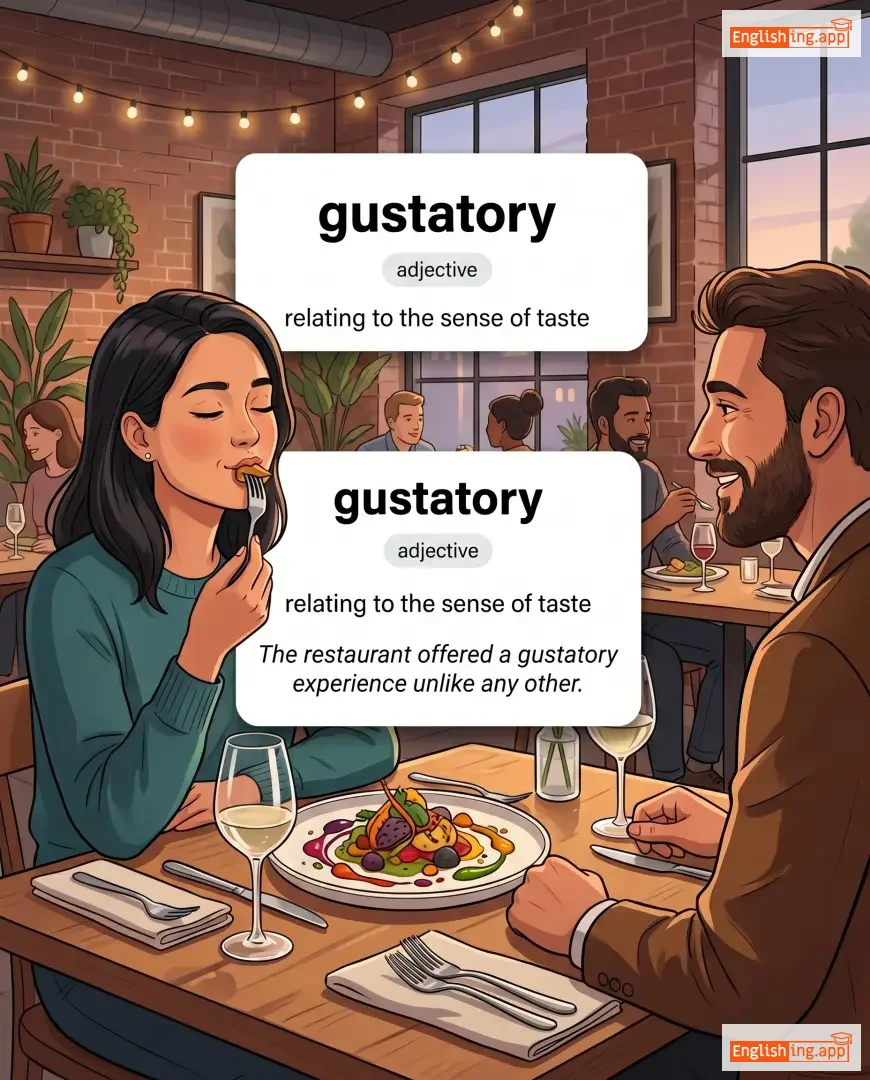
gustatory definition card — visual illustration of the meaning
adjective
/ˈɡʌstəˌtɔːri/
味觉的 (weijue de)

relating to the sense of taste

"The restaurant offered a gustatory experience unlike any other."

"餐厅提供了与众不同的味觉体验。" (Cāntīng tígōngle yǔ zhòng bùtóng de wèijué tǐyàn.)
noun
/ˈɡʌstoʊ/
热情 (reqing)

great enjoyment, energy, or enthusiasm in doing something

"She sang the song with great gusto."

"她充满热情地唱了这首歌。" (Ta chong man reqing de chang le zhe shou ge.)
adjective
/ˈɡʌsti/
刮风 (gua feng)

characterized by strong, sudden bursts of wind

"It was a cold, gusty day by the sea."

"那是一个寒冷且刮风的海边日子。" (na shi yi ge han leng qie gua feng de hai bian ri zi)
noun/verb
/ɡʌt/
胃 / 勇气 (wèi / yǒngqì)

The stomach or belly; also used for courage, instinct, or to remove the inside of something.

"He had the guts to stand up for his beliefs."

"他有勇气捍卫自己的信念。" (Tā yǒu yǒngqì hànwèi zìjǐ de xìnniàn.)
noun
/ɡaɪ/
家伙 (jiāhuo)

an informal term for a man; sometimes used to refer to a person in general

"That guy over there is my best friend."

"那边的家伙是我最好的朋友。" (Nà biān de jiāhuo shì wǒ zuì hǎo de péngyǒu.)
verb
/ˈɡʌzəl/
贪婪地喝 (tān lán de hē)

to drink greedily or excessively

"He guzzled three cans of soda in a few minutes."

"他在几分钟内喝掉了三罐苏打水。" (Tā zài jǐ fēnzhōng nèi hē diào le sān guàn sūdǎ shuǐ.)
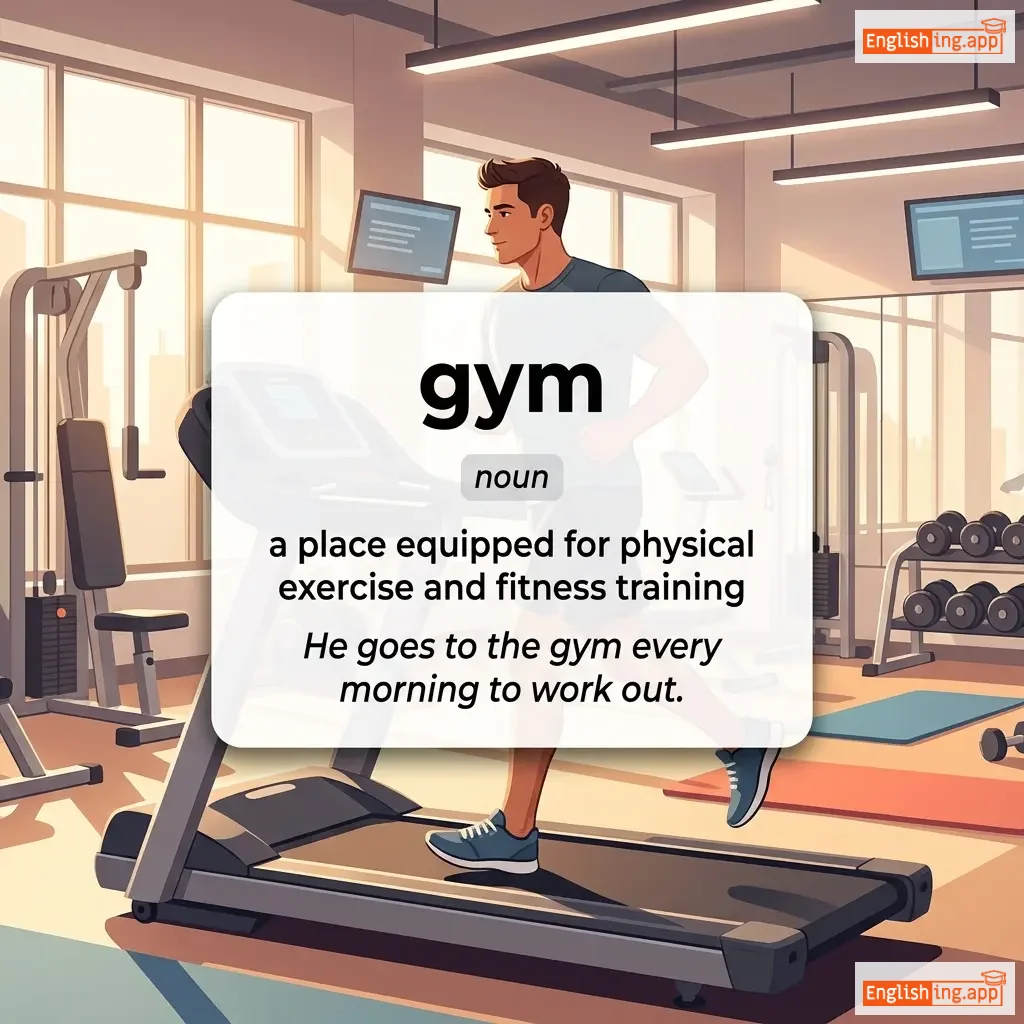
gym definition card — visual illustration of the meaning
🏋️‍♂️

gym (吉姆)

noun
/dʒɪm/
健身房 (jiànshēn fáng)

a place equipped for physical exercise and fitness training

"He goes to the gym every morning to work out."

"他每天早晨去健身房锻炼。" (Tā měitiān zǎochén qù jiànshēn fáng duànliàn.)
noun
/ˌɡaɪnəˈkɒkrəsi/
女权政治 (nüquán zhèngzhì)

a society or government ruled by women

"The ancient tribe was known for its gynecocracy, where women held all positions of power."

"这个古老的部落因其女权政治而闻名,在那里女性掌握了所有的权力职位。" (Zhège gǔlǎo de bùluò yīn qí nǚquán zhèngzhì ér wénmíng, zài nàlǐ nǚxìng zhǎngwòle suǒyǒu de quánlì zhíwèi.)
noun
/ˌɡaɪnəˈkɒlədʒi/
妇科 (fùkē)

the branch of medicine dealing with women's reproductive health

"She decided to specialize in gynecology after medical school."

"她决定在医学院毕业后专攻妇科。" (Tā juédìng zài yīxuéyuàn bìyè hòu zhuāngōng fùkē.)
verb
/ˈdʒaɪreɪt/
快速旋转 (kuaisu xuanzhuan)

to move or spin quickly in circles

"The dancer gyrated wildly to the rhythm of the drums."
"舞者随着鼓点疯狂旋转。" (Wǔzhě suízhe gǔdiǎn fēngkuáng xuánzhuǎn.)
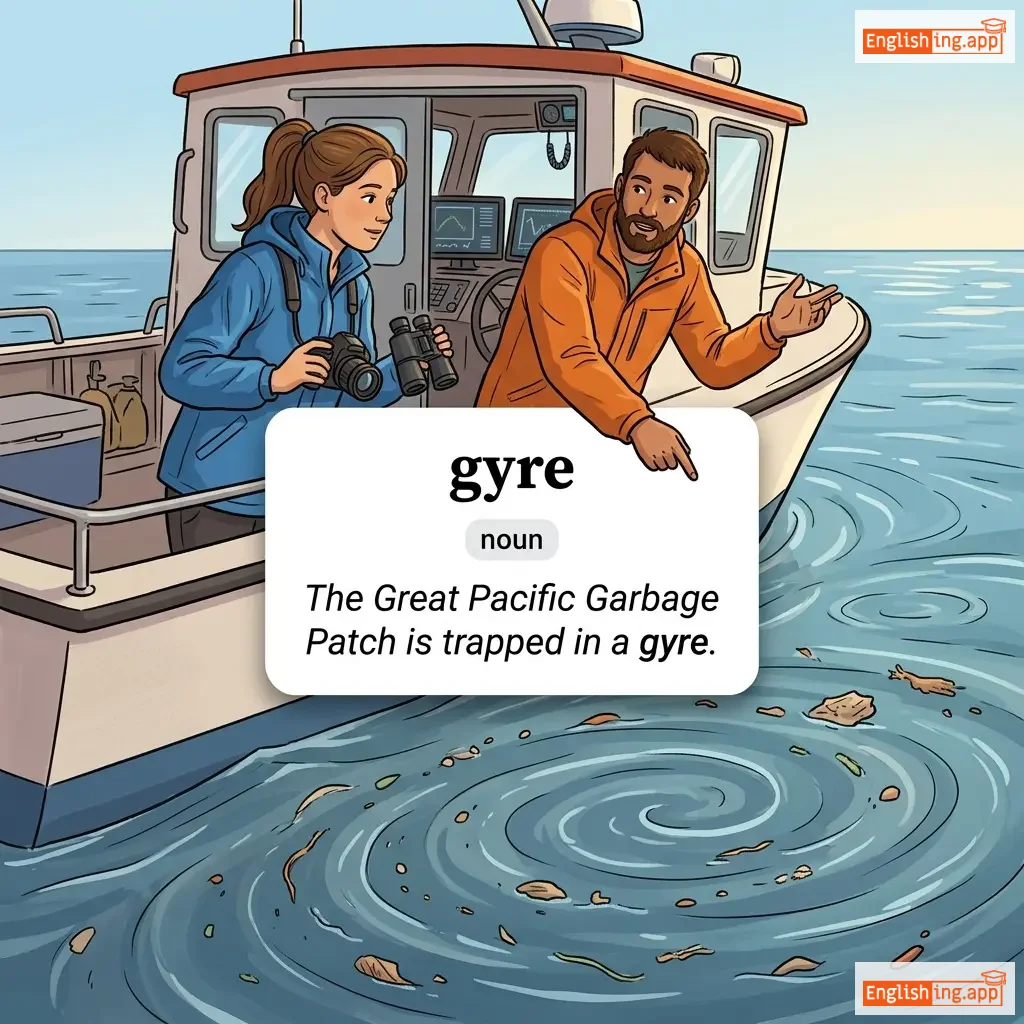
gyre definition card — visual illustration of the meaning
noun
/ˈdʒaɪər/
旋涡, 圆形海洋表面水流 (xuanwo, yuanxing haiyang biaomian shuili)

A circular or spiral motion or form, especially a giant circular oceanic surface current.

"The Great Pacific Garbage Patch is trapped in a gyre."
"太平洋垃圾带被困在旋涡中。" (Taipingyang laji dai bei kun zai xuanwo zhong.)
noun
/ˈdʒaɪrəˌskoʊp/

A device consisting of a wheel or disk mounted so it can spin rapidly and maintain orientation, used for navigation and balance.

"The airplane's navigation system relies on a gyroscope for stability."

interjection
/hɑː/
哈! (表示惊讶或喜悦的表达) (Ha! (Biao shi jing ya huo xi yue de biao da))

used to express amusement, surprise, or triumph

"Ha! I knew you couldn’t resist joining us."

"哈!我知道你无法抵挡加入我们的诱惑。" (Ha! Wo zhidao ni wufa dikang jiaru women de youhuo.)
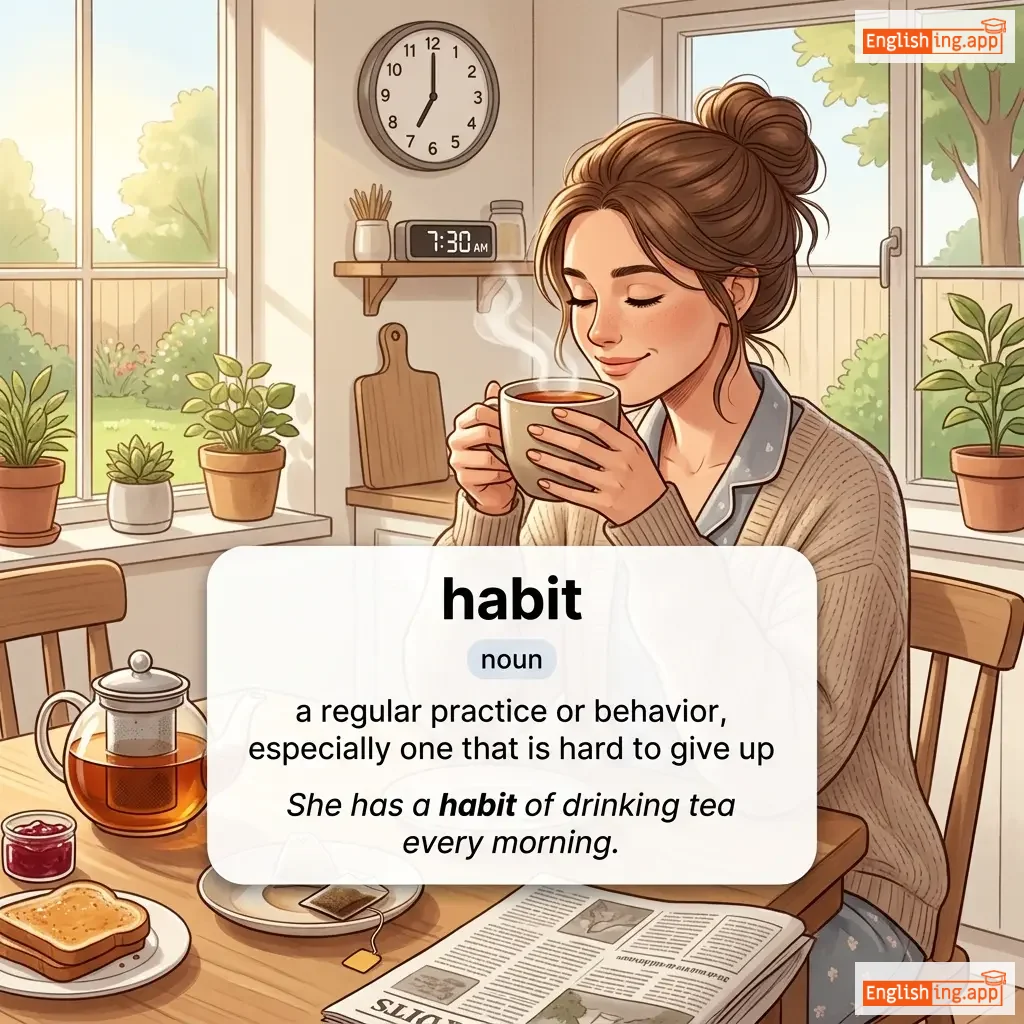
habit definition card — visual illustration of the meaning
noun
/ˈhæb.ɪt/
习惯 (xíguàn)

a regular practice or behavior, especially one that is hard to give up

"She has a habit of drinking tea every morning."
"她每天早上都有喝茶的习惯。" (Tā měitiān zǎoshàng dōu yǒu hē chá de xíguàn.)
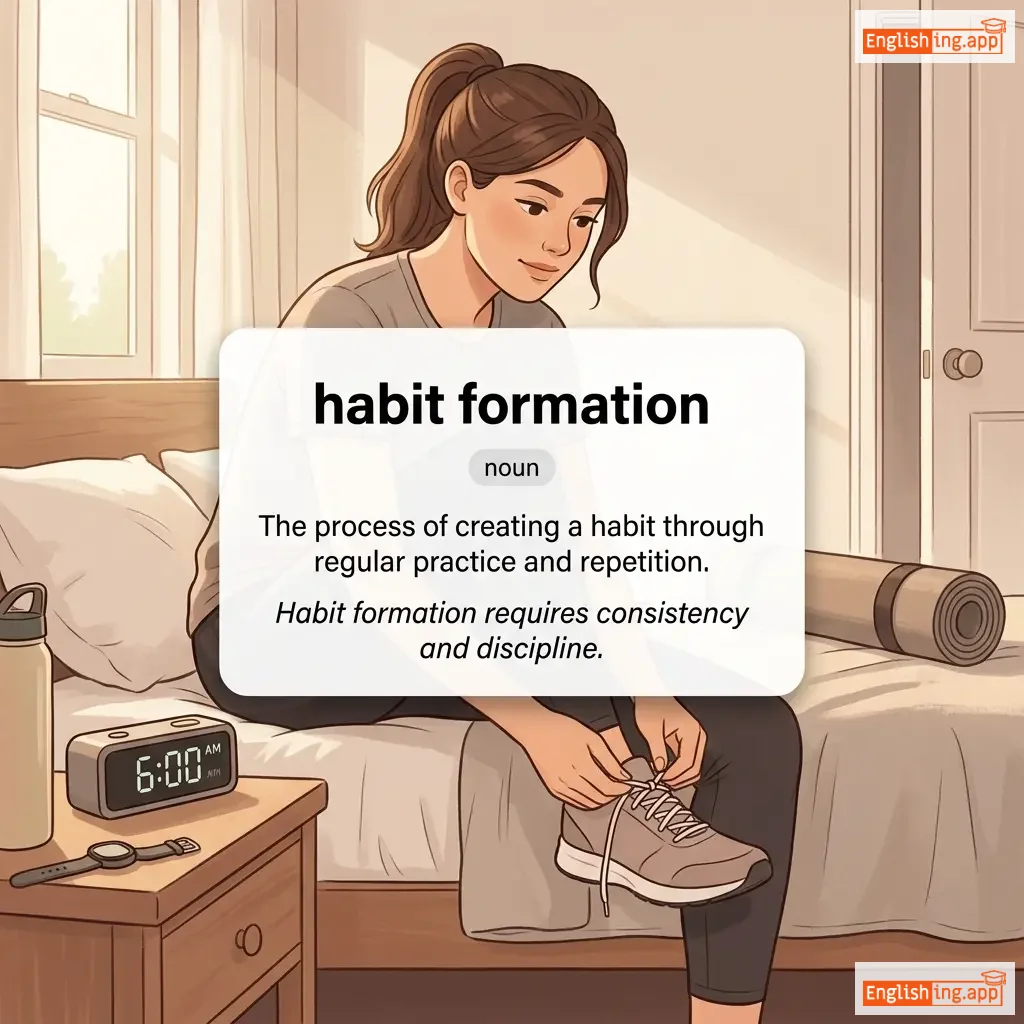
habit formation definition card — visual illustration of the meaning
noun
ˈhæb.ɪt fɔːrˌmeɪ.ʃən
习惯形成 (xíguàn xíngchéng)

The process of creating a habit through regular practice and repetition.

"Habit formation requires consistency and discipline."

"习惯的形成需要一致性和纪律。" (Xíguàn de xíngchéng xūyào yīzhìxìng hé jìlǜ.)
adjective
/ˈhæbɪtəbl/
适宜居住的 (shìyí jūzhù de)

Suitable to live in; capable of sustaining life.

"Scientists are searching for habitable planets beyond our solar system."

"科学家们正在寻找太阳系以外适宜居住的行星。" (Kēxuéjiāmen zhèngzài xúnzhǎo tàiyángxì yǐwài shìyí jūzhù de xíngxīng.)
👨‍👩‍👧‍👦

habitant (hàbìtènt)

noun
/ˈhæbɪtənt/
居民 (jūmín)

An inhabitant; a person or animal that lives in a particular place.

"The habitants of the village were friendly and welcoming."
"村庄的居民友好而热情。" (Cūnzhuāng de jūmín yǒuhǎo ér rèqíng.)
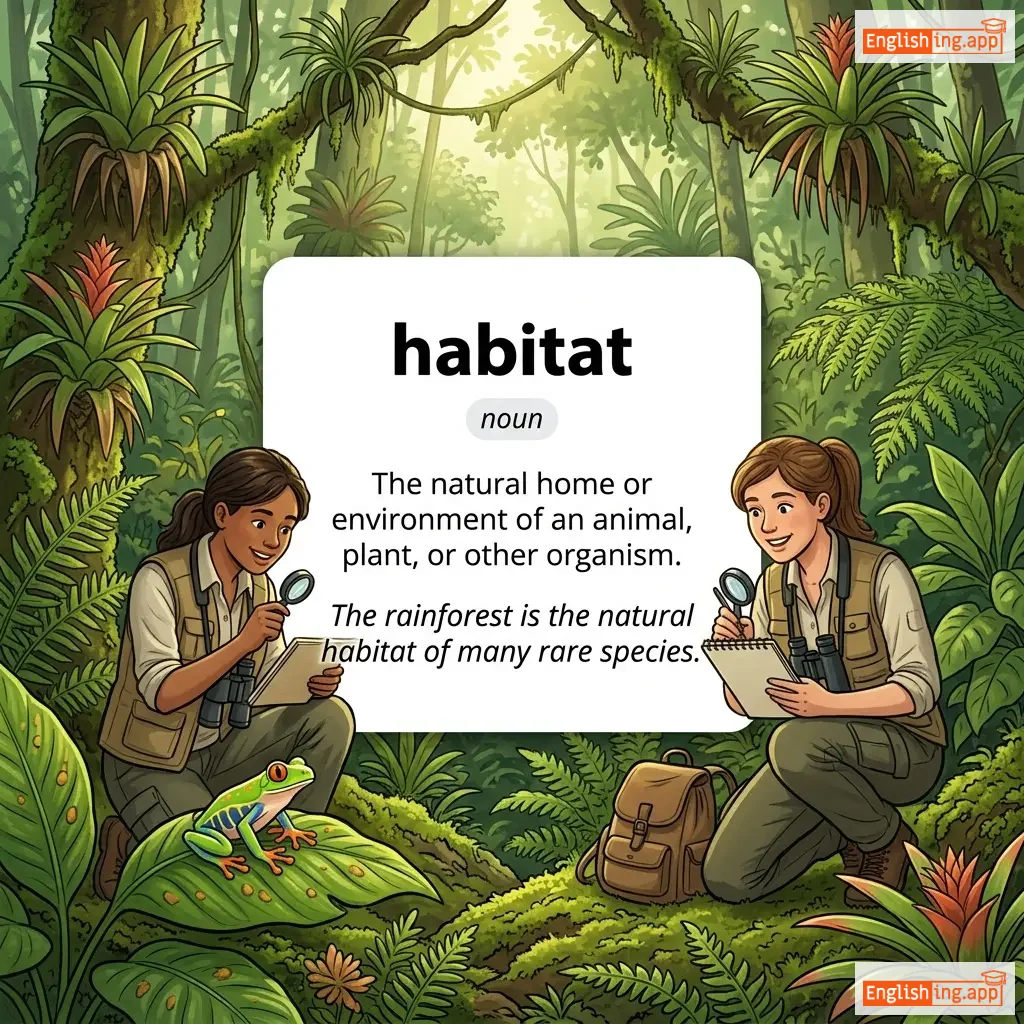
habitat definition card — visual illustration of the meaning
noun
/ˈhæbɪˌtæt/
栖息地 (qixi di)

The natural home or environment of an animal, plant, or other organism.

"The rainforest is the natural habitat of many rare species."
"热带雨林是许多稀有物种的自然栖息地。" (Redai yulin shi xu duo xiyou wuzhong de ziran qixi di.)
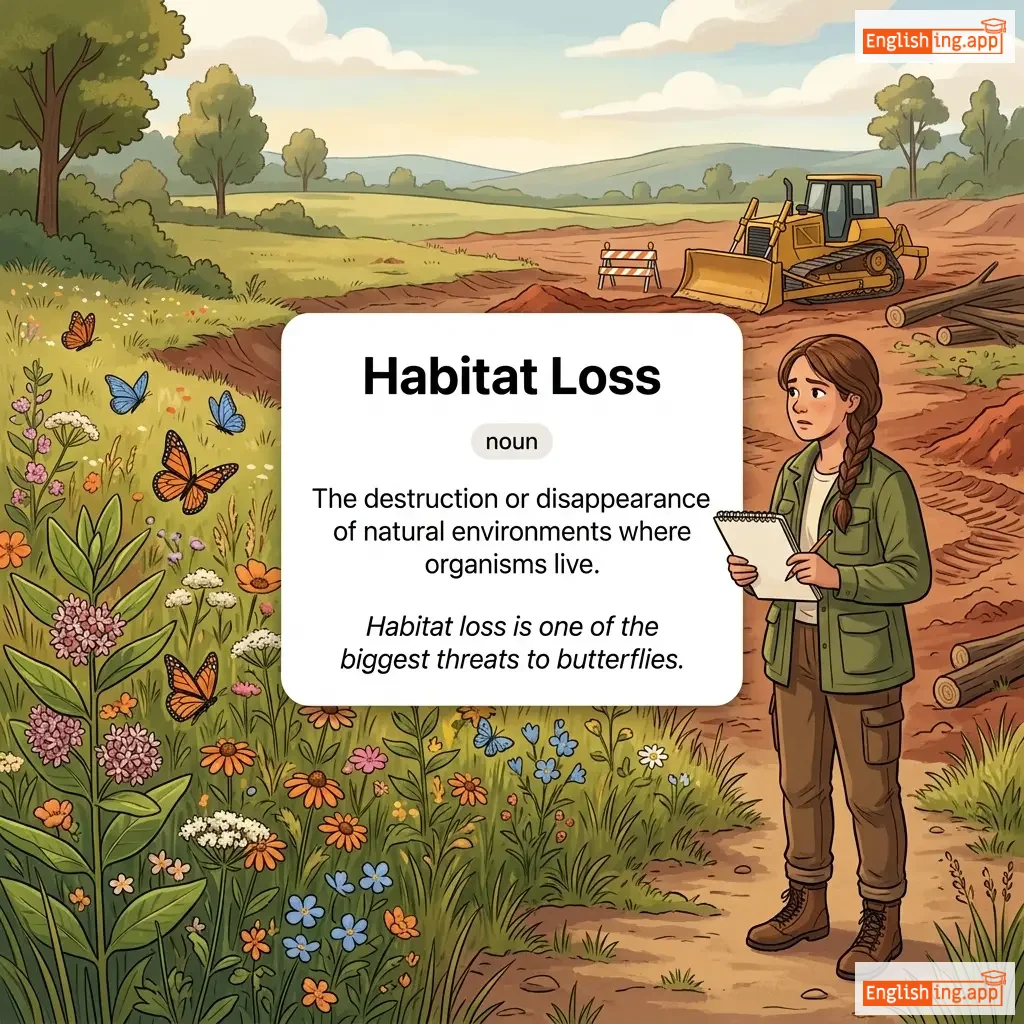
Habitat Loss definition card — visual illustration of the meaning
noun
ˈhæbɪtæt lɒs
栖息地丧失 (qīxīdì sàngshī)

The destruction or disappearance of natural environments where organisms live.

"Habitat loss is one of the biggest threats to butterflies."
"栖息地丧失是蝴蝶面临的最大威胁之一。" (Qīxīdì sàngshī shì húdié miànlín de zuìdà wēixié zhī yī.)
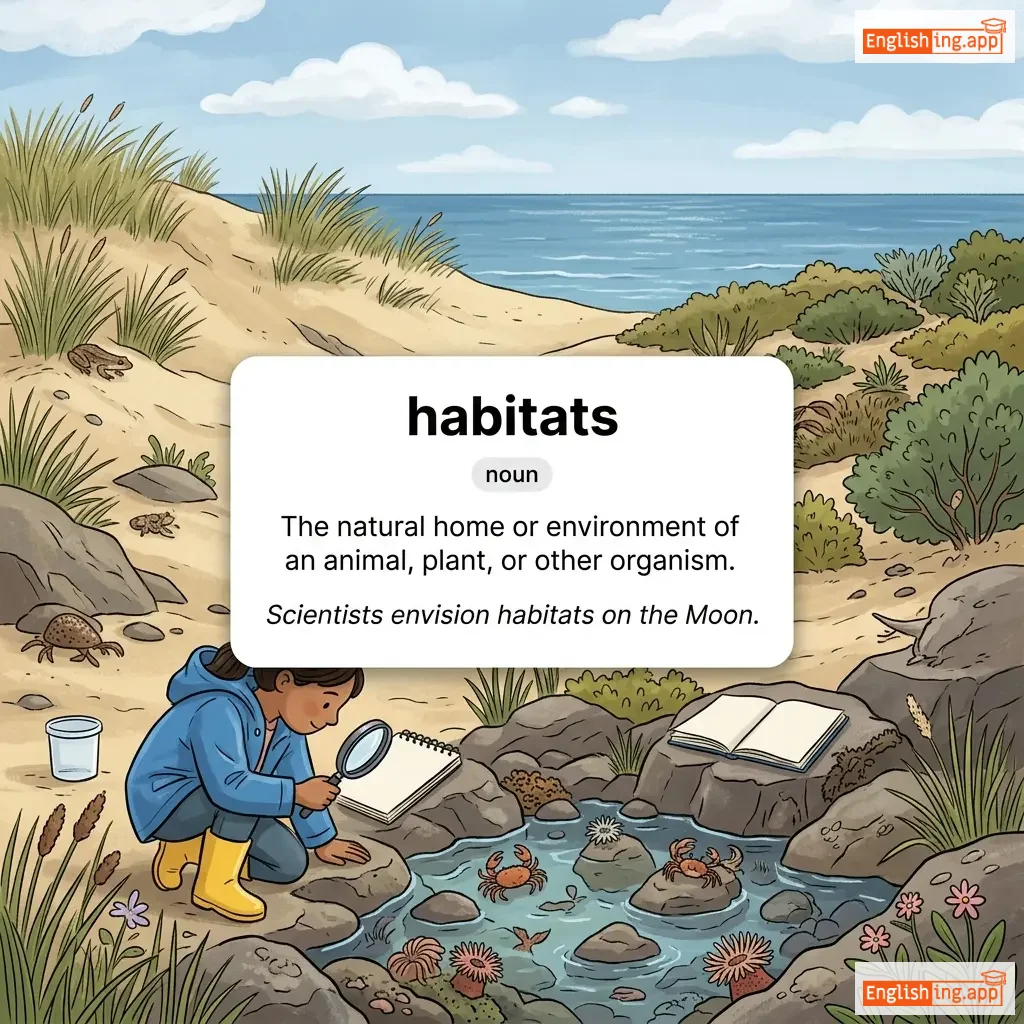
habitats definition card — visual illustration of the meaning
noun
ˈhæb.ɪ.tæts
栖息地 (qixi di)

The natural home or environment of an animal, plant, or other organism.

"Scientists envision habitats on the Moon."

"科学家设想月球上的栖息地。" (Kexuejia shexiang yueqiu shang de qixi di.)
adjective
/həˈbɪtʃuəl/
习惯性的 (xíguànxìng de)

Done or doing constantly or as a habit; customary.

"He was a habitual latecomer to class."
"他是一个上课习惯性迟到的人。" (Tā shì yīgè shàngkè xíguànxìng chídào de rén.)
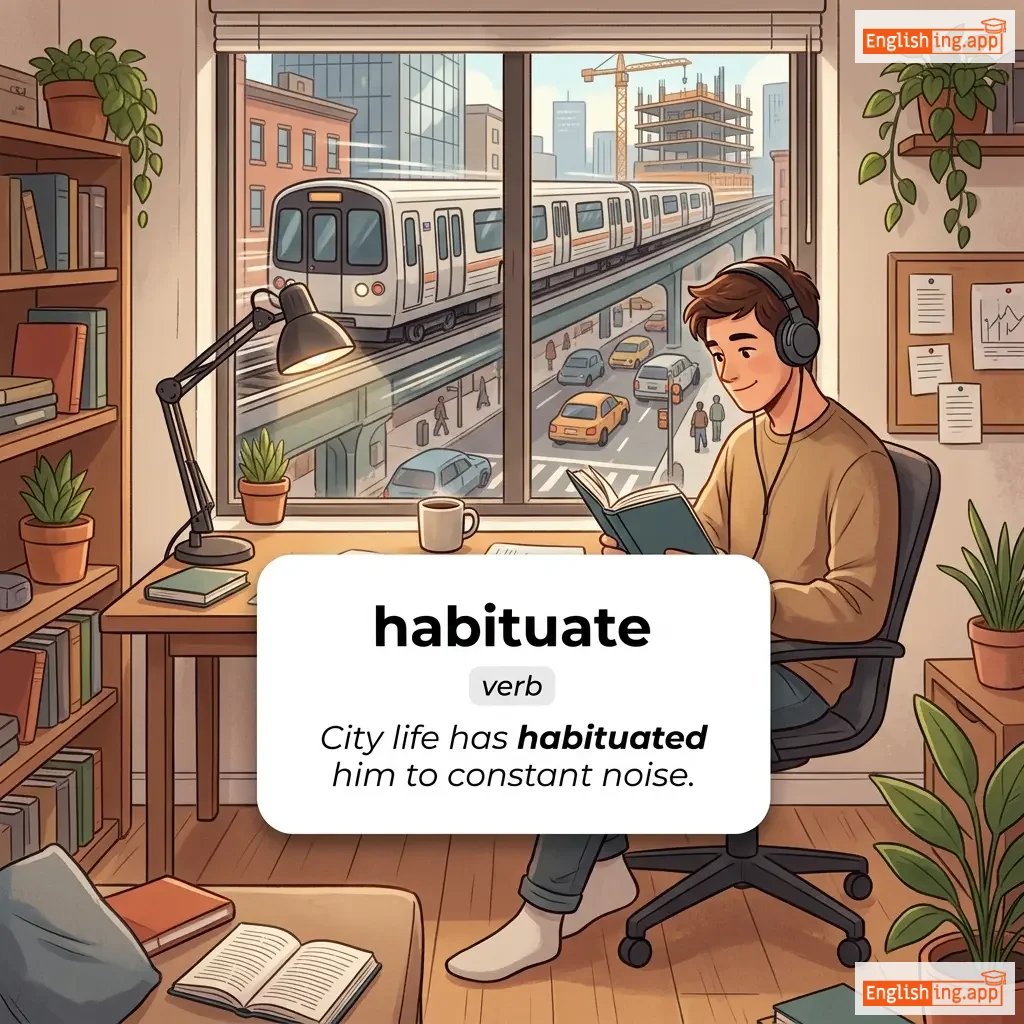
habituate definition card — visual illustration of the meaning
verb
/həˈbɪtʃueɪt/
使习惯 (shi xiguan)

to accustom someone or oneself to something through frequent exposure or experience

"City life has habituated him to constant noise."

"城市生活使他习惯了持续的噪音。" (Chengshi shenghuo shi ta xiguanle chixu de zaoyin.)
noun
/ˈhæbɪtjuːd/
习惯,风俗 (xíguàn, fēngsú)

a customary condition or mode of life; habitual practice

"He lived in a quiet habitude, avoiding the noise of the city."

"他生活在一种安静的习惯中,避开城市的喧嚣。" (Tā shēnghuó zài yī zhǒng ānjìng de xíguàn zhōng, bìkāi chéngshì de xuānxiāo.)
💻

hack

verb
/hæk/

to cut or chop roughly; to gain unauthorized access to a computer system

"The programmer managed to hack into the system."

noun
/ˈhækəlz/

the hairs on the back of an animal’s neck that rise when it is angry or alarmed; figuratively, feelings of anger or resentment

"His rude comment raised my hackles."

noun
/ˈhæknɪ/
出租马, 陈腐 (chuzu ma, chenfu)

a horse kept for ordinary riding or hire; also used for something overused or trite

"The old hackney was still pulling the carriage."

"那匹旧出租马仍然拉着马车。" (Na pi jiu chuzu ma rengran la zhe mache.)
noun
/ˈhæk.ni ˈkær.ɪdʒ/
出租车 (chūzūchē)

A taxi; a car licensed to carry passengers for hire

"I called a hackney carriage to get to the airport."

"我叫了一辆出租车去机场。" (Wǒ jiào le yī liàng chūzūchē qù jīchǎng.)
adjective
/ˈhæk.nid/
陈词滥调 (chén cí làn diào)

Used too often and therefore lacking originality or freshness.

"The speech was filled with hackneyed phrases that failed to inspire the audience."

"演讲中充满了陈词滥调,未能激励听众。" (Yǎnjiǎng zhōng chōngmǎnle chéncí làndiào, wèi néng jīlì tīngzhòng.)
🧙‍♀️

Hag (hāgé)

noun
/hæɡ/
巫婆 (wūpó)

an ugly old woman, especially a vicious or malicious one; a witch

"In the fairy tale, the wicked hag lived alone in a cottage deep in the forest."

"在这个童话故事中,邪恶的巫婆独自生活在森林深处的小屋里。" (Zài zhège tónghuà gùshì zhōng, xié'è de wūpó dúzì shēnghuó zài sēnlín shēnchù de xiǎowū lǐ.)
adjective
/ˈhæɡ.ərd/
疲惫不堪 (pí bèi bù kān)

Looking exhausted, unwell, or worn out, especially from fatigue or suffering.

"After working all night, she looked pale and haggard."
"整晚工作后,她看起来又苍白又疲惫。" (Zhěng wǎn gōngzuò hòu, tā kàn qǐlái yòu cāngbái yòu píbèi.)
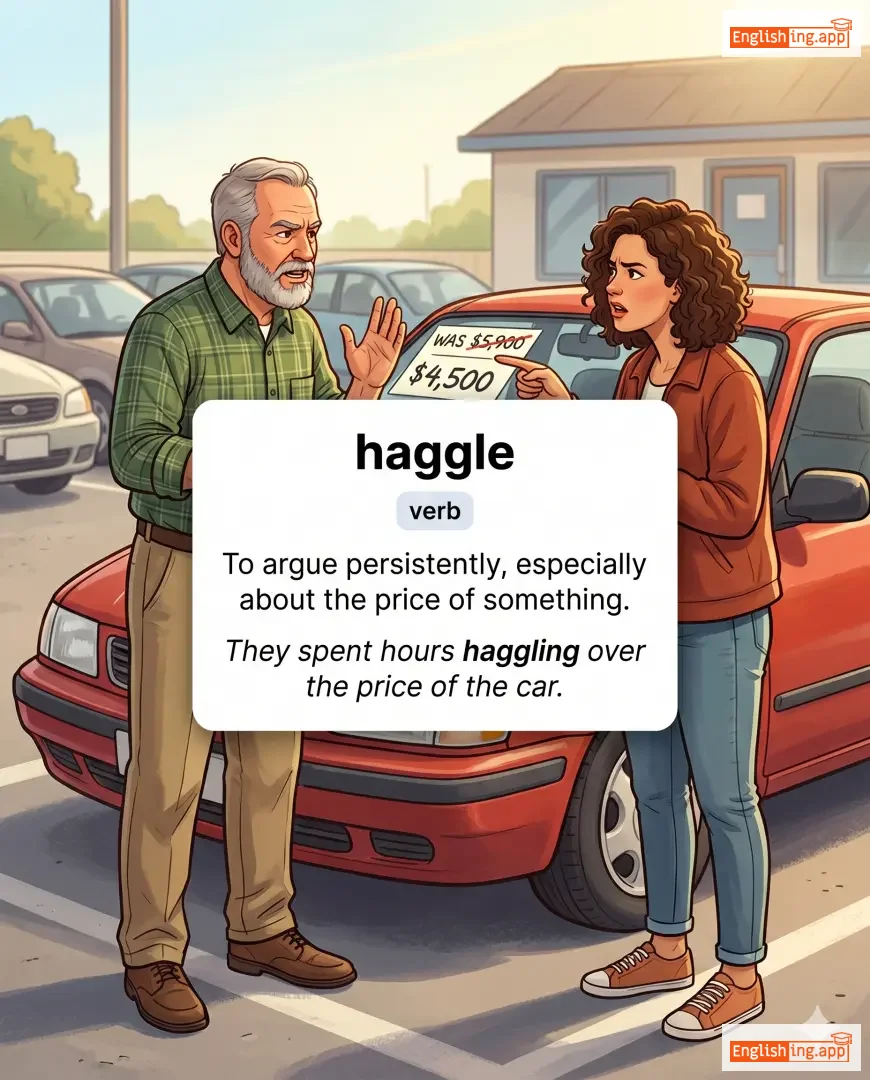
haggle definition card — visual illustration of the meaning
verb
/ˈhæɡ.l̩/
讨价还价 (tǎo jià huán jià)

To argue persistently, especially about the price of something.

"They spent hours haggling over the price of the car."

"他们花了几个小时在车价上讨价还价。" (Tāmen huāle jǐ gè xiǎoshí zài chē jià shàng tǎo jià huán jià.)
adjective
/ˌhæɡ.i.əˈɡræf.ɪk/
过度恭维的 (guòdù gōngwéi de)

Excessively flattering or idealized, often in a biography or portrayal of someone.

"The documentary was criticized for its hagiographic portrayal of the leader."

"这部纪录片因其对领导者的过度恭维描写而受到批评。" (Zhè bù jìlùpiàn yīn qí duì lǐngdǎo zhě de guòdù gōngwéi miáoxiě ér shòudào pīpíng.)
verb
/heɪl/
呼叫 / 赞美 (hujiao / zanmei)

To call out to attract attention or to praise enthusiastically.

"The athlete was hailed as a hero after the victory."

"运动员在获胜后被誉为英雄。" (Yundongyuan zai huosheng hou bei yuwei wei yingxiong.)
noun
/ˈheɪl.stɔːrm/
冰雹风暴 (bīngbáo fēngbào)

a violent storm with hail falling from the sky

"The hailstorm damaged many cars in the parking lot."

"冰雹风暴损坏了停车场中的许多汽车。" (Bīngbáo fēngbào sǔnhuài le tíngchē chǎng zhōng de xǔduō qìchē.)
noun
/hɛər/
头发 (tóufa)

the fine threads growing from the skin of humans and animals

"She has long, black hair."

"她有一头长黑发。" (Tā yǒu yī tóu zhǎng hēi fà.)
noun
/ˈher ˌpɪn/
发簪 (fazhan)

a thin piece of metal or plastic used to hold hair in place

"She used several hair pins to secure her elegant updo."

"她用几根发簪固定住她的优雅盘发。" (tayongjigenfazangudingzhutadeyouyapanfa)
noun
/ˈheəkʌt/
理发 (lifa)

the act or style of cutting hair

"I got a haircut before the wedding."

"我在婚礼前理了发。" (wo zai hunli qian li le fa)
noun
/ˈheəˌkʌtər/
理发师 (lifashi)

a person whose job is to cut and style hair; barber or hairdresser

"The haircutter gave me a neat and stylish haircut."

"理发师给我剪了一个好发型。" (lifashi gei wo jian le yige hao faxing)