वोकैबुलरीज

इंग्लिश वोकैबुलरी डिस्कवर, लर्न और मास्टर करें

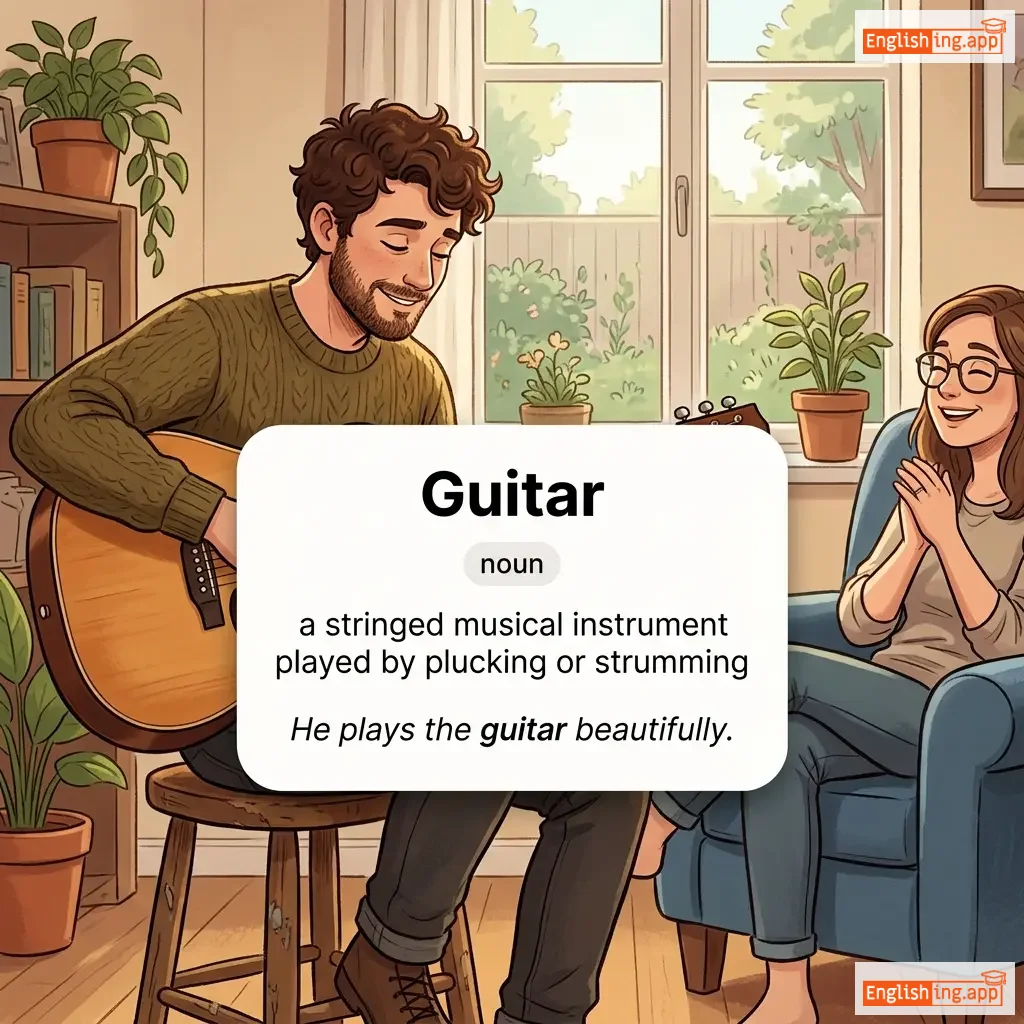
Guitar definition card — visual illustration of the meaning
noun
/ɡɪˈtɑːr/
गिटार (gitar)

a stringed musical instrument played by plucking or strumming

"He plays the guitar beautifully."

"वह गिटार बहुत खूबसूरती से बजाता है।" (vah gitar bahut khubsurti se bajata hai.)
noun
/ɡʌlf/
खाड़ी (khadi)

a deep inlet of the sea almost surrounded by land; a wide gap or difference between people or groups

"The Persian Gulf is an important waterway for international shipping and oil transport."

"पर्शियन गल्फ अंतरराष्ट्रीय शिपिंग और तेल परिवहन के लिए एक महत्वपूर्ण जलमार्ग है।" (Parshian Gulf antarraashtreey shipping aur tel parivahan ke liye ek mahatvapurn jalmaarg hai.)
noun, verb
/ɡʌl/
समुद्री पक्षी; धोखा देना (samudri pakshi; dhokha dena)

A seabird with long wings and usually white and gray feathers; as a verb, to deceive or trick someone.

"The fisherman watched the gulls circle above the boat."

"मछुआरा नाव के ऊपर गलों को घुमते हुए देख रहा था।" (Machhuara naav ke upar gallon ko ghumte hue dekh raha tha.)
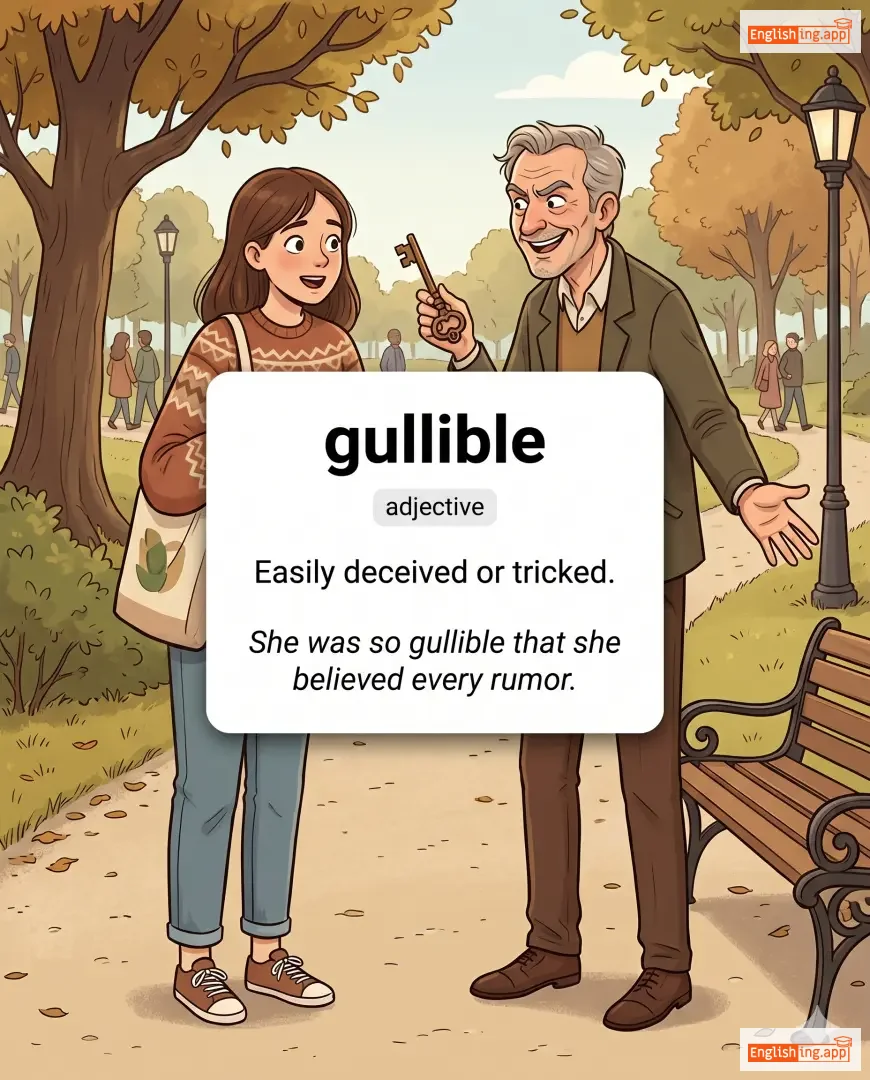
gullible definition card — visual illustration of the meaning
adjective
/ˈɡʌl.ə.bəl/
आसानी से धोखा खाने वाला (aasani se dhokha khane wala)

Easily deceived or tricked.

"She was so gullible that she believed every rumor."

"वह इतनी आसानी से धोखा खा जाती थी कि वह हर अफवाह पर विश्वास करती थी।" (Vah itni aasani se dhokha kha jati thi ki vah har afwah par vishwas karti thi.)
noun
/ˈɡʌl.i/
नदी की घाटी, छोटी नहर (nadi ki ghaati, chhoti nahr)

A narrow channel or ravine worn away by water.

"After the storm, the road was cut by a deep gully."

"आंधी के बाद, सड़क एक गहरी गली से काट दी गई थी।" (Aandhi ke baad, sadak ek gehri gali se kaat di gayi thi.)
noun, verb
/ɡʌm/
चिकना पदार्थ जो पौधों से निकलता है या चिपकाने के रूप में इस्तेमाल होता है; दांतों के चारों ओर का ऊतक (chikna padarth jo paudhon se nikalta hai ya chipkane ke roop mein istemaal hota hai; daanton ke chaaron or ka utthak)

A sticky substance from plants or used as adhesive; also the tissue around teeth.

"He chewed gum while waiting for the bus."

"वह बस का इंतजार करते हुए गम चबा रहा था।" (Wah bas ka intezaar karte hue gum chaba raha tha.)
noun
/ˈɡʌmp.ʃən/
साहस, पहल (sahas, pahal)

Courage, resourcefulness, or initiative.

"It takes real gumption to start your own business."

"अपना व्यवसाय शुरू करने के लिए असली साहस चाहिए।" (Apna vyavsay shuru karne ke liye asli sahas chahiye.)
noun
/ɡʌn/
बंदूक (bandook)

a weapon that shoots bullets or other projectiles

"The police officer carried a gun for protection."

"पुलिस अधिकारी सुरक्षा के लिए एक बंदूक ले कर चल रहे थे।" (Police adhikari suraksha ke liye ek bandook le kar chal rahe the.)
noun
/ˈɡʌnˌpaʊdər/
बारूद (barud)

explosive powder used in guns and fireworks

"Gunpowder was invented in ancient China."

"गनपाउडर प्राचीन चीन में आविष्कृत किया गया था।" (ganpowder prachin cheen mein avishkrito kiya gaya tha.)
noun
/ˈɡʌp.i fɪʃ/
गप्पी मछली (gappi machhli)

a small colorful freshwater fish popular in aquariums, known for its vibrant colors and easy breeding

"The guppy fish is perfect for beginners who want to start an aquarium."

"गप्पी मछली उन शुरुआती लोगों के लिए बिल्कुल उपयुक्त है जो एक्वेरियम शुरू करना चाहते हैं।" (gappi machhli un shuruaati logon ke liye bilkul upyukt hai jo aquarium shuru karna chahte hain)
verb
/ɡʌʃ/
बहना (bahna)

to flow out suddenly and forcefully, or to express something enthusiastically

"Tears began to gush from her eyes."

"आंसू उसकी आँखों से गशने लगे।" (aansoo uski aankhon se gashne lage.)
noun
/ɡʌst/
झोंका हवा (jhonka hawa)

a sudden strong rush of wind or air

"A sudden gust of wind blew the papers away."

"एक अचानक हवा का झोंका कागज़ों को उड़ा ले गया।" (ek achanak hawa ka jhonka kagazon ko uda le gaya.)
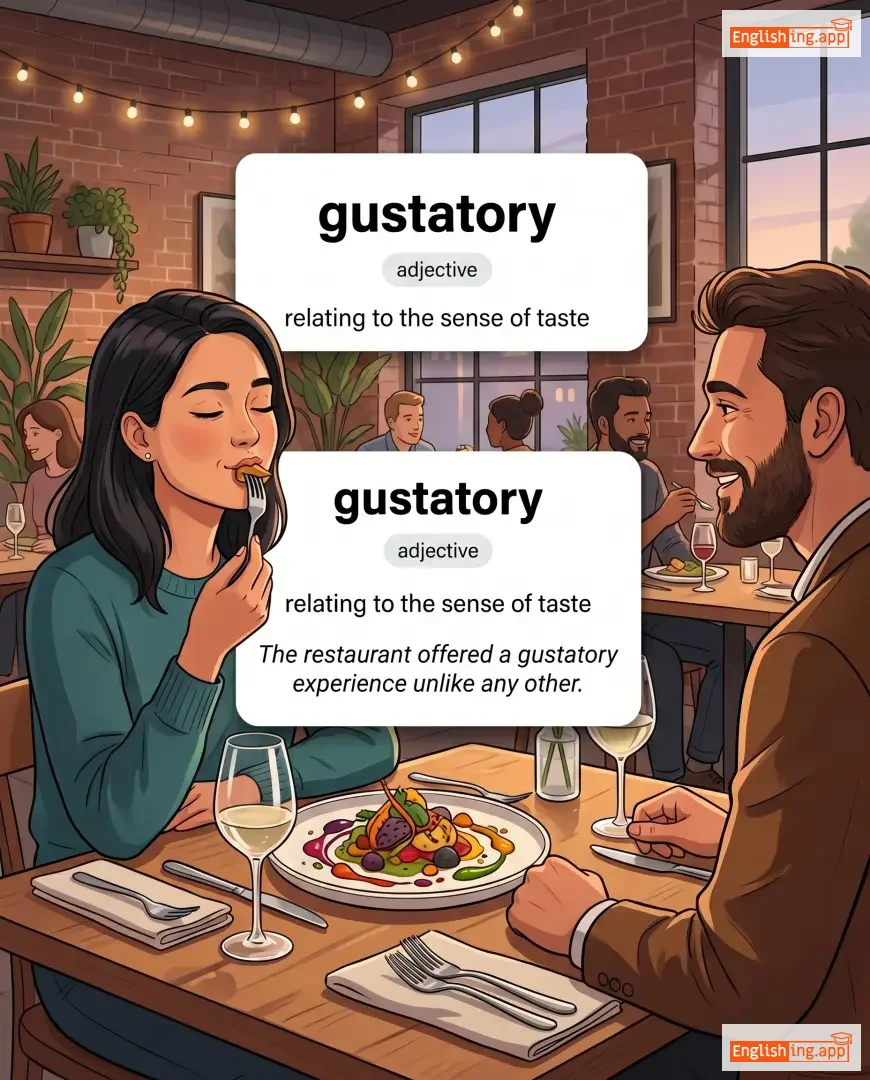
gustatory definition card — visual illustration of the meaning
adjective
/ˈɡʌstəˌtɔːri/
स्वाद संबंधित (swad sambandhit)

relating to the sense of taste

"The restaurant offered a gustatory experience unlike any other."

"रेस्तरां ने एक अद्वितीय स्वाद अनुभव प्रदान किया।" (restara ne ek advitiy swad anubhav pradan kiya.)
noun
/ˈɡʌstoʊ/
उत्साह (utsah)

great enjoyment, energy, or enthusiasm in doing something

"She sang the song with great gusto."

"उसने गाने को बड़ी उत्साह के साथ गाया।" (usne gane ko badi utsah ke saath gaya.)
adjective
/ˈɡʌsti/
तेज हवा (tez hawa)

characterized by strong, sudden bursts of wind

"It was a cold, gusty day by the sea."

"समुद्र के पास एक ठंडा, तेज हवा वाला दिन था।" (samudra ke paas ek thanda, tez hawa wala din tha.)
noun/verb
/ɡʌt/
आंत / साहस (aant / sahas)

The stomach or belly; also used for courage, instinct, or to remove the inside of something.

"He had the guts to stand up for his beliefs."

"उसमें अपने विश्वासों के लिए खड़ा होने का साहस था।" (Usmein apne vishwason ke liye khada hone ka sahas tha.)
noun
/ɡaɪ/
लड़का (ladka)

an informal term for a man; sometimes used to refer to a person in general

"That guy over there is my best friend."

"वह लड़का मेरे सबसे अच्छे दोस्त हैं।" (vah ladka mere sabse achhe dost hain.)
verb
/ˈɡʌzəl/
लालच से पीना (laalach se peena)

to drink greedily or excessively

"He guzzled three cans of soda in a few minutes."

"उसने कुछ ही मिनटों में तीन कैन सोडा पी लिया।" (Usne kuch hi minaton mein teen can soda pee liya.)
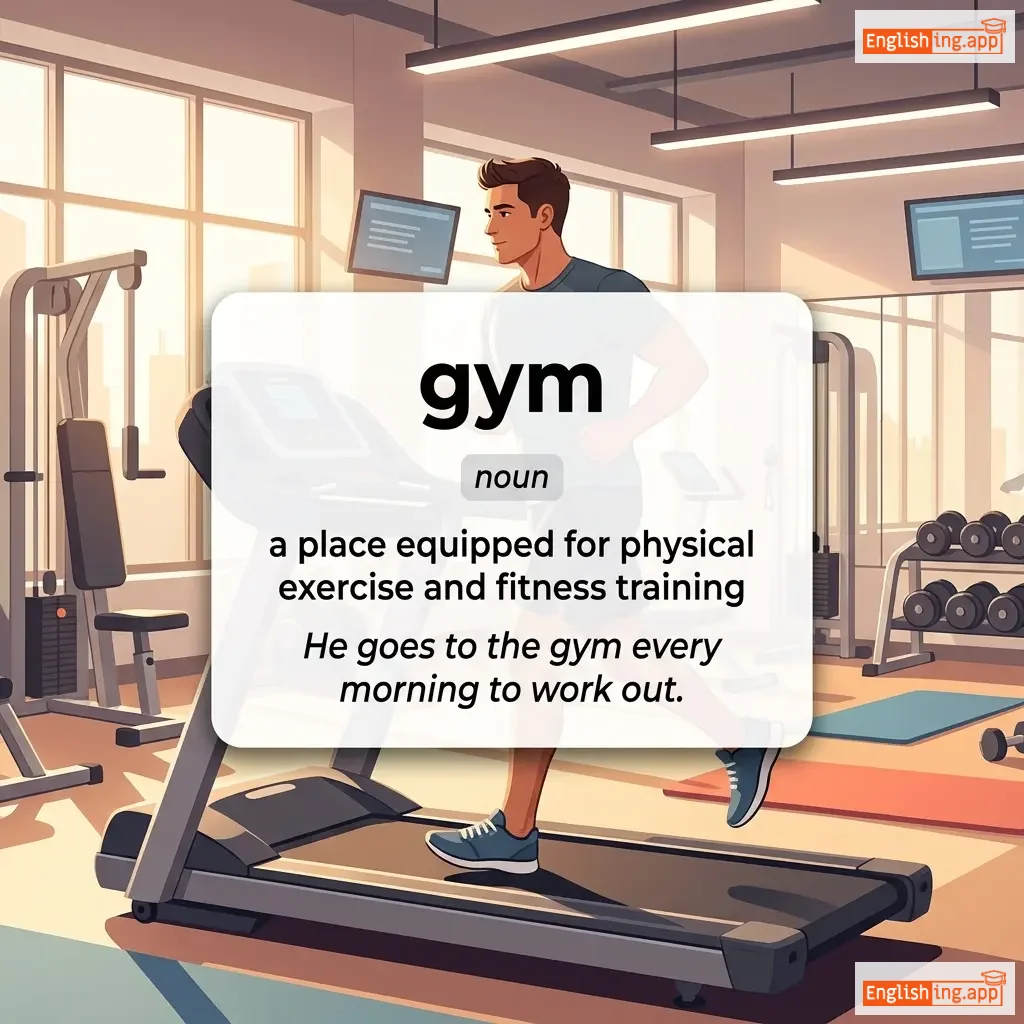
gym definition card — visual illustration of the meaning
🏋️‍♂️

gym (जिम)

noun
/dʒɪm/
जिम (jim)

a place equipped for physical exercise and fitness training

"He goes to the gym every morning to work out."

"वह हर सुबह कसरत करने के लिए जिम जाता है।" (Wah har subah kasrat karne ke liye jim jata hai.)
noun
/ˌɡaɪnəˈkɒkrəsi/
नारीशासन (narishasan)

a society or government ruled by women

"The ancient tribe was known for its gynecocracy, where women held all positions of power."

"प्राचीन जनजाति को उनके नारीशासन के लिए जाना जाता था, जहाँ महिलाओं के पास सभी पदों पर सत्ता थी।" (Prachin janjati ko unke narishasan ke liye jana jata tha, jahan mahilayon ke paas sabhi padon par satta thi.)
noun
/ˌɡaɪnəˈkɒlədʒi/
स्त्रीरोगविज्ञान (strīrog vijñān)

the branch of medicine dealing with women's reproductive health

"She decided to specialize in gynecology after medical school."

"उसने मेडिकल स्कूल के बाद स्त्रीरोगविज्ञान में विशेषज्ञ बनने का निर्णय लिया।" (Usne medical school ke baad strīrog vijñān mein visheshagya banne kā nirṇay liyā.)
verb
/ˈdʒaɪreɪt/
गति से घूमना (gati se ghoomna)

to move or spin quickly in circles

"The dancer gyrated wildly to the rhythm of the drums."

"नर्तकी ढोल के रिदम पर तेजी से घूम रही थी।" (Nartaki dhol ke rhythm par tezi se ghoom rahi thi.)
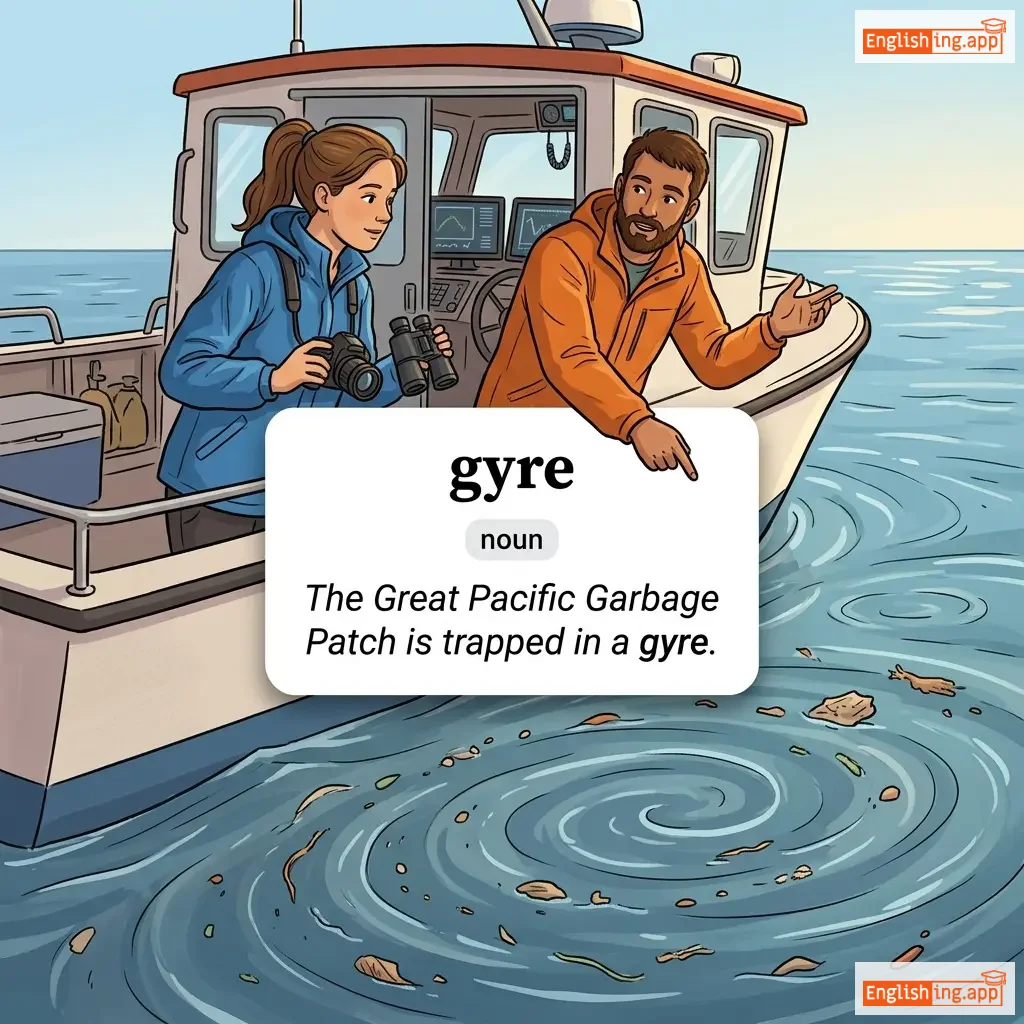
gyre definition card — visual illustration of the meaning
noun
/ˈdʒaɪər/
घूर्णन, वृत्ताकार जलधारा (ghurnan, vrttakar jaladhara)

A circular or spiral motion or form, especially a giant circular oceanic surface current.

"The Great Pacific Garbage Patch is trapped in a gyre."

"ग्रेट पैसिफिक गार्बेज पैच एक घूर्णन में फंसा हुआ है।" (Great Pacific Garbage Patch ek ghurnan mein fansa hua hai.)
noun
/ˈdʒaɪrəˌskoʊp/
गायरोस्कोप (gayroskop)

A device consisting of a wheel or disk mounted so it can spin rapidly and maintain orientation, used for navigation and balance.

"The airplane's navigation system relies on a gyroscope for stability."

"विमान के नेविगेशन सिस्टम की स्थिरता के लिए गायरोस्कोप पर निर्भर है." (vimaan ke navigation system ki sthirata ke liye gayroskop par nirbhar hai.)
interjection
/hɑː/
हा (आश्चर्य या खुशी का प्रदर्शन) (ha (aashcharya ya khushi ka pradarshan))

used to express amusement, surprise, or triumph

"Ha! I knew you couldn’t resist joining us."

"हा! मुझे पता था कि तुम हमारे साथ जुड़ने का विरोध नहीं कर सकते।" (Ha! Mujhe pata tha ki tum hamare saath judne ka virodh nahi kar sakte.)
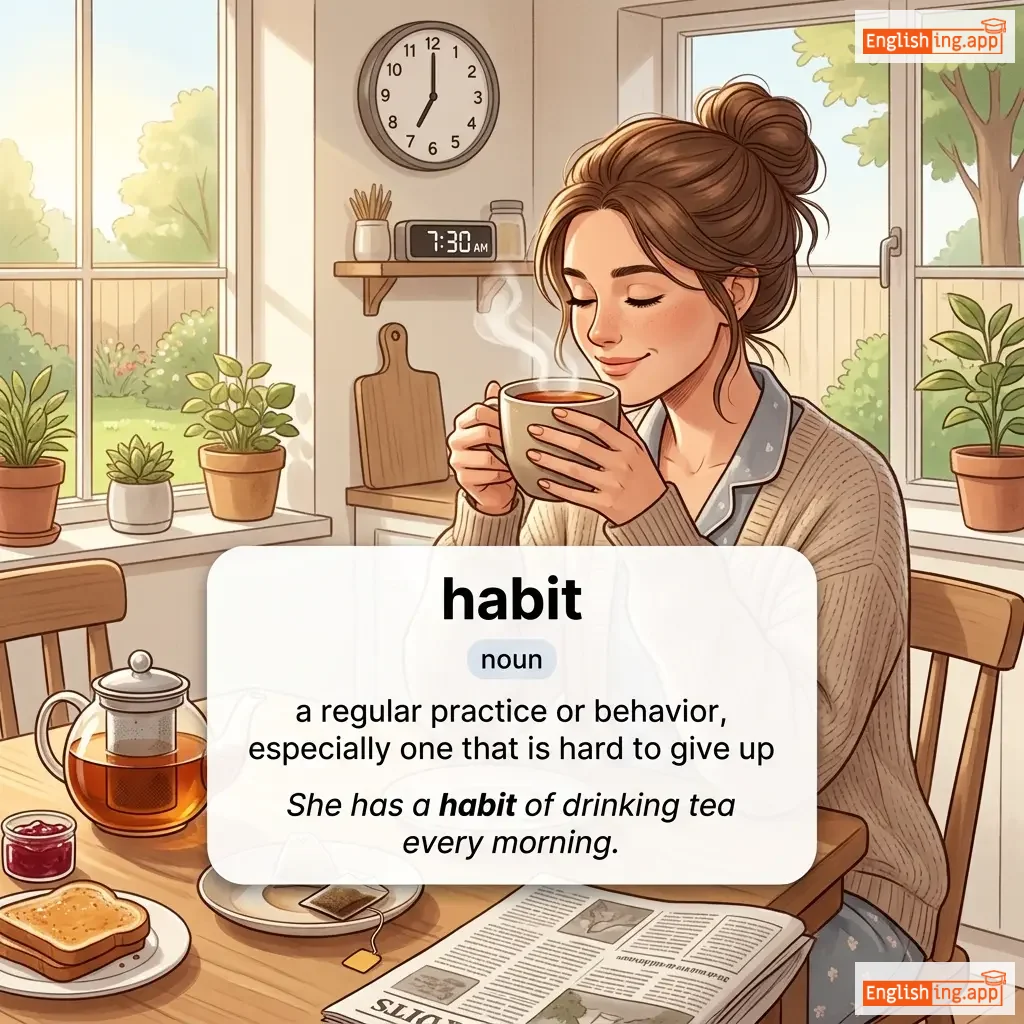
habit definition card — visual illustration of the meaning
noun
/ˈhæb.ɪt/
आदत (adat)

a regular practice or behavior, especially one that is hard to give up

"She has a habit of drinking tea every morning."

"उसे हर सुबह चाय पीने की आदत है।" (Use har subah chai peene ki adat hai.)
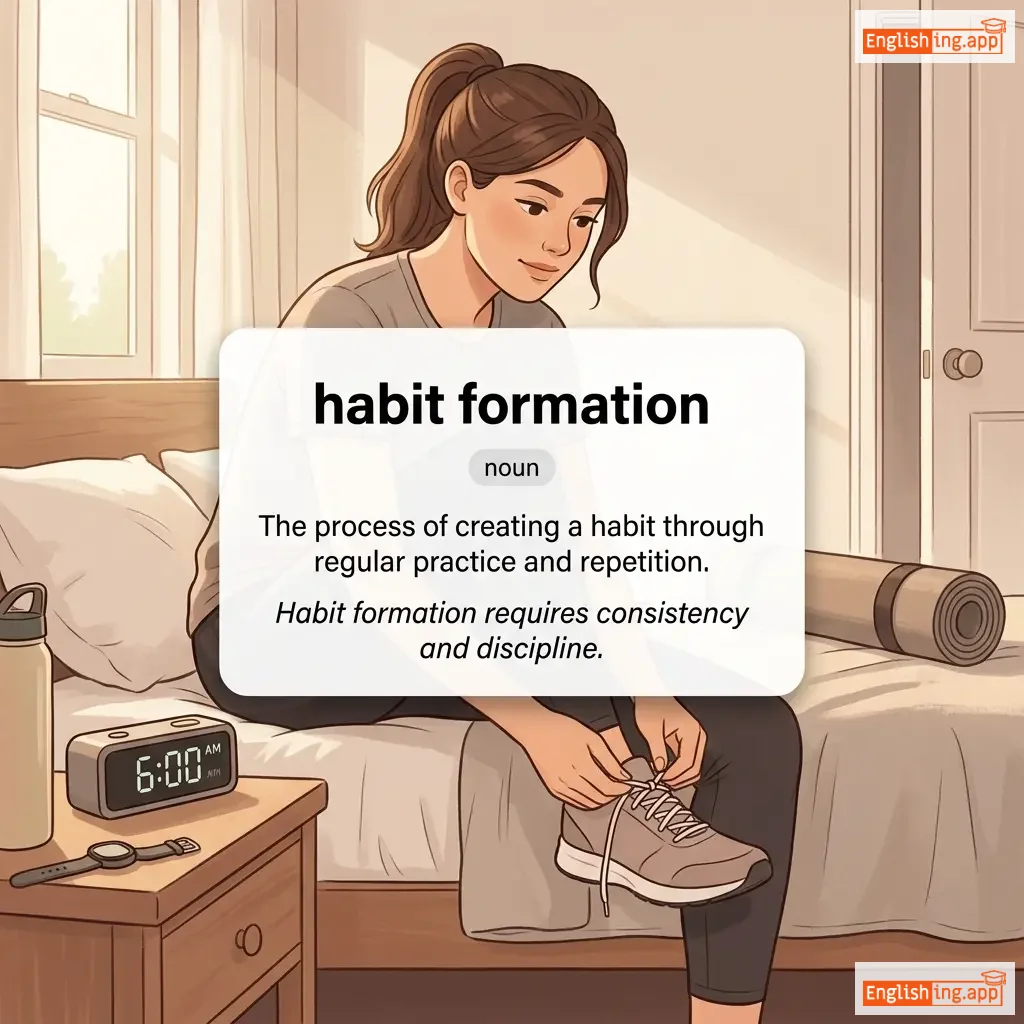
habit formation definition card — visual illustration of the meaning
noun
ˈhæb.ɪt fɔːrˌmeɪ.ʃən
आदत निर्माण (adat nirmaan)

The process of creating a habit through regular practice and repetition.

"Habit formation requires consistency and discipline."

"आदत निर्माण के लिए निरंतरता और अनुशासन आवश्यक है।" (Aadat nirmaan ke liye nirantarata aur anushasan avashyak hai.)
adjective
/ˈhæbɪtəbl/
निवास योग्य (nivas yogya)

Suitable to live in; capable of sustaining life.

"Scientists are searching for habitable planets beyond our solar system."

"वैज्ञानिक हमारे सौरमंडल से बाहर निवास योग्य ग्रहों की खोज कर रहे हैं।" (vaigyanik hamare saurmandal se baahar nivas yogya grahon ki khoj kar rahe hain.)
👨‍👩‍👧‍👦

habitant (हैबिटेंट)

noun
/ˈhæbɪtənt/
निवासी (nivaasi)

An inhabitant; a person or animal that lives in a particular place.

"The habitants of the village were friendly and welcoming."

"गांव के निवासी दोस्ताना और स्वागतपूर्ण थे।" (gaon ke nivaasi dostana aur swagatpoorn the.)
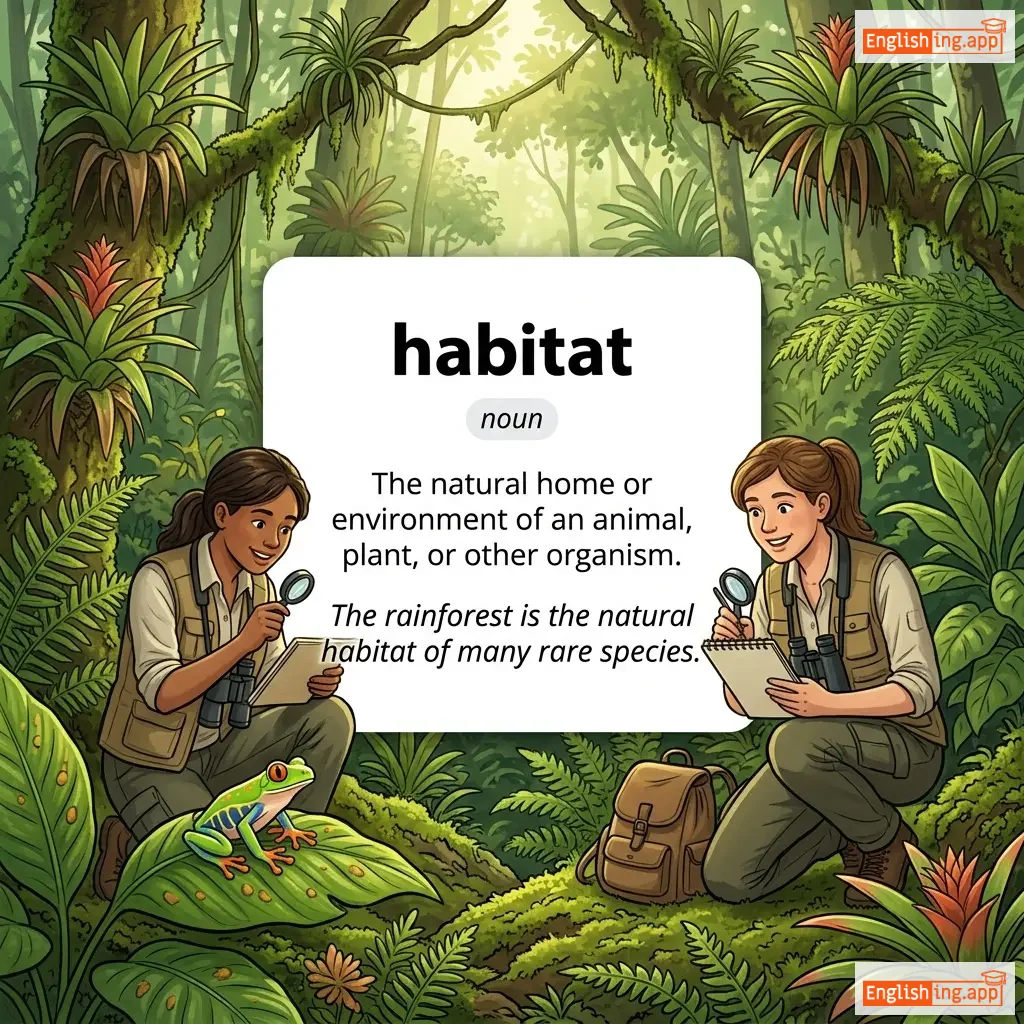
habitat definition card — visual illustration of the meaning
noun
/ˈhæbɪˌtæt/
आवास (aavaas)

The natural home or environment of an animal, plant, or other organism.

"The rainforest is the natural habitat of many rare species."

"वर्षावन कई दुर्लभ प्रजातियों का प्राकृतिक आवास है।" (Varshaavan kai durlabh prajatiyon ka prakritik aavaas hai.)
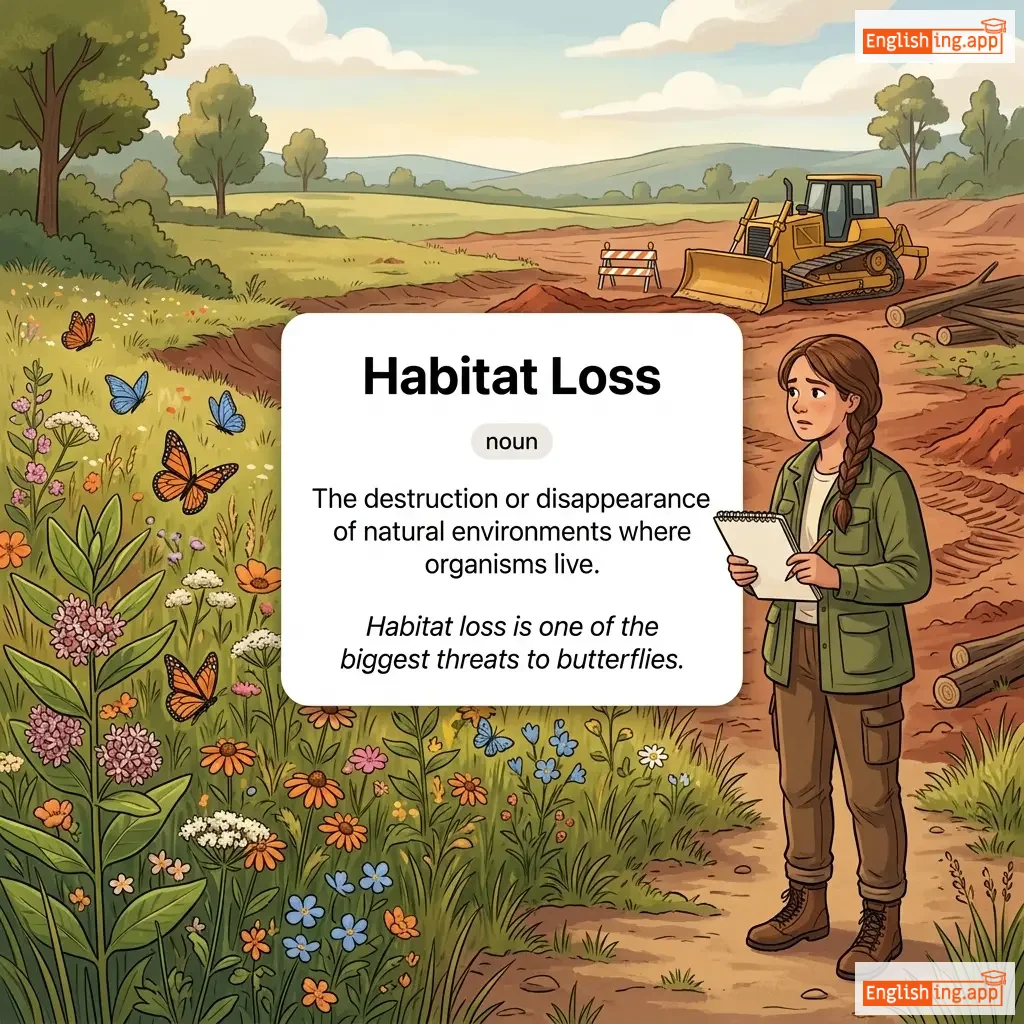
Habitat Loss definition card — visual illustration of the meaning
noun
ˈhæbɪtæt lɒs
आवास हानि (awas hani)

The destruction or disappearance of natural environments where organisms live.

"Habitat loss is one of the biggest threats to butterflies."

"आवास हानि तितलियों के लिए एक सबसे बड़ी धमकी है।" (Awas hani titliyon ke liye ek sabse badi dhamki hai.)
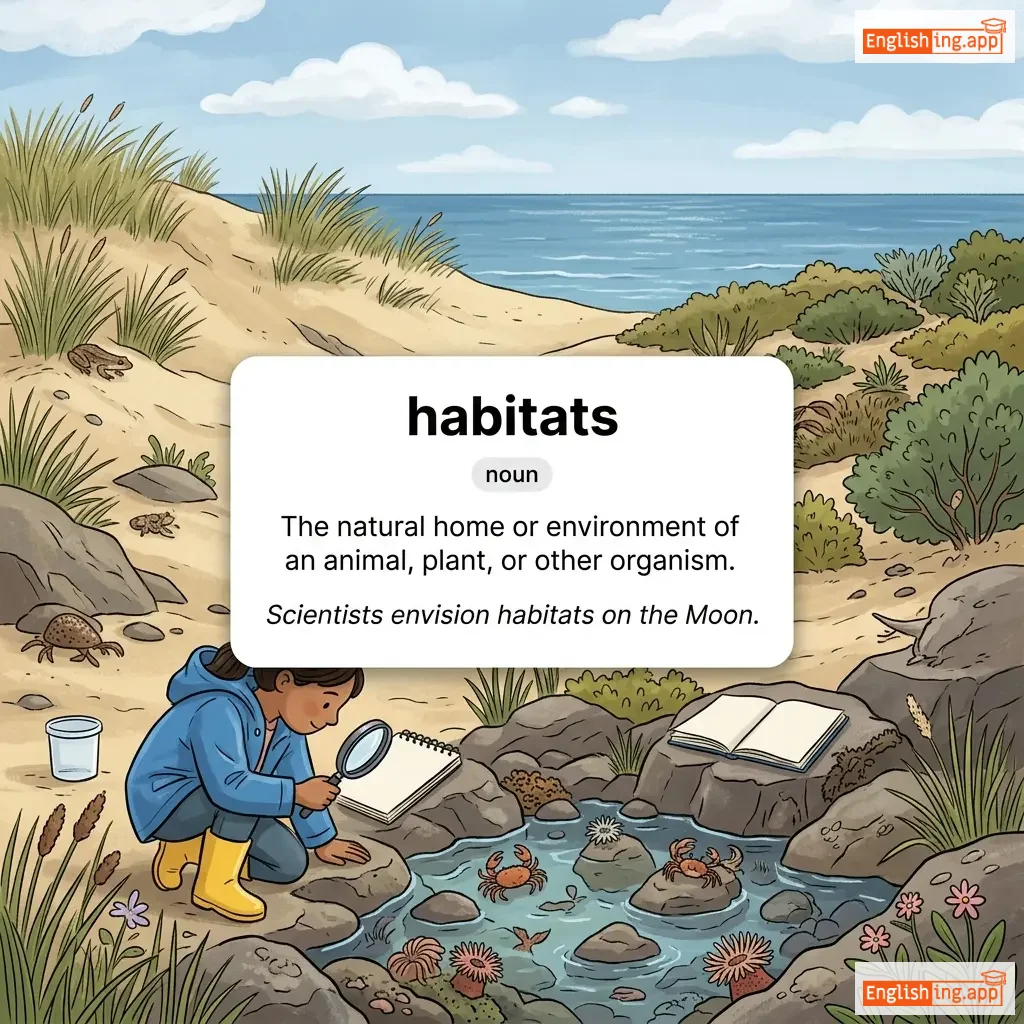
habitats definition card — visual illustration of the meaning
noun
ˈhæb.ɪ.tæts
आवास (aavaas)

The natural home or environment of an animal, plant, or other organism.

"Scientists envision habitats on the Moon."

"वैज्ञानिकों ने चाँद पर हैबिटेट्स की कल्पना की।" (Vaigyaanikon ne chaand par habitats ki kalpana ki.)
adjective
/həˈbɪtʃuəl/
आदत से संबंधित (adat se sambandhit)

Done or doing constantly or as a habit; customary.

"He was a habitual latecomer to class."

"वह कक्षा में आदत से देर से आता था।" (vah kaksha mein adat se der se aata tha.)
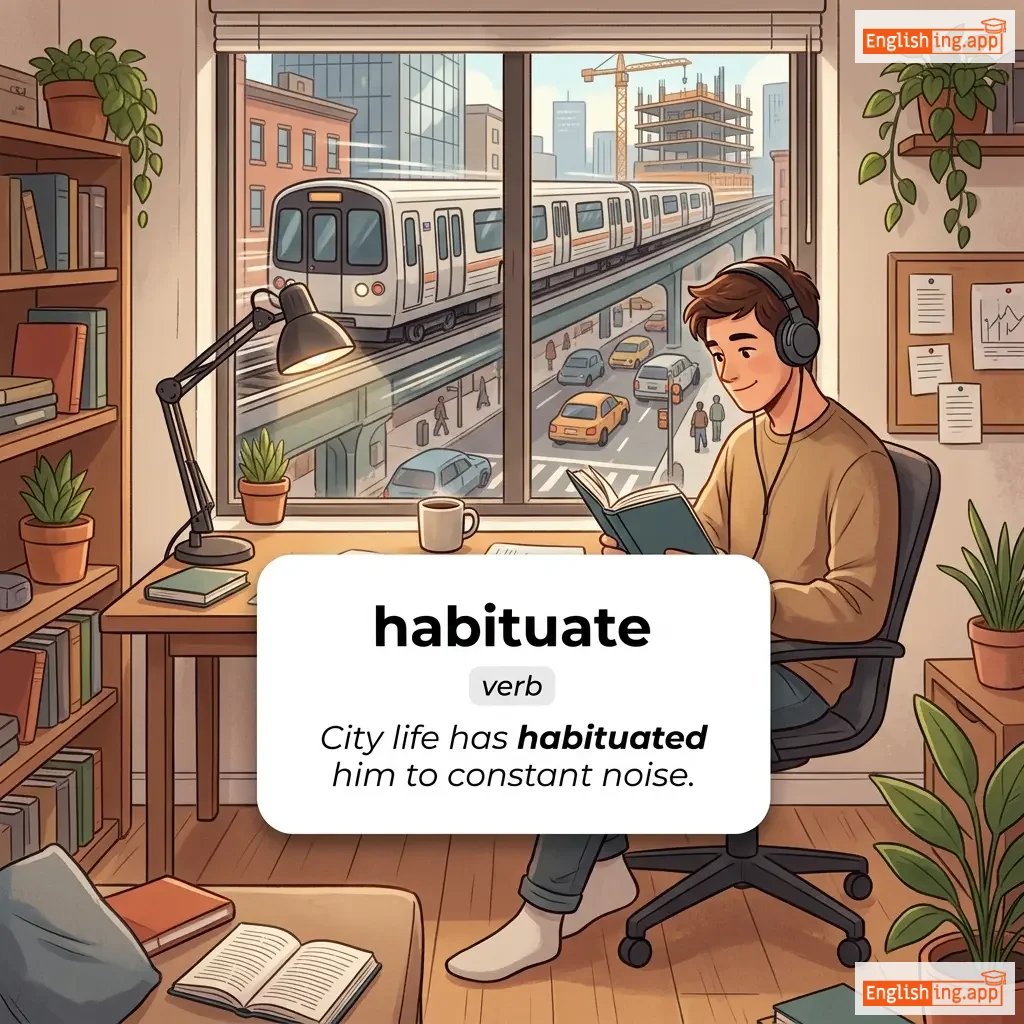
habituate definition card — visual illustration of the meaning
verb
/həˈbɪtʃueɪt/
आदत डालना (adat dalna)

to accustom someone or oneself to something through frequent exposure or experience

"City life has habituated him to constant noise."

"शहरी जीवन ने उसे निरंतर शोर से परिचित कर दिया।" (Sheheri jeevan ne use nirantar shor se parichit kar diya.)
noun
/ˈhæbɪtjuːd/
आदत, रिवाज (adat, rivaj)

a customary condition or mode of life; habitual practice

"He lived in a quiet habitude, avoiding the noise of the city."

"वह एक शांत आदत में रहता था, शहर की शोर-शराबे से बचते हुए।" (Vah ek shaant adat mein rehta tha, shahar ki shor-sharabe se bachate hue.)
verb
/hæk/
कटाई करना, अनधिकृत रूप से कंप्यूटर प्रणाली में प्रवेश करना (katai karna, anadhikrit roop se computer pranali mein pravesh karna)

to cut or chop roughly; to gain unauthorized access to a computer system

"The programmer managed to hack into the system."

"प्रोग्रामर ने सिस्टम में हैक करने में सफलता प्राप्त की।" (Programmer ne system mein hack karne mein safalta prapt ki.)
noun
/ˈhækəlz/
पशु के गर्दन के बाल जो गुस्से या डर से खड़े हो जाते हैं; रूपक रूप में, गुस्से या नाराजगी की भावना (pashu ke gardan ke baal jo gusse ya dar se khade ho jaate hain; roopak roop mein, gusse ya naaraazgi ki bhavna)

the hairs on the back of an animal’s neck that rise when it is angry or alarmed; figuratively, feelings of anger or resentment

"His rude comment raised my hackles."

"उसकी अभद्र टिप्पणी ने मेरे हैकल्स को उठा दिया।" (Uski abhadra tipanni ne mere hackles ko utha diya.)
noun
/ˈhæknɪ/
किराए का घोड़ा, उबाऊ (kiraaye ka ghoda, ubaau)

a horse kept for ordinary riding or hire; also used for something overused or trite

"The old hackney was still pulling the carriage."

"पुराना किराए का घोड़ा अब भी गाड़ी खींच रहा था।" (Purana kiraaye ka ghoda ab bhi gaadi kheench raha tha.)
noun
/ˈhæk.ni ˈkær.ɪdʒ/
हैकनी कैरिज (hackney carriage)

A taxi; a car licensed to carry passengers for hire

"I called a hackney carriage to get to the airport."

"मैंने एयरपोर्ट जाने के लिए एक हैकनी कैरिज को बुलाया।" (maine airport jane ke liye ek hackney carriage ko bulaya.)
adjective
/ˈhæk.nid/
बासी (basi)

Used too often and therefore lacking originality or freshness.

"The speech was filled with hackneyed phrases that failed to inspire the audience."

"भाषण बासी वाक्यांशों से भरा था जो दर्शकों को प्रेरित करने में असफल था।" (Bhashan basi vaakyaanshon se bhara tha jo darshako ko prerith karne mein asafal tha.)
🧙‍♀️

Hag (हैग)

noun
/hæɡ/
जानी (jani)

an ugly old woman, especially a vicious or malicious one; a witch

"In the fairy tale, the wicked hag lived alone in a cottage deep in the forest."

"कहानी में, दुष्ट जानी एक जंगल के अंदर एक झोपड़ी में अकेली रहती थी।" (kahani mein, dusht jani ek jangal ke andar ek jhopdi mein akeli rahti thi.)
adjective
/ˈhæɡ.ərd/
थका हुआ (thaka hua)

Looking exhausted, unwell, or worn out, especially from fatigue or suffering.

"After working all night, she looked pale and haggard."

"आल नाइट काम करने के बाद, वह पीली और थकी हुई दिख रही थी।" (Aal night kaam karne ke baad, vah peeli aur thaki hui dikh rahi thi.)
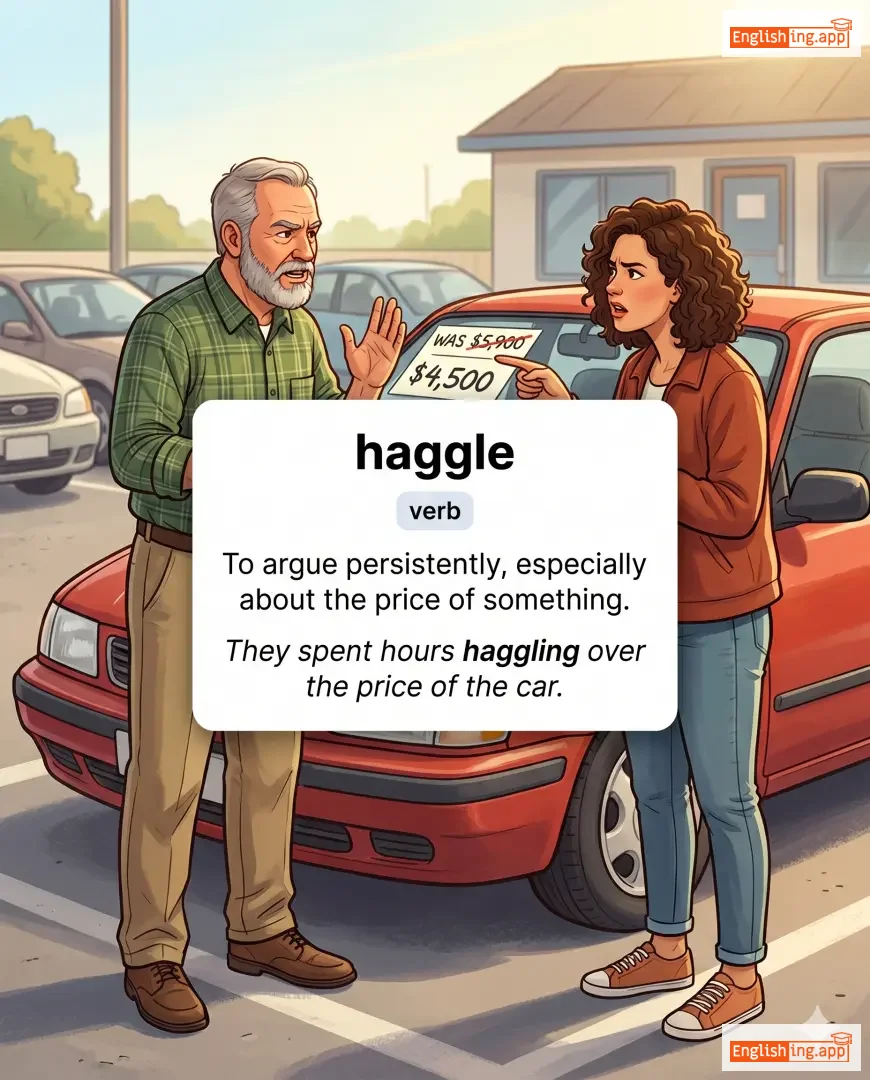
haggle definition card — visual illustration of the meaning
verb
/ˈhæɡ.l̩/
बातचीत करना (baatchit karna)

To argue persistently, especially about the price of something.

"They spent hours haggling over the price of the car."

"वे कार की कीमत पर घंटों तक तकरार कर रहे थे।" (Ve car ki keemat par ghanton tak takraar kar rahe the.)
adjective
/ˌhæɡ.i.əˈɡræf.ɪk/
अत्यधिक प्रशंसा करने वाला (atyadhik prashansa karne wala)

Excessively flattering or idealized, often in a biography or portrayal of someone.

"The documentary was criticized for its hagiographic portrayal of the leader."

"डॉक्यूमेंट्री को नेता की अत्यधिक प्रशंसा करने वाले चित्रण के लिए आलोचना की गई थी।" (Documentary ko neta ki atyadhik prashansa karne wale chitraan ke liye alochna ki gayi thi.)
verb
/heɪl/
अभिवादन करना / पुकारना (abhivadan karna / pukarna)

To call out to attract attention or to praise enthusiastically.

"The athlete was hailed as a hero after the victory."

"एथलीट को जीत के बाद नायक के रूप में सराहा गया।" (Athlete ko jeet ke baad nayak ke roop mein saraha gaya.)
noun
/ˈheɪl.stɔːrm/
ओलावृष्टि (olavrishti)

a violent storm with hail falling from the sky

"The hailstorm damaged many cars in the parking lot."

"हेलस्टॉर्म ने पार्किंग लॉट में कई कारों को नुकसान पहुँचाया।" (hailstorm ne parking lot mein kai kaaron ko nuksan pahuchaya.)
noun
/hɛər/
बाल (baal)

the fine threads growing from the skin of humans and animals

"She has long, black hair."

"उसके पास लंबे, काले बाल हैं।" (uske paas lambe, kaale baal hain.)
noun
/ˈher ˌpɪn/
हेयर पिन (hair pin)

a thin piece of metal or plastic used to hold hair in place

"She used several hair pins to secure her elegant updo."

"उसने अपनी शानदार अपडो को सुरक्षित रखने के लिए कई हेयर पिन्स का इस्तेमाल किया।" (Usne apni shandaar apado ko surakshit rakhne ke liye kai hair pins ka istemal kiya.)
noun
/ˈheəkʌt/
बाल कटवाना (baal katvana)

the act or style of cutting hair

"I got a haircut before the wedding."

"शादी से पहले मैंने बाल कटवाए।" (shaadi se pehle maine baal katvaye)
noun
/ˈheəˌkʌtər/
नाई (nai)

a person whose job is to cut and style hair; barber or hairdresser

"The haircutter gave me a neat and stylish haircut."

"हेयरकटर ने मुझे एक अच्छा हेयरकट दिया।" (haircutter ne mujhe ek accha haircut diya)