Словари

Словарь английского языка | Значения слов, определения и примеры
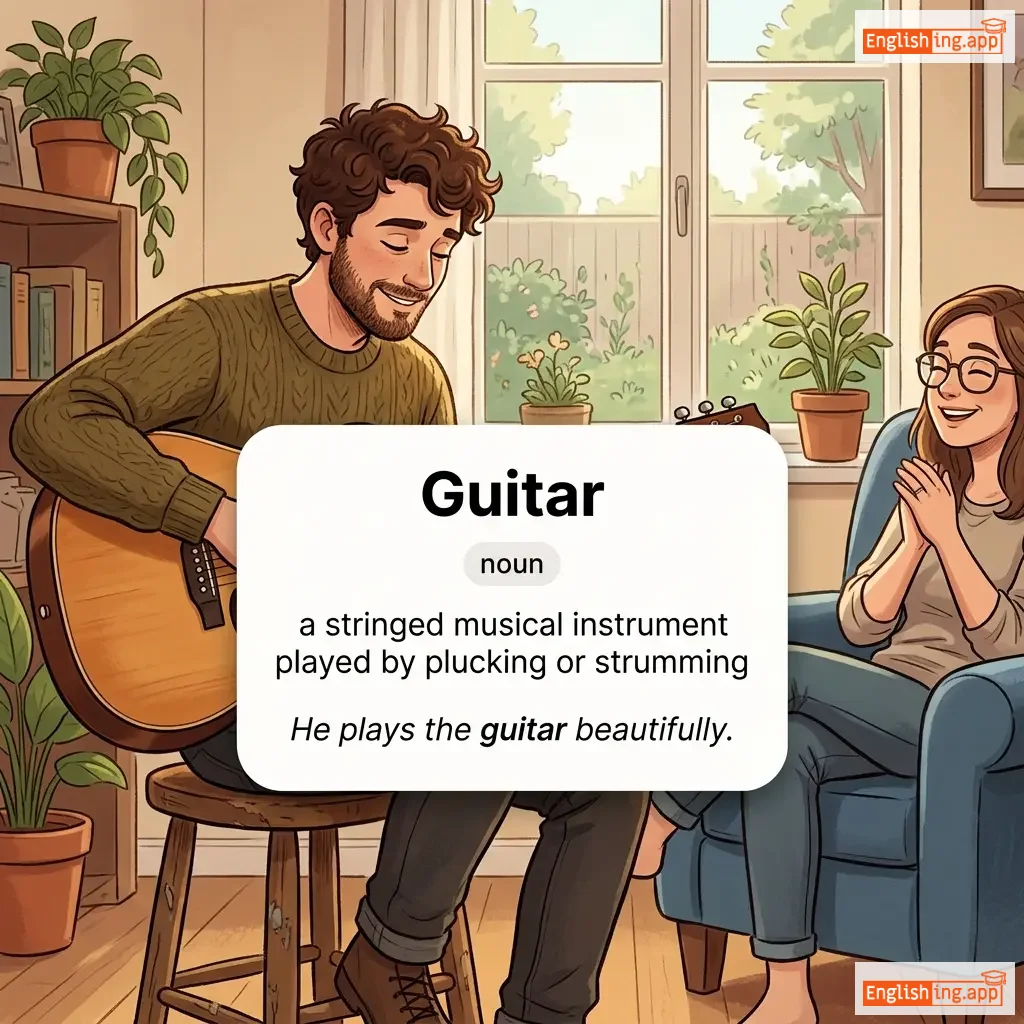
Guitar definition card — visual illustration of the meaning
noun
/ɡɪˈtɑːr/
гитара (gitara)

a stringed musical instrument played by plucking or strumming

"He plays the guitar beautifully."

"Он играет на гитаре великолепно." (On igrayet na gitare velepolepno.)
noun
/ɡʌlf/
залив (zaliv)

a deep inlet of the sea almost surrounded by land; a wide gap or difference between people or groups

"The Persian Gulf is an important waterway for international shipping and oil transport."

"Персидский залив — важный водный путь для международных перевозок и транспортировки нефти." (Persidskij zaliv – vazhnyj vodnyj put' dlya mezhdunarodnykh perevozok i transportirovki nefti.)
🕊️

Gull

noun, verb
/ɡʌl/

A seabird with long wings and usually white and gray feathers; as a verb, to deceive or trick someone.

"The fisherman watched the gulls circle above the boat."
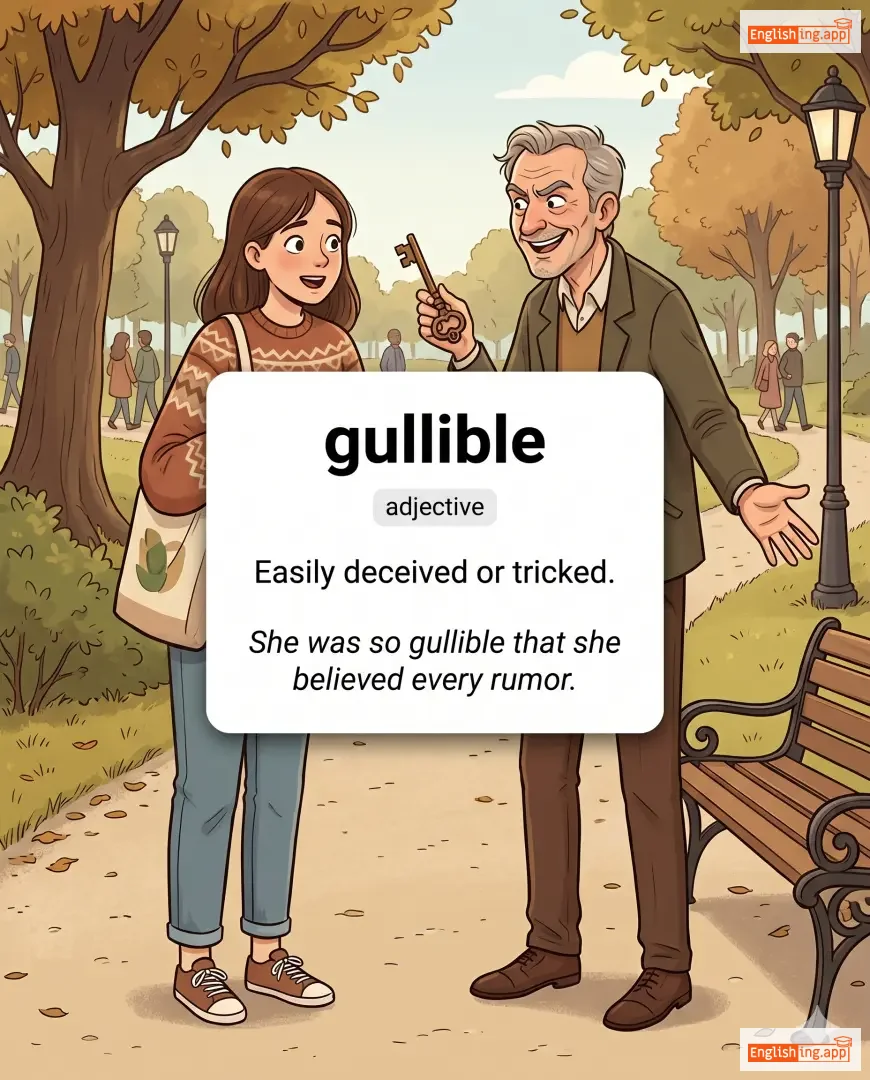
gullible definition card — visual illustration of the meaning
adjective
/ˈɡʌl.ə.bəl/
легковерный (legkoverny)

Easily deceived or tricked.

"She was so gullible that she believed every rumor."

"Она была так легковерна, что верила в каждый слух." (Ona byla tak legkoverna, chto verila v kazhdyy slukh.)
noun
/ˈɡʌl.i/
овраг, ручей (ovrag, ruchei)

A narrow channel or ravine worn away by water.

"After the storm, the road was cut by a deep gully."

"После шторма дорога была прорезана глубокой долиной." (Posle shtorma doroga byla proryezana glubokoi dolinoy.)
🍬

Gum

noun, verb
/ɡʌm/

A sticky substance from plants or used as adhesive; also the tissue around teeth.

"He chewed gum while waiting for the bus."

noun
/ˈɡʌmp.ʃən/
мужество, инициатива (muzhestvo, initsiativa)

Courage, resourcefulness, or initiative.

"It takes real gumption to start your own business."

"Для начала своего бизнеса нужно настоящее мужество." (Dlya nachala svoego biznesa nuzhno nastoyashchee muzhestvo.)
noun
/ɡʌn/
пистолет (pistolet)

a weapon that shoots bullets or other projectiles

"The police officer carried a gun for protection."

"Полицейский нес пистолет для защиты." (Politseyskiy nes pistilet dlya zashchity.)
noun
/ˈɡʌnˌpaʊdər/
порох (porokh)

explosive powder used in guns and fireworks

"Gunpowder was invented in ancient China."

"Порох был изобретен в Древнем Китае." (Porokh byl izobreten v Drevnem Kitae.)
noun
/ˈɡʌp.i fɪʃ/
рыбка гуппи (rybka guppi)

a small colorful freshwater fish popular in aquariums, known for its vibrant colors and easy breeding

"The guppy fish is perfect for beginners who want to start an aquarium."

"Рыбка гуппи идеально подходит для начинающих, которые хотят завести аквариум." (rybka guppi idealno podkhodit dlya nachinayushchikh kotorye khotyat zavesti akvarium)
verb
/ɡʌʃ/
поток (potok)

to flow out suddenly and forcefully, or to express something enthusiastically

"Tears began to gush from her eyes."

"Слезы начали хлынуть из ее глаз." (Slezy nachali khlyunut' iz ee glaz.)
noun
/ɡʌst/
порыв ветра (poryv vetra)

a sudden strong rush of wind or air

"A sudden gust of wind blew the papers away."
"Внезапный порыв ветра унес бумаги." (Vnezapny poryv vetra unes bumagi.)
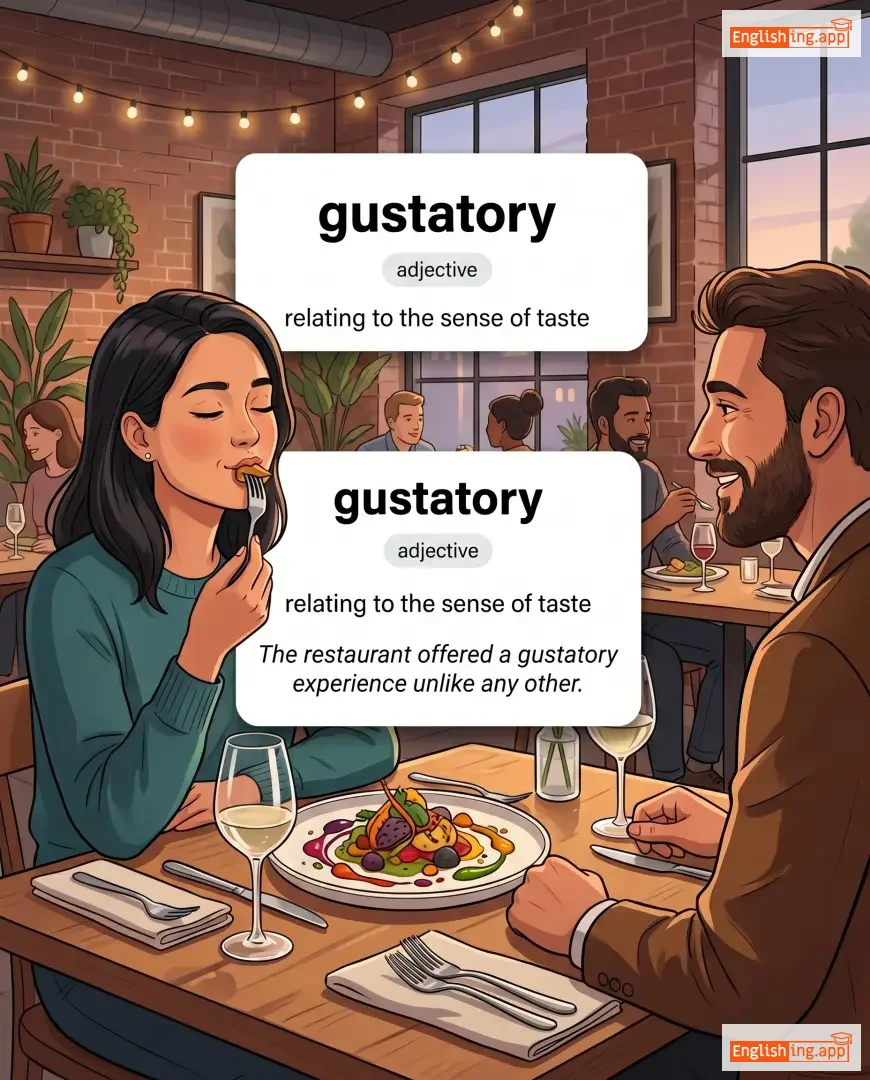
gustatory definition card — visual illustration of the meaning
adjective
/ˈɡʌstəˌtɔːri/
вкусовой (vkusovoy)

relating to the sense of taste

"The restaurant offered a gustatory experience unlike any other."

"Ресторан предложил уникальный вкусовой опыт." (Restoran predlozhil unikal'nyy vkusovoy opyt.)
noun
/ˈɡʌstoʊ/
энтузиазм (entuziazm)

great enjoyment, energy, or enthusiasm in doing something

"She sang the song with great gusto."

"Она спела песню с большим энтузиазмом." (Ona spela pesnyu s bol'shim entuziyazmom.)
adjective
/ˈɡʌsti/
ветреный (vetrenyy)

characterized by strong, sudden bursts of wind

"It was a cold, gusty day by the sea."

"Это был холодный, ветреный день у моря." (Eto byl kholodnyy, vetrenyy den' u morya.)
noun/verb
/ɡʌt/
живот / мужество (zhivot / muzhestvo)

The stomach or belly; also used for courage, instinct, or to remove the inside of something.

"He had the guts to stand up for his beliefs."

"У него было мужество постоять за свои убеждения." (U nego bylo muzhestvo postoyat' za svoi ubezhdeniya.)
noun
/ɡaɪ/
парень (paren')

an informal term for a man; sometimes used to refer to a person in general

"That guy over there is my best friend."

"Тот парень там — мой лучший друг." (Tot paren' tam — moy luchshiy drug.)
verb
/ˈɡʌzəl/
пить жадно (pit' zhадно)

to drink greedily or excessively

"He guzzled three cans of soda in a few minutes."
"Он выпил три банки соды за несколько минут." (On vypil tri banki sody za neskol'ko minut.)
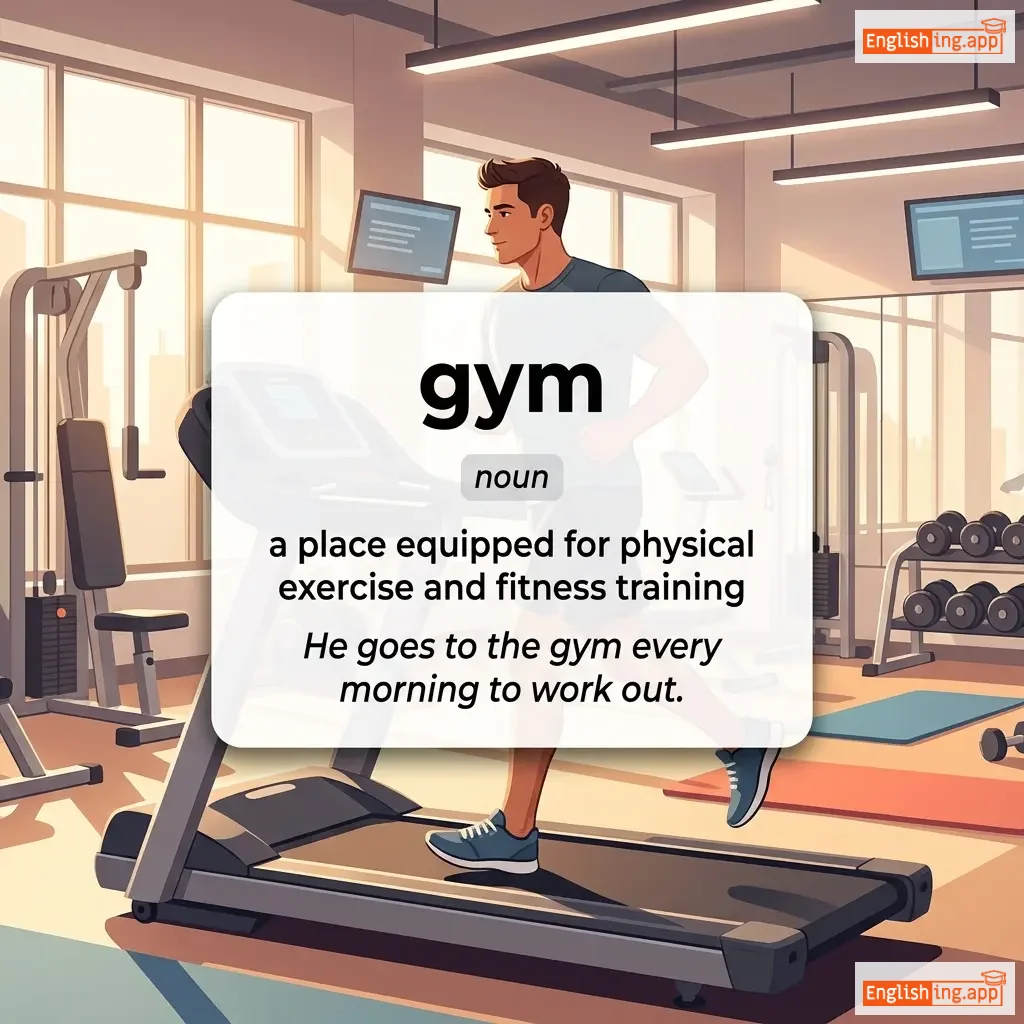
gym definition card — visual illustration of the meaning
🏋️‍♂️

gym (жим)

noun
/dʒɪm/
тренажёрный зал (trenyazhornyy zal)

a place equipped for physical exercise and fitness training

"He goes to the gym every morning to work out."

"Он ходит в тренажёрный зал каждое утро, чтобы тренироваться." (On khodit v trenazhyornyy zal kazhdoe utro, chtoby trenirovat'sya.)
noun
/ˌɡaɪnəˈkɒkrəsi/
гинекократия (ginekokratiya)

a society or government ruled by women

"The ancient tribe was known for its gynecocracy, where women held all positions of power."

"Древнее племя было известно своей гинекократией, где женщины занимали все властные посты." (Drevnee plemya bylo izvestno svoey ginekokratiyey, gde zhenshchiny zanimali vse vlastnye posty.)
noun
/ˌɡaɪnəˈkɒlədʒi/
гинекология (ginekologiya)

the branch of medicine dealing with women's reproductive health

"She decided to specialize in gynecology after medical school."

"Она решила специализироваться в гинекологии после медицинской школы." (Ona reshilas' spetsializirovatsya v ginekologii posle meditsinskoy shkoly.)
verb
/ˈdʒaɪreɪt/
крутиться быстро (krutit'sya bystro)

to move or spin quickly in circles

"The dancer gyrated wildly to the rhythm of the drums."
"Танцор крутился безумно под ритм барабанов." (Tantsor krutil'sya bezumno pod ritm barabanov.)
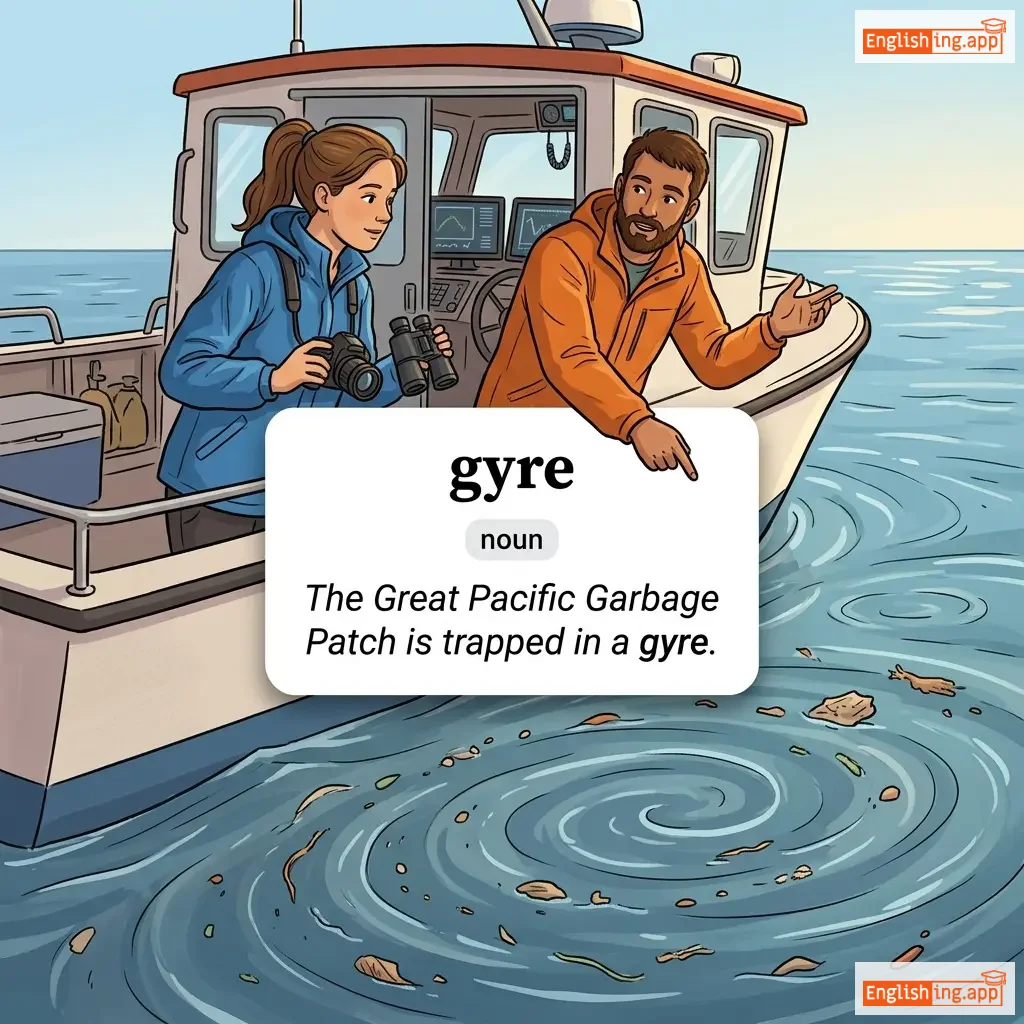
gyre definition card — visual illustration of the meaning
noun
/ˈdʒaɪər/
вихрь, круговое океаническое течение (vikhr', krugovoe okeanicheskoe techenie)

A circular or spiral motion or form, especially a giant circular oceanic surface current.

"The Great Pacific Garbage Patch is trapped in a gyre."

"Большое мусорное пятно в Тихом океане застряло в вихре." (Bol'shoe musornoe pyatno v Tikhom okeane zastrjalo v vikhre.)
noun
/ˈdʒaɪrəˌskoʊp/
гироскоп (giroskop)

A device consisting of a wheel or disk mounted so it can spin rapidly and maintain orientation, used for navigation and balance.

"The airplane's navigation system relies on a gyroscope for stability."

"The airplane's navigation system relies on a gyroscope for stability." (Navigatsionnaya sistema samolyeta polagaetsya na giroskop dlya ustoychivosti.)
interjection
/hɑː/
Ха! (Выражение удивления или радости) (Ha! (Vyrashchenie udivleniya ili radosti))

used to express amusement, surprise, or triumph

"Ha! I knew you couldn’t resist joining us."
"Ха! Я знал, что ты не сможешь устоять и присоединишься к нам." (Ha! Ya znal, chto ty ne smozhesh' ustoyat' i prisoyedinysh'sya k nam.)
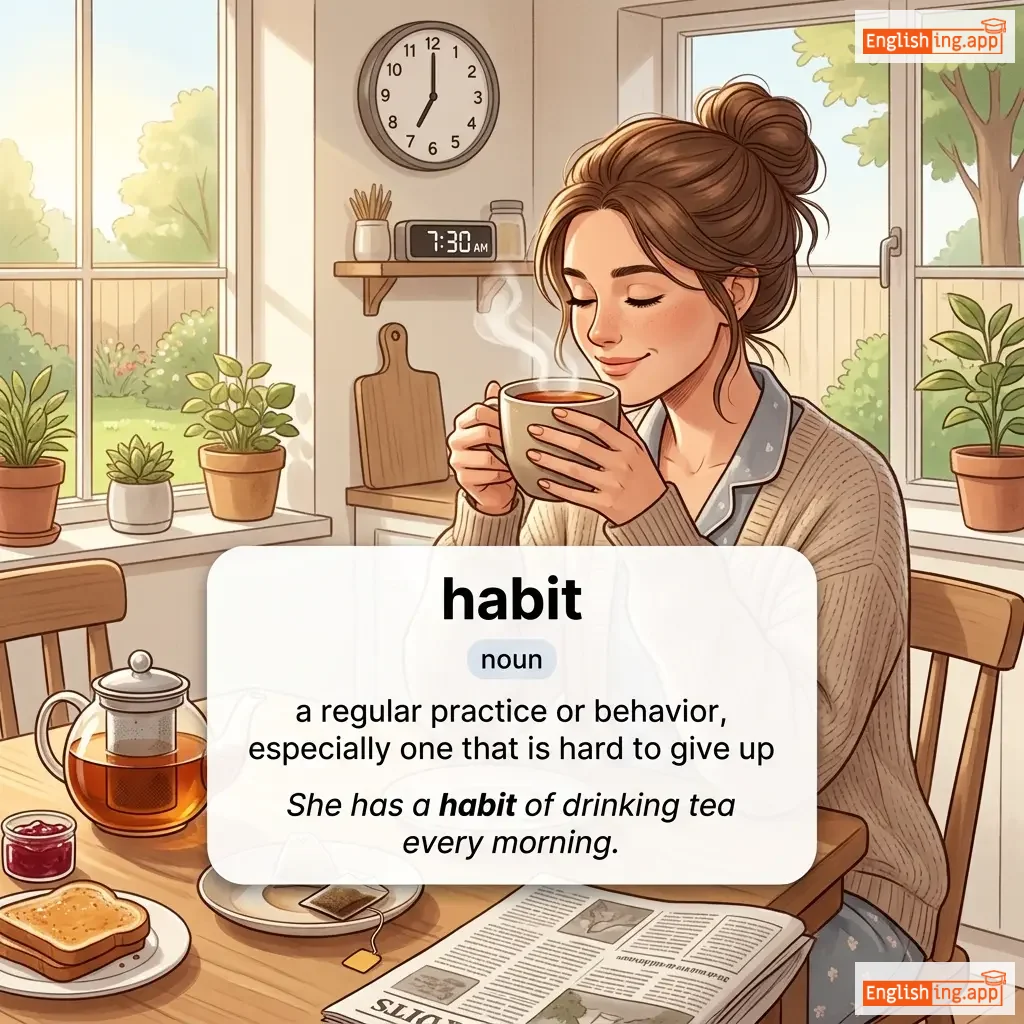
habit definition card — visual illustration of the meaning
noun
/ˈhæb.ɪt/
привычка (privychka)

a regular practice or behavior, especially one that is hard to give up

"She has a habit of drinking tea every morning."
"У неё есть привычка пить чай каждое утро." (U nee yest privychka pit' chai kazhdoe utro.)
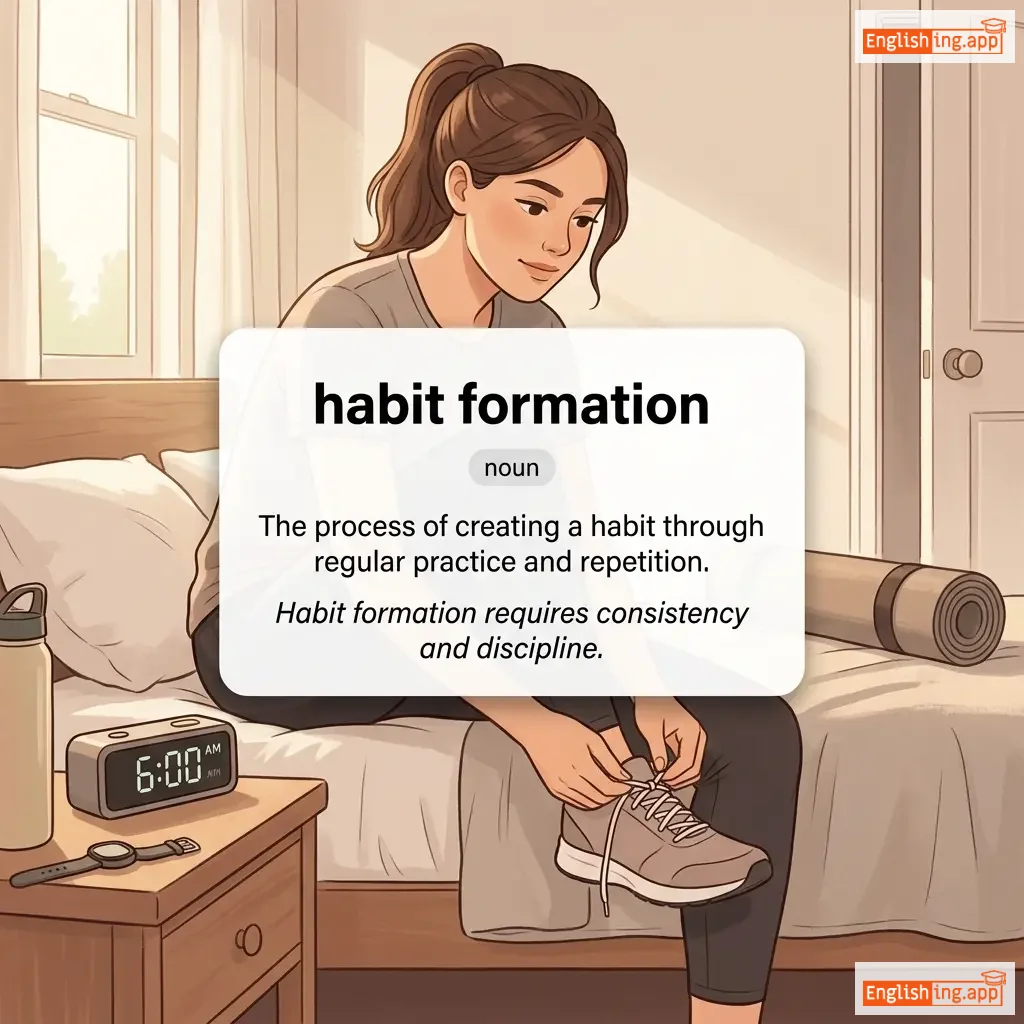
habit formation definition card — visual illustration of the meaning
noun
ˈhæb.ɪt fɔːrˌmeɪ.ʃən
формирование привычки (formirovanie privychki)

The process of creating a habit through regular practice and repetition.

"Habit formation requires consistency and discipline."

"Формирование привычки требует последовательности и дисциплины." (Formirovaniye privychki trebuyet posledovatel'nosti i disciplini.)
adjective
/ˈhæbɪtəbl/
пригодный для жилья (prigodnyy dlya zhilya)

Suitable to live in; capable of sustaining life.

"Scientists are searching for habitable planets beyond our solar system."

"Учёные ищут пригодные для жилья планеты за пределами нашей солнечной системы." (Uchёnyye ishchut prigodnye dlya zhilya planety za predelami nashey solnechnoy sistemy.)
👨‍👩‍👧‍👦

habitant (хэбитэнт)

noun
/ˈhæbɪtənt/
житель (zhitel)

An inhabitant; a person or animal that lives in a particular place.

"The habitants of the village were friendly and welcoming."
"Жители деревни были дружелюбными и гостеприимными." (Zhiteli derevni byli druzhelyubnymi i gostepriimnymi.)
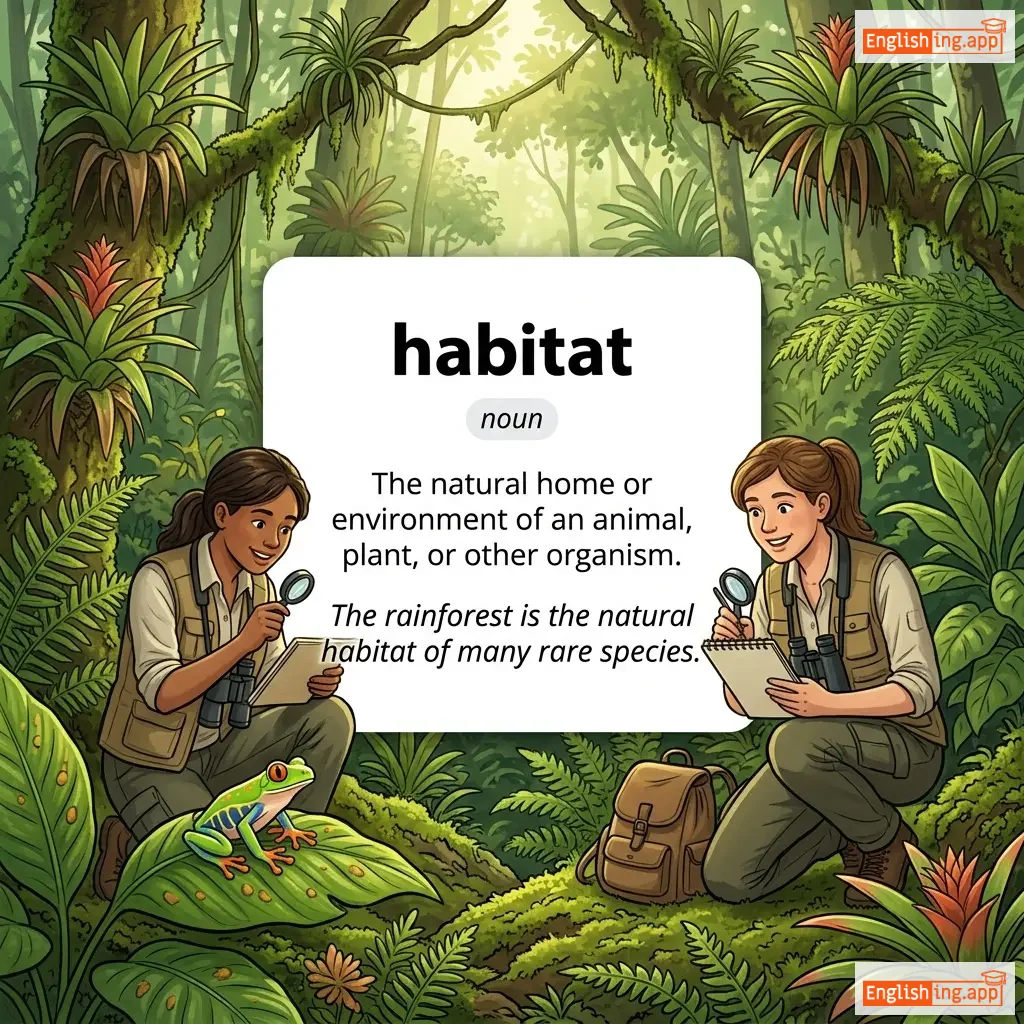
habitat definition card — visual illustration of the meaning
noun
/ˈhæbɪˌtæt/
местообитание (mestoobitanie)

The natural home or environment of an animal, plant, or other organism.

"The rainforest is the natural habitat of many rare species."
"Тропический лес — естественное местообитание многих редких видов." (Tropicheskiy les — yestestvennoe mestoobitanie mnogikh redkikh vidov.)
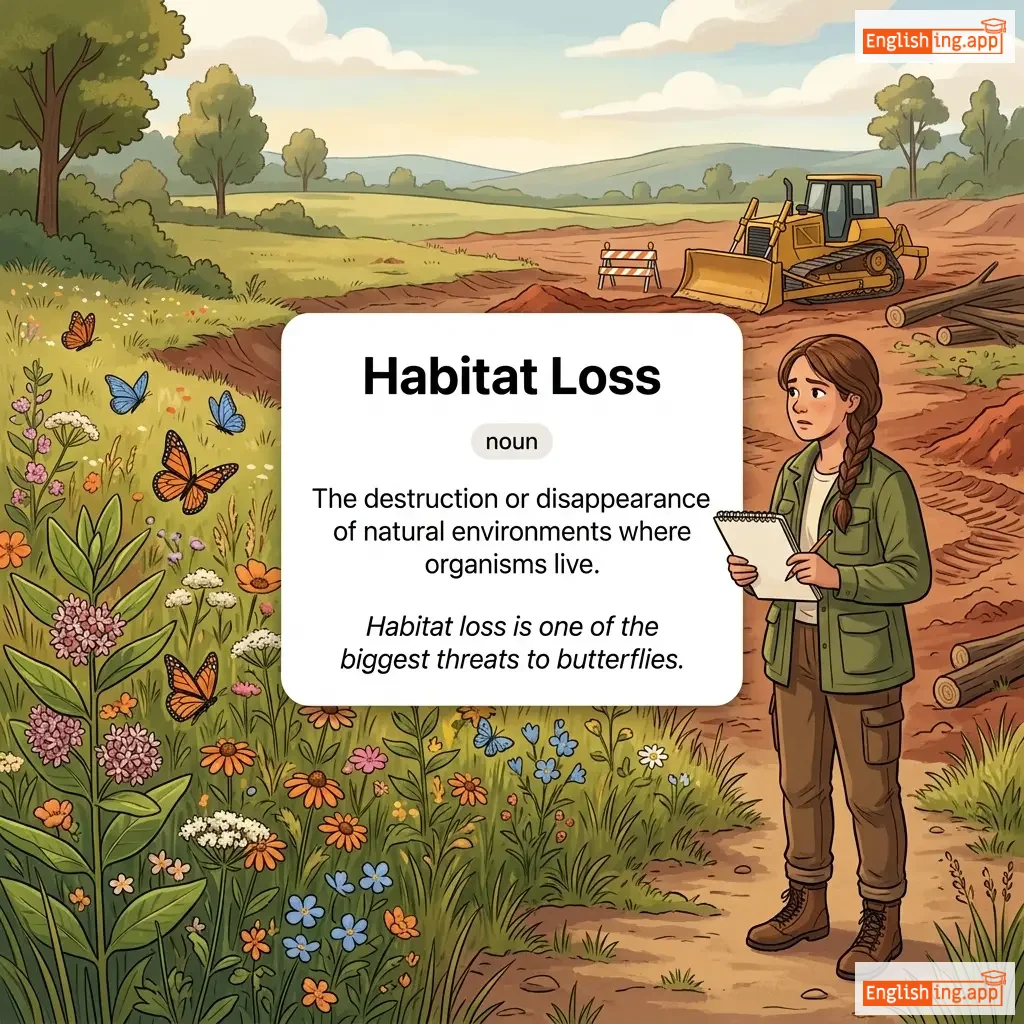
Habitat Loss definition card — visual illustration of the meaning
noun
ˈhæbɪtæt lɒs
утрата среды обитания (utrata sredy obitaniya)

The destruction or disappearance of natural environments where organisms live.

"Habitat loss is one of the biggest threats to butterflies."
"Утрата среды обитания является одной из самых больших угроз для бабочек." (Utrata sredy obitaniya yavyayetsya odnoy iz samykh bol'shikh ugroz dlya babochek.)
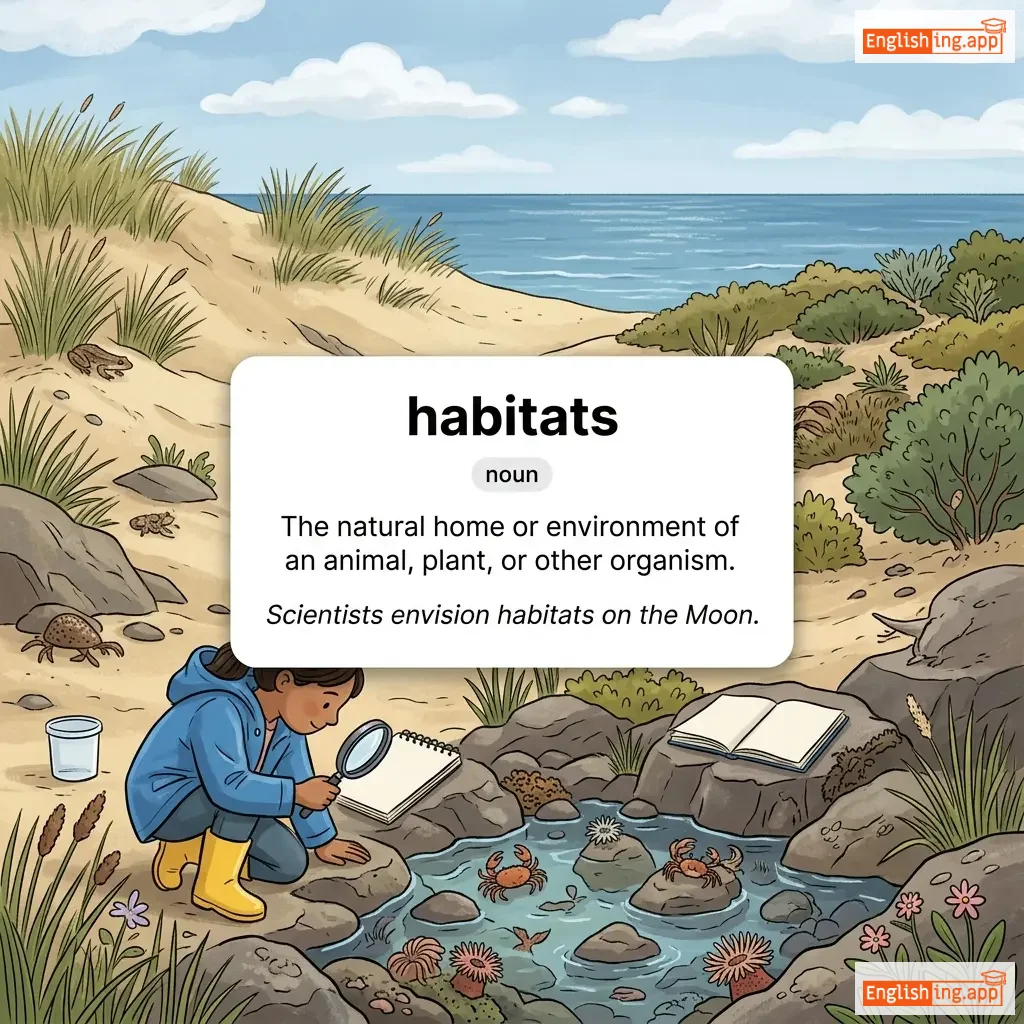
habitats definition card — visual illustration of the meaning
noun
ˈhæb.ɪ.tæts
среда обитания (sreda obitaniya)

The natural home or environment of an animal, plant, or other organism.

"Scientists envision habitats on the Moon."

"Учёные представляют себе хабитатс на Луне." (Uchënye predstavlyayut sebe habitats na Lune.)
adjective
/həˈbɪtʃuəl/
привычный (privychny)

Done or doing constantly or as a habit; customary.

"He was a habitual latecomer to class."
"Он был привычным опоздавшим на занятия." (On byl privychnym opazdvshim na zanyatiya.)
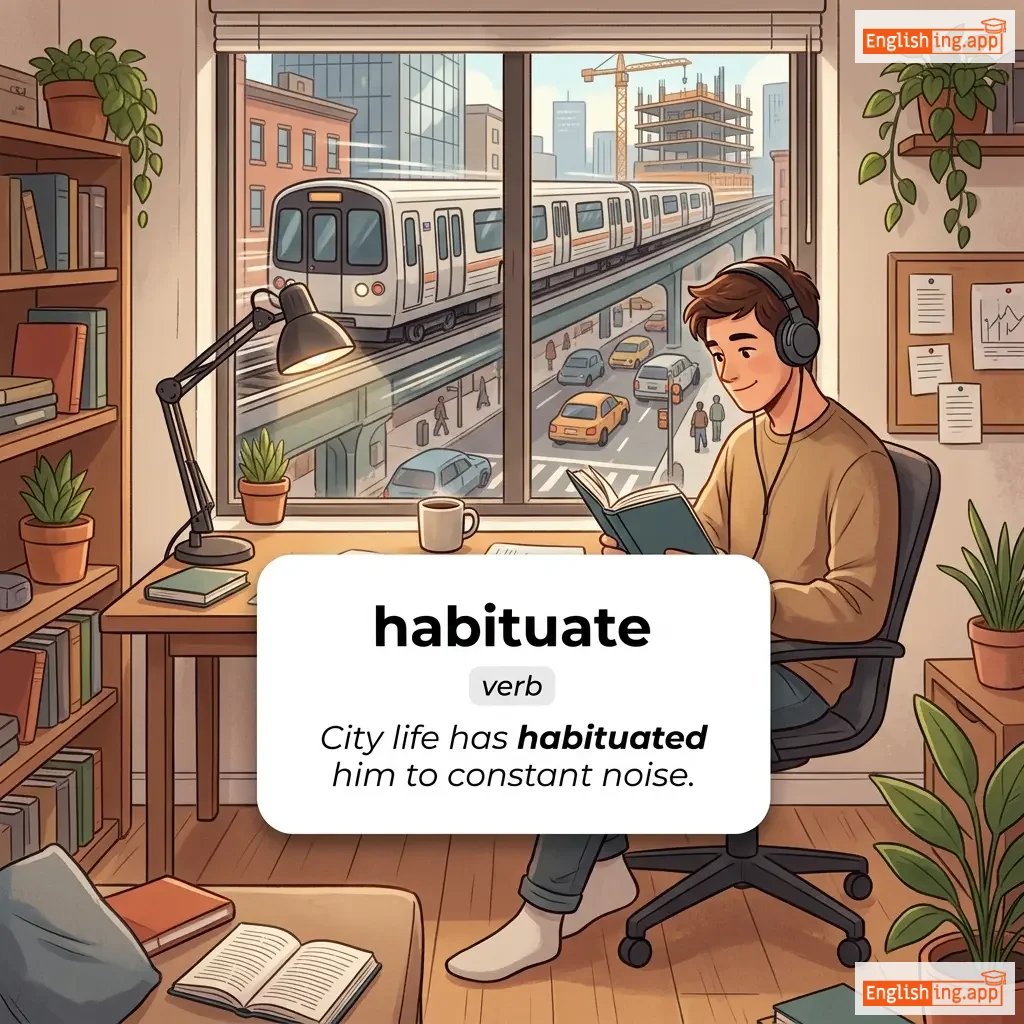
habituate definition card — visual illustration of the meaning
verb
/həˈbɪtʃueɪt/
привыкать (privykat)

to accustom someone or oneself to something through frequent exposure or experience

"City life has habituated him to constant noise."

"Городская жизнь приучила его к постоянному шуму." (Gorodskaya zhizn priuchila ego k postoyannomu shumu.)
noun
/ˈhæbɪtjuːd/
привычка, обычай (privychka, obychay)

a customary condition or mode of life; habitual practice

"He lived in a quiet habitude, avoiding the noise of the city."

"Он жил в тихой привычке, избегая шума города." (On zhil v tikhoy privychke, izbegaya shuma goroda.)
💻

hack

verb
/hæk/

to cut or chop roughly; to gain unauthorized access to a computer system

"The programmer managed to hack into the system."

noun
/ˈhækəlz/

the hairs on the back of an animal’s neck that rise when it is angry or alarmed; figuratively, feelings of anger or resentment

"His rude comment raised my hackles."

noun
/ˈhæknɪ/
арендованная лошадь, избитый (arendovannaya loshad, izbityi)

a horse kept for ordinary riding or hire; also used for something overused or trite

"The old hackney was still pulling the carriage."

"Старая арендованная лошадь всё ещё везла повозку." (Staraya arendovannaya loshad vsyo eshchyo vezla povozku.)
noun
/ˈhæk.ni ˈkær.ɪdʒ/
такси (taksi)

A taxi; a car licensed to carry passengers for hire

"I called a hackney carriage to get to the airport."

"Я вызвал такси, чтобы поехать в аэропорт." (Ya vyzval taksi, chtoby poyekhat' v aeroport.)
adjective
/ˈhæk.nid/
избитый (izbity)

Used too often and therefore lacking originality or freshness.

"The speech was filled with hackneyed phrases that failed to inspire the audience."

"Речь была полна избитых фраз, которые не смогли вдохновить аудиторию." (Rech' byla polna izbitykh fraz, kotorye ne smogli vdokhnovit' auditoriyu.)
🧙‍♀️

Hag (хэг)

noun
/hæɡ/
ведьма (ved'ma)

an ugly old woman, especially a vicious or malicious one; a witch

"In the fairy tale, the wicked hag lived alone in a cottage deep in the forest."

"В сказке злая ведьма жила одна в домике глубоко в лесу." (V skazke zlaya ved'ma zhila odna v domike gluboko v lesu.)
adjective
/ˈhæɡ.ərd/
истощённый (istoŝchennyj)

Looking exhausted, unwell, or worn out, especially from fatigue or suffering.

"After working all night, she looked pale and haggard."
"После работы всю ночь она выглядела бледной и измождённой." (Posle raboty vsyu noch' ona vyglyadela blednoy i izmozhdyonnoy.)
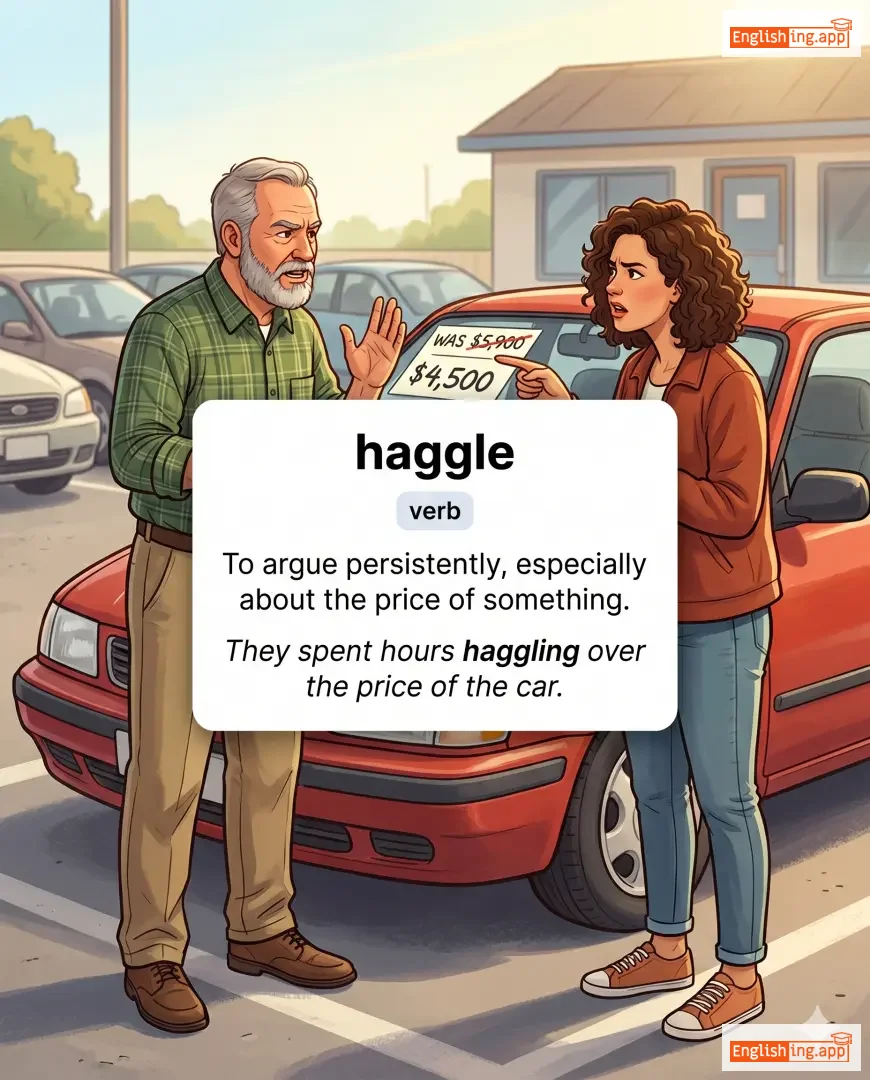
haggle definition card — visual illustration of the meaning
verb
/ˈhæɡ.l̩/
торговаться (torgovatsya)

To argue persistently, especially about the price of something.

"They spent hours haggling over the price of the car."

"Они провели часы, торгуясь о цене машины." (Oni proveli chasy, torguyas' o tsene mashiny.)
adjective
/ˌhæɡ.i.əˈɡræf.ɪk/
чрезмерно льстивый (chrezmerno l'stivyy)

Excessively flattering or idealized, often in a biography or portrayal of someone.

"The documentary was criticized for its hagiographic portrayal of the leader."

"Документальный фильм был подвергнут критике за чрезмерно льстивое изображение лидера." (Dokumental'nyy film byl podvergnut kritike za chrezmerno l'stivoye izobrazheniye lidera.)
verb
/heɪl/
звать / приветствовать (zvat' / privetstvovat')

To call out to attract attention or to praise enthusiastically.

"The athlete was hailed as a hero after the victory."

"Атлета приветствовали как героя после победы." (Atleta privetstvovali kak geroja posle pobedy.)
noun
/ˈheɪl.stɔːrm/
гроза с градом (groza s gradom)

a violent storm with hail falling from the sky

"The hailstorm damaged many cars in the parking lot."

"Градовый шторм повредил множество автомобилей на парковке." (Gradovyy shtorm povredil mnogochislennoe avto na parkovke.)
noun
/hɛər/
волосы (volosy)

the fine threads growing from the skin of humans and animals

"She has long, black hair."

"У нее длинные черные волосы." (U nee dlinnyye chernyye volosy.)
noun
/ˈher ˌpɪn/
заколка (zakolka)

a thin piece of metal or plastic used to hold hair in place

"She used several hair pins to secure her elegant updo."

"Она использовала несколько заколок, чтобы закрепить свою элегантную прическу." (Ona ispolzovala neskolko zakolok chtoby zakrepit svoyu elegantnuyu prichesku)
noun
/ˈheəkʌt/
стрижка (strizhka)

the act or style of cutting hair

"I got a haircut before the wedding."

"Я сделал стрижку перед свадьбой." (ya sdelal strizhku pered svadboy)
noun
/ˈheəˌkʌtər/
парикмахер (parikmakher)

a person whose job is to cut and style hair; barber or hairdresser

"The haircutter gave me a neat and stylish haircut."

"Парикмахер сделал мне хорошую стрижку." (parikmakher sdelal mne khoroshuyu strizhku)