Словари

Словарь английского языка | Значения слов, определения и примеры

noun
/ˈfænsiər/
любитель (lyubitel)

a person who has a special interest in a particular thing or activity, especially animals or hobbies

"He is a fancier of rare birds."

"Он увлекается редкими птицами." (On uvlekaetsya redkimi ptitsami.)
adjective
/ˈfæn.sɪ.fəl/
фантазийный, нереалистичный (fantazijnyj, nerealistichnyj)

overimaginative, unrealistic, or whimsical

"The story was too fanciful to be true."

"История была слишком фантазийной, чтобы быть правдой." (Istoriya byla slishkom fantazijnoj, chtoby byt' pravdoj.)
adjective
/ˈfæn.sɪ.ləs/
без воображения, обычный (bez voobrazheniya, obychny)

without imagination or creativity; plain or ordinary

"His drawings were simple and fanciless."

"Его рисунки были простыми и без воображения." (Ego risunki byli prostymi i bez voobrazheniya.)
verb
/ˈfæn.si/
представлять, желать, любить (predstavlyat', zhelat', lyubit')

to imagine, desire, or like something; to have a liking for

"She fancies a cup of tea in the morning."

"Она хочет чашку чая утром." (Ona khochet chashku chaya utrom.)
noun
/ˈfæn.feər/
громкое представление, реклама (gromkoe predstavilene, reklama)

a short ceremonial tune or display of publicity to attract attention

"The new product was launched with much fanfare."

"Новый продукт был запущен с большой помпой." (Novyy produkt byl zapushchen s bol'shoy pompoy.)
adjective
/fænˈtæstɪk/
фантастический (fantasticheskiy)

extraordinary, extremely good or impressive

"The concert last night was absolutely fantastic."

"Концерт прошлой ночью был абсолютно фантастический." (Kontsert proshloy noch'yu byl absolutno fantasticheskiy.)
noun
/ˈfæntəsi/
фантазия (fantaziya)

a creation of the imagination, especially something improbable or impossible

"She has a vivid fantasy about traveling to space."

"У нее яркое воображение о путешествиях в космос." (U nee yarkoe voobrazhenie o puteshestviyakh v kosmos.)
adverb
/fɑːr/
далеко (daleko)

at, to, or by a great distance

"The school is far from my house."

"Школа далеко от моего дома." (Shkola daleko ot moego doma.)
adjective
/ˌfɑːrˈfɛtʃt/
маловероятно (maloveroyatno)

unlikely to happen or be true; improbable

"His explanation for being late was a bit far-fetched."

"Его объяснение, почему он опоздал, было немного маловероятным." (Ego ob'yasneniye, pochemu on opozdal, bylo nemnogo maloveroyatnym.)
noun
/fɑːrs/
фарс (fars)

a comic dramatic work using buffoonery and horseplay, or a ridiculous situation

"The meeting turned into a complete farce with everyone arguing."

"Встреча превратилась в настоящий фарс, когда все начали спорить." (Vstrecha prevratilas' v nastoyashchij fars, kogda vse nachali sporit'.)
noun
/fɛər/
тариф (tarif)

the money paid for a journey on public transport; also food or treatment provided

"The bus fare to the city center is five dollars."

"Тариф на автобус до центра города составляет пять долларов." (Tarif na avtobus do tsentra goroda sostavlyaet pyat' dollarov.)
noun
/ˌfer.ˈwel/
прощание (proshchaniye)

an act of parting or of marking someone's departure

"The company organized a farewell party for the retiring manager."

"Компания организовала прощальную вечеринку для уходящего менеджера." (Kompanija organizovala proshchal'nuyu vecherinku dlya ukhodyashchego menedzhera.)
adjective
/ˌfɑːrˈfetʃt/
маловероятный или малоправдоподобный (maloveroyatnyy ili malopravdopodobnyy)

unlikely to happen or be true; improbable

"His explanation for being late sounded farfetched."
"Его объяснение опоздания казалось невероятным." (Yego obyasnenie opazdaniya kazalos' neveroyatnym.)
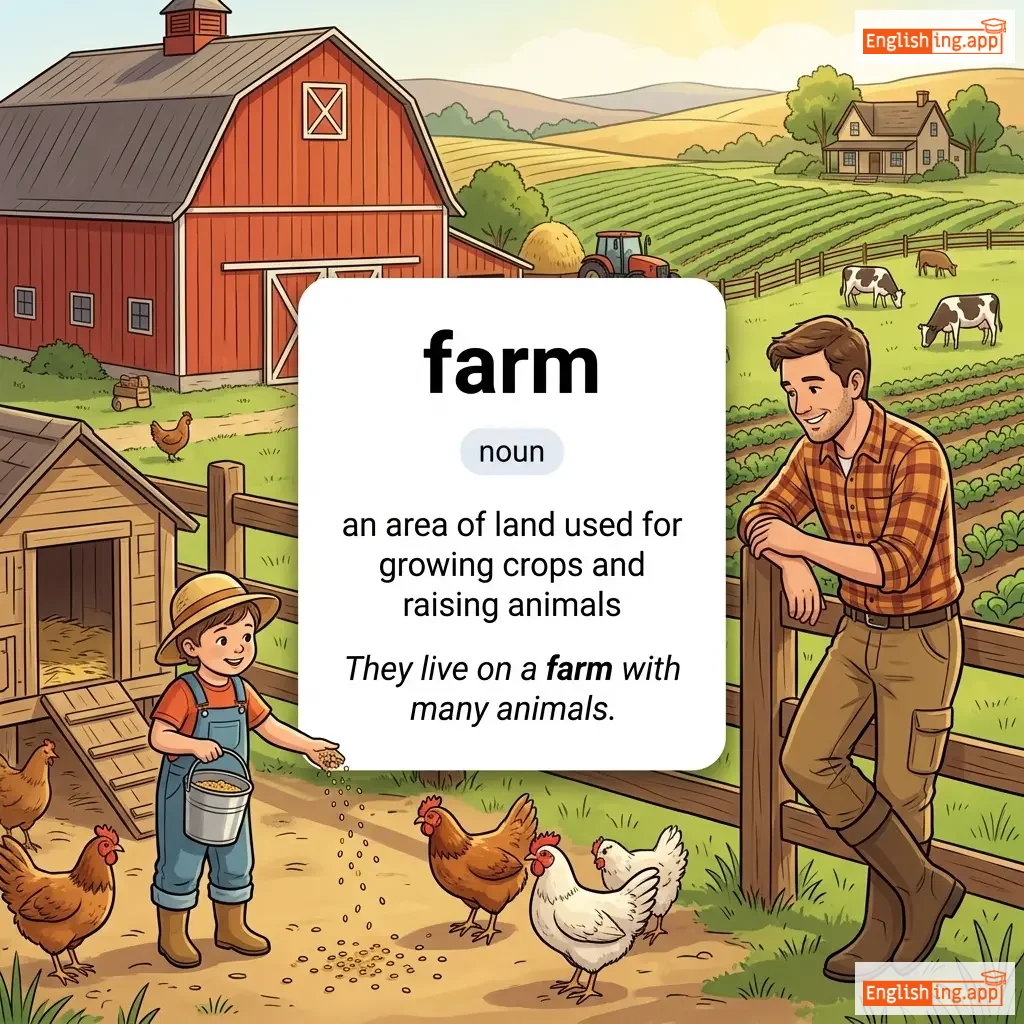
farm definition card — visual illustration of the meaning
noun
/fɑːrm/
ферма (ferma)

an area of land used for growing crops and raising animals

"They live on a farm with many animals."
"Они живут на ферме с множеством животных." (Oni zhivut na ferme s mnozhestvom zhivotnykh.)
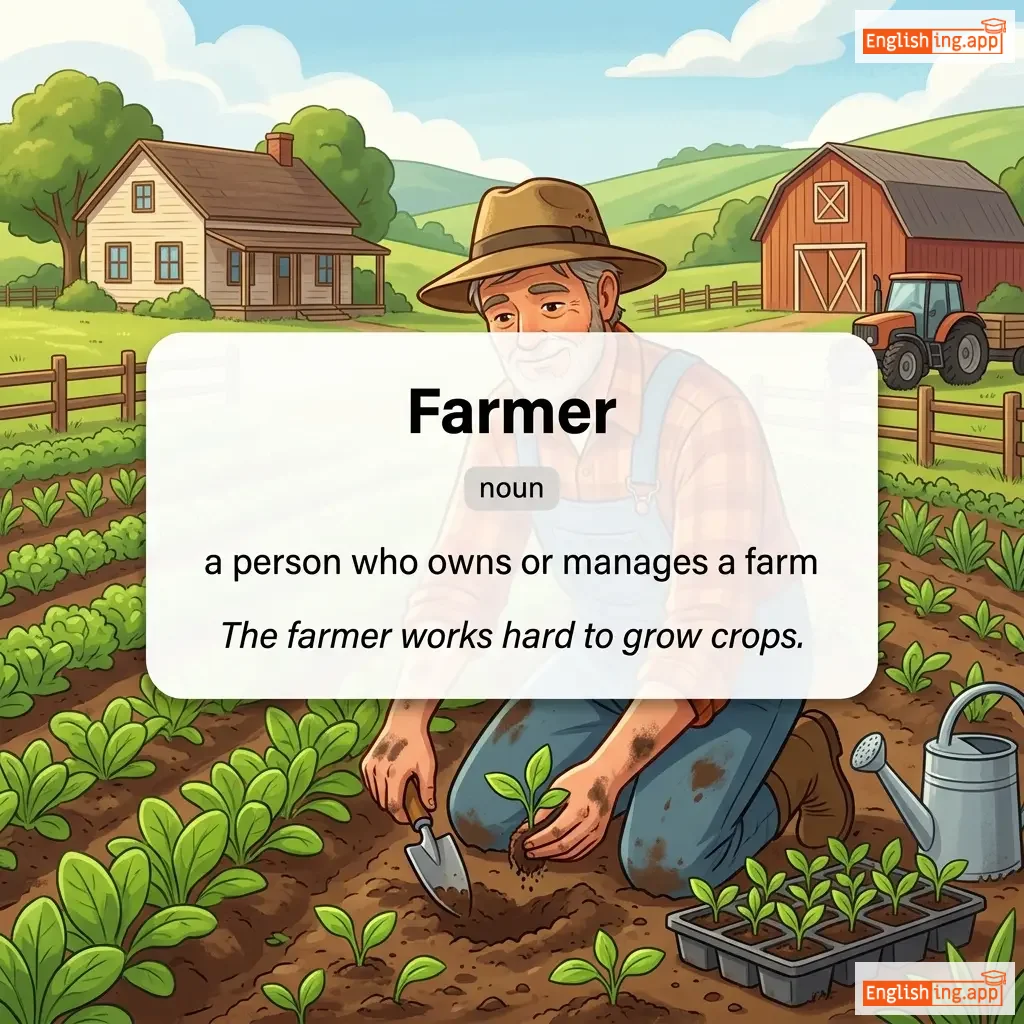
Farmer definition card — visual illustration of the meaning
noun
/ˈfɑːrmər/
фермер (fermer)

a person who owns or manages a farm

"The farmer works hard to grow crops."
"Фермер усердно работает, чтобы вырастить урожай." (Fermyer userdno rabotayet, chtoby vyrastit urozhay.)
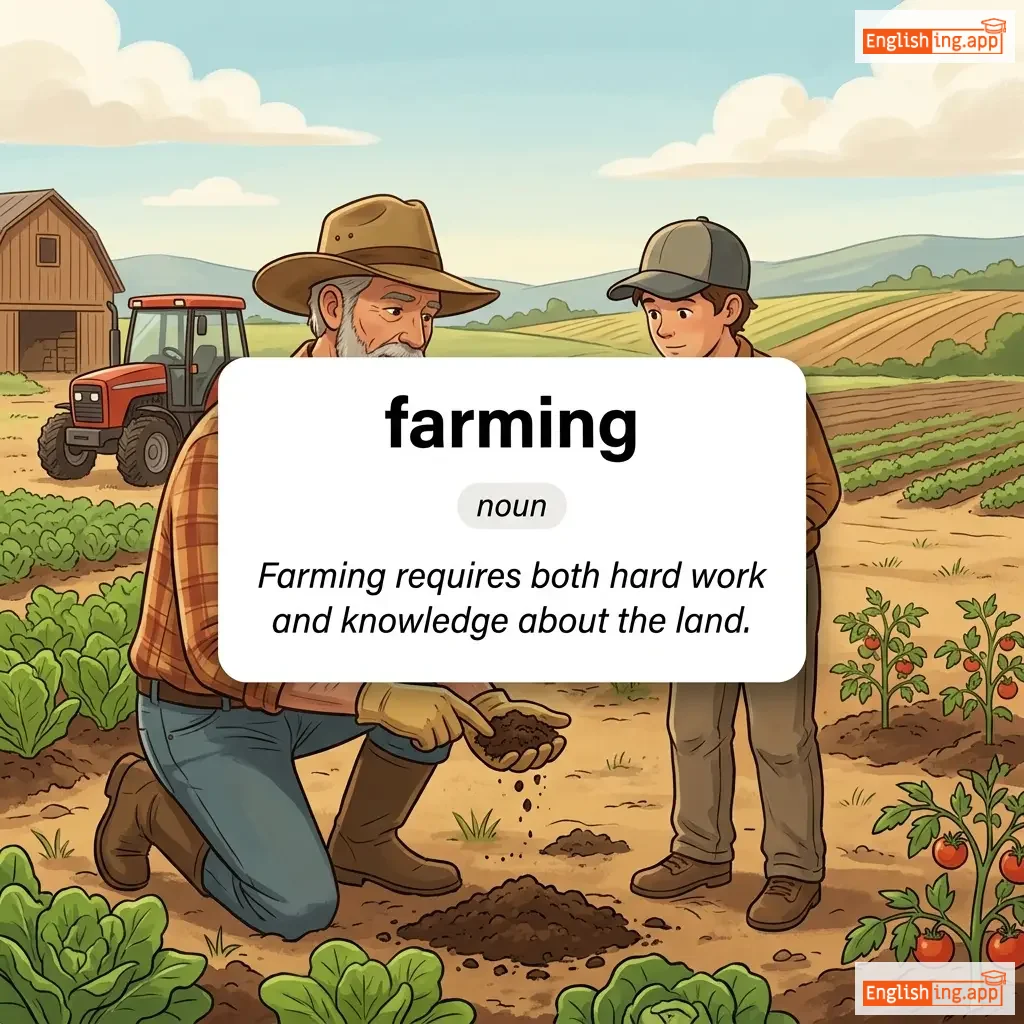
farming definition card — visual illustration of the meaning
noun
/ˈfɑː.mɪŋ/
сельское хозяйство (selskoe khozyaystvo)

the activity or business of growing crops and raising animals for food or other products

"Farming requires both hard work and knowledge about the land."

"Сельское хозяйство требует как упорного труда, так и знаний о земле." (Selskoe khozyaystvo trebuyet kak upornogo truda, tak i znaniy o zemle.)
verb
/ˈfæs.ɪ.neɪt/
очаровывать (ocharovyvat)

to attract and hold the attention of someone; to charm or captivate

"The magician's performance fascinated the audience."

"Выступление фокусника очаровало зрителей." (Vystuplenie fokusnika ocharovalo zriteley.)
adjective
/ˈfæsɪneɪtɪŋ/
захватывающий (zakhvatyvayushchiy)

extremely interesting or charming

"The history of ancient Egypt is truly fascinating."

"История Древнего Египта действительно захватывающая." (Istoriya Drevnego Egipta deystvitel'no zakhvatyvayushchaya.)
noun
/ˌfæs.ɪˈneɪ.ʃən/
очарование; привлечение; восхищение (ocharovanie, prityazhenie, voskhishchenie)

the power to fascinate someone; the state of being intensely interested

"Her fascination with ancient history led her to become an archaeologist."

"Ее увлечение древней историей привело ее к археологии." (Eyo uvlashchenie drevney istoriey privedlo ye to arkheologii.)
fascist definition card — visual illustration of the meaning
adjective
ˈfæʃ.ɪst
фашист (fashist)

Relating to or characteristic of fascism; extremely authoritarian.

"Fascist governance undermines freedom."

"Фашистское правительство подрывает свободу." (Fashistskoe pravitel'stvo podryvaet svobodu.)
noun
/ˈfæʃ.ən/
мода (moda)

a popular or accepted style of clothing, behavior, or way of doing something

"She always keeps up with the latest fashion."

"Она всегда в курсе последней моды." (Ona vsegda v kurse posledney mody.)
adjective
/ˈfæʃənəbəl/
модный (modnyy)

Following the latest styles or trends in clothing, behavior, or ideas

"She always wears fashionable clothes to every party."

"Она всегда носит модную одежду на каждой вечеринке." (Ona vsegda nosit modnuyu odezhdu na kazhdoy vecherinke.)
Fast definition card — visual illustration of the meaning
adjective, adverb
/fæst/
быстро, прочно закрепленный (bystro, prochno zakreplennyj)

moving or capable of moving at high speed; firm or securely fixed

"He drives very fast on the highway."

"Он едет очень быстро по шоссе." (On yedet ochen' bystro po shosse.)
verb
/ˈfæsən/
пристегнуть (pristegnut)

To attach or secure something firmly in place

"Please fasten your seatbelt before the plane takes off."

"Пожалуйста, пристегните ремень перед взлетом самолета." (Pozhaluysta, pristegnite remen pered vzletom samoleta.)
adjective, adverb
/ˈfæstər/
быстрее (bystree)

moving or able to move quickly; more quickly than usual

"This car is faster than the old one."

"Эта машина быстрее старой." (Eta mashina bystree staroy.)
adjective
/ˈfæstɪst/
самый быстрый (samyy bystryy)

moving or capable of moving at the highest speed

"Usain Bolt is the fastest runner in the world."
"Усейн Болт — самый быстрый бегун в мире." (Useyn Bolt — samyy bystryy begun v mire.)
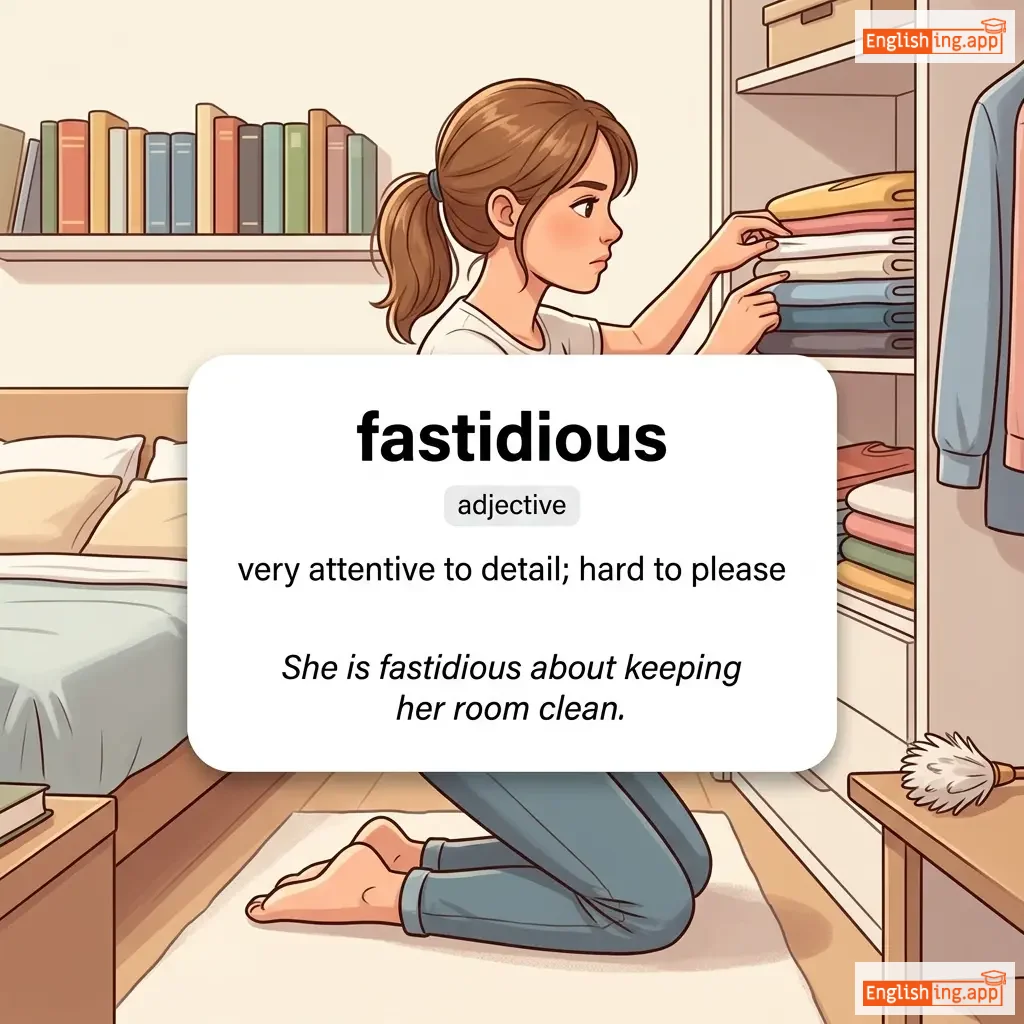
fastidious definition card — visual illustration of the meaning
adjective
/fæˈstɪdiəs/
привередливый, требовательный (priveredlivyy, treboyatel'nyy)

very attentive to detail; hard to please

"She is fastidious about keeping her room clean."

"Она очень привередлива, когда речь идет о том, чтобы держать свою комнату в чистоте." (Ona ochen' priveredliva, kogda rech' idet o tom, chtoby derzhat' svoyu komnatu v chistote.)
adjective, noun
/fæt/
жирный (zhirny)

having a lot of excess flesh; a natural oily substance in animal bodies

"Eating too much fast food can make you fat."

"Переедание фастфуда может сделать вас жирным." (Pereedaniye fastfuda mozhet sdelat' vas zhirnym.)
adjective
/ˈfeɪtl/
фатальный (fatal'nyy)

causing death; leading to disaster

"The accident proved fatal for the driver."

"Авария оказалась фатальной для водителя." (Avariya okazalas' fatal'noy dlya voditelya.)
noun
/ˈfeɪ.tə.lɪ.zəm/
фатализм (fatalizm)

the belief that all events are predetermined and inevitable

"He embraced fatalism, believing that nothing he did could change his destiny."

"Он принял фатализм, веря, что ничто, что он делал, не могло изменить его судьбу." (On prinyal fatalizm, verya, chto nichto, chto on delal, ne moglo izmenit' ego sud'bu.)
noun
/fəˈtæləti/
смертельный случай (smertel'nyy sluchay)

An occurrence of death by accident, disaster, or violence.

"The accident resulted in one fatality."

"Авария привела к смертельному случаю." (Avariya privela k smertelnomu sluchayu.)
adverb
/ˈfeɪ.təl.i/
фатально (fatal'no)

in a way that causes death; with deadly consequences; critically

"The accident fatally injured two passengers."

"Авария смертельно ранила двух пассажиров." (Avariya smertel'no ranila dvukh passazhirov.)
Fate definition card — visual illustration of the meaning
noun
/feɪt/
судьба (sudba)

the development of events beyond a person's control, regarded as determined by a supernatural power

"She believed it was her fate to become a teacher."

"Она верила, что это ее судьба стать учителем." (Ona verila, chto eto yejo sudba stat' uchitelem.)
adjective
/ˈfeɪt.fəl/
роковой или судьбоносный (rokovoy ili sud'bonosny)

having significant or disastrous consequences

"Their fateful decision changed the course of history."
"Их роковое решение изменило ход истории." (Ikh rokovoje reshenije izmenilo khod istorii.)
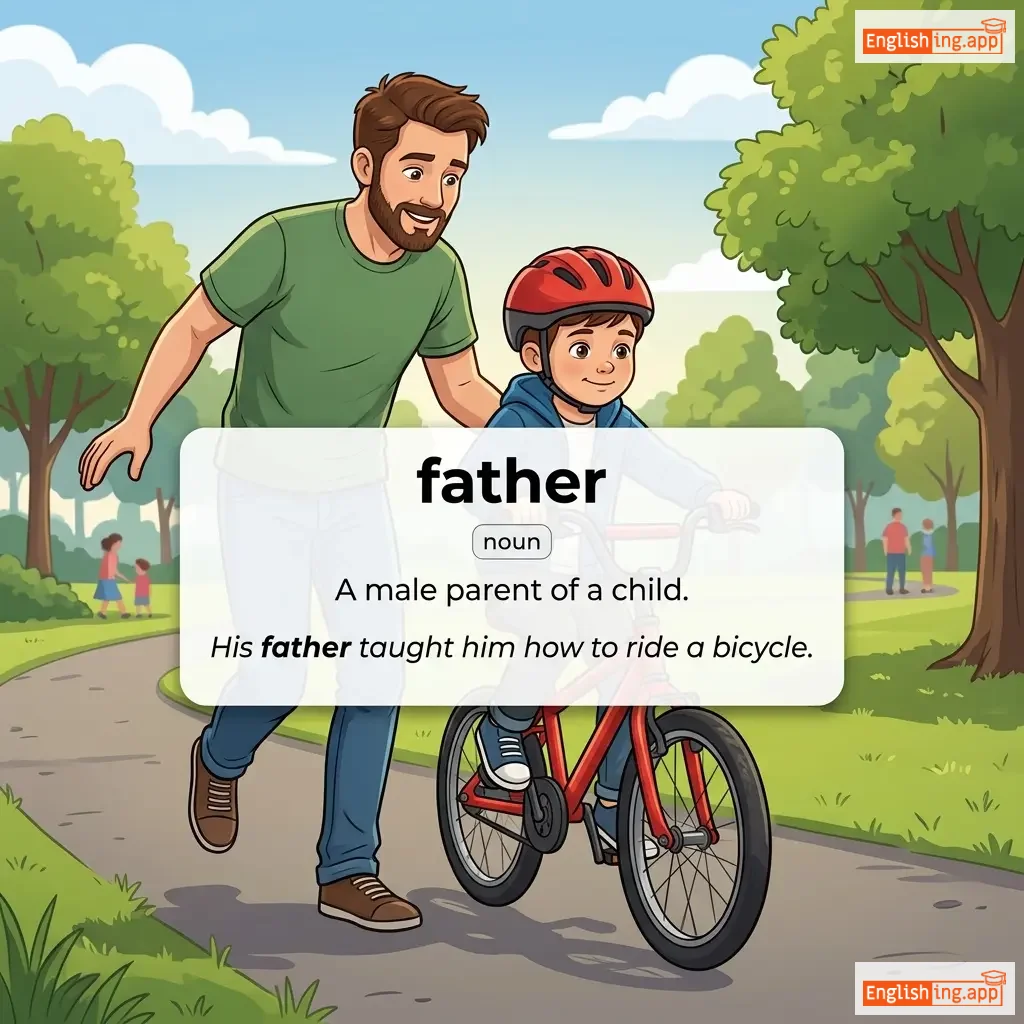
father definition card — visual illustration of the meaning
noun
/ˈfɑːðər/
счастье (schastye)

A male parent of a child.

"His father taught him how to ride a bicycle."

"Она не могла скрыть своего счастья, когда она получила приз." (Ona ne mogla skryt' svoego schast'ya, kogda ona poluchila priz.)
adjective
/ˈfɑːð.ər.ləs/
сирота без отца (sirota bez otca)

without a father

"The fatherless child relied on the support of his community."
"Сирота без отца полагался на поддержку своей общины." (Sirota bez otca polagalsya na podderzhku svoey obshchiny.)
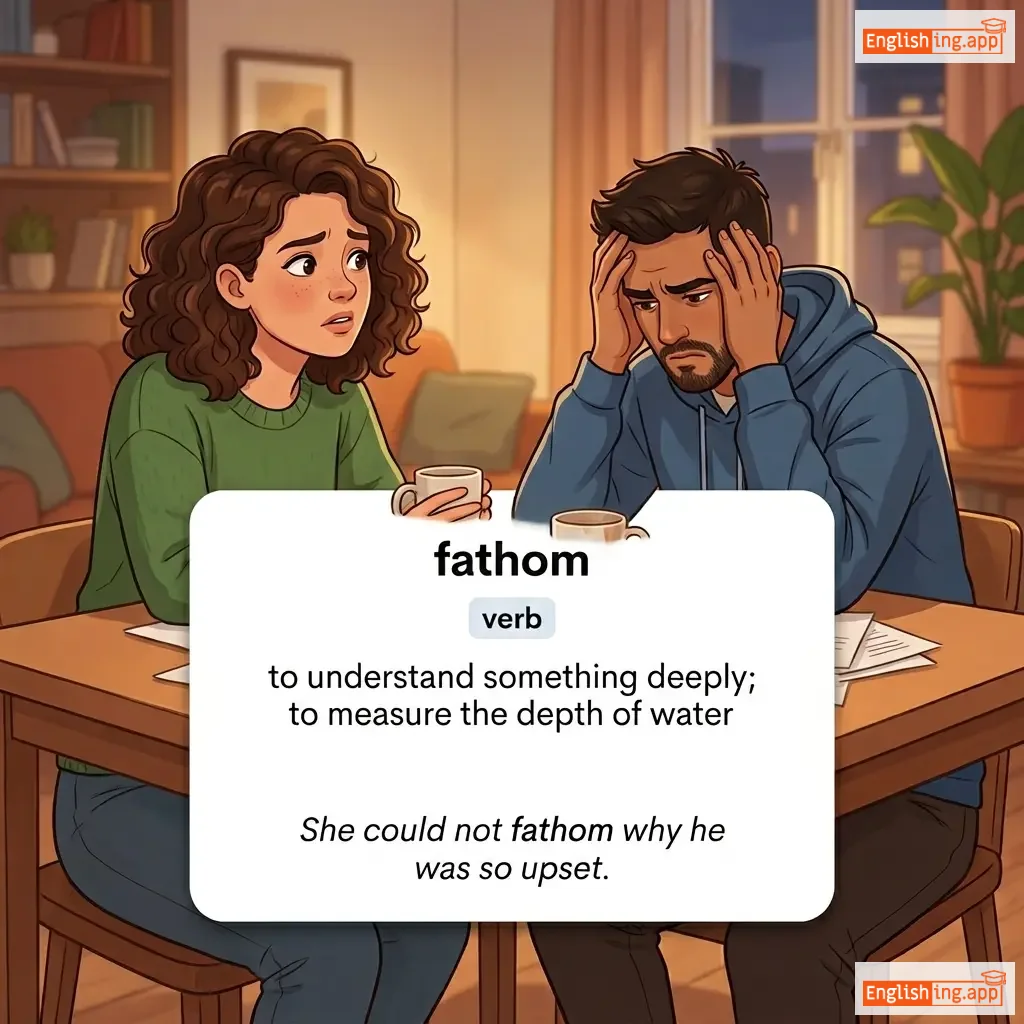
fathom definition card — visual illustration of the meaning
verb
/ˈfæð.əm/
понимать, понимать глубоко (ponimat, ponimat' gluboko)

to understand something deeply; to measure the depth of water

"She could not fathom why he was so upset."

"Она не могла понять, почему он так расстроен." (Ona ne mogla ponyat', pochemu on tak rasstroen.)
adjective
/ˈfæð.əm.ləs/
непостижимый или бездонный (nepostizhimyy ili bezdonnyy)

impossible to understand or measure; very deep

"The ocean seemed fathomless as it stretched to the horizon."

"Океан казался безбрежным, когда он простирался до горизонта." (Okean kazalsya bezbrezhnyim, kogda on prostiral'sya do gorizonta.)
fatigue definition card — visual illustration of the meaning
noun
/fəˈtiːɡ/
усталость (ustalost)

extreme tiredness or exhaustion

"After working for ten hours, she felt a deep sense of fatigue."
"После работы десяти часов она почувствовала глубокую усталость." (Posle raboty desyati chasov ona pochuvstvovala glubokuyu ustalost'.)
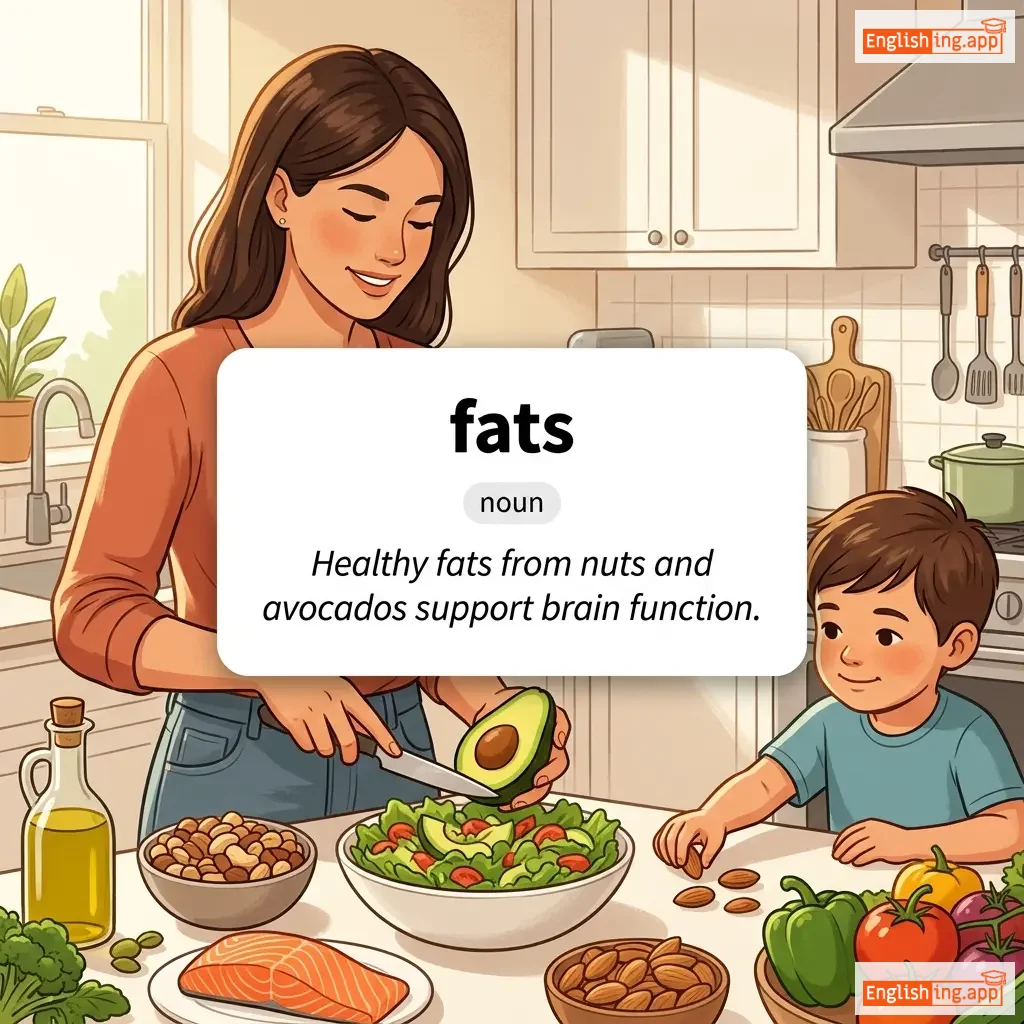
fats definition card — visual illustration of the meaning
noun
/fæts/
жиры (zhiry)

Essential macronutrients that provide energy, support cell growth, and protect organs while helping absorb vitamins.

"Healthy fats from nuts and avocados support brain function."
"Полезные жиры из орехов и авокадо поддерживают работу мозга." (Poleznye zhiry iz orekhov i avokado podderzhivayut rabotu mozga.)
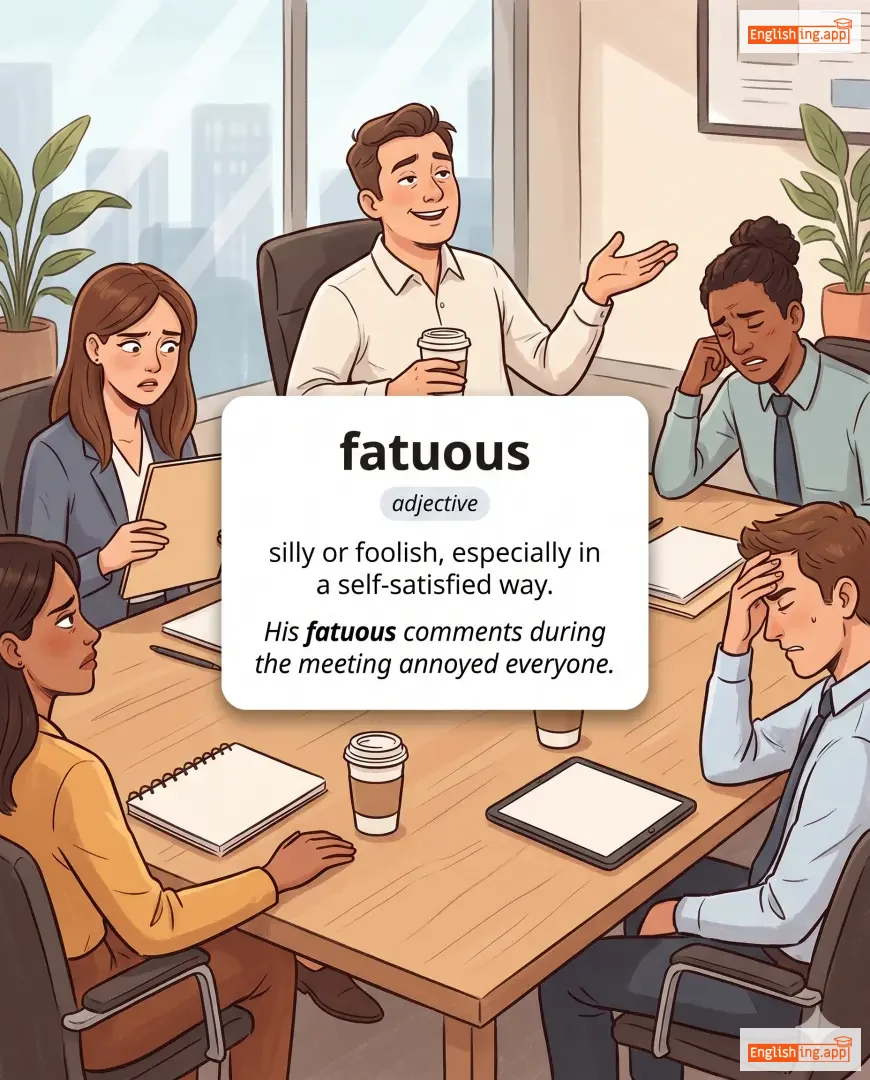
fatuous definition card — visual illustration of the meaning
adjective
/ˈfætʃuəs/
тупой (tupoy)

silly or foolish, especially in a self-satisfied way

"His fatuous comments during the meeting annoyed everyone."
"Его тупые комментарии на собрании раздражали всех." (Yego tupye kommentarii na sobranie razdrazhaly vsekh.)
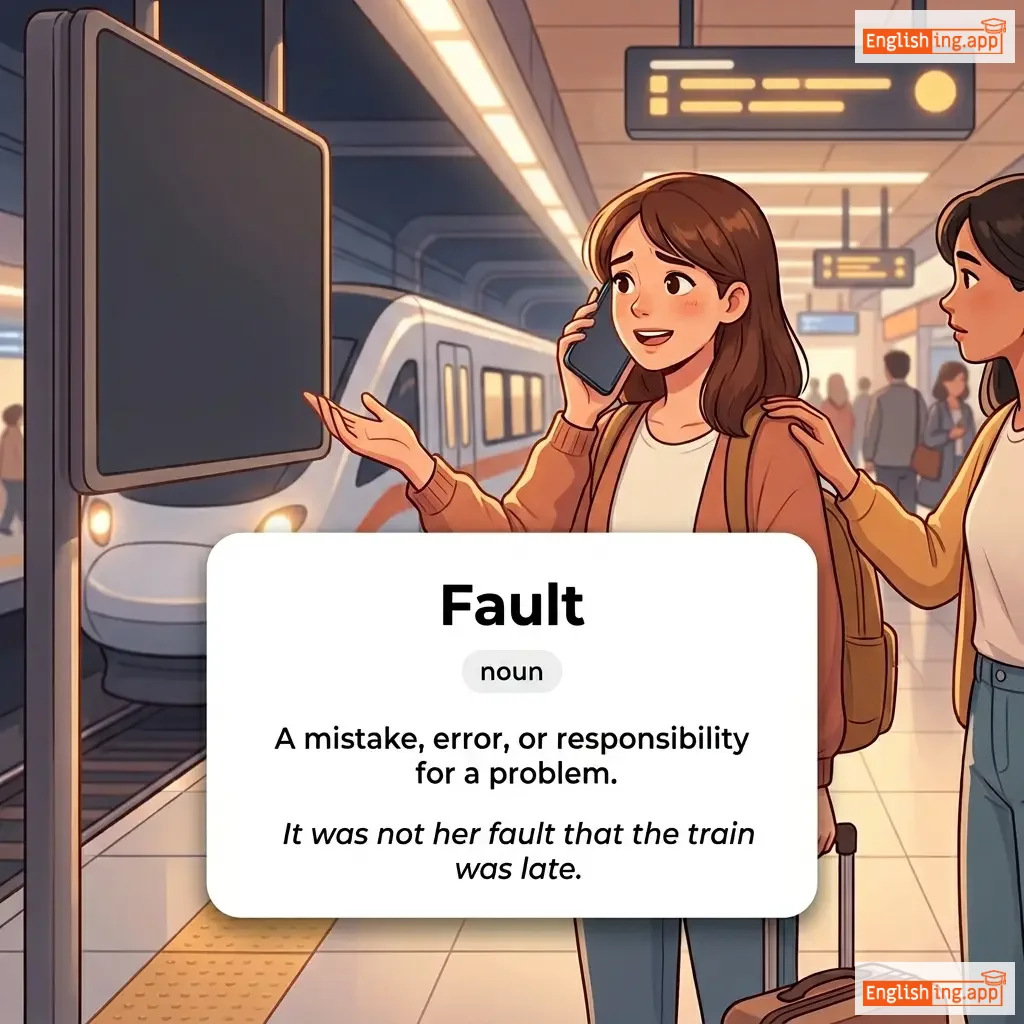
Fault definition card — visual illustration of the meaning
noun
/fɔːlt/
ошибка (oshchibka)

A mistake, error, or responsibility for a problem.

"It was not her fault that the train was late."
"Это не была её ошибка, что поезд опоздал." (Eto ne byla yeye oshibka, chto poezd opozdal.)
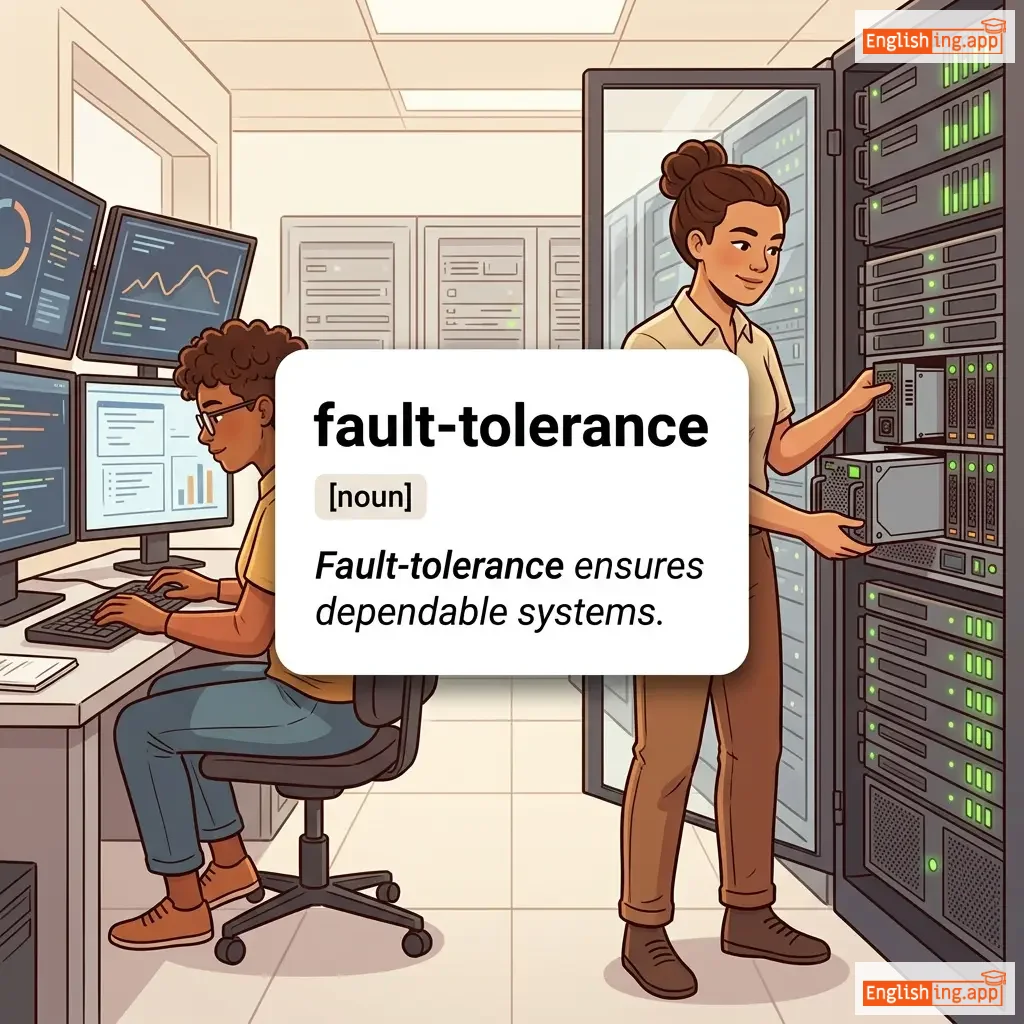
fault-tolerance definition card — visual illustration of the meaning
noun
fɔːlt ˈtɒl.ər.əns
устойчивость к сбоям (ustoichivost k sboyam)

The ability of a system to continue operating properly in the event of the failure of some of its components.

"Fault-tolerance ensures dependable systems."

"Устойчивость к сбоям обеспечивает надежные системы." (Ustoichivost' k sboyam obespechivaet nadezhnye sistemy.)
noun
/ˈfɔːltˌfaɪndər/
искатель недостатков (iskatel' nedostatkov)

a person who habitually finds fault with others

"He is such a faultfinder that nothing anyone does is ever good enough."

"Он такой искатель недостатков, что ничего, что делает кто-то, никогда не бывает достаточно хорошим." (On takoy iskatel' nedostatkov, chto nichego, chto delayet kto-to, nikogda ne byvayet dostatochno khoroshim.)
adjective
/ˈfɔːlti/
неисправный (neispravnyy)

Having defects or imperfections; not working properly

"The device stopped working because it was faulty."

"Устройство перестало работать, потому что оно было неисправным." (Ustroystvo perestalo rabotat, potomu chto ono bylo neispravnym)
noun
/fɔːn/
фаун (мифическое существо) (faun (mificheskoe sushchestvo))

a mythological creature that is half human and half goat

"The sculpture depicted a playful faun dancing in the forest."
"Скульптура изображала игривого фауна, танцующего в лесу." (Skulptura izobrazhala igrovogo fauna, tantsuyushchego v lesu.)
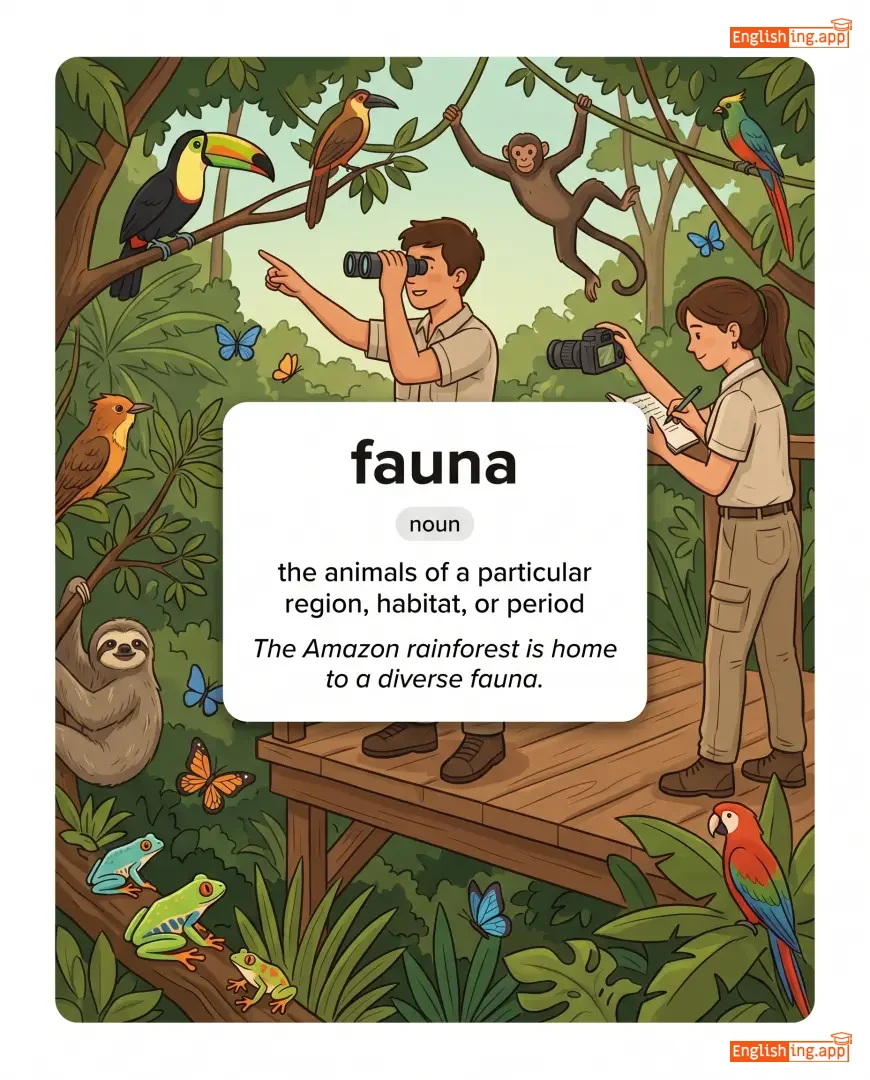
fauna definition card — visual illustration of the meaning
noun
/ˈfɔːnə/
фауна (fauna)

the animals of a particular region, habitat, or period

"The Amazon rainforest is home to a diverse fauna."

"Амазонская сельва является домом для разнообразной фауны." (Amazon skaya sel'va yavylyaetsya domom dlya raznoobraznoy fauny.)
noun
/foʊ ˈpɑː/
социальная ошибка (sotsial'naya oshibka)

a social blunder or mistake in etiquette

"He committed a major faux pas by forgetting her birthday."
"Он совершил большую социальную ошибку, забыв её день рождения." (On sovershil bol'shuyu sotsial'nuyu oshibku, zabyv yeyu den' rozhdeniya.)
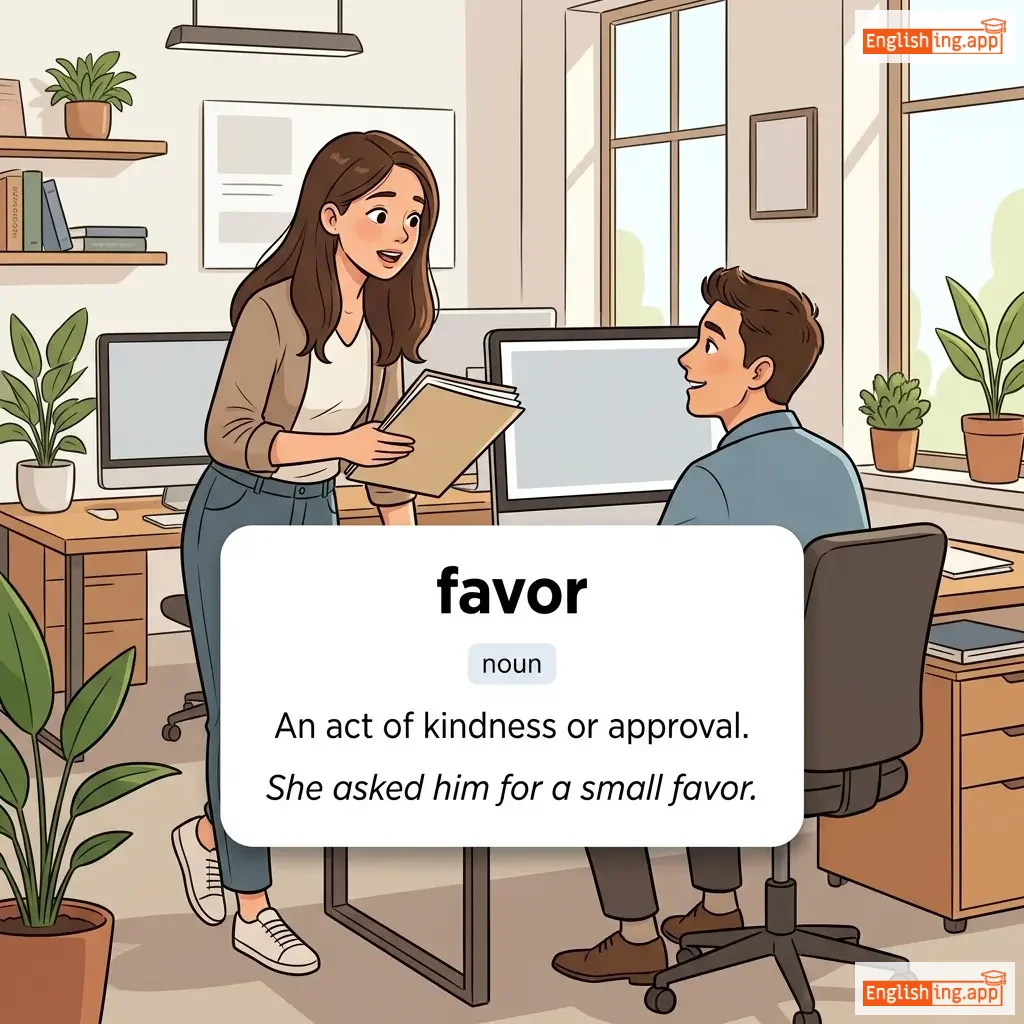
favor definition card — visual illustration of the meaning
noun
/ˈfeɪvər/
услуга (usluga)

An act of kindness or approval.

"She asked him for a small favor."

"Она попросила у него небольшую услугу." (Ona poprosila u nego nebol'shuyu uslugu.)
adjective
/ˈfeɪvərəbəl/
благоприятный (blagopriyatny)

expressing approval or support; advantageous

"The weather conditions were favorable for the outdoor event."

"Погодные условия были благоприятными для мероприятия на открытом воздухе." (Pogodnye usloviya byli blagopriyatnymi dlya meropriyatiya na otkrytom vozdukhe.)