Словари

Словарь английского языка | Значения слов, определения и примеры

noun
/ˈherˌdrɛsər/
парикмахер (parikmakher)

a person whose job is to cut, style, and treat hair

"The hairdresser gave me a stylish haircut before the wedding."
"Парикмахер сделал мне стильную стрижку перед свадьбой." (Parikmakher sdelal mne stilnuyu strizhku pered svadboy)
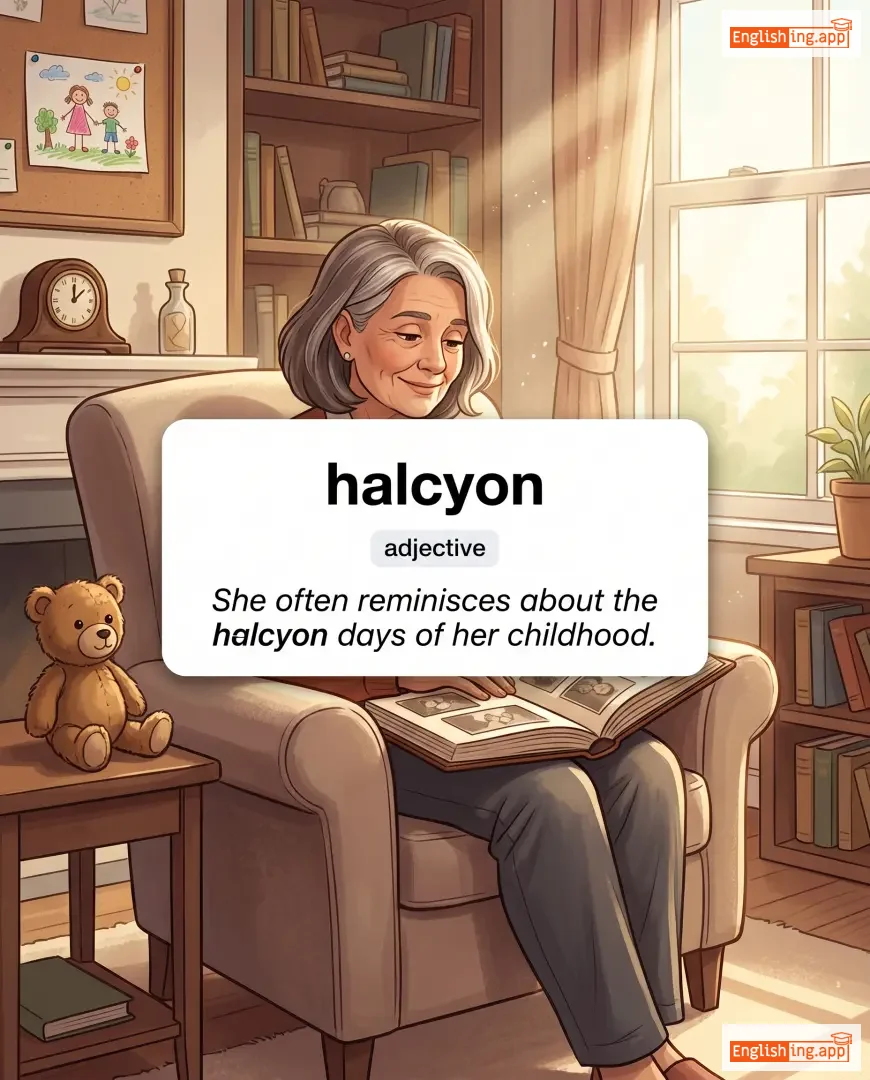
halcyon definition card — visual illustration of the meaning
adjective
/ˈhæl.si.ən/
безмятежный (bezmyatezhnyy)

calm, peaceful, and happy; denoting a period of time in the past that was idyllically happy and peaceful

"She often reminisces about the halcyon days of her childhood."

"Она часто вспоминает безмятежные дни своего детства." (Ona chasto vspominaet bezmyatezhnye dni svoego detstva.)
adjective
/heɪl/
здоровый (zdorovyi)

strong and healthy, especially of an elderly person

"Despite his age, the man remained hale and active."

"Несмотря на его возраст, этот мужчина остался здоровым и активным." (Nesmotrya na ego vozrast, etot muzhchina ostalsya zdorovym i aktivnym.)
noun, adjective
/hæf/
половина (polovina)

one of two equal parts of something

"He ate half of the cake."

"Он съел половину торта." (On syel polovinu torta.)
adjective
/ˌhæfˈbeɪkt/
недоделанный (nedodelannyy)

poorly thought out or badly planned

"The manager quickly rejected his half-baked proposal."

"Менеджер быстро отклонил его недоделанное предложение." (Menedzher bystro otklonil ego nedodelannoye predlozheniye.)
adjective
/ˌhæfˈhɑːr.tɪd/
половинчатый (polovinchatyy)

lacking enthusiasm or determination; unenthusiastic

"His halfhearted attempt to study did not bring good results."

"Его половинчатая попытка учиться не принесла хороших результатов." (Yego polovinchataya popytka uchitsya ne prinesla khoroshikh rezul'tatov.)
adverb
/ˌhæfˈweɪ/
на полпути (na polputi)

at or to a point equal in distance between two points

"We met halfway between the two towns."

"Мы встретились на полпути между двумя городами." (My vstretilis' na polputi mezhdu dvumya gorodami.)
noun
/hɔːl/
зал (zal)

a large room or building for public gatherings, events, or passage

"The graduation ceremony was held in the university hall."

"Церемония вручения дипломов состоялась в зале университета." (Tseremoniya vrucheniya diplomov sostoyalas' v zale universiteta.)
noun
/ˈhɔːl.mɑːrk/
характерная черта (kharakternaya cherta)

a typical characteristic or feature of someone or something

"Honesty is the hallmark of a good leader."

"Честность - это характерная черта хорошего лидера." (Chestnost' - eto kharakternaya cherta khoroshego lidera.)
verb
/ˈhæloʊ/
освящать (osvyashchat)

to honor as holy; to make sacred or greatly respected

"The ancient temple was hallowed by centuries of worship."
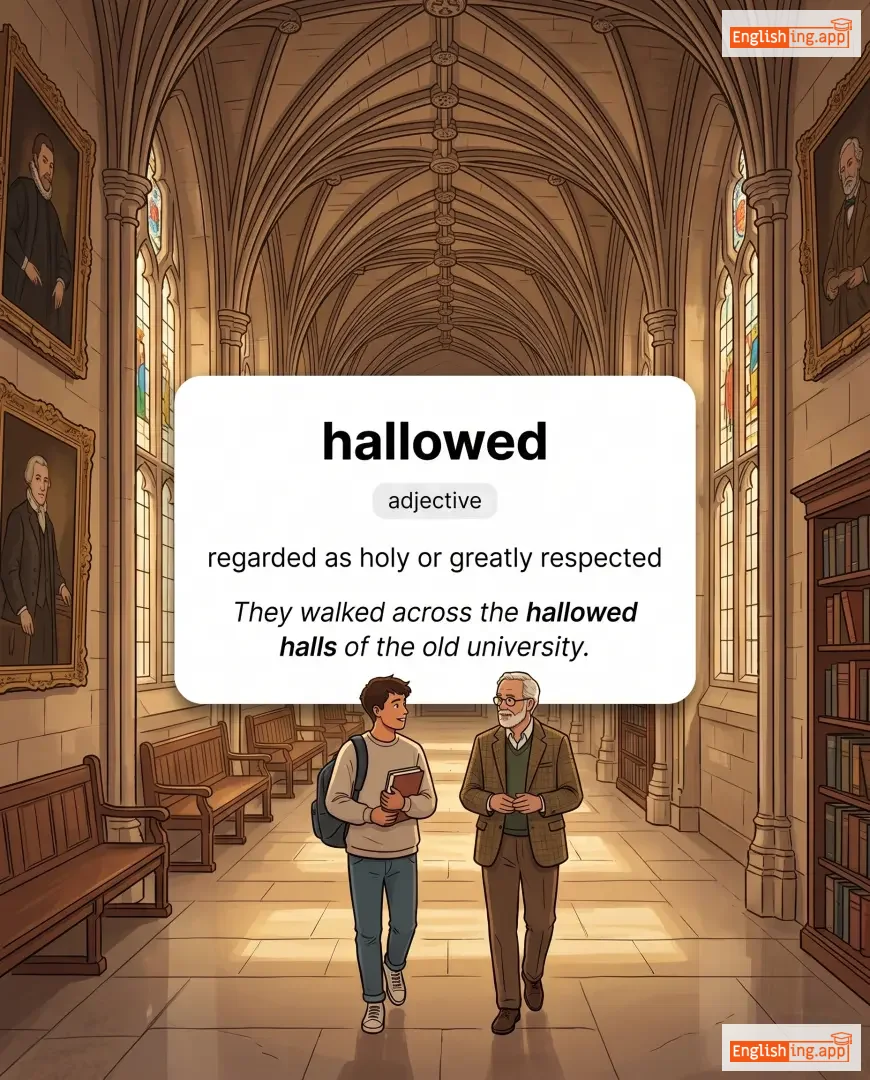
"Древний храм был освящен веками поклонения." (Drevniy khram byl osvyashchen vekami pokloneniya.)
hallowed definition card — visual illustration of the meaning
adjective
/ˈhæloʊd/
священный (svyashchennyy)

regarded as holy or greatly respected

"They walked across the hallowed halls of the old university."

"Они прошли через священные залы старого университета." (Oni proshli cherez svyashchennye zaly starogo universiteta.)
verb
/həˈluːsɪneɪt/
галлюцинировать (gallyutsinirovat)

to see, hear, or sense things that are not actually present, often due to illness or drugs

"After taking the medicine, he began to hallucinate strange shapes."

"После приема лекарства он начал галлюцинировать странные формы." (Posle priema lekarstva on nachal gallyutsinirovat' strannye formy.)
noun
/həˌluːsɪˈneɪʃən/
галлюцинация (gallyutsinatsiya)

a false perception of objects or events, usually caused by mental illness or drugs

"After the medication, he began to experience vivid hallucinations."

"После приема лекарства он начал испытывать яркие галлюцинации." (Posle priema lekarstva on nachal ispytyvat' yarkie gallyutsinatsii.)
noun
/ˈhɔːlweɪ/
коридор (koridor)

a corridor in a building that connects rooms

"The kids left their shoes in the hallway."

"Дети оставили свои туфли в коридоре." (Deti ostavili svoi tufli v koridore.)
verb
/hɔːlt/
остановить (ostanovit)

to stop or bring to a stop

"The train suddenly halted at the station."

"Поезд внезапно остановился на станции." (Poyezd vnezapno ostanovilsya na stantsii.)
adjective
/ˈhɔːltɪŋ/
колеблющийся (koleblyushchijsya)

slow and hesitant, especially due to lack of confidence

"She gave a halting reply during the interview."

"Она дала запоздалый ответ на интервью." (Ona dala zapozdalyj otvet na interv'yu.)
adjective
/ˈhæm ˌhændɪd/
неуклюжий (neuklyuzhiy)

clumsy or inept in handling things or situations

"His ham-handed attempt to fix the computer made it worse."

"Его неуклюжая попытка починить компьютер только ухудшила ситуацию." (Yego neuklyuzhaya popytka pochinit' komp'yuter tol'ko ukhudshila situatsiyu.)
noun
/ˈhæm.lət/
маленькое поселение (malen'koye poseleniye)

a small rural settlement, smaller than a village; a small community

"The tiny hamlet nestled in the valley had only a dozen houses and one small church."

"Маленькое поселение, расположенное в долине, имело всего дюжину домов и одну маленькую церковь." (Malen'koye poseleniye, raspolozhennoye v doline, imelo vsego dyuzhinu domov i odnu malen'kuyu tserkov'.)
noun, verb
/ˈhæmər/

a tool with a heavy metal head used for breaking things or driving in nails; to hit something forcefully with a hammer or similar object.

"He used a hammer to fix the broken chair."
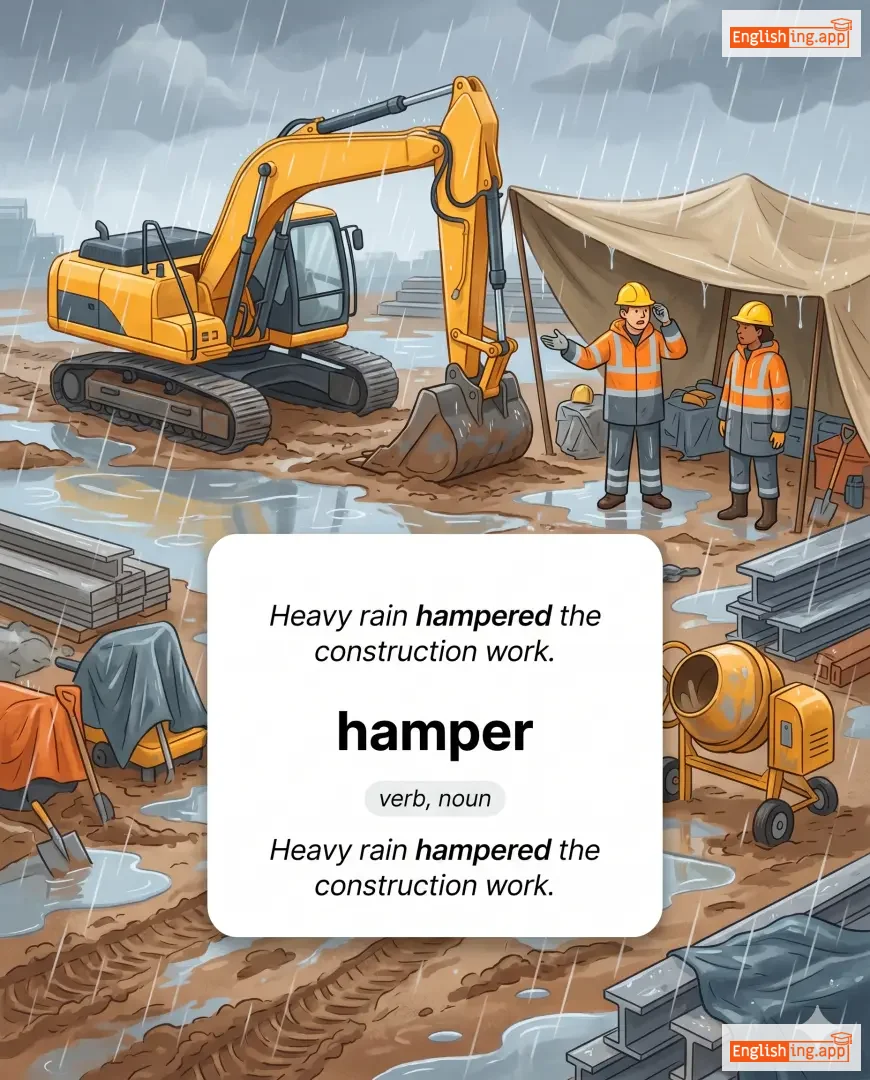
hamper definition card — visual illustration of the meaning
verb, noun
/ˈhæmpər/
препятствовать, корзина для белья (prepyatstvovat, korzina dlya belya)

to prevent or slow down the progress of something; also, a basket with a lid, typically for laundry.

"Heavy rain hampered the construction work."

"Сильный дождь затруднил строительные работы." (Sil'nyy dozhd' zatrudnil stroitel'nye raboty.)
noun, verb
/ˈhæmstrɪŋ/
сухожилие на задней части бедра; как глагол, ослабить или сильно ограничить эффективность кого-то или чего-то (sukhozhilie na zadney chasti bedra; kak glagol, oslabit' ili sil'no ogranichit' effektivnost' kogo-to ili chego-to)

a tendon at the back of the thigh; as a verb, to cripple or severely restrict the effectiveness of someone or something.

"Budget cuts hamstrung the organization’s plans."

"Сокращения бюджета ослабили планы организации." (Sokrashcheniya byudzheta oslabili plany organizatsii.)
verb (past tense, past participle), adjective
/ˈhæmstrʌŋ/
парализованный или ограниченный (paralizovannyy ili ogranichennyy)

crippled or severely restricted in movement or progress.

"The team was hamstrung by lack of resources."

"Команда была ограничена нехваткой ресурсов." (Komanda byla ogranichena nekhvatkoy resursov.)
noun, verb
/hænd/
рука (ruka)

the part of the body at the end of the arm used for holding things

"She raised her hand to ask a question."
"Она подняла руку, чтобы задать вопрос." (Ona podnyala ruku, chtoby zadat' vopros.)
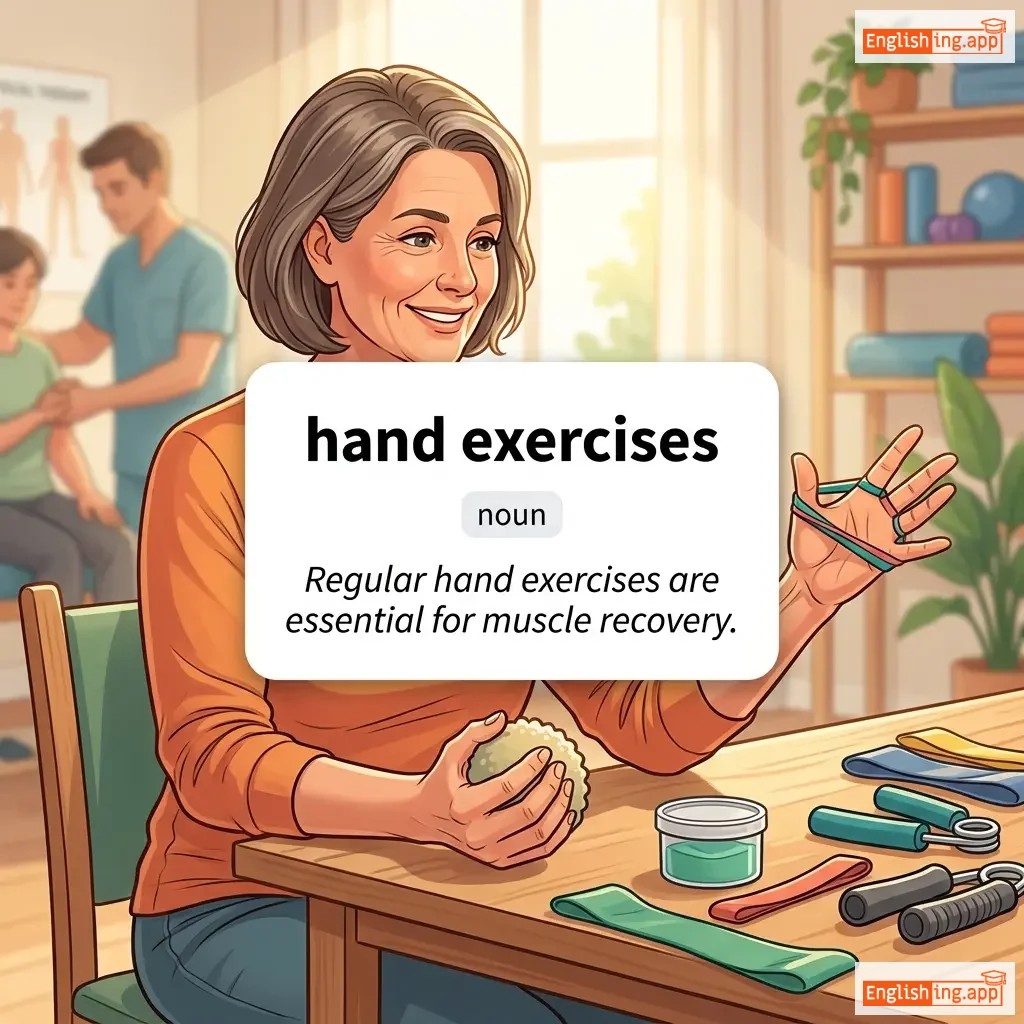
hand exercises definition card — visual illustration of the meaning
noun
হ্যান্ড এক্সারসাইজেস
упражнения для рук (uprazhneniya dlya ruk)

Physical activities designed to strengthen, stretch, and improve the flexibility of hand and finger muscles.

"Regular hand exercises are essential for muscle recovery."

"Регулярные упражнения для рук необходимы для восстановления мышц." (Regulyarnye uprazhneniya dlya ruk neobkhodimy dlya vosstanovleniya myshc.)
noun
/ˈhænd ˌrɪŋɪŋ/
чрезмерная тревога (chrezmernaya trevoga)

excessive worry or concern expressed in a visible or dramatic way.

"There was much hand-wringing over the political crisis."

"Было много драматической озабоченности по поводу политического кризиса." (Bylo mnogo dramaticheskoy ozabochennosti po povodu politicheskogo krizisa.)
noun
/ˈhænd.fʊl/
горсть (gorst')

the amount of something that can be held in one hand; a small number

"She took a handful of nuts."

"Она взяла горсть орехов." (Ona vzyala gorst' orekhov.)
noun
/ˈhæn.di.krɑːft/
ремесло (remeslo)

an activity involving the making of decorative domestic or other objects with the hands; handmade artistic work

"The local market featured beautiful handicrafts made by skilled artisans from the region."

"На местном рынке были представлены красивые ремесленные изделия, сделанные опытными ремесленниками из этого региона." (Na mestnom rynke byli predstavleny krasivye remeslennye izdeliya, sdelannye opytnymi remeslennikami iz etogo regiona.)
noun
/ˈhæŋ.kər.tʃɪf/
платок (platok)

a small piece of cloth used for wiping the nose or face

"She always carries a clean handkerchief in her purse."

"Она всегда носит чистый платок в своей сумочке." (Ona vsegda nosit chisty platok v svoey sumochke.)
Handle definition card — visual illustration of the meaning
noun, verb
/ˈhændl̩/
рукоятка / справляться (rukoyatka / spravlyatsya)

the part of an object designed to be held in the hand; to deal with or manage a situation

"He could not handle the pressure of the job."

"Он не смог справиться с давлением на работе." (On ne smog spravitsya s davleniem na rabote.)
noun
/ˈhændlɪŋ/
обработка (obrabotka)

the act of managing or dealing with something or someone

"His handling of the situation was impressive."

"Его обработка ситуации была впечатляющей." (Ego obrabotka situatsii byla vpechatlyayushchey.)
adjective
/ˈhæn.səm/
счастье (schastye)

attractive in appearance, usually referring to men; also can mean generous or impressive in size.

"He looked very handsome in his new suit."

"Она не могла скрыть своего счастья, когда получила награду." (Ona ne mogla skryt' svoego schast'ya, kogda poluchila nagradu.)
noun
/ˈhændˌraɪ.tɪŋ/
почерк (pocherk)

the style or manner of writing by hand.

"Her handwriting is very neat and easy to read."

"Ее почерк очень аккуратный и легко читаемый." (Eyo pocherk ochen' akuratnyy i legko chitayemyy.)
adjective
/ˈhændi/
удобный в использовании (udobnyy v ispol'zovanii)

convenient to use or easily accessible; skillful with the hands

"This pocket knife is very handy when you go camping."
"Этот карманный нож очень полезен, когда вы отправляетесь в поход." (Etot karmannyy nozh ochen' polezen, kogda vy otpravlyayetes' v pokhod.)
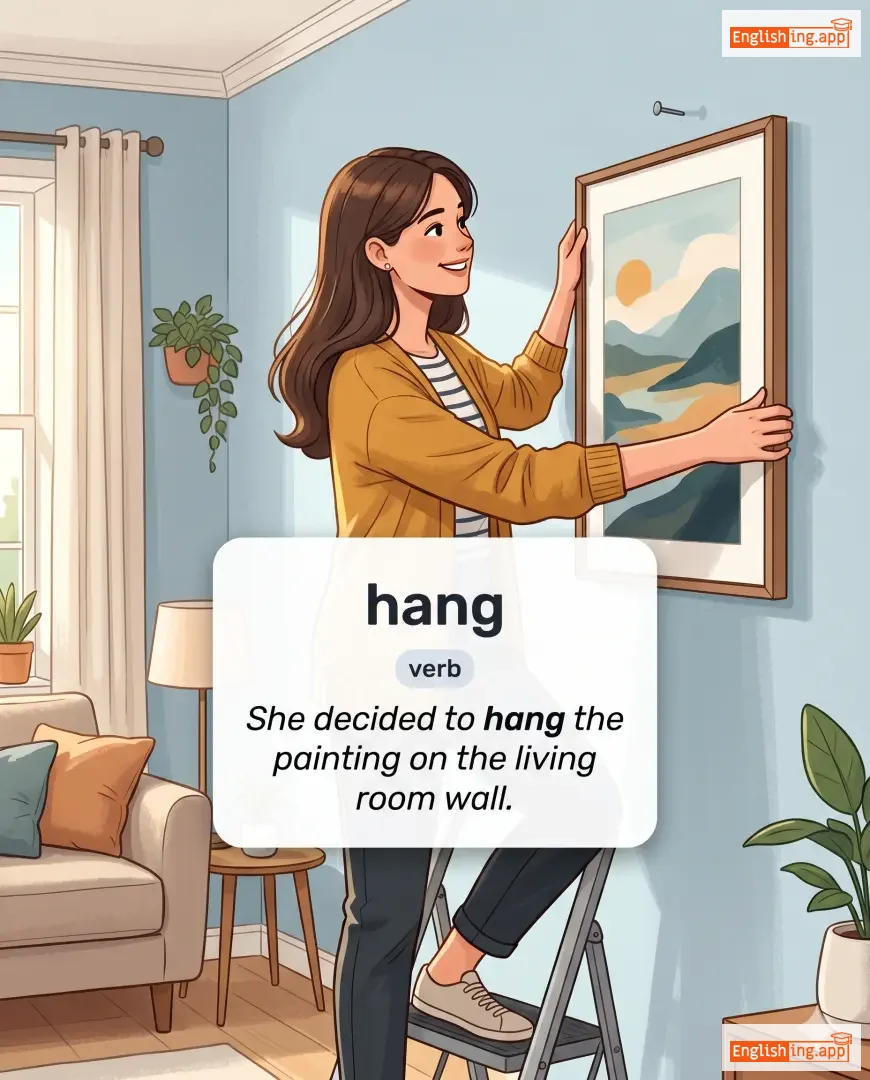
hang definition card — visual illustration of the meaning
🖼️

hang

verb
/hæŋ/

to suspend or attach something from above so that it moves freely or is supported

"She decided to hang the painting on the living room wall."

noun
/ˈhæŋ.ər/
ангар (angar)

a large building with extensive floor area, typically for housing aircraft; an aircraft shelter

"The airplane was stored safely in the hangar during the severe thunderstorm."

"Самолет был надежно припаркован в ангаре во время сильного шторма." (Samolyot byl nadezhno priparkovann v angare vo vremya sil'nogo shtorma.)
adjective
/ˈhæŋ.dɔːɡ/
смущённый (smushchyonny)

looking or feeling ashamed, guilty, or defeated.

"He gave me a hangdog look after being caught lying."

"Он посмотрел на меня с смущённым взглядом после того, как его поймали на лжи." (On posmotreli na menya s smushchyonnym vzglyadom posle togo, kak ego poymali na lzhi.)
noun
/ˈhæŋ.ər/
вешалка (veshalka)

a shaped piece of wood, plastic, or metal with a hook at the top, used to hang up clothes

"She hung her dress on a wooden hanger to prevent it from getting wrinkled."

"Она повесила свое платье на деревянную вешалку, чтобы оно не помялось." (Ona povesila svoe plat'ye na derevyannuyu veshalku, chtoby ono ne pomyalos'.)
noun
/ˌhæŋ.ər ˈɒn/
прилипала (prilipala)

a person who spends time with a powerful or famous person to gain benefits.

"The celebrity was always surrounded by hangers-on."

"Знаменитость всегда была окружена прилипалами." (Znamenitost' vsegda byla okruzhenna prilipalami.)
noun
/ˈhæŋ.kər/
тоска, желание (toska, zhelanie)

a feeling of yearning or craving; a strong desire for something

"After years abroad, she developed a deep hanker for her homeland's traditional cuisine."

"После многих лет за границей она развила глубокое желание поесть традиционные блюда своей родины." (Posle mnogikh let za granitsey ona razvila glubokoe zhelanie poest' traditsionnye blyuda svoey rodiny.)
noun
/ˈhæŋ.kər.ɪŋ/
тяга (tyaga)

a strong desire or craving for something.

"She had a hankering for chocolate late at night."

"Она почувствовала сильное желание съесть шоколад поздно ночью." (Ona pochuvstvovala sil'noe zhelanie s'yest' shokolad pozdno noch'yu.)
noun
/ˌhæŋ.ki ˈpæŋ.ki/
мошенничество; подозрительная активность; неэтичное поведение; обман (moshennichestvo; podozritelnaya aktivnost; neetichnoe povedenie; obman)

dishonest or suspicious activity; unethical behavior; trickery or deception

"The audit revealed some hanky-panky in the company's financial records."

"Аудит выявил мошенничество в финансовых записях компании." (Audit viyavil moshennichestvo v finansovykh zapisyakh kompanii.)
noun
/hæp/
счастье, удача, случайность (schastye, udacha, sluchaynost)

luck, fortune, or chance occurrence

"By sheer hap, he discovered the old letter hidden in the drawer."

"Только по удаче он нашел старое письмо, спрятанное в ящике." (Tol'ko po udache on nashel staroye pismo, spryatanoye v yashchike.)
adjective
/hæpˈhæzərd/
беспорядочный, случайный (besporyadochnyy, sluchaynyy)

lacking any obvious order or organization; random

"The books were stacked in a haphazard way on the table."

"Книги были сложены беспорядочно на столе." (Knihi byli slozheny besporyadochno na stole.)
adjective
/ˈhæpləs/
неудачливый, жалкий (neudachlivyy, zhalkiy)

unfortunate, unlucky, deserving pity

"The hapless traveler lost his passport on the very first day."

"Неудачливый путешественник потерял свой паспорт в первый же день." (Neudachlivyy puteshestvennik poteryal svoy pasport v pervyy zhe den.)
verb
/ˈhæpən/
случаться (sluchatsya)

to take place or occur, usually by chance

"Accidents can happen at any time."

"Аварии могут случиться в любое время." (Avarii mogut sluchitsya v lyuboye vremya.)
adverb
/ˈhæpɪli/
счастливо (schastlivo)

in a happy manner; with pleasure or satisfaction

"The children played happily in the garden."

"Дети играли счастливо в саду." (Deti igrali schastlivo v sadu.)
happiness definition card — visual illustration of the meaning
noun
/ˈhæpinəs/
счастье (schast'ye)

the state of being happy or feeling pleasure and contentment

"True happiness comes from within."
"Настоящее счастье приходит изнутри." (Nastoyashcheye schast'ye prikhodit iznutri.)
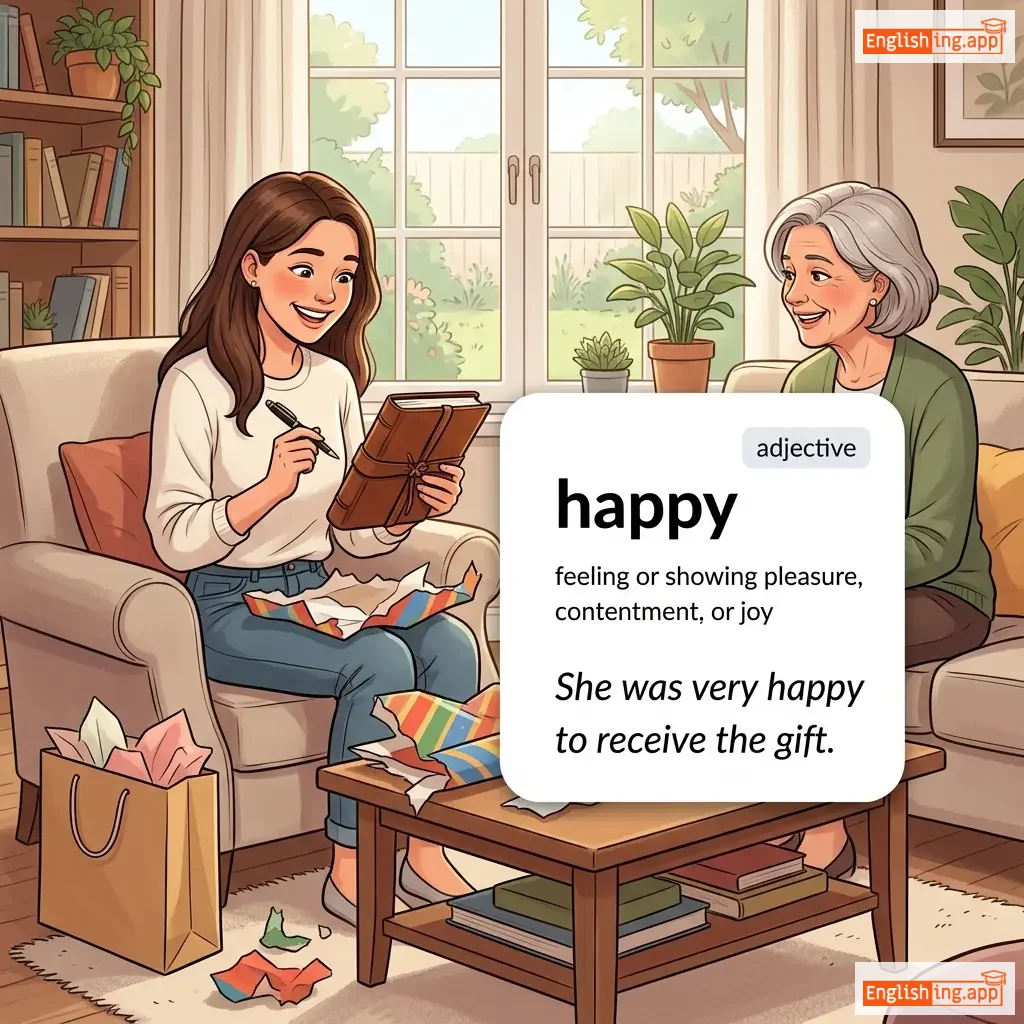
happy definition card — visual illustration of the meaning
adjective
/ˈhæpi/
счастье (schastye)

feeling or showing pleasure, contentment, or joy

"She was very happy to receive the gift."

"Она была очень счастлива получить подарок." (Ona byla ochen' schastliva poluchit' podarok.)
facilities definition card — visual illustration of the meaning
noun
fəˈsɪl.ɪ.tiz
объекты (ob'ekty)

Space, equipment, or services provided for a particular purpose.

"Facilities for renewable energy production are expanding."

"Увеличивается количество объектов для производства возобновляемой энергии." (Uvelichivayetsya kolichestvo ob'ektov dlya proizvodstva vozobnovlyayemoy energii.)
facility definition card — visual illustration of the meaning
noun
/fəˈsɪləti/
удобства, услуги или оборудование, предоставленные для определенной цели (udobstva, uslugi ili oborudovanie, predostavlennye dlya opredelennoj tseli)

a place, service, or equipment provided for a particular purpose; ease in doing something

"The hotel offers excellent recreational facilities."

"Отель предлагает отличные рекреационные удобства." (Otel predlagayet otlichnye rekreatsionnye udobstva.)