語彙集

英単語辞書 | 単語の意味、定義、例文

noun
/ˈherˌdrɛsər/
美容師 (biyoshi)

a person whose job is to cut, style, and treat hair

"The hairdresser gave me a stylish haircut before the wedding."
"美容師は結婚式の前に私におしゃれな髪型をしてくれました。" (Biyoshi wa kekkonshiki no mae ni watashi ni oshare na kamigata o shite kuremashita)
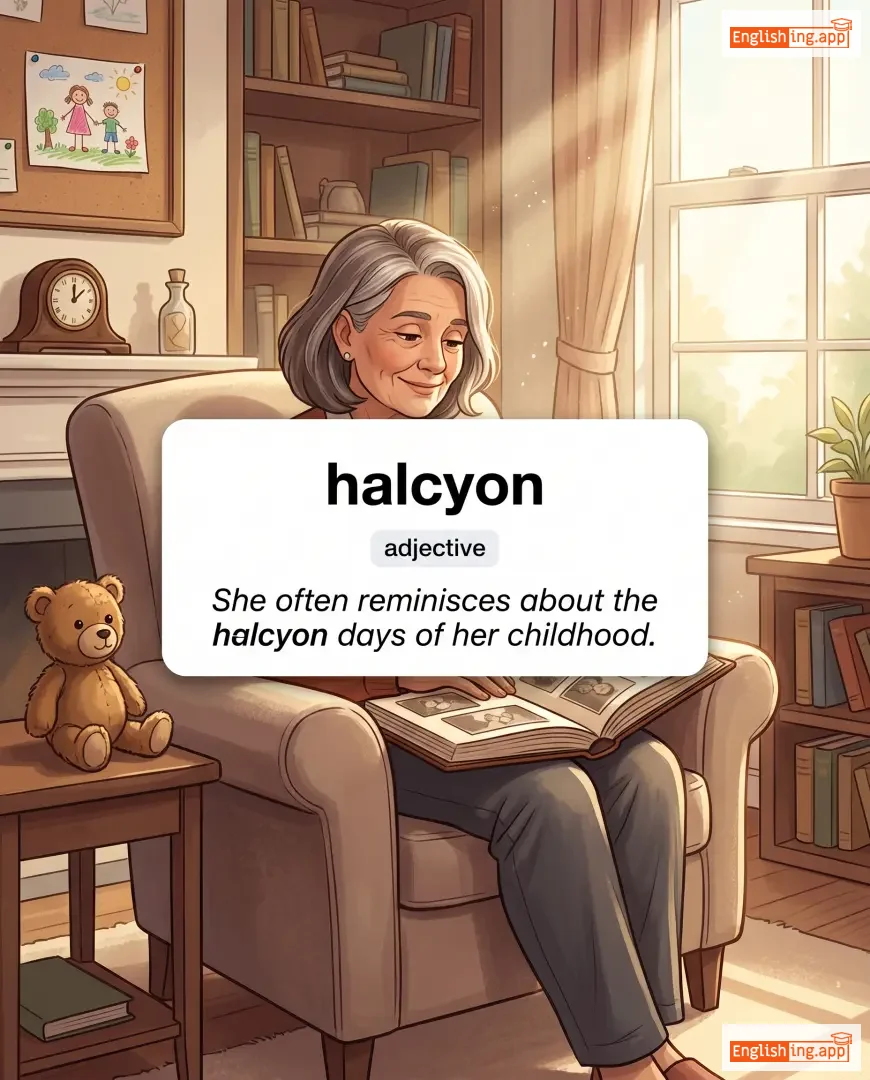
halcyon definition card — visual illustration of the meaning
adjective
/ˈhæl.si.ən/
静かな (shizukana)

calm, peaceful, and happy; denoting a period of time in the past that was idyllically happy and peaceful

"She often reminisces about the halcyon days of her childhood."

"彼女はよく子供時代の静かな日々を思い出します。" (Kanojo wa yoku kodomojidai no shizukana hibi o omoidashimasu.)
adjective
/heɪl/
健康 (kenkō)

strong and healthy, especially of an elderly person

"Despite his age, the man remained hale and active."

"年齢にもかかわらず、その男性は元気で活動的でした。" (Nenrei ni mo kakawarazu, sono dansei wa genki de katsudōteki deshita.)
noun, adjective
/hæf/
半分 (hanbun)

one of two equal parts of something

"He ate half of the cake."

"彼はケーキの半分を食べました。" (Kare wa keeki no hanbun o tabemashita.)
adjective
/ˌhæfˈbeɪkt/
中途半端 (chuto hanpa)

poorly thought out or badly planned

"The manager quickly rejected his half-baked proposal."

"マネージャーは彼の中途半端な提案をすぐに却下しました。" (Manejā wa kare no chūto hanpa na teian o sugu ni kyakka shimashita.)
adjective
/ˌhæfˈhɑːr.tɪd/
やる気がない (yaruki ga nai)

lacking enthusiasm or determination; unenthusiastic

"His halfhearted attempt to study did not bring good results."

"彼のやる気がない勉強の試みは良い結果を生まなかった。" (Kare no yaruki ga nai benkyou no kokoromi wa yoi kekka o umanakatta.)
adverb
/ˌhæfˈweɪ/
途中で (tochū de)

at or to a point equal in distance between two points

"We met halfway between the two towns."

"私たちは二つの町の間の途中で会いました。" (Watashitachi wa futatsu no machi no aida no tochū de aimashita.)
noun
/hɔːl/
ホール (hōru)

a large room or building for public gatherings, events, or passage

"The graduation ceremony was held in the university hall."

"卒業式は大学のホールで行われました。" (Sotsugyō-shiki wa daigaku no hōru de okonaware mashita.)
noun
/ˈhɔːl.mɑːrk/
象徴的な特徴 (shouchou-teki na tokuchou)

a typical characteristic or feature of someone or something

"Honesty is the hallmark of a good leader."

"誠実さは良いリーダーの象徴的な特徴です。" (Seijitsusa wa yoi riidaa no shouchou-teki na tokuchou desu.)
verb
/ˈhæloʊ/
聖別する (seibetsu suru)

to honor as holy; to make sacred or greatly respected

"The ancient temple was hallowed by centuries of worship."
"古代の寺院は何世紀にもわたる崇拝によって聖別されました。" (Kodai no jiin wa nanseiki ni mo wataru suuhai ni yotte seibetsu saremashita.)
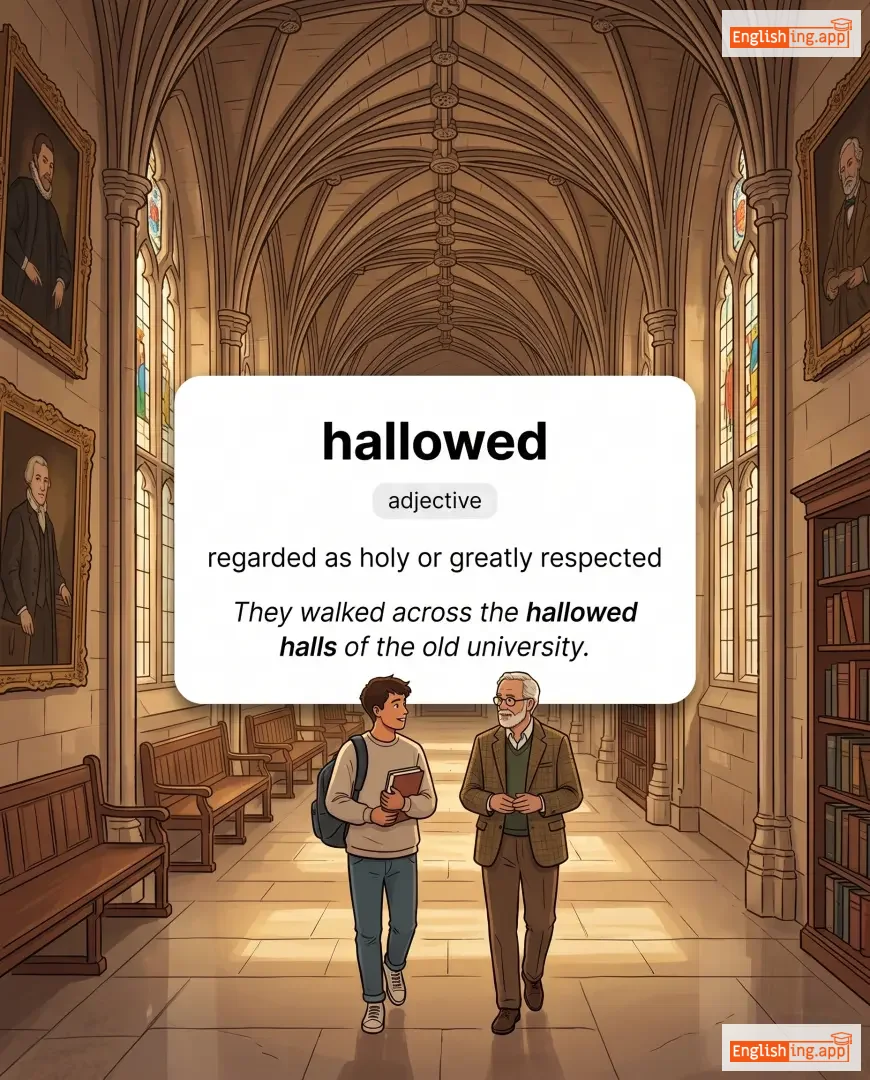
hallowed definition card — visual illustration of the meaning
adjective
/ˈhæloʊd/
神聖 (shinsei)

regarded as holy or greatly respected

"They walked across the hallowed halls of the old university."

"彼らは古い大学の神聖な廊下を歩いた。" (Karera wa furui daigaku no shinsei na rouka o aruita.)
verb
/həˈluːsɪneɪt/
幻覚を見る (genkaku wo miru)

to see, hear, or sense things that are not actually present, often due to illness or drugs

"After taking the medicine, he began to hallucinate strange shapes."

"薬を飲んだ後、彼は奇妙な形をハルシネイトし始めた。" (Kusuri wo nonda ato, kare wa kimyō na katachi wo harushineito shi hajimeta.)
noun
/həˌluːsɪˈneɪʃən/
幻覚 (genkaku)

a false perception of objects or events, usually caused by mental illness or drugs

"After the medication, he began to experience vivid hallucinations."

"薬を飲んだ後、彼は生き生きとした幻覚を体験し始めた。" (Kusuri o nonda ato, kare wa ikikito shita genkaku o taiken shi hajimeta.)
noun
/ˈhɔːlweɪ/
廊下 (rōka)

a corridor in a building that connects rooms

"The kids left their shoes in the hallway."

"子供たちは靴を廊下に置いていった。" (Kodomotachi wa kutsu o rōka ni oite itta.)
verb
/hɔːlt/
停止する (teishi suru)

to stop or bring to a stop

"The train suddenly halted at the station."

"電車は駅で突然止まりました。" (Densha wa eki de totsuzen tomarimashita.)
adjective
/ˈhɔːltɪŋ/
ためらい (tamerai)

slow and hesitant, especially due to lack of confidence

"She gave a halting reply during the interview."

"彼女は面接中にためらいながら答えました。" (Kanojo wa mensetsu-chū ni tamerai nagara kotaemashita.)
adjective
/ˈhæm ˌhændɪd/
不器用 (bukiyou)

clumsy or inept in handling things or situations

"His ham-handed attempt to fix the computer made it worse."

"彼の手際の悪い試みでコンピュータがさらに悪化しました。" (Kare no tegiwa no warui kokoromi de konpyu-ta ga sara ni akka shimashita.)
noun
/ˈhæm.lət/
小さな村 (chiisana mura)

a small rural settlement, smaller than a village; a small community

"The tiny hamlet nestled in the valley had only a dozen houses and one small church."
"谷間にある小さな村には、家が12軒と小さな教会が1つだけあった。" (Tanimani aru chiisana mura ni wa, ie ga juuni ken to chiisana kyōkai ga hitotsu dake atta.)
noun, verb
/ˈhæmər/

a tool with a heavy metal head used for breaking things or driving in nails; to hit something forcefully with a hammer or similar object.

"He used a hammer to fix the broken chair."

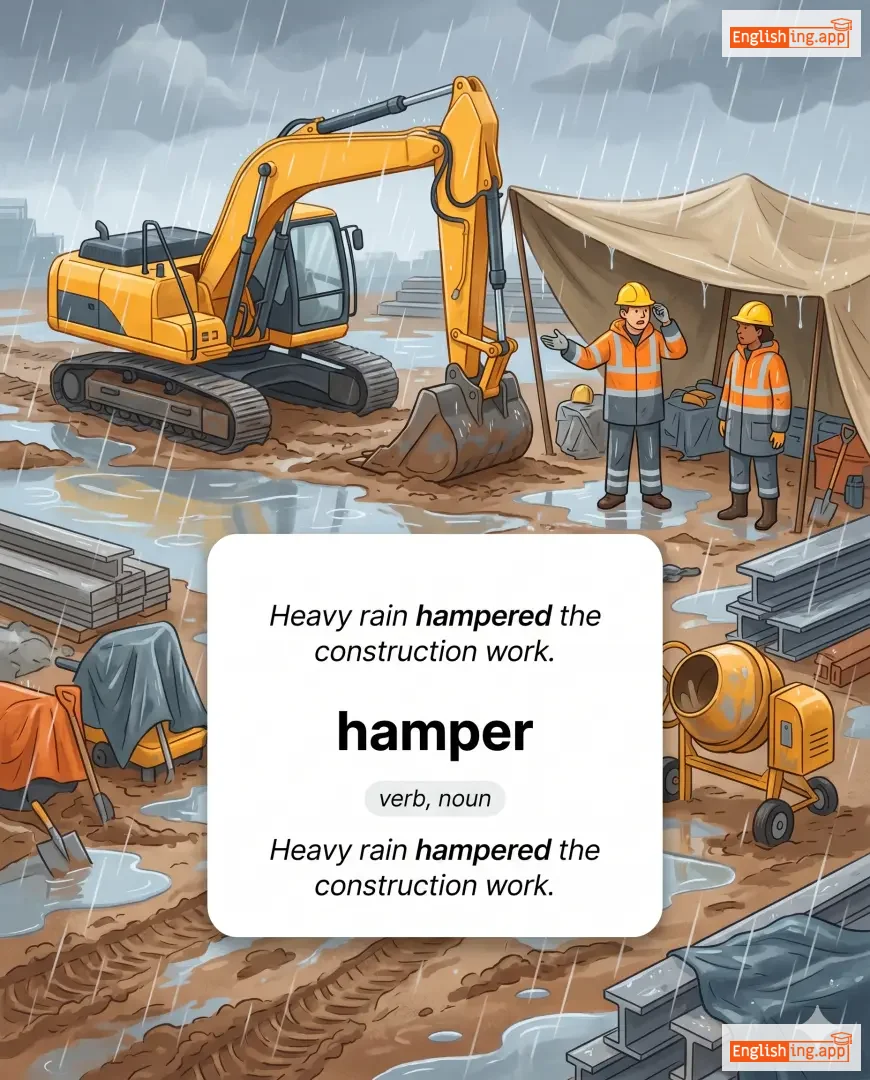
hamper definition card — visual illustration of the meaning
verb, noun
/ˈhæmpər/
妨げる、洗濯かご (samata-geru, sentaku kago)

to prevent or slow down the progress of something; also, a basket with a lid, typically for laundry.

"Heavy rain hampered the construction work."

"大雨が建設作業を妨げました。" (Ōame ga kensetsu sagyō o samatagemashita.)
noun, verb
/ˈhæmstrɪŋ/
太ももの後ろの腱; 動詞として、誰かまたは何かの効果を制限または著しく制限する (futomomo no ushiro no ken; dōshi toshite, dareka matawa nanika no kōka o seigen matawa ichijirushiku seigen suru)

a tendon at the back of the thigh; as a verb, to cripple or severely restrict the effectiveness of someone or something.

"Budget cuts hamstrung the organization’s plans."

"予算削減により、組織の計画が弱体化しました。" (Yosan sakugen ni yori, soshiki no keikaku ga jakutaika shimashita.)
verb (past tense, past participle), adjective
/ˈhæmstrʌŋ/
無力または制限された (muryoku mata wa seigen sareta)

crippled or severely restricted in movement or progress.

"The team was hamstrung by lack of resources."
"チームはリソース不足で制約を受けていた。" (Chīmu wa risōsu fusoku de seiyaku o ukete ita.)
🤚

Hand

noun, verb
/hænd/

the part of the body at the end of the arm used for holding things

"She raised her hand to ask a question."

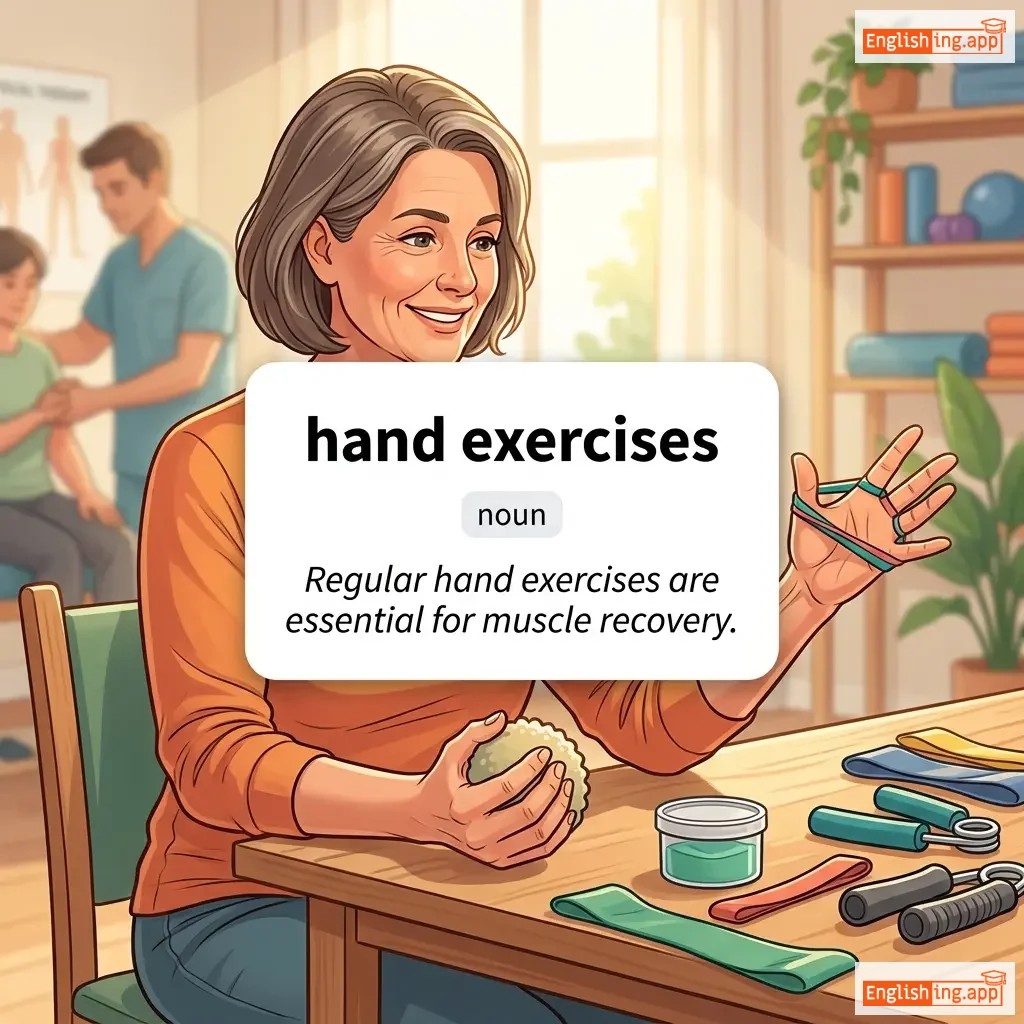
hand exercises definition card — visual illustration of the meaning
noun
হ্যান্ড এক্সারসাইজেস
手のエクササイズ (te no ekusasaizu)

Physical activities designed to strengthen, stretch, and improve the flexibility of hand and finger muscles.

"Regular hand exercises are essential for muscle recovery."

"定期的な手のエクササイズは筋肉の回復に不可欠です。" (Teikiteki na te no ekusasaizu wa kinniku no kaifuku ni fukaketsu desu.)
noun
/ˈhænd ˌrɪŋɪŋ/
過剰な心配 (kajou na shinpai)

excessive worry or concern expressed in a visible or dramatic way.

"There was much hand-wringing over the political crisis."

"政治危機について多くの心配がありました。" (Seiji kiki ni tsuite ōku no shinpai ga arimashita.)
noun
/ˈhænd.fʊl/
ひと握り (hito nigiri)

the amount of something that can be held in one hand; a small number

"She took a handful of nuts."

"彼女はひと握りのナッツを取った。" (kanojo wa hito nigiri no nattsu o totta.)
noun
/ˈhæn.di.krɑːft/
手工芸 (tekōgei)

an activity involving the making of decorative domestic or other objects with the hands; handmade artistic work

"The local market featured beautiful handicrafts made by skilled artisans from the region."

"地元の市場では、その地域の熟練した職人によって作られた美しい手工芸が展示されていました。" (Jimoto no shijō de wa, sono chiiki no jukuren shita shokunin ni yotte tsukurareta utsukushī tekōgei ga tenji sarete imashita.)
noun
/ˈhæŋ.kər.tʃɪf/
ハンカチ (hankachi)

a small piece of cloth used for wiping the nose or face

"She always carries a clean handkerchief in her purse."
"彼女はいつもバッグにきれいなハンカチを持っています。" (Kanojo wa itsumo baggu ni kirei na hankachi wo motteimasu.)
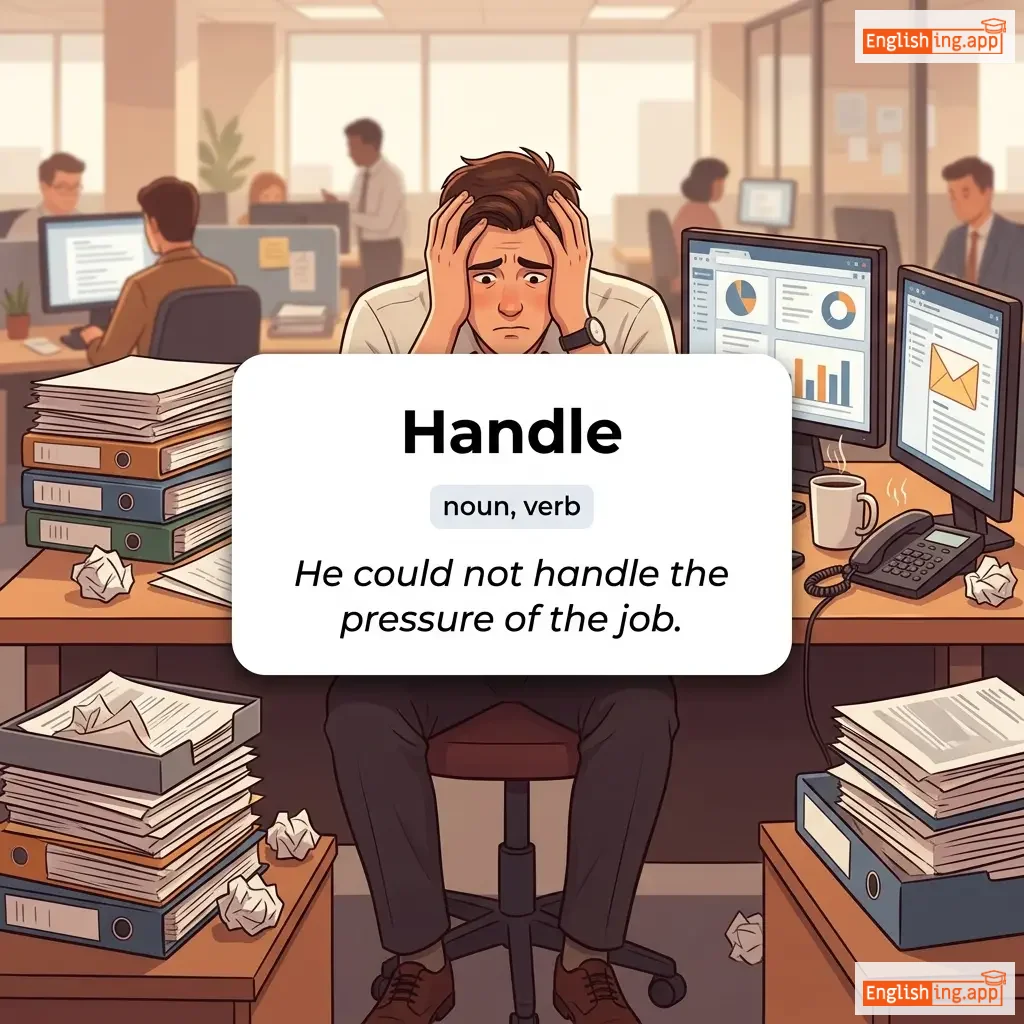
Handle definition card — visual illustration of the meaning
noun, verb
/ˈhændl̩/
取っ手 / 扱う (totte / atsukau)

the part of an object designed to be held in the hand; to deal with or manage a situation

"He could not handle the pressure of the job."

"彼は仕事のプレッシャーをうまく扱えなかった。" (Kare wa shigoto no puresshā wo umaku atsukaenakatta.)
noun
/ˈhændlɪŋ/
取り扱い (toriatsukai)

the act of managing or dealing with something or someone

"His handling of the situation was impressive."

"その状況の取り扱いは印象的でした。" (Sono jōkyō no toriatsukai wa inshō-teki deshita.)
adjective
/ˈhæn.səm/

attractive in appearance, usually referring to men; also can mean generous or impressive in size.

"He looked very handsome in his new suit."

noun
/ˈhændˌraɪ.tɪŋ/
手書き (tegaki)

the style or manner of writing by hand.

"Her handwriting is very neat and easy to read."

"彼女の手書きはとてもきれいで読みやすいです。" (Kanojo no tegaki wa totemo kirei de yomiyasui desu.)
adjective
/ˈhændi/
使いやすい (tsukaiyasui)

convenient to use or easily accessible; skillful with the hands

"This pocket knife is very handy when you go camping."

"このポケットナイフはキャンプの時に非常に便利です。" (Kono poketto naifu wa kyanpu no toki ni hijou ni benri desu.)
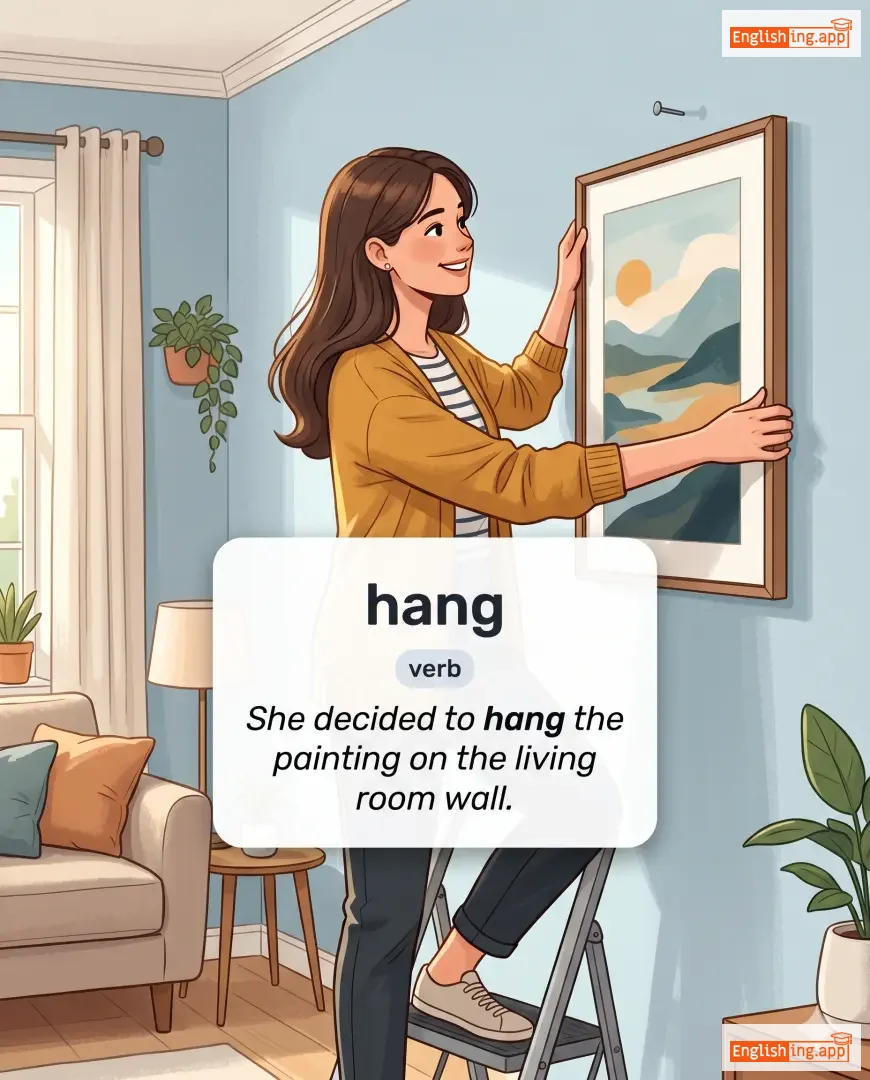
hang definition card — visual illustration of the meaning
🖼️

hang

verb
/hæŋ/

to suspend or attach something from above so that it moves freely or is supported

"She decided to hang the painting on the living room wall."

noun
/ˈhæŋ.ər/
ハンガー (hangā)

a large building with extensive floor area, typically for housing aircraft; an aircraft shelter

"The airplane was stored safely in the hangar during the severe thunderstorm."

"飛行機は激しい雷雨の間、安全にハンガーに保管されていました。" (Hikōki wa hageshī raiu no aida, anzen ni hangā ni hokan sarete imashita.)
adjective
/ˈhæŋ.dɔːɡ/
恥ずかしい (hazukashii)

looking or feeling ashamed, guilty, or defeated.

"He gave me a hangdog look after being caught lying."

"彼は嘘をついて捕まった後、恥ずかしそうな顔をした。" (Kare wa uso o tsuite tsukamatta ato, hazukashisō na kao o shita.)
noun
/ˈhæŋ.ər/
ハンガー (hangā)

a shaped piece of wood, plastic, or metal with a hook at the top, used to hang up clothes

"She hung her dress on a wooden hanger to prevent it from getting wrinkled."

"彼女はドレスがしわにならないように木のハンガーに掛けました。" (Kanojo wa doresu ga shiwa ni naranai yō ni ki no hangā ni kakemashita.)
noun
/ˌhæŋ.ər ˈɒn/
おこぼれ (okobore)

a person who spends time with a powerful or famous person to gain benefits.

"The celebrity was always surrounded by hangers-on."

"その有名人はいつもおこぼれの人々に囲まれていた。" (sono yūmeijin wa itsumo okobore no hitobito ni kakomarete ita.)
noun
/ˈhæŋ.kər/
渇望, 欲求 (katsubou, yokkyuu)

a feeling of yearning or craving; a strong desire for something

"After years abroad, she developed a deep hanker for her homeland's traditional cuisine."

"海外で何年も過ごした後、彼女は故郷の伝統的な料理への深い渇望を抱きました。" (Kaigai de nannen mo sugoshita ato, kanojo wa kokyou no dentouteki na ryouri e no fukai katsubou wo idakimashita.)
noun
/ˈhæŋ.kər.ɪŋ/
切望 (setsubou)

a strong desire or craving for something.

"She had a hankering for chocolate late at night."

"彼女は夜遅くにチョコレートへの切望を感じていた。" (Kanojo wa yoru osoku ni chokorēto e no setsubou o kanjite ita.)
noun
/ˌhæŋ.ki ˈpæŋ.ki/
詐欺; 疑わしい活動; 不道徳な行動; ごまかし (sagi; ugokashii katsudou; fudoutokuna koudou; gomakashi)

dishonest or suspicious activity; unethical behavior; trickery or deception

"The audit revealed some hanky-panky in the company's financial records."

"監査により、会社の財務記録に詐欺が発覚しました。" (kansa ni yori, kaisha no zaimu kiroku ni sagi ga hakken shimashita.)
noun
/hæp/
運, 幸運, 偶然 (un, kouun, guuzen)

luck, fortune, or chance occurrence

"By sheer hap, he discovered the old letter hidden in the drawer."

"偶然にも、彼は引き出しの中に隠された古い手紙を発見しました。" (Guuzen ni mo, kare wa hikidashi no naka ni kakusareta furui tegami wo hakken shimashita.)
adjective
/hæpˈhæzərd/
でたらめな、無秩序な (detarame na, muchitsujona)

lacking any obvious order or organization; random

"The books were stacked in a haphazard way on the table."

"本はテーブルにでたらめに積まれていた。" (Hon wa tēburu ni detarame ni tsumarete ita.)
adjective
/ˈhæpləs/
不運な, 不幸な (fuun na, fukou na)

unfortunate, unlucky, deserving pity

"The hapless traveler lost his passport on the very first day."

"不運な旅行者は、初日にパスポートを失くしました。" (Fuun na ryokousha wa, shonichi ni pasupooto wo nakushimashita.)
verb
/ˈhæpən/
起こる (okoru)

to take place or occur, usually by chance

"Accidents can happen at any time."

"事故はいつでも起こり得ます。" (Jiko wa itsu demo okoriemasu.)
adverb
/ˈhæpɪli/
幸せに (shiawase ni)

in a happy manner; with pleasure or satisfaction

"The children played happily in the garden."
"子供たちは庭で幸せに遊びました。" (Kodomotachi wa niwa de shiawase ni asobimashita.)
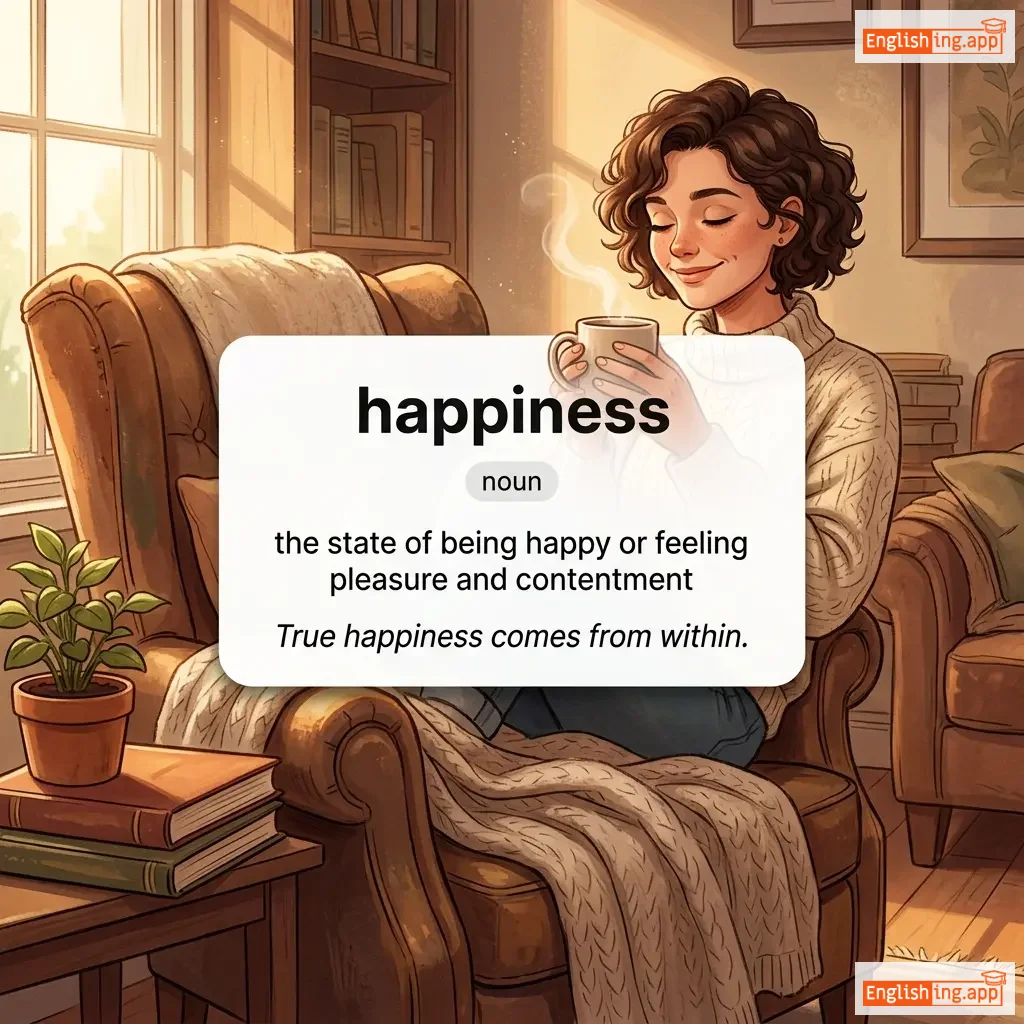
happiness definition card — visual illustration of the meaning
noun
/ˈhæpinəs/
幸せ (shiawase)

the state of being happy or feeling pleasure and contentment

"True happiness comes from within."
"本当の幸せは内面から来る。" (Hontō no shiawase wa naimen kara kuru.)
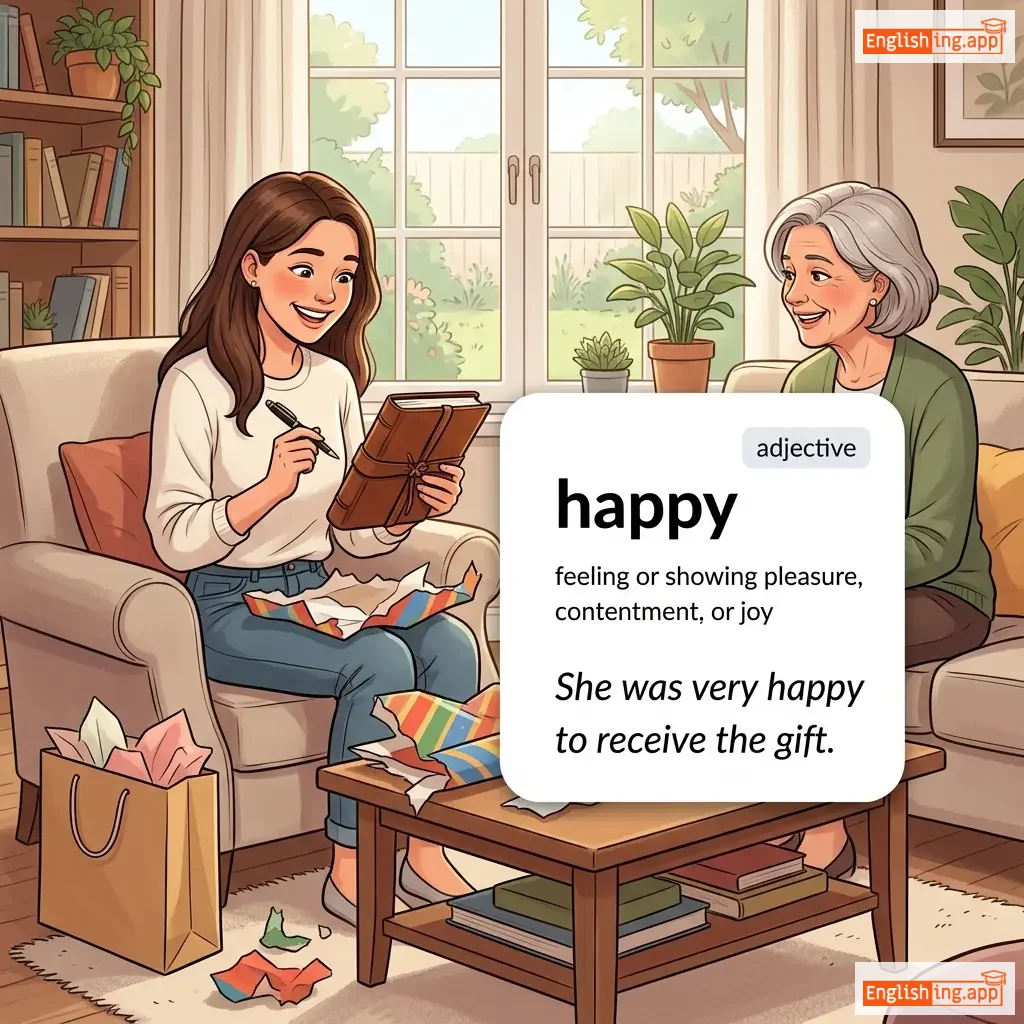
happy definition card — visual illustration of the meaning
adjective
/ˈhæpi/
幸せ (shiawase)

feeling or showing pleasure, contentment, or joy

"She was very happy to receive the gift."
"彼女はプレゼントをもらってとても幸せでした。" (Kanojo wa purezento o moratte totemo shiawase deshita.)
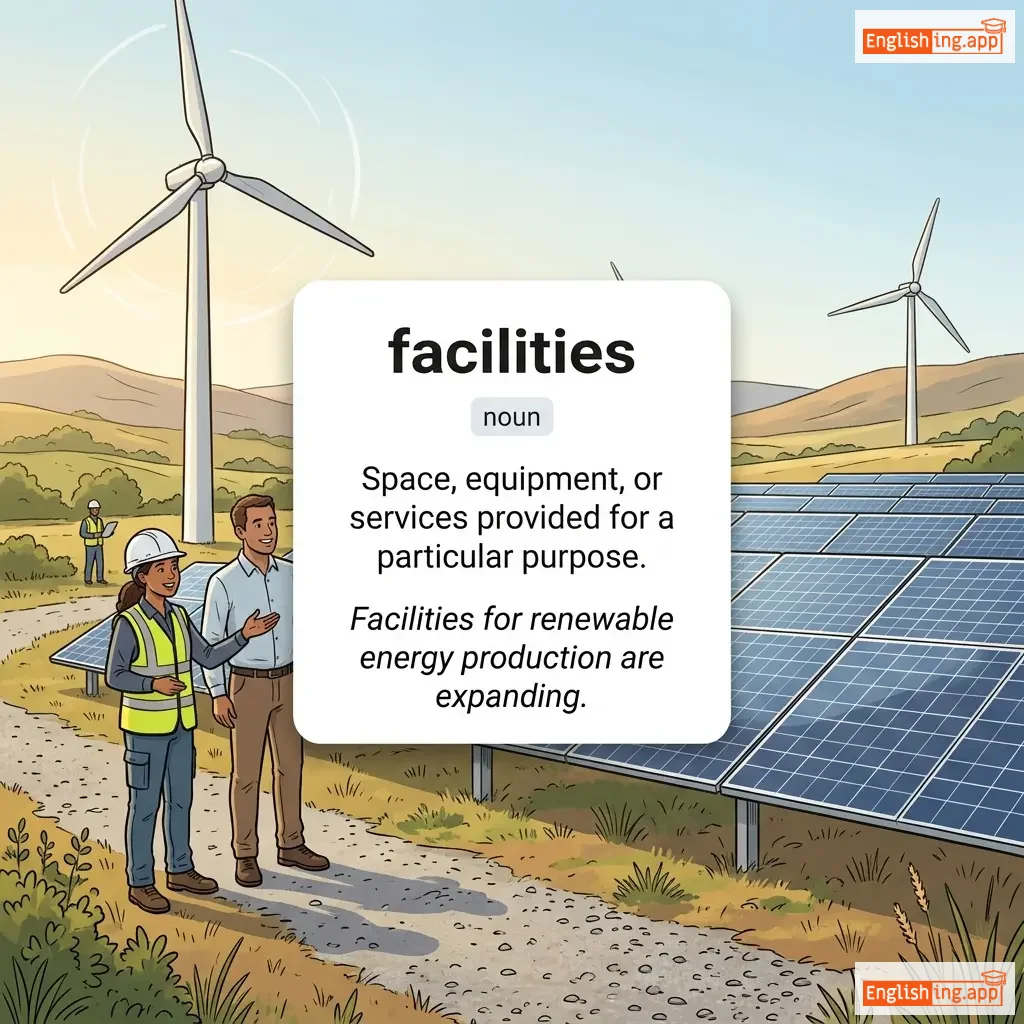
facilities definition card — visual illustration of the meaning
noun
fəˈsɪl.ɪ.tiz
施設 (shisetsu)

Space, equipment, or services provided for a particular purpose.

"Facilities for renewable energy production are expanding."

"再生可能エネルギーの生産施設が拡大しています。" (Saisei kanō enerugī no seisan shisetsu ga kakudai shiteimasu.)
facility definition card — visual illustration of the meaning
noun
/fəˈsɪləti/
特定の目的のために提供される場所、サービス、または設備 (tokutei no mokuteki no tame ni teikyō sareru basho, sābisu, mata wa setsubi)

a place, service, or equipment provided for a particular purpose; ease in doing something

"The hotel offers excellent recreational facilities."

"そのホテルは優れたレクリエーション施設を提供しています。" (Sono hoteru wa sugureta rekuriēshon shisetsu o teikyō shiteimasu.)