词汇表

英语词汇词典 | 单词含义、定义和示例

noun
/fækˈsɪmɪli/
传真副本 (chuánzhēn fùběn)

an exact copy or reproduction of a document

"He sent a facsimile of the contract to the client."

"他把合同的传真副本发送给了客户。" (Tā bǎ hé tóng de chuánzhēn fùběn fāsòng gěi le kèhù.)
noun
/fækt/
事实 (shìshí)

A thing that is known or proved to be true

"It is a fact that the Earth orbits the Sun."

"地球绕太阳转,这是一个事实。" (Dìqiú rào tàiyáng zhuǎn, zhè shì yīgè shìshí.)
noun
/ˈfækʃən/
派别 (paibie)

a small organized group within a larger group, often in disagreement or conflict

"The political party split into several factions over the leadership issue."

"由于领导问题,政党分裂成了多个派别。" (Youyu lingdao wenti, zhengdang fenlie chengle duoge paibie.)
adjective
/ˈfækʃəs/
分裂的 (fenlie de)

causing disagreement or division within a group; inclined to form factions

"The debate became factious, splitting the committee into rival camps."

"辩论变得分裂,委员会被分成了对立的阵营。" (Bianlun biande fenlie, weiyuanhui bei fenchengle duili de zhenying.)
adjective
/fækˈtɪʃəs/
人为的,不真实的 (rénwéi de, bù zhēnshí de)

artificial or fabricated; not natural or genuine

"The excitement in his story seemed factitious and forced."

"他的故事中的兴奋感看起来是人为的且强迫的。" (Tā de gùshì zhōng de xīngfèn gǎn kàn qǐlái shì rénwéi de qiě qiǎngpò de.)
noun
/ˈfæktər/
因素 (yīnsù)

A circumstance, fact, or influence that contributes to a result.

"Weather is an important factor in crop production."

"天气是作物生产中的一个重要因素。" (Tiānqì shì zuòwù shēngchǎn zhōng de yīgè zhòngyào yīnsù.)
factory definition card — visual illustration of the meaning
noun
/ˈfæktəri/
工厂 (gōngchǎng)

A building or group of buildings where goods are manufactured.

"He works in a shoe factory."

"他在一家鞋厂工作。" (Tā zài yī jiā xié chǎng gōngzuò.)
factotum definition card — visual illustration of the meaning
noun
/fækˈtoʊtəm/
全能工人 (quánnéng gōngrén)

an employee who does many different types of work; a general servant

"He worked as a factotum, handling both clerical and maintenance duties."

"他作为一个全能工人工作,处理行政和维护任务。" (Tā zuòwéi yīgè quánnéng gōngrén gōngzuò, chǔlǐ xíngzhèng hé wéihù rènwù.)
adjective
/ˈfæktʃuəl/
基于事实的; 真实的 (jīyú shìshí de; zhēnshí de)

based on facts; accurate; true

"The report contains only factual information."

"报告仅包含事实性的信息。" (bàogào jǐn bāokuò shìshíxìng de xìnxī.)
noun
/ˈfækəlti/
能力, 系 (nengli, xi)

an inherent mental or physical ability; a division of a university

"She has a remarkable faculty for languages."

"她有惊人的语言能力。" (Ta you jingren de yuyan nengli.)
noun
/fæd/
短暂流行的时尚,趋势 (duǎnzàn liúxíng de shíshàng, qūshì)

a temporary fashion or trend; a short-lived craze

"The new diet became a popular fad among teenagers."

"新的饮食成了青少年中的短暂流行趋势。" (Xīn de yǐnshí chéngle qīngshàonián zhōng de duǎnzàn liúxíng qūshì.)
adjective
/ˈfædɪʃ/
短暂的时尚 (duǎnzàn de shíshàng)

Following a temporary trend or fashion

"Wearing neon clothes was a faddish style in the 1980s."

"穿着霓虹服装在1980年代是一种时尚。" (Chuan zhuo nihong fuzhuang zai 1980 niandai shi yizhong shishang.)
verb
/feɪd/
褪色 (tuì sè)

To gradually lose brightness, color, or strength.

"The colors of the old photo have started to fade."

"老照片的颜色开始褪色。" (Lǎo zhàopiàn de yánsè kāishǐ tuìsè.)
fail definition card — visual illustration of the meaning
verb
/feɪl/
失败 (shībài)

To be unsuccessful in achieving a goal or expectation.

"He failed the driving test."

"他在驾驶考试中失败了。" (Tā zài jiàshǐ kǎoshì zhōng shībài le.)
adjective
/ˈfeɪl.seɪf/
故障保护 (gùzhàng bǎohù)

designed to prevent failure or accidents; guaranteed to work correctly

"The engineers installed a fail-safe mechanism in the nuclear plant."
"工程师在核电厂安装了故障保护机制。" (gōngchéngshī zài hé diànchǎng ānzhuāngle gùzhàng bǎohù jīzhì.)
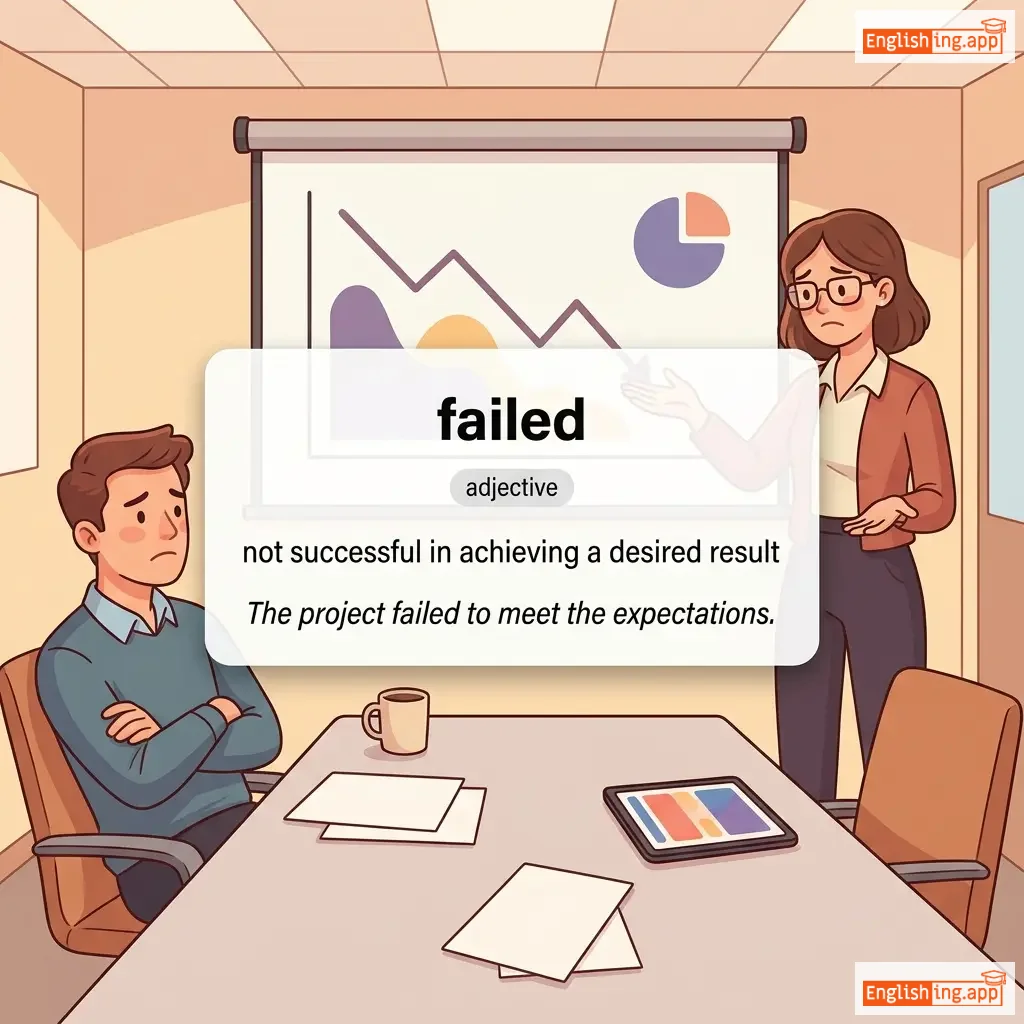
failed definition card — visual illustration of the meaning
adjective
/feɪld/
失败 (shibai)

not successful in achieving a desired result

"The project failed to meet the expectations."

"项目未能达到预期。" (Xiangmu wei neng dadao yuqi.)
noun
/ˈfeɪ.lɪŋ/
失败; 缺点; 弱点 (shībài, quēdiǎn, ruòdiǎn)

a weakness, especially in a person's character; a fault

"His only failing is that he talks too much during meetings."
"他唯一的失败是他在会议中说得太多。" (Tā wéiyī de shībài shì tā zài huìyì zhōng shuō dé tài duō.)
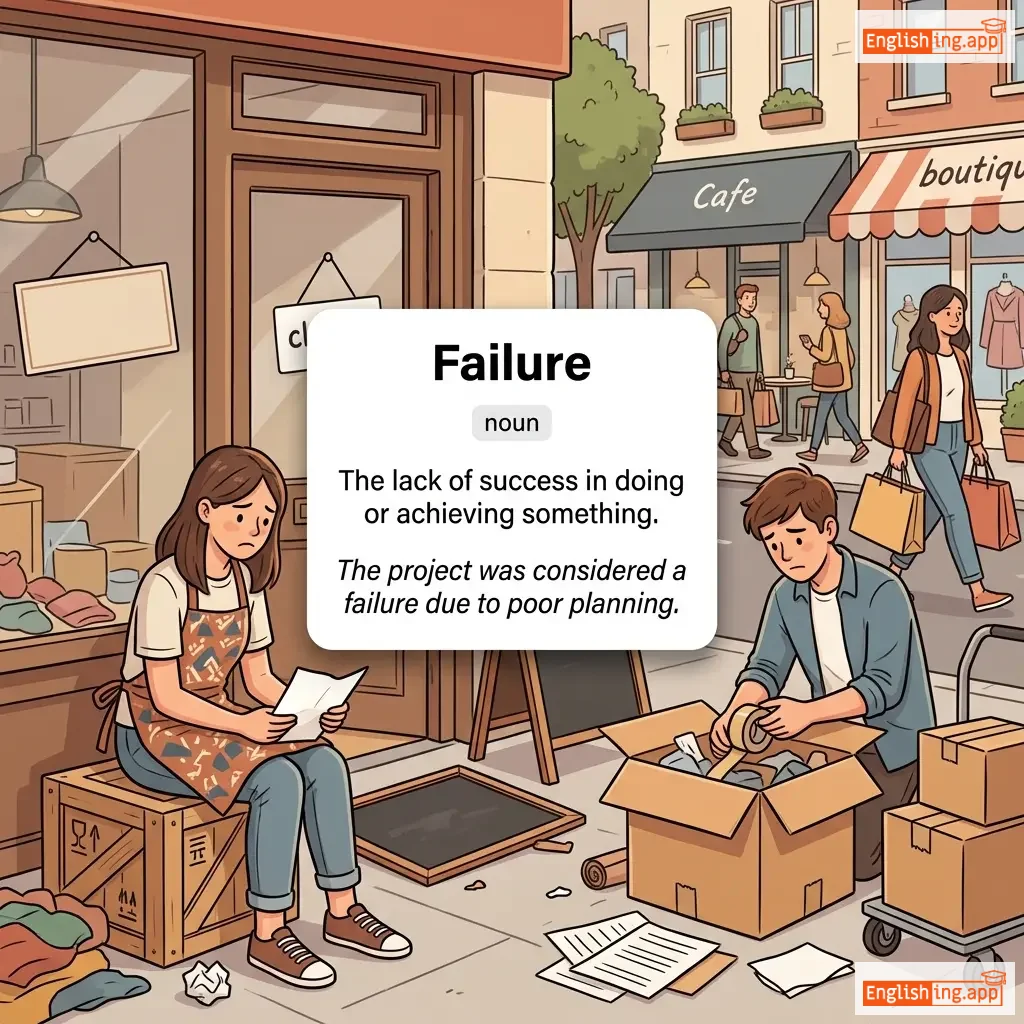
Failure definition card — visual illustration of the meaning
noun
/ˈfeɪljər/
失败 (shībài)

The lack of success in doing or achieving something.

"The project was considered a failure due to poor planning."

"由于糟糕的规划,该项目被认为是失败。" (yóuyú zāogāo de guīhuà, gāi xiàngmù bèi rènwéi shì shībài.)
adjective/adverb
/feɪn/
心甘情愿地, 乐意地 (xīn gān qíng yuàn de, lè yì de)

gladly, willingly, or with pleasure

"I would fain help you if I had the time."

"如果我有时间,我会很乐意帮你。" (Rúguǒ wǒ yǒu shíjiān, wǒ huì hěn lèyì bāng nǐ.)
verb
/feɪnt/
昏厥 (hunjue)

to lose consciousness for a short time because of a temporary lack of oxygen to the brain

"He felt dizzy and fainted in the heat."
"他感到头晕,并因高温而昏倒。" (Ta gandao touyun, bing yin gaowen er hundao.)
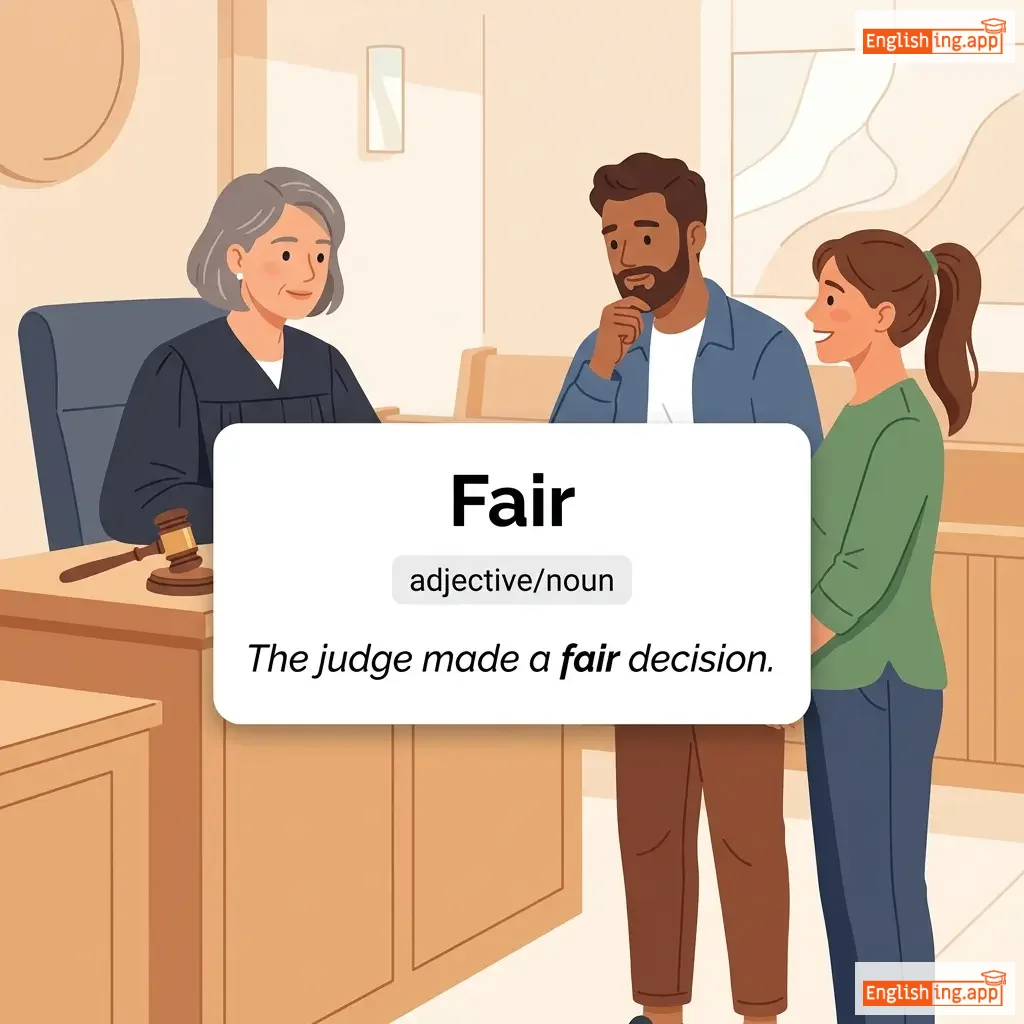
Fair definition card — visual illustration of the meaning
adjective/noun
/fɛr/
公平 / 集市 (gongping / jishi)

Treating people equally without favoritism; or an event where goods are displayed and sold

"The judge made a fair decision."

"法官做出了公正的决定。" (Fǎguān zuò chūle gōngzhèng de juédìng.)
noun
/ˈfɛərˌɡraʊndz/
集市场地 (jishi changdi)

A designated area where fairs, exhibitions, and amusement events are held

"The town set up rides and stalls at the fairgrounds for the annual festival."

"小镇在集市场地设置了游乐设施和摊位,为年度节日做准备。" (Xiaozhen zai jishi changdi shezhi le youle sheshi he tanwei, wei niandu jieri zuo zhunbei.)
adverb
/ˈfɛərli/
公平地 (gōngpíng de)

To a reasonable degree; in a just and honest way.

"The teacher treated all students fairly."

"老师以公正的方式对待所有学生。" (Lǎoshī yǐ gōngzhèng de fāngshì duìdài suǒyǒu xuéshēng.)
noun
/ˈfɛə(r)nɪs/
公平 (gongping)

the quality of being free from bias, favoritism, or injustice

"She always strives for fairness in her decisions."

"她总是努力在决策中保持公平。" (Ta zong shi nuli zai juece zhong baochi gongping.)
noun
/ˈfer.i.teɪl/
童话故事 (tonghua gushi)

a children's story about magical and imaginary beings and lands

"Children love listening to fairy-tales before bedtime."

"孩子们喜欢在睡觉前听童话故事。" (Haizimen xihuan zai shuijiao qian ting tonghua gushi.)
Faith definition card — visual illustration of the meaning
noun
/feɪθ/
信仰 (xìnyǎng)

Strong belief or trust in someone or something, often without proof.

"She has great faith in her team’s abilities."

"她对她团队的能力充满信心。" (Tā duì tā tuánduì de nénglì chōngmǎn xìnxīn.)
adjective
/ˈfeɪθ.fəl/
忠诚的; 忠实的; 可靠的 (zhongcheng de; zhongshi de; kekaode)

loyal and committed; reliable; true to one's beliefs

"She remained faithful to her principles throughout her career."

"她在整个职业生涯中始终忠诚于自己的原则。" (ta zai zhengge zhiye shengya zhong shizhong zhongcheng yu ziji de yuanze.)
adverb
/ˈfeɪθ.fəl.i/
忠诚地 (zhōngchéng de)

in a loyal and steadfast manner; with dedication

"She faithfully attended every meeting despite her busy schedule."
"她忠实地参加了每一次会议,尽管她的日程非常紧张。" (Tā zhōngchéng de cānjiāle měi yī cì huìyì, jǐnguǎn tā de rìchéng fēicháng jǐnzhāng.)
adjective/verb/noun
/feɪk/
伪造 (weizao)

not genuine; counterfeit; to imitate something dishonestly

"He tried to fake his signature on the document."

"他试图伪造文件上的签名。" (Ta shitu weizao wenjian shang de qianming.)
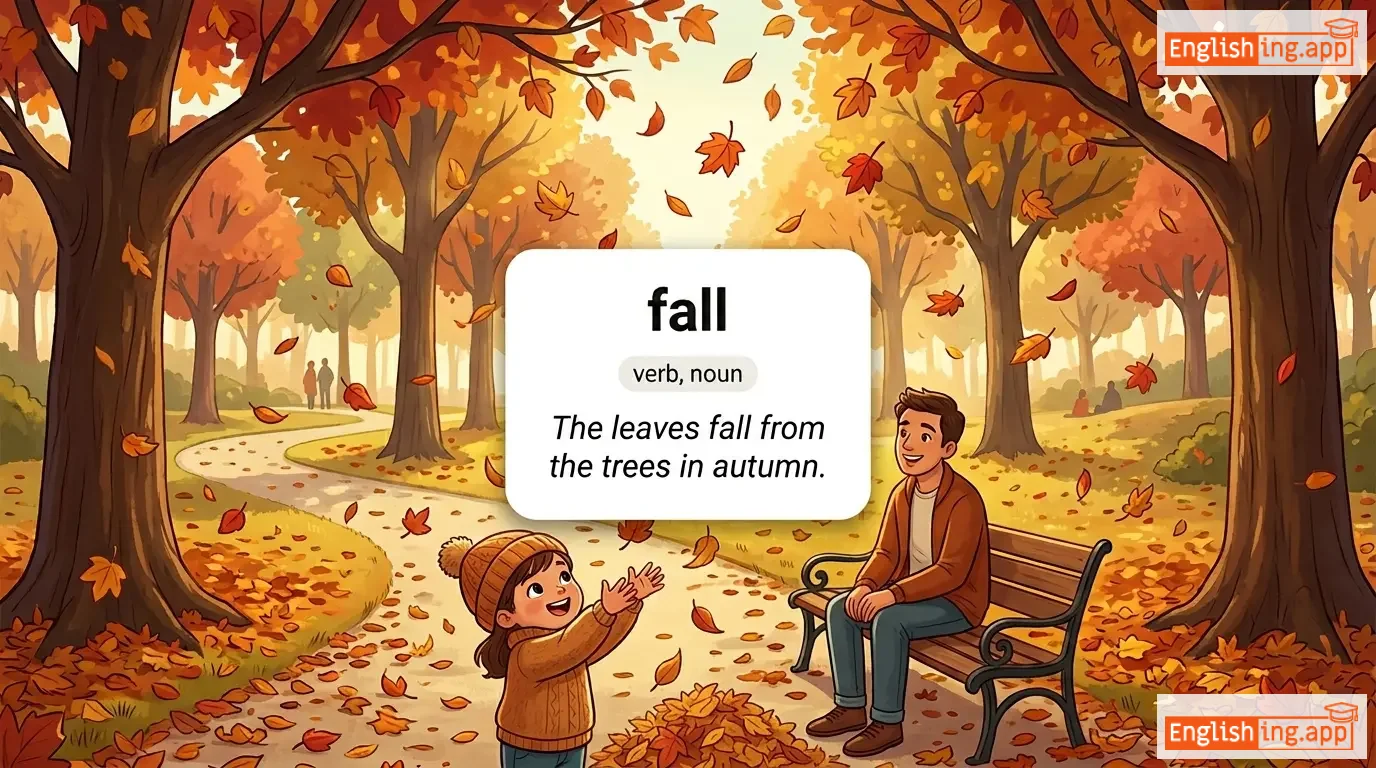
fall definition card — visual illustration of the meaning
verb, noun
/fɔːl/
掉落 (diaoluo)

to move downward, typically rapidly and freely without control; the act of dropping from a higher to a lower place

"The leaves fall from the trees in autumn."
"秋天树叶从树上掉下来。" (Qiutian shuye cong shushang diao xiala.)
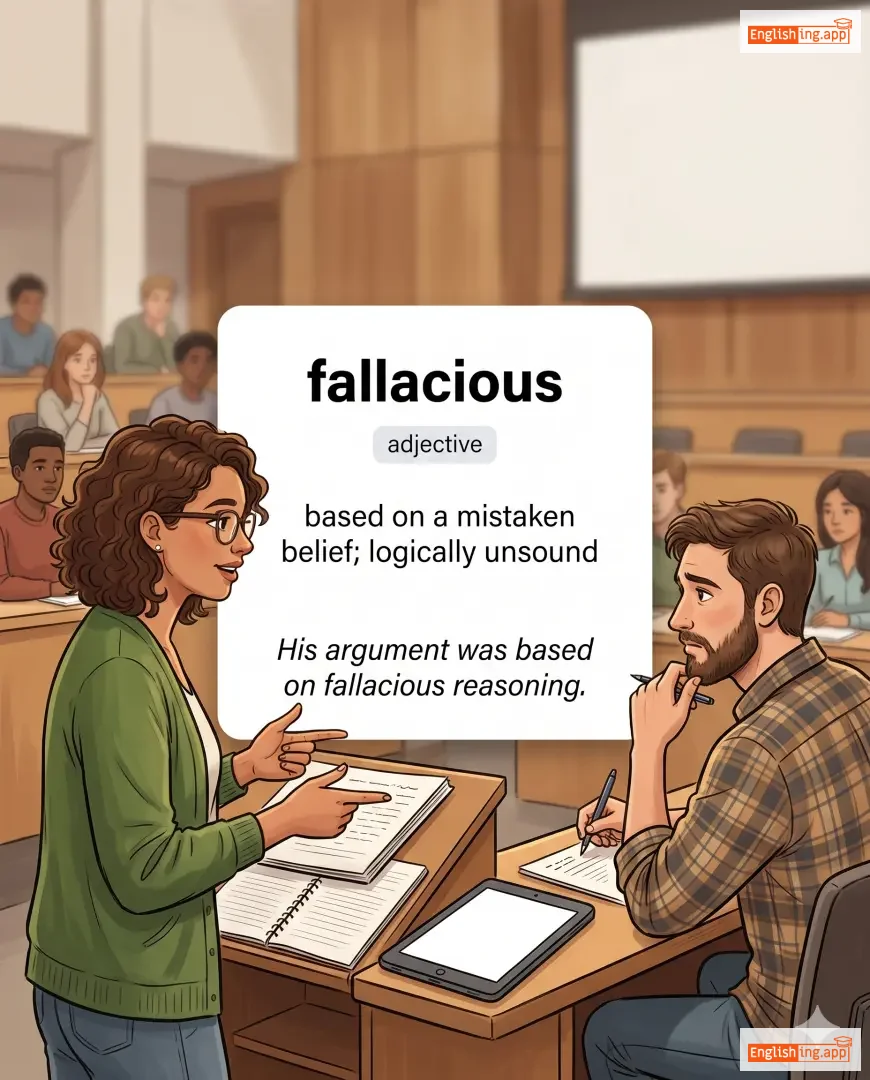
fallacious definition card — visual illustration of the meaning
adjective
/fəˈleɪ.ʃəs/
虚假 (xūjiǎ)

based on a mistaken belief; logically unsound

"His argument was based on fallacious reasoning."

"他的论点建立在虚假的推理上。" (Tā de lùndiǎn jiànlì zài xūjiǎ de tuīlǐ shàng.)
fallacy definition card — visual illustration of the meaning
noun
/ˈfæl.ə.si/
谬误 (miùwù)

a mistaken belief, especially one based on unsound arguments

"It is a common fallacy that money can buy happiness."

"认为钱能买到幸福是一种常见的谬误。" (Rènwéi qián néng mǎi dào xìngfú shì yī zhǒng chángjiàn de miùwù.)
adjective
/ˈfæləbl/
容易犯错 (róng yì fàn cuò)

capable of making mistakes or being wrong

"Even experts are fallible and can make errors."
"即使是专家也会犯错。" (Jíshǐ shì zhuānjiā yě huì fàn cuò.)
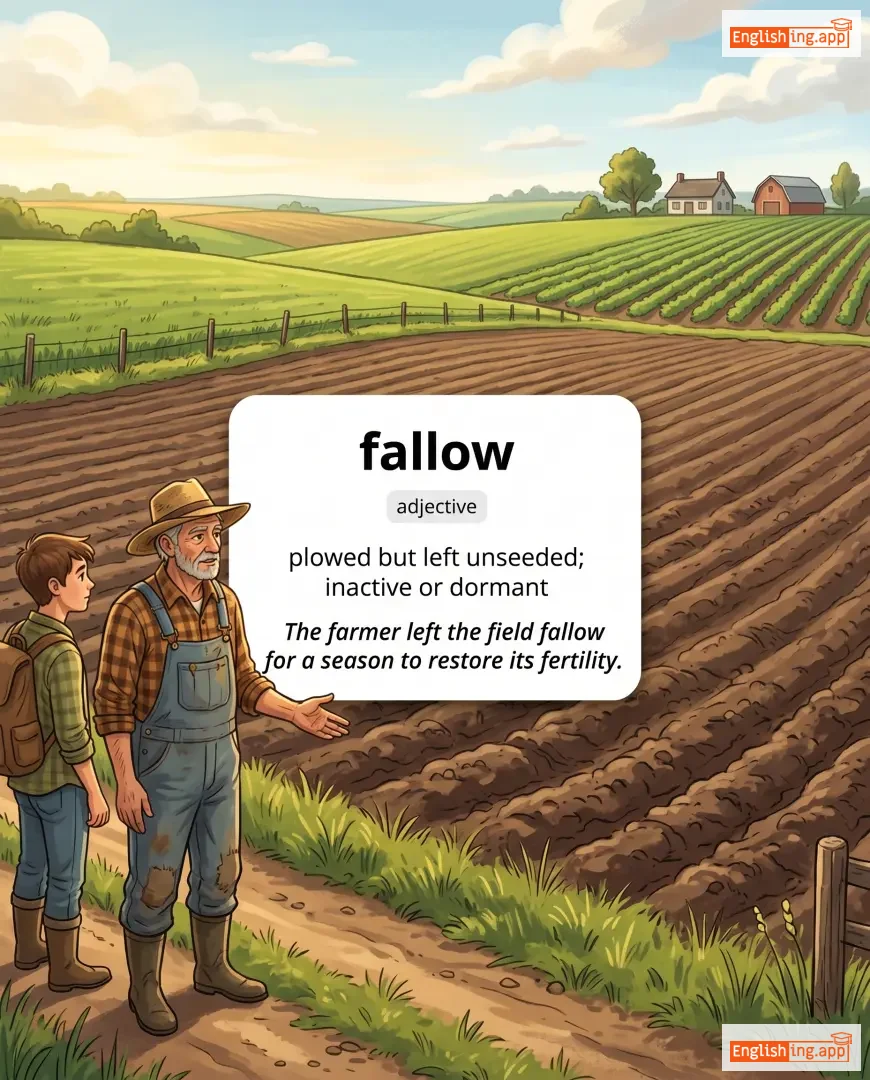
fallow definition card — visual illustration of the meaning
adjective
/ˈfæloʊ/
休耕, 不活跃 (xiū gēng, bù huó yuè)

plowed but left unseeded; inactive or dormant

"The farmer left the field fallow for a season to restore its fertility."

"农民让田地休耕一个季节,以恢复其肥力。" (Nóngmín ràng tiándì xiū gēng yīgè jìjié, yǐ huīfù qí féilì.)
False definition card — visual illustration of the meaning
adjective
/fɔːls/
虚假 (xūjiǎ)

not true or correct; intended to deceive

"He was accused of giving false information."

"他被指控提供虚假信息。" (Tā bèi zhǐkòng tígōng xūjiǎ xìnxī.)
noun
/ˈfɔːlshʊd/
谎言 (huǎngyán)

the state of being untrue or a lie

"He was punished for spreading falsehoods about his colleague."

"他因散布关于同事的谎言而受到了惩罚。" (Tā yīn sànbù guānyú tóngshì de huǎngyán ér shòu dào le chéngfá.)
verb
/ˈfɔːlsɪfaɪ/
伪造 (wěizào)

to make something false or to misrepresent

"He tried to falsify the documents to avoid taxes."

"他试图伪造文件以避免税收。" (Tā shìtú wěizào wénjiàn yǐ bìmiǎn shuìshōu.)
verb
/ˈfɔːltər/
犹豫或失去力量或动力 (youyu huo shiqu liliang huo dongli)

to hesitate or lose strength or momentum

"Her voice faltered as she delivered the speech."

"她的声音在演讲时颤抖。" (Ta de shengyin zai yanjiang shi chandong.)
noun
/feɪm/
名声 (míng shēng)

the state of being known or recognized by many people

"She achieved worldwide fame for her acting."

"她因表演而获得了全球的名声。" (Tā yīn biǎoyǎn ér huòdé le quánqiú de míngshēng.)
adjective
/fəˈmɪliər/
熟悉的 (shúxī de)

Well known or easily recognized from previous experience.

"The town looked familiar to me after so many years."

"经过这么多年后,这个城市对我来说很熟悉。" (Jīngguò zhème duōnián hòu, zhège chéngshì duì wǒ lái shuō hěn shúxī.)
family definition card — visual illustration of the meaning
👨‍👩‍👧‍👦

family (fāmílì)

noun
/ˈfæməli/
家庭 (jiātíng)

A group consisting of parents and their children, or all the descendants of a common ancestor.

"She spends most of her weekends with her family."

"她把大部分周末时间都和家人一起度过。" (Tā bǎ dà bùfen zhōumò shíjiān dōu hé jiārén yīqǐ dùguò.)
Family Tree definition card — visual illustration of the meaning
noun
ˈfæmɪli triː
家谱 (jiā pǔ)

A diagram showing the relationships between people in several generations of a family.

"Creating a family tree helps understand family history."

"创建家谱有助于理解家庭历史。" (Chuàngjiàn jiāpǔ yǒuzhù yú lǐjiě jiātíng lìshǐ.)
noun
/ˈfæm.ɪn/
饥荒 (jīhuāng)

extreme scarcity of food; a period when food is extremely scarce

"The severe drought led to widespread famine in the region."

"严重的干旱导致该地区广泛的饥荒。" (Yánzhòng de gānhàn dǎozhì gāi dìqū guǎngfàn de jīhuāng.)
verb
/ˈfæmɪʃ/
挨饿 (āi è)

to suffer or cause to suffer from extreme hunger

"The stranded hikers began to famish after several days without food."
"困住的徒步旅行者在没有食物的几天后开始感到饥饿。" (kùn zhù de tú bù lǚ xíng zhě zài méi yǒu shí wù de jǐ tiān hòu kāi shǐ gǎn dào jī è.)
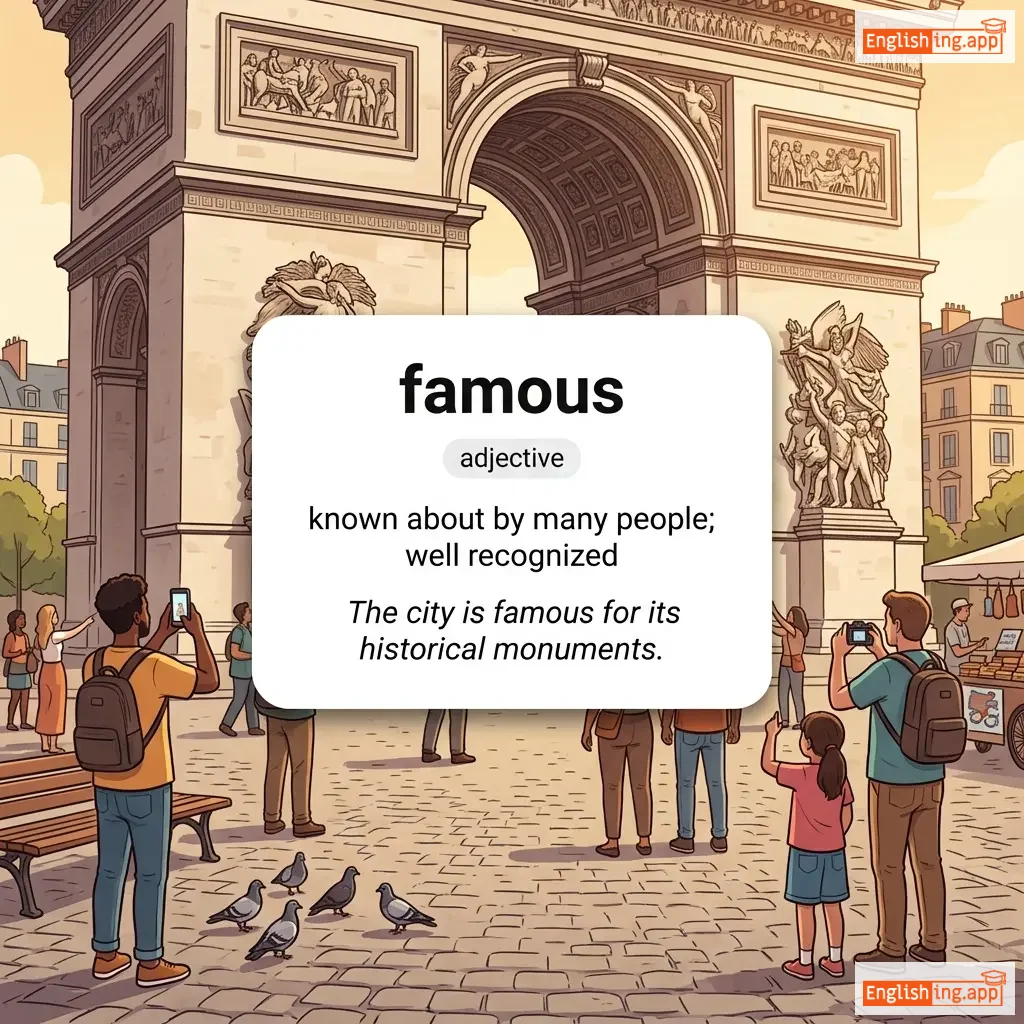
famous definition card — visual illustration of the meaning
adjective
/ˈfeɪməs/
著名 (zhùmíng)

known about by many people; well recognized

"The city is famous for its historical monuments."

"这座城市因其历史遗迹而闻名。" (Zhè zuò chéngshì yīn qí lìshǐ yíjì ér wénmíng.)
noun
/fæn/
幸福 (xìng fú)

a device with rotating blades that creates a current of air; also a person who admires or supports someone or something

"The fan kept the room cool during the hot summer day."

"她收到奖项时无法掩饰自己的幸福。" (Tā shōu dào jiǎng xiàng shí wú fǎ yǎn shì zì jǐ de xìng fú.)
noun
/fəˈnætɪk/
狂热分子 (kuángrè fēnzǐ)

a person with extreme and uncritical enthusiasm for a cause or belief

"He is a football fanatic, never missing a match of his favorite team."

"他是一个足球疯狂粉丝,从不缺席他最喜欢球队的比赛。" (Tā shì yīgè zúqiú kuángrè fěnsī, cóng bù quēxí tā zuì xǐhuān qiúduì de bǐsài.)
adjective
/fəˈnætɪkəl/
狂热的 (kuángrè de)

showing extreme enthusiasm or obsession

"She has a fanatical interest in collecting vintage stamps."

"她对收藏老式邮票有着狂热的兴趣。" (Tā duì shōucáng lǎoshì yóupiào yǒuzhe kuángrè de xìngqù.)
noun
/fəˈnætɪsɪzəm/
狂热 (kuángrè)

the quality of being fanatical; extreme zeal or obsession

"Religious fanaticism can lead to intolerance and conflict."

"宗教狂热可能导致不宽容和冲突。" (Zōngjiào kuángrè kěnéng dǎozhì bù kuānróng hé chōngtū.)
adjective
/ˈfænsiːd/
想象的, 渴望的 (xiangxiang de, kewang de)

imagined, desired, or believed without evidence

"He is a fancied suitor in the eyes of the young lady."

"他是年轻女士眼中的一位想象中的追求者。" (Ta shi nianqing nushih de yanjing zhong de yi wei xiangxiang zhong de zhuīqiúzhě.)