Vocabularios

Descubra, aprenda y domine el vocabulario en inglés

noun
/fækˈsɪmɪli/
copia (copia)

an exact copy or reproduction of a document

"He sent a facsimile of the contract to the client."

"Envió una copia del contrato al cliente." (Envió una copia del contrato al cliente.)
noun
/fækt/
hecho (hecho)

A thing that is known or proved to be true

"It is a fact that the Earth orbits the Sun."

"Es un hecho que la Tierra orbita alrededor del Sol." (Es un hecho que la Tierra orbita alrededor del Sol.)
noun
/ˈfækʃən/
facción (faksyon)

a small organized group within a larger group, often in disagreement or conflict

"The political party split into several factions over the leadership issue."

"El partido político se dividió en varias facciones debido al problema de liderazgo." (El partido politico se divido en varias facciones debido al problema de liderazgo.)
adjective
/ˈfækʃəs/
faccionado (faccionado)

causing disagreement or division within a group; inclined to form factions

"The debate became factious, splitting the committee into rival camps."

"El debate se volvió faccioso, dividiendo al comité en campos rivales." (El debate se volvio faccioso, dividiendo al comite en campos rivales.)
adjective
/fækˈtɪʃəs/
artificial, no genuino (artificial, no genuino)

artificial or fabricated; not natural or genuine

"The excitement in his story seemed factitious and forced."

"La emoción en su historia parecía artificial y forzada." (La emocion en su historia parecia artificial y forzada.)
noun
/ˈfæktər/
factor (factor)

A circumstance, fact, or influence that contributes to a result.

"Weather is an important factor in crop production."

"El clima es un factor importante en la producción de cultivos." (El clima es un factor importante en la producción de cultivos.)
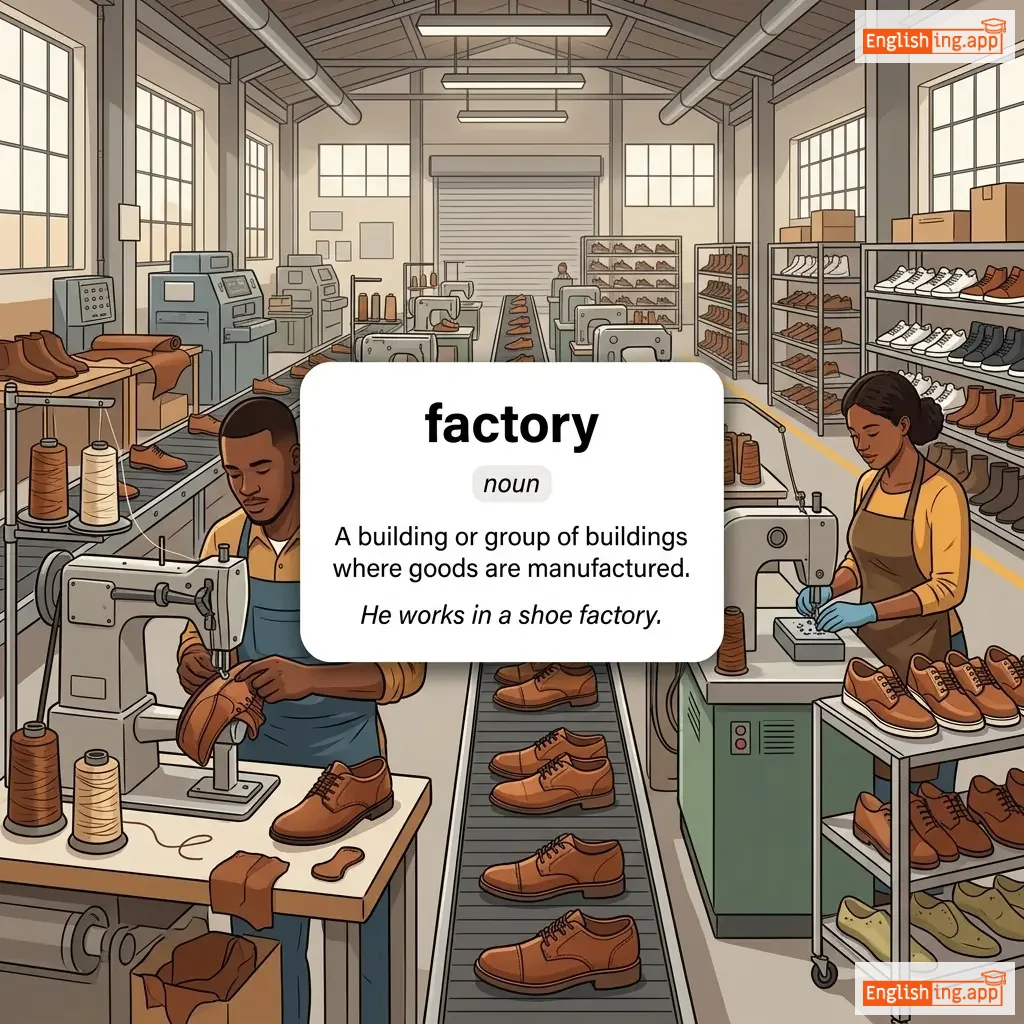
factory definition card — visual illustration of the meaning
noun
/ˈfæktəri/
fábrica (fabrika)

A building or group of buildings where goods are manufactured.

"He works in a shoe factory."

"Él trabaja en una fábrica de zapatos." (Él trabaja en una fábrica de zapatos.)
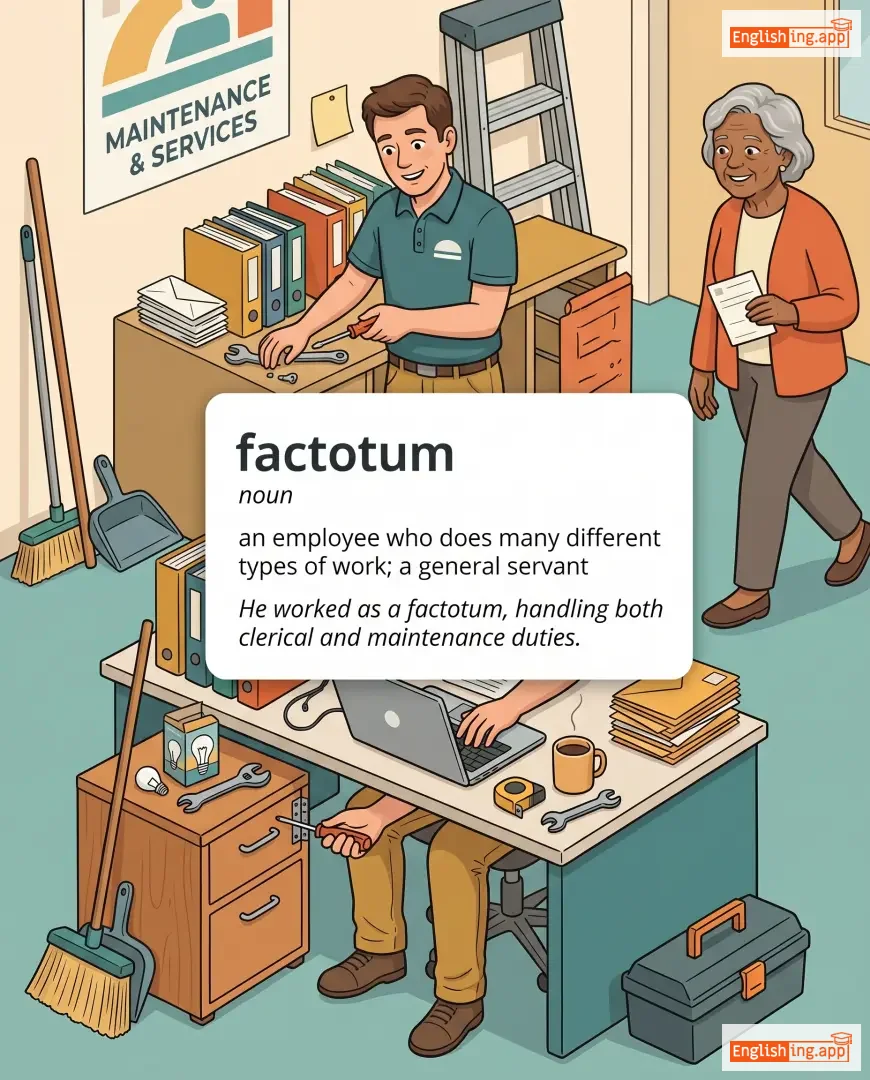
factotum definition card — visual illustration of the meaning
noun
/fækˈtoʊtəm/
trabajador polifacético (trabajador polifacetico)

an employee who does many different types of work; a general servant

"He worked as a factotum, handling both clerical and maintenance duties."

"Trabajaba como un factótum, manejando tanto tareas administrativas como de mantenimiento." (Trabajaba como un factotum, manejando tanto tareas administrativas como de mantenimiento.)
adjective
/ˈfæktʃuəl/
factual; basado en hechos; verdadero (factual; basado en hechos; verdadero)

based on facts; accurate; true

"The report contains only factual information."

"El informe contiene solo información factual." (El informe contiene solo informacion factual.)
noun
/ˈfækəlti/
facultad, capacidad (facultad, capacidad)

an inherent mental or physical ability; a division of a university

"She has a remarkable faculty for languages."

"Ella tiene una facultad notable para los idiomas." (Ella tiene una facultad notable para los idiomas.)
noun
/fæd/
moda pasajera, tendencia (moda pasajera, tendencia)

a temporary fashion or trend; a short-lived craze

"The new diet became a popular fad among teenagers."

"La nueva dieta se convirtió en una moda pasajera entre los adolescentes." (La nueva dieta se convirtió en una moda pasajera entre los adolescentes.)
adjective
/ˈfædɪʃ/
moda pasajera (moda pasajera)

Following a temporary trend or fashion

"Wearing neon clothes was a faddish style in the 1980s."

"Usar ropa neón era un estilo pasajero en los años 80." (Usar ropa neon era un estilo pasajero en los años 80.)
verb
/feɪd/
desvanecerse (desvanecerse)

To gradually lose brightness, color, or strength.

"The colors of the old photo have started to fade."

"Los colores de la foto antigua empezaron a desvanecerse." (Los colores de la foto antigua empezaron a desvanecerse.)
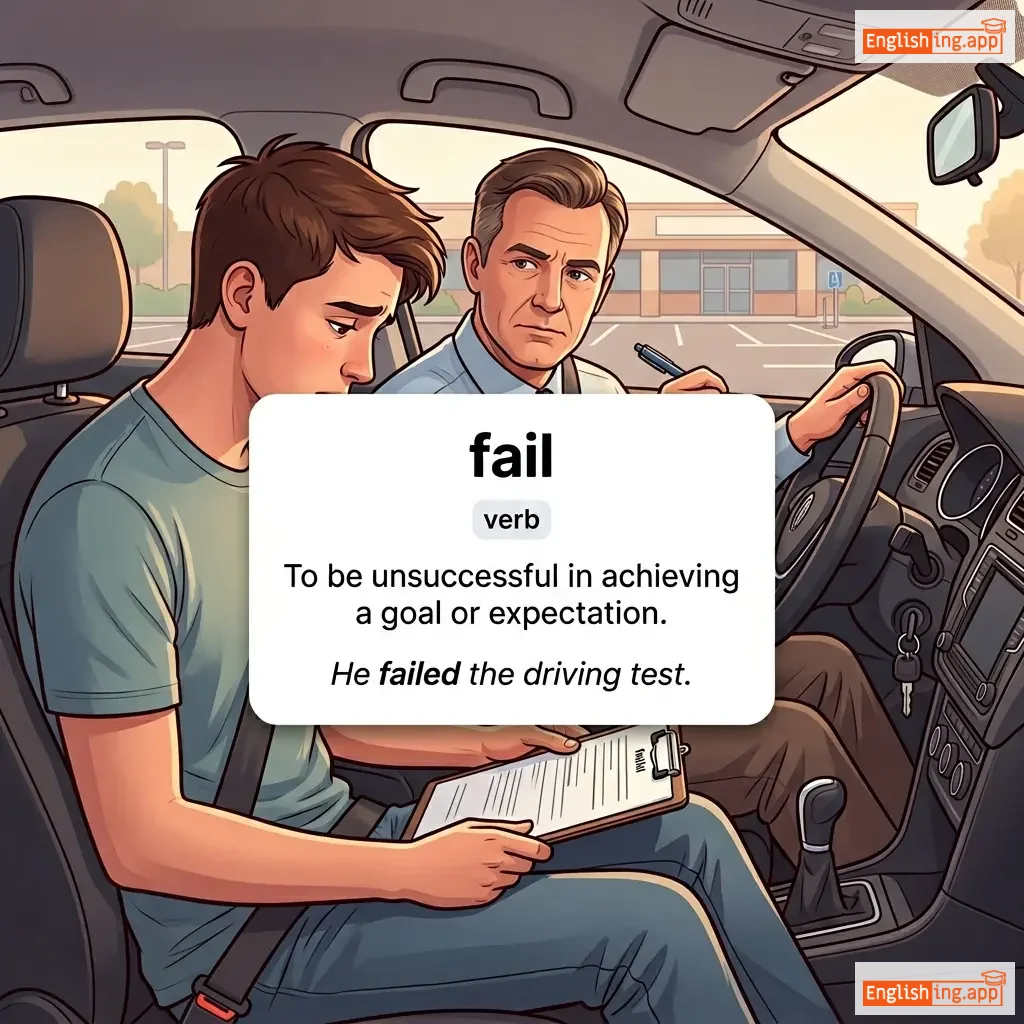
fail definition card — visual illustration of the meaning
verb
/feɪl/
fallar (fallar)

To be unsuccessful in achieving a goal or expectation.

"He failed the driving test."

"Él falló el examen de conducir." (El falló el examen de conducir.)
adjective
/ˈfeɪl.seɪf/
antifallo (antifallo)

designed to prevent failure or accidents; guaranteed to work correctly

"The engineers installed a fail-safe mechanism in the nuclear plant."

"Los ingenieros instalaron un mecanismo antifallo en la planta nuclear." (Los ingenieros instalaron un mecanismo antifallo en la planta nuclear.)
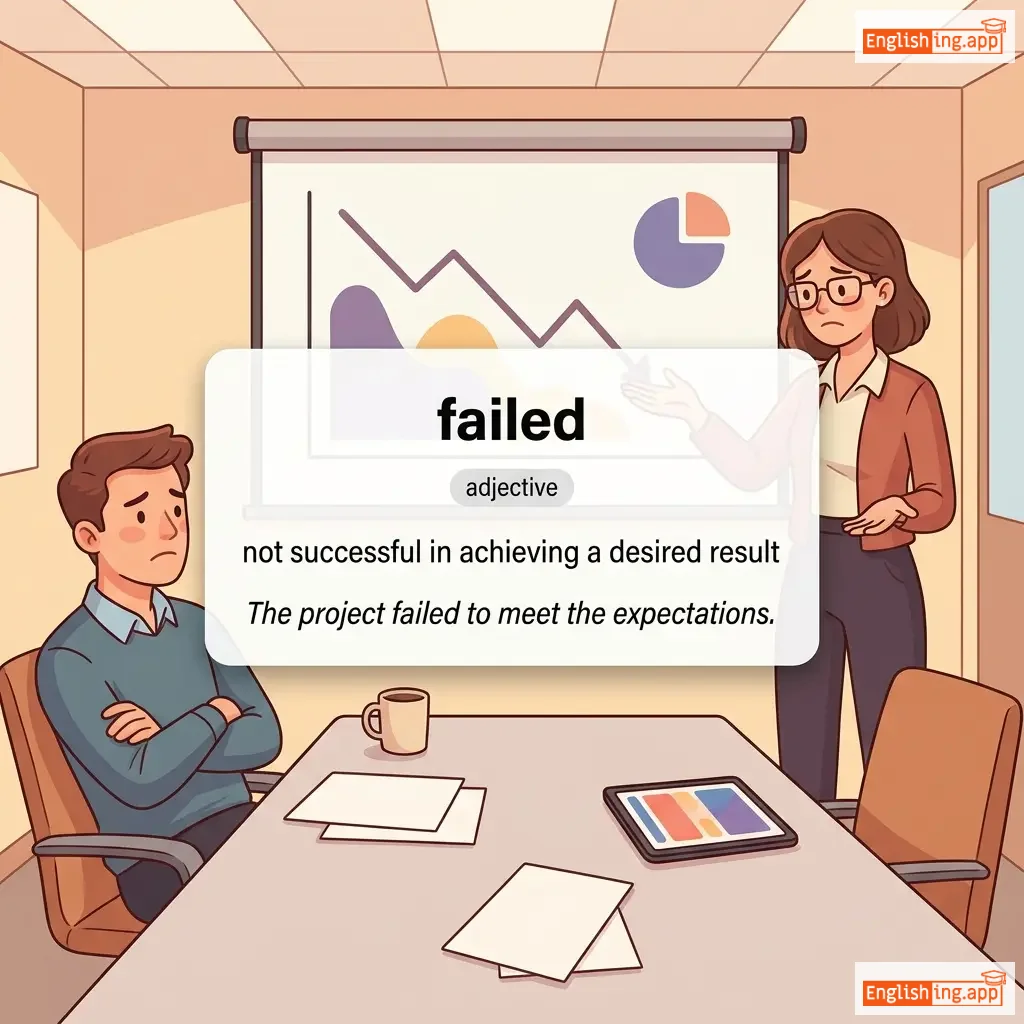
failed definition card — visual illustration of the meaning
adjective
/feɪld/
fallido (fallido)

not successful in achieving a desired result

"The project failed to meet the expectations."

"El proyecto no logró cumplir con las expectativas." (El proyecto no logro cumplir con las expectativas.)
noun
/ˈfeɪ.lɪŋ/
debilidad; defecto; falla (debilidad, defecto, falla)

a weakness, especially in a person's character; a fault

"His only failing is that he talks too much during meetings."

"Su única debilidad es que habla demasiado durante las reuniones." (Su unica debilidad es que habla demasiado durante las reuniones.)
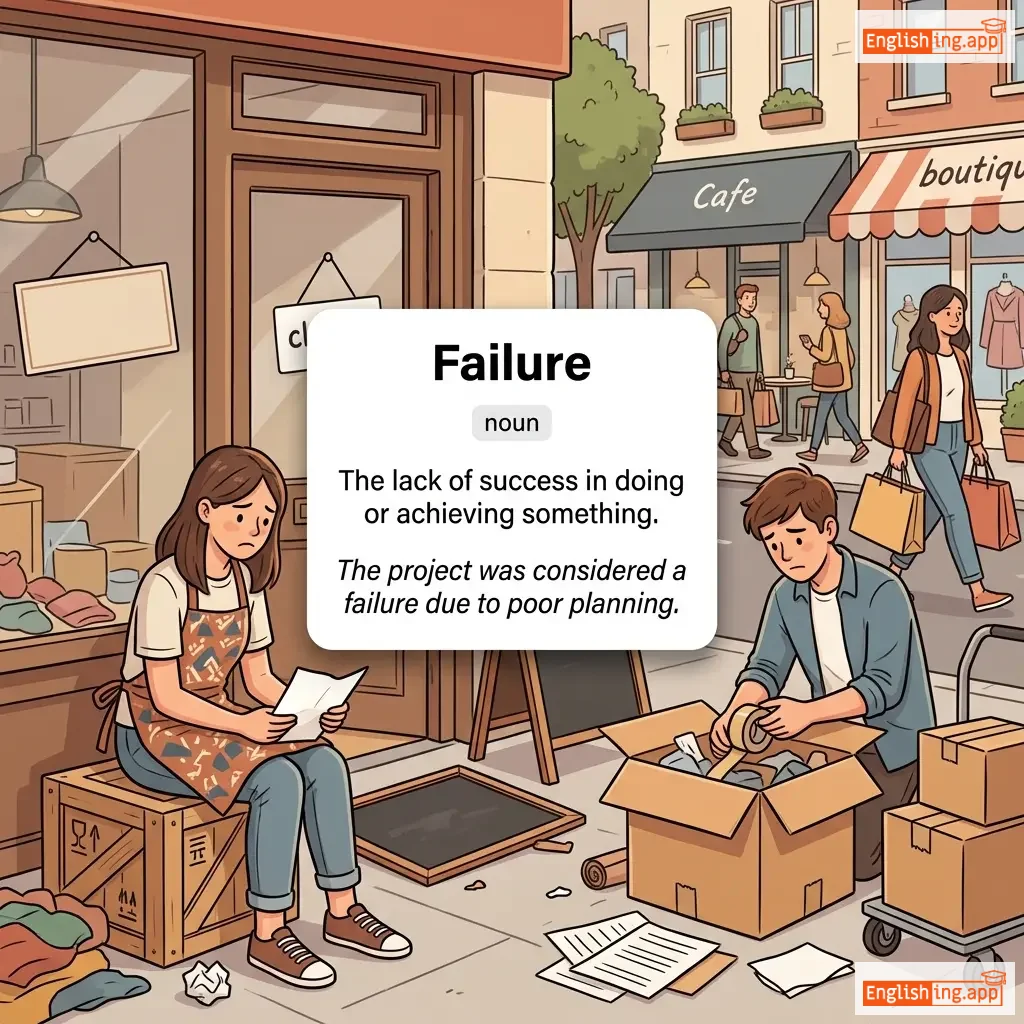
Failure definition card — visual illustration of the meaning
noun
/ˈfeɪljər/
fracaso (fracaso)

The lack of success in doing or achieving something.

"The project was considered a failure due to poor planning."

"El proyecto fue considerado un fracaso debido a la mala planificación." (El proyecto fue considerado un fracaso debido a la mala planificacion.)
adjective/adverb
/feɪn/
gustosamente, con gusto (gustosamente, con gusto)

gladly, willingly, or with pleasure

"I would fain help you if I had the time."

"Si tuviera tiempo, con gusto te ayudaría." (Si tuviera tiempo, con gusto te ayudaría.)
verb
/feɪnt/
desmayarse (desmayarse)

to lose consciousness for a short time because of a temporary lack of oxygen to the brain

"He felt dizzy and fainted in the heat."

"Se sintió mareado y se desmayó por el calor." (Se sintió mareado y se desmayó por el calor.)
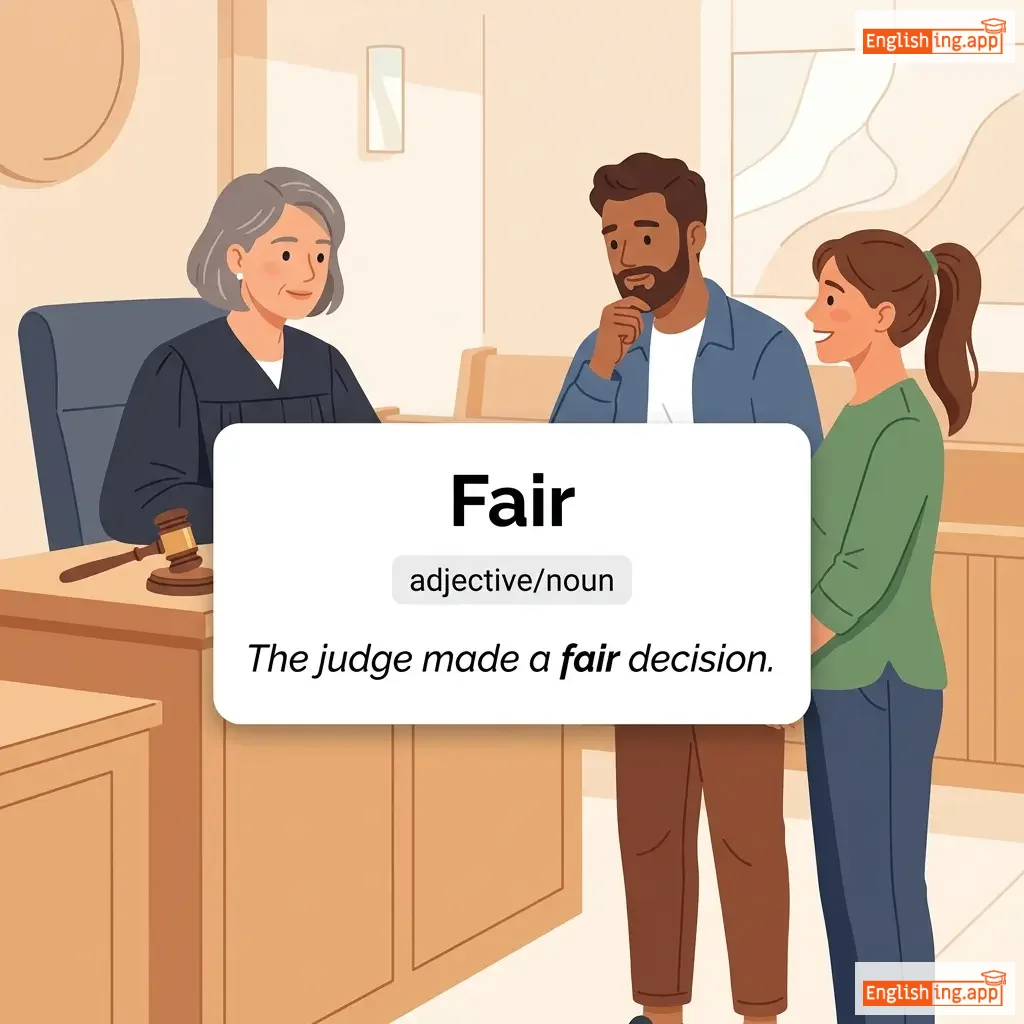
Fair definition card — visual illustration of the meaning
adjective/noun
/fɛr/
justo / feria (justo / feria)

Treating people equally without favoritism; or an event where goods are displayed and sold

"The judge made a fair decision."

"El juez tomó una decisión justa." (El juez tomó una decisión justa.)
noun
/ˈfɛərˌɡraʊndz/
terreno de feria (terreno de feria)

A designated area where fairs, exhibitions, and amusement events are held

"The town set up rides and stalls at the fairgrounds for the annual festival."

"El pueblo montó atracciones y puestos en el terreno de feria para el festival anual." (El pueblo monto atracciones y puestos en el terreno de feria para el festival anual.)
adverb
/ˈfɛərli/
justamente (justamente)

To a reasonable degree; in a just and honest way.

"The teacher treated all students fairly."

"El maestro trató a todos los estudiantes justamente." (El maestro trato a todos los estudiantes justamente.)
noun
/ˈfɛə(r)nɪs/
equidad (equidad)

the quality of being free from bias, favoritism, or injustice

"She always strives for fairness in her decisions."

"Ella siempre lucha por la equidad en sus decisiones." (Ella siempre lucha por la equidad en sus decisiones.)
noun
/ˈfer.i.teɪl/
cuento de hadas (cuento de hadas)

a children's story about magical and imaginary beings and lands

"Children love listening to fairy-tales before bedtime."

"A los niños les encanta escuchar cuentos de hadas antes de acostarse." (A los niños les encanta escuchar cuentos de hadas antes de acostarse.)
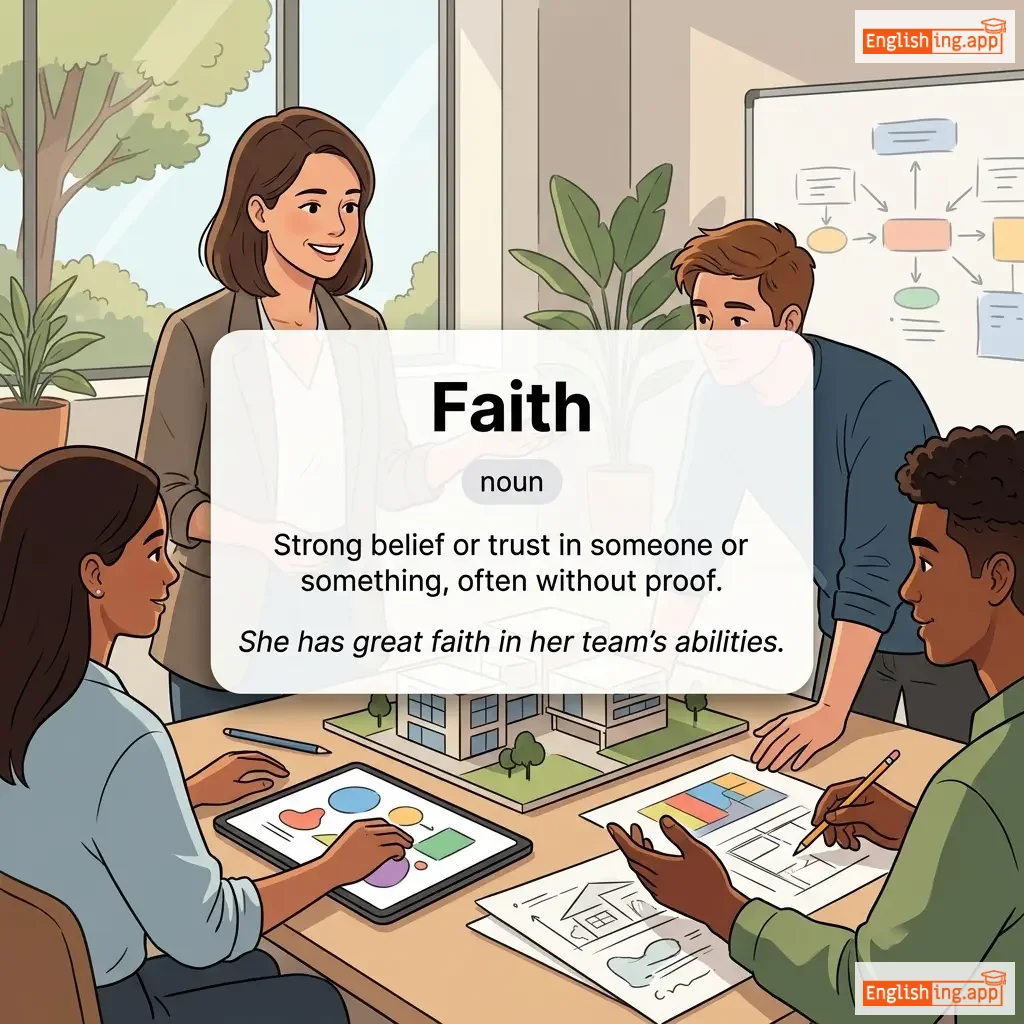
Faith definition card — visual illustration of the meaning
noun
/feɪθ/
fe (fe)

Strong belief or trust in someone or something, often without proof.

"She has great faith in her team’s abilities."

"Ella tiene gran fe en las habilidades de su equipo." (Ella tiene gran fe en las habilidades de su equipo.)
adjective
/ˈfeɪθ.fəl/
fiel; leal; comprometido (fiel; leal; comprometido)

loyal and committed; reliable; true to one's beliefs

"She remained faithful to her principles throughout her career."

"Ella permaneció fiel a sus principios a lo largo de su carrera." (Ella permaneció fiel a sus principios a lo largo de su carrera.)
adverb
/ˈfeɪθ.fəl.i/
fielmente (fielmente)

in a loyal and steadfast manner; with dedication

"She faithfully attended every meeting despite her busy schedule."

"Ella asistió fielmente a todas las reuniones a pesar de su apretada agenda." (Ella asistió fielmente a todas las reuniones a pesar de su apretada agenda.)
adjective/verb/noun
/feɪk/
falso (falso)

not genuine; counterfeit; to imitate something dishonestly

"He tried to fake his signature on the document."

"Él trató de falsificar su firma en el documento." (Él trató de falsificar su firma en el documento.)
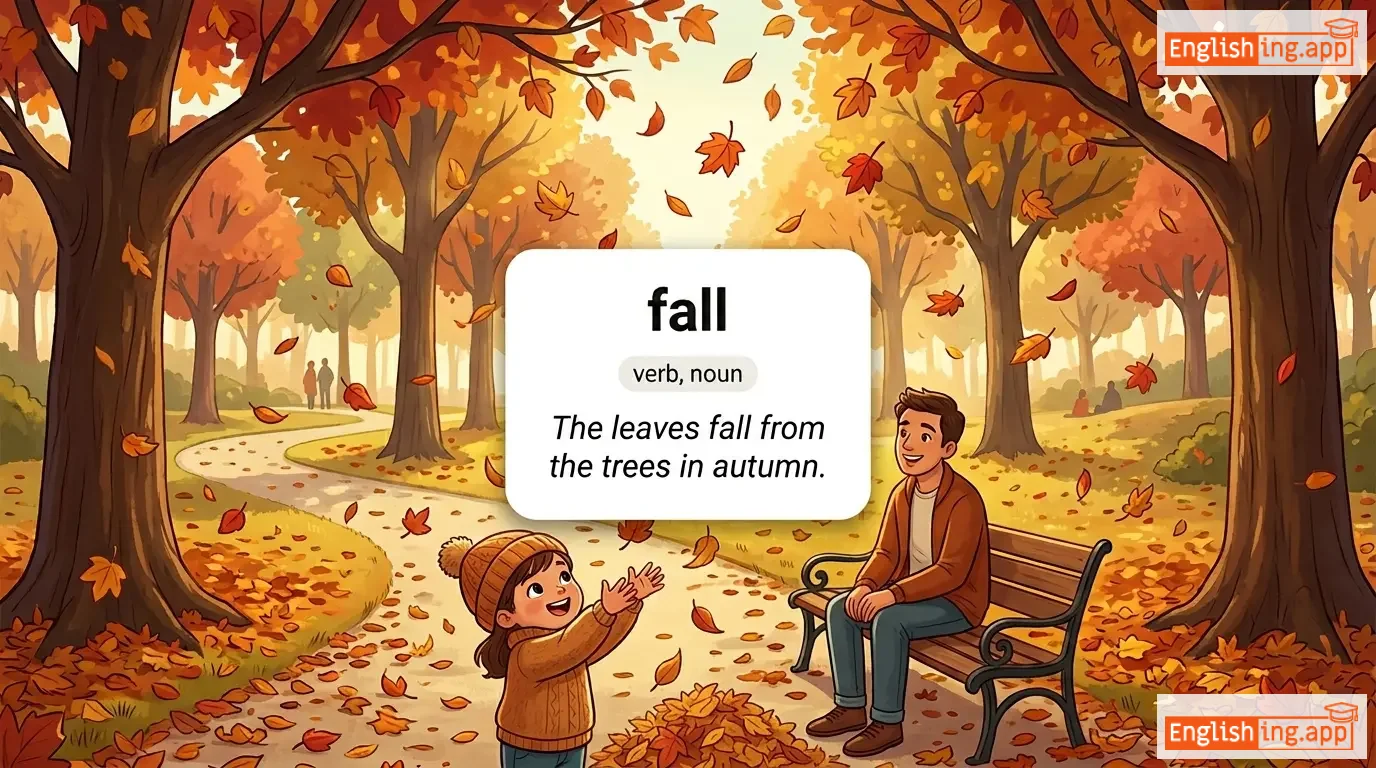
fall definition card — visual illustration of the meaning
verb, noun
/fɔːl/
caer (kaer)

to move downward, typically rapidly and freely without control; the act of dropping from a higher to a lower place

"The leaves fall from the trees in autumn."

"Las hojas caen de los árboles en otoño." (Las hojas caen de los árboles en otoño.)
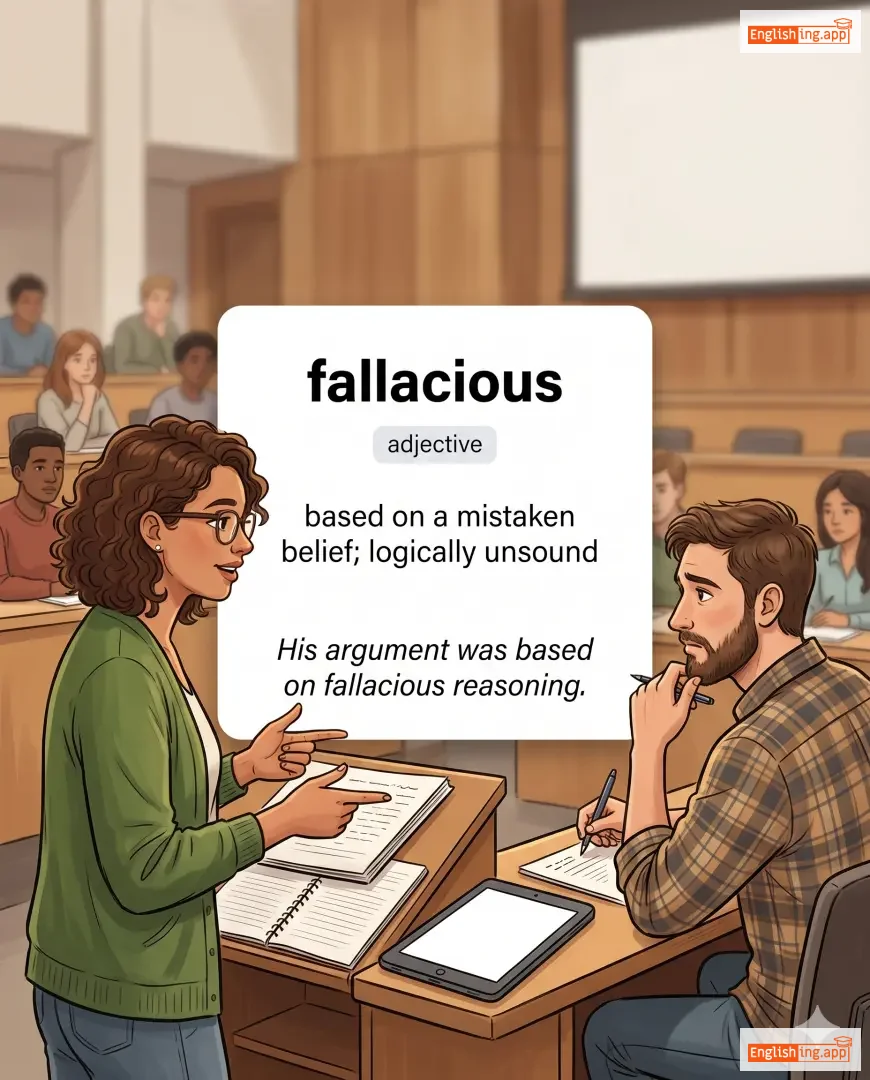
fallacious definition card — visual illustration of the meaning
adjective
/fəˈleɪ.ʃəs/
falaz (falaz)

based on a mistaken belief; logically unsound

"His argument was based on fallacious reasoning."

"Su argumento se basaba en un razonamiento falaz." (Su argumento se basaba en un razonamiento falaz.)
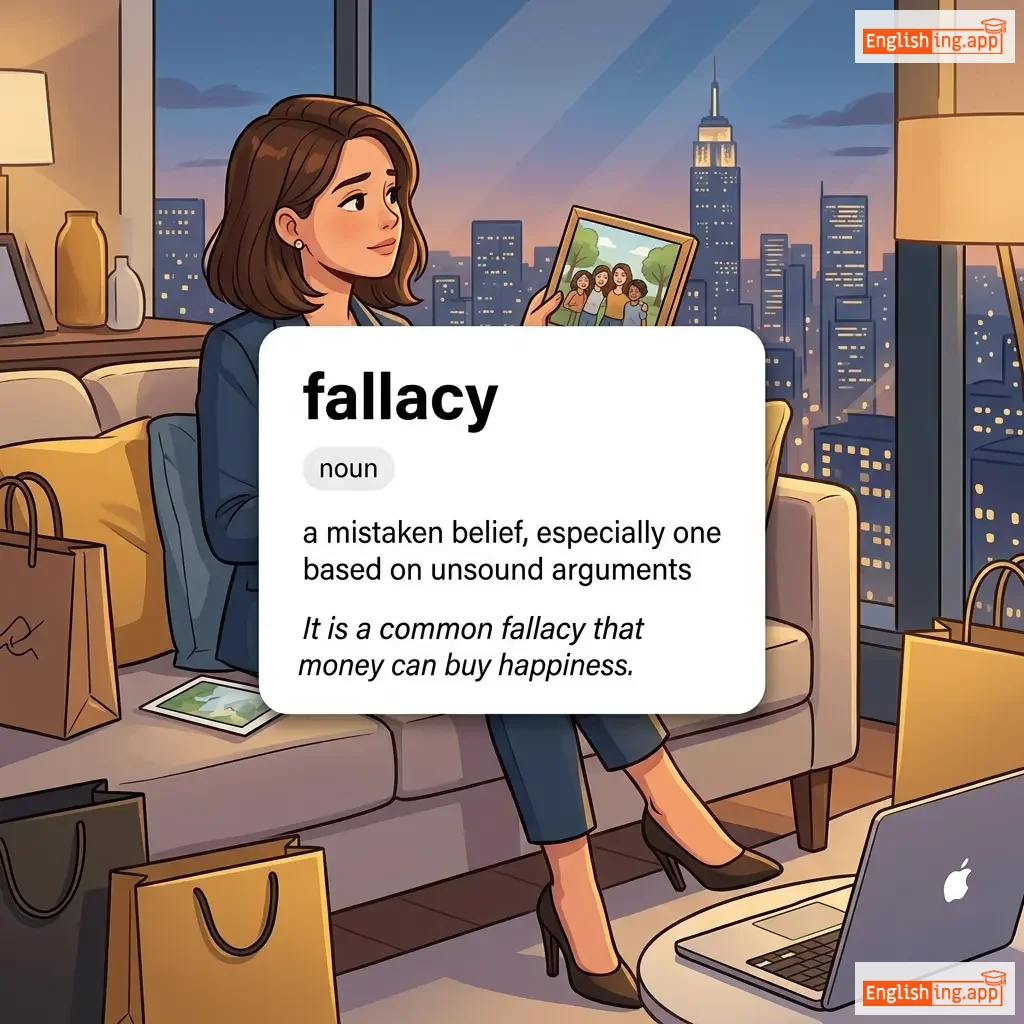
fallacy definition card — visual illustration of the meaning
noun
/ˈfæl.ə.si/
falacia (falacia)

a mistaken belief, especially one based on unsound arguments

"It is a common fallacy that money can buy happiness."

"Es una falacia común que el dinero pueda comprar la felicidad." (Es una falacia comun que el dinero pueda comprar la felicidad.)
adjective
/ˈfæləbl/
capaz de cometer errores (capaz de cometer errores)

capable of making mistakes or being wrong

"Even experts are fallible and can make errors."

"Incluso los expertos son falibles y pueden cometer errores." (Incluso los expertos son falibles y pueden cometer errores.)
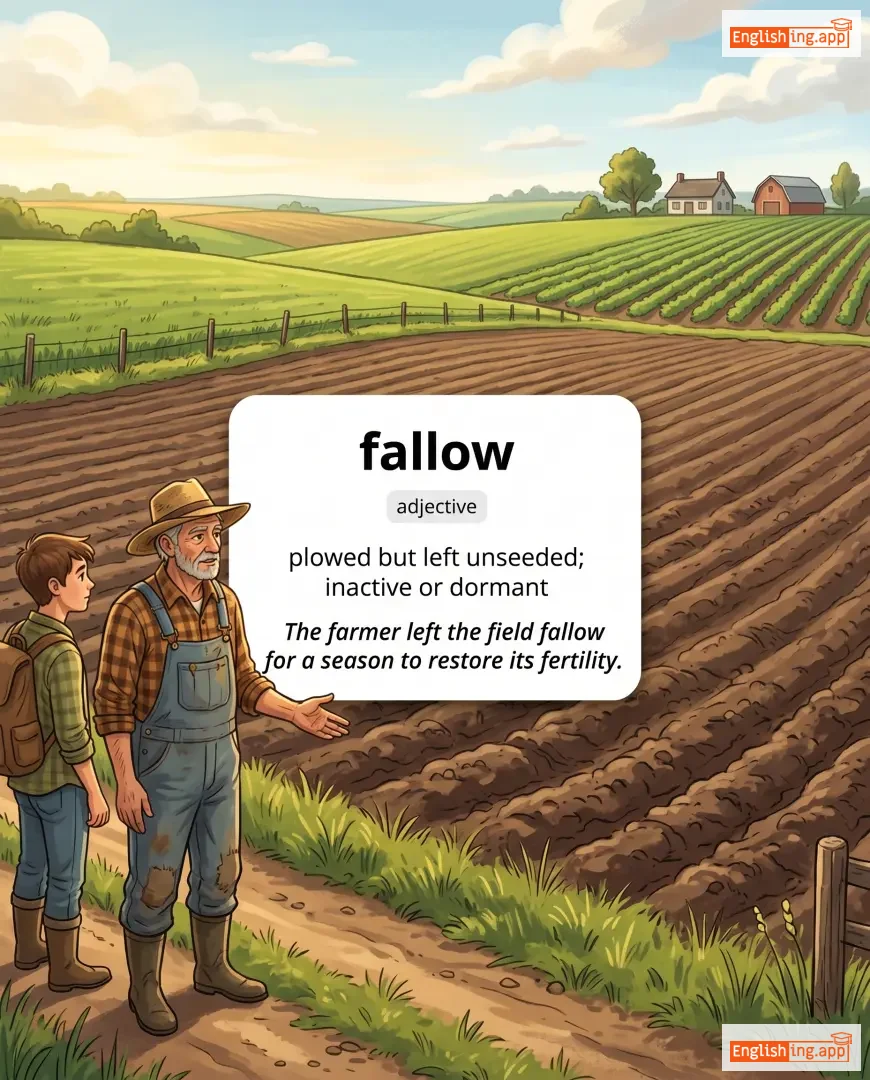
fallow definition card — visual illustration of the meaning
adjective
/ˈfæloʊ/
yermo, inactivo (yermo, inactivo)

plowed but left unseeded; inactive or dormant

"The farmer left the field fallow for a season to restore its fertility."

"El agricultor dejó el campo yermo durante una temporada para restaurar su fertilidad." (El agricultor dejó el campo yermo durante una temporada para restaurar su fertilidad.)
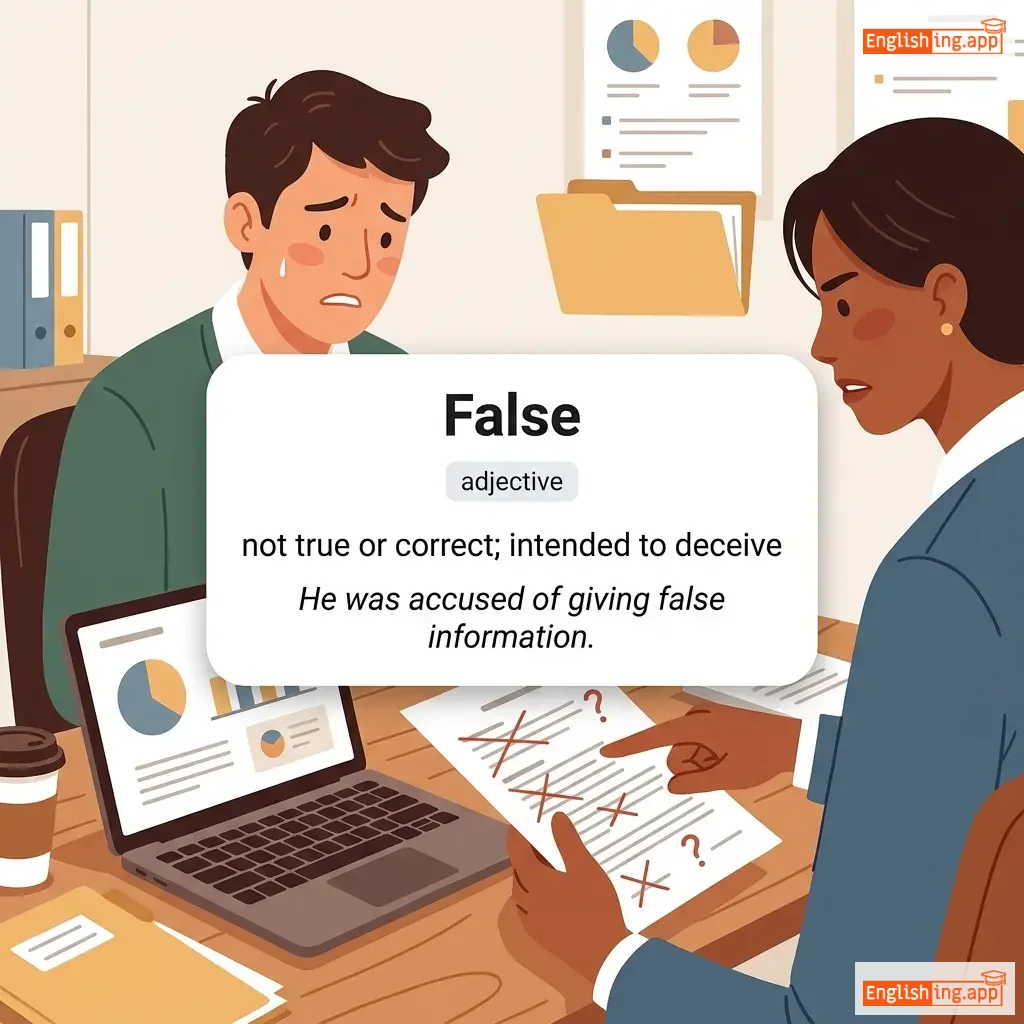
False definition card — visual illustration of the meaning
adjective
/fɔːls/
falso (falso)

not true or correct; intended to deceive

"He was accused of giving false information."

"Él fue acusado de dar información falsa." (Él fue acusado de dar información falsa.)
noun
/ˈfɔːlshʊd/
mentira (mentira)

the state of being untrue or a lie

"He was punished for spreading falsehoods about his colleague."

"Fue castigado por difundir mentiras sobre su colega." (Fue castigado por difundir mentiras sobre su colega.)
verb
/ˈfɔːlsɪfaɪ/
falsificar (falsificar)

to make something false or to misrepresent

"He tried to falsify the documents to avoid taxes."

"Él trató de falsificar los documentos para evitar impuestos." (Él trató de falsificar los documentos para evitar impuestos.)
verb
/ˈfɔːltər/
vacilar o perder fuerza o impulso (vacilar o perder fuerza o impulso)

to hesitate or lose strength or momentum

"Her voice faltered as she delivered the speech."

"Su voz vaciló mientras pronunciaba el discurso." (Su voz vaciló mientras pronunciaba el discurso.)
noun
/feɪm/
fama (fama)

the state of being known or recognized by many people

"She achieved worldwide fame for her acting."

"Ella alcanzó fama mundial por su actuación." (Ella alcanzo fama mundial por su actuacion.)
adjective
/fəˈmɪliər/
familiar (familiar)

Well known or easily recognized from previous experience.

"The town looked familiar to me after so many years."

"El pueblo me parecía familiar después de tantos años." (El pueblo me parecia familiar despues de tantos años.)
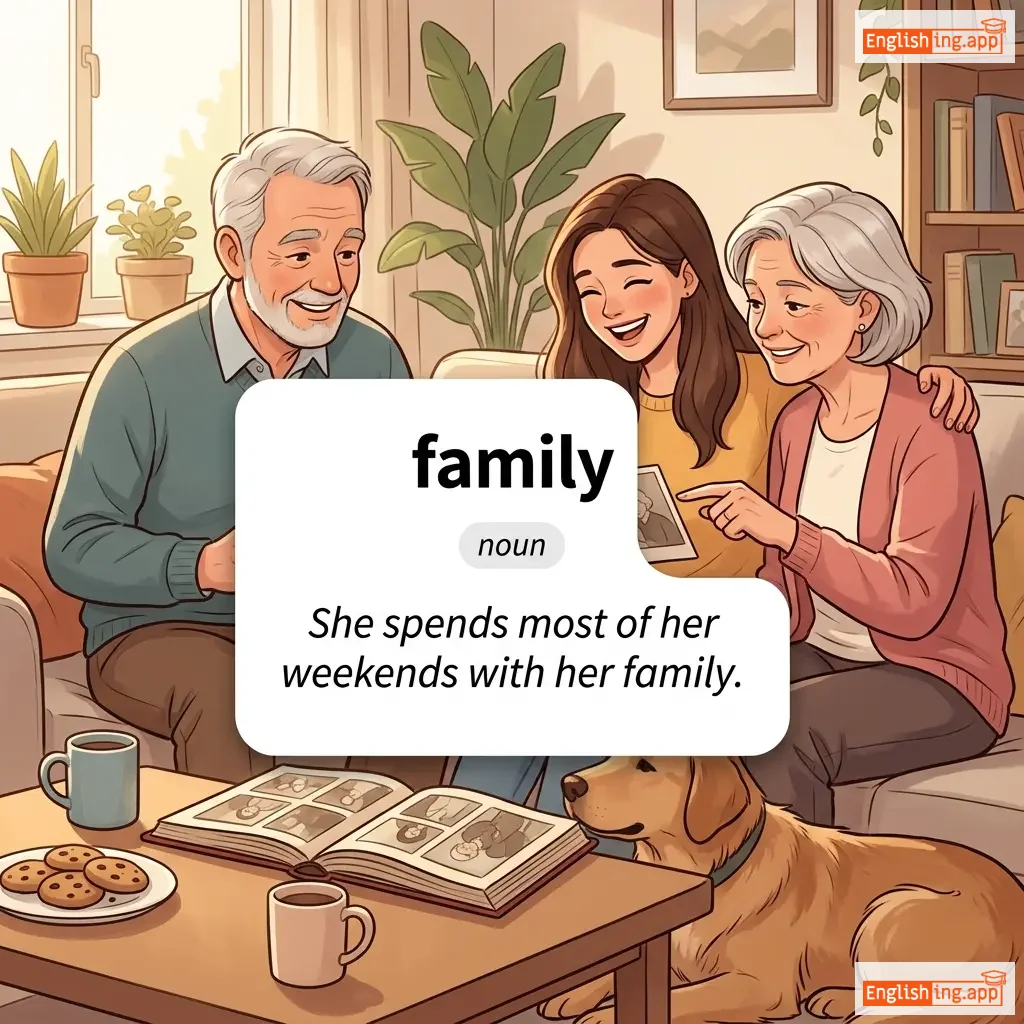
family definition card — visual illustration of the meaning
👨‍👩‍👧‍👦

family (fámili)

noun
/ˈfæməli/
familia (familia)

A group consisting of parents and their children, or all the descendants of a common ancestor.

"She spends most of her weekends with her family."

"Ella pasa la mayoría de sus fines de semana con su familia." (Ella pasa la mayoría de sus fines de semana con su familia.)
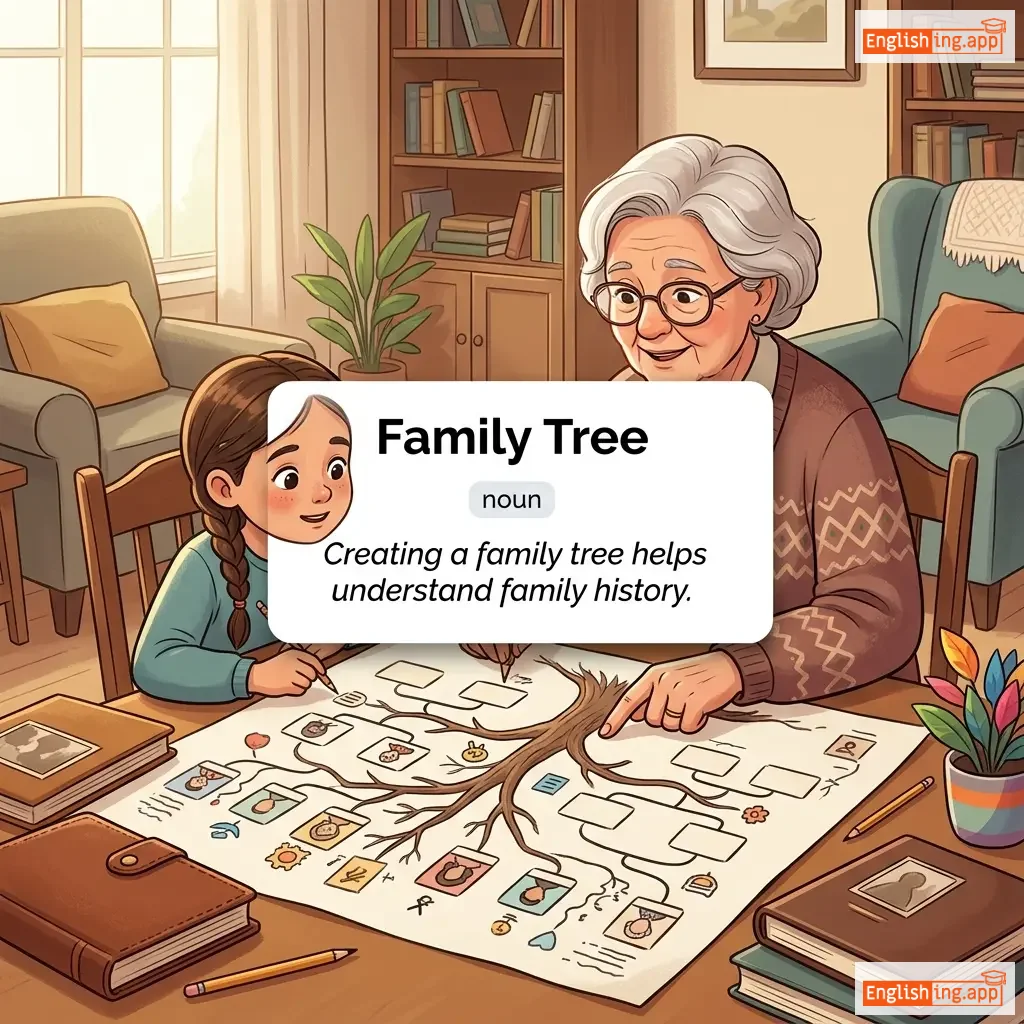
Family Tree definition card — visual illustration of the meaning
noun
ˈfæmɪli triː
Árbol genealógico (arbol genealogico)

A diagram showing the relationships between people in several generations of a family.

"Creating a family tree helps understand family history."

"Crear un árbol genealógico ayuda a entender la historia familiar." (Crear un arbol genealogico ayuda a entender la historia familiar.)
noun
/ˈfæm.ɪn/
hambruna (hambruna)

extreme scarcity of food; a period when food is extremely scarce

"The severe drought led to widespread famine in the region."

"La grave sequía provocó una hambruna generalizada en la región." (La grave sequía provocó una hambruna generalizada en la región.)
verb
/ˈfæmɪʃ/
morirse de hambre (morirse de hambre)

to suffer or cause to suffer from extreme hunger

"The stranded hikers began to famish after several days without food."

"Los excursionistas varados comenzaron a morirse de hambre después de varios días sin comida." (Los excursionistas varados comenzaron a morirse de hambre después de varios días sin comida.)
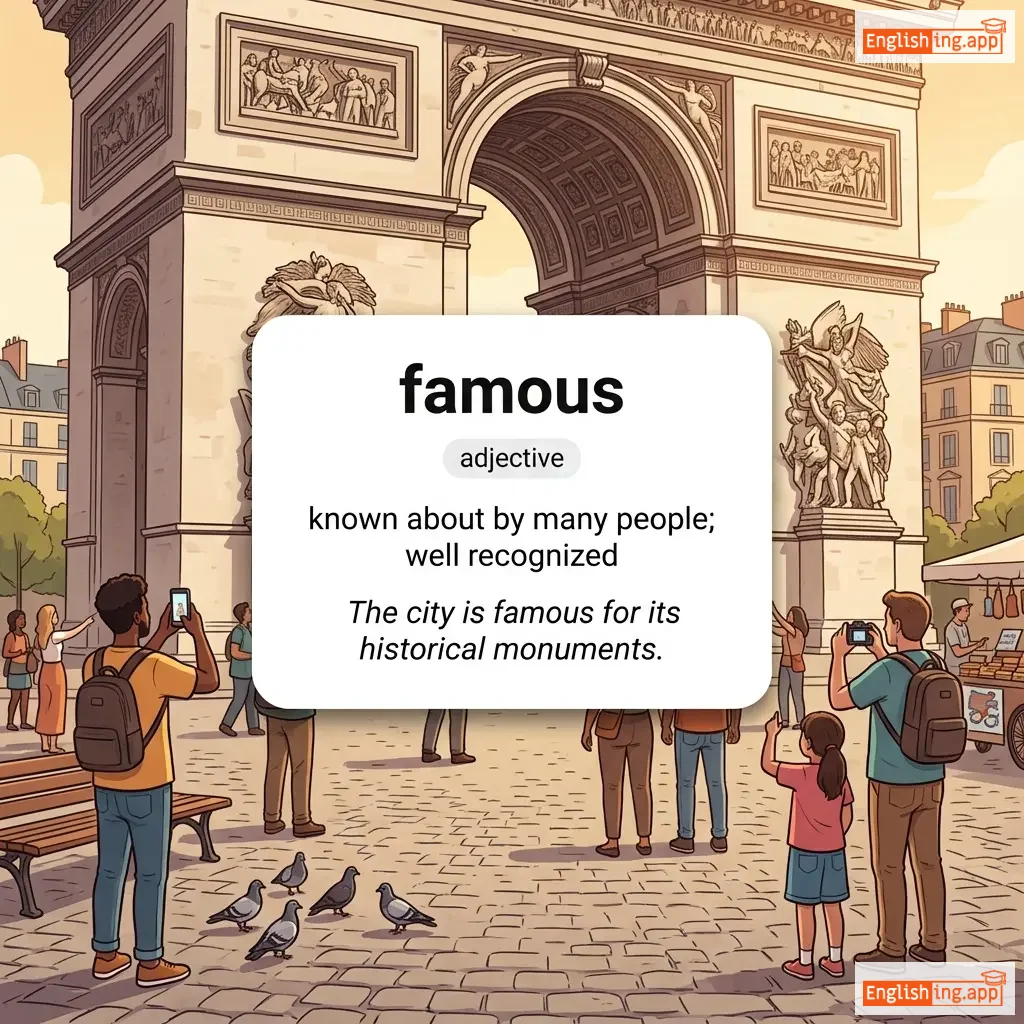
famous definition card — visual illustration of the meaning
adjective
/ˈfeɪməs/
famoso (famoso)

known about by many people; well recognized

"The city is famous for its historical monuments."

"La ciudad es famosa por sus monumentos históricos." (La ciudad es famosa por sus monumentos históricos.)
noun
/fæn/
felicidad (felicidad)

a device with rotating blades that creates a current of air; also a person who admires or supports someone or something

"The fan kept the room cool during the hot summer day."

"Ella no pudo ocultar su felicidad cuando recibió el premio." (Ella no pudo ocultar su felicidad cuando recibió el premio.)
noun
/fəˈnætɪk/
fanático (fanatico)

a person with extreme and uncritical enthusiasm for a cause or belief

"He is a football fanatic, never missing a match of his favorite team."

"Él es un fanático del fútbol, nunca se pierde un partido de su equipo favorito." (El es un fanatico del futbol, nunca se pierde un partido de su equipo favorito.)
adjective
/fəˈnætɪkəl/
fanático (fanatico)

showing extreme enthusiasm or obsession

"She has a fanatical interest in collecting vintage stamps."

"Ella tiene un interés fanático en coleccionar sellos antiguos." (Ella tiene un interes fanatico en coleccionar sellos antiguos.)
noun
/fəˈnætɪsɪzəm/
fanatismo (fanatismo)

the quality of being fanatical; extreme zeal or obsession

"Religious fanaticism can lead to intolerance and conflict."

"El fanatismo religioso puede llevar a la intolerancia y al conflicto." (El fanatismo religioso puede llevar a la intolerancia y al conflicto.)
adjective
/ˈfænsiːd/
imaginado, deseado (imaginado, deseado)

imagined, desired, or believed without evidence

"He is a fancied suitor in the eyes of the young lady."

"Él es un pretendiente imaginado a los ojos de la joven." (Él es un pretendiente imaginado a los ojos de la joven.)