語彙集

英単語辞書 | 単語の意味、定義、例文

adjective
/fɪəs/
激しい, 凶暴 (hageshī, kyōbō)

showing strong, intense, or aggressive feelings; powerful and violent

"The fierce storm damaged several houses in the village."

"激しい嵐が村のいくつかの家を壊しました。" (Hageshī arashi ga mura no ikutsuka no ie o kowashimashita.)
adjective
/ˈfaɪə.ri/
燃えるような; 熱心な; 怒りっぽい (moeru yōna; nesshin na; okorippoi)

burning; passionate; hot-tempered; showing strong emotion

"She has a fiery temper that flares up quickly."

"彼女はすぐに燃えるような性格で、すぐに怒る。" (Kanojo wa sugu ni moeru yōna seikaku de, sugu ni okoru.)
number
/ˌfɪfˈtiːn/
十五 (juugo)

the number 15

"There are fifteen students in the class."

"クラスには十五人の生徒がいます。" (Kurasu ni wa juugo nin no seito ga imasu.)
adjective
/fɪfθ/
第五 (dai go)

constituting number five in a sequence

"She lives on the fifth floor of the building."

"彼女はその建物の五階に住んでいます。" (Kanojo wa sono tatemono no go-kai ni sundeimasu.)
number
/ˈfɪfti/
五十 (goju)

the number 50

"The stadium can hold fifty thousand people."
"スタジアムは五万人を収容できます。" (Sutajiamu wa goman nin o shūyō dekimasu.)
noun
/fɪɡ/
いちじく (ichijiku)

a soft sweet fruit with many small seeds, eaten fresh or dried

"Fresh figs are delicious when eaten with honey."

"新鮮ないちじくは、ハチミツと一緒に食べるとおいしいです。" (shinsen na ichijiku wa hachimitsu to issho ni taberu to oishii desu)
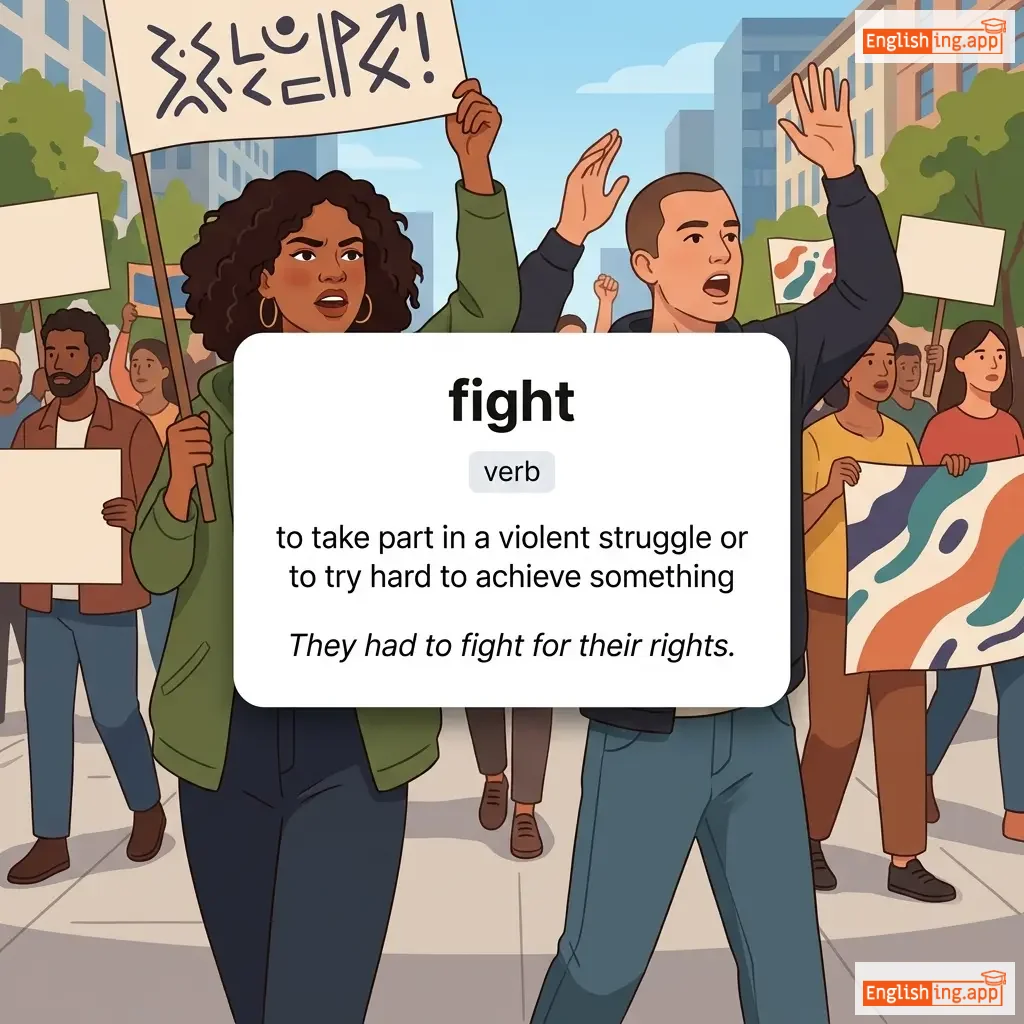
fight definition card — visual illustration of the meaning
verb
/faɪt/
戦う (tatakau)

to take part in a violent struggle or to try hard to achieve something

"They had to fight for their rights."

"彼らは権利のために戦わなければならなかった。" (Karera wa kenri no tame ni tatakawanakereba naranakatta.)
noun
/ˈfaɪtər/
戦士 (senshi)

a person who fights, especially in combat or sports like boxing

"The fighter won the championship after a tough battle."

"その戦士は厳しい戦いの後でチャンピオンになった。" (Sono senshi wa kibishī tatakai no ato de chanpion ni natta.)
noun/verb
/ˈfaɪtɪŋ/
戦い (tatakai)

the act of engaging in a physical or verbal conflict

"The soldiers were fighting bravely on the battlefield."

"兵士たちは戦場で勇敢に戦っていました。" (Heishi-tachi wa senjō de yūkan ni tatakatte imashita.)
noun
/ˈfɪɡmənt/
虚構, 想像 (kyokou, souzou)

something invented or imaginary; a fabrication of the mind

"The story of the haunted house is just a figment of her imagination."

"幽霊屋敷の話は、彼女の想像の産物に過ぎない。" (Yuurei yashiki no hanashi wa, kanojo no souzou no sanbutsu ni suginai.)
adjective
/ˈfɪɡərətɪv/
比喩的 (hiyuteki)

not literal; using figures of speech or symbolic representation

"She used figurative language to describe her feelings."

"彼女は感情を表現するために比喩的な言葉を使いました。" (Kanojo wa kanjō o hyōgen suru tame ni hiyuteki na kotoba o tsukaimashita.)
noun
/ˈfɪɡjər/
数字、形、重要な人物 (sūji, katachi, jūyō na jinbutsu)

a number, shape, or person of importance; also a representation in drawing or sculpture

"The report included several important figures."

"レポートにはいくつかの重要なフィギュアが含まれていました。" (Repōto ni wa ikutsuka no jūyō na figyua ga fukuma rete imashita.)
noun
/ˈfɪɡjərˌhɛd/
名目上の指導者 (meimoku jou no shidousha)

a nominal leader with no real power; a symbolic head

"The king was merely a figurehead with no real authority."

"王は実際の権限を持たない象徴的な指導者に過ぎなかった。" (Ou wa jissai no kenryoku wo motanai shouchou-teki na shidousha ni suginakatta.)
noun
/ˌfɪɡjʊˈriːn/
小さな装飾用の像 (chiisana shoushoku-yō no zō)

a small ornamental statue or model of a human or animal

"She bought a porcelain figurine of a dancing ballerina."

"彼女はダンスをするバレリーナの陶器のフィギュリンを買いました。" (Kanojo wa dansu o suru barerīna no tōki no figyurin o kaimashita.)
🕵️‍♂️

filch (フィルチ)

verb
/fɪltʃ/
盗む (nusumu)

to steal something in a sneaky or petty way

"He tried to filch a candy bar from the shop."

"彼は店からキャンディバーを盗もうとした。" (Kare wa mise kara kyandi baa wo nusumou to shita.)
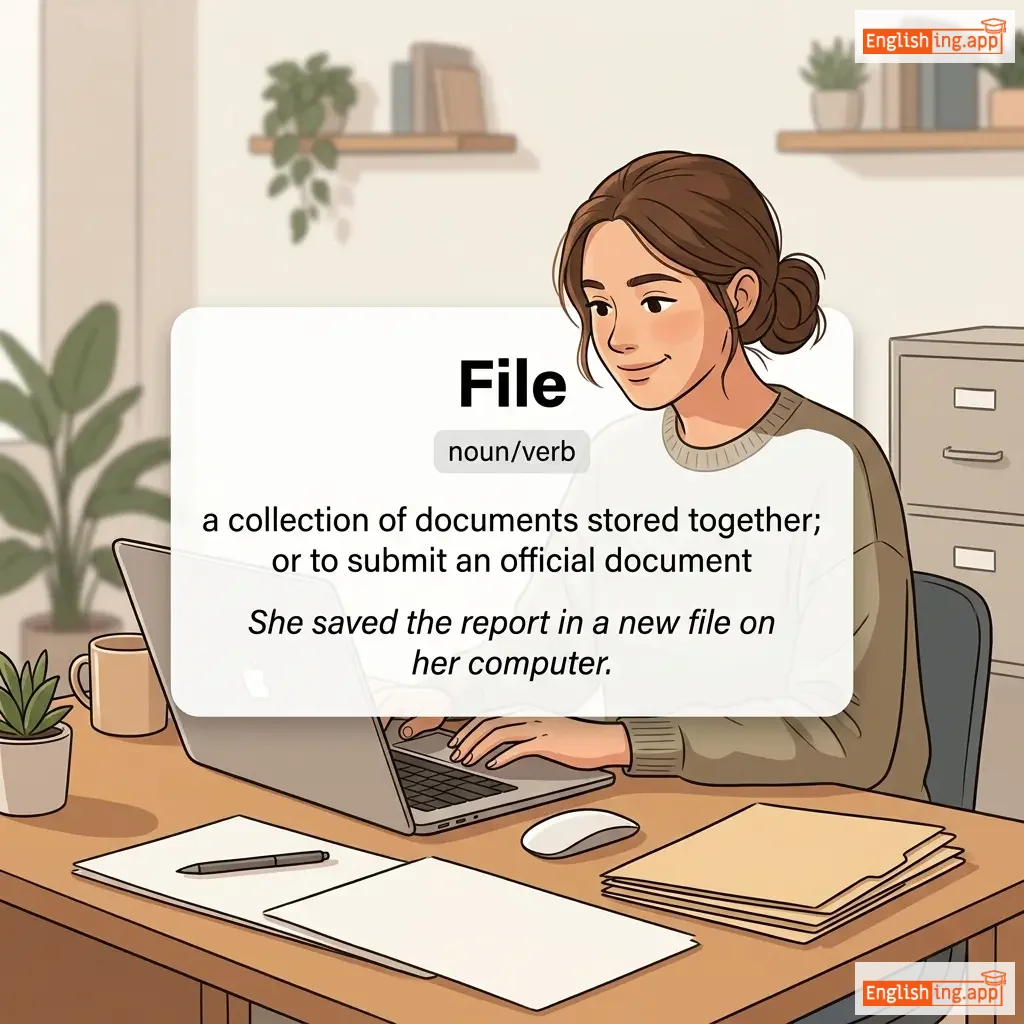
File definition card — visual illustration of the meaning
📂

File

noun/verb
/faɪl/

a collection of documents stored together; or to submit an official document

"She saved the report in a new file on her computer."

👨‍👩‍👧

filial (フィリアル)

adjective
/ˈfɪliəl/
息子や娘に関する; 親への敬意や愛情を示すこと (musuko ya musume ni kansuru; oya e no keii ya aijō o shimesu koto)

relating to a son or daughter; showing respect or affection toward parents

"He showed filial respect by caring for his aging parents."
"彼は年老いた両親の世話をすることでフィリアルな敬意を示しました。" (Kare wa toshi o itta ryōshin no sewa o suru koto de firiaru na keii o shimashita.)
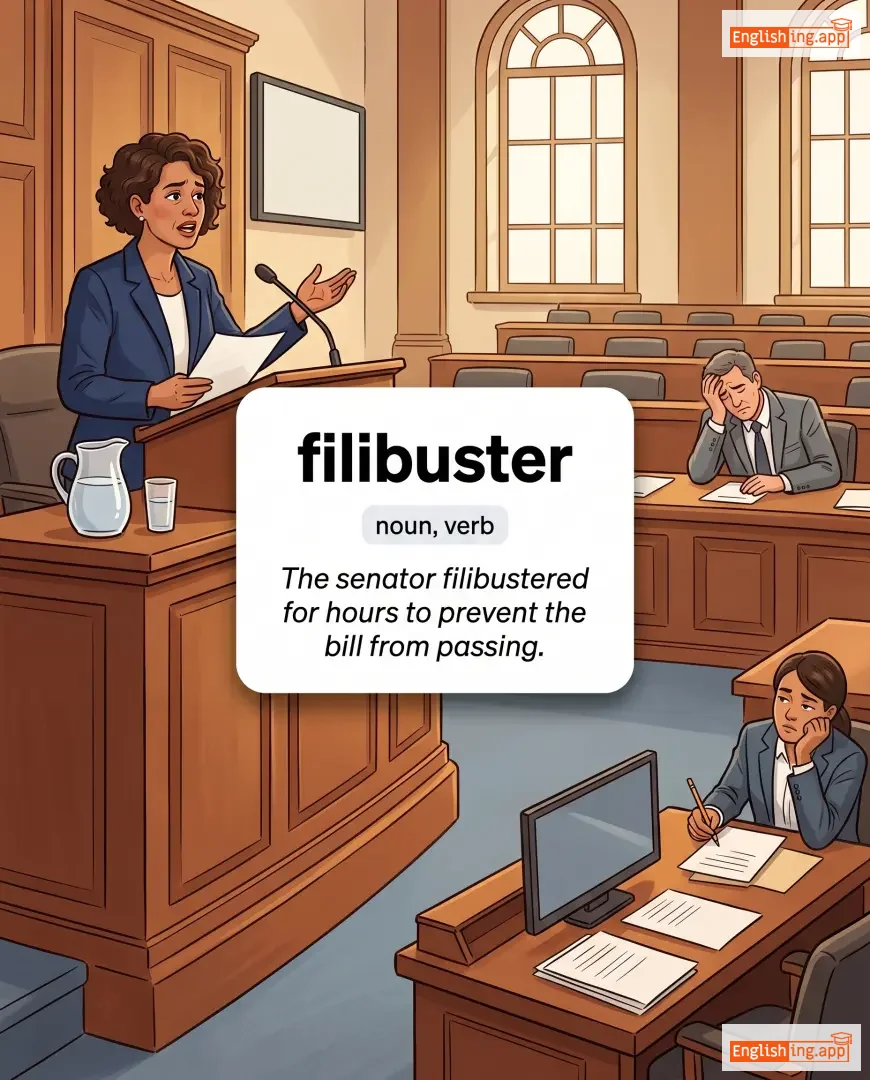
filibuster definition card — visual illustration of the meaning
noun, verb
/ˈfɪlɪˌbʌstər/
議会での活動を長時間の演説で遅らせる戦術; この戦術を使用する (gikai de no katsudou o choujikan no enzetsu de okuraseru senjutsu; kono senjutsu o shiyou suru)

a tactic of delaying legislative action by prolonged speech; to use such a tactic

"The senator filibustered for hours to prevent the bill from passing."

"上院議員は法案を通すのを防ぐために何時間もフィリバスターを行った。" (Jouin giin wa hoan o toosu no o fuseru tame ni nan jikan mo firibasutaa o okonatta.)
noun
/ˈfɪlɪɡri/
繊細な装飾細工、通常は金または銀で作られた (sensai na shōshoku saiku, tsūjō wa kin matawa gin de tsukurareta)

delicate ornamental work of fine wire, usually of gold or silver

"The necklace was decorated with intricate gold filigree."

"ネックレスは複雑な金のフィリグリーで飾られていました。" (Nekkuresu wa fukuzatsu na kin no firigurī de kazararete imashita.)
noun, verb
/ˈfaɪlɪŋ/
書類提出; 書類の整理 (shorui teishutsu; shorui no seiri)

the act of submitting documents; the process of organizing papers

"The lawyer handled the filing of all court documents."
"弁護士はすべての裁判所文書の提出を扱いました。" (Bengoshi wa subete no saibansho bunsho no teishutsu o atsukaimashita.)
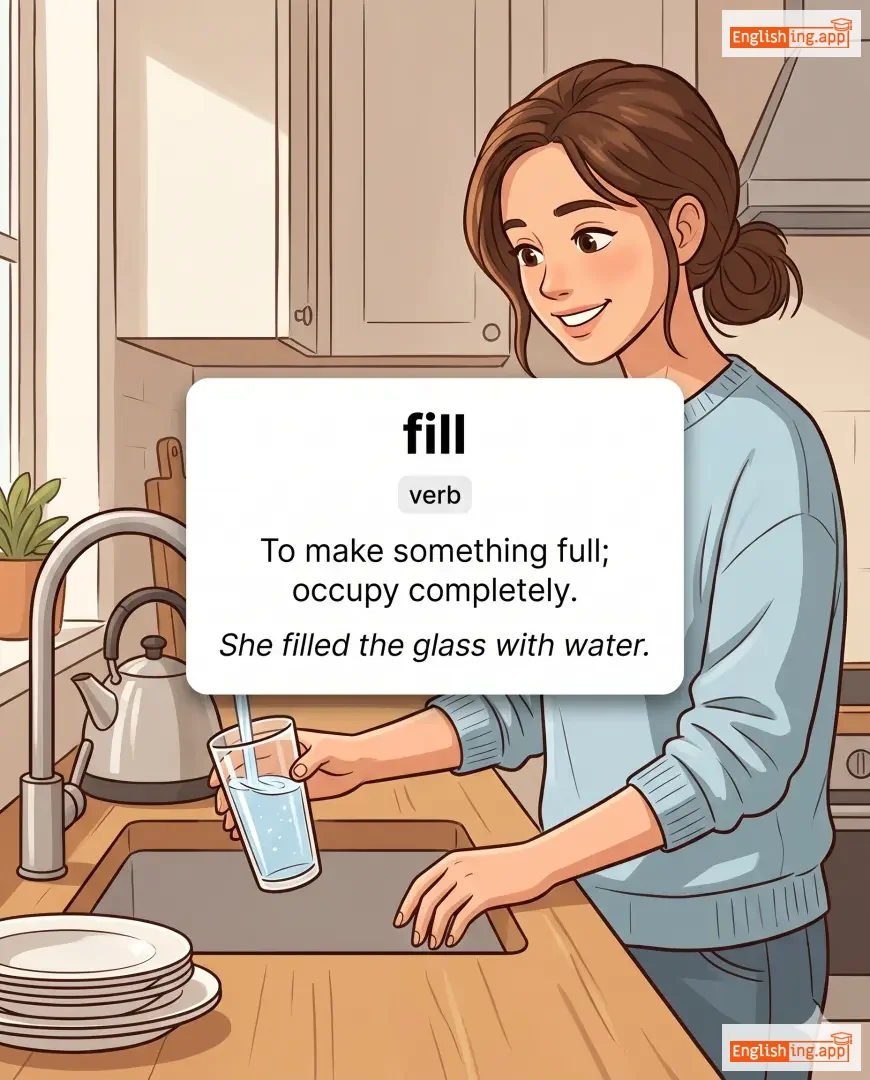
fill definition card — visual illustration of the meaning
verb
/fɪl/
満たす (mitasu)

To make something full; occupy completely.

"She filled the glass with water."

"彼女はグラスに水を満たしました。" (Kanojo wa gurasu ni mizu o mitashimashita.)
noun
/ˈfɪli/
若い雌馬 (wakai meuma)

a young female horse

"The filly ran swiftly across the meadow."

"その若い牝馬は草原を速く走った。" (Sono wakai meuma wa sōgen o hayaku hashitta.)
noun/verb
/fɪlm/
映画 (eiga)

a motion picture or movie; or to record on camera

"They watched a film together on the weekend."

"彼らは週末に一緒に映画を見ました。" (Karera wa shuumatsu ni issho ni eiga o mimashita.)
noun
/fɪlm ˈæktər/
映画俳優 (eiga haiyuu)

A person who performs roles in movies or films.

"The film actor received widespread acclaim for his performance."

"その映画俳優は演技で広く称賛されました。" (Sono eiga haiyuu wa engi de hiroku shousan saremashita)
noun
/ˈfɪlmˌmeɪkər/
映画製作者 (eiga seisakusha)

A person who directs or produces films

"The film-maker received an award for his latest documentary."

"映画製作者は最新のドキュメンタリーで賞を受賞しました。" (Eiga seisakusha wa saishin no documentary de shou o jushou shimashita.)
noun
/ˈfɪlmˌmeɪkər/
映画製作者 (eiga seisakusha)

a person who makes films, typically as a profession

"He is a well-known filmmaker in the industry."

"彼は業界で有名なフィルムメーカーです。" (Kare wa gyoukai de yuumei na film maker desu.)
verb
/ˈfɪltər/
フィルター (firutā)

to pass a substance through a device to remove unwanted material or to selectively pass certain items

"She used a coffee filter to separate the grounds from the liquid."

"彼女は液体から粉を分けるためにコーヒーフィルターを使った。" (Kanojo wa ekitai kara kona o wakeru tame ni kōhī firutā o tsukatta.)
noun
/fɪlθ/
汚れ (yogore)

dirty or disgusting matter; moral corruption

"The streets were full of filth after the storm."

"嵐の後、通りは汚れでいっぱいでした。" (Arashi no ato, tōri wa yogore de ippai deshita.)
verb
/fɪˈneɪɡəl/
巧妙さや騙しで物を得る (koumyou sa ya damashi de mono wo eru)

to obtain something by cleverness or trickery

"He finagled a free ticket by pretending to be a VIP guest."
"彼はVIPゲストだと偽って無料チケットを手に入れた。" (Kare wa VIP gesuto da to itsuwatte muryou chiketto wo te ni ireteta.)
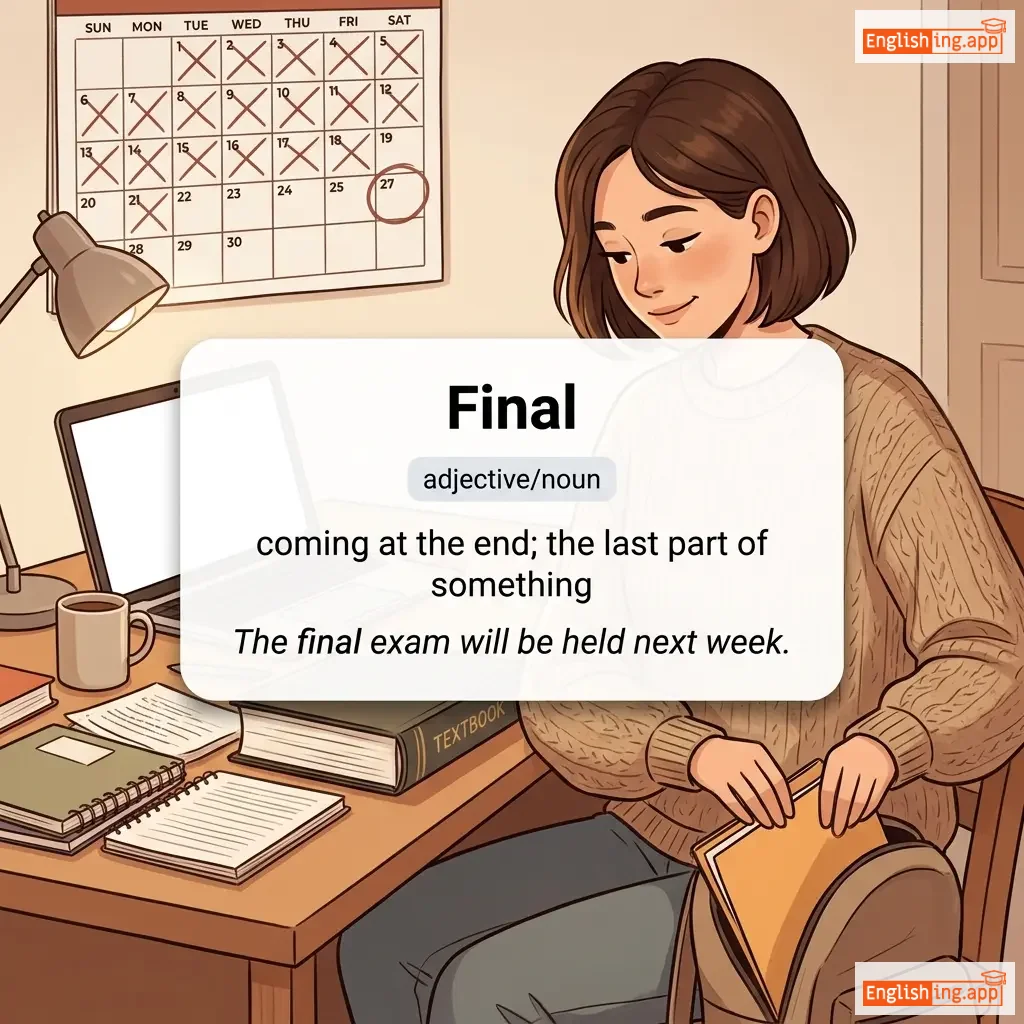
Final definition card — visual illustration of the meaning
adjective/noun
/ˈfaɪnəl/
最終 (saishuu)

coming at the end; the last part of something

"The final exam will be held next week."

"最終試験は来週行われます。" (Saishuu shiken wa raishuu okonawaremasu.)
noun
/fɪˈnɑːleɪ/
フィナーレ (finare)

the last part or conclusion of a performance, event, or series

"The concert ended with a spectacular finale."

"コンサートは壮観なフィナーレで終わりました。" (Konsāto wa sōkan na fināre de owari mashita.)
noun
/faɪˈnælɪti/
決定的な性質 (ketteiteki na seishitsu)

the quality of being final or irreversible; a sense of conclusiveness

"The judge's decision gave the case a sense of finality."
"裁判官の決定はその事件に決定的な感覚を与えた。" (Saibankan no kettei wa sono jiken ni ketteiteki na kankaku o ataeta.)
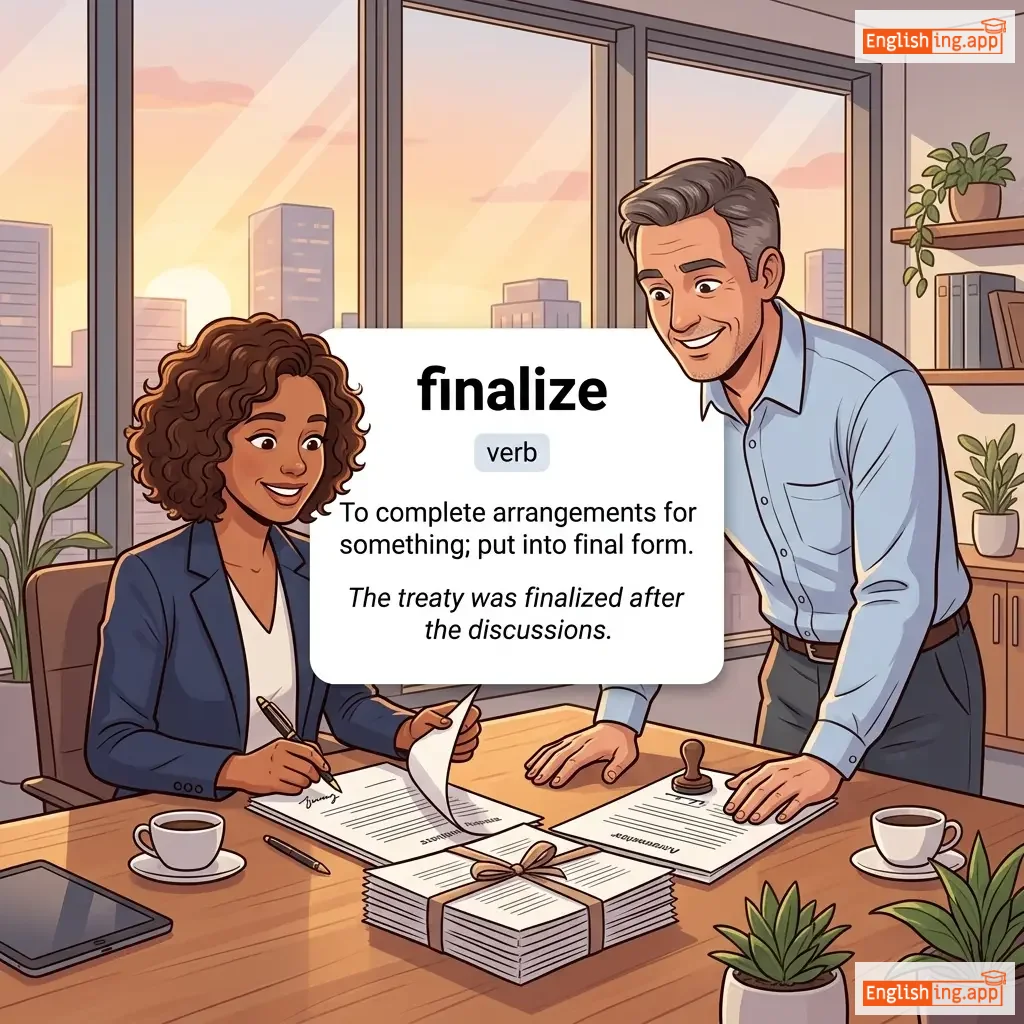
finalize definition card — visual illustration of the meaning
verb
ˈfaɪ.nəl.aɪz
最終決定する (saishū kettei suru)

To complete arrangements for something; put into final form.

"The treaty was finalized after the discussions."

"協定は討論後に最終決定されました。" (Kyōtei wa tōron go ni saishū kettei saremashita.)
adverb
/ˈfaɪnəli/
ついに (tsuini)

after a long time; at the end; ultimately

"After years of hard work, she finally achieved her dream."
"何年もの努力の後、彼女はついに夢を叶えました。" (Nannen mono doryoku no ato, kanojo wa tsuini yume o kanaemashita.)
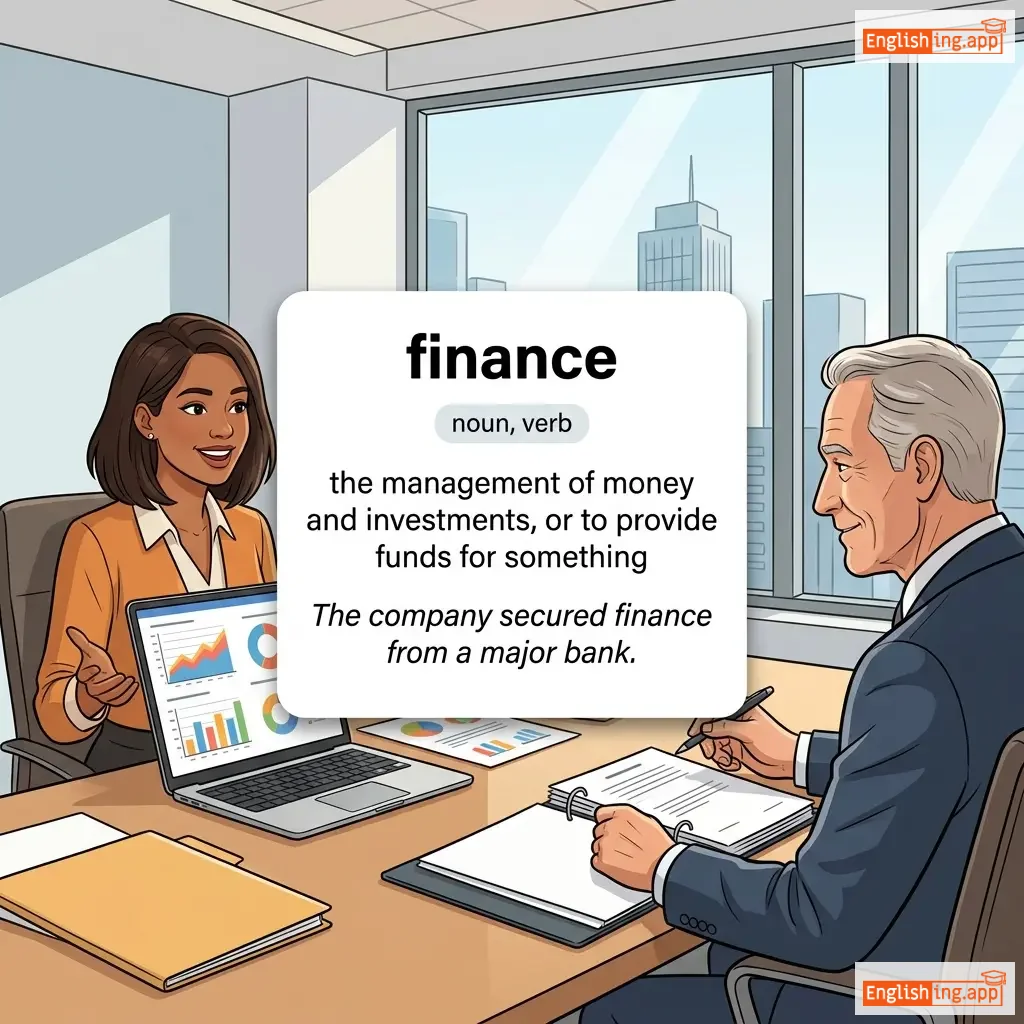
finance definition card — visual illustration of the meaning
noun, verb
/ˈfaɪ.næns/ or /fəˈnæns/
ファイナンス (fainansu)

the management of money and investments, or to provide funds for something

"The company secured finance from a major bank."

"その会社は大手銀行から資金を調達しました。" (Sono kaisha wa oote ginkou kara shikin wo choutatsu shimashita.)
adjective
/faɪˈnænʃəl/
財務的 (zaimuteki)

relating to money, banking, or finance

"He made a sound financial decision by investing wisely."
"彼は賢明に投資して、健全な財務的決定を下しました。" (Kare wa kenmei ni toshi shite, kenzen na zaimuteki kettei o oroshimashita.)
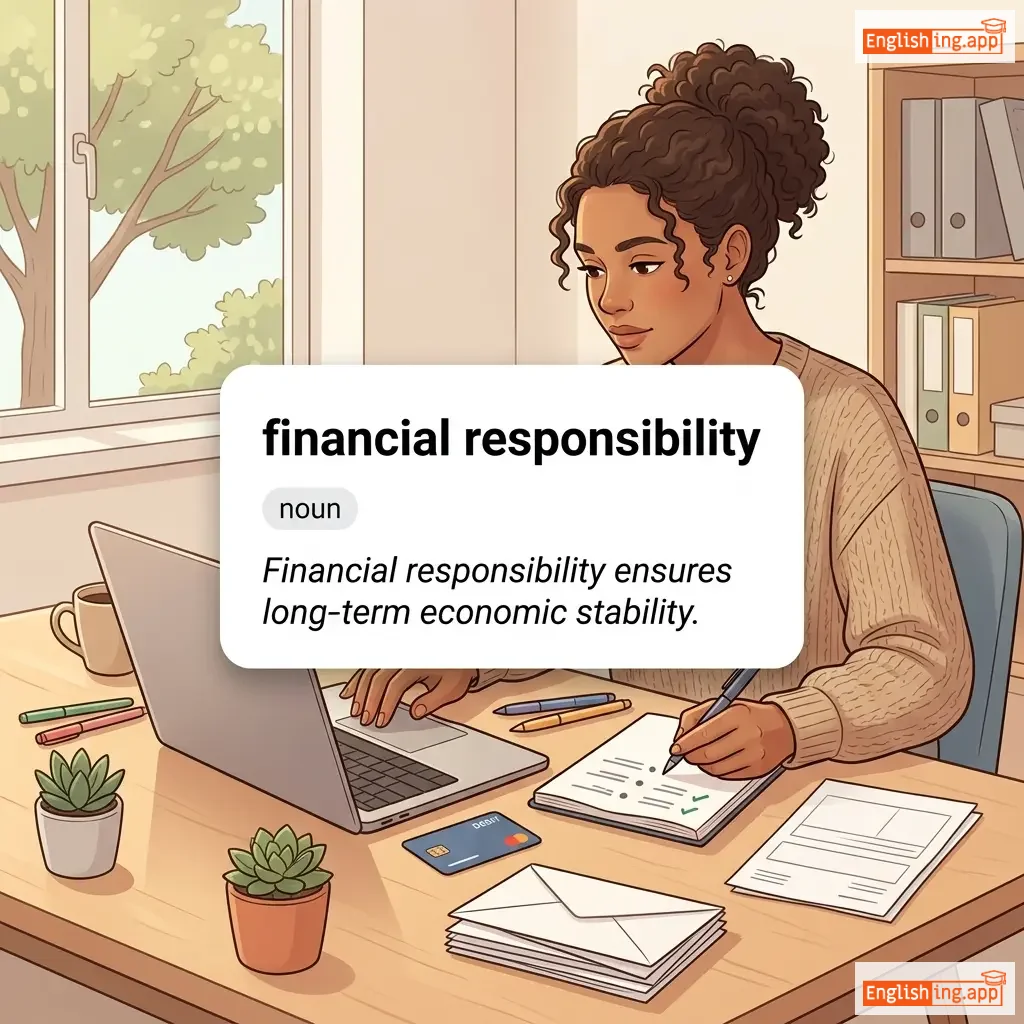
financial responsibility definition card — visual illustration of the meaning
noun
/faɪˈnæn.ʃəl rɪˌspɒn.sɪˈbɪl.ə.ti/
財務責任 (zaimu sekinin)

The practice of managing money and other financial resources in a responsible and effective manner.

"Financial responsibility ensures long-term economic stability."

"財務責任は長期的な経済の安定を確保します。" (Zaimu sekinin wa chōkiteki na keizai no antei o kakuho shimasu.)
noun
/fɪˈnænʃɪər/
金融家 (kin'yūka)

a person who manages large amounts of money or investments

"The financier advised the company on its investments."

"金融家は会社に投資に関するアドバイスをしました。" (Kin'yūka wa kaisha ni tōshi ni kansuru adobaisu o shimashita.)
noun
/fɪntʃ/
フィンチ(小さな歌う鳥) (finchi (chiisana utau tori))

a small songbird with a short, stout bill

"A colorful finch perched on the branch singing sweetly."
"カラフルなフィンチが枝に止まり、甘い歌を歌っていました。" (Karafuru na finchi ga eda ni tomari, amai uta o utatte imashita.)
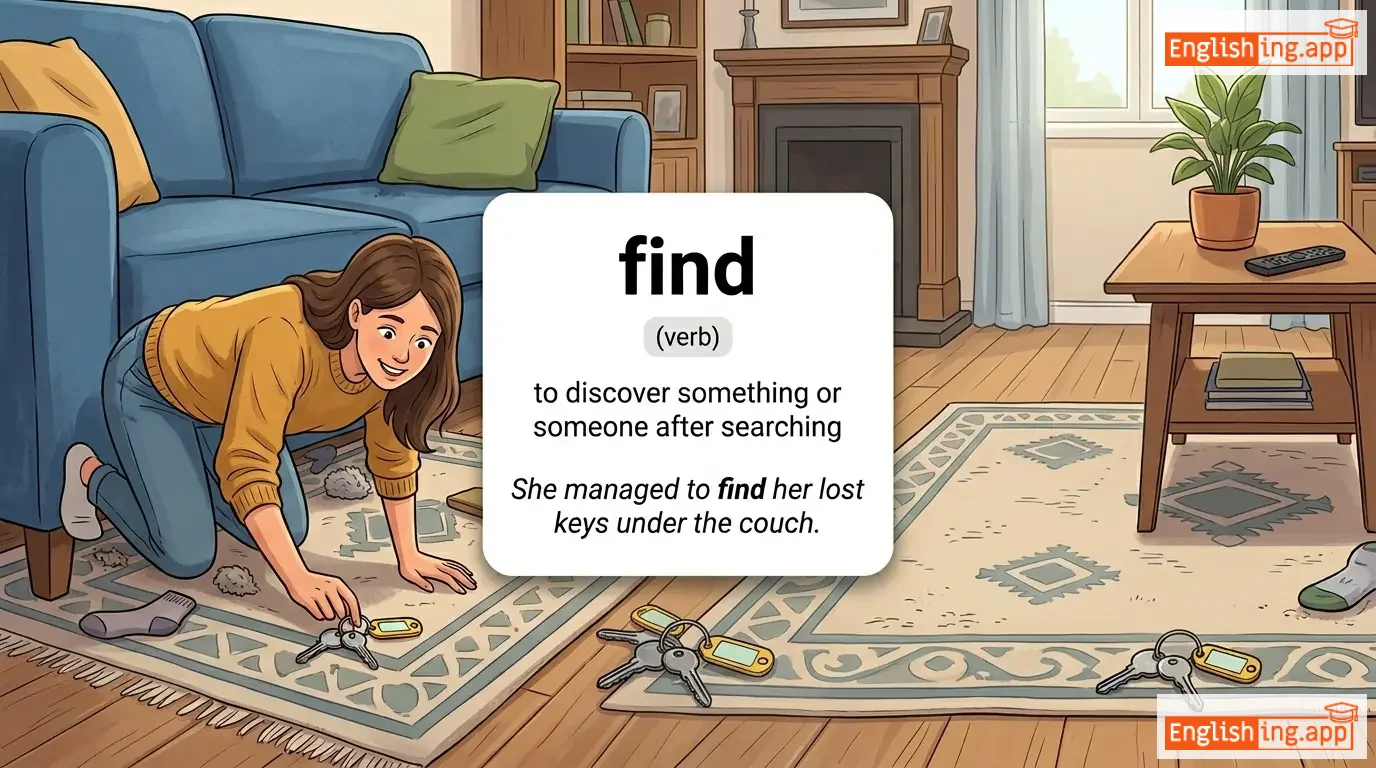
find definition card — visual illustration of the meaning
verb
/faɪnd/
見つける (mitsukeru)

to discover something or someone after searching

"She managed to find her lost keys under the couch."

"彼女はソファの下で失くした鍵を見つけました。" (Kanojo wa sofa no shita de nakushita kagi o mitsukemashita.)
noun
/ˈfaɪn.dɪŋ/
発見、調査後に得られた結論または結果 (hakken, chousa go ni erareta ketsuron matawa kekka)

a discovery, conclusion, or result reached after investigation

"The scientist published her findings in a leading journal."

"科学者は彼女の発見を主要なジャーナルに発表しました。" (Kagakusha wa kanojo no hakken wo shuyou na jaanaru ni happyou shimashita.)
adjective, noun, verb
/faɪn/
幸せ (shiawase)

of high quality; very good, or a penalty for breaking a law

"She paid a fine for parking in the wrong place."

"彼女は賞を受け取ったとき、幸せを隠すことができなかった。" (Kanojo wa shō o uketotta toki, shiawase o kakusu koto ga dekinakatta.)
noun
/ˈfaɪnəri/
高級または装飾的な服 (kōkyū mata wa sōshokuteki na fuku)

expensive or elaborate clothes, decorations, or accessories

"She attended the party in her finest finery."
"彼女は最上の衣装でパーティーに出席した。" (Kanojo wa saijou no ishou de pātii ni shusseki shita.)
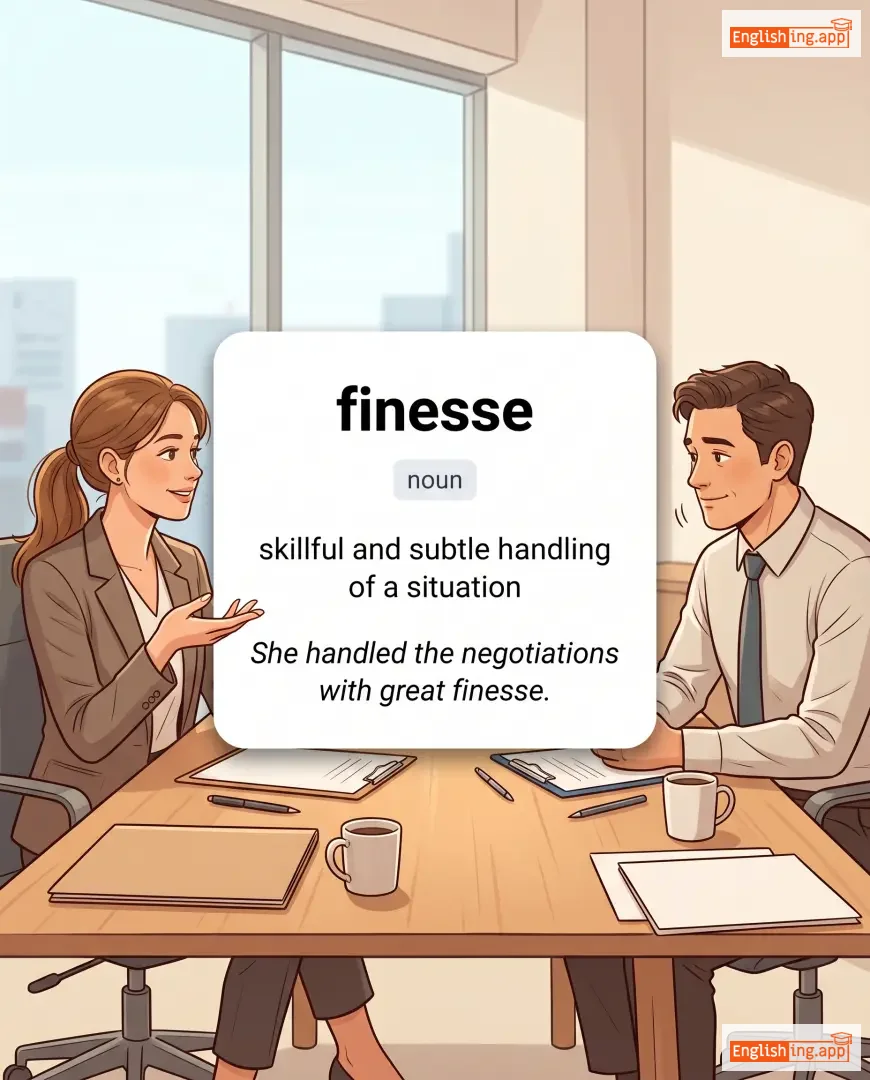
finesse definition card — visual illustration of the meaning
noun
/fɪˈnɛs/
巧妙さ, 微細さ (kōmyōsa, bisaisa)

skillful and subtle handling of a situation

"She handled the negotiations with great finesse."

"彼女は交渉を見事に巧妙に処理しました。" (Kanojo wa kōshō o migoto ni kōmyō ni shori shimashita.)
noun
/ˈfɪŋ.ɡər/
(yubi)

one of the five long parts of the hand

"He wore a gold ring on his finger."

"彼は指に金の指輪をしていた。" (Kare wa yubi ni kin no yubiwa o shite ita.)
noun
/ˈfɪŋ.ɡər.prɪnt/
指紋 (shimon)

an impression or mark made on a surface by a person's fingertip; unique identification pattern

"The police found his fingerprints on the door handle at the crime scene."

"警察は犯罪現場でドアの取っ手に彼の指紋を見つけました。" (Keisatsu wa hanzai genba de doa no totte ni kare no shimon o mitsukemashita.)
adjective
/ˈfɪnɪki/
気難しい; 詳細に非常にこだわる (kimuzukashii; shousai ni hijou ni kodawaru)

difficult to please; very particular about details

"He is so finicky about his food that he only eats organic vegetables."
"彼は自分の食べ物に対してとても細かいので、有機野菜だけを食べます。" (Kare wa jibun no tabemono ni taishite totemo komakai node, yuuki yasai dake o tabemasu.)
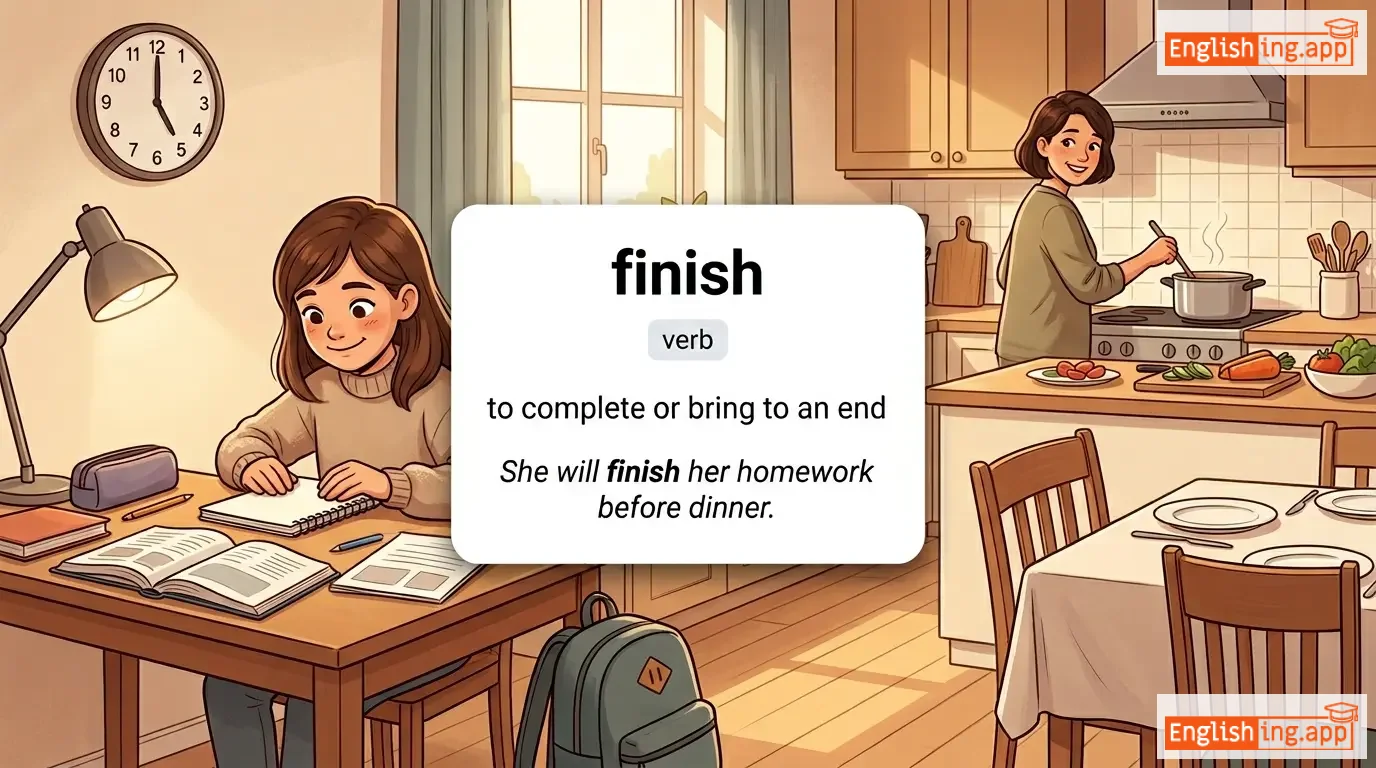
finish definition card — visual illustration of the meaning
verb
/ˈfɪnɪʃ/
終わらせる (owaraseru)

to complete or bring to an end

"She will finish her homework before dinner."

"彼女は夕食前に宿題を終わらせるでしょう。" (Kanojo wa yuushoku mae ni shukudai o owaraseru deshou.)
noun
/ˈfɪnɪʃ laɪn/
ゴールライン (gooru rain)

The line or point at the end of a race or competition where participants complete it.

"She sprinted towards the finish line and won the race."

"彼女はフィニッシュラインに向かって全力で走り、レースに勝った。" (Kanojo wa finish rain ni mukatte zenryoku de hashiri, reesu ni katta.)
adjective
/ˈfɪnɪʃt/
終了, 完了 (shūryō, kanryō)

completed or brought to an end

"The painting is finished and ready to display."

"その絵画は完了し、展示の準備ができています。" (Sono kaiga wa kanryō shi, tenji no junbi ga dekiteimasu.)