Vocabulaires

Découvrez, apprenez et maîtrisez le vocabulaire anglais

adjective
/ˈfaɪnaɪt/
limité, fini (limite, fini)

having limits or bounds; not infinite

"Our resources are finite, so we must use them wisely."

"Nos ressources sont limitées, nous devons donc les utiliser judicieusement." (Nos ressources sont limitees, nous devons donc les utiliser judicieusement.)
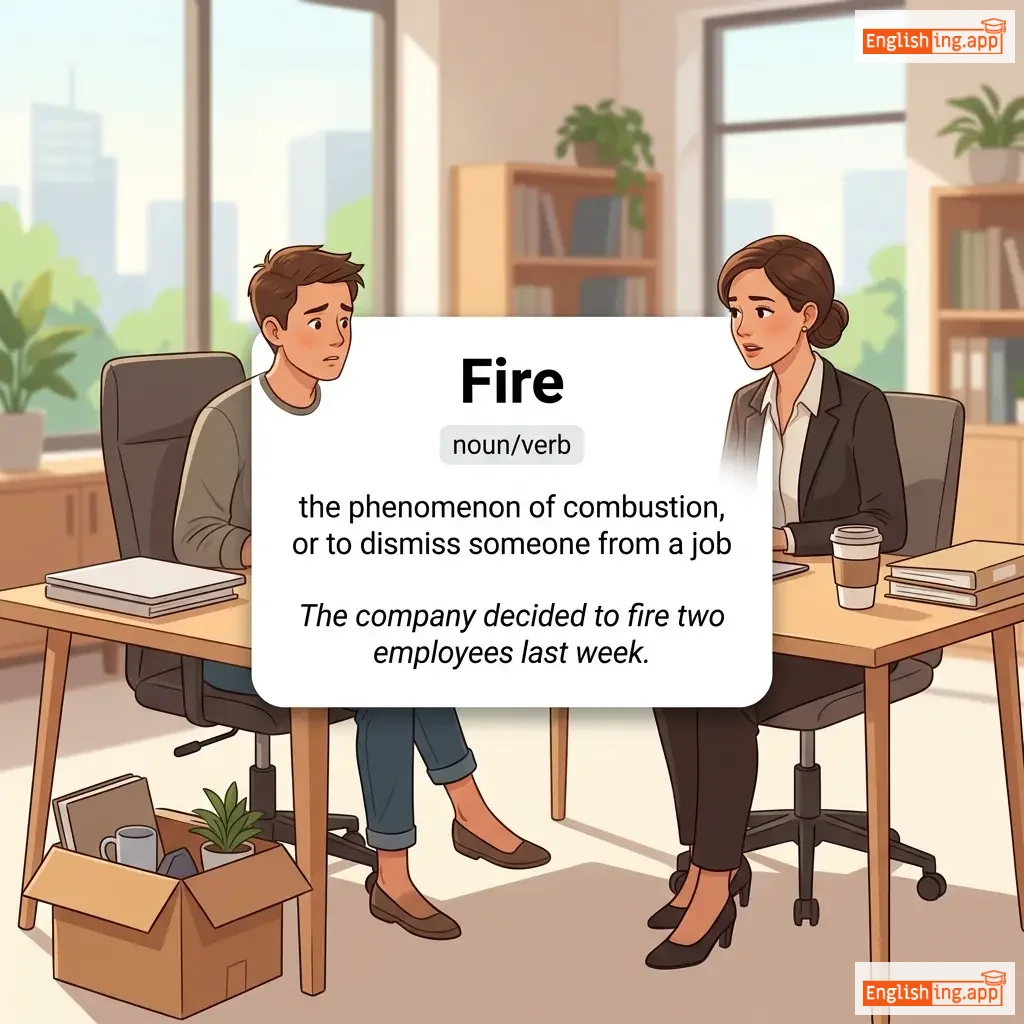
Fire definition card — visual illustration of the meaning
noun/verb
/ˈfaɪər/
feu / renvoyer (feu / renvoyer)

the phenomenon of combustion, or to dismiss someone from a job

"The company decided to fire two employees last week."

"L'entreprise a décidé de renvoyer deux employés la semaine dernière." (L'entreprise a décidé de renvoyer deux employés la semaine dernière.)
noun
/ˈfaɪərɑːm/
arme à feu (arme a feu)

a weapon capable of firing a projectile using gunpowder or other propellant

"The police found a hidden firearm during the investigation."

"La police a trouvé une arme à feu cachée lors de l'enquête." (La police a trouve une arme a feu cachee lors de l'enquete.)
noun
/ˈfaɪər.brænd/
un agitateur (un agitateur)

a person who is passionate about a cause, often inciting change or action

"The activist was a true firebrand, inspiring everyone around him to join the protest."

"L'activiste était un véritable agitateur, inspirant tout le monde autour de lui à rejoindre la protestation." (L'activiste était un véritable agitateur, inspirant tout le monde autour de lui à rejoindre la protestation.)
noun
/ˈfaɪəˌfaɪtə/
pompier (pompier)

a person whose job is to put out fires

"The firefighter saved the family from the burning building."

"Le pompier a sauvé la famille du bâtiment en feu." (Le pompier a sauvé la famille du bâtiment en feu.)
noun
/ˈfaɪər.mən/
pompier (pompier)

a person whose job is to extinguish fires and rescue people

"The brave fireman rescued the family from the burning building."

"Le courageux pompier a sauvé la famille de l'immeuble en feu." (Le courageux pompier a sauvé la famille de l'immeuble en feu.)
firewall definition card — visual illustration of the meaning
noun
/ˈfaɪər.wɔːl/
pare-feu (pare-feu)

A network security system that monitors and controls incoming and outgoing network traffic based on predetermined security rules.

"A firewall protects networks from cyber-attacks."

"Un pare-feu protège les réseaux des cyberattaques." (Un pare-feu protège les réseaux des cyberattaques.)
noun
/ˈfaɪəˌwɜːk/
feux d'artifice (feux d'artifice)

a device that explodes or creates a display of lights and sounds, often used in celebrations

"The fireworks lit up the sky during the New Year's Eve celebration."

"Les feux d'artifice ont illuminé le ciel pendant la célébration du réveillon du Nouvel An." (Les feux d'artifice ont illuminé le ciel pendant la célébration du réveillon du Nouvel An.)
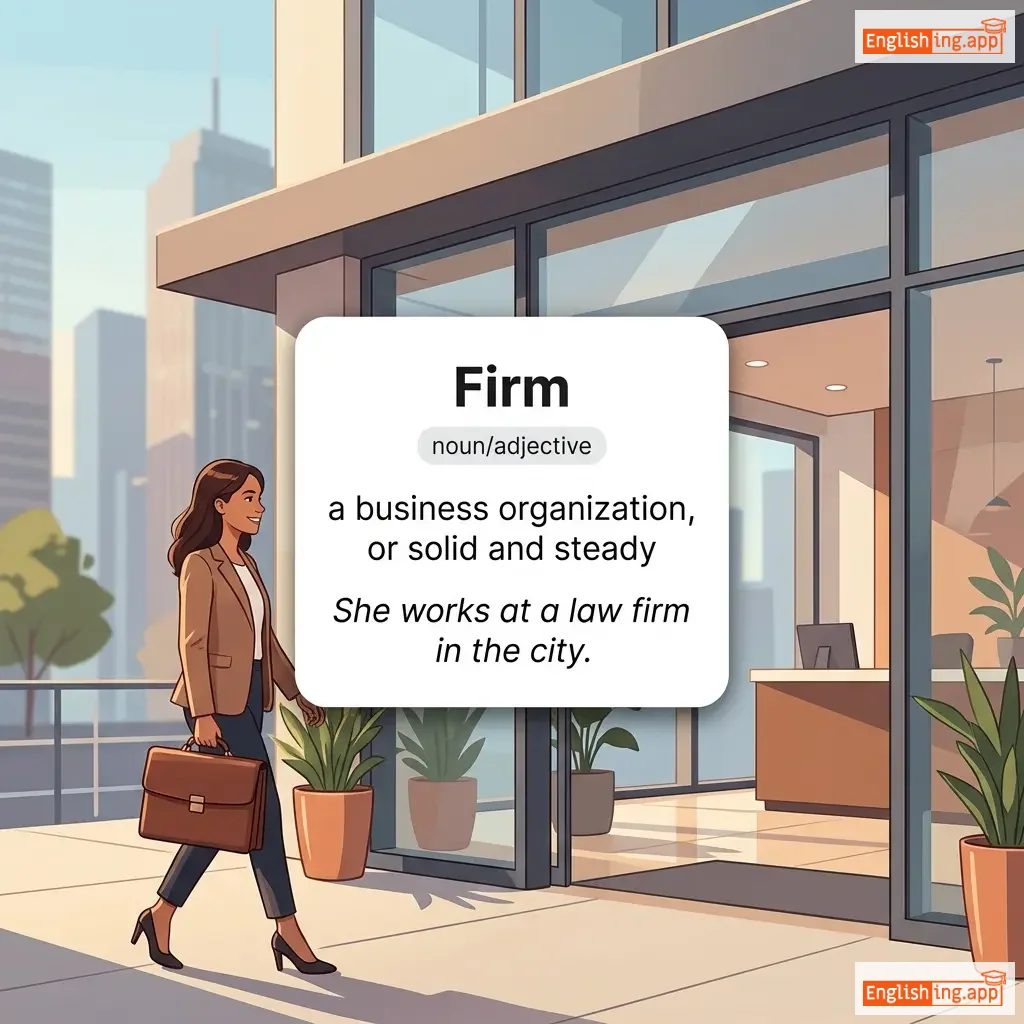
Firm definition card — visual illustration of the meaning
noun/adjective
/fɜːrm/
cabinet / ferme (cabinet / ferme)

a business organization, or solid and steady

"She works at a law firm in the city."

"Elle travaille dans un cabinet d'avocats en ville." (Elle travaille dans un cabinet d'avocats en ville.)
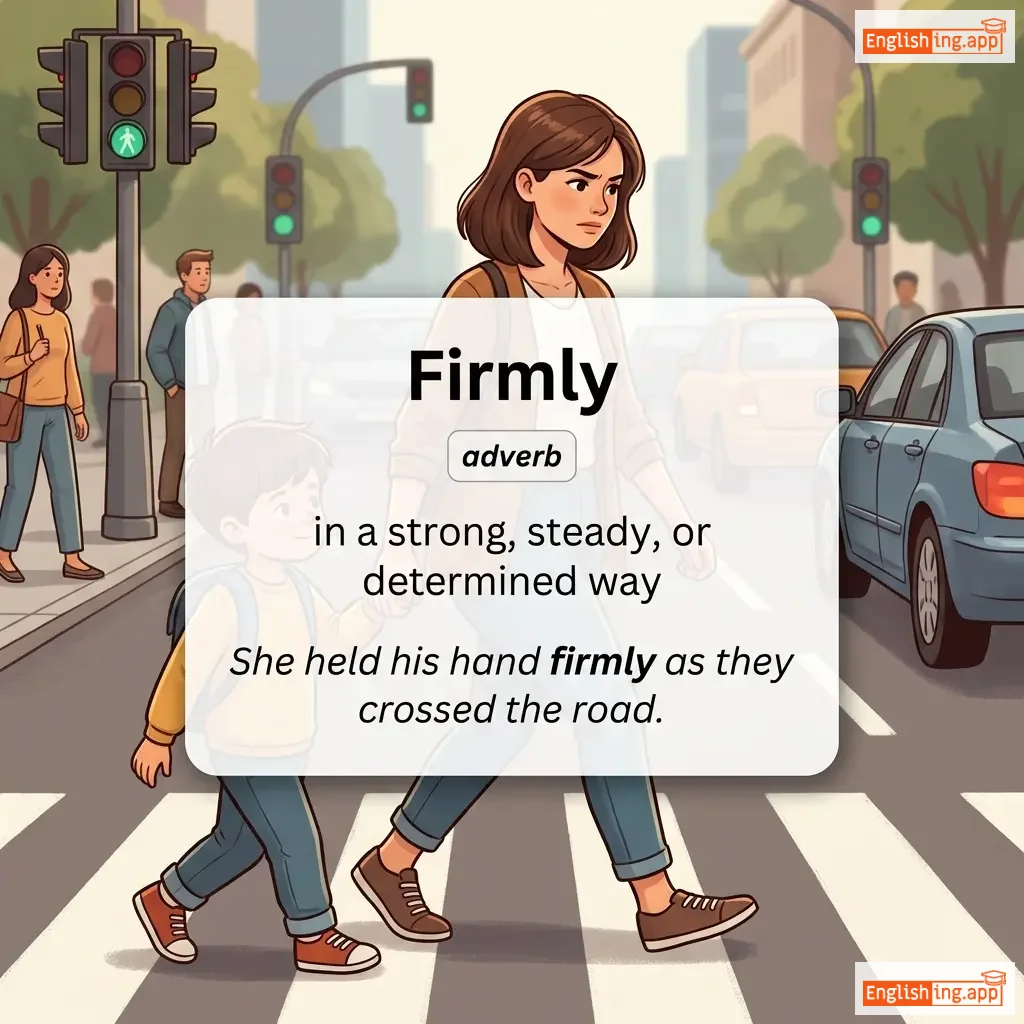
Firmly definition card — visual illustration of the meaning
adverb
/ˈfɜːmli/
fermement (fermement)

in a strong, steady, or determined way

"She held his hand firmly as they crossed the road."

"Elle a tenu sa main fermement pendant qu'ils traversaient la rue." (Elle a tenu sa main fermement pendant qu'ils traversaient la rue.)
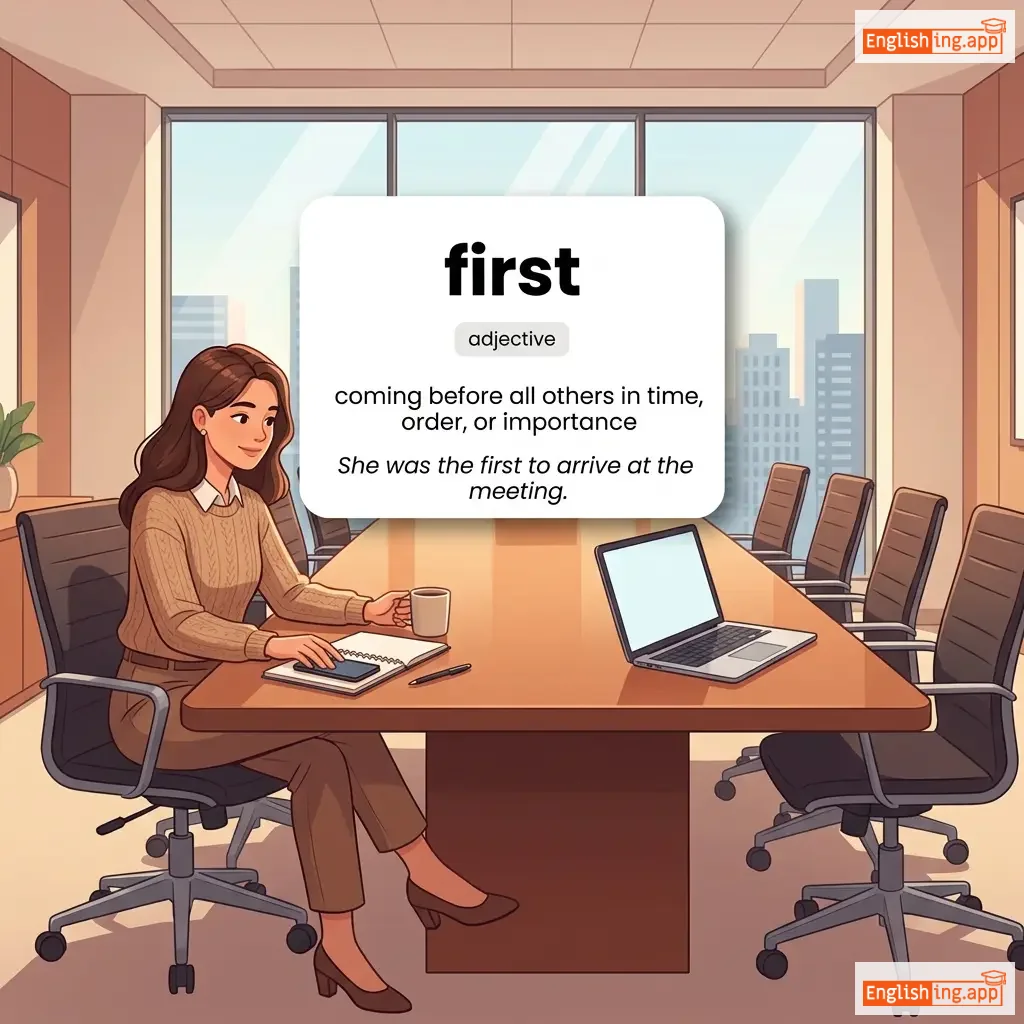
first definition card — visual illustration of the meaning
adjective
/fɜːrst/
premier (premier)

coming before all others in time, order, or importance

"She was the first to arrive at the meeting."

"Elle était la première à arriver à la réunion." (Elle était la première à arriver à la réunion.)
noun
/ˌfɜːrst ˈeɪd/
premiers secours (premiers secours)

Immediate assistance given to a sick or injured person until full medical treatment is available

"He gave first aid to the injured cyclist before the ambulance arrived."

"Il a donné les premiers secours au cycliste blessé avant l'arrivée de l'ambulance." (Il a donne les premiers secours au cycliste blesse avant l'arrivee de l'ambulance)
noun
/ˌfɜːrst eɪd kɪt/
trousse de premiers secours (trousse de premiers secours)

A collection of medical supplies for giving initial treatment in emergencies

"I always keep a first aid kit in my car for emergencies."

"Je garde toujours une trousse de premiers secours dans ma voiture en cas d'urgence." (Je garde toujours une trousse de premiers secours dans ma voiture en cas d'urgence.)
adverb
/ˈfɜ:rst hænd/
de première main; directement (de premiere main; directement)

directly experienced or obtained; from the original source

"I experienced the earthquake first-hand."

"J'ai vécu le tremblement de terre de première main." (J'ai vecu le tremblement de terre de premiere main.)
adverb
/ˈfɜːrstli/
d'abord (d'abord)

used to introduce the first point or reason in a discussion or argument

"Firstly, we need to address the budget issue before proceeding."

"D'abord, nous devons résoudre le problème du budget avant de continuer." (D'abord, nous devons resoudre le probleme du budget avant de continuer.)
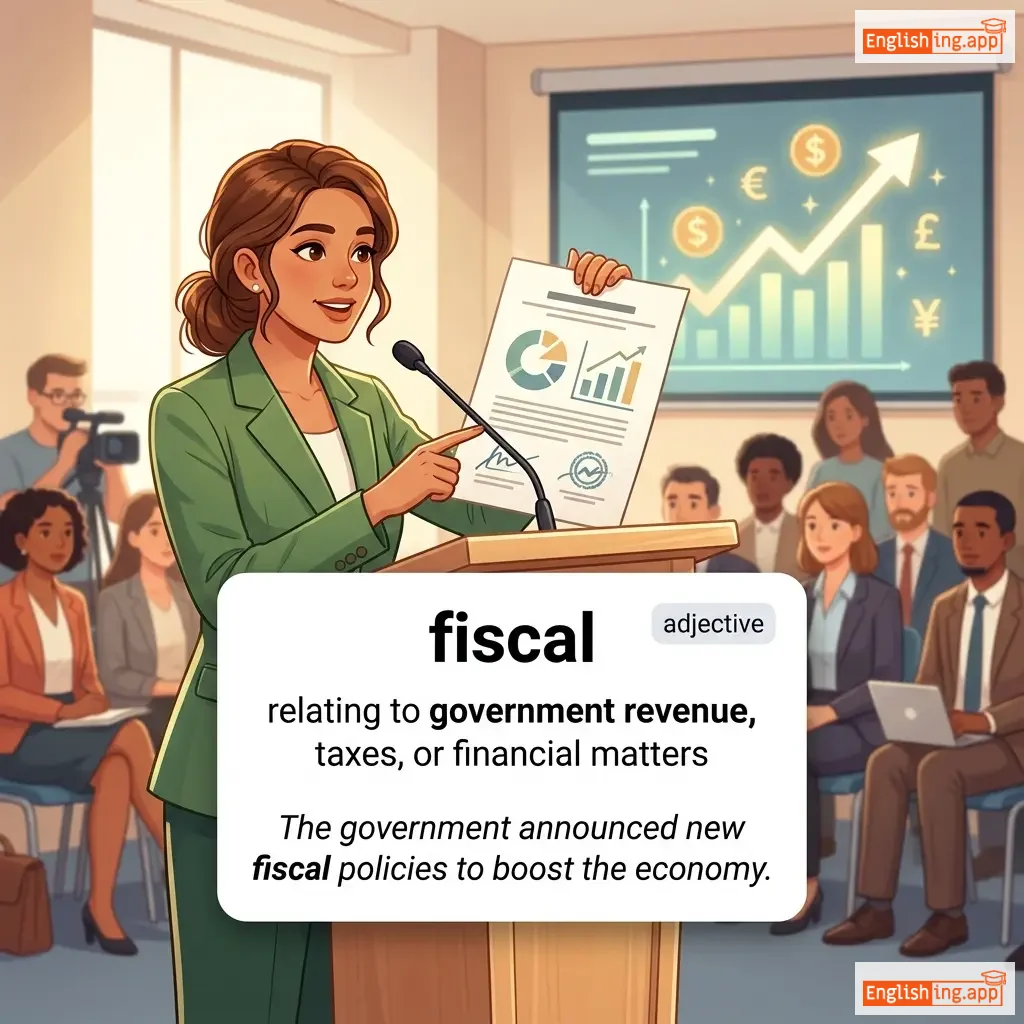
fiscal definition card — visual illustration of the meaning
adjective
/ˈfɪs.kəl/
fiscal (fiscal)

relating to government revenue, taxes, or financial matters

"The government announced new fiscal policies to boost the economy."

"Le gouvernement a annoncé de nouvelles politiques fiscales pour stimuler l'économie." (Le gouvernement a annoncé de nouvelles politiques fiscales pour stimuler l'économie.)
noun/verb
/fɪʃ/
bonheur (bonheur)

an aquatic animal with gills, or to try to catch such animals

"He went to the lake to fish early in the morning."

"Elle n'a pas pu cacher sa joie lorsqu'elle a reçu le prix." (Elle n'a pas pu cacher sa joie lorsqu'elle a reçu le prix.)
noun
/ˈfɪʃəmən/
pêcheur (pecheur)

a person who catches fish for a living or as a hobby

"The fisherman went out to sea early in the morning."

"Le pêcheur est allé en mer tôt le matin." (Le pêcheur est allé en mer tôt le matin)
noun/verb
/ˈfɪʃɪŋ/
pêche (peche)

the activity of catching fish

"Fishing is a popular activity in coastal villages."

"La pêche est une activité populaire dans les villages côtiers." (La pêche est une activité populaire dans les villages côtiers.)
noun
/ˈfɪʃˌmʌŋ.ɡər/
poissonnier (poissonnier)

a person or store that sells fish

"I bought fresh salmon from the local fishmonger."

"J'ai acheté du saumon frais chez le poissonnier local." (J'ai acheté du saumon frais chez le poissonnier local.)
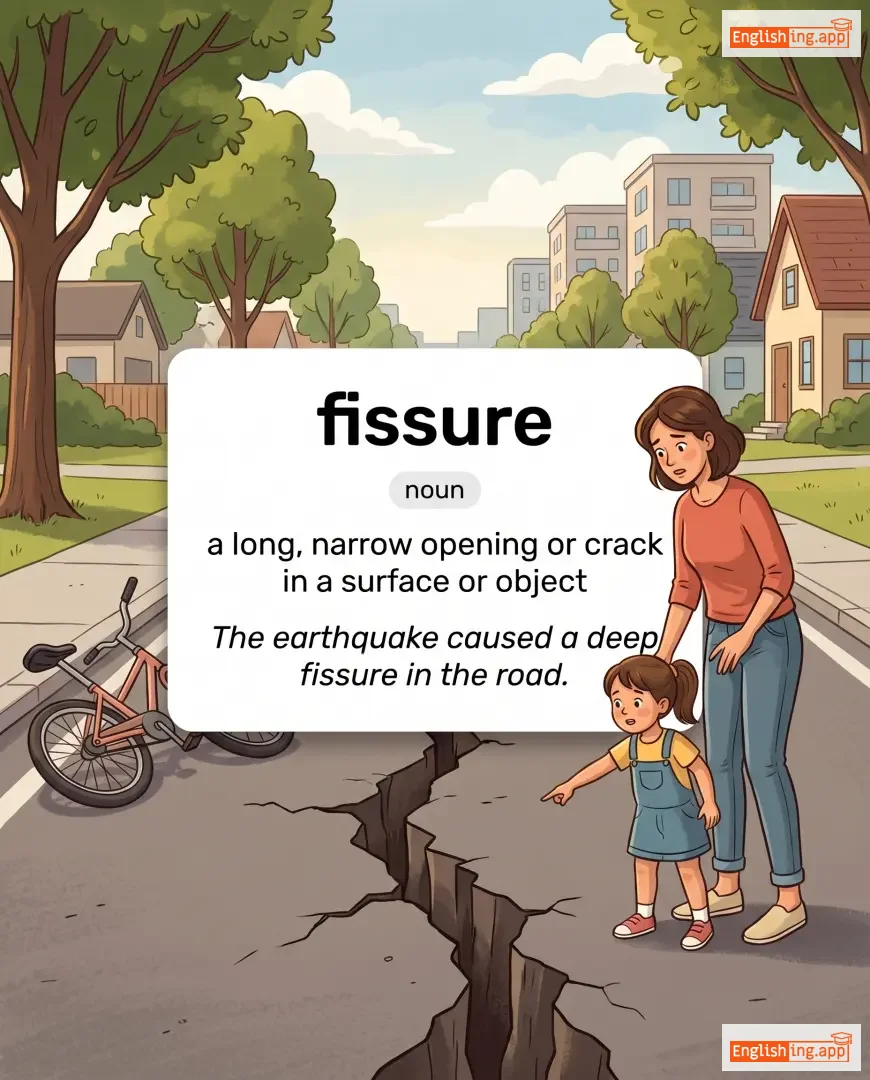
fissure definition card — visual illustration of the meaning
noun
/ˈfɪʃ.ər/
fissure (fissure)

a long, narrow opening or crack in a surface or object

"The earthquake caused a deep fissure in the road."

"Le tremblement de terre a provoqué une fissure profonde dans la route." (Le tremblement de terre a provoqué une fissure profonde dans la route.)
noun
/fɪst/
poing (poing)

a hand with the fingers clenched tightly into the palm

"He punched the wall with his fist in anger."

"Il a frappé le mur avec son poing dans la colère." (Il a frappe le mur avec son poing dans la colere.)
Fit definition card — visual illustration of the meaning
verb, adjective, noun
/fɪt/
s'adapter, convenir (s'adapter, convenir)

to be of the right size, shape, or type; suitable or healthy

"These shoes fit me perfectly."

"Ces chaussures sont parfaitement adaptées à mes pieds." (Ces chaussures sont parfaitement adaptees a mes pieds.)
adjective
/ˈfɪt.fəl/
par intermittence (par intermittence)

occurring in irregular bursts; not continuous or steady

"He had a fitful sleep due to the storm."

"Il a eu un sommeil par intermittence à cause de la tempête." (Il a eu un sommeil par intermittence a cause de la tempete.)
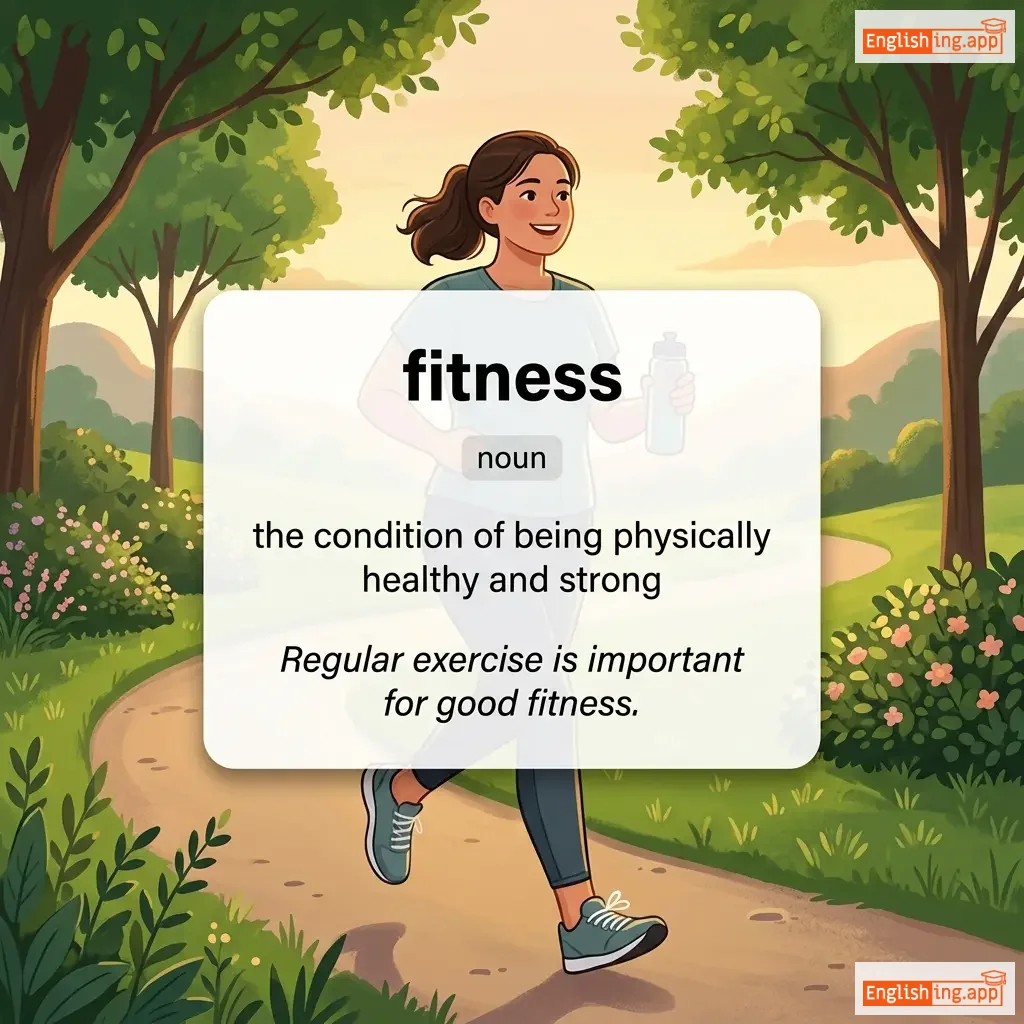
fitness definition card — visual illustration of the meaning
noun
/ˈfɪtnəs/
forme physique (forme physique)

the condition of being physically healthy and strong

"Regular exercise is important for good fitness."

"L'exercice régulier est important pour une bonne forme physique." (L'exercice regulier est important pour une bonne forme physique.)
noun
/faɪv/
cinq (sank)

The number 5; one more than four and one less than six.

"She bought five apples from the market."

"Elle a acheté cinq pommes au marché." (Elle a achete cinq pommes au marche.)
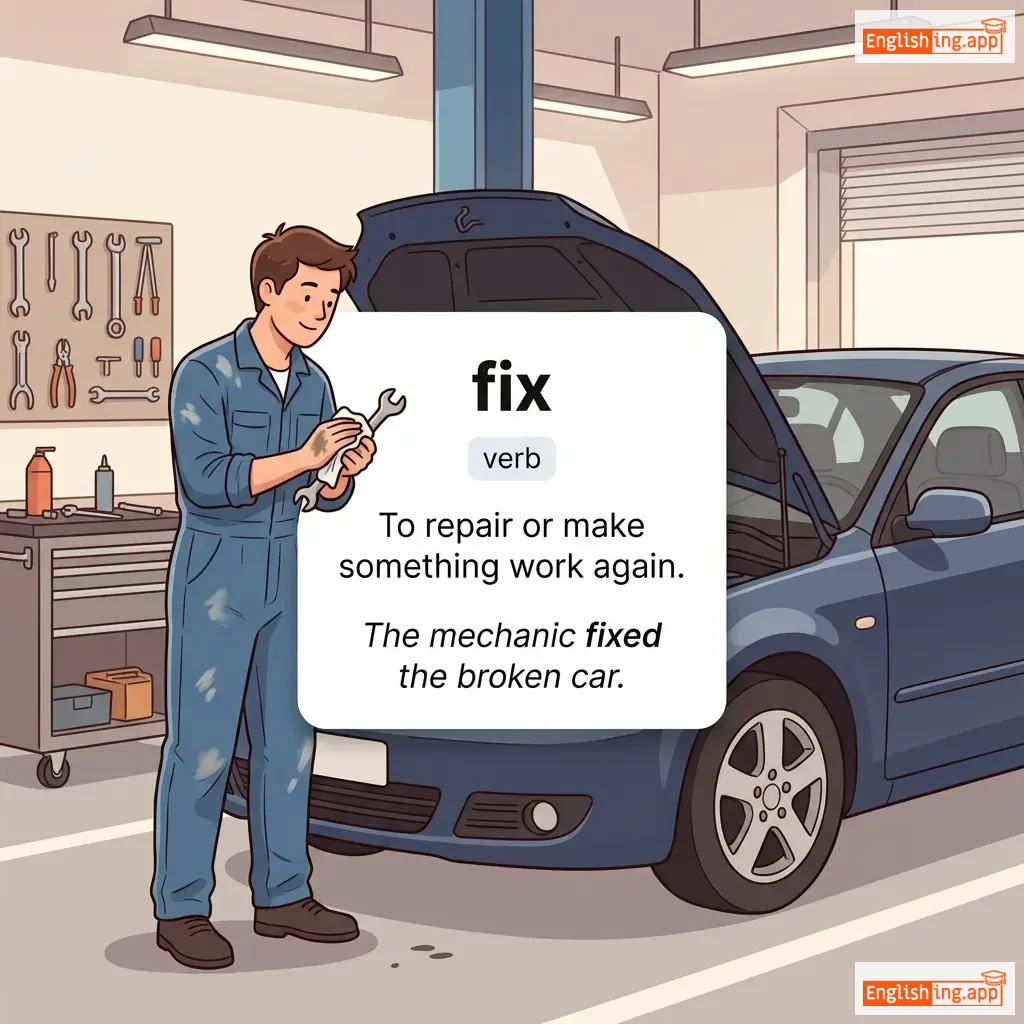
fix definition card — visual illustration of the meaning
verb
/fɪks/
réparer (reparer)

To repair or make something work again.

"The mechanic fixed the broken car."

"Le mécanicien a réparé la voiture cassée." (Le mecanicien a repare la voiture cassee.)
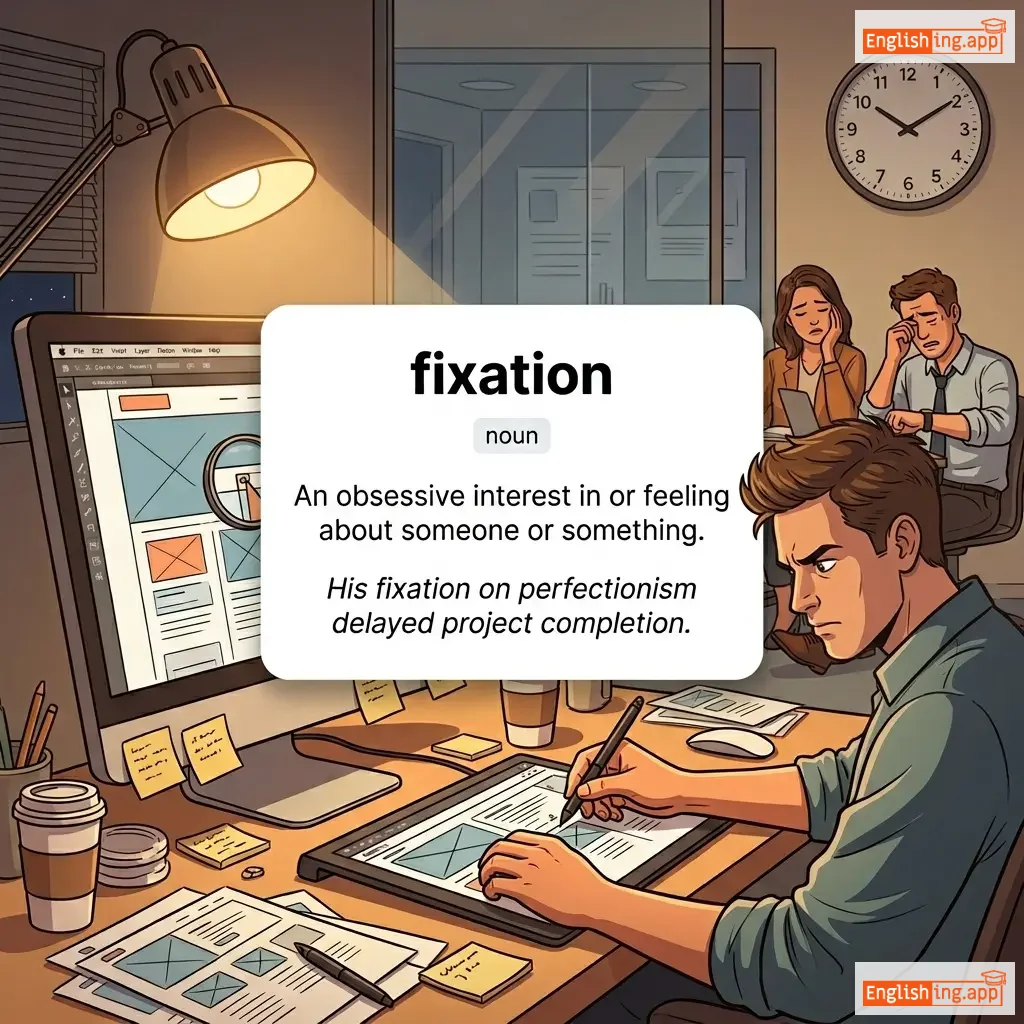
fixation definition card — visual illustration of the meaning
noun
/fɪkˈseɪ.ʃən/
fixation ou intérêt obsessionnel pour quelque chose ou quelqu'un (fixation ou interet obsessionnel pour quelque chose ou quelqu'un)

An obsessive interest in or feeling about someone or something.

"His fixation on perfectionism delayed project completion."

"Sa fixation sur le perfectionnisme a retardé l'achèvement du projet." (Sa fixation sur le perfectionnisme a retardé l'achèvement du projet.)
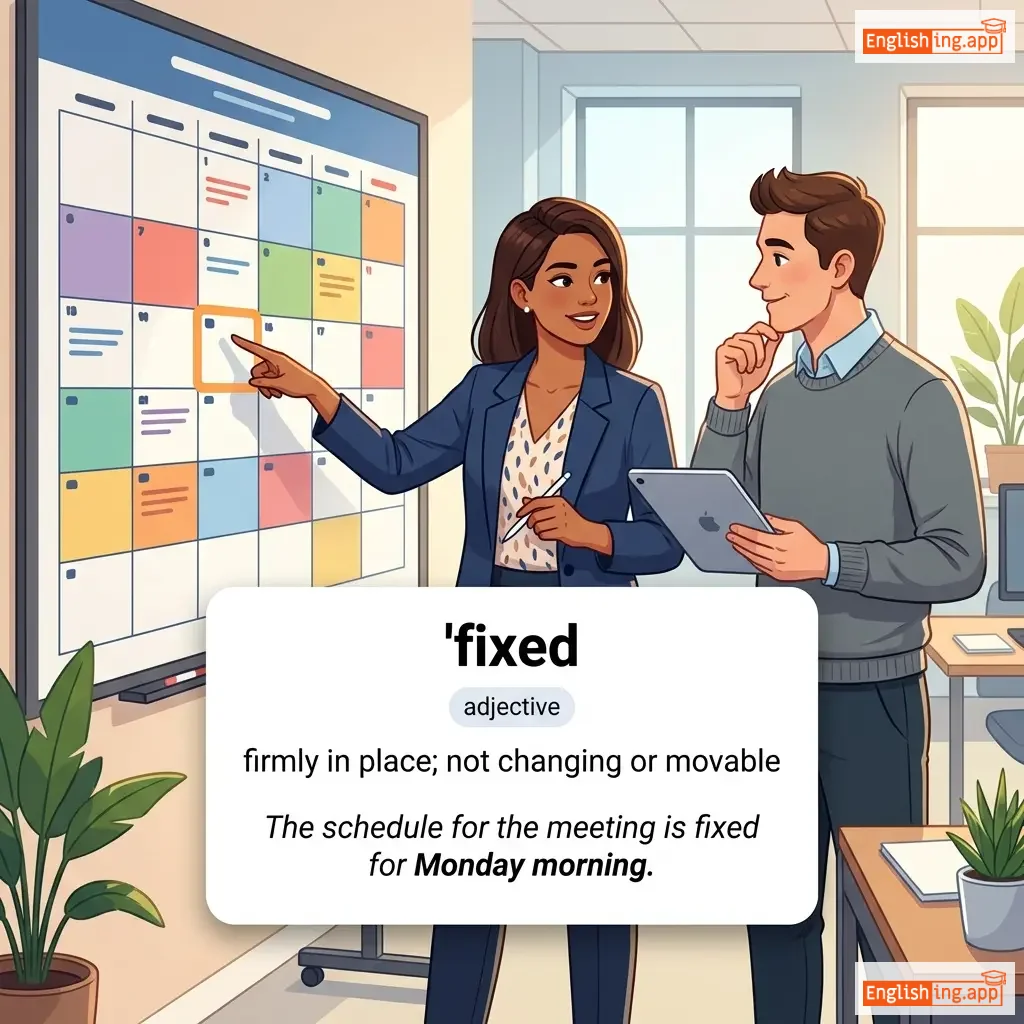
fixed definition card — visual illustration of the meaning
adjective
/fɪkst/
fixé, stable (fixé, stable)

firmly in place; not changing or movable

"The schedule for the meeting is fixed for Monday morning."

"Le programme de la réunion est fixé pour lundi matin." (Le programme de la réunion est fixé pour lundi matin.)
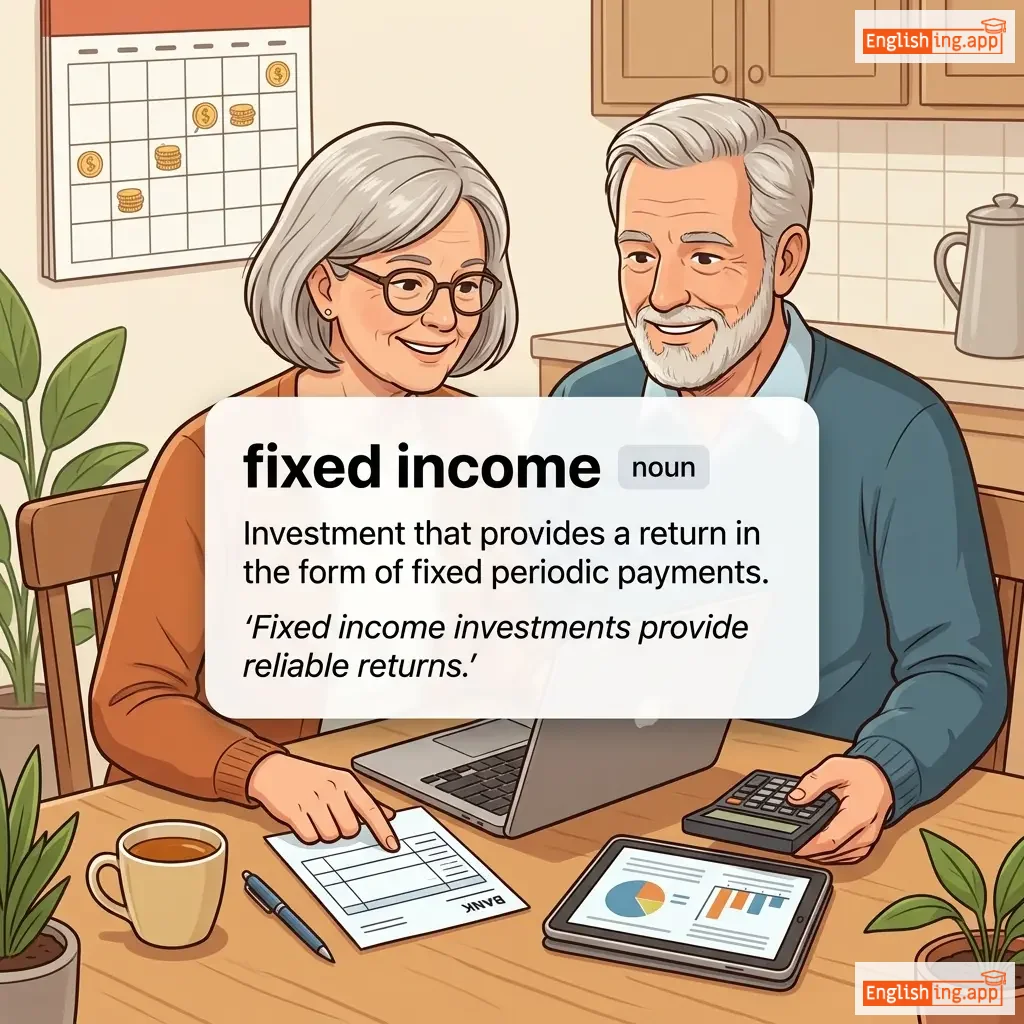
fixed income definition card — visual illustration of the meaning
noun
fɪkst ˈɪnkʌm
revenu fixe (revenu fixe)

Investment that provides a return in the form of fixed periodic payments.

"Fixed income investments provide reliable returns."

"Les investissements à revenu fixe fournissent des rendements fiables." (Les investissements a revenu fixe fournissent des rendements fiables.)
adverb
/ˈfɪksɪdli/
fixement (fixement)

in a steady, unmoving manner; with intense concentration

"He stared fixedly at the painting."

"Il regardait fixement la peinture." (Il regardait fixement la peinture.)
noun
/ˈfɪks.tʃər/
objet permanent, matériel fixe (objet permanent, matériel fixe)

a permanent or fixed object, often in a house or building

"The bathroom fixture was installed yesterday."

"L'appareil de la salle de bain a été installé hier." (L'appareil de la salle de bain a été installé hier.)
adjective
/ˈflæb.i/
mou et lâche; manque de fermeté ou de tonus musculaire; faible (flabi)

soft and loose; lacking firmness or muscle tone; weak

"His flabby arms showed he needed to exercise more."

"Ses bras flasques montraient qu'il avait besoin de faire plus d'exercice." (Ses bras flasques montraient quil avait besoin de faire plus dexercice.)
adjective
/ˈflæks.ɪd/
mou, flasque, ou sans fermeté (mou, flasque, ou sans fermeté)

soft, limp, or lacking firmness

"The fruit was overripe and flaccid."

"Le fruit était trop mûr et mou." (Le fruit était trop mûr et mou.)
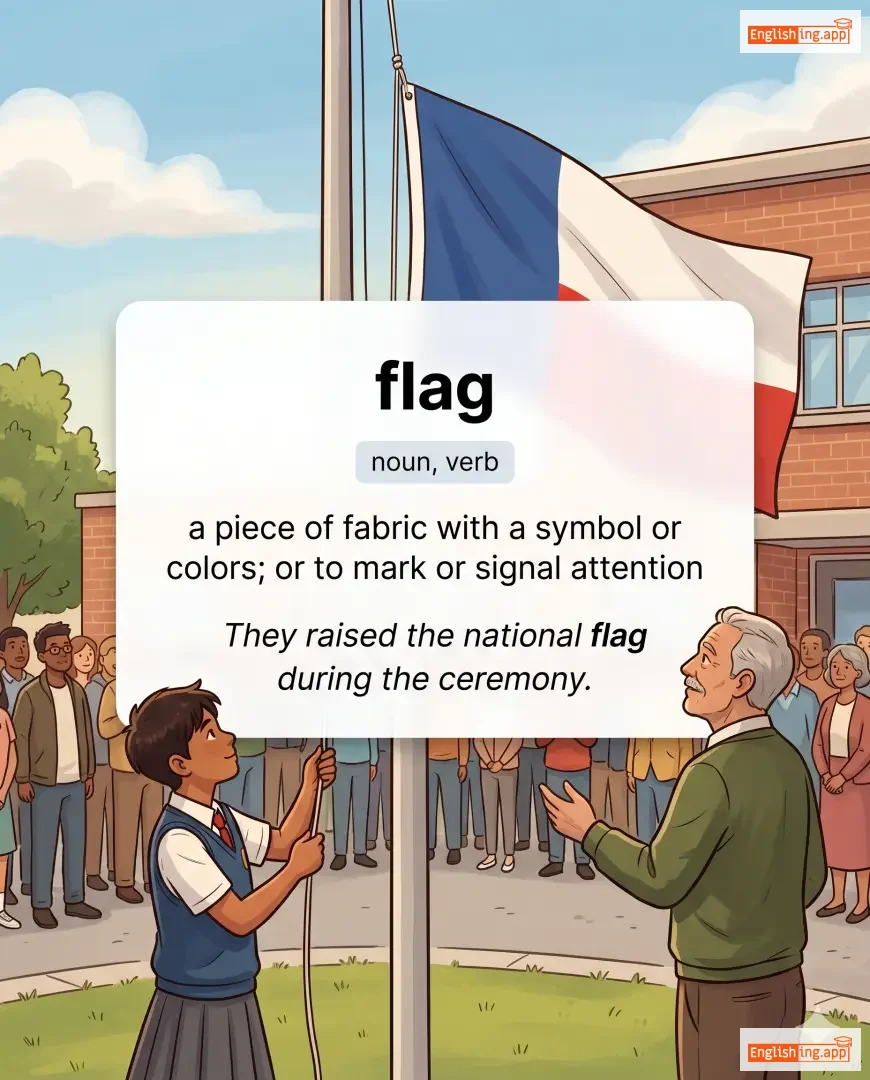
flag definition card — visual illustration of the meaning
noun, verb
/flæɡ/
drapeau, étendard; ou un signe d'avertissement (drapeau, étendard; ou un signe d'avertissement)

a piece of fabric with a symbol or colors; or to mark or signal attention

"They raised the national flag during the ceremony."

"Ils ont levé le drapeau national pendant la cérémonie." (Ils ont levé le drapeau national pendant la cérémonie.)
noun
/ˈflæɡ ˌɒfɪsər/
officier de pavillon (officier de pavillon)

a senior naval officer entitled to fly a flag to mark the command

"The flag-officer reviewed the fleet before the ceremony."

"L'officier de pavillon a examiné la flotte avant la cérémonie." (L'officier de pavillon a examiné la flotte avant la cérémonie.)
verb
/ˈflædʒəˌleɪt/
flageller ou se fouetter comme une forme de punition ou d'autodiscipline (flageller ou se fouetter comme une forme de punition ou d'autodiscipline)

to whip or flog someone, either literally or as a form of punishment or self-discipline

"In history, some monks would flagellate themselves as penance."

"Dans l'histoire, certains moines se flagellaient comme pénitence." (Dans l'histoire, certains moines se flagellaient comme pénitence.)
adjective
/ˈflæɡɪŋ/
faiblir, se fatiguer ou perdre de l'enthousiasme (faiblir, se fatiguer ou perdre de l'enthousiasme)

becoming tired, weaker, or less enthusiastic

"After hours of work, his energy was flagging."

"Après des heures de travail, son énergie était en baisse." (Apres des heures de travail, son energie etait en baisse.)
adjective
/ˈfleɪɡrənt/
flagrant et clairement erroné (flagrant et clairement erroné)

shockingly noticeable or evident; glaringly wrong

"It was a flagrant violation of the rules."

"C'était une violation évidente des règles." (C'était une violation évidente des règles.)
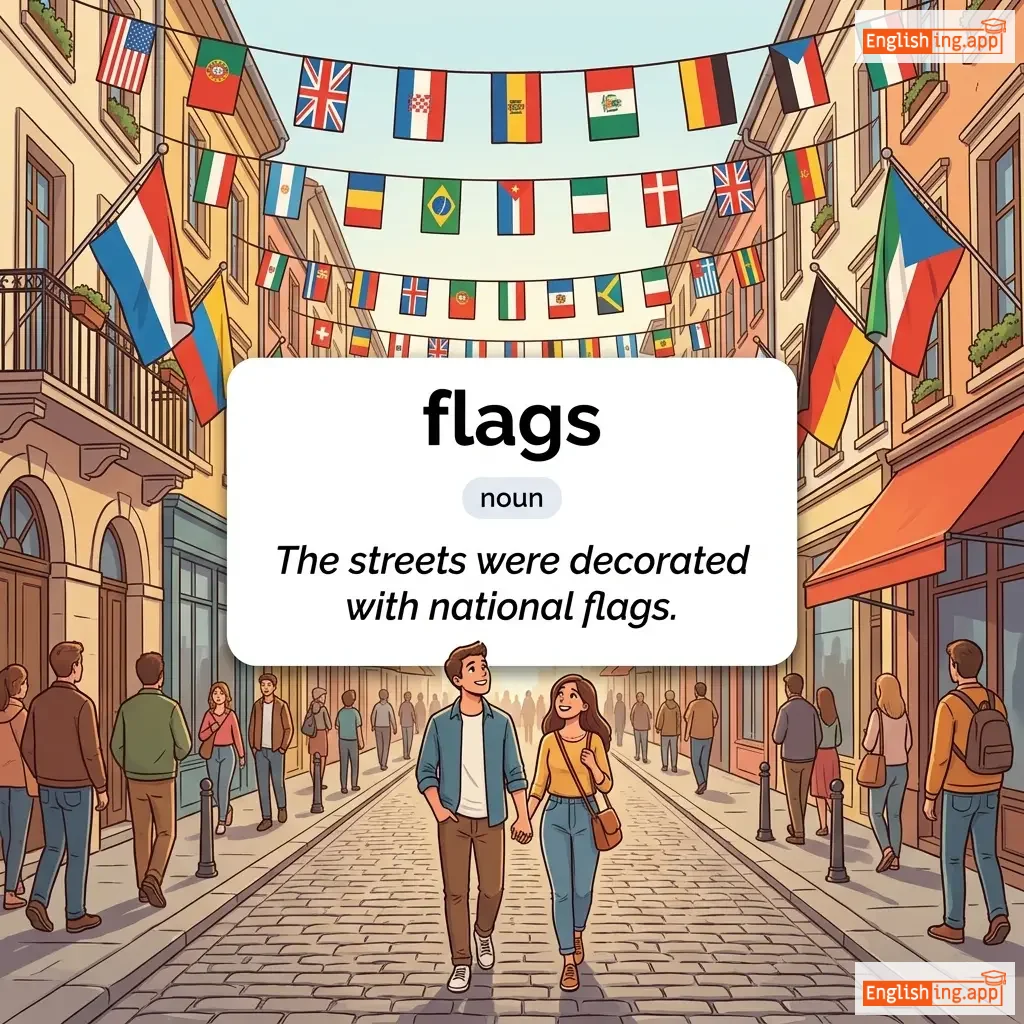
flags definition card — visual illustration of the meaning
noun
flæɡz
drapeau (drapeau)

A piece of cloth or similar material, typically oblong or square, attachable by one edge to a pole or rope.

"The streets were decorated with national flags."

"Les rues étaient décorées de drapeaux nationaux." (Les rues étaient décorées de drapeaux nationaux.)
verb
/fleɪl/
agiter ou balancer quelque chose sauvagement; se débattre (agiter ou balancer quelque chose sauvagement; se débattre)

to wave or swing something about wildly; to thrash about

"He flailed his arms to keep afloat in the water."

"Il agitait ses bras pour rester à flot dans l'eau." (Il agitait ses bras pour rester à flot dans l'eau.)
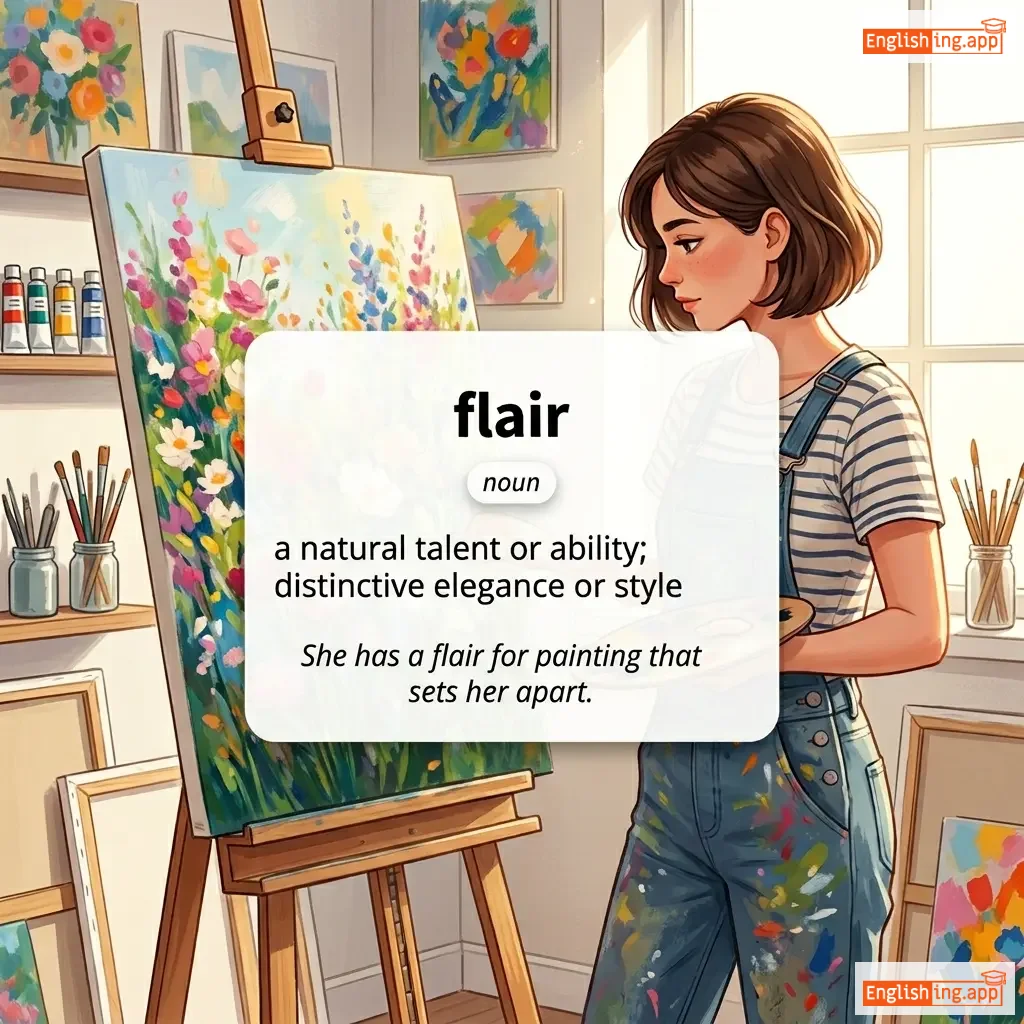
flair definition card — visual illustration of the meaning
noun
/flɛr/
un talent naturel ou une capacité; élégance ou style distinctif (un talent naturel ou une capacite; elegance ou style distinctif)

a natural talent or ability; distinctive elegance or style

"She has a flair for painting that sets her apart."

"Elle a un flair pour la peinture qui la distingue." (Elle a un flair pour la peinture qui la distingue.)
adjective
/flæmˈbɔɪənt/
flamboyant, coloré ou confiant (flamboyant, colore ou confiant)

showy, strikingly bold or colorful; confident and lively

"His flamboyant style drew everyone's attention at the party."

"Son style flamboyant a attiré l'attention de tout le monde à la fête." (Son style flamboyant a attire l'attention de tout le monde a la fete.)
noun
/fleɪm/
flamme (flamme)

A hot glowing body of ignited gas that is generated by something on fire.

"The flame from the candle lit up the dark room."

"La flamme de la bougie éclairait la pièce sombre." (La flamme de la bougie éclairait la pièce sombre.)
noun
/ˈflæn.əl/
flanelle (flanelle)

a soft woven fabric, typically made of wool or cotton and slightly milled and raised

"He wore a warm flannel shirt in winter."

"Il portait une chemise en flanelle chaude en hiver." (Il portait une chemise en flanelle chaude en hiver.)
verb
/flæʃ/
éclairer (éclairer)

to shine or appear suddenly and brightly for a short time

"Lightning flashed across the night sky."

"Un éclair a traversé le ciel nocturne." (Un éclair a traversé le ciel nocturne.)
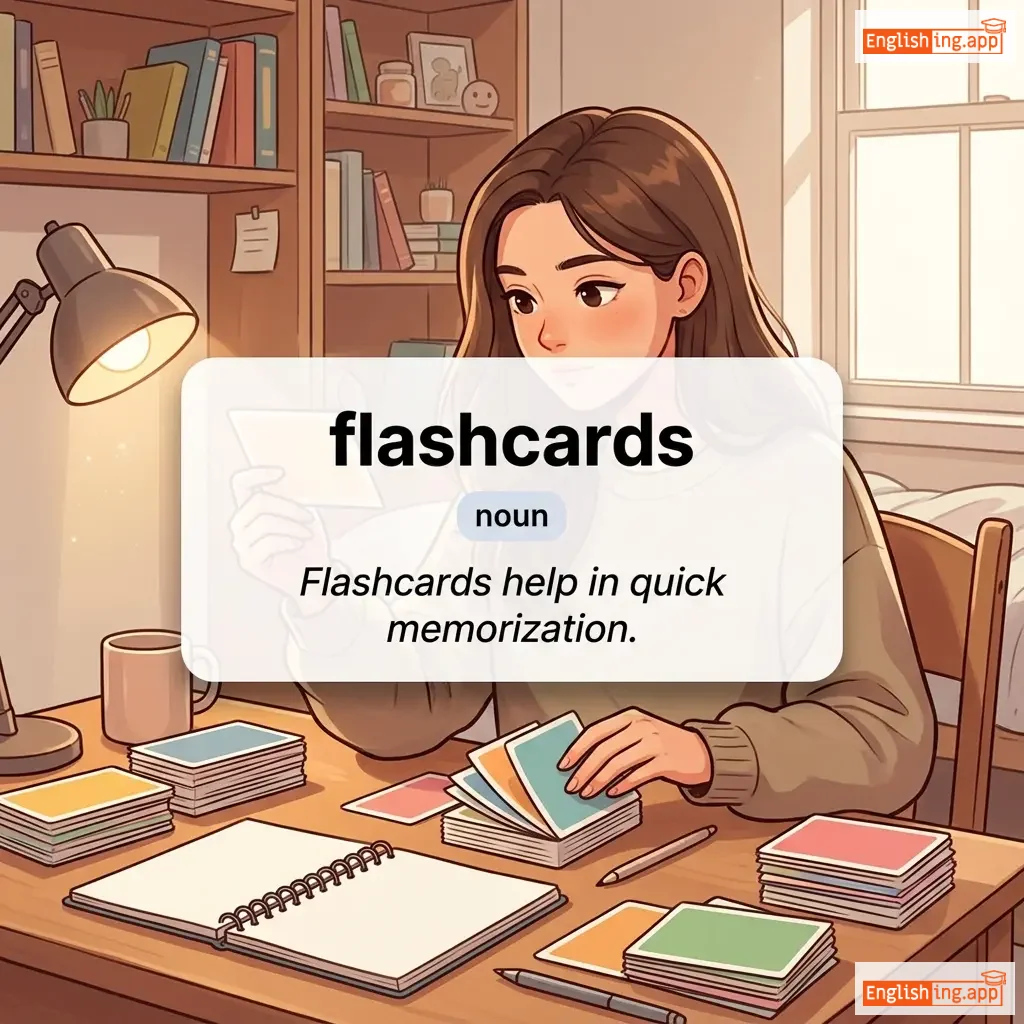
flashcards definition card — visual illustration of the meaning
noun
ˈflæʃkɑːrdz
cartes mémoire (cartes memoire)

Cards containing small amounts of information, held up for students to see, as an aid to learning.

"Flashcards help in quick memorization."

"Les cartes mémoire aident à la mémorisation rapide." (Les cartes memoire aident a la memorisation rapide.)
adjective
/ˈflæʃi/
voyant, ostentatoire (voyant, ostentatoire)

ostentatious or showy in a way that attracts attention

"He drove a flashy sports car through the city streets."

"Il a conduit une voiture de sport voyante dans les rues de la ville." (Il a conduit une voiture de sport voyante dans les rues de la ville.)
adjective
/flæt/
plat (plat)

Smooth and level, without raised areas or curves.

"The road ahead was completely flat."

"La route devant était complètement plate." (La route devant était complètement plate.)
noun
/flæt fɪʃ/
poisson plat (pwason pla)

a type of fish with a flattened body that lives on the sea floor

"Flat fish like sole and flounder are excellent for grilling."

"Les poissons plats comme la sole et la limande sont excellents pour le grill." (le pwason pla kom la sol e la limand son ekselan pur le gril)