Vocabulaires

Découvrez, apprenez et maîtrisez le vocabulaire anglais

verb
/ˈflætər/
faire des compliments excessifs ou insincères pour obtenir des faveurs (faire des compliments excessifs ou insincères pour obtenir des faveurs)

to praise excessively or insincerely to gain favor

"He tried to flatter his boss to get a promotion."

"Il a essayé de flatter son patron pour obtenir une promotion." (Il a essayé de flatter son patron pour obtenir une promotion.)
noun
/ˈflæt.ər.ər/
flatteur (flatteur)

a person who lavishes praise, often insincerely and in order to gain advantage

"The king was surrounded by flatterers who only told him what he wanted to hear."

"Le roi était entouré de flatteurs qui lui disaient seulement ce qu'il voulait entendre." (Le roi était entouré de flatteurs qui lui disaient seulement ce qu'il voulait entendre.)
noun
/ˈflæt.ər.i/
flatterie (flatterie)

excessive and insincere praise, given especially to further one's own interests

"His constant flattery made everyone suspicious of his true motives."

"Sa flatterie constante a poussé tout le monde à douter de ses véritables intentions." (Sa flatterie constante a poussé tout le monde à douter de ses véritables intentions.)
noun
/ˈflætʃələns/
accumulation de gaz dans le système digestif (accumulation de gaz dans le systeme digestif)

the accumulation of gas in the digestive system; excessive gas in the stomach or intestines

"Eating beans can sometimes cause flatulence."

"Manger des haricots peut parfois provoquer des flatulences." (Manger des haricots peut parfois provoquer des flatulences.)
verb
/flɔːnt/
fanfaronner (fanfaronner)

to show off something proudly, often to attract attention

"She likes to flaunt her new jewelry at parties."

"Elle aime fanfaronner ses nouveaux bijoux lors des soirées." (Elle aime fanfaronner ses nouveaux bijoux lors des soirées.)
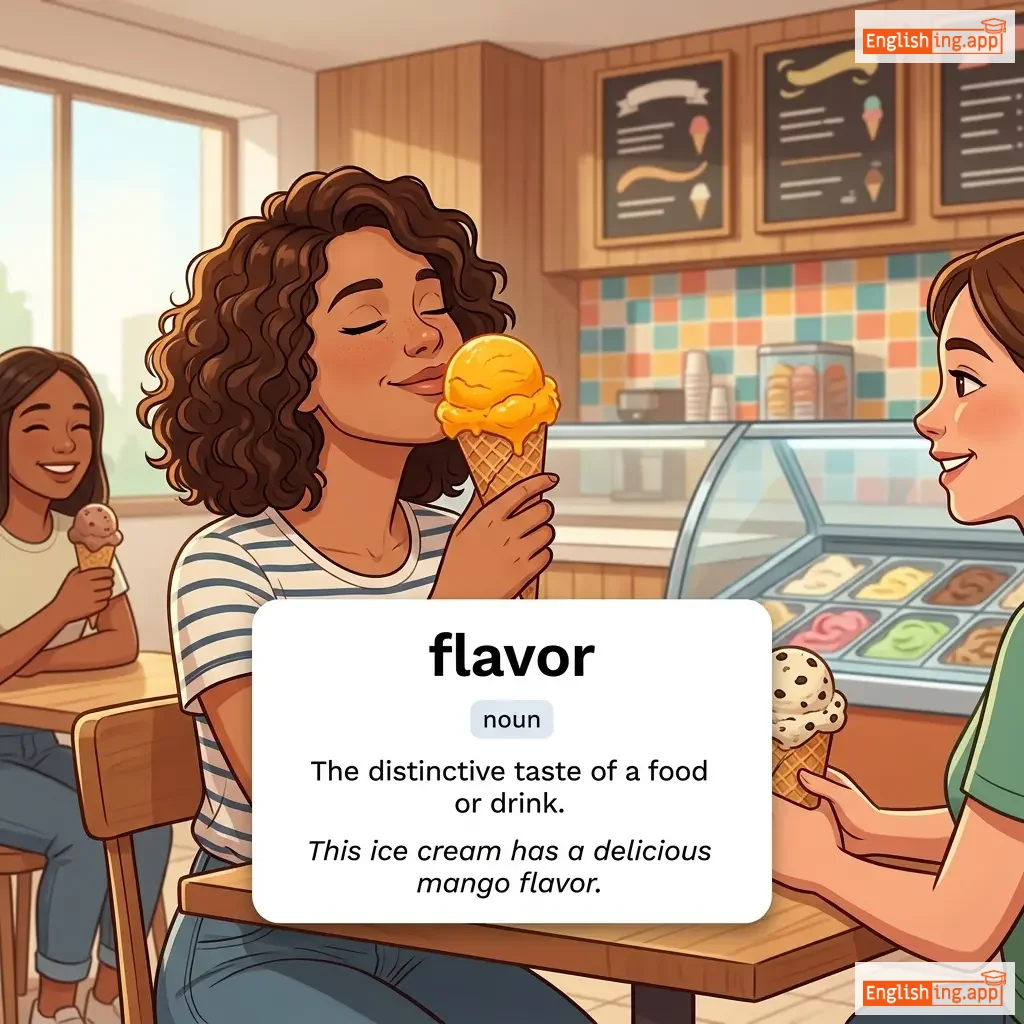
flavor definition card — visual illustration of the meaning
noun
/ˈfleɪvər/
goût (gout)

The distinctive taste of a food or drink.

"This ice cream has a delicious mango flavor."

"Cette glace a un délicieux goût de mangue." (Cette glace a un délicieux goût de mangue.)
noun
/ˈfleɪ.vər/
saveur (saveur)

the distinctive taste of a food or drink; a particular quality or atmosphere

"The soup had a rich flavour of herbs and spices from the garden."

"La soupe avait une riche saveur d'herbes et d'épices du jardin." (La soupe avait une riche saveur d'herbes et d'épices du jardin.)
noun
/flɔː/
défaut (defaut)

a defect or imperfection in something

"The diamond had a small flaw that was barely visible."

"Le diamant avait un petit défaut à peine visible." (Le diamant avait un petit defaut a peine visible.)
adjective
/flɔːd/
défectueux (defectueux)

having a mistake or fault that reduces its value or quality

"The flawed design of the car led to a recall."

"Le design défectueux de la voiture a conduit à un rappel." (Le design defectueux de la voiture a conduit a un rappel.)
adjective
/ˈflɔː.ləs/
parfait; sans défauts (flawless)

perfect; without any defects or faults; immaculate

"Her flawless performance earned her a standing ovation."

"Sa prestation parfaite lui a valu une ovation debout." (Sa prestation parfaite lui a valu une ovation debout.)
noun
/flæks/
lin (lin)

a plant whose fibers are used to make linen and whose seeds are edible

"Flax is often used in making linen fabrics."

"Le lin est souvent utilisé pour fabriquer des tissus en lin." (Le lin est souvent utilisé pour fabriquer des tissus en lin.)
verb
/fleɪ/
enlever la peau/criticiser sévèrement (enlever la peau/criticiser sévèrement)

to strip off the skin of something or criticize severely

"The chef flayed the fish before cooking it."

"Le chef a enlevé la peau du poisson avant de le cuisiner." (Le chef a enlevé la peau du poisson avant de le cuisiner.)
noun
/flɛk/
tache petite (tache petite)

a small spot or mark, often of a different color

"There was a fleck of paint on the floor."

"Il y avait une tache de peinture sur le sol." (Il y avait une tache de peinture sur le sol.)
noun
/ˈflɛkʃən/
flexion (flexion)

The act of bending or the state of being bent, especially of a limb or joint.

"The doctor tested the patient's knee flection during the examination."

"Le médecin a testé la flexion du genou du patient lors de l'examen." (Le médecin a testé la flexion du genou du patient lors de l'examen.)
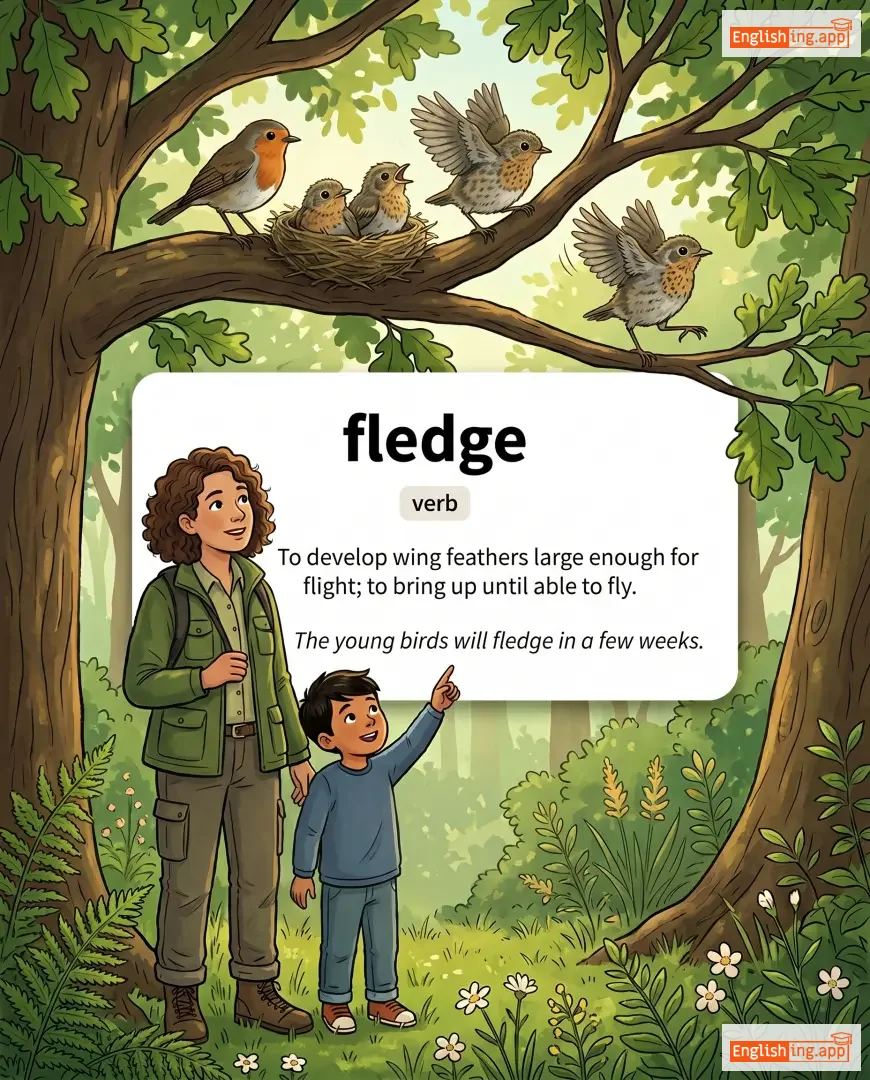
fledge definition card — visual illustration of the meaning
verb
/flɛdʒ/
prêter (preyter)

To develop wing feathers large enough for flight; to bring up until able to fly.

"The young birds will fledge in a few weeks."

"Les jeunes oiseaux vont se préparer à voler dans quelques semaines." (Les jeunes oiseaux vont se préparer à voler dans quelques semaines.)
noun
/ˈflɛdʒlɪŋ/
oiseau débutant (oiseau debutant)

A young bird that has just developed its feathers and is learning to fly; a beginner.

"The fledgeling was trying hard to take its first flight."

"L'oiseau débutant essayait de prendre son premier envol." (L'oiseau debutant essayait de prendre son premier envol.)
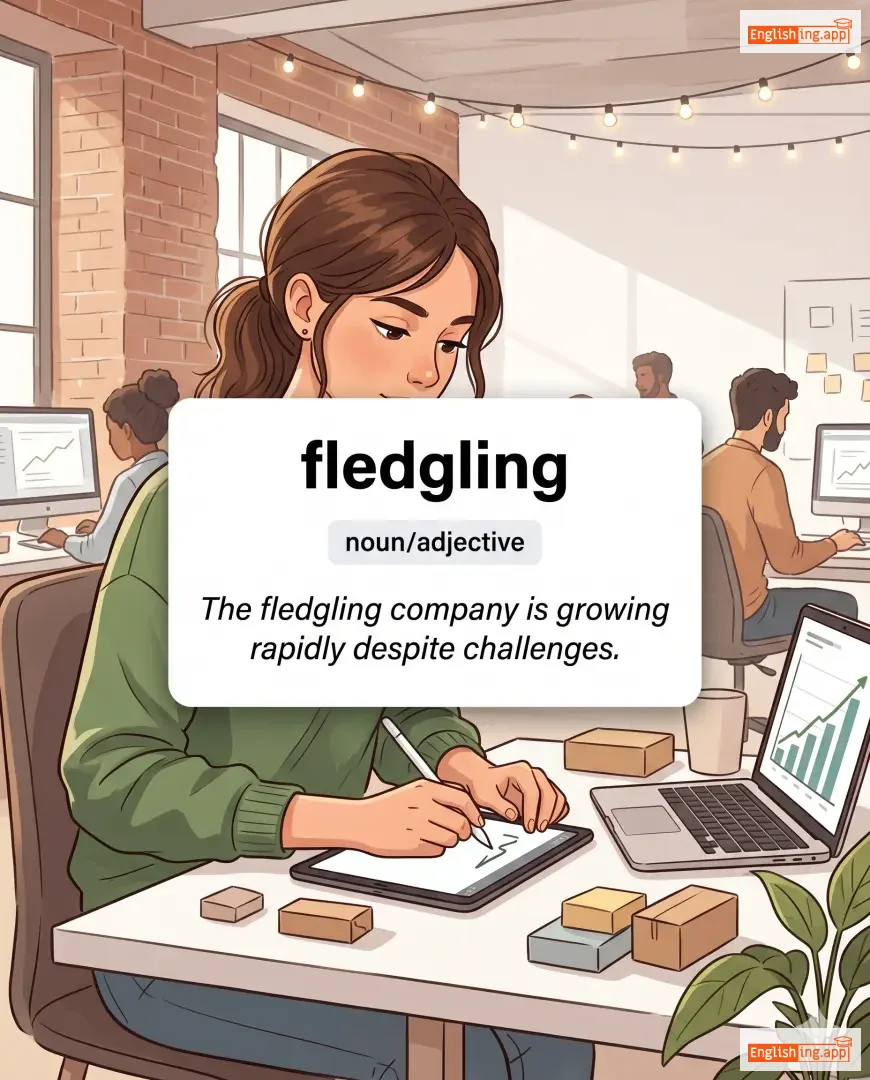
fledgling definition card — visual illustration of the meaning
noun/adjective
/ˈflɛdʒlɪŋ/
nouveau venu (nouveau venu)

A young bird just learning to fly; also used for a person or organization that is inexperienced or new.

"The fledgling company is growing rapidly despite challenges."

"L'entreprise naissante se développe rapidement malgré les défis." (L'entreprise naissante se developpe rapidement malgre les defis.)
🏃‍♂️

flee (flee)

verb
/fliː/
fuir (fuir)

To run away from danger or a threatening situation.

"The villagers had to flee during the flood."

"Les villageois ont dû fuir pendant l'inondation." (Les villageois ont dû fuir pendant l'inondation.)
noun/verb
/fliːs/
la laine de mouton (la laine de mouton)

The woolly covering of a sheep; as a verb, to swindle or cheat someone.

"The farmer sheared the sheep’s fleece carefully."

"Le fermier a soigneusement tondu la laine de la brebis." (Le fermier a soigneusement tondu la laine de la brebis.)
noun
/fliːt/
flotte (flotte)

a group of ships, vehicles, or aircraft operating together under one command

"The navy deployed its entire fleet for the exercise."

"La marine a déployé toute sa flotte pour l'exercice." (La marine a deploye toute sa flotte pour l'exercice.)
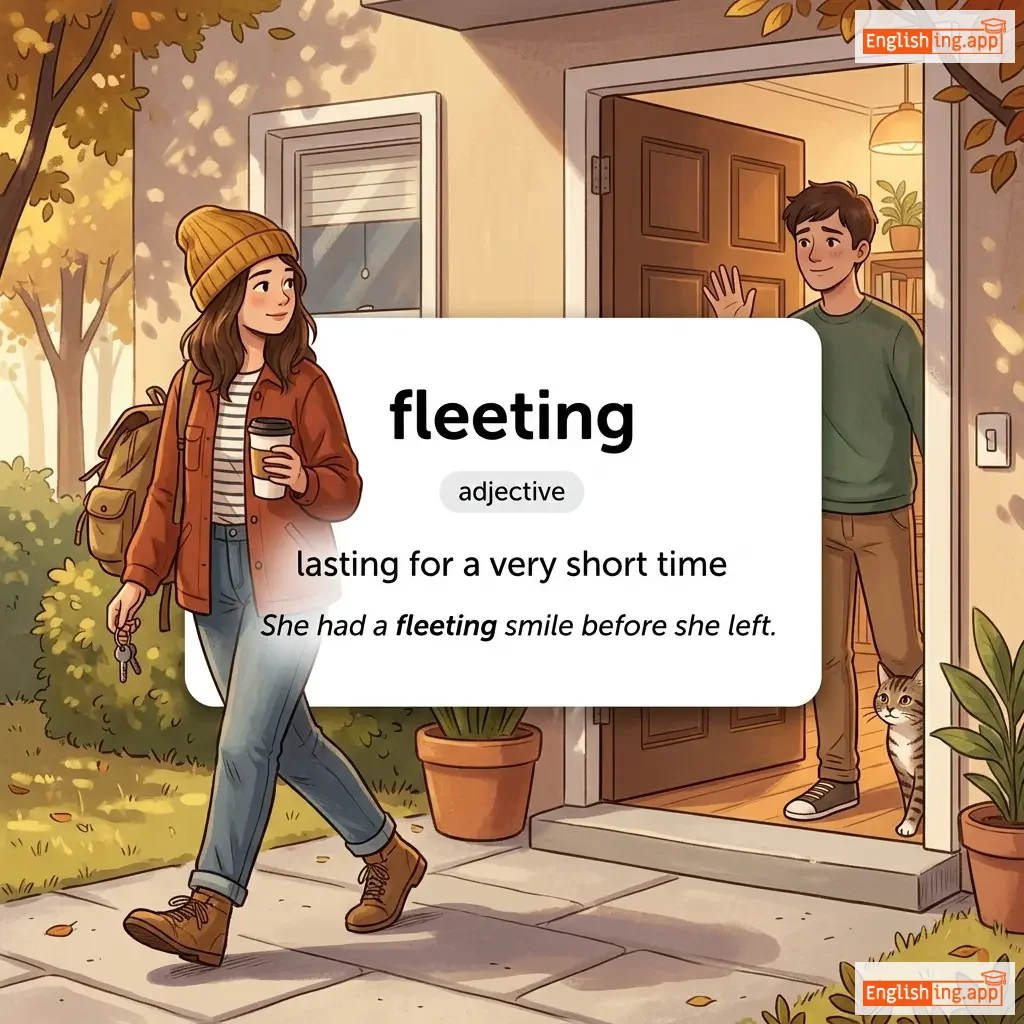
fleeting definition card — visual illustration of the meaning
adjective
/ˈfliː.tɪŋ/
éphémère (ephemere)

lasting for a very short time

"She had a fleeting smile before she left."

"Elle avait un sourire éphémère avant de partir." (Elle avait un sourire ephemere avant de partir.)
noun
/flɛʃ/
chair (chair)

the soft substance consisting of muscle and fat that is found between the skin and bones of animals or humans

"The wound cut deep into the flesh of his arm."

"La blessure a coupé profondément dans la chair de son bras." (La blessure a coupe profondement dans la chair de son bras.)
flexibility definition card — visual illustration of the meaning
noun
/ˌflɛksəˈbɪləti/
flexibilité (flexibilité)

the ability to bend easily without breaking or to adapt to new situations

"Flexibility is essential for success in a changing work environment."

"La flexibilité est essentielle pour réussir dans un environnement de travail changeant." (La flexibilité est essentielle pour réussir dans un environnement de travail changeant.)
adjective
/ˈfleks.ə.bəl/
flexible (flexible)

able to bend easily without breaking; adaptable to change

"Yoga helps to make the body more flexible."

"Le yoga aide à rendre le corps plus flexible." (Le yoga aide à rendre le corps plus flexible.)
verb
/flɪk/
donner un coup rapide (donner un coup rapide)

to move or cause to move with a sudden quick motion

"He flicked the switch to turn on the light."

"Il a flické l'interrupteur pour allumer la lumière." (Il a flické l'interrupteur pour allumer la lumière.)
verb
/ˈflɪk.ər/
clignoter (clignoter)

to shine unsteadily or waver between light and dark

"The candle flickered in the wind."

"La bougie clignotait dans le vent." (La bougie clignotait dans le vent.)
noun
/flaɪt/
vol / vol (vol / vol)

the act of flying, typically through the air; or a scheduled trip by an aircraft

"Our flight to London was delayed due to bad weather."

"Notre vol pour Londres a été retardé en raison du mauvais temps." (Notre vol pour Londres a été retardé en raison du mauvais temps.)
adjective
/ˈflaɪti/
instable (instable)

unstable, impulsive, or easily distracted; lacking seriousness or stability

"She’s too flighty to stick with one job for long."

"Elle est trop instable pour rester dans un seul travail pendant longtemps." (Elle est trop instable pour rester dans un seul travail pendant longtemps.)
adjective
/ˈflɪmzi/
fragile (frajeel)

weak, fragile, or lacking in strength; not convincing

"The chair was too flimsy to support his weight."

"La chaise était trop fragile pour supporter son poids." (La chaise etait trop frajeel pour supporter son poids.)
verb
/flɪntʃ/
reculer (reculer)

to suddenly move back or away due to fear or pain

"He didn’t flinch when the doctor gave him the injection."

"Il n'a pas bronché lorsque le docteur lui a donné l'injection." (Il n'a pas bronché lorsque le docteur lui a donné l'injection.)
verb
/flɪp/
retourner (retourner)

to turn over quickly or suddenly; to toss lightly

"She flipped the pancake in the pan."

"Elle a retourné le pancake dans la poêle." (Elle a retourne le pancake dans la poele.)
noun
/ˈflɪpənsi/
légèreté (legerete)

lack of seriousness; showing a disrespectful or trivial attitude

"His flippancy during the meeting offended his colleagues."

"Sa légèreté pendant la réunion a offensé ses collègues." (Sa legerete pendant la reunion a offense ses collegues.)
adjective
/ˈflɪpənt/
désinvolte (desinvolte)

not showing a serious or respectful attitude

"His flippant remarks annoyed the teacher."

"Ses remarques désinvoltes ont agacé le professeur." (Ses remarques desinvoltes ont agace le professeur.)
verb
/flɜːrt/
flirter (flirter)

to behave as if you are attracted to someone, but not in a serious way

"She often flirts with her colleagues at work."

"Elle flirte souvent avec ses collègues au travail." (Elle flirte souvent avec ses collègues au travail.)
verb
/flɪt/
voltiger (voltiger)

to move quickly and lightly from one place to another

"Butterflies flitted from flower to flower."

"Les papillons voltigeaient de fleur en fleur." (Les papillons voltigeaient de fleur en fleur)
verb
/floʊt/
flotter (flotter)

to rest or move on the surface of a liquid or in the air without sinking

"The boat began to float gently down the river."

"Le bateau a commencé à flotter doucement sur le fleuve." (Le bateau a commence a flotter doucement sur le fleuve.)
adjective, verb (present participle)
/ˈfloʊtɪŋ/
flottant (flottant)

remaining on the surface of a liquid without sinking; moving lightly or freely

"The boat was floating gently on the calm lake."

"Le bateau flottait doucement sur le lac calme." (Le bateau flottait doucement sur le lac calme.)
noun/verb
/flɑːk/
troupeau (troupeau)

a group of birds or animals; to gather or move in a crowd

"Tourists flocked to the beach during summer."

"Les touristes se sont rassemblés sur la plage pendant l'été." (Les touristes se sont rassemblés sur la plage pendant l'été.)
noun
/floʊ/
banquise (banquise)

a large sheet of floating ice

"The polar bears rested on the ice floe."

"Les ours polaires se reposaient sur la banquise." (Les ours polaires se reposaient sur la banquise.)
noun
/flʌd/
inondation (inondation)

a large amount of water covering land that is usually dry

"The flood destroyed several houses in the village."

"L'inondation a détruit plusieurs maisons dans le village." (L'inondation a détruit plusieurs maisons dans le village.)
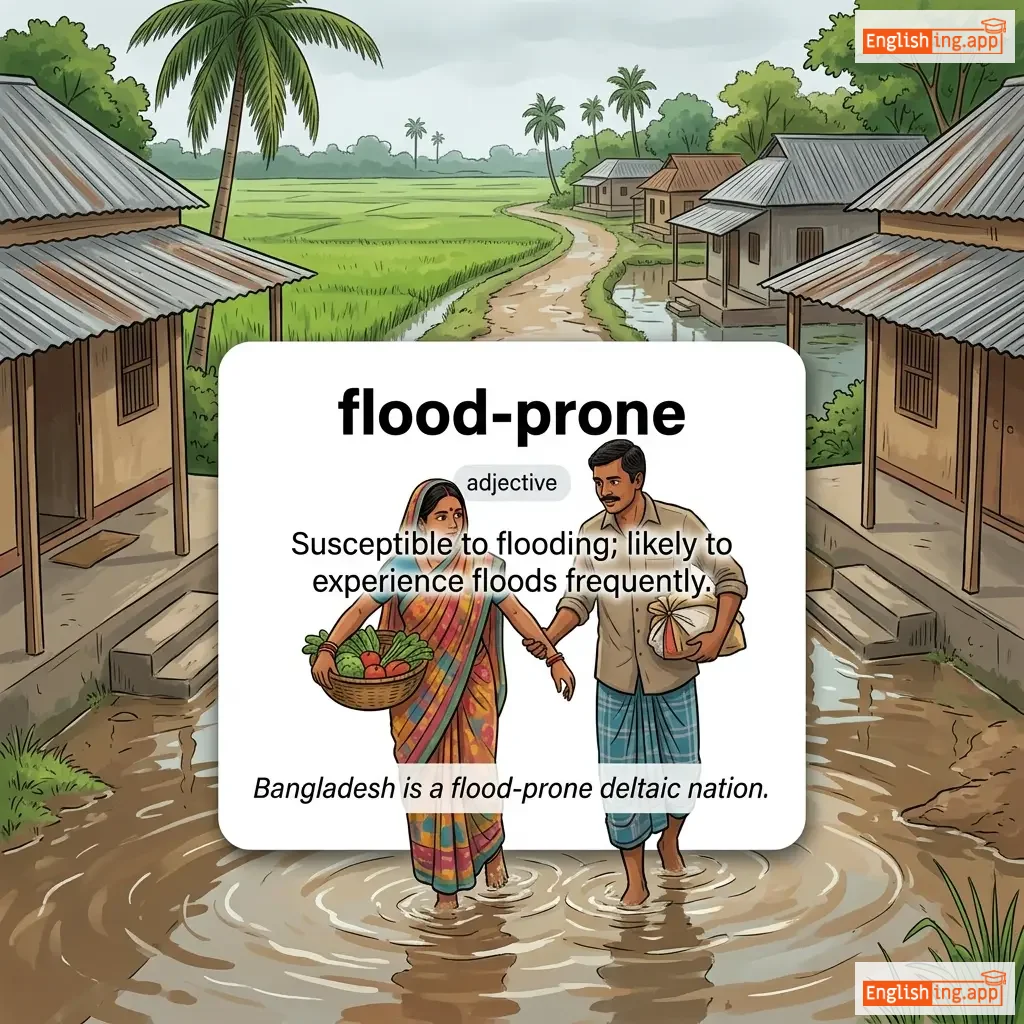
flood-prone definition card — visual illustration of the meaning
adjective
ˈflʌd proʊn
sujette aux inondations (sujette aux inondations)

Susceptible to flooding; likely to experience floods frequently.

"Bangladesh is a flood-prone deltaic nation."

"Le Bangladesh est une nation deltaïque sujette aux inondations." (Le Bangladesh est une nation deltaique sujette aux inondations.)
noun
/flɔːr/
sol (sol)

the lower surface of a room, on which one may walk

"The floor was covered with a soft carpet."

"Le sol était couvert d'un tapis doux." (Le sol était couvert d'un tapis doux.)
verb
/flɑp/
échec (echec)

to fall or move heavily and clumsily; to fail completely

"The new movie flopped at the box office."

"Le nouveau film a échoué au box-office." (Le nouveau film a echoué au box-office.)
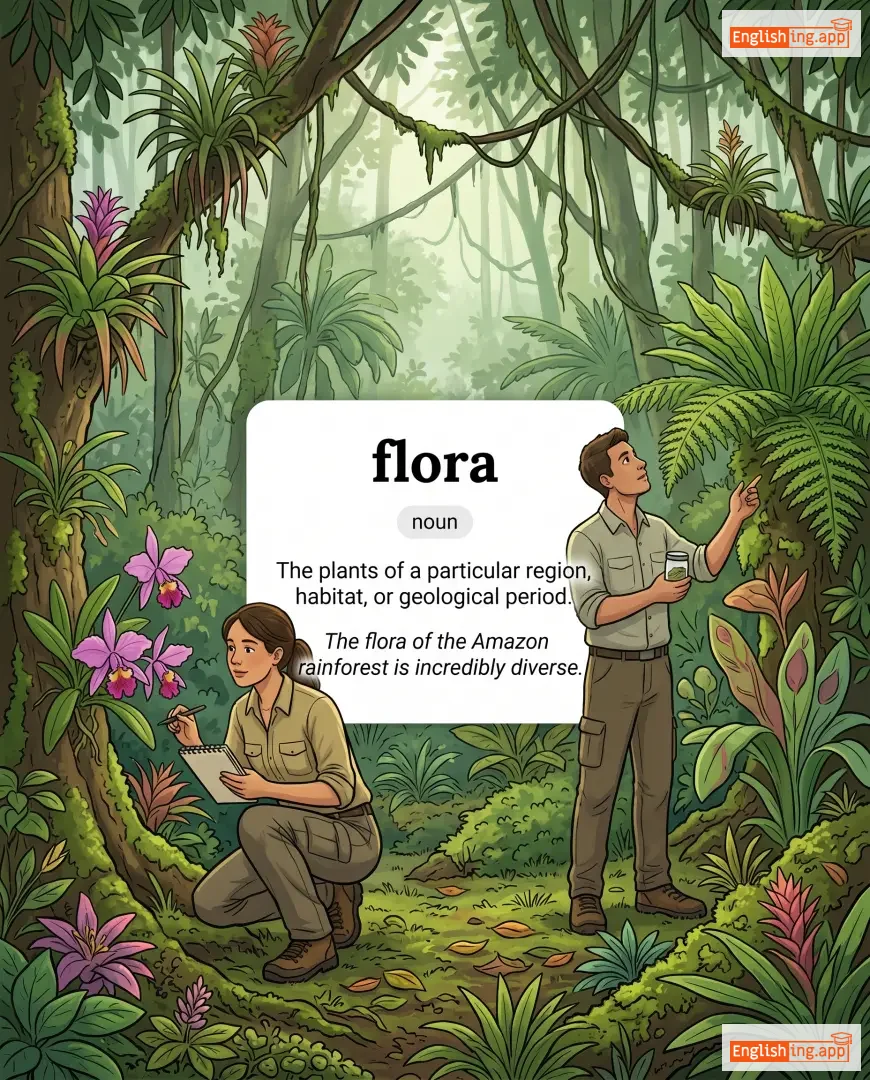
flora definition card — visual illustration of the meaning
noun
/ˈflɔːrə/
flore (flore)

The plants of a particular region, habitat, or geological period.

"The flora of the Amazon rainforest is incredibly diverse."

"La flore de la forêt amazonienne est incroyablement diverse." (La flore de la foret amazonienne est incroyablement diverse.)
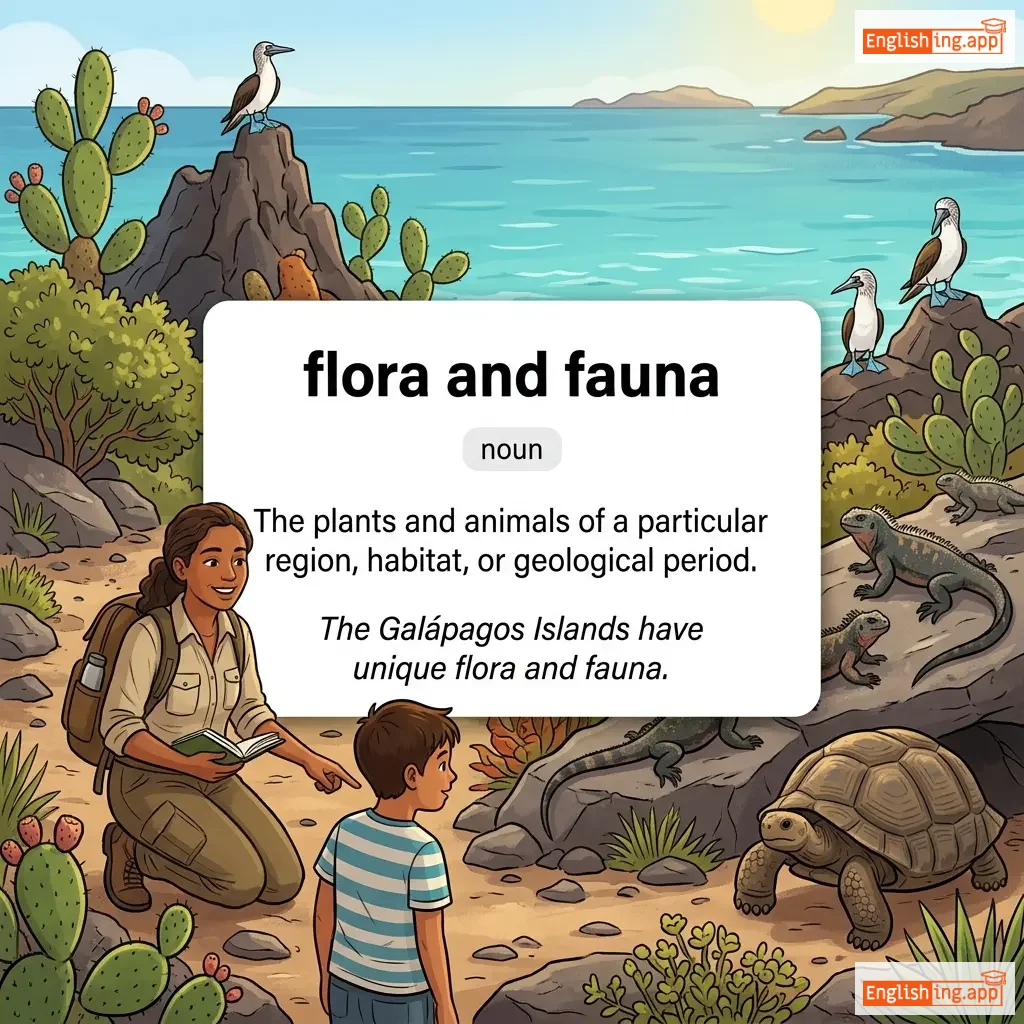
flora and fauna definition card — visual illustration of the meaning
noun
ˈflɔː.rə ænd ˈfɔː.nə
flore et faune (flore et faune)

The plants and animals of a particular region, habitat, or geological period.

"The Galápagos Islands have unique flora and fauna."

"Les îles Galápagos ont une flore et faune uniques." (Les îles Galápagos ont une flore et faune uniques.)
adjective
/ˈflɔːrəl/
floral (floral)

Relating to flowers or decorated with flowers.

"She wore a beautiful floral dress to the party."

"Elle portait une belle robe florale à la fête." (Elle portait une belle robe florale à la fête.)
noun
/flɔːˈrɛsəns/
floraison (floraison)

The process, state, or period of flowering.

"The garden reached its peak florescence in spring."

"Le jardin a atteint son apogée de floraison au printemps." (Le jardin a atteint son apogée de floraison au printemps.)
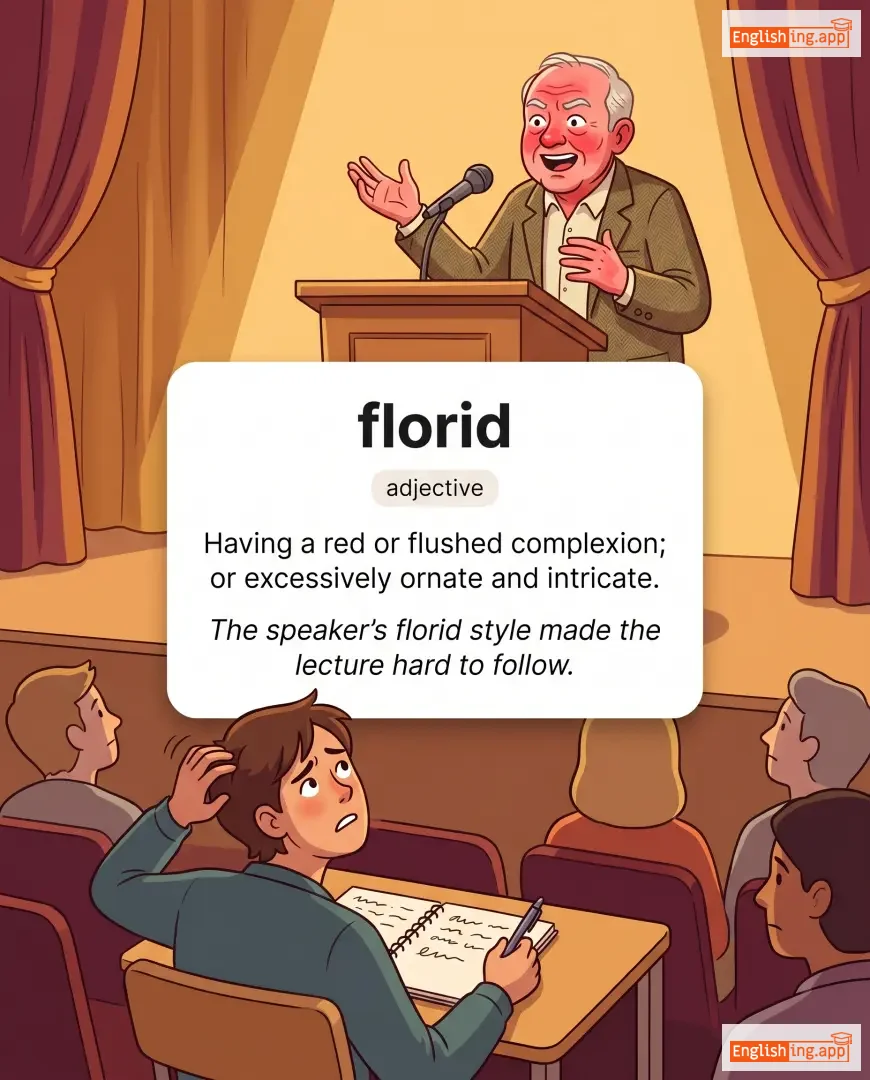
florid definition card — visual illustration of the meaning
adjective
/ˈflɒrɪd/
excessivement orné / rougeâtre (excessivement orné / rougeâtre)

Having a red or flushed complexion; or excessively ornate and intricate.

"The speaker’s florid style made the lecture hard to follow."

"Le style excessivement orné du conférencier a rendu la conférence difficile à suivre." (Le style excessivement orné du conférencier a rendu la conférence difficile à suivre.)
noun
/ˈflɒrɪst/
fleuriste (fleuriste)

A person who sells and arranges flowers.

"We bought a bouquet from the local florist."

"Nous avons acheté un bouquet chez le fleuriste local." (Nous avons acheté un bouquet chez le fleuriste local.)
noun
/fləˈtɪlə/
flottille (flotille)

A small fleet of ships or boats operating together.

"A flotilla of fishing boats left the harbor at dawn."

"Une flottille de bateaux de pêche a quitté le port à l'aube." (Une flottille de bateaux de peche a quitte le port a l'aube.)