Словари

Словарь английского языка | Значения слов, определения и примеры

verb
/ˈflætər/
преувеличивать похвалу или лесть, чтобы получить выгоду (preuvelichivat' pokhvalu ili lesty', chtoby poluchit' vygodu)

to praise excessively or insincerely to gain favor

"He tried to flatter his boss to get a promotion."

"Он пытался льстить своему начальнику, чтобы получить повышение." (On pytalsya l'stit' svoemu nachal'niku, chtoby poluchit' povyshenie.)
noun
/ˈflæt.ər.ər/
льстец (lystets)

a person who lavishes praise, often insincerely and in order to gain advantage

"The king was surrounded by flatterers who only told him what he wanted to hear."

"Царь был окружен льстецами, которые говорили ему только то, что он хотел услышать." (Tsar' byl okruzhen l'stetsami, kotorye govoryli emu tol'ko to, chto on khotel uslyshat'.)
noun
/ˈflæt.ər.i/
ласкательство (laskatel'stvo)

excessive and insincere praise, given especially to further one's own interests

"His constant flattery made everyone suspicious of his true motives."

"Его постоянное ласкательство заставило всех сомневаться в его настоящих мотивах." (Ego postoyannoe laskatel'stvo zastavilo vsekh somnevatsya v ego nastoyashchikh motivakh.)
noun
/ˈflætʃələns/
скопление газа в пищеварительной системе (skoplenie gaza v pishchevaritelnoy sisteme)

the accumulation of gas in the digestive system; excessive gas in the stomach or intestines

"Eating beans can sometimes cause flatulence."

"Поедание фасоли иногда может вызвать метеоризм." (Poyedanie fasoli inogda mozhet vyzvat meteorizm.)
verb
/flɔːnt/
показуха (pokazukha)

to show off something proudly, often to attract attention

"She likes to flaunt her new jewelry at parties."

"Она любит показывать свои новые украшения на вечеринках." (Ona lyubit pokazivat' svoi novye ukrasheniya na vecherinkakh.)
flavor definition card — visual illustration of the meaning
noun
/ˈfleɪvər/
вкус (vkus)

The distinctive taste of a food or drink.

"This ice cream has a delicious mango flavor."

"Это мороженое имеет вкусный манговый вкус." (Eto morozhenoe imeyet vkusnyy mangovyy vkus.)
noun
/ˈfleɪ.vər/
вкус (vkus)

the distinctive taste of a food or drink; a particular quality or atmosphere

"The soup had a rich flavour of herbs and spices from the garden."

"В супе был насыщенный вкус трав и специй из сада." (V supe byl nasyshchennyy vkus trav i spetsiy iz sada.)
noun
/flɔː/
дефект (defekt)

a defect or imperfection in something

"The diamond had a small flaw that was barely visible."

"В алмазе был небольшой дефект, который едва было видно." (V almaze byl nebolshoy defekt, kotoryy yedva bylo vidno.)
adjective
/flɔːd/
дефектный (defektny)

having a mistake or fault that reduces its value or quality

"The flawed design of the car led to a recall."

"Неисправный дизайн автомобиля привел к отзыву." (Neispravnyy dizayn avtomobilya privyol k otzyvu.)
adjective
/ˈflɔː.ləs/
совершенный; без дефектов (flawless)

perfect; without any defects or faults; immaculate

"Her flawless performance earned her a standing ovation."

"Её безупречное выступление принесло ей стоячие аплодисменты." (Yeyo bezuprechnoe vystuplenie prineslo yey stoyachie aplodismenty.)
noun
/flæks/
лён (lyon)

a plant whose fibers are used to make linen and whose seeds are edible

"Flax is often used in making linen fabrics."

"Лён часто используется для изготовления льняных тканей." (Lyon chasto ispol'zuyetsya dlya izgotovleniya l'nianykh tkanei.)
verb
/fleɪ/
снимать кожу/критиковать строго (snimat' kozhu/kritikovat' strogo)

to strip off the skin of something or criticize severely

"The chef flayed the fish before cooking it."

"Шеф снял кожу с рыбы перед тем, как приготовить её." (Shef snjal kozhu s ryby pered tem, kak prigotovit' yeë.)
noun
/flɛk/
маленькое пятнышко (malen'koye pyatnyshko)

a small spot or mark, often of a different color

"There was a fleck of paint on the floor."

"На полу была маленькая пятнышка краски." (Na polu byla malen'kaya pyatnyshka kraski.)
noun
/ˈflɛkʃən/
сгибание (sgibanie)

The act of bending or the state of being bent, especially of a limb or joint.

"The doctor tested the patient's knee flection during the examination."
"Доктор проверил сгибание колена пациента во время осмотра." (Doktor proveril sgibanie kolena patsiyenta vo vremya osmotra.)
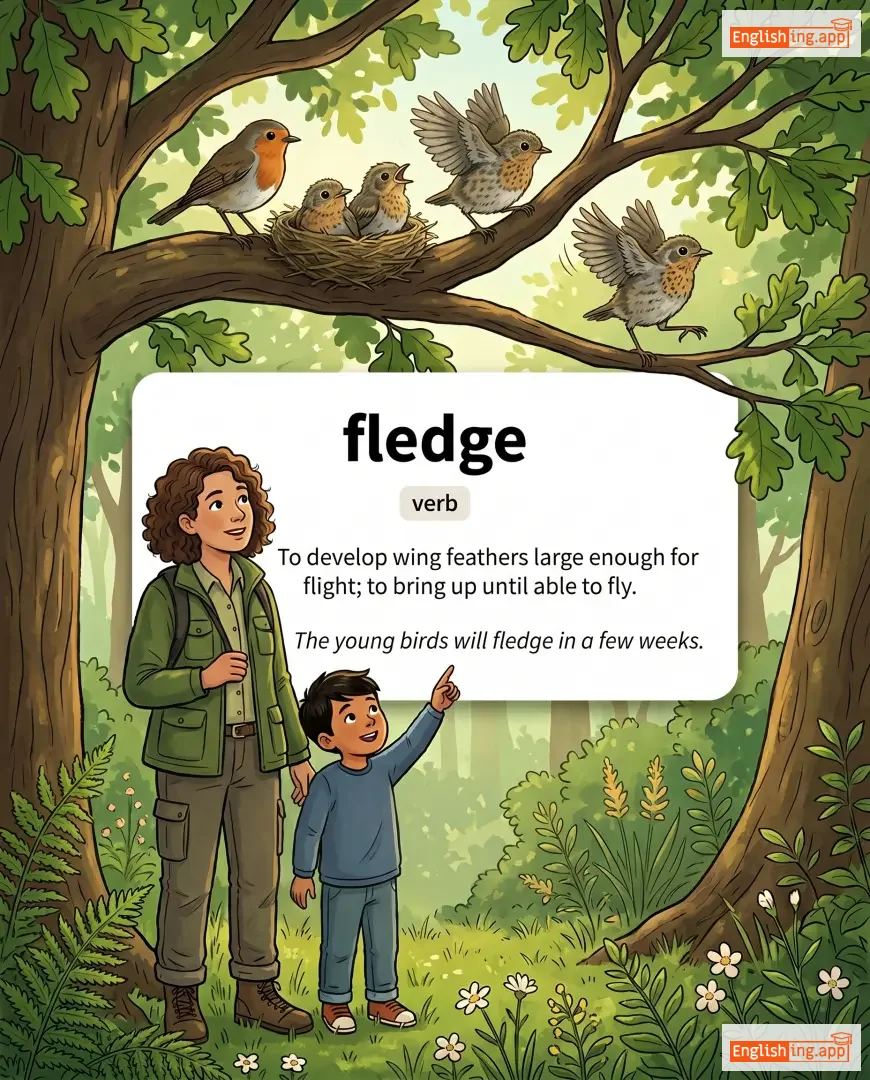
fledge definition card — visual illustration of the meaning
verb
/flɛdʒ/
становиться летным (stanovitsya letnym)

To develop wing feathers large enough for flight; to bring up until able to fly.

"The young birds will fledge in a few weeks."

"Молодые птицы начнут летать через несколько недель." (Molodye ptitsy nachnut letat' cherez neskol'ko nedel'.)
noun
/ˈflɛdʒlɪŋ/
молодая птица (molodaya ptitsa)

A young bird that has just developed its feathers and is learning to fly; a beginner.

"The fledgeling was trying hard to take its first flight."
"Молодая птица пыталась сделать свой первый полет." (Molodaya ptitsa pytalas' sdelat' svoi pervyi polet.)
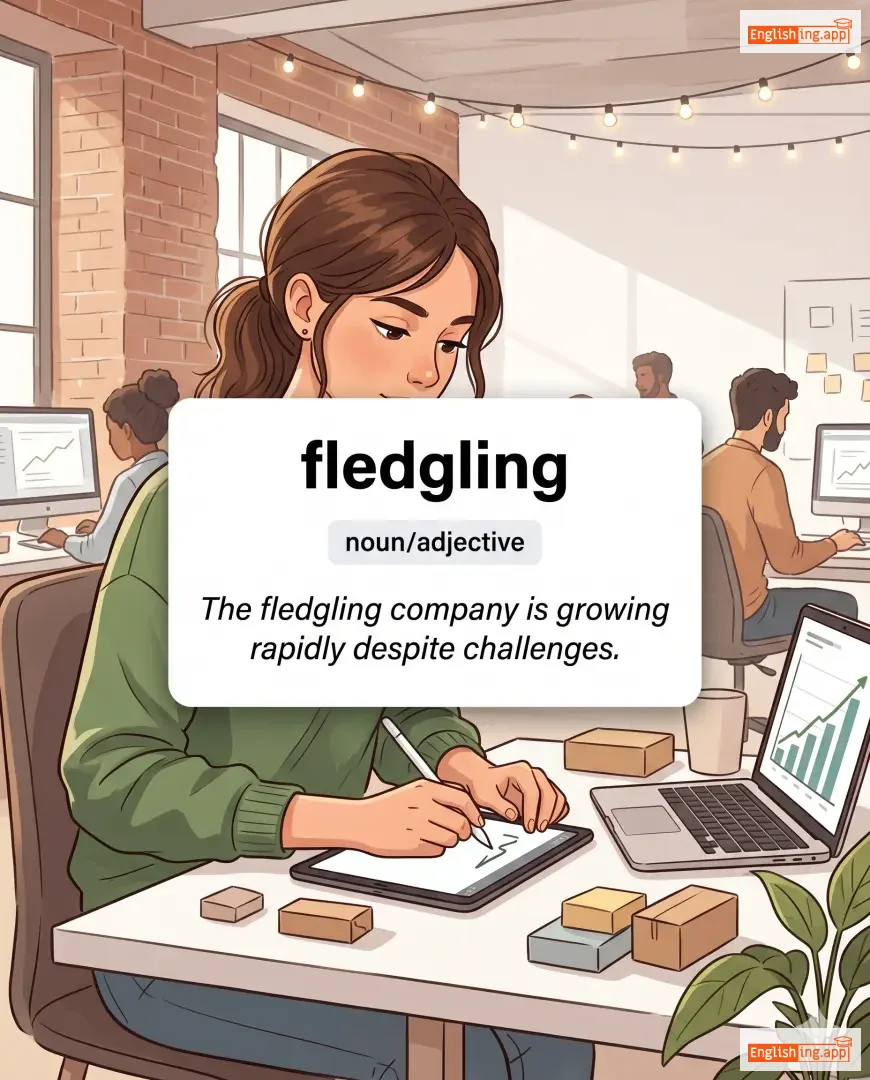
fledgling definition card — visual illustration of the meaning
noun/adjective
/ˈflɛdʒlɪŋ/
новичок (novichok)

A young bird just learning to fly; also used for a person or organization that is inexperienced or new.

"The fledgling company is growing rapidly despite challenges."

"Новая компания быстро растет, несмотря на вызовы." (Novaya kompaniya bystro rastet, nesmotrya na vyzovy.)
🏃‍♂️

flee (фли)

verb
/fliː/
убегать (ubegat)

To run away from danger or a threatening situation.

"The villagers had to flee during the flood."

"Жители деревни должны были убежать во время наводнения." (Zhiteli derevni dolzhny byli ubezhat vo vremya navodneniya.)
noun/verb
/fliːs/
овечья шерсть (ovech'ya sherst')

The woolly covering of a sheep; as a verb, to swindle or cheat someone.

"The farmer sheared the sheep’s fleece carefully."

"Фермер осторожно срезал шерсть с овцы." (Fermyer ostorozhno srezal sherst' s ovtsy.)
noun
/fliːt/
флотилия (flotiliya)

a group of ships, vehicles, or aircraft operating together under one command

"The navy deployed its entire fleet for the exercise."

"ВМС развернули весь свой флот для учений." (VMS razvernuty ves' svoy flot dlya ucheniy.)
fleeting definition card — visual illustration of the meaning
adjective
/ˈfliː.tɪŋ/
мимолетный (mimoletnyj)

lasting for a very short time

"She had a fleeting smile before she left."

"У неё была мимолётная улыбка перед тем, как она ушла." (U neyo byla mimolyotnaya ulybka pered tem, kak ona ushla.)
noun
/flɛʃ/
плоть (plot)

the soft substance consisting of muscle and fat that is found between the skin and bones of animals or humans

"The wound cut deep into the flesh of his arm."

"Рана прорезала плоть его руки." (Rana prorezala plot' yego ruki.)
flexibility definition card — visual illustration of the meaning
noun
/ˌflɛksəˈbɪləti/
гибкость (gibkost)

the ability to bend easily without breaking or to adapt to new situations

"Flexibility is essential for success in a changing work environment."

"Гибкость необходима для успеха в изменяющейся рабочей среде." (Gibkost' neobkhodima dlya uspekha v izmenyayushcheysya rabochey srede.)
adjective
/ˈfleks.ə.bəl/
гибкий (gibkiy)

able to bend easily without breaking; adaptable to change

"Yoga helps to make the body more flexible."

"Йога помогает сделать тело более гибким." (Yoga pomogaet sdelat' telo bolee gibkim.)
verb
/flɪk/
щелкать (shchelat)

to move or cause to move with a sudden quick motion

"He flicked the switch to turn on the light."

"Он фликал выключатель, чтобы включить свет." (On flikal vyklyuchatel, chtoby vklyuchit svet.)
verb
/ˈflɪk.ər/
мерцать (mertsat)

to shine unsteadily or waver between light and dark

"The candle flickered in the wind."

"Свеча мерцала на ветру." (Svecha mertsala na vetru.)
noun
/flaɪt/
полет / полет (polet / polet)

the act of flying, typically through the air; or a scheduled trip by an aircraft

"Our flight to London was delayed due to bad weather."

"Наш рейс в Лондон был задержан из-за плохой погоды." (Nash reys v London byl zaderzhan iz-za plokhoy pogody.)
adjective
/ˈflaɪti/
неустойчивый (neustoychivyy)

unstable, impulsive, or easily distracted; lacking seriousness or stability

"She’s too flighty to stick with one job for long."

"Она слишком неустойчива, чтобы долго задерживаться на одной работе." (Ona slishkom neustoychivaya, chtoby dolgo zaderzhivatsya na odnoj rabote.)
adjective
/ˈflɪmzi/
хрупкий (khrupkiy)

weak, fragile, or lacking in strength; not convincing

"The chair was too flimsy to support his weight."

"Стул был слишком хрупким, чтобы выдержать его вес." (Stul byl slishkom khrupkim, chtoby vyderzhat ego ves.)
verb
/flɪntʃ/
отступить (otstupit)

to suddenly move back or away due to fear or pain

"He didn’t flinch when the doctor gave him the injection."

"Он не отступил, когда доктор сделал ему укол." (On ne otstupil, kogda doktor sdelal emu ukol.)
verb
/flɪp/
перевернуть (perevernut)

to turn over quickly or suddenly; to toss lightly

"She flipped the pancake in the pan."

"Она перевернула блин в сковороде." (Ona perevernula blin v skovorode.)
noun
/ˈflɪpənsi/
легкомыслие (legkomyslie)

lack of seriousness; showing a disrespectful or trivial attitude

"His flippancy during the meeting offended his colleagues."

"Его легкомыслие на собрании оскорбило его коллег." (Ego legkomyslie na sobranii oskorbilo ego kolleg.)
adjective
/ˈflɪpənt/
неуважительный (neuvazhitel'ny)

not showing a serious or respectful attitude

"His flippant remarks annoyed the teacher."

"Его неуважительные замечания раздражали учителя." (Yego neuvazhitel'nye zamechaniya razdrazhali uchitelya.)
verb
/flɜːrt/
флиртовать (flirtovat)

to behave as if you are attracted to someone, but not in a serious way

"She often flirts with her colleagues at work."

"Она часто флертует с коллегами на работе." (Ona chasto flertuyet s kollegami na rabote.)
verb
/flɪt/
порхать (porhat)

to move quickly and lightly from one place to another

"Butterflies flitted from flower to flower."

"Бабочки порхали с цветка на цветок." (Babochki porhali s tsvetka na tsvetok)
verb
/floʊt/
плавать (plavat)

to rest or move on the surface of a liquid or in the air without sinking

"The boat began to float gently down the river."

"Лодка начала плавать по реке." (Lodka nachala plavat' po reke.)
adjective, verb (present participle)
/ˈfloʊtɪŋ/
плавающий (plavayushchiy)

remaining on the surface of a liquid without sinking; moving lightly or freely

"The boat was floating gently on the calm lake."

"Лодка мягко плавала на спокойном озере." (Lodka myagko plavala na spokoynom ozere.)
noun/verb
/flɑːk/
стая (staya)

a group of birds or animals; to gather or move in a crowd

"Tourists flocked to the beach during summer."

"Туристы собрались на пляже летом." (Turisty sobralis' na plyazhe letom.)
noun
/floʊ/
плавучая льдина (plavuchaya l'dina)

a large sheet of floating ice

"The polar bears rested on the ice floe."

"Белые медведи отдыхали на плавучей льдине." (Belye medvedi otdykhali na plavuchshey l'dine.)
noun
/flʌd/
наводнение (navodnenie)

a large amount of water covering land that is usually dry

"The flood destroyed several houses in the village."
"Наводнение разрушило несколько домов в деревне." (Navodnenie razrushilo neskol'ko domov v derevne.)
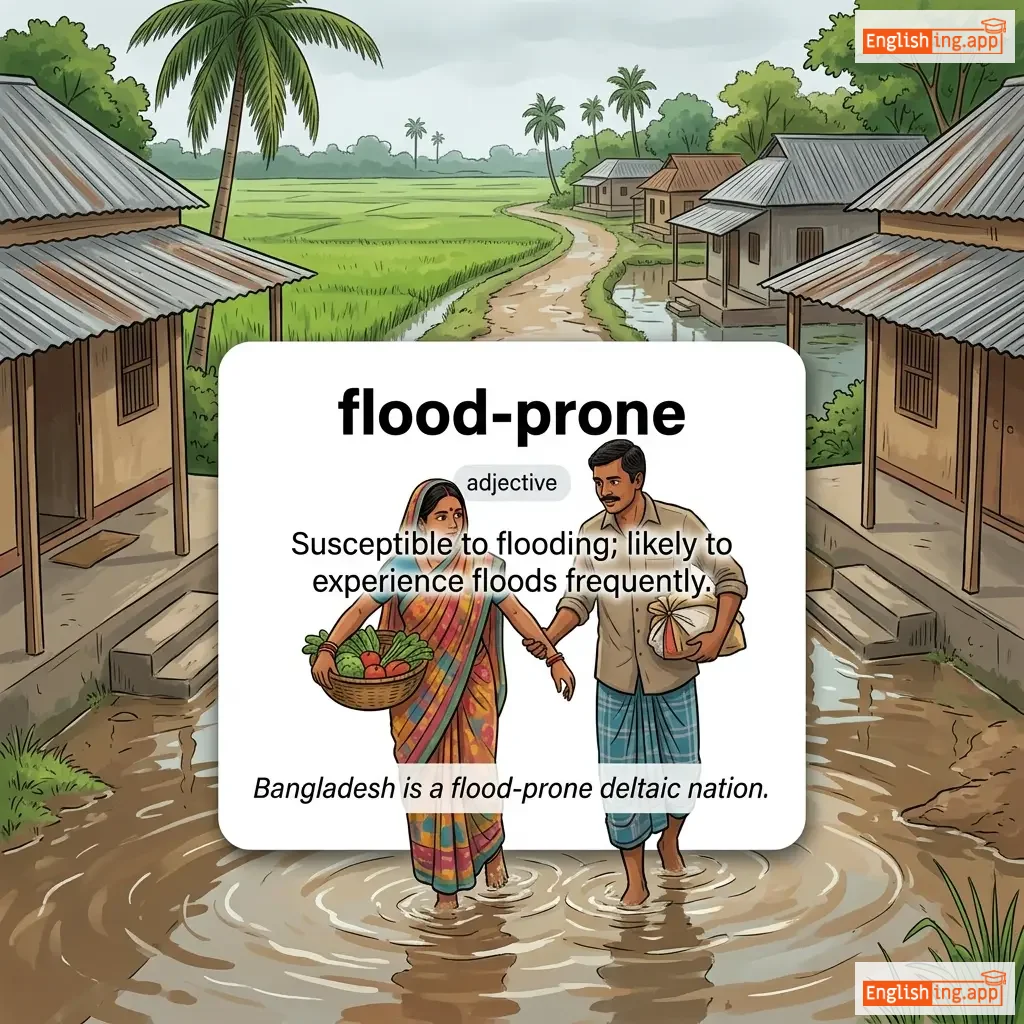
flood-prone definition card — visual illustration of the meaning
adjective
ˈflʌd proʊn
подверженный наводнениям (podverzhenny navodneniyam)

Susceptible to flooding; likely to experience floods frequently.

"Bangladesh is a flood-prone deltaic nation."

"Бангладеш — это дельтовая страна, подверженная наводнениям." (Bangladesh - eto del'tovaya strana, podverzhennaya navodneniyam.)
noun
/flɔːr/
пол (pol)

the lower surface of a room, on which one may walk

"The floor was covered with a soft carpet."

"Пол был покрыт мягким ковром." (Pol byl pokryt myagkim kovrom.)
verb
/flɑp/
провал (proval)

to fall or move heavily and clumsily; to fail completely

"The new movie flopped at the box office."
"Новый фильм провалился в прокате." (Novyy film provalilsya v prokatye.)
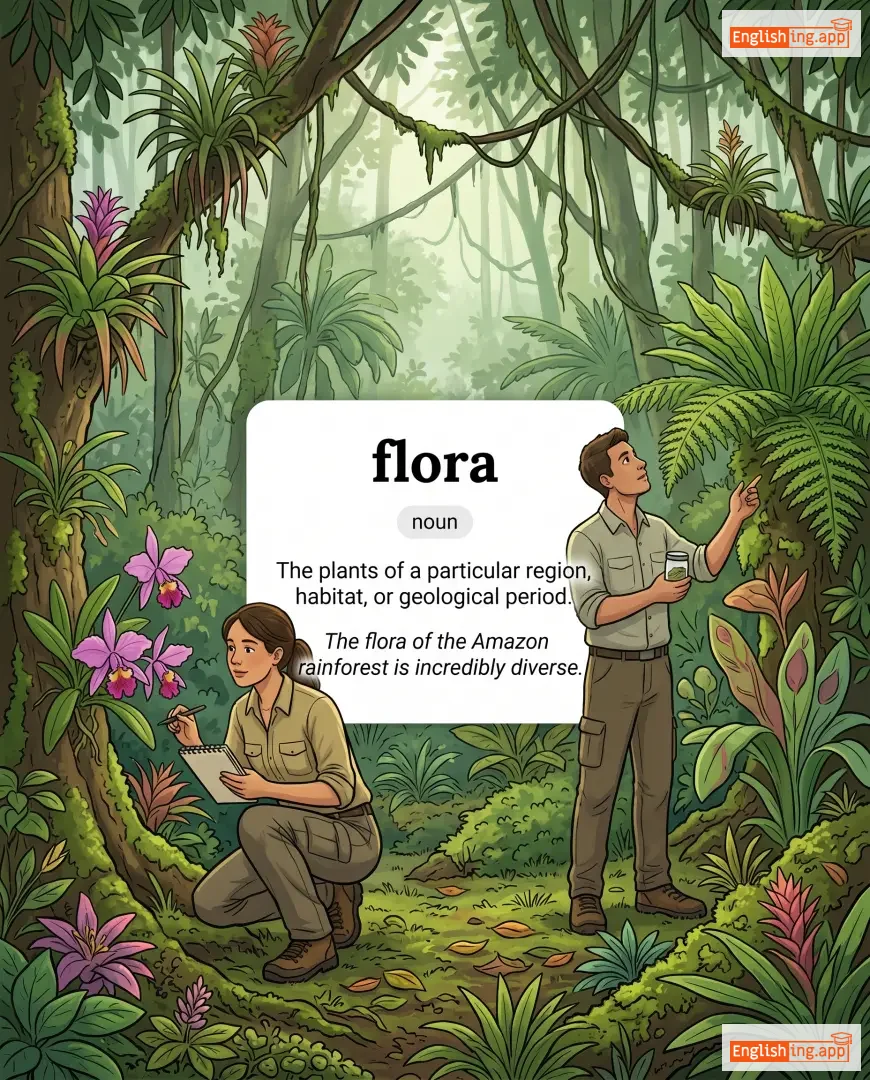
flora definition card — visual illustration of the meaning
noun
/ˈflɔːrə/
флора (flora)

The plants of a particular region, habitat, or geological period.

"The flora of the Amazon rainforest is incredibly diverse."
"Флора амазонских тропических лесов невероятно разнообразна." (Flora amazonskikh tropicheskikh lesov neveroyatno raznoobrazna.)
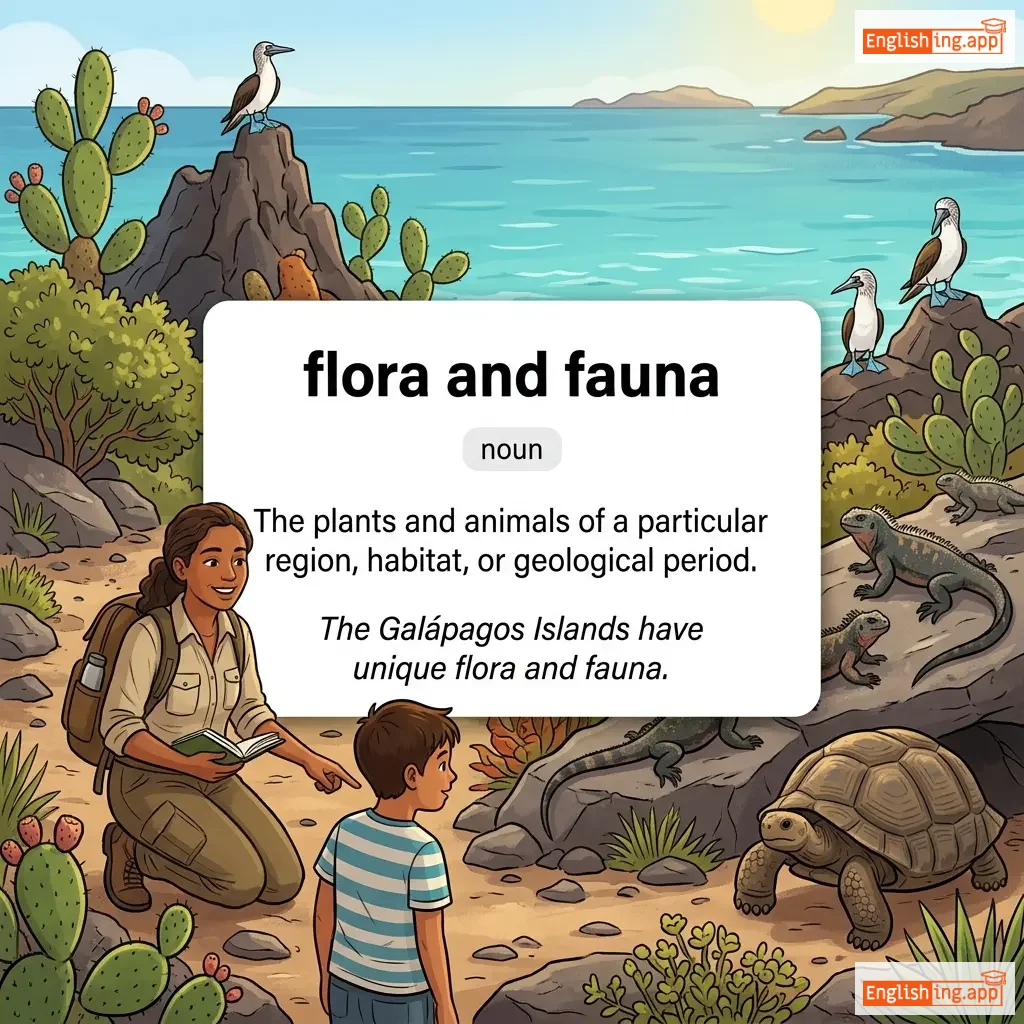
flora and fauna definition card — visual illustration of the meaning
noun
ˈflɔː.rə ænd ˈfɔː.nə
флора и фауна (flora i fauna)

The plants and animals of a particular region, habitat, or geological period.

"The Galápagos Islands have unique flora and fauna."

"На островах Галапагос находится уникальная флора и фауна." (Na ostrovakh Galapagos nakhoditsya unikal'naya flora i fauna.)
adjective
/ˈflɔːrəl/
цветочный (tsvetochny)

Relating to flowers or decorated with flowers.

"She wore a beautiful floral dress to the party."

"Она надела красивое цветочное платье на вечеринку." (Ona nadela krasivoye tsvetochnoye plat'ye na vecherinku.)
noun
/flɔːˈrɛsəns/
цветение (tsveteniye)

The process, state, or period of flowering.

"The garden reached its peak florescence in spring."
"Сад достиг своей пиково цветущей стадии весной." (Sad dostig svoey pikovoy tsvetushchey stadii vesnoy.)
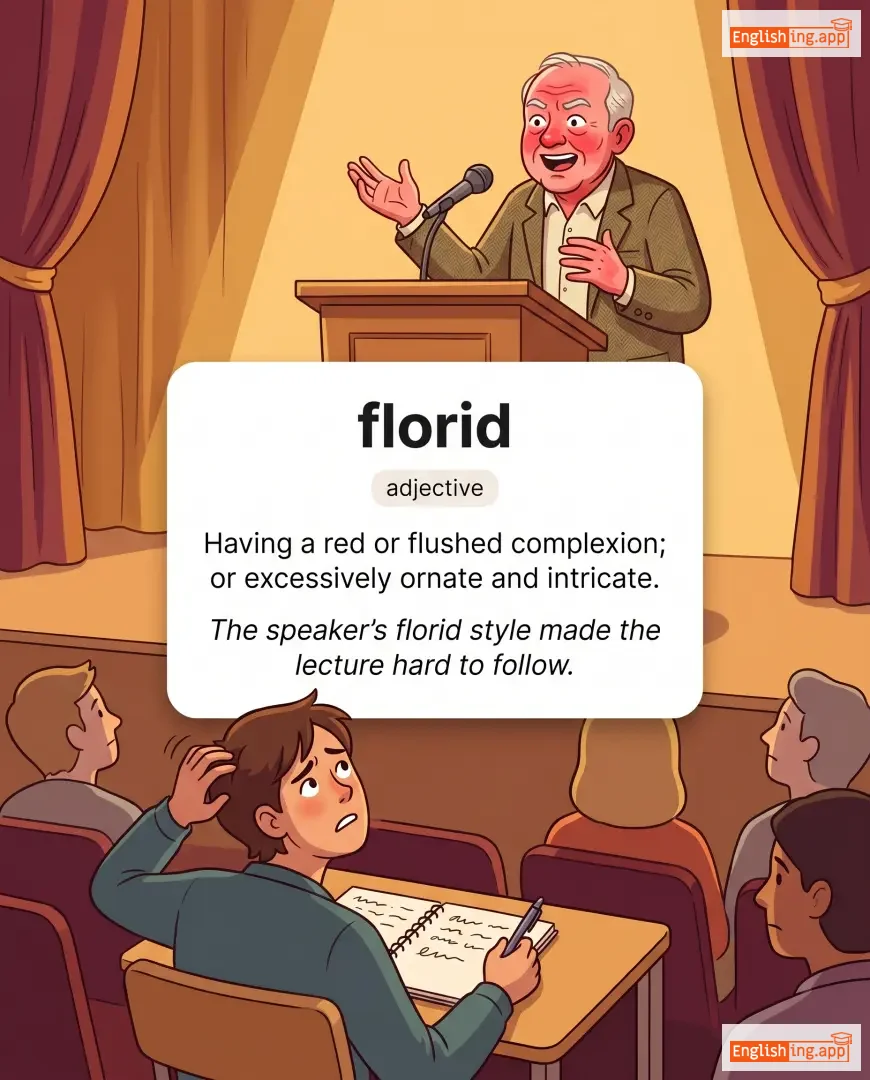
florid definition card — visual illustration of the meaning
adjective
/ˈflɒrɪd/
чрезмерно украшенный / покрасневший (chrezmerno ukrashennyy / pokrasnevsheyy)

Having a red or flushed complexion; or excessively ornate and intricate.

"The speaker’s florid style made the lecture hard to follow."

"Чрезмерно украшенный стиль оратора затруднил восприятие лекции." (Chrezmerno ukrashennyy stil oratora zatrudnil vospriyatie lektsii.)
noun
/ˈflɒrɪst/
флорист (florist)

A person who sells and arranges flowers.

"We bought a bouquet from the local florist."

"Мы купили букет у местного флориста." (My kupili buket u mestnogo florista.)
noun
/fləˈtɪlə/
флотилия (flotiliya)

A small fleet of ships or boats operating together.

"A flotilla of fishing boats left the harbor at dawn."

"Флотилия рыболовных судов покинула порт на рассвете." (Flotiliya rybolovnykh sudov pokinula port na rassvete.)