Словари

Словарь английского языка | Значения слов, определения и примеры

noun
/ˈflɒtsəm/
плавучие обломки (plavuchiye oblomki)

Floating debris from a shipwreck or things discarded and left floating.

"The beach was littered with flotsam after the storm."

"Пляж был покрыт плавучими обломками после шторма." (Plyazh byl pokryt plavuchimi oblomkami posle shtorma.)
verb
/ˈflaʊndər/
поскальзываться (poskalzyvat'sya)

To struggle or stagger clumsily; to experience difficulty or confusion.

"He floundered in the interview when asked difficult questions."

"Он застрял на интервью, когда ему задавали трудные вопросы." (On zastrjal na interview, kogda emu zadavali trudnye voprosy.)
noun
/ˈflaʊ.ər/
мука (muka)

a powder made by grinding grains, used for making bread, cakes, etc.

"She bought a bag of flour to bake a cake."

"Она купила мешок муки, чтобы испечь торт." (Ona kupila meshok muki, chtoby ispech' tort.)
flourish definition card — visual illustration of the meaning
verb
/ˈflʌrɪʃ/
процветать (protsvetat)

To grow or develop in a healthy or successful way.

"Her business began to flourish after she introduced online sales."
"Ее бизнес начал процветать после того, как она начала онлайн-продажи." (Eyo biznes nachal protsvetat posle togo, kak ona nachala onlayn-prodazhi.)
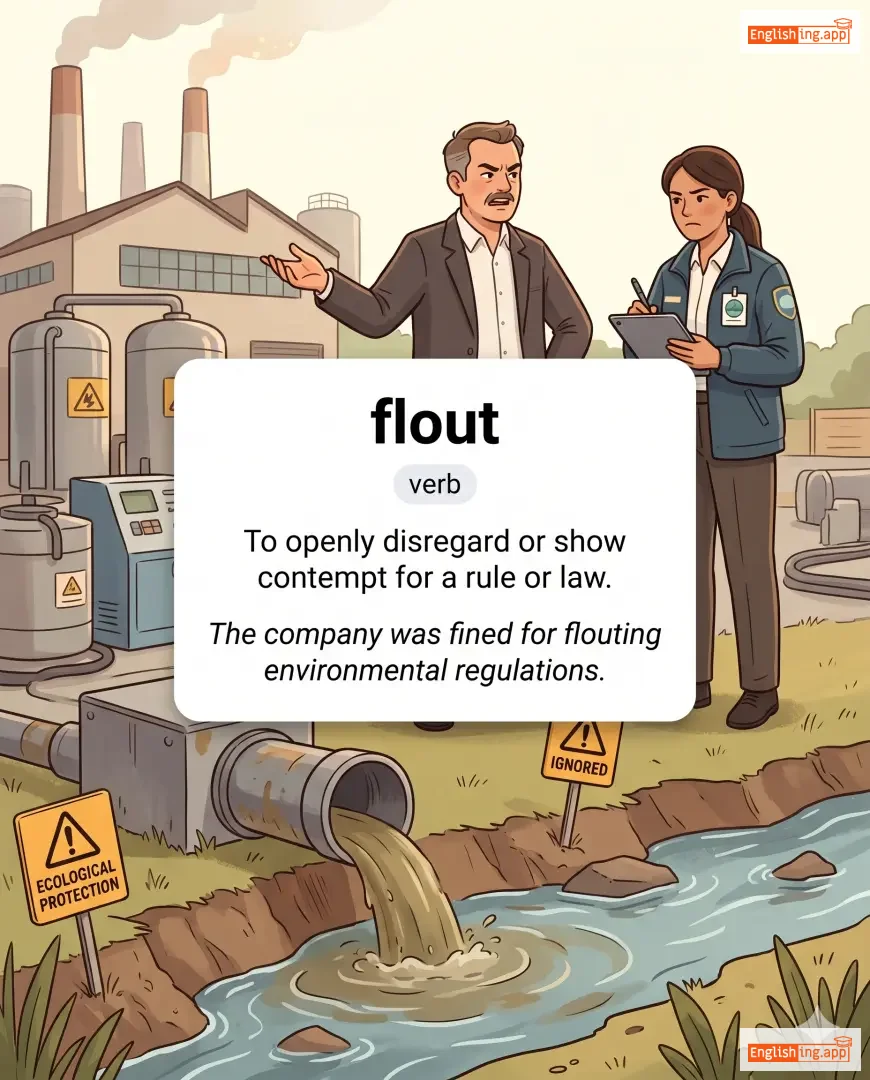
flout definition card — visual illustration of the meaning
verb
/flaʊt/
пренебрегать (prenebregat)

To openly disregard or show contempt for a rule or law.

"The company was fined for flouting environmental regulations."
"Компания была оштрафована за нарушение экологических норм." (Kompaniya byla oshtrafovana za narushenie ekologicheskikh norm.)
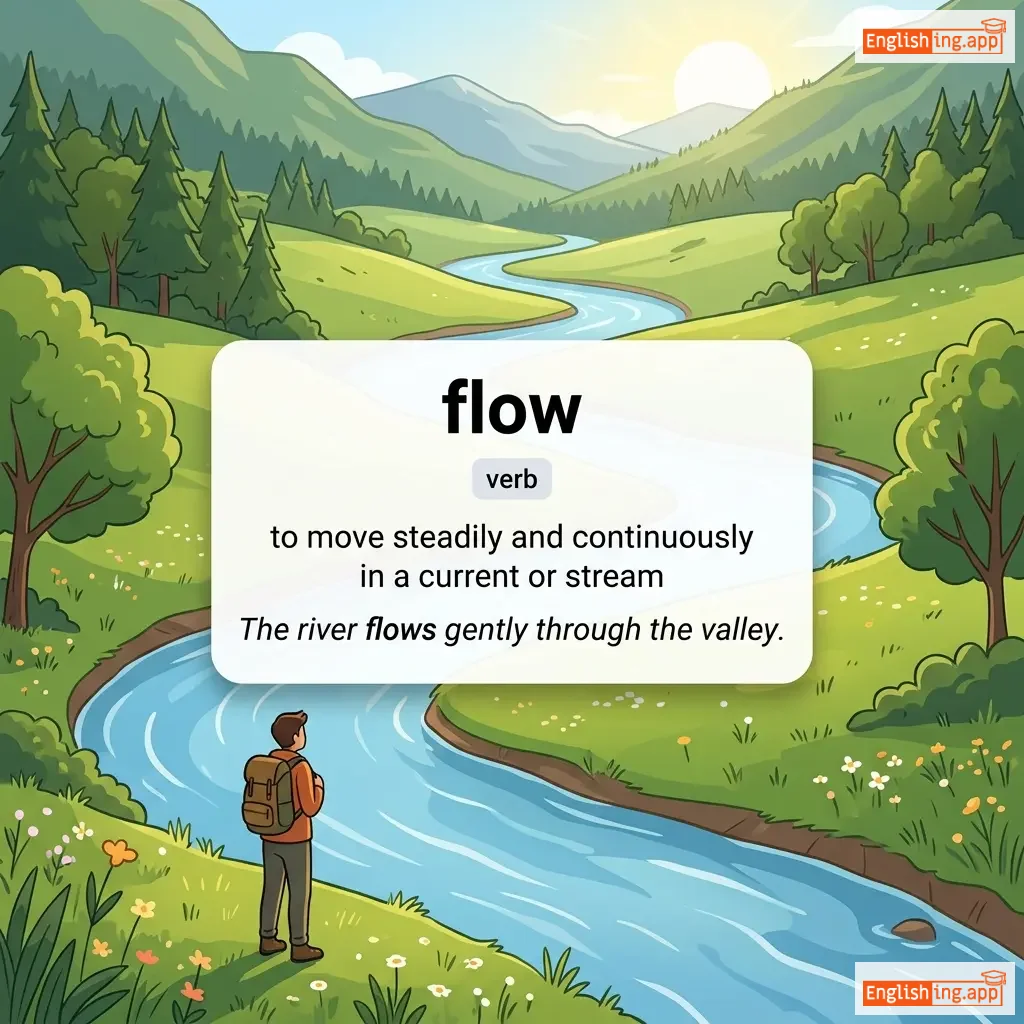
flow definition card — visual illustration of the meaning
verb
/floʊ/
поток (potok)

to move steadily and continuously in a current or stream

"The river flows gently through the valley."

"Река плавно течет через долину." (Reka plavno techyot cherez dolinu.)
noun
/ˈflaʊər/
цветок (tsvetok)

the seed-bearing part of a plant, often colorful and fragrant, that blossoms

"The garden was full of colorful flowers."

"Сад был полон ярких цветов." (Sad byl polon jarkikh tsvetov.)
noun
/ˈflaʊər veɪs/
ваза для цветов (vaza dlya tsvetov)

a decorative container used to hold cut flowers

"She placed beautiful roses in the flower vase on the table."
"Она поставила красивые розы в вазу для цветов на столе." (Ona postavila krasivyye rozy v vazu dlya tsvetov na stole.)
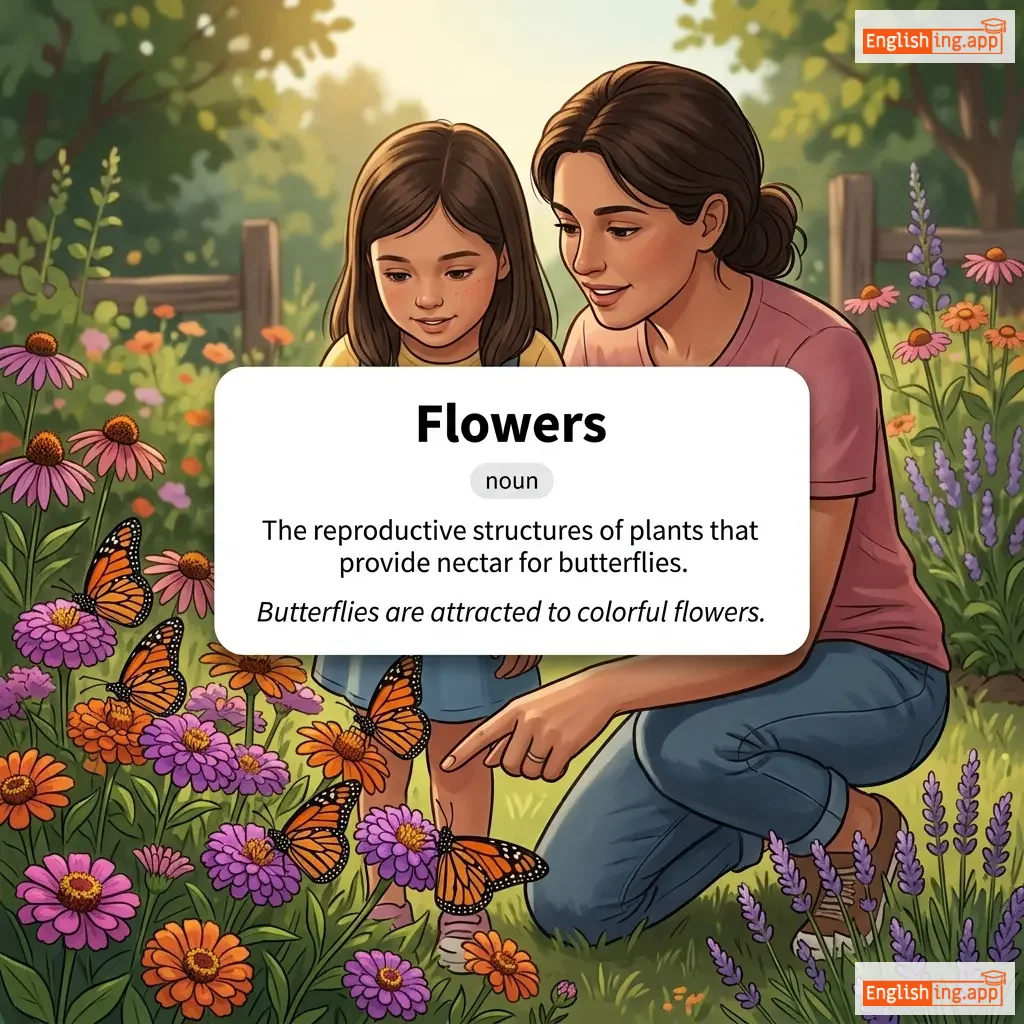
Flowers definition card — visual illustration of the meaning
noun
ˈflaʊərz
цветок (tsvetok)

The reproductive structures of plants that provide nectar for butterflies.

"Butterflies are attracted to colorful flowers."

"Бабочки привлекаются к ярким цветам." (Babochki privlekayutsya k yarkim tsvetam.)
adjective
/ˈflaʊəri/
цветочный / украшенный (tsvetochny / ukrashennyy)

Full of flowers or overly elaborate in style or language.

"She wrote a flowery letter filled with poetic phrases."

"Она написала цветочное письмо, наполненное поэтическими фразами." (Ona napisalа tsvetochnoye pismo, napolnennoye poeticheskimi frazami.)
noun
/fluː/
грипп (gripp)

a contagious viral illness causing fever, aches, and respiratory symptoms; influenza

"She stayed home because she had the flu."
"Она осталась дома, потому что у неё был грипп." (Ona ostalas doma potomu chto u neyo byl gripp)
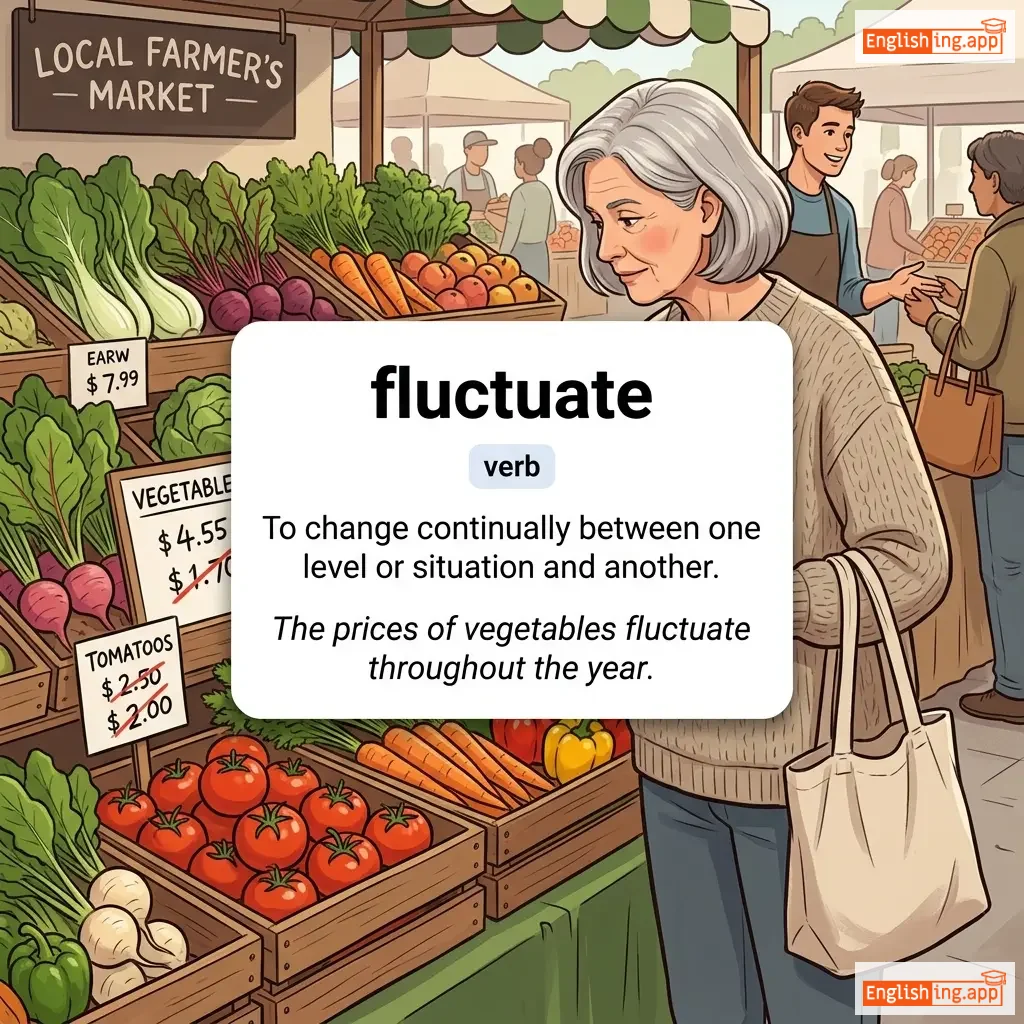
fluctuate definition card — visual illustration of the meaning
verb
/ˈflʌktʃueɪt/
флуктуировать (fluktuirovat)

To change continually between one level or situation and another.

"The prices of vegetables fluctuate throughout the year."

"Цены на овощи флуктуируют на протяжении всего года." (Tseny na ovoshchi fluktuiruyut na protyazhenii vsego goda.)
fluctuation definition card — visual illustration of the meaning
noun
/ˌflʌktʃuˈeɪʃən/
колебание (kolebanie)

A continual change or variation; an irregular rising and falling.

"The fluctuation in stock prices worried the investors."

"Колебания цен на акции обеспокоили инвесторов." (Kolebaniya tsen na aktsii obespokoyili investorov.)
noun
/fluː/
дымоход (dymokhod)

A pipe or channel for smoke and waste gases produced by a fire, gas heater, or power station.

"The chimney flue needs to be cleaned regularly."

"Дымоход дымохода должен регулярно чиститься." (Dymokhod dymokhoda dolzhen regel'no chistitsya.)
fluency definition card — visual illustration of the meaning
noun
/ˈfluːənsi/
беглость (beglost)

The ability to speak, write, or perform smoothly and easily.

"Her fluency in English impressed the interviewers."

"Ее беглость в английском впечатлила интервьюеров." (Eye ye beglost v angliyskom vpechatlila interviewerov.)
adjective
/ˈfluːənt/
беглый (beglyy)

Able to speak, write, or express oneself smoothly and easily.

"She is fluent in both English and Spanish."

"Она бегло говорит на английском и испанском." (Ona beglo govorit na angliyskom i ispanskom.)
adjective
/fluːˈɛnʃəl/
влиятельный (vliyatel'nyy)

Having the power to influence or flowing freely (rare/archaic usage).

"The fluential speaker captivated the entire audience."

"Влиятельный оратор заворожил всю аудиторию." (Vliyatel'nyy orator zavorozhil vsyu auditoriyu.)
adverb
/ˈflu:əntli/
бегло; свободно (beglo; svobodno)

in a smooth, effortless, and articulate manner; with ease and skill

"She speaks French fluently."

"Она говорит по-французски бегло." (Ona govorit po-frantsuzski beglo.)
adjective
/ˈflʌfi/
счастье (schast'ye)

soft, light, and airy in texture

"She baked a fluffy cake for the party."

"Она не могла скрыть своего счастья, когда получила награду." (Ona ne mogla skryt' svoego schast'ya, kogda poluchila nagradu.)
noun/adjective
/ˈfluːɪd/
жидкость (zhidkost)

a substance that can flow easily, such as liquid or gas; smooth and adaptable

"The artist's fluid movements impressed the audience."
"Плавные движения художника впечатлили зрителей." (Plavnye dvizhanya khudozhnika vpechatlili zriteley.)
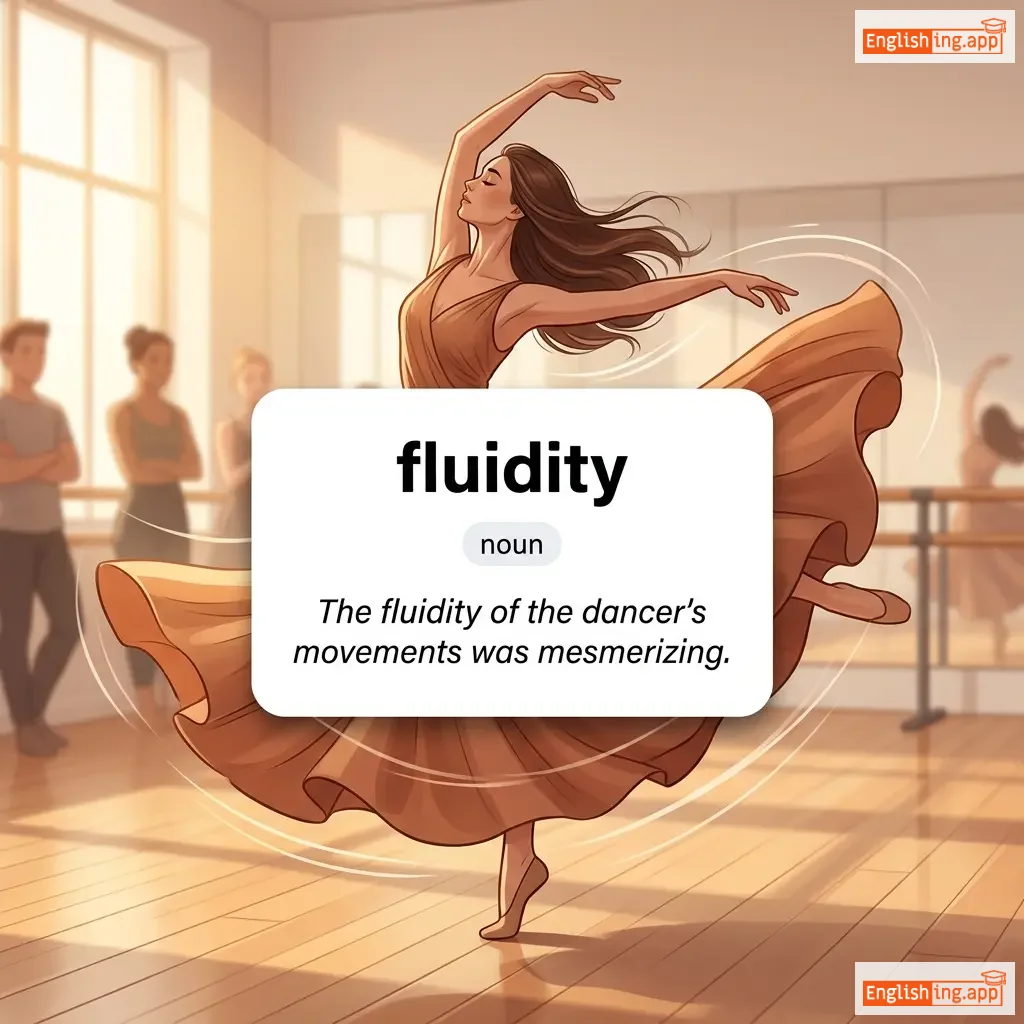
fluidity definition card — visual illustration of the meaning
noun
fluˈɪd.ɪ.ti
текучесть (tekuchest)

The ability of a substance to flow easily; smooth and graceful movement or style.

"The fluidity of the dancer's movements was mesmerizing."

"Текучесть движений танцовщицы была завораживающей." (Tekuchest dvizhenshiy tantsovshchitsy byla zavorazhivayushchey.)
noun
/fluːk/
везение (vezeniye)

A stroke of luck; an unexpected piece of good fortune.

"Winning the lottery was a complete fluke."

"Выигрыш в лотерее был полным везением." (Vyyigrish v loteree byl polnym vezeeniyem.)
verb
/ˈflʌməks/
смешать (smeshchat)

To confuse or bewilder someone completely.

"The complicated puzzle flummoxed the students."

"Сложная головоломка сбила студентов с толку." (Slojnaia golovolomka sbila studentov s tolku.)
adjective
/ˈflʌməksd/
растерянный (rasteryannyy)

Completely confused or bewildered.

"He looked flummoxed after hearing the strange question."

"Он выглядел растерянным после того, как услышал странный вопрос." (On vygladel rasteryannym posle togo, kak uslyshal strannyy vopros.)
verb, noun, adjective
/flʌʃ/
краснеть / смывать водой (krasnet' / smyvat' vodoy)

to become red in the face, usually from embarrassment, heat, or excitement; to clean something with a flow of water

"She flushed with embarrassment when she realized her mistake."

"Она покраснела от стыда, когда поняла свою ошибку." (Ona pokrasnela ot stydy, kogda ponyala svoyu oshibku.)
verb, noun
/ˈflʌstər/
смущать (smushchat)

to make someone agitated or confused

"The unexpected question flustered him."

"Неожиданный вопрос смутил его." (Neozhidannyy vopros smutil ego.)
adjective
/ˈflʌstərd/
растерянный (rasteryannyi)

in a state of confusion or agitation

"She appeared flustered after being asked so many questions."

"Она казалась смущенной после того, как ей задали так много вопросов." (Ona kazalas' smushchennoy posle togo, kak yey zadali tak mnogo voprosov.)
noun
/fluːt/
флейта (fleyta)

a musical instrument played by blowing across a hole at one end

"He played a beautiful tune on the flute."

"Он сыграл красивую мелодию на флейте." (On sygral krasivuyu melodiyu na fleyte.)
adjective
/ˈfluːtɪd/
с канавками (s kanavkami)

having grooves or ridges, often for decoration

"The vase had a beautiful fluted design around the rim."

"У вазы был красивый канавчатый узор вокруг края." (U vazy byl krasivyy kanavchatyy uzor vokrug kraya.)
verb
/ˈflʌtər/
трепетать / дрожать (trepetat / drozhat)

to move or flap quickly and lightly; to beat or wave with small rapid motions

"The butterfly began to flutter its wings in the sunlight."

"Бабочка начала трепетать своими крыльями на солнце." (Babochka nachala trepetat' svoimi kryl'yami na solntse.)
adjective
/ˈfluːviəl/
привязанный к реке (privyazannyy k reke)

relating to or found in a river

"The fluvial deposits indicated the presence of an ancient river system."

"Флювиальные отложения свидетельствовали о наличии древней речной системы." (Flyuvial'nye otlozheniya svidetel'stvovali o nalichii drevney rechnoy sistemy.)
flux definition card — visual illustration of the meaning
noun
/flʌks/
поток (potok)

continuous change or movement; the rate of flow of something

"The company was in a state of constant flux during the reorganization."
"Компания находилась в состоянии постоянного потока во время реорганизации." (Kompaniya nakhodilas' v sostoyanii postoyannogo potoka vo vremya reorganizatsii.)
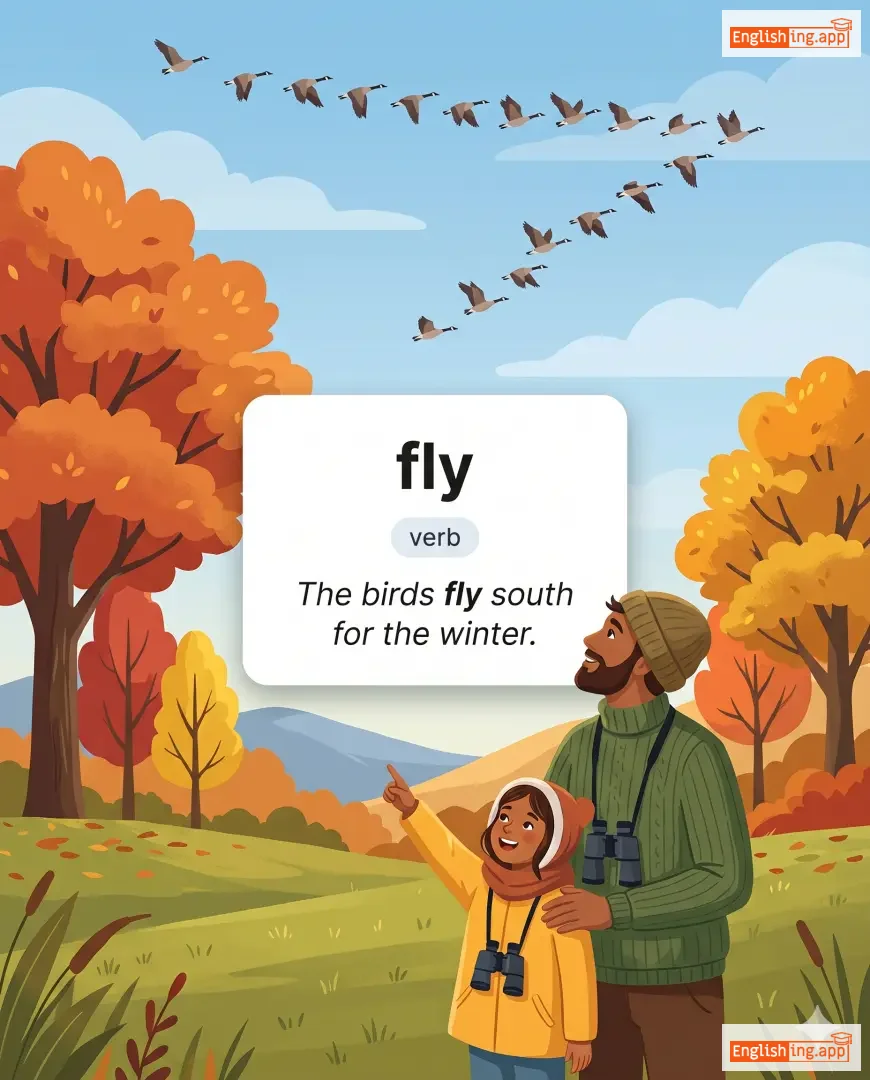
fly definition card — visual illustration of the meaning
🕊️

fly (flai)

verb
/flaɪ/
летать (letat)

to move through the air using wings or by being carried by the wind or an aircraft

"The birds fly south for the winter."

"Птицы летают на юг на зиму." (Ptitsy letayut na yug na zimu.)
adjective
/ˈflaɪɪŋ/
летающий (letayushchiy)

able to move through the air; related to flight or aircraft

"The flying bird disappeared into the clouds."

"Летящая птица исчезла в облаках." (Letyashchaya ptitsa ischezla v oblakakh.)
flying cars definition card — visual illustration of the meaning
noun
ˈflaɪ.ɪŋ kɑːrz
летающие автомобили (letayushchie avtomobili)

Vehicles that can travel both on roads and in the air.

"Flying cars could soon solve urban traffic congestion."

"Летающие автомобили скоро могут решить проблему городских пробок." (Letayushchie avtomobili skoro mogut reshit' problemu gorodskikh probok.)
noun
/ˈflaɪ.ɪŋ ˈkriː.tʃər/
летающее существо (letayushchee sushchestvo)

any animal that has the ability to fly through the air

"Birds, bats, and insects are all examples of flying creatures."

"Птицы, летучие мыши и насекомые — это примеры летающих существ." (Ptitsy, letuchie myshi i nasekomye — eto primery letayushchikh sushchestv.)
noun
/foʊl fʊt/
цветок лошадиных копыт (tsvetok loshadinykh kopyt)

a yellow flowering plant with leaves shaped like a horse's hoof, also known as coltsfoot

"The foal-foot plant grows wild in many meadows and is often the first flower to bloom in spring."

"Цветок лошадиных копыт растет дико на многих лугах и часто является первым цветком, который цветет весной." (Tsvetok loshadinykh kopyt rastyot diko na mnogikh lugakh i chasto yavyayetsya pervym tsvetkom, kotoryy tsvetet vesnoy.)
noun
/foʊm/
пена (pena)

a mass of small bubbles formed on or in liquid; frothy white mass

"The waves crashed against the rocks, creating white foam on the shore."

"Волны разбивались о скалы, создавая белую пену на берегу." (Volny razbivalis' o skaly, sozdavaya beluyu penu na beregu.)
focus definition card — visual illustration of the meaning
verb
/ˈfoʊ.kəs/
сосредотачиваться (sosredotochivatsya)

to direct attention or effort on something specific

"She needs to focus on her studies."

"Ей нужно сосредоточиться на учебе." (Yey nuzhno sosredotochitsya na uchebe.)
focus tracking definition card — visual illustration of the meaning
noun
/ˈfoʊ.kəs ˈtræk.ɪŋ/
отслеживание фокуса (otslezhivanie fokusa)

A technique of monitoring and maintaining attention on specific tasks or goals.

"Proper focus tracking improves productivity."

"Правильное отслеживание фокуса повышает продуктивность." (Pravil'noe otslezhivanie fokusa povyshaet produktivnost'.)
focused definition card — visual illustration of the meaning
adjective
/ˈfəʊkəst/
сосредоточенный (sosredotochenny)

Directing a great deal of attention or effort toward a particular activity, situation, or person.

"Staying focused during work hours enhances productivity."

"Оставаться сосредоточенным во время работы повышает продуктивность." (Ostavat'sya sosredotochennym vo vremya raboty povyshayet produktyvnost'.)
noun
/ˈfɒdər/
корм (korm)

food for livestock such as cattle, horses, or sheep; also something considered of little value but used to supply a demand

"The farmer stored enough fodder for the cattle to last through winter."

"Фермер хранил достаточно корма, чтобы скот выжил зимой." (Fermyer khranil dostatochno korma, chtoby skot vyzhil zimoy.)
⚔️

foe (fo)

noun
/foʊ/
враг (vrag)

an enemy or opponent

"The knight fought bravely against his foe."

"Рыцарь сражался смело против своего врага." (Rytsar' srazhalsya smelo protiv svoego vraga.)
adjective
/ˈfiːtɪd/
вонючий (vonyuchiy)

having an offensive, unpleasant smell

"The foetid smell from the garbage made it hard to breathe."

"Вонючий запах от мусора затруднял дыхание." (Vonyuchiy zapakh ot musora zatrudnyal dykhaniye.)
noun
/fɒɡ/
туман (tuman)

a thick cloud of tiny water droplets suspended in the air near the ground that reduces visibility

"The airplane was delayed due to heavy fog."

"Самолет задержался из-за сильного тумана." (Samolyot zaderzhalsya iz-za sil'nogo tumana.)
adjective
/ˈfɒɡi/
туманный (tumanny)

Full of or covered with fog; unclear or hazy.

"The mountain road was dangerous on the foggy morning."

"Горная дорога была опасной в этот туманный утро." (Gornaya doroga byla opasnoy v etot tumannyy utro.)
noun
/ˈfɔɪbəl/
небольшая слабость (nebol'shaya slabost')

A minor weakness or eccentricity in someone's character.

"She loved him despite his little foibles."

"Она любила его несмотря на его маленькие слабости." (Ona lyubila ego nesmotrya na ego malen'kie slabosti.)
verb
/fɔɪl/
срывать (sryvat)

To prevent something (especially a plan) from succeeding.

"The police foiled the robbery attempt."

"Полиция сорвала попытку ограбления." (Policiya sorvala popytku ogrableniya.)
verb
/fɔɪst/
навязать (navyazat)

To impose something unwelcome or unnecessary on someone.

"He tried to foist his old books onto his friends."

"Он пытался навязать свои старые книги друзьям." (On pytalsya navyazat svoi starye knigi druz'yam.)
📄

fold

verb
/fəʊld/

to bend something, especially paper or cloth, so that one part covers another

"She folded the letter neatly before placing it in the envelope."