語彙集

英単語辞書 | 単語の意味、定義、例文

adverb
/fɔːrθ/
前へ (mae e)

forward in place, time, or order

"The leader stepped forth to address the crowd."

"リーダーは群衆に向かって前に出ました。" (Rīdā wa gunshū ni mukatte mae ni demashita.)
adjective
/ˌfɔːrθˈkʌmɪŋ/
近づいている (chikadzuiteiru)

about to happen soon; willing to share information

"The company announced its forthcoming product launch."

"会社は近づいている製品の発売を発表しました。" (Kaisha wa chikadzuiteiru seihin no hatsubai o happyou shimashita.)
adjective
/ˈfɔːrθˌraɪt/
率直 (sotchoku)

Direct and honest in speech or behavior; straightforward.

"She was forthright in her criticism of the policy."

"彼女は政策に対する批判で率直だった。" (Kanojo wa seisaku ni taisuru hihan de sotchoku datta.)
forthrightness definition card — visual illustration of the meaning
noun
/ˈfɔːθ.raɪt.nəs/
坦率さ (footoraitonesu)

The quality of being honest and straightforward; directness.

"Her forthrightness made her a respected journalist."

"Her forthrightness made her a respected journalist." (Kanojo no tansotsusa wa kanojo o sonkeisareru jaanarisuto ni shita.)
adverb
/ˌfɔːrθˈwɪθ/
ただちに; 遅れなく; すぐに (tadachi ni; okurenaku; sugu ni)

immediately; without delay; at once

"The manager ordered the employee to stop the unsafe practice forthwith."
"マネージャーは従業員に危険な行為をただちにやめるように命じました。" (Manejā wa jūgyōin ni kiken na kōi o tadachi ni yameru yō ni meijimashita.)
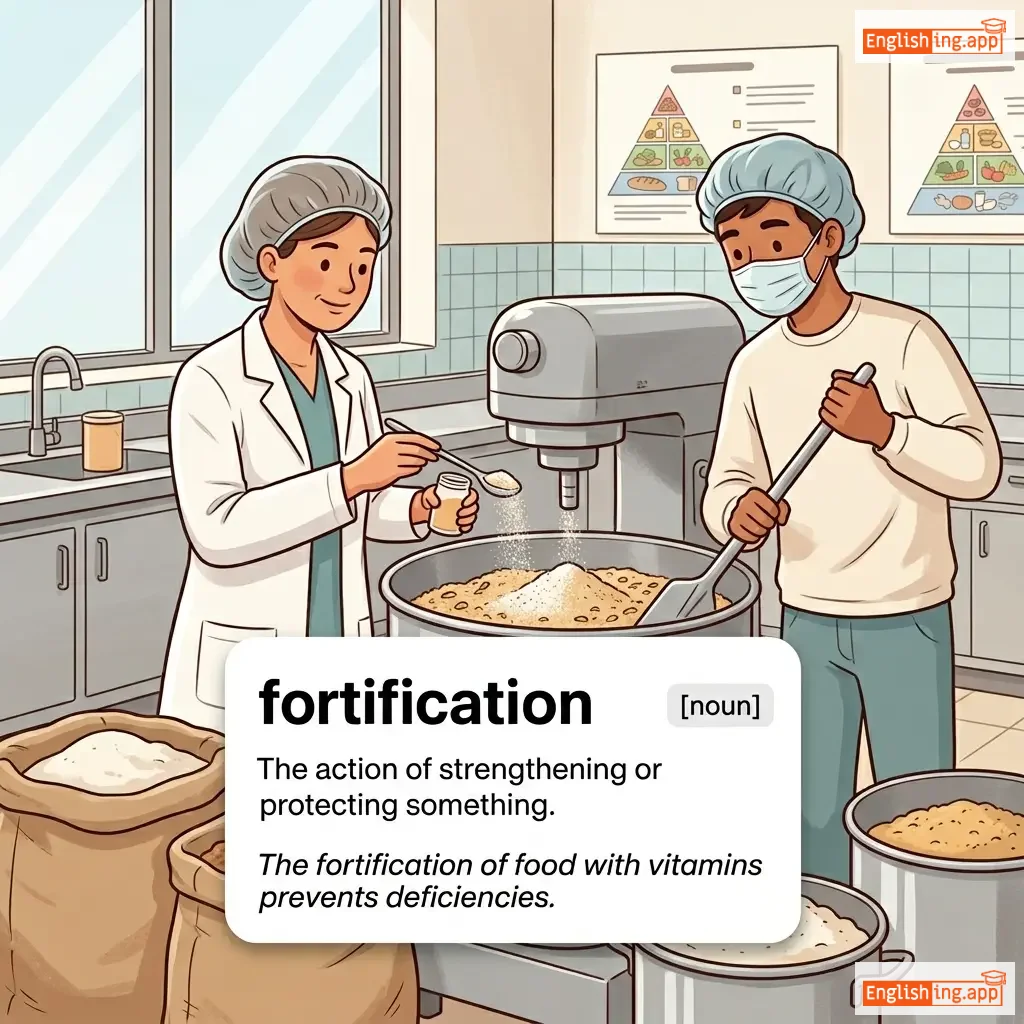
fortification definition card — visual illustration of the meaning
noun
ˌfɔː.tɪ.fɪˈkeɪ.ʃən
強化 (kyouka)

The action of strengthening or protecting something.

"The fortification of food with vitamins prevents deficiencies."

"ビタミンで食べ物を強化することは、欠乏症を防ぎます。" (Bitamin de tabemono o kyouka suru koto wa, ketsuboushou o fubagimasu.)
verb
/ˈfɔːrtɪˌfaɪ/
強化する (kyouka suru)

To strengthen a place, person, or thing physically or mentally.

"They fortified the city walls to protect against invasion."
"彼らは侵略に備えて街の壁を強化しました。" (Karera wa shinryaku ni sonaete machi no kabe o kyouka shimashita.)
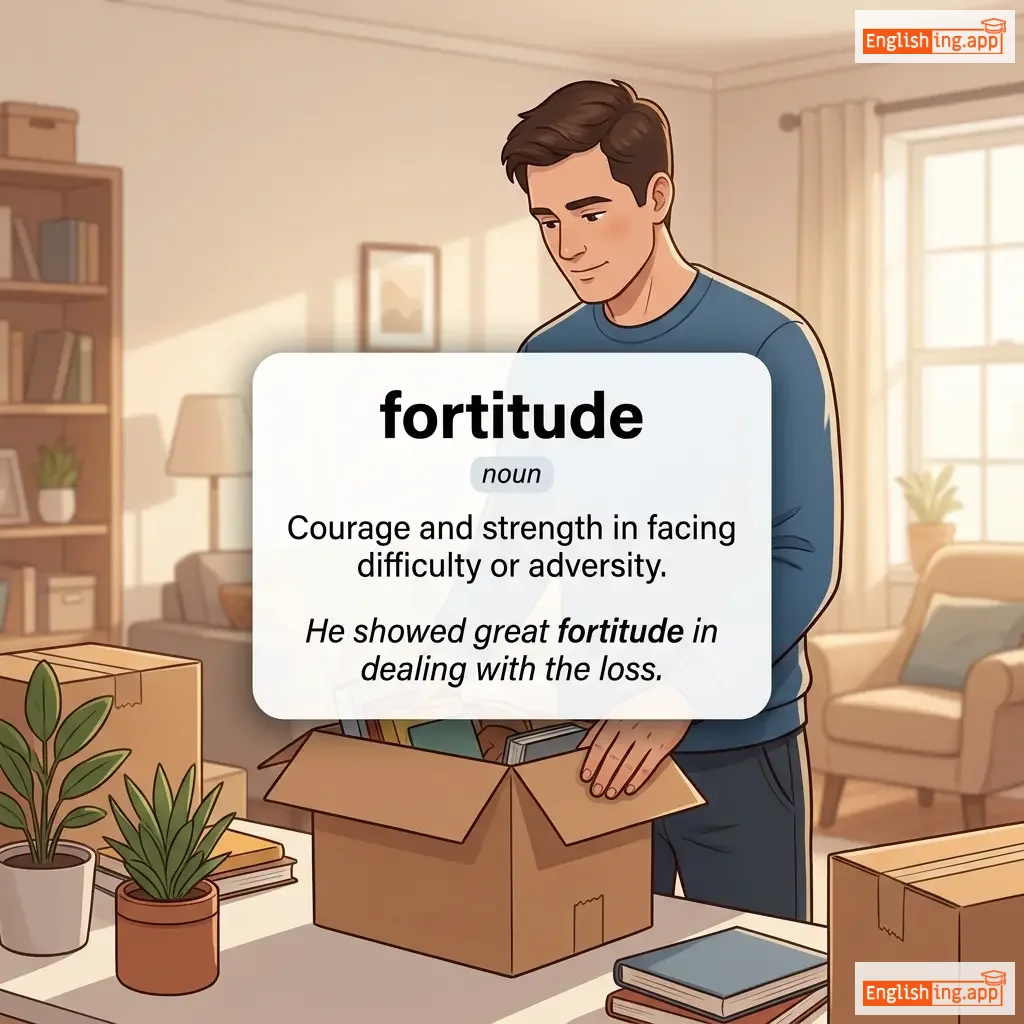
fortitude definition card — visual illustration of the meaning
noun
/ˈfɔːrtɪˌtuːd/
勇気と力 (yūki to chikara)

Courage and strength in facing difficulty or adversity.

"He showed great fortitude in dealing with the loss."
"彼はその損失に立ち向かう中で偉大な勇気と力を示しました。" (Kare wa sono sonshitsu ni tachimukau naka de idaina yūki to chikara o shimeshimashita.)
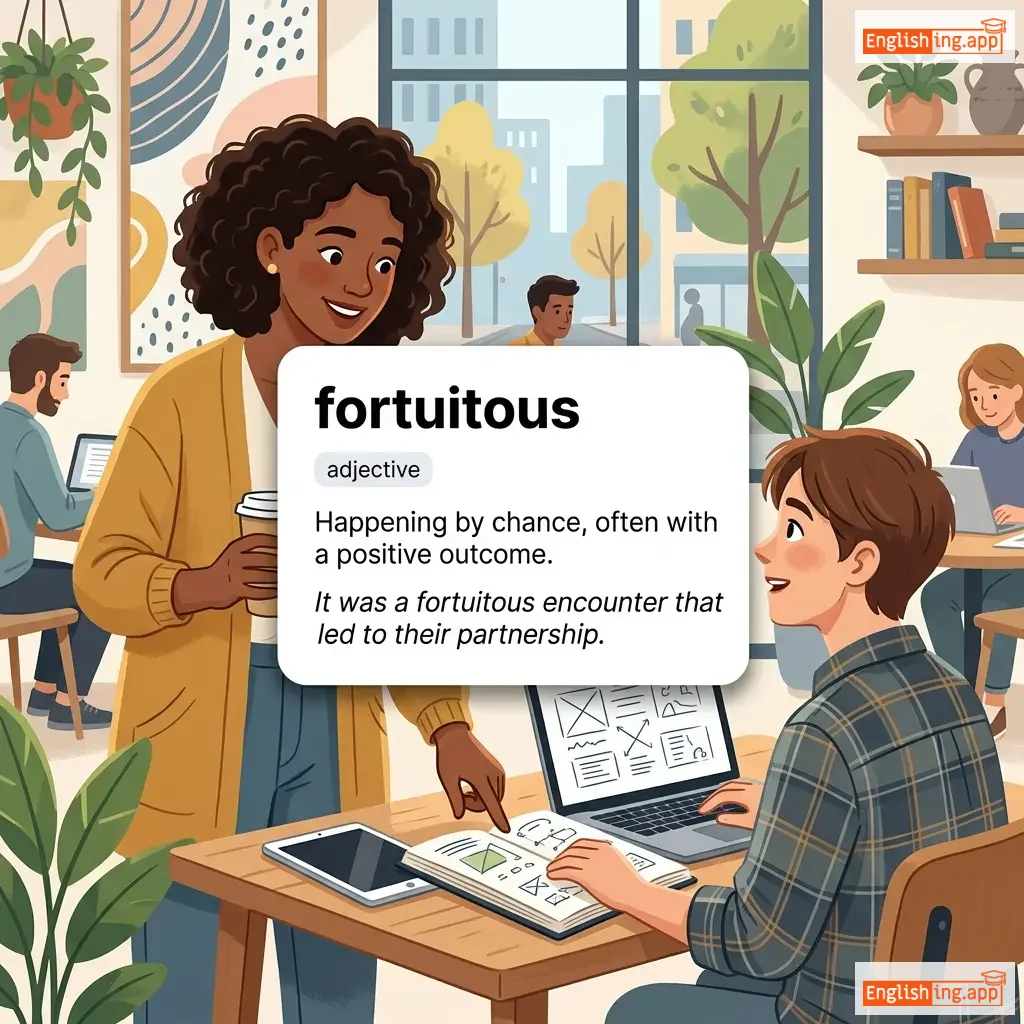
fortuitous definition card — visual illustration of the meaning
adjective
/fɔːrˈtuːɪtəs/
幸運な (kouunna)

Happening by chance, often with a positive outcome.

"It was a fortuitous encounter that led to their partnership."

"それは偶然の出会いで、彼らのパートナーシップへと繋がった。" (Sore wa gūzen no deai de, karera no pātonāshippu e to tsunagatta.)
adjective
/ˈfɔːrtʃənət/
幸運な (kouunna)

Having good luck or receiving something desirable by chance.

"She was fortunate to escape the accident without injuries."

"彼女は事故で怪我をすることなく逃げることができて幸運だった。" (Kanojo wa jiko de kega o suru koto naku nigeru koto ga dekite kōun datta.)
adverb
/ˈfɔːtʃənətli/
幸いにも (saiwai ni mo)

by good luck; luckily

"Fortunately, no one was injured in the accident."

"幸いにも、事故で誰も怪我をしませんでした。" (Saiwai ni mo, jiko de dare mo kega o shimasen deshita.)
Fortune definition card — visual illustration of the meaning
noun
/ˈfɔːrtʃən/
運 / 富 (un / tomi)

chance or luck, especially in success or wealth

"She made a fortune by investing in real estate."

"彼女は不動産に投資して大金を得た。" (Kanojo wa fudousan ni toushi shite taikin o eta.)
number
/ˈfɔːrti/
幸せ (shiawase)

the number 40; ten times four

"She celebrated her forty years of life with a big party."

"彼女は賞を受け取ったとき、幸せを隠せなかった。" (Kanojo wa shō o uketotta toki, shiawase o kakusenakatta.)
noun
/ˈfɔːrəm/
フォーラム (fōramu)

A place, meeting, or medium where ideas and views can be exchanged.

"The online forum allows people to discuss a wide range of topics."
"オンラインフォーラムでは、人々がさまざまなトピックについて議論することができます。" (Onrain fōramu de wa, hitobito ga samazama na topikku ni tsuite giron suru koto ga dekimasu.)
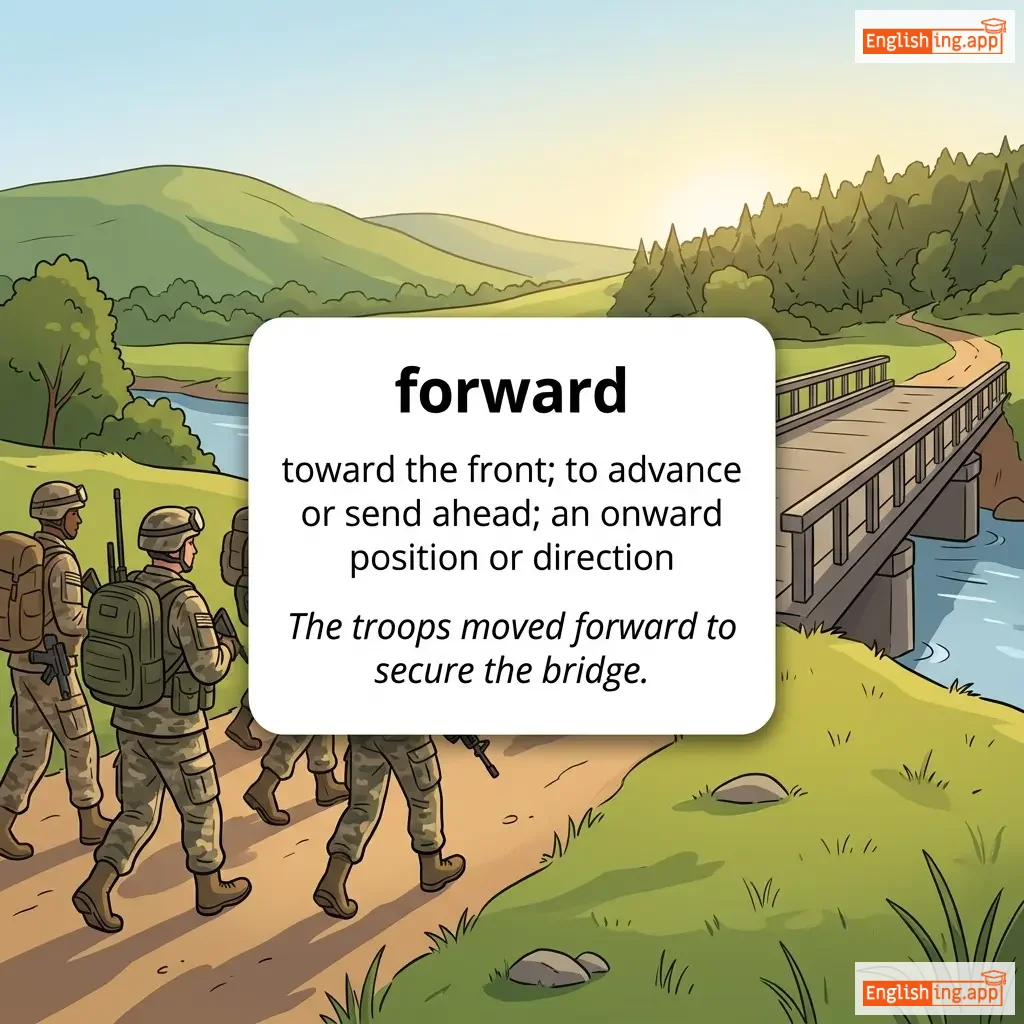
forward definition card — visual illustration of the meaning
adverb, adjective, verb, noun
/ˈfɔːrwərd/
前進 (zenshin)

toward the front; to advance or send ahead; an onward position or direction

"The troops moved forward to secure the bridge."

"部隊は橋を確保するために前進しました。" (Butai wa hashi wo kakuho suru tame ni zenshin shimashita.)
noun
/ˈfɒsɪl/
化石 (kaseki)

the remains or impression of a prehistoric plant or animal embedded in rock

"The fossil of a dinosaur was discovered in the mountains."

"山で恐竜の化石が発見されました。" (Yama de kyōryū no kaseki ga hakken saremashita.)
verb, adjective
/ˈfɒstər/
育てる (sodateru)

to encourage the development of something; to raise a child that is not one's own

"The program aims to foster creativity in young students."

"そのプログラムは若い学生たちに創造力を促進することを目的としています。" (Sono puroguramu wa wakai gakusei tachi ni souzouryoku wo sokushin suru koto wo mokuteki to shiteimasu.)
fostering definition card — visual illustration of the meaning
noun/verb
/ˈfɒs.tər.ɪŋ/
育成 (ikusei)

The process of encouraging or promoting the development or growth of something; nurturing and caring for.

"Good teachers play a key role in fostering creativity in students."

"良い教師は学生の創造性を育む上で重要な役割を果たします。" (Yoi kyoushi wa gakusei no souzousei o hagukumu ue de juuyou na yakuwari o hatashimasu.)
🚫

foul

adjective, noun, verb
/faʊl/

offensive to the senses; dirty or unpleasant; in sports, an unfair or illegal act

"The player was penalized for committing a foul."

verb
/faʊnd/
創設する (sōsetsu suru)

to establish or set up an institution, company, or organization

"They found a new startup focused on renewable energy."
"彼らは再生可能エネルギーに焦点を当てた新しいスタートアップを立ち上げました。" (Karera wa saisei kanō enerugī ni shōten o ateta atarashī sutātoppu o tachiagemashita.)
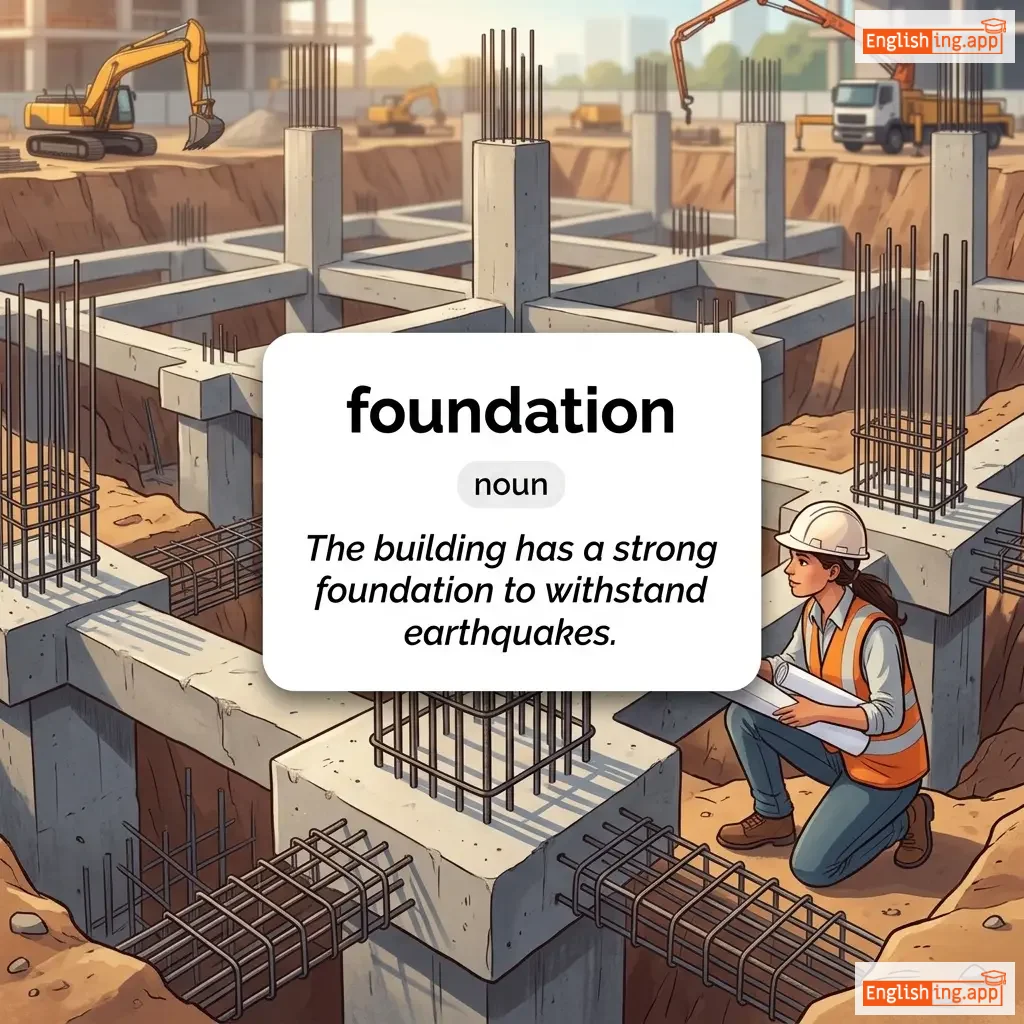
foundation definition card — visual illustration of the meaning
noun
/faʊnˈdeɪʃən/
基礎 (kiso)

the base or underlying support of something; an institution established for a purpose

"The building has a strong foundation to withstand earthquakes."

"その建物には地震に耐えるための強固な基礎があります。" (Sono tatemono ni wa jishin ni taeru tame no kyōko na kiso ga arimasu.)
Founder definition card — visual illustration of the meaning
noun, verb
/ˈfaʊndər/
創設者 (sōsetsusha)

a person who establishes an institution or company; as a verb, to fail or sink

"She is the founder of a successful startup."

"彼女は成功したスタートアップの創設者です。" (Kanojo wa seikō shita sātopu no sōsetsusha desu.)
noun
/ˈfaʊn.tən/
噴水 (pensui)

a natural spring of water; an artificial structure from which water flows

"The fountain in the park attracts many visitors."

"公園の噴水は多くの訪問者を引き寄せます。" (Kōen no pensui wa ōku no hōmonsha o hikiyosemasu.)
numeral
/fɔːr/
(shi)

The number equivalent to the sum of two and two; one more than three.

"She has four books on her desk."

"彼女の机には四冊の本があります。" (Kanojo no tsukue ni wa shisatsu no hon ga arimasu.)
👨‍👩‍👧‍👦

foursome (フォーサム)

noun
/ˈfɔːrsəm/
四人組 (yonin-gumi)

a group of four people or things, especially in games or social activities

"The foursome enjoyed a game of golf together."

"四人組は一緒にゴルフを楽しみました。" (Yonin-gumi wa issho ni gorufu o tanoshimimashita.)
adjective/noun
/fɔːrθ/
第四 (daiyon)

Constituting number four in a sequence; coming after the third in position.

"He finished in fourth place in the race."

"彼はレースで第四位になった。" (Kare wa reesu de dai-yon-i ni natta.)
noun
/faʊl/
家禽 (kakin)

a domesticated bird kept for meat or eggs; chicken or other poultry

"The farmer raised fowl in his backyard for fresh eggs and meat."

"農場主は新鮮な卵と肉のために庭で家禽を育てていました。" (Nōjō-shu wa shinsen na tamago to niku no tame ni niwa de kakin o sodate te imashita.)
noun
/fɒks/
キツネ (kitsune)

a wild animal related to dogs, with a pointed face and thick fur

"The red fox is known for its cunning nature."

"赤いキツネはそのずる賢い性格で知られています。" (Akai kitsune wa sono zuru kashikoi seikaku de shirareteimasu.)
adjective
/ˈfɒksi/
ずるい (zurui)

Clever, cunning, or attractive.

"He came up with a foxy plan to win the game."

"彼はゲームに勝つためにずるい計画を思いついた。" (Kare wa gēmu ni katsu tame ni zurui keikaku o omoitsuita.)
noun
/ˈfɔɪeɪr/
ロビー (robee)

An entrance hall or lobby in a building.

"The guests waited in the hotel foyer before checking in."
"ゲストはチェックインする前にホテルのロビーで待っていました。" (Gesuto wa chekku-in suru mae ni hoteru no robī de matte imashita.)
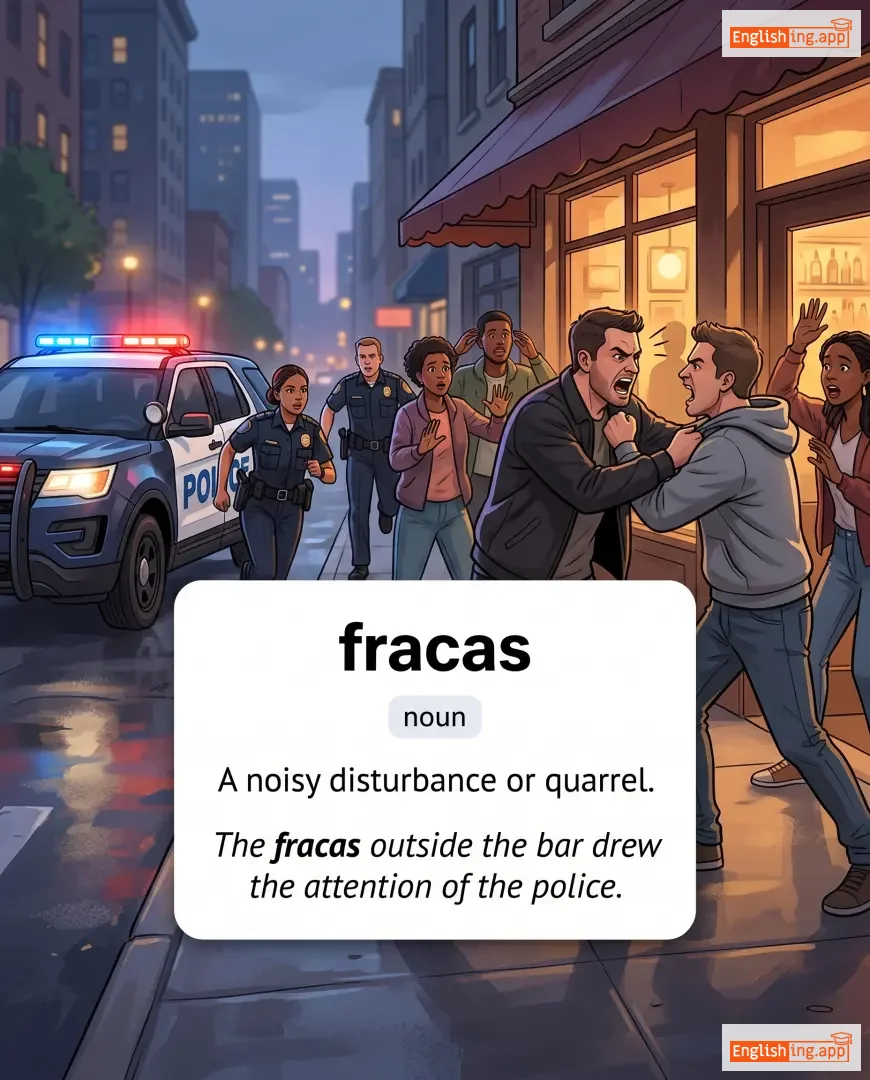
fracas definition card — visual illustration of the meaning
noun
/ˈfrækɑː/
騒動 (soudou)

A noisy disturbance or quarrel.

"The fracas outside the bar drew the attention of the police."

"バーの外での騒動が警察の注意を引きました。" (Bā no soto de no soudou ga keisatsu no chūi o hikimashita.)
noun
/ˈfrækʃən/
分数 (bunsuu)

A small part of something; in mathematics, a number that represents part of a whole.

"Only a small fraction of the population attended the event."
"人口のほんの一部だけがイベントに参加しました。" (Jinkou no honno ichibu dake ga ibento ni sanka shimashita.)
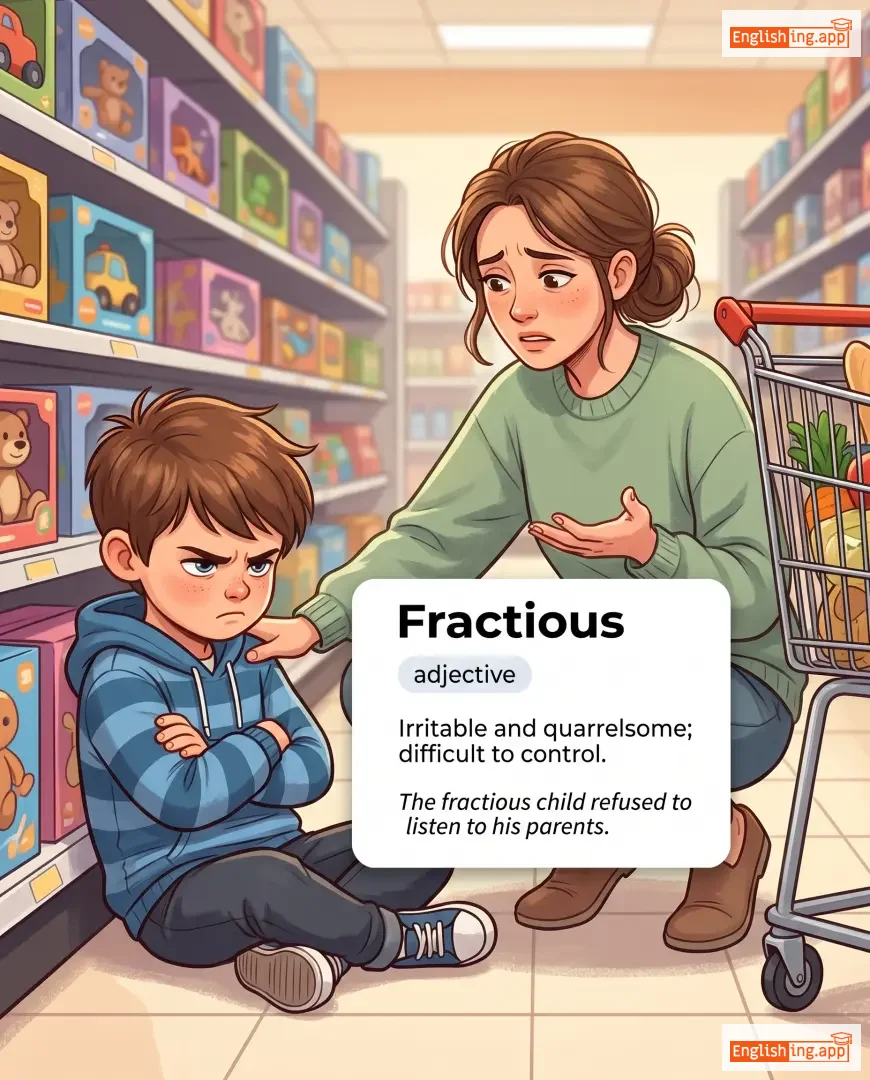
Fractious definition card — visual illustration of the meaning
adjective
/ˈfrækʃəs/
気難しい (kimuzukashii)

Irritable and quarrelsome; difficult to control.

"The fractious child refused to listen to his parents."

"その気難しい子供は両親の話を聞こうとしなかった。" (Sono kimuzukashī kodomo wa ryōshin no hanashi o kikou to shinakatta.)
noun, verb
/ˈfrækʧər/

A break or crack in a hard object or material, typically a bone; to break or crack.

"He suffered a fracture in his leg after the accident."

adjective
/ˈfræʤaɪl/
壊れやすい (kowareyasui)

Easily broken or damaged; delicate.

"Be careful with that vase, it's very fragile."
"その花瓶には気をつけて、すごく壊れやすいから。" (Sono kabin ni wa ki o tsukete, sugoku kowareyasui kara.)
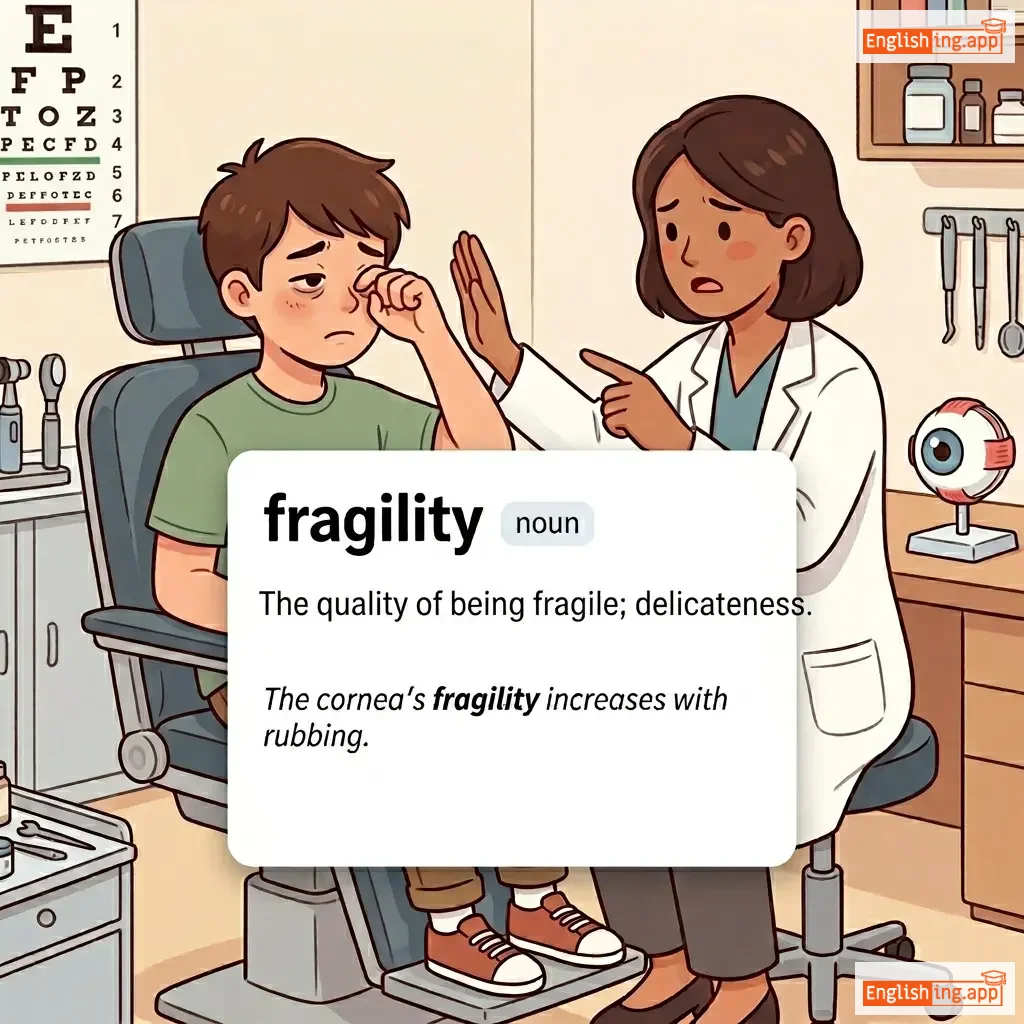
fragility definition card — visual illustration of the meaning
noun
/frəˈdʒɪl.ɪ.ti/
もろさ (morosa)

The quality of being fragile; delicateness.

"The cornea's fragility increases with rubbing."

"角膜のもろさはこすることで増加します。" (kakumaku no morosa wa kosuru koto de zouka shimasu)
noun
/ˈfræɡmənt/
断片 (danpen)

a small piece broken off something larger

"He found a fragment of ancient pottery near the river."
"彼は川の近くで古代の陶器の断片を見つけました。" (Kare wa kawa no chikaku de kodai no tōki no danpen o mitsukemashita.)
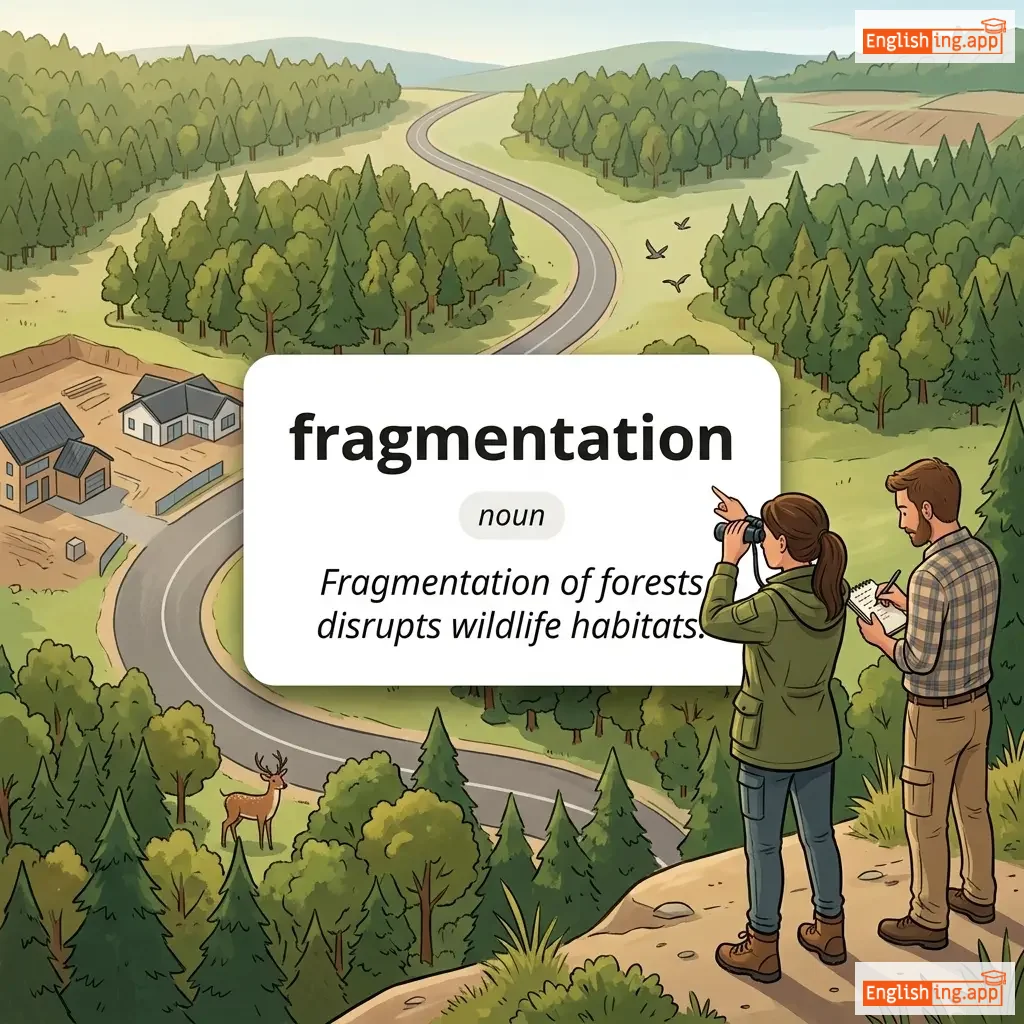
fragmentation definition card — visual illustration of the meaning
noun
ˌfræɡmɛnˈteɪʃən
断片化 (danpenka)

The process or state of breaking or being broken into fragments.

"The fragmentation of the report made it difficult to understand."
"レポートの断片化は理解を困難にした。" (Repōto no danpenka wa rikai o kon'nan ni shita.)
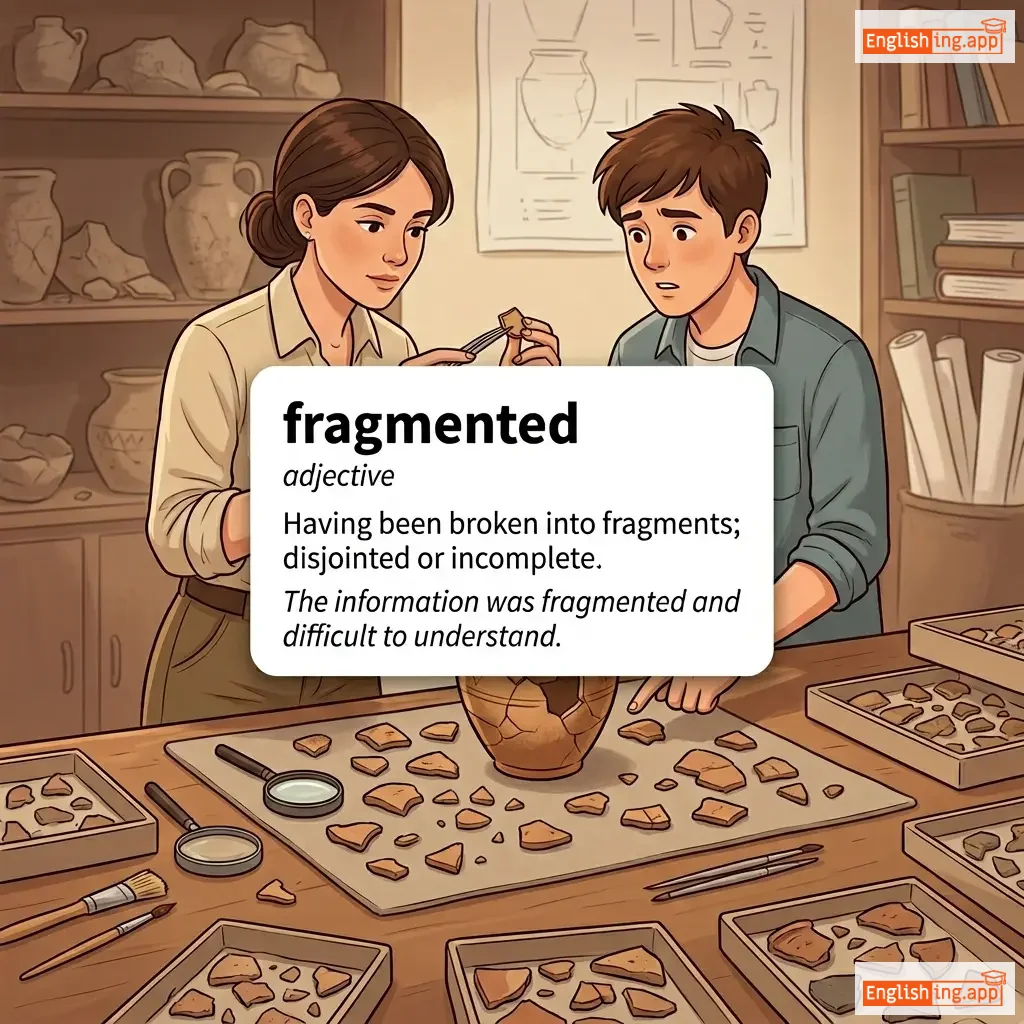
fragmented definition card — visual illustration of the meaning
adjective
/ˈfræɡməntɪd/
断片化, 分割, 不完全 (danpenka, bunkatsu, fukanzen)

Having been broken into fragments; disjointed or incomplete.

"The information was fragmented and difficult to understand."

"情報は断片化されていて、理解するのが難しかった。" (Jouhou wa danpenka sarete ite, rikai suru no ga muzukashikatta.)
noun
/ˈfreɪɡrəns/
香り (kaori)

A pleasant, sweet smell.

"The fragrance of fresh flowers filled the room."

"新鮮な花の香りが部屋に広がった。" (Shinsen na hana no kaori ga heya ni hirogatta.)
adjective
/freɪl/
脆弱 (sojaku)

Physically weak and delicate.

"The old man was too frail to walk without help."

"その高齢者は助けなしでは歩けないほど脆弱だった。" (Sono kōrei-sha wa tasuke nashi de wa arukenai hodo sojaku datta.)
noun
/ˈfreɪlti/
脆弱 (seijaku)

The condition of being weak, delicate, or easily broken.

"Old age often comes with physical frailty."
"老化はしばしば身体的な脆弱さと共に訪れます。" (Rōka wa shibashiba shintai-tekina seijaku to tomo ni otozuremasu.)
Frame definition card — visual illustration of the meaning
🖼️

Frame

noun/verb
/freɪm/

A rigid structure that surrounds or encloses something; to construct or formulate.

"They hung the painting in a golden frame."

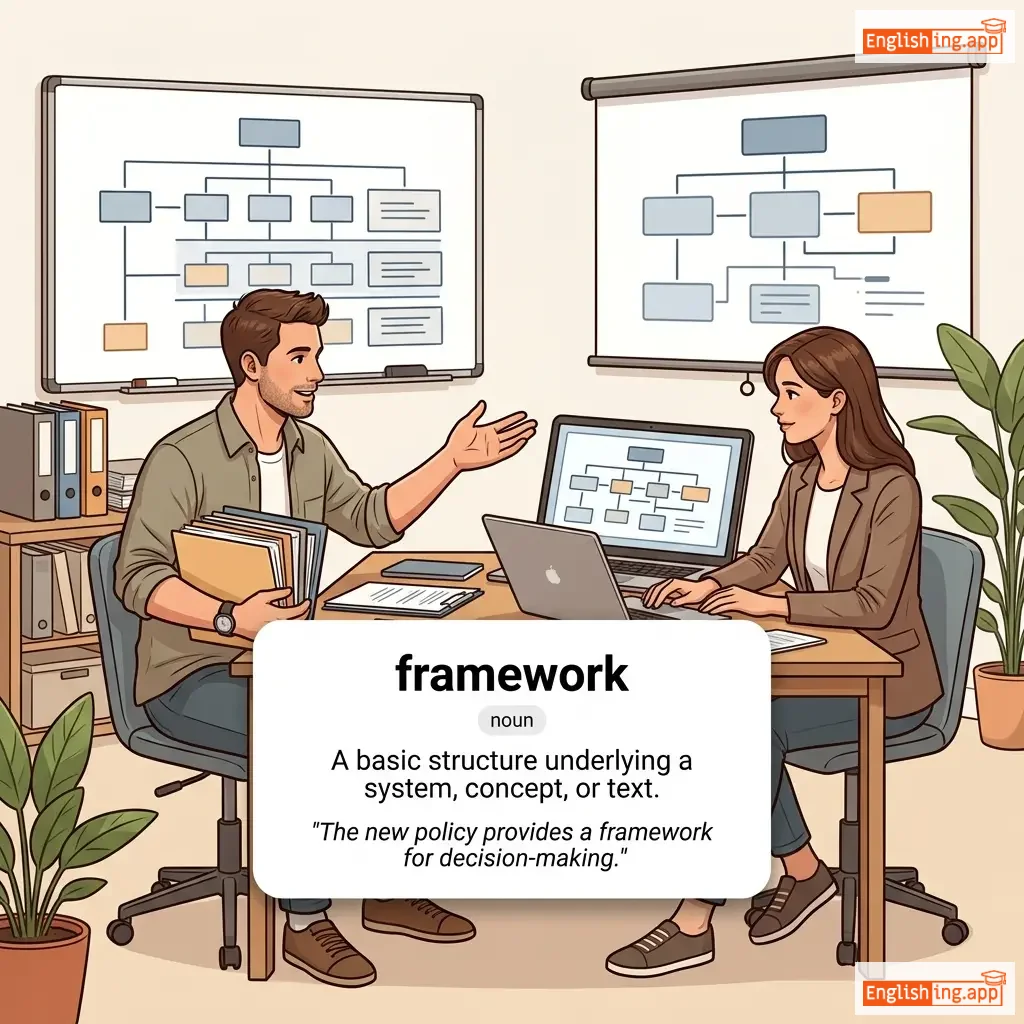
framework definition card — visual illustration of the meaning
noun
/ˈfreɪmˌwɜːrk/
枠組み (wakugumi)

A basic structure underlying a system, concept, or text.

"The new policy provides a framework for decision-making."
"新しいポリシーは意思決定のための枠組みを提供します。" (Atarashī porishī wa ishikettei no tame no wakugumi o teikyō shimasu.)
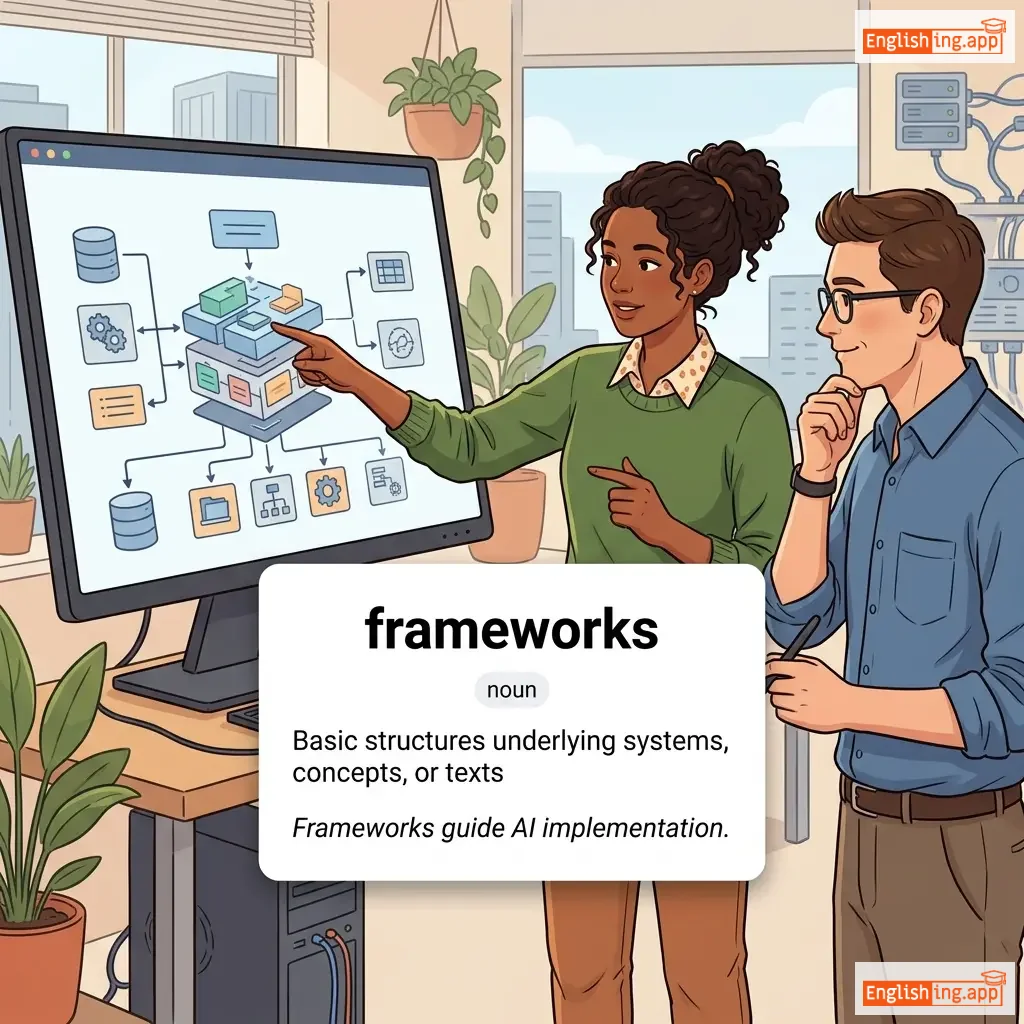
frameworks definition card — visual illustration of the meaning
noun
ˈfreɪm.wɜːks
フレームワーク (fureimuwāku)

Basic structures underlying systems, concepts, or texts

"Frameworks guide AI implementation."

"フレームワークはAIの実装を指導します。" (Fureimuwāku wa AI no jissō o shidō shimasu.)
noun, verb
/ˈfrænʧaɪz/
フランチャイズ (furanchaizu)

A legal right to sell or distribute goods or services in a specific area; to grant such a right.

"He opened a new fast-food franchise in the city."

"彼は都市で新しいファーストフードのフランチャイズを開設しました。" (Kare wa toshi de atarashī fāsuto fūdo no furanchaizu o kaisetsu shimashita.)
adjective
/fræŋk/
率直 (sotchoku)

open, honest, and direct in speech or expression

"She was frank about her feelings on the matter."

"彼女はその問題について自分の感情を率直に話した。" (Kanojo wa sono mondai ni tsuite jibun no kanjou wo socchoku ni hanashita.)
noun
/ˈfræŋkɪnsɛns/
お香 (okou)

An aromatic gum resin used in incense and perfumes, often in religious ceremonies.

"The temple was filled with the sweet smell of burning frankincense."

"寺院は燃えるお香の甘い香りで満ちていました。" (Jiin wa moeru okou no amai kaori de michite imashita.)
adverb
/ˈfræŋkli/
率直に (sokushiki ni)

in an honest and direct way

"Frankly, I don’t think this plan will work."

"率直に言って、この計画はうまくいかないと思います。" (Sokushiki ni itte, kono keikaku wa umaku ikanai to omoimasu.)
adjective
/ˈfræntɪk/
必死の (hisshi no)

Extremely anxious, hurried, or out of control due to fear or excitement.

"She made a frantic call to her family after the accident."

"事故後、彼女は家族に必死の電話をかけた。" (Jiko go, kanojo wa kazoku ni hisshi no denwa o kaketa.)