Словари

Словарь английского языка | Значения слов, определения и примеры

noun
/ˈɛpɪθɛt/
эпитет (epitet)

A descriptive phrase or word used to characterize someone or something, often as a nickname.

"He earned the epithet ‘The Great’ for his remarkable achievements."
"Он заслужил эпитет ‘Великий’ за свои замечательные достижения." (On zasluzhil epitiet ‘Velikiy’ za svoi zamechatelnye dostizheniya.)
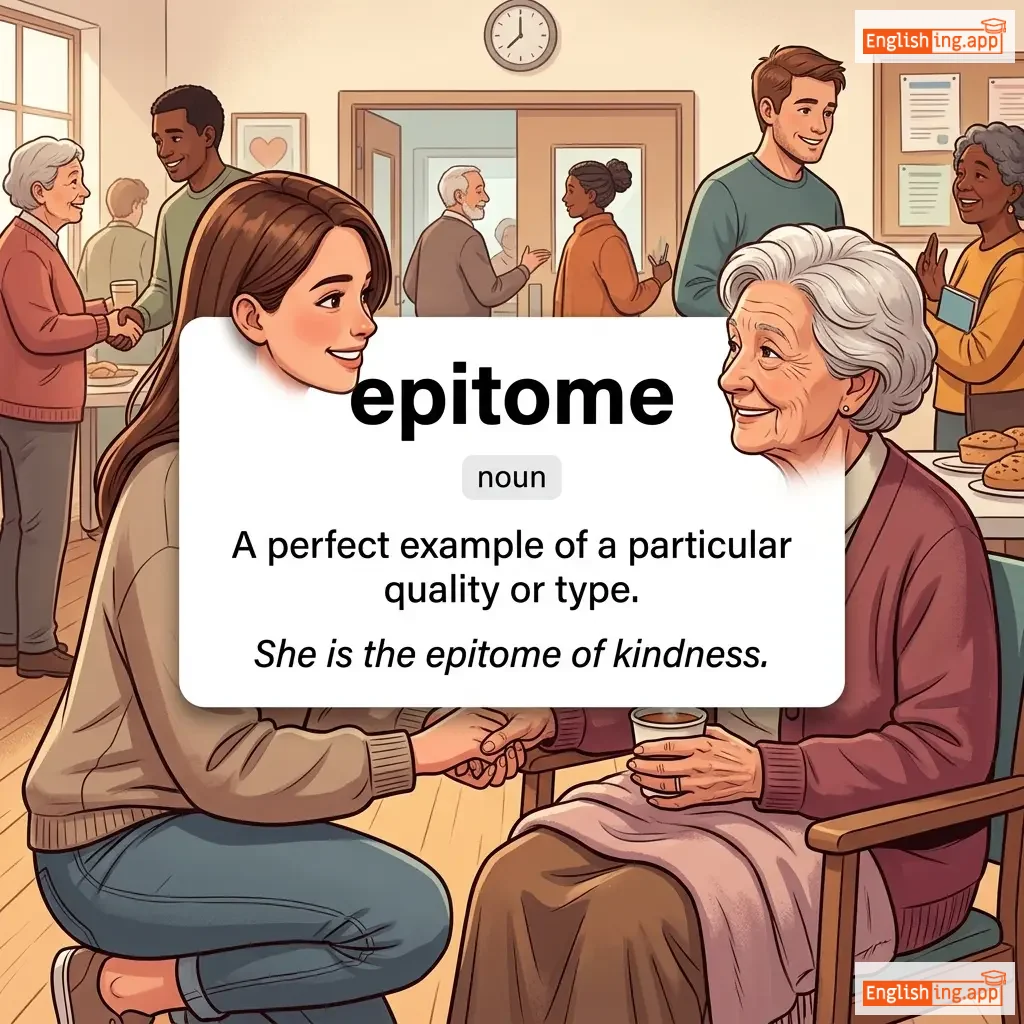
epitome definition card — visual illustration of the meaning
noun
/ɪˈpɪtəmi/
воплощение (voploshchenie)

A perfect example of a particular quality or type.

"She is the epitome of kindness."

"Она воплощение доброты." (Ona voploshchenie dobroty.)
noun
/ˌɛpɪzəʊˈɒtɪk/
эпизоотия (epizootiya)

An outbreak of disease affecting many animals of one kind at the same time.

"The farmer feared an epizootic might wipe out his cattle."
"Фермер боялся, что эпизоотия может уничтожить его скот." (Fermyer boyalsya, chto epizootiya mozhet unichtozhit' ego skot.)
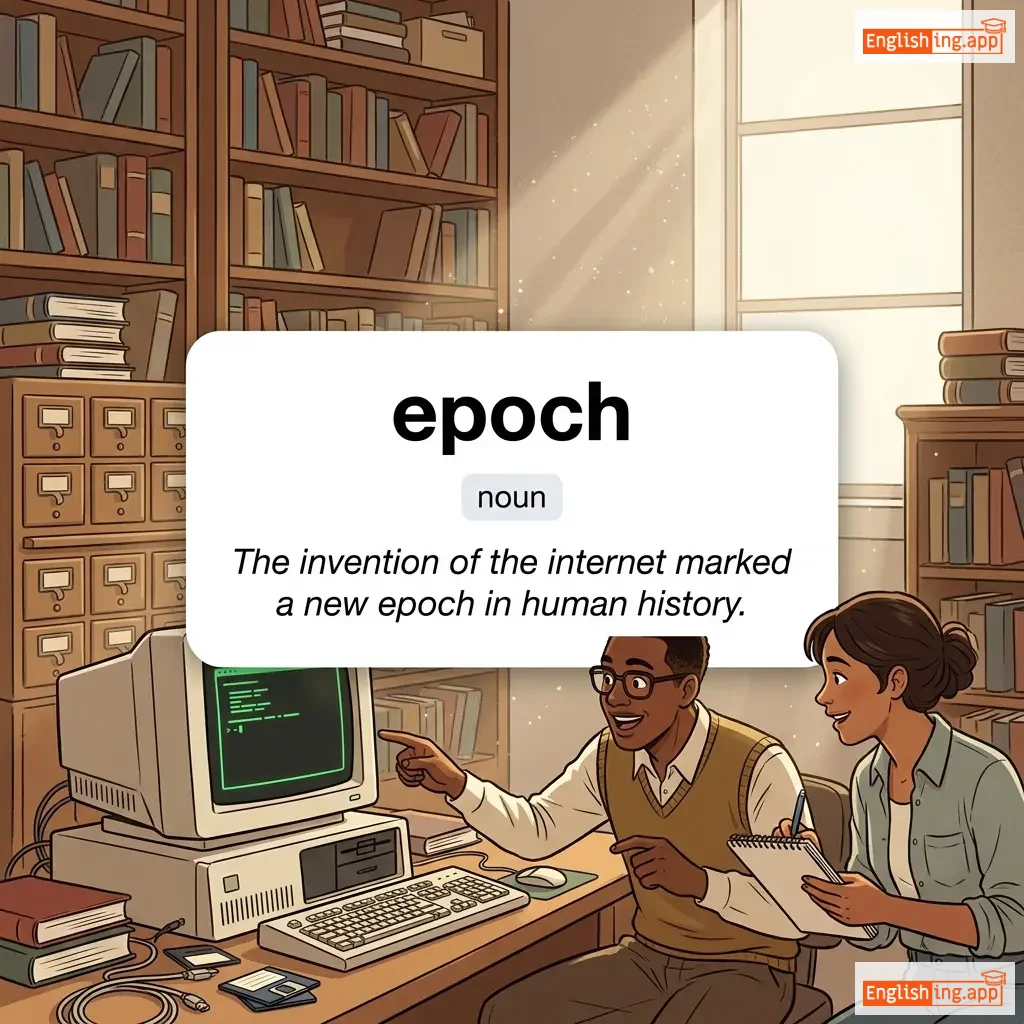
epoch definition card — visual illustration of the meaning
noun
/ˈiːpɒk/
эпоха (epokha)

A period of time in history or a person's life, typically one marked by notable events or characteristics.

"The invention of the internet marked a new epoch in human history."

"Изобретение интернета ознаменовало новую эпоху в истории человечества." (Izobretenie interneta oznamenovalo novuyu epokhu v istorii chelovechestva.)
noun
/ˈɛpəʊd/
форма лирической поэмы (forma liricheskoy poezy)

A form of lyric poem written in couplets, often following a strophe and antistrophe in classical Greek poetry.

"The poet concluded his ode with a striking epode."

"Поэт завершил свою оду ярким эподом." (Poet zavershil svoju odu yarkim epodom.)
noun
/ˈɛpənɪm/
персонаж, в честь которого названо открытие, изобретение или место (personazh, v chest' kotorogo nazvano otkrytie, izobretenie ili mesto)

A person after whom a discovery, invention, place, or other thing is named.

"Sandwich is an eponym named after the Earl of Sandwich."
"Сэндвич - это эпоним, названный в честь графа Сэндвича." (Sendvich - eto eponim, nazvannyj v chest' grafa Sendvicha.)
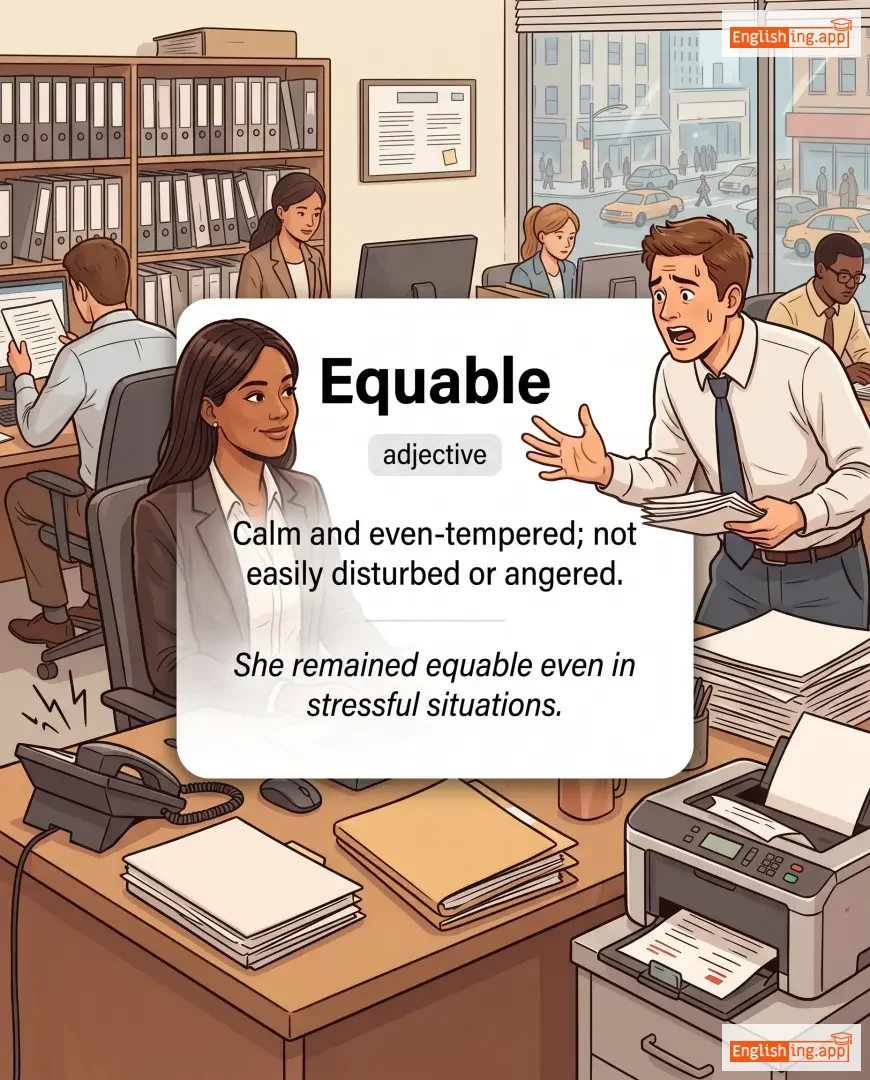
Equable definition card — visual illustration of the meaning
adjective
/ˈɛkwəbl̩/
спокойный (spokoynyy)

Calm and even-tempered; not easily disturbed or angered.

"She remained equable even in stressful situations."
"Она оставалась спокойной даже в стрессовых ситуациях." (Ona ostavalas' spokoynoy dazhe v stressovykh situatsiyakh.)
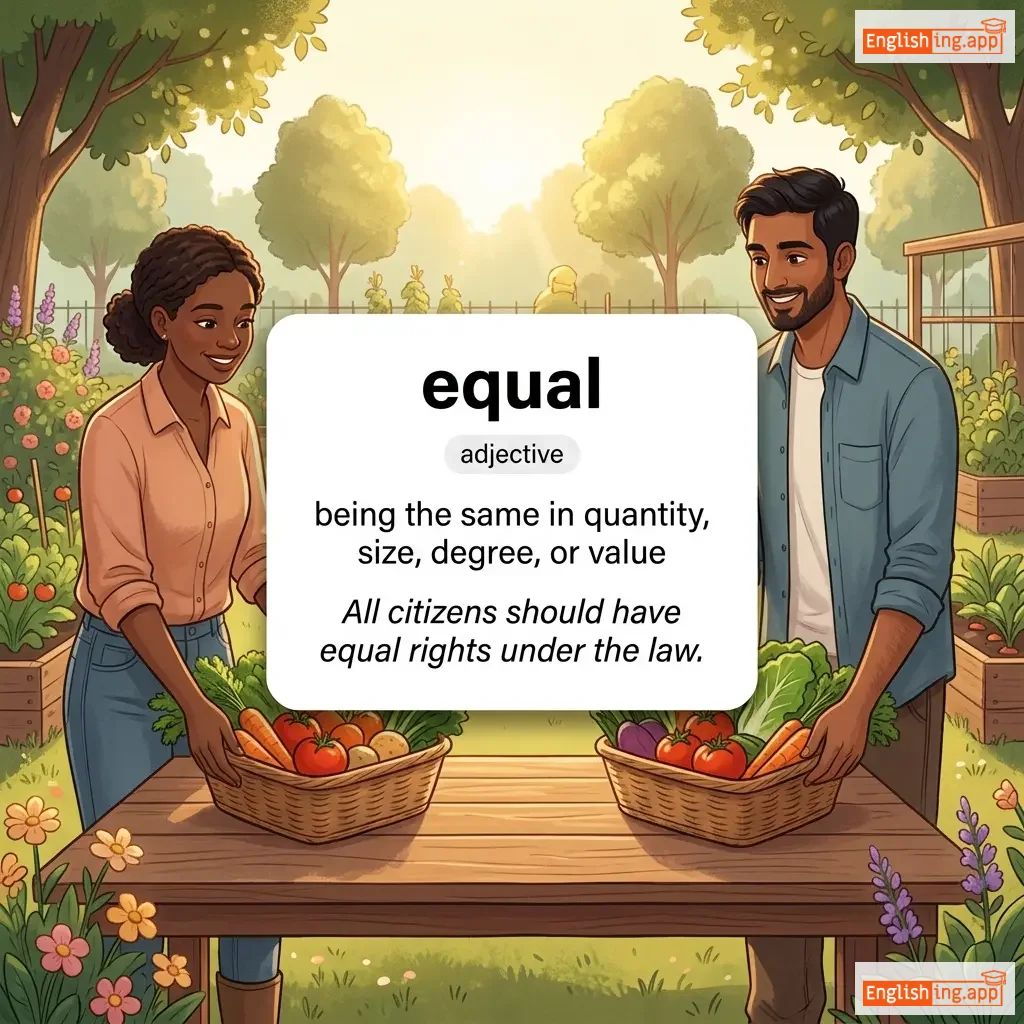
equal definition card — visual illustration of the meaning
adjective
/ˈiːkwəl/
равный (ravnyy)

being the same in quantity, size, degree, or value

"All citizens should have equal rights under the law."

"Все граждане должны иметь равные права согласно закону." (Vse grazhdane dolzhny imet' ravnye prava soglasno zakonu.)
equality definition card — visual illustration of the meaning
noun
/ɪˈkwɒləti/
равенство (ravenstvo)

the state of being equal, especially in rights, status, and opportunities

"The organization works to promote gender equality in the workplace."

"Организация работает над продвижением гендерного равенства на рабочем месте." (Organizatsiya rabotayet nad prodvizheniyem gendernogo ravenstva na rabochem meste.)
verb
/ˈiːkwəlaɪz/
сравнивать (sravnyat)

To make equal or level in status, value, or amount.

"The team equalized the score in the last minute."

"Команда сравняла счет в последнюю минуту." (Komanda sravnyala schet v poslednyuyu minutu.)
adverb
/ˈiːkwəli/
одинаково (odinakovo)

in an equal or fair way; to the same degree

"The prize money was equally divided among the winners."
"Призовой фонд был одинаково разделен между победителями." (Prizovoy fond byl odinakovo razdelen mezhdu pobeditelyami.)
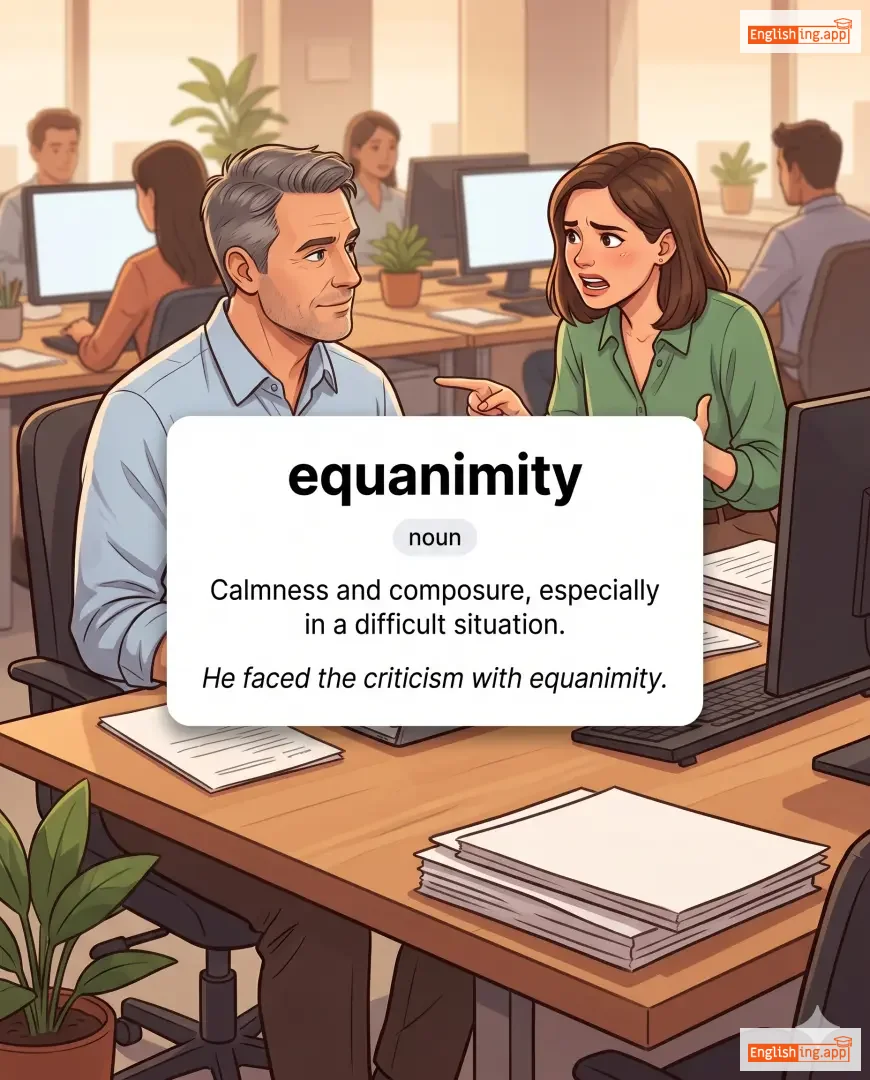
equanimity definition card — visual illustration of the meaning
noun
/ˌekwəˈnɪmɪti/
уравновешенность (uravnoveshennost)

Calmness and composure, especially in a difficult situation.

"He faced the criticism with equanimity."

"Он встретил критику с уравновешенностью." (On vstretil kritiku s uravnoveshennost'yu.)
verb
/ɪˈkweɪt/
приравнивать (priravnivat)

To consider as equal or equivalent.

"Many people equate wealth with success."

"Многие люди приравнивают богатство к успеху." (Mnogie lyudi priravnyvayut bogatstvo k uspekhu.)
noun
/ɪˈkweɪʒən/
уравнение (uravnenie)

a mathematical statement that shows the equality of two expressions

"He solved the equation to find the value of x."

"Он решил уравнение, чтобы найти значение x." (On reshil uravnenie, chtoby nayti znachenie x.)
adjective
/ɪˈkwɛstriən/
верховой (verkhovoy)

Relating to horse riding or horseback riders.

"She won several equestrian competitions."
"Она выиграла несколько верховых соревнований." (Ona vyigrala neskol'ko verkhovykh sorevnovaniy.)
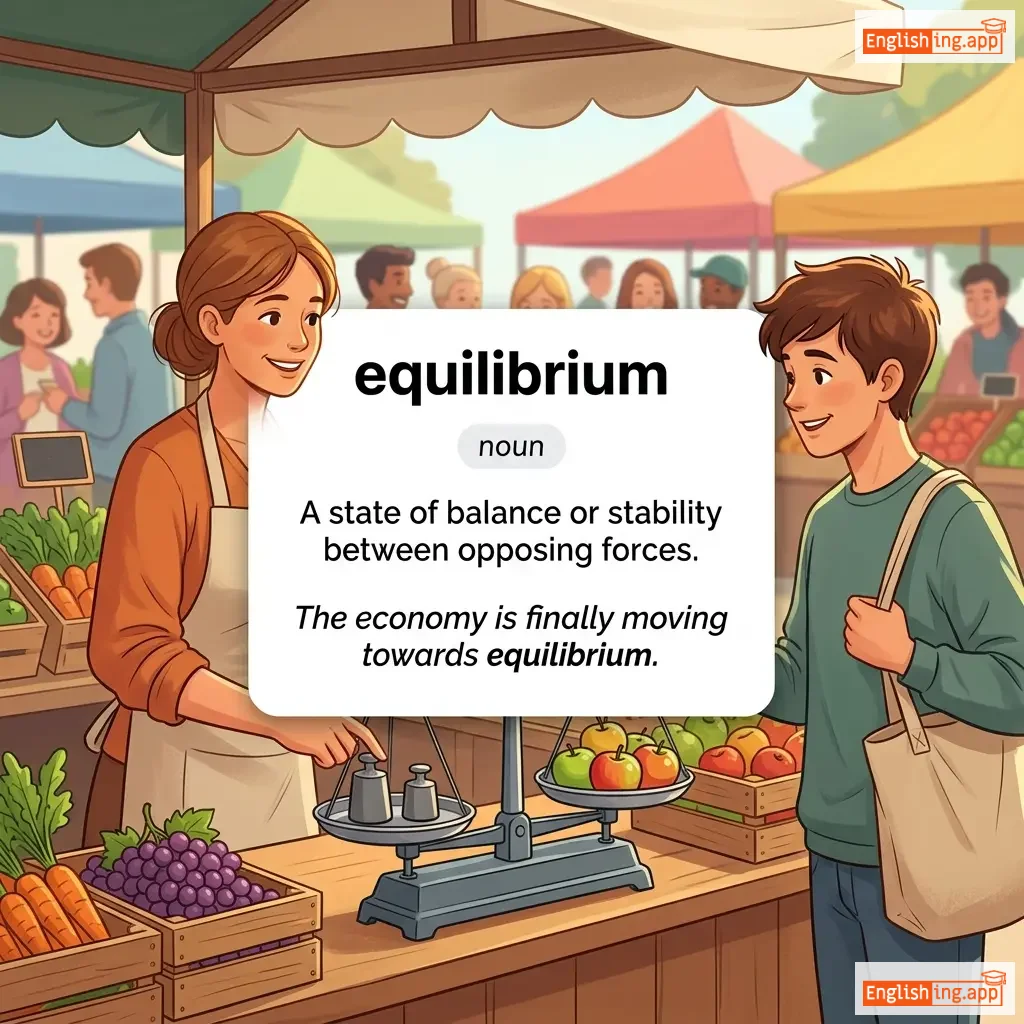
equilibrium definition card — visual illustration of the meaning
noun
/ˌiːkwɪˈlɪbriəm/
равновесие (ravnovesie)

A state of balance or stability between opposing forces.

"The economy is finally moving towards equilibrium."

"Экономика, наконец, движется к равновесию." (Ekonomika, nakonec, dvizhutsya k ravnovesiyu.)
adjective
/ˈiːkwaɪn/
связанный с лошадьми (svyazannyy s loshadyami)

Relating to or resembling a horse.

"The veterinarian specialized in equine medicine."

"Ветеринар специализировался на конной медицине." (Veterinar spetsializirovalsya na konnoy meditsine.)
noun
/ˈiːkwɪnɒks/
равенство дня и ночи (ravenstvo dnya i nochi)

The time or date when day and night are of equal length, occurring twice a year.

"The spring equinox marks the beginning of longer days."

"Весеннее равноденствие знаменует начало более длинных дней." (Vesenneye ravnodenstvie znamenuyet nachalo boleye dlinnykh dney.)
verb
/ɪˈkwɪp/
оснащать (osnaschat)

to provide someone or something with the necessary items or skills for a task

"The school equipped its students with modern technology."

"Школа оснастила своих студентов современными технологиями." (Shkola osnastila svoikh studentov sovremennymi tekhnologiyami.)
noun
/ˈɛkwɪpɪdʒ/
Оборудование или карета с аксессуарами (oborudovanie ili kareta s aksessuarami)

Equipment or a carriage with its accessories.

"The nobleman arrived in a grand equipage."

"Дворянин приехал на великолепной карете." (Dvoryanin priekhal na velikolepnoy karete.)
noun
/ɪˈkwɪpmənt/
оборудование (oborudovanie)

the necessary tools, machines, or other items needed for a particular purpose

"The laboratory bought new equipment for research."

"Лаборатория купила новое оборудование для исследований." (Laboratoriya kupila novoye oborudovaniye dlya issledovaniy.)
noun
/ˈɛkwɪpɔɪz/
равновесие (ravnovesie)

A state of balance or equilibrium.

"Her calmness created an equipoise in the heated debate."
"Её спокойствие создало равновесие в горячей дискуссии." (Eyo spokoystvie sozdalo ravnovesie v goryachey diskusii.)
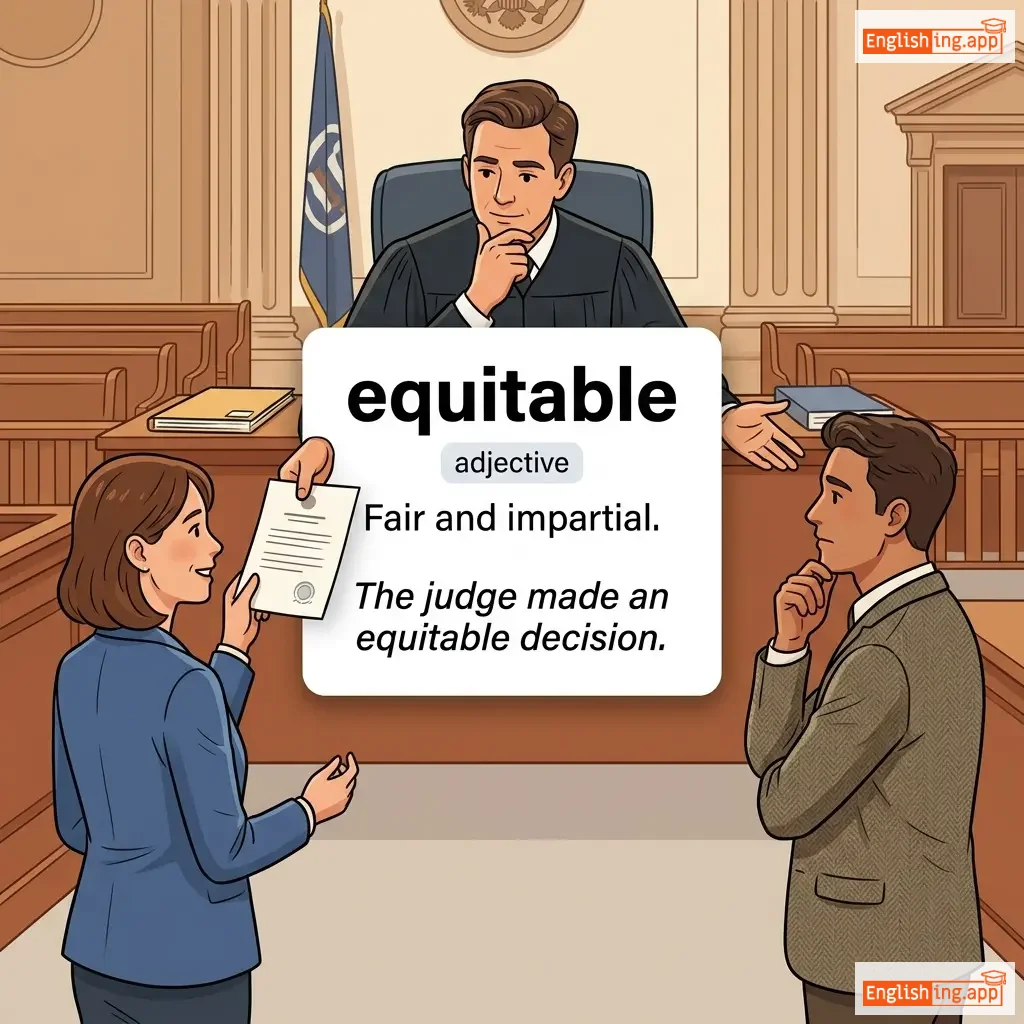
equitable definition card — visual illustration of the meaning
adjective
/ˈɛkwɪtəbl/
справедливый (spravedlivyy)

Fair and impartial.

"The judge made an equitable decision."
"Судья принял справедливое решение." (Sudiya prinyal spravedlivoe reshenie.)
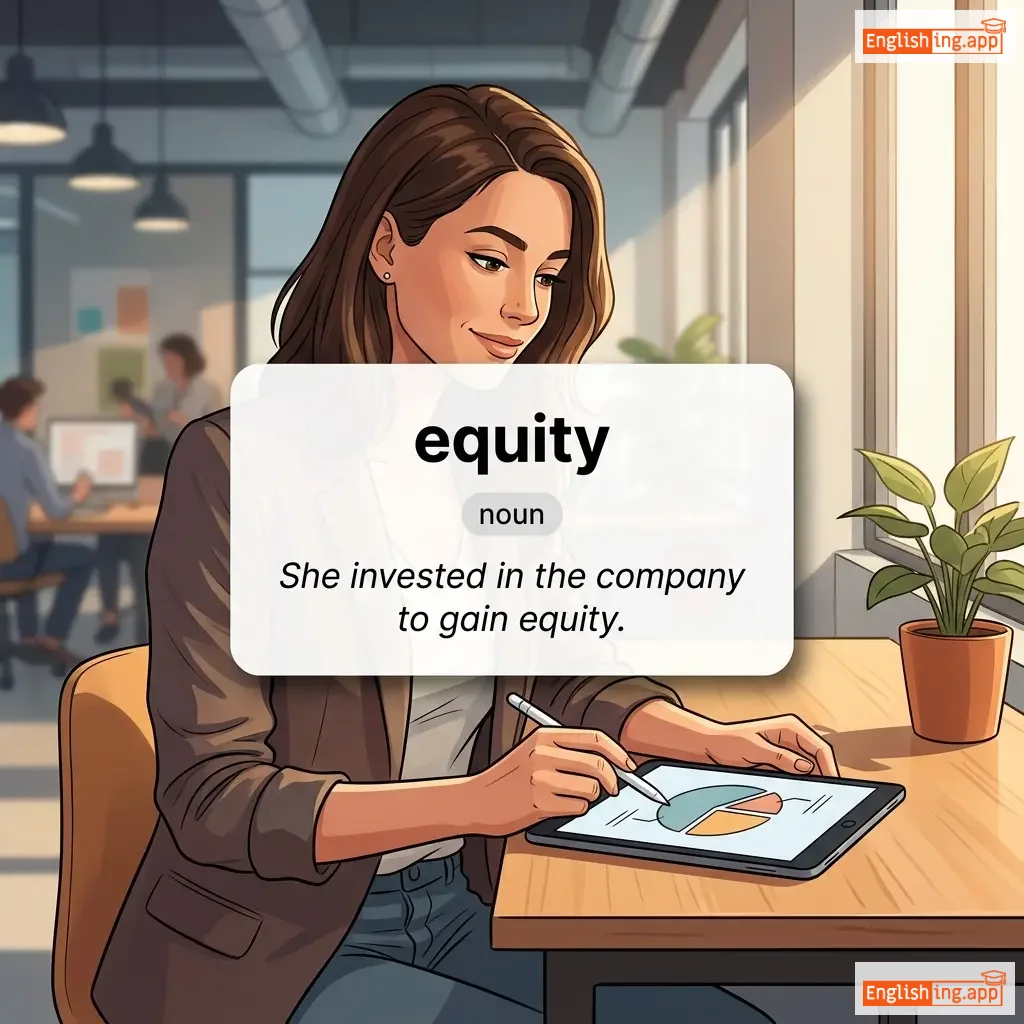
equity definition card — visual illustration of the meaning
noun
/ˈɛkwɪti/
справедливость; доля в собственности (spravedlivost'; dolya v sobstvennosti)

The quality of being fair and impartial; ownership interest in a company or property.

"She invested in the company to gain equity."

"Она инвестировала в компанию, чтобы получить долю в собственности." (Ona investirovala v kompaniyu, chtoby poluchit' dolyu v sobstvennosti.)
adjective
/ɪˈkwɪvələnt/
равный; эквивалентный (ravny; ekvivalentny)

Equal in value, function, meaning, or effect.

"One euro is roughly equivalent to one dollar."

"Один евро примерно эквивалентен одному доллару." (Odin evro primerno ekvivalenten odnomu dollaru.)
adjective
/ɪˈkwɪvəkəl/
неоднозначный (neodnoznachny)

Open to more than one interpretation; ambiguous.

"His equivocal answer confused everyone."
"Его неоднозначный ответ запутал всех." (Yego neodnoznachnyy otvet zaputal vsekh.)
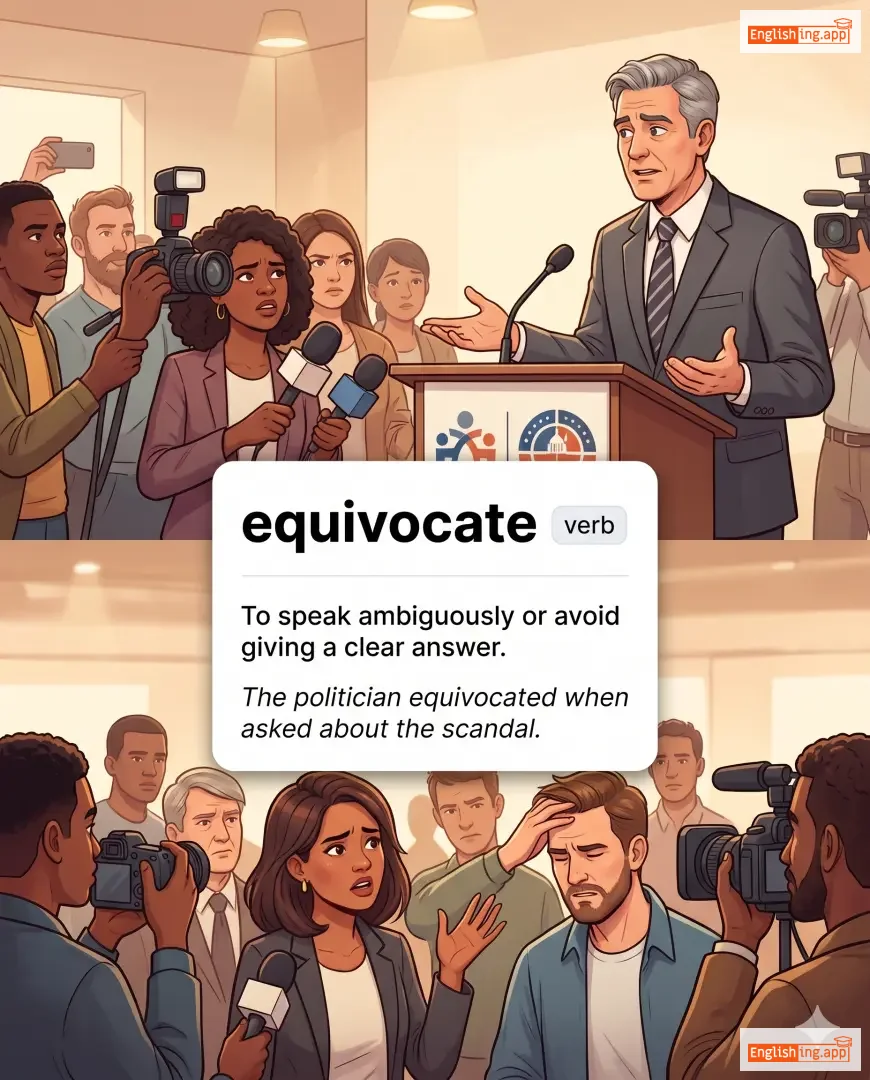
equivocate definition card — visual illustration of the meaning
verb
/ɪˈkwɪvəˌkeɪt/
говорить неясно (govorit' neyásno)

To speak ambiguously or avoid giving a clear answer.

"The politician equivocated when asked about the scandal."

"Политик эквивокировал, когда его спросили о скандале." (Politik ekvivokiroval, kogda ego sprosili o skandale.)
noun
/ɪˌkwɪvəˈkeɪʃən/
использование двусмысленного языка (ispol'zovanie dvusmyslennogo yazyka)

The use of ambiguous language to conceal the truth or to avoid committing oneself.

"The politician’s equivocation frustrated voters who wanted a clear answer."

"Экивокация политика разочаровала избирателей, которые хотели четкий ответ." (Ekivokatsiya politika razocharovala izbirateley, kotorye khoteli chetkiy otvet.)
noun
/ˈɪərə/
эра (era)

a long and distinct period of history with a particular feature or characteristic

"The invention of the internet marked a new era in communication."
"Изобретение интернета положило начало новой эре в коммуникациях." (Izobretenie interneta polozhilo nachalo novoj ere v kommunikatsiyakh.)
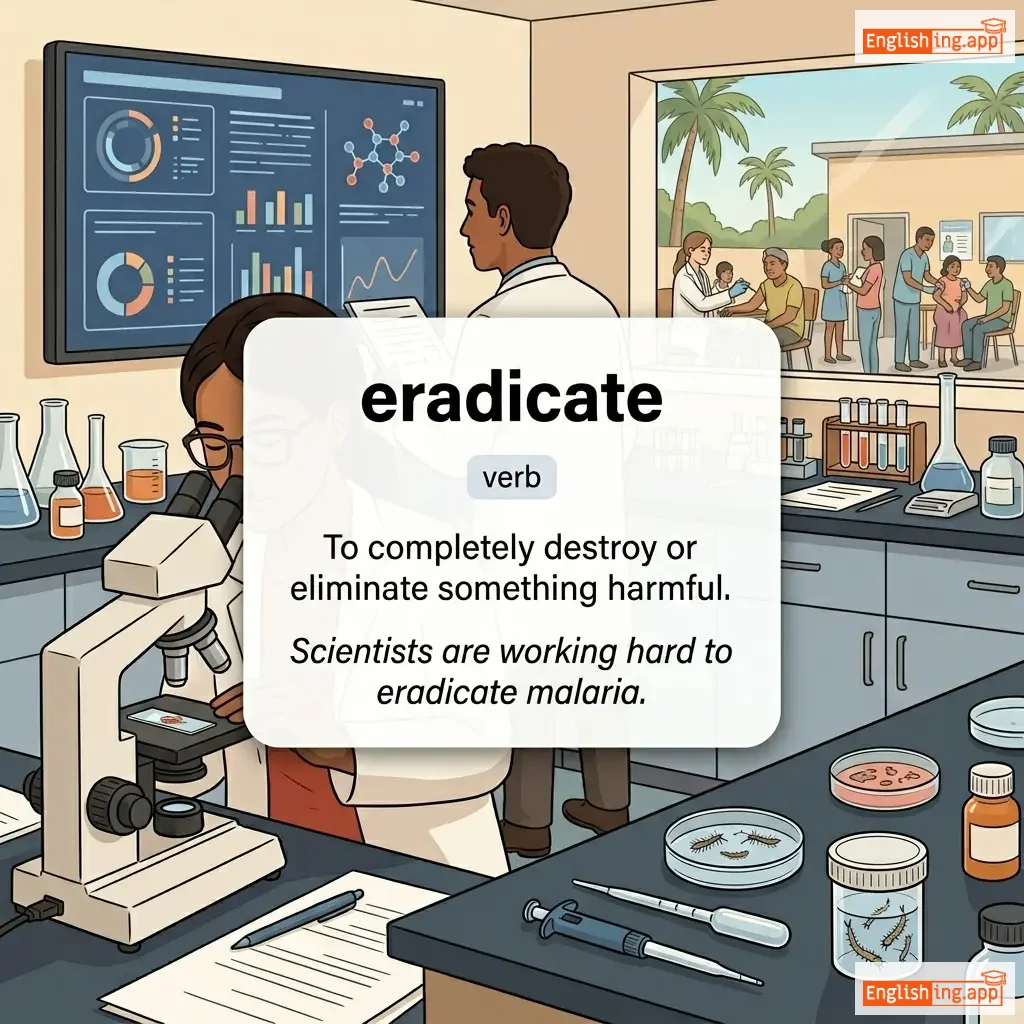
eradicate definition card — visual illustration of the meaning
verb
/ɪˈrædɪˌkeɪt/
ликвидировать; искоренить (likvidirovat'; iskorinit')

To completely destroy or eliminate something harmful.

"Scientists are working hard to eradicate malaria."
"Учёные работают над тем, чтобы искоренить малярию." (Uchyonye rabotayut nad tem, chtoby iskorinit' mal'ariyu.)
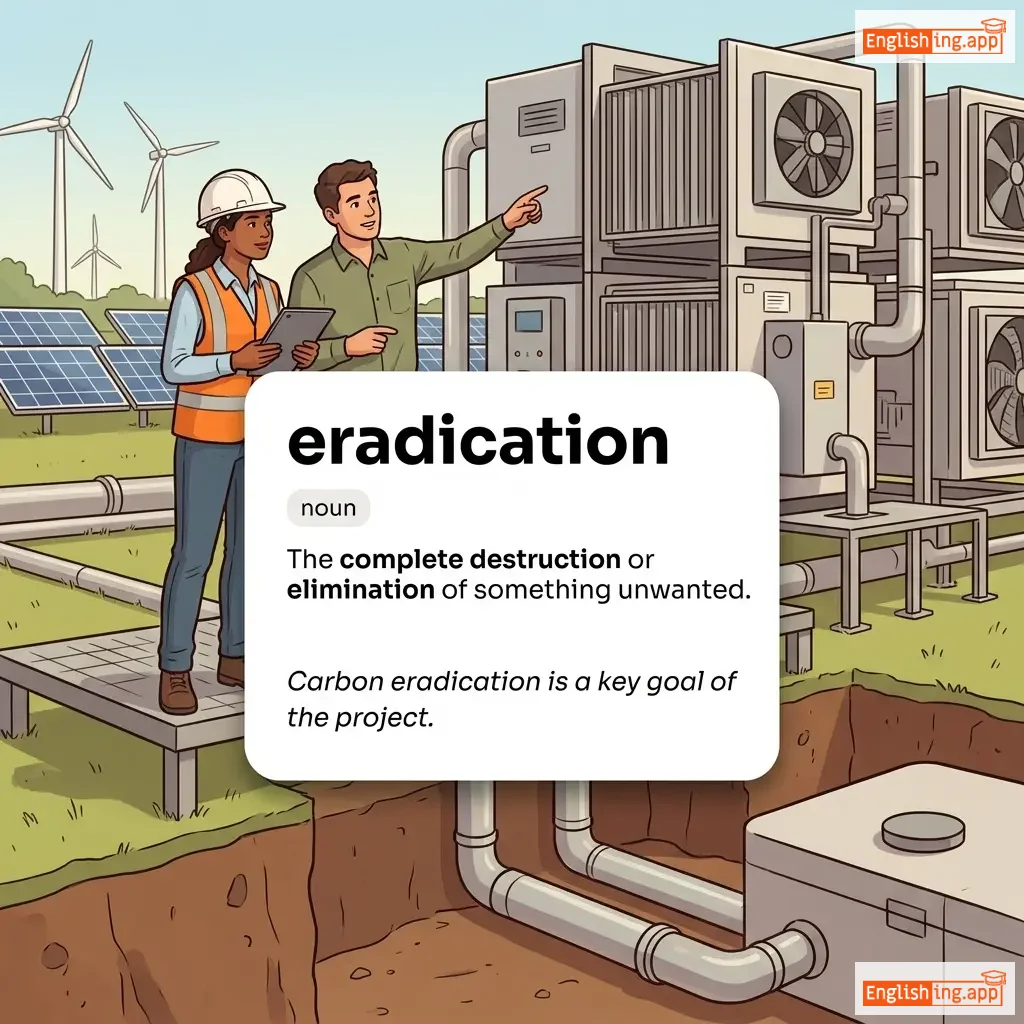
eradication definition card — visual illustration of the meaning
noun
ɪˌræd.ɪˈkeɪ.ʃən
ликвидация (likvidatsiya)

The complete destruction or elimination of something unwanted.

"Carbon eradication is a key goal of the project."
"Ликвидация углерода является важной целью проекта." (Likvidatsiya ugleroda yavyayetsya vazhnoy tseley proyekta.)
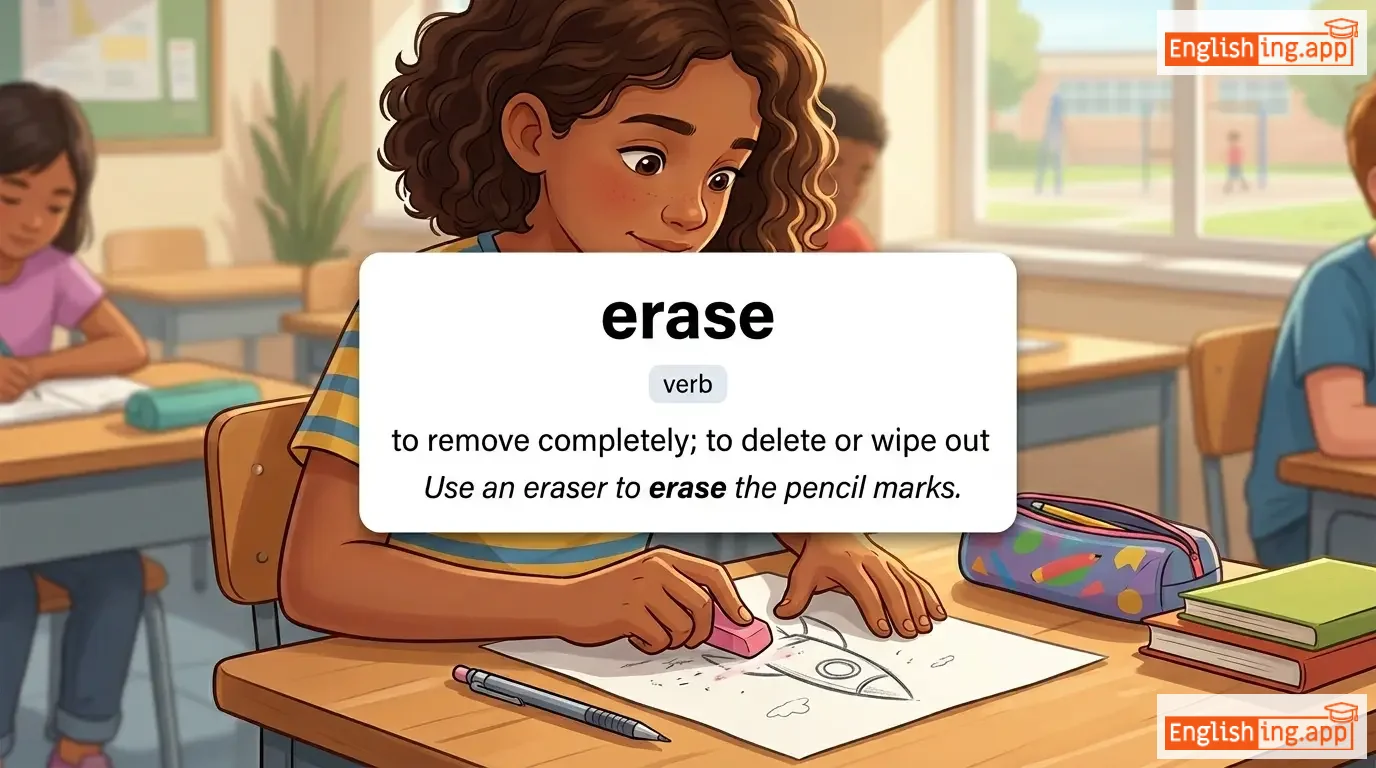
erase definition card — visual illustration of the meaning
verb
/ɪˈreɪs/
стёртый (styortyy)

to remove completely; to delete or wipe out

"Use an eraser to erase the pencil marks."
"Используйте ластик, чтобы стереть карандашные следы." (Ispol'zuyte lastik, chtoby steret' karandashnye sledy.)
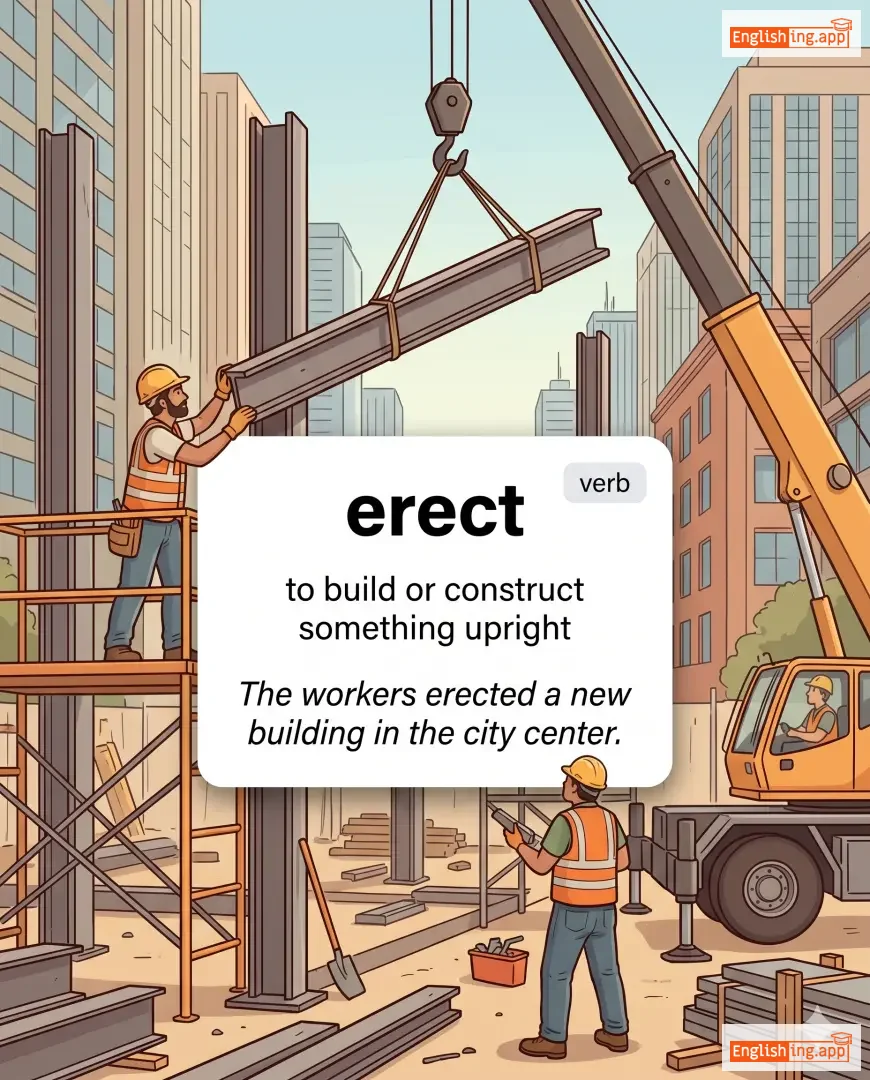
erect definition card — visual illustration of the meaning
verb
/ɪˈrɛkt/
возводить (vozvodit)

to build or construct something upright

"The workers erected a new building in the city center."
"Рабочие возвели новое здание в центре города." (Rabochie vozveli novoe zdanie v tsentre goroda.)
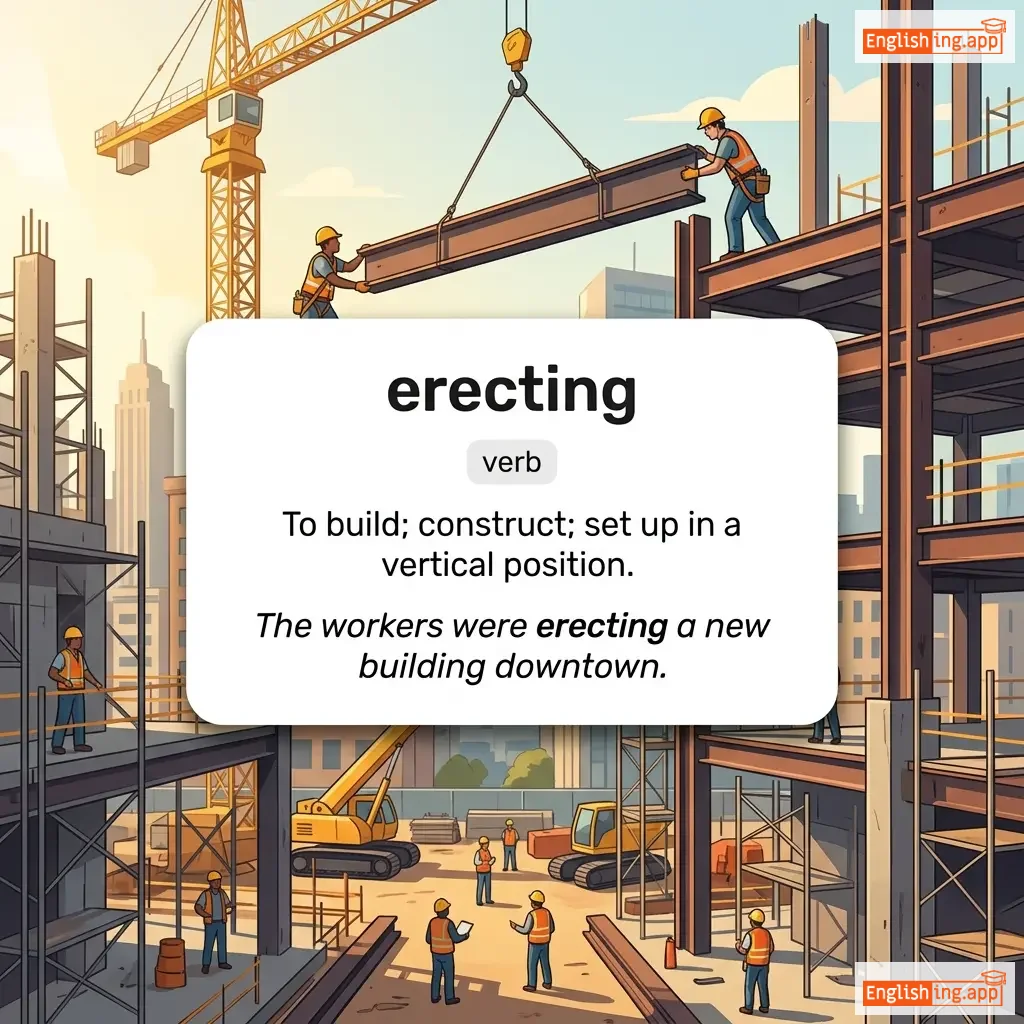
erecting definition card — visual illustration of the meaning
verb
ɪˈrɛktɪŋ
возводить (vozvodit)

To build; construct; set up in a vertical position.

"The workers were erecting a new building downtown."
"Рабочие возводили новое здание в центре города." (Rabochie vozvodili novoe zdanie v tsentre goroda.)
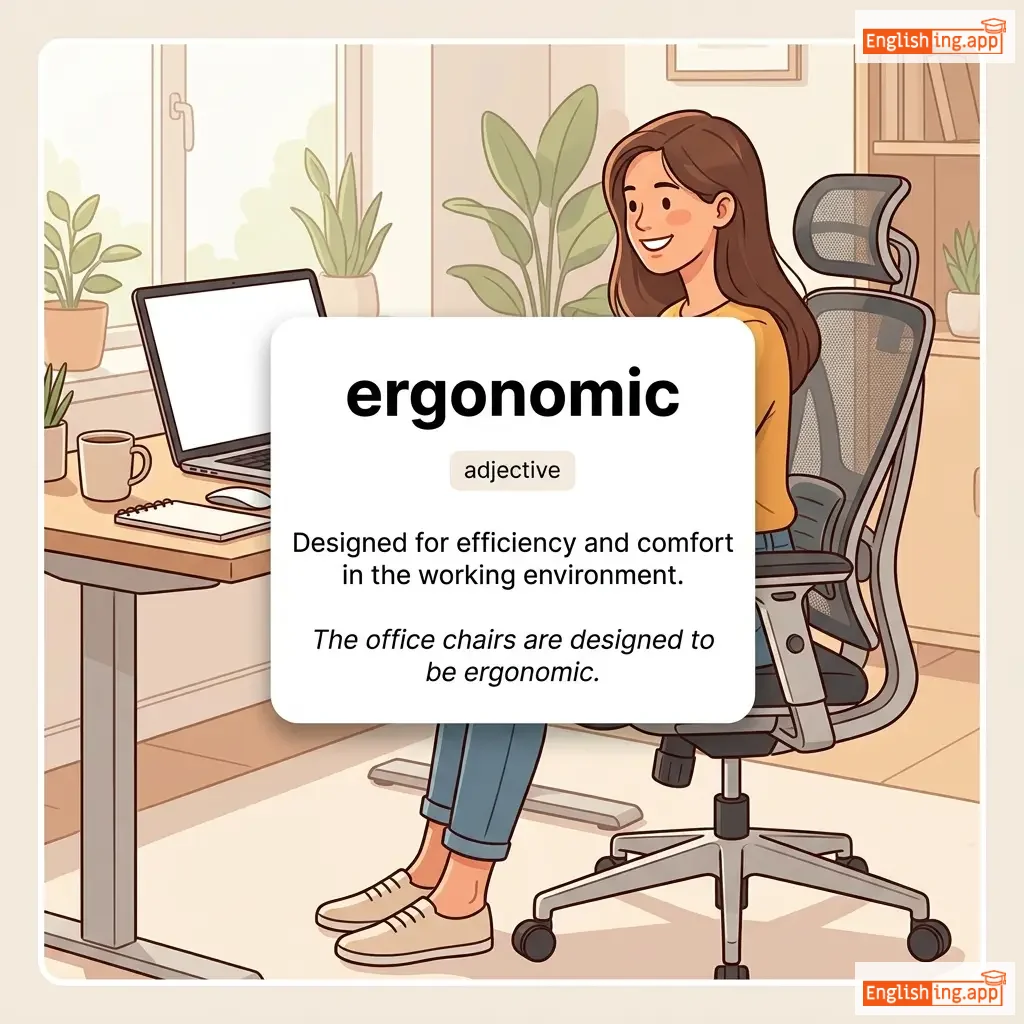
ergonomic definition card — visual illustration of the meaning
adjective
/ˌɜː.ɡəˈnɒm.ɪk/
эргономичный (ergonomichny)

Designed for efficiency and comfort in the working environment.

"The office chairs are designed to be ergonomic."

"Офисные стулья спроектированы так, чтобы быть эргономичными." (Ofisnye stul'ya sproyektirovany tak, chtoby byt' ergonomichnymi.)
verb
/ɪˈroʊd/
эрозия (eroziya)

to gradually wear away or destroy by natural forces such as water, wind, or chemical action

"The coastline has begun to erode due to constant waves."
"Береговая линия начала разрушаться из-за постоянных волн." (Beregovaya liniya nachala razrushatsya iz-za postoyannykh voln.)
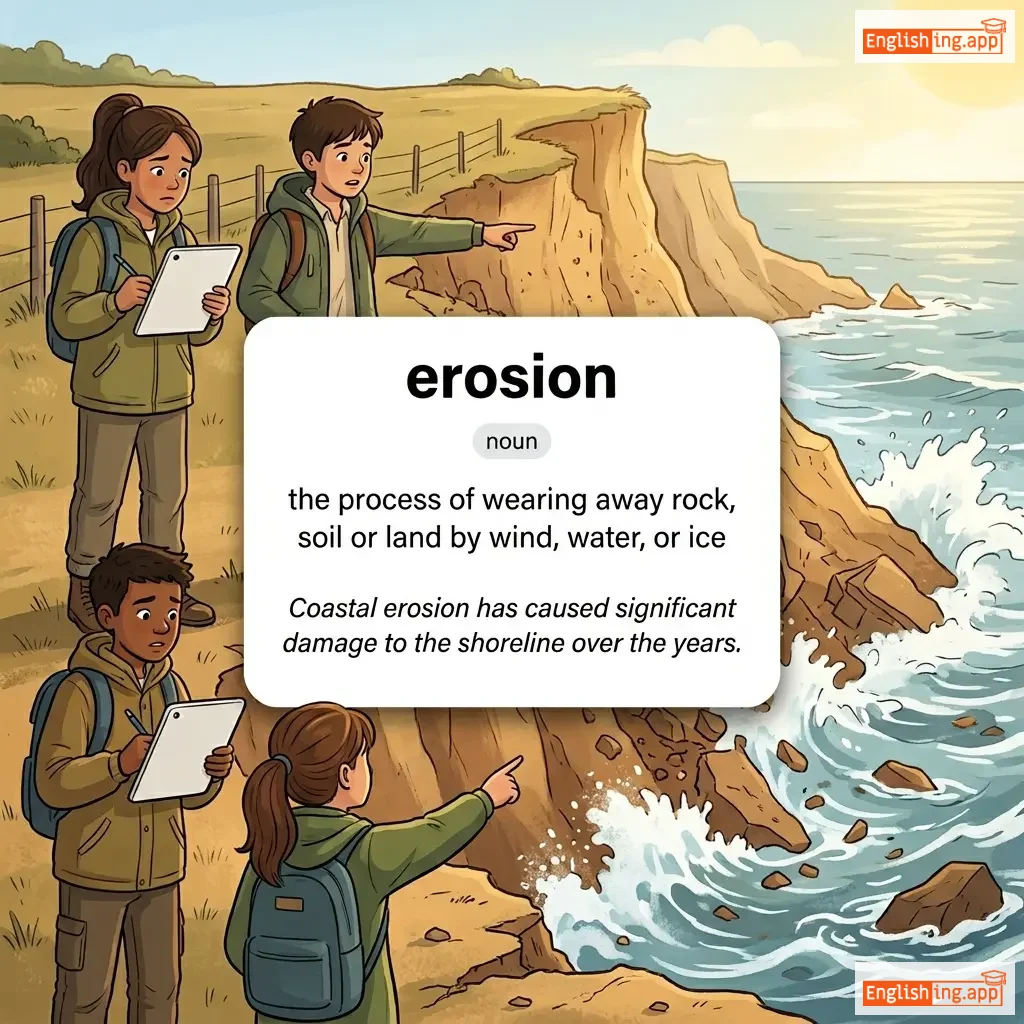
erosion definition card — visual illustration of the meaning
noun
/ɪˈroʊ.ʒən/
эрозия (eroziya)

the process of wearing away rock, soil, or land by wind, water, or ice

"Coastal erosion has caused significant damage to the shoreline over the years."

"Прибрежная эрозия за годы привела к значительным повреждениям прибрежной линии." (Pribrezhnaya eroziya za gody privela k znachitel'nym povrezhdeniyam pribrezhnoy linii.)
adjective
/ɪˈrɒtɪk/
эротический (eroticheskiy)

relating to or tending to arouse sexual desire or excitement

"The novel contained several erotic scenes."

"Роман содержал несколько эротических сцен." (Roman soderzhal neskol'ko eroticheskikh stsen.)
verb
/ɜːr/
ошибаться (oshibat'sya)

to make a mistake or be incorrect

"To err is human, to forgive divine."
"Ошибаться — это по-человечески, прощать — божественно." (Oshibat'sya — eto po-chelovecheski, proshchat' — bozhesveno.)
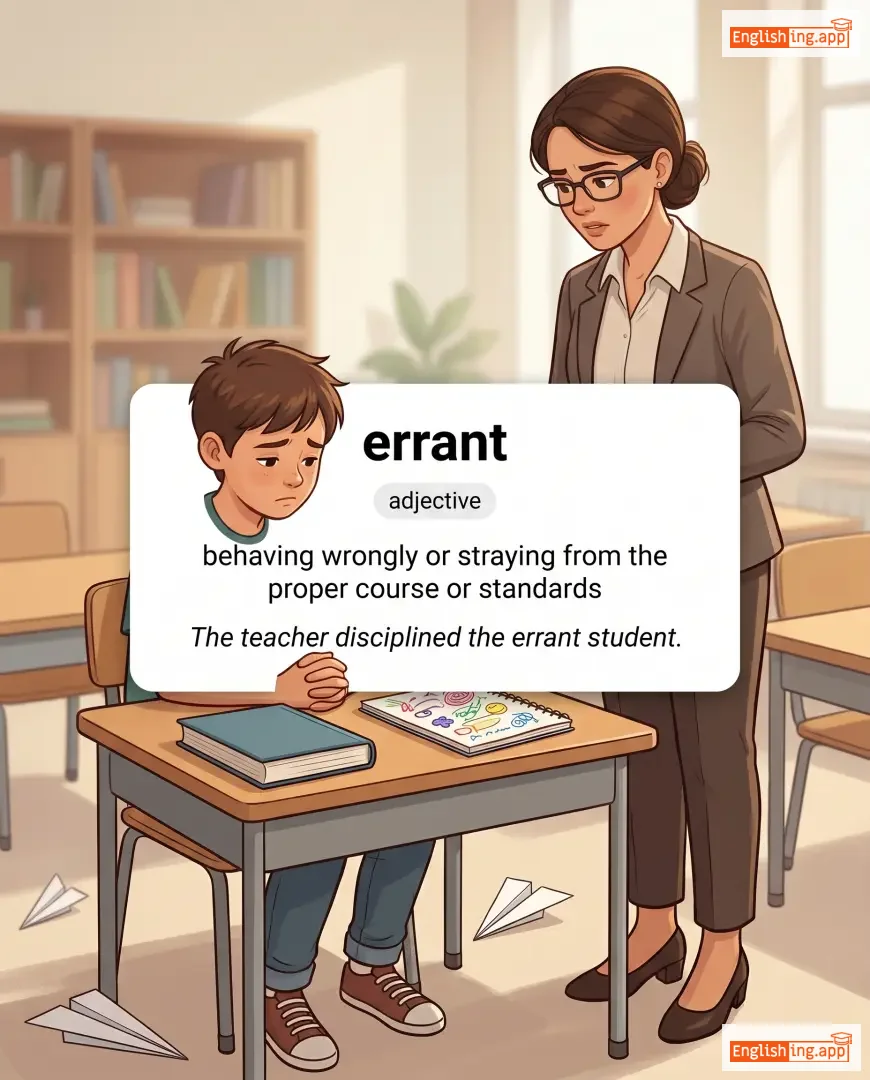
errant definition card — visual illustration of the meaning
adjective
/ˈɛrənt/
блуждающий (bluzhdayushchiy)

behaving wrongly or straying from the proper course or standards

"The teacher disciplined the errant student."
"Учитель дисциплинировал блуждающего студента." (Uchitel' distsipliniraval bluzhdayushchego studenta.)
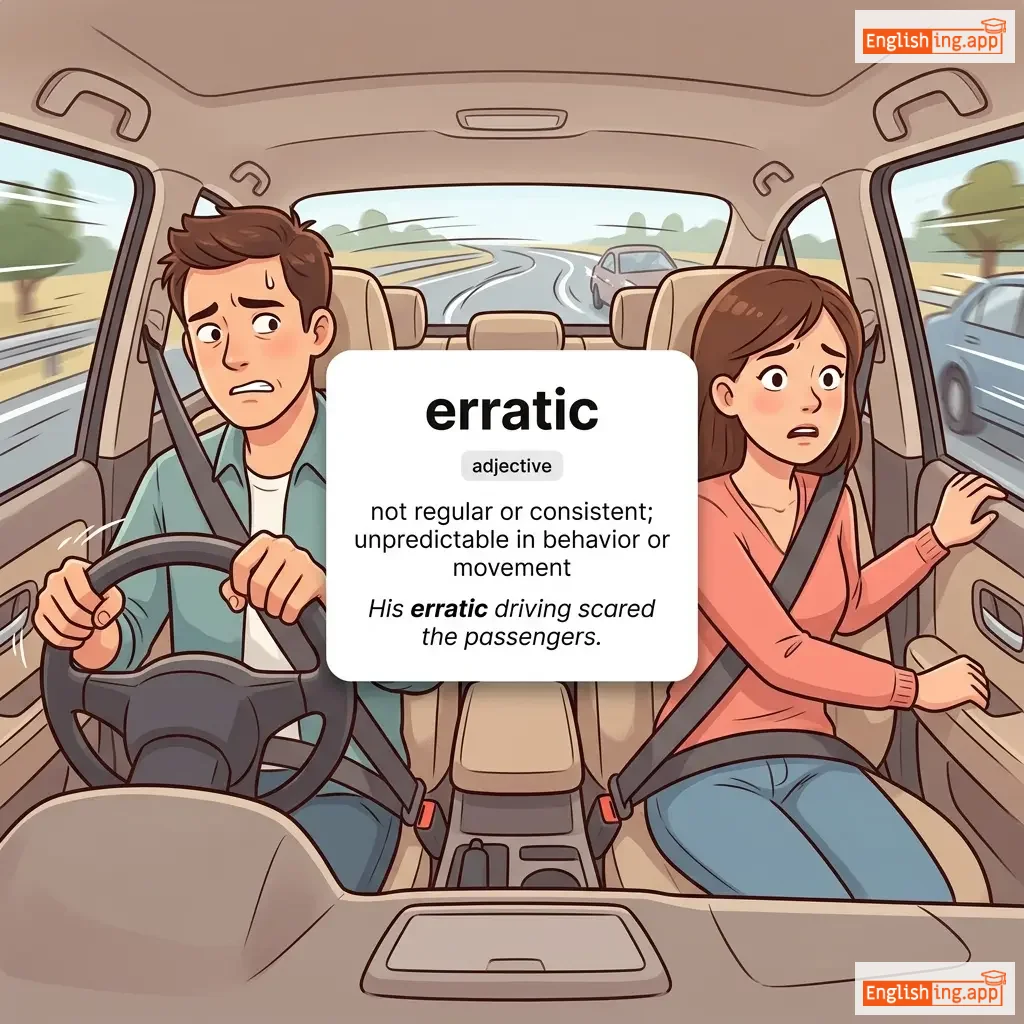
erratic definition card — visual illustration of the meaning
adjective
/ɪˈrætɪk/
неустойчивый (neustoychivyy)

not regular or consistent; unpredictable in behavior or movement

"His erratic driving scared the passengers."
"Его erratic вождение напугало пассажиров." (Ego erratic vozhdenie napugalo passazhirov.)
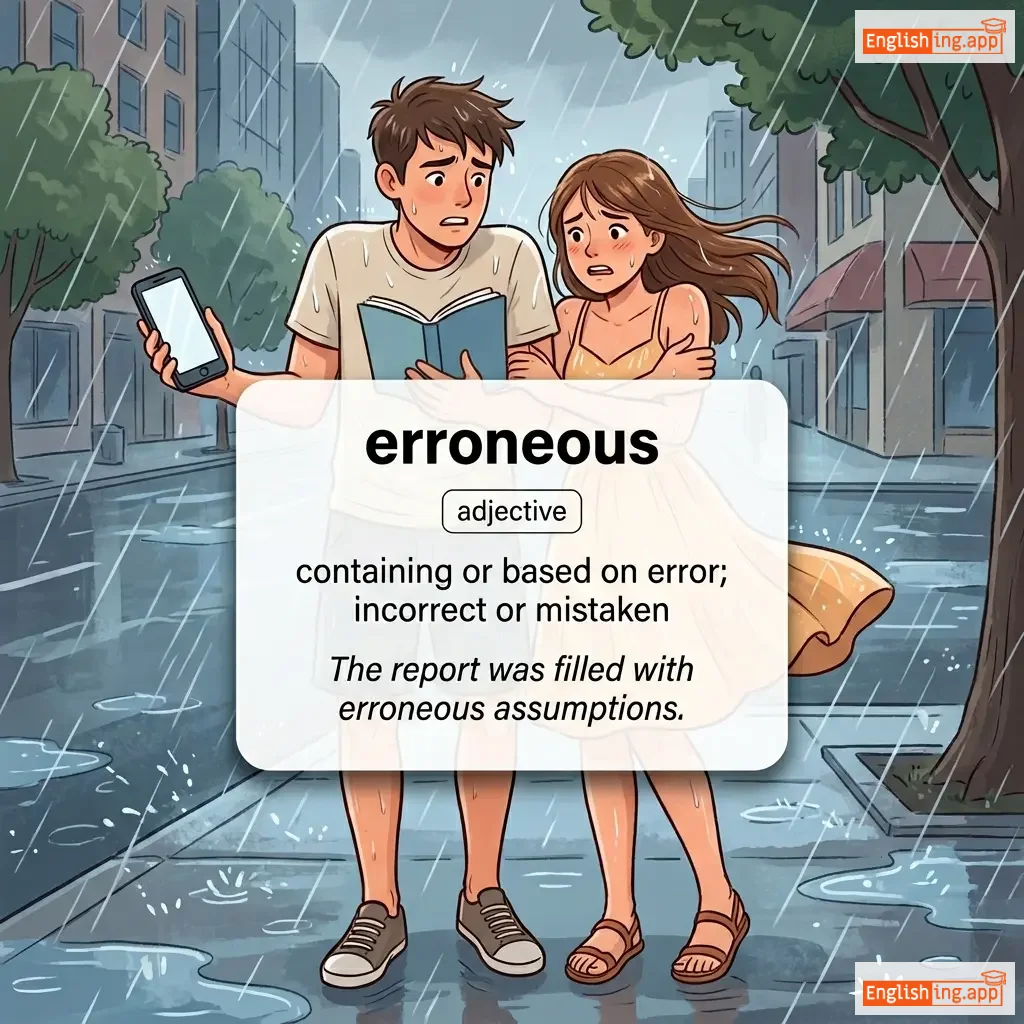
erroneous definition card — visual illustration of the meaning
adjective
/ɪˈrəʊniəs/
ошибочный (oshibochnyy)

containing or based on error; incorrect or mistaken

"The report was filled with erroneous assumptions."
"Отчет был полон ошибочных предположений." (Otchet byl polon oshibochnykh predpolozheniy.)
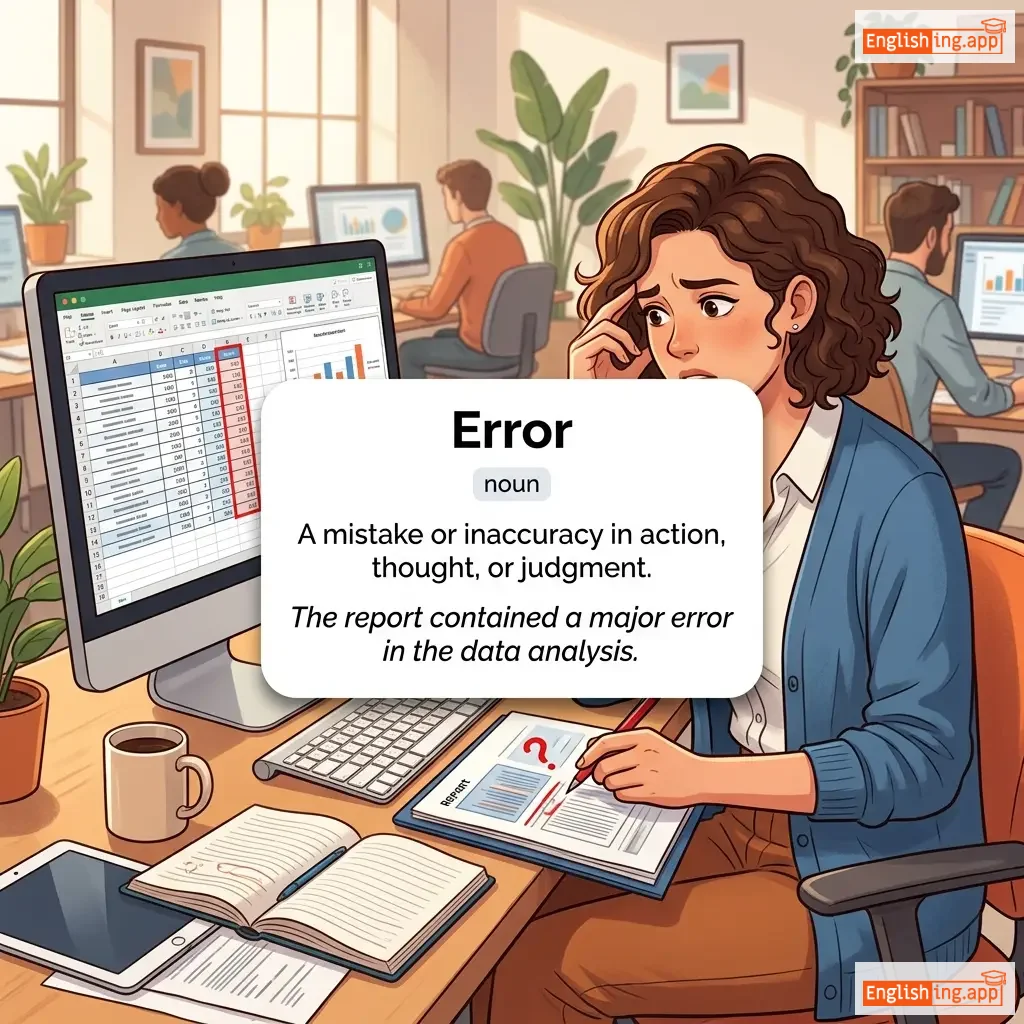
Error definition card — visual illustration of the meaning
noun
/ˈɛrər/
ошибка (oshibka)

A mistake or inaccuracy in action, thought, or judgment.

"The report contained a major error in the data analysis."

"В отчете была серьезная ошибка в анализе данных." (V otchete byla seryoznaya oshibka v analize dannykh.)
adjective
/ˈɛrzæts/
заменитель (zamienitel)

made or used as a substitute, typically an inferior one

"The cheap shoes were made of ersatz leather."

"Дешевые туфли были сделаны из искусственной кожи." (Deshevye tufli byli sdelany iz iskusstvennoy kozhi.)
adjective
/ˈɜːrstwaɪl/
бывший (byvshiy)

former or in the past

"They were erstwhile friends but no longer speak."
"Они были бывшими друзьями, но теперь не разговаривают." (Oni byli byvshimi druz'yami, no teper' ne razgovarivayut.)
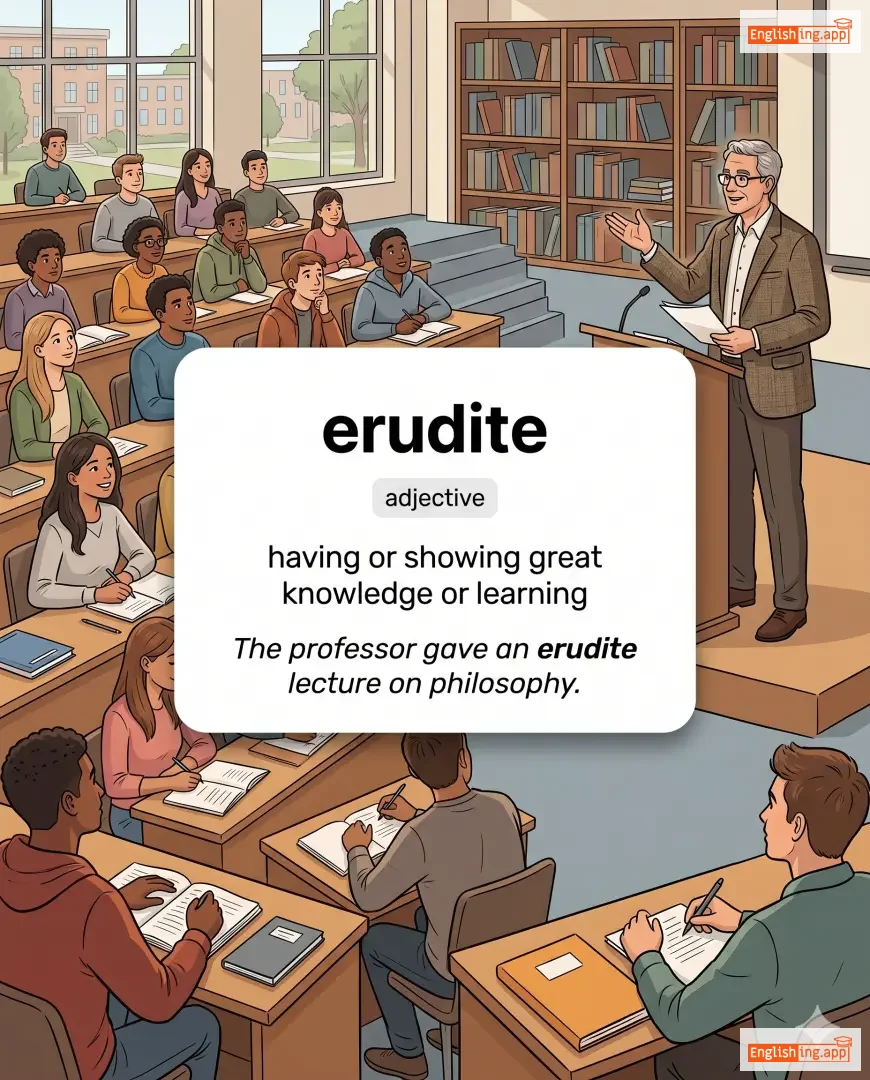
erudite definition card — visual illustration of the meaning
adjective
/ˈɛrjʊˌdaɪt/
эрудированный (erudirovannyy)

having or showing great knowledge or learning

"The professor gave an erudite lecture on philosophy."
"Профессор прочитал эрудированную лекцию по философии." (Professor prochital erudirovannuyu lektsiyu po filosofii.)
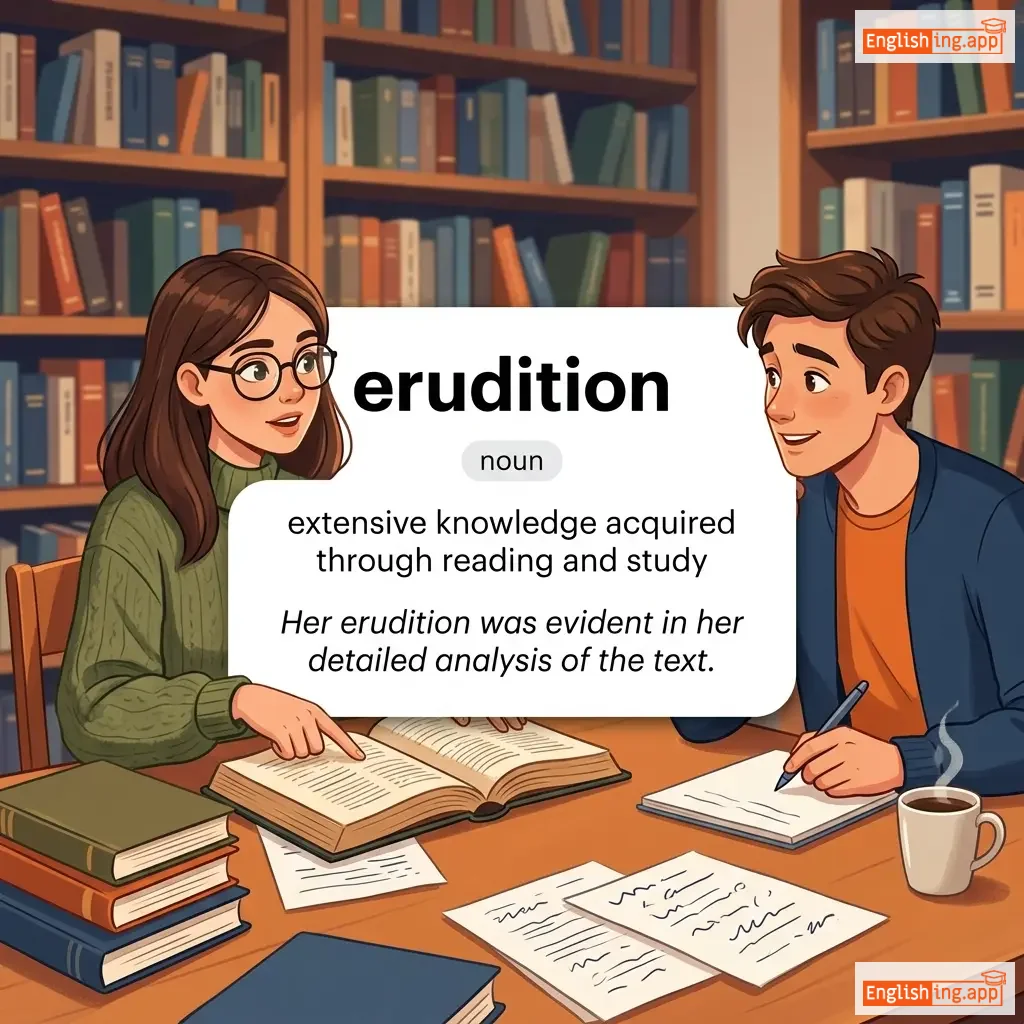
erudition definition card — visual illustration of the meaning
noun
/ˌɛrjʊˈdɪʃən/
эрудиция (eruditsiya)

extensive knowledge acquired through reading and study

"Her erudition was evident in her detailed analysis of the text."

"Ее эрудиция была очевидна в ее подробном анализе текста." (Eyo eruditsiya byla ochevidna v ee podrobnom analize teksta.)
verb
/ɪˈrʌpt/
взорваться (vzorvatsya)

to burst forth suddenly and violently

"The volcano erupted after centuries of dormancy."

"Вулкан извергся после столетий покоя." (Vulkan izvergsya posle stoletiy pokoya.)
noun
/ɪˈrʌp.ʃən/
вулканическое извержение (vulkanicheskoe izverzhenie)

a sudden violent occurrence or outburst; volcanic explosion

"The volcanic eruption forced thousands of people to evacuate the area."
"Вулканическое извержение заставило тысячи людей эвакуировать территорию." (Vulkanicheskoe izverzhenie zastavilo tysyachi lyudey evakuirovat' territoriyu.)
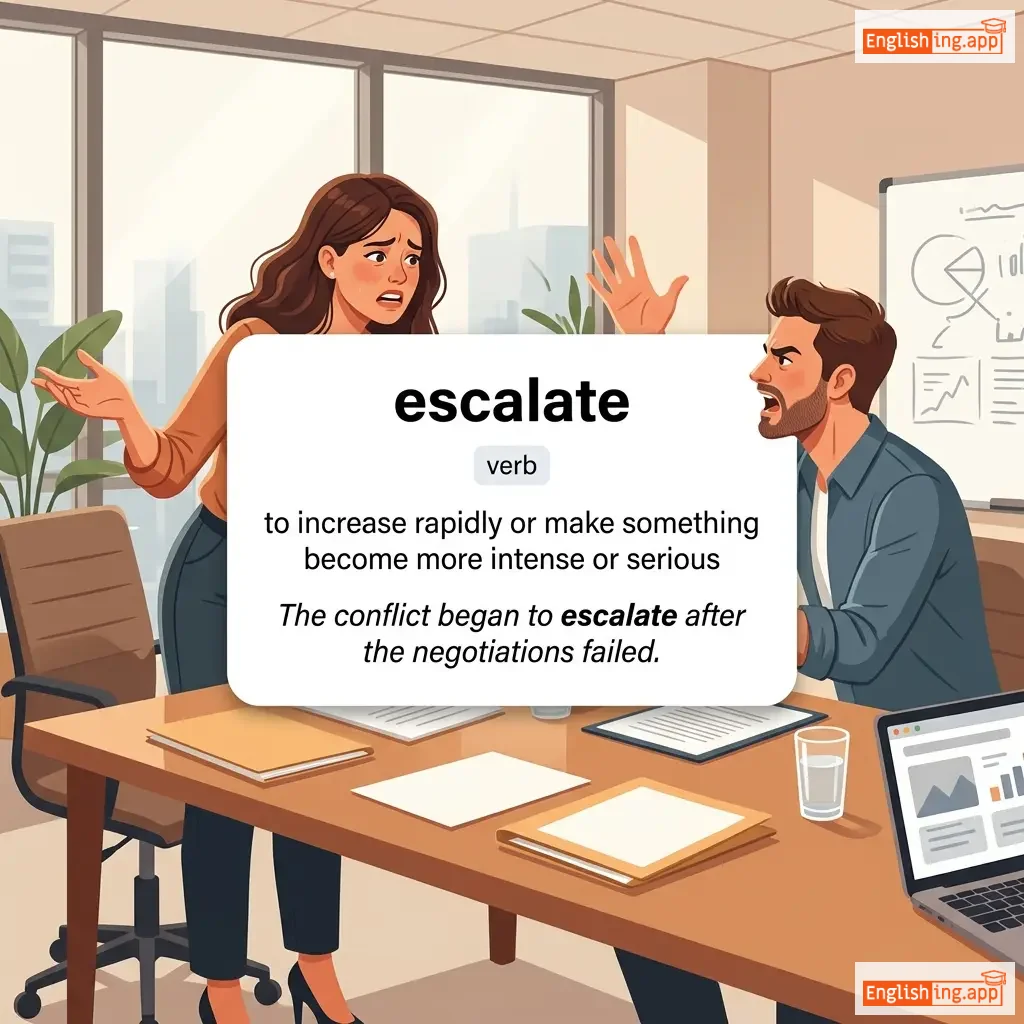
escalate definition card — visual illustration of the meaning
verb
/ˈɛskəleɪt/
эскалировать (eskalirovat)

to increase rapidly or make something become more intense or serious

"The conflict began to escalate after the negotiations failed."

"Конфликт начал эскалировать после неудачи переговоров." (Konflikt nachal eskalirovat' posle neudachi peregovorov.)