🗣️euphemism (yūfēimízhèng)

noun
/ˈjuːfəmɪzəm/
委婉语 (weiwanyu)

含义

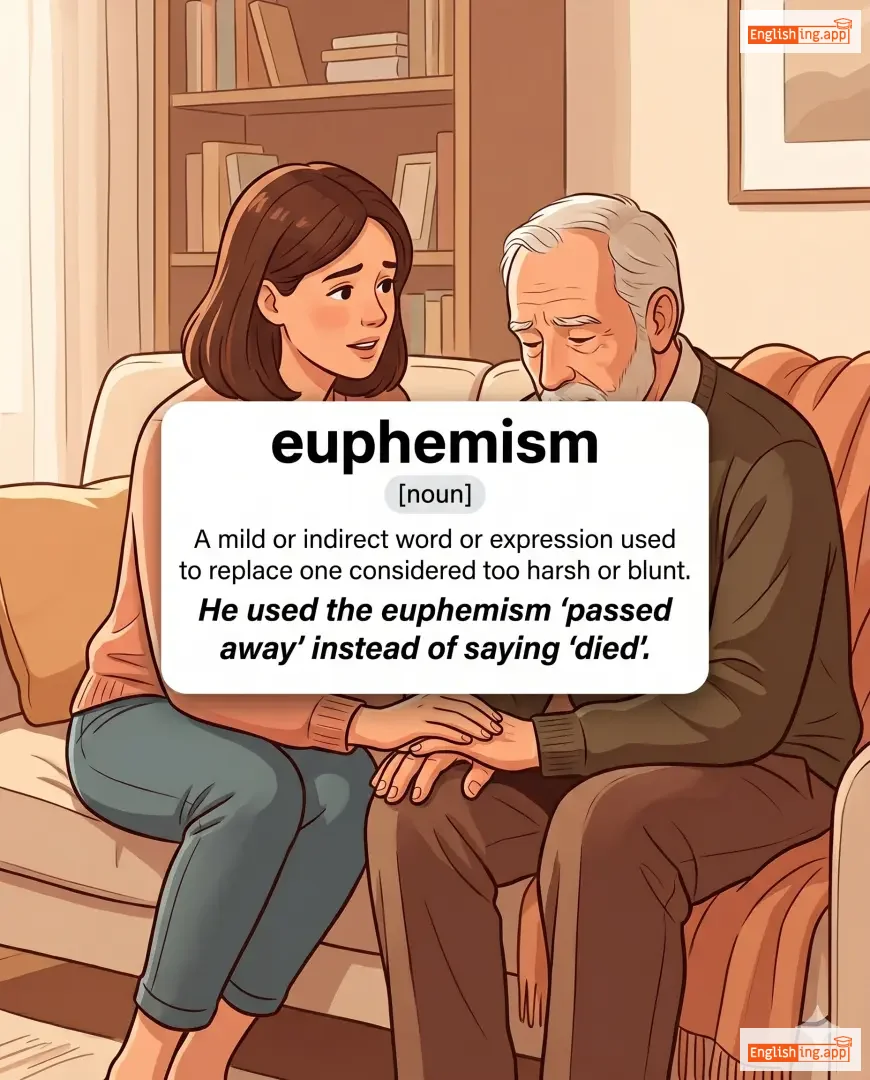
A mild or indirect word or expression used to replace one considered too harsh or blunt.
A mild or indirect term substituted for one considered too harsh or direct; polite expression for something unpleasant.
含义翻译
用来代替被认为过于严厉或直白的词汇的温和或间接词语
yòng lái dàitì bèi rènwéi guòyú yánlì huò zhí bái de cíhuì de wēnhé huò jiànjiē cíyǔ

例句

He used the euphemism 'passed away' instead of saying 'died'.

他用了'去世'这一委婉语,而不是直接说'死了'。
Tā yòngle 'qùshì' zhè yī wěiwǎn yǔ, ér bùshì zhíjiē shuō 'sǐle'.

The phrase "passed away" is a euphemism for "died".
'已故' 是 '去世' 的委婉语。
'Yigu' shi 'qushi' de weiwan yu.

同义词

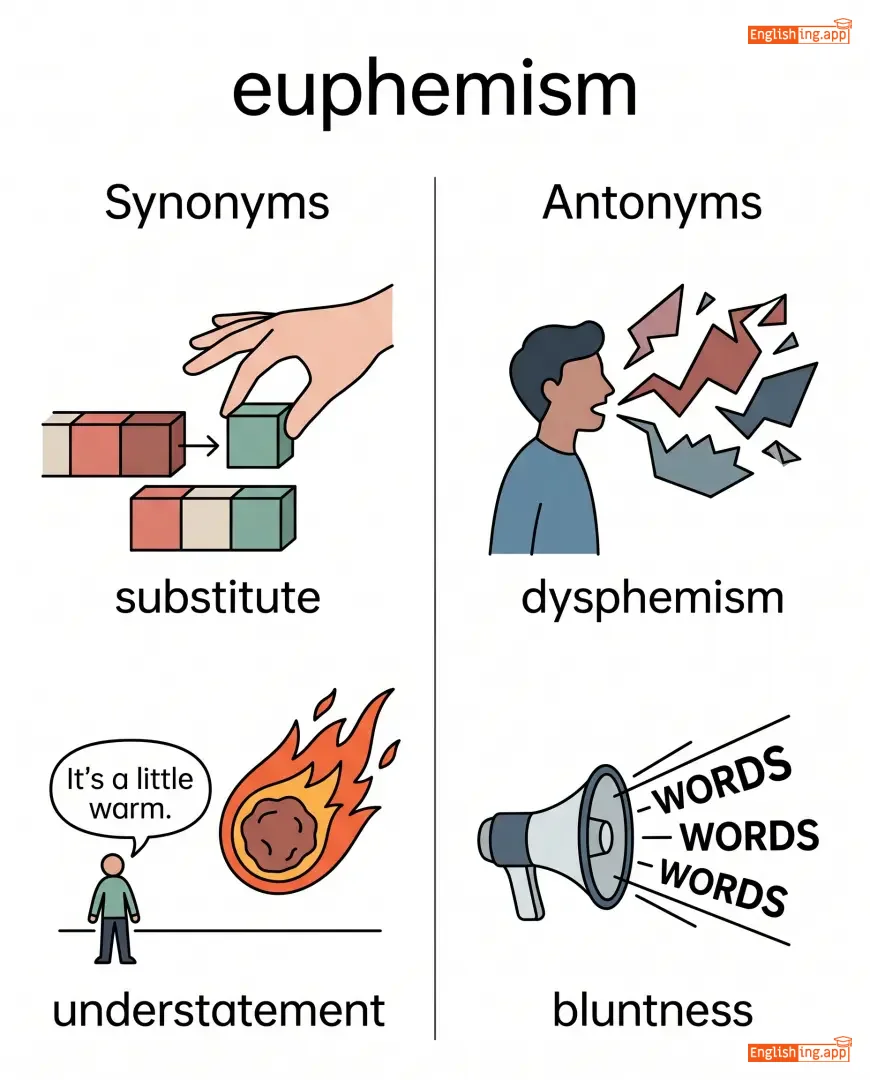
substitute, understatement, circumlocution, softening, polite term, politeness, indirect expression, softened term
条目 1
substitute, understatement, circumlocution, softening, polite term
条目 2
politeness, indirect expression, softened term

反义词

dysphemism, bluntness, directness, harshness
条目 1
dysphemism, bluntness, directness
条目 2
bluntness, harshness, directness

搭配词

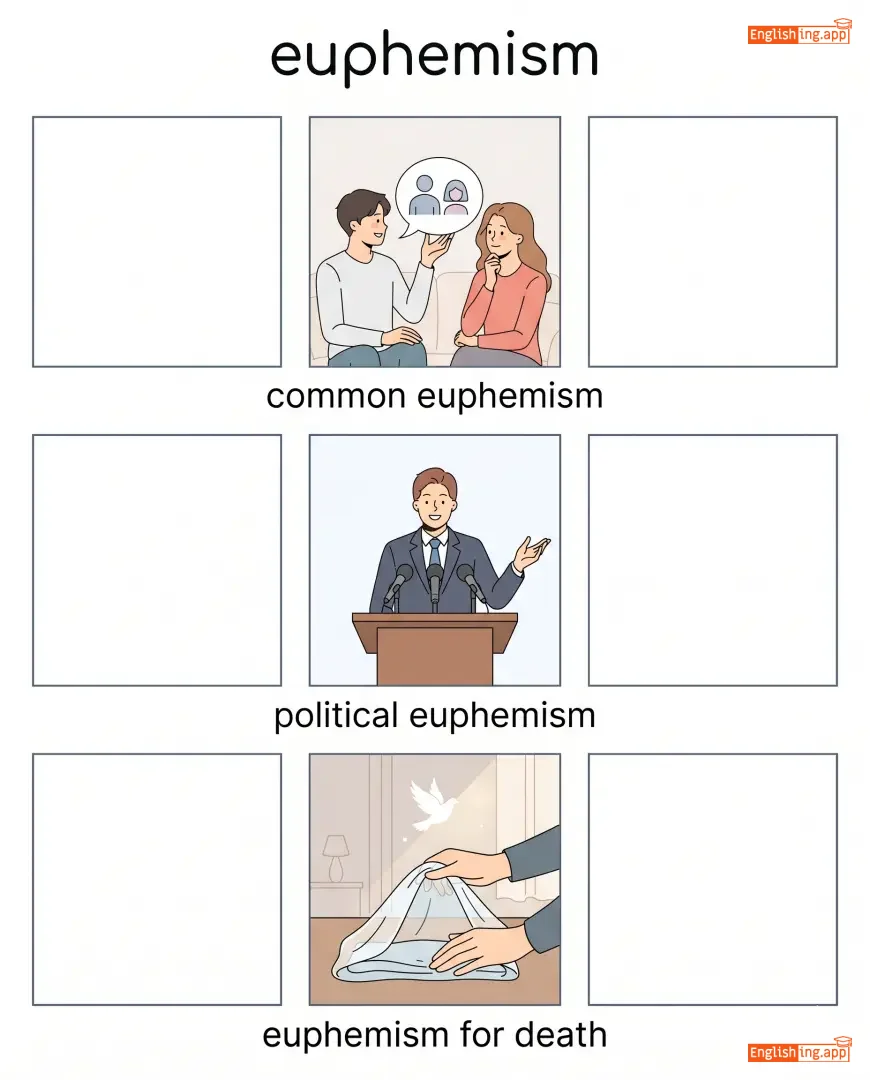
common euphemism, political euphemism, euphemism for death, use a euphemism

相关词汇

a formal agreement or union between groups, countries, or organizations for mutual benefit
red-colored leafy vegetable; amaranth leaves used as greens
a male sibling
an implement consisting of a small, shallow bowl on a long handle, used for eating, stirring, and se...
the process of working together to achieve a common goal

探索更多