🗣️euphemism (ユーフェミズム)

noun
/ˈjuːfəmɪzəm/
婉曲語 (wankyokugo)

意味

A mild or indirect word or expression used to replace one considered too harsh or blunt.
A mild or indirect term substituted for one considered too harsh or direct; polite expression for something unpleasant.
意味の翻訳
過度に厳しいまたは直接的だと考えられる言葉を置き換えるための穏やかで間接的な言葉や表現
kado ni kibishī matawa chokusetsuteki da to kangae rareru kotoba o okikaeru tame no odayaka de kansetsuteki na kotoba ya hyōgen

例文

He used the euphemism 'passed away' instead of saying 'died'.

彼は「亡くなった」という代わりに「逝った」という婉曲語を使った。
Kare wa 'nakunatta' to iu kawari ni 'itta' to iu wankyokugo o tsukatta.

The phrase "passed away" is a euphemism for "died".
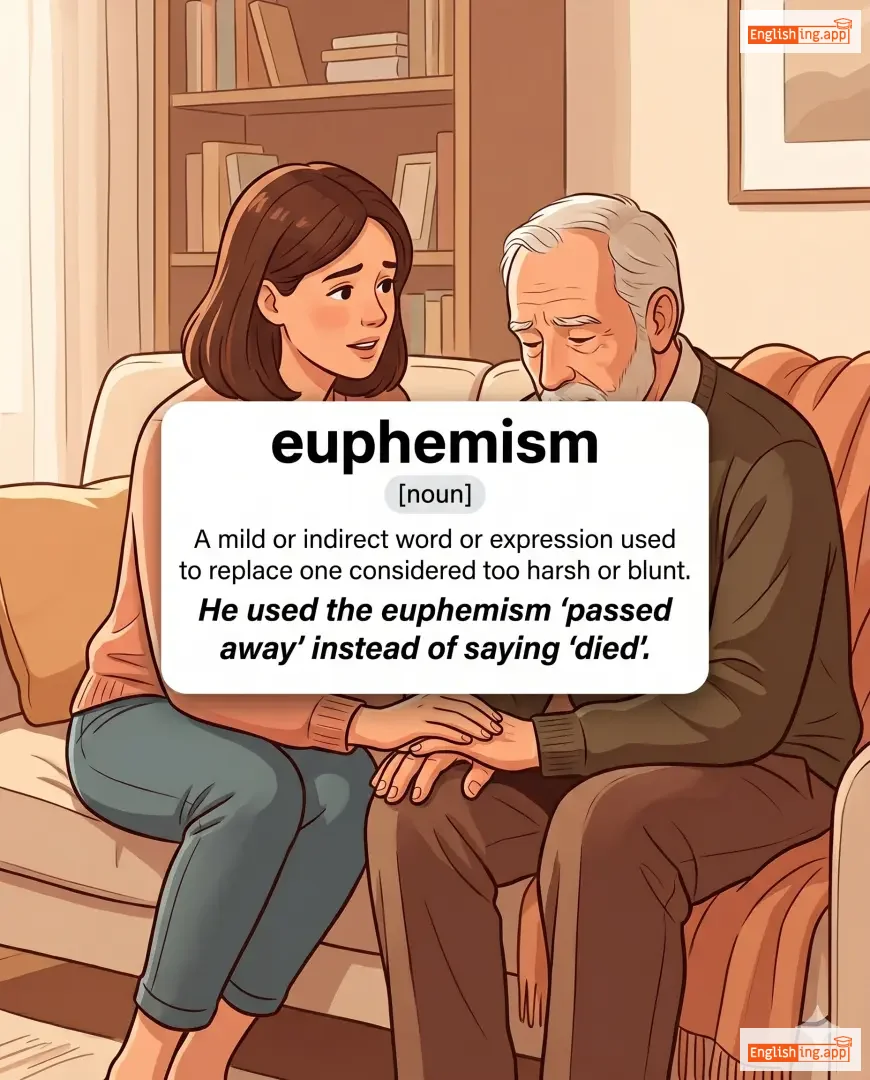
'亡くなった'という言葉は'死んだ'のユーフェミズムです。
'Nakunatta' to iu kotoba wa 'shinda' no yufemizumu desu.

同義語

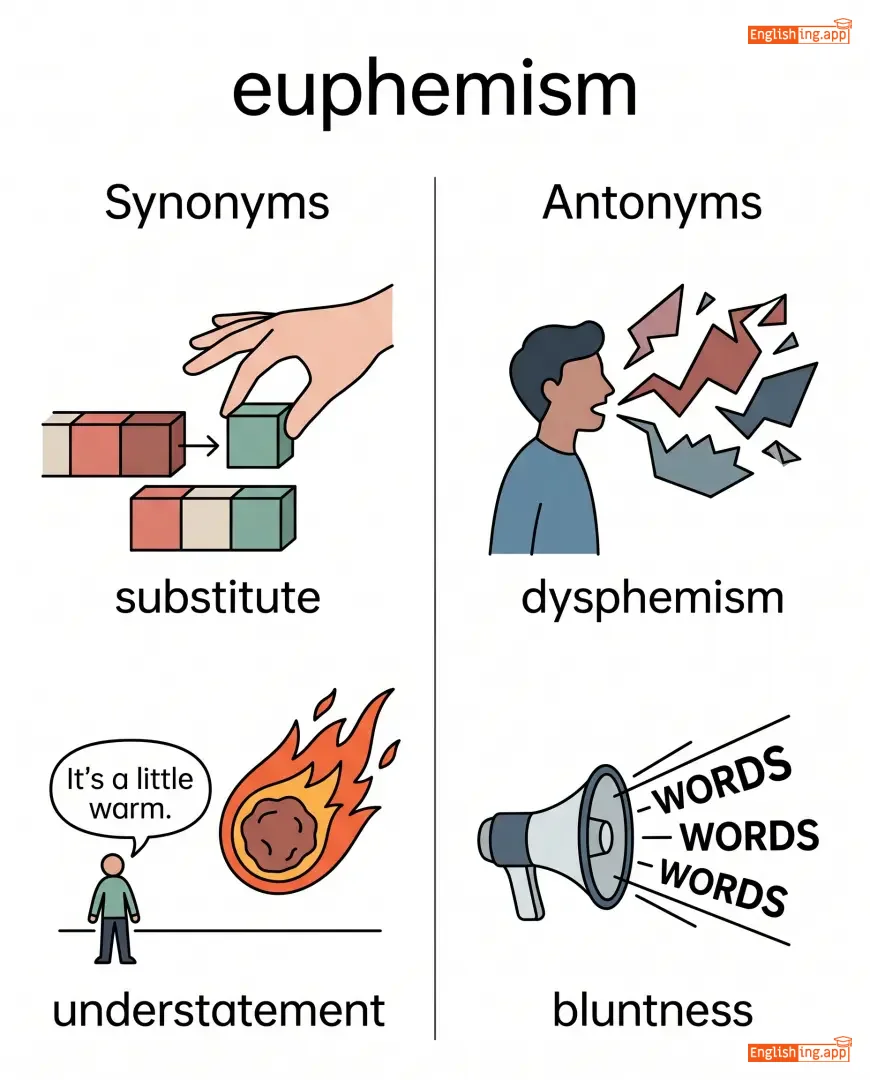
substitute, understatement, circumlocution, softening, polite term, politeness, indirect expression, softened term
エントリー 1
substitute, understatement, circumlocution, softening, polite term
エントリー 2
politeness, indirect expression, softened term

対義語

dysphemism, bluntness, directness, harshness
エントリー 1
dysphemism, bluntness, directness
エントリー 2
bluntness, harshness, directness

コロケーション

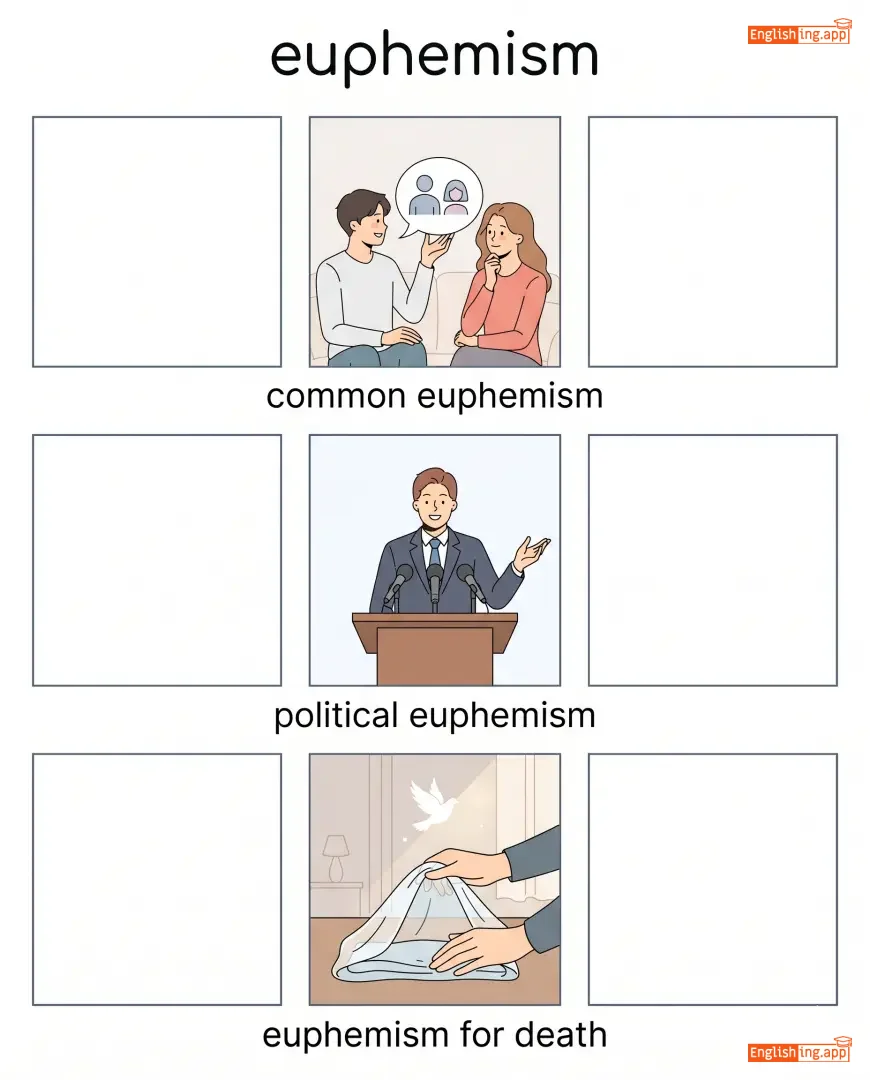
common euphemism, political euphemism, euphemism for death, use a euphemism

関連語彙

the highest point of achievement or excellence
a large African and Arabian primate with a dog-like snout and colorful buttocks
sweet brown oval fruits that grow on date palm trees
a rule, instruction, or principle that provides direction
an opening in a wall fitted with glass to let in light and air
a small marine crustacean that is often used as food.

さらに探索