語彙集

英単語辞書 | 単語の意味、定義、例文

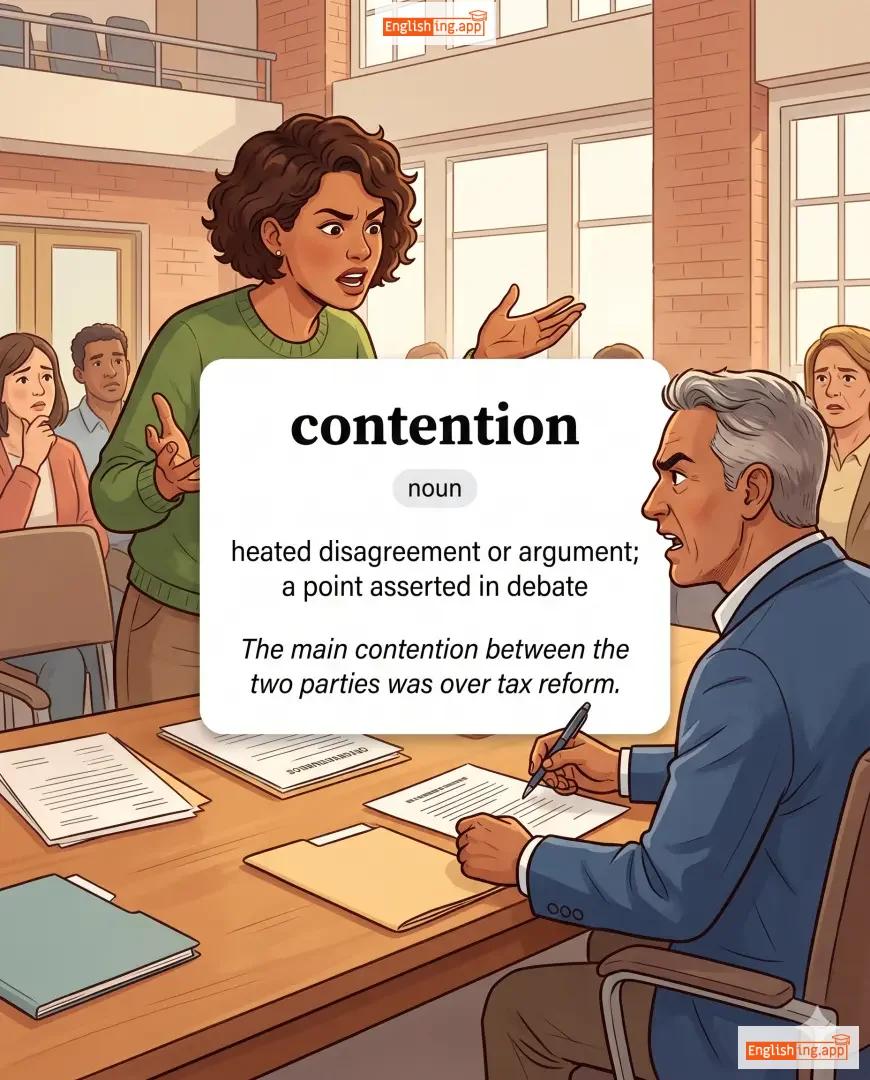
contention definition card — visual illustration of the meaning
noun
/kənˈtɛnʃən/
争い, 意見の相違 (arasoi, iken no soui)

heated disagreement or argument; a point asserted in debate

"The main contention between the two parties was over tax reform."
"二つの党派間での主要な争いは税制改革に関するものでした。" (Futatsu no tōhakanai de no shuyō na arasoi wa zeisei kaikaku ni kansuru mono deshita.)
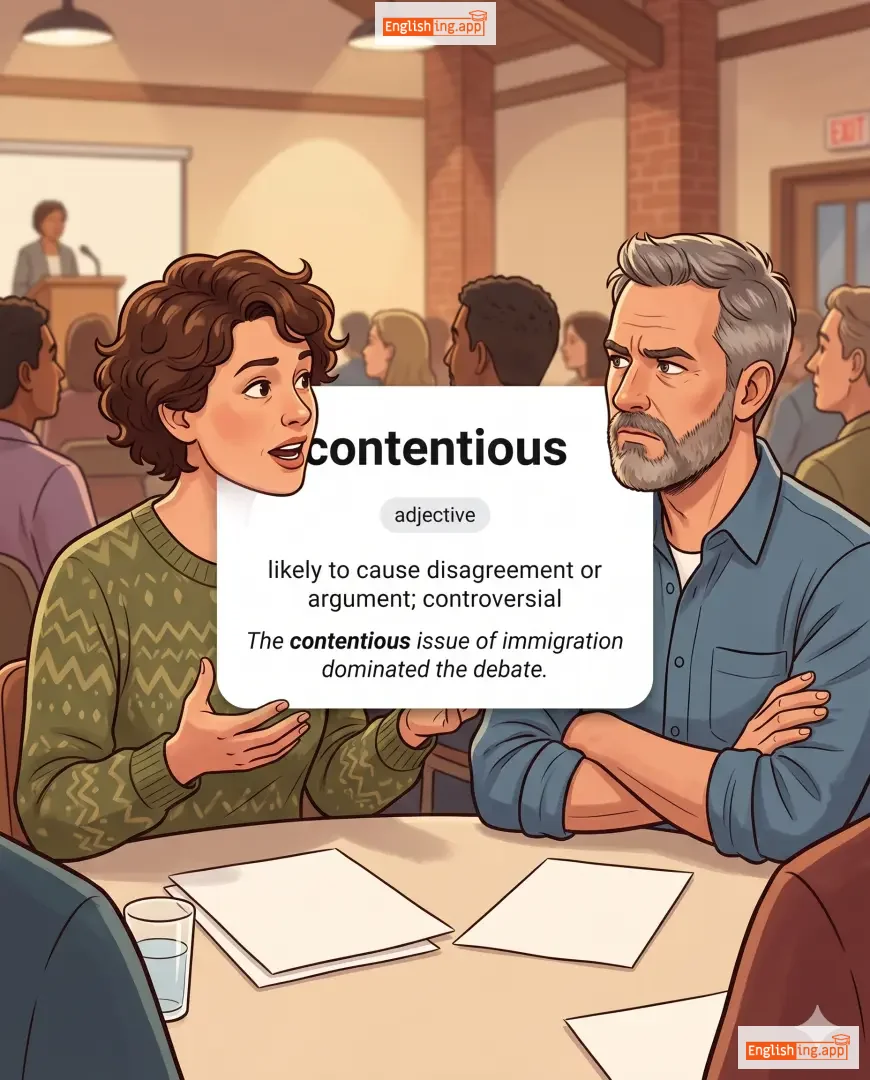
contentious definition card — visual illustration of the meaning
adjective
/kənˈtɛnʃəs/
物議を醸す (butsugi o kasu)

likely to cause disagreement or argument; controversial

"The contentious issue of immigration dominated the debate."

"移民問題の物議を醸す議題は討論を支配した。" (Imin mondai no butsugi o kasu gidai wa tōron o shihaishita.)
noun
/kənˈtentmənt/
満足感 (manzokukan)

a state of happiness and satisfaction with what one has

"She felt a deep sense of contentment after helping others."

"他人を助けた後、彼女は深い満足感を感じた。" (tanin o tasuketa ato kanojo wa fukai manzokukan o kanjita)
verb, noun
/ˈkɒntɛst/
競技, 挑戦 (kyougi, chousen)

verb: to compete or challenge; noun: a competition or dispute

"She decided to contest the election against the incumbent."

"彼女は現職に対して選挙に挑戦することを決定しました。" (Kanojo wa genshoku ni taishite senkyo ni chousen suru koto o kettei shimashita.)
noun
/ˈkɒntɛkst/
文脈 (bunmyaku)

the circumstances or background relevant to an event, statement, or idea

"To understand the quote, you need to know the context in which it was said."
"引用を理解するには、それが言われた文脈を知っている必要があります。" (Inyō o rikai suru ni wa, sore ga iwareta bunmyaku o shitte iru hitsuyō ga arimasu.)
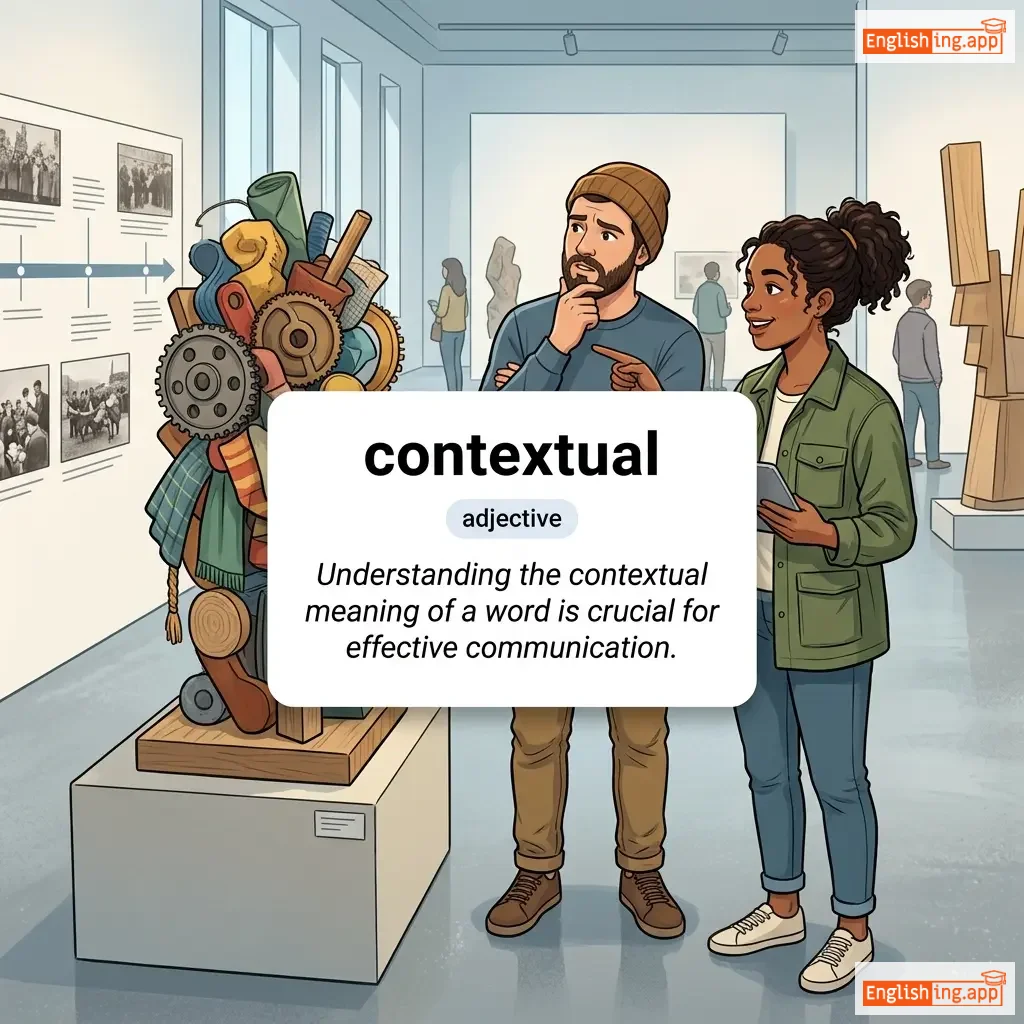
contextual definition card — visual illustration of the meaning
adjective
/kənˈtɛkstʃʊəl/
文脈的、状況に基づく (bunmyaku-teki, jōkyō ni motozuku)

Depending on or relating to the circumstances that form the setting for an event or statement.

"Understanding the contextual meaning of a word is crucial for effective communication."

"言葉の文脈的な意味を理解することは、効果的なコミュニケーションにとって重要です。" (Kotoba no bunmyaku-teki na imi o rikai suru koto wa, kōkateki na komyunikēshon ni totte jūyōdesu.)
contextualization definition card — visual illustration of the meaning
noun
/kɒnˌtek.stʃu.ə.laɪˈzeɪ.ʃən/
コンテキスト化 (kontekisuto-ka)

The process of placing something in its proper context or setting to understand it better.

"Contextualization of historical events helps students understand them better."

"歴史的な出来事のコンテキスト化は、学生がそれらをよりよく理解するのに役立ちます。" (Rekishiteki na dekigoto no konteki-suto-ka wa, gakusei ga sorera o yori yoku rikai suru no ni yakudachimasu.)
verb
/kənˈtɛkstʃuəlaɪz/
文脈化する (bunmyaku-ka suru)

to place something in a context or interpret it in relation to its surroundings

"The teacher contextualized the historical event to make it more relevant for students."

"先生は歴史的な出来事を学生にとってより関連性のあるものにするために文脈化しました。" (Sensei wa rekishiteki na dekigoto o gakusei ni totte yori kanrensei no aru mono ni suru tame ni bunmyaku-ka shimashita.)
noun
/kɒn.tɪˈɡjuː.ɪ.ti/
隣接性 (rinsetsusei)

the state of being in direct contact or next to each other

"The contiguity of the two countries facilitates trade."
"二国間の隣接性が貿易を促進します。" (Nikkokukan no rinsetsusei ga bōeki o sokushin shimasu.)
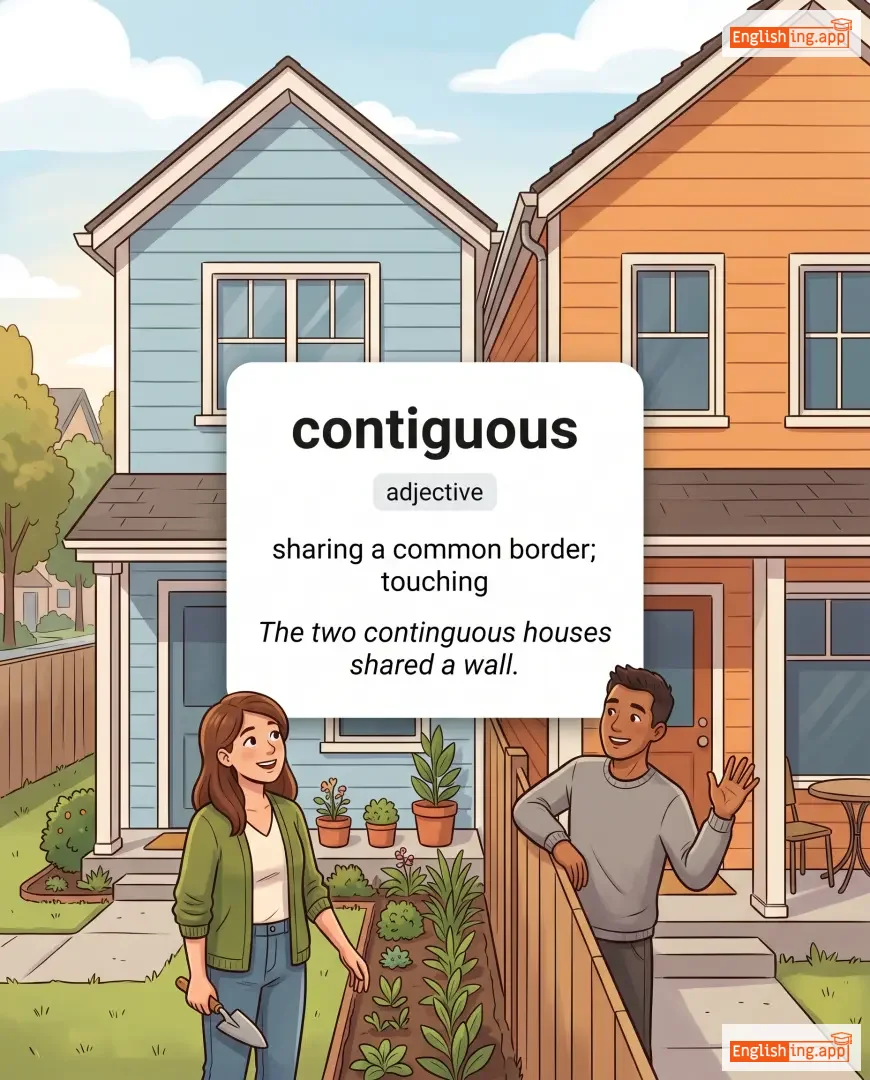
contiguous definition card — visual illustration of the meaning
adjective
/kənˈtɪɡ.ju.əs/
隣接 (rinsetsu)

sharing a common border; touching

"The two continguous houses shared a wall."
"隣接する2軒の家が壁を共有していました。" (Rinsetsu suru 2 ken no ie ga kabe wo kyouyuu shite imashita.)
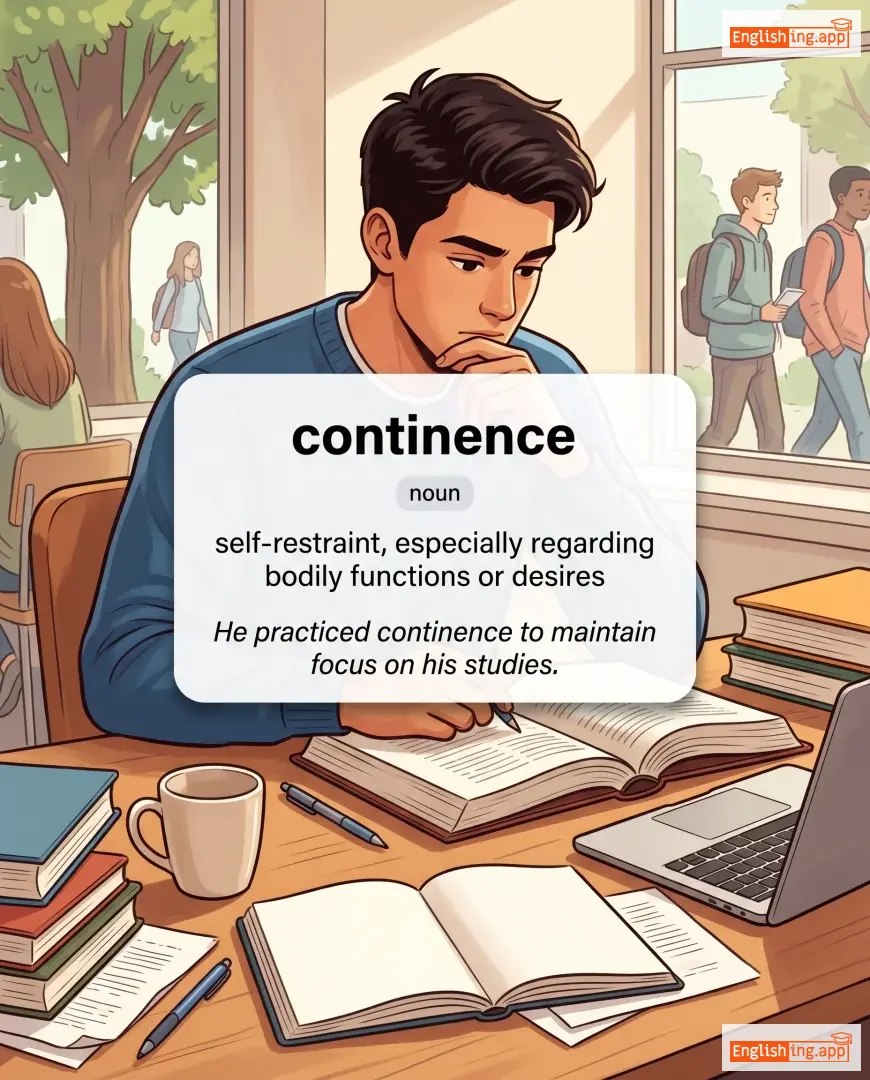
continence definition card — visual illustration of the meaning
noun
/ˈkɒn.tɪ.nəns/
禁欲 (kinyoku)

self-restraint, especially regarding bodily functions or desires

"He practiced continence to maintain focus on his studies."

"彼は学業に集中するために禁欲を実践した。" (Kare wa gakugyou ni shuuchuu suru tame ni kinyoku o jissen shita.)
noun
/ˈkɒntɪnənt/
大陸 (tairiku)

one of the large landmasses on Earth such as Asia, Africa, or Europe

"Asia is the largest continent in the world."
"アジアは世界で最も大きな大陸です。" (Ajia wa sekai de mottomo ōkina tairiku desu.)
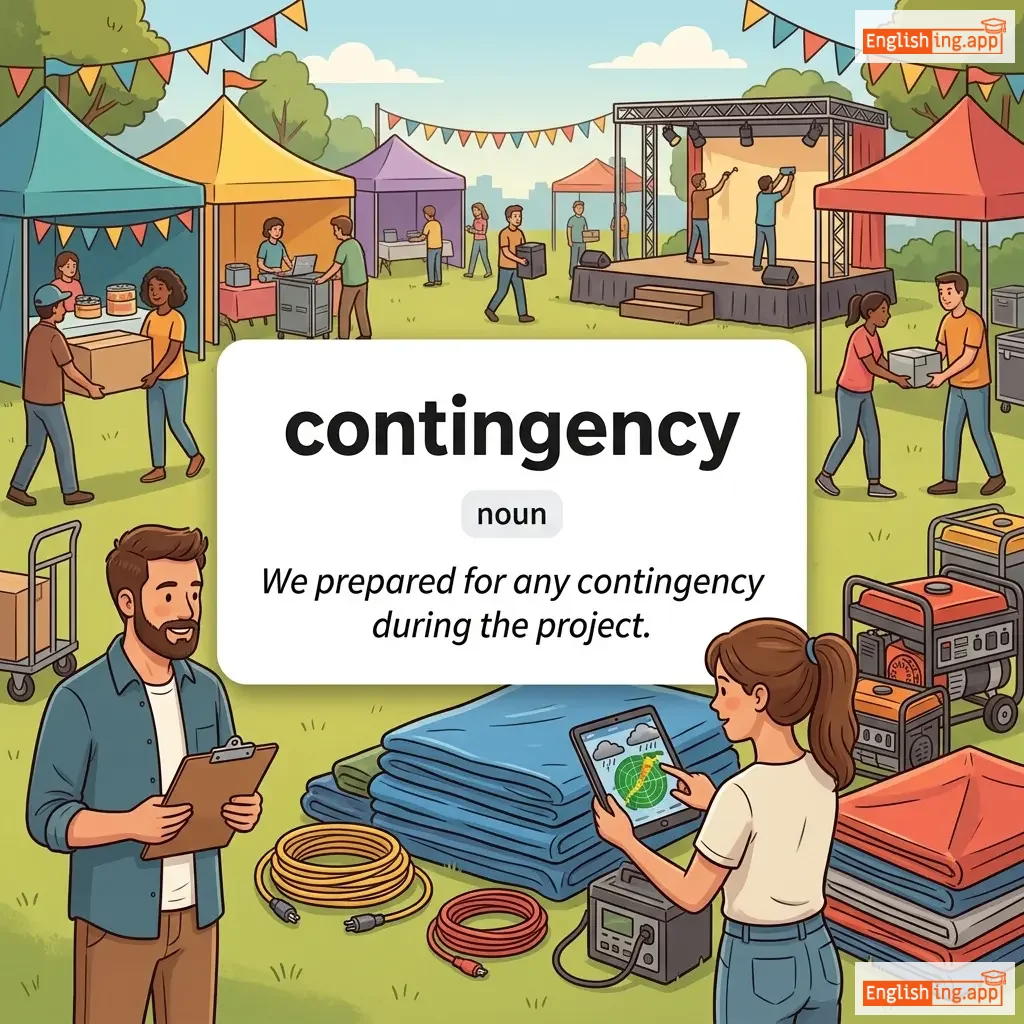
contingency definition card — visual illustration of the meaning
noun
/kənˈtɪn.dʒən.si/
不測の事態 (fusoku no jitai)

a future event or circumstance that is possible but cannot be predicted with certainty

"We prepared for any contingency during the project."

"プロジェクト中にどんな不測の事態にも対応できるように準備しておきました。" (Purojekuto-chū ni donna fusoku no jitai ni mo taio dekiru yō ni junbi shite okimashita.)
adjective,noun
/kənˈtɪn.dʒənt/
依存する / 代表団 (izon suru / daihyōdan)

dependent on something else; a group of people representing an organization

"Attendance is contingent on prior registration. / A contingent of students attended the conference."

"出席は事前登録に依存しています。 / 学生の代表団が会議に出席しました。" (Shusseki wa jizen tōroku ni izon shiteimasu. / Gakusei no daihyōdan ga kaigi ni shusseki shimashita.)
adjective
/kənˈtɪn.ju.əl/
継続的な; 絶え間ない (keizokuteki na; taema nai)

happening repeatedly over a long period of time; constant and uninterrupted

"The continual noise from the construction site was very annoying."

"建設現場からの継続的な音は非常に迷惑でした。" (Kensetsu genba kara no keizokuteki na oto wa hijou ni meiwaku deshita.)
adverb
/kənˈtɪnjuəli/
継続的に (keizokuteki ni)

in a continuous and uninterrupted way

"The rain has been falling continually for hours."

"雨は何時間も継続的に降り続いています。" (Ame wa nan-jikan mo keizokuteki ni furi tsuzuiteimasu.)
noun
/kənˈtɪn.ju.əns/
継続 (keizoku)

the state of continuing or being prolonged; persistence

"The continuance of the project depended on securing additional funding."

"プロジェクトの継続は追加資金の確保に依存していました。" (Purojekuto no keizoku wa tsuika shikin no kakuho ni izon shite imashita.)
noun
/kənˌtɪn.juˈeɪ.ʃən/
継続 (keizoku)

the action of carrying something on over time; extension

"The continuation of the series was announced after the finale."

"シリーズの継続は最終回後に発表されました。" (Shirīzu no keizoku wa saishūkai go ni happyō saremashita.)
verb
/kənˈtɪnjuː/
続ける (tsuzukeru)

To keep happening, existing, or doing something without stopping.

"The rain will continue throughout the night."

"雨は一晩中続きます。" (Ame wa hitobanju tsudzukimasu.)
verb
/kənˈtɪn.juːd/
続ける (tsuzukeru)

Kept happening or carried on without stopping.

"She continued working despite the challenges."

"彼女は挑戦にもかかわらず働き続けました。" (Kanojo wa chousen ni mo kakawarazu hatarakitsuzukemashita.)
verb
/kənˈtɪnjuɪŋ/
続ける (tsuzukeru)

to keep doing something without stopping

"They are continuing their journey despite the rain."

"雨にもかかわらず、彼らは旅を続けています。" (Ame ni mo kakawarazu, karera wa tabi o tsuzuketeimasu.)
noun
/ˌkɒn.tɪˈnjuː.ɪ.ti/
継続性 (keizokusei)

the state of being continuous or connected; consistency over time

"Maintaining continuity in leadership is essential for organizational stability."

"リーダーシップにおける継続性の維持は、組織の安定性にとって不可欠です。" (Ridaashippu ni okeru keizokusei no iji wa, soshiki no antei-sei ni totte fukaketsu desu.)
adjective
/kənˈtɪn.ju.əs/
連続的 (renzokuteki)

forming an unbroken whole; without interruption

"The factory operates on a continuous 24-hour schedule."

"工場は24時間連続したスケジュールで稼働しています。" (Koujou wa 24 jikan renzokushita sukejuuru de kadou shiteimasu.)
adverb
/kənˈtɪnjuəsli/
連続的に; 絶え間なく; 途切れることなく (renzokuteki ni; taemanaku; togereru koto naku)

without interruption; in an unbroken sequence

"The machine operates continuously for 24 hours."

"その機械は24時間連続して稼働します。" (sono kikai wa 24 jikan renzoku shite kadō shimasu.)
noun
/kənˈtɪnjuəm/
連続体 (renzokutai)

A continuous sequence in which adjacent elements are not perceptibly different from each other, but the extremes are quite distinct.

"Life and death are often seen as part of the same continuum."

"生と死はしばしば同じ連続体の一部と見なされます。" (Sei to shi wa shibashiba onaji renzokutai no ichibu to minasarerumasu.)
verb
/kənˈtɔːrt/
歪む (yugamu)

to twist or bend out of the normal shape

"She contorted her face in pain after the injury."

"怪我をした後、彼女は痛みに顔を歪めた。" (Kega o shita ato, kanojo wa itami ni kao o yugameta.)
noun
/kənˈtɔːrʃən/
ねじれたまたは曲がった形; 通常の形から外れてねじる行為 (nejireta mata wa magatta katachi; tsuujou no katachi kara hazurete nejiru koui)

a twisted or bent shape; the act of twisting out of the normal shape

"The gymnast's contortion amazed the audience."

"体操選手のコンターションは観客を驚かせました。" (Taisou senshu no kontaashon wa kankyaku o odoro kase mashita.)
noun
/kənˈtɔːrʃənz/
捻じれの複数形; いくつかのねじれたまたは曲がった形 (nejire no fukusūkei; ikutsuka no nejireta matawa magatta katachi)

plural form of contortion; multiple twisted or bent shapes

"The magician's contortions left the crowd in awe."

"魔術師のコンタ―ションは観客を驚かせた。" (Majutsushi no kontāshon wa kankyaku o odorokaseta.)
noun
/ˈkɒntrəbænd/
密輸品 (mitsuyu hin)

goods that are illegal to import, export, or possess

"The police seized a shipment of contraband cigarettes."

"警察は密輸されたタバコの積荷を押収しました。" (Keisatsu wa mitsuyu sareta tabako no tsukimi o shōshu shimashita.)
contract definition card — visual illustration of the meaning
noun, verb
/ˈkɒntrækt/
契約、書面または口頭による合意 (keiyaku, shomen matawa koutou ni yoru goui)

noun: a written or spoken agreement; verb: to enter into an agreement or to reduce in size

"They signed a contract for the new project."
"彼らは新しいプロジェクトのために契約を結びました。" (Karera wa atarashī purojekuto no tame ni keiyaku o musubimashita.)
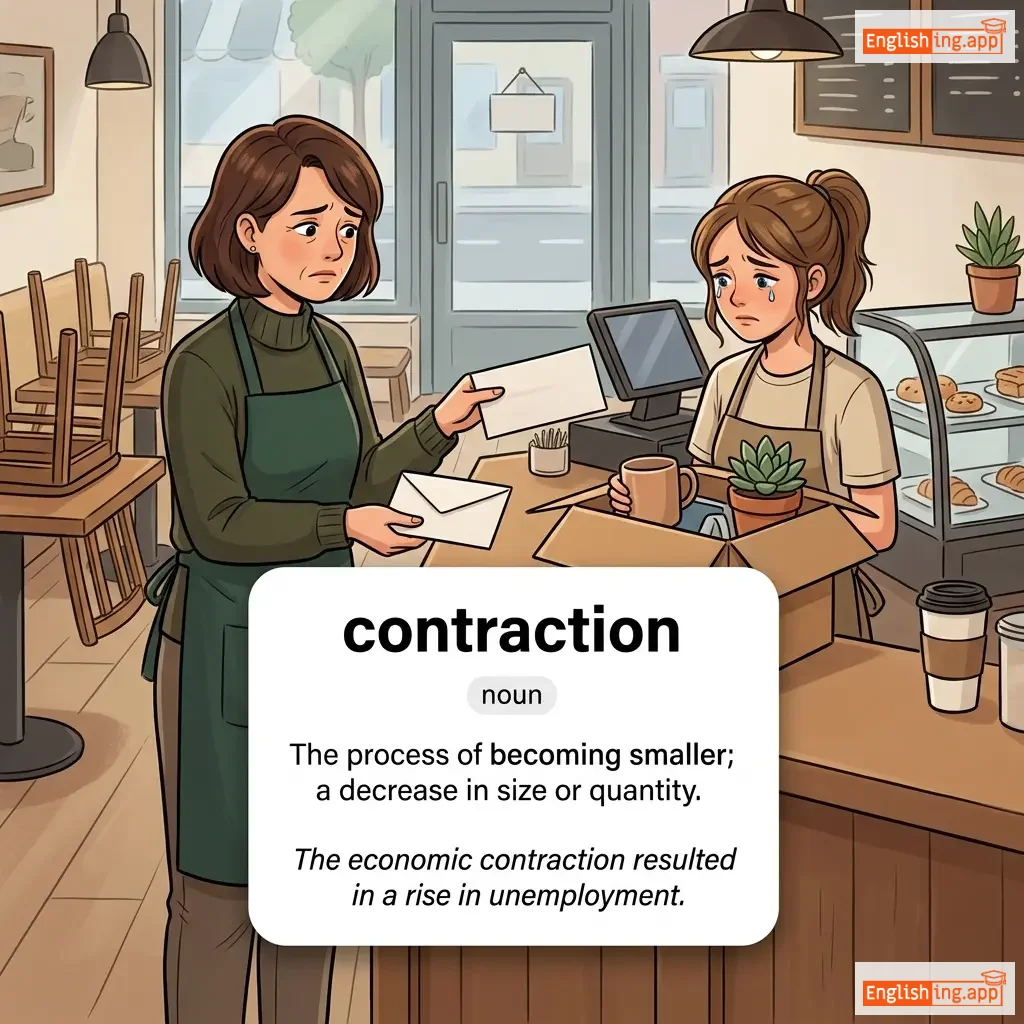
contraction definition card — visual illustration of the meaning
noun
kənˈtrækʃən
収縮 (shūshuku)

The process of becoming smaller; a decrease in size or quantity.

"The economic contraction resulted in a rise in unemployment."

"経済の収縮は失業率の上昇を招いた。" (Keizai no shūshuku wa shitsugyō-ritsu no jōshō o manaita.)
noun
/ˈkɒntræktər/
請負業者 (ukeoi gyōsha)

a person or company that agrees to provide materials or labor to perform a service or do a job

"The contractor completed the building project on time."

"請負業者は建設プロジェクトを期限内に完了しました。" (Ukeoi gyōsha wa ken'etsu purojekuto o kigen-nai ni kanryō shimashita.)
verb
/ˌkɒn.trəˈdɪkt/
矛盾する (mujun suru)

to say or show the opposite of something that has been said or believed

"His actions contradict his words."

"彼の行動は彼の言葉と矛盾しています。" (kare no kōdō wa kare no kotoba to mujun shiteimasu.)
noun
/ˌkɒntrəˈdɪkʃən/
矛盾、一貫性の欠如 (mujun, ikkan-sei no ketsujo)

a statement or situation that is opposed to another, inconsistency

"Her actions are in clear contradiction to her words."
"彼女の行動は彼女の言葉と明確に矛盾している。" (Kanojo no koudou wa kanojo no kotoba to meikaku ni mujun shite iru.)
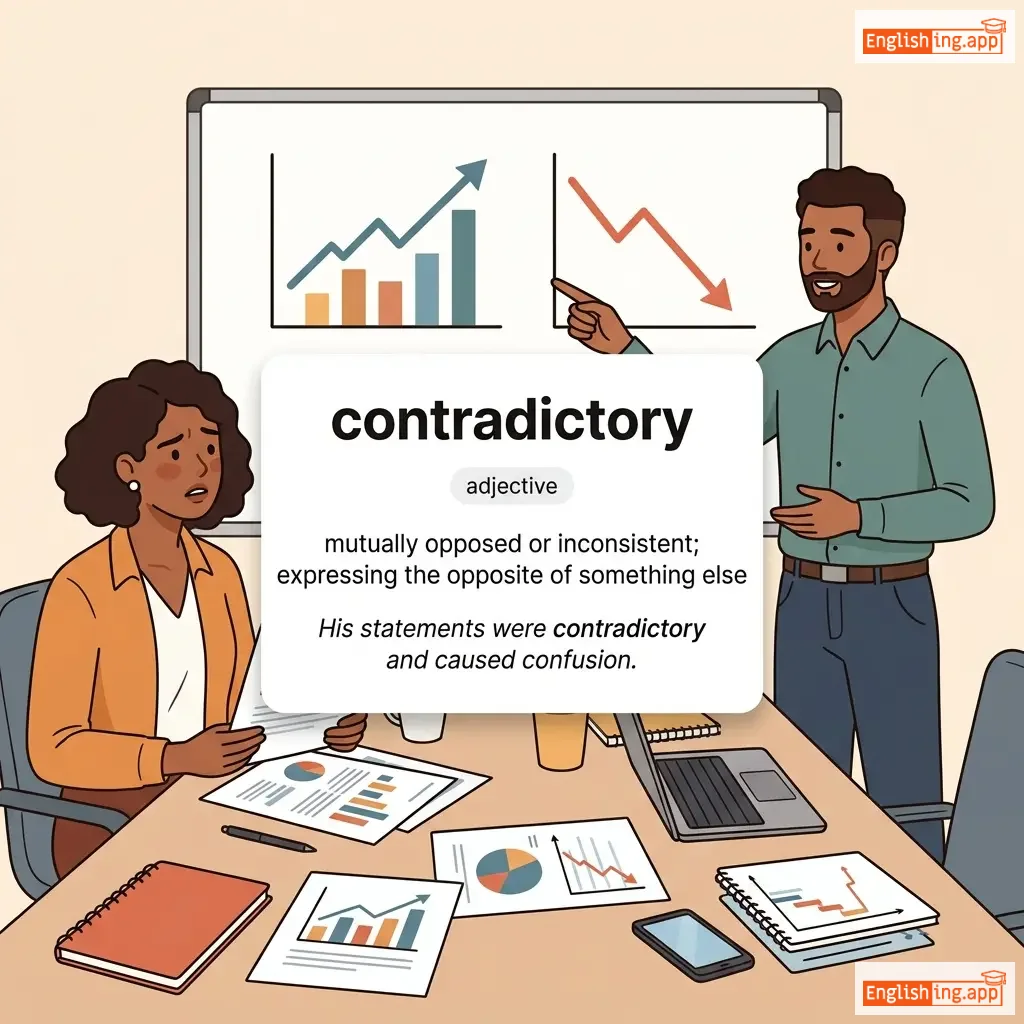
contradictory definition card — visual illustration of the meaning
adjective
/ˌkɒntrəˈdɪktəri/
矛盾する (mujun suru)

mutually opposed or inconsistent; expressing the opposite of something else

"His statements were contradictory and caused confusion."

"彼の発言は矛盾していて、混乱を引き起こしました。" (Kare no hatsugen wa mujun shite ite, konran o hikiokoshimashita.)
noun
/ˌkɒntrəpəˈzɪʃən/
対比配置 (taibi haichi)

the act of placing two things in opposition for contrast or comparison

"The contraposition of the two theories highlighted their differences."

"二つの理論の対比配置は、彼らの違いを強調した。" (Futatsu no riron no taibi haichi wa, karera no chigai o kyouchou shita.)
noun
/ˈkɒntrəriz/
対立する物事 (tairitsu suru monogoto)

things that are completely different or opposite to each other

"Freedom and slavery are contraries in every sense."

"自由と奴隷制度はすべての点で対立しています。" (Jiyū to dorei seido wa subete no ten de tairitsu shiteimasu.)
adjective
/ˈkɒn.trəri/
反対の (hantai no)

opposite in nature, direction, or meaning

"Her views are contrary to mine."
"彼女の意見は私の意見と反対です。" (Kanojo no iken wa watashi no iken to hantai desu.)
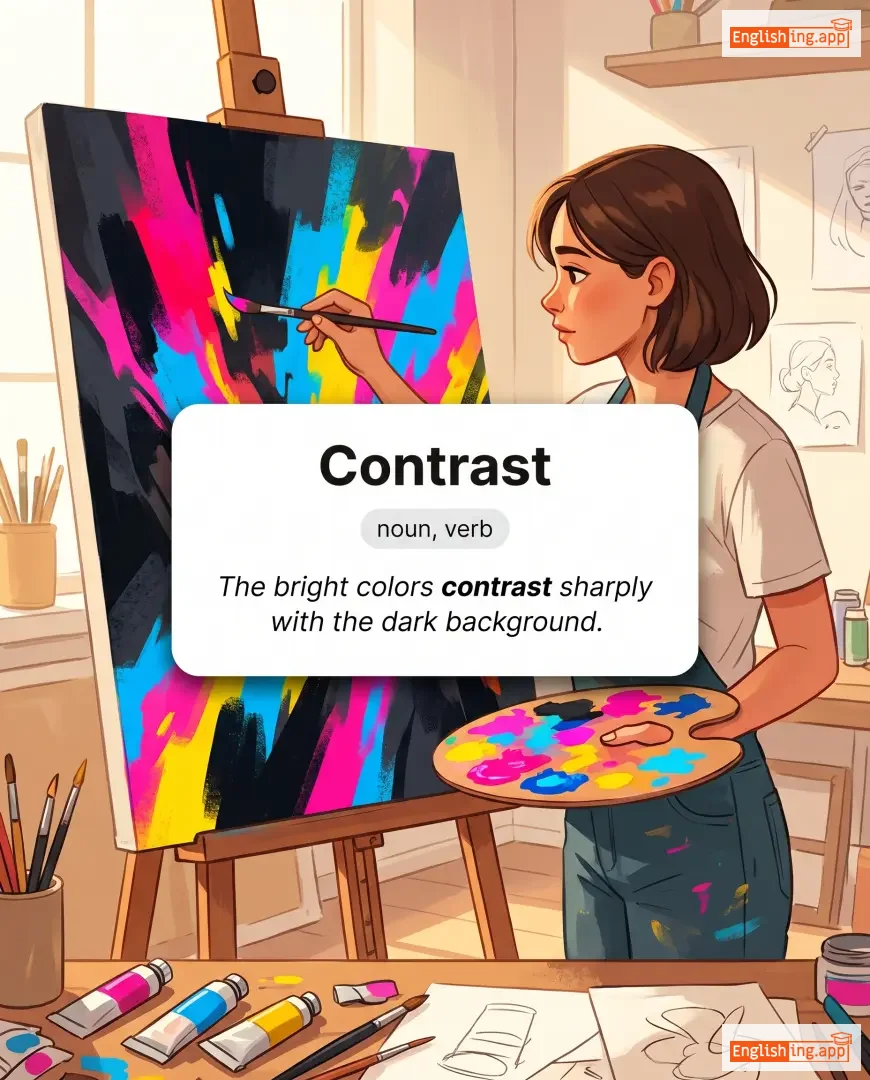
Contrast definition card — visual illustration of the meaning
noun, verb
/ˈkɒn.trɑːst/ (noun), /kənˈtræst/ (verb)
幸せ (shiawase)

A difference between two or more things; to compare two things to show how they are different.

"The bright colors contrast sharply with the dark background."

"彼女は賞を受け取ったとき、自分の幸せを隠せなかった。" (Kanojo wa shō o uketotta toki, jibun no shiawase o kakusenakatta.)
verb
/ˌkɒntrəˈviːn/
違反する (ihansuru)

to go against or act in opposition to a law, rule, or agreement

"He contravened the safety regulations and was fined."

"彼は安全規則に反したため、罰金を科せられました。" (Kare wa anzen kisoku ni hanshita tame, bakkin o kaseraremashita.)
noun
/ˈkɒntrətɑː̃/
予期しない対立 (yokishinai tairitsu)

an unexpected and unfortunate event or disagreement; a minor dispute

"There was a small contretemps between the two colleagues during the meeting."
"会議中、二人の同僚の間で小さな予期しない対立がありました。" (Kaigichū, futari no dōryō no aida de chīsana yokishinai tairitsu ga arimashita.)
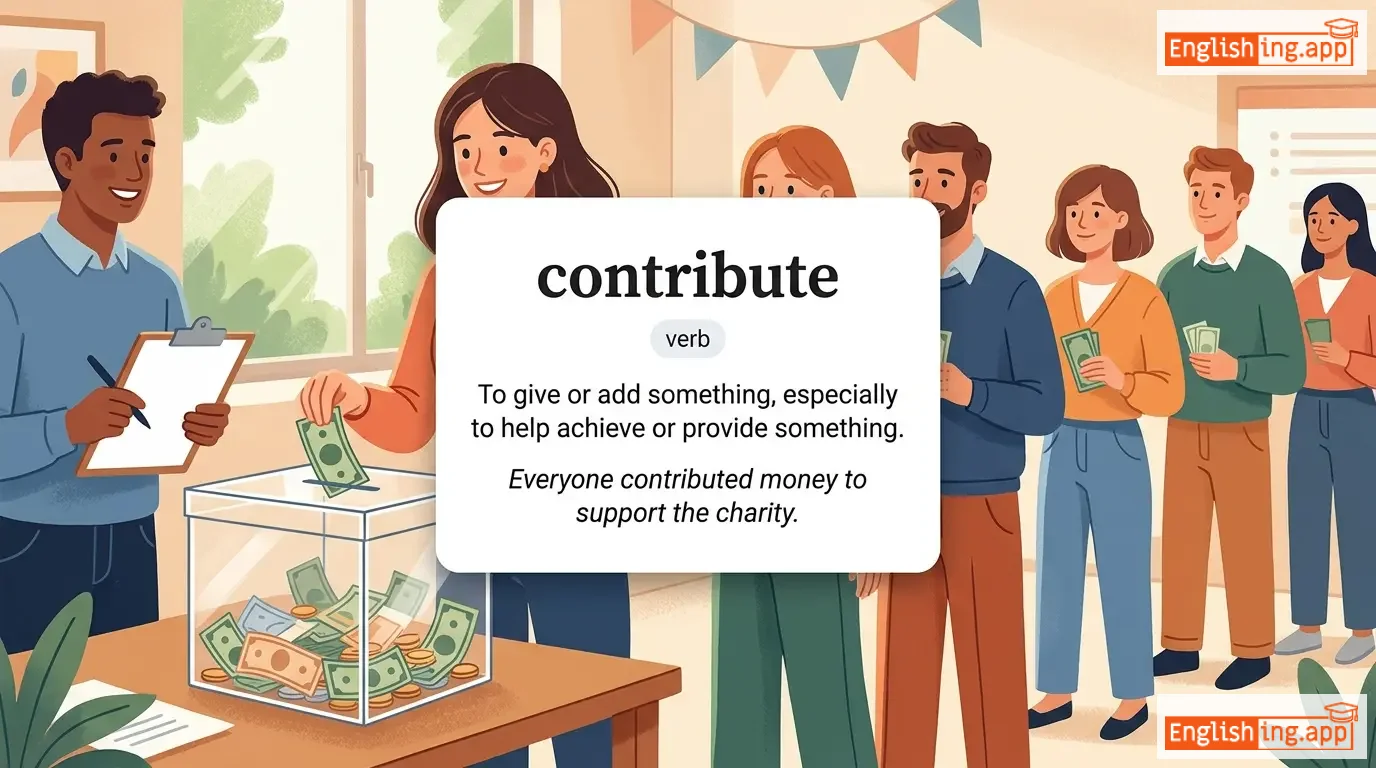
contribute definition card — visual illustration of the meaning
verb
/kənˈtrɪbjuːt/

To give or add something, especially to help achieve or provide something.

"Everyone contributed money to support the charity."
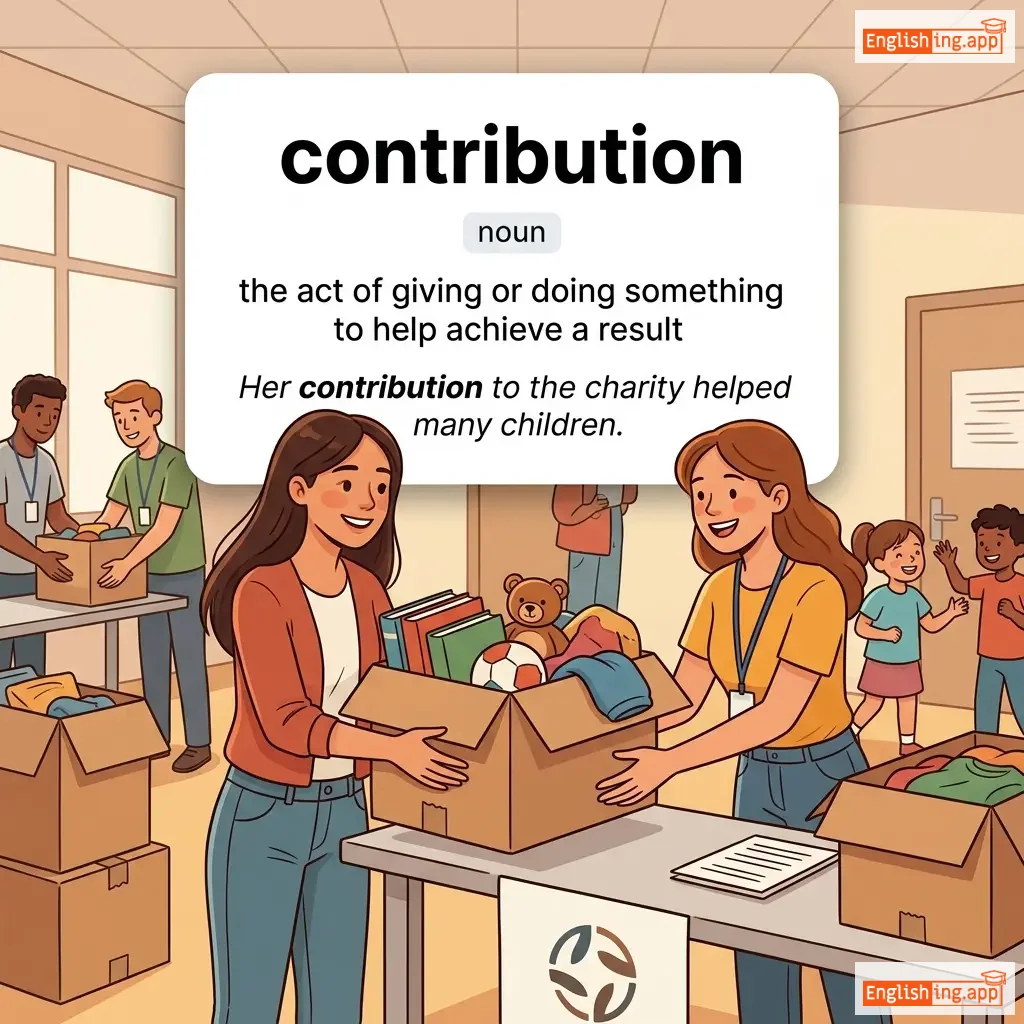
contribution definition card — visual illustration of the meaning
noun
/ˌkɒn.trɪˈbjuː.ʃən/
貢献 (kouken)

the act of giving or doing something to help achieve a result

"Her contribution to the charity helped many children."

"彼女の慈善活動への貢献は多くの子供たちを助けました。" (Kanojo no jizen katsudou e no kouken wa ooku no kodomotachi o tasukemashita.)
noun
/ˈkɒn.trɪ.bjʊ.tər/
貢献者 (kōken-sha)

a person who gives something to help achieve a result

"He was a regular contributor to the local newspaper."
"彼は地元の新聞の定期的な貢献者でした。" (Kare wa jimoto no shinbun no teikiteki na kōken-sha deshita.)
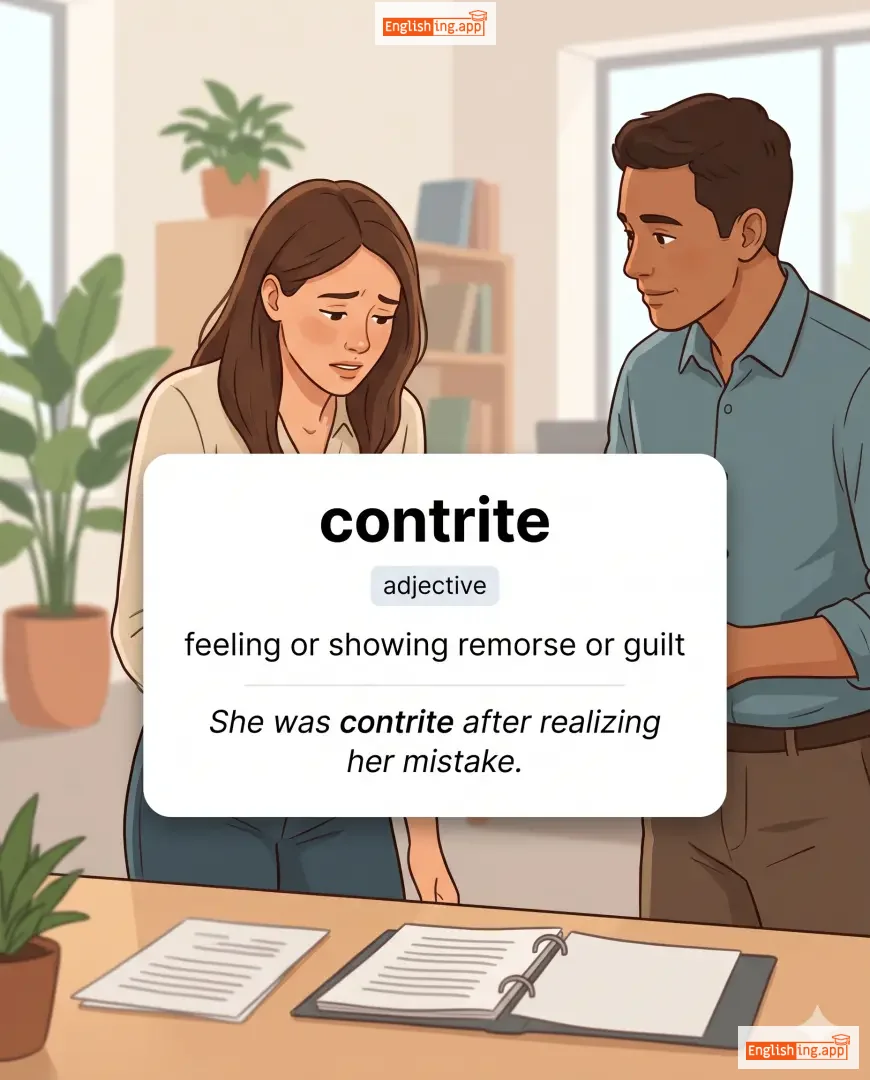
contrite definition card — visual illustration of the meaning
adjective
/kənˈtraɪt/
後悔している (kōkai shite iru)

feeling or showing remorse or guilt

"She was contrite after realizing her mistake."

"彼女は自分の間違いに気づいた後、後悔していた。" (Kanojo wa jibun no machigai ni kizuita ato, kōkai shite ita.)
noun
/kənˈtrɪʃ.ən/
悔悟 (kaigo)

the state of feeling remorseful and repentant

"His contrition was evident after the apology."

"謝罪後、彼の悔悟は明らかだった。" (Shazai-go, kare no kaigo wa akiraka datta.)
noun
/kənˈtraɪ.vəns/
装置や計画 (sōchi ya keikaku)

a device or plan that is cleverly or artificially created

"The clock was an intricate contrivance of gears and springs."

"その時計は歯車とバネの複雑な装置でした。" (Sono tokei wa haguruma to bane no fukuzatsu na sōchi deshita.)
verb
/kənˈtraɪv/
考案する (kōansuru)

to plan or devise cleverly or skillfully

"She contrived a clever plan to surprise her friends."

"彼女は友達を驚かせるために賢い計画を思いついた。" (Kanojo wa tomodachi o odorokasu tame ni kashikoi keikaku o omoitsuita.)
noun
/ˈklævɪkəl/
鎖骨 (sakotsu)

the collarbone, a long bone that serves as a strut between the shoulder blade and the sternum

"He fractured his clavicle in the accident."

"彼は事故で鎖骨を骨折した。" (Kare wa jiko de sakotsu o kossetsu shita.)
noun
/klɔː/
(tsume)

sharp curved nail on the foot of an animal or bird

"The cat extended its sharp claws to climb the tree."

"猫は木に登るために鋭い爪を伸ばした。" (Neko wa ki ni noboru tame ni surudoi tsume o nobashita.)