वोकैबुलरीज

इंग्लिश वोकैबुलरी डिस्कवर, लर्न और मास्टर करें

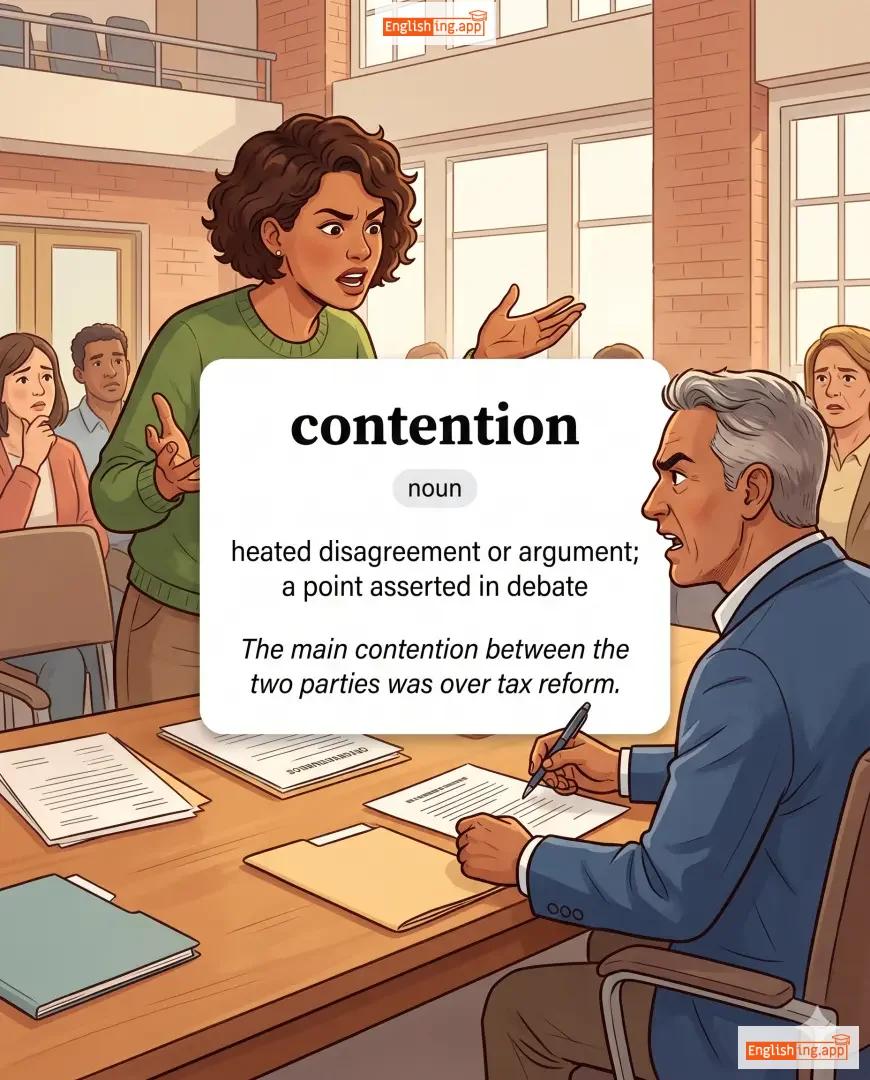
contention definition card — visual illustration of the meaning
noun
/kənˈtɛnʃən/
विवाद, मतभेद (vivad, matbhed)

heated disagreement or argument; a point asserted in debate

"The main contention between the two parties was over tax reform."

"दो पार्टियों के बीच मुख्य विवाद कर टैक्स सुधार पर था।" (Do parties ke beech mukhya vivad kar tax sudhaar par tha.)
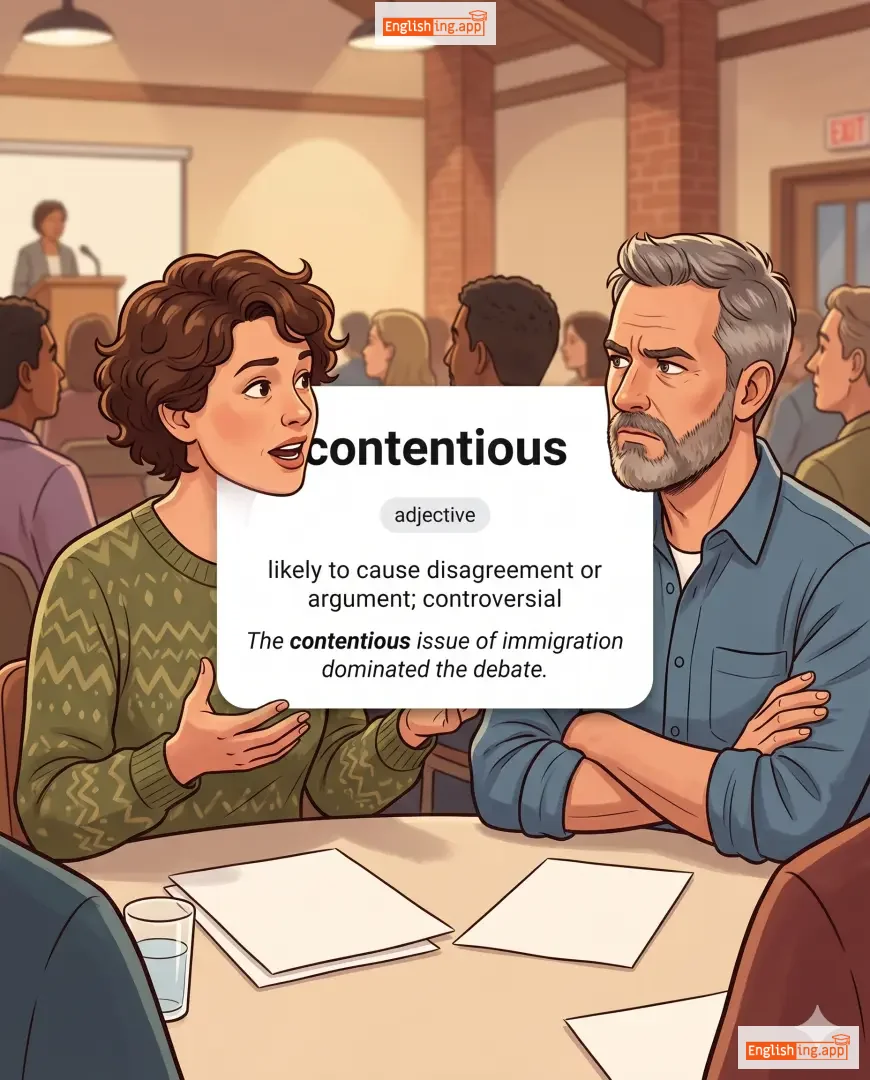
contentious definition card — visual illustration of the meaning
adjective
/kənˈtɛnʃəs/
विवादास्पद (vivaadaspad)

likely to cause disagreement or argument; controversial

"The contentious issue of immigration dominated the debate."

"आप्रवासन का विवादास्पद मुद्दा बहस में छाया रहा।" (Aapravāsan kā vivādāspad mudda behas meṃ chhāyā rahā.)
noun
/kənˈtentmənt/
संतोष (santosh)

a state of happiness and satisfaction with what one has

"She felt a deep sense of contentment after helping others."

"दूसरों की मदद करने के बाद उसे गहरा संतोष महसूस हुआ।" (doosron ki madad karne ke baad use gehra santosh mehsoos hua)
verb, noun
/ˈkɒntɛst/
प्रतियोगिता करना, चुनौती देना (pratiyogita karna, chunauti dena)

verb: to compete or challenge; noun: a competition or dispute

"She decided to contest the election against the incumbent."

"उसने चुनाव में वर्तमान उम्मीदवार के खिलाफ प्रतियोगिता करने का निर्णय लिया।" (Usne chunav mein vartaman ummidwar ke khilaf pratiyogita karne ka nirnay liya.)
noun
/ˈkɒntɛkst/
संदर्भ (sandarbha)

the circumstances or background relevant to an event, statement, or idea

"To understand the quote, you need to know the context in which it was said."

"उद्धरण को समझने के लिए, आपको उस संदर्भ को जानना जरूरी है जिसमें यह कहा गया था।" (Uddharan ko samajhne ke liye, aapko us sandarbha ko janana zaroori hai jismein yah kaha gaya tha.)
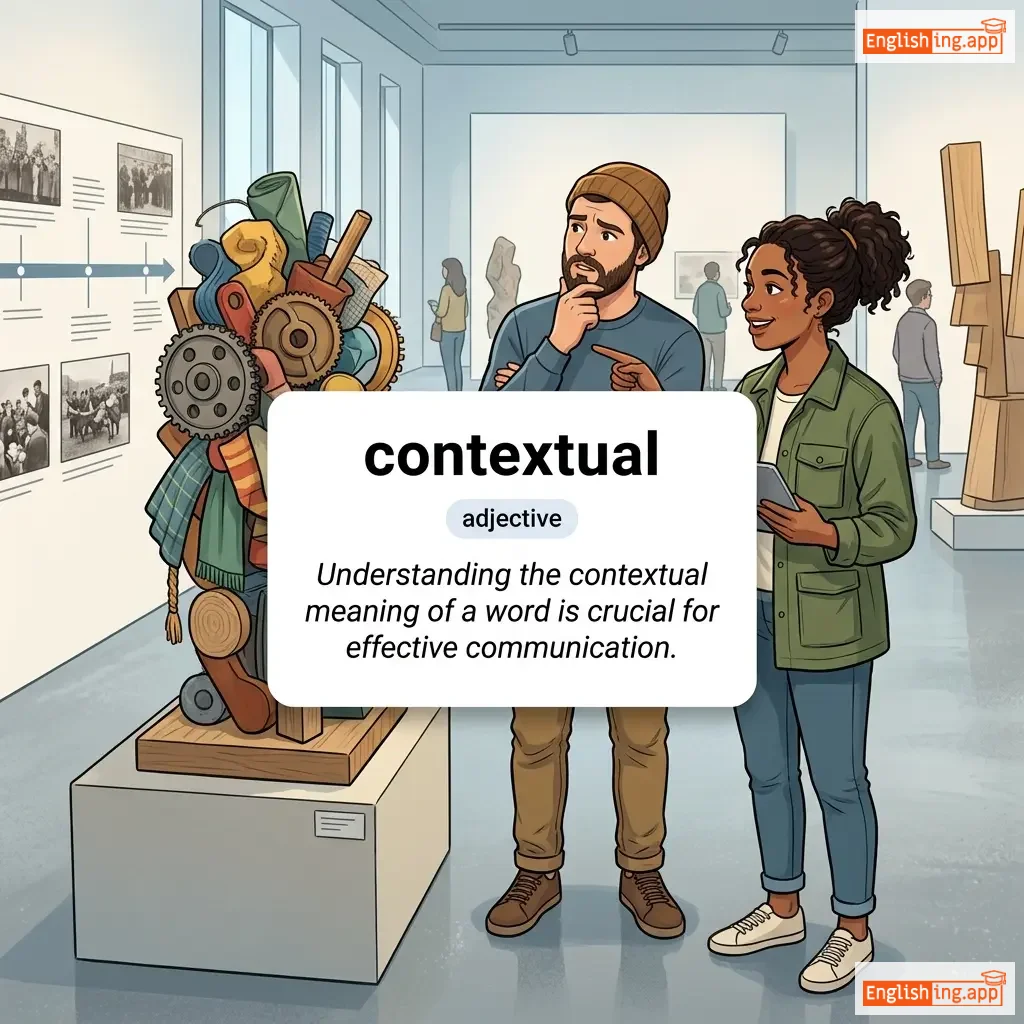
contextual definition card — visual illustration of the meaning
adjective
/kənˈtɛkstʃʊəl/
संदर्भात्मक, परिस्थिति आधारित (sandarbhatmak, paristhiti aadharit)

Depending on or relating to the circumstances that form the setting for an event or statement.

"Understanding the contextual meaning of a word is crucial for effective communication."

"शब्द के संदर्भात्मक अर्थ को समझना प्रभावी संचार के लिए महत्वपूर्ण है।" (Shabd ke sandarbhatmak arth ko samajhna prabhavi sanchar ke liye mahatvapurn hai.)
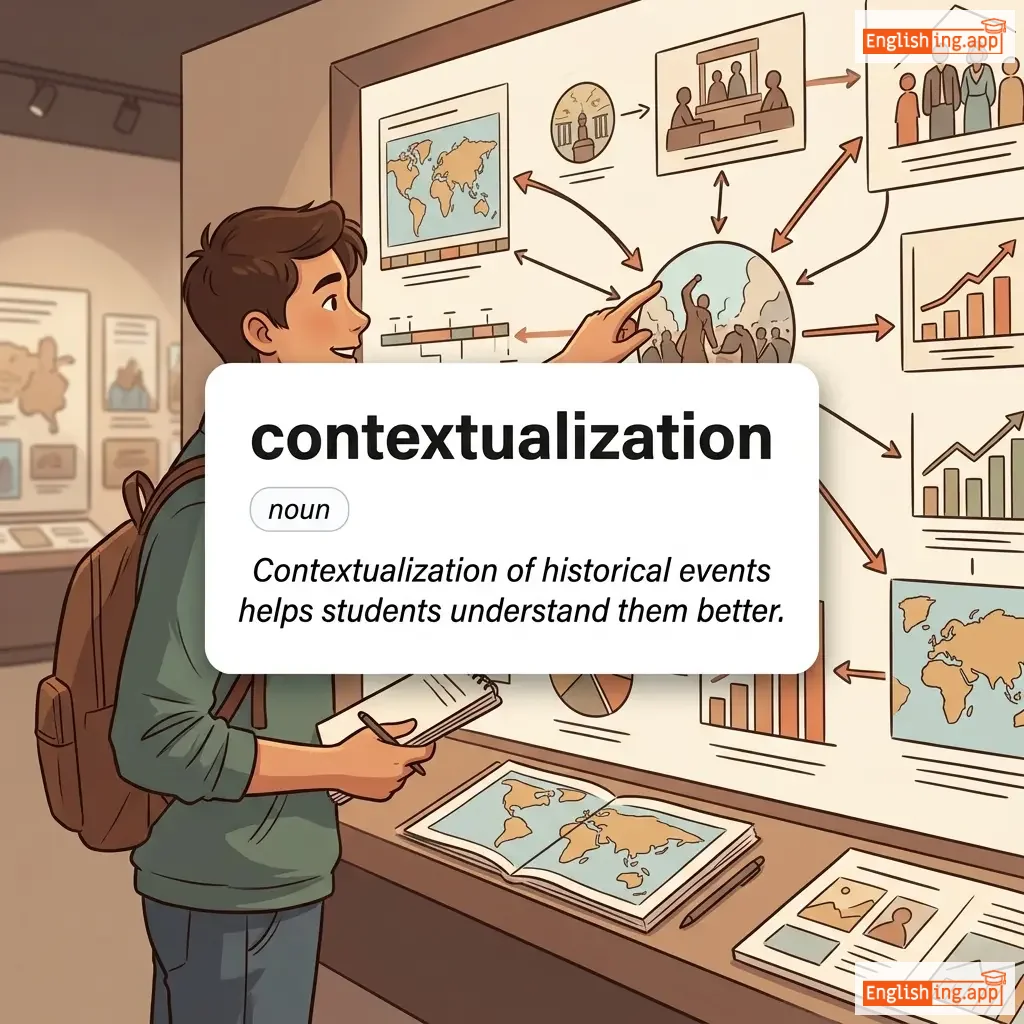
contextualization definition card — visual illustration of the meaning
noun
/kɒnˌtek.stʃu.ə.laɪˈzeɪ.ʃən/
संदर्भ निर्धारण (sandarbha nirdharan)

The process of placing something in its proper context or setting to understand it better.

"Contextualization of historical events helps students understand them better."

"ऐतिहासिक घटनाओं का संदर्भ निर्धारण छात्रों को उन्हें बेहतर तरीके से समझने में मदद करता है।" (Aitihasik ghatnaon ka sandarbh nirdharan chhatron ko unhe behtar tareeke se samajhne mein madad karta hai.)
verb
/kənˈtɛkstʃuəlaɪz/
प्रसंग में रखना, संदर्भ के अनुसार व्याख्या करना (prasang mein rakhna, sandarbh ke anusar vyakhya karna)

to place something in a context or interpret it in relation to its surroundings

"The teacher contextualized the historical event to make it more relevant for students."

"शिक्षक ने ऐतिहासिक घटना को छात्रों के लिए अधिक प्रासंगिक बनाने के लिए संदर्भ में रखा।" (Shikshak ne aitihasik ghatna ko chhatron ke liye adhik prasangik banane ke liye sandarbh mein rakha.)
noun
/kɒn.tɪˈɡjuː.ɪ.ti/
सन्निकटता (sannikatata)

the state of being in direct contact or next to each other

"The contiguity of the two countries facilitates trade."

"दो देशों की सन्निकटता व्यापार को आसान बनाती है।" (Do deshon ki sannikatata vyapar ko aasaan banati hai.)
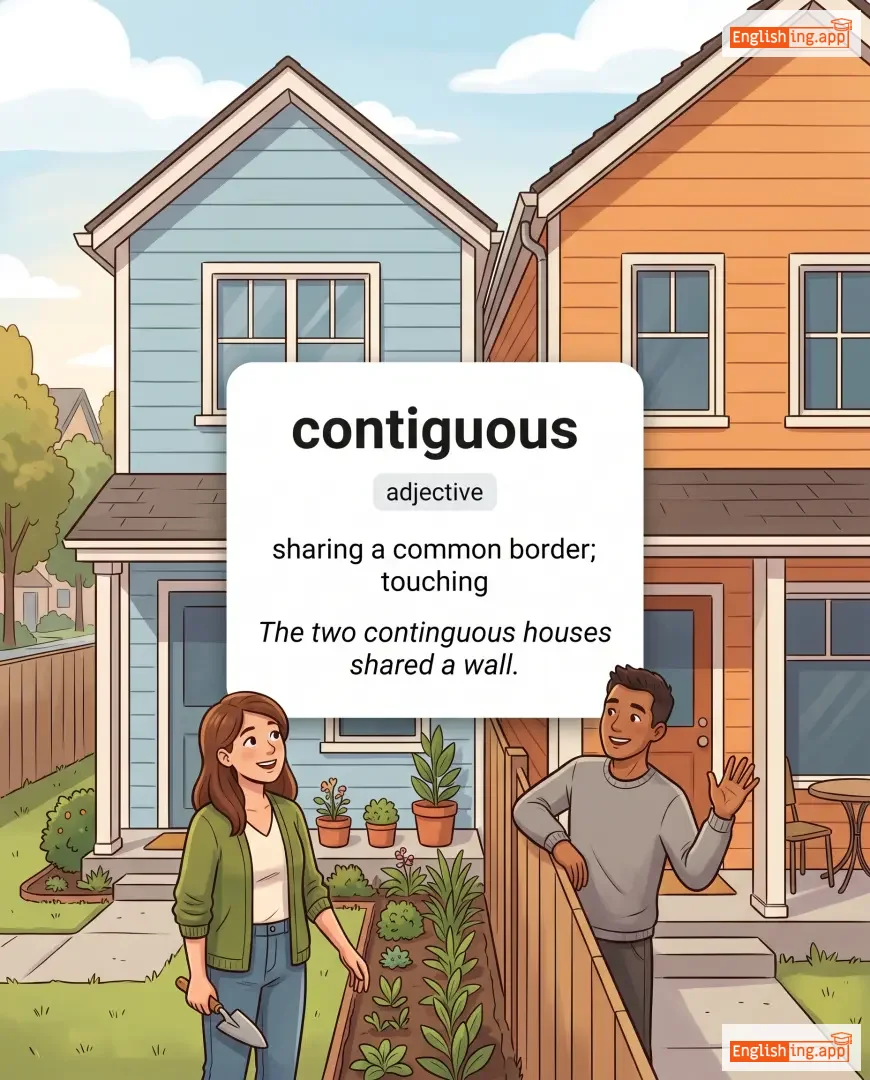
contiguous definition card — visual illustration of the meaning
adjective
/kənˈtɪɡ.ju.əs/
सन्निहित (sannihit)

sharing a common border; touching

"The two continguous houses shared a wall."

"दो सन्निहित घरों ने एक दीवार साझा की।" (Do sannihit gharon ne ek deewaar saanjha ki.)
continence definition card — visual illustration of the meaning
noun
/ˈkɒn.tɪ.nəns/
संयम (sanyam)

self-restraint, especially regarding bodily functions or desires

"He practiced continence to maintain focus on his studies."

"उसने अपनी पढ़ाई पर ध्यान केंद्रित करने के लिए संयम का अभ्यास किया।" (Usne apni padhai par dhyaan kendrit karne ke liye sanyam ka abhyas kiya.)
noun
/ˈkɒntɪnənt/
महाद्वीप (mahadveep)

one of the large landmasses on Earth such as Asia, Africa, or Europe

"Asia is the largest continent in the world."

"एशिया दुनिया का सबसे बड़ा महाद्वीप है।" (Asia duniya ka sabse bada mahadveep hai.)
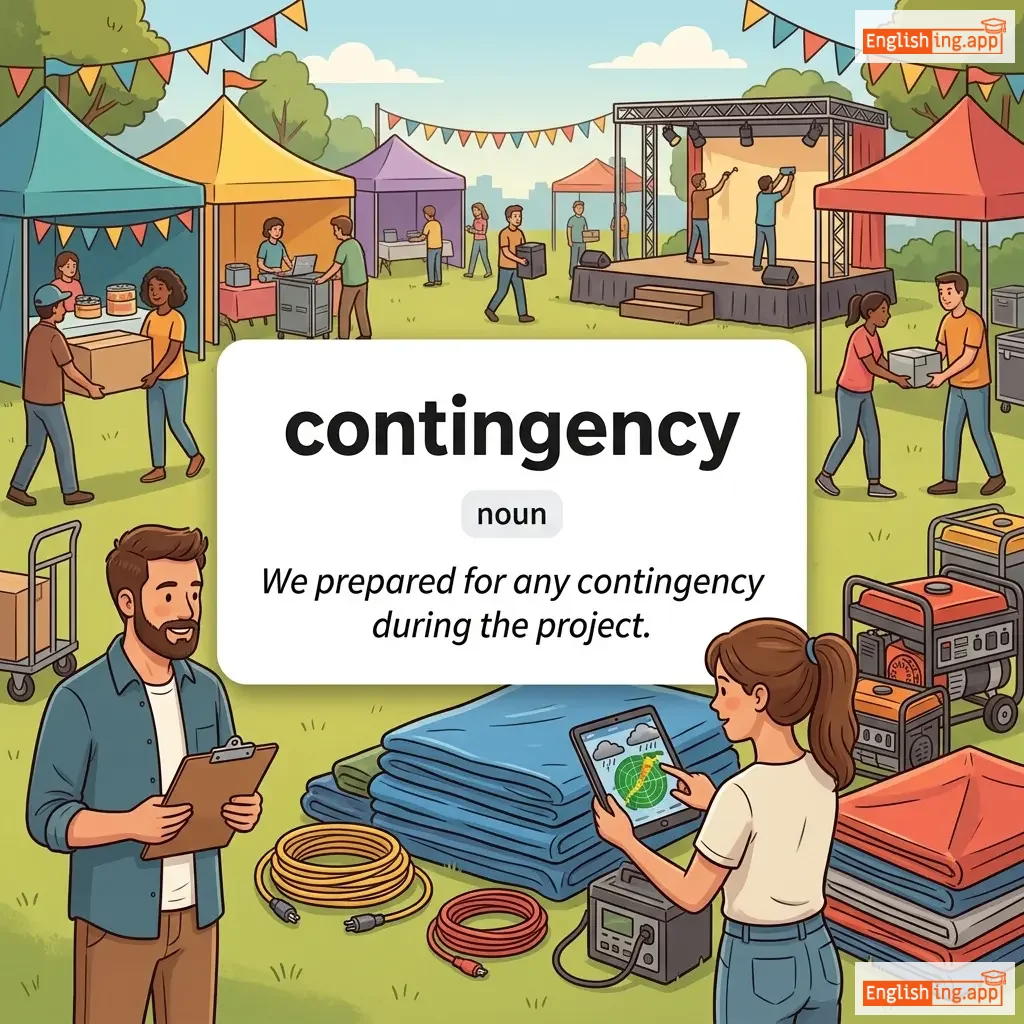
contingency definition card — visual illustration of the meaning
noun
/kənˈtɪn.dʒən.si/
संभावना (sambhavna)

a future event or circumstance that is possible but cannot be predicted with certainty

"We prepared for any contingency during the project."

"हमने परियोजना के दौरान किसी भी संभावित स्थिति के लिए तैयारी की थी।" (Hamne pariyojna ke dauran kisi bhi sambhavit sthiti ke liye taiyari ki thi.)
adjective,noun
/kənˈtɪn.dʒənt/
निर्भरशील / प्रतिनिधि दल (nirbharsheel / pratinidhi dal)

dependent on something else; a group of people representing an organization

"Attendance is contingent on prior registration. / A contingent of students attended the conference."

"उपस्थिति पूर्व पंजीकरण पर निर्भर है। / एक प्रतिनिधि दल सम्मेलन में शामिल हुआ।" (Upasthiti purv panjikaran par nirbhar hai. / Ek pratinidhi dal sammelan mein shamil hua.)
adjective
/kənˈtɪn.ju.əl/
लगातार; निरंतर; (lagatar; nirantar;)

happening repeatedly over a long period of time; constant and uninterrupted

"The continual noise from the construction site was very annoying."

"निर्माण स्थल से लगातार आ रही आवाज बहुत परेशान करने वाली थी।" (nirman sthal se lagatar aa rahi awaaz bahut pareshan karne wali thi.)
adverb
/kənˈtɪnjuəli/
निरंतर (nirantar)

in a continuous and uninterrupted way

"The rain has been falling continually for hours."

"बारिश घंटों से निरंतर गिर रही है।" (Barish ghanton se nirantar gir rahi hai.)
noun
/kənˈtɪn.ju.əns/
निरंतरता (nirantrata)

the state of continuing or being prolonged; persistence

"The continuance of the project depended on securing additional funding."

"परियोजना की निरंतरता अतिरिक्त धनराशि प्राप्त करने पर निर्भर थी।" (Pariyojna ki nirantarata atirikta dhanrashi prapt karne par nirbhar thi.)
noun
/kənˌtɪn.juˈeɪ.ʃən/
सततता (sattata)

the action of carrying something on over time; extension

"The continuation of the series was announced after the finale."

"फिनाले के बाद सीरीज़ का सततता की घोषणा की गई थी।" (Finale ke baad series ka sattata ki ghoshna ki gayi thi.)
verb
/kənˈtɪnjuː/
जारी रखना (jaari rakhna)

To keep happening, existing, or doing something without stopping.

"The rain will continue throughout the night."

"बारिश रातभर जारी रहेगी।" (Barish raatbhar jaari rahegi.)
verb
/kənˈtɪn.juːd/
जारी (jaari)

Kept happening or carried on without stopping.

"She continued working despite the challenges."

"वह चुनौतियों के बावजूद काम करती रही।" (Wah chunautiyon ke bawajood kaam karti rahi.)
verb
/kənˈtɪnjuɪŋ/
जारी रखना (jari rakhna)

to keep doing something without stopping

"They are continuing their journey despite the rain."

"वह बारिश के बावजूद अपनी यात्रा जारी रखे हुए हैं।" (Vah barish ke bawajood apni yatra jaari rakhe hue hain.)
noun
/ˌkɒn.tɪˈnjuː.ɪ.ti/
निरंतरता (nirantarata)

the state of being continuous or connected; consistency over time

"Maintaining continuity in leadership is essential for organizational stability."

"नेतृत्व में निरंतरता बनाए रखना संगठनात्मक स्थिरता के लिए महत्वपूर्ण है।" (Netritwa mein nirantarata banaye rakhna sangathanatmak sthirata ke liye mahatvapurn hai.)
adjective
/kənˈtɪn.ju.əs/
निरंतर (nirantar)

forming an unbroken whole; without interruption

"The factory operates on a continuous 24-hour schedule."

"फैक्ट्री एक निरंतर 24 घंटे की योजना पर काम करती है।" (Factory ek nirantar 24 ghante ki yojana par kaam karti hai.)
adverb
/kənˈtɪnjuəsli/
निरंतर; लगातार; निरंतरता से (nirantar; lagatar; nirantarta se)

without interruption; in an unbroken sequence

"The machine operates continuously for 24 hours."

"मशीन 24 घंटे लगातार काम करती है।" (masheen 24 ghante lagatar kaam karti hai)
noun
/kənˈtɪnjuəm/
निरंतरता (nirantrata)

A continuous sequence in which adjacent elements are not perceptibly different from each other, but the extremes are quite distinct.

"Life and death are often seen as part of the same continuum."

"जीवन और मृत्यु अक्सर एक ही निरंतरता का हिस्सा माने जाते हैं।" (Jeevan aur mrityu aksar ek hi nirantrata ka hissa maane jaate hain.)
verb
/kənˈtɔːrt/
मोड़ना (modna)

to twist or bend out of the normal shape

"She contorted her face in pain after the injury."

"चोट के बाद उसने दर्द में अपना चेहरा मोड़ा।" (Chot ke baad usne dard mein apna chehra modaa.)
noun
/kənˈtɔːrʃən/
मुड़ा हुआ या टेढ़ा आकार; सामान्य आकार से बाहर मुड़ने की क्रिया (muda hua ya tedha aakaar; samaanya aakaar se baahar mudne ki kriya)

a twisted or bent shape; the act of twisting out of the normal shape

"The gymnast's contortion amazed the audience."

"जिमनास्ट का कंटॉर्शन ने दर्शकों को आश्चर्यचकित कर दिया।" (Gymnast ka contortion ne darshako ko aashcharyachakit kar diya.)
noun
/kənˈtɔːrʃənz/
विकृतियों का बहुवचन; मुड़ी हुई या मुड़ी हुई आकृतियाँ (vikritiyon ka bahuchchan; mudhi hui ya mudhi hui aakritiyan)

plural form of contortion; multiple twisted or bent shapes

"The magician's contortions left the crowd in awe."

"द मैजिशियन के कंटॉर्शन्स ने भीड़ को हैरान कर दिया।" (Da maijishiyan ke kontorshans ne bhir ko hairan kar diya.)
noun
/ˈkɒntrəbænd/
अवैध सामान (avaidh samaan)

goods that are illegal to import, export, or possess

"The police seized a shipment of contraband cigarettes."

"पुलिस ने अवैध सिगरेटों की खेप ज़ब्त की।" (Police ne avaidh sigreton ki khep zabt ki.)
contract definition card — visual illustration of the meaning
noun, verb
/ˈkɒntrækt/
अनुबंध, लिखित या मौखिक अनुबंध (anubandh, likhit ya moukhik anubandh)

noun: a written or spoken agreement; verb: to enter into an agreement or to reduce in size

"They signed a contract for the new project."

"उन्होंने नए प्रोजेक्ट के लिए एक अनुबंध पर साइन किया।" (Unhone naye project ke liye ek anubandh par sign kiya.)
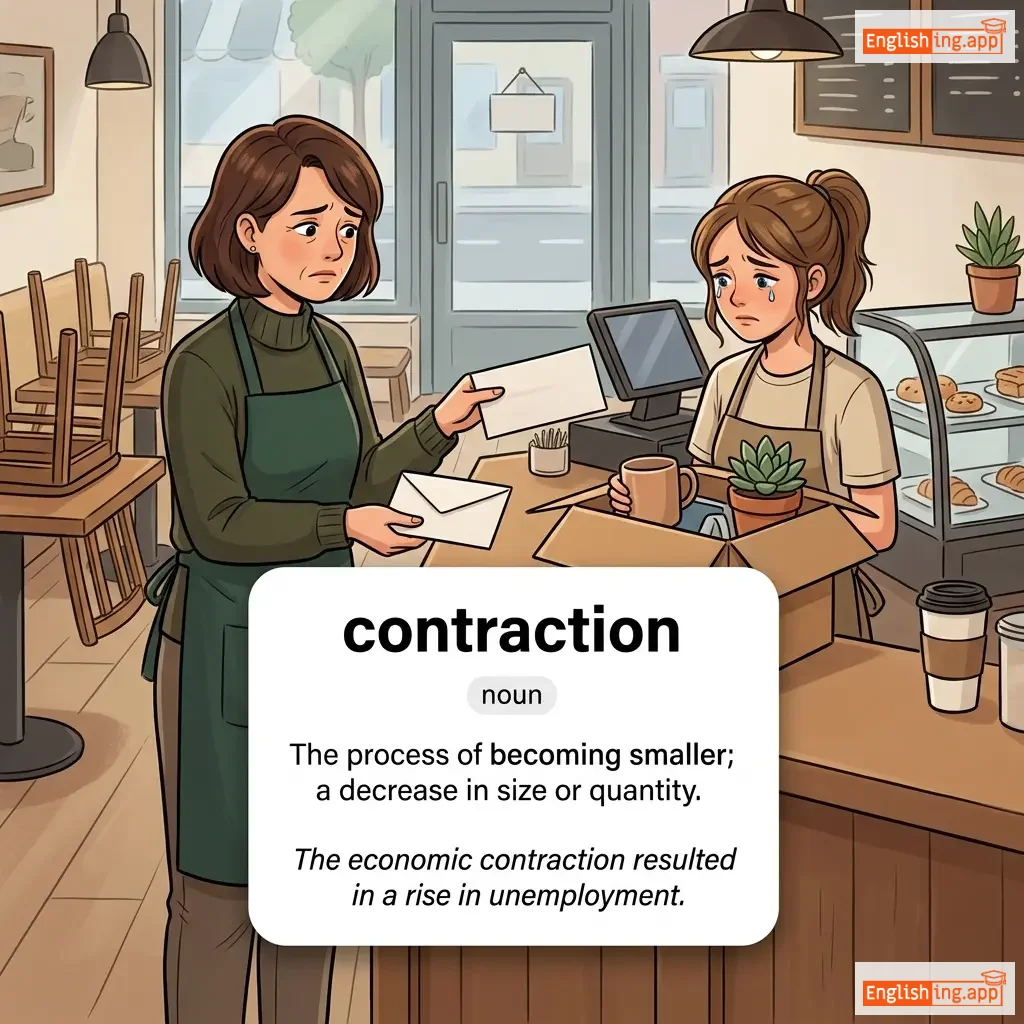
contraction definition card — visual illustration of the meaning
noun
kənˈtrækʃən
संकुचन (sankuchan)

The process of becoming smaller; a decrease in size or quantity.

"The economic contraction resulted in a rise in unemployment."

"आर्थिक संकुचन से बेरोज़गारी में वृद्धि हुई।" (Aarthik sankuchan se berozgaari mein vruddhi hui.)
noun
/ˈkɒntræktər/
ठेकेदार (thekedar)

a person or company that agrees to provide materials or labor to perform a service or do a job

"The contractor completed the building project on time."

"ठेकेदार ने समय पर भवन निर्माण परियोजना को पूरा किया।" (Thekedar ne samay par bhavan nirman pariyojna ko poora kiya.)
verb
/ˌkɒn.trəˈdɪkt/
विरोध करना (virodh karna)

to say or show the opposite of something that has been said or believed

"His actions contradict his words."

"उसके कार्य उसके शब्दों का विरोध करते हैं।" (uske kary uske shabdon ka virodh karte hain.)
noun
/ˌkɒntrəˈdɪkʃən/
विरोध, असंगति (virodh, asangati)

a statement or situation that is opposed to another, inconsistency

"Her actions are in clear contradiction to her words."

"उसके कार्य उसके शब्दों के स्पष्ट विरोध में हैं।" (Uske karya uske shabdon ke spasht virodh mein hain.)
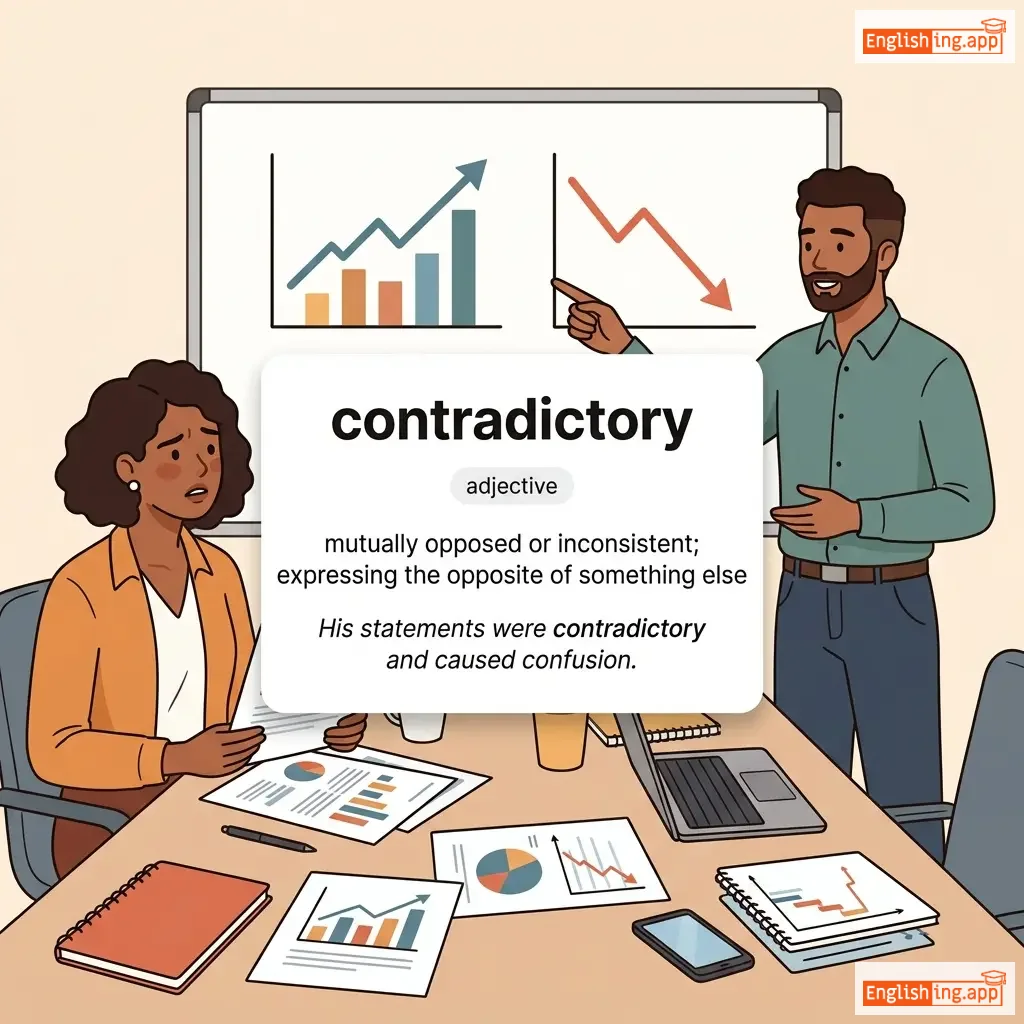
contradictory definition card — visual illustration of the meaning
adjective
/ˌkɒntrəˈdɪktəri/
विरोधाभासी (virodhabhasi)

mutually opposed or inconsistent; expressing the opposite of something else

"His statements were contradictory and caused confusion."

"उसके बयान विरोधाभासी थे और भ्रमित कर रहे थे।" (Uske bayan virodhabhasi the aur bhramit kar rahe the.)
noun
/ˌkɒntrəpəˈzɪʃən/
विपरीत स्थिति (viparit sthiti)

the act of placing two things in opposition for contrast or comparison

"The contraposition of the two theories highlighted their differences."

"दो सिद्धांतों की विपरीत स्थिति ने उनके अंतर को उजागर किया।" (Do siddhanton ki viparit sthiti ne unke antar ko ujagar kiya.)
noun
/ˈkɒntrəriz/
विपरीत चीजें (vipreet cheezen)

things that are completely different or opposite to each other

"Freedom and slavery are contraries in every sense."

"स्वतंत्रता और गुलामी हर दृष्टि से विपरीत हैं।" (Svatantrata aur gulaami har drishti se vipreet hain.)
adjective
/ˈkɒn.trəri/
विपरीत (vipareet)

opposite in nature, direction, or meaning

"Her views are contrary to mine."

"उसके विचार मेरे विपरीत हैं।" (uske vichar mere vipareet hain.)
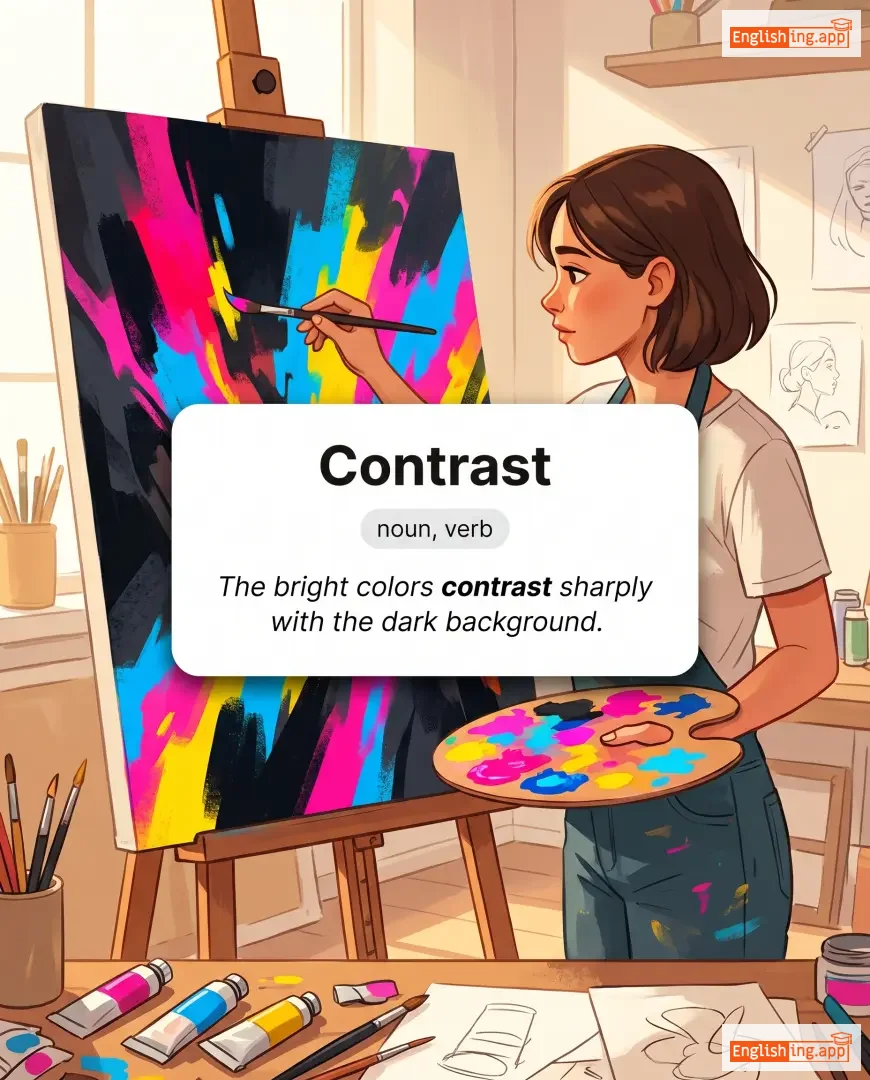
Contrast definition card — visual illustration of the meaning
noun, verb
/ˈkɒn.trɑːst/ (noun), /kənˈtræst/ (verb)
खुशी (khushi)

A difference between two or more things; to compare two things to show how they are different.

"The bright colors contrast sharply with the dark background."

"वह पुरस्कार मिलने पर अपनी खुशी नहीं छिपा सकी।" (vah puraskaar milne par apni khushi nahin chhupa saki.)
verb
/ˌkɒntrəˈviːn/
उल्लंघन करना (ullanghan karna)

to go against or act in opposition to a law, rule, or agreement

"He contravened the safety regulations and was fined."

"उसने सुरक्षा नियमों का उल्लंघन किया और जुर्माना हुआ।" (Usne suraksha niyamon ka ullanghan kiya aur jurmana hua.)
noun
/ˈkɒntrətɑː̃/
अप्रत्याशित मतभेद (apratyashit matbhed)

an unexpected and unfortunate event or disagreement; a minor dispute

"There was a small contretemps between the two colleagues during the meeting."

"बैठक के दौरान दोनों सहकर्मियों के बीच एक छोटा सा अप्रत्याशित मतभेद था।" (Baithak ke dauran dono sahakarmiyon ke beech ek chhota sa apratyashit matbhed tha.)
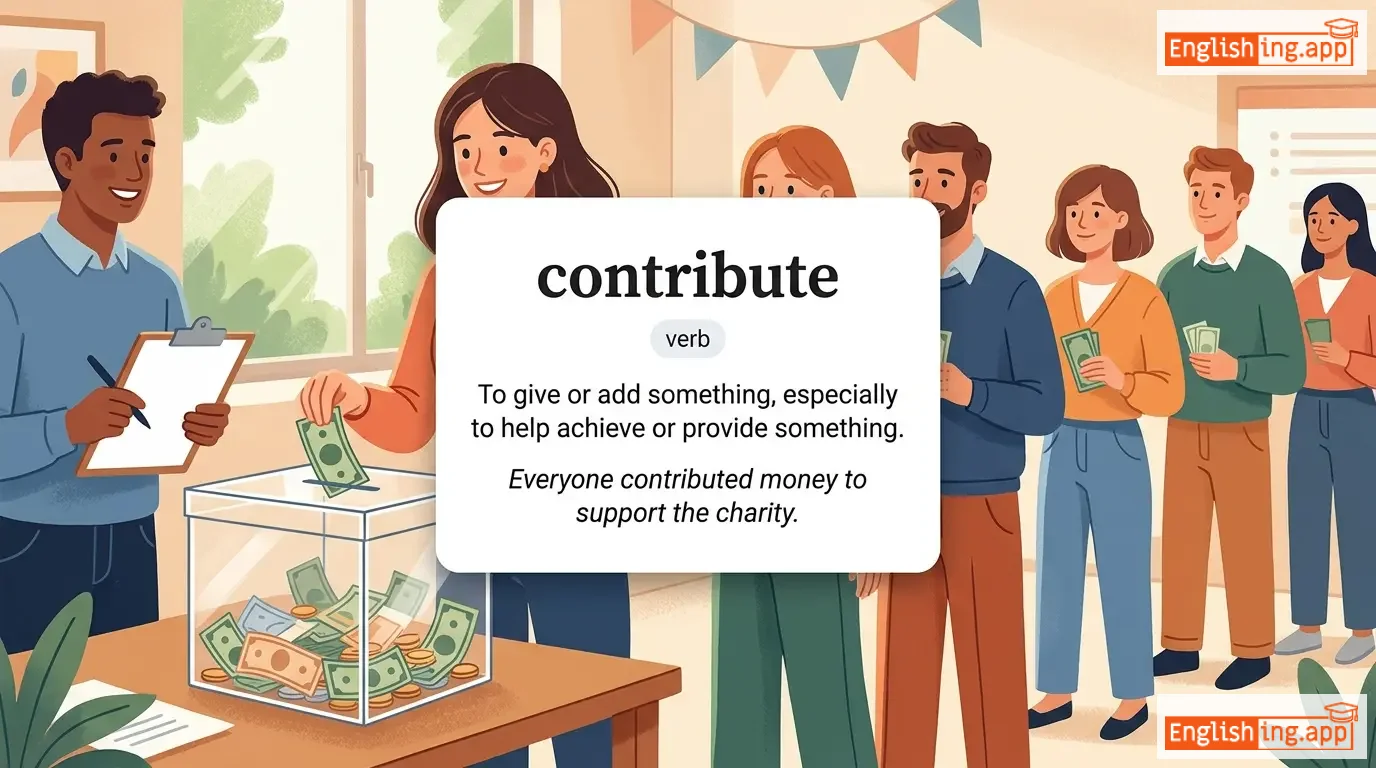
contribute definition card — visual illustration of the meaning
verb
/kənˈtrɪbjuːt/
योगदान देना (yogdan dena)

To give or add something, especially to help achieve or provide something.

"Everyone contributed money to support the charity."

"सभी ने चैरिटी को समर्थन देने के लिए पैसे दान किए।" (Sabhi ne charity ko samarthan dene ke liye paise daan kiye.)
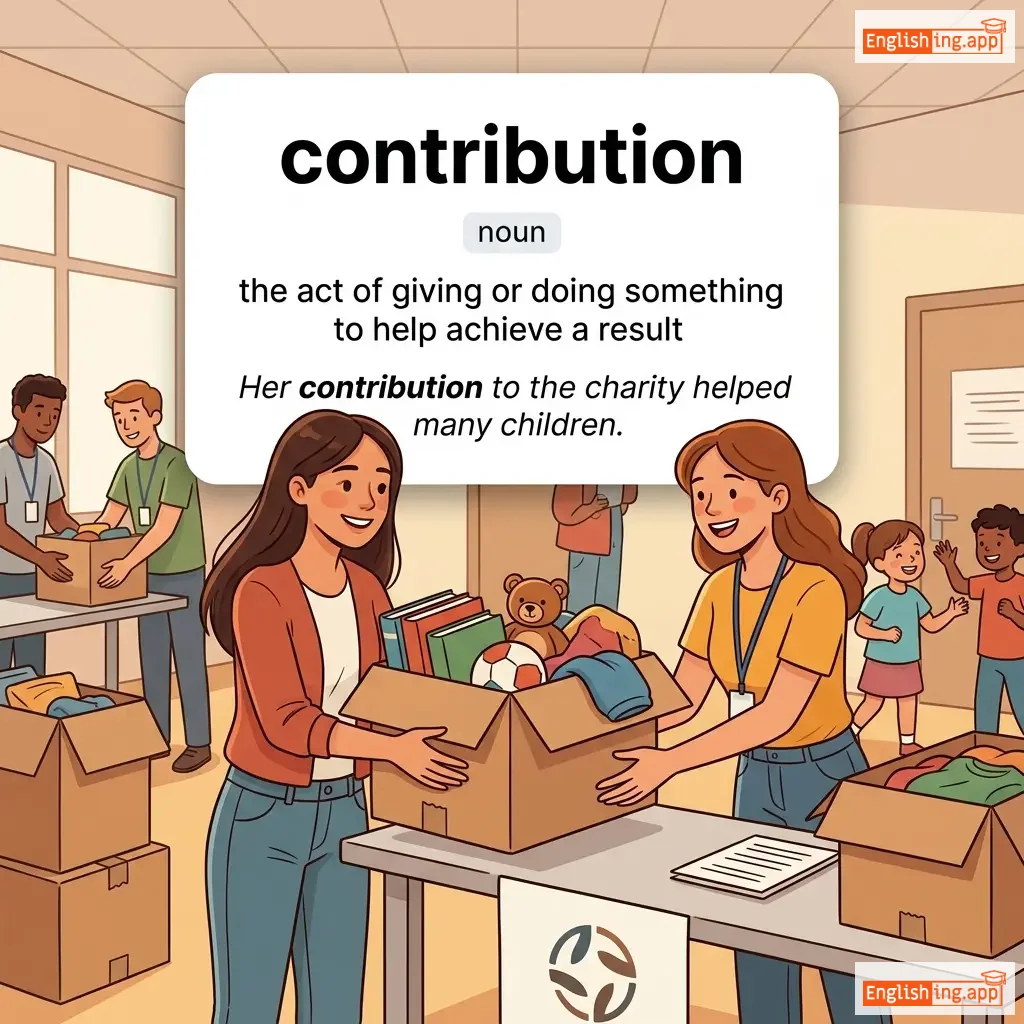
contribution definition card — visual illustration of the meaning
noun
/ˌkɒn.trɪˈbjuː.ʃən/
योगदान (yogdan)

the act of giving or doing something to help achieve a result

"Her contribution to the charity helped many children."

"उसका योगदान चैरिटी को कई बच्चों की मदद करने में सहायक था।" (Uska yogdan charity ko kai bachon ki madad karne mein sahayak tha.)
noun
/ˈkɒn.trɪ.bjʊ.tər/
योगदानकर्ता (yogdankarta)

a person who gives something to help achieve a result

"He was a regular contributor to the local newspaper."

"वह स्थानीय समाचार पत्र का नियमित योगदानकर्ता था।" (Vah sthaniya samachar patra ka niyamit yogdankarta tha.)
contrite definition card — visual illustration of the meaning
adjective
/kənˈtraɪt/
पश्चातापी (pashchatapi)

feeling or showing remorse or guilt

"She was contrite after realizing her mistake."

"अपनी गलती को समझने के बाद वह पश्चातापी थी।" (Apni galti ko samajhne ke baad vah pashchatapi thi.)
noun
/kənˈtrɪʃ.ən/
पश्चाताप (pashchatap)

the state of feeling remorseful and repentant

"His contrition was evident after the apology."

"माफी मांगने के बाद उसका पश्चाताप स्पष्ट था।" (Mafi maangne ke baad uska pashchatap spashth tha.)
noun
/kənˈtraɪ.vəns/
उपकरण या योजना (upkaran ya yojana)

a device or plan that is cleverly or artificially created

"The clock was an intricate contrivance of gears and springs."

"घड़ी गियर्स और स्प्रिंग्स का एक जटिल उपकरण था।" (Ghadi gears aur springs ka ek jatil upkaran tha.)
verb
/kənˈtraɪv/
चतुराई से योजना बनाना (chaturai se yojana banana)

to plan or devise cleverly or skillfully

"She contrived a clever plan to surprise her friends."

"वह अपने दोस्तों को हैरान करने के लिए एक चतुर योजना बनाती है।" (Woh apne doston ko hairaan karne ke liye ek chatur yojana banati hai.)
noun
/ˈklævɪkəl/
कॉलरबोन (kolarbon)

the collarbone, a long bone that serves as a strut between the shoulder blade and the sternum

"He fractured his clavicle in the accident."

"उसने दुर्घटना में अपनी कॉलरबोन फ्रैक्चर कर दी।" (Usne durghatna mein apni kolarbon fracture kar di.)
noun
/klɔː/
पंजा (panja)

sharp curved nail on the foot of an animal or bird

"The cat extended its sharp claws to climb the tree."

"बिल्ली ने पेड़ पर चढ़ने के लिए अपने तेज पंजे फैलाए।" (billi ne ped par chadhne ke liye apne tez panje phailaye.)