वोकैबुलरीज

इंग्लिश वोकैबुलरी डिस्कवर, लर्न और मास्टर करें

adjective
/ˈkɒn.stənt/
निरंतर (nirantar)

happening all the time or staying the same without change

"She lived in constant fear of losing her job."

"वह अपनी नौकरी खोने के निरंतर डर में रहती थी।" (vah apni naukri khone ke nirantar dar mein rahti thi.)
adverb
/ˈkɒnstəntli/
निरंतर (nirantar)

continuously over a period of time; always

"He is constantly improving his skills."

"वह लगातार अपनी क्षमताओं को सुधार रहा है।" (Vah lagatar apni kshamtaon ko sudhar raha hai.)
noun
/ˌkɒn.stəˈleɪ.ʃən/
नक्षत्रमंडल (nakshatramandal)

a group of stars forming a recognizable pattern in the night sky

"Orion is one of the most famous constellations."

"ओरियन सबसे प्रसिद्ध नक्षत्रमंडल है।" (Orion sabse prasiddh nakshatramandal hai.)
noun
/ˌkɒnstəˈneɪʃən/
आतंकी अवसाद (aantki avsaad)

A feeling of anxiety, dismay, or confusion, often caused by something unexpected.

"The sudden announcement caused widespread consternation among the employees."

"अचानक घोषणा ने कर्मचारियों के बीच व्यापक अवसाद उत्पन्न किया" (Achaanak ghoshna ne karyakariyon ke beech vyaapak avsaad utpann kiya)
noun
/kənˈstɪtʃuənsi/
निर्वाचन क्षेत्र (nirvachan kshetra)

A geographical area whose residents elect a representative to a legislative body.

"She campaigned tirelessly across her constituency."

"उसने अपने निर्वाचन क्षेत्र में लगातार प्रचार किया।" (Usne apne nirvachan kshetra mein lagatar prachar kiya.)
noun/adjective
/kənˈstɪtʃuənt/
घटक / निर्वाचन क्षेत्र (ghatak / nirvachan kshetra)

Noun: A member of a constituency or an essential part of something. Adjective: Being a necessary part of a whole.

"The senator met with his constituents to discuss local issues."

"सिनेटर ने स्थानीय मुद्दों पर चर्चा करने के लिए अपने निर्वाचन क्षेत्र के सदस्यों से मुलाकात की।" (Senator ne sthaniya muddon par charcha karne ke liye apne nirvachan kshetra ke sadasyon se mulaqat ki.)
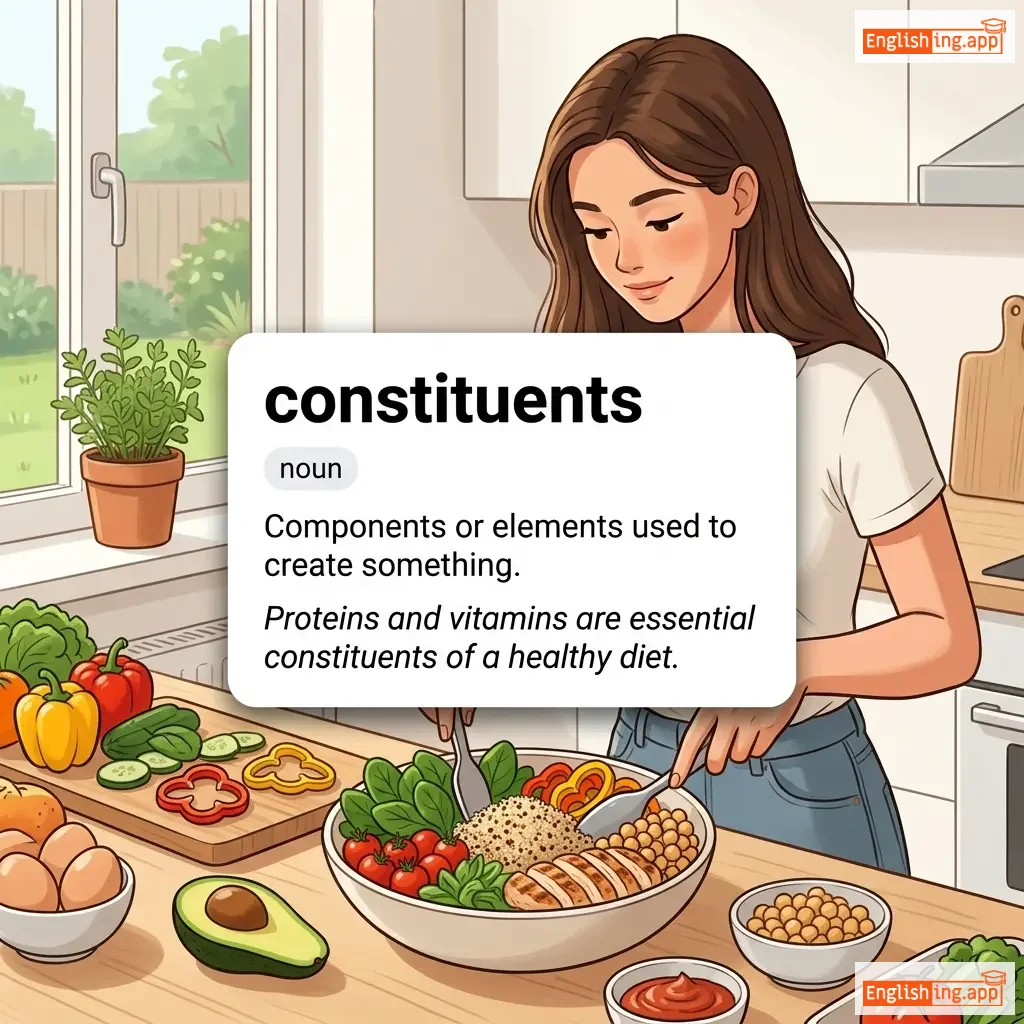
constituents definition card — visual illustration of the meaning
noun
/kənˈstɪtʃ.u.ənts/
घटक (ghatak)

Components or elements used to create something.

"Proteins and vitamins are essential constituents of a healthy diet."

"प्रोटीन और विटामिन एक स्वस्थ आहार के आवश्यक घटक हैं।" (Protein aur vitamin ek swasth aahaar ke aavashyak ghatak hain.)
verb
/ˈkɒnstɪtjuːt/
गठन करना (gathan karna)

To make up, form, or establish something.

"These documents constitute the legal agreement between the two parties."

"ये दस्तावेज दो पक्षों के बीच कानूनी समझौते का गठन करते हैं।" (Ye dastavez do pakshon ke beech kanuni samjhote ka gathan karte hain.)
constitution definition card — visual illustration of the meaning
noun
/ˌkɒnstɪˈtjuːʃən/
संविधान (samvidhan)

The system of fundamental principles according to which a nation or organization is governed.

"The constitution guarantees freedom of speech."

"संविधान स्वतंत्रता के अधिकार की गारंटी देता है।" (Samvidhan svatantrata ke adhikar ki garanti deta hai.)
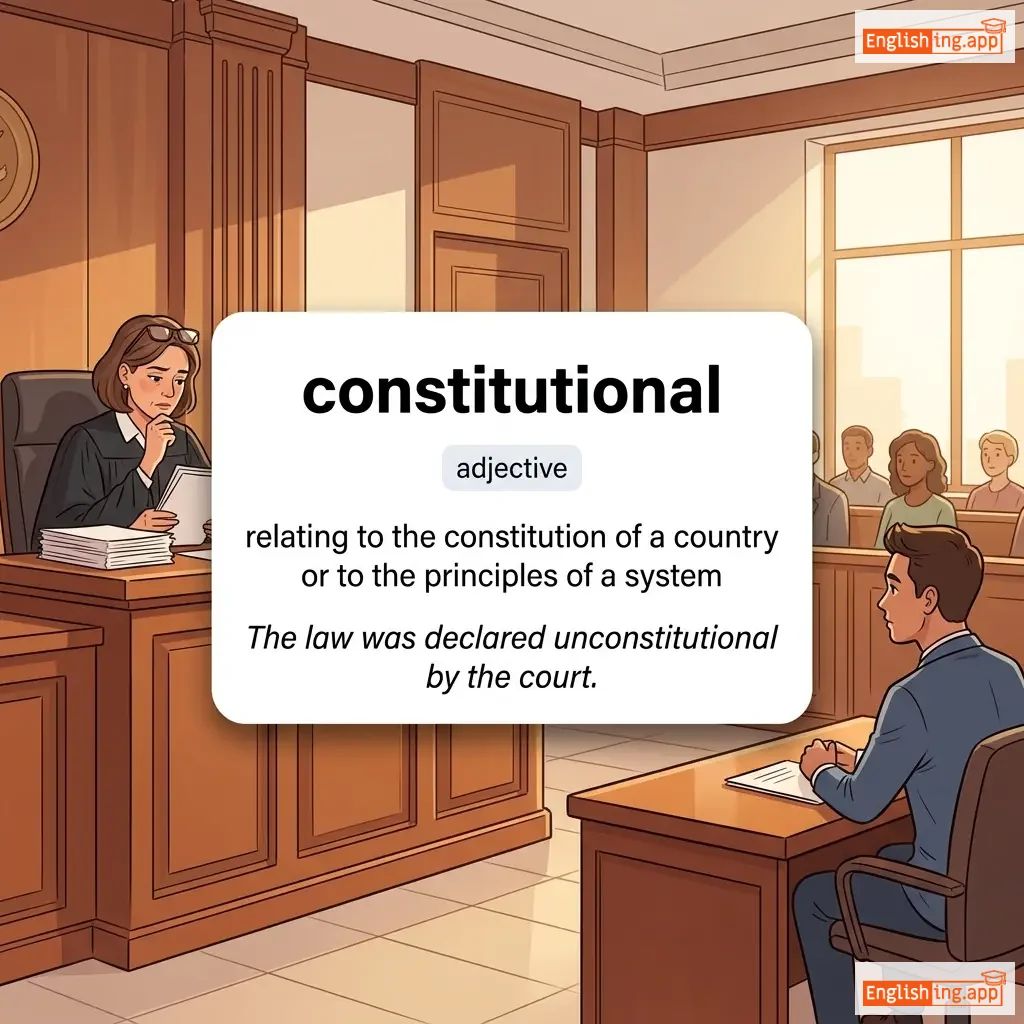
constitutional definition card — visual illustration of the meaning
adjective
/ˌkɒnstɪˈtjuːʃənəl/
संवैधानिक (kaonstityushanal)

relating to the constitution of a country or to the principles of a system

"The law was declared unconstitutional by the court."

"अदालत ने कानून को असंवैधानिक घोषित कर दिया था।" (Adalat ne kanoon ko asanvaidhanik ghoshit kar diya tha.)
verb
/kənˈstreɪn/
सीमित करना (seemit karna)

to limit or restrict someone or something; to force or compel

"The new regulations constrain businesses from polluting the environment."

"नए नियम व्यापारों को पर्यावरण को प्रदूषित करने से रोकते हैं।" (Naye niyam vyapar ko paryavaran ko pradushit karne se rokate hain.)
adjective
/kənˈstreɪnd/
सीमित, कृत्रिम (seemit, krutrim)

appearing forced, unnatural, or restricted

"He gave a constrained smile during the awkward meeting."

"उसने अजीब बैठक के दौरान एक कृत्रिम मुस्कान दी।" (Usne azeeb baithak ke dauran ek krutrim muskaan di.)
noun
/kənˈstreɪnt/
सीमा (seema)

a limitation or restriction

"Time is the biggest constraint in completing the project."

"समय परियोजना को पूरा करने में सबसे बड़ी सीमा है।" (Samay pariyojna ko poora karne mein sabse badi seema hai.)
verb
/kənˈstrɪkt/
संकुचित करना (sankuchit karna)

to make narrower or tighter; to shrink or compress

"The snake constricted its prey before swallowing."

"साँप ने अपने शिकार को निगलने से पहले उसे संकुचित कर लिया।" (Saap ne apne shikar ko nigalne se pehle use sankuchit kar liya.)
verb
/kənˈstrɪndʒ/
संकोचन करना (sankochan karna)

to cause to shrink or contract; to constrict

"The medicine helped constringe the swollen tissues."

"दवा ने सूजे हुए ऊतकों को संकोचन करने में मदद की।" (Dawa ne suje huye utkon ko sankochan karne mein madad ki.)
verb
/kənˈstrʌkt/
निर्माण करना (nirman karna)

to build or form something by putting parts together

"They plan to construct a new bridge over the river."

"वे नदी पर एक नया पुल बनाने की योजना बना रहे हैं।" (ve nadi par ek naya pul banane ki yojana bana rahe hain.)
construction definition card — visual illustration of the meaning
noun
/kənˈstrʌkʃən/
निर्माण (nirman)

The process of building something, typically large structures such as houses, roads, or bridges.

"The construction of the new bridge will take two years."

"नए पुल का निर्माण दो साल लेगा।" (Naye pul ka nirman do saal lega.)
verb
/kənˈstruː/
व्याख्या करना (vyakhya karna)

to interpret or understand the meaning of something in a particular way

"His words could be construed as a threat."

"उसके शब्दों को एक धमकी के रूप में व्याख्या किया जा सकता है।" (Uske shabdon ko ek dhamki ke roop mein vyakhya kiya ja sakta hai.)
noun
/ˈkɒnsəl/
कौंसुल / राजदूत (kaunsul / rajdoot)

an official appointed by a government to live in a foreign city and protect its citizens and interests there

"The consul assisted travelers who lost their passports."

"कौंसुल ने उन यात्रियों की मदद की जिन्होंने अपना पासपोर्ट खो दिया था।" (Kaunsul ne un yatrion ki madad ki jinhone apna passport kho diya tha.)
noun
/ˈkɒnsjʊlət/
कांसुलेट (kansulet)

the building or office where a consul works

"He went to the consulate to renew his visa."

"वह अपना वीज़ा नवीनीकरण करने के लिए कांसुलेट गया।" (Vah apna veza navinikaran karne ke liye kansulet gaya.)
consult definition card — visual illustration of the meaning
verb
/kənˈsʌlt/
परामर्श करना (paramarsh karna)

To seek advice or information from someone with expertise.

"You should consult a doctor before starting the treatment."

"आपको इलाज शुरू करने से पहले डॉक्टर से परामर्श करना चाहिए।" (Aapko ilaaj shuru karne se pehle doctor se paramarsh karna chahiye.)
noun
/kənˈsʌltənt/
सलाहकार (salahkaar)

A professional who provides expert advice in a particular area.

"The company hired a consultant to improve its marketing strategy."

"कंपनी ने अपनी मार्केटिंग रणनीति में सुधार करने के लिए एक सलाहकार को नियुक्त किया।" (Company ne apni marketing rananeeti mein sudhaar karne ke liye ek salahkaar ko niyukt kiya.)
consultation definition card — visual illustration of the meaning
noun
/ˌkɒnsʌlˈteɪʃən/
परामर्श (paramarsh)

a meeting with an expert or professional to seek advice

"The doctor scheduled a consultation with the patient."

"डॉक्टर ने मरीज के साथ एक परामर्श निर्धारित किया।" (Doktar ne mareez ke saath ek paramarsh nirdharit kiya.)
consume definition card — visual illustration of the meaning
verb
/kənˈsjuːm/
उपयोग करना (upayog karna)

To use up, eat, drink, or take in.

"People consume a large amount of information daily."

"लोग रोजाना बड़ी मात्रा में जानकारी ग्रहण करते हैं।" (Log rozana badi maatra mein jankari grahan karte hain.)
noun
/kənˈsjuːmər/
उपभोक्ता (upbhokta)

A person who buys and uses goods and services.

"The company focuses on understanding consumer needs."

"कंपनी उपभोक्ताओं की जरूरतों को समझने पर ध्यान केंद्रित करती है।" (Kampani upbhoktaon ki zaruraton ko samajhne par dhyan kendrit karti hai.)
consumerism definition card — visual illustration of the meaning
noun
kənˈsjuː.mə.rɪ.zəm
उपभोक्तावाद (upbhoktavād)

The tendency to increase consumption of goods and the importance given to consuming products.

"Modern consumerism leads to increased demand for luxury goods."

"आधुनिक उपभोक्तावाद विलासिता उत्पादों की मांग को बढ़ाता है।" (Ādhunik upbhoktavād vilāsitā utpādon kī māng ko baṛhātā hai.)
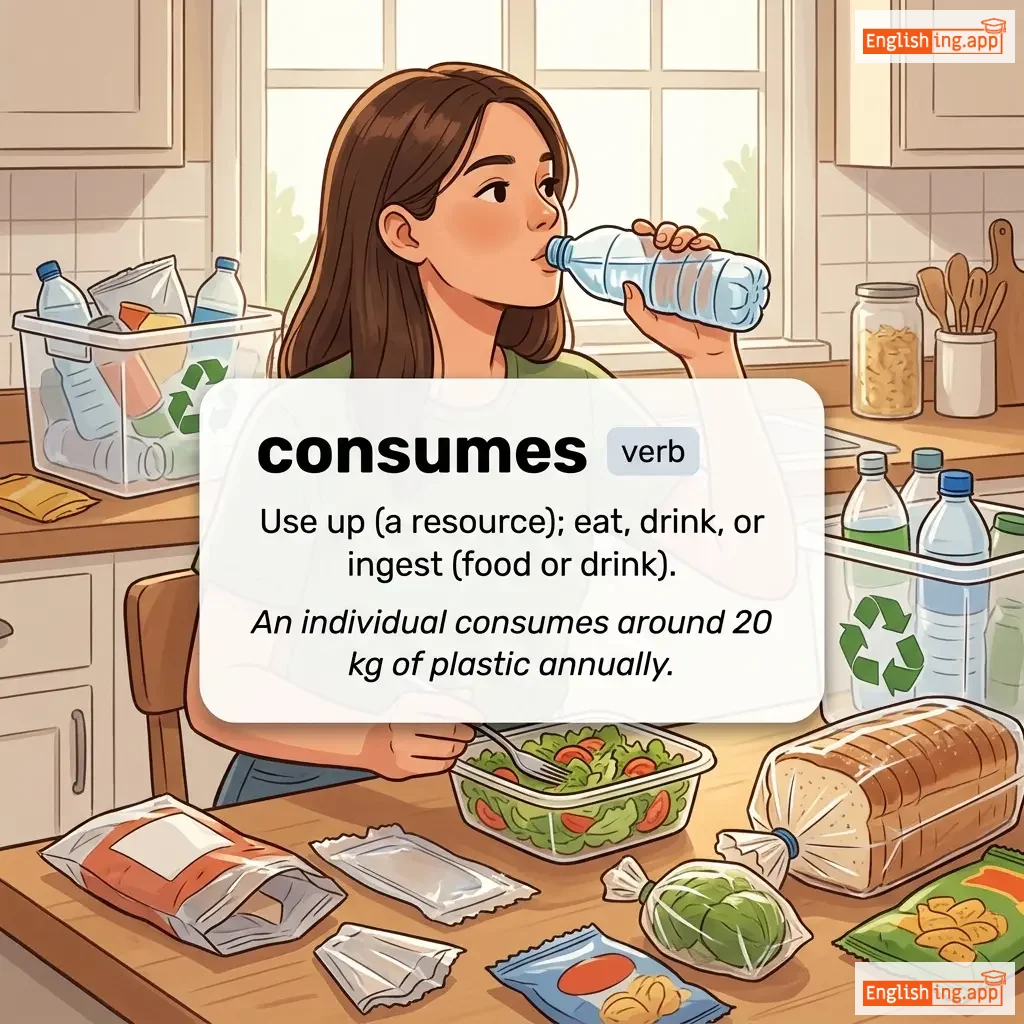
consumes definition card — visual illustration of the meaning
verb
kənˈsjuːmz
उपयोग करना (upayog karna)

Use up (a resource); eat, drink, or ingest (food or drink).

"An individual consumes around 20 kg of plastic annually."

"एक व्यक्ति हर साल लगभग 20 किलोग्राम प्लास्टिक का उपयोग करता है।" (Ek vyakti har saal lagbhag 20 kilogram plastic ka upayog karta hai.)
consummate definition card — visual illustration of the meaning
adjective, verb
/ˈkɒnsəmət/ (adj), /ˈkɒnsəmeɪt/ (verb)
पूर्ण करना / सम्पूर्ण (poorn karna / sampurn)

to complete or perfect something; showing great skill or excellence

"She is a consummate professional in her field."

"वह अपने क्षेत्र में एक परिपूर्ण पेशेवर है।" (Wah apne kshetra mein ek paripurn peshewar hai.)
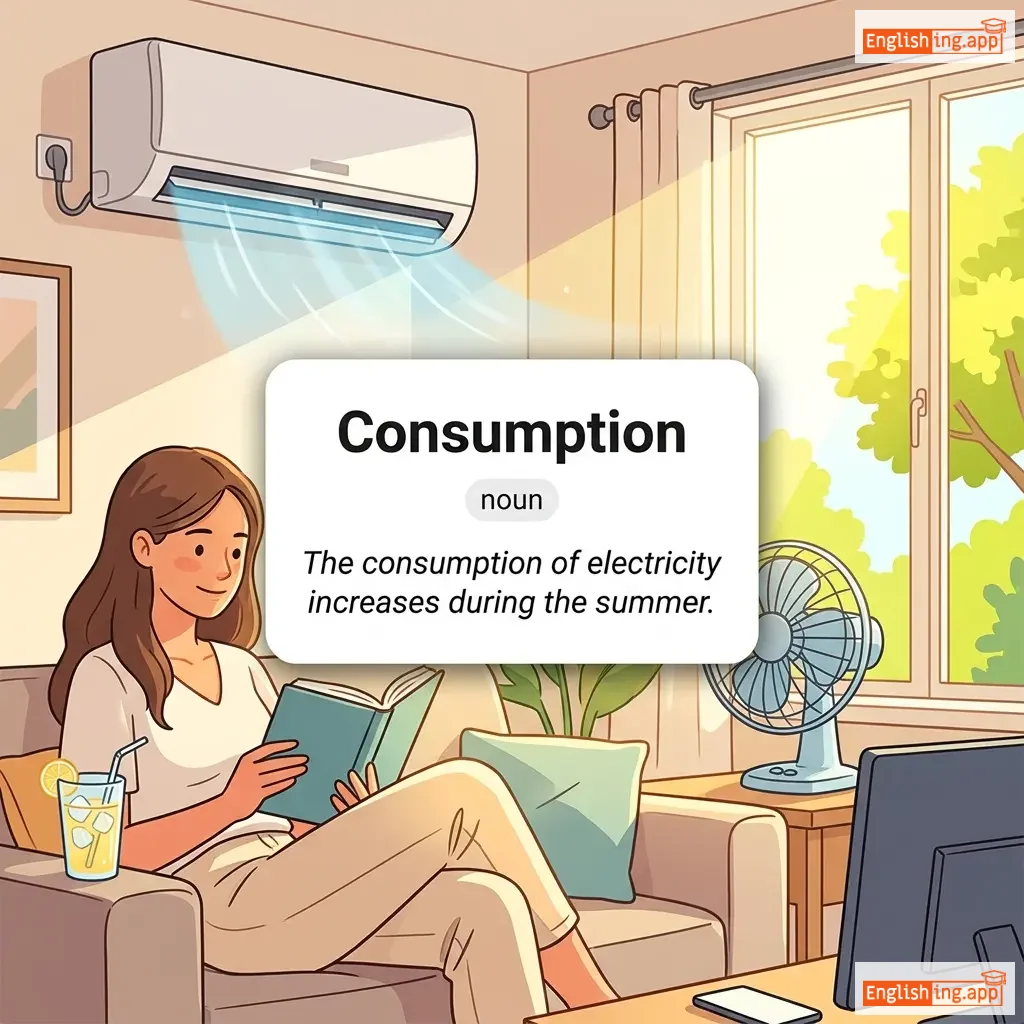
Consumption definition card — visual illustration of the meaning
noun
/kənˈsʌmpʃən/
उपभोग (upbhog)

The act of using up resources, goods, or energy; also refers to the eating or drinking of something.

"The consumption of electricity increases during the summer."

"गर्मी के दौरान बिजली की खपत बढ़ जाती है।" (Garmi ke dauran bijli ki khapat badh jaati hai.)
adjective
/kənˈsʌmptɪv/
उपभोगी (upbhogi)

Relating to or characterized by consumption; historically used to describe someone suffering from tuberculosis.

"The doctor advised against consumptive habits."

"डॉक्टर ने उपभोगी आदतों के खिलाफ सलाह दी।" (Daktar ne upbhogi aadaton ke khilaf salah di.)
contact definition card — visual illustration of the meaning
noun/verb
/ˈkɒntækt/
संपर्क (sampark)

Communication or connection with someone.

"You should contact your doctor if symptoms persist."

"आपको लक्षण बने रहने पर अपने डॉक्टर से संपर्क करना चाहिए।" (Aapko lakshan bane rehne par apne doctor se sampark karna chahiye.)
noun
/kənˈteɪdʒən/
संक्रमण (sankraman)

The communication of disease from one person to another by close contact; also the spread of harmful ideas or behaviors.

"Fear spread like a contagion through the crowd."

"डर ने भीड़ में एक संक्रमण की तरह फैलना शुरू कर दिया।" (Dar ne bheed mein ek sankraman ki tarah failna shuru kar diya.)
adjective
/kənˈteɪdʒəs/
संक्रामक (sankramak)

Able to be transmitted from one person to another, typically by direct contact; also used for emotions or attitudes that spread quickly.

"Her laughter was so contagious that everyone started laughing."

"उसकी हंसी इतनी संक्रामक थी कि सभी लोग हंसने लगे।" (Uski hansi itni sankramak thi ki sabhi log hansne lage.)
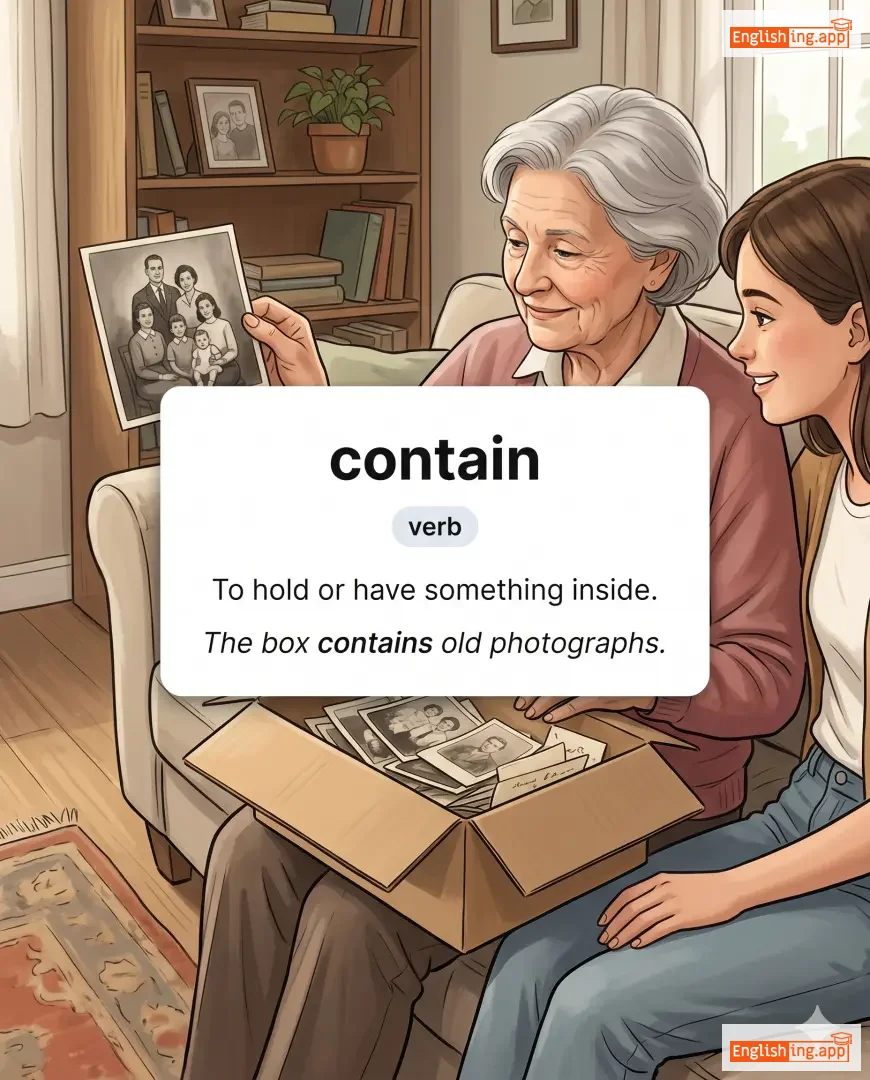
contain definition card — visual illustration of the meaning
verb
/kənˈteɪn/
रखना (rakhna)

To hold or have something inside.

"The box contains old photographs."

"डिब्बे में पुरानी तस्वीरें हैं।" (Dibbe mein purani tasveeren hain.)
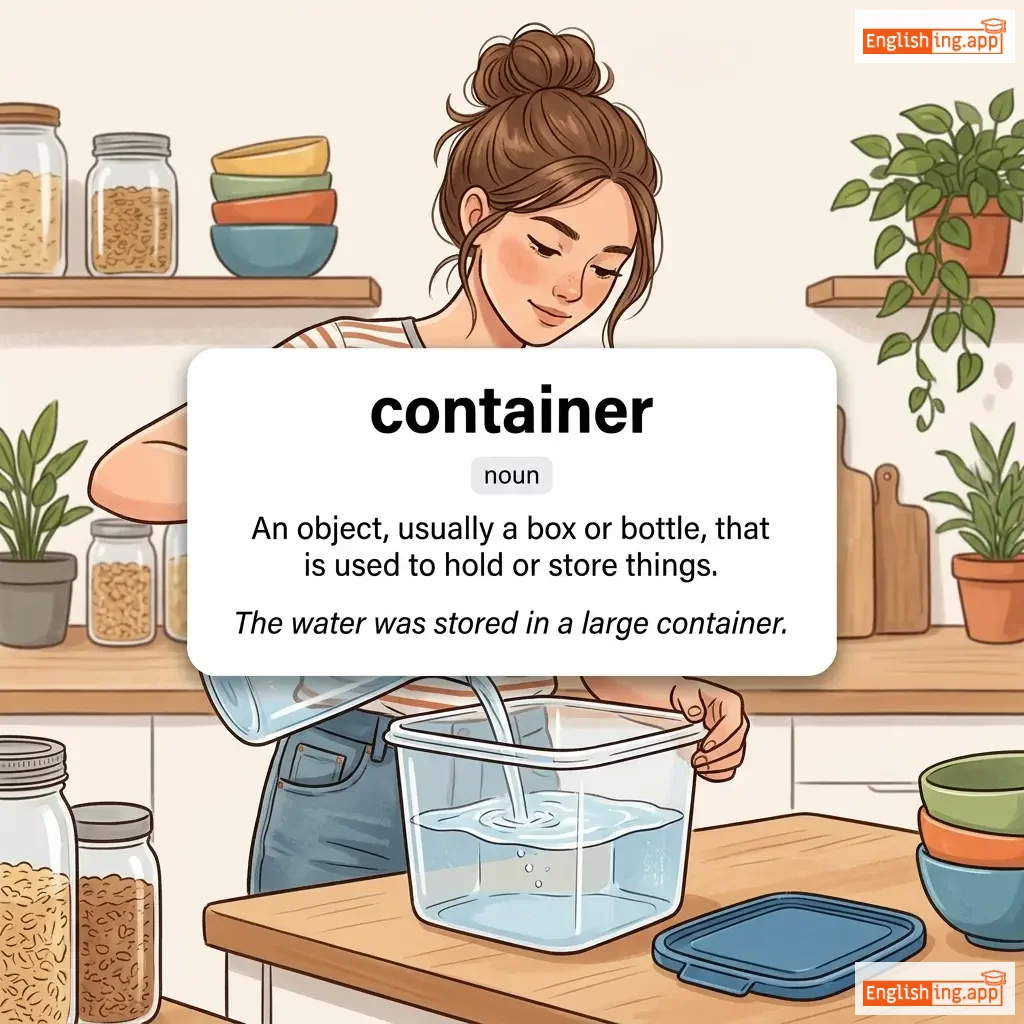
container definition card — visual illustration of the meaning
noun
/kənˈteɪnər/
कंटेनर (container)

An object, usually a box or bottle, that is used to hold or store things.

"The water was stored in a large container."

"पानी एक बड़े कंटेनर में संग्रहित किया गया था।" (Pani ek bade container mein sangrahit kiya gaya tha.)
verb
/kənˈtæmɪneɪt/
प्रदूषित करना (pradushit karna)

To make something impure, dirty, or harmful by contact with a poisonous or polluting substance.

"The river was contaminated by industrial waste."

"नदी औद्योगिक कचरे से प्रदूषित हो गई थी।" (Nadi audyogik kachre se pradushit ho gayi thi.)
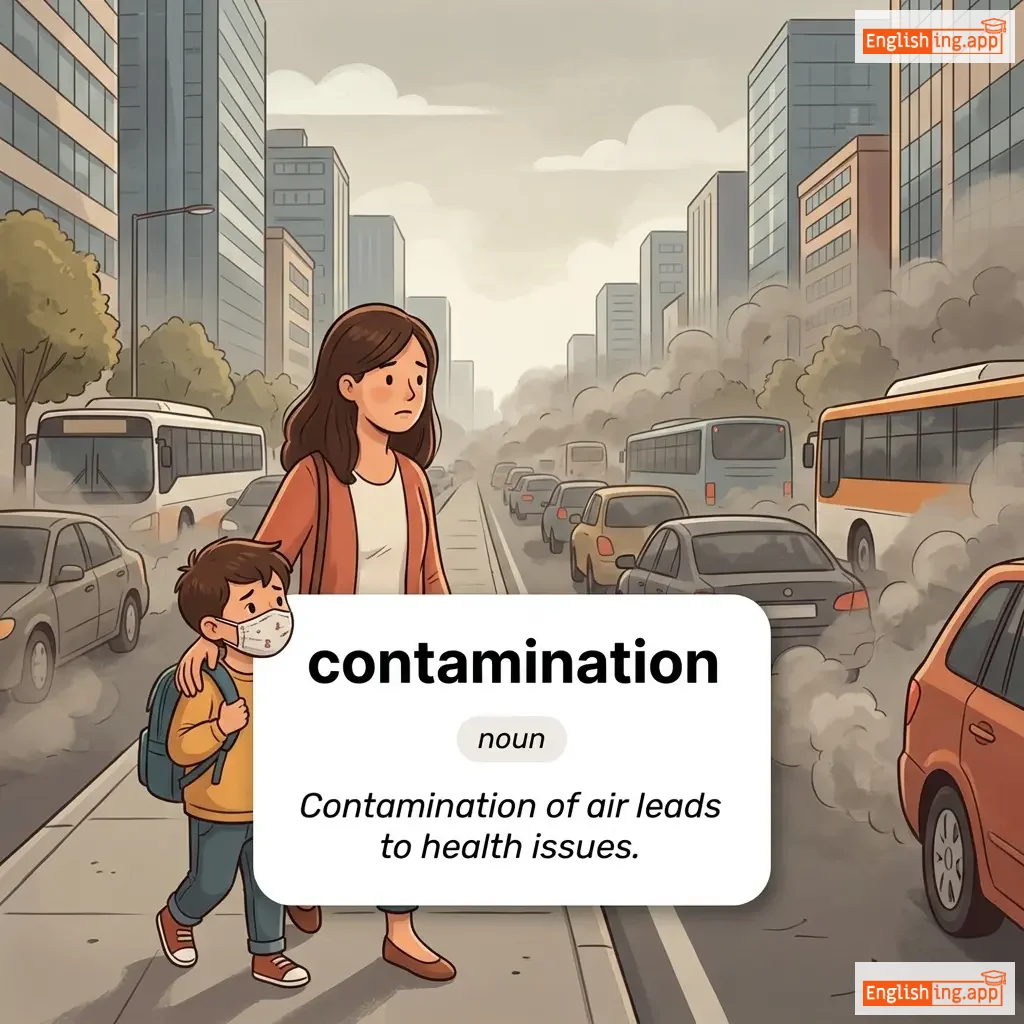
contamination definition card — visual illustration of the meaning
noun
kənˌtæm.ɪˈneɪ.ʃən
प्रदूषण (pradushan)

The process of making something less pure by exposure to or addition of a poisonous or polluting substance.

"Contamination of air leads to health issues."

"हवा का प्रदूषण स्वास्थ्य समस्याओं का कारण बनता है।" (Hawa ka pradushan swasthya samasyaon ka kaaran banta hai.)
verb
/kənˈtɛm/
अवज्ञा करना (avijnya karna)

to treat or regard with disdain, scorn, or contempt

"He would never contemn honest work, no matter how humble."

"वह कभी भी ईमानदार काम को अवज्ञा नहीं करेगा, चाहे वह कितना भी सामान्य क्यों न हो।" (Vah kabhi bhi imandaar kaam ko avijnya nahi karega, chahe vah kitna bhi saamaanya kyon na ho.)
verb
/ˈkɒntəmpleɪt/
गंभीरता से सोचना (gambhirta se sochna)

to think deeply and carefully about something; to consider thoughtfully

"She sat quietly to contemplate her future plans."

"वह चुपचाप बैठी थी ताकि वह अपने भविष्य के योजनाओं पर विचार कर सके।" (Vah chupchaap baithi thi taaki vah apne bhavishya ke yojnaon par vichar kar sake.)
contemplation definition card — visual illustration of the meaning
noun
ˌkɒn.təmˈpleɪ.ʃən
गहरी सोच, ध्यान, विचार (gahri soch, dhyan, vichar)

The action of looking thoughtfully at something for a long time; deep reflective thought.

"He spent hours in contemplation about his future."

"उसने अपने भविष्य के बारे में गहरी सोच में घंटों बिताए।" (Usne apne bhavishya ke baare mein gehri soch mein ghanton bitaye.)
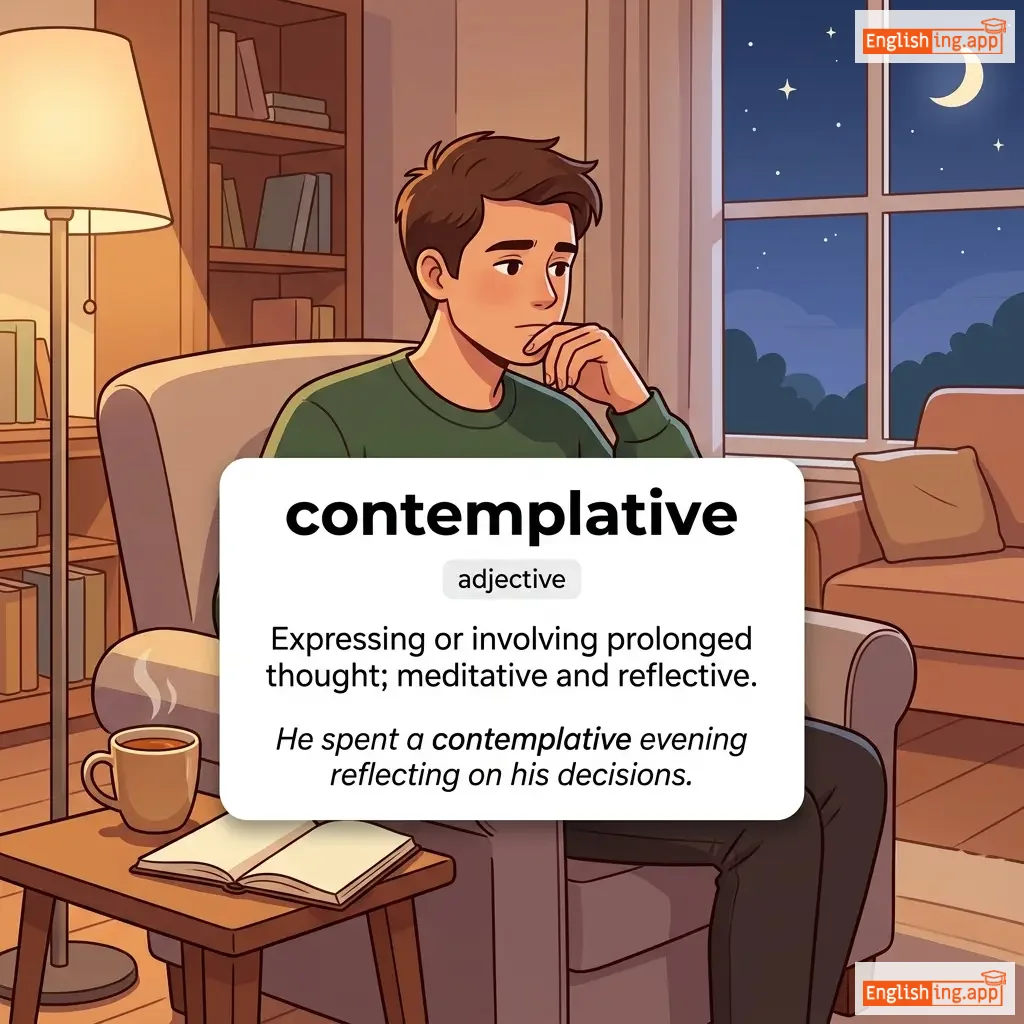
contemplative definition card — visual illustration of the meaning
adjective
ˈkɒn.təm.plə.tɪv
गंभीर विचारशील या ध्यानमग्न (gambhir vicharshil ya dhyanmagn)

Expressing or involving prolonged thought; meditative and reflective.

"He spent a contemplative evening reflecting on his decisions."

"उसने अपने निर्णयों पर विचार करते हुए एक विचारशील शाम बिताई।" (Usne apne nirnayon par vichar karte hue ek vicharshil shaam bitayi.)
adjective
/kənˌtɛmpəˈreɪniəs/
समकालिक (samkalik)

existing, happening, or occurring at the same time

"The two artists were contemporaneous and often influenced each other."

"दो कलाकार समकालिक थे और अक्सर एक-दूसरे को प्रभावित करते थे।" (Do kalakar samkalik the aur aksar ek-doosre ko prabhavit karte the.)
adjective
/kənˈtɛmpərɛri/
समकालीन, आधुनिक (samkalin, aadhunik)

belonging to the same time period; modern

"She enjoys contemporary art exhibitions."

"वह समकालीन कला प्रदर्शनी का आनंद लेती है।" (Vah samkalin kala pradarshani ka anand leti hai.)
noun
/kənˈtɛmpt/
अवमानना (avmanana)

a strong feeling of dislike and lack of respect towards someone or something

"He spoke with contempt about the corrupt officials."

"उसने भ्रष्ट अधिकारियों के बारे में अवमानना के साथ बात की।" (Usne bhrasht adhikariyon ke baare mein avmana ke saath baat ki.)
adjective
/kənˈtɛmptəbl/
घृणास्पद, तिरस्कृत (ghrnaspad, tiraskrit)

deserving of contempt; despicable

"His deceitful actions were truly contemptible."

"उसकी धोखाधड़ी भरी क्रियाएँ वास्तव में घृणास्पद थीं।" (Uski dhokhadari bhari kriyayein vastav mein ghrnaspad thin.)
adjective
/kənˈtɛmptʃuəs/
घृणास्पद, तिरस्कारपूर्ण (ghrinaspad, tiraskarpurn)

showing or expressing contempt; scornful

"She gave him a contemptuous glance."

"उसने उसे घृणास्पद नज़र से देखा।" (Usne use ghrinaspad nazar se dekha.)
contend definition card — visual illustration of the meaning
verb
/kənˈtɛnd/
प्रतियोगिता करना, दावा करना (pratiyogita karna, dawa karna)

to strive or compete for something; to assert earnestly

"Athletes from around the world contend for the championship."

"दुनिया भर के एथलीट चैंपियनशिप के लिए प्रतियोगिता कर रहे हैं।" (Duniya bhar ke athletes championship ke liye pratiyogita kar rahe hain.)
noun
/kənˈtɛndər/
प्रतियोगी, दावा करने वाला (pratiyogi, dawa karne wala)

a person or team competing for a title or prize

"She is a strong contender for the mayoral position."

"वह मेयर पद के लिए एक मजबूत प्रतियोगी है।" (Vah mayor pad ke liye ek majboot pratiyogi hai.)
adjective
/ˈkɒntɛnt/
संतुष्ट, खुश (santusht, khush)

in a state of satisfaction; pleased

"He felt content after finishing his work."

"काम खत्म करने के बाद वह संतुष्ट महसूस कर रहा था।" (Kaam khatm karne ke baad wah santusht mehsoos kar raha tha.)
adjective
/kənˈtɛntɪd/
संतुष्ट (santusht)

Feeling or expressing happiness and satisfaction.

"She was contented with her simple life."

"वह अपनी साधारण जिंदगी से संतुष्ट थी।" (Vah apni saadharan zindagi se santusht thi.)