Vocabulaires

Découvrez, apprenez et maîtrisez le vocabulaire anglais

adjective
/ˈkɒn.stənt/
constant (constant)

happening all the time or staying the same without change

"She lived in constant fear of losing her job."

"Elle vivait dans la peur constante de perdre son emploi." (Elle vivait dans la peur constante de perdre son emploi.)
adverb
/ˈkɒnstəntli/
constamment (constamment)

continuously over a period of time; always

"He is constantly improving his skills."

"Il améliore constamment ses compétences." (Il améliore constamment ses compétences.)
noun
/ˌkɒn.stəˈleɪ.ʃən/
constellation (constellation)

a group of stars forming a recognizable pattern in the night sky

"Orion is one of the most famous constellations."

"Orion est l'une des constellations les plus célèbres." (Orion est l'une des constellations les plus celebres.)
noun
/ˌkɒnstəˈneɪʃən/
consternation (consternation)

A feeling of anxiety, dismay, or confusion, often caused by something unexpected.

"The sudden announcement caused widespread consternation among the employees."

"L'annonce soudaine a provoqué une consternation généralisée parmi les employés" (L'annonce soudaine a provoqué une consternation généralisée parmi les employés)
noun
/kənˈstɪtʃuənsi/
circonscription (circonscription)

A geographical area whose residents elect a representative to a legislative body.

"She campaigned tirelessly across her constituency."

"Elle a fait campagne sans relâche dans sa circonscription." (Elle a fait campagne sans relache dans sa circonscription.)
noun/adjective
/kənˈstɪtʃuənt/
composant / électeur (composant / electeur)

Noun: A member of a constituency or an essential part of something. Adjective: Being a necessary part of a whole.

"The senator met with his constituents to discuss local issues."

"Le sénateur a rencontré ses électeurs pour discuter des problèmes locaux." (Le sénateur a rencontré ses électeurs pour discuter des problèmes locaux.)
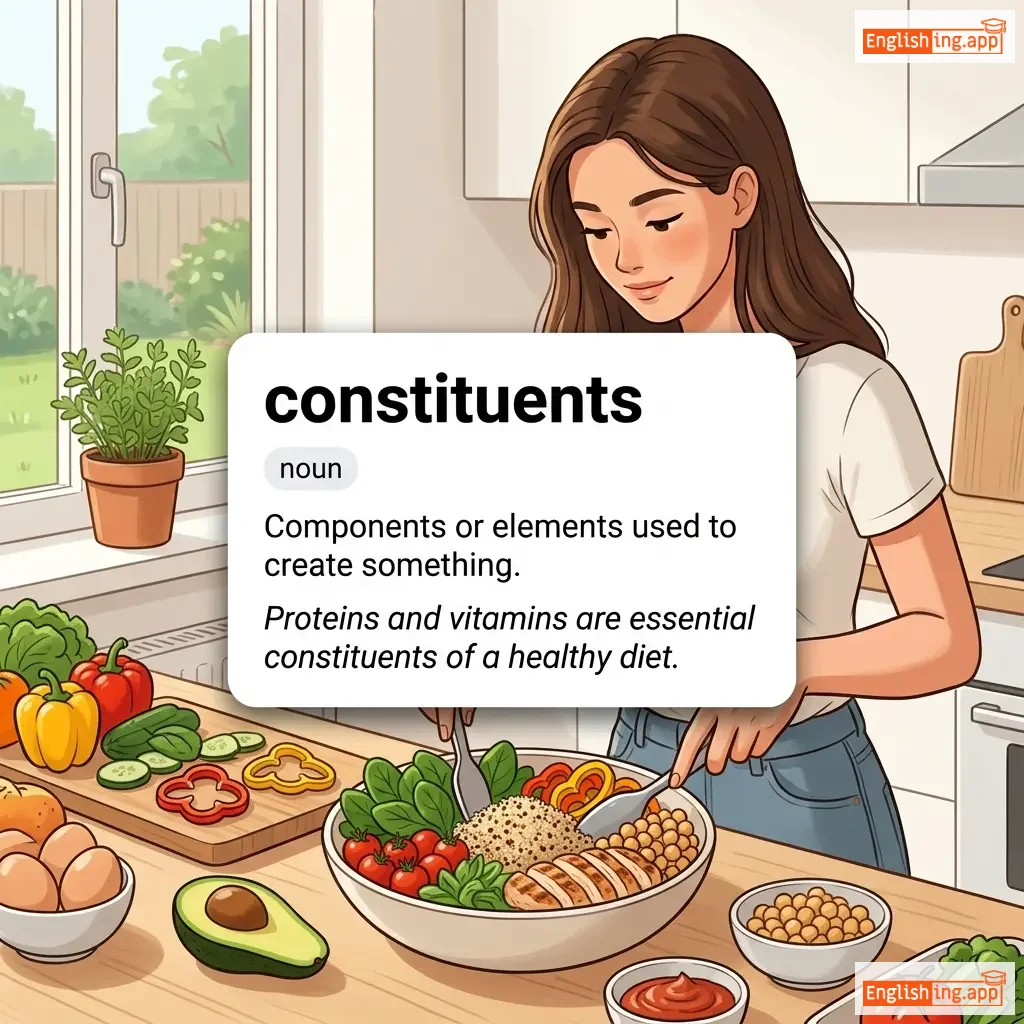
constituents definition card — visual illustration of the meaning
noun
/kənˈstɪtʃ.u.ənts/
constituants (constituants)

Components or elements used to create something.

"Proteins and vitamins are essential constituents of a healthy diet."

"Les protéines et les vitamines sont des constituants essentiels d'un régime alimentaire sain." (Les protéines et les vitamines sont des constituants essentiels d'un régime alimentaire sain.)
verb
/ˈkɒnstɪtjuːt/
constituer (constituer)

To make up, form, or establish something.

"These documents constitute the legal agreement between the two parties."

"Ces documents constituent l'accord légal entre les deux parties." (Ces documents constituent l'accord légal entre les deux parties.)
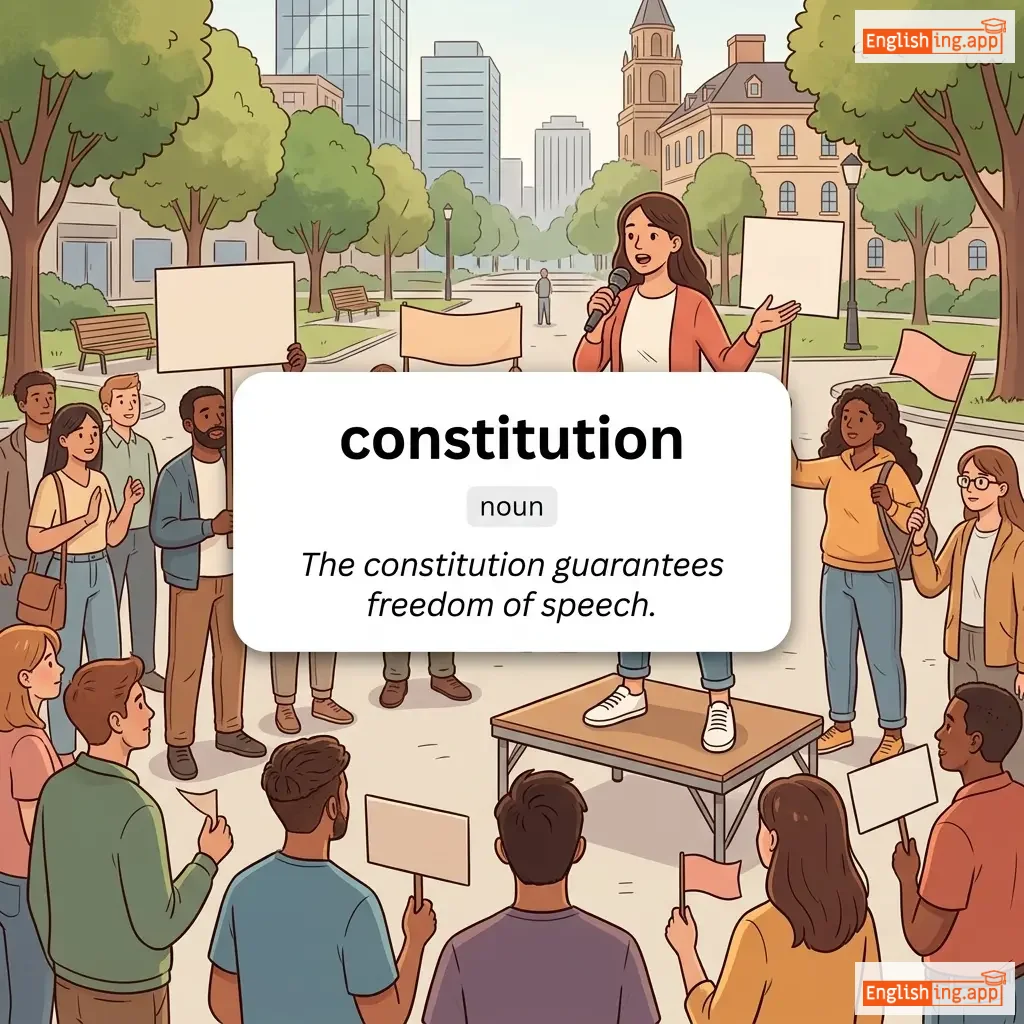
constitution definition card — visual illustration of the meaning
noun
/ˌkɒnstɪˈtjuːʃən/
constitution (constitution)

The system of fundamental principles according to which a nation or organization is governed.

"The constitution guarantees freedom of speech."

"La constitution garantit la liberté d'expression." (La constitution garantit la liberte d'expression.)
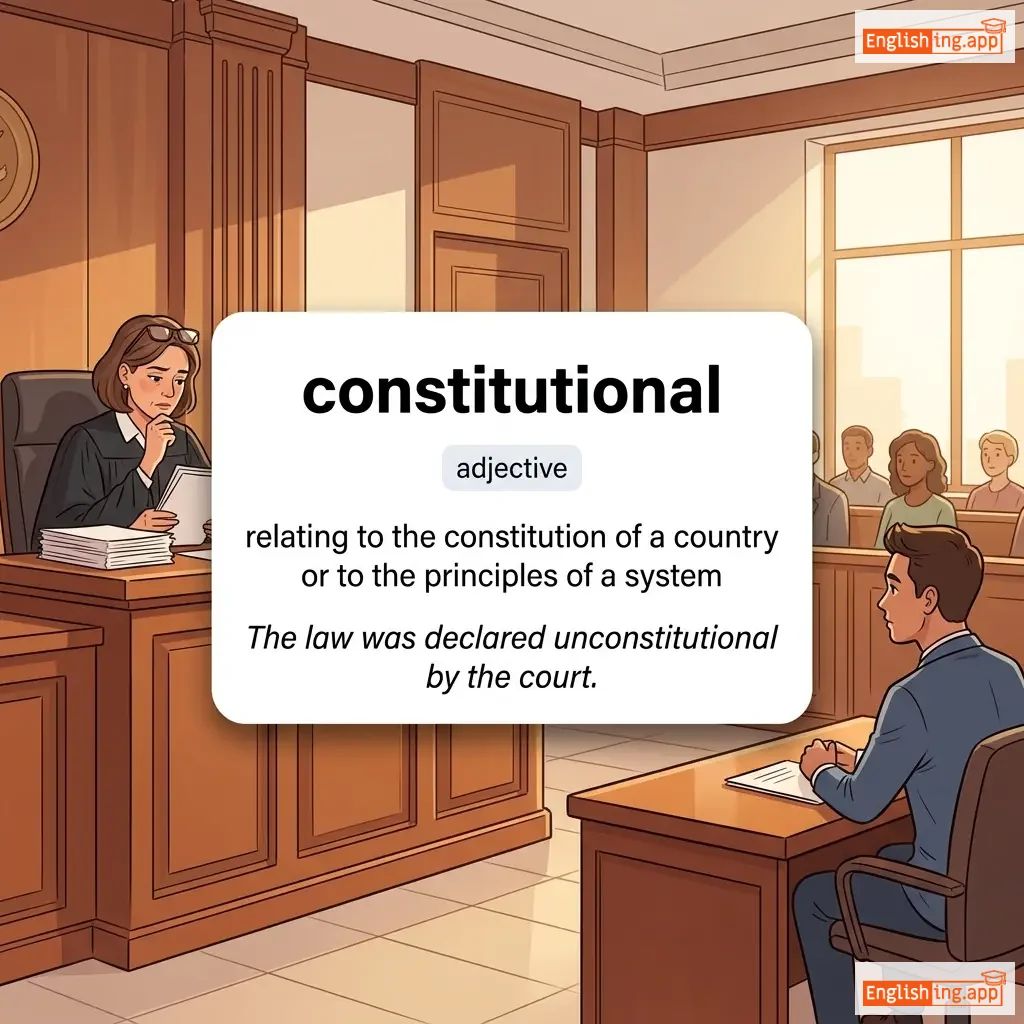
constitutional definition card — visual illustration of the meaning
adjective
/ˌkɒnstɪˈtjuːʃənəl/
constitutionnel (konstitooshunul)

relating to the constitution of a country or to the principles of a system

"The law was declared unconstitutional by the court."

"La loi a ete declaree inconstitutionnelle par le tribunal." (Laloiaeteclareeinconstitutionnelleparlettribunal)
verb
/kənˈstreɪn/
contraindre (contraindre)

to limit or restrict someone or something; to force or compel

"The new regulations constrain businesses from polluting the environment."

"Les nouvelles régulations contraignent les entreprises à ne pas polluer l'environnement." (Les nouvelles régulations contraignent les entreprises à ne pas polluer l'environnement.)
adjective
/kənˈstreɪnd/
contraint, forcé (contraint, force)

appearing forced, unnatural, or restricted

"He gave a constrained smile during the awkward meeting."

"Il a donné un sourire forcé pendant la réunion maladroite." (Il a donné un sourire forcé pendant la réunion maladroite.)
noun
/kənˈstreɪnt/
contrainte (contrainte)

a limitation or restriction

"Time is the biggest constraint in completing the project."

"Le temps est la plus grande contrainte pour terminer le projet." (Le temps est la plus grande contrainte pour terminer le projet.)
verb
/kənˈstrɪkt/
constrict (constrict)

to make narrower or tighter; to shrink or compress

"The snake constricted its prey before swallowing."

"Le serpent a contracté sa proie avant de l'avaler." (Le serpent a contracté sa proie avant de l'avaler.)
verb
/kənˈstrɪndʒ/
contracter (contracter)

to cause to shrink or contract; to constrict

"The medicine helped constringe the swollen tissues."

"Le médicament a aidé à contracter les tissus enflés." (Le médicament a aidé à contracter les tissus enflés.)
verb
/kənˈstrʌkt/
construire (construir)

to build or form something by putting parts together

"They plan to construct a new bridge over the river."

"Ils prévoient de construire un nouveau pont au-dessus de la rivière." (Ils prévoient de construire un nouveau pont au-dessus de la rivière.)
construction definition card — visual illustration of the meaning
noun
/kənˈstrʌkʃən/
construction (construction)

The process of building something, typically large structures such as houses, roads, or bridges.

"The construction of the new bridge will take two years."

"La construction du nouveau pont prendra deux ans." (La construction du nouveau pont prendra deux ans.)
verb
/kənˈstruː/
interpréter (interpreter)

to interpret or understand the meaning of something in a particular way

"His words could be construed as a threat."

"Ses mots pouvaient être interprétés comme une menace." (Ses mots pouvaient être interprétés comme une menace.)
noun
/ˈkɒnsəl/
consul / ambassadeur (consul / ambassadeur)

an official appointed by a government to live in a foreign city and protect its citizens and interests there

"The consul assisted travelers who lost their passports."

"Le consul a aidé les voyageurs qui ont perdu leurs passeports." (Le consul a aide les voyageurs qui ont perdu leurs passeports.)
noun
/ˈkɒnsjʊlət/
consulat (consulat)

the building or office where a consul works

"He went to the consulate to renew his visa."

"Il est allé au consulat pour renouveler son visa." (Il est alle au consulat pour renouveler son visa.)
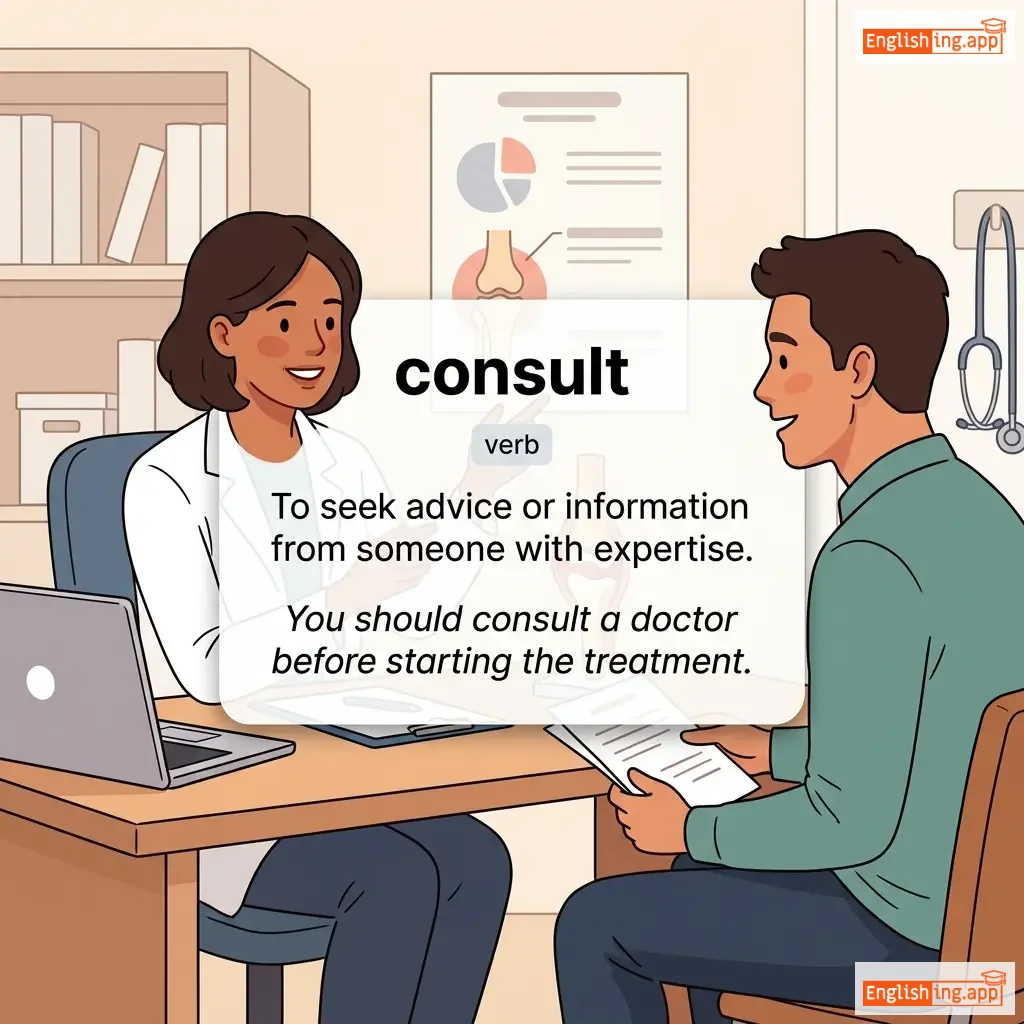
consult definition card — visual illustration of the meaning
verb
/kənˈsʌlt/
consulter (consulter)

To seek advice or information from someone with expertise.

"You should consult a doctor before starting the treatment."

"Vous devriez consulter un médecin avant de commencer le traitement." (Vous devriez consulter un médecin avant de commencer le traitement.)
noun
/kənˈsʌltənt/
consultant (consultant)

A professional who provides expert advice in a particular area.

"The company hired a consultant to improve its marketing strategy."

"L'entreprise a embauché un consultant pour améliorer sa stratégie marketing." (L'entreprise a embauché un consultant pour améliorer sa stratégie marketing.)
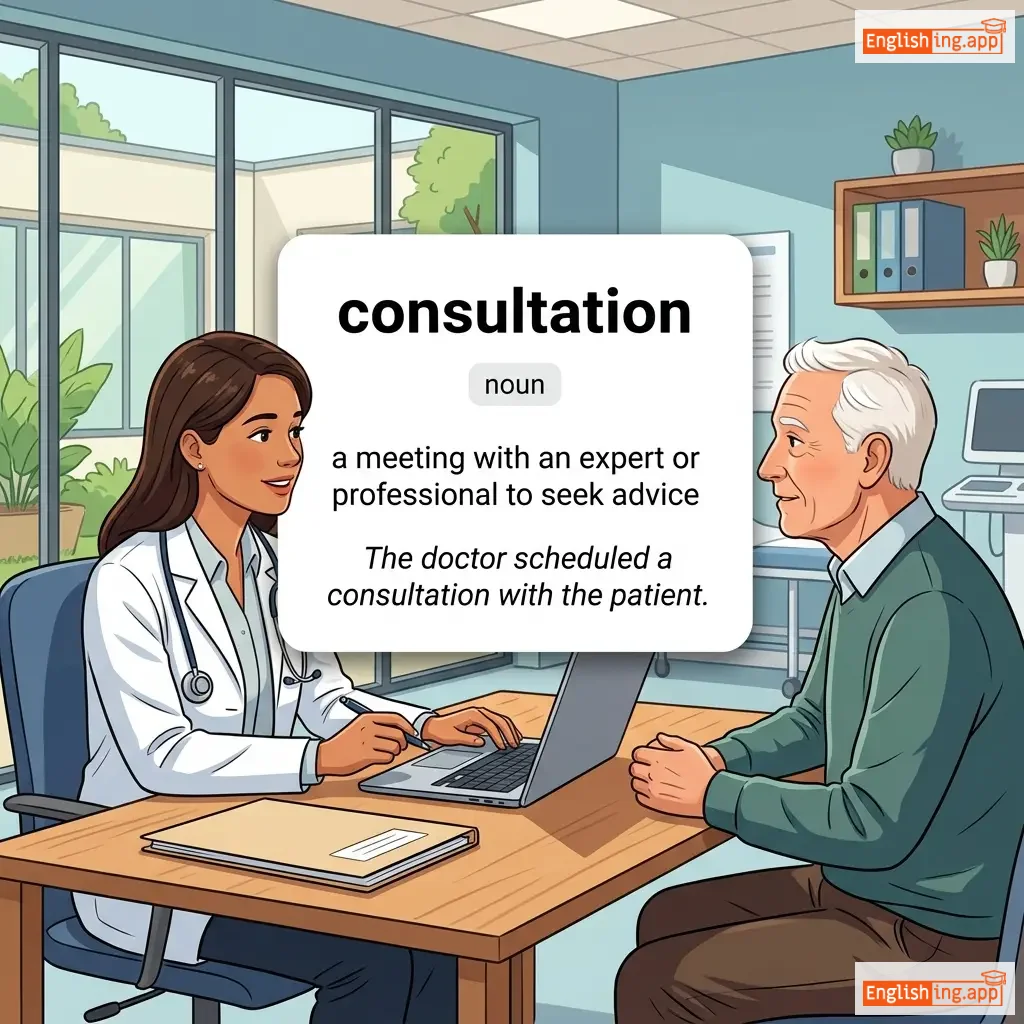
consultation definition card — visual illustration of the meaning
noun
/ˌkɒnsʌlˈteɪʃən/
consultation (consultation)

a meeting with an expert or professional to seek advice

"The doctor scheduled a consultation with the patient."

"Le médecin a planifié une consultation avec le patient." (Le medecin a planifie une consultation avec le patient.)
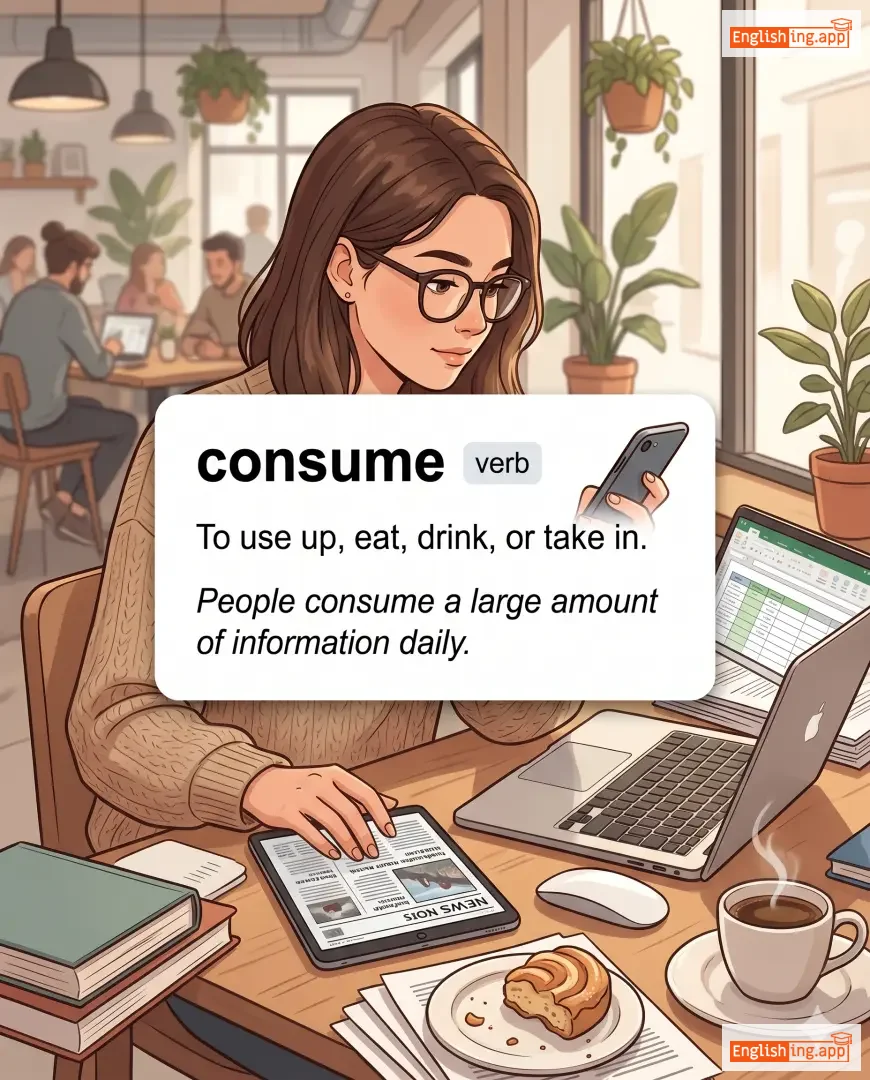
consume definition card — visual illustration of the meaning
verb
/kənˈsjuːm/
consommer (consommer)

To use up, eat, drink, or take in.

"People consume a large amount of information daily."

"Les gens consomment une grande quantité d'informations chaque jour." (Les gens consomment une grande quantité d'informations chaque jour.)
noun
/kənˈsjuːmər/
consommateur (consommateur)

A person who buys and uses goods and services.

"The company focuses on understanding consumer needs."

"L'entreprise se concentre sur la compréhension des besoins des consommateurs." (L'entreprise se concentre sur la compréhension des besoins des consommateurs.)
consumerism definition card — visual illustration of the meaning
noun
kənˈsjuː.mə.rɪ.zəm
consumérisme (consumerism)

The tendency to increase consumption of goods and the importance given to consuming products.

"Modern consumerism leads to increased demand for luxury goods."

"Le consumérisme moderne entraîne une demande accrue de biens de luxe." (Le consumérisme moderne entraîne une demande accrue de biens de luxe.)
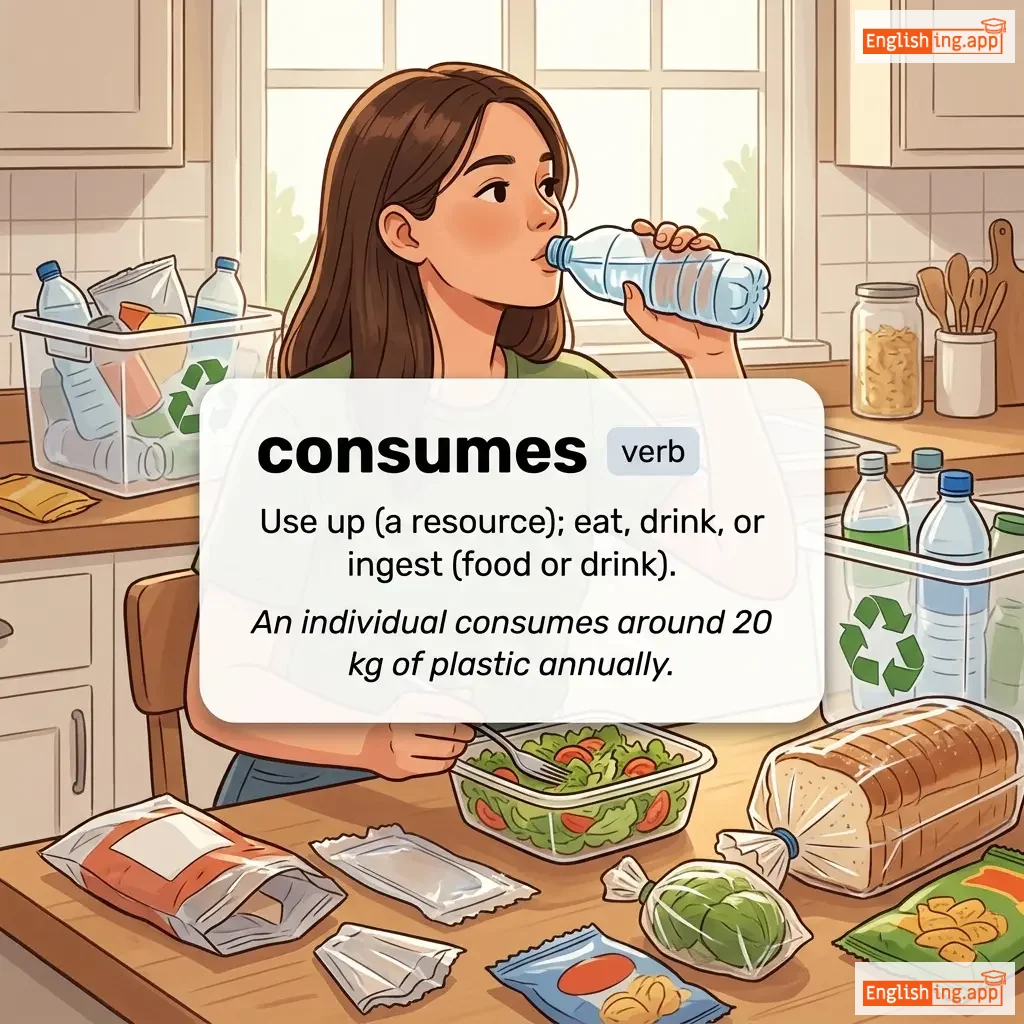
consumes definition card — visual illustration of the meaning
verb
kənˈsjuːmz
consommer (consommer)

Use up (a resource); eat, drink, or ingest (food or drink).

"An individual consumes around 20 kg of plastic annually."

"Une personne consomme environ 20 kg de plastique chaque année." (Une personne consomme environ 20 kg de plastique chaque année.)
consummate definition card — visual illustration of the meaning
adjective, verb
/ˈkɒnsəmət/ (adj), /ˈkɒnsəmeɪt/ (verb)
consommer / complet (consommer / komple)

to complete or perfect something; showing great skill or excellence

"She is a consummate professional in her field."

"Elle est une professionnelle accomplie dans son domaine." (Elle est une professionnelle accomplie dans son domaine.)
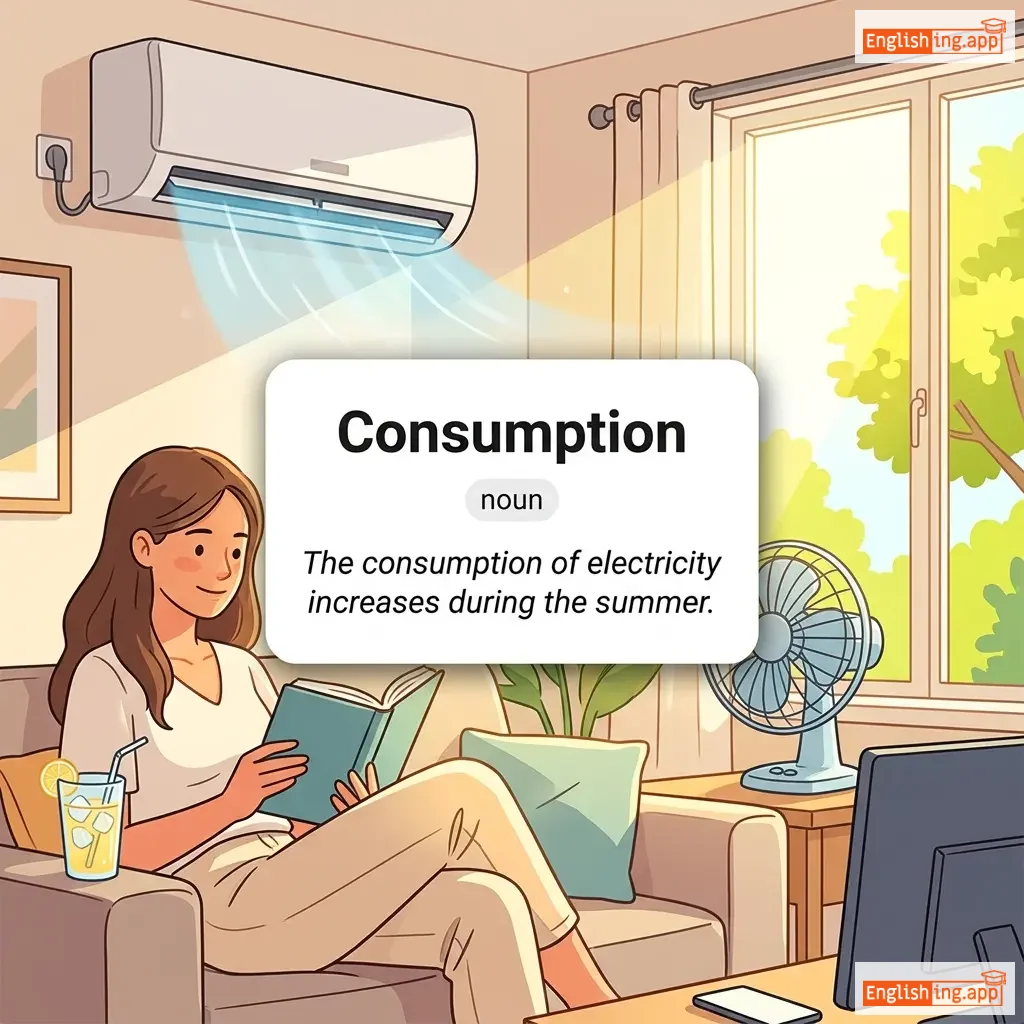
Consumption definition card — visual illustration of the meaning
noun
/kənˈsʌmpʃən/
consommation (consommation)

The act of using up resources, goods, or energy; also refers to the eating or drinking of something.

"The consumption of electricity increases during the summer."

"La consommation d'électricité augmente pendant l'été." (La consommation d'électricité augmente pendant l'été.)
adjective
/kənˈsʌmptɪv/
consumptif (consumptif)

Relating to or characterized by consumption; historically used to describe someone suffering from tuberculosis.

"The doctor advised against consumptive habits."

"Le médecin a déconseillé les habitudes consumptives." (Le médecin a déconseillé les habitudes consumptives.)
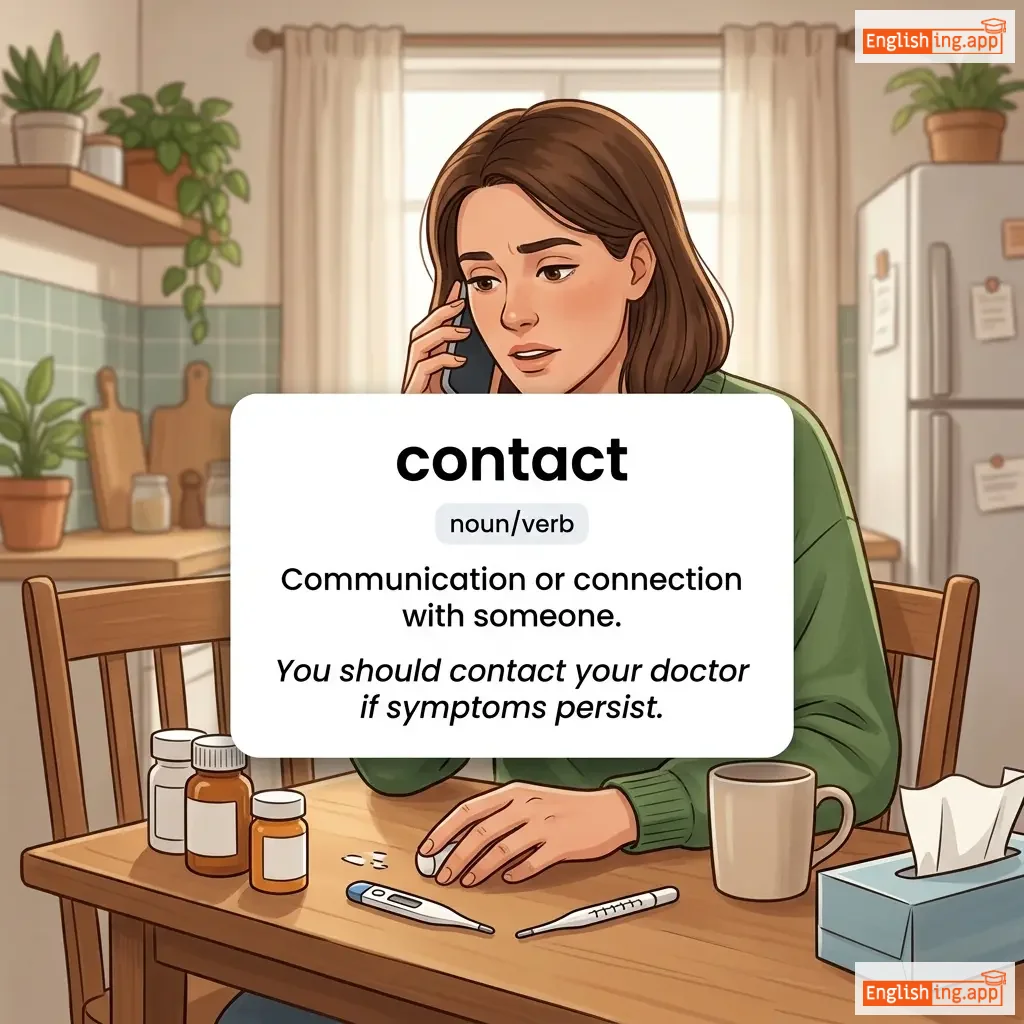
contact definition card — visual illustration of the meaning
noun/verb
/ˈkɒntækt/
contact (contact)

Communication or connection with someone.

"You should contact your doctor if symptoms persist."

"Vous devriez contacter votre médecin si les symptômes persistent." (Vous devriez contacter votre médecin si les symptômes persistent.)
noun
/kənˈteɪdʒən/
contagion (contagion)

The communication of disease from one person to another by close contact; also the spread of harmful ideas or behaviors.

"Fear spread like a contagion through the crowd."

"La peur s'est propagée comme une contagion à travers la foule." (La peur s'est propagee comme une contagion a travers la foule.)
adjective
/kənˈteɪdʒəs/
contagieux (kontajyu)

Able to be transmitted from one person to another, typically by direct contact; also used for emotions or attitudes that spread quickly.

"Her laughter was so contagious that everyone started laughing."

"Son rire était tellement contagieux que tout le monde a commencé à rire." (Son rire était tellement contagieux que tout le monde a commencé à rire.)
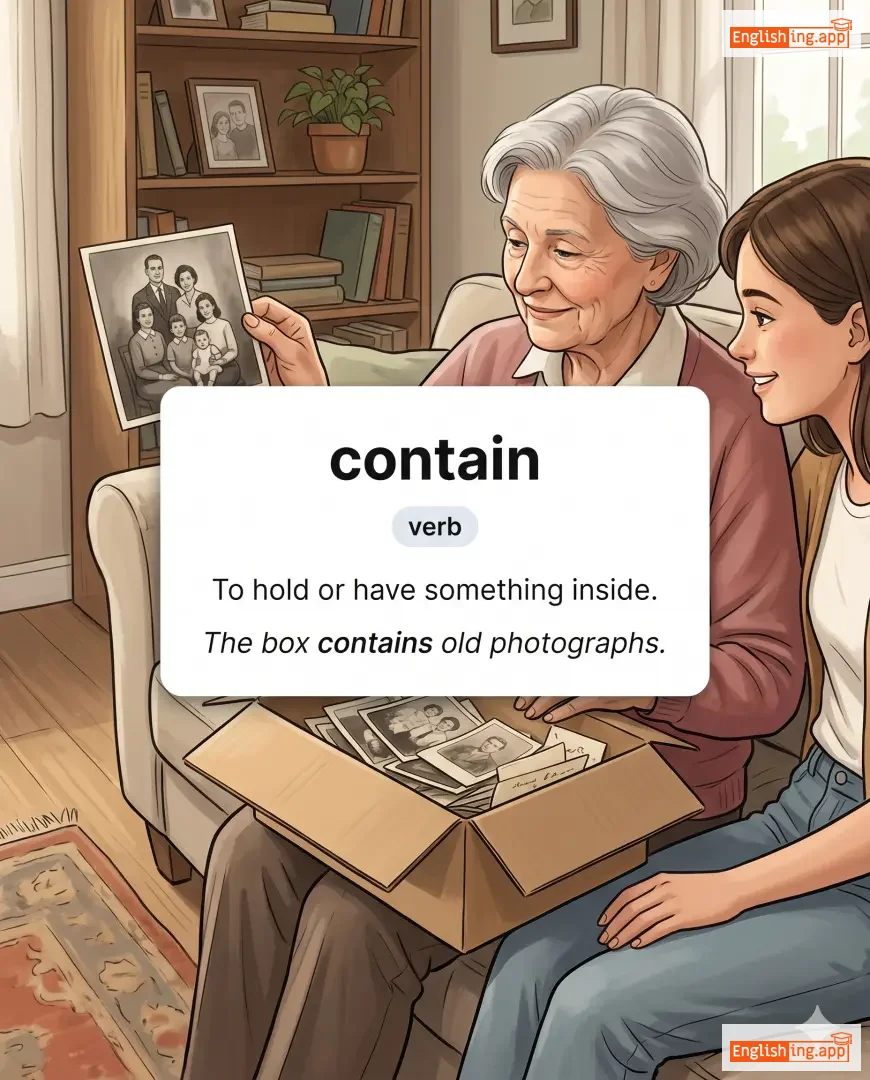
contain definition card — visual illustration of the meaning
verb
/kənˈteɪn/
contenir (contenir)

To hold or have something inside.

"The box contains old photographs."

"La boîte contient de vieilles photos." (La boîte contient de vieilles photos.)
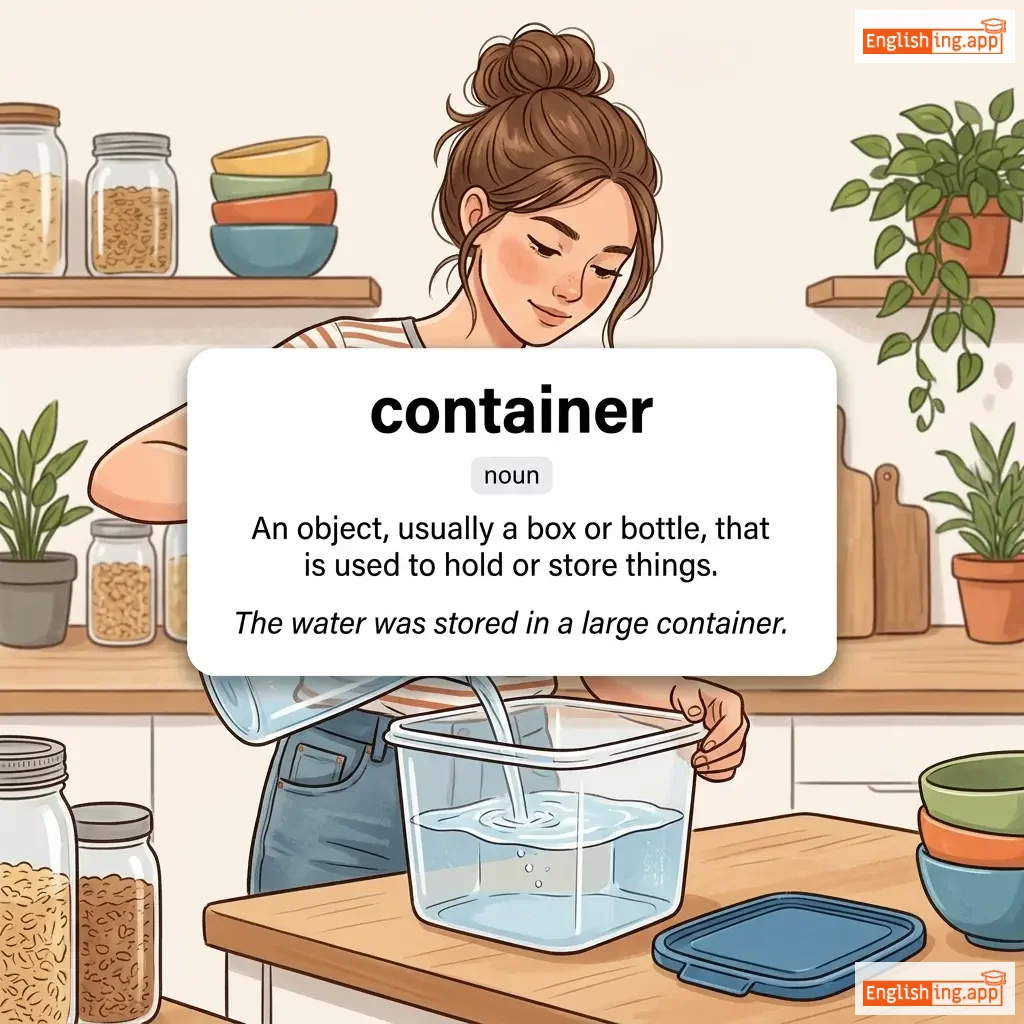
container definition card — visual illustration of the meaning
noun
/kənˈteɪnər/
conteneur (conteneur)

An object, usually a box or bottle, that is used to hold or store things.

"The water was stored in a large container."

"L'eau a été stockée dans un grand conteneur." (L'eau a été stockée dans un grand conteneur.)
verb
/kənˈtæmɪneɪt/
contaminer (contaminer)

To make something impure, dirty, or harmful by contact with a poisonous or polluting substance.

"The river was contaminated by industrial waste."

"La rivière a été contaminée par des déchets industriels." (La rivière a été contaminée par des déchets industriels.)
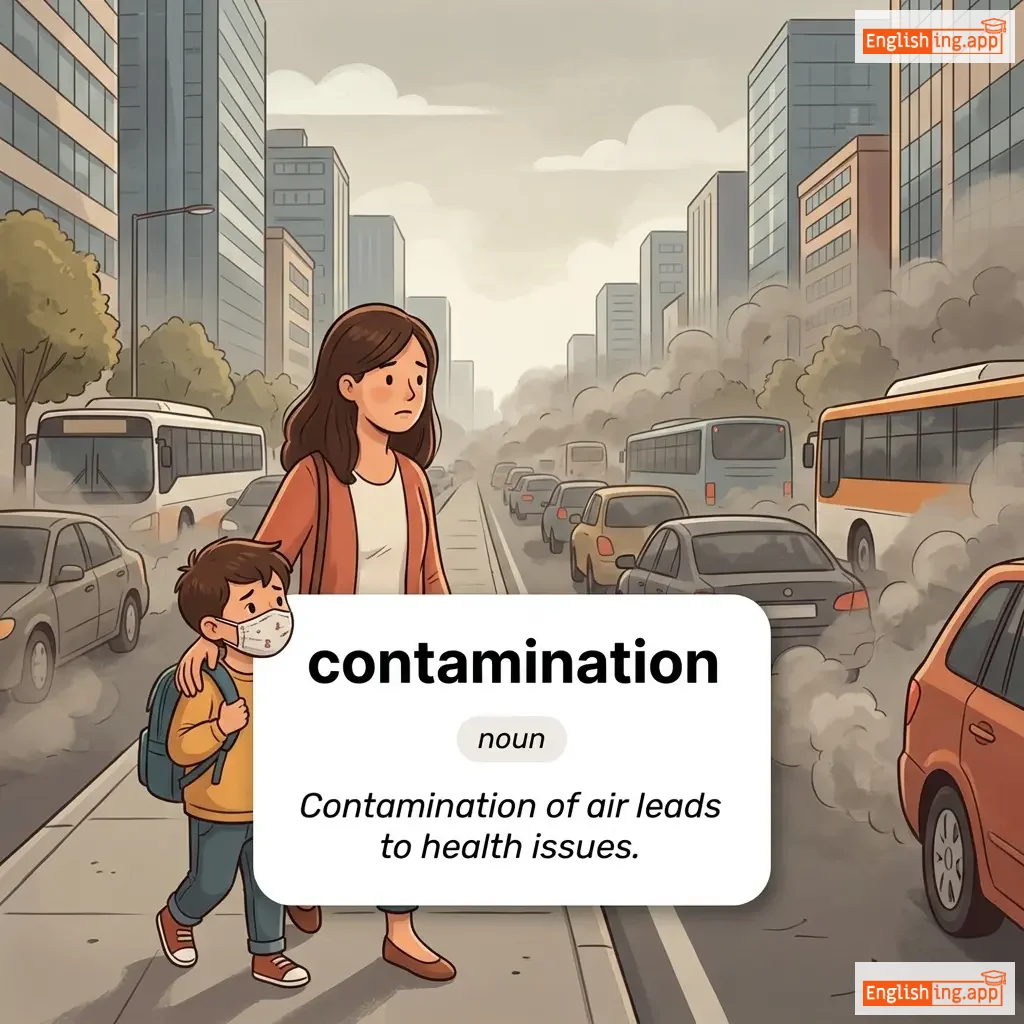
contamination definition card — visual illustration of the meaning
noun
kənˌtæm.ɪˈneɪ.ʃən
contamination (kontamination)

The process of making something less pure by exposure to or addition of a poisonous or polluting substance.

"Contamination of air leads to health issues."

"La contamination de l'air cause des problèmes de santé." (La contamination de l'air cause des problèmes de santé.)
verb
/kənˈtɛm/
mépriser (mépriser)

to treat or regard with disdain, scorn, or contempt

"He would never contemn honest work, no matter how humble."

"Il ne mépriserait jamais un travail honnête, peu importe à quel point il est modeste." (Il ne mépriserait jamais un travail honnête, peu importe à quel point il est modeste.)
verb
/ˈkɒntəmpleɪt/
contempler (contempler)

to think deeply and carefully about something; to consider thoughtfully

"She sat quietly to contemplate her future plans."

"Elle s'est assise en silence pour contempler ses projets futurs." (Elle s'est assise en silence pour contempler ses projets futurs.)
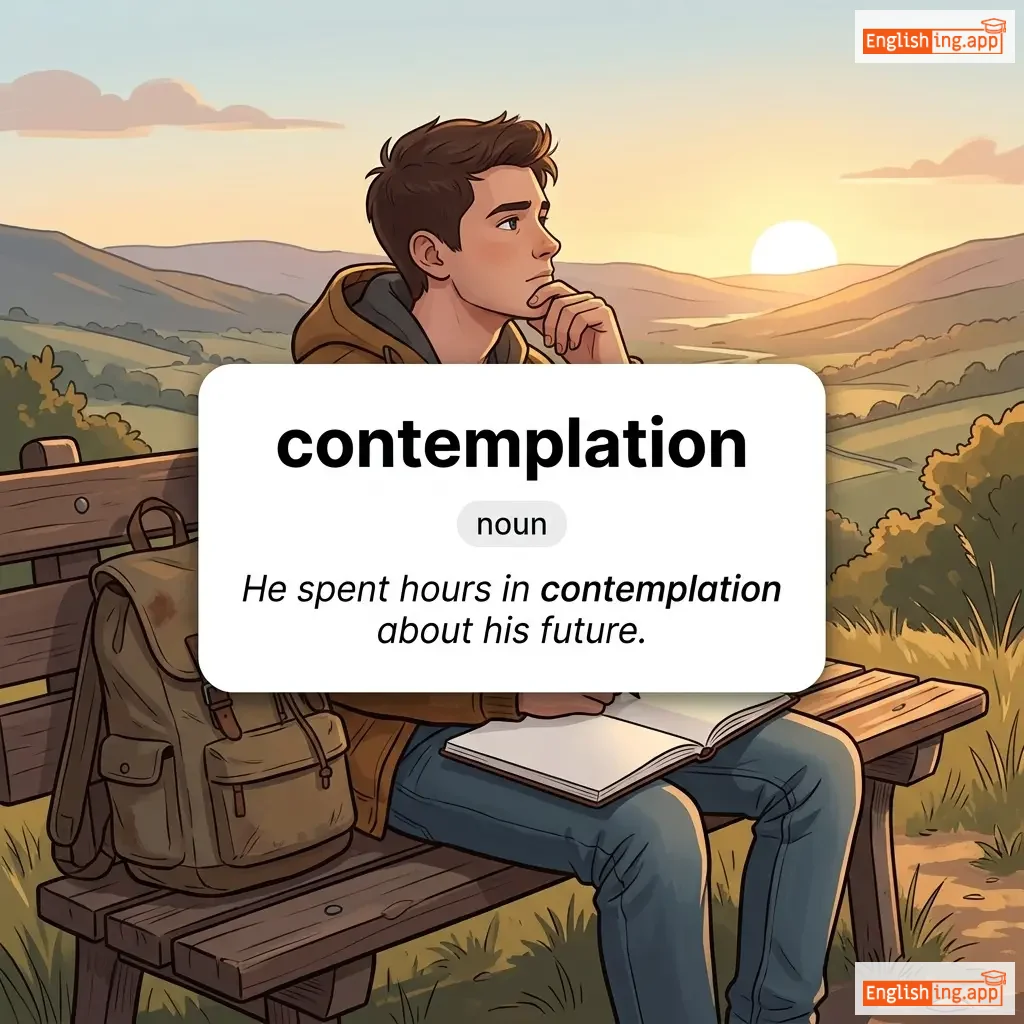
contemplation definition card — visual illustration of the meaning
noun
ˌkɒn.təmˈpleɪ.ʃən
contemplation, réflexion profonde (contemplation, reflexion profonde)

The action of looking thoughtfully at something for a long time; deep reflective thought.

"He spent hours in contemplation about his future."

"Il a passé des heures en contemplation sur son avenir." (Il a passe des heures en contemplation sur son avenir.)
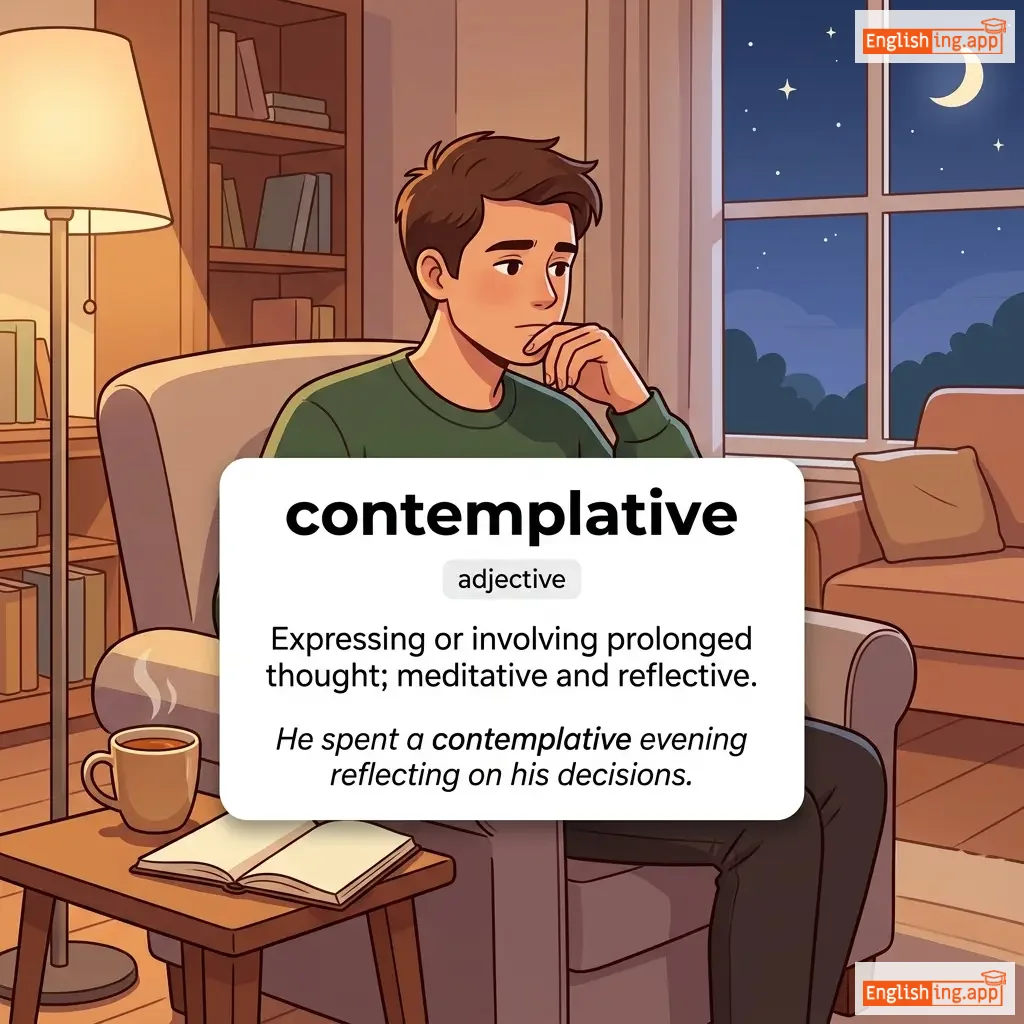
contemplative definition card — visual illustration of the meaning
adjective
ˈkɒn.təm.plə.tɪv
réfléchi ou méditatif (reflechi ou meditativ)

Expressing or involving prolonged thought; meditative and reflective.

"He spent a contemplative evening reflecting on his decisions."

"Il a passé une soirée contemplative à réfléchir sur ses décisions." (Il a passé une soirée contemplative à réfléchir sur ses décisions.)
adjective
/kənˌtɛmpəˈreɪniəs/
contemporané (contemporane)

existing, happening, or occurring at the same time

"The two artists were contemporaneous and often influenced each other."

"Les deux artistes étaient contemporains et se sont souvent influencés mutuellement." (Les deux artistes étaient contemporains et se sont souvent influencés mutuellement.)
adjective
/kənˈtɛmpərɛri/
contemporain, moderne (contemporain, moderne)

belonging to the same time period; modern

"She enjoys contemporary art exhibitions."

"Elle apprécie les expositions d'art contemporain." (Elle apprecie les expositions d'art contemporain.)
noun
/kənˈtɛmpt/
mépris, dédain (mepri, dedain)

a strong feeling of dislike and lack of respect towards someone or something

"He spoke with contempt about the corrupt officials."

"Il a parlé avec mépris des fonctionnaires corrompus." (Il a parlé avec mépris des fonctionnaires corrompus.)
adjective
/kənˈtɛmptəbl/
méprisable, détestable (meprisable, detestable)

deserving of contempt; despicable

"His deceitful actions were truly contemptible."

"Ses actions trompeuses étaient véritablement méprisables." (Ses actions trompeuses étaient véritablement méprisables.)
adjective
/kənˈtɛmptʃuəs/
méprisant, dédaigneux (meprizant, dedaignieux)

showing or expressing contempt; scornful

"She gave him a contemptuous glance."

"Elle lui lança un regard méprisant." (Elle lui lança un regard meprisant.)
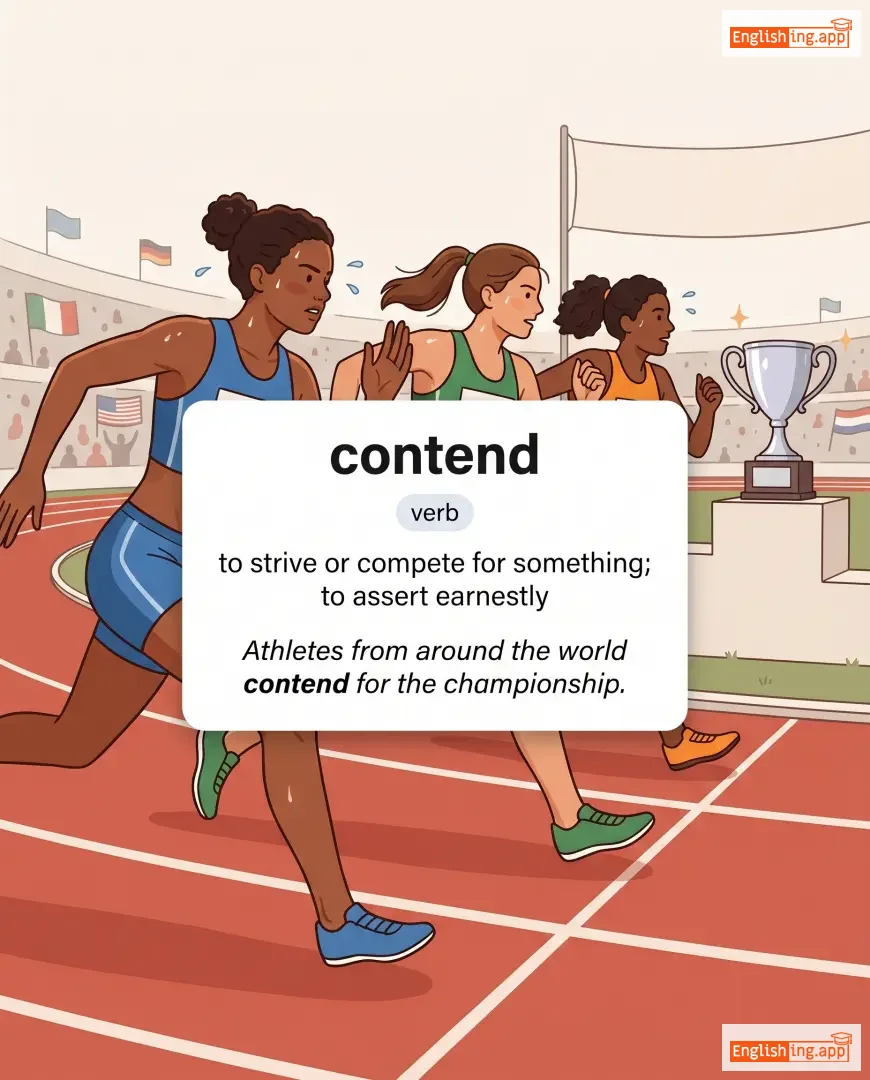
contend definition card — visual illustration of the meaning
verb
/kənˈtɛnd/
lutter, revendiquer (lutter, revendiquer)

to strive or compete for something; to assert earnestly

"Athletes from around the world contend for the championship."

"Les athlètes du monde entier luttent pour le championnat." (Les athlètes du monde entier luttent pour le championnat.)
noun
/kənˈtɛndər/
concurren, prétendant (concurren, pretandan)

a person or team competing for a title or prize

"She is a strong contender for the mayoral position."

"Elle est une forte prétendante pour le poste de maire." (Elle est une forte pretandante pour le poste de maire.)
adjective
/ˈkɒntɛnt/
satisfait, content (satisfait, content)

in a state of satisfaction; pleased

"He felt content after finishing his work."

"Il se sentait content après avoir terminé son travail." (Il se sentait content après avoir terminé son travail.)
adjective
/kənˈtɛntɪd/
content (content)

Feeling or expressing happiness and satisfaction.

"She was contented with her simple life."

"Elle était contente de sa vie simple." (Elle était contente de sa vie simple.)