Vocabulaires

Découvrez, apprenez et maîtrisez le vocabulaire anglais

adjective
/kənˈfɔːrməbl/
conforme (conforme)

Capable of being adapted or consistent with something; compliant.

"His actions were conformable to the rules of the institution."

"Ses actions étaient conformes aux règles de l'institution." (ses actions étaient conformes aux règles de l'institution.)
noun
/kənˈfɔːrməns/
conformité (conformite)

The act of conforming to a rule, standard, or law.

"The product was tested for conformance with safety standards."

"Le produit a été testé pour sa conformité aux normes de sécurité." (Le produit a été testé pour sa conformité aux normes de sécurité.)
noun
/ˌkɑːnfɔːrˈmeɪʃən/
conformation (conformation)

The shape, structure, or arrangement of something.

"The scientist studied the molecular conformation of the protein."

"Le scientifique a étudié la conformation moléculaire de la protéine." (Le scientifique a etudie la conformation moleculaire de la proteine.)
noun
/kənˈfɔːrmɪst/
conformiste (conformiste)

A person who uncritically conforms to established practices or standards.

"She was labeled a conformist for always following the crowd."

"Elle a été étiquetée comme conformiste pour avoir toujours suivi la foule." (Elle a été étiquetée comme conformiste pour avoir toujours suivi la foule.)
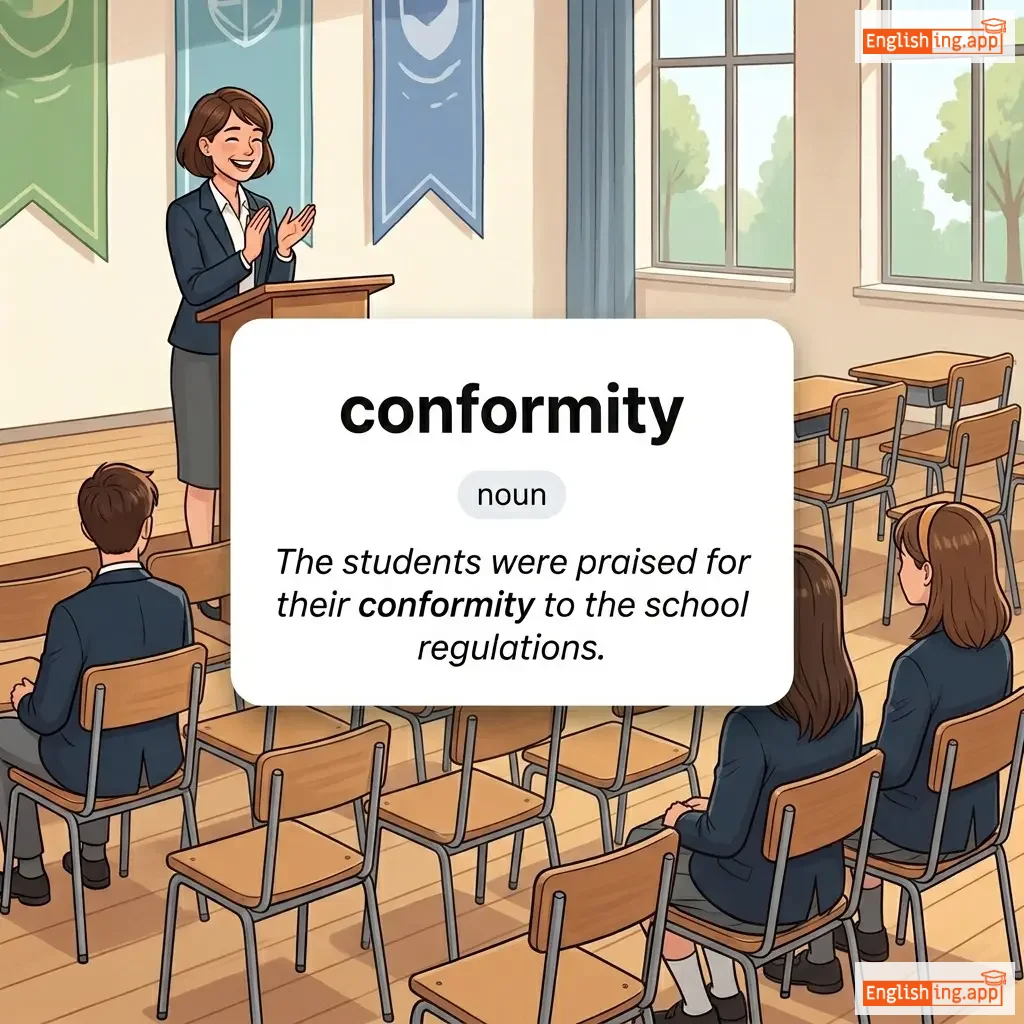
conformity definition card — visual illustration of the meaning
noun
/kənˈfɔːrməti/
conformité (conformite)

Compliance with standards, rules, or laws; behavior in accordance with social norms.

"The students were praised for their conformity to the school regulations."

"Les étudiants ont été félicités pour leur conformité aux règlements de l'école." (Les étudiants ont été félicités pour leur conformité aux règlements de l'école.)
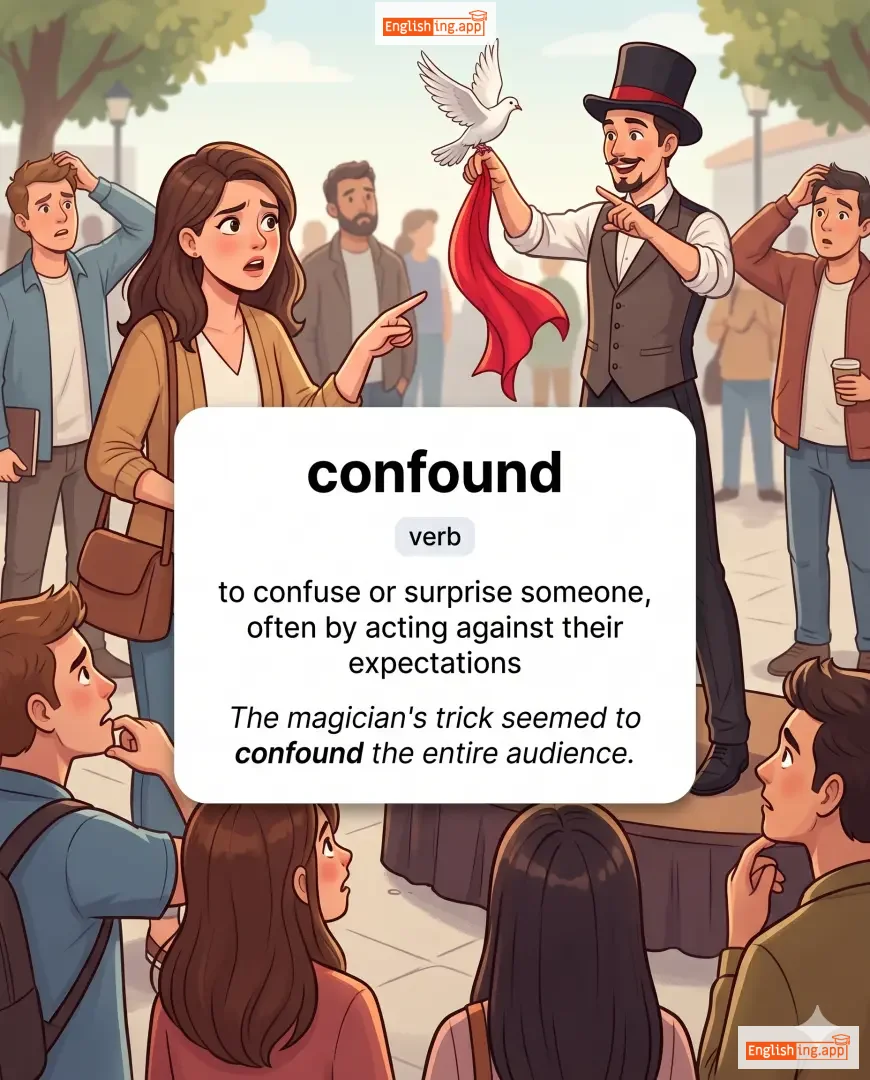
confound definition card — visual illustration of the meaning
verb
/kənˈfaʊnd/
déconcerter (deconcerter)

to confuse or surprise someone, often by acting against their expectations

"The magician's trick seemed to confound the entire audience."

"Le tour du magicien semblait déconcerter tout le public." (Le tour du magicien semblait déconcerter tout le public.)
verb
/kənˈfrʌnt/
confronter (confronter)

to face someone or something directly, especially in a challenge or conflict

"She had to confront her fears before making the speech."

"Elle a dû confronter ses peurs avant de faire son discours." (Elle a dû confronter ses peurs avant de faire son discours.)
noun
/ˌkɒnfrʌnˈteɪʃən/
confrontation (confrontation)

A hostile or argumentative meeting or situation between opposing parties.

"The protest led to a confrontation with the police."

"La manifestation a conduit à une confrontation avec la police." (La manifestation a conduit à une confrontation avec la police.)
verb
/kənˈfjuːz/
confondre (kɔ̃fɔ̃dr)

To make someone unable to think clearly; to bewilder.

"The complex instructions confused the students."

"Les instructions complexes ont dérouté les étudiants." (Les instructions complexes ont dérouté les étudiants.)
adjective
/kənˈfjuːzd/
confus (confus)

unable to think clearly; uncertain or puzzled

"She felt confused by the complicated instructions."

"Elle se sentait confuse à cause des instructions compliquées." (elle se sentait confuse a cause des instructions compliquees)
adjective
/kənˈfjuːzɪŋ/
déroutant (deroutant)

causing someone to be unable to think clearly or understand; difficult to comprehend

"The instructions were confusing and hard to follow."

"Les instructions étaient déroutantes et difficiles à suivre." (Les instructions etaient deroutantes et difficiles a suivre)
noun
/kənˈfjuːʒən/
confusion (confusion)

a state of being bewildered or unclear in one’s mind

"The sudden change in schedule caused a lot of confusion."

"Le changement soudain d'horaire a causé beaucoup de confusion." (Le changement soudain d'horaire a causé beaucoup de confusion.)
verb
/kənˈdʒiːl/
congeler (congeler)

to become thick or solid, especially from cooling

"The soup began to congeal after being left on the table."

"La soupe a commencé à se congeler après avoir été laissée sur la table." (La soupe a commence a se congeler apres avoir ete laissée sur la table.)
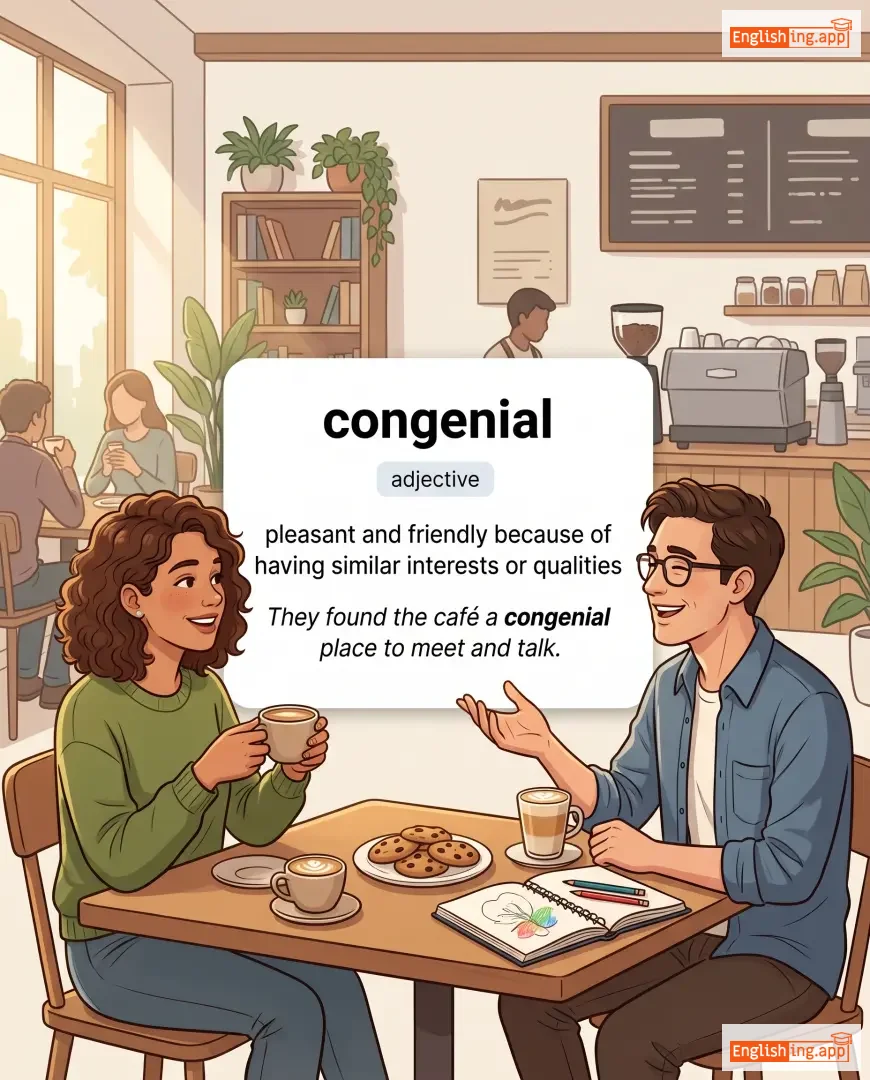
congenial definition card — visual illustration of the meaning
adjective
/kənˈdʒiːniəl/
chaleureux (chaleureux)

pleasant and friendly because of having similar interests or qualities

"They found the café a congenial place to meet and talk."

"Ils ont trouvé le café un endroit chaleureux pour se rencontrer et discuter." (Ils ont trouve le cafe un endroit chaleureux pour se rencontrer et discuter.)
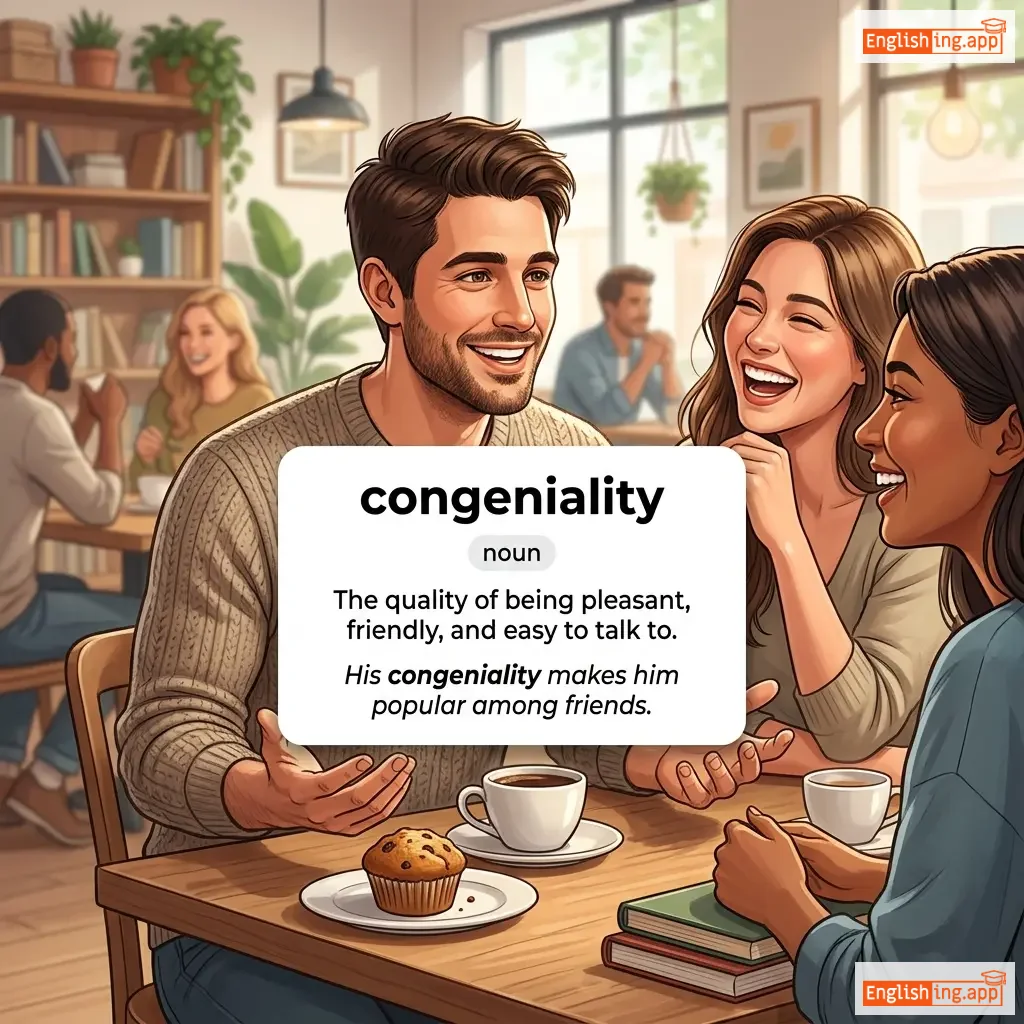
congeniality definition card — visual illustration of the meaning
noun
/kənˌdʒiː.niˈæl.ə.t̬i/
affabilité (affabilité)

The quality of being pleasant, friendly, and easy to talk to.

"His congeniality makes him popular among friends."

"Son affabilité le rend populaire parmi ses amis." (Son affabilité le rend populaire parmi ses amis.)
adjective
/kənˈdʒenɪtl/
congénital (congenital)

existing from birth, usually describing a disease or condition

"The child was born with a congenital heart defect."

"L'enfant est né avec une malformation cardiaque congénitale." (L'enfant est né avec une malformation cardiaque congénitale.)
verb
/kənˈdʒɛst/
congestionner (congestionner)

To block or overcrowd a space, making movement or flow difficult.

"Heavy traffic can congest the city streets during rush hour."

"Le trafic dense peut congestionner les rues de la ville pendant les heures de pointe." (Le trafic dense peut congestionner les rues de la ville pendant les heures de pointe.)
adjective
/kənˈdʒɛstɪd/
congestionné (congestionne)

Blocked up with too much traffic or crowding.

"The road was congested during rush hour."

"La route était congestionnée pendant l'heure de pointe." (La route était congestionnée pendant l'heure de pointe.)
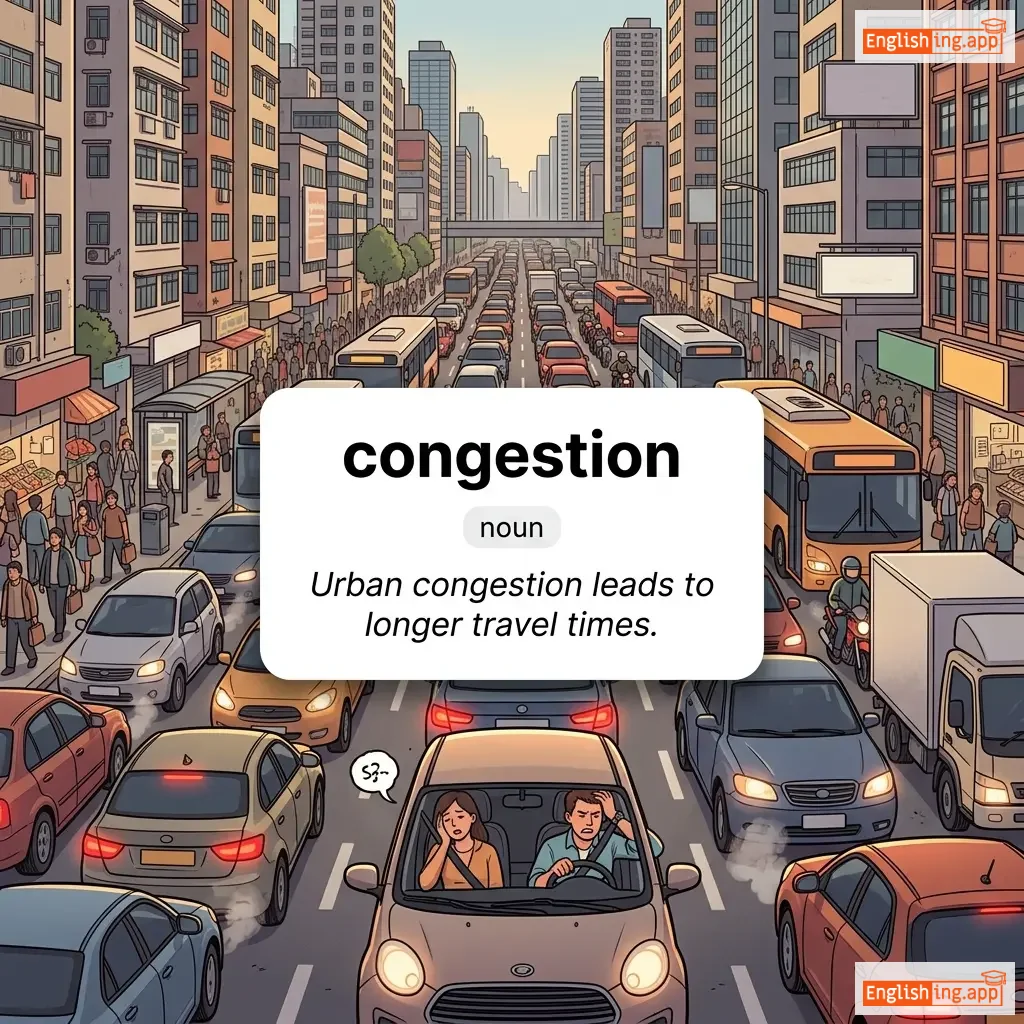
congestion definition card — visual illustration of the meaning
noun
/kənˈdʒes.tʃən/
embouteillage ou afflux excessif (embouteillage ou afflux excessif)

Traffic jam or overcrowded condition in roads or areas where there is excessive presence of vehicles or people.

"Urban congestion leads to longer travel times."

"La congestion urbaine entraîne des temps de voyage plus longs." (La congestion urbaine entraine des temps de voyage plus longs.)
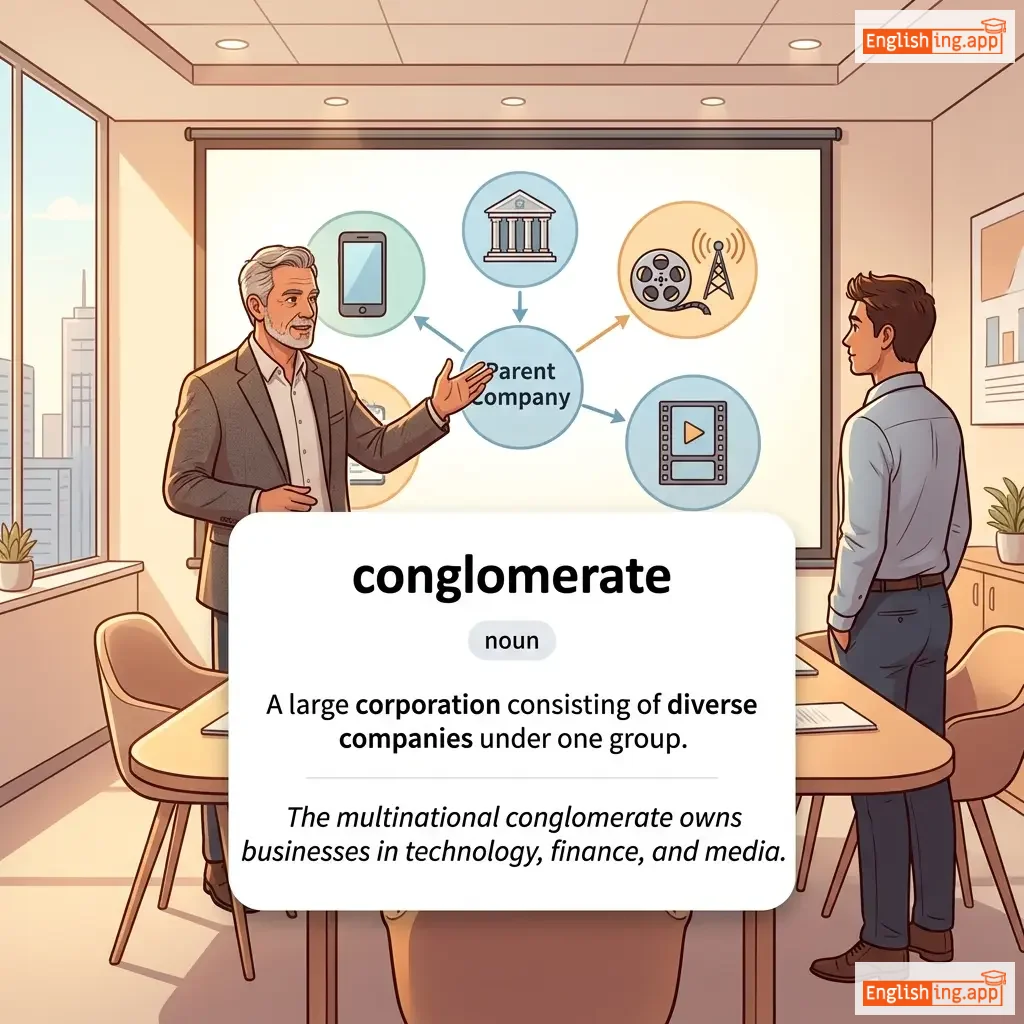
conglomerate definition card — visual illustration of the meaning
noun
/kənˈɡlɒmərət/
un grand groupe d'entreprises diverses (un grand groupe d'entreprises diverses)

A large corporation consisting of diverse companies under one group.

"The multinational conglomerate owns businesses in technology, finance, and media."

"Le conglomérat multinational possède des entreprises dans la technologie, la finance et les médias." (Le conglomérat multinational possède des entreprises dans la technologie, la finance et les médias.)
noun
/kənˌɡlɒməˈreɪʃən/
conglomérat (conglomerat)

A collection or mixture of different things grouped together.

"The market is a conglomeration of small shops and food stalls."

"Le marché est un conglomérat de petites boutiques et de stands de nourriture." (Le marché est un conglomérat de petites boutiques et de stands de nourriture.)
verb
/kənˈɡrætʃʊleɪt/
féliciter (feliciter)

to praise someone for an achievement or for a special occasion

"I want to congratulate you on your promotion."

"Je veux te féliciter pour ta promotion." (Je veux te féliciter pour ta promotion.)
noun
/kənˌɡrætʃəˈleɪʃən/
félicitation (felicitation)

an expression of praise or joy for someone’s achievement or good fortune

"She sent a congratulation to her friend on winning the award."

"Elle a envoyé une félicitation à son amie pour avoir gagné le prix." (elle a envoye une felicitation a son amie pour avoir gagne le prix)
noun
/kənˌɡrætʃ.əˈleɪ.ʃənz/
félicitations (felisitations)

words expressing praise for an achievement or good wishes on a special occasion

"Congratulations on your promotion! You really deserved this success."

"Félicitations pour ta promotion! Tu méritais vraiment ce succès." (Félicitations pour ta promotion! Tu méritais vraiment ce succès.)
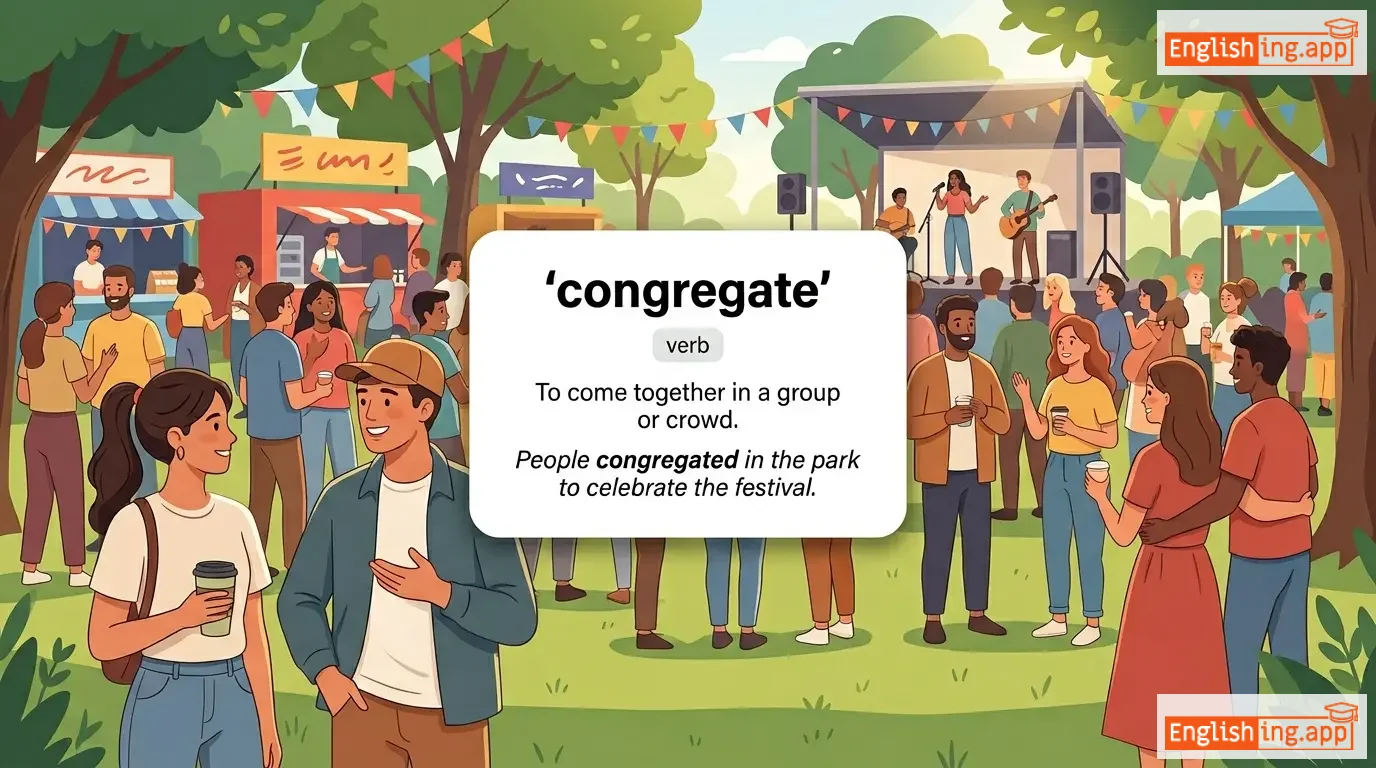
congregate definition card — visual illustration of the meaning
verb
/ˈkɒŋɡrɪˌɡeɪt/
se regrouper (se regrouper)

To come together in a group or crowd.

"People congregated in the park to celebrate the festival."

"Les gens se sont regroupés dans le parc pour célébrer le festival." (Les gens se sont regroupés dans le parc pour célébrer le festival.)
noun
/ˌkɒŋɡrɪˈɡeɪʃən/
congrégation (congregation)

a group of people assembled for religious worship or a common purpose

"The congregation gathered to hear the sermon."

"La congrégation s'est réunie pour écouter le sermon." (La congregation s'est reunie pour ecouter le sermon.)
noun
/ˈkɒŋɡrɛs/
congrès (congres)

a formal meeting or assembly, especially of representatives for discussion

"The international congress on climate change will be held next year."

"Le congrès international sur le changement climatique aura lieu l'année prochaine." (Le congres international sur le changement climatique aura lieu l'annee prochaine.)
adjective
/kənˈɡrɛʃənl/
congressional (congressional)

relating to a congress, especially the US Congress

"The bill received strong congressional support."

"Le projet de loi a reçu un fort soutien du Congrès." (Le projet de loi a reçu un fort soutien du Congrès.)
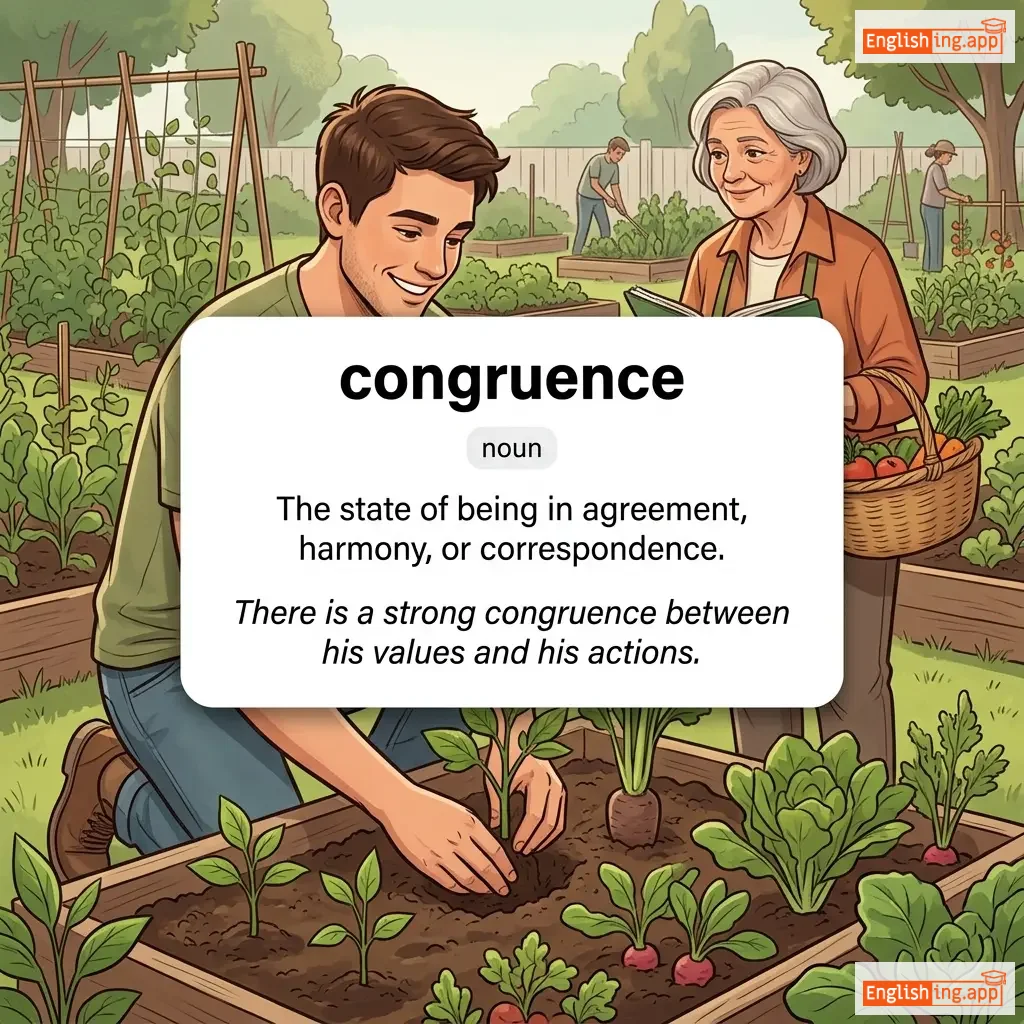
congruence definition card — visual illustration of the meaning
noun
/ˈkɒŋɡruəns/
congruence (congruence)

The state of being in agreement, harmony, or correspondence.

"There is a strong congruence between his values and his actions."

"Il y a une forte congruence entre ses valeurs et ses actions." (Il y a une forte congruence entre ses valeurs et ses actions.)
adjective
/ˈkɒŋɡruənt/
congruente (congruente)

in agreement or harmony; having the same shape and size in geometry

"Their values are congruent with the goals of the organization."

"Leurs valeurs sont congruentes avec les objectifs de l'organisation." (Leurs valeurs sont congruentes avec les objectifs de l'organisation.)
noun
/ˈkɒnɪfər/
Conifère (conifere)

a type of tree that bears cones and evergreen needle-like leaves, such as pine or fir

"The forest is dominated by conifers like pine and spruce."

"La forêt est dominée par des conifères comme le pin et l'épicéa." (La forêt est dominée par des conifères comme le pin et l'épicéa.)
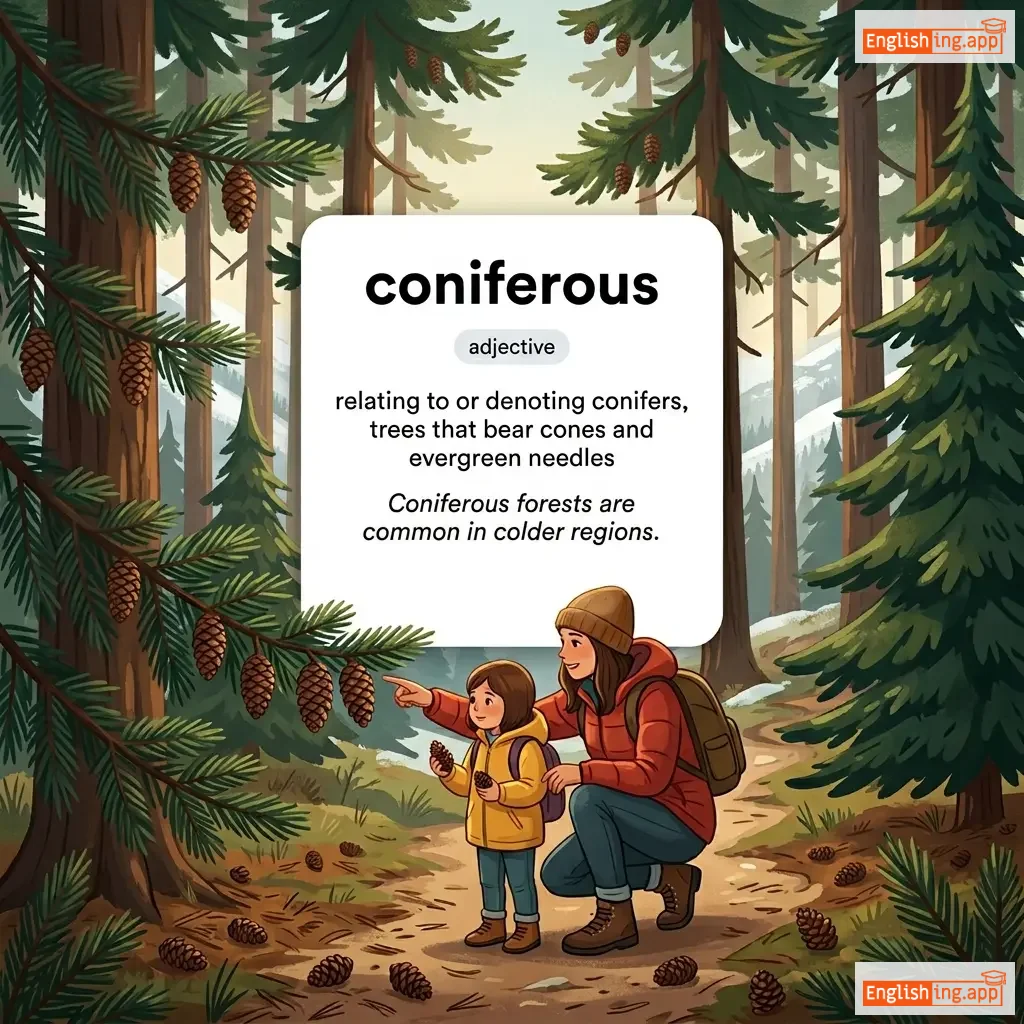
coniferous definition card — visual illustration of the meaning
adjective
/kəˈnɪfərəs/
arbres conifères (arbres coniferes)

relating to or denoting conifers, trees that bear cones and evergreen needles

"Coniferous forests are common in colder regions."

"Les forêts d'arbres conifères sont communes dans les régions froides." (Les forets d'arbres coniferes sont communes dans les regions froides.)
adjective
/kənˈdʒɛktʃərəl/
conjectural (conjectural)

based on guesswork or incomplete evidence rather than certain knowledge

"His explanation was purely conjectural and lacked proof."

"Son explication était purement conjecturale et manquait de preuves." (Son explication etait purement conjecturale et manquait de preuves.)
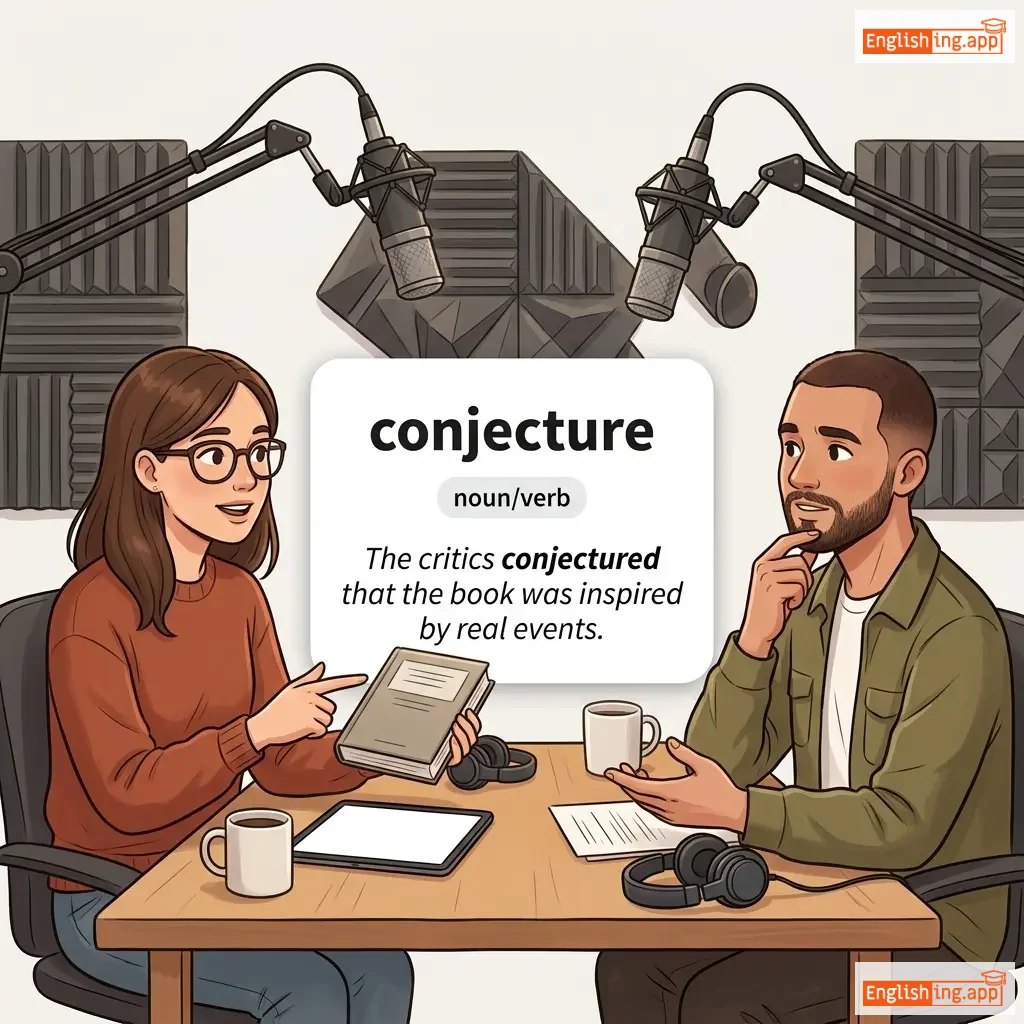
conjecture definition card — visual illustration of the meaning
noun/verb
/kənˈdʒɛktʃər/
conjecture (conjecture)

an opinion or conclusion formed on the basis of incomplete information; to form an opinion without sufficient evidence

"The critics conjectured that the book was inspired by real events."

"les critiques ont conjecturé que le livre était inspiré par des événements réels." (les critiques ont conjecturé que le livre était inspiré par des événements réels.)
verb
/kənˈdʒɔɪn/
joindre (joindre)

to join together or unite; to combine

"The two rivers conjoin just before reaching the sea."

"Les deux rivières se rejoignent juste avant d'atteindre la mer." (Les deux rivières se rejoignent juste avant d'atteindre la mer.)
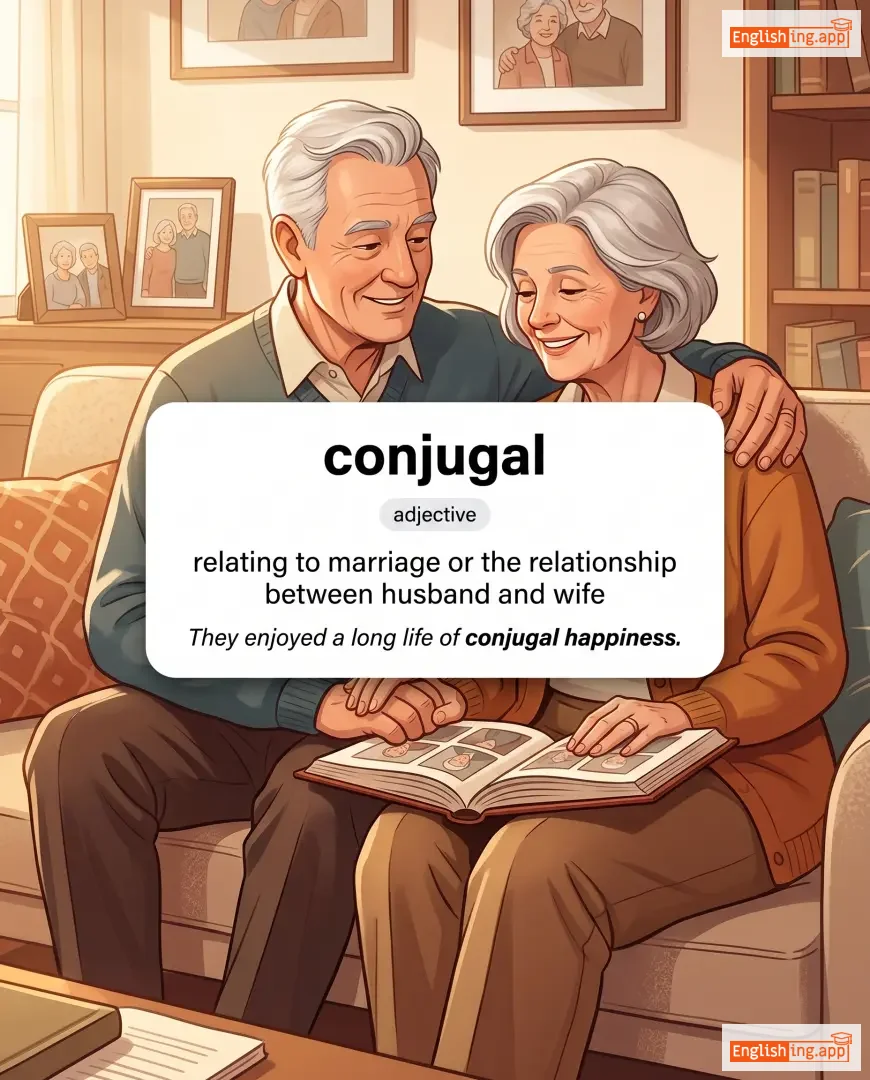
conjugal definition card — visual illustration of the meaning
adjective
/ˈkɒndʒʊɡəl/
conyugal (conyugal)

relating to marriage or the relationship between husband and wife

"They enjoyed a long life of conjugal happiness."

"Ils ont vécu une longue vie de bonheur conjugal." (Ils ont vécu une longue vie de bonheur conjugal.)
verb
/ˈkɒndʒʊɡeɪt/
conjuguer (conjuguer)

to list the different forms of a verb according to tense, person, and number

"Students are asked to conjugate the verb 'to be'."

"Les étudiants sont invités à conjuguer le verbe 'être'." (Les etudiants sont invites a conjuguer le verbe 'etre'.)
noun
/ˌkɒndʒʊˈɡeɪʃən/
conjugaison (conjugaison)

the variation of the form of a verb to indicate tense, person, and number

"French verbs have complex conjugations."

"Les verbes français ont des conjugaisons complexes." (Les verbes français ont des conjugaisons complexes.)
noun
/kənˈdʒʌŋkʃən/
conjonction (conjonction)

a word used to connect clauses or sentences, or to coordinate words

"The words 'and' and 'but' are common conjunctions."

"Les mots 'et' et 'mais' sont des conjonctions courantes." (Les mots 'et' et 'mais' sont des conjonctions courantes.)
verb
/ˈkʌn.dʒər/
conjurer (kon-ju-ray)

to summon something as if by magic; to imagine vividly

"The magician conjured a rabbit out of the hat."

"Le magicien a conjuré un lapin du chapeau." (Le ma-gi-cien a kon-juré un la-pin du cha-peau.)
connect definition card — visual illustration of the meaning
verb
/kəˈnɛkt/
connecter (connecter)

to join or link two or more things together

"The new bridge will connect the two cities."

"Le nouveau pont connectera les deux villes." (Le nouveau pont connectera les deux villes.)
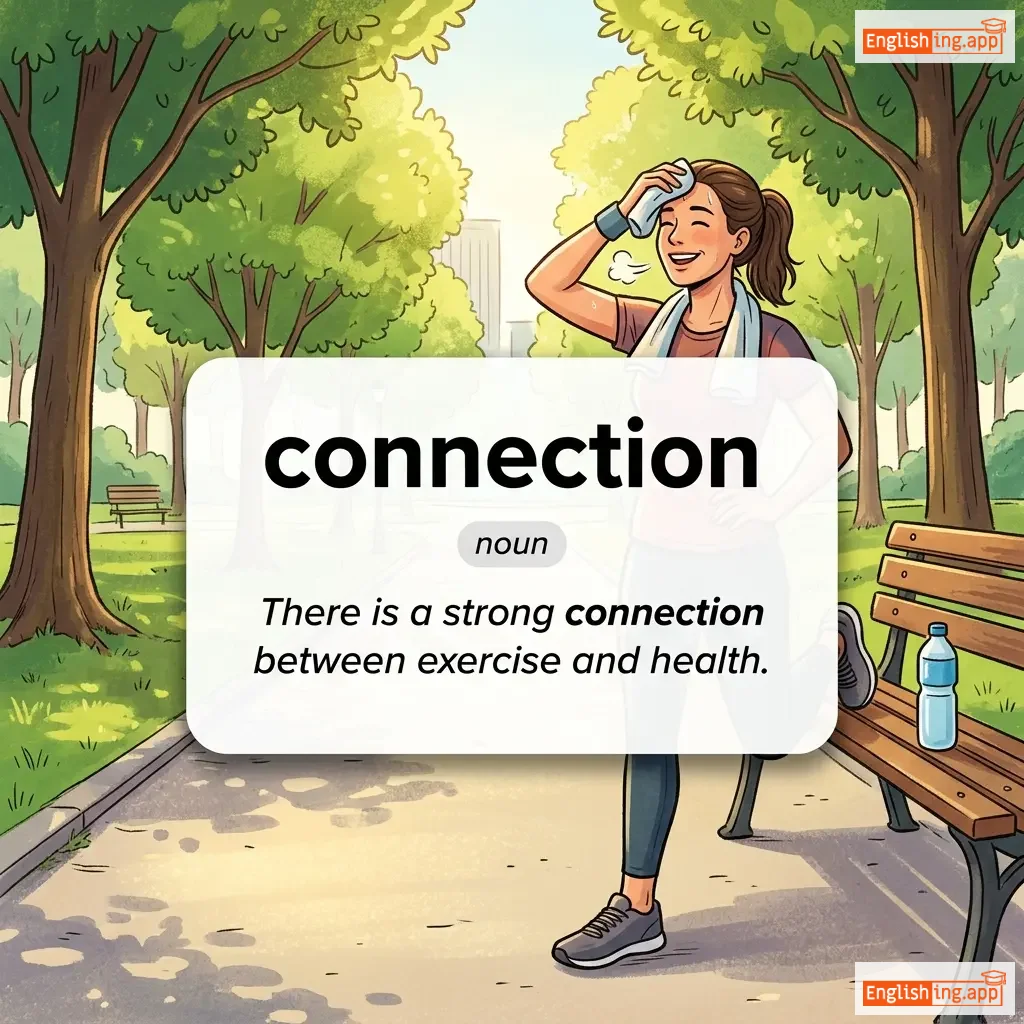
connection definition card — visual illustration of the meaning
noun
/kəˈnɛkʃən/
connexion (connexion)

a relationship in which a person, thing, or idea is linked or associated with something else

"There is a strong connection between exercise and health."

"Il y a une forte connexion entre l'exercice et la santé." (Il y a une forte connexion entre l'exercice et la santé.)
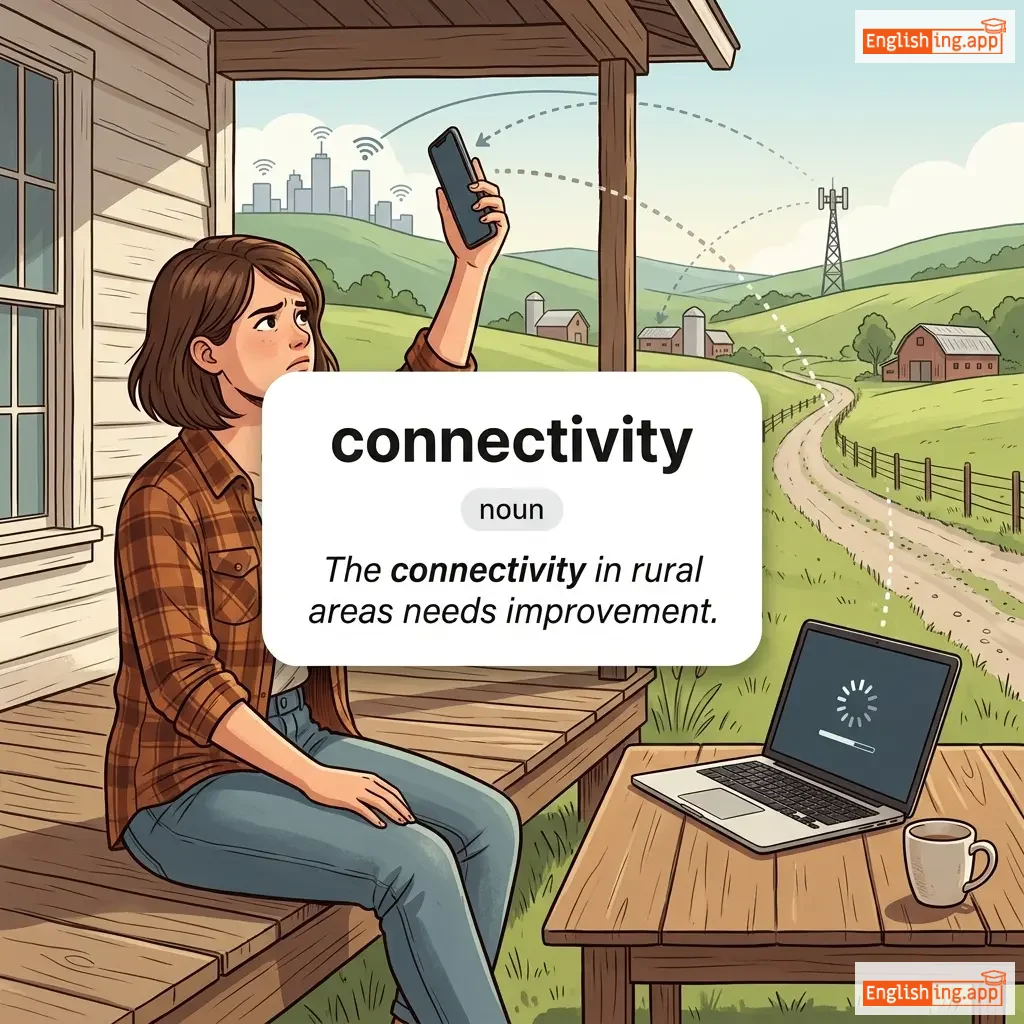
connectivity definition card — visual illustration of the meaning
noun
ˌkɒn.ekˈtɪv.ɪ.ti
capacité de connexion, interconnexion, connectivité (capacite de connexion, interconnexion, connectivite)

The state of being connected or interconnected; capacity for the interconnection of platforms, systems, and applications.

"The connectivity in rural areas needs improvement."

"La connectivité dans les zones rurales doit être améliorée." (La connectivite dans les zones rurales doit etre amelioree.)
noun
/kəˈnaɪ.vəns/
connivence (connivence)

the act of secretly allowing or being involved in wrongdoing

"The theft happened with the connivance of the security guard."

"Le vol a eu lieu avec la connivence du gardien de sécurité." (Le vol a eu lieu avec la connivence du gardien de sécurité.)
verb
/kəˈnaɪv/
conspirer secrètement (conspirer secretemant)

to secretly allow or be involved in a wrongdoing

"The manager connived with the supplier to cheat the company."

"Le gestionnaire a conspiré avec le fournisseur pour tromper la société." (Le gestionnaire a conspire avec le fournisseur pour tromper la societe.)
adjective
/kəˈnaɪ.vɪŋ/
rusé (ruse)

secretly scheming or plotting to help in wrongdoing

"He is a conniving politician who manipulates people for power."

"C'est un homme politique rusé qui manipule les gens pour le pouvoir." (C'est un homme politique ruse qui manipule les gens pour le pouvoir.)
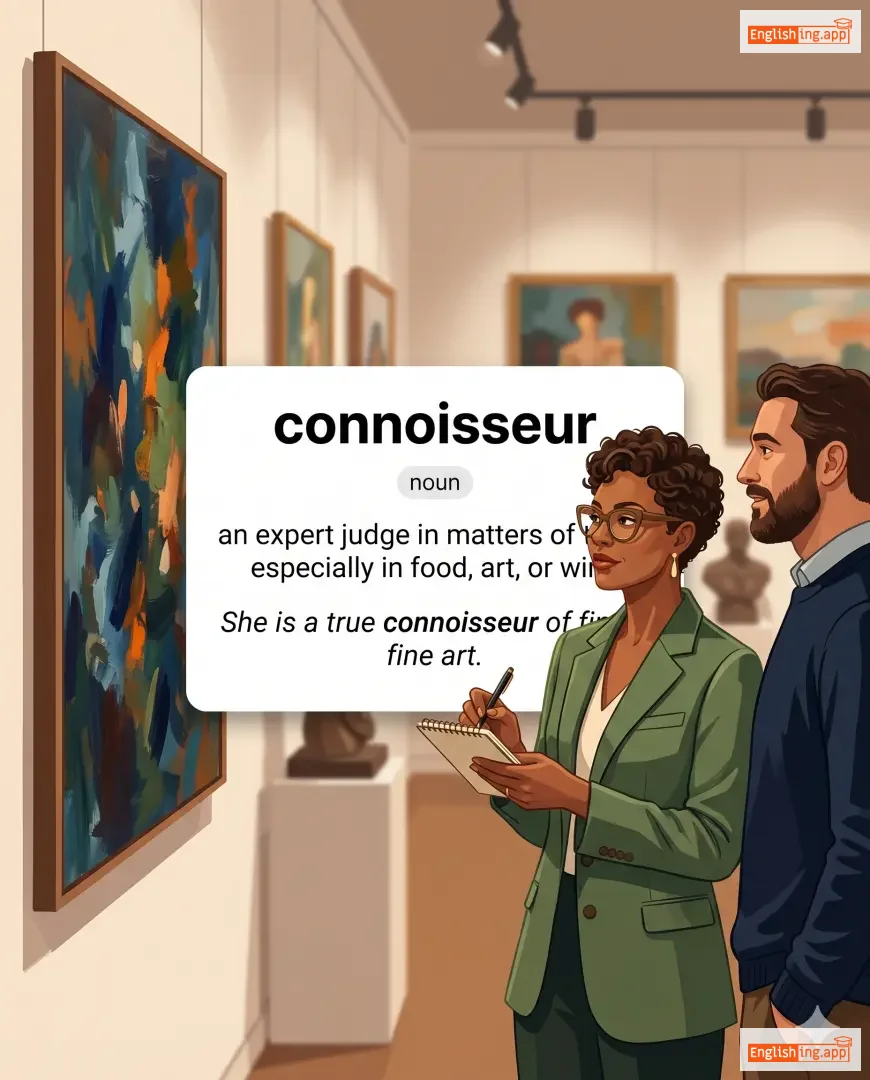
connoisseur definition card — visual illustration of the meaning
noun
/ˌkɒn.əˈsɜːr/
connaisseur (connaisseur)

an expert judge in matters of taste, especially in food, art, or wine

"She is a true connoisseur of fine art."

"Elle est une véritable connaisseuse de l'art." (Elle est une véritable connaisseuse de l'art.)
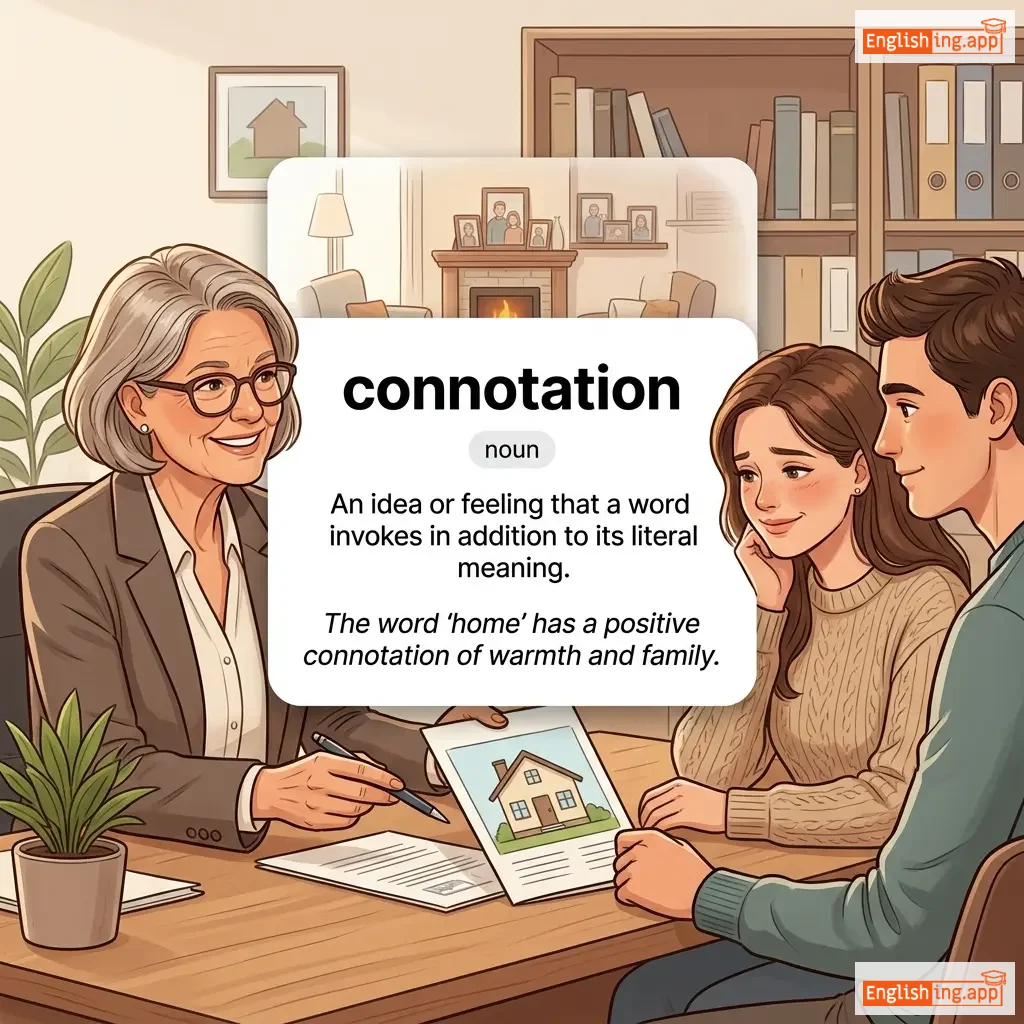
connotation definition card — visual illustration of the meaning
noun
/ˌkɒnəˈteɪʃən/
connotation (connotation)

An idea or feeling that a word invokes in addition to its literal meaning.

"The word 'home' has a positive connotation of warmth and family."

"Le mot 'maison' a une connotation positive de chaleur et de famille." (Le mot 'maison' a une connotation positive de chaleur et de famille.)
verb
/kəˈnoʊt/
connoter (connoter)

To suggest or imply an additional meaning beyond the literal one.

"The word 'youthful' connotes energy and vitality."

"Le mot 'juvénile' connoté énergie et vitalité." (Le mot 'juvénile' connoté énergie et vitalité.)
adjective
/kəˈnjuːbiəl/
conjugal (conjugal)

Relating to marriage or the relationship of a married couple.

"They celebrated their connubial bliss with a honeymoon trip."

"Ils ont célébré leur bonheur conjugal avec un voyage de noces." (Ils ont célébré leur bonheur conjugal avec un voyage de noces.)