Vocabularios

Descubra, aprenda y domine el vocabulario en inglés

adjective
/kənˈfɔːrməbl/
conformable (conformable)

Capable of being adapted or consistent with something; compliant.

"His actions were conformable to the rules of the institution."

"Sus acciones fueron conformables a las reglas de la institución." (sus acciones fueron conformables a las reglas de la institucion.)
noun
/kənˈfɔːrməns/
conformidad (conformidad)

The act of conforming to a rule, standard, or law.

"The product was tested for conformance with safety standards."

"El producto fue probado para su conformidad con los estándares de seguridad." (El producto fue probado para su conformidad con los estándares de seguridad.)
noun
/ˌkɑːnfɔːrˈmeɪʃən/
conformación (conformacion)

The shape, structure, or arrangement of something.

"The scientist studied the molecular conformation of the protein."

"El científico estudió la conformación molecular de la proteína." (El cientifico estudió la conformacion molecular de la proteina.)
noun
/kənˈfɔːrmɪst/
conformista (conformista)

A person who uncritically conforms to established practices or standards.

"She was labeled a conformist for always following the crowd."

"Ella fue etiquetada como conformista por siempre seguir a la multitud." (ella fue etiquetada como conformista por siempre seguir a la multitud.)
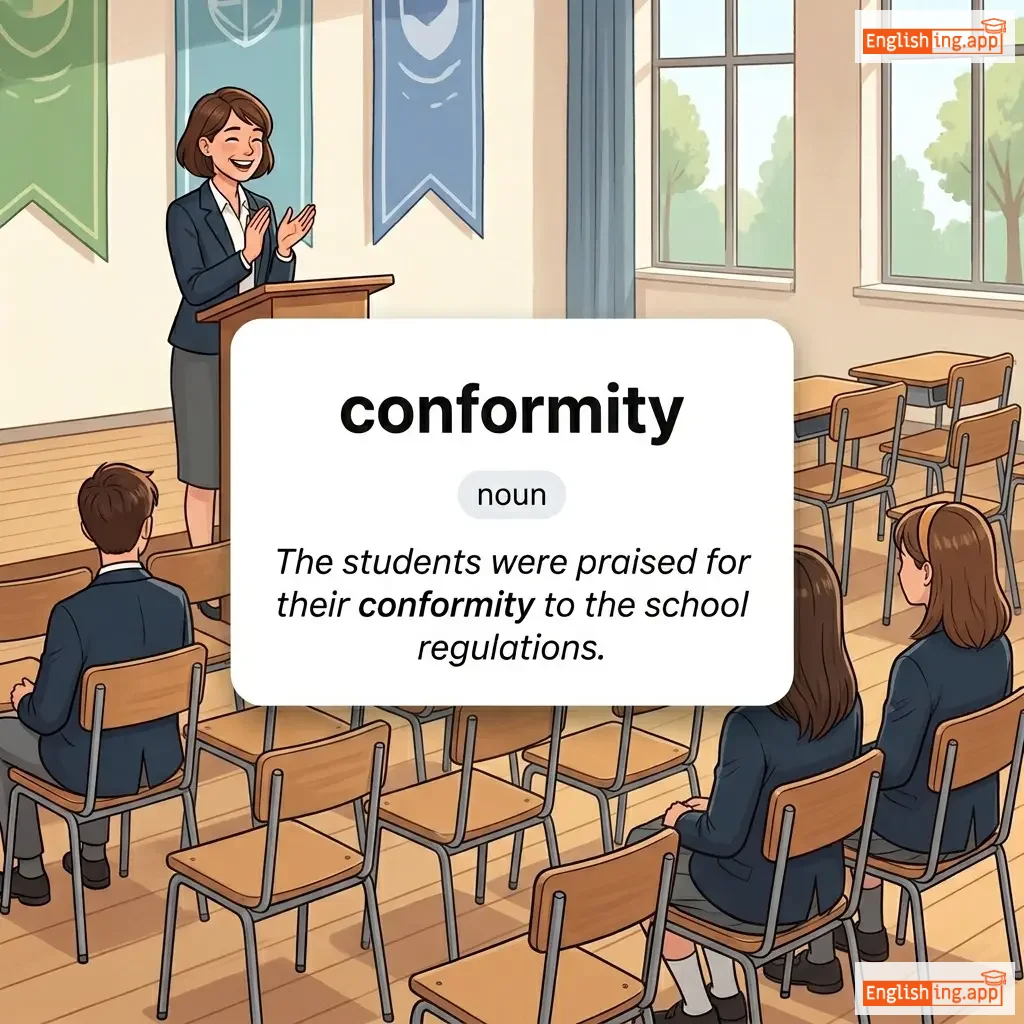
conformity definition card — visual illustration of the meaning
noun
/kənˈfɔːrməti/
conformidad (conformidad)

Compliance with standards, rules, or laws; behavior in accordance with social norms.

"The students were praised for their conformity to the school regulations."

"Los estudiantes fueron elogiados por su conformidad con las reglas de la escuela." (Los estudiantes fueron elogiados por su conformidad con las reglas de la escuela.)
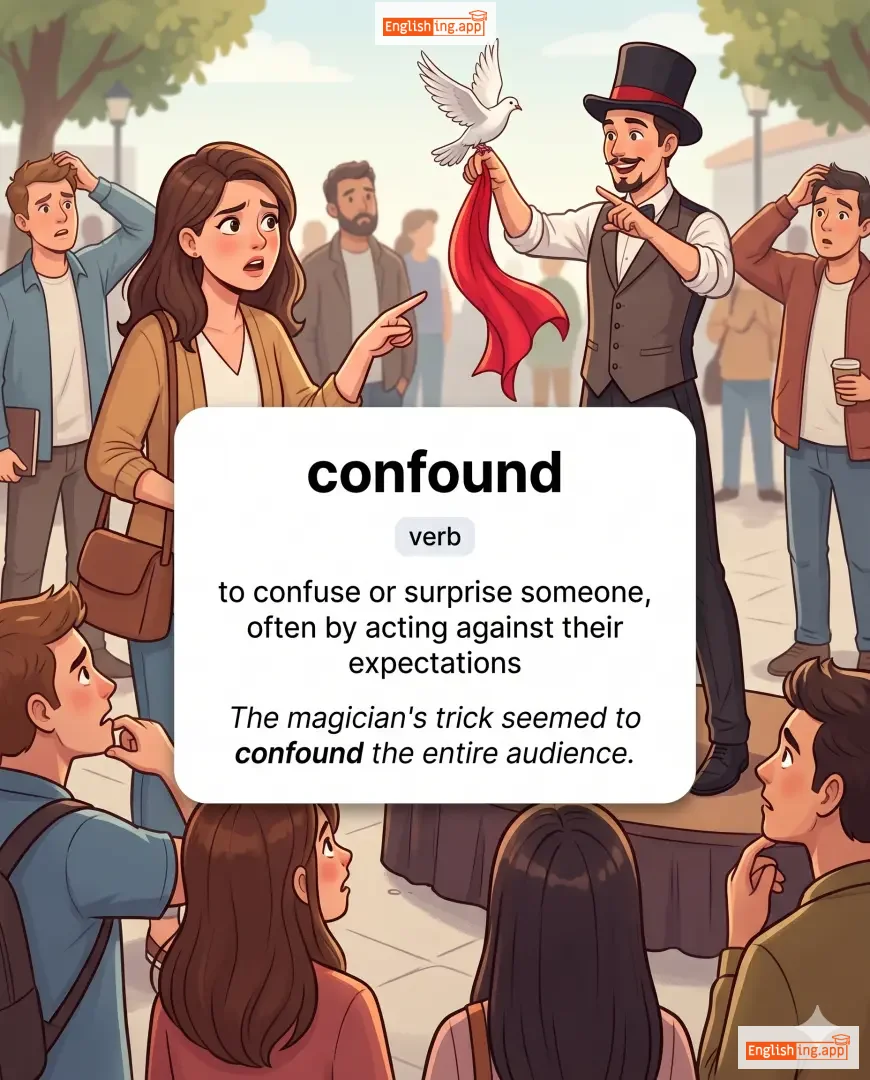
confound definition card — visual illustration of the meaning
verb
/kənˈfaʊnd/
desconcertar (desconcertar)

to confuse or surprise someone, often by acting against their expectations

"The magician's trick seemed to confound the entire audience."

"El truco del mago parecía desconcertar a toda la audiencia." (El truco del mago parecía desconcertar a toda la audiencia.)
verb
/kənˈfrʌnt/
enfrentar (enfrentar)

to face someone or something directly, especially in a challenge or conflict

"She had to confront her fears before making the speech."

"Ella tuvo que enfrentar sus miedos antes de dar el discurso." (Ella tuvo que enfrentar sus miedos antes de dar el discurso.)
noun
/ˌkɒnfrʌnˈteɪʃən/
confrontación (confrontacion)

A hostile or argumentative meeting or situation between opposing parties.

"The protest led to a confrontation with the police."

"La protesta llevó a una confrontación con la policía." (La protesta llevo a una confrontacion con la policia.)
verb
/kənˈfjuːz/
confundir (konfundir)

To make someone unable to think clearly; to bewilder.

"The complex instructions confused the students."

"Las instrucciones complejas confundieron a los estudiantes." (Las instrucciones complejas confundieron a los estudiantes.)
adjective
/kənˈfjuːzd/
confundido (confundido)

unable to think clearly; uncertain or puzzled

"She felt confused by the complicated instructions."

"Se sintió confundida por las instrucciones complicadas." (se sintio confundida por las instrucciones complicadas)
adjective
/kənˈfjuːzɪŋ/
confuso (confuso)

causing someone to be unable to think clearly or understand; difficult to comprehend

"The instructions were confusing and hard to follow."

"Las instrucciones eran confusas y difíciles de seguir." (Las instrucciones eran confusas y dificiles de seguir)
noun
/kənˈfjuːʒən/
confusión (confusion)

a state of being bewildered or unclear in one’s mind

"The sudden change in schedule caused a lot of confusion."

"El cambio repentino en el horario causó mucha confusión." (El cambio repentino en el horario causó mucha confusión.)
verb
/kənˈdʒiːl/
congelarse (congelarse)

to become thick or solid, especially from cooling

"The soup began to congeal after being left on the table."

"La sopa comenzó a congelarse después de haber sido dejada sobre la mesa." (La sopa comenzo a congelarse despues de haber sido dejada sobre la mesa.)
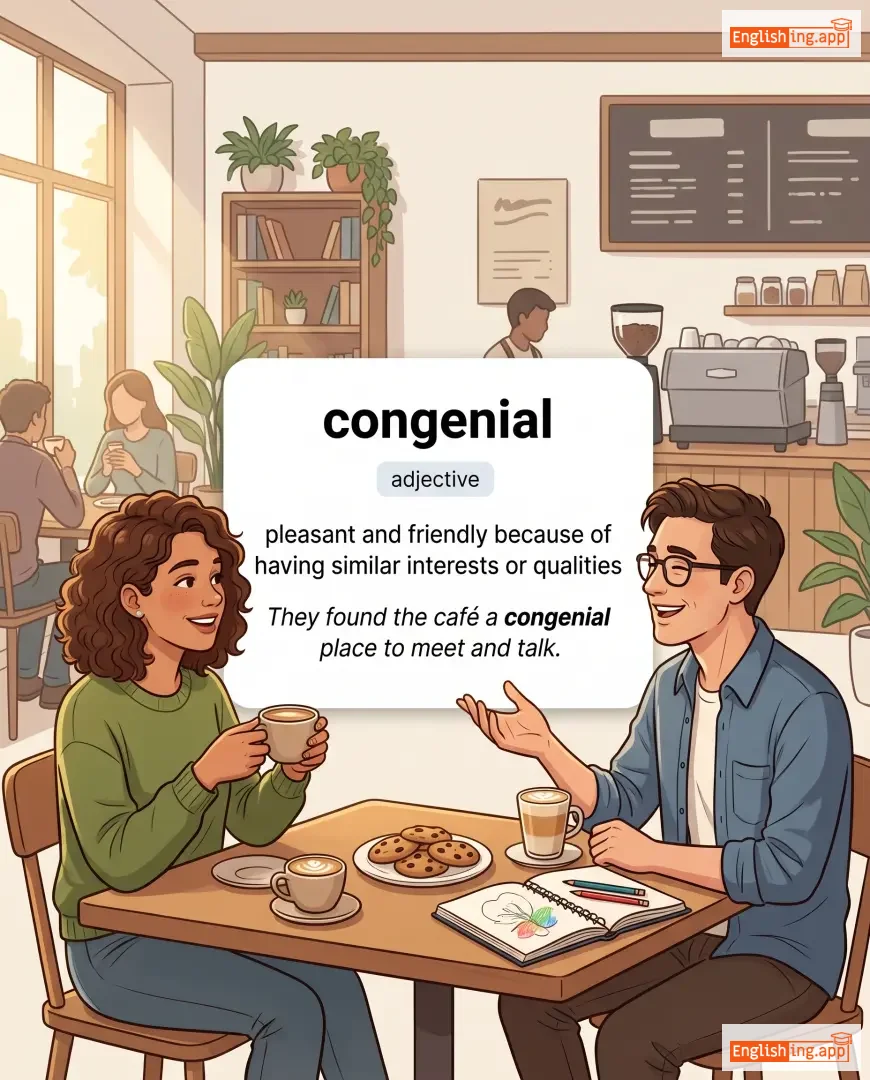
congenial definition card — visual illustration of the meaning
adjective
/kənˈdʒiːniəl/
amistoso (amistoso)

pleasant and friendly because of having similar interests or qualities

"They found the café a congenial place to meet and talk."

"Encontraron el café un lugar amistoso para reunirse y charlar." (Encontraron el café un lugar amistoso para reunirse y charlar.)
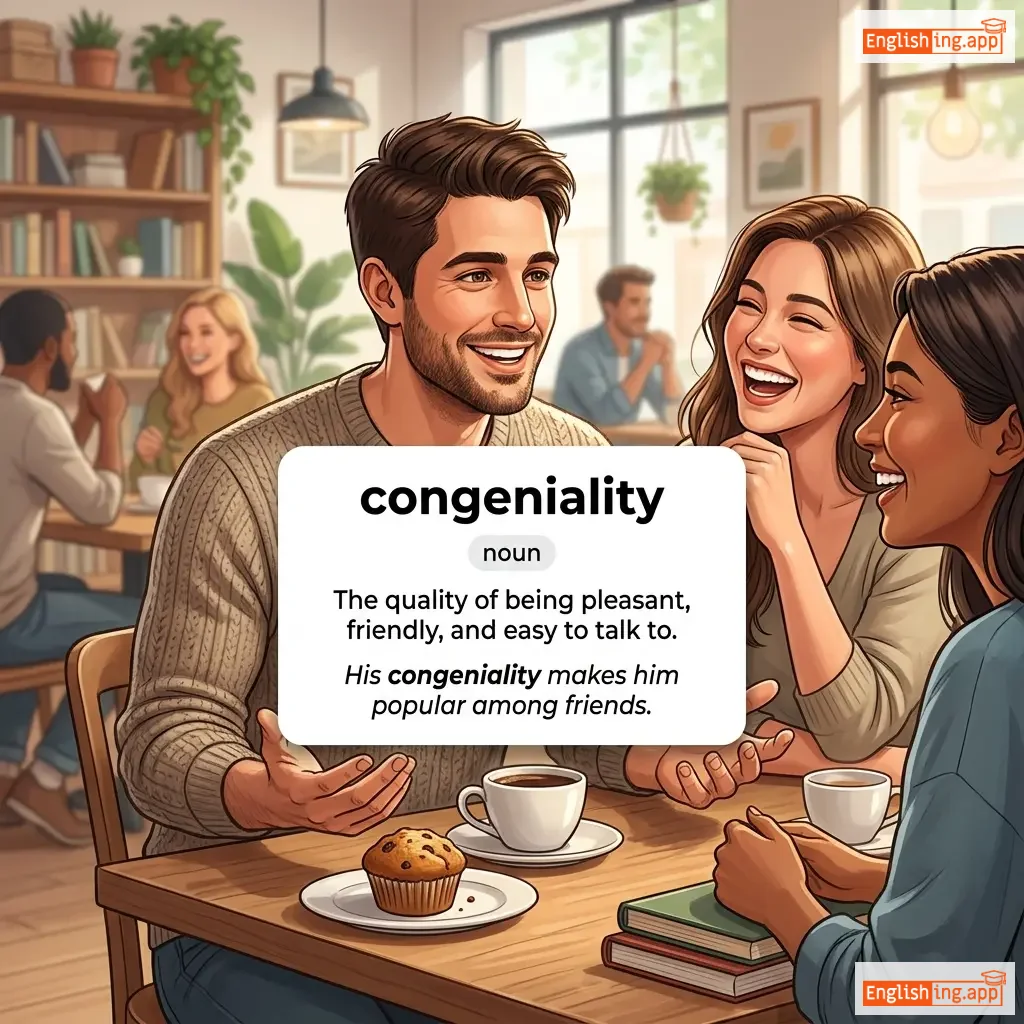
congeniality definition card — visual illustration of the meaning
noun
/kənˌdʒiː.niˈæl.ə.t̬i/
afabilidad (afabilidad)

The quality of being pleasant, friendly, and easy to talk to.

"His congeniality makes him popular among friends."

"Su afabilidad lo hace popular entre sus amigos." (Su afabilidad lo hace popular entre sus amigos.)
adjective
/kənˈdʒenɪtl/
congénito (congenito)

existing from birth, usually describing a disease or condition

"The child was born with a congenital heart defect."

"El niño nació con un defecto congénito en el corazón." (El niño nació con un defecto congénito en el corazón.)
verb
/kənˈdʒɛst/
congestionar (congestionar)

To block or overcrowd a space, making movement or flow difficult.

"Heavy traffic can congest the city streets during rush hour."

"El tráfico pesado puede congestionarse las calles de la ciudad durante la hora punta." (El tráfico pesado puede congestionarse las calles de la ciudad durante la hora punta.)
adjective
/kənˈdʒɛstɪd/
congestionado (congestionado)

Blocked up with too much traffic or crowding.

"The road was congested during rush hour."

"La carretera estaba congestionada durante la hora punta." (La carretera estaba congestionada durante la hora punta.)
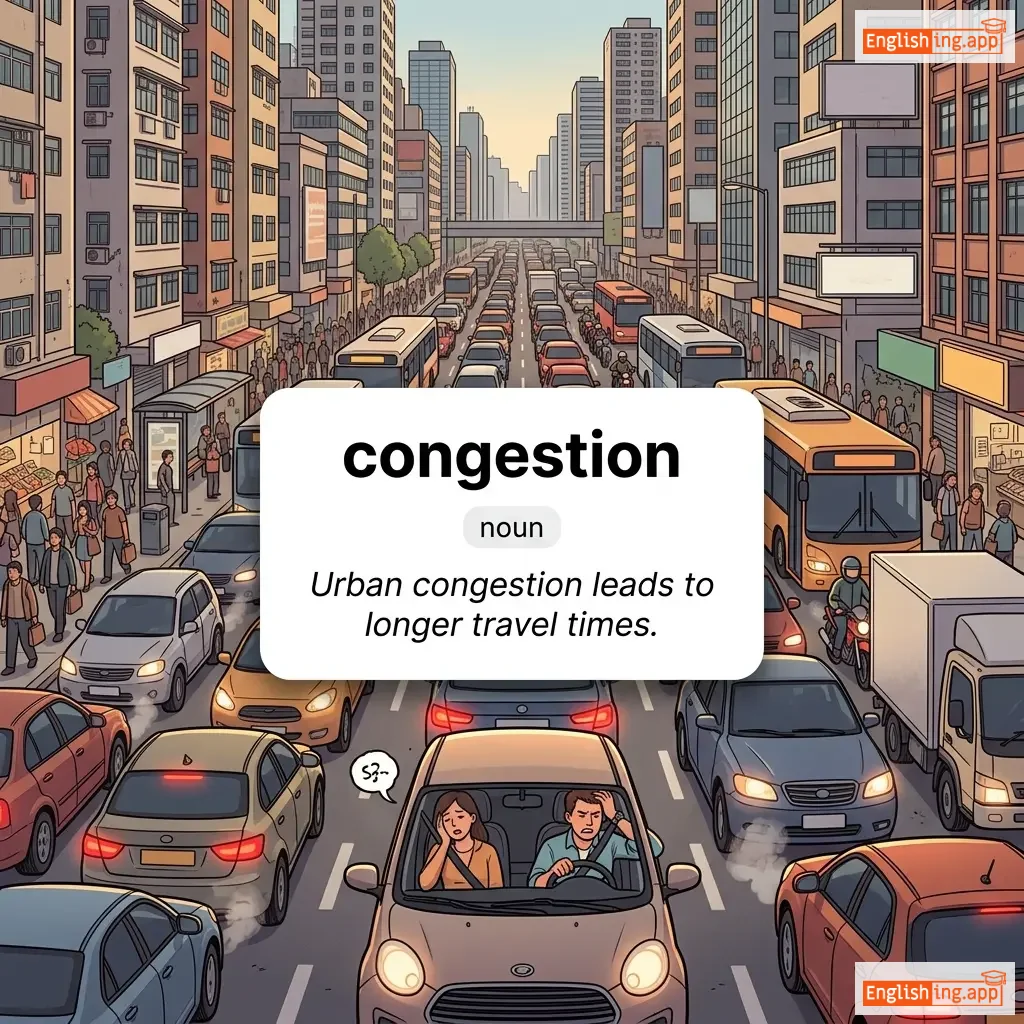
congestion definition card — visual illustration of the meaning
noun
/kənˈdʒes.tʃən/
tráfico o hacinamiento excesivo (trafico o hacinamiento excesivo)

Traffic jam or overcrowded condition in roads or areas where there is excessive presence of vehicles or people.

"Urban congestion leads to longer travel times."

"La congestión urbana lleva a tiempos de viaje más largos." (La congestion urbana lleva a tiempos de viaje mas largos.)
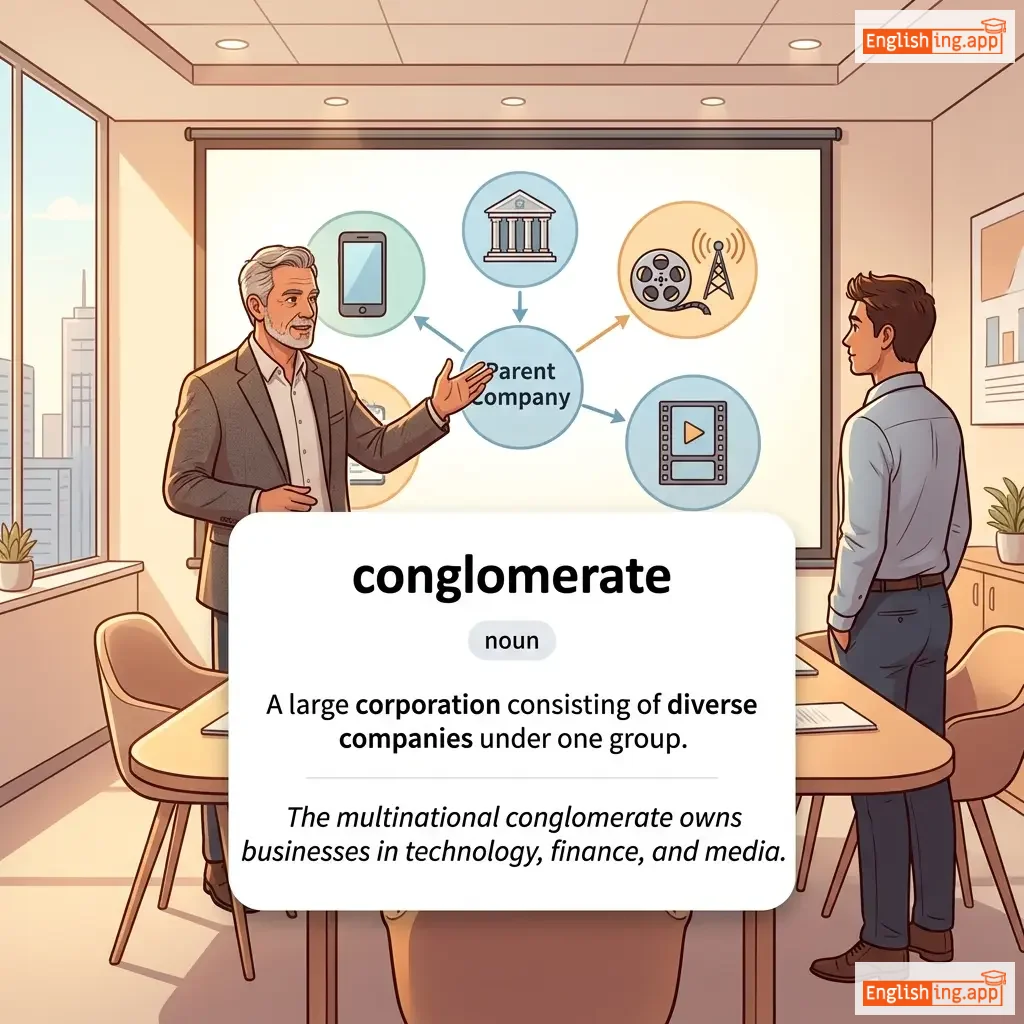
conglomerate definition card — visual illustration of the meaning
noun
/kənˈɡlɒmərət/
un gran grupo de empresas diversas (un gran grupo de empresas diversas)

A large corporation consisting of diverse companies under one group.

"The multinational conglomerate owns businesses in technology, finance, and media."

"El conglomerado multinacional posee empresas en tecnología, finanzas y medios." (El conglomerado multinacional posee empresas en tecnología, finanzas y medios.)
noun
/kənˌɡlɒməˈreɪʃən/
conglomerado (conglomerado)

A collection or mixture of different things grouped together.

"The market is a conglomeration of small shops and food stalls."

"El mercado es un conglomerado de pequeñas tiendas y puestos de comida." (El mercado es un conglomerado de pequeñas tiendas y puestos de comida.)
verb
/kənˈɡrætʃʊleɪt/
felicitar (felicitar)

to praise someone for an achievement or for a special occasion

"I want to congratulate you on your promotion."

"Quiero felicitarte por tu ascenso." (Quiero felicitarte por tu ascenso.)
noun
/kənˌɡrætʃəˈleɪʃən/
felicitación (felicitacion)

an expression of praise or joy for someone’s achievement or good fortune

"She sent a congratulation to her friend on winning the award."

"Envió una felicitación a su amiga por ganar el premio." (envio una felicitacion a su amiga por ganar el premio)
noun
/kənˌɡrætʃ.əˈleɪ.ʃənz/
felicitaciones (felicitaciones)

words expressing praise for an achievement or good wishes on a special occasion

"Congratulations on your promotion! You really deserved this success."

"¡Felicitaciones por tu ascenso! Realmente te merecías este éxito." (¡Felicitaciones por tu ascenso! Realmente te merecías este éxito.)
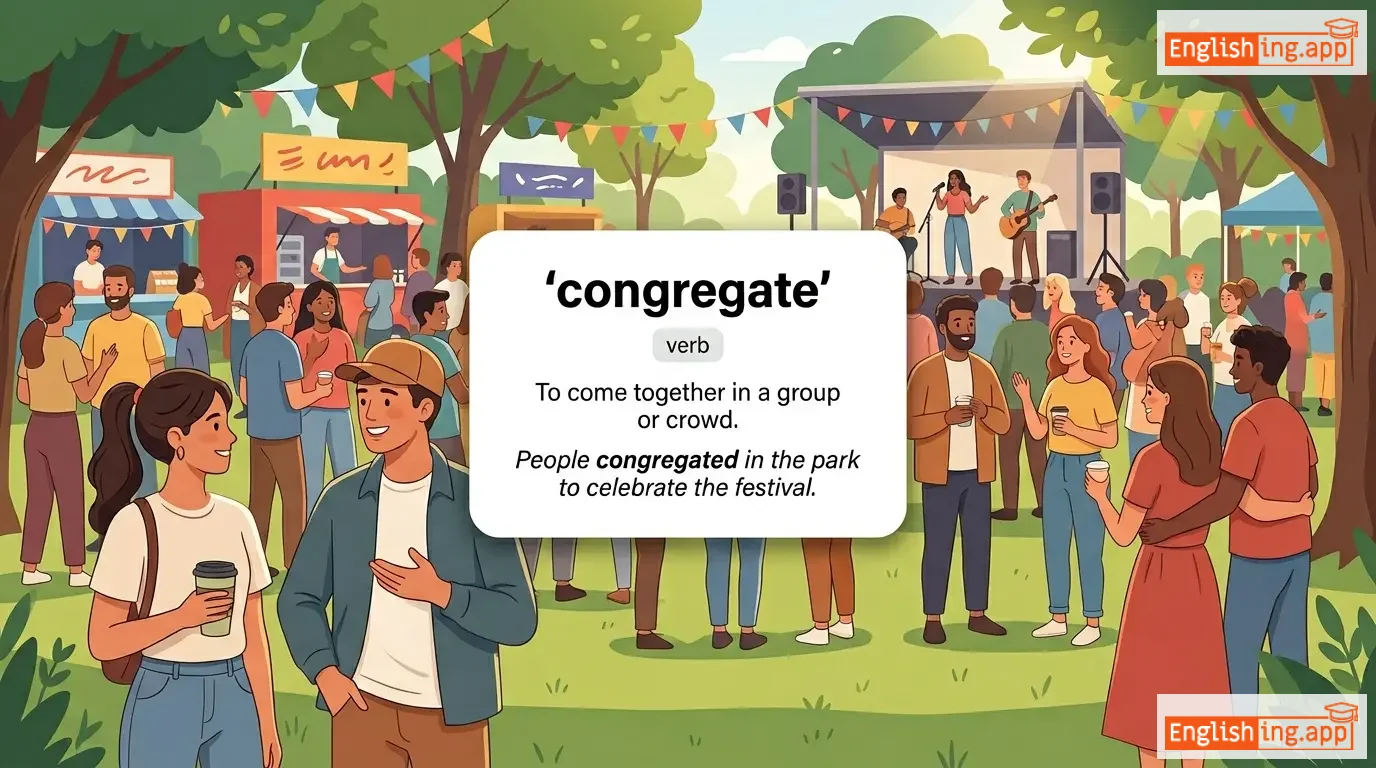
congregate definition card — visual illustration of the meaning
verb
/ˈkɒŋɡrɪˌɡeɪt/
congregarse (congregarse)

To come together in a group or crowd.

"People congregated in the park to celebrate the festival."

"La gente se congregó en el parque para celebrar el festival." (La gente se congregó en el parque para celebrar el festival.)
noun
/ˌkɒŋɡrɪˈɡeɪʃən/
congregación (congregacion)

a group of people assembled for religious worship or a common purpose

"The congregation gathered to hear the sermon."

"La congregación se reunió para escuchar el sermón." (La congregacion se reunio para escuchar el sermon.)
noun
/ˈkɒŋɡrɛs/
congreso (congreso)

a formal meeting or assembly, especially of representatives for discussion

"The international congress on climate change will be held next year."

"El congreso internacional sobre el cambio climático se llevará a cabo el próximo año." (El congreso internacional sobre el cambio climatico se llevara a cabo el proximo año.)
adjective
/kənˈɡrɛʃənl/
congresista (congresista)

relating to a congress, especially the US Congress

"The bill received strong congressional support."

"El proyecto de ley recibió un fuerte apoyo congresista." (El proyecto de ley recibió un fuerte apoyo congresista.)
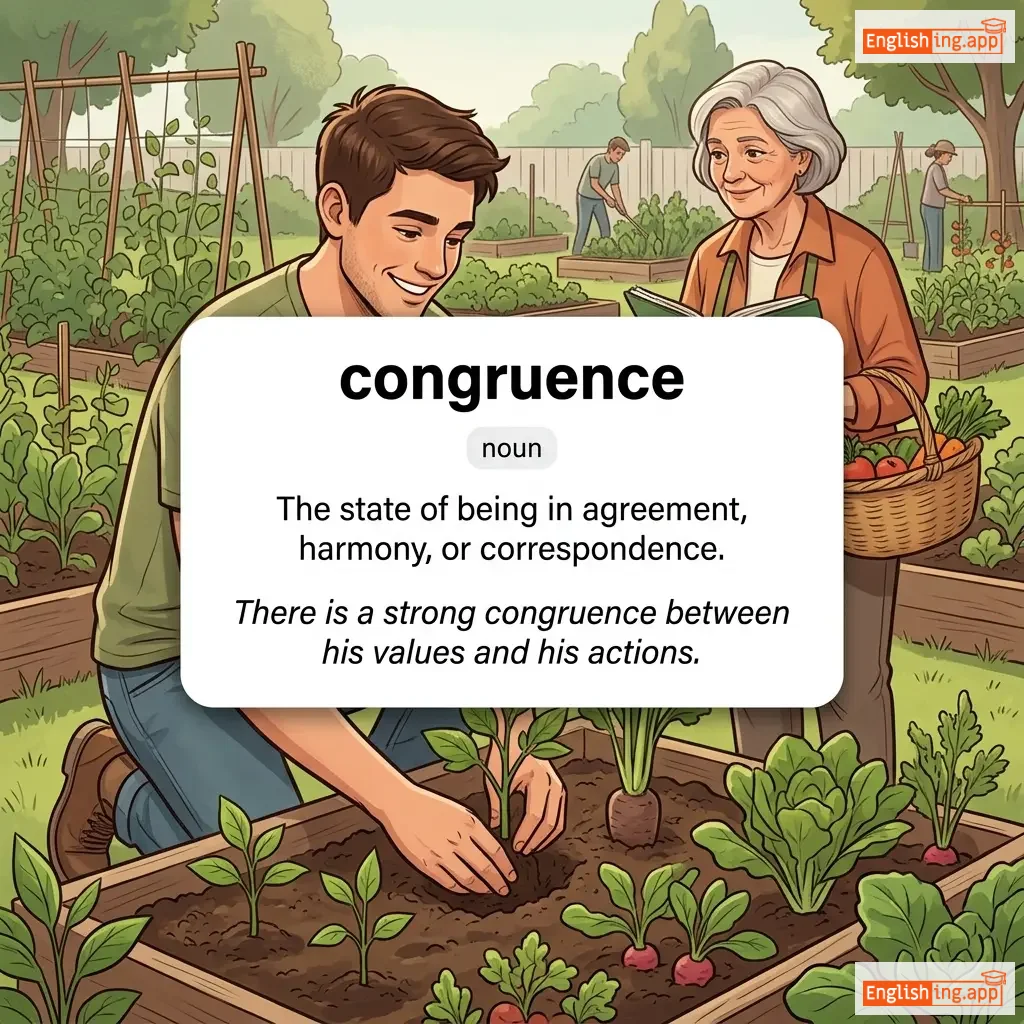
congruence definition card — visual illustration of the meaning
noun
/ˈkɒŋɡruəns/
congruencia (congruencia)

The state of being in agreement, harmony, or correspondence.

"There is a strong congruence between his values and his actions."

"Hay una fuerte congruencia entre sus valores y sus acciones." (Hay una fuerte congruencia entre sus valores y sus acciones.)
adjective
/ˈkɒŋɡruənt/
congruente (congruente)

in agreement or harmony; having the same shape and size in geometry

"Their values are congruent with the goals of the organization."

"Sus valores son congruentes con los objetivos de la organización." (Sus valores son congruentes con los objetivos de la organización.)
noun
/ˈkɒnɪfər/
Conífera (konifera)

a type of tree that bears cones and evergreen needle-like leaves, such as pine or fir

"The forest is dominated by conifers like pine and spruce."

"El bosque está dominado por coníferas como el pino y el abeto." (El bosque está dominado por coníferas como el pino y el abeto.)
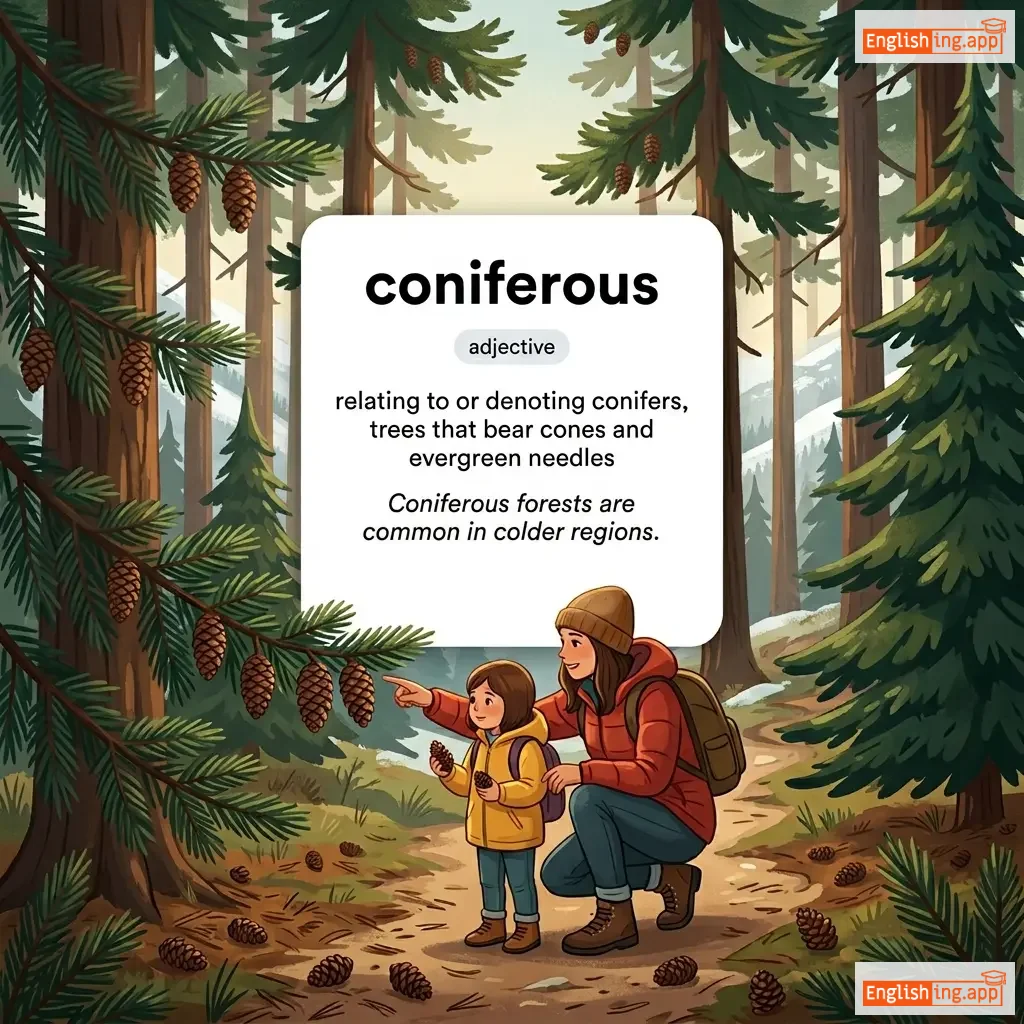
coniferous definition card — visual illustration of the meaning
adjective
/kəˈnɪfərəs/
árboles coníferos (arboles coniferos)

relating to or denoting conifers, trees that bear cones and evergreen needles

"Coniferous forests are common in colder regions."

"Los bosques de árboles coníferos son comunes en las regiones frías." (Los bosques de arboles coniferos son comunes en las regiones frias.)
adjective
/kənˈdʒɛktʃərəl/
conjetural (conjetural)

based on guesswork or incomplete evidence rather than certain knowledge

"His explanation was purely conjectural and lacked proof."

"Su explicación era puramente conjetural y carecía de pruebas." (Su explicacion era puramente conjetural y carecia de pruebas.)
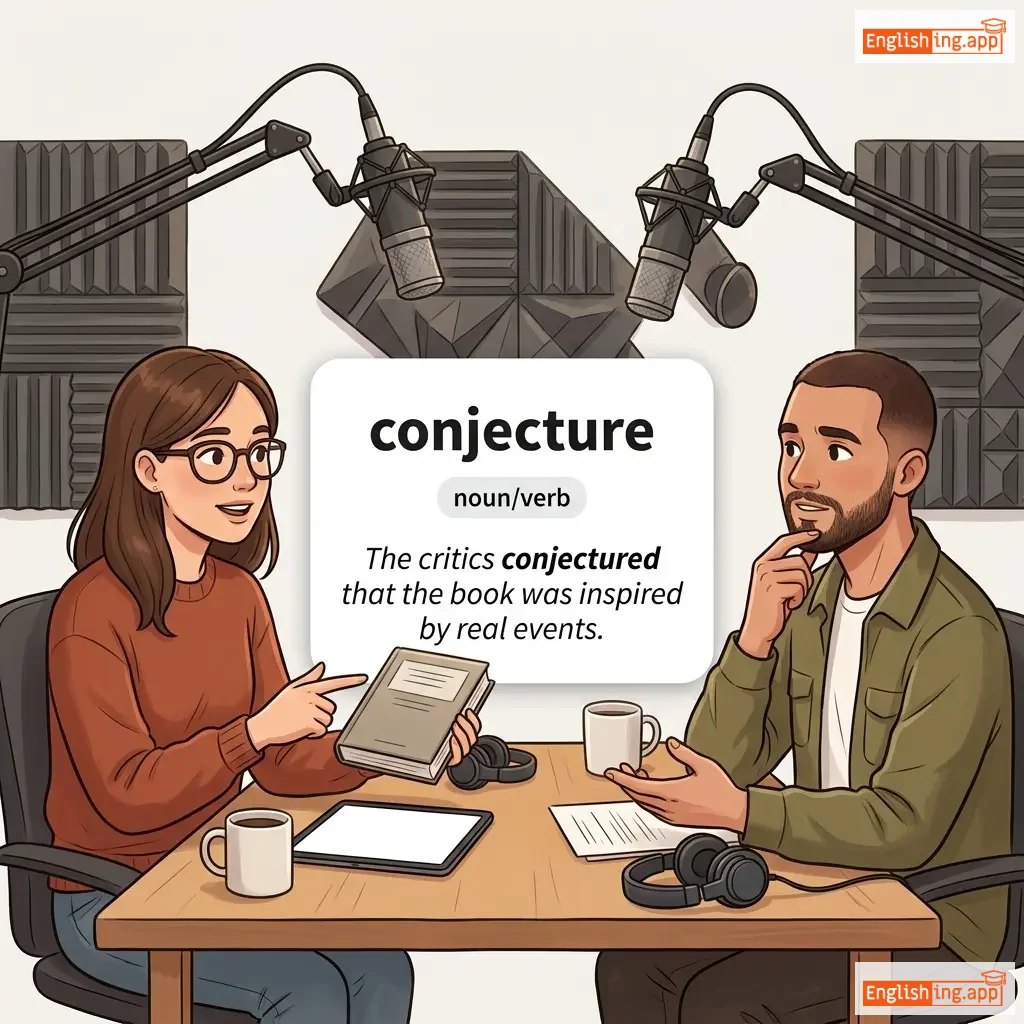
conjecture definition card — visual illustration of the meaning
noun/verb
/kənˈdʒɛktʃər/
conjetura (conjetura)

an opinion or conclusion formed on the basis of incomplete information; to form an opinion without sufficient evidence

"The critics conjectured that the book was inspired by real events."

"los críticos conjeturaron que el libro fue inspirado por eventos reales." (los críticos conjeturaron que el libro fue inspirado por eventos reales.)
verb
/kənˈdʒɔɪn/
unir (unir)

to join together or unite; to combine

"The two rivers conjoin just before reaching the sea."

"Los dos ríos se unen justo antes de llegar al mar." (Los dos ríos se unen justo antes de llegar al mar.)
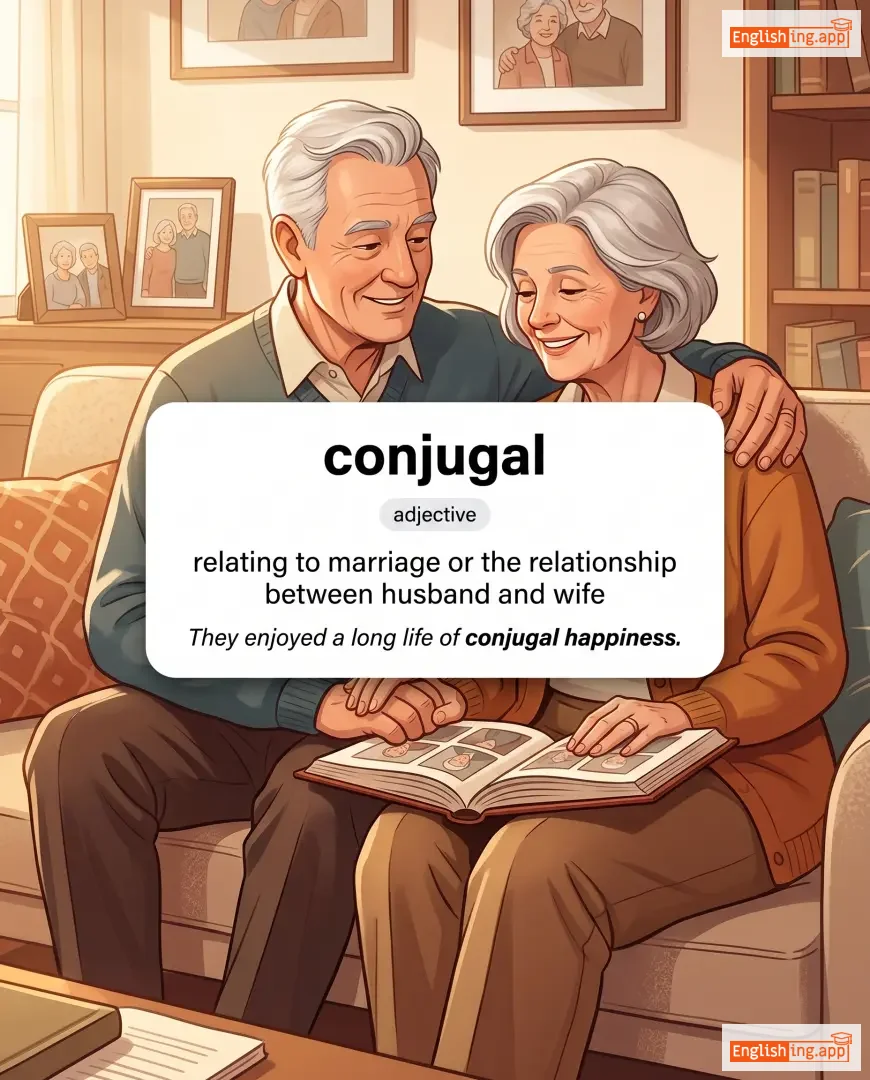
conjugal definition card — visual illustration of the meaning
adjective
/ˈkɒndʒʊɡəl/
conyugal (conyugal)

relating to marriage or the relationship between husband and wife

"They enjoyed a long life of conjugal happiness."

"Disfrutaron de una larga vida de felicidad conyugal." (Disfrutaron de una larga vida de felicidad conyugal.)
verb
/ˈkɒndʒʊɡeɪt/
conjugar (conjugar)

to list the different forms of a verb according to tense, person, and number

"Students are asked to conjugate the verb 'to be'."

"Se les pide a los estudiantes que conjuguen el verbo 'ser'." (Se les pide a los estudiantes que conjuguen el verbo 'ser'.)
noun
/ˌkɒndʒʊˈɡeɪʃən/
conjugación (conjugacion)

the variation of the form of a verb to indicate tense, person, and number

"French verbs have complex conjugations."

"Los verbos franceses tienen conjugaciones complejas." (Los verbos franceses tienen conjugaciones complejas.)
noun
/kənˈdʒʌŋkʃən/
conjunción (conjuncion)

a word used to connect clauses or sentences, or to coordinate words

"The words 'and' and 'but' are common conjunctions."

"Las palabras 'y' y 'pero' son conjunciones comunes." (Las palabras 'y' y 'pero' son conjunciones comunes.)
verb
/ˈkʌn.dʒər/
conjurar (con-jur-ar)

to summon something as if by magic; to imagine vividly

"The magician conjured a rabbit out of the hat."

"El mago conjuró un conejo de su sombrero." (El ma-go con-ju-ro un co-ne-jo de su som-bre-ro.)
connect definition card — visual illustration of the meaning
verb
/kəˈnɛkt/
conectar (conectar)

to join or link two or more things together

"The new bridge will connect the two cities."

"El nuevo puente conectará las dos ciudades." (El nuevo puente conectará las dos ciudades.)
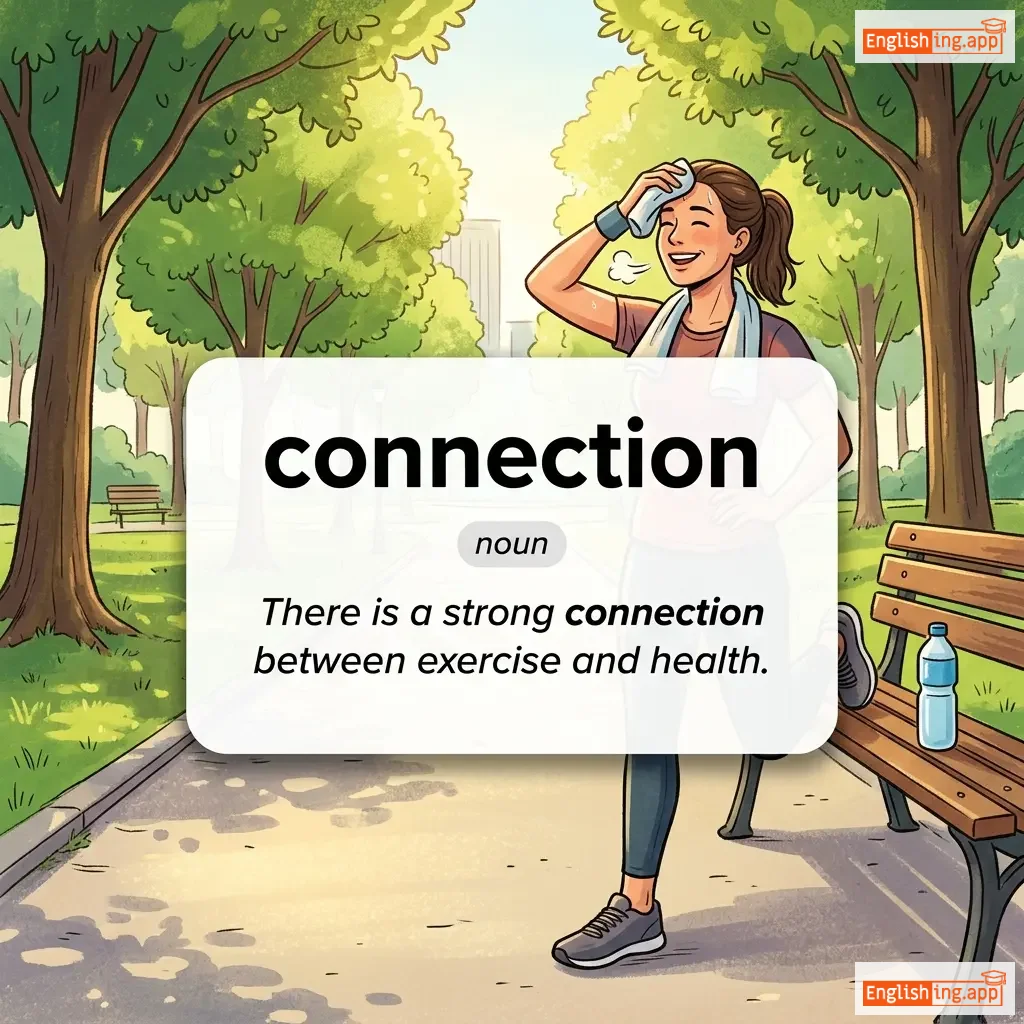
connection definition card — visual illustration of the meaning
noun
/kəˈnɛkʃən/
conexión (conexion)

a relationship in which a person, thing, or idea is linked or associated with something else

"There is a strong connection between exercise and health."

"Hay una fuerte conexión entre el ejercicio y la salud." (Hay una fuerte conexion entre el ejercicio y la salud.)
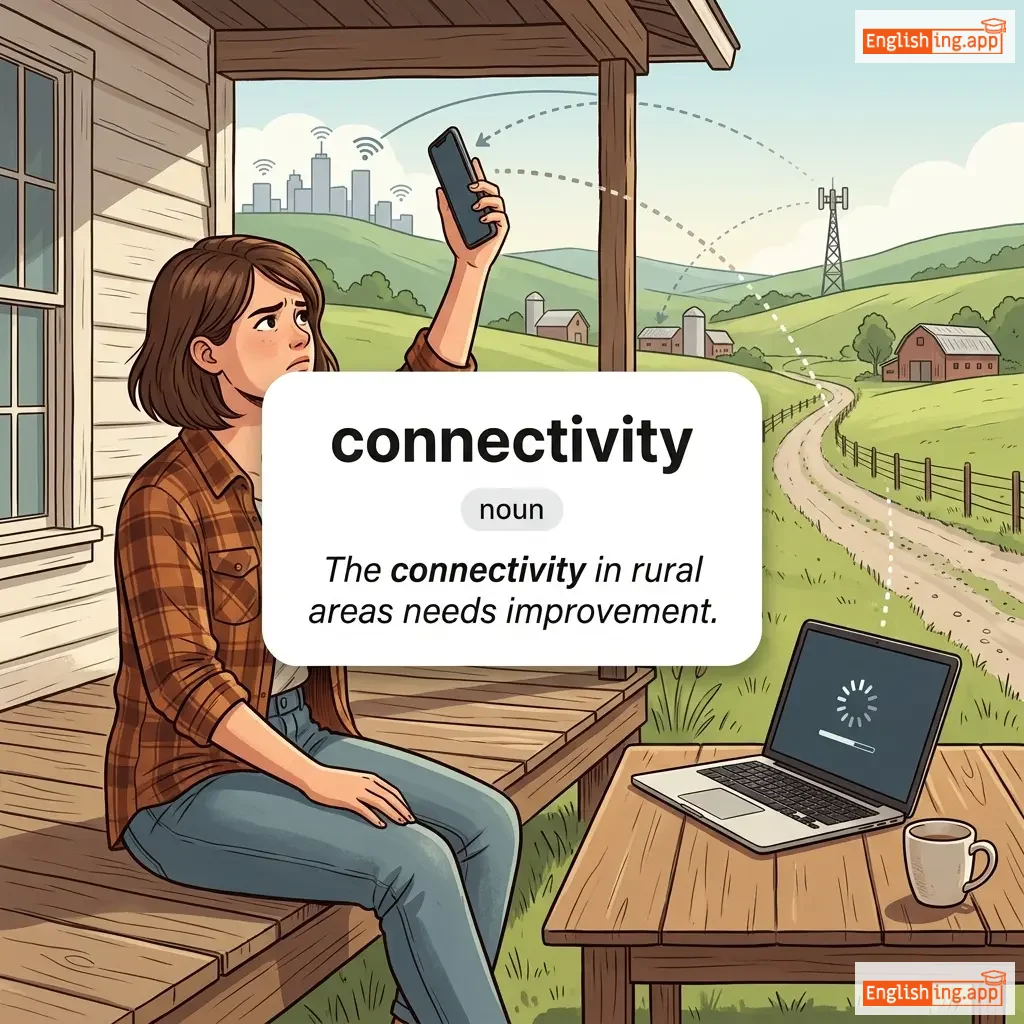
connectivity definition card — visual illustration of the meaning
noun
ˌkɒn.ekˈtɪv.ɪ.ti
capacidad de conexión, red de interconexión, conectividad (capacidad de conexion, red de interconexion, conectividad)

The state of being connected or interconnected; capacity for the interconnection of platforms, systems, and applications.

"The connectivity in rural areas needs improvement."

"La conectividad en las áreas rurales necesita mejorar." (La conectividad en las areas rurales necesita mejorar.)
noun
/kəˈnaɪ.vəns/
connivencia (connivencia)

the act of secretly allowing or being involved in wrongdoing

"The theft happened with the connivance of the security guard."

"El robo ocurrió con la connivencia del guardia de seguridad." (El robo ocurrió con la connivencia del guardia de seguridad.)
verb
/kəˈnaɪv/
conspirar en secreto (conspirar en secreto)

to secretly allow or be involved in a wrongdoing

"The manager connived with the supplier to cheat the company."

"El gerente conspiró con el proveedor para engañar a la empresa." (El gerente conspiró con el proveedor para engañar a la empresa.)
adjective
/kəˈnaɪ.vɪŋ/
maquinador (maquinador)

secretly scheming or plotting to help in wrongdoing

"He is a conniving politician who manipulates people for power."

"Él es un político maquinador que manipula a la gente por poder." (El es un politico maquinador que manipula a la gente por poder.)
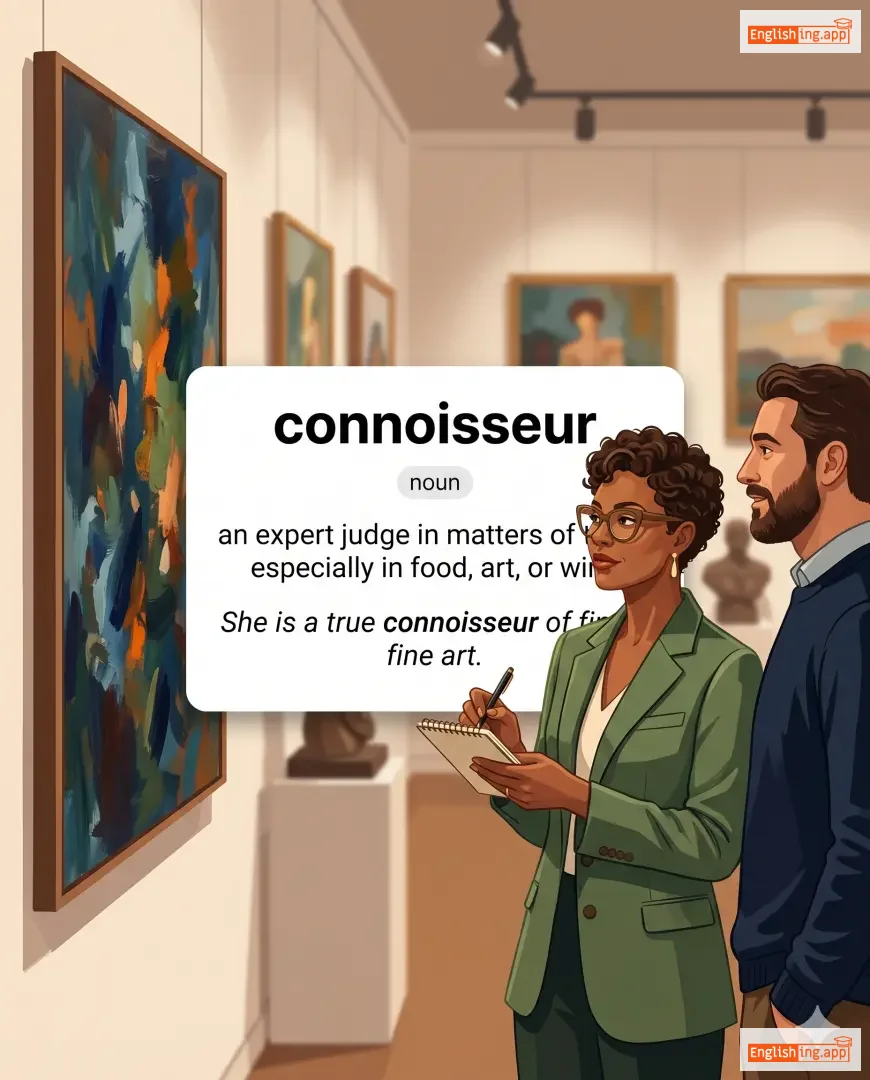
connoisseur definition card — visual illustration of the meaning
noun
/ˌkɒn.əˈsɜːr/
experto (experto)

an expert judge in matters of taste, especially in food, art, or wine

"She is a true connoisseur of fine art."

"Ella es una verdadera experta en arte fino." (Ella es una verdadera experta en arte fino.)
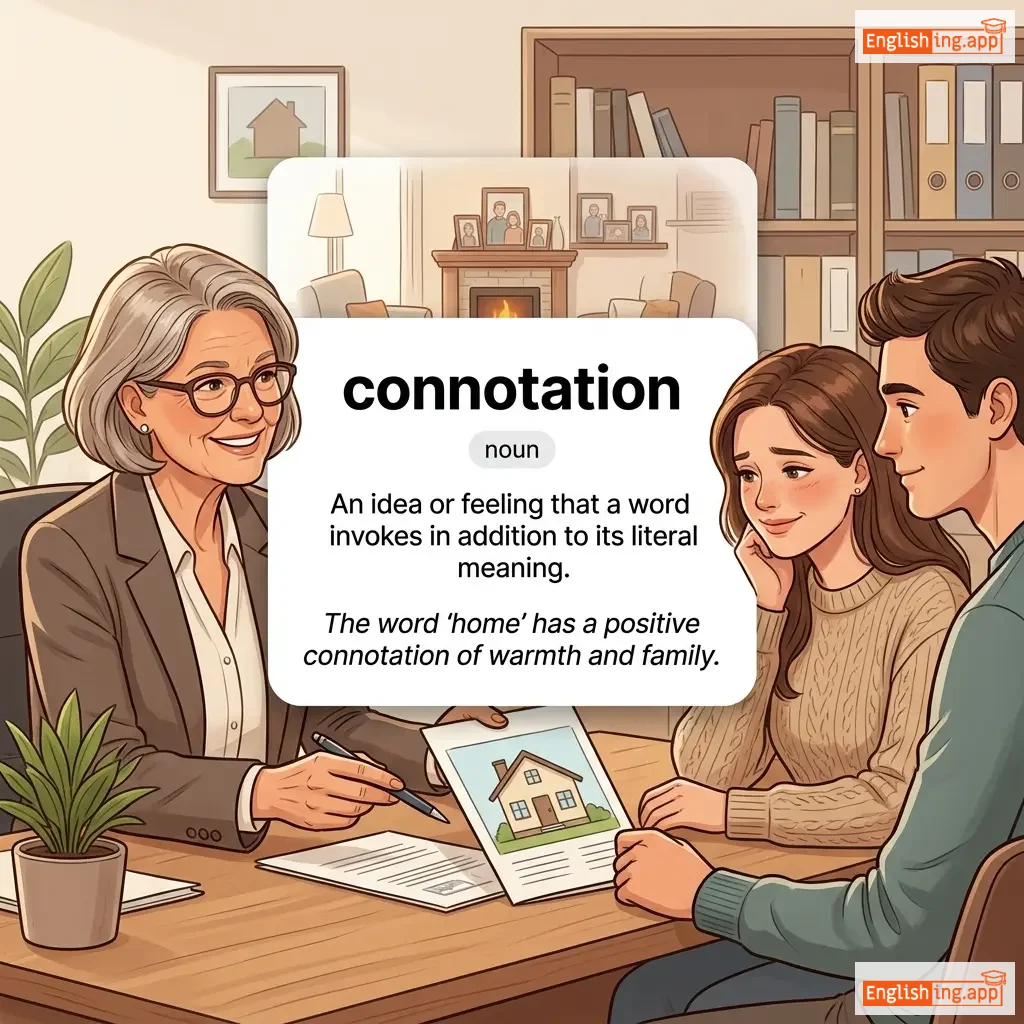
connotation definition card — visual illustration of the meaning
noun
/ˌkɒnəˈteɪʃən/
connotación (connotacion)

An idea or feeling that a word invokes in addition to its literal meaning.

"The word 'home' has a positive connotation of warmth and family."

"La palabra 'hogar' tiene una connotación positiva de calor y familia." (La palabra 'hogar' tiene una connotacion positiva de calor y familia.)
verb
/kəˈnoʊt/
connotar (connotar)

To suggest or imply an additional meaning beyond the literal one.

"The word 'youthful' connotes energy and vitality."

"La palabra 'juvenil' connota energía y vitalidad." (La palabra 'juvenil' connota energía y vitalidad.)
adjective
/kəˈnjuːbiəl/
conyugal (conyugal)

Relating to marriage or the relationship of a married couple.

"They celebrated their connubial bliss with a honeymoon trip."

"Celebraron su dicha conyugal con un viaje de luna de miel." (Celebraron su dicha conyugal con un viaje de luna de miel.)