語彙集

英単語辞書 | 単語の意味、定義、例文

adjective
/kənˈfɔːrməbl/
適合する (tekigō suru)

Capable of being adapted or consistent with something; compliant.

"His actions were conformable to the rules of the institution."

"彼の行動はその機関の規則に適合していました。" (kare no kōdō wa sono kikān no kisoku ni tekigō shiteimashita.)
noun
/kənˈfɔːrməns/
適合性 (tekigōsei)

The act of conforming to a rule, standard, or law.

"The product was tested for conformance with safety standards."

"製品は安全基準に対する適合性がテストされました。" (Seihin wa anzen kijun ni taisuru tekigōsei ga tesuto saremashita.)
noun
/ˌkɑːnfɔːrˈmeɪʃən/
形態 (keitai)

The shape, structure, or arrangement of something.

"The scientist studied the molecular conformation of the protein."

"科学者はタンパク質の分子構造を研究した。" (Kagakusha wa tanpakushitsu no bunshi kouzou o kenkyū shita.)
noun
/kənˈfɔːrmɪst/
コンフォーミスト (konfōmisuto)

A person who uncritically conforms to established practices or standards.

"She was labeled a conformist for always following the crowd."

"彼女はいつも人々に従っていたため、コンフォーミストとレッテルを貼られた。" (kanojo wa itsumo hitobito ni shitagatte ita tame, konfōmisuto to rettoru o harareta.)
conformity definition card — visual illustration of the meaning
noun
/kənˈfɔːrməti/
適合性 (tekigousei)

Compliance with standards, rules, or laws; behavior in accordance with social norms.

"The students were praised for their conformity to the school regulations."

"生徒たちは学校の規則に従ったことで賞賛されました。" (Seito-tachi wa gakkou no kisoku ni shitagatta koto de shousan saremashita.)
confound definition card — visual illustration of the meaning
verb
/kənˈfaʊnd/

to confuse or surprise someone, often by acting against their expectations

"The magician's trick seemed to confound the entire audience."

verb
/kənˈfrʌnt/
立ち向かう (tachi muka)

to face someone or something directly, especially in a challenge or conflict

"She had to confront her fears before making the speech."

"彼女はスピーチをする前に恐怖と向き合わなければならなかった。" (Kanojo wa supīchi o suru mae ni kyōfu to mukiawanakereba naranakatta.)
noun
/ˌkɒnfrʌnˈteɪʃən/
対立 (tairitsu)

A hostile or argumentative meeting or situation between opposing parties.

"The protest led to a confrontation with the police."

"抗議活動は警察との対立に繋がった。" (Kōgi katsudō wa keisatsu to no tairitsu ni tsunagatta.)
verb
/kənˈfjuːz/
混乱させる (konran saseru)

To make someone unable to think clearly; to bewilder.

"The complex instructions confused the students."

"複雑な指示が学生を混乱させた。" (Fukuzatsu na shiji ga gakusei o konran saseta.)
adjective
/kənˈfjuːzd/
混乱した (konran shita)

unable to think clearly; uncertain or puzzled

"She felt confused by the complicated instructions."

"彼女は複雑な指示に混乱した。" (kanojo wa fukuzatsu na shiji ni konran shita)
adjective
/kənˈfjuːzɪŋ/
紛らわしい (magirawashii)

causing someone to be unable to think clearly or understand; difficult to comprehend

"The instructions were confusing and hard to follow."

"その指示は紛らわしく、従うのが難しかった。" (sono shiji wa magirawashiku shitagau no ga muzukashikatta)
noun
/kənˈfjuːʒən/
混乱 (konran)

a state of being bewildered or unclear in one’s mind

"The sudden change in schedule caused a lot of confusion."

"スケジュールの突然の変更は多くの混乱を引き起こしました。" (Sukējūru no totsuzen no henkō wa ōku no konran o hikiokoshimashita.)
verb
/kənˈdʒiːl/
固まる (katamaru)

to become thick or solid, especially from cooling

"The soup began to congeal after being left on the table."
"スープはテーブルに放置されると固まり始めた。" (Sūpu wa tēburu ni hōchi sareru to katamari hajimeta.)
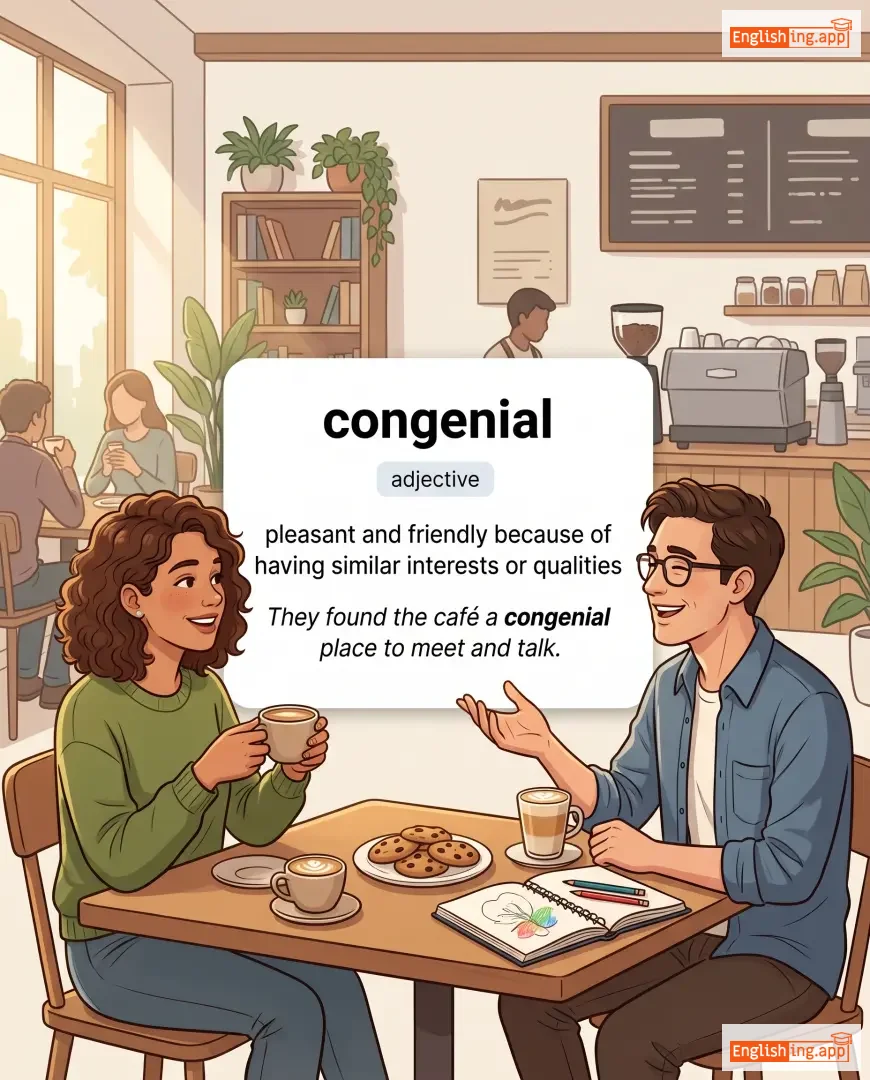
congenial definition card — visual illustration of the meaning
adjective
/kənˈdʒiːniəl/
親しみやすい (shitashimi yasui)

pleasant and friendly because of having similar interests or qualities

"They found the café a congenial place to meet and talk."
"彼らはそのカフェを、会って話すのに適した親しみやすい場所だと感じました。" (Karera wa sono kafe o, atte hanasu no ni tekishita shitashimi yasui basho da to kanjimashita.)
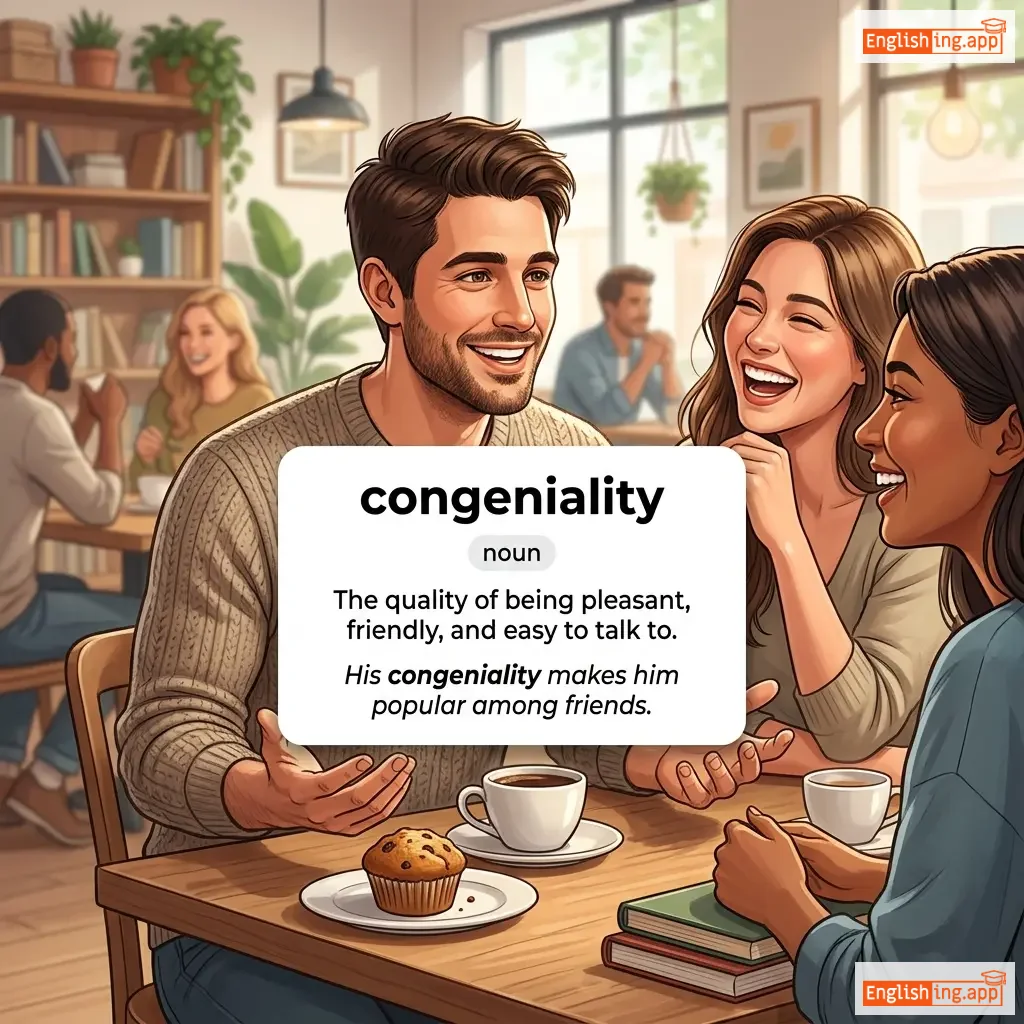
congeniality definition card — visual illustration of the meaning
noun
/kənˌdʒiː.niˈæl.ə.t̬i/
親しみやすさ (shitashimiyasusa)

The quality of being pleasant, friendly, and easy to talk to.

"His congeniality makes him popular among friends."

"彼の親しみやすさは、彼を友人の中で人気者にしています。" (Kare no shitashimiyasusa wa, kare o yūjin no naka de ninki mono ni shiteimasu.)
adjective
/kənˈdʒenɪtl/
先天的 (senten-teki)

existing from birth, usually describing a disease or condition

"The child was born with a congenital heart defect."

"その子供は先天的な心臓疾患を持って生まれました。" (Sono kodomo wa senten-teki na shinzō shikkan o motte umaremashita.)
verb
/kənˈdʒɛst/
混雑 (konzatsu)

To block or overcrowd a space, making movement or flow difficult.

"Heavy traffic can congest the city streets during rush hour."

"渋滞はラッシュアワーに都市の通りを混雑させることができます。" (Jūtai wa rasshu awā ni toshi no tōri o konzatsu saseru koto ga dekimasu.)
adjective
/kənˈdʒɛstɪd/
渋滞 (jūtai)

Blocked up with too much traffic or crowding.

"The road was congested during rush hour."
"ラッシュアワー中、道路は渋滞していました。" (Rasshu awā-chū, dōro wa jūtai shite imashita.)
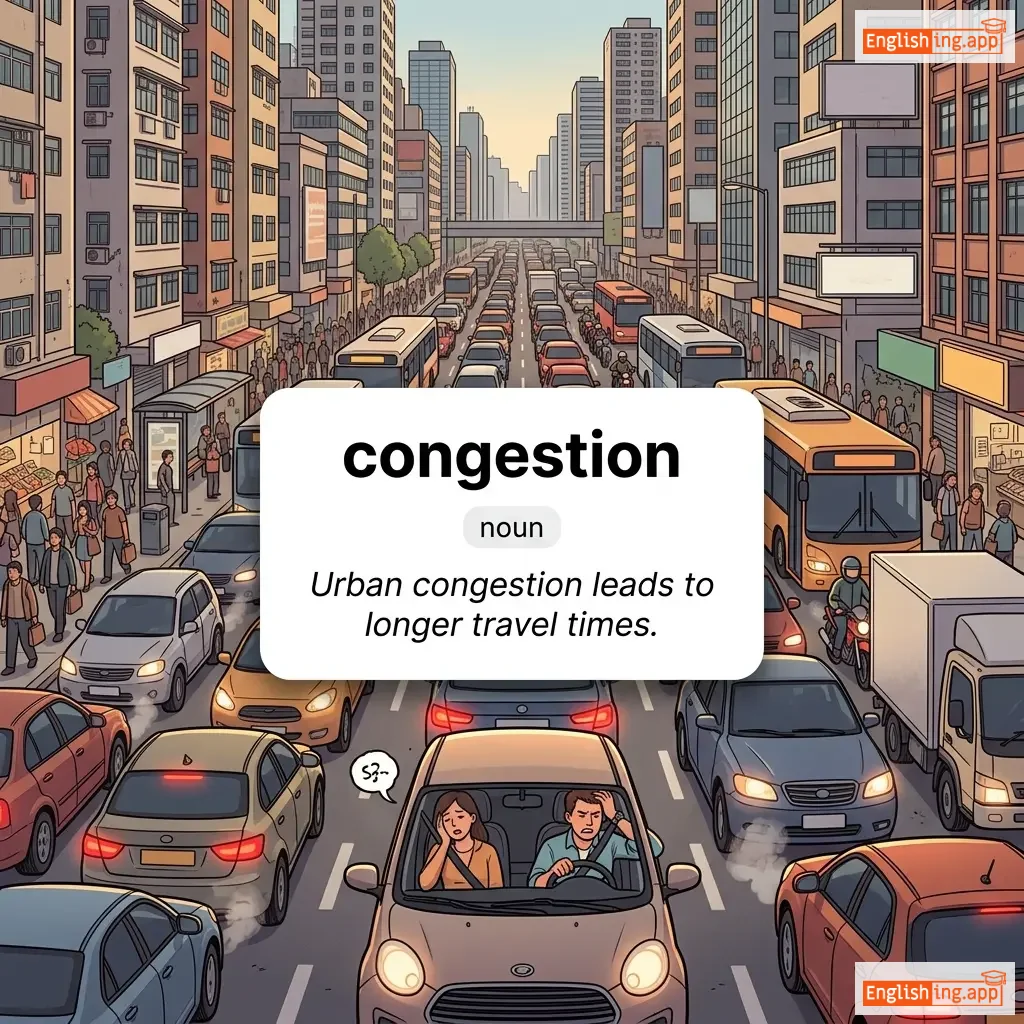
congestion definition card — visual illustration of the meaning
noun
/kənˈdʒes.tʃən/
交通渋滞や過剰な人混み (koutsuu juutai ya kajou na hitogomi)

Traffic jam or overcrowded condition in roads or areas where there is excessive presence of vehicles or people.

"Urban congestion leads to longer travel times."
"都市の渋滞は、長時間の移動時間を引き起こします。" (Toshi no juutai wa, nagajikan no idou jikan wo hikiokoshimasu.)
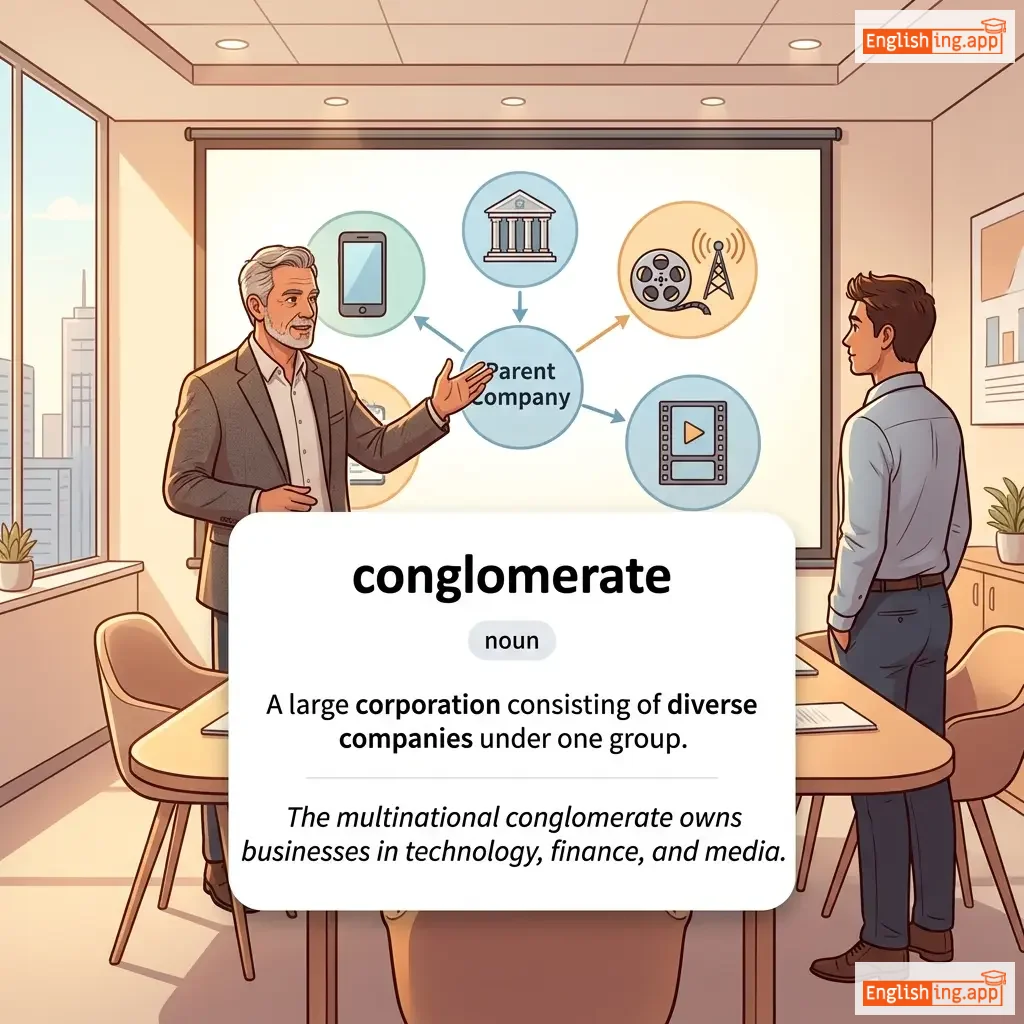
conglomerate definition card — visual illustration of the meaning
noun
/kənˈɡlɒmərət/
さまざまな企業が集まった大企業グループ (samazama na kigyō ga atsumatta daikigyo gurūpu)

A large corporation consisting of diverse companies under one group.

"The multinational conglomerate owns businesses in technology, finance, and media."

"その多国籍コングロマリットは、技術、金融、メディアの分野で事業を展開しています。" (Sono takokuseki kongurōmaritto wa, gijutsu, kin'yū, media no bunya de jigyō o tenkai shiteimasu.)
noun
/kənˌɡlɒməˈreɪʃən/
集合体 (shūgōtai)

A collection or mixture of different things grouped together.

"The market is a conglomeration of small shops and food stalls."

"市場は小さな店と食べ物の屋台の集合体です。" (Ichiba wa chīsana mise to tabemono no yatai no shūgōtai desu.)
verb
/kənˈɡrætʃʊleɪt/
お祝いする (oiwaisuru)

to praise someone for an achievement or for a special occasion

"I want to congratulate you on your promotion."

"私はあなたの昇進を祝いたいです。" (Watashi wa anata no shoushin o iwai tai desu.)
noun
/kənˌɡrætʃəˈleɪʃən/
祝賀 (shukuga)

an expression of praise or joy for someone’s achievement or good fortune

"She sent a congratulation to her friend on winning the award."

"彼女は受賞した友人に祝賀を送った。" (kanojo wa jushou shita yuujin ni shukuga o okutta)
noun
/kənˌɡrætʃ.əˈleɪ.ʃənz/
おめでとう (omedetou)

words expressing praise for an achievement or good wishes on a special occasion

"Congratulations on your promotion! You really deserved this success."
"昇進おめでとう!本当にこの成功に値するよ。" (Shoushin omedetou! Hontou ni kono seikou ni atai suru yo.)
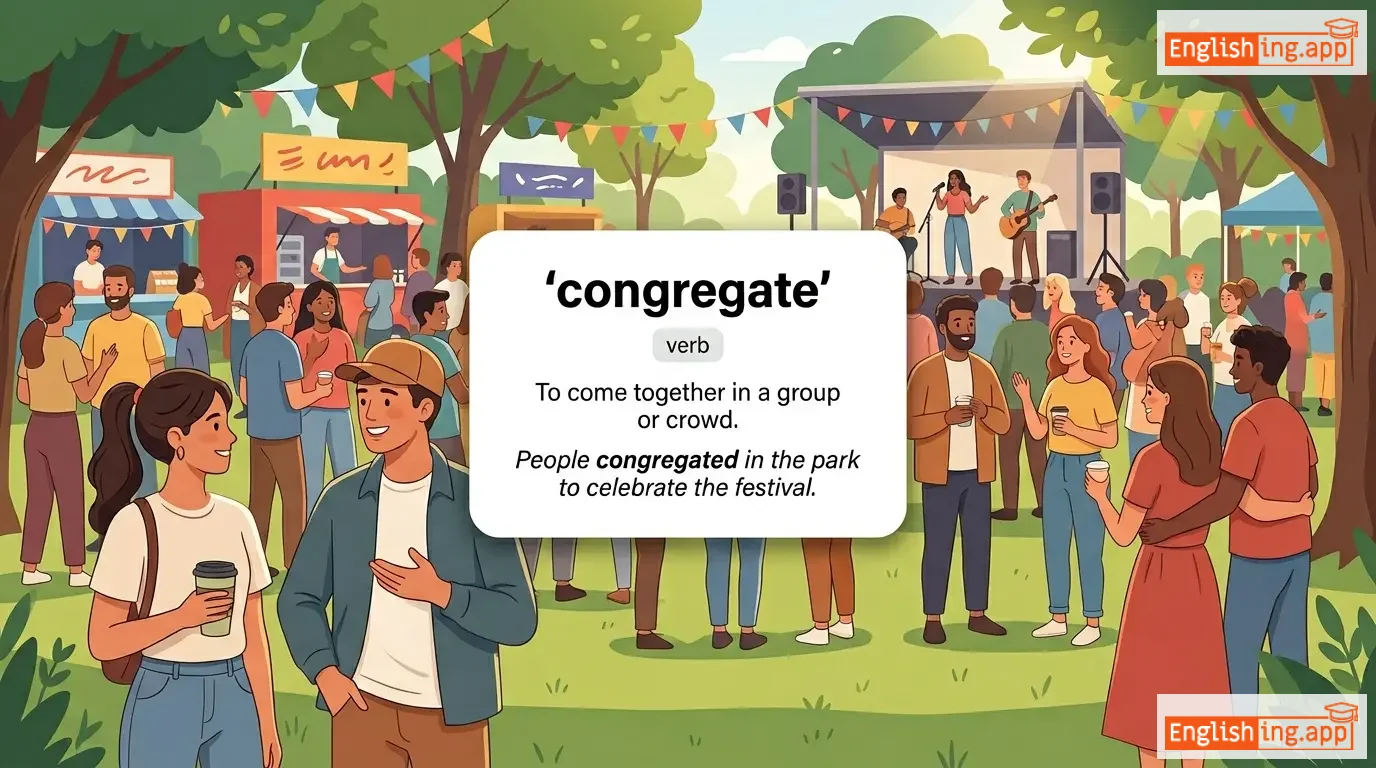
congregate definition card — visual illustration of the meaning
verb
/ˈkɒŋɡrɪˌɡeɪt/
集まる (atsumaru)

To come together in a group or crowd.

"People congregated in the park to celebrate the festival."

"人々は公園でお祭りを祝うために集まりました。" (Hitobito wa kōen de omatsuri o iwau tame ni atsumarimashita.)
noun
/ˌkɒŋɡrɪˈɡeɪʃən/
集会 (shukai)

a group of people assembled for religious worship or a common purpose

"The congregation gathered to hear the sermon."

"集会は説教を聞くために集まりました。" (Shukai wa sekkyou o kiku tame ni atsumarimashita.)
noun
/ˈkɒŋɡrɛs/
会議 (kaigi)

a formal meeting or assembly, especially of representatives for discussion

"The international congress on climate change will be held next year."

"気候変動に関する国際会議は来年開催されます。" (Kikō hendō ni kansuru kokusai kaigi wa rainen kaisai saremasu.)
adjective
/kənˈɡrɛʃənl/
議会の (gikai no)

relating to a congress, especially the US Congress

"The bill received strong congressional support."
"その法案は強力な議会の支持を得た。" (Sono hōan wa kyōryokuna gikai no shiji o eta.)
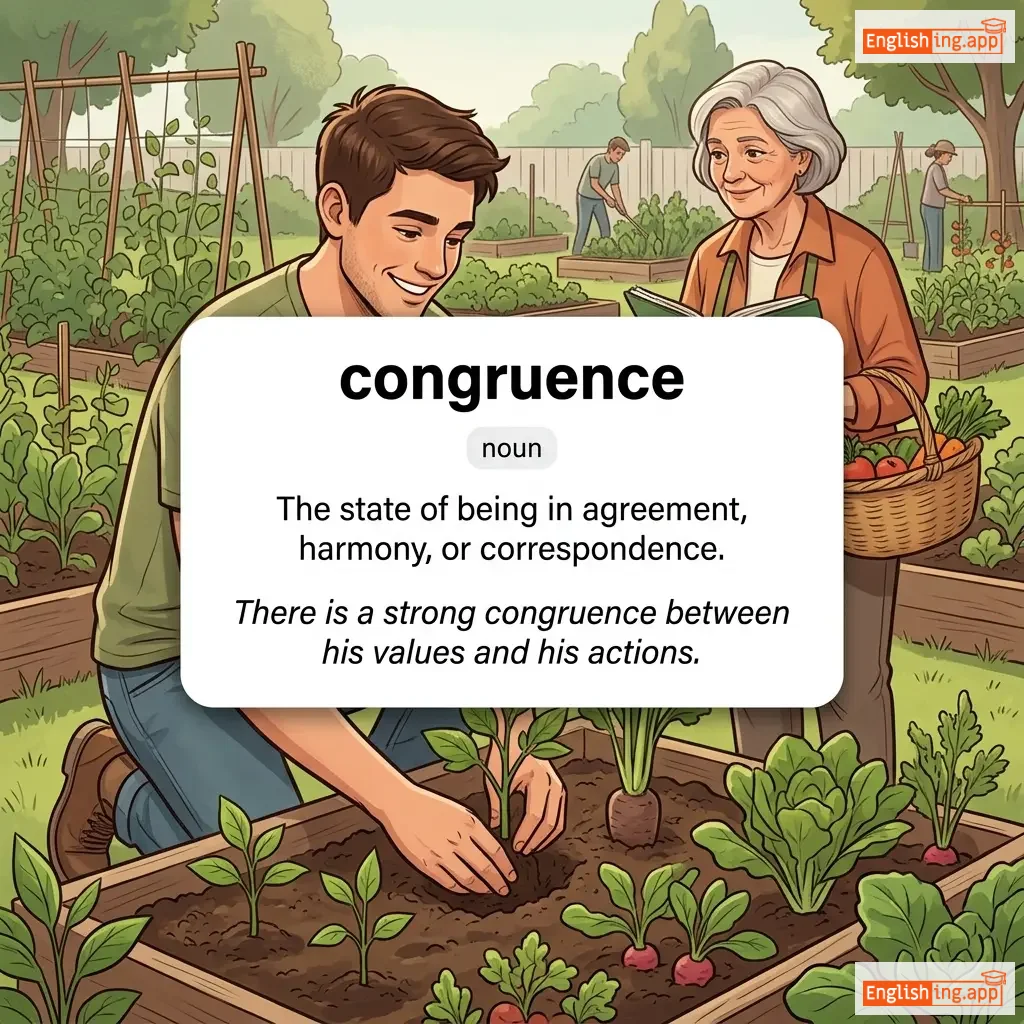
congruence definition card — visual illustration of the meaning
noun
/ˈkɒŋɡruəns/
整合性 (seigōsei)

The state of being in agreement, harmony, or correspondence.

"There is a strong congruence between his values and his actions."

"彼の価値観と行動の間には強い整合性があります。" (Kare no kachikan to kōdō no aida ni wa tsuyoi seigōsei ga arimasu.)
adjective
/ˈkɒŋɡruənt/
合同 (gōtō)

in agreement or harmony; having the same shape and size in geometry

"Their values are congruent with the goals of the organization."

"彼らの価値観は組織の目標と一致しています。" (Karera no kachikan wa soshiki no mokuhyō to icchi shiteimasu.)
noun
/ˈkɒnɪfər/
針葉樹 (Shinyōju)

a type of tree that bears cones and evergreen needle-like leaves, such as pine or fir

"The forest is dominated by conifers like pine and spruce."
"森林は松やモミの木などの針葉樹によって支配されています。" (Shinrin wa matsu ya momi no ki nado no shinyōju ni yotte shihai sareteimasu.)
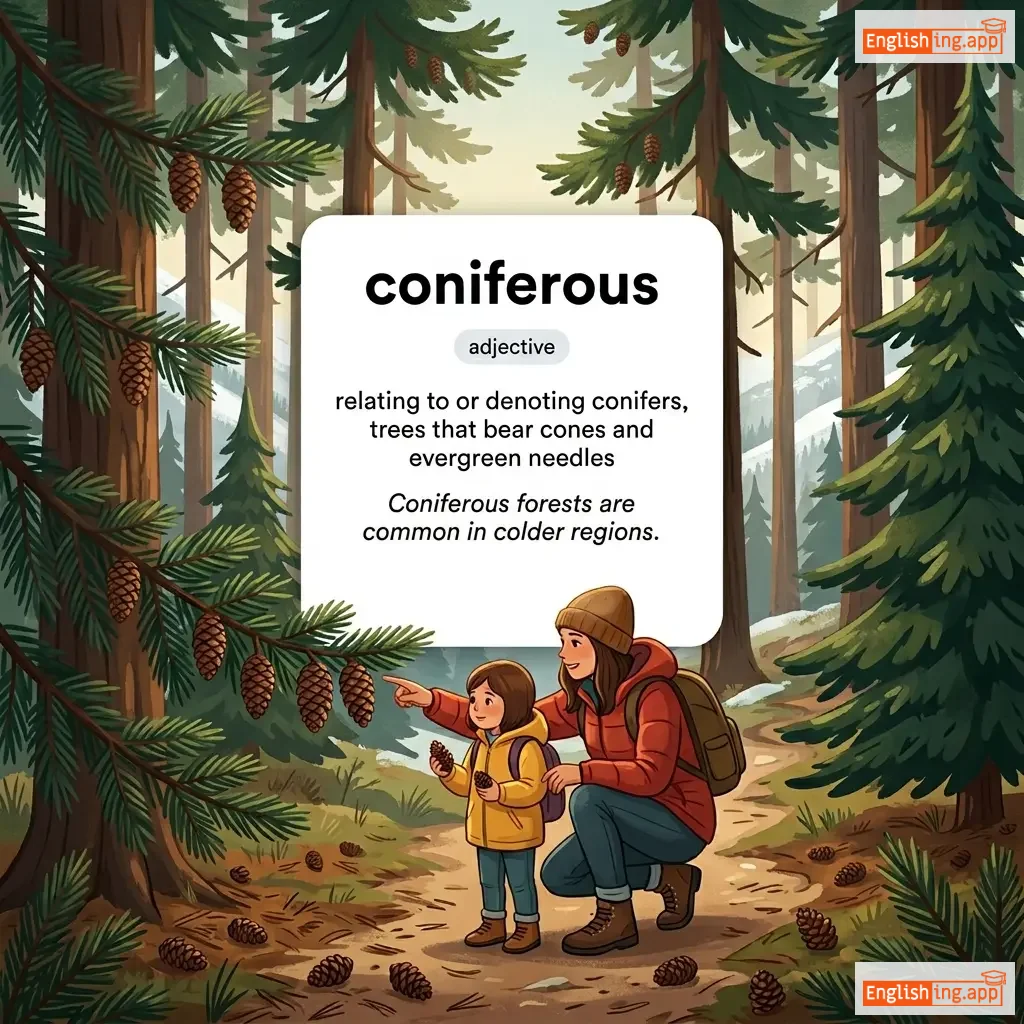
coniferous definition card — visual illustration of the meaning
adjective
/kəˈnɪfərəs/
針葉樹 (shinyōju)

relating to or denoting conifers, trees that bear cones and evergreen needles

"Coniferous forests are common in colder regions."

"針葉樹の森は寒冷な地域に多く見られます。" (Shinyōju no mori wa kanrei na chiiki ni ōku miraremasu.)
adjective
/kənˈdʒɛktʃərəl/
推測的 (すいそくてき)

based on guesswork or incomplete evidence rather than certain knowledge

"His explanation was purely conjectural and lacked proof."

"彼の説明は完全に推測的で、証拠が欠けていました。" (かれのせつめいはかんぜんにすいそくてきで、しょうこがかけていました。)
conjecture definition card — visual illustration of the meaning
noun/verb
/kənˈdʒɛktʃər/
推測 (suisei)

an opinion or conclusion formed on the basis of incomplete information; to form an opinion without sufficient evidence

"The critics conjectured that the book was inspired by real events."

"批評家たちは、その本が実際の出来事に触発されていると推測しました。" (Hihyōka-tachi wa, sono hon ga jissai no dekigoto ni shokuhatsu sarete iru to suisei shimashita.)
verb
/kənˈdʒɔɪn/
結合する (ketsugou suru)

to join together or unite; to combine

"The two rivers conjoin just before reaching the sea."

"2つの川は海に到達する直前に合流します。" (Futatsu no kawa wa umi ni tōtatsu suru chokumae ni gōryū shimasu.)
conjugal definition card — visual illustration of the meaning
adjective
/ˈkɒndʒʊɡəl/
婚姻の (kon'in no)

relating to marriage or the relationship between husband and wife

"They enjoyed a long life of conjugal happiness."

"彼らは長い結婚生活を楽しみました。" (Karera wa nagai kekkon seikatsu o tanoshimimashita.)
verb
/ˈkɒndʒʊɡeɪt/
活用する (katsuyou suru)

to list the different forms of a verb according to tense, person, and number

"Students are asked to conjugate the verb 'to be'."

"学生は「to be」動詞を活用するよう求められます。" (Gakusei wa 'to be' doushi wo katsuyou suru you motomeraremasu.)
noun
/ˌkɒndʒʊˈɡeɪʃən/
活用 (katsuyou)

the variation of the form of a verb to indicate tense, person, and number

"French verbs have complex conjugations."

"フランス語の動詞には複雑な活用形があります。" (Furansugo no doushi ni wa fukuzatsu na katsuyoukei ga arimasu.)
noun
/kənˈdʒʌŋkʃən/
接続詞 (setsuzokushi)

a word used to connect clauses or sentences, or to coordinate words

"The words 'and' and 'but' are common conjunctions."

"'and' と 'but' は一般的な接続詞です。" ('and' to 'but' wa ippanteki na setsuzokushi desu.)
verb
/ˈkʌn.dʒər/
召喚する (shou-kan suru)

to summon something as if by magic; to imagine vividly

"The magician conjured a rabbit out of the hat."

"魔法使いは帽子からウサギを召喚しました。" (Mahoutsukai wa boushi kara usagi wo shoukan shimashita.)
connect definition card — visual illustration of the meaning
verb
/kəˈnɛkt/
接続する (setsuzoku suru)

to join or link two or more things together

"The new bridge will connect the two cities."
"新しい橋が二つの都市をつなげる。" (Atarashii hashi ga futatsu no toshi wo tsunageru.)
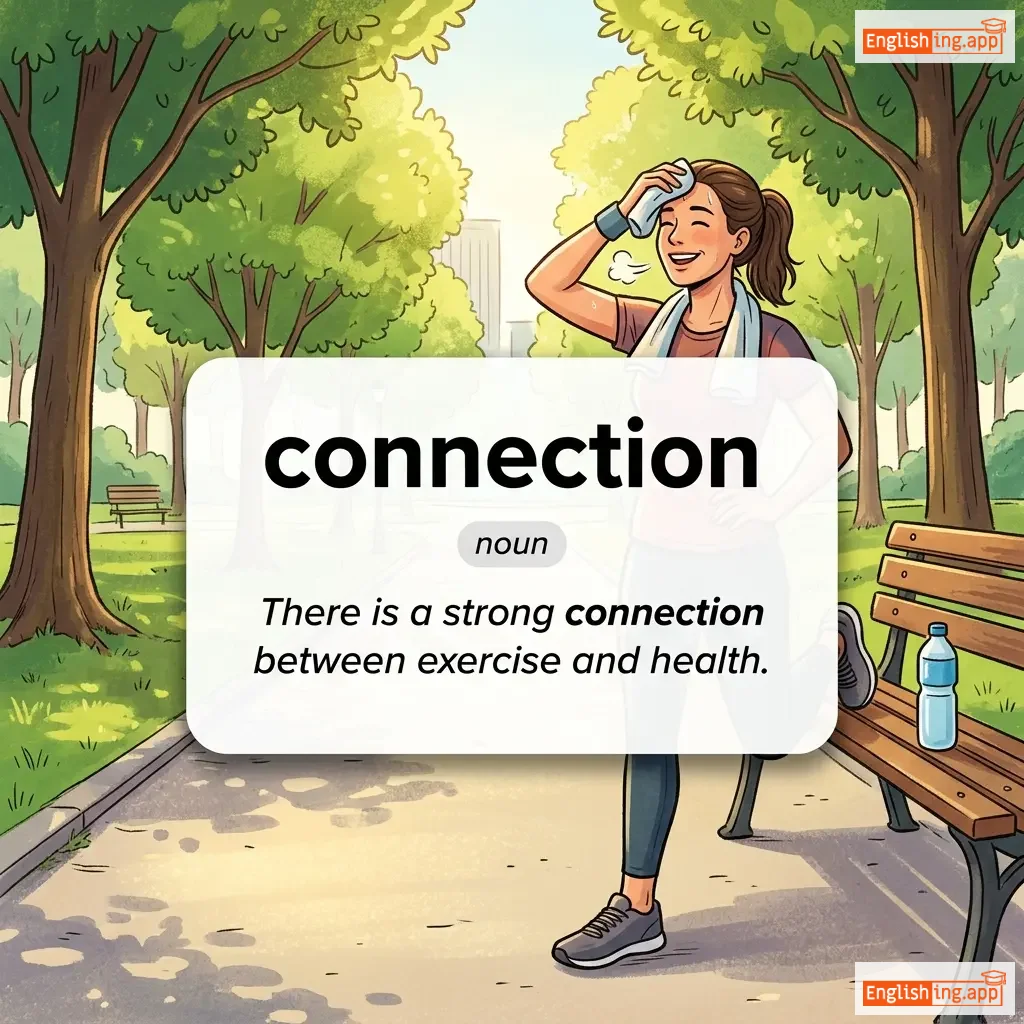
connection definition card — visual illustration of the meaning
noun
/kəˈnɛkʃən/
接続 (setsuzoku)

a relationship in which a person, thing, or idea is linked or associated with something else

"There is a strong connection between exercise and health."
"運動と健康の間に強い接続があります。" (Undou to kenkou no aida ni tsuyoi setsuzoku ga arimasu.)
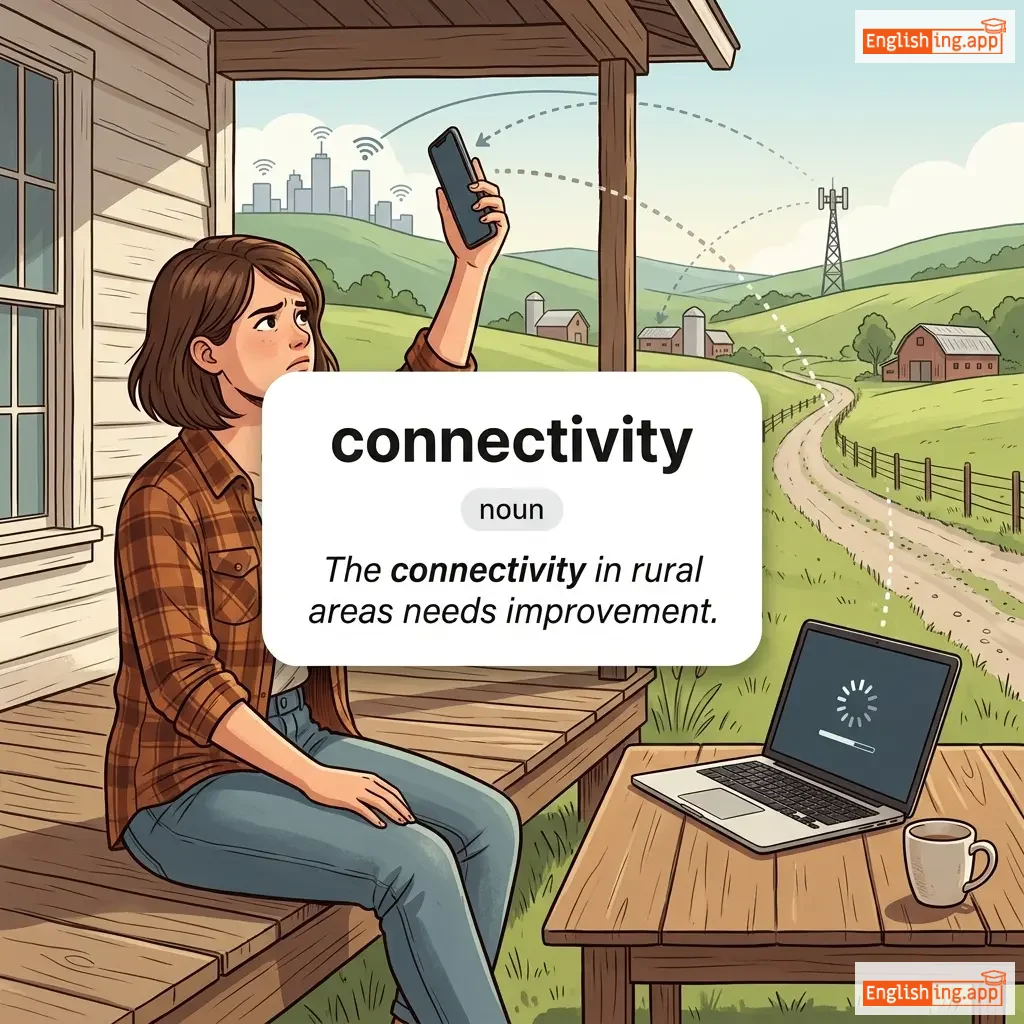
connectivity definition card — visual illustration of the meaning
noun
ˌkɒn.ekˈtɪv.ɪ.ti
接続能力, ネットワーク接続, 相互接続性 (setsuzoku nōryoku, nettowāku setsuzoku, sōgo setsuzokusei)

The state of being connected or interconnected; capacity for the interconnection of platforms, systems, and applications.

"The connectivity in rural areas needs improvement."

"地方の地域では接続性の改善が必要です。" (Chihō no chiiki dewa setsuzokusei no kaizen ga hitsuyō desu.)
noun
/kəˈnaɪ.vəns/
共謀 (kyōbō)

the act of secretly allowing or being involved in wrongdoing

"The theft happened with the connivance of the security guard."

"その窃盗は警備員の共謀で起こった。" (Sono settō wa keibiin no kyōbō de okotta.)
verb
/kəˈnaɪv/
秘密裏に不正行為に関与する (himitsuri ni fusei kōi ni kan'yo suru)

to secretly allow or be involved in a wrongdoing

"The manager connived with the supplier to cheat the company."

"マネージャーは供給者と共謀して会社を騙した。" (Manējā wa kyōkyūsha to kyōbō shite kaisha o damashita.)
adjective
/kəˈnaɪ.vɪŋ/
陰険な (inken na)

secretly scheming or plotting to help in wrongdoing

"He is a conniving politician who manipulates people for power."

"彼は権力のために人々を操る陰険な政治家です。" (Kare wa kenryoku no tame ni hitobito o ayatsuru inken na seijika desu.)
connoisseur definition card — visual illustration of the meaning
noun
/ˌkɒn.əˈsɜːr/
鑑定家 (kanteika)

an expert judge in matters of taste, especially in food, art, or wine

"She is a true connoisseur of fine art."

"彼女は本物の芸術の鑑定家です。" (Kanojo wa honmono no geijutsu no kanteika desu.)
connotation definition card — visual illustration of the meaning
noun
/ˌkɒnəˈteɪʃən/
含意 (gumi)

An idea or feeling that a word invokes in addition to its literal meaning.

"The word 'home' has a positive connotation of warmth and family."

"'ホーム'という言葉には、温かさと家族のポジティブな含意があります。" ('Hōmu' to iu kotoba ni wa, atatakai to kazoku no pojitibu na gumi ga arimasu.)
verb
/kəˈnoʊt/
示唆する (shisa suru)

To suggest or imply an additional meaning beyond the literal one.

"The word 'youthful' connotes energy and vitality."

"「若々しい」という言葉はエネルギーと活力を示唆します。" ('Wakawakashii' to iu kotoba wa enerugī to katsuryoku o shisa shimasu.)
adjective
/kəˈnjuːbiəl/
婚姻の (kon'in no)

Relating to marriage or the relationship of a married couple.

"They celebrated their connubial bliss with a honeymoon trip."

"彼らはハネムーン旅行で婚姻の幸せを祝いました。" (Karera wa hanemūn ryokō de kon'in no shiawase o iwai mashita.)