語彙集

英単語辞書 | 単語の意味、定義、例文

verb
/kəmˈpraɪz/
構成する (kōsei suru)

To consist of or be made up of something.

"The committee comprises five members."

"委員会は五人のメンバーで構成されています。" (Iinkai wa gonin no menbā de kōsei sarete imasu.)
compromise definition card — visual illustration of the meaning
noun, verb
/ˈkɒmprəmaɪz/
妥協 (dakyō)

A settlement of differences in which each side makes concessions; or to weaken or put at risk.

"They reached a compromise after long negotiations."

"彼らは長い交渉の後で妥協に達しました。" (Karera wa nagai kōshō no ato de dakyō ni tasshimashita.)
noun
/kəmˈpʌlʃn̩/
強迫 (kyouhaku)

An irresistible urge to do something, or the act of being forced.

"He felt a strong compulsion to check his phone constantly."

"彼は電話を絶えず確認する強迫感を感じていた。" (Kare wa denwa o taezu kakunin suru kyouhakukan o kanjite ita.)
adjective
/kəmˈpʌlsɪv/
強迫的 (kyouhakuteki)

Resulting from or acting on an irresistible urge, especially one that is against one's conscious wishes.

"He is a compulsive gambler who cannot stop placing bets."

"彼は賭けをやめられない強迫的なギャンブラーです。" (kare wa kake wo yamerarenai kyouhakuteki na gyanburaa desu.)
adjective
/kəmˈpʌlsəri/
義務的 (gimuteki)

Required by law or a rule; obligatory.

"Wearing seat belts is compulsory in most countries."
"ほとんどの国でシートベルトを着用することは義務的です。" (Hotondo no kuni de shīto beruto o chakuyō suru koto wa gimuteki desu.)
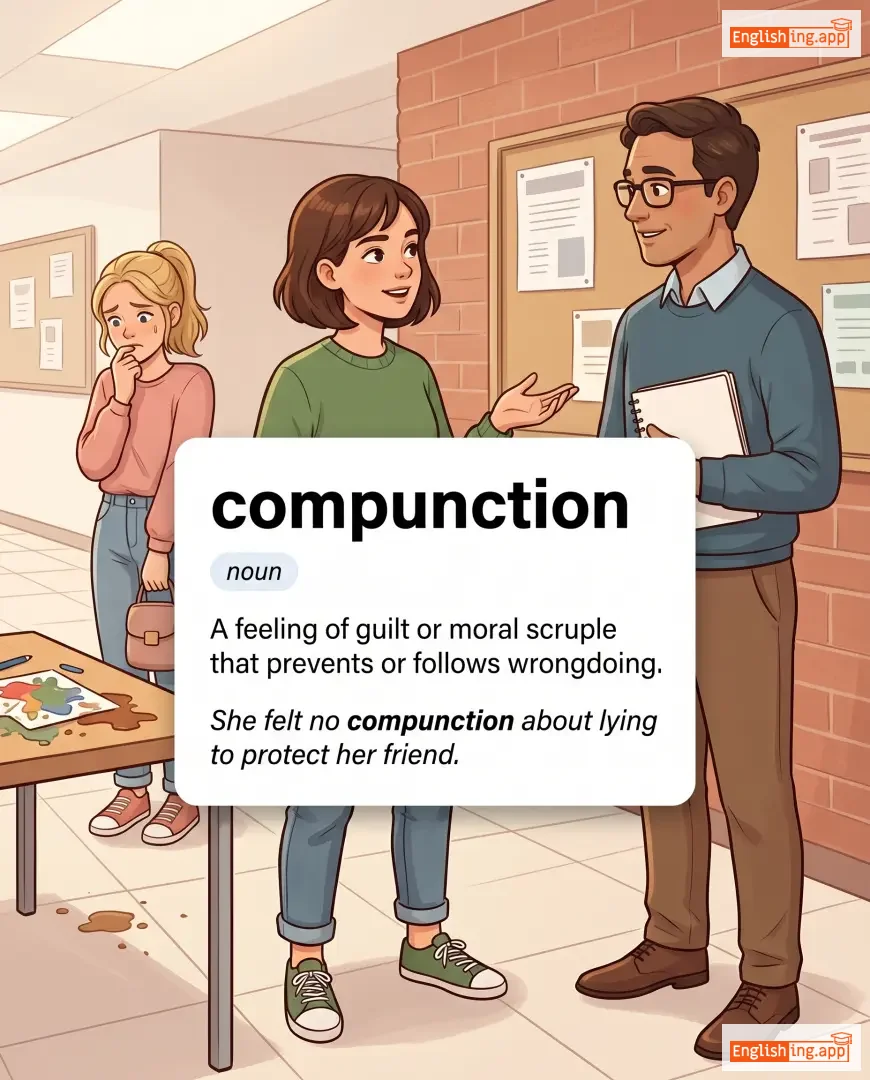
compunction definition card — visual illustration of the meaning
noun
/kəmˈpʌŋkʃən/
良心の呵責 (ryōshin no kaseki)

A feeling of guilt or moral scruple that prevents or follows wrongdoing.

"She felt no compunction about lying to protect her friend."
"彼女は友達を守るために嘘をついたことを良心の呵責を感じなかった。" (Kanojo wa tomodachi o mamoru tame ni uso o tsuita koto o ryōshin no kaseki o kanjinakatta.)
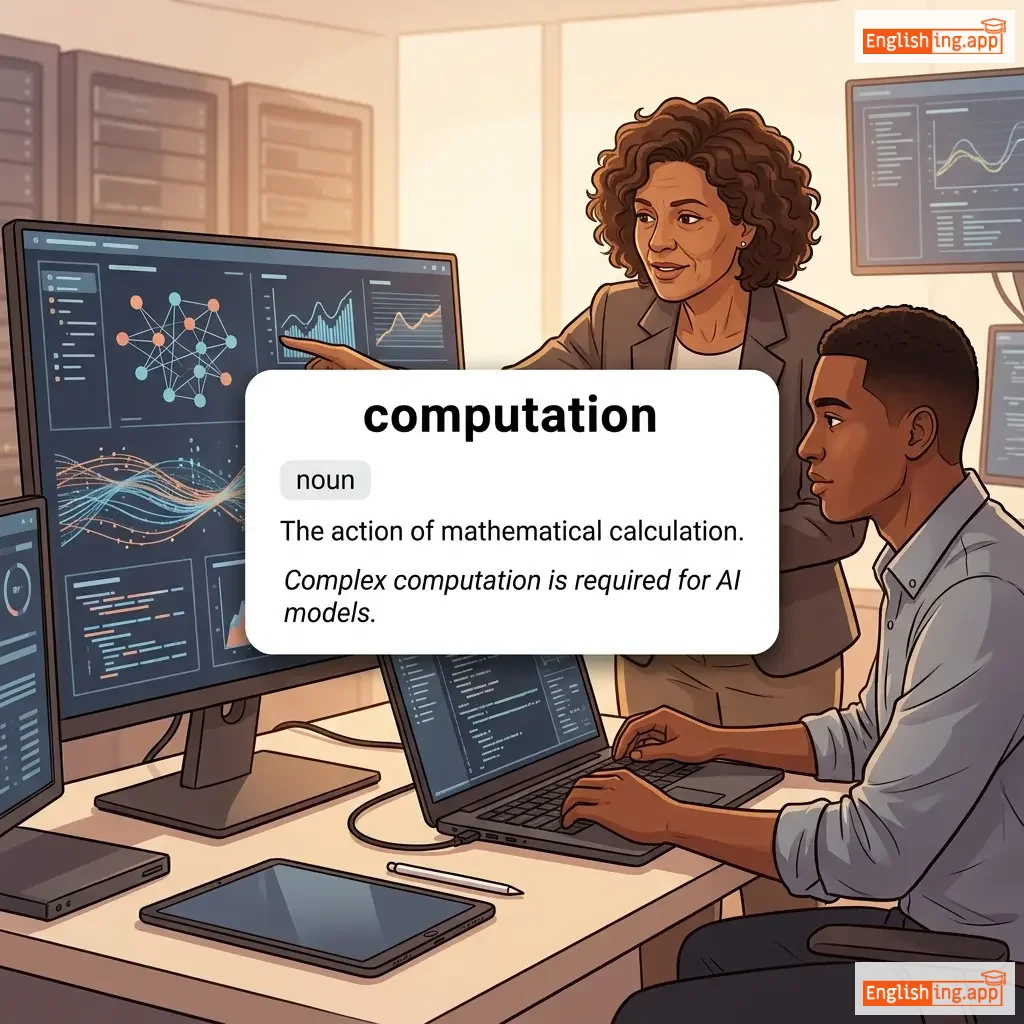
computation definition card — visual illustration of the meaning
noun
ˌkɒm.pjʊˈteɪ.ʃən
計算 (keisan)

The action of mathematical calculation.

"Complex computation is required for AI models."
"AIモデルには複雑な計算が必要です。" (AI moderu ni wa fukuzatsu na keisan ga hitsuyou desu.)
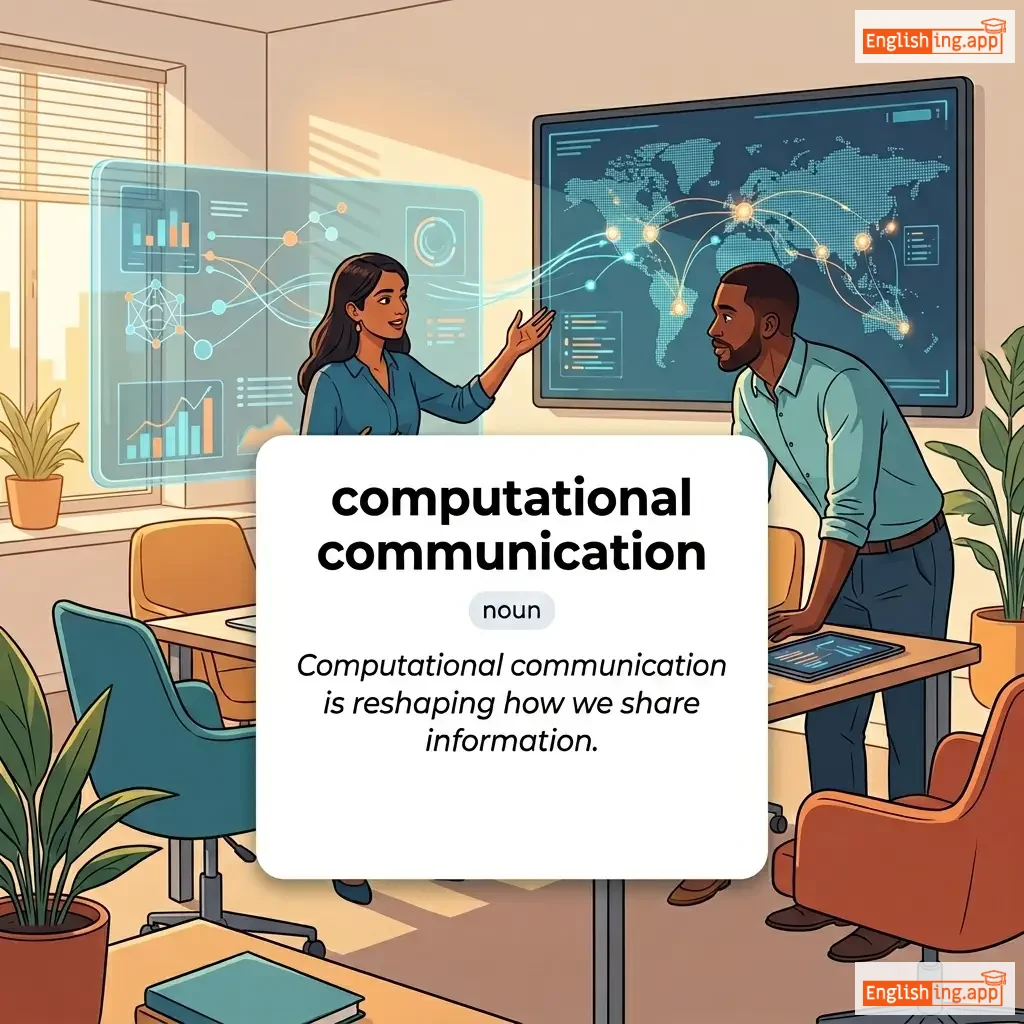
computational communication definition card — visual illustration of the meaning
noun
ˌkɒmpjʊˈteɪʃənəl kəˌmjuːnɪˈkeɪʃən
計算通信 (keisan tsuushin)

Digital exchange and automated interaction; the use of computational methods and systems to facilitate communication and information sharing.

"Computational communication is reshaping how we share information."

"計算通信は私たちが情報を共有する方法を再構築しています。" (Keisan tsuushin wa watashitachi ga jouhou wo kyoyu suru houhou wo saikouchiku shiteimasu.)
compute definition card — visual illustration of the meaning
verb
/kəmˈpjuːt/
計算する (keisan suru)

To calculate or determine by using a computer or mathematical methods.

"The software can compute the total cost in seconds."

"そのソフトウェアは数秒で総コストを計算できます。" (Sono sofuto wea wa suubyou de sou kosuto wo keisan dekimasu.)
noun
/kəmˈpjuːtə(r)/
コンピュータ (konpyu-ta)

an electronic device for storing and processing data

"I bought a new computer for my office work."

"私はオフィスワークのために新しいコンピュータを購入しました。" (Watashi wa ofisu waaku no tame ni atarashii konpyu-ta o kounyuu shimashita.)
verb
/kɒnˈkætəneɪt/
連結する (renketsu suru)

To link things together in a series or chain.

"The program concatenates two strings into one."

"プログラムは二つの文字列を一つに連結します。" (Puroguramu wa futatsu no moji-retsu o hitotsu ni renketsu shimasu.)
concave definition card — visual illustration of the meaning
adjective
/ˈkɒn.keɪv/
凹形 (oukkei)

curved inward like the inside of a bowl

"The mirror had a concave surface that magnified her reflection."

"鏡は凹形の表面を持ち、彼女の反射を拡大しました。" (Kagami wa oukei no hyoumen o mochi, kanojo no hansha o kakudai shimashita.)
verb
/kənˈsiːl/
隠す (kakusu)

to hide something or keep it secret

"He tried to conceal his disappointment behind a smile."

"彼は微笑みの背後に自分の失望を隠そうとした。" (Kare wa bishoumi no haigo ni jibun no shitsubou o kakusou to shita.)
verb
/kənˈsiːd/

to admit something is true or valid, often reluctantly

"She finally conceded that she was wrong."

noun
/kənˈsiːt/
虚栄心 (kyōeishin)

excessive pride in oneself; vanity

"His conceit made him unpopular among his colleagues."

"彼の虚栄心は彼を同僚の中で不人気にした。" (Kare no kyōeishin wa kare o dōryō no naka de funinki ni shita.)
verb
/kənˈsiːv/
思いつく, 妊娠する (omoitsuku, ninshin suru)

to form or imagine an idea in the mind; to become pregnant

"It is hard to conceive how such an idea could succeed."

"そのようなアイデアが成功する方法を考えるのは難しい。" (Sono you na aidea ga seikou suru houhou wo kangaeru no wa muzukashii.)
verb
/ˈkɒnsəntreɪt/
集中する (shūchū suru)

to focus all one's attention or mental effort on a particular object or activity

"She tried to concentrate on her studies despite the noise."

"騒音にもかかわらず、彼女は勉強に集中しようとした。" (sōon ni mo kakawarazu, kanojo wa benkyō ni shūchū shiyō to shita.)
concentration definition card — visual illustration of the meaning
noun
/ˌkɒnsnˈtreɪʃən/
集中力 (shūchū-ryoku)

the act of focusing one's attention or mental effort on something

"Good concentration is essential for success in exams."

"試験に成功するためには、良い集中力が不可欠です。" (Shiken ni seikou suru tame ni wa, yoi shūchū-ryoku ga fukaketsu desu.)
adjective
/kənˈsɛntrɪk/
同心円の (dōshin'en no)

having a common center, as in circles or spheres

"The artist drew concentric circles on the canvas."
"アーティストはキャンバスに同心円を描きました。" (Ātisuto wa kyanbasu ni dōshin'en o kakimashita.)
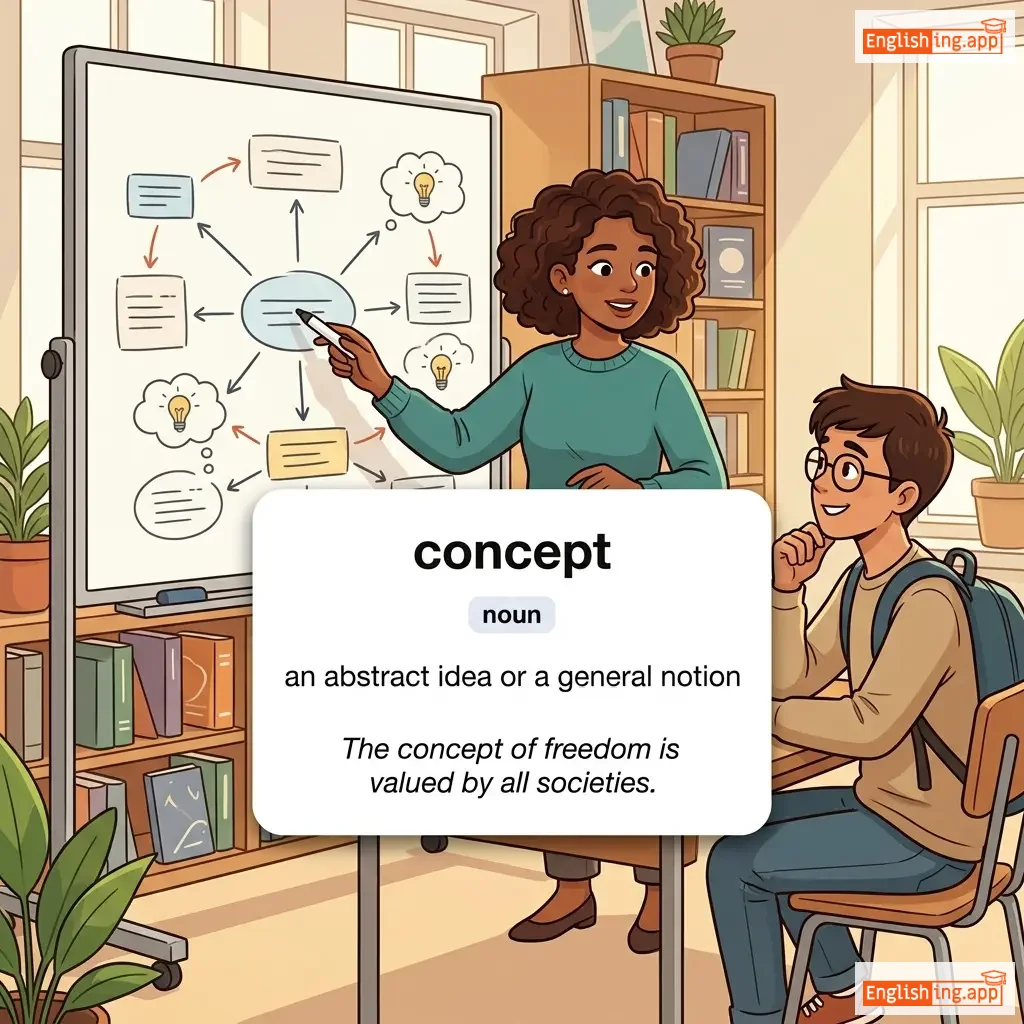
concept definition card — visual illustration of the meaning
noun
/ˈkɒnsɛpt/
概念 (gainen)

an abstract idea or a general notion

"The concept of freedom is valued by all societies."

"自由のコンセプトはすべての社会で価値があるとされています。" (Jiyū no konseputo wa subete no shakai de kachi ga aru to sareteimasu.)
noun
/kənˈsɛpʃən/
概念, 妊娠 (gainen, ninshin)

the forming or understanding of an idea; the act of conceiving a child

"Her conception of the project was very different from ours."
"彼女のプロジェクトの概念は私たちのものとは大きく異なっていました。" (kanojo no purojekuto no gainen wa watashitachi no mono to wa ōkiku kotonatte imashita.)
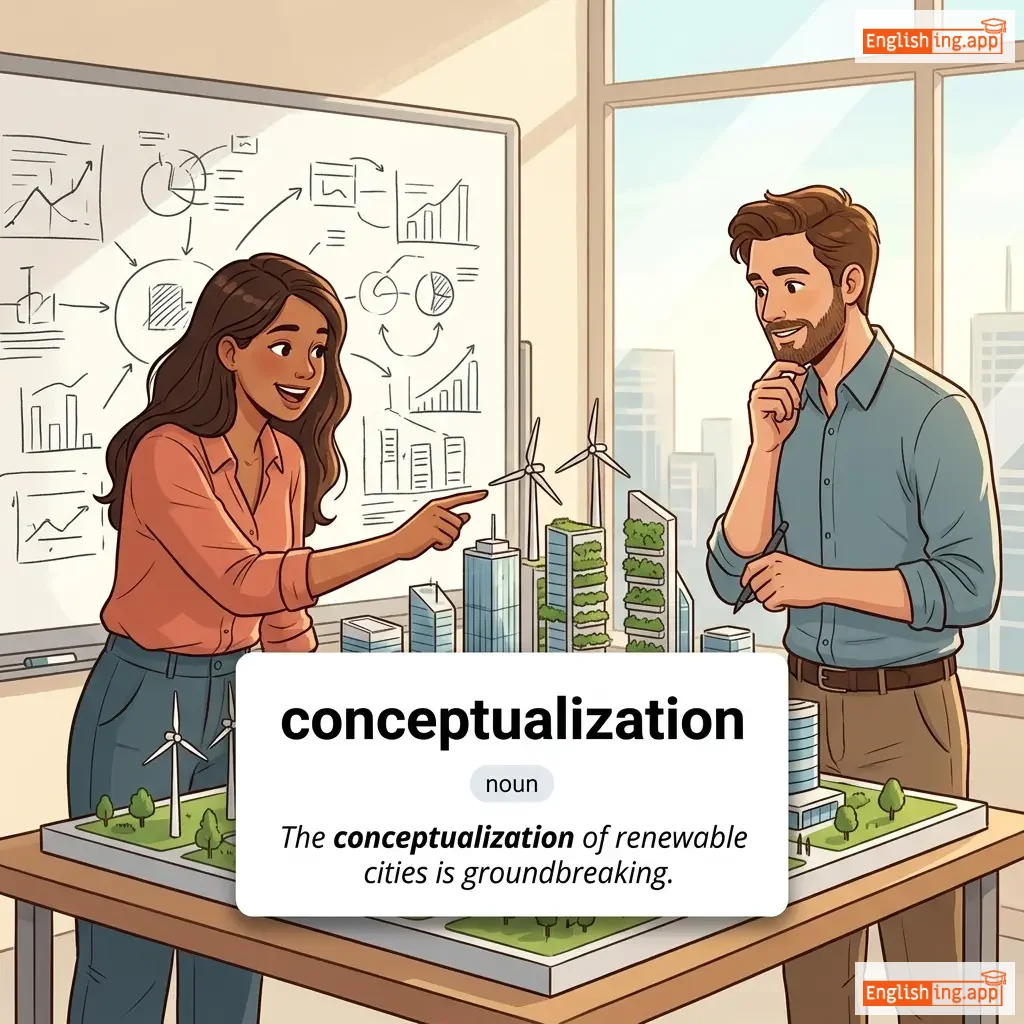
conceptualization definition card — visual illustration of the meaning
noun
kənˌsep.tʃu.ə.laɪˈzeɪ.ʃən
概念化 (gainenka)

The process of forming a concept or idea; the process of developing something in the mind.

"The conceptualization of renewable cities is groundbreaking."

"再生可能な都市の概念化は画期的です。" (Saisei kanō na toshi no gainenka wa kakkiteki desu.)
verb
/kənˈsɛptʃuəlaɪz/
概念化する (gainenka suru)

to form an idea or concept of something in your mind

"The artist conceptualized a new design for the exhibition."

"アーティストは展示のために新しいデザインを構想しました。" (Atisuto wa tenji no tame ni atarashii dezain wo kousou shimashita.)
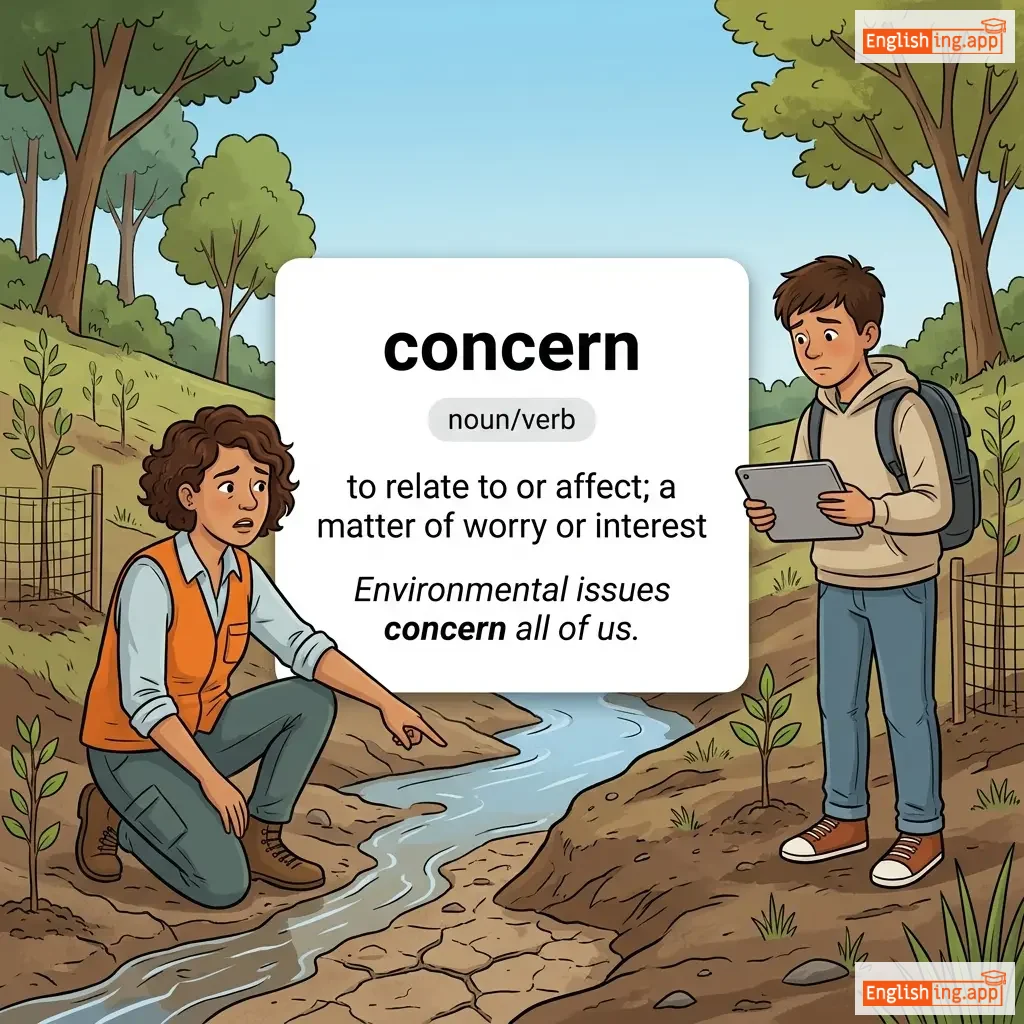
concern definition card — visual illustration of the meaning
noun/verb
/kənˈsɜːrn/

to relate to or affect; a matter of worry or interest

"Environmental issues concern all of us."

adjective
/kənˈsɜːnd/
心配な (shinpai na)

worried or anxious about something; involved or interested in something

"She was concerned about her mother's health."

"彼女は母親の健康について心配していた。" (Kanojo wa hahaoya no kenkō ni tsuite shinpai shite ita.)
preposition
/kənˈsɜːnɪŋ/
関する (kansuru)

about or relating to something; causing worry or anxiety

"There are some reports concerning the new project."

"新しいプロジェクトに関する報告があります。" (Atarashī purojekuto ni kansuru hōkoku ga arimasu.)
concert definition card — visual illustration of the meaning
noun
/ˈkɒnsət/
コンサート (konsaato)

A musical performance given by one or more singers or musicians.

"We went to a concert last night and enjoyed the live music."

"私たちは昨晩コンサートに行き、ライブ音楽を楽しみました。" (Watashitachi wa sakuban konsaato ni iki, raibu ongaku o tanoshimimashita.)
adjective
/kənˈsɜːrtɪd/
協調した (kyōchō shita)

done with great effort, planned and performed together by multiple people

"The workers made a concerted effort to improve conditions."

"労働者たちは状況改善のために協調した努力をしました。" (Rōdōsha-tachi wa jōkyō kaizen no tame ni kyōchō shita doryoku o shimashita.)
noun
/kənˈtʃɛrtoʊ/
音楽作品 (ongaku sakuhin)

a musical composition for one or more solo instruments accompanied by an orchestra

"She played a Mozart concerto with the orchestra."

"彼女はオーケストラと共にモーツァルトのコンチェルトを演奏しました。" (Kanojo wa ōkesutora to tomo ni Mōtsaruto no koncherto o ensō shimashita.)
noun
/kənˈsɛʃən/
譲歩 (jouho)

something that is granted, especially in response to demands; a compromise

"The company made several concessions during the negotiations."

"会社は交渉中にいくつかの譲歩をしました。" (Kaisha wa koushou chuu ni ikutsuka no jouho o shimashita.)
noun
/kɑːntʃ/
ホラガイ (horagai)

a large spiral shell, often used as a trumpet in ceremonies

"The priest blew the conch to begin the ritual."

"司祭は儀式を始めるためにコンチを吹きました。" (Shisai wa gishiki o hajimeru tame ni konchi o fukimashita.)
🕊️

conciliate

verb
/kənˈsɪlieɪt/

to stop someone from being angry; to win over by friendly acts

"He tried to conciliate the angry customer with an apology."
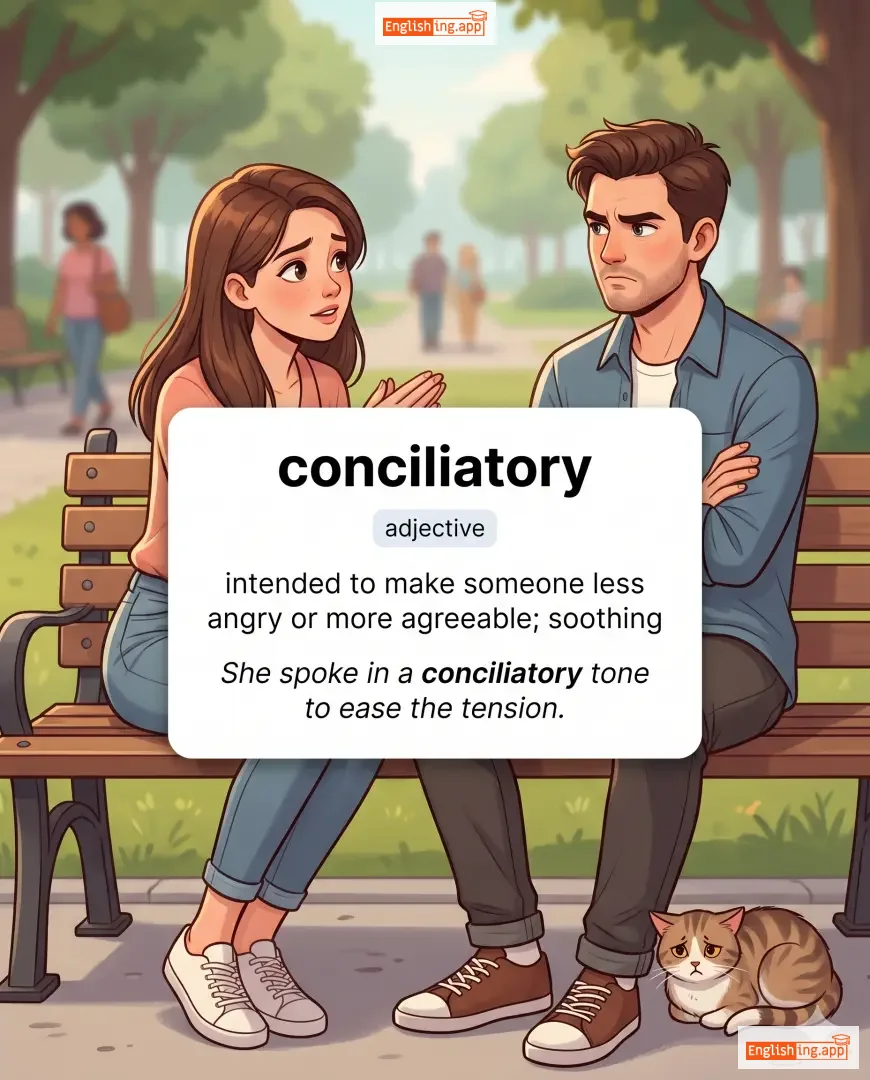
conciliatory definition card — visual illustration of the meaning
adjective
/kənˈsɪliətɔːri/
和解的 (wakai-teki)

intended to make someone less angry or more agreeable; soothing

"She spoke in a conciliatory tone to ease the tension."
"彼女は緊張を和らげるために和解的な口調で話した。" (Kanojo wa kinchō o yawarageru tame ni wakai-teki na kuchō de hanashita.)
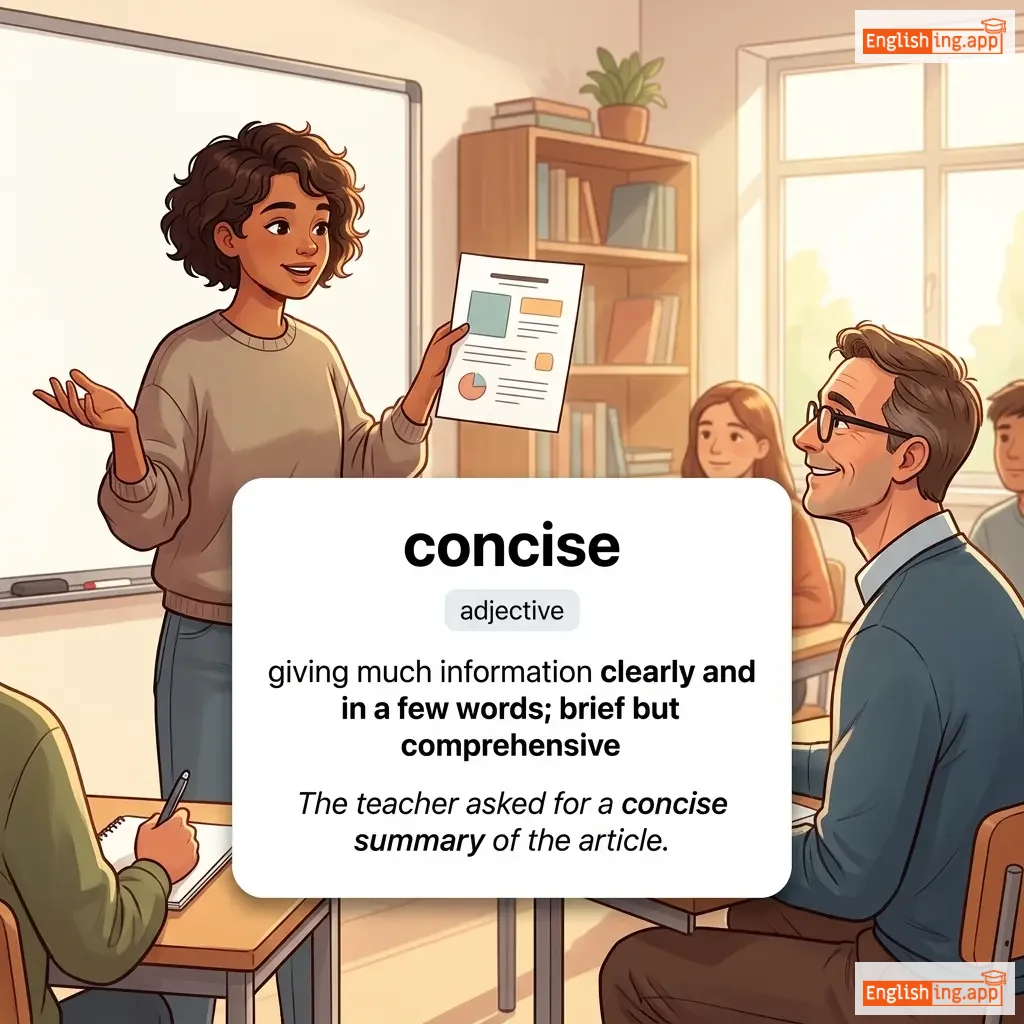
concise definition card — visual illustration of the meaning
adjective
/kənˈsaɪs/
簡潔 (kanketsu)

giving much information clearly and in a few words; brief but comprehensive

"The teacher asked for a concise summary of the article."

"先生はその記事の簡潔な要約を求めました。" (Sensei wa sono kiji no kanketsu na youyaku wo motomemashita.)
noun
/kɒŋk/
(kai)

a shell, especially a large spiral one used as a horn or for decoration

"The priest blew the conch shell to signal the start of the ceremony."

"司祭は儀式の開始を知らせるためにコンクの貝を吹きました。" (Shisai wa gishiki no kaishi o shiraseru tame ni konku no kai o fukimashita.)
noun
/ˈkɒnk.leɪv/
秘密会議 (himitsu kaigi)

a private meeting, especially a secret or important one

"The leaders met in a secret conclave to discuss the strategy."
"リーダーたちは戦略を話し合うために秘密のコンクレーブに集まりました。" (Rīdā-tachi wa senryaku o hanashiau tame ni himitsu no konkurēbu ni atsumarimashita.)
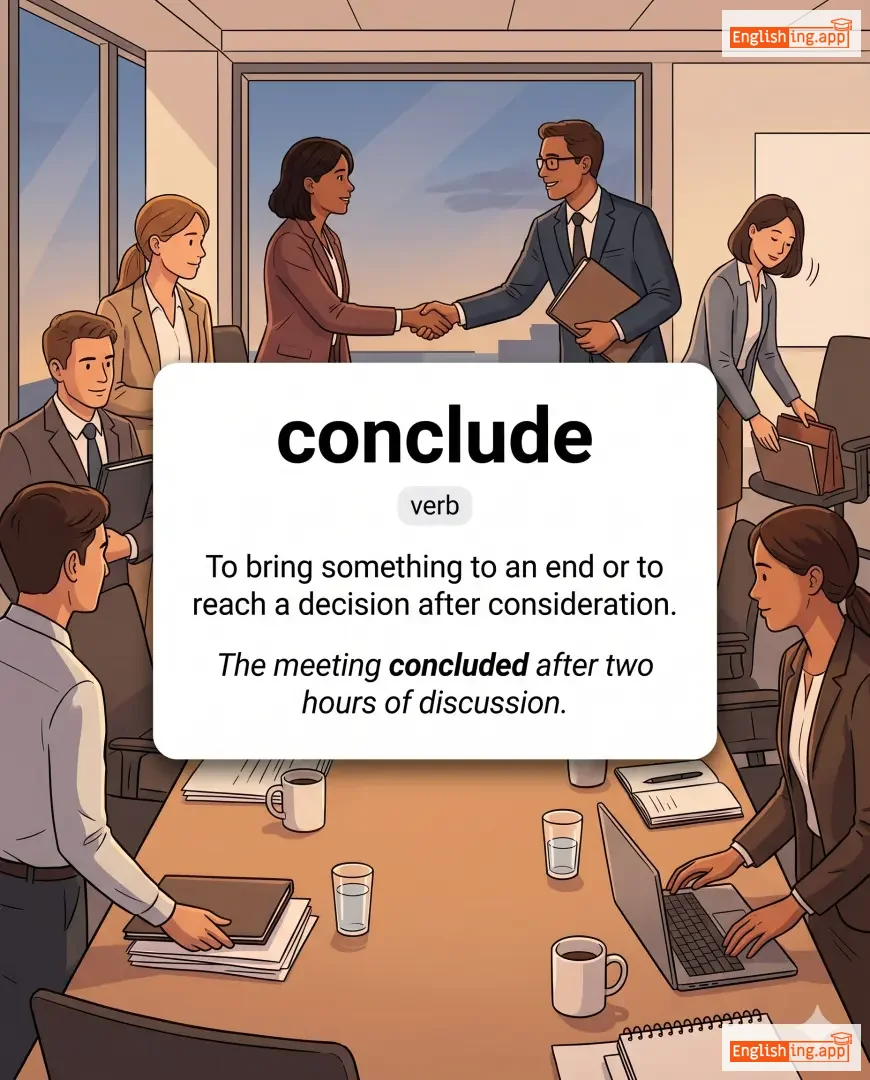
conclude definition card — visual illustration of the meaning
verb
/kənˈkluːd/
結論を出す、決定を下す (ketsuron wo dasu, kettei wo kudasu)

To bring something to an end or to reach a decision after consideration.

"The meeting concluded after two hours of discussion."

"会議は2時間の議論の後、終了しました。" (Kaigi wa 2 jikan no giron no ato, shūryō shimashita.)
noun
/kənˈkluːʒən/
結論 (ketsuron)

The end or finish of an event, process, or text; a judgment reached after consideration.

"The research paper ends with a strong conclusion."

"研究論文は強力な結論で終わる。" (Kenkyū ronbun wa kyōryoku na ketsuron de owaru.)
adjective
/kənˈkluːsɪv/
決定的な (ketteiteki na)

serving to prove a case; decisive or convincing

"The DNA test provided conclusive evidence of his innocence."
"DNAテストは彼の無実を示す決定的な証拠を提供しました。" (DNA tesuto wa kare no mujitsu o shimesu ketteiteki na shōko o teikyō shimashita.)
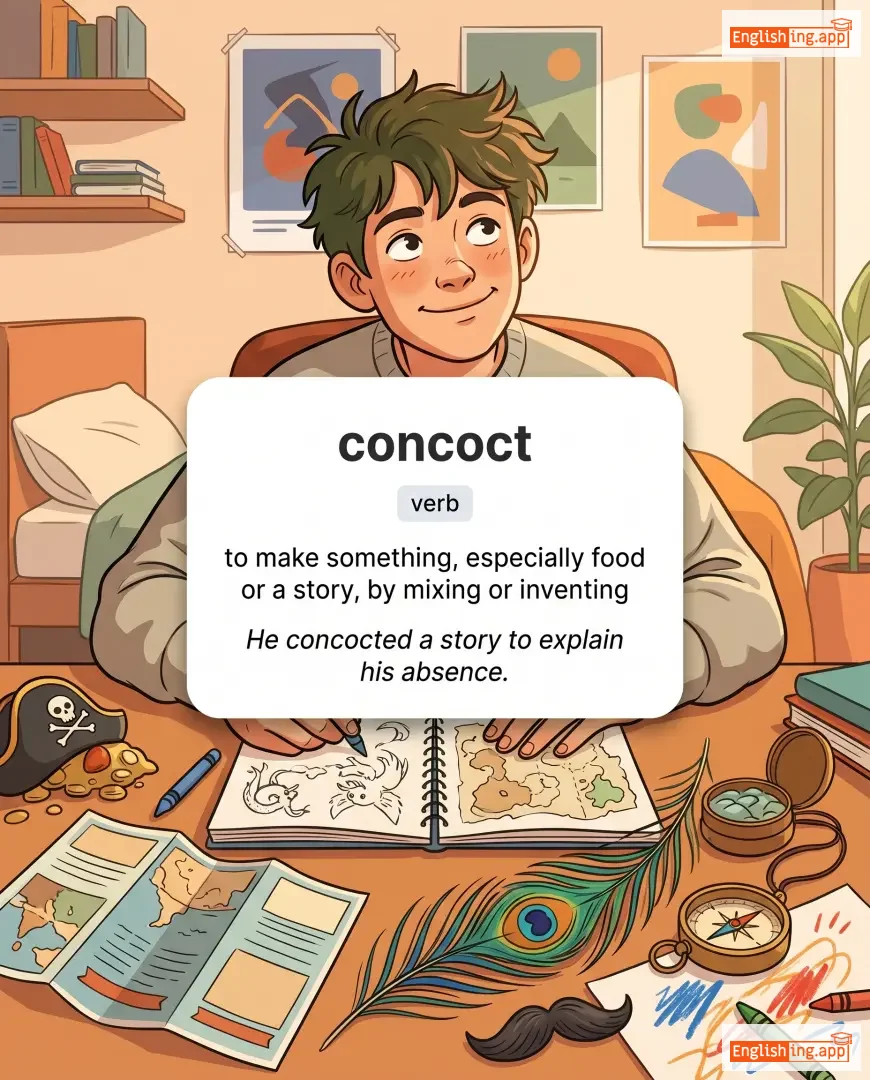
concoct definition card — visual illustration of the meaning
verb
/kənˈkɒkt/
作る、考案する (tsukuru, kouan suru)

to make something, especially food or a story, by mixing or inventing

"He concocted a story to explain his absence."
"彼は自分の不在を説明するために話を作り上げました。" (Kare wa jibun no fuzai wo setsumei suru tame ni hanashi wo tsukuriagemashita.)
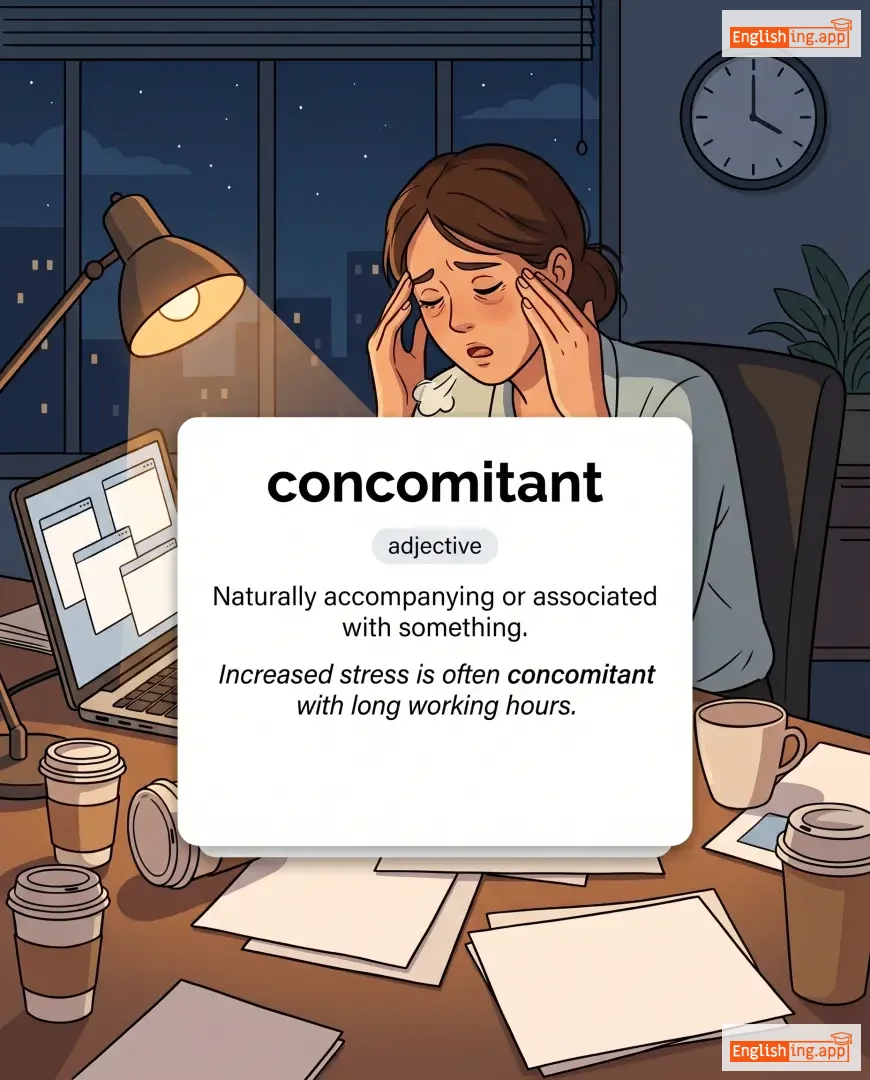
concomitant definition card — visual illustration of the meaning
adjective
/kənˈkɒmɪtənt/
随伴 (zuipan)

Naturally accompanying or associated with something.

"Increased stress is often concomitant with long working hours."
"増加したストレスは長時間の労働時間としばしば伴います。" (Zōka shita sutoresu wa chōjikan no rōdō jikan to shibashiba tomonai masu.)
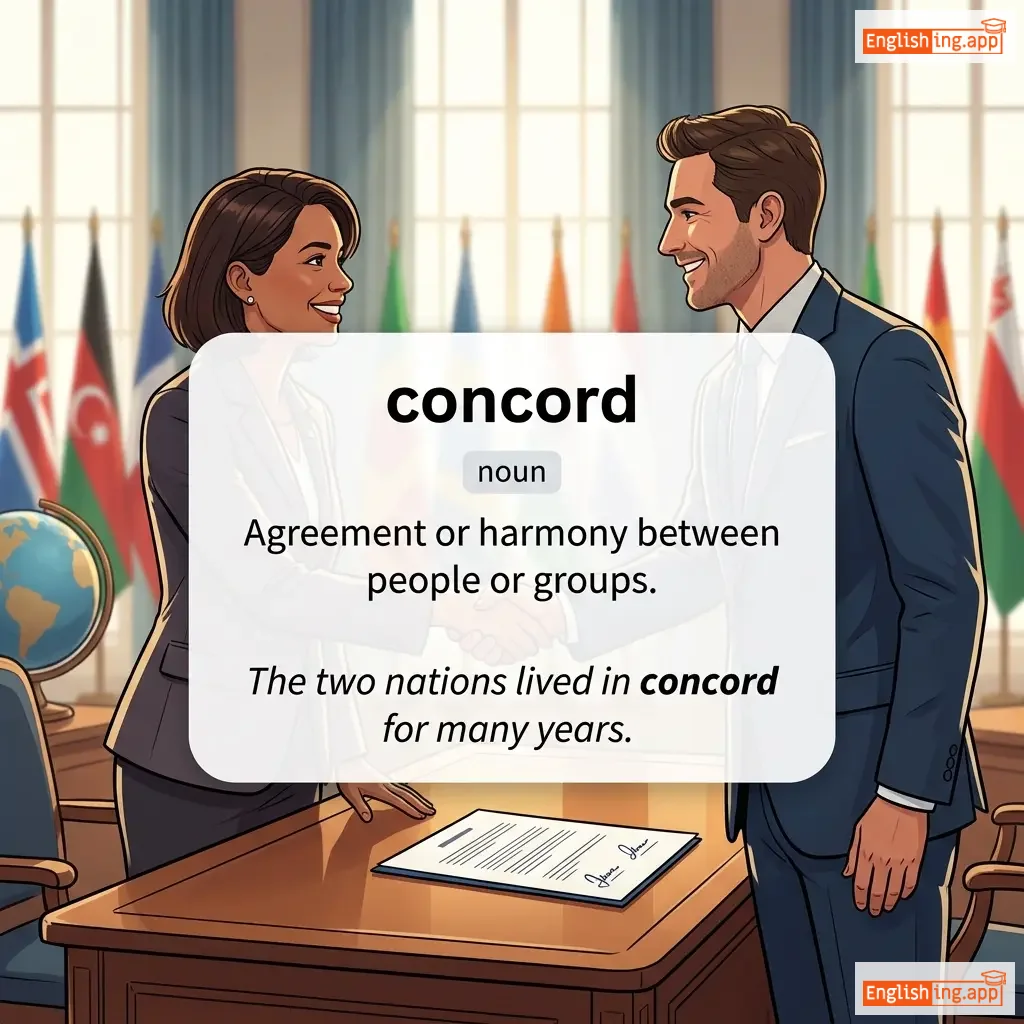
concord definition card — visual illustration of the meaning
noun
/ˈkɒŋ.kɔːd/
調和 (chouwa)

Agreement or harmony between people or groups.

"The two nations lived in concord for many years."

"二国は長年にわたり調和で過ごした。" (Nikoku wa naganen ni watari chouwa de sugoshita.)
noun
/kənˈkɔːrdəns/
一致性 (icchisei)

Agreement; also an alphabetical index of the principal words in a book.

"There is a strong concordance between the two reports."

"二つの報告書には強い一致性があります。" (Futatsu no hōkokusho ni wa tsuyoi icchisei ga arimasu.)
noun
/ˈkɒŋ.kɔː.dæt/
協定 (kyōtei)

An agreement or treaty, especially between the Vatican and a secular government.

"The concordat established the rights of the church within the country."

"そのコンコルダットは国における教会の権利を確立した。" (Sono konkordatto wa kuni ni okeru kyōkai no kenri o kakuritsu shita.)
adjective
/ˈkɒŋkriːt/
具体的な (gutaiteki na)

based on facts, not on ideas or guesses; specific and real

"She gave a concrete example to support her argument."

"彼女は自分の議論を支持するために具体的な例を挙げました。" (Kanojo wa jibun no giron o shiji suru tame ni gutaiteki na rei o agemashita.)
verb
/kənˈkɜːr/
同意する (doui suru)

To agree with someone or something.

"I concur with your opinion on this matter."

"私はこの件に関してあなたの意見に同意します。" (Watashi wa kono ken ni kanshite anata no iken ni doui shimasu.)
noun
/kənˈkʌrəns/
一致 (icchi)

Agreement or union in action, opinion, or occurrence; simultaneous happening of events.

"The project was completed with the concurrence of all departments."
"そのプロジェクトはすべての部門の同意のもとで完了しました。" (Sono purojekuto wa subete no bumon no dōi no moto de kanryō shimashita.)
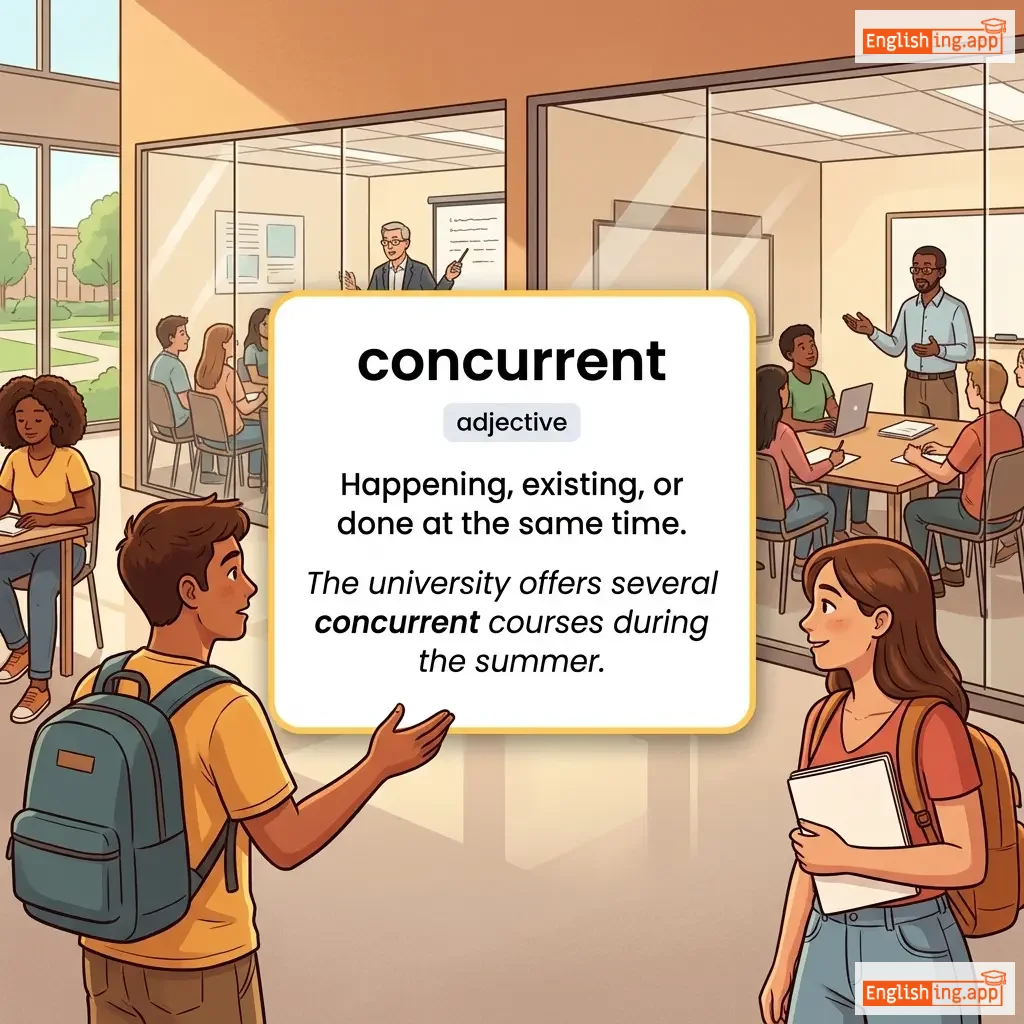
concurrent definition card — visual illustration of the meaning
adjective
/kənˈkʌrənt/
同時発生 (dōji hassei)

Happening, existing, or done at the same time.

"The university offers several concurrent courses during the summer."

"大学は夏にいくつかの同時発生するコースを提供しています。" (Daigaku wa natsu ni ikutsuka no dōji hassei suru kōsu o teikyō shiteimasu.)
noun
/kənˈkʌʃən/
脳震盪 (nōshindō)

A temporary unconsciousness or shock caused by a blow to the head.

"He suffered a concussion after falling from the bike."
"彼は自転車から落ちた後、脳震盪を受けました。" (Kare wa jitensha kara ochita ato, nōshindō o ukemashita.)
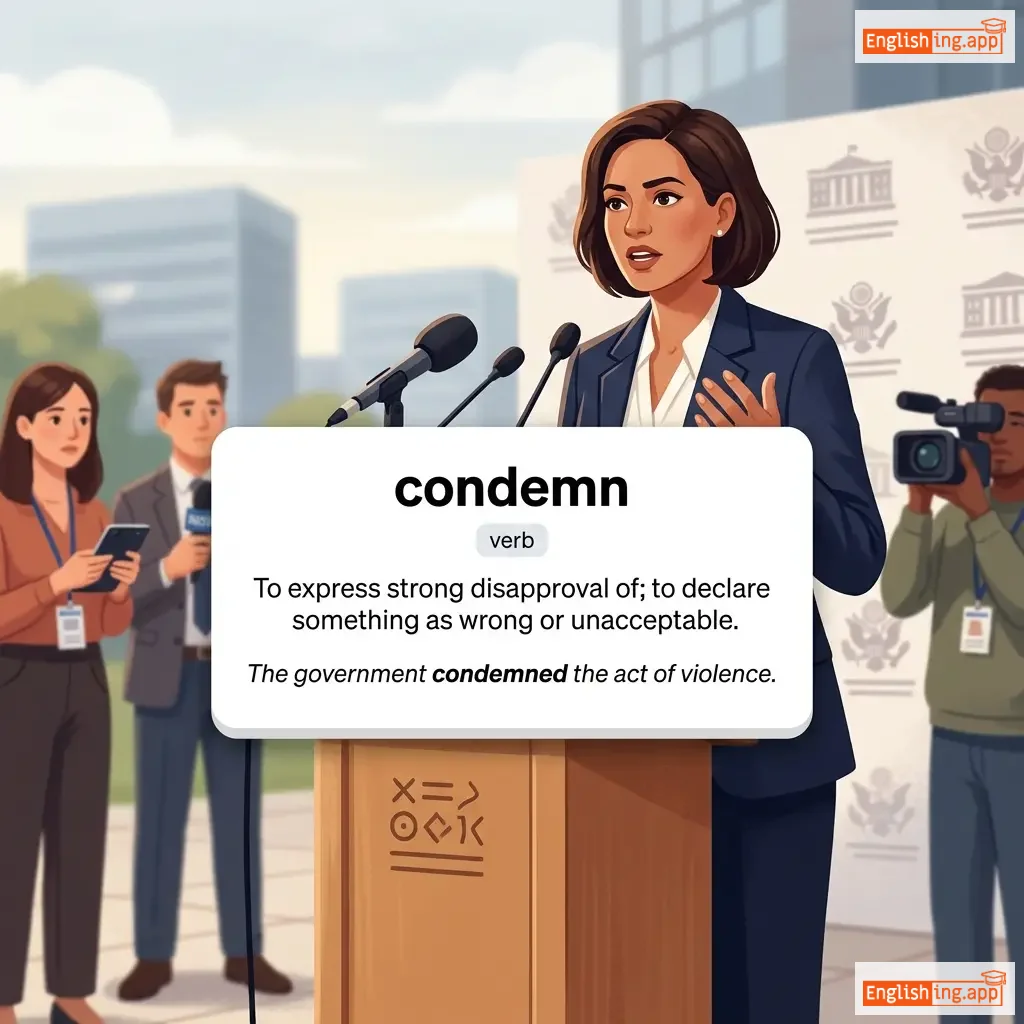
condemn definition card — visual illustration of the meaning
verb
/kənˈdɛm/
非難する (hinan suru)

To express strong disapproval of; to declare something as wrong or unacceptable.

"The government condemned the act of violence."

"政府は暴力行為を非難しました。" (seifu wa bōryoku kōi o hinan shimashita.)