語彙集

英単語辞書 | 単語の意味、定義、例文

verb
/ˌkaʊntərˈækt/
反作用 (hansaku)

to act against something in order to reduce its effect

"The medicine helps counteract the side effects of the treatment."

"その薬は治療の副作用をカウンターアクトするのに役立ちます。" (Sono kusuri wa chiryo no fukusayō o kauntāakuto suru no ni yakudachimasu.)
verb
/ˌkaʊntərˈbæləns/
相殺する (sōsai suru)

to offset or balance the effect of something

"Exercise can counterbalance the negative effects of stress."

"運動はストレスの悪影響を相殺できます。" (Undō wa sutoresu no aku eikyō o sōsai dekimasu.)
noun, verb
/ˈkaʊntərˌtʃɑːrdʒ/
反訴 (hansō)

an opposing charge or accusation; to make an opposing attack

"The lawyer filed a countercharge against the accuser."

"弁護士は告発者に対して反訴を提起しました。" (Bengoshi wa kokuhatsusha ni taishite hanso o teiki shimashita.)
adjective, verb, noun
/ˈkaʊntərfɪt/
偽造 (gizō)

made to look like something genuine in order to deceive

"The police seized a batch of counterfeit currency."

"警察は偽札の一群を押収しました。" (Keisatsu wa gisatsu no ichigun o shūshū shimashita.)
adjective
/ˌkaʊntərɪnˈtuːɪtɪv/
直感に反する (chokkann ni hansuru)

contrary to what one would intuitively expect

"His approach seems counterintuitive but it actually works."

"彼のアプローチは直感に反するように見えますが、実際には効果的です。" (Kare no apurōchi wa chokkann ni hansuru yō ni miemasu ga, jissai ni wa kōka-teki desu.)
verb
/ˌkaʊntərˈmænd/
命令を取り消す (meirei wo torikesu)

to revoke or cancel an order or command

"The general countermanded the previous orders immediately."

"将軍は前の命令を直ちに取り消しました。" (Shōgun wa mae no meirei o tadachi ni torikeshimashita.)
noun
/ˈkaʊntərˌpɑːrt/
対等者 (taiteisha)

a person or thing that corresponds to or has the same function as another

"The CEO met with his counterpart in the partner company."

"CEOはパートナー企業の対等者と会いました。" (CEO wa pātonā kigyō no taiteisha to aimashita.)
noun
/ˈkaʊntərˌpɔɪnt/
対比点 (taibi ten)

an argument, idea, or theme contrasting with another; also a musical term for independent melody

"Her calm attitude was a counterpoint to his anger."
"彼女の落ち着いた態度は彼の怒りの対比点だった。" (Kanojo no ochitsuita taido wa kare no ikari no taibi ten datta.)
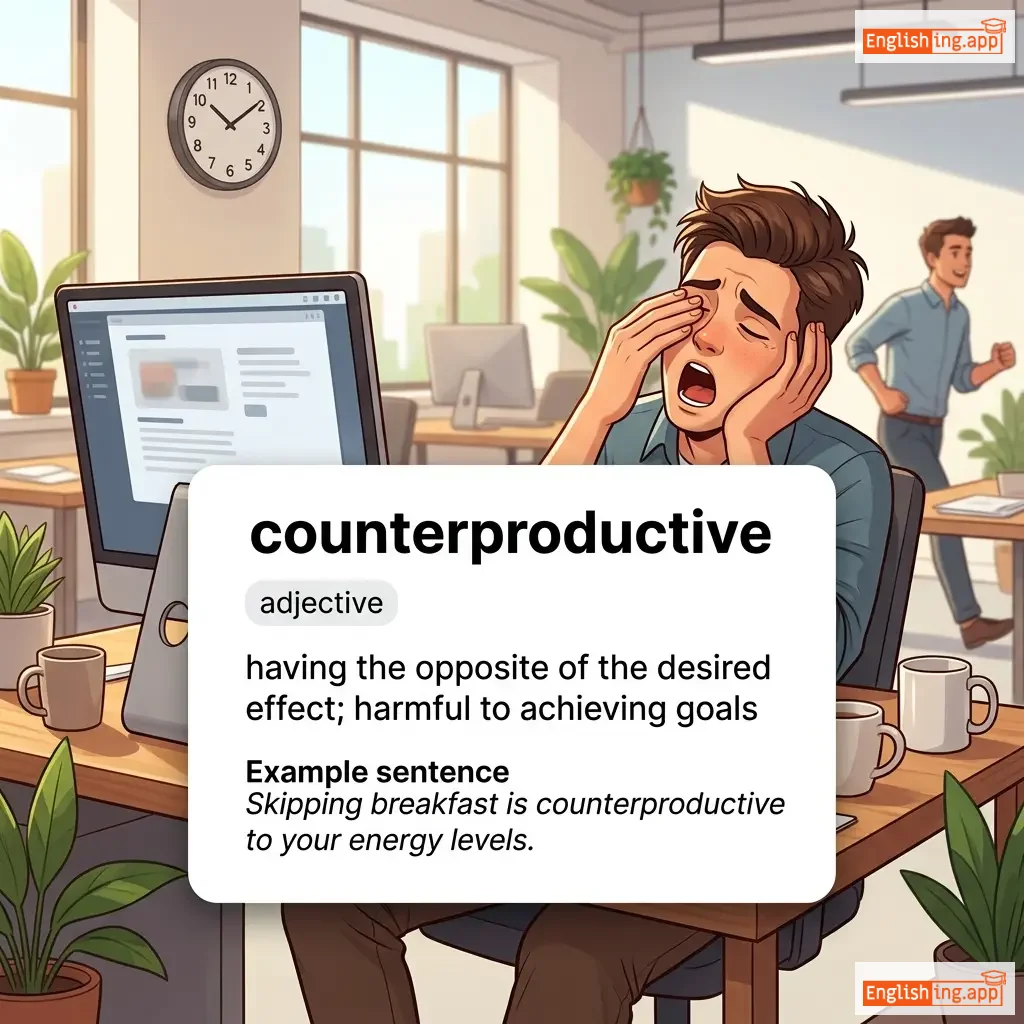
counterproductive definition card — visual illustration of the meaning
adjective
/ˌkaʊntərprəˈdʌktɪv/
逆効果の (gyakukouka no)

having the opposite of the desired effect; harmful to achieving goals

"Skipping breakfast is counterproductive to your energy levels."

"朝食を抜くことはエネルギーレベルに逆効果です。" (Choushoku wo nuku koto wa enerugii reberu ni gyakukouka desu.)
verb
/ˌkaʊntərˈveɪl/
相殺する (sousai suru)

to offset or counteract the effect of something

"The benefits of the new policy countervail its drawbacks."

"新しい政策の利点はその欠点を相殺します。" (Atarashī seisaku no riten wa sono ketten o sōsai shimasu.)
noun
/ˈkaʊntɪŋˌhaʊs/
会計事務所 (kaikei jimusho)

a business office where accounts are kept and financial transactions are managed

"The merchant spent most of his day in the counting-house reviewing ledgers."

"商人は一日中、会計事務所で帳簿を確認して過ごしました。" (Shōnin wa ichinichijū, kaikei jimusho de chōbo o kakunin shite sugosimashita.)
adjective
/ˈkaʊntləs/
数えきれない (kazoekirenai)

too many to be counted; innumerable

"There are countless stars in the sky."
"空には無数の星があります。" (Sora ni wa musū no hoshi ga arimasu.)
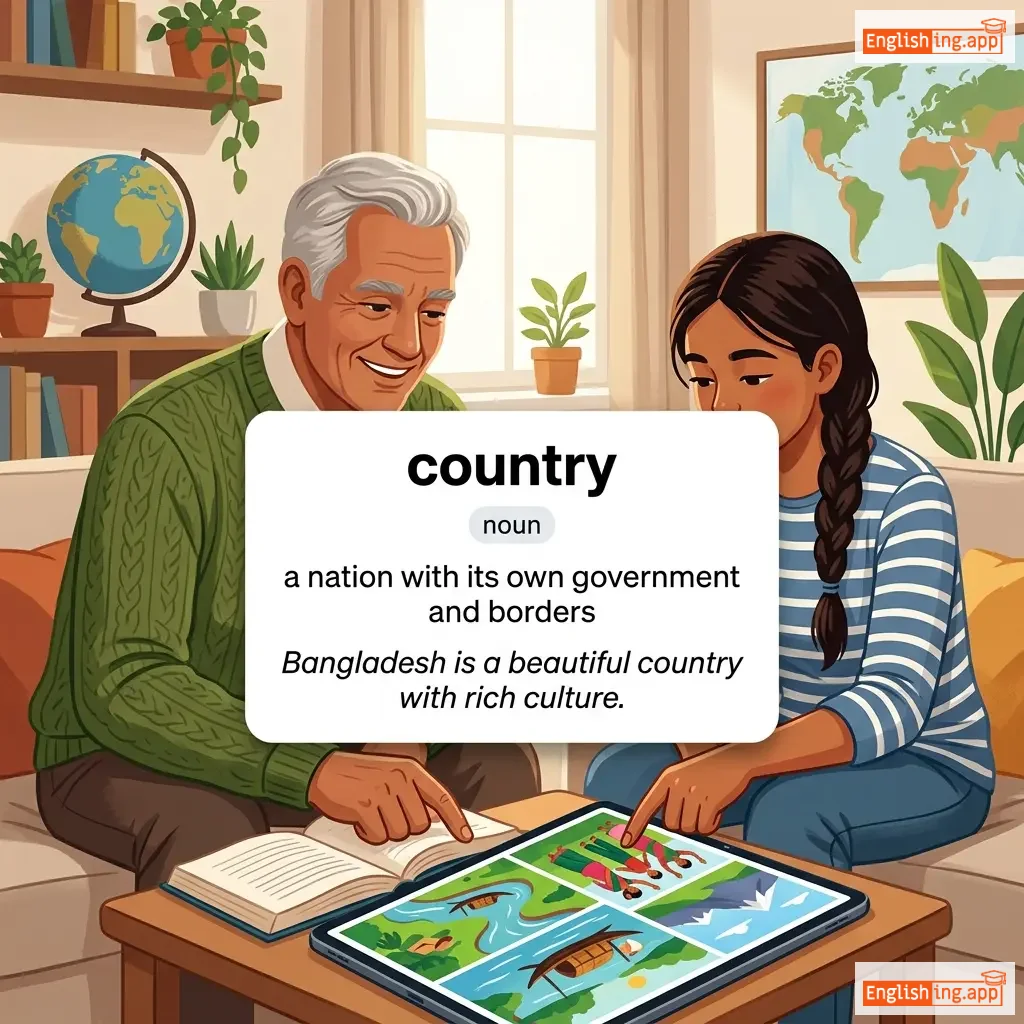
country definition card — visual illustration of the meaning
noun
/ˈkʌn.tri/
(kuni)

a nation with its own government and borders

"Bangladesh is a beautiful country with rich culture."

"バングラデシュは豊かな文化を持つ美しい国です。" (Banguradeshu wa yutakana bunka o motsu utsukushii kuni desu.)
noun
/ˈkʌntrɪmən/
同国人 (doukokujin)

a person from one's own country or rural area

"He was proud to meet a fellow countryman at the international conference."

"彼は国際会議で同国人に会えて誇りに思った。" (Kare wa kokusai kaigi de doukokujin ni aete hokori ni omotta.)
noun
/ˈkʌntrisaɪd/
田舎 (inaka)

land outside cities and towns; rural areas with farms, fields, and villages

"She enjoys the peace and beauty of the countryside."

"彼女は田舎の静けさと美しさを楽しんでいる。" (kanojo wa inaka no shizukesa to utsukushisa o tanoshinde iru)
noun
/ˈkaʊnti/
(gun)

A territorial division within a country, typically a region with its own local government.

"She grew up in a small county in northern England."

"彼女はイギリス北部の小さな郡で育ちました。" (Kanojo wa Igirisu hokubu no chiisana gun de sodachimashita.)
noun
/kuː/
クーデター (kūdetā)

a sudden, decisive action that brings about a change, especially in government

"The military staged a coup to overthrow the existing regime."

"軍隊は現政権を倒すためにクーデターを起こしました。" (Guntai wa gen seiken o taosu tame ni kūdetā o okoshimashita.)
noun
/ˈkʌpəl/
カップル (kappuru)

two people or things considered together; a pair

"They make a lovely couple and have been married for five years."
"彼らは素敵なカップルで、5年間結婚しています。" (Karera wa suteki na kappuru de, go-nenkan kekkon shiteimasu.)
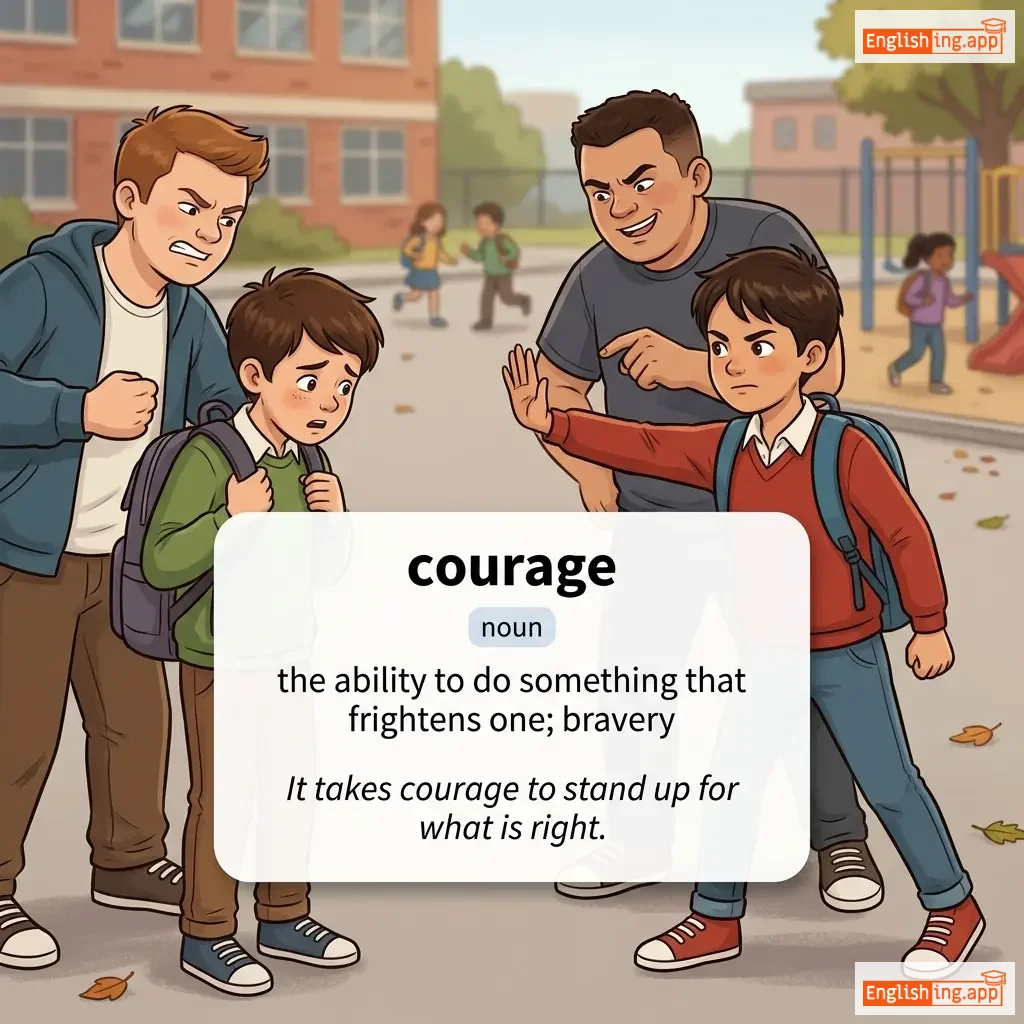
courage definition card — visual illustration of the meaning
noun
/ˈkʌrɪdʒ/
勇気 (yūki)

the ability to do something that frightens one; bravery

"It takes courage to stand up for what is right."

"正しいことを守るには勇気が必要です。" (Tadashī koto o mamoru ni wa yūki ga hitsuyōdesu.)
adjective
/kəˈreɪdʒəs/
勇敢な (yūkan na)

having or showing bravery; able to face danger or difficulty

"The firefighter was courageous as he rescued the children from the burning building."

"消防士は、燃えている建物から子供たちを救出したとき、勇敢でした。" (Shōbōshi wa, moete iru tatemono kara kodomotachi o kyūshutsu shita toki, yūkan deshita.)
noun
/ˈkʊriər/
宅配便 (takuhai-bin)

a person or company that delivers messages, packages, or mail

"The courier delivered the documents on time."

"クーリエは時間通りに書類を配達しました。" (Kūrie wa jikan-dōri ni shorui o haitatsu shimashita.)
noun
/kɔːrs/
コース、道または一連の教育レッスン (kōsu, michi matawa ichiren no kyōiku ressun)

a direction, path, or a set of educational lessons

"She enrolled in a computer science course."

"彼女はコンピュータサイエンスのコースに登録しました。" (Kanojo wa konpyūta saiensu no kōsu ni tōroku shimashita.)
noun
/kɔːrs flaʊər/
粗挽き小麦粉 (aragi komugiko)

coarsely ground flour with larger particles, typically used for baking bread

"She used course flour to make homemade bread with a rustic texture."

"彼女は手作りのパンを作るために、素朴な質感を持つコースフラワーを使用しました。" (Kanojo wa tedzukuri no pan wo tsukuru tame ni, soboku na shitsukan wo motsu kōsu furawā wo shiyou shimashita.)
noun
/ˈkɔːrsər/
速い馬または狩猟馬 (hayai uma matawa shuryou uma)

a swift horse or a hunting horse

"The knight rode a fast courser into battle."
"騎士は速いコーサーに乗って戦いに向かった。" (Kishi wa hayai kōsā ni notte tatakai ni mukatta.)
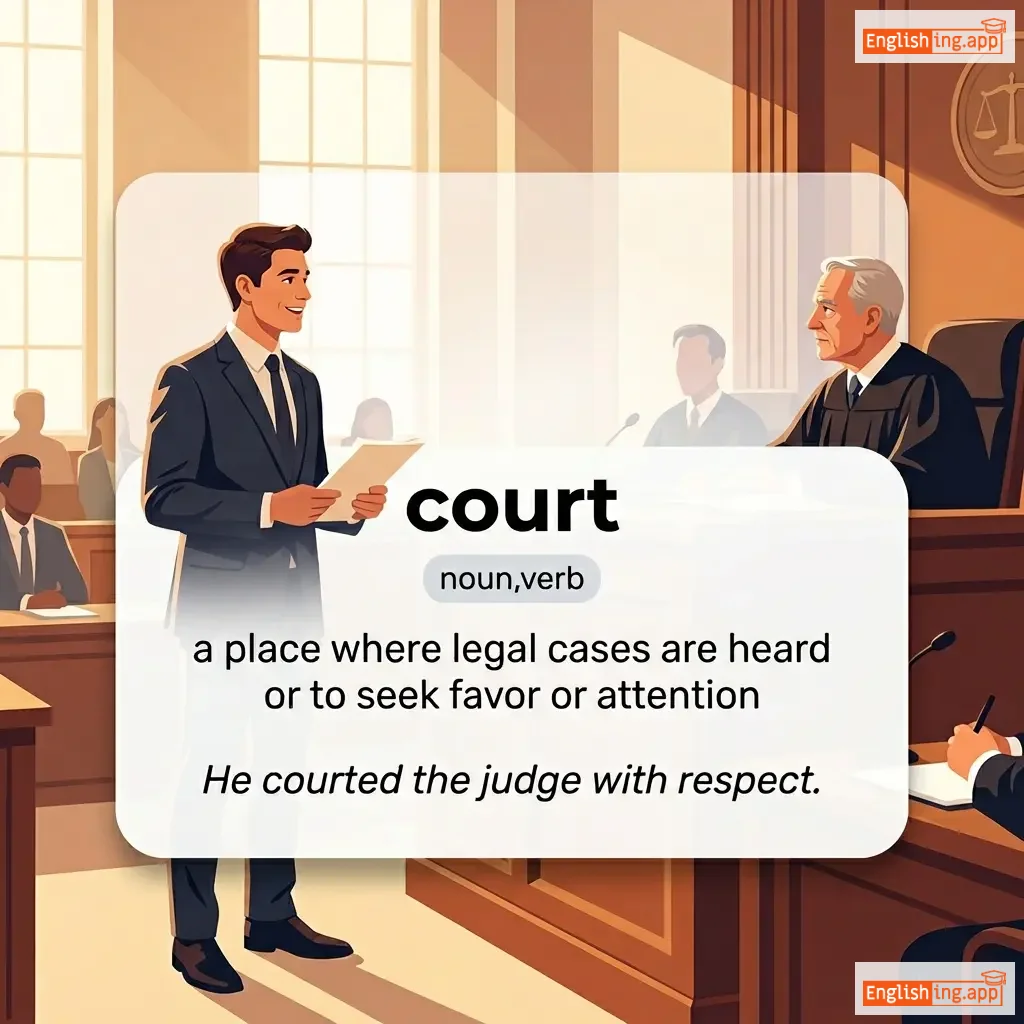
court definition card — visual illustration of the meaning
noun,verb
/kɔːrt/
裁判所または注目や好意を求める場所 (saibansho matawa chumoku ya koui wo motomeru basho)

a place where legal cases are heard or to seek favor or attention

"He courted the judge with respect."

"彼は裁判官に敬意を示して求婚した。" (Kare wa saibankan ni keii wo shimeshite kyuukon shita.)
adjective
/ˈkɜːrtiəs/
礼儀正しい (reigi tadashii)

polite, respectful, or considerate in manner

"The staff at the hotel were very courteous to all guests."

"ホテルのスタッフはすべてのゲストに非常に礼儀正しく接しました。" (Hoteru no sutaffu wa subete no gesuto ni hijou ni reigi tadashiku sesshimashita.)
noun
/ˈkɜːrtəsi/
礼儀、優しさ、または特権 (reigi, yasashisa, matawa tokken)

polite behavior or a polite action; a favor or privilege

"He opened the door as a courtesy."

"彼は礼儀としてドアを開けました。" (Kare wa reigi to shite doa o akemashita.)
noun
/ˈkɔːtruːm/

a room in which legal cases are heard and decided by a judge

"The witness was called to testify in the courtroom."

noun
/ˈkʌzn/
いとこ (itoko)

A child of one's uncle or aunt.

"My cousin is coming to visit us this weekend."

"私のいとこが今週末に遊びに来ます。" (Watashi no itoko ga konshūmatsu ni asobi ni kimasu.)
🧙‍♀️

coven (コヴン)

noun
/ˈkʌvən/
魔女の集まり (majo no atsumari)

a group or gathering of witches

"The witches met secretly in a coven in the forest."

"魔女たちは森の中で魔女の集まりに密かに集まりました。" (Majo-tachi wa mori no naka de majo no atsumari ni hisokani atsumarimashita.)
noun
/ˈkʌvənənt/
契約 (keiyaku)

a formal agreement or promise, often legally binding

"The landlord and tenant signed a covenant to maintain the property."

"家主と借家人は財産を維持するために契約に署名しました。" (Yanushi to shakuya-nin wa zaisan o iji suru tame ni keiyaku ni shomei shimashita.)
cover definition card — visual illustration of the meaning
verb
/ˈkʌvər/
覆う (ōu)

to place something over or on top of something else to protect or hide it

"She used a blanket to cover the sleeping child."

"彼女は寝ている子供をカバーするために毛布を使った。" (Kanojo wa nete iru kodomo o kābā suru tame ni mōfu o tsukatta.)
noun
/ˈkʌvərɪdʒ/
報道 (hōdō)

The extent or scope of something, such as insurance protection or media reporting.

"The news channel provided extensive coverage of the event."
"ニュースチャンネルはそのイベントを広範囲に報道しました。" (Nyūsu channeru wa sono ibento o kōhan'i ni hōdō shimashita.)
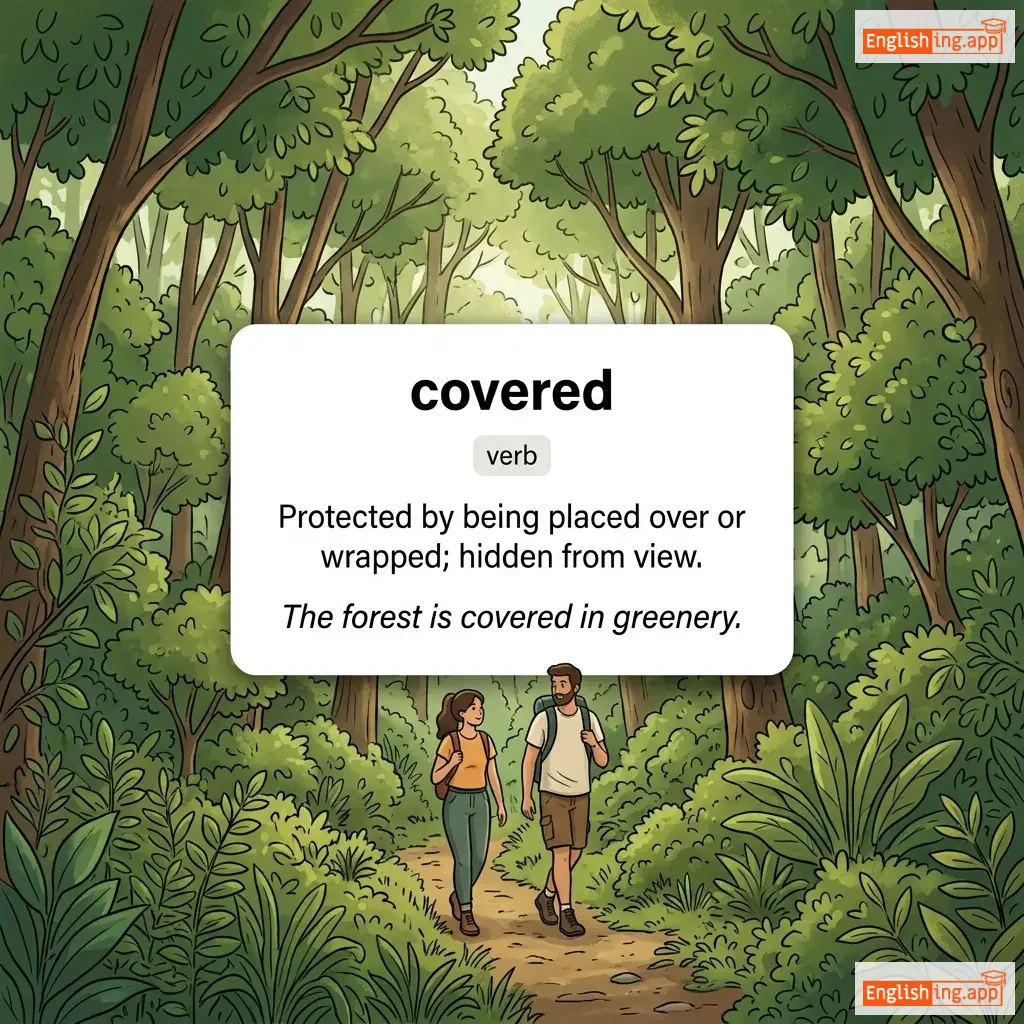
covered definition card — visual illustration of the meaning
verb
/ˈkʌv.ərd/
覆われた (ōwareta)

Protected by being placed over or wrapped; hidden from view.

"The forest is covered in greenery."

"森は緑で覆われています。" (Mori wa midori de ōwareteimasu.)
covert definition card — visual illustration of the meaning
adjective
/ˈkoʊvərt/
秘密 (himitsu)

hidden, secret, or not openly acknowledged

"The spy conducted a covert operation behind enemy lines."

"スパイは敵の線の後ろで秘密の作戦を行った。" (Supai wa teki no sen no ushiro de himitsu no sakusen o okonatta.)
verb
/ˈkʌvət/
切望する (sesoku suru)

to desire something belonging to someone else

"He coveted his neighbor's new car."
"彼は隣人の新しい車を欲しがっていました。" (Kare wa rinjin no atarashii kuruma o hoshigatte imashita.)
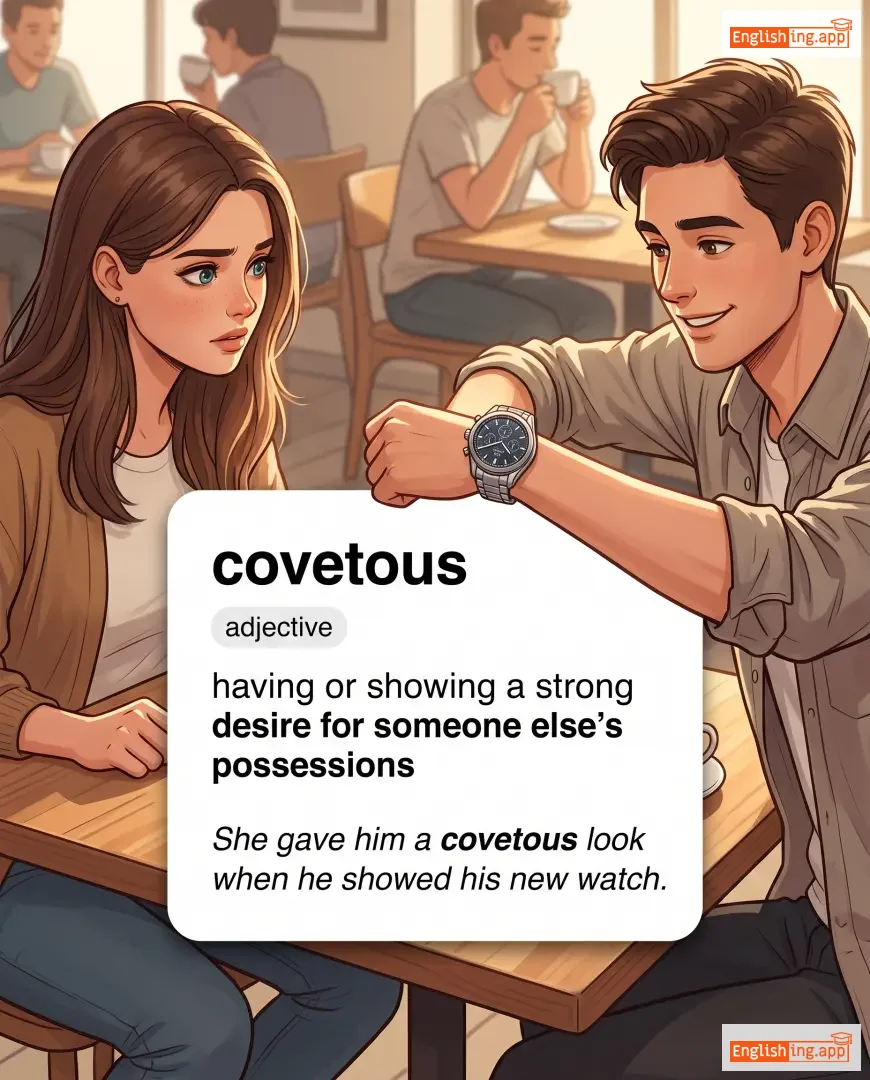
covetous definition card — visual illustration of the meaning
adjective
/ˈkʌvətəs/
欲張り (yokubari)

having or showing a strong desire for someone else's possessions

"She gave him a covetous look when he showed his new watch."

"彼は新しい時計を見せたとき、彼女は欲しがる目を向けた。" (Kare wa atarashī tokei o miseta toki, kanojo wa hoshigaru me o muketa.)
noun
/ˈkʌvi/
小さな鳥の群れ (chiisana tori no mure)

a small group of birds, especially partridges or quails

"A covey of quails flew across the field."

"コヴィのウズラの群れが畑を飛び越えた。" (Kovi no uzura no mure ga hatake o tobikoeta.)
🐄

Cow

noun
/kaʊ/

a large domesticated bovine animal kept for milk or meat

"The farmer milked the cow early in the morning."

noun
/ˈkaʊ.ərd/
臆病者 (okubyou-sha)

a person who lacks the courage to do or endure dangerous or unpleasant things

"He called himself a coward for not standing up to the bully."

"彼はいじめっ子に立ち向かわなかったので、自分を臆病者だと言った。" (Kare wa ijimekko ni tachimukawanakatta node, jibun o okubyou-sha da to itta.)
noun
/ˈkaʊərdɪs/
臆病 (okubyō)

lack of courage; behavior showing fear

"His cowardice prevented him from speaking up."

"彼の臆病は彼が発言するのを妨げた。" (Kare no okubyō wa kare ga hatsugen suru no o samatage ta.)
noun
/ˈkaʊbɔɪ/
カウボーイ (kaubōi)

a man, typically one on horseback, who herds and tends cattle

"The cowboy rode across the plains."

"カウボーイは平原を横断していた。" (Kaubōi wa heigen o ōdan shite ita.)
verb
/ˈkaʊər/
恐怖で縮こまる (kyoufu de chijikomareru)

to crouch down in fear

"The child cowered behind the sofa during the thunderstorm."

"子供は雷の間、ソファの後ろで恐怖で縮こまっていた。" (Kodomo wa kaminari no aida, sofa no ushiro de kyoufu de chijikomatte ita.)
noun
/ˈkɒksweɪn/
舵手 (dasshu)

the person in charge of navigating and steering a boat, especially a racing or small boat

"The coxswain shouted instructions to the rowing team."
"コックスウェインはローイングチームに指示を出した。" (Kokkusuwein wa rōingu chīmu ni shiji o dashita.)
adjective
/kɔɪ/
控えめな, 内気な (hikaeme na, uchiki na)

reluctant to give details or reveal feelings; shy or reserved

"She gave a coy smile when asked about her plans."

"彼女は自分の計画について聞かれたとき、控えめな笑顔を見せた。" (Kanojo wa jibun no keikaku ni tsuite kikareta toki, hikaeme na egao wo miseta.)
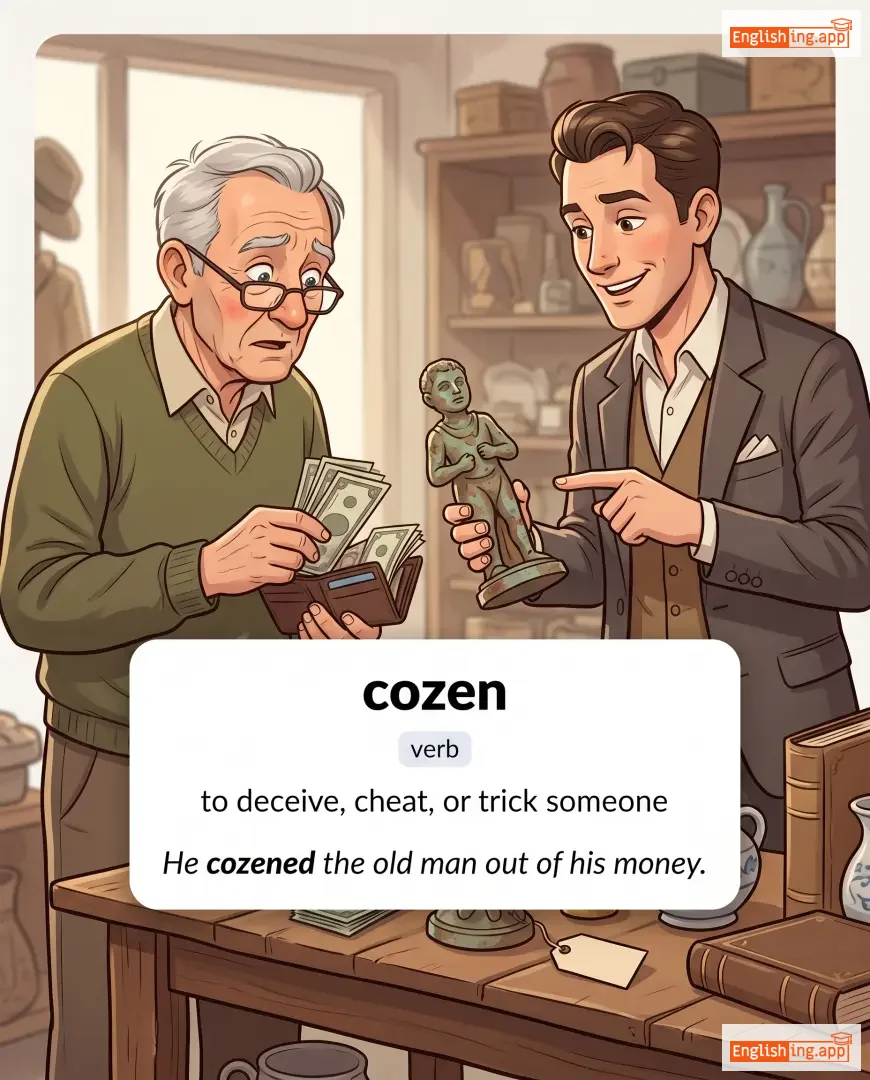
cozen definition card — visual illustration of the meaning
verb
/ˈkʌzən/
だます, 騙す (damasu, damasu)

to deceive, cheat, or trick someone

"He cozened the old man out of his money."

"彼は老人をだましてお金を取った。" (Kare wa rōjin wo damashite okane wo totta.)
adjective
/ˈkoʊzi/
居心地の良い (kyōshindeyoi)

giving a feeling of comfort, warmth, and relaxation

"We sat in a cozy little café on a rainy day."

"雨の日に小さな居心地の良いカフェで座っていました。" (Ame no hi ni chiisana kyōshindeyoi kafe de suwatte imashita.)
noun
/kræb/
カニ (kani)

a crustacean with a broad carapace, stalked eyes, and five pairs of legs, the first pair of which are modified as pincers

"The crab scuttled sideways across the sand."

"カニは砂の上を横向きに這って行った。" (Kani wa suna no ue o yokomuki ni hatte itta.)
adjective
/ˈkræbɪd/
読みにくい、機嫌が悪い (yominikui, kigen ga warui)

difficult to read or understand; ill-tempered

"His handwriting was crabbed and almost illegible."

"彼の手書きは読みにくく、ほとんど判読不能だった。" (Kare no tegaki wa yominikukute, hotondo handoku funō datta.)
verb
/kræk/
幸せ (shiawase)

To break or cause to break without complete separation; to make a sharp sound.

"The glass cracked when it was dropped on the floor."

"彼女は賞を受け取ったとき、幸せを隠すことができませんでした。" (Kanojo wa shō o uketotta toki, shiawase o kakusu koto ga dekimasen deshita.)