词汇表

英语词汇词典 | 单词含义、定义和示例

verb
/ˌkaʊntərˈækt/
反作用 (fǎn zuòyòng)

to act against something in order to reduce its effect

"The medicine helps counteract the side effects of the treatment."

"这药有助于抵消治疗的副作用。" (Zhè yào yǒu zhù yú dǐxiāo zhìliáo de fùzuòyòng.)
verb
/ˌkaʊntərˈbæləns/
抵消 (dǐxiāo)

to offset or balance the effect of something

"Exercise can counterbalance the negative effects of stress."

"运动可以抵消压力的负面影响。" (Yùndòng kěyǐ dǐxiāo yālì de fùmiàn yǐngxiǎng.)
noun, verb
/ˈkaʊntərˌtʃɑːrdʒ/
反诉 (fǎnsù)

an opposing charge or accusation; to make an opposing attack

"The lawyer filed a countercharge against the accuser."

"律师对指控者提起了反诉。" (Lǜshī duì zhǐkòng zhě tíqǐle fǎnsù.)
adjective, verb, noun
/ˈkaʊntərfɪt/
伪造的 (wèizào de)

made to look like something genuine in order to deceive

"The police seized a batch of counterfeit currency."

"警方查获了一批伪钞。" (Jǐngfāng cháhuòle yī pī wěichāo.)
adjective
/ˌkaʊntərɪnˈtuːɪtɪv/
反直觉的 (fǎn zhíjué de)

contrary to what one would intuitively expect

"His approach seems counterintuitive but it actually works."

"他的做法看起来很反直觉,但实际上很有效。" (Tā de zuòfǎ kàn qǐlái hěn fǎn zhíjué, dàn shíjì shang hěn yǒuxiào.)
verb
/ˌkaʊntərˈmænd/
撤销命令 (chèxiāo mìnglìng)

to revoke or cancel an order or command

"The general countermanded the previous orders immediately."

"将军立即取消了先前的命令。" (Jiāngjūn lìjí qǔxiāo le xiānqián de mìnglìng.)
noun
/ˈkaʊntərˌpɑːrt/
对口人 (duìkǒurén)

a person or thing that corresponds to or has the same function as another

"The CEO met with his counterpart in the partner company."

"首席执行官与合作公司中的对口人会面。" (Shǒuxí zhíxíng guān yǔ hézuò gōngsī zhōng de duìkǒurén huìmiàn.)
noun
/ˈkaʊntərˌpɔɪnt/
对比点 (duìbì diǎn)

an argument, idea, or theme contrasting with another; also a musical term for independent melody

"Her calm attitude was a counterpoint to his anger."

"她的平静态度是他愤怒的对比点。" (Tā de píngjìng tàidù shì tā fèn nù de duìbì diǎn.)
counterproductive definition card — visual illustration of the meaning
adjective
/ˌkaʊntərprəˈdʌktɪv/
适得其反的 (shideqifan de)

having the opposite of the desired effect; harmful to achieving goals

"Skipping breakfast is counterproductive to your energy levels."

"跳过早餐对你的能量水平是适得其反的。" (Tiaoguo zaocan dui ni de nengliang shuiping shi shideqifan de.)
verb
/ˌkaʊntərˈveɪl/
抵消 (dǐxiāo)

to offset or counteract the effect of something

"The benefits of the new policy countervail its drawbacks."

"新政策的好处抵消了它的缺点。" (Xīn zhèngcè de hǎochù dǐxiāo le tā de quēdiǎn.)
noun
/ˈkaʊntɪŋˌhaʊs/
会计办公室 (kuàijì bàngōngshì)

a business office where accounts are kept and financial transactions are managed

"The merchant spent most of his day in the counting-house reviewing ledgers."

"商人一天的大部分时间都在会计办公室检查账簿。" (Shāngrén yītiān de dà bùfen shíjiān dōu zài kuàijì bàngōngshì jiǎnchá zhàngbù.)
adjective
/ˈkaʊntləs/
数不胜数 (shǔ bù shèng shǔ)

too many to be counted; innumerable

"There are countless stars in the sky."
"天上有数不清的星星。" (Tiān shàng yǒu shù bù qīng de xīng xīng.)
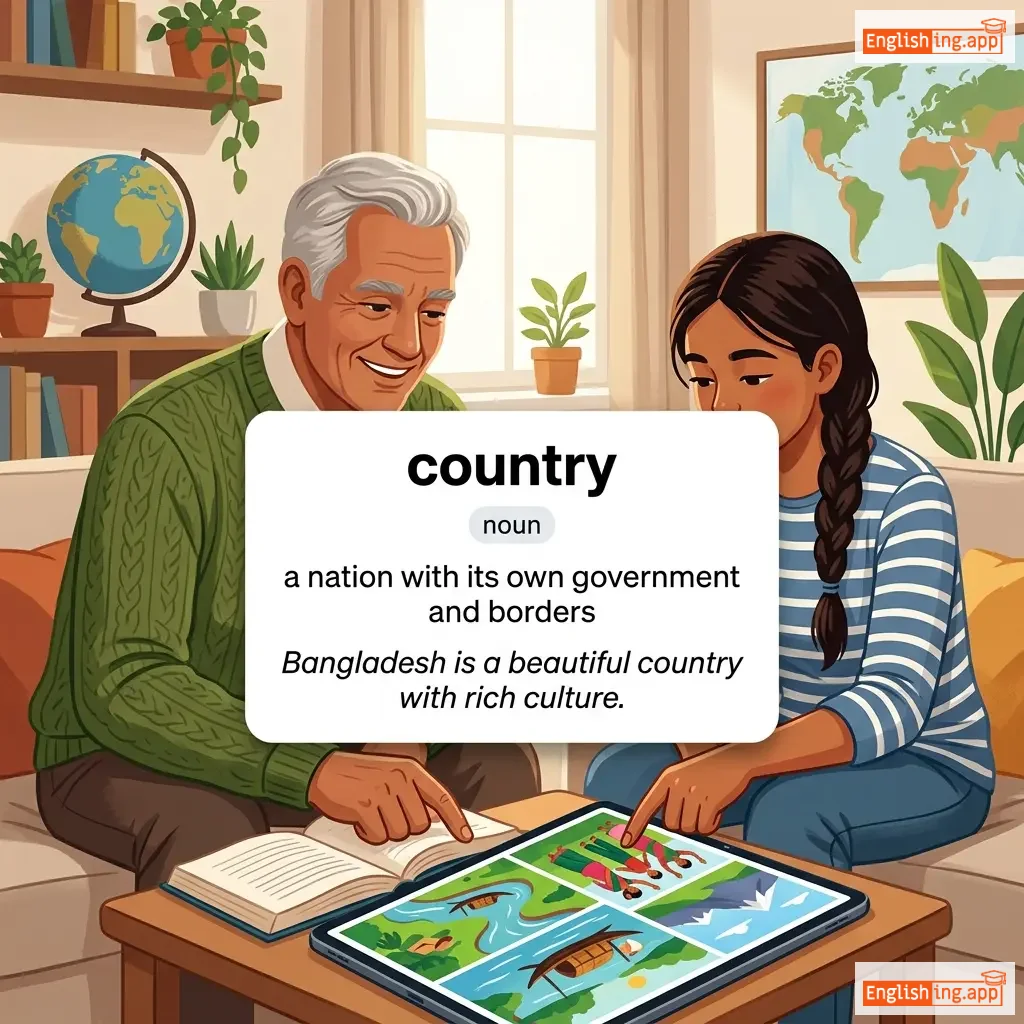
country definition card — visual illustration of the meaning
noun
/ˈkʌn.tri/
国家 (guójiā)

a nation with its own government and borders

"Bangladesh is a beautiful country with rich culture."

"孟加拉国是一个拥有丰富文化的美丽国家。" (Mèngjiālāguó shì yī gè yǒu fēngfù wénhuà de měilì guójiā.)
noun
/ˈkʌntrɪmən/
同胞 (tongbao)

a person from one's own country or rural area

"He was proud to meet a fellow countryman at the international conference."

"他在国际会议上遇到一个同胞时感到自豪。" (Ta zai guoji huiyi shang yudao yige tongbao shi gandao zihao.)
noun
/ˈkʌntrisaɪd/
乡村 (xiangcun)

land outside cities and towns; rural areas with farms, fields, and villages

"She enjoys the peace and beauty of the countryside."

"她享受乡村的宁静和美丽。" (ta xiangshou xiangcun de ningjing he meili)
noun
/ˈkaʊnti/
(xian)

A territorial division within a country, typically a region with its own local government.

"She grew up in a small county in northern England."

"她在英格兰北部的一个小县长大。" (Ta zai Yinggelan beibu de yi ge xiao xian zhang da.)
noun
/kuː/
政变 (zhèngbiàn)

a sudden, decisive action that brings about a change, especially in government

"The military staged a coup to overthrow the existing regime."

"军队发动了一次政变,推翻了现有政权。" (Jūn duì fādòngle yī cì zhèngbiàn, tuīfānle xiànyǒu zhèngquán.)
noun
/ˈkʌpəl/
一对 (yī duì)

two people or things considered together; a pair

"They make a lovely couple and have been married for five years."
"他们是一个可爱的情侣,已经结婚五年了。" (Tāmen shì yīgè kě'ài de qínglǚ, yǐjīng jiéhūn wǔ nián le.)
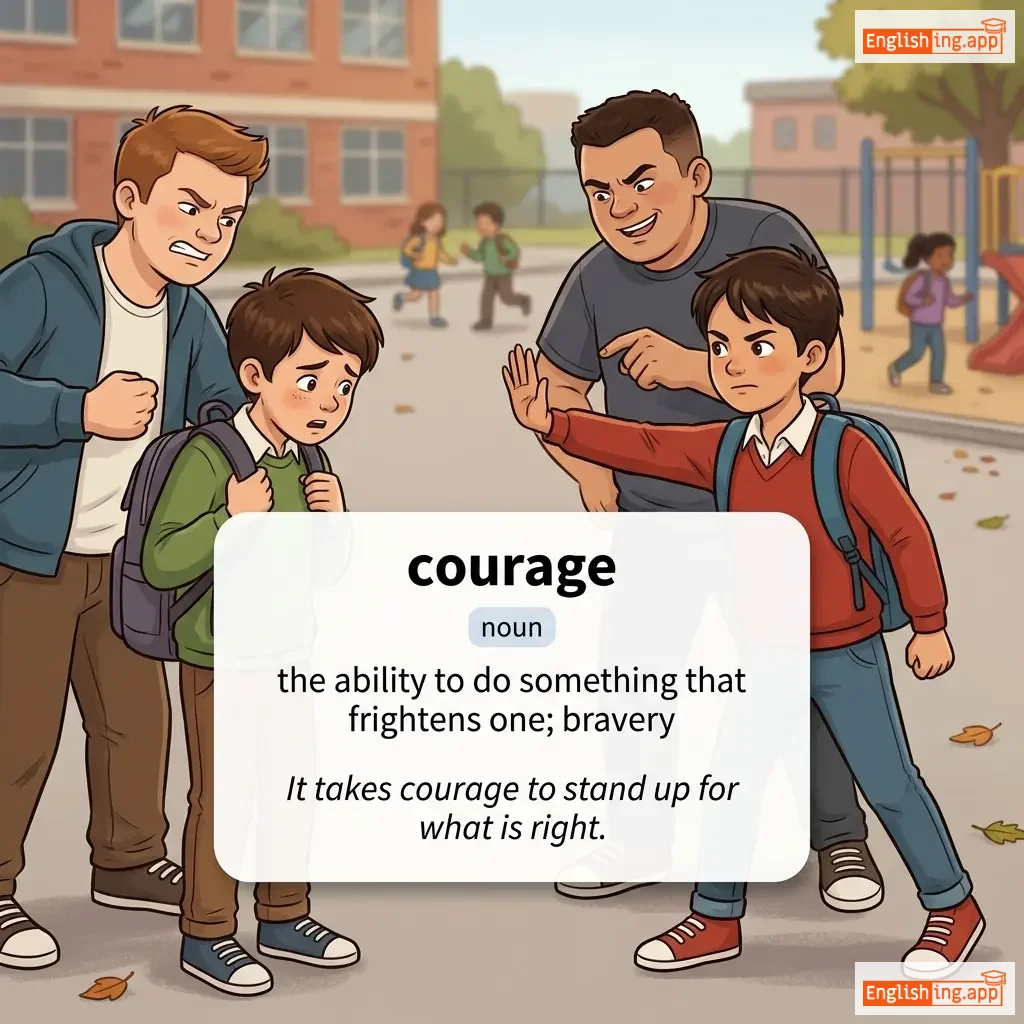
courage definition card — visual illustration of the meaning
noun
/ˈkʌrɪdʒ/
勇气 (yongqi)

the ability to do something that frightens one; bravery

"It takes courage to stand up for what is right."

"为了为正义站起来,需要勇气。" (Wei le wei zhengyi zhan qilai, xuyao yongqi.)
adjective
/kəˈreɪdʒəs/
勇敢的 (yǒng gǎn de)

having or showing bravery; able to face danger or difficulty

"The firefighter was courageous as he rescued the children from the burning building."

"消防员在从着火的建筑物中救出孩子们时表现出了勇气。" (Xiāo fáng yuán zài cóng zháo huǒ de jiàn zhú wù zhōng jiù chū hái zǐ men shí biǎo xiàn chū le yǒng qì.)
noun
/ˈkʊriər/
快递员 (kuaidi yuan)

a person or company that delivers messages, packages, or mail

"The courier delivered the documents on time."

"快递员准时交付了文件。" (Kuàidìyuán zhǔnshí jiāofùle wénjiàn.)
noun
/kɔːrs/
课程,路径或一组教育课程 (kecheng, luxian huo yizu jiaoyu kecheng)

a direction, path, or a set of educational lessons

"She enrolled in a computer science course."

"她报名参加了计算机科学课程。" (Ta baoming canjia le jisuanji kexue kecheng.)
noun
/kɔːrs flaʊər/
粗面粉 (cu mian fen)

coarsely ground flour with larger particles, typically used for baking bread

"She used course flour to make homemade bread with a rustic texture."

"她使用了粗面粉做了一个有乡村质感的自制面包。" (Ta shiyong le cu mianfen zuo le yi ge you xiangcun zhigan de zizhizhi mianbao.)
noun
/ˈkɔːrsər/
快速马或猎马 (kuài sù mǎ huò liè mǎ)

a swift horse or a hunting horse

"The knight rode a fast courser into battle."

"骑士骑着一匹快速的科赛尔进入战斗。" (Qíshì qízhe yī pī kuài sù de kē sài ěr jìnrù zhàndòu.)
court definition card — visual illustration of the meaning
noun,verb
/kɔːrt/
法院或寻求关注或偏爱的地方 (fayuan huo xunqiu guanzhu huo pian'ai de difang)

a place where legal cases are heard or to seek favor or attention

"He courted the judge with respect."

"他以尊重的态度追求法官。" (Ta yi zunzhong de taidu zhuīqiú fǎguān.)
adjective
/ˈkɜːrtiəs/
有礼貌的 (yǒu lǐmào de)

polite, respectful, or considerate in manner

"The staff at the hotel were very courteous to all guests."

"酒店的员工对所有客人都非常有礼貌。" (Jiudian de yuangong dui suoyou keren dou feichang you limao.)
noun
/ˈkɜːrtəsi/
礼貌, 谦逊或特权 (lǐmào, qiānxùn huò tèquán)

polite behavior or a polite action; a favor or privilege

"He opened the door as a courtesy."

"他出于礼貌开了门。" (Tā chū yú lǐmào kāi le mén.)
noun
/ˈkɔːtruːm/

a room in which legal cases are heard and decided by a judge

"The witness was called to testify in the courtroom."

noun
/ˈkʌzn/
堂兄/堂弟/表兄/表弟 (tángxiōng/tángdì/biǎoxiōng/biǎodì)

A child of one's uncle or aunt.

"My cousin is coming to visit us this weekend."

"我的堂兄这个周末要来拜访我们。" (Wǒ de tángxiōng zhège zhōumò yào lái bàifǎng wǒmen.)
🧙‍♀️

coven (科文)

noun
/ˈkʌvən/
女巫集会 (nǚwū jíhuì)

a group or gathering of witches

"The witches met secretly in a coven in the forest."

"女巫们在森林中的一个女巫集会中悄悄聚集。" (Nǚwūmen zài sēnlín zhōng de yīgè nǚwū jíhuì zhōng qiāo qiāo jùjí.)
noun
/ˈkʌvənənt/
契约 (qìyuē)

a formal agreement or promise, often legally binding

"The landlord and tenant signed a covenant to maintain the property."

"房东和租户签署了一份契约,以保持财产。" (Fángdōng hé zūhù qiānshǔle yī fèn qìyuē, yǐ bǎochí cáichǎn.)
cover definition card — visual illustration of the meaning
verb
/ˈkʌvər/
覆盖 (fùgài)

to place something over or on top of something else to protect or hide it

"She used a blanket to cover the sleeping child."

"她用毯子覆盖了睡着的孩子。" (Tā yòng tǎnzi fùgàile shuìzháo de háizi.)
noun
/ˈkʌvərɪdʒ/
报道 (baodao)

The extent or scope of something, such as insurance protection or media reporting.

"The news channel provided extensive coverage of the event."
"新闻频道对事件进行了广泛的报道。" (Xinwen pindao dui shijian jinxing le guangfan de baodao.)
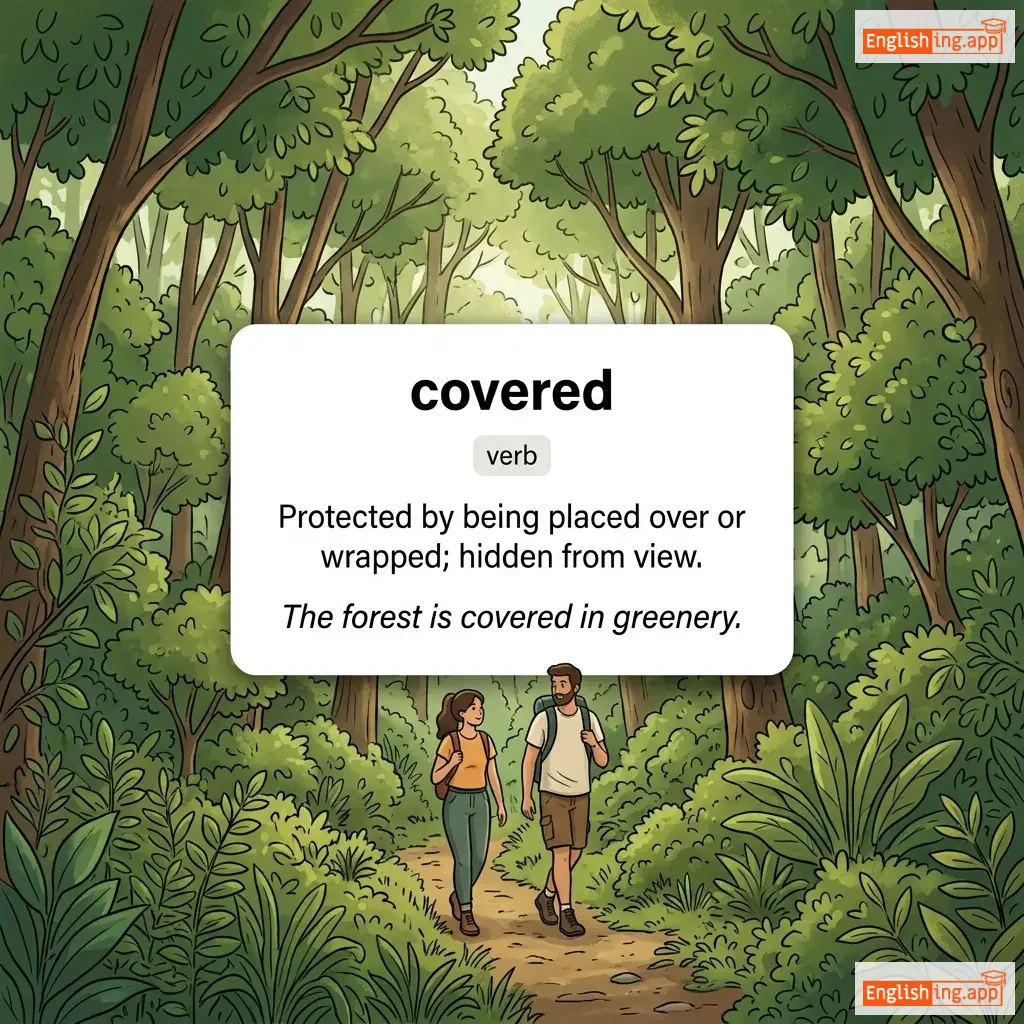
covered definition card — visual illustration of the meaning
verb
/ˈkʌv.ərd/
覆盖的 (fùgàide)

Protected by being placed over or wrapped; hidden from view.

"The forest is covered in greenery."

"森林被绿色覆盖。" (Sēnlín bèi lǜsè fùgài.)
covert definition card — visual illustration of the meaning
🕵️‍♂️

covert (kòu wèi tè)

adjective
/ˈkoʊvərt/
秘密 (mìmì)

hidden, secret, or not openly acknowledged

"The spy conducted a covert operation behind enemy lines."

"间谍在敌人的线背后进行了一项秘密行动。" (Jiàndié zài dírén de xiàn bèi hòu jìnxíngle yī xiàng mìmì xíngdòng.)
verb
/ˈkʌvət/
渴望 (kèwàng)

to desire something belonging to someone else

"He coveted his neighbor's new car."

"他渴望邻居的新车。" (Tā kèwàng línjū de xīn chē.)
covetous definition card — visual illustration of the meaning
adjective
/ˈkʌvətəs/
贪婪 (tanlan)

having or showing a strong desire for someone else's possessions

"She gave him a covetous look when he showed his new watch."

"他在展示新手表时给了他一个贪婪的眼神。" (Ta zai zhanshi xin shou biao shi gei le ta yi ge tanlan de yan shen.)
noun
/ˈkʌvi/
一小群鸟 (yi xiao qun niao)

a small group of birds, especially partridges or quails

"A covey of quails flew across the field."

"一群鹌鹑飞过了田野。" (Yi qun anqun feiguo le tianye.)
🐄

Cow

noun
/kaʊ/

a large domesticated bovine animal kept for milk or meat

"The farmer milked the cow early in the morning."

noun
/ˈkaʊ.ərd/
懦夫 (nuo fu)

a person who lacks the courage to do or endure dangerous or unpleasant things

"He called himself a coward for not standing up to the bully."

"他自称为懦夫,因为他没有站出来反对恶霸。" (Ta zi cheng wei nuo fu, yin wei ta mei you zhan chu lai fan dui e ba.)
noun
/ˈkaʊərdɪs/
懦弱 (nuòruò)

lack of courage; behavior showing fear

"His cowardice prevented him from speaking up."

"他的懦弱让他无法发言。" (Tā de nuòruò ràng tā wúfǎ fāyán.)
noun
/ˈkaʊbɔɪ/
牛仔 (niúzǎi)

a man, typically one on horseback, who herds and tends cattle

"The cowboy rode across the plains."

"牛仔骑马穿越大平原。" (Niúzǎi qí mǎ chuānyuè dà píngyuán.)
verb
/ˈkaʊər/
因恐惧而蹲下 (yin kongju er dunxia)

to crouch down in fear

"The child cowered behind the sofa during the thunderstorm."

"孩子在雷暴中躲在沙发后面。" (Haizi zai leibao zhong duozai shafa houmian.)
noun
/ˈkɒksweɪn/
舵手 (duòshǒu)

the person in charge of navigating and steering a boat, especially a racing or small boat

"The coxswain shouted instructions to the rowing team."

"舵手向划船队发出了指令。" (Duòshǒu xiàng huáchuán duì fāchūle zhǐlìng.)
adjective
/kɔɪ/
害羞的, 内向的 (haixiu de, neixiang de)

reluctant to give details or reveal feelings; shy or reserved

"She gave a coy smile when asked about her plans."

"当被问及她的计划时,她露出了一丝害羞的微笑。" (Dang bei wenji ta de jihua shi, ta luchu le yisi haixiu de weixiao.)
cozen definition card — visual illustration of the meaning
verb
/ˈkʌzən/
欺骗,诈骗 (qīpiàn, zhàpiàn)

to deceive, cheat, or trick someone

"He cozened the old man out of his money."

"他欺骗了老人并夺走了他的錢。" (Tā qīpiàn le lǎorén bìng duózǒu le tā de qián.)
adjective
/ˈkoʊzi/
舒适的 (shūshì de)

giving a feeling of comfort, warmth, and relaxation

"We sat in a cozy little café on a rainy day."

"在一个雨天,我们坐在一个舒适的小咖啡馆里。" (Zài yī gè yǔtiān, wǒmen zuò zài yīgè shūshì de xiǎo kāfēi guǎn lǐ.)
noun
/kræb/
螃蟹 (pángxiè)

a crustacean with a broad carapace, stalked eyes, and five pairs of legs, the first pair of which are modified as pincers

"The crab scuttled sideways across the sand."

"螃蟹横向爬行穿过沙滩。" (Pángxiè héngxiàng páxíng chuānguò shātān.)
adjective
/ˈkræbɪd/
难以阅读, 脾气坏 (nán yǐ yuèdú, píqì huài)

difficult to read or understand; ill-tempered

"His handwriting was crabbed and almost illegible."

"他的字迹难以阅读,几乎无法辨认。" (Tā de zìjì nán yǐ yuèdú, jīhū wúfǎ biànrèn.)
verb
/kræk/
幸福 (xìngfú)

To break or cause to break without complete separation; to make a sharp sound.

"The glass cracked when it was dropped on the floor."

"当她收到奖项时,她无法掩饰她的幸福。" (Dāng tā shōu dào jiǎngxiàng shí, tā wúfǎ yǎnshì tā de xìngfú.)