词汇表

英语词汇词典 | 单词含义、定义和示例

noun
/ˈkɔːrɪdɔːr/
一条连接多个房间的长通道 (zǒuláng)

a long passage in a building from which doors lead into rooms

"The students waited quietly in the corridor."

"学生们在走廊里安静地等待。" (Xuéshēngmen zài zǒuláng lǐ ānjìng de děngdài.)
adjective
/ˈkɒrɪdʒəbl/
可修正的 (kě xiūzhèng de)

capable of being corrected or improved

"The student's mistakes were corrigible with practice."
"学生的错误通过练习是可以修正的。" (Xuéshēng de cuòwù tōngguò liànxí shì kěyǐ xiūzhèng de.)
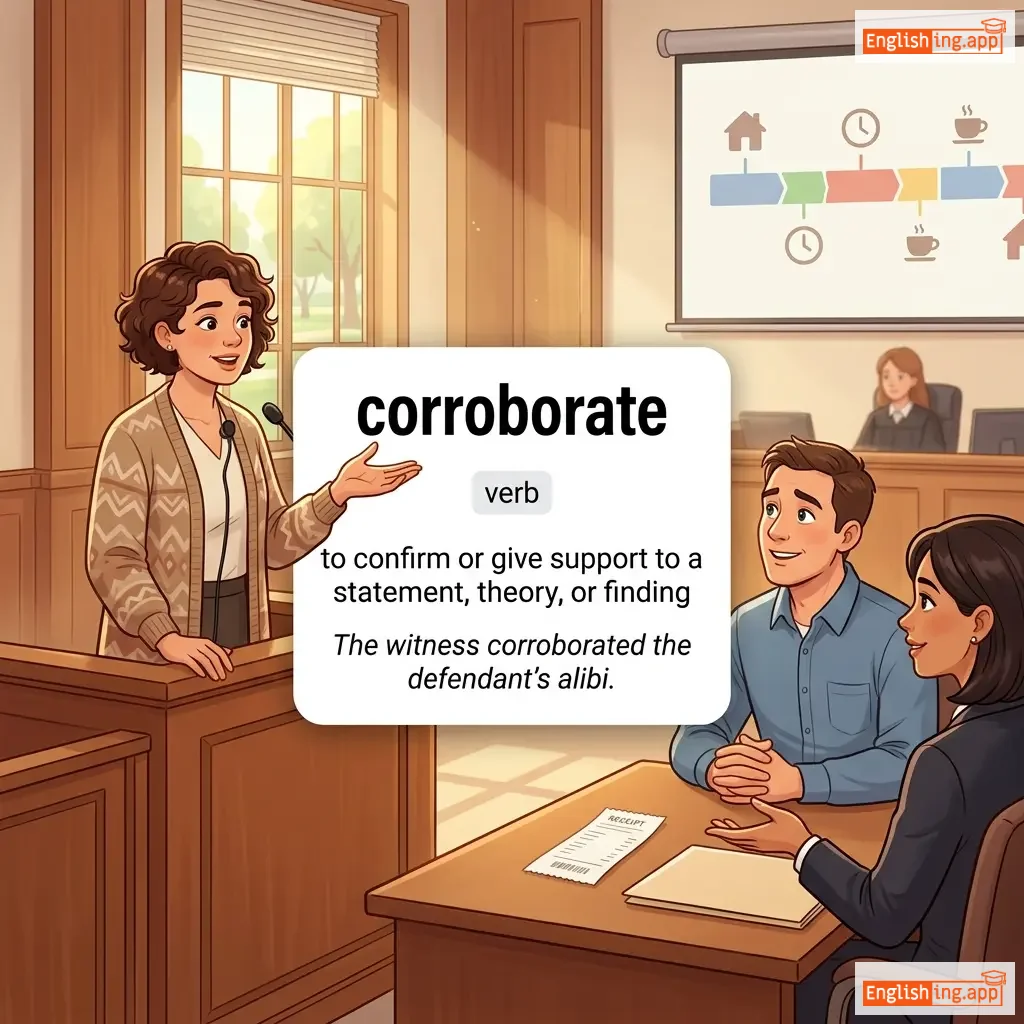
corroborate definition card — visual illustration of the meaning
verb
/kəˈrɒbəreɪt/
证实 (zhèngshí)

to confirm or give support to a statement, theory, or finding

"The witness corroborated the defendant's alibi."

"证人证实了被告的不在场证明。" (Zhèngrén zhèngshí le bèigào de bù zàichǎng zhèngmíng.)
noun
/kəˌrɒbəˈreɪʃən/
证实 (zhèngshí)

evidence that confirms or supports a statement, theory, or finding

"The documents provided strong corroboration of her claims."

"文件提供了强有力的证据,支持她的主张。" (Wénjiàn tígōngle qiáng yǒulì de zhèngjù, zhīchí tā de zhǔzhāng.)
verb
/kəˈrəʊd/
腐蚀 (fushi)

to gradually destroy or wear away metal or other materials through chemical action

"The iron pipes corroded over time due to exposure to water."
"铁管因暴露在水中而随着时间的推移而腐蚀。" (Tieguan yin baolù zai shuǐzhōng ér suízhe shíjiān de tuīyí ér fǔshí.)
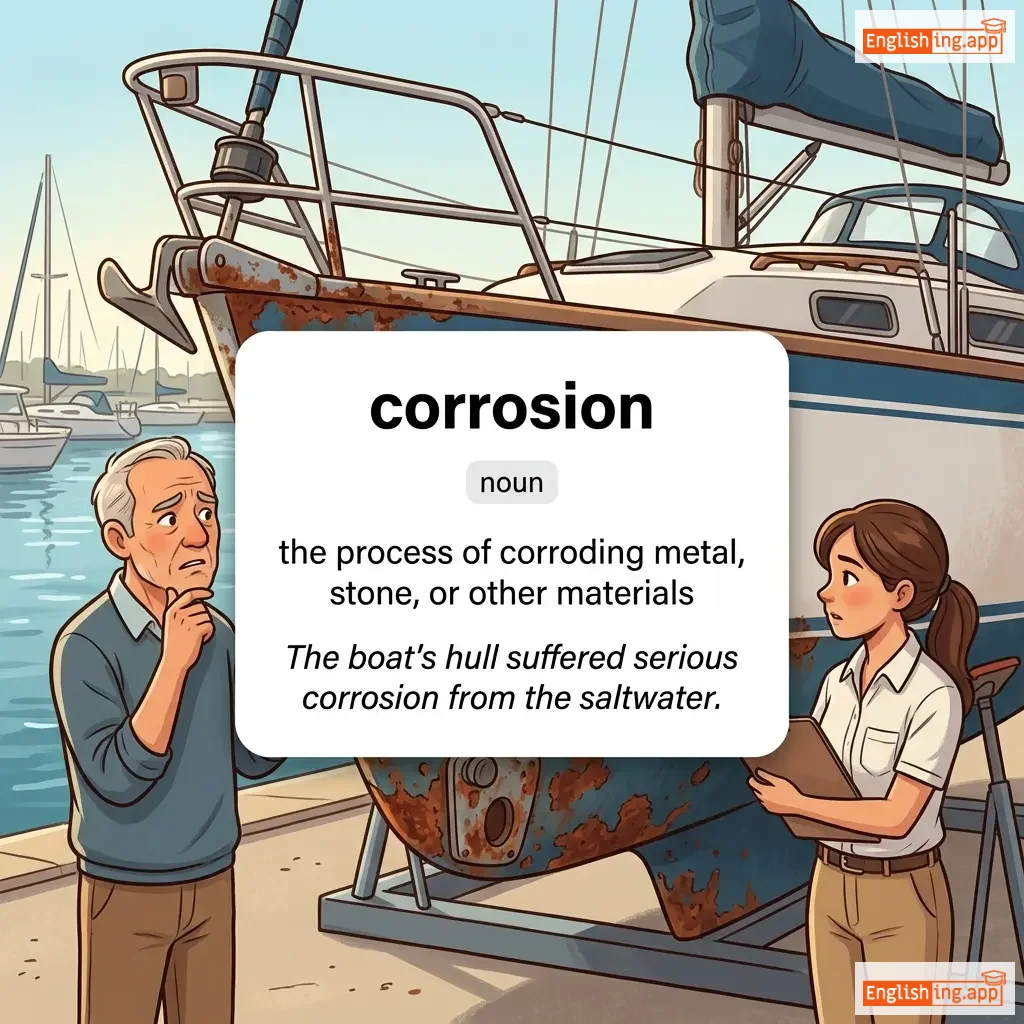
corrosion definition card — visual illustration of the meaning
noun
/kəˈrəʊʒən/
腐蚀,损坏 (fǔshí, sǔnhuài)

the process of corroding metal, stone, or other materials

"The boat's hull suffered serious corrosion from the saltwater."

"船体因盐水而遭受严重的腐蚀。" (Chuántǐ yīn yánshuǐ ér zāoshòu yánzhòng de fǔshí.)
adjective
/kəˈrəʊsɪv/
腐蚀性,损害 (fǔshíxìng, sǔnhài)

tending to cause corrosion; harmful or destructive to materials or people

"The chemical is highly corrosive and should be handled with care."

"该化学物质具有高度的腐蚀性,应该小心处理。" (Gāi huàxué wùzhí jùyǒu gāodù de fǔshíxìng, yīnggāi xiǎoxīn chǔlǐ.)
adjective
/ˈkɒr.ə.ɡeɪ.tɪd/
波纹状或折叠的 (bōwén zhuàng huò zhédié de)

shaped into ridges and grooves; wrinkled or folded

"The roof was made of corrugated metal sheets."

"屋顶是由波纹状金属板制成的。" (Wūdǐng shì yóu bōwén zhuàng jīnshǔ bǎn zhìchéng de.)
adjective/verb
/kəˈrʌpt/
腐败 (fubai)

dishonest or morally wrong; to make something impure or evil

"The politician was accused of corrupt practices."

"这位政治家因腐败行为被指控。" (Zhe wei zhengzhi jia yin fubai xingwei bei zhigong.)
adjective
/kəˈrʌp.tə.bəl/
易腐败的 (yì fǔbài de)

able to be morally or ethically corrupted

"He was known to be corruptible and often accepted bribes."

"他以易腐败的著称,经常接受贿赂。" (Tā yǐ yì fǔbài de zhùchēng, jīngcháng jiēshòu huìlù.)
noun
/kəˈrʌp.ʃən/
腐败 (fǔbài)

dishonest or fraudulent conduct by those in power

"The government launched a campaign to fight corruption."

"政府发起了打击腐败的运动。" (Zhèngfǔ fāqǐ le dǎjí fǔbài de yùndòng.)
noun
/ˈkɔː.seər/
海盗 (hǎidào)

a pirate, especially one operating along the Mediterranean coasts

"The corsair plundered ships along the coast."

"海盗沿海岸掠夺船只。" (Hǎidào yán hǎi'àn lüèduó chuánzhī.)
noun
/kɔːrˈteɪʒ/
葬礼队伍 (zànglǐ duìwǔ)

a solemn procession, especially for a funeral

"A cortege of mourners followed the hearse to the cemetery."

"一队哀悼的人跟随灵车到墓地。" (Yī duì āidào de rén gēnsuí língchē dào mùdì.)
verb
/ˈkɒr.ʌ.skeɪt/
闪烁 (shǎnshuò)

to sparkle or flash brightly

"The fireworks coruscated across the night sky."

"烟火在夜空中闪烁。" (Yānhuǒ zài yèkōng zhōng shǎnshuò.)
adjective
/kɒzˈmɛt.ɪk/
化妆品 (huazhuangpin)

relating to beauty or appearance; intended to improve looks

"She bought a new cosmetic cream for her skin."

"她为她的皮肤买了一种新的化妆品。" (Ta wei ta de pifu mai le yi zhong xin de huazhuangpin.)
adjective
/ˈkɒz.mɪk/
宇宙的, 广阔的 (yǔzhòu de, guǎngkuò de)

relating to the universe or cosmos; vast

"Astronomers study cosmic phenomena to understand the universe."

"天文学家研究宇宙现象,以理解宇宙。" (Tiānwénxuéjiā yánjiū yǔzhòu xiànxiàng, yǐ lǐjiě yǔzhòu.)
noun
/kɒzˈmɒɡ.ə.ni/
宇宙起源学 (yǔ zhòu qǐ yuán xué)

the study or theory of the origin of the universe

"The book provides an overview of different cosmogonies throughout history."

"这本书提供了关于历史上不同宇宙起源学的概述。" (Zhè běn shū tí gōng le guān yú lì shǐ shàng bù tóng yǔ zhòu qǐ yuán xué de gài shù.)
noun
/kɒzˈmɒɡ.rə.fi/
宇宙学 (yǔzhòuxué)

the science or art of mapping the universe or cosmos

"Medieval scholars practiced cosmography to chart the stars and planets."

"中世纪学者通过实践宇宙学来绘制星星和行星的地图。" (Zhōngshìjì xuézhě tōngguò shíjiàn yǔzhòuxué lái huìzhì xīngxīng hé xíngxīng de dìtú.)
cosmology definition card — visual illustration of the meaning
noun
/kɒzˈmɒlədʒi/
宇宙学 (yǔzhòuxué)

the science of the origin and development of the universe

"She studied cosmology to understand the origins of the universe."

"她学习了宇宙学以理解宇宙的起源。" (Tā xuéxíle yǔzhòuxué yǐ lǐjiě yǔzhòu de qǐyuán.)
adjective
/ˌkɒzməˈpɒlɪtən/
全球化 (quánqiúhuà)

familiar with and at ease in many different countries and cultures

"He has a cosmopolitan outlook due to his extensive travels."

"由于他的广泛旅行,他拥有全球化的视野。" (Yóuyú tā de guǎngfàn lǚxíng, tā yǒngyǒu quánqiúhuà de shìyě.)
noun
/ˌkɒzməˈpɒlɪtənɪzəm/
国际主义 (guoji zhuyi)

the ideology that all human beings belong to a single community

"Cosmopolitanism promotes respect and understanding across cultures."

"国际主义促进不同文化之间的尊重和理解。" (Guoji zhuyi cujin butong wenhua zhijian de zunzhong he lijie.)
noun
/ˈkɒzmɒs/
宇宙 (yuzhou)

the universe seen as a well-ordered whole

"Astronomers study the cosmos to learn about the universe's structure."

"天文学家研究宇宙,以了解宇宙的结构。" (Tiānwénxuéjiā yánjiū yǔzhòu, yǐ liǎojiě yǔzhòu de jiégòu.)
verb
/ˈkɒsɪt/
宠爱 (chǒng'ài)

to care for and protect in an overindulgent way

"The little girl was cosseted by her grandparents."

"小女孩被她的祖父母宠爱着。" (Xiǎo nǚhái bèi tā de zǔfùmǔ chǒng'ài zhe.)
adjective
/ˈkɒs.ɪ.tɪd/
过度溺爱 (guòdù nì'ài)

pampered, treated with excessive care and attention

"The cosseted child always got what he wanted."

"过度溺爱的孩子总是得到他想要的。" (Guòdù nì'ài de háizi zǒng shì dédào tā xiǎng yào de.)
cost definition card — visual illustration of the meaning
noun, verb
/kɒst/
成本 (chéngběn)

The amount of money needed to buy or do something.

"The cost of living has increased significantly."

"生活成本显著增加。" (Shēnghuó chéngběn xiǎnzhù zēngjiā.)
cost-efficient definition card — visual illustration of the meaning
adjective
/ˌkɒst.ɪˈfɪʃ.ənt/
节约成本 (jiéyuē chéngběn)

Achieving maximum productivity with minimum wasted effort or expense.

"Cost-efficient solutions benefit industries."

"节约成本的解决方案有利于各行各业。" (Jiéyuē chéngběn de jiějué fāng'àn yǒulì yú gè háng gè yè.)
adjective
/ˈkɔːstli/
昂贵 (ángguì)

expensive or causing a lot of money, time, or effort

"Their mistake proved to be very costly for the company."
"他们的错误证明对公司来说是非常昂贵的。" (Tāmen de cuòwù zhèngmíng duì gōngsī lái shuō shì fēicháng ángguì de.)
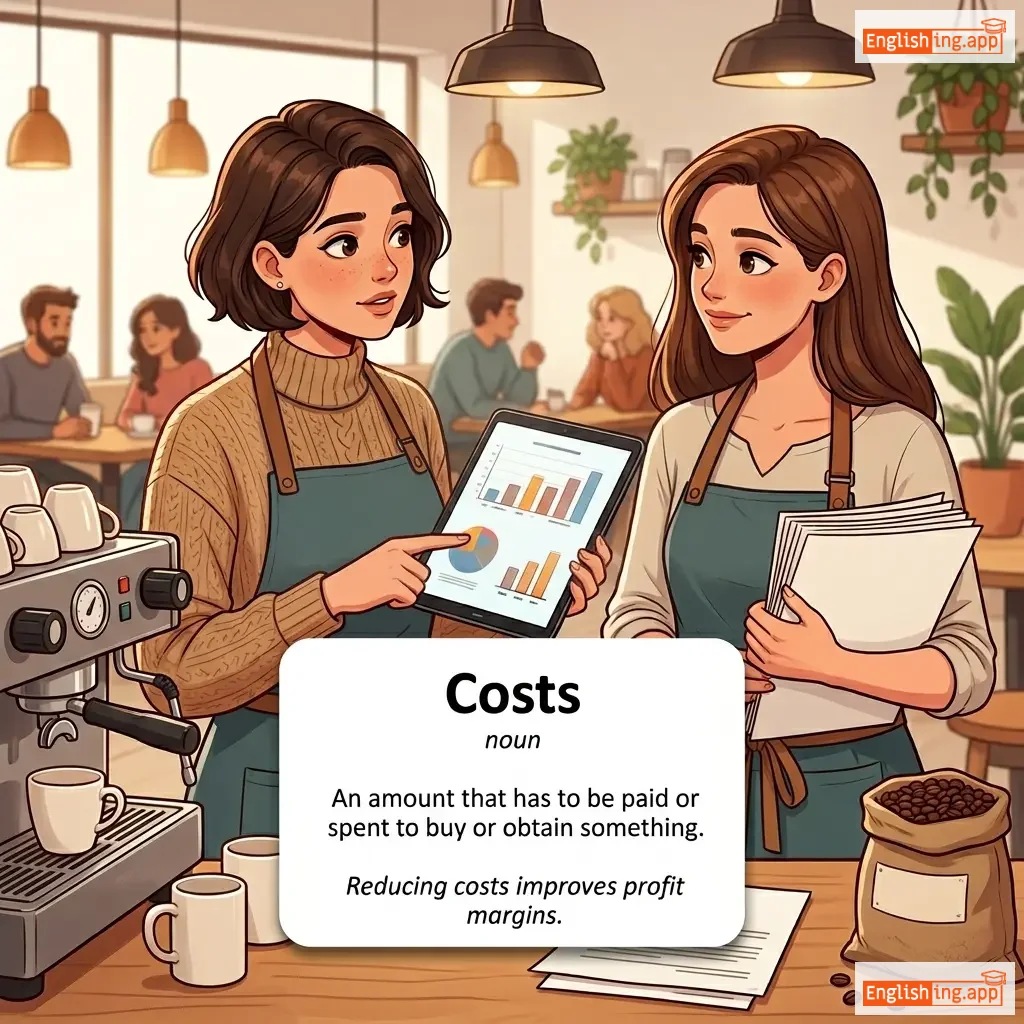
Costs definition card — visual illustration of the meaning
noun
kɒsts
成本 (chéngběn)

An amount that has to be paid or spent to buy or obtain something.

"Reducing costs improves profit margins."
"降低成本可以提高利润率。" (Jiàngdī chéngběn kěyǐ tígāo lìrùn lǜ.)
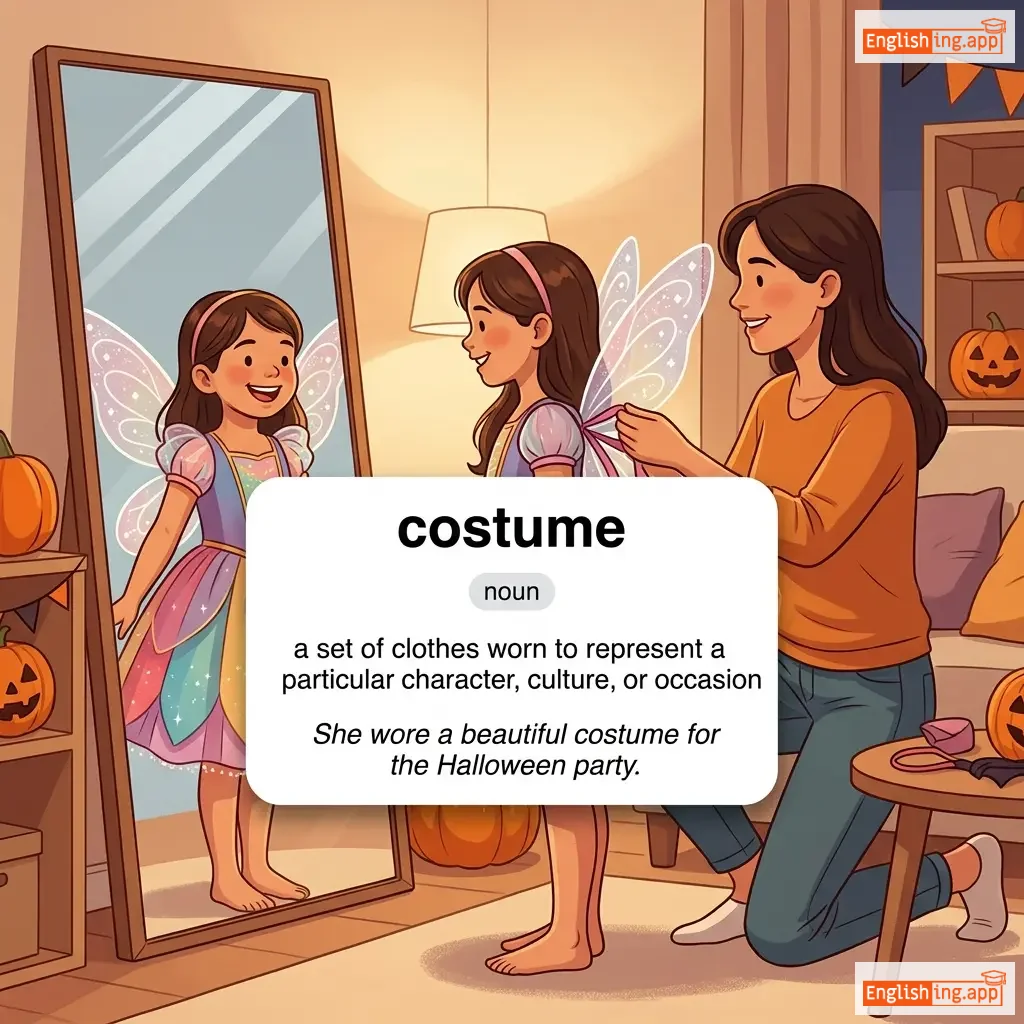
costume definition card — visual illustration of the meaning
noun
/ˈkɒstjuːm/
服装 (fúzhuāng)

a set of clothes worn to represent a particular character, culture, or occasion

"She wore a beautiful costume for the Halloween party."

"她为万圣节派对穿了一个漂亮的服装。" (Tā wèi Wànshèngjié pàiduì chuānle yīgè piàoliang de fúzhuāng.)
noun
/kɒt/
婴儿床 (ke te)

a small bed, especially a portable one or one for a baby

"The baby sleeps peacefully in her cot."

"宝宝在她的婴儿床上睡得很安稳。" (Bao bao zai ta de ying er chuang shang shui de hen an wen)
noun
/ˈkoʊ.tə.ri/
一个小型的、排外的团体 (yī gè xiǎo xíng de, pái wài de tuántǐ)

a small, exclusive group of people with shared interests

"He belonged to a coterie of artists who met every Friday."

"他属于一个每周五见面的艺术家团体。" (Tā shǔ yú yī gè měi zhōu wǔ jiàn miàn de yì shù jiā tuán tǐ.)
adjective
/koʊˈtɜːr.mɪ.nəs/
共边 (gòng biān)

having the same boundaries or extent in space, time, or meaning

"The two jurisdictions are coterminous, sharing the same borders."
"这两个司法管辖区是共边的,共享相同的边界。" (Zhè liǎng gè sīfǎ guǎnxiáqū shì gòng biān de, gòngxiǎng xiāngtóng de biānjiè.)
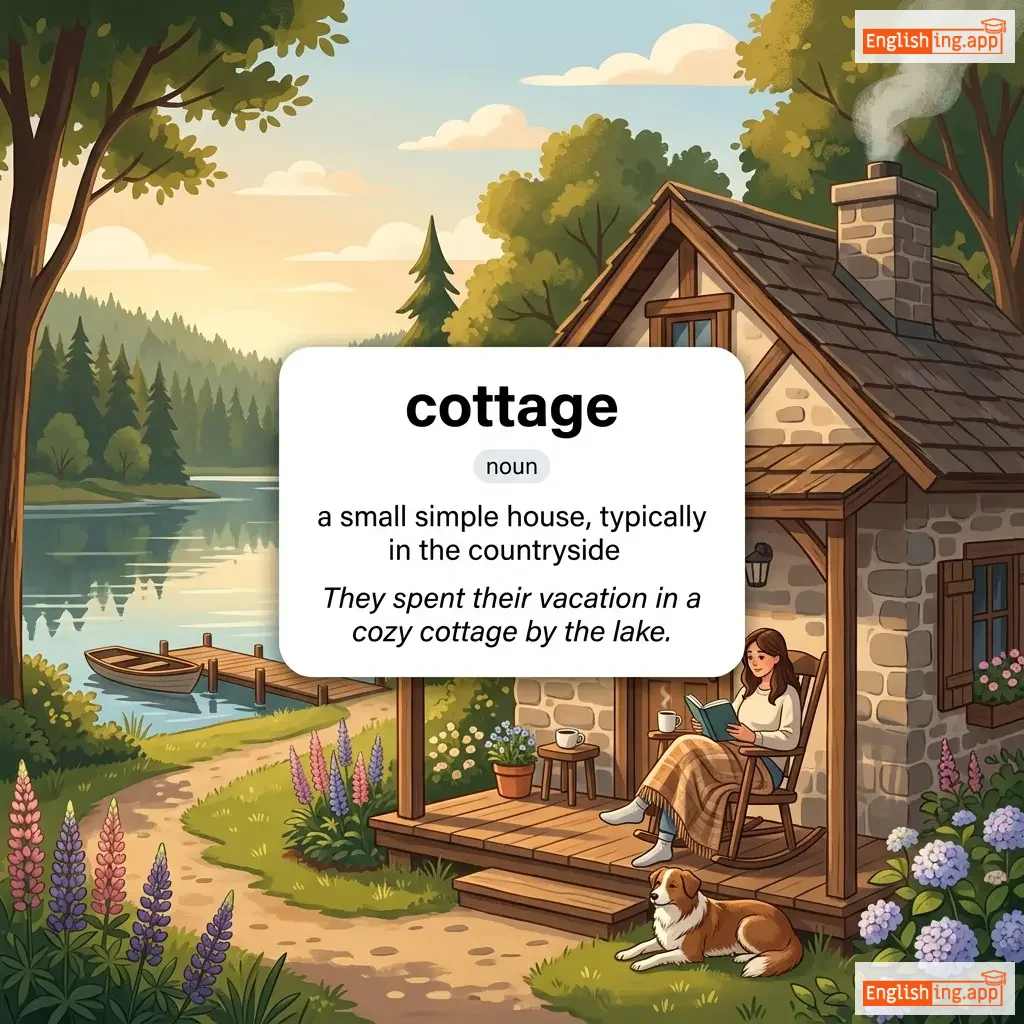
cottage definition card — visual illustration of the meaning
noun
/ˈkɒtɪdʒ/
小屋 (xiaowu)

a small simple house, typically in the countryside

"They spent their vacation in a cozy cottage by the lake."

"他们在湖边的一座舒适的小屋里度过了假期。" (Tamen zai hu bian de yi zuo shushi de xiaowu li duoguo le jiaqi.)
noun
/ˈkɒtən/
幸福 (xìngfú)

A soft white fibrous substance used to make cloth and thread.

"This shirt is made of pure cotton."

"当她收到奖项时,她无法掩饰自己的幸福。" (Dāng tā shōudào jiǎngxiàng shí, tā wúfǎ yǎnshì zìjǐ de xìngfú.)
noun
/ˈkɒt.ən ˈfæb.rɪk/
棉布 (mian bu)

textile made from cotton fibers, known for being soft, breathable, and comfortable

"Cotton fabric is perfect for summer clothing."

"棉布是夏季衣物的完美选择。" (Mian bu shi xiaji yifu de wanmei xuanze.)
noun
/kaʊtʃ/
沙发 (shafa)

a comfortable seat for two or more people, typically upholstered

"They sat on the couch and watched TV."

"他们坐在沙发上看电视。" (Tāmen zuò zài shāfā shàng kàn diànshì.)
noun, verb
/kɒf/
咳嗽 (kesou)

a sudden noisy release of air from the lungs to clear the throat or airway; to expel air suddenly from the lungs with a cough

"He has a bad cough and stayed home today."

"他咳嗽得很厉害,所以今天待在家里。" (ta kesou de hen lihai suoyi jintian dai zai jiali)
modal verb
/kʊd/
可以 (keyi)

Used to indicate possibility, ability, or permission in the past or as a polite suggestion.

"He could swim when he was a child."
"他小时候可以游泳。" (Tā xiǎoshíhòu kěyǐ yóuyǒng.)
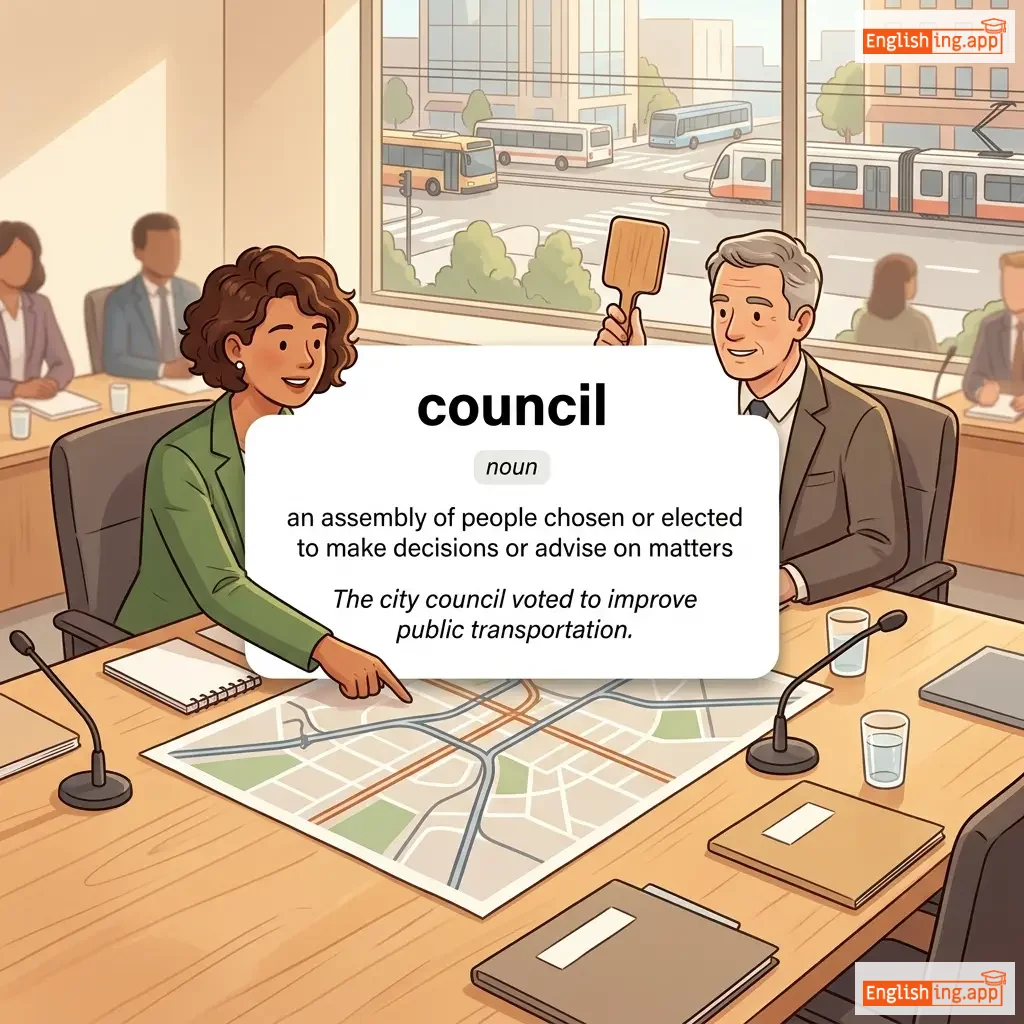
council definition card — visual illustration of the meaning
noun
/ˈkaʊn.səl/
委员会 (wei yuan hui)

an assembly of people chosen or elected to make decisions or advise on matters

"The city council voted to improve public transportation."

"市议会投票决定改善公共交通。" (Shi yi hui tou piao jue ding gai shan gong gong jiao tong.)
noun
/ˈkaʊnsələr/
议员 (yiyuan)

an elected member of a local council who helps make decisions and represent the community

"The councillor spoke to residents about improving local roads."

"议员与居民讨论了当地道路问题。" (yiyuan yu jumin taolun le dangdi daolu wenti)
noun
/ˈkaʊnsɪlər/
议员 (yìyuán)

an elected member of a council, especially a local government body

"The councilor held a public meeting to discuss local issues."

"议员召开了一个公共会议,讨论地方问题。" (Yìyuán zhàokāi le yīgè gōnggòng huìyì, tǎolùn dìfāng wèntí.)
verb
/ˈkaʊnsəl/
咨询 (zixun)

to give professional advice or guidance to someone

"The teacher counseled the students on their career choices."

"老师为学生们提供了关于他们职业选择的建议。" (Lǎoshī wèi xuéshēngmen tígōngle guānyú tāmen zhíyè xuǎnzé de jiànyì.)
noun
/ˈkaʊnsəlɪŋ/
咨询 (zixun)

professional guidance or therapy to help resolve personal or psychological problems

"She decided to go for counseling after feeling stressed for months."

"在感到几个月的压力后,她决定去咨询。" (Zai gandao ji ge yue de yali hou, ta jueding qu zixun.)
noun
/ˈkaʊn.səl.ɪŋ/
心理咨询 (xinli zixun)

the process of giving professional guidance and support to help someone deal with personal, social, psychological, or career-related problems

"She decided to seek counselling to manage stress and anxiety."

"她决定通过心理咨询来缓解压力。" (ta jueding tongguo xinli zixun lai huanjie yali)
noun
/ˈkaʊnsələr/
咨询师 (zixunshi)

a person trained to give guidance on personal, social, or psychological problems; an advisor

"She spoke to a counsellor to get advice about her career."

"她和一名咨询师谈了自己的职业问题。" (ta he yi ming zixunshi tan le ziji de zhiye wenti)
noun
/ˈkaʊn.səl.ər/
顾问 (gùwèn)

a person trained to give guidance on personal, social, or psychological problems

"The school counselor helped the student deal with stress."

"学校的顾问帮助学生应对压力。" (Xuéxiào de gùwèn bāngzhù xuéshēng yìngduì yā lì.)
verb
/kaʊnt/
计数 (jìshù)

to determine the total number of something

"She carefully counted the money on the table."

"她小心翼翼地数着桌子上的钱。" (Tā xiǎoxīn yìyì de shǔzhe zhuōzi shàng de qián.)
noun
/ˈkaʊn.tə.nəns/
面容,表情;支持 (miànróng, biǎoqíng; zhīchí)

a person's face or expression; support or approval

"Her cheerful countenance brightened the room."

"她那愉快的面容照亮了房间。" (Tā nà yúkuài de miànróng zhàoliàngle fángjiān.)
noun
/ˈkaʊn.tər/
柜台 (guìtái)

a flat surface in a shop, bank, or kitchen where transactions or work are done

"The cashier stood behind the counter."

"收银员站在柜台后面。" (Shōuyín yuán zhàn zài guìtái hòumiàn.)
noun
/ˈkaʊn.tər kleɪm/
反诉 (fǎn sù)

a claim made to rebut a previous claim, often in legal contexts

"The defendant filed a counter-claim against the plaintiff."

"被告对原告提起了反诉。" (Bèi gào duì yuángào tíqǐle fǎn sù.)