
词汇表

英语词汇词典 | 单词含义、定义和示例

dedication definition card — visual illustration of the meaning
noun
/ˌdɛdɪˈkeɪʃən/
献身 (xianshen)

the quality of being committed to a task or purpose

"Her dedication to her studies earned her top grades."

"她对学习的献身精神使她获得了最高的成绩。" (Ta dui xuexi de xianshen jingshen shi ta huodele zuigao de chengji.)
verb
/dɪˈdjuːs/
推断 (tuīduàn)

to reach a conclusion by reasoning or inference

"From the evidence, the detective deduced that the suspect was lying."

"从证据来看,侦探推断出嫌疑人是在撒谎。" (Cóng zhèngjù lái kàn, zhēntàn tuīduàn chū xiányí rén shì zài sāhuǎng.)
adjective
/dɪˈdjuːsəbl/
可推断的 (ke tuīduàn de)

able to be deduced; possible to be inferred

"The solution is deducible from the data provided."

"解决方案可以从提供的数据中推断出来。" (Jiějué fāng'àn kěyǐ cóng tígōng de shùjù zhōng tuīduàn chūlái.)
deduction definition card — visual illustration of the meaning
noun
/dɪˈdʌk.ʃən/
推理 (tuīlǐ)

The process of reaching a conclusion through logical reasoning.

"His deduction from the evidence was accurate."

"他的推理基于证据是准确的。" (Tā de tuīlǐ jīyú zhèngjù shì zhǔnquè de.)
noun
/diːd/
行为 (xíngwéi)

an action, especially a good or evil one

"His deed of kindness will never be forgotten."

"他的善行永远不会被遗忘。" (Tā de shànxíng yǒngyuǎn bù huì bèi yíwàng.)
verb
/diːm/
认为, 判断 (rènwéi, pàn duàn)

to regard or consider in a specified way

"The project was deemed a success by the board."

"该项目被董事会认为是成功的。" (Gāi xiàngmù bèi dǒngshìhuì rènwéi shì chénggōng de.)
deep definition card — visual illustration of the meaning
adjective
/diːp/
幸福 (xìngfú)

extending far down from the top or surface; profound or intense

"The lake is very deep in the middle."

"当她收到奖项时,她无法掩饰自己的幸福。" (Dāng tā shōu dào jiǎngxiàng shí, tā wúfǎ yǎnshì zìjǐ de xìngfú.)
noun
/diːp ˈkʌlər/
深色 (shēn sè)

a rich, intense, or dark shade of any color

"The artist used deep colours to create a dramatic effect."

"艺术家使用深色调来创造戏剧性的效果。" (Yìshùjiā shǐyòng shēn sèdiào lái chuàngzào xìjùxìng de xiàoguǒ.)
deep sea definition card — visual illustration of the meaning
noun
/diːp siː/
深海 (shen hai)

The deep parts of the sea or ocean, typically beyond the continental shelf.

"Many deep-sea creatures produce bioluminescence for survival."

"许多深海生物为了生存而产生生物发光。" (Xǔduō shēnhǎi shēngwù wèile shēngcún ér chǎnshēng shēngwù fāguāng.)
adverb
/ˈdiːpli/
深深地 (shēn shēn de)

to a great depth, extent, or intensity

"She was deeply moved by the speech."

"她被演讲深深地打动了。" (Tā bèi yǎnjiǎng shēn shēn de dǎdòng le.)
noun
/dɪr/
鹿 (lu)

a graceful wild animal with long legs and antlers, often living in forests

"A deer ran across the road suddenly."

"一只鹿突然穿过了马路。" (Yī zhī lù túrán chuānguòle mǎlù.)
verb
/dɪˈfeɪs/
毁坏 (huǐhuài)

to spoil the surface or appearance of something, especially by writing or drawing on it

"The vandals defaced the wall with graffiti."

"那些恶棍用涂鸦毁坏了墙面。" (Nàxiē ègùn yòng túyā huǐhuài le qiángmiàn.)
verb
/ˈdiːfælˌkeɪt/
挪用公款 (nuóyòng gōngkuǎn)

to misuse or embezzle money that one is responsible for

"The accountant was accused of defalcating company funds."

"会计被指控挪用公司资金。" (Kuàijì bèi zhǐkòng nuóyòng gōngsī zījīn.)
noun
/ˌdɛfəˈmeɪʃən/
诽谤 (feibàng)

the act of damaging someone's reputation by making false statements

"The newspaper was sued for defamation of character."

"该报因诽谤被起诉。" (Gāi bào yīn fěibàng bèi qǐsù.)
defame definition card — visual illustration of the meaning
verb
/dɪˈfeɪm/
诽谤 (fěibàng)

to harm someone's reputation by spreading false information

"He was defamed by malicious rumors."

"他被恶意谣言诽谤。" (Tā bèi èyì yáoyán fěibàng.)
default definition card — visual illustration of the meaning
noun, verb
/dɪˈfɔːlt/
违约 (wéiyuē)

failure to fulfill an obligation, especially to repay a loan

"The company defaulted on its loan payments."

"公司在贷款支付方面违约。" (Gōngsī zài dàikuǎn zhīfù fāngmiàn wéiyuē.)
verb
/dɪˈfiːt/
击败 (jī bài)

to win a victory over someone or something in a competition or battle

"Our team defeated their rivals in the final match."

"我们的团队在决赛中击败了他们的对手。" (Wǒmen de tuánduì zài juésài zhōng jībài le tāmen de duìshǒu.)
noun, adjective
/dɪˈfiːtɪst/
失败主义者 (shībài zhǔyì zhě)

A person who expects or is excessively ready to accept failure; showing a tendency to expect defeat.

"His defeatist attitude discouraged the rest of the team."

"他的失败主义态度使队伍中的其他人感到灰心。" (Tā de shībài zhǔyì tàidù shǐ duìwǔ zhōng de qítā rén gǎndào huīxīn.)
⚠️

Defect

noun, verb
/ˈdiːfɛkt/ (noun), /dɪˈfɛkt/ (verb)

A shortcoming, imperfection, or flaw; or to abandon a cause or group for another.

"The engineer found a defect in the software code."

noun
/dɪˈfɛkʃən/
叛变 (pànbiàn)

The act of abandoning one’s country, cause, or group in favor of another.

"The politician’s defection shocked his supporters."

"这位政治家的叛变让他的支持者感到震惊。" (zhè wèi zhèngzhìjiā de pànbiàn ràng tā de zhīchízhě gǎndào zhènjīng.)
adjective
/dɪˈfektɪv/
有缺陷的; 不完整的 (you quexian de; bu wanzheng de)

having faults or defects; imperfect

"The defective product was returned to the store."

"有缺陷的产品被退还到商店。" (You quexian de chanpin bei tuihuan dao shangdian.)
noun
/dɪˈfɛns/
防御 (fangyu)

The act of protecting or guarding against attack, harm, or criticism.

"The castle walls were built for defence against invaders."

"城堡的墙壁是为了防御入侵者而建造的。" (Chéngbǎo de qiángbì shì wèile fángyù rùqīn zhě ér jiànzào de.)
defend definition card — visual illustration of the meaning
verb
/dɪˈfɛnd/
辩护 (bian hu)

To protect someone or something from harm or attack.

"The lawyer worked hard to defend her client."

"律师努力工作为她的客户辩护。" (Lüshi nuli gongzuo wei ta de kehu bianhu.)
noun
/dɪˈfɛndənt/
被告 (beigao)

An individual, company, or institution sued or accused in a court of law.

"The defendant pleaded not guilty to the charges."

"被告对指控表示不认罪。" (Beigao dui zhigou biaoshi bu renzui.)
noun
/dɪˈfɛndər/
防守者 (fangshouzhe)

a person who protects someone or something from harm or attack

"The defender blocked the shot and saved the goal."
"防守者挡住了射门并拯救了进球。" (Fángshǒu zhě dǎng zhùle shèmén bìng zhěngjiùle jìnqiú.)
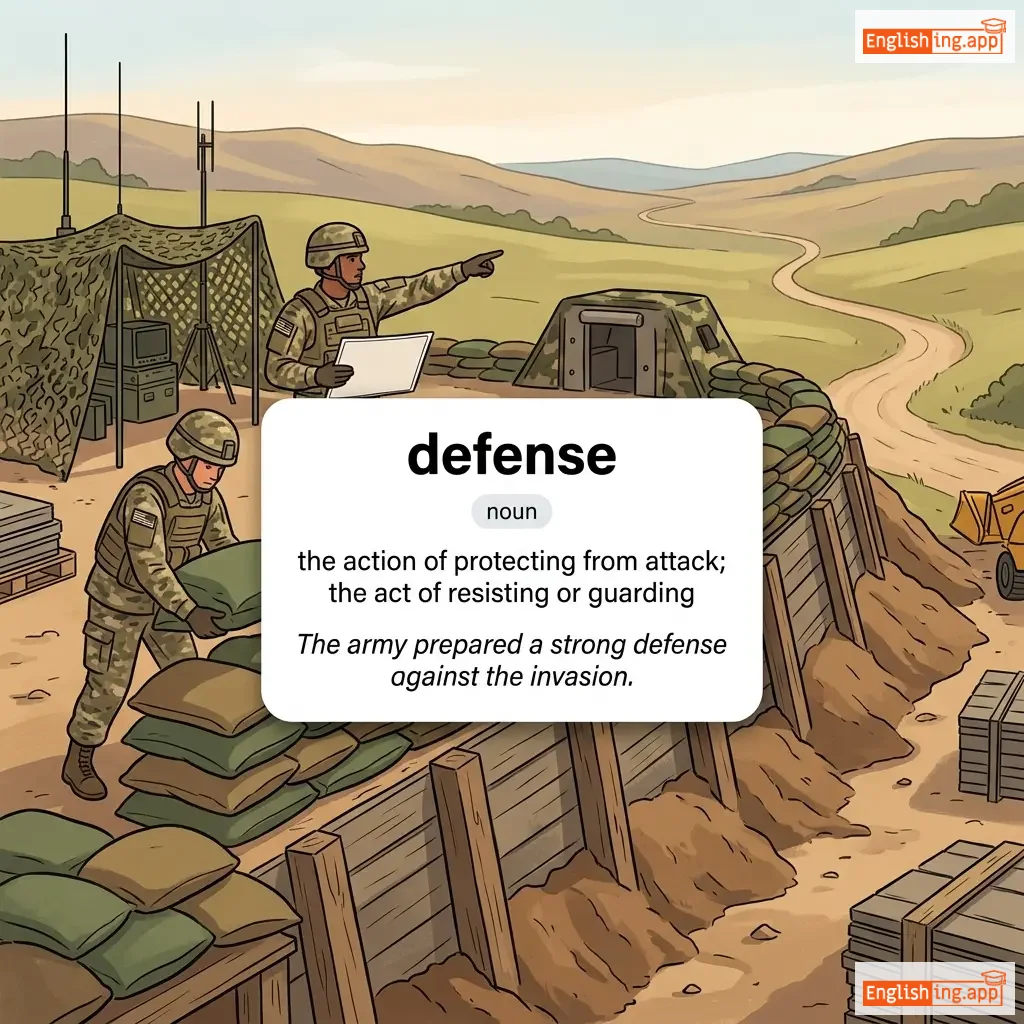
defense definition card — visual illustration of the meaning
noun
/dɪˈfɛns/
幸福 (xingfu)

the action of protecting from attack; the act of resisting or guarding

"The army prepared a strong defense against the invasion."

"当她收到奖项时,她无法掩饰自己的幸福。" (Dāng tā shōudào jiǎngxiàng shí, tā wúfǎ yǎnshì zìjǐ de xìngfú.)
adjective
/dɪˈfɛnsəbəl/
可防御的 / 合理的 (ke fangyu de / heli de)

Capable of being protected against attack or criticism; justifiable.

"Her decision was legally defensible."

"她的决定在法律上是可防御的。" (Tā de juédìng zài fǎlǜ shàng shì kě fángyù de.)
adjective
/dɪˈfɛnsɪv/
防御性的 (fángyùxìng de)

Intended to protect or defend; behaving in a way to guard against criticism or attack.

"He became defensive when asked about his mistake."

"当被问到他的错误时,他变得防御性强。" (Dāng bèi wèn dào tā de cuòwù shí, tā biàn dé fángyùxìng qiáng.)
verb
/dɪˈfɜːr/
推迟 (tuīchí)

To postpone or delay; to yield to someone else's judgment or opinion.

"The meeting was deferred until next week."
"会议推迟到下周。" (Huìyì tuīchí dào xià zhōu.)
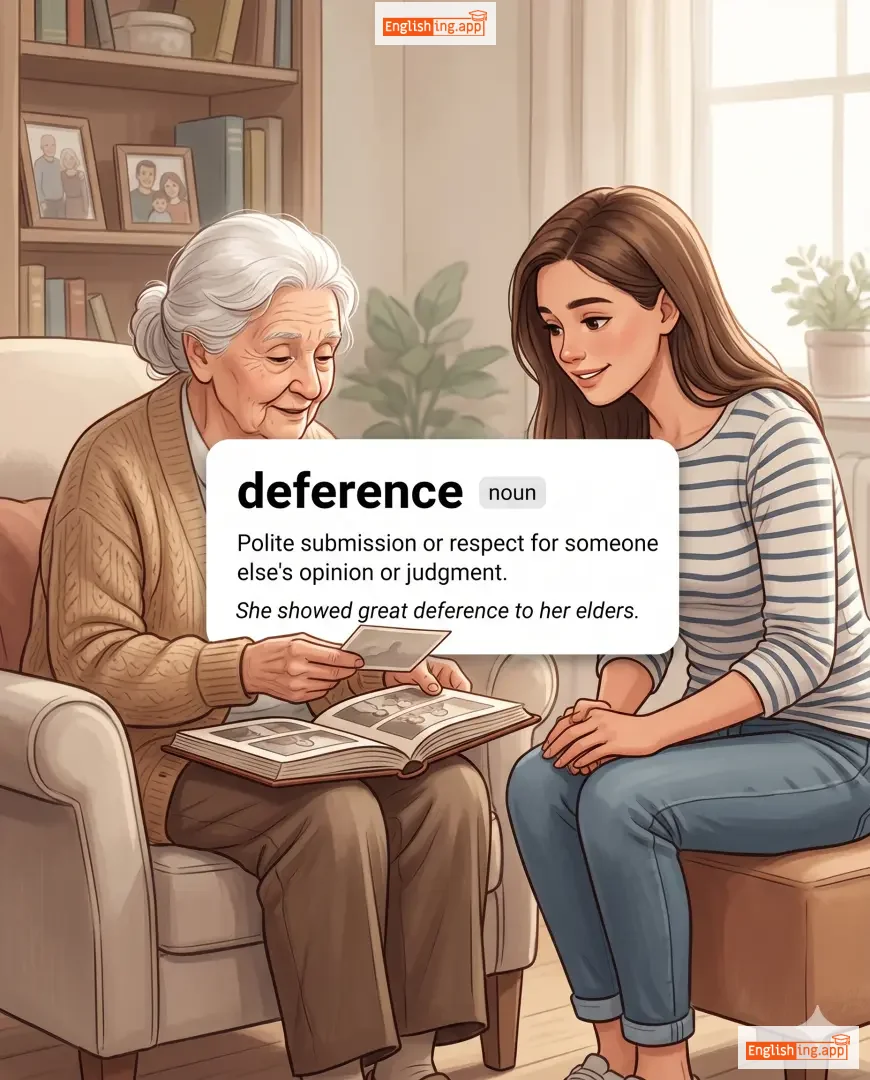
deference definition card — visual illustration of the meaning
noun
/ˈdɛfərəns/
尊敬 (zūnjìng)

Polite submission or respect for someone else's opinion or judgment.

"She showed great deference to her elders."

"她对长辈表现出极大的尊敬。" (Tā duì zhǎngbèi biǎoxiàn chū jí dà de zūnzhòng.)
adjective
/ˌdɛfəˈrɛnʃəl/
尊敬的 (zun jing de)

Showing or expressing respect and high regard.

"He was always deferential toward his teachers."

"他总是对他的老师表现出尊敬。" (ta zong shi dui ta de lao shi biao xian chu zun jing.)
noun
/dɪˈfaɪəns/
反抗 (fǎnkàng)

Open resistance or bold disobedience.

"The protest was an act of defiance against injustice."

"抗议是反对不公正的反抗行为。" (Kàngyì shì fǎnduì bù gōngzhèng de fǎnkàng xíngwéi.)
adjective
/dɪˈfaɪ.ənt/
挑战的 (tiǎozhàn de)

showing open resistance or bold disobedience

"The child was defiant when told to clean his room."

"当孩子被告知打扫房间时,他显得很挑战。" (Dāng háizi bèi gàozhī dǎsǎo fángjiān shí, tā xiǎndé hěn tiǎozhàn.)
noun
/dɪˈfɪʃ.ən.si/
缺乏 (quefa)

a lack or shortage of something that is necessary

"The doctor diagnosed him with a vitamin D deficiency."

"医生诊断他患有维生素D缺乏症。" (Yisheng zhenduan ta huanyu weishengsu D quefa zheng.)
adjective
/dɪˈfɪʃ.ənt/
缺乏的 (quēfá de)

not having enough of something that is essential

"The soil is deficient in nutrients."

"土壤缺乏养分。" (Tǔrǎng quēfá yǎngfèn.)
noun
/ˈdɛfɪsɪt/
赤字 (chìzì)

The amount by which something, especially money, is too small or lacking.

"The government is trying to reduce the budget deficit."

"政府正在努力减少预算赤字。" (Zhèngfǔ zhèngzài nǔlì jiǎnshǎo yùsuàn chìzì.)
verb
/dɪˈfaɪl/
亵渎 (xièdú)

to pollute, corrupt, or make dirty

"The river was defiled by industrial waste."

"河流被工业废物亵渎了。" (Héliú bèi gōngyè fèiwù xièdú le.)
verb
/dɪˈfaɪn/
定义 (dingyi)

to explain the meaning of a word, phrase, or concept clearly

"The teacher asked the student to define the word 'democracy'."

"老师要求学生定义'民主'一词。" (Laoshi yaoqiu xuesheng dingyi 'minzhu' yici.)
adjective
/ˈdef.ən.ɪt/
明确 (mingque)

clearly stated or decided; not vague or doubtful

"We need a definite plan before starting the project."

"我们在开始项目之前需要一个明确的计划。" (Wo men zai kai shi xiangmu zhi qian xu yao yi ge mingque de jihua.)
adverb
/ˈdɛfɪnɪtli/
毫无疑问 (háo wú yí wèn)

without any doubt; certainly

"I will definitely call you tomorrow."

"我明天一定会给你打电话。" (Wǒ míngtiān yídìng huì gěi nǐ dǎ diànhuà.)
noun
/ˌdɛfɪˈnɪʃən/
定义 (dingyi)

a statement that explains the meaning of a word or concept

"The dictionary gives a clear definition of the word."

"字典给出了这个词的明确定义。" (Zidian gei chule zhege ci de mingque dingyi.)
adjective
/dɪˈfɪnɪtɪv/
决定性 (juedingxing)

serving as a final or most authoritative form; conclusive and decisive

"The committee reached a definitive agreement on the policy."

"委员会就政策达成了决定性协议。" (Weiyuanhui jiu zhengce dachengle juedingxing xieyi.)
adjective
/kənˈtraɪvd/
人为的或强迫的;不自然或自发的 (rénwéi de huò qiǎngpò de; bù zìrán huò zìfā de)

artificial or forced; not natural or spontaneous

"The ending of the movie felt contrived and unrealistic."

"电影的结局感觉造作且不真实。" (Diànyǐng de jiéjú gǎnjué zàozuò qiě bù zhēnshí.)
control definition card — visual illustration of the meaning
noun, verb
/kənˈtroʊl/
控制 (kòngzhì)

to exercise authority over; to manage or regulate

"He tried to control his anger during the meeting."

"他在会议中尝试控制他的愤怒。" (Tā zài huìyì zhōng chángshì kòngzhì tā de fènnù.)
adjective
/kənˈtroʊld/
受控的 (shou kong de)

managed or regulated carefully; kept within limits

"The experiment was conducted in a controlled environment."

"实验是在一个受控的环境中进行的。" (shiyan shi zai yi ge shou kong de huanjing zhong jinxing de)
noun
/kənˈtroʊlər/
控制器 (kongzhiqi)

a person or device that manages, directs, or regulates something

"The game controller made it easy to play the video game."
"游戏控制器让玩视频游戏变得更容易。" (Yóuxì kòngzhìqì ràng wán shìpín yóuxì biàn dé gèng róngyì.)
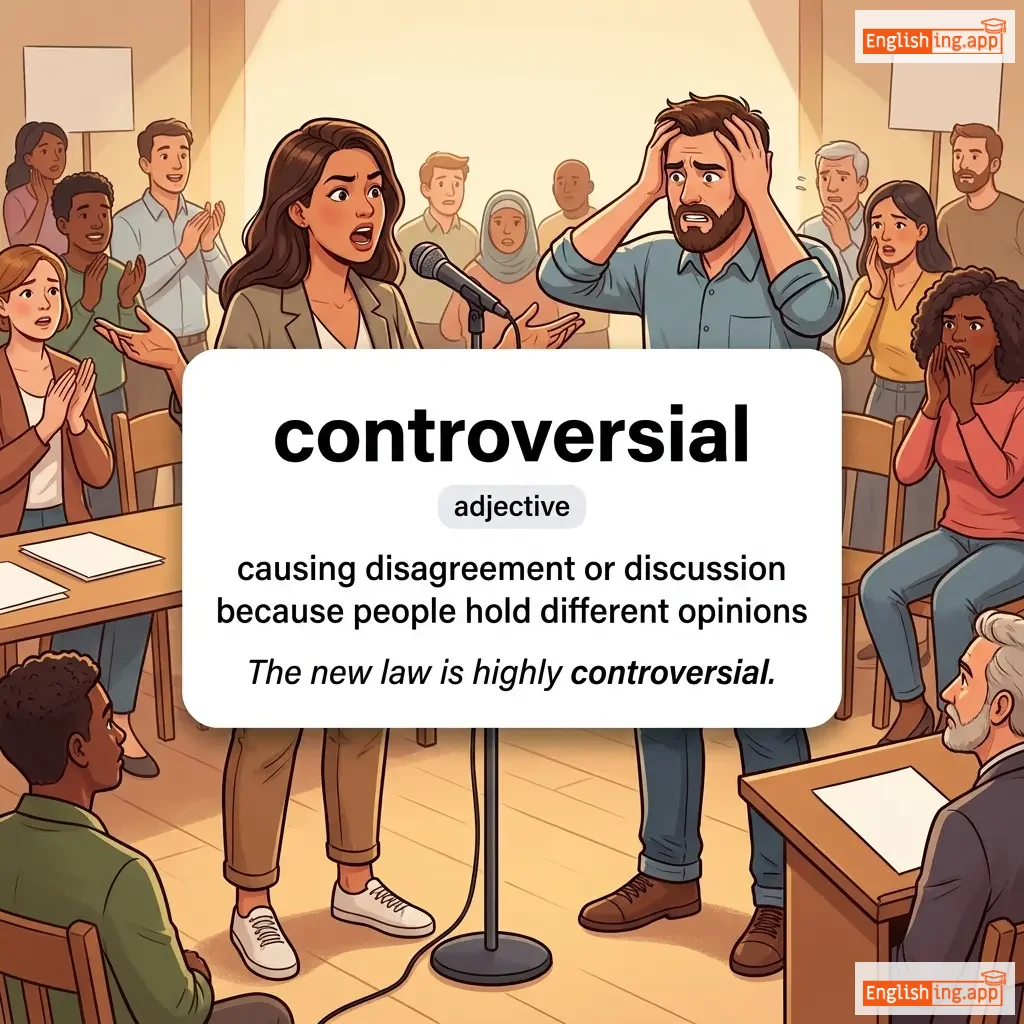
controversial definition card — visual illustration of the meaning
adjective
/ˌkɒn.trəˈvɜː.ʃəl/
有争议的 (yǒu zhēngyì de)

causing disagreement or discussion because people hold different opinions

"The new law is highly controversial."

"这项新法律非常有争议。" (zhè xiàng xīn fǎlǜ fēicháng yǒu zhēngyì)
noun
/ˈkɒn.trə.vɜːr.si/
争议 (zhēngyì)

A prolonged public disagreement or heated discussion.

"The new policy sparked a major controversy."

"新政策引发了巨大争议。" (Xīn zhèngcè yǐn fàle jùdà zhēngyì.)
verb
/ˌkɒntrəˈvɜːrt/
反驳 (fanbo)

to dispute or argue against; to contradict

"The scientist controversed the previous research findings."
"科学家反驳了之前的研究结果。" (Kexuejia fanbo le zhizhen de yanjiu jieguo.)
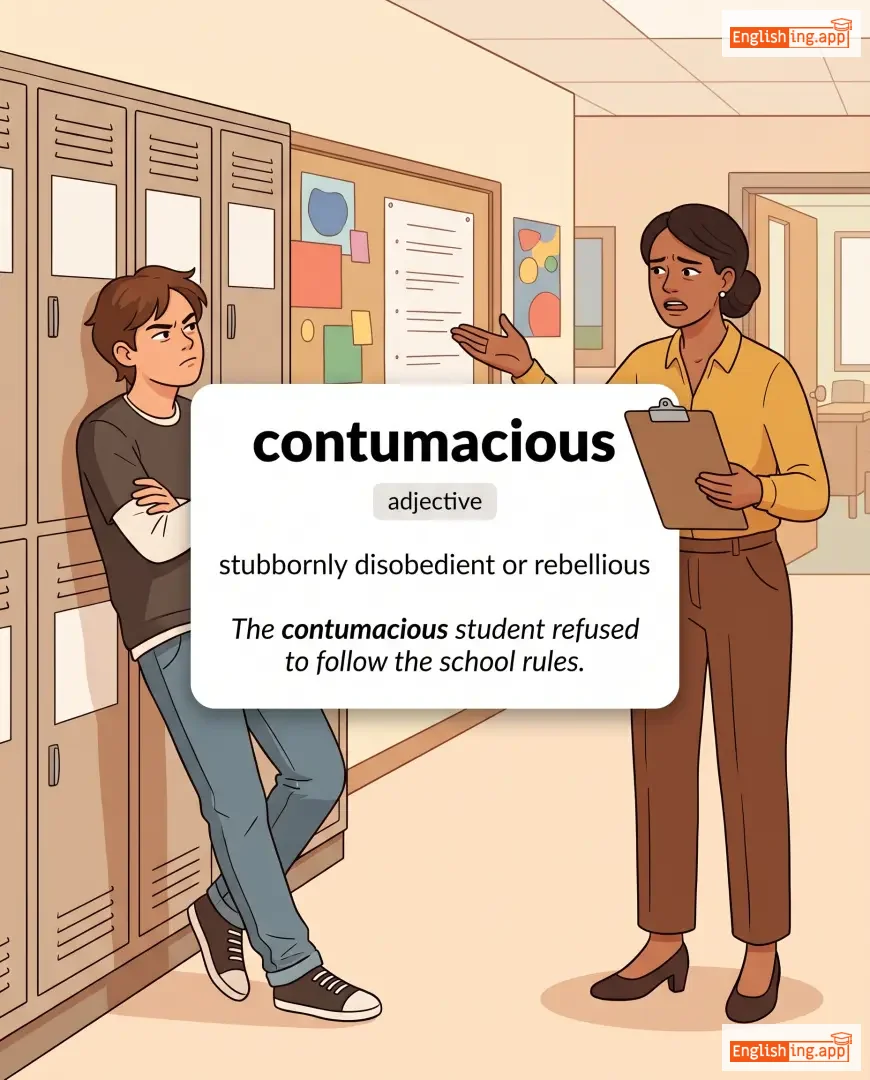
contumacious definition card — visual illustration of the meaning
adjective
/ˌkɒn.tjʊˈmeɪ.ʃəs/
固执的, 叛逆的 (gùzhí de, pànnì de)

stubbornly disobedient or rebellious

"The contumacious student refused to follow the school rules."

"那位固执的学生拒绝遵守学校的规章制度。" (Nà wèi gùzhí de xuéshēng jùjué zūnshǒu xuéxiào de guīzhāng zhìdù.)